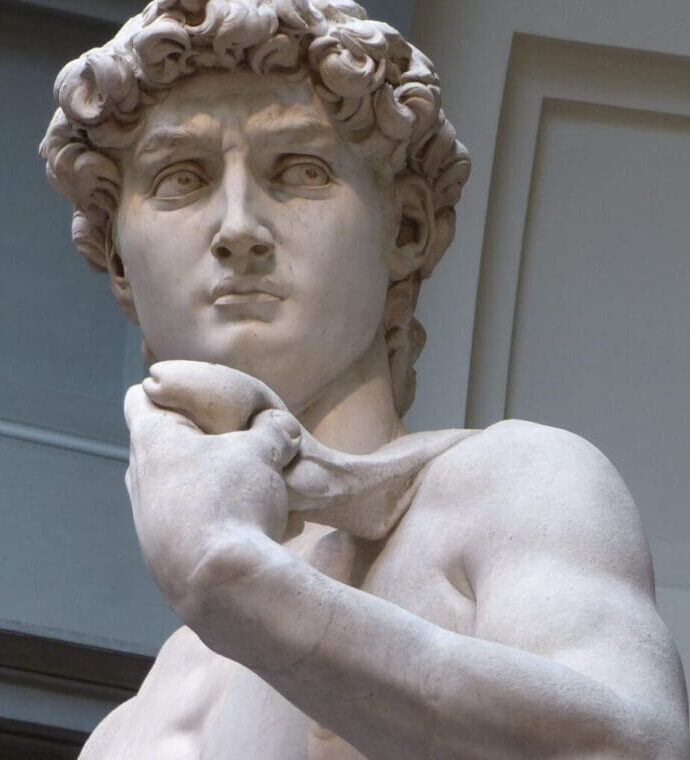
Embark on a journey into Renaissance Florence including priority access to Michelangelo’s David at the Accademia Gallery as well as visiting Piazza del Duomo, Piazza della Signoria, and the Ponte Vecchio — discovering how art, money and power shaped the Renaissance city.
 Highlights

 Tour Includes

- Tickets and skip the lines access to the Accademia
- Expert, English-speaking private guide
- In-Depth exploration of Florence
 Create Your Custom Journey

Our dedicated team is here to help you design the perfect trip. We’re happy to assist every step of the way.
We’ve Got You Covered!

Can’t make your trip? Cancel up to 24 hours in advance for a full refund, minus any ticket costs.
ITINERARY
What To Expect On Your Tour
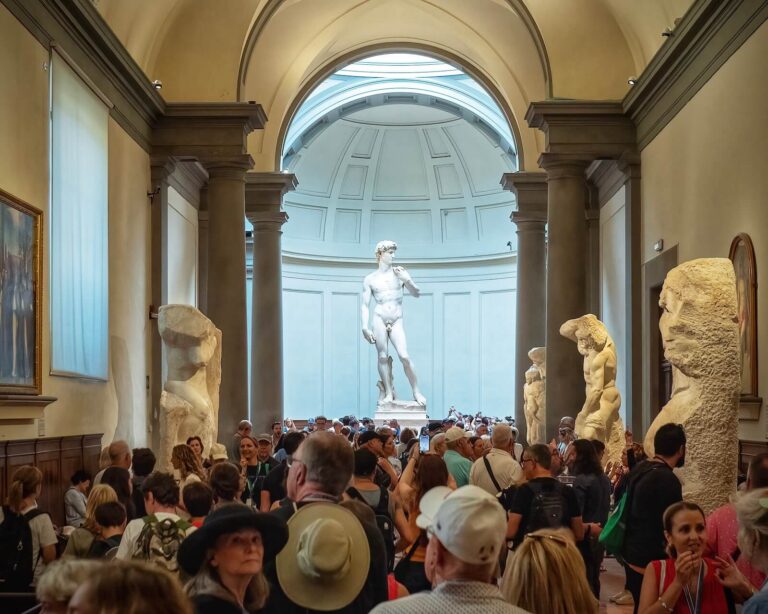
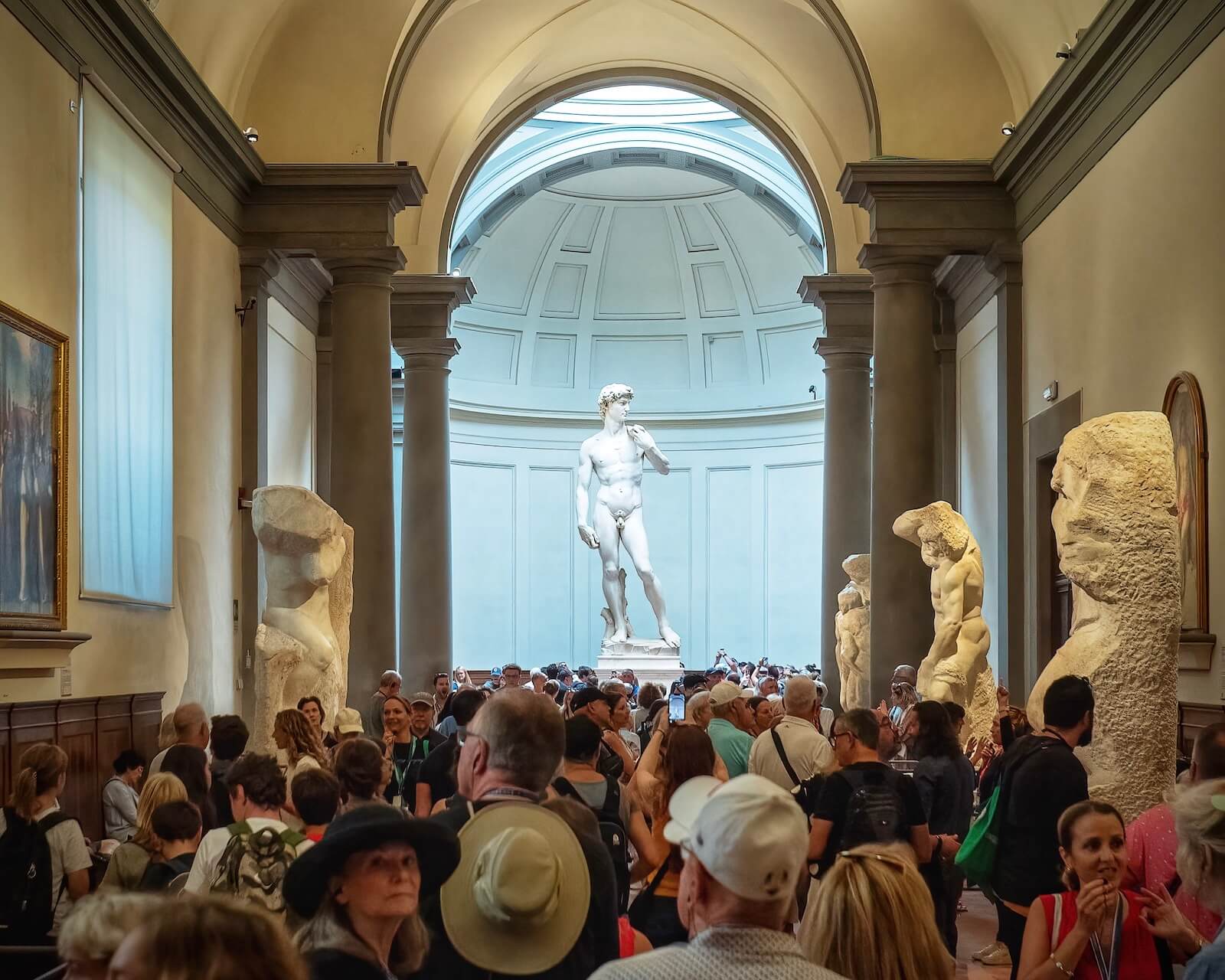
The Accademia Gallery
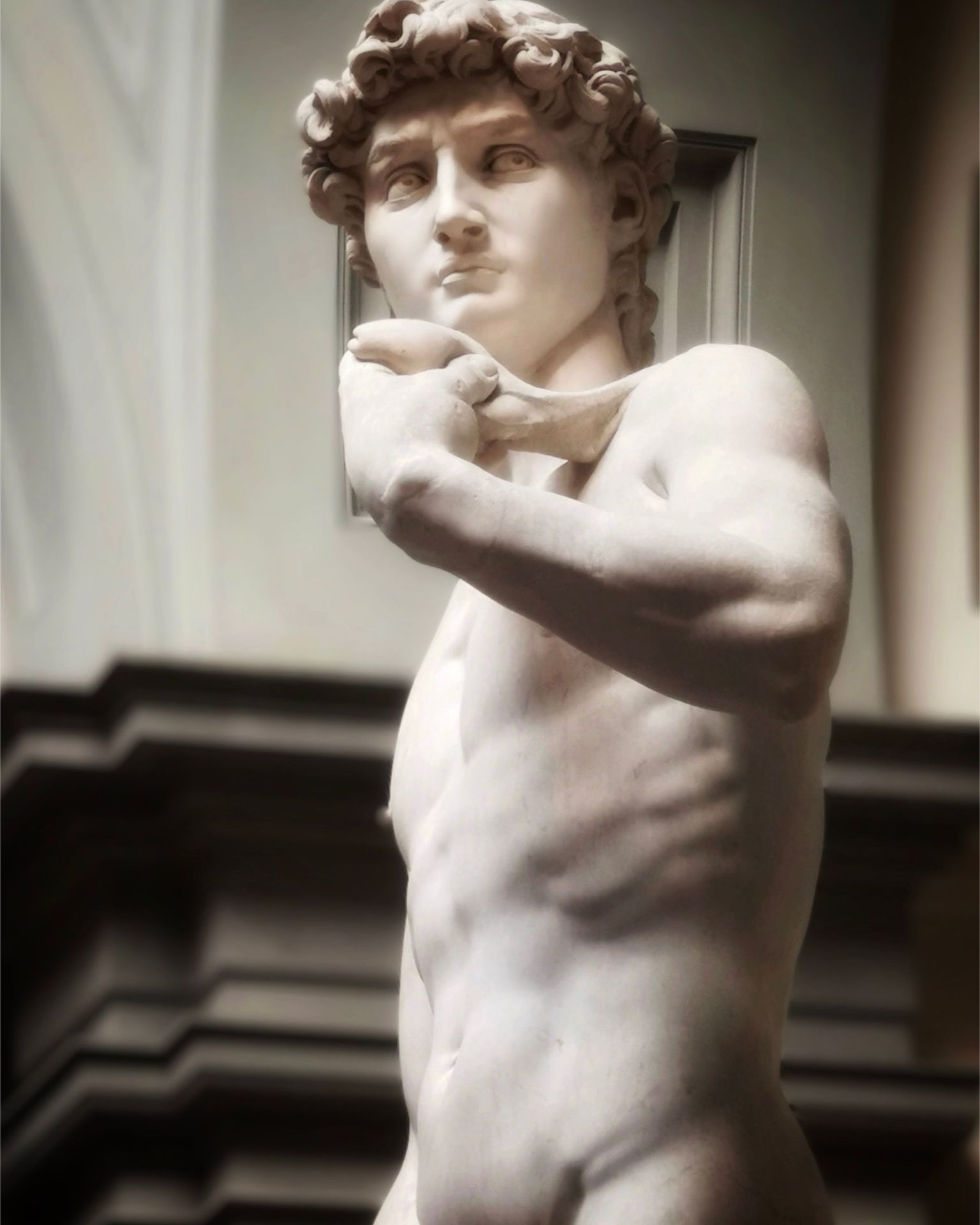
Come face-to-face with Michelangelo's David
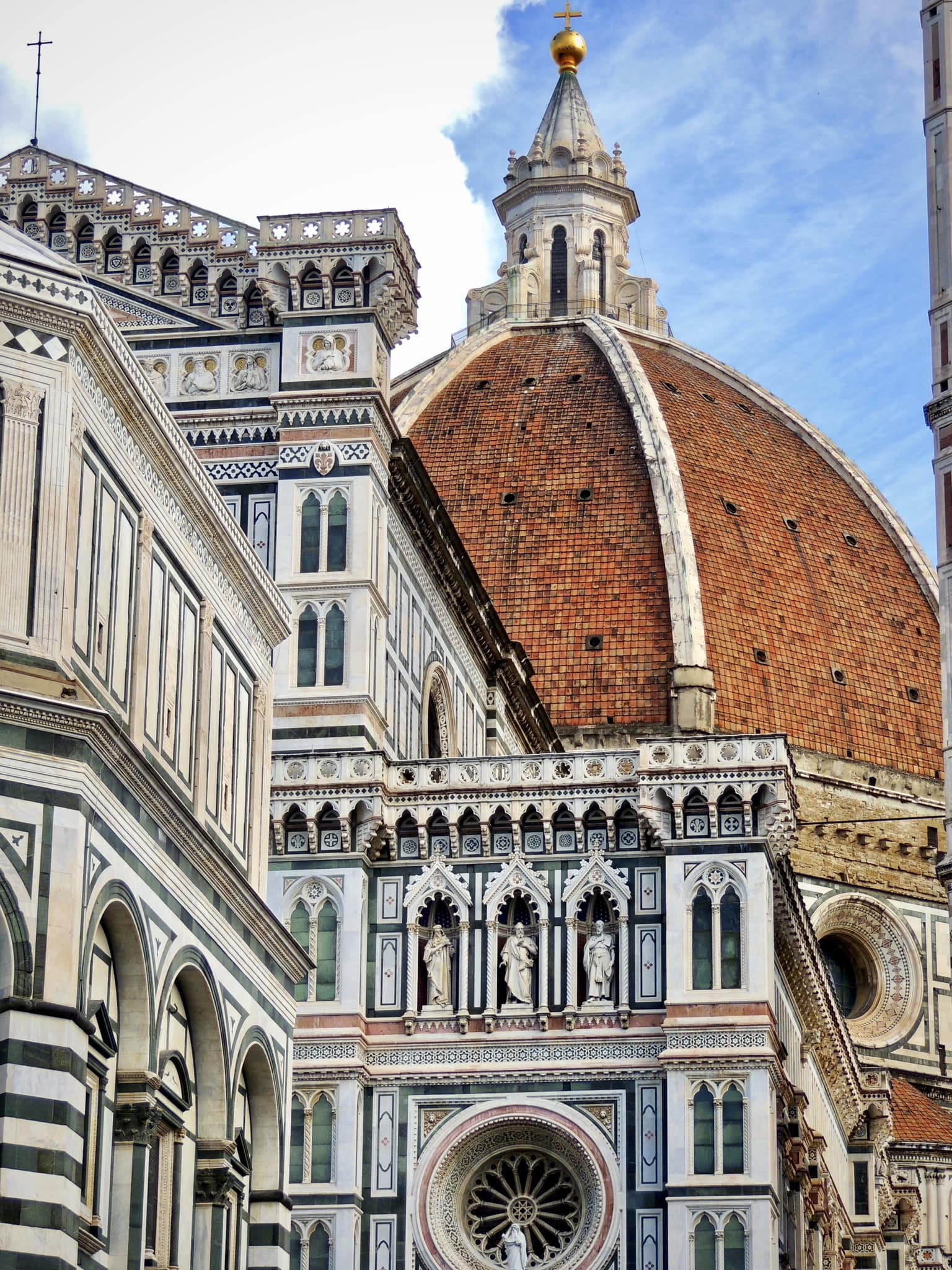
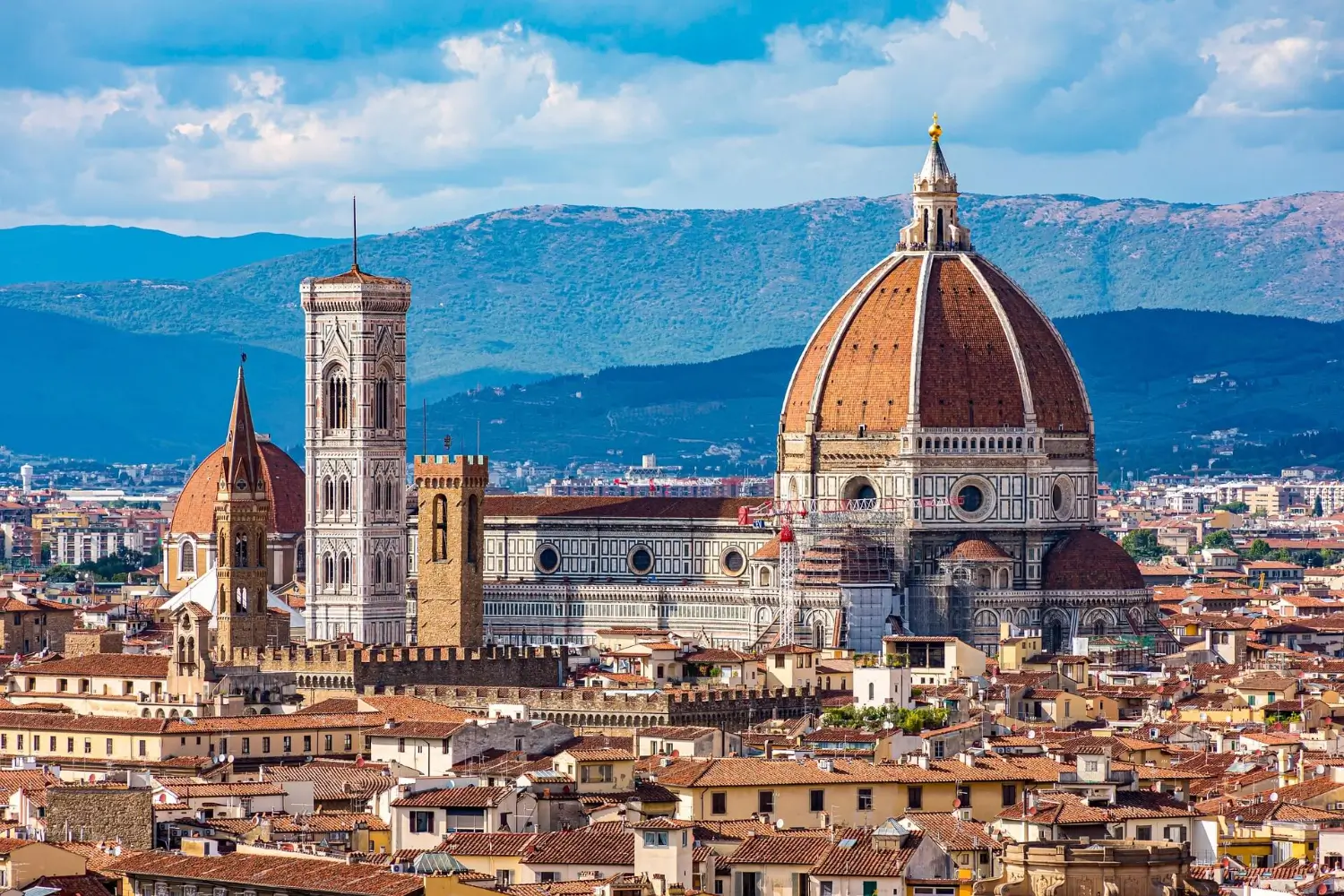
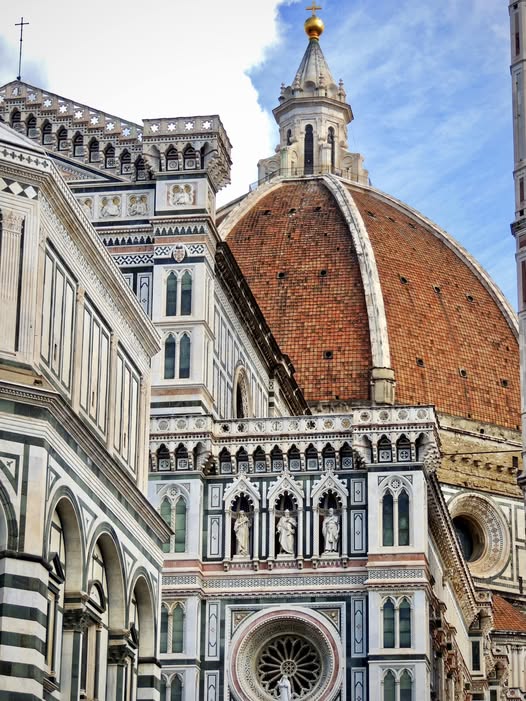
Stepping into Piazza del Duomo, you enter the ceremonial and spiritual center of Florence. Cathedral, baptistery, and bell tower rise in harmonious dialogue, their polychrome marble façades reflecting centuries of ambition and devotion.
Above them all soars Brunelleschi’s dome — an audacious feat completed in 1436 without the traditional wooden centering thought necessary to support such a structure. Its innovative double-shell design not only solved a practical problem but announced a new age of engineering and intellectual confidence. Florence had dared to attempt what others believed impossible — and succeeded.
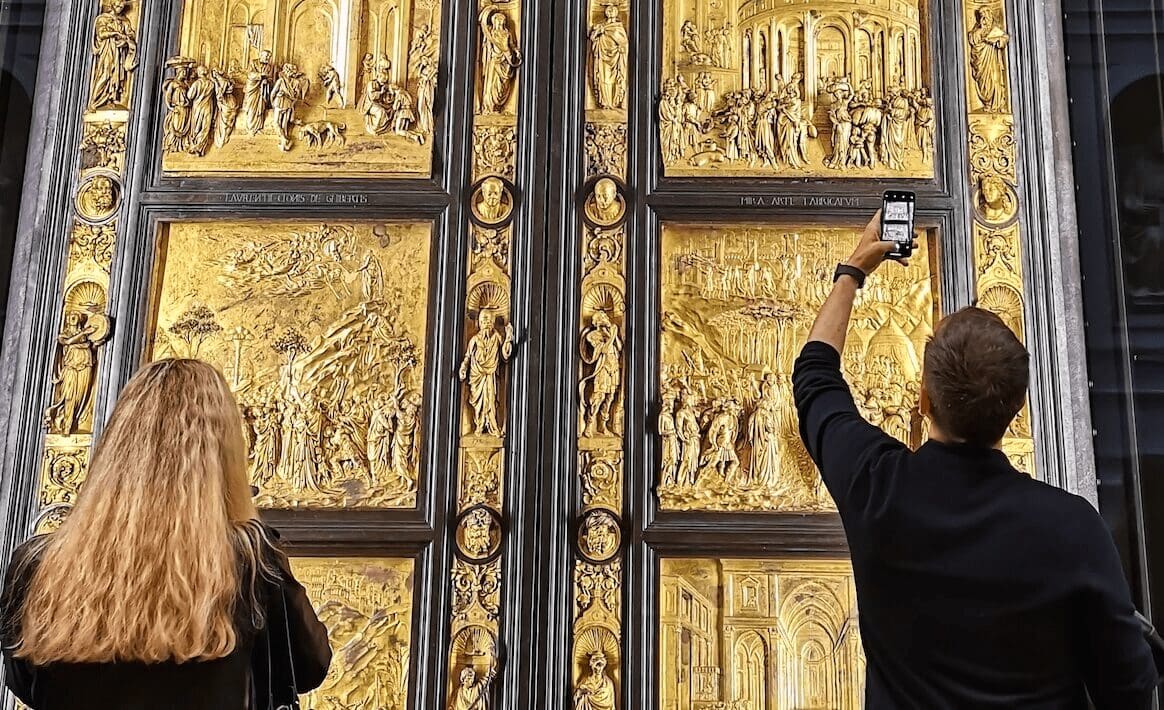
Facing the cathedral stands the ancient Baptistery, whose bronze doors by Lorenzo Ghiberti became a defining achievement of early Renaissance art. Their narrative panels, later praised as the “Gates of Paradise,” demonstrate a new mastery of perspective and storytelling in relief. In this square, mathematics, faith, artistry, and civic identity converge, revealing the spirit that propelled Florence into the forefront of European culture.
Please note that we will admire Brunelleschi’s dome from the Piazza del Duomo, the best vantage point from which to see this incredible feat of engineering – to make the most of your touring time we do not enter the cathedral itself.


Piazza del Duomo
Architecture that changed the skyline of Europe
Stepping into Piazza del Duomo, you enter the ceremonial and spiritual center of Florence. Cathedral, baptistery, and bell tower rise in harmonious dialogue, their polychrome marble façades reflecting centuries of ambition and devotion.
Above them all soars Brunelleschi’s dome — an audacious feat completed in 1436 without the traditional wooden centering thought necessary to support such a structure. Its innovative double-shell design not only solved a practical problem but announced a new age of engineering and intellectual confidence. Florence had dared to attempt what others believed impossible — and succeeded.
Facing the cathedral stands the ancient Baptistery, whose bronze doors by Lorenzo Ghiberti became a defining achievement of early Renaissance art. Their narrative panels, later praised as the “Gates of Paradise,” demonstrate a new mastery of perspective and storytelling in relief. In this square, mathematics, faith, artistry, and civic identity converge, revealing the spirit that propelled Florence into the forefront of European culture.
Please note that we will admire Brunelleschi’s dome from the Piazza del Duomo, the best vantage point from which to see this incredible feat of engineering – to make the most of your touring time we do not enter the cathedral itself.

Piazza della Signoria & the Loggia dei Lanzi
A public stage for power and persuasion
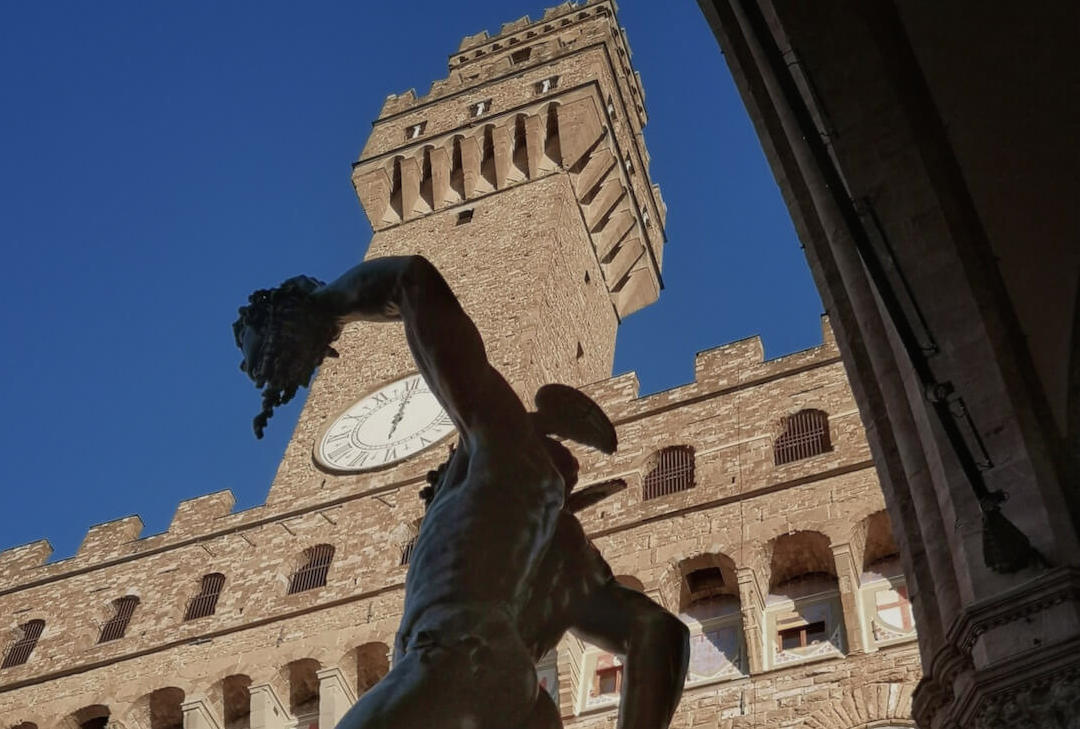
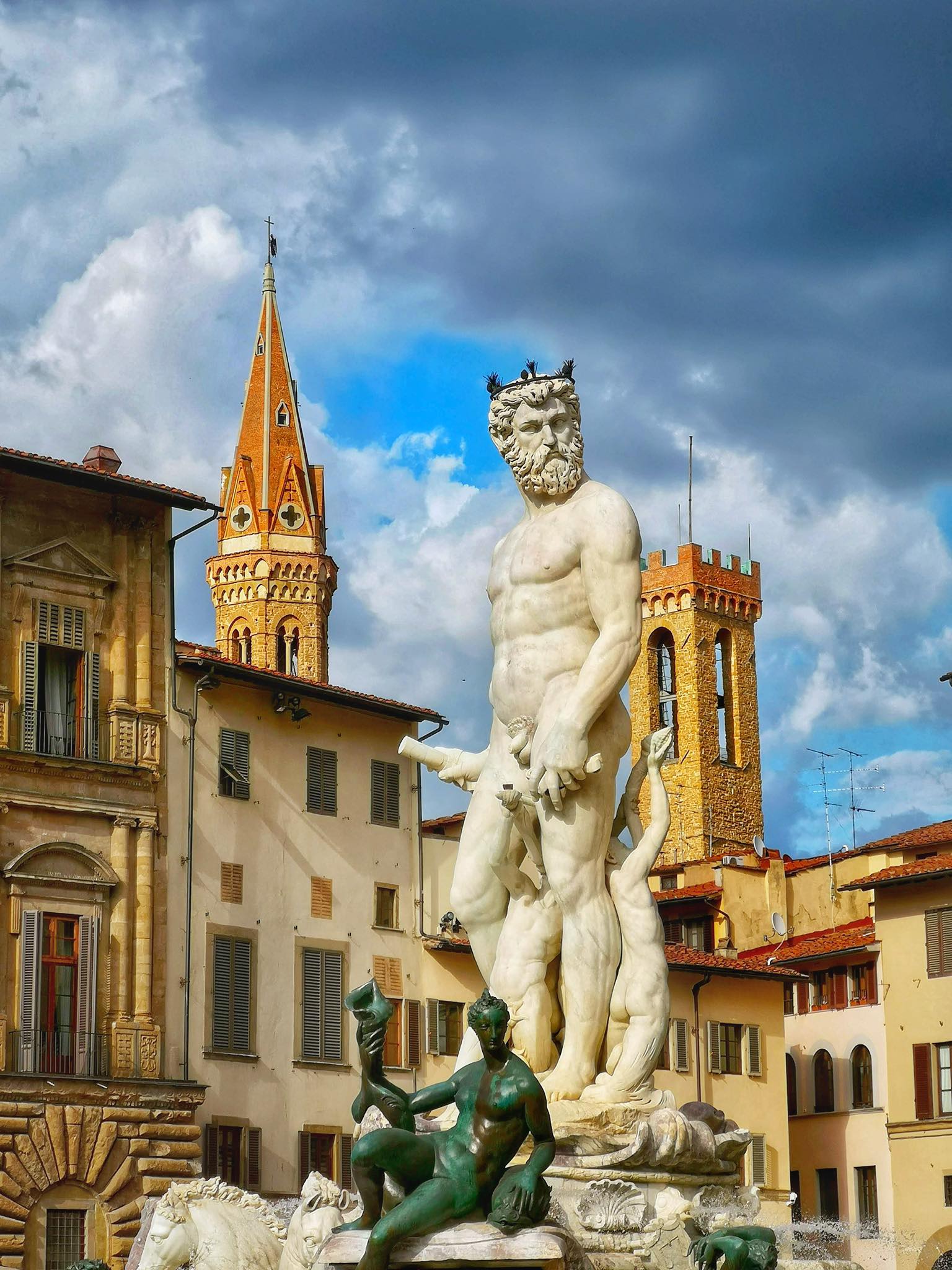
If the Duomo was the city’s spiritual heart, Piazza della Signoria was its political nerve center. Here, beneath the imposing silhouette of the Palazzo Vecchio, the Florentine Republic governed and proclaimed its authority.
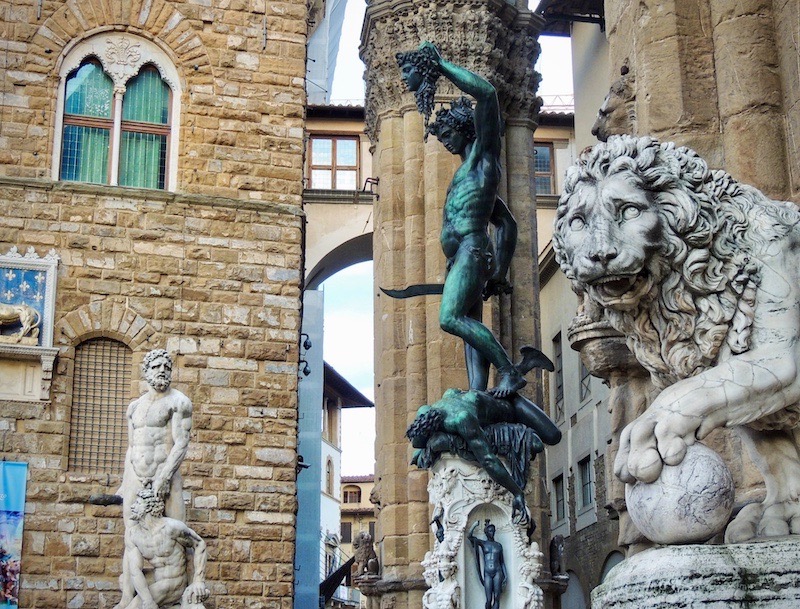
Under the open arches of the Loggia dei Lanzi, sculpture unfolds in dramatic scenes drawn from myth and history. These were not private commissions hidden in palaces, but deliberate public statements. Perseus raising the head of Medusa, Hercules triumphant in combat — such images reinforced ideals of strength, vigilance, and civic virtue.
Walking through the square, you see how art functioned as rhetoric. Statues addressed the citizenry directly, transforming the piazza into a gallery without walls. In this setting, the relationship between artistic excellence and political identity becomes unmistakably clear.

Ponte Vecchio & the Streets of Florence
Where the Renaissance still feels alive
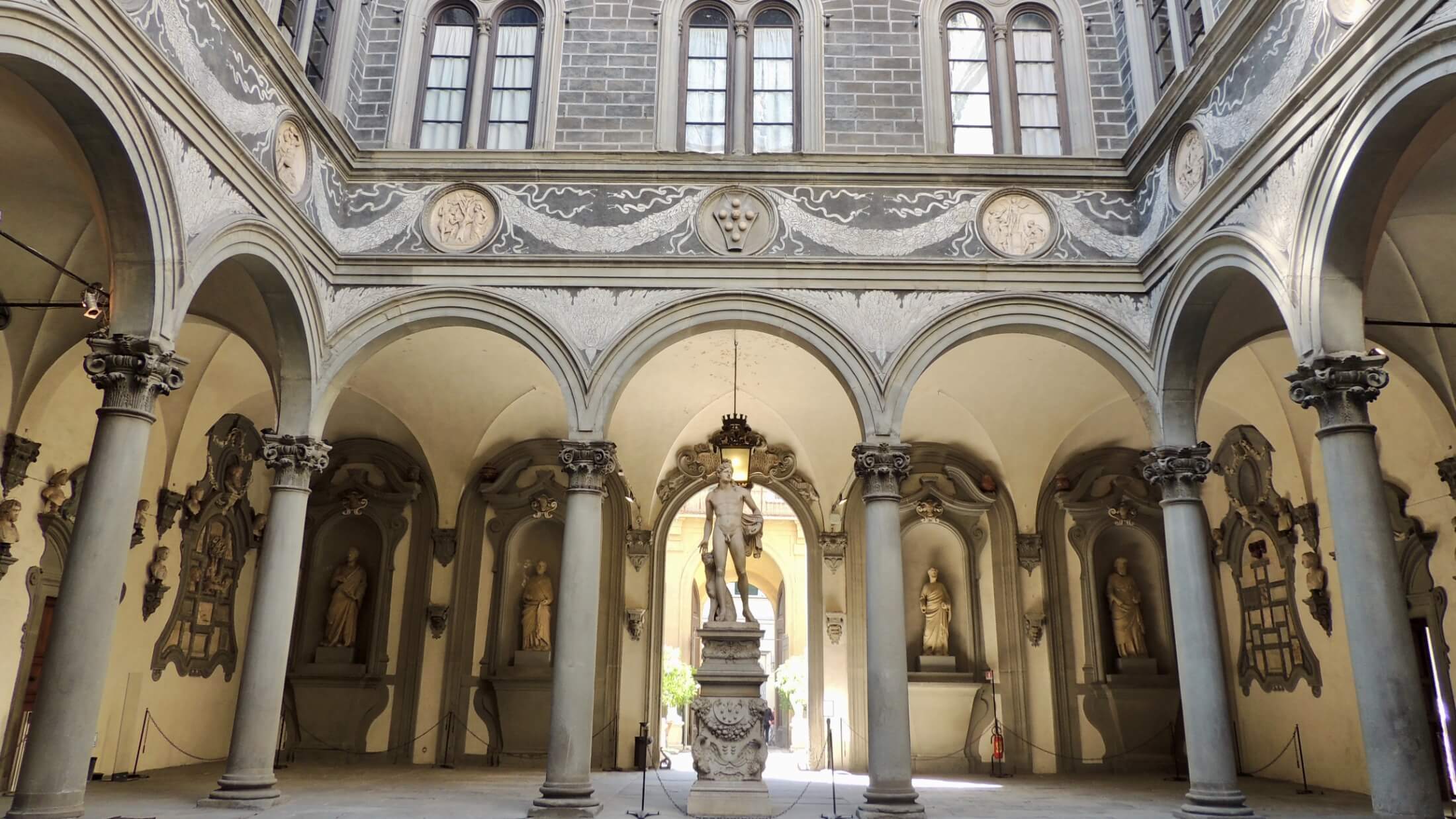
Leaving the great squares behind, the tour threads through Florence’s narrow medieval streets. Stone façades, discreet courtyards, and traces of former guild halls hint at the mercantile wealth that financed artistic experimentation. The city’s scale remains intimate; distances are short, and history feels close at hand.
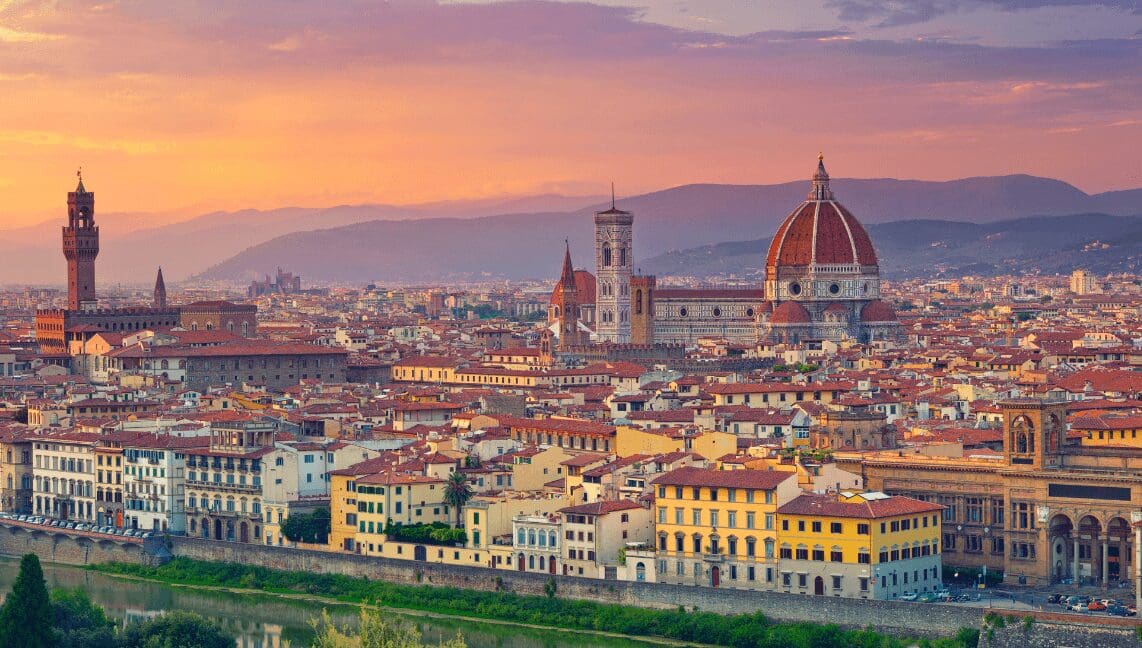
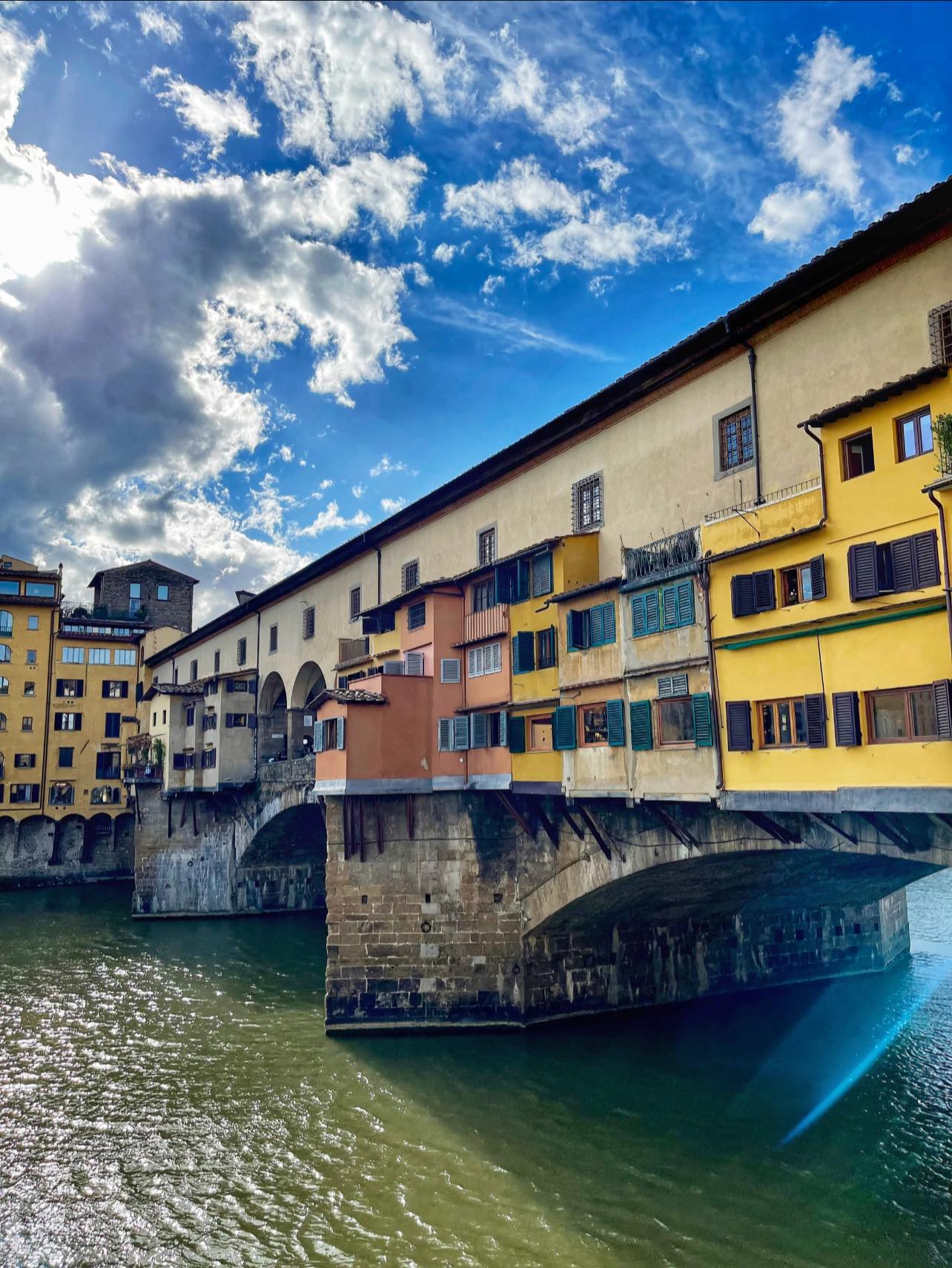
Crossing the Ponte Vecchio, suspended above the River Arno since the 14th century, you pause to take in one of Florence’s defining views. Shops still line the bridge as they have for centuries, while the river below once carried wool, silk, and marble that sustained the city’s prosperity.
From this vantage point, Florence comes into focus as a coherent whole. Masterpieces within museums, sculpture in open squares, revolutionary architecture, and everyday commerce all intersect within a compact urban landscape. The Renaissance here is not confined to a single monument — it is woven into the fabric of the city itself.

Create Your Custom Journey
Our dedicated team is here to help you design the perfect trip. We’re happy to assist every step of the way.