We’re asked all the time about the best way to visit Florence in a day. In an ideal world, you’d give this city considerably more time than that — four or five days at minimum, and even then you’d leave with a list of things you hadn’t managed to see. Florence is one of those places that reveals itself slowly, and the more you put in, the more it gives back.
But we also know that travel rarely arranges itself according to ideal conditions. If one day in the City of the Medici is what you have, then one day is what we’ll work with — and it is, with the right plan, enough to experience something genuinely extraordinary. Think of what follows as the trailer to a film you’ll want to see in full. You’ll leave having stood before some of the most important works of art ever made, having walked streets that Dante, Michelangelo and Leonardo walked before you, having eaten well and drunk better. You’ll also leave, almost certainly, already planning your return.
Read on for our guide to the best way to spend one day in Florence.
Florence Tours
Experience the Magic of Florence
MORNING
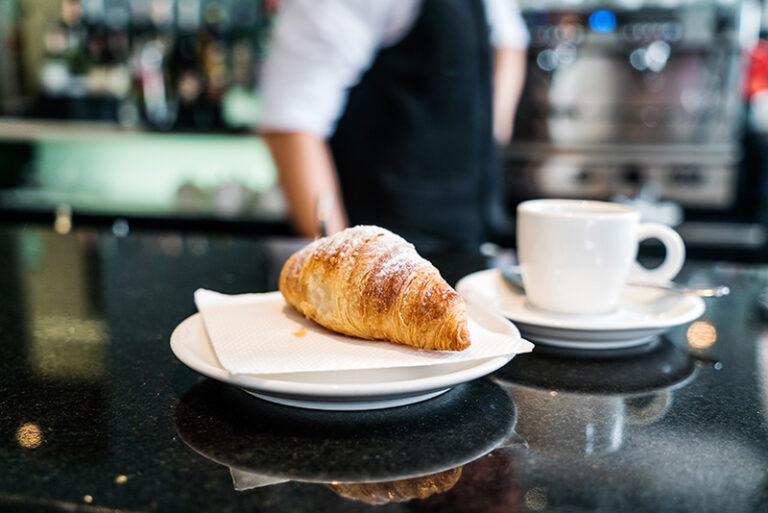
Florence rewards early risers, and the city at 8am — before the tour groups have assembled and the main streets have filled — is a quieter, more intimate place than the one most visitors experience. Make the most of it by starting with a proper Italian breakfast, which means a cornetto and a cappuccino, taken standing at a bar counter in the manner of every Florentine going about their morning.
Where you go will depend on your neighbourhood; whatever area you’re staying in (more on that here in our guide to where to stay in Florence) you’ll be sure to find a quality local neighborhood bar or cafe to fit the bill. That said, a few addresses are worth seeking out. Caffè Scudieri, right in the historic centre near the Duomo, has been turning out excellent pastries in a beautifully preserved old-world interior since 1947. Cibrèo, near the Sant’Ambrogio market, is more elegant and slightly off the tourist trail – the kind of place that reminds you Florence is a real city with real daily rhythms, not merely an open-air museum.
If you’re staying near the Arno, Melaleuca offers something a little different: an Australian-influenced bakery with exceptional coffee and pastries, popular with the city’s international community and worth the slight detour.

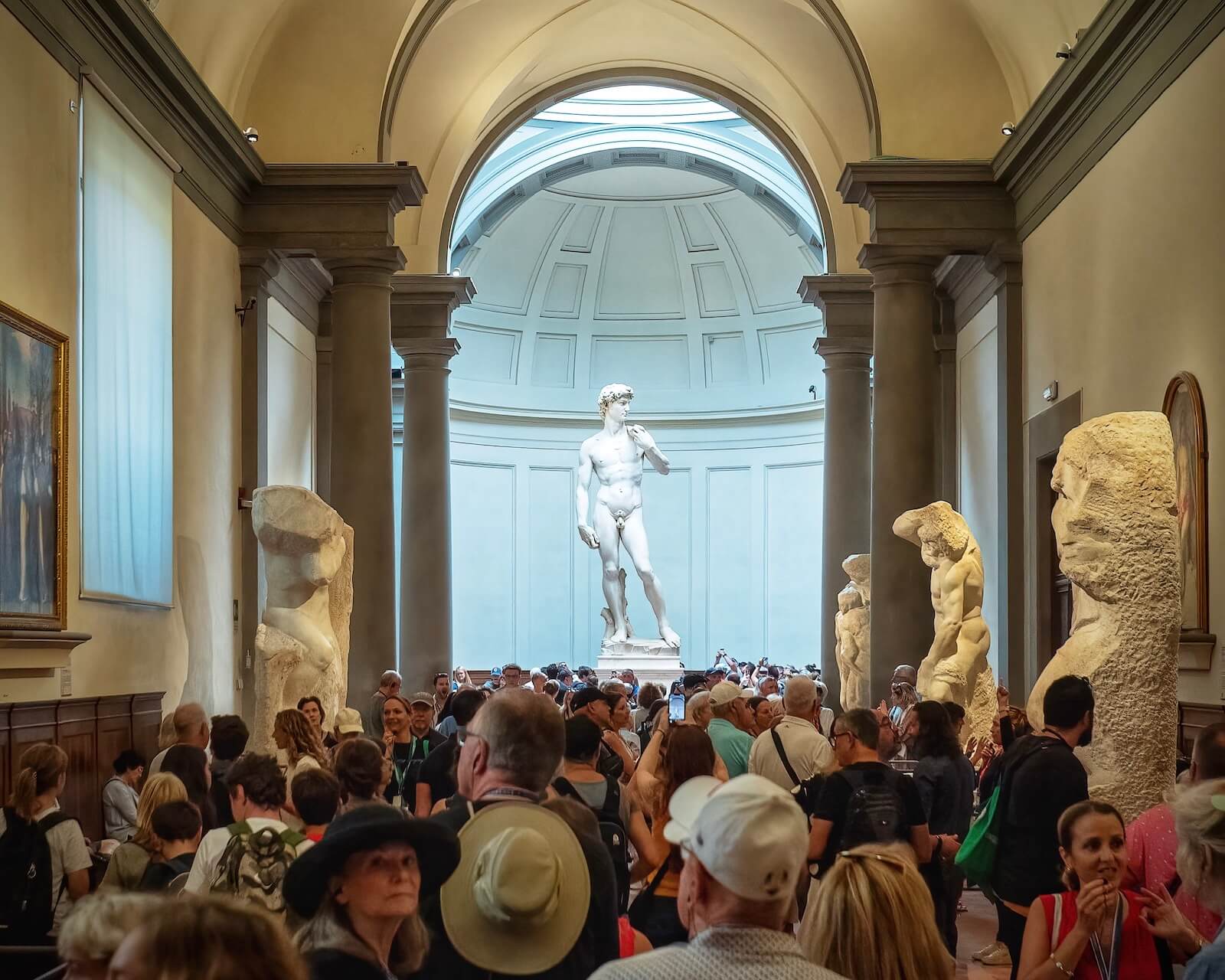
With little time to waste, we’re going to be hitting the ground running. Our first stop is the Accademia Gallery, home to Michelangelo’s iconic David. You will have booked your timed entrance ticket in advance — the queues without one can be punishing — and so you’ll move straight through to the main event.
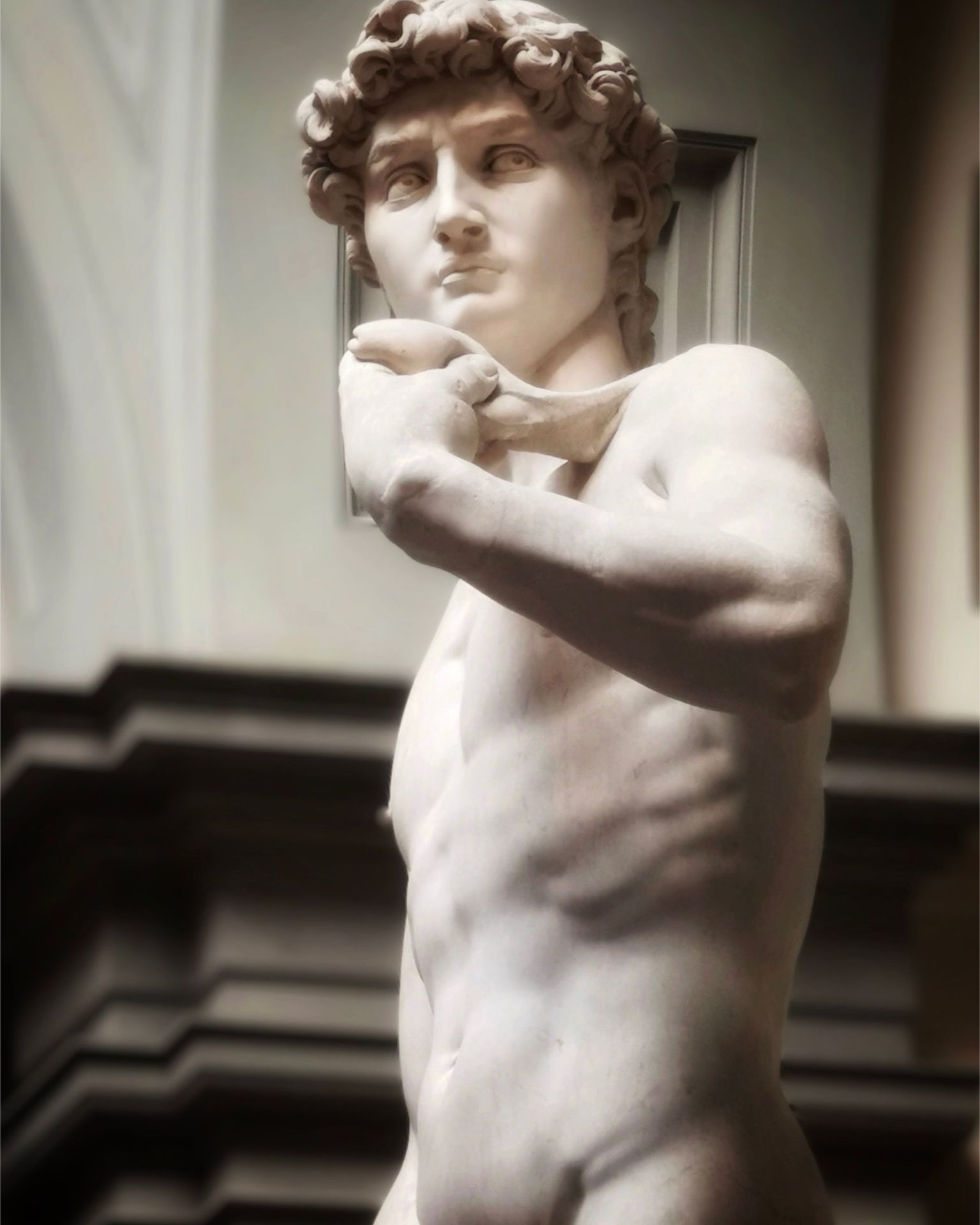
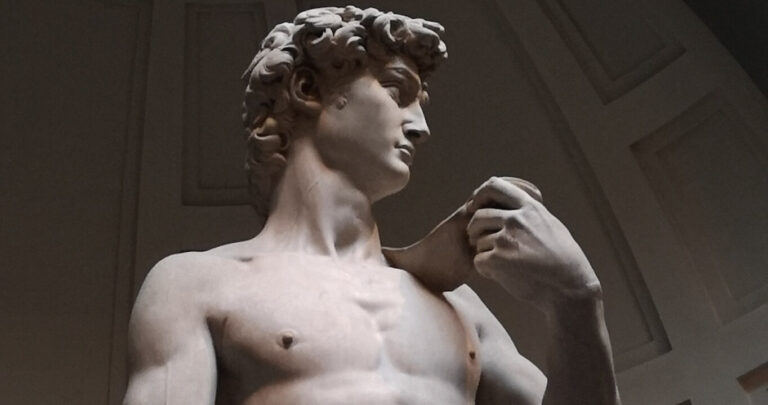
Nothing quite prepares you for the first sight of the statue. You know it from photographs, from reproductions, from a thousand cheap copies in souvenir shops across Tuscany — and none of it matters, because the real thing operates at a completely different register.
Michelangelo carved the David between 1501 and 1504, beginning with a block of marble that had already been worked on and abandoned by two previous sculptors, and produced a figure so alive in its tension and concentration — the moment before the battle, not after — that it still stops visitors in their tracks five centuries later. The slight overscaling of the hands and head, designed to compensate for the original intended viewing angle high on a cathedral buttress, only adds to the sense of barely contained power up close.
Give yourself an hour here — the gallery has other works worth seeing, including Michelangelo’s extraordinary unfinished Prisoners, four figures that appear to be struggling to free themselves from the marble, but the day is full and you’ll want your energy for what comes next.
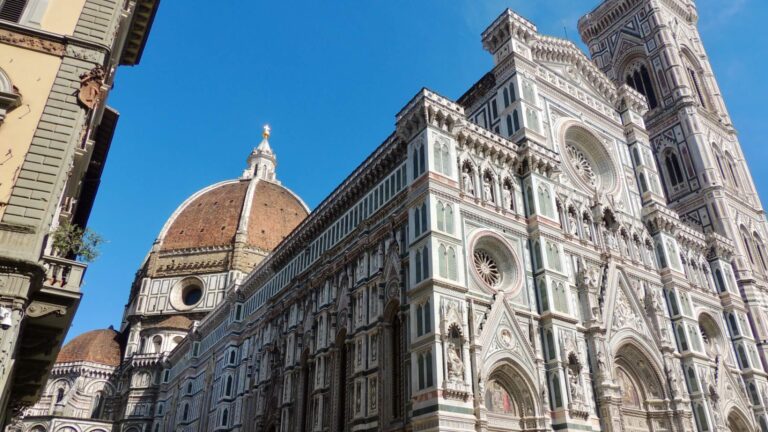
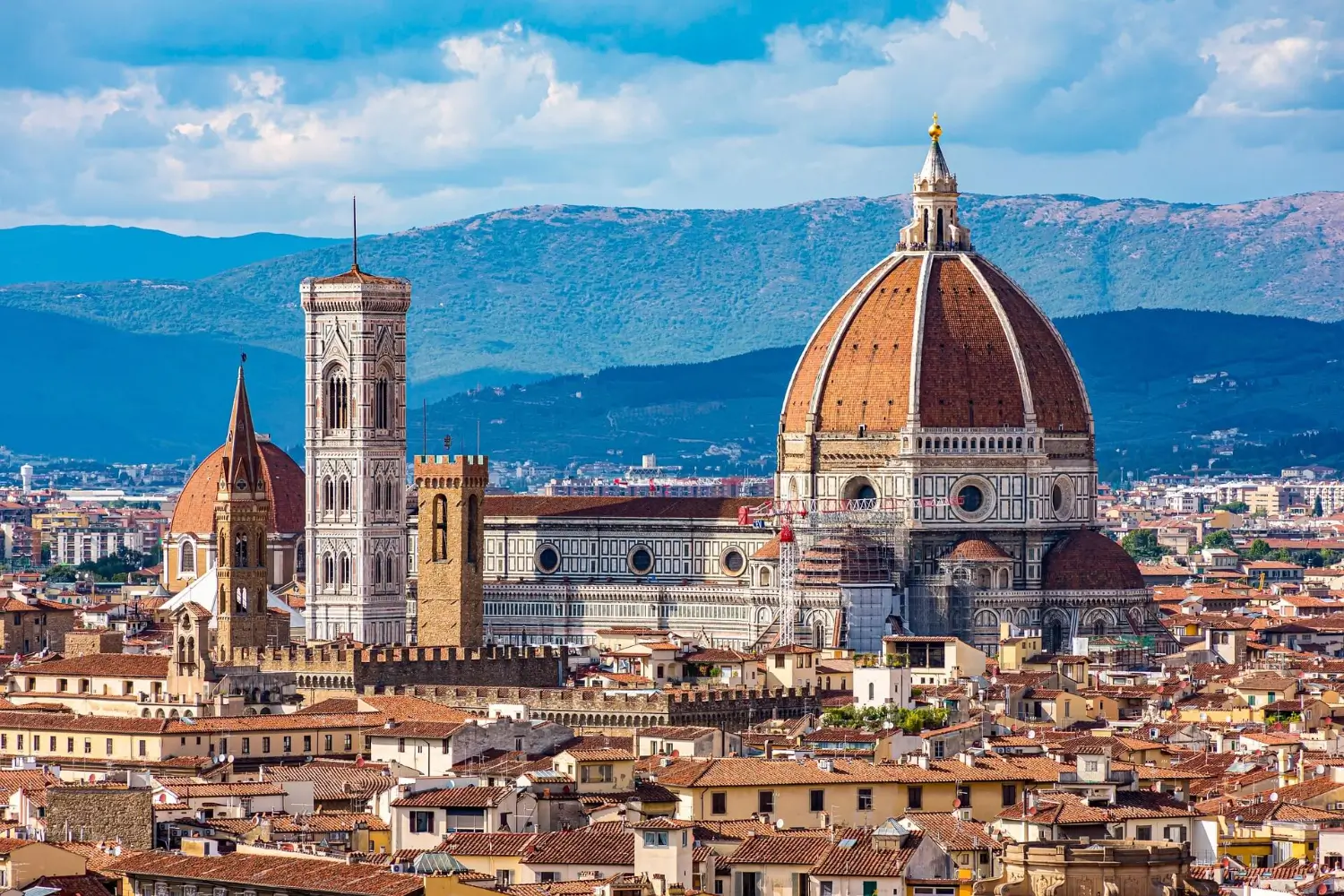
A ten-minute walk south from the Accademia brings you to one of the great urban set-pieces in Europe. The Piazza del Duomo — with its cathedral, its baptistery and its bell tower arranged in a seemingly casual cluster that manages to feel both overwhelming and entirely harmonious — is the physical and spiritual heart of Florence, the point from which the city’s extraordinary history radiates outward in all directions.
The cathedral of Santa Maria del Fiore was begun in 1296 and took nearly 150 years to build, its construction a statement of Florentine ambition so extravagant that the city had committed, in writing, to building the largest church in the Christian world. The problem — which nobody had quite thought through at the outset — was the dome. The nave was complete, the drum was built, but by the early 15th century the cathedral sat open to the sky, its planned crowning element seemingly beyond the engineering capabilities of anyone alive. Then Filippo Brunelleschi arrived.
His solution — a double-shell dome — was so far ahead of its time that it remains one of the great feats of engineering in human history. Completed in 1436, it is still the largest masonry dome ever built, and it dominates the Florentine skyline from every angle.
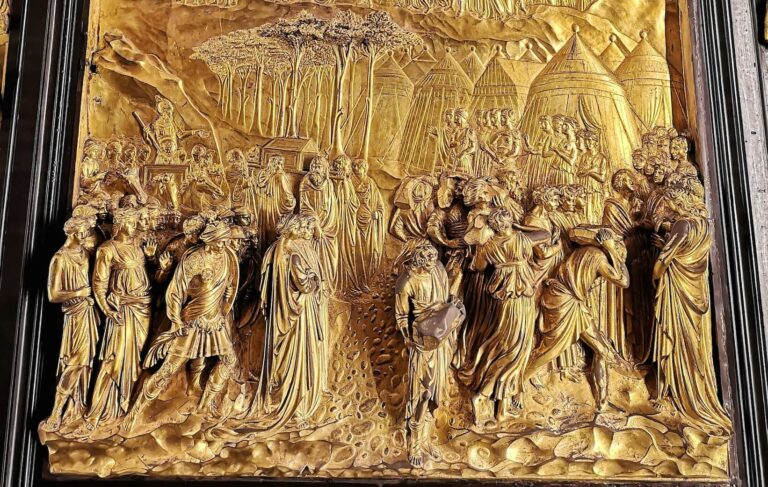
On a tight schedule you’re unlikely to have time to enter the cathedral itself; the interior, while impressive, is not an absolute must. Instead, turn your attention to the Baptistery of San Giovanni directly opposite — one of the oldest buildings in Florence, dating in its current form to the 11th century, and the place where Dante himself was baptised.
Its three sets of bronze doors are among the masterworks of Renaissance sculpture, but it is the east doors, completed by Lorenzo Ghiberti in 1452 after 27 years of work, that will stop you. Michelangelo called them the Gates of Paradise, and the name has stuck: ten gilded panels depicting scenes from the Old Testament rendering in a extraordinarily exacting perspective.
If energy and time permit, the campanile designed by Giotto soars 84 metres above the piazza, its exterior clad in the red, white and green marble that would later become the colours of the Italian flag. The 414-step climb rewards you with one of the finest views in Florence — and the unusual experience of finding yourself eye-level with Brunelleschi’s dome, close enough, almost, to touch.
AFTERNOON
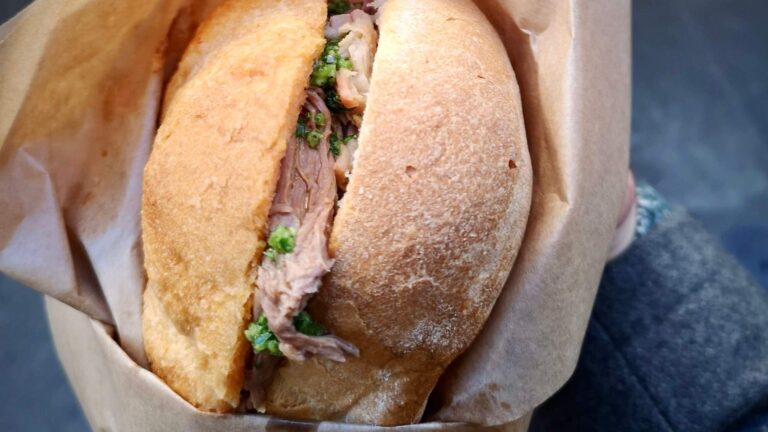
By the time you’re done at the Duomo, it will be ticking over towards lunch o’clock. Thankfully, this is a great area to find yourself in for refueling. If you are in need of a relaxing sit-down lunch with all the trimmings, then head to the renowned old-school Trattoria Sergio Gori, where the classics of Tuscan cuisine are turned out with impeccable quality. The only problem is that you’ll likely be so replete that you’ll lose your sightseeing energy for the rest of the day. Perhaps better, then, to trust yourself to Florence’s enviable street-food culture.
Iconic All’Antico Vinaio will make you a sandwich to die for alongside a glass of wine that you can munch on the street – combinations might include finocchiona salami with pecorino and truffle cream, spicy nduja with stracciatella, or prosciutto with fig jam and gorgonzola – but the queues can be intimidating. Just as good is the less famous but equally lip-smacking I Fratellini,a shop front so narrow it barely qualifies as a room, operating since 1875. Try their fabulous schiacciate (a type of flatbread sandwich) with raw sausage, or anchovy and salsa verde.
If you’re feeling adventurous, seek out one of the city’s trippai — street carts serving lampredotto, a Florentine speciality of braised cow’s fourth stomach, slow-cooked in broth with herbs, sliced and served in a roll with salsa verde and a spoonful of hot chilli sauce. It sounds alarming. It is, in fact, deeply delicious — rich and savoury and intensely satisfying — and eating it standing at a street cart in the shadow of a medieval tower is one of the more specifically Florentine things you can do in this city The go-to destinations in this area are L’Antico Trippaio and Trippaio del Porcellino.
Lunch in hand, make your way south through the medieval heart of the city. The streets between the Duomo and the Arno are among the oldest in Florence — this is the neighbourhood where Dante was born, where Giotto and Boccaccio lived, where the first stirrings of the Renaissance were felt in the late 13th century.
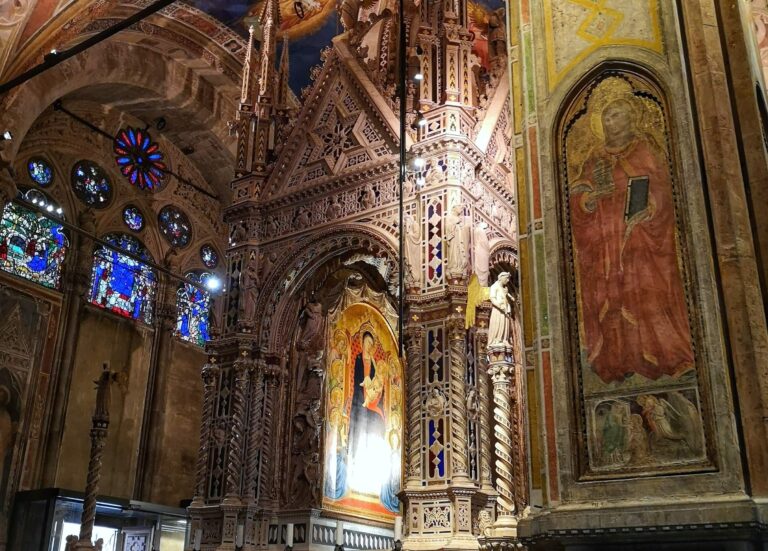
Your first stop is the church of Orsanmichele, one of the strangest and most rewarding buildings in the city. It began its life in the 13th century as a grain market, and was later converted into a church while retaining its distinctive market-hall form: a solid, square, fortress-like building whose exterior is lined with Gothic niches.
Into those niches, between 1339 and 1428, the major guilds of Florence each placed a statue of their patron saint, commissioning the greatest sculptors of the age to make them. The result is an outdoor museum of early Renaissance sculpture of extraordinary quality — works by Ghiberti, Donatello, Verrocchio and Nanni di Banco arranged around the building’s four sides, each one a document of the moment when Florentine sculpture began to break free of the medieval tradition and discover the human figure anew.
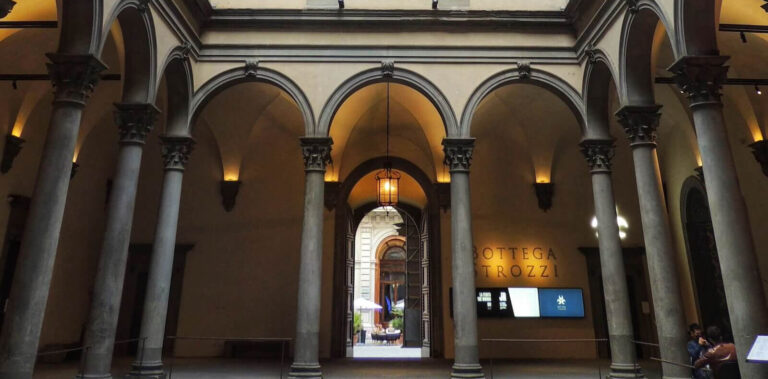
From Orsanmichele, take a short detour west to the Palazzo Strozzi, the largest and most imposing of Florence’s Renaissance palaces, built by the banking family of the same name at the end of the 15th century as a deliberate statement of rivalry with the Medici.
You won’t have time to visit the excellent temporary exhibition space inside (save this for your next trip to Florence), but step through the entrance into the courtyard — a masterpiece of restrained classical architecture by Giuliano da Sangallo — and you’ll understand immediately why it influenced Italian design for the next two centuries.
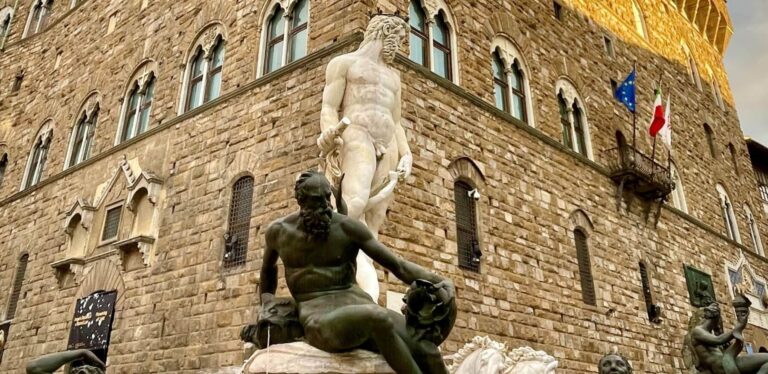
Continue south and you’ll emerge into the Piazza della Signoria, the political heart of Florence for seven centuries and one of the great public spaces in Italy. This is where the Florentines gathered to hear proclamations, witness executions, celebrate victories and mourn defeats — where Savonarola lit his Bonfire of the Vanities in 1497, burning mirrors, books, paintings and fine clothing in a paroxysm of religious fury, and where he himself was burned the following year when the mood of the city shifted against him. The square has a long memory.
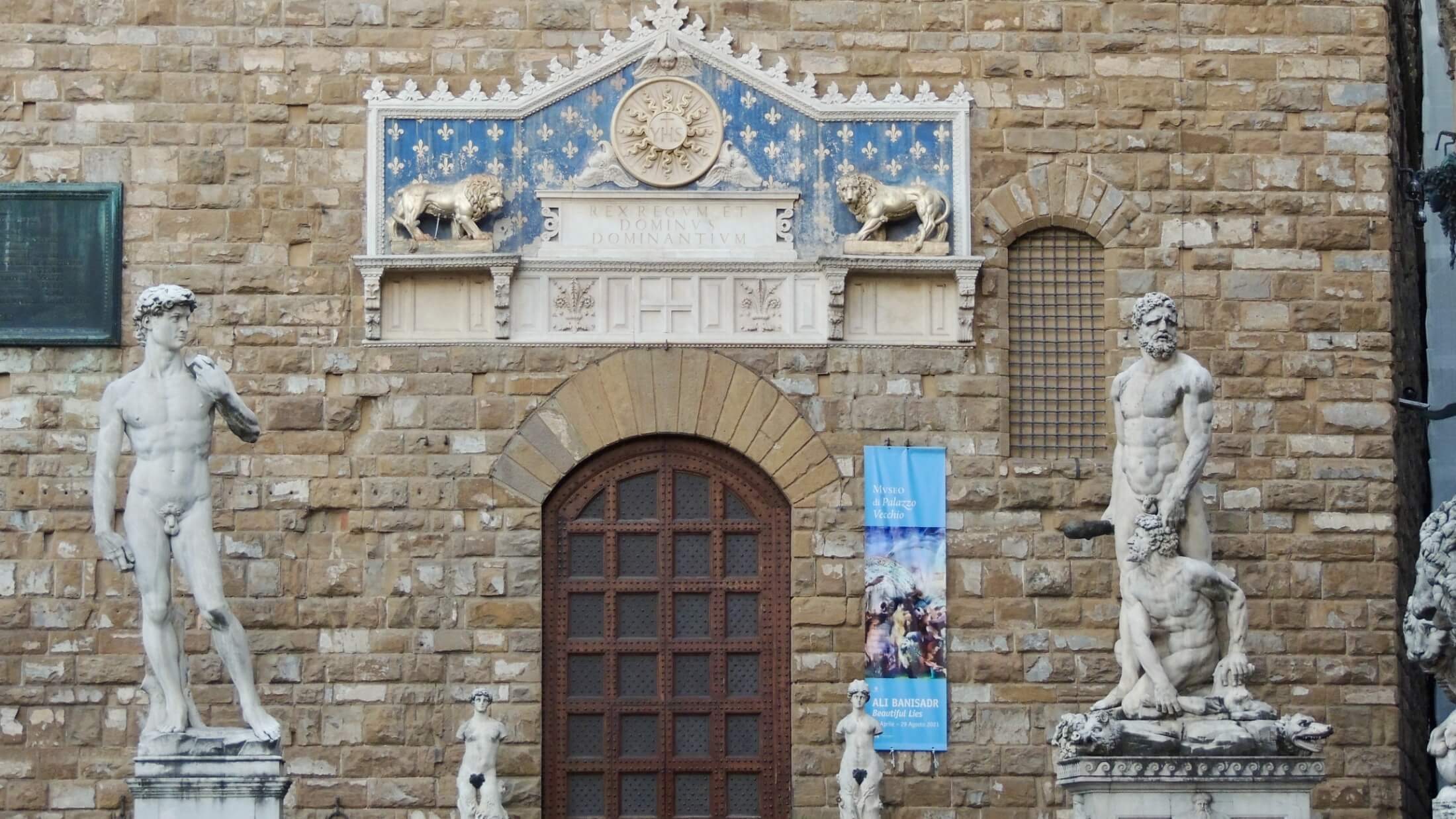
It is dominated by the Palazzo Vecchio, the crenellated medieval fortress-town hall whose 94-metre tower has anchored the Florentine skyline since 1322. The palace served as the seat of city government for centuries and as the official residence of Cosimo I de’ Medici. There is a fine collection of sculpture inside, including a Michelangelo and several works by Donatello, but today the exterior and the square itself will have to suffice.
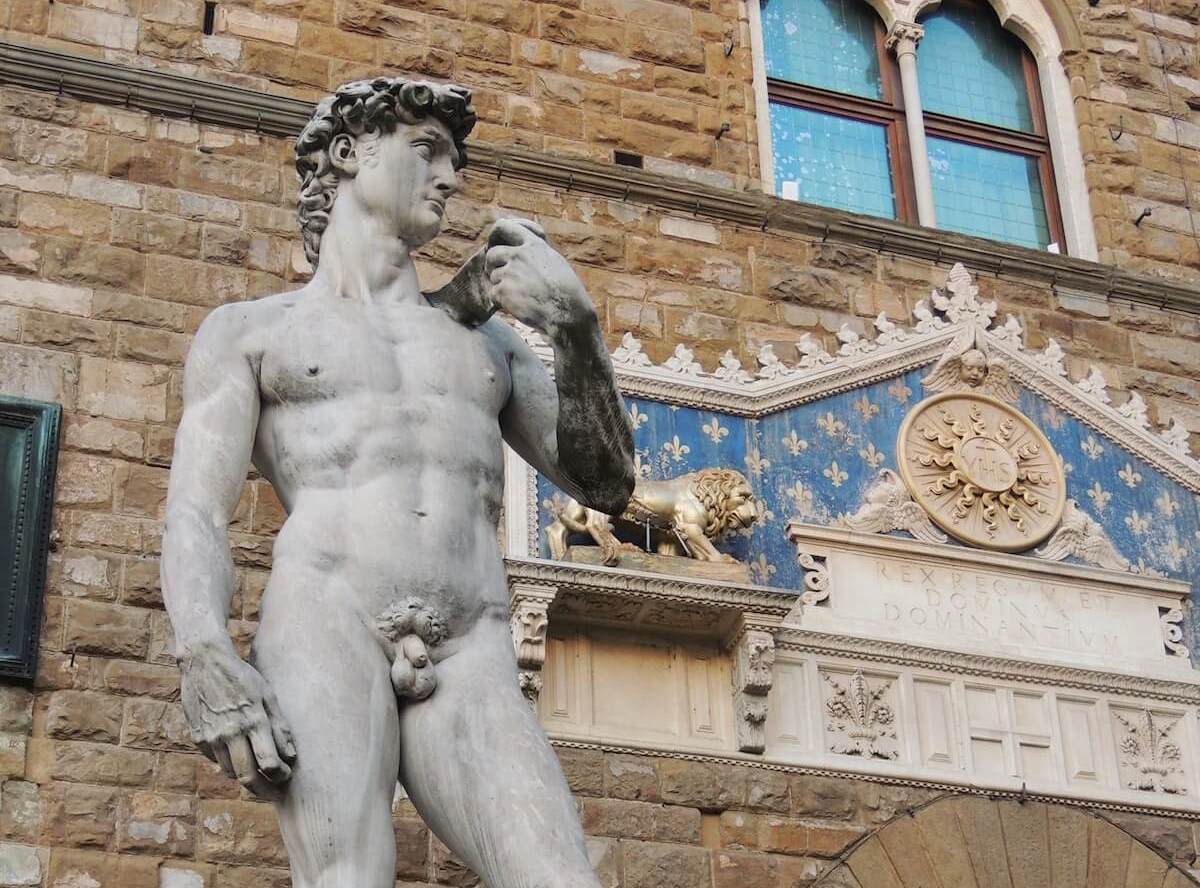
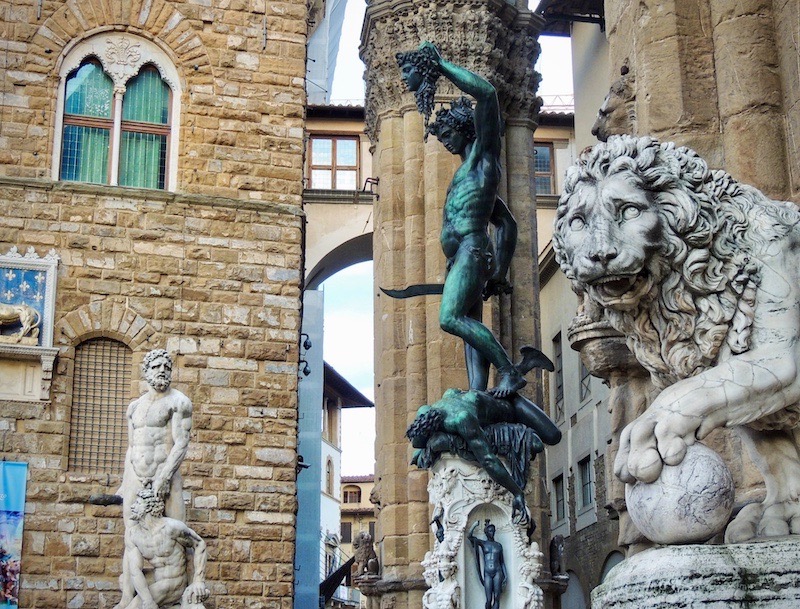
In the square itself, note the copy of Michelangelo’s David that stands at the palace entrance — positioned where the original stood from 1504 until 1873, when it was moved to the Accademia for protection. Near it, Baccio Bandinelli’s Hercules and Cacus, installed in 1534, prompted Benvenuto Cellini to observe that it looked like a sack of melons. We tend to agree with Cellini, and the comment tells you something about the competitive savagery of artistic life in Renaissance Florence.
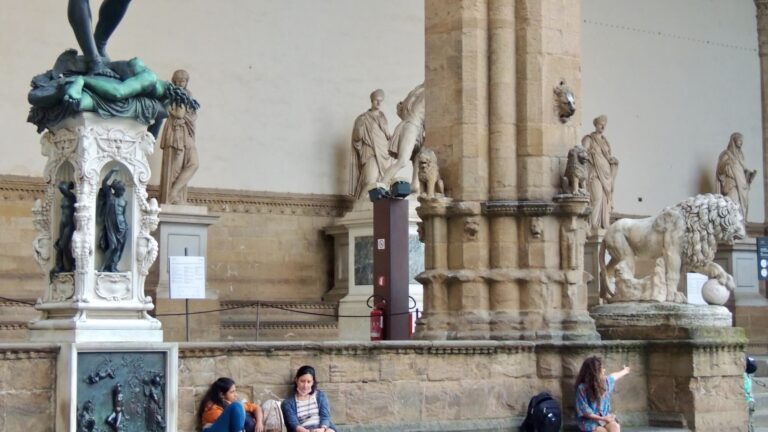
On the southern side of the square, open to the air and free to enter, the Loggia dei Lanzi is one of those places that rewards simply standing still for a few minutes. Built in the 1370s as a space for public ceremonies and the display of civic authority, it now functions as an open-air sculpture gallery of remarkable quality — best of all, it is completely free to enter.
The dominant work is Benvenuto Cellini’s Perseus with the Head of Medusa, cast in bronze between 1545 and 1554 and still widely considered the supreme achievement of the bronze caster’s art. Perseus stands over the headless body of Medusa, holding aloft her severed head with an expression of total composure — the whole composition a controlled explosion of energy and technical daring that left contemporary Florence speechless.
Nearby, Giambologna’s Rape of the Sabine Women, completed in 1583, is the other essential piece — three interlocking figures spiralling upward in a single continuous movement, carved from a single block of marble and designed to be viewed from every angle simultaneously. It was the first large-scale sculpture conceived without a fixed front, and it changed the course of European sculpture. Even if you’re short on time in Florence, allow time for these.
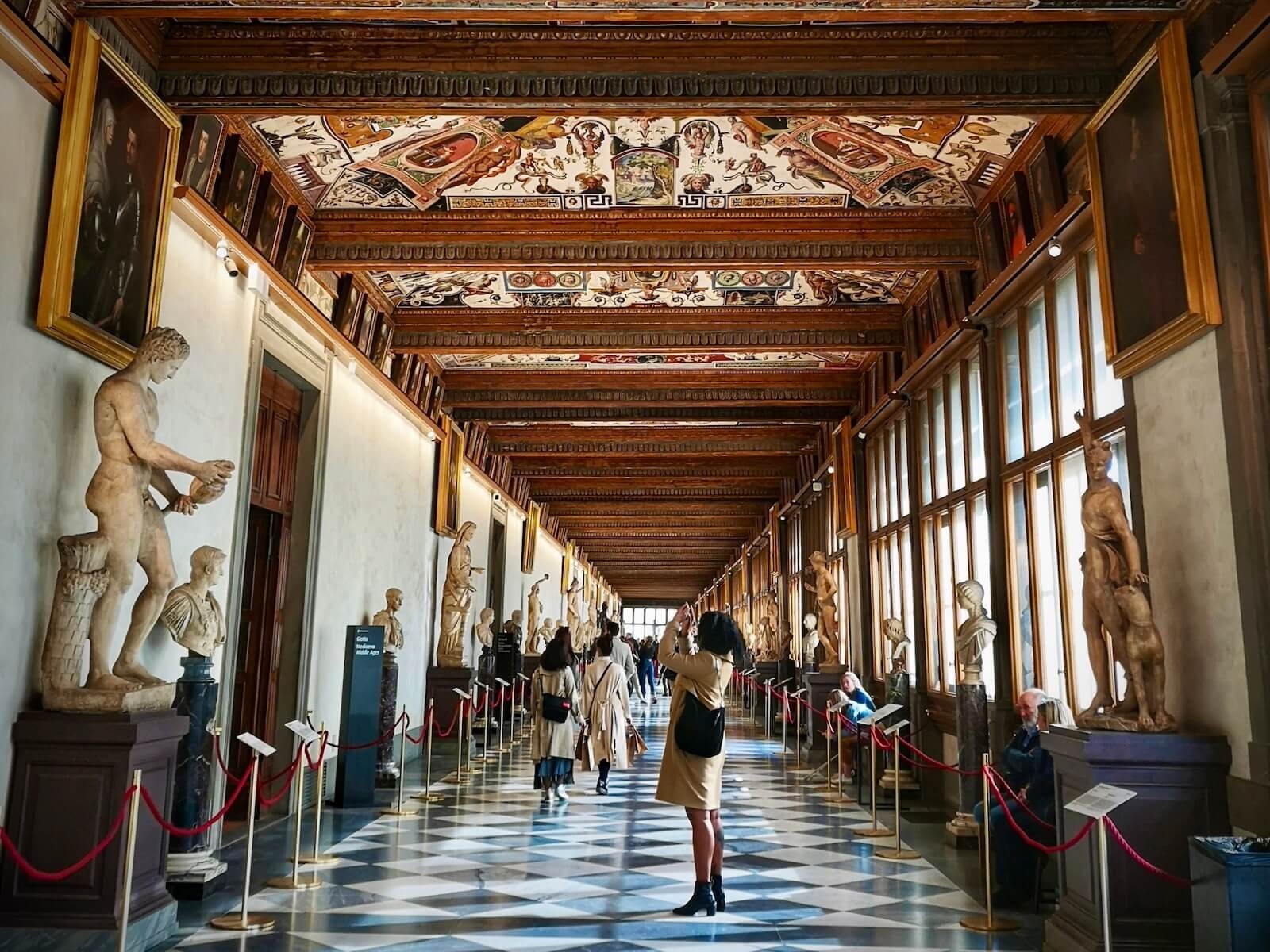
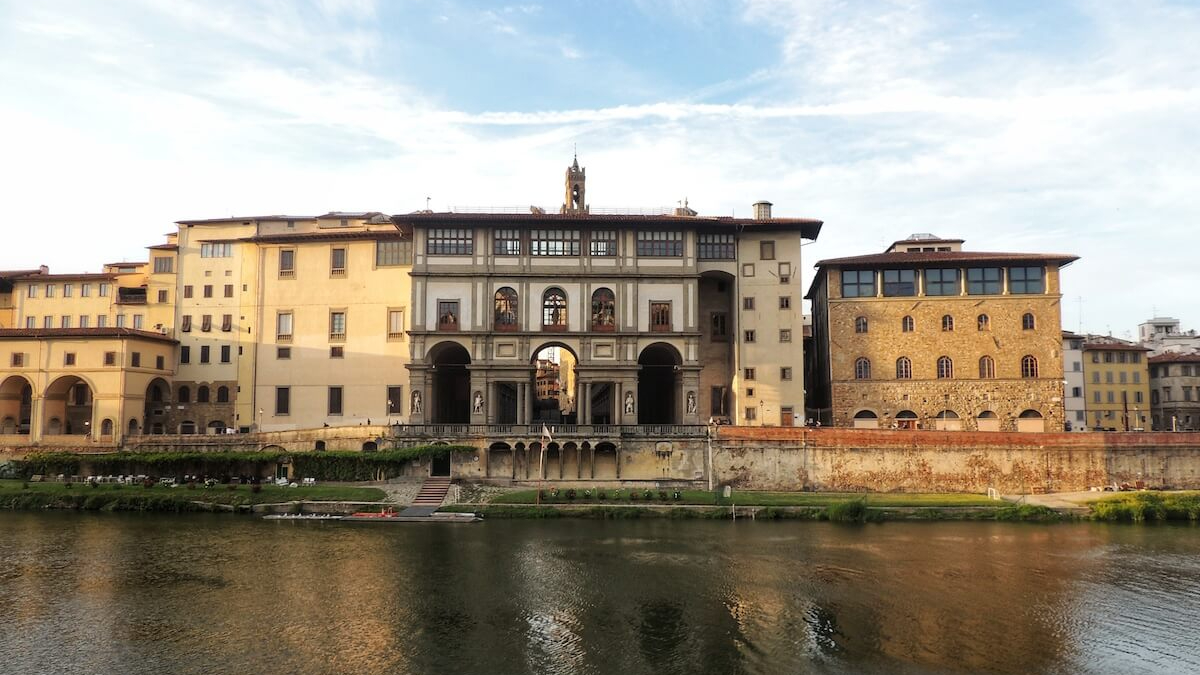
From the Loggia dei Lanzi, the entrance to the Uffizi is steps away. The edifice was built for Cosimo I de’ Medici in the 1560s as the administrative offices of the Florentine state by Giorgio Vasari (uffizi literally means offices). Within a generation, the Medici were using the upper floors to display their art collection; within a century, it was one of the most important in Europe. It remains so today.
On a one-day visit, even two hours here requires hard choices, and the only sensible approach is to decide in advance what you most want to see and navigate directly to it. A few anchoring suggestions.
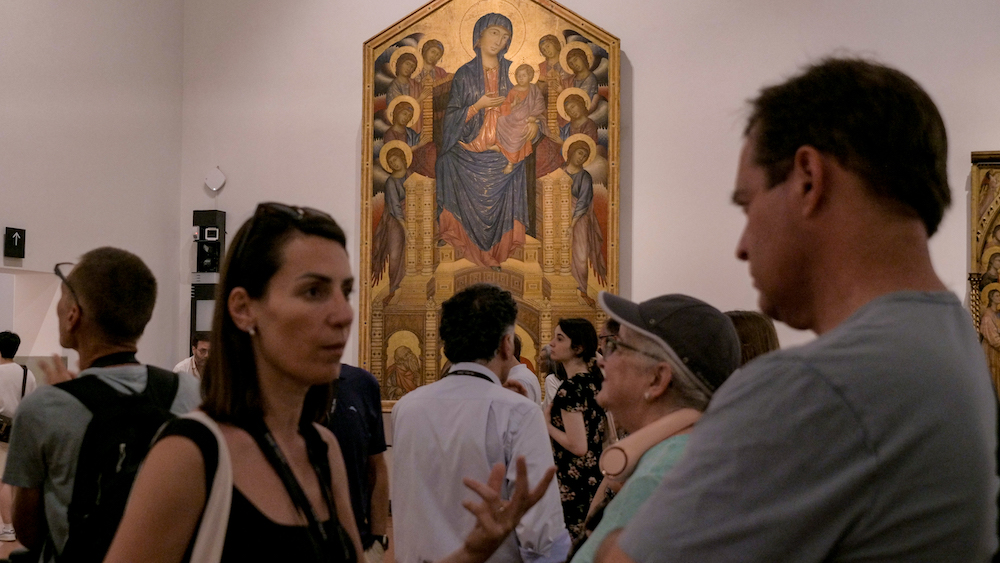
The early rooms feature Cimabue and Duccio’s great altarpieces of the late 13th century, rigid and golden and still essentially Byzantine; they set the stage for what Giotto does in the room immediately following — his Ognissanti Madonna of around 1310, in which the Virgin and her throne suddenly occupy real space, the figures around them casting actual shadows, the whole picture governed by a sense of physical weight and presence that had not existed in Western art before.
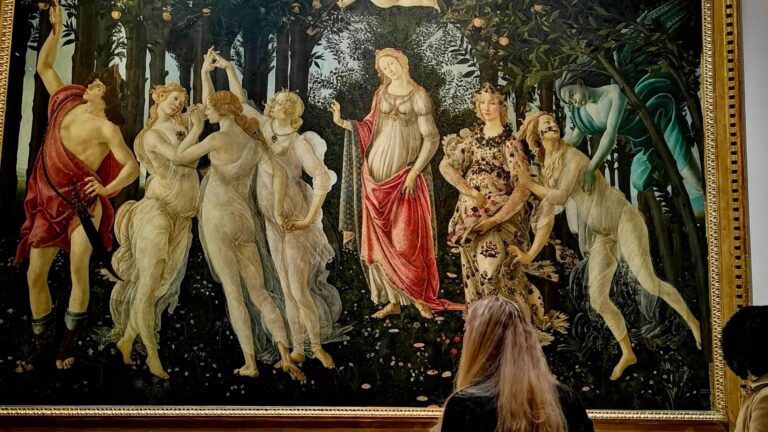
Further on, the Botticelli rooms are the emotional centre of the gallery for most visitors, and rightly so. The Birth of Venus and the Primavera, both painted in the 1480s for the Medici, are among the most recognisable images in Western art — and also, up close, among the most mysteriously beautiful.
Don’t neglect Leonardo’s Annunciation, the young Raphael’s Madonna of the Goldfinch, Michelangelo’s blazing Doni Tondo — the only panel painting he ever completed — and, in the later rooms, Caravaggio’s Medusa, evidence of the seismic shift that he brought to European painting in the early 17th century.
Even though time is short, allow yourself at least two hours here.
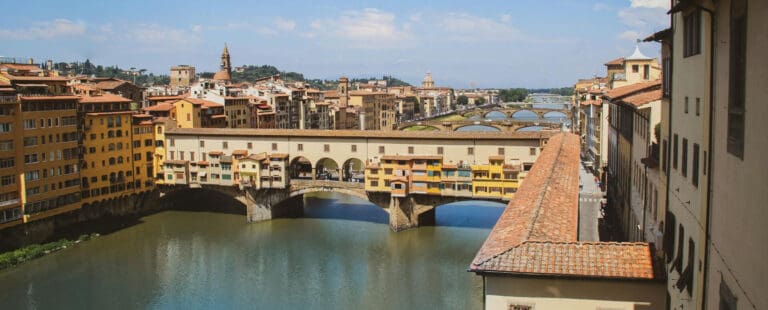
Emerging from the Uffizi, turn right towards the river, and within two minutes you’re on the iconic Ponte Vecchio. A bridge has spanned the Arno at this point since Roman times; the current structure dates to 1345, rebuilt after a flood destroyed its predecessor.
For most of its history it was lined with butchers and tanners, whose proximity to running water made this a convenient location for their trade. In 1593 Ferdinando I de’ Medici, reportedly finding the smell offensive during his daily crossing along the Vasari Corridor above, ordered them replaced with goldsmiths and jewellers — a population that has occupied the bridge ever since.
The bridge survived the Second World War intact — uniquely among Florence’s crossings, which the retreating German army blew up in August 1944. Various explanations have been proposed for its survival, including the suggestion that Hitler himself gave the order to spare it. Whatever the truth, it stands: a medieval structure doing what it has always done, connecting the two banks of the Arno, carrying its cargo of tourists and jewellers and everyday Florentines from one side of the city to the other.
Evening
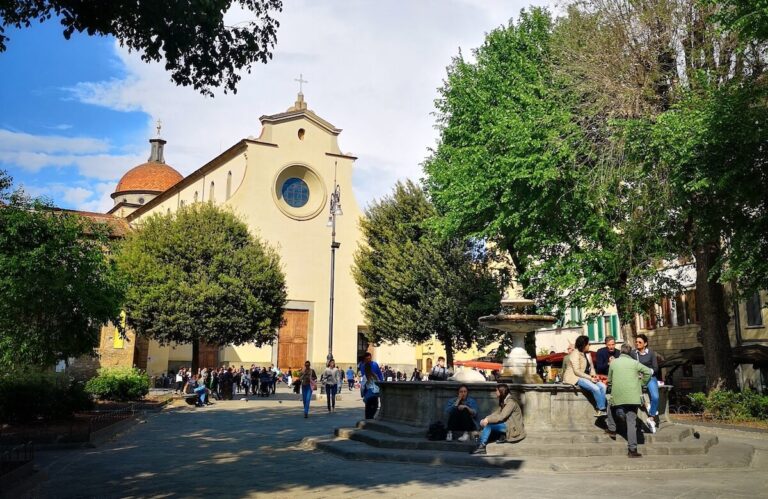
Cross the Ponte Vecchio and you’re in Oltrarno — literally, beyond the Arno — and in what many of the Florentines who know the city best consider its finest neighbourhood. It has a different character from the historic centre on the north bank: quieter, less monumental, more genuinely lived-in, its streets lined with artisans’ workshops, neighbourhood trattorias, bookshops and wine bars that serve locals as much as visitors.
The big set pieces are here too — the Palazzo Pitti, the Boboli Gardens, the Brancacci Chapel with Masaccio’s extraordinary frescoes — but on a one-day itinerary those will have to wait for a return visit. Tonight, Oltrarno is best appreciated simply by walking through it.
Head west along the south bank of the Arno and let the neighbourhood reveal itself at its own pace. Duck into any courtyard that looks interesting. Buy a glass of wine from a bar and take it outside. Notice the workshops — leather craftsmen, picture framers, furniture restorers — that have occupied these streets for generations and still, just about, hold their ground against the rising tide of tourist commerce.
Oltrarno isn’t immune to that pressure, but it is more resistant than most parts of Florence; it remains oa place where the daily life of a real Italian city is still legible beneath the surface.
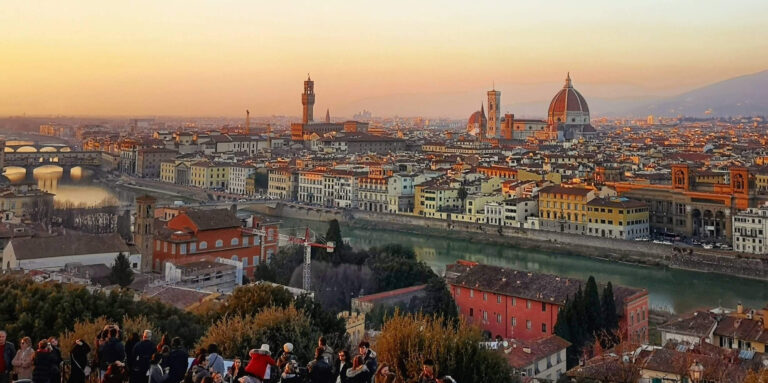
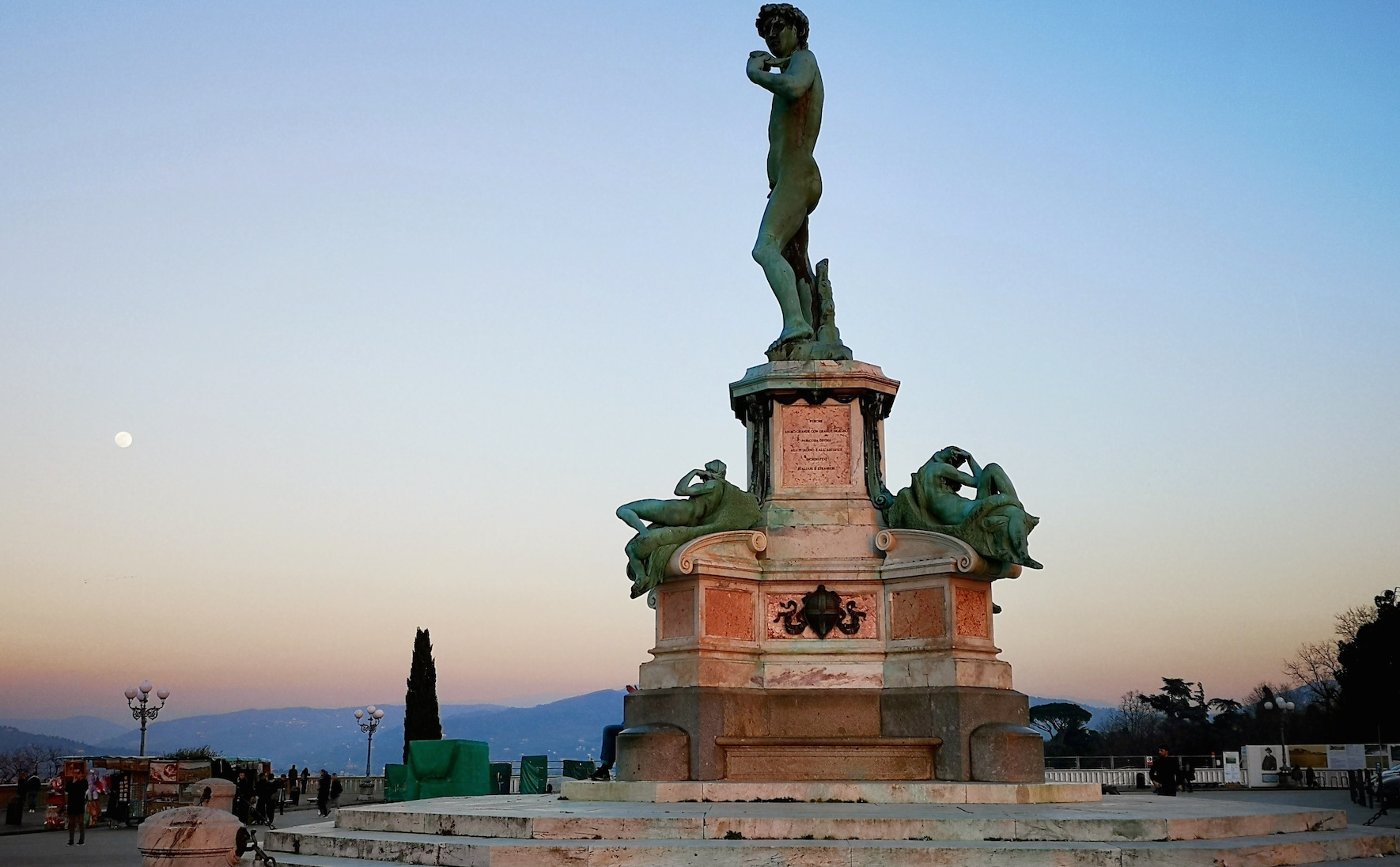
From Oltrarno, make the short climb — about 15 minutes on foot, up a winding path through a small garden — to Piazzale Michelangelo. You will know you’ve arrived when you see the bronze copy of the David standing at its centre, and when you turn around and the whole of Florence opens up below you.
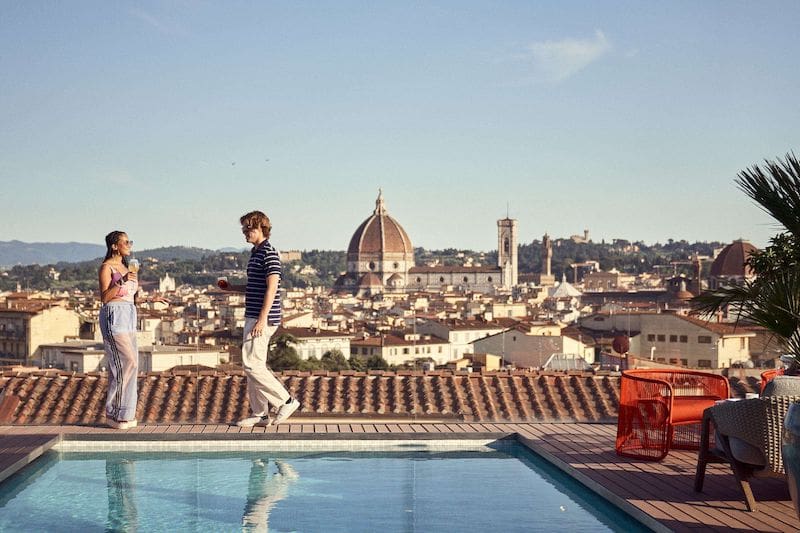
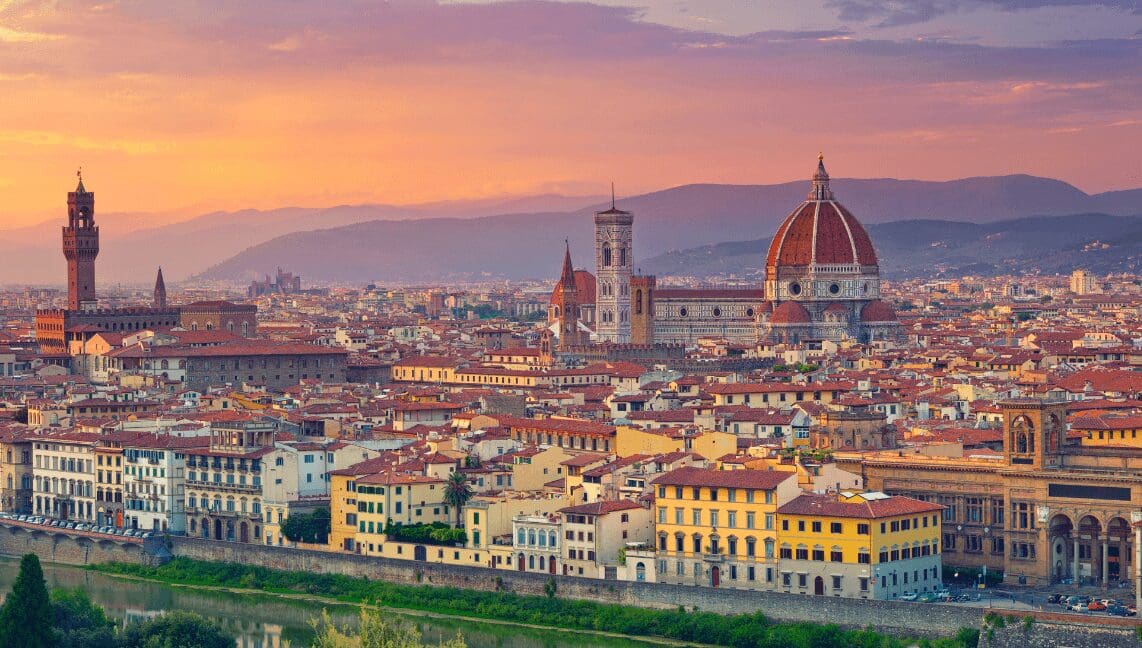
The view from Piazzale Michelangelo is the most famous in the city, and familiarity has done nothing to diminish it. The red dome of the cathedral, the tower of the Palazzo Vecchio, the curve of the Arno, the hills of Fiesole in the distance — the whole of Florence laid out like an illustration from a Renaissance treatise on ideal city planning.
As the light softens toward evening, the rooftops turn warm gold and the shadows lengthen across the piazza, and it is extremely difficult not to feel, in that moment, that you are somewhere quite extraordinary. The piazza is inevitably busy at sunset, but it is big enough to absorb the crowds, and there are bars and gelaterie where you can secure a drink and find a quiet corner to watch the light change.
If you have the legs for a further ten minutes of climbing, the church of San Miniato al Monte above the piazzale offers an even higher, and considerably quieter, viewpoint — as well as one of the finest Romanesque church interiors in Tuscany.
Back down the hill, the evening belongs to Oltrarno. The neighbourhood’s aperitivo scene is one of the best in Florence, concentrated particularly around the Piazza di Santo Spirito — a large, unpretentious square dominated by Brunelleschi’s unfinished church facade and animated every evening by a cross-section of Florentine life that feels genuinely local: students, artists, neighbourhood regulars, families with dogs, a few tourists who have found their way across the river and sensibly decided to stay.
The bars around the square — Caffe Ricchi, Volume, Rasputin — are relaxed and unfussy, and most offer a spread of small snacks with your drink in the Florentine aperitivo tradition. Order a Negroni, which was invented in this city in 1919 when Count Camillo Negroni asked a bartender at to strengthen his Americano with gin rather than soda water, and feel the accumulated weight of the day pleasantly dissolve.
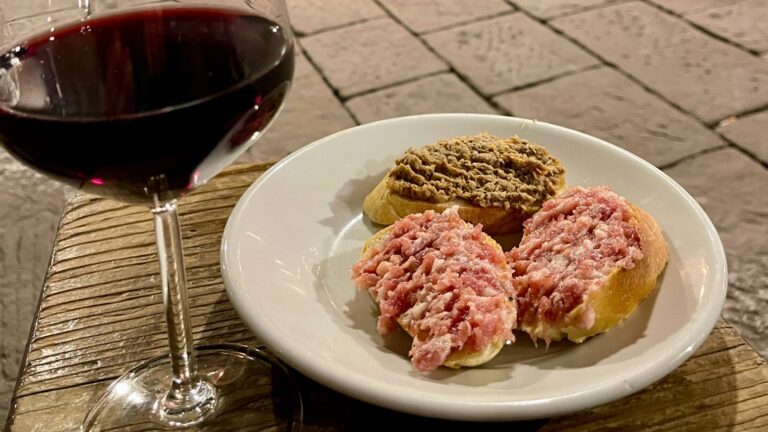
If you’d prefer something lighter, a glass of Chianti Classico — the wine of the hills directly south of the city, made from Sangiovese grapes that have been cultivated in this landscape for centuries — is the other obvious choice.
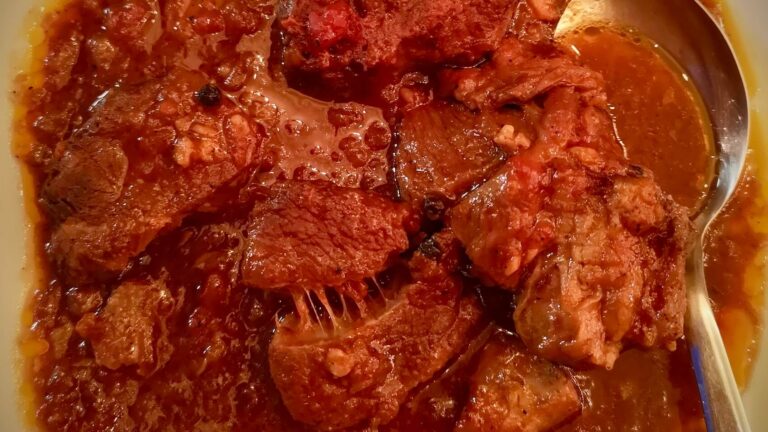
Florence is a bastion of excellent cuisine, and you’ll find fantastic restaurants all across the city; but many of our favorites are located in Oltrarno, meaning you can roll straight into dinner.
The cooking of Florence and Tuscany more broadly is defined by a commitment to quality ingredients used with restraint. The centrepiece of any serious Florentine dinner is the bistecca alla Fiorentina: a vast T-bone steak from the Chianina cattle of the Valdichiana, cut at least 5 centimetres thick, cooked over a wood fire to rare, seasoned with nothing but salt and olive oil. It’s sold by weight, shared between two or more people, and eating one properly – in a room full of Florentines who know their beef – is one of the defining experiences of Italian food culture.
Before the steak, begin with crostini neri — chicken liver pâté on grilled bread, earthy and deeply savoury – or a plate of finocchiona, the fennel-seed salami that is perhaps the most characteristically Tuscan of all the region’s cured meats. For pasta, pappardelle al cinghiale – wide ribbons of egg pasta with slow-braised wild boar ragù – is Tuscany in a bowl.
In Oltrarno, Trattoria Casalinga has been feeding the neighbourhood since 1963 with honest, unshowy cooking at prices that remain very reasonable. I’ve personally been coming here for 20 years, and nothing much has changed over that time. All’Antico Ristoro di Cambi offers a more polished version of the same tradition in a swoon-worthy interior. Try the lamb’s brain (trust us on this one!)
For the full local experience – communal tables, no bookings, no concessions to the tourist trade – Trattoria Sabatino in San Frediano is the place: the kind of restaurant that exists in fewer and fewer Italian cities, and should be treasured. Make sure to order the roast beef.
Wherever you choose, and whatever you choose to eat, accompany it with some good wine and raise a glass to Florence. One day, as promised, was enough to fall for it completely. Come back soon, and stay longer.
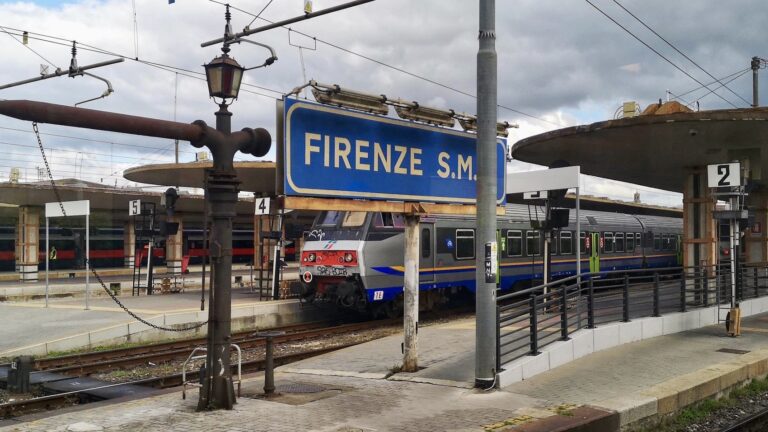
- Walking: Florence is a great walking city, and for the purposes of this itinerary your feet are all you need. The entire route from the Accademia to Oltrarno covers a relatively compact area, and the distances between stops are short enough that even a leisurely pace will keep you on schedule. More importantly, walking is how Florence reveals itself: the sudden glimpse of a tower at the end of an alley, the courtyard half-hidden behind an open gate, the details at street level that no taxi window will ever show you.
- Train: For getting to and from Florence, the city is well served by the national rail network, with Santa Maria Novella station sitting at the western edge of the historic centre. It’s just a ten-minute walk from the Duomo, perfectly manageable even with luggage.
- Bus: Within the city, the Autolinee Toscano bus network covers Florence comprehensively, and is useful if your hotel is further from the centre or if your legs give out towards the end of the day. The most helpful lines for visitors are the C1, C2 and C3 minibus routes, which thread through the historic centre and are small enough to navigate the narrower streets. The C4 line meanwhile connects to Oltrarno. A single ticket costs €1.70 if purchased in advance from a tabacchi or newsstand. More conveniently, you can just tap your debit or credit card on board.
- Taxis: Taxis are metered and readily available at designated ranks near Santa Maria Novella station, Piazza della Repubblica and Piazza San Marco, or can be booked via the app itTaxi. From the station to most central hotels, a taxi should cost no more than €10–12. These days Uber also operates in the city.
Is one day enough to see Florence?
One day is enough to see Florence’s greatest hits and to absorb the city’s unique atmosphere. The David, the Duomo, the Uffizi, the Ponte Vecchio, a Florentine sunset — all of it is achievable in a single well-planned day, and all of it will stay with you. What one day does not allow for is depth: the Brancacci Chapel, the Palazzo Pitti, the quieter neighbourhoods, the simple pleasure of sitting in a square and watching the city go about its business. Consider this itinerary a beginning rather than a conclusion, and start thinking about your return trip before you’ve even left.
Do I need to book tickets in advance for the Accademia and the Uffizi?
Yes. Both the Accademia and the Uffizi regularly have queues of up to two hours or more for visitors without reservations, and losing that time on a tight schedule is simply not an option. Timed entrance tickets for both can be booked online via the official Uffizi booking system. Do so as far in advance as possible, particularly in spring and summer when availability can be limited weeks ahead. If you are joining a guided tour that includes either gallery, tickets will be taken care of – another compelling reason to consider a guided option when time is short.
What is the best area to stay in Florence?
For a one-day visit, the answer is straightforward: as close to the historic centre as your budget allows. The neighbourhoods immediately around the Duomo and Santa Croce put you within walking distance of everything in this itinerary, and mean you can start early without the complication of public transport. Oltrarno, on the south bank of the Arno, is another excellent option – slightly less central but more characterful and with better nightlife. For more detailed guidance, our dedicated guide to where to stay in Florence covers the best hotels and neighbourhoods across all budgets.
When is the best time of year to visit Florence?
Spring – April and May – is widely considered the ideal time: mild temperatures, long days, the city’s gardens and surrounding hills at their greenest, and crowds that are busy but not yet at peak summer levels. Early autumn, particularly September and October, runs it close and has the added advantage of the harvest season in the Tuscan countryside, when the restaurants and markets are at their most abundant. July and August bring intense heat and very large crowds, which makes the experience significantly more demanding, but not impossible with careful planning. We love winter in Florence too, when the city is quieter and beautifully atmospheric, particularly around Christmas.
Is Florence suitable for visitors with limited mobility?
The historic centre of Florence presents some challenges for visitors with mobility impairments – the streets are largely cobbled, many churches have steps at their entrances, and the campanile and Piazzale Michelangelo both involve significant climbs. That said, the main attractions including the Uffizi, the Accademia and the Baptistery all have accessible entrances, and the core of the itinerary – from the Duomo to the Ponte Vecchio – is navigable on relatively flat ground. The Uffizi in particular has invested significantly in accessibility in recent years.
We hope you enjoyed our 24 guide to what to do in Florence if you only have one day! If you’d like to make the most of your time, consider joining a guided itinerary in the City of the Medici. Through Eternity Tours have been offering small group and private tours in Florence for over 25 years. Check out the full range of our itineraries here.
Florence Tours
Immerse Yourself in the Magic of Florence!