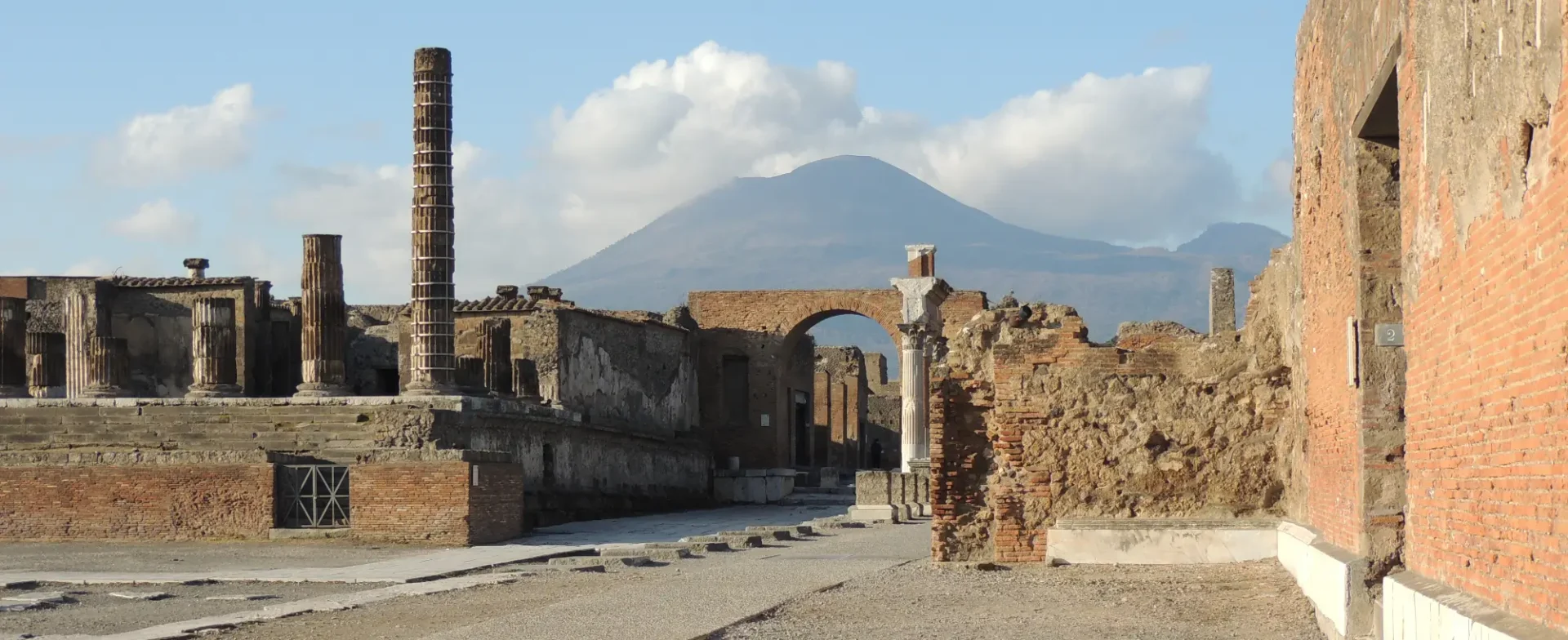
Stand at the bottom of the great market-place of Pompeii, and look up the silent streets, through the ruined temples of Jupiter and Isis, over the broken houses with their inmost sanctuaries open to the day, away to Mount Vesuvius, bright and snowy in the peaceful distance; and lose all count of time, and heed of other things, in the strange and melancholy sensation of seeing the Destroyed and the Destroyer making this quiet picture in the sun…
– Charles Dickens
Few authors have captured the strange yet beautiful melancholy of the fascinating ruins of Pompeii better than Charles Dickens. Dickens’ portrait of a city made up of “a series of faint reflections,” richly evocative traces of lives lived long ago, perfectly captures what makes visiting Pompeii so special. Vesuvius’ deadly volcanic eruption in 79AD paradoxically preserved the city in an extraordinary state of preservation even as it wiped out its inhabitants in an instant, and walking through the incredibly intact streets today is like stepping back in time to the heyday of the Roman world. Here, like nowhere else, the ghosts of antiquity seem still to speak to us across the centuries.
To help you plan your visit to this city frozen in time, read on for our illustrated guide to what you need to look out for amongst the maze of ruins!
Pompeii Tours
Explore the Ancient City
1. The Plaster Casts
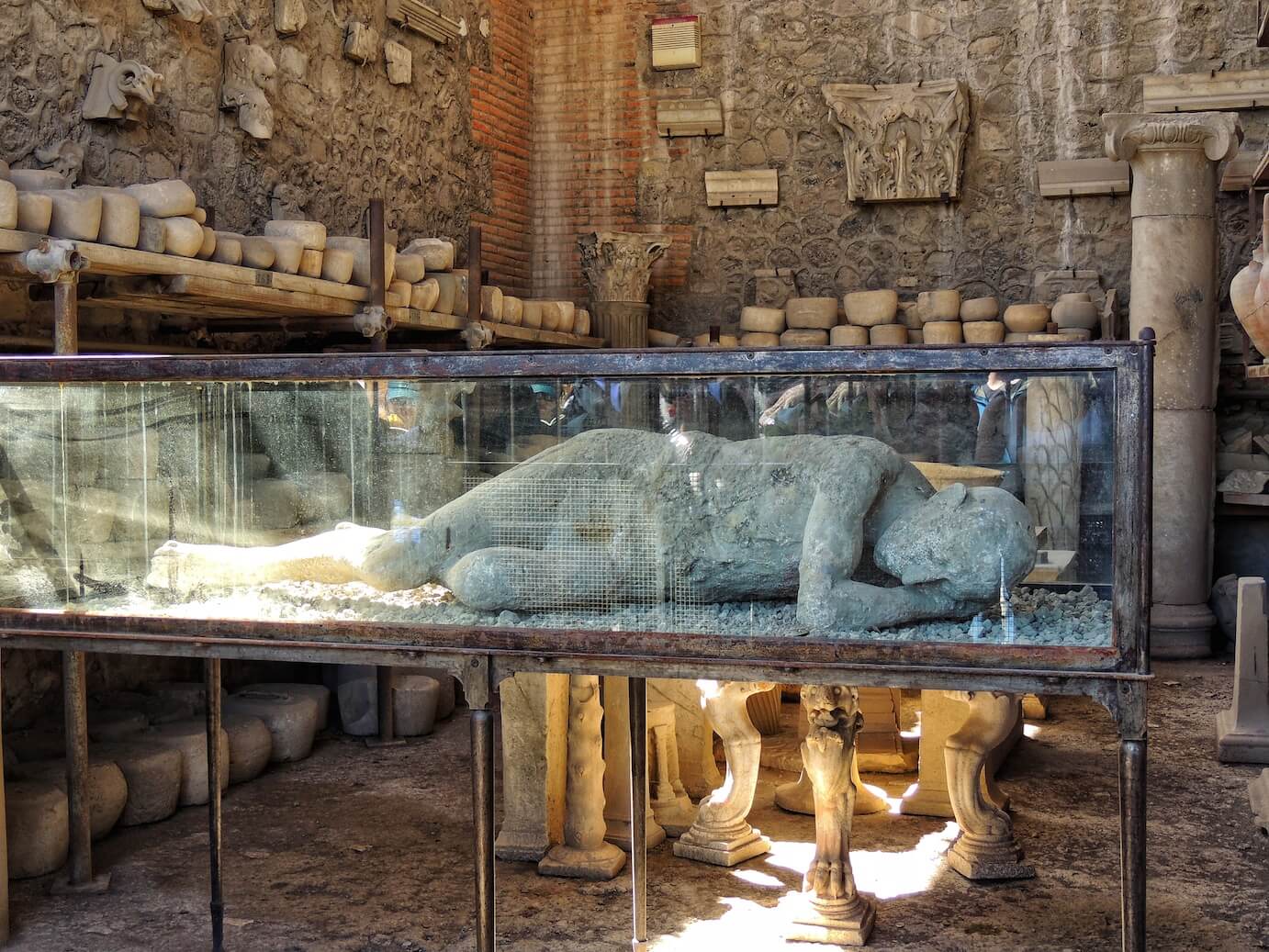
It’s important to remember that the eruption of Vesuvius that eerily preserved the buildings of Pompeii in its protective casing of ash was a human tragedy of horrifying scale for the desperate citizens that perished beneath the molten mud and choking clouds. Giving human faces to the distant event, the famous plaster casts of Pompeii immortalise the final moments of the city’s doomed populace. The bodies buried in the ash left cavities in the volcanic layer, and in the 1870s a method was devised to fill the gaps with liquid plaster. When it solidified, the forms of people and animals emerged from the earth in the exact poses in which they breathed their last. The casts are on display in various sites across the archaeological site: make sure to visit the Horrea (granary), where a dog trapped by the eruption struggles in vain to escape.

2. The Stabian Baths and Forum Baths

Communal baths were vitally important to the ancient Roman world as places both to bathe and socialise. Whilst only the richest citizens would have had private bathing facilities in their homes, public baths were open to all. In Pompeii two main complexes catered to the ablutions of the city’s residents: the large-scale Stabian Baths and smaller Forum Baths.
For many a trip to the Baths was a daily event, and a visit could last for hours. You might find yourself working up a lather doing some kind of exercise, or enjoying a massage. The cleansing process would encompass the application of oils that were scraped off with a strigil, before a visit to the tepidarium and caldarium – the hot and warm water rooms respectively. The bathing process would be completed with a bracing dip in the frigidarium, whose cold water was thought to soothe the muscles.
A must visit on a tour of Pompeii, the large Stabian Baths give a vivid insight into the scale of ancient Roman bath complexes, with its colonnaded palaestra (a gym where you would regularly find gladiators working out), swimming pools, changing rooms and baths devoted to both sexes. The Forum Baths for their part boast stunning interior decorations, with stucco reliefs and terracotta figures known as Telemones adorning the beautiful spaces where these vital ancient rituals took place.
3. The Forum of Pompeii
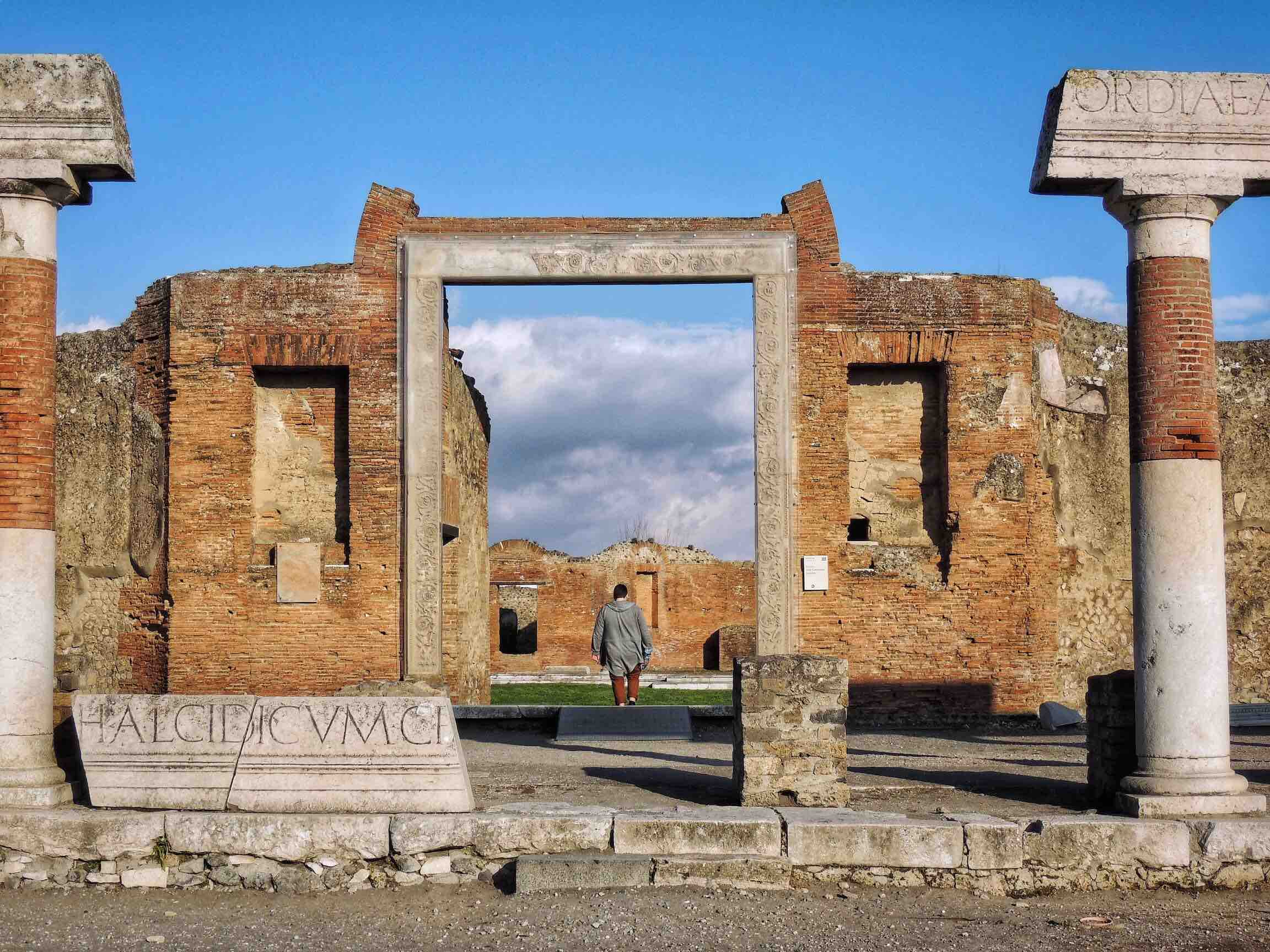
If you’ve visited Rome then it’s a safe bet that you’ve taken a stroll through the Roman Forum, the centre of civic, commercial and religious life in the ancient city. Other Roman settlements were similarly organised around a large central space, and the Forum of Pompeii is a particularly impressive example. The Forum would originally have been entirely paved with travertine, whilst a beautifully decorated colonnade would have closed off the area on all sides. Ancient citizens of Pompeii would have come to the Forum to visit the Forum Baths, or attended meetings of the city council in the Curia. The Basilica doubled as a court of law and marketplace, and many of Pompeii’s most significant temples were located here too – including the impressive temples of Vespasian, Apollo, Venus and Jupiter. The layout that we see today dates from between the 3rd and 2nd century BC, when the Forum was altered to centralise its focus on the Temple of Jupiter, magnificently framed by the foreboding outline of Mt. Vesuvius in the distance.
4. The Teatro Grande and Teatro Piccolo

To get a sense of what ancient Pompeiians got up to in their spare time, make sure to make a visit to the city’s twin theatres: dating from the 2nd century BC, the semi-circular Teatro Grande (Large Theatre) was one of the first stone theatres in the Roman empire and could accomodate 5,000 spectators. It’s not hard to imagine them piling into its rows of marble stone seats (each numbered to allow for efficient access) to take in performances of classic Greek tragedies or ribald comedies as you wander through the structure today. Next door, the more intimate Teatro Piccolo (Little Theatre) would have been devoted to music concerts, and was one of the empire’s covered theatres.
5. The Thermopolium of Via dell’Abbondanza
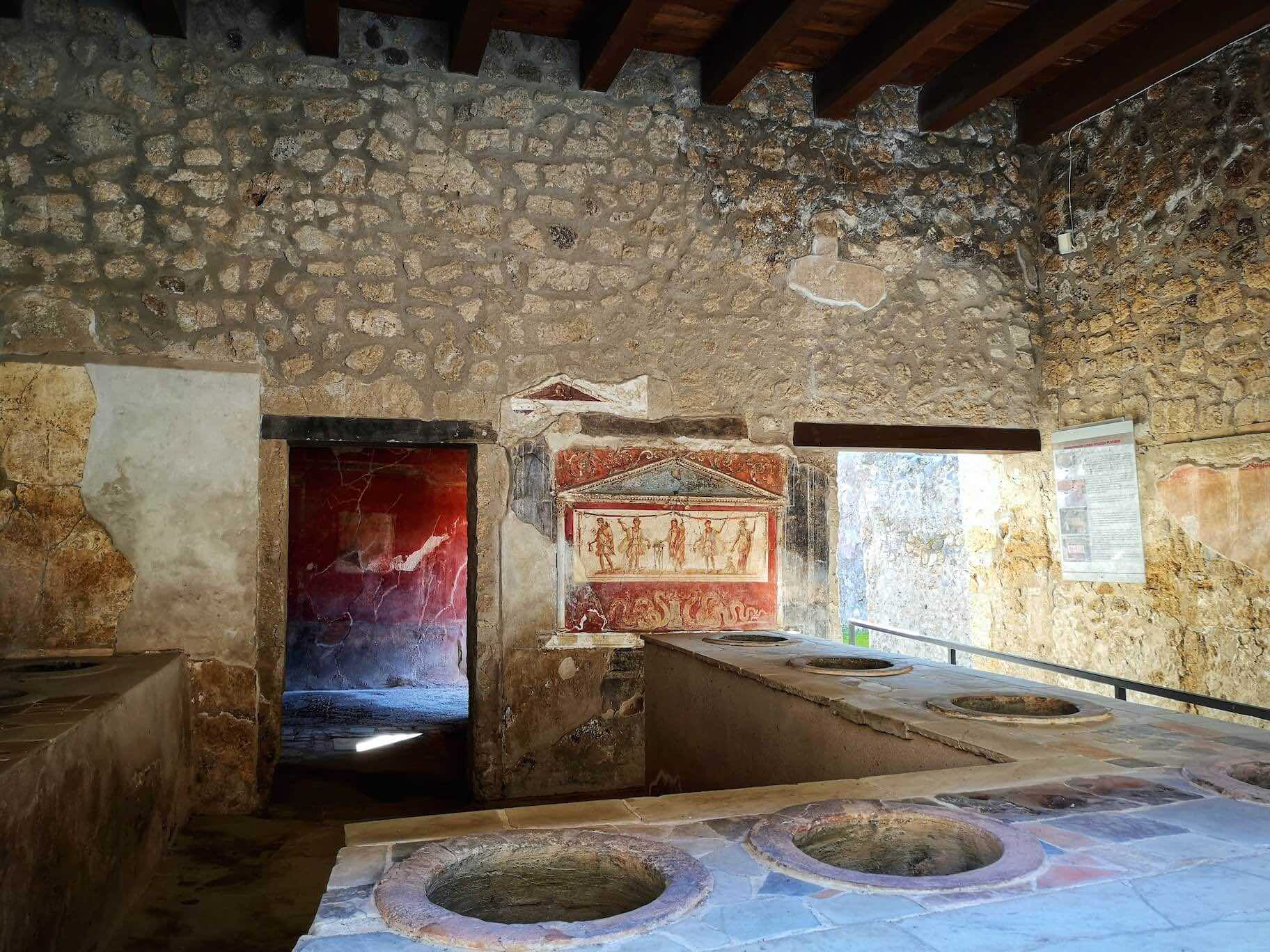
Some aspects of ancient Roman life as preserved in Pompeii appear to us as startlingly modern, more than 2,000 years after the city’s untimely entombment. You’ll be sure to feel a shiver of recognition when you come across one of the city’s numerous thermopolia, the Roman equivalent of a fast food restaurant.
A thermopolium typically had very distinctive features: a large doorway faced the street, where a counter laden with jars filled with food and wine would greet customers. Shrines dedicated to Bacchus, god of wine, and Mercury, god of commerce would bring prosperity to the establishment. In the swankiest thermopolia you would have found the menu beautifully painted on the wall, right behind the counter, to help you choose your meal. In a poignant reminder of the swift and brutal fate that overcame Pompeii, the unclaimed money of the tavern’s final customer was discovered lying on the counter.
6. House of Menander

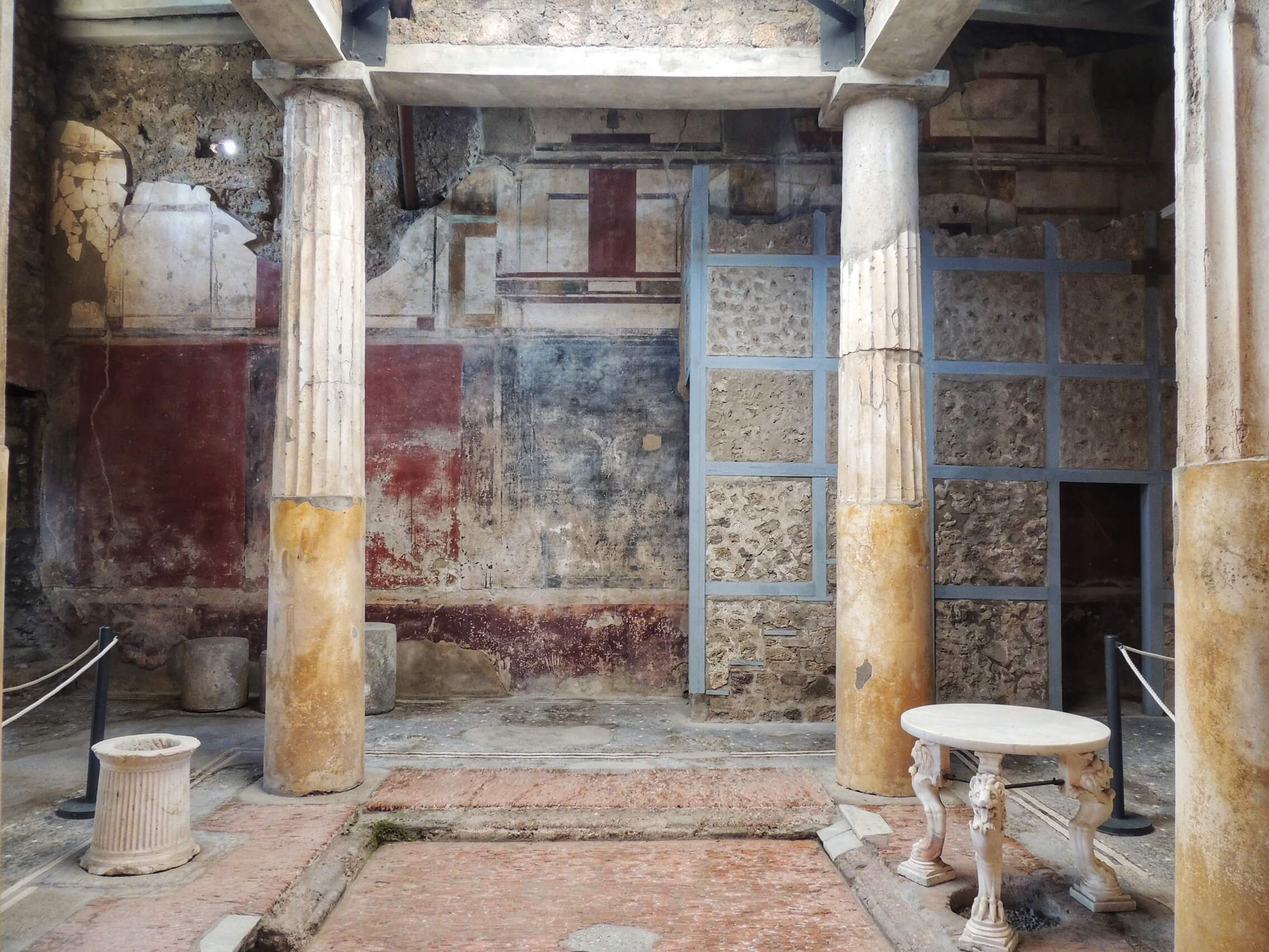
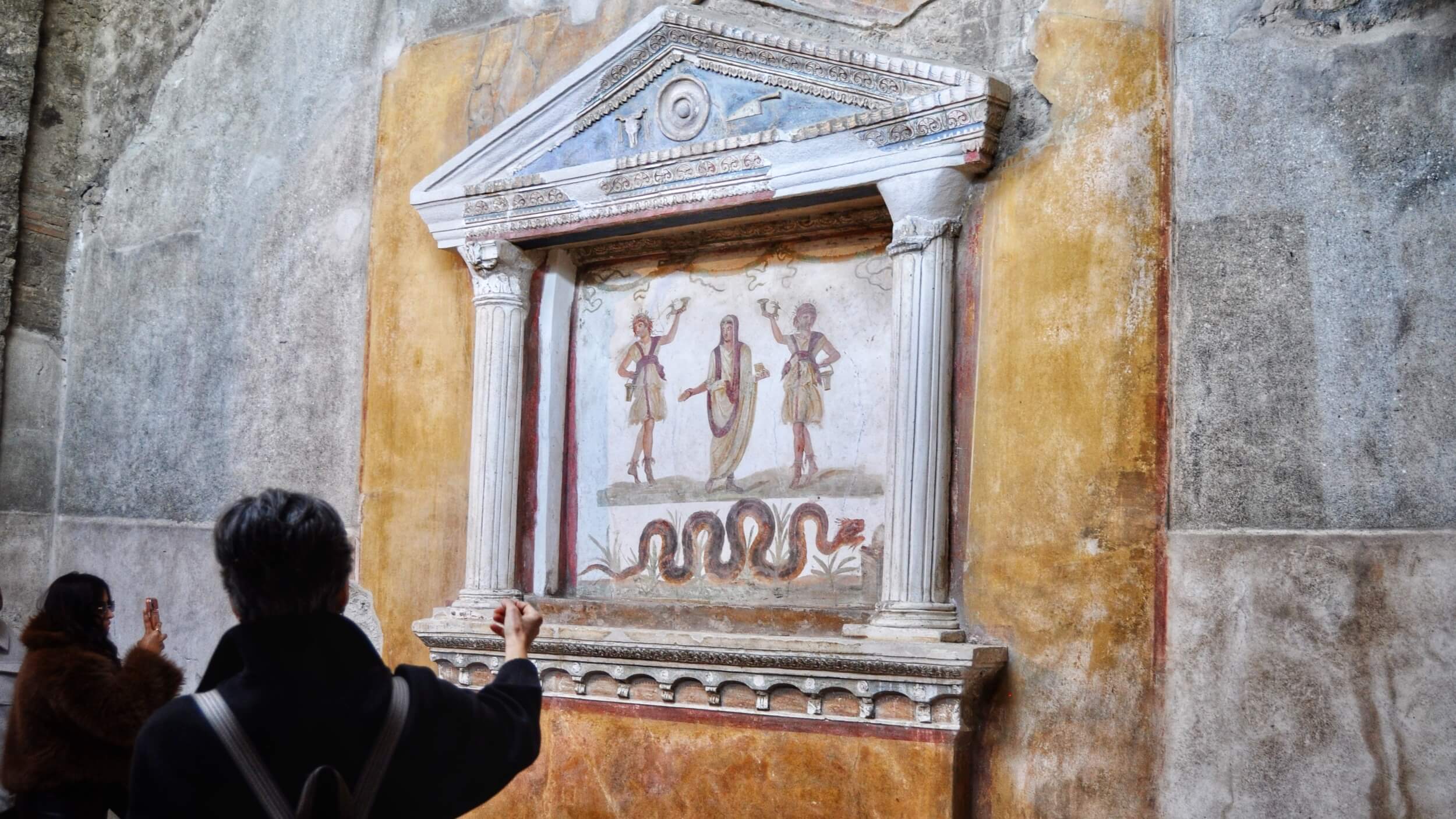
The magnificent House of Menander was one of the largest and most complex private houses in ancient Pompeii. Decorated within with extraordinary frescoes portraying scenes from Homer’s Odyssey, the structure takes its name from a painting of the Greek playwright Menander located in the portico. The magnificent peristyle courtyard enclosed by Doric columns is one of the most evocative corners of the entire archaeological site. Look out too for the shrine decorated to the household gods known as lares, guardian deities who protected the family and household in return for regular maintenance of their shrine.
7. The Amphitheatre
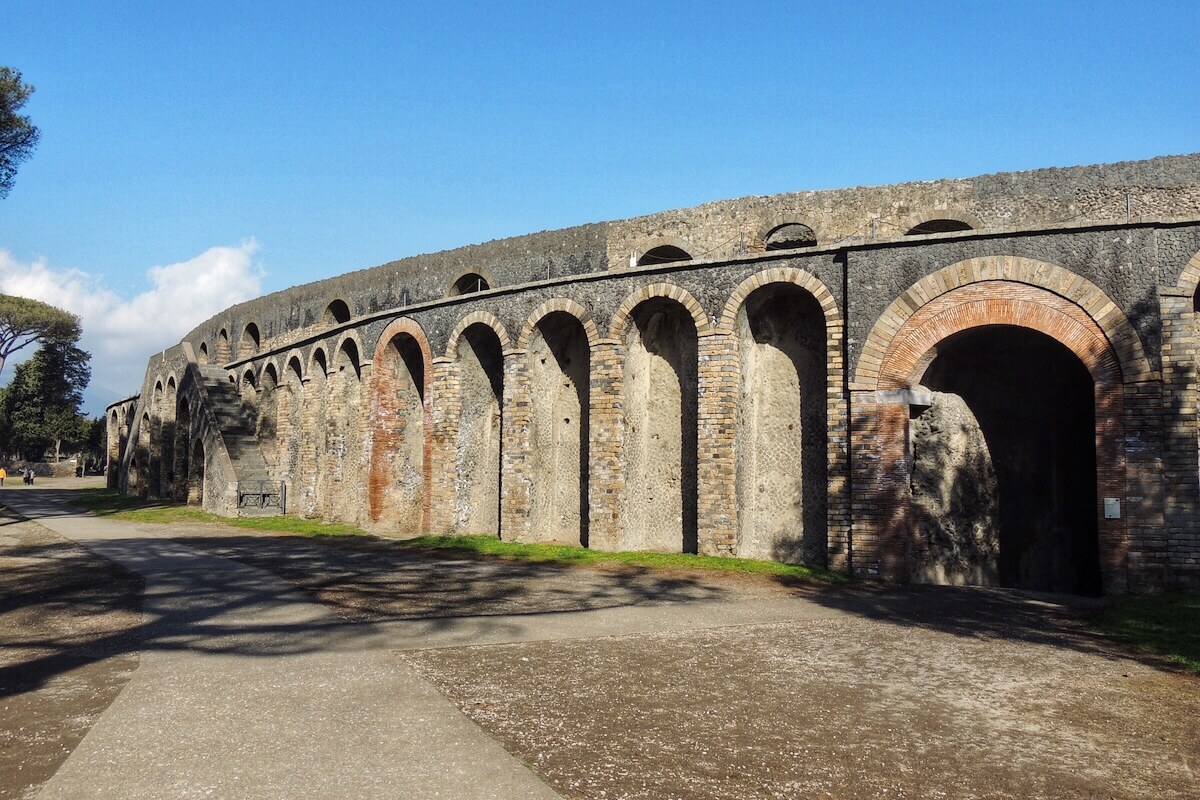
The oldest Roman amphitheatre that we know of, Pompeii’s amphitheatre was first built in 70 BC under the auspices of the magistrates Caius Quinctius Valgus and Marcus Porcius, and predates the Colosseum by more than a century. With a capacity upwards of 20,000 people, there was space for almost half of Pompeii’s population in the amphitheatre, giving a sense of its central importance to life in the city.
As with the Roman Colosseum, the amphitheatre played host to gladiator combats, animal hunts and exotic performances of all kinds on feast days. During a notorious games in 59 AD a fully fledged riot erupted in the stands, leading to an order closing the amphitheatre for 10 years. Although it was ultimately reopened after just 3, the amphitheatre’s reprieve was short-lived – less than 2 decades later the eruption of Vesuvius would ensure that the amphitheatre would be silenced forever. That is, at least, until Pink Floyd would bring the arena temporarily back to life with an iconic concert held here in 1972.
8. The Lupanar (Brothel)

Ancient Romans had a typically frank relationship with sex, and prostitution was an established and accepted part of daily life in antiquity. Pompeii’s brothel was a 2-storey affair, with the lower floor given over to five small rooms with beds (still visible today) where the clients would meet the prostitutes, and the upper level reserved for the sleeping quarters of the proprietor and employees. In Latin a brothel was known as a lupanar, deriving from the slang term for prostitutes in ancient Rome – lupa, or she-wolf. Pompeii’s lupanar is particularly fascinating for the series of frescoes depicting various sexual positions lining the establishment’s entrance wall, a particualrly efficacious way for visitors to choose what they wanted. Look out for the phallic charms in the pavement outside, presumably auguring vim and potency for the arriving clients.
9. House of the Faun

The largest and most opulent residential complex in Pompeii, the so-called House of the Faun occupied a whole city block and was first constructed around 180 BC. The sprawling 3,000 square metre palace takes its name from (you guessed it) a beautiful bronze statue of a Faun presiding over the impluvium – a mosaic-decorated basin that gathered rainwater via a whole in the roof above. In front of the building, a mosaic welcomes visitors with the word HAVE – Latin for greetings.
The House of the Faun was the original site for one of the finest artworks to have come down to us from antiquity – the mosaic depicting the Battle of Issus, in which Alexander the Great conquered the Persian forces of Darius. Today you can gaze on the visage of Alexander from down the centuries in the Naples Archaeological Museum, where many of Pompeii’s most priceless treasures are currently displayed.
10. House of the Vetti

The House of the Vetti is one of the finest examples of Roman domestic architecture in Pompeii. Belonging to the brothers Aulus Vettius Conviva and Aulus Vettius Restitutus, former slaves who amassed fortunes on achieving their liberty, the house is protected by Priapus, ancient god of fertility and prosperity, who features in a fresco by the entrance weighing his outsized manly member in a scales. The interior rooms of the House of the Vetti are richly decorated with more vibrant artworks; wonderful frieze runs around what was once the dining room, featuring putti selling wine, harvesting crops and making jewellery. Other mythological scenes include the story of Leander as well as that of Ariadne and Theseus. Two strongboxes, known as arca, stand in the atrium, ostentatious signs of the Vetti’s vast wealth.
11. Temple of Isis

The cult of Egyptian gods were extremely popular in the Roman world, and a mania for all things Egyptian would reach fever pitch after the Nile-valley civilisation was assimilated into the Roman empire in the first century BC. The Temple of Isis is the most impressive testament to this history in Pompeii. After an earthquake toppled an earlier temple dedicated to the goddess, a new shrine was built in 62 AD. Standing on a raised base, a series of columns.
12. House of Tragic Poet
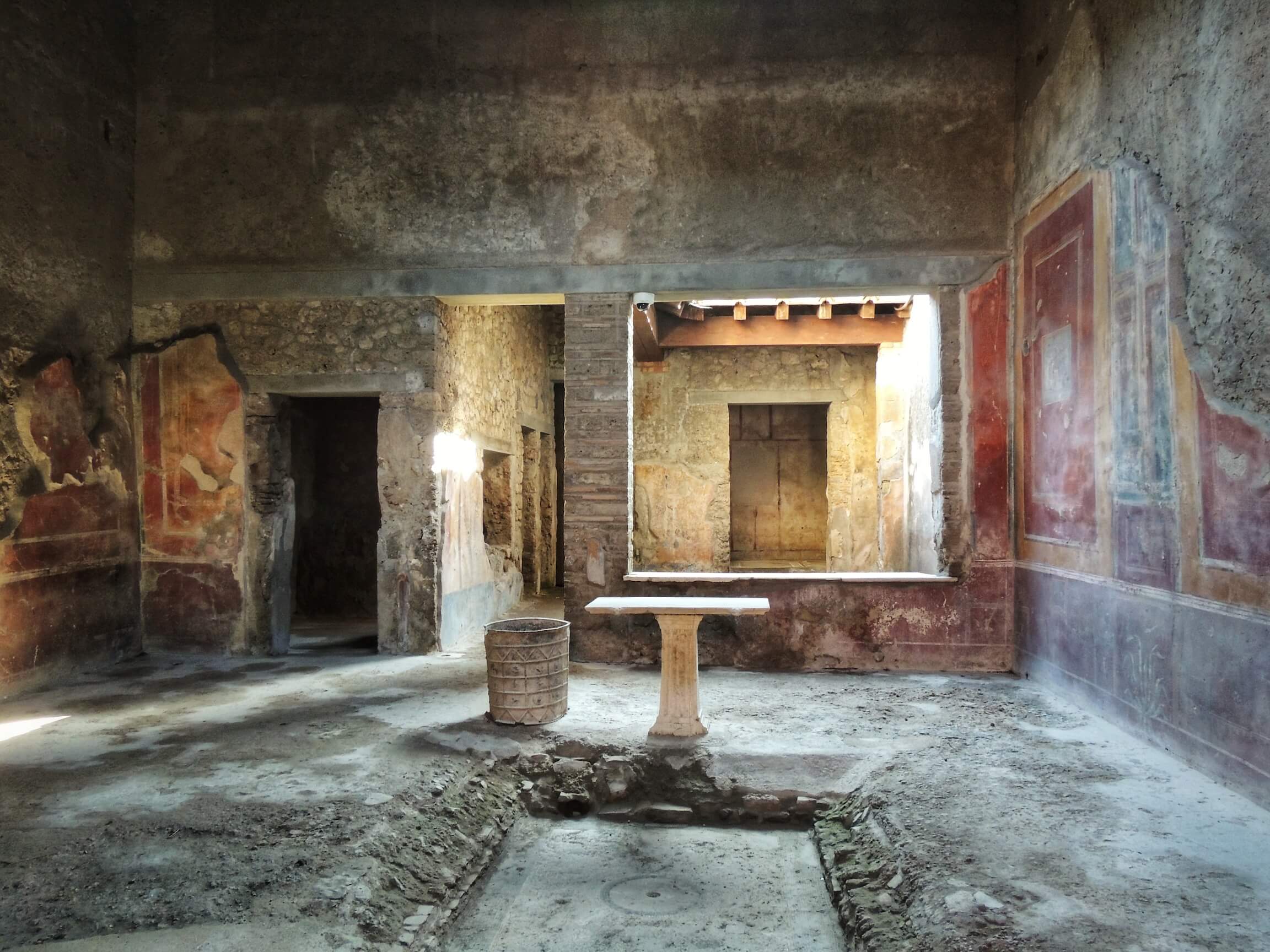
This beautifully appointed villa was certainly the home of a well-heeled aristocrat. The building owes its name to a mosaic that was found on the site depicting an actor preparing himself for a performance, and the House of the Tragic Poet is a treasure-trove of priceless artistic finds. Other highlights include a mosaic representing Ariadne and Theseus and the world-famous Cave Canem mosaic at the entrance: literally translated, the inscription bears a warning that is familiar from yards and gardens across the world even today: ‘beware of the dog’. The snarling black canine who warns us off trespassing above the text is certainly intimidating enough, straining at his chain with teeth bared. Enter if you dare!
13. The Temple of Apollo
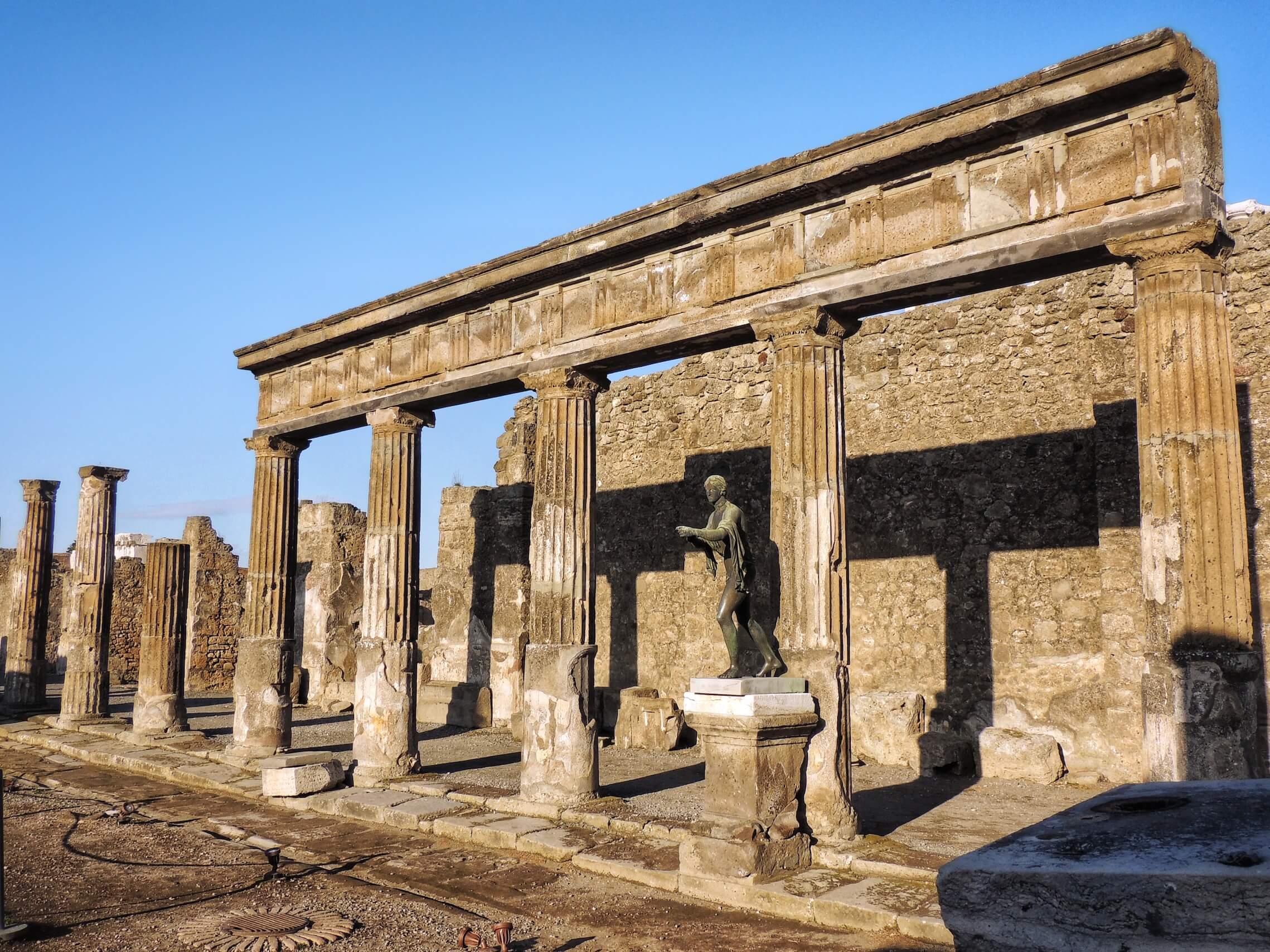
The imposing temple of Apollo enjoys a primo position off of Pompeii’s Forum, as befits the cult site of one of the Roman pantheon’s most important gods. No fewer than 48 Ionic columns ring the temple, which dates from the 2nd or 3rd century BC. At the centre of the structure is a high podium that would have carried the altar where sacrifices were performed in Apollo’s honour.
14. The House of Julia Felix

Amongst the well-heeled villas and residences and of ancient Pompeii’s upper crust, elegant gardens are two a penny. But few are as evocative of antiquity’s splendour as that belonging to the house of Julia Felix, a sweeping pile of prime real estate that included gardens, baths and shops surrounding her elegant Domus.
It has been theorised that Julia’s gardens – complete with a series of small canals crossed by bridges surrounded by shaded shrubbery – recreated the Canopus canal in Egypt, recalling a similar recreation by the emperor Hadrian in his Tivoli villa.
15. Villa dei Misteri

Located a short way from the remainder of the archaeological site, the Villa of Mysteries is, ahem, rather mysterious. This luxurious villa on the outskirts of town takes its name from the extraordinary, life-size frescoes that adorn its walls within, which portray the initiation of a girl into a mysterious pagan cult. These top-secret cults were closed to outsiders, their rites remaining a mystery to the uninitiated. It seems however that many of the mystery cults centred around devotions to Bacchus, the chaos-loving god of wine, and alcohol-induced frenzies were probably a key element of these cult practices. Although not within the site of Pompeii itself, it’s well worth making the effort to visit the Villa dei Misteri to admire some of the finest ancient wall paintings in existence, their colours shining with the same vibrancy as they did two millennia ago.

Pompeii Tours
Visit the City Frozen in Time