For those who want to see the Vatican whole, not just the highlights: our five-hour private VIP tour covers the full Vatican Museums experience, including the Pinacoteca with the only Leonardo in Rome, the Sistine Chapel, Raphael Rooms and St. Peter’s Basilica.
 Highlights

 Hidden Gems

- The Vatican Pinacoteca (Picture Gallery)
- The Round Room
- The Tapestries Gallery
- The Hall of Animals
- The Candelabra Gallery
- Leonardo's St. Jerome
 Tour Includes

- In-depth Vatican experience
- Expert English-speaking private guide
- Vatican tickets and reservation fees
- Skip the lines entry
- Fast-track entrance to St. Peter's Basilica
- Special Pinacoteca visit
 Please Note

- For reservations made less than 72 hours in advance, your tour will end in the Vatican Museums as we cannot guarantee skip the line tickets into St Peter's Basilica.
- Please note that the Wednesday morning tour will not visit St. Peter's Basilica, as the church is closed for the weekly Papal Audience at this time. The tour will run as normal, with the extra time spent exploring the Vatican Museums in more detail.
 Create Your Custom Journey

Our dedicated team is here to help you design the perfect trip. We’re happy to assist every step of the way.
We’ve Got You Covered!

Can’t make your trip? Cancel up to 24 hours in advance for a full refund, minus any ticket costs.
ITINERARY
What To Expect On Your Tour
An In-Depth Experience
Why Five Hours Changes Everything
The Vatican Museums are one of the densest concentrations of human creative achievement anywhere on earth. They are also deeply interconnected: what you see in the ancient sculpture galleries directly illuminates what you see in the Sistine Chapel; what you understand about the Raphael Rooms enriches the Pinacoteca; and the Pinacoteca, in turn, opens up aspects of the Renaissance that shorter visits inevitably rush past.
Five hours with a private guide gives you time to let these connections develop properly. It is not simply that you see more — it is that what you see coheres into a genuine understanding of the Vatican’s collection and what it means. By the time you leave, the museums will not feel like a succession of great rooms to be walked through; they will feel like a single, complex, fascinating story that you have had the time to follow.
This is the tour for art historians and passionate amateurs, for families who want to give their children an experience they’ll carry for decades, for visitors who don’t want to miss out on hidden gems, and for anyone who has been to the Vatican before on a shorter tour and left feeling they’d only scratched the surface.


The Ancient World
Masterpieces of Roman Sculpture
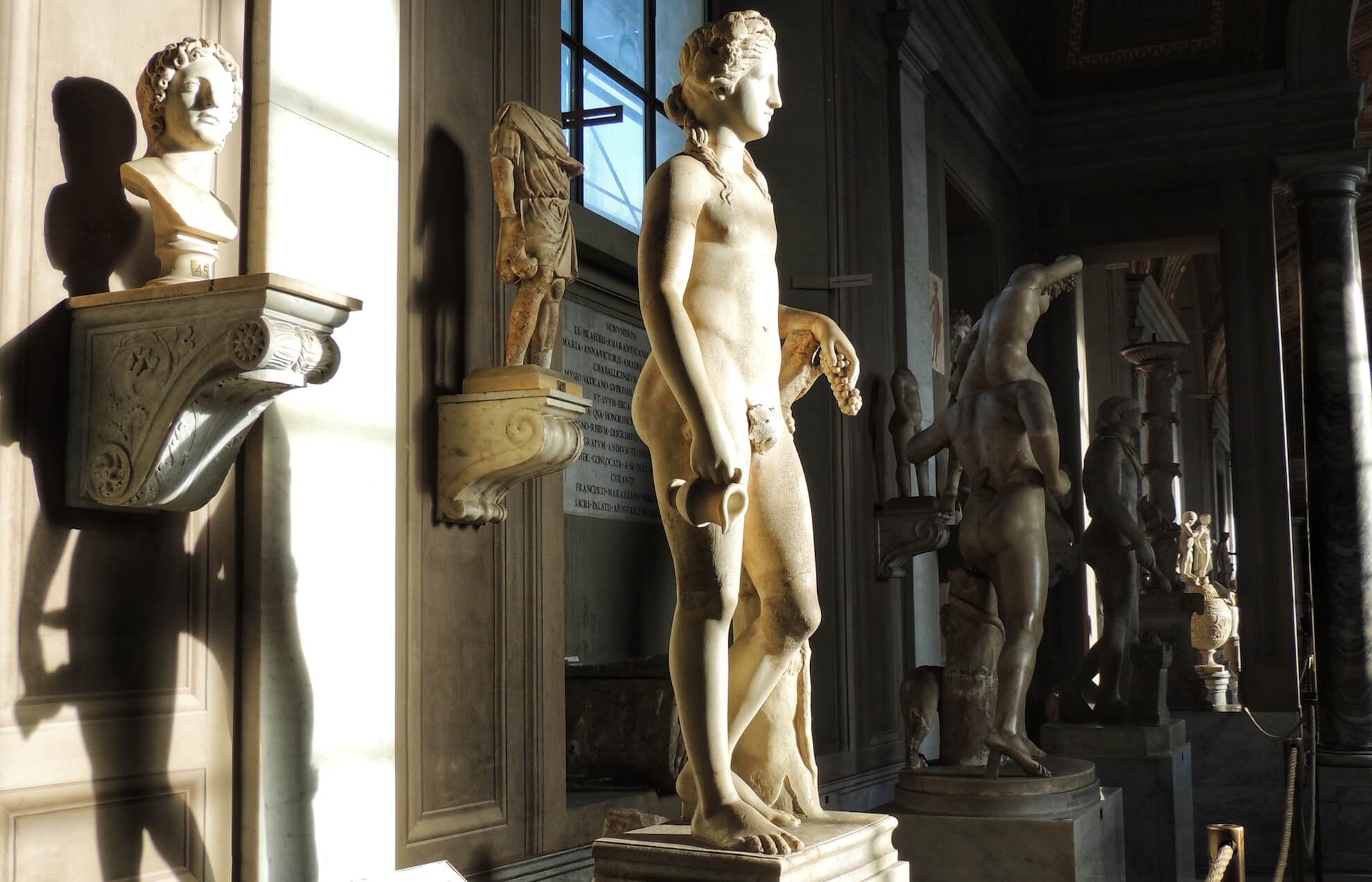
The story of the Vatican begins long before Michelangelo. The early popes who assembled these collections of ancient sculpture were essentially doing something radical for their time: recovering the lost world of Greece and Rome and placing it back into circulation as living inspiration for Renaissance artists.
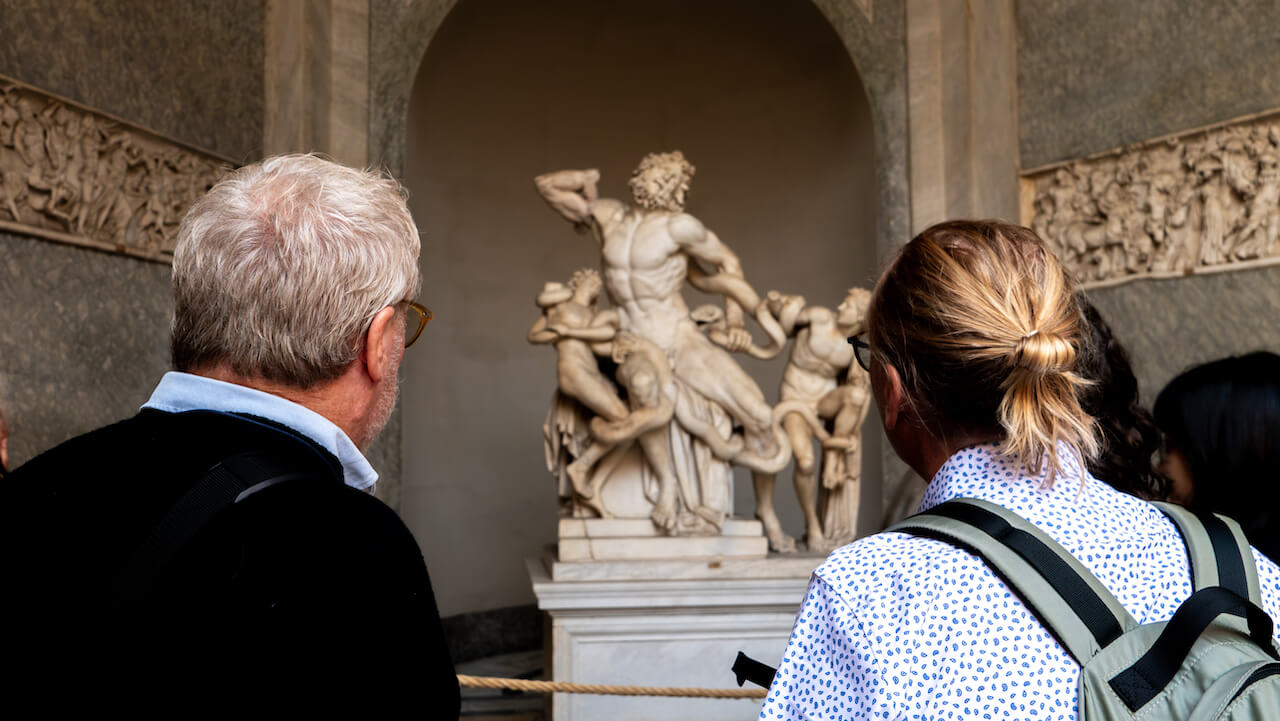
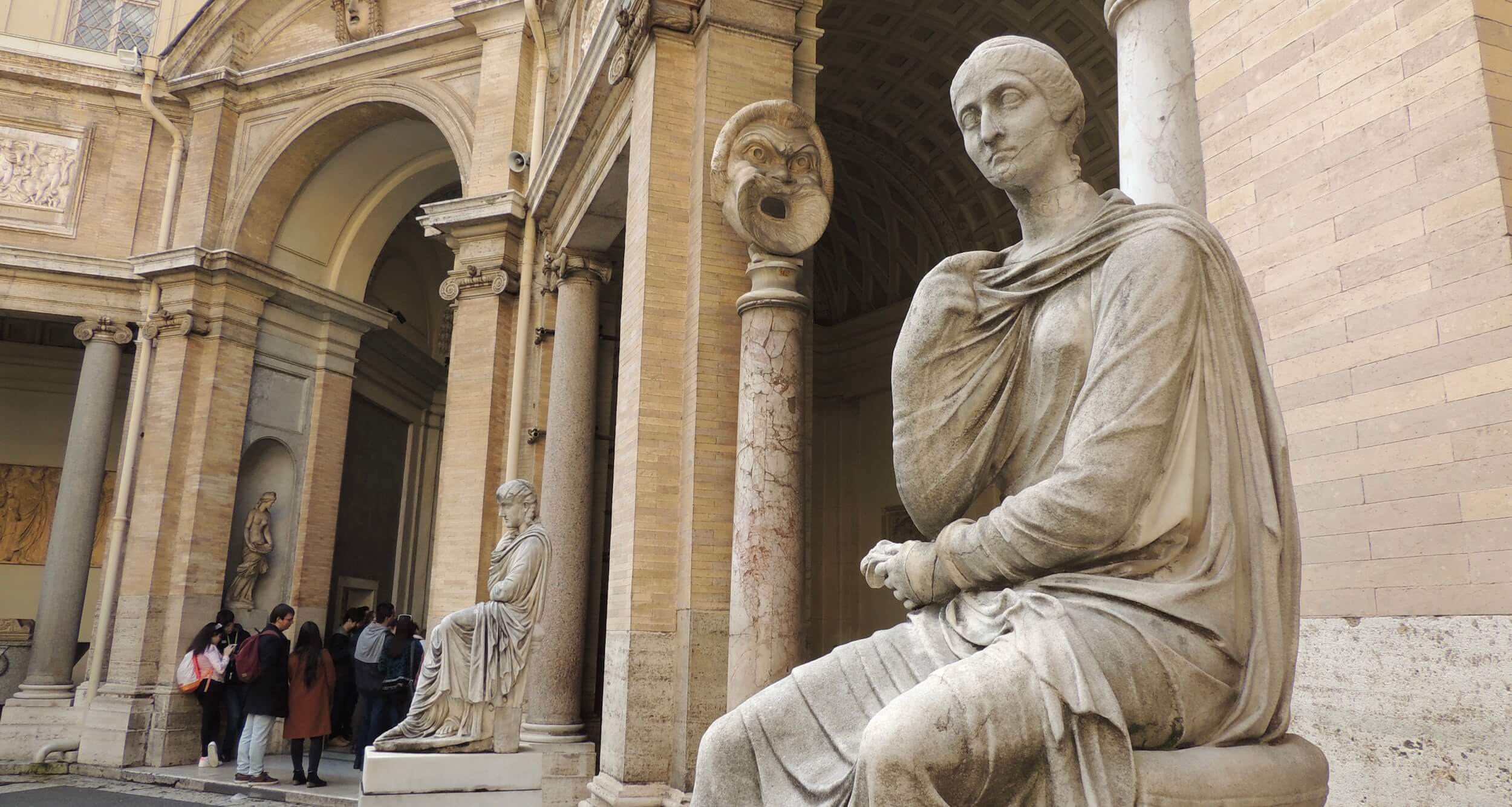
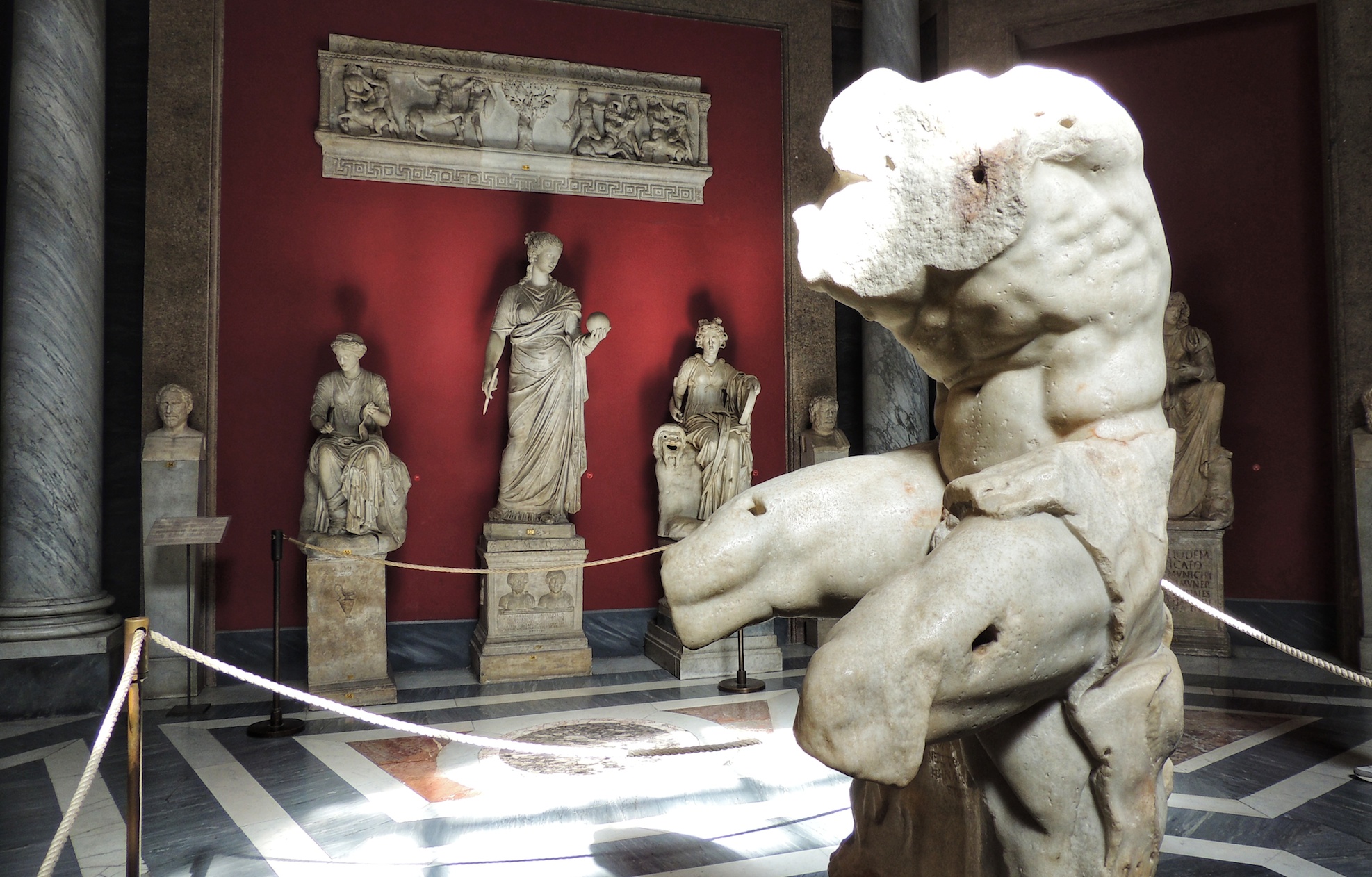
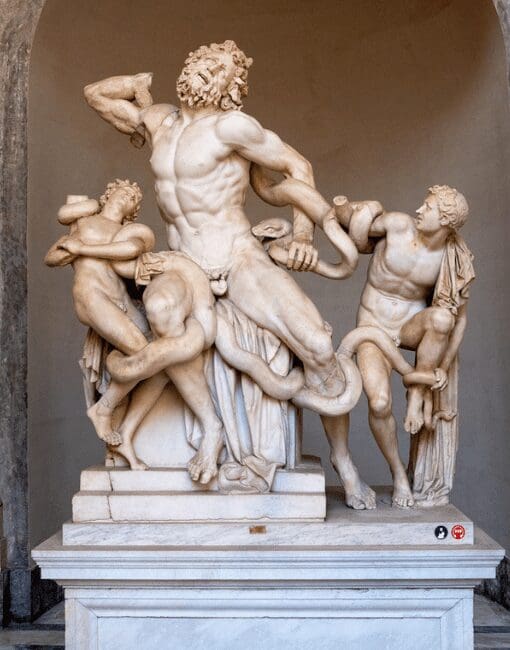
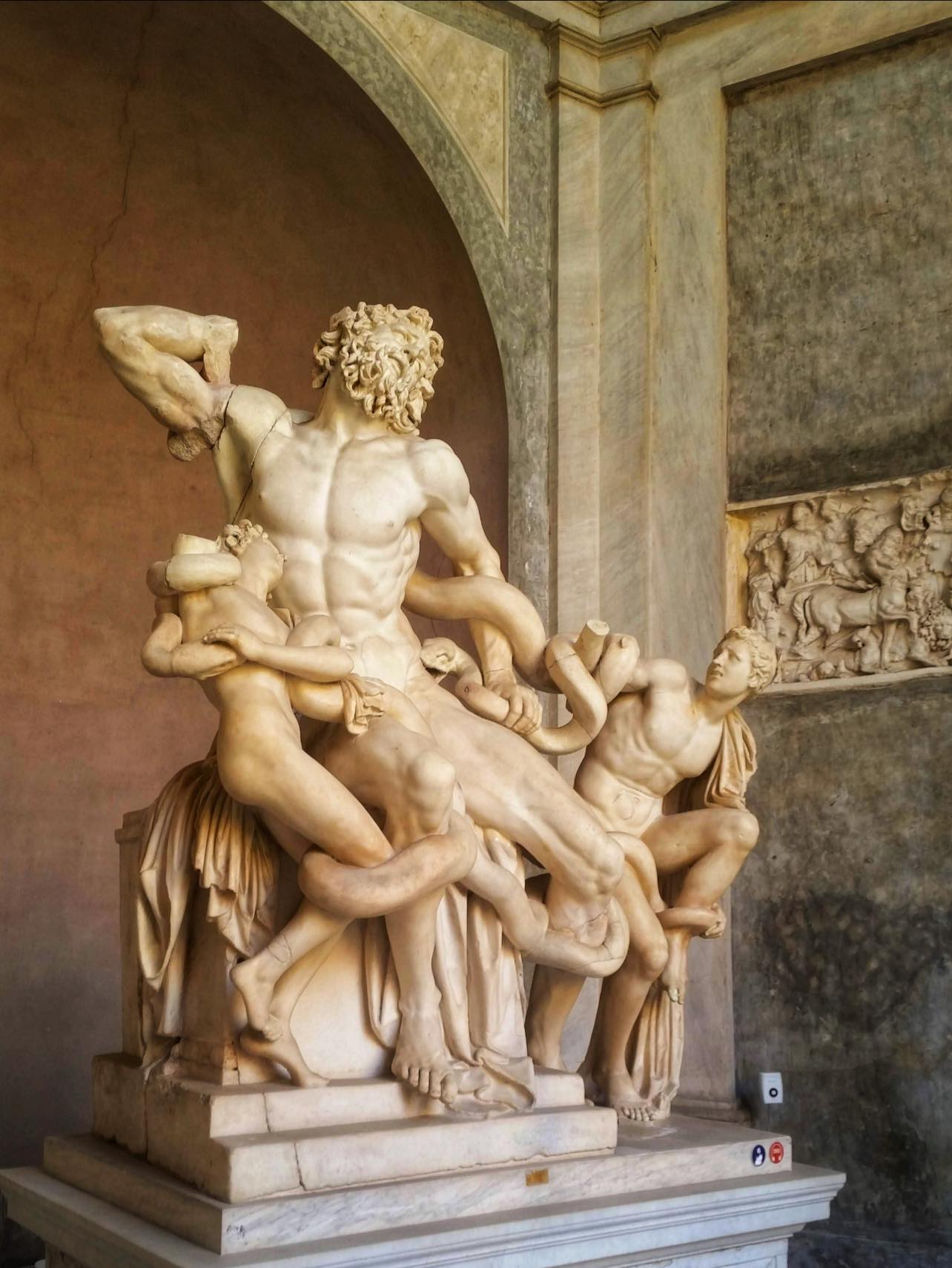
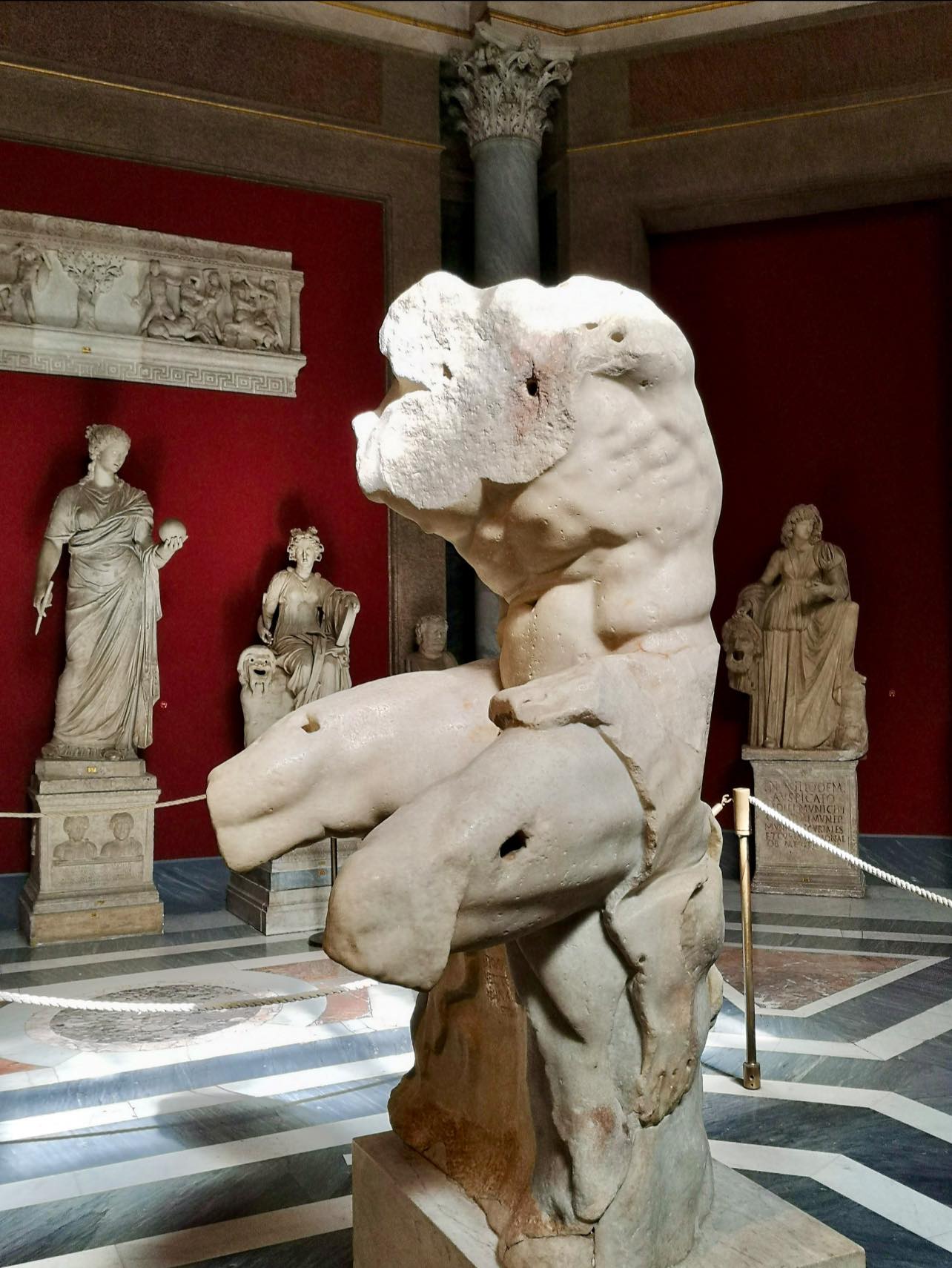
We take time here because this is where so much of the visual language of the Vatican is born. The Octagonal Courtyard is the centrepiece — home to the Laocoön, discovered in 1506 and instantly recognised as a revelation; the Apollo Belvedere, long held up as an ideal of classical beauty; and the Belvedere Torso, famously admired by Michelangelo, who reportedly refused suggestions to “complete” it, saying nothing could be added without diminishing it.
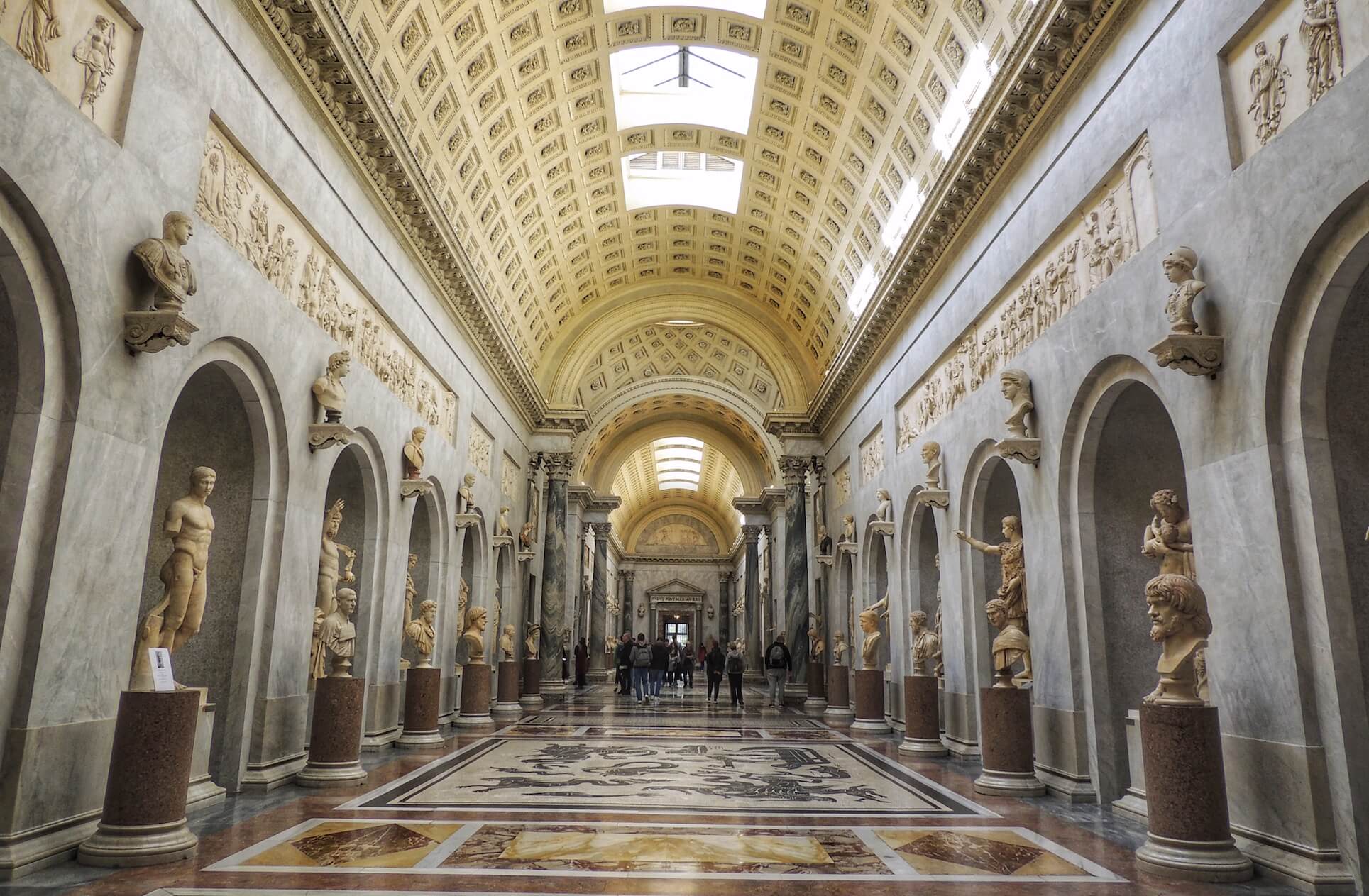
Then there are the deeper spaces: the Round Room, inspired by the Pantheon, with its vast dome and ancient porphyry basins; the Hall of the Muses; the Greek Cross Room with its massive imperial sarcophagi; and the Hall of Animals, where mythological and natural forms blur together.
These weren’t just museum pieces — they were daily reference points for Michelangelo and Raphael, who walked through them on their way to work, studying and absorbing them constantly.
Your guide will make those links explicit: the twist of a torso echoed in a Sistine figure, the calm gaze of Apollo reappearing transformed in a prophet. By the time you reach the Sistine Chapel, these sculptures feel less like “ancient art” and more like the opening chapter of what you’re about to see.

The Hall of Maps and Tapestry Gallery
Sumptuous Threads and Dazzling Cartography
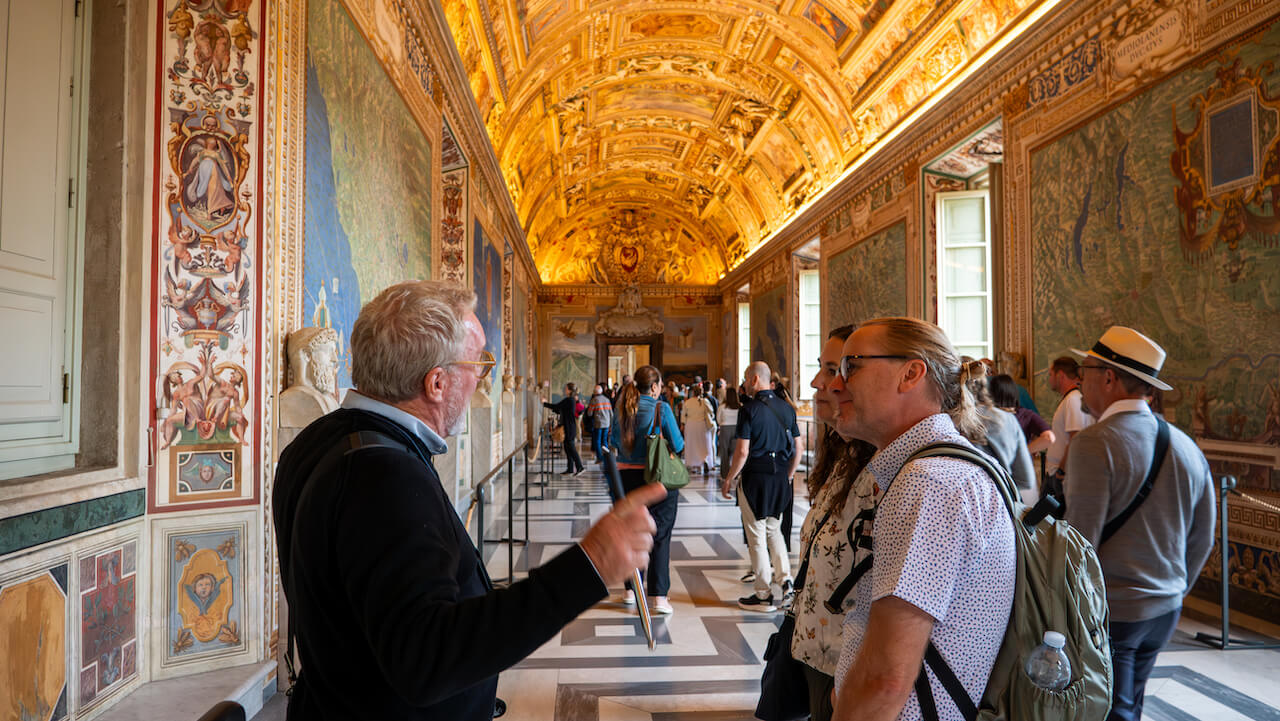
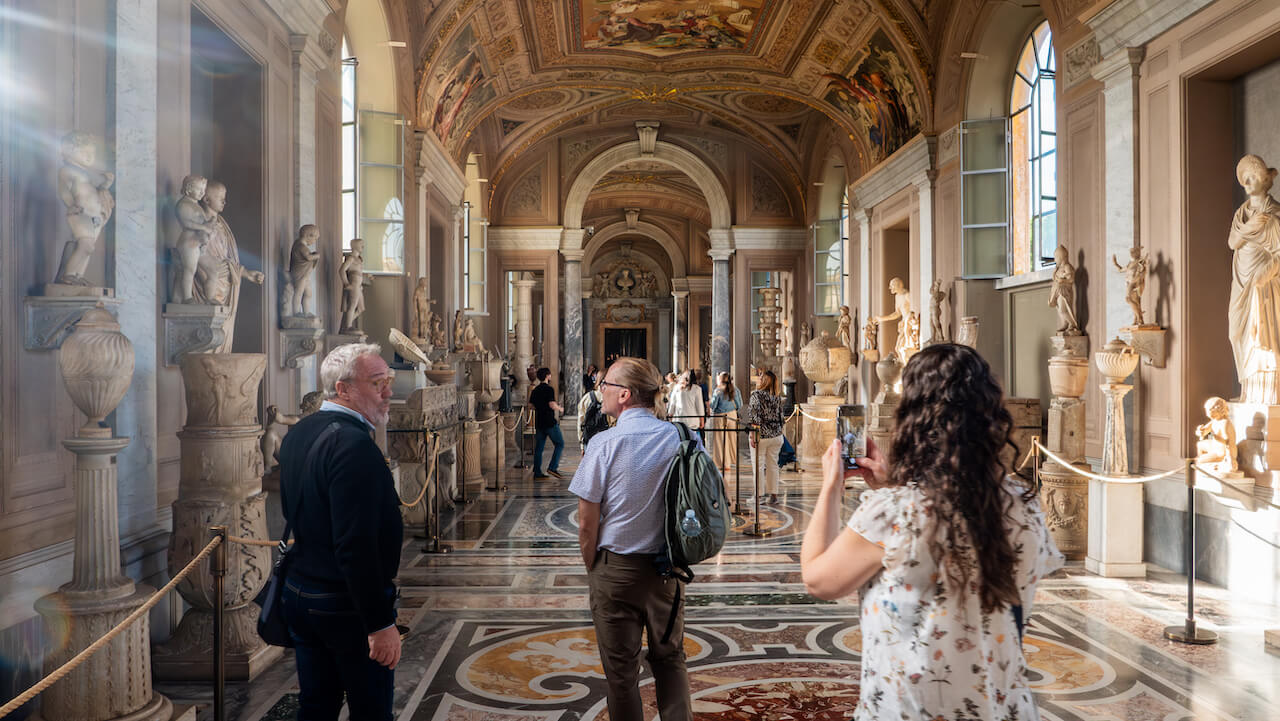
The journey through the Museums also unfolds through a series of long, atmospheric corridors that are easy to miss in a rush — but reward attention.
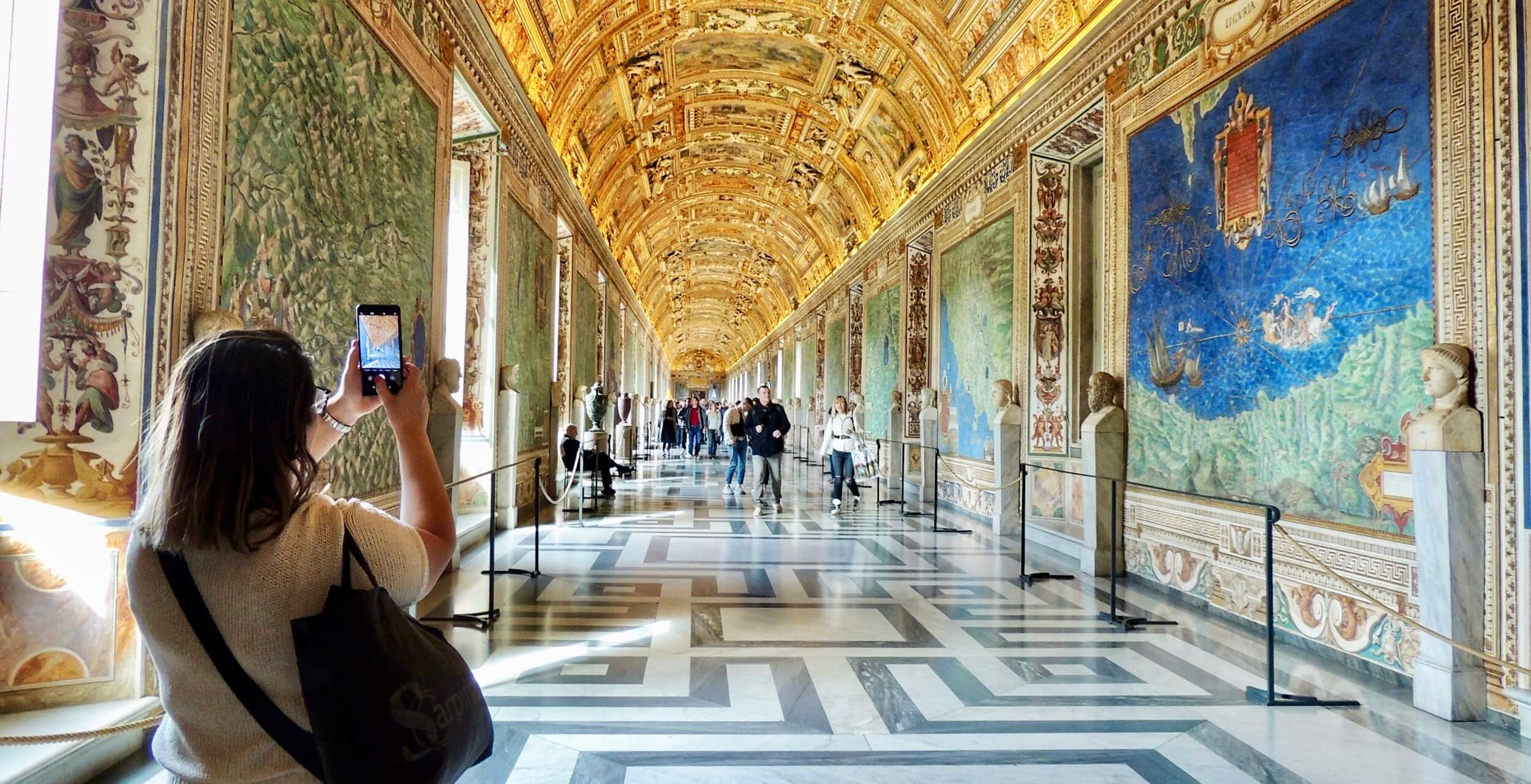
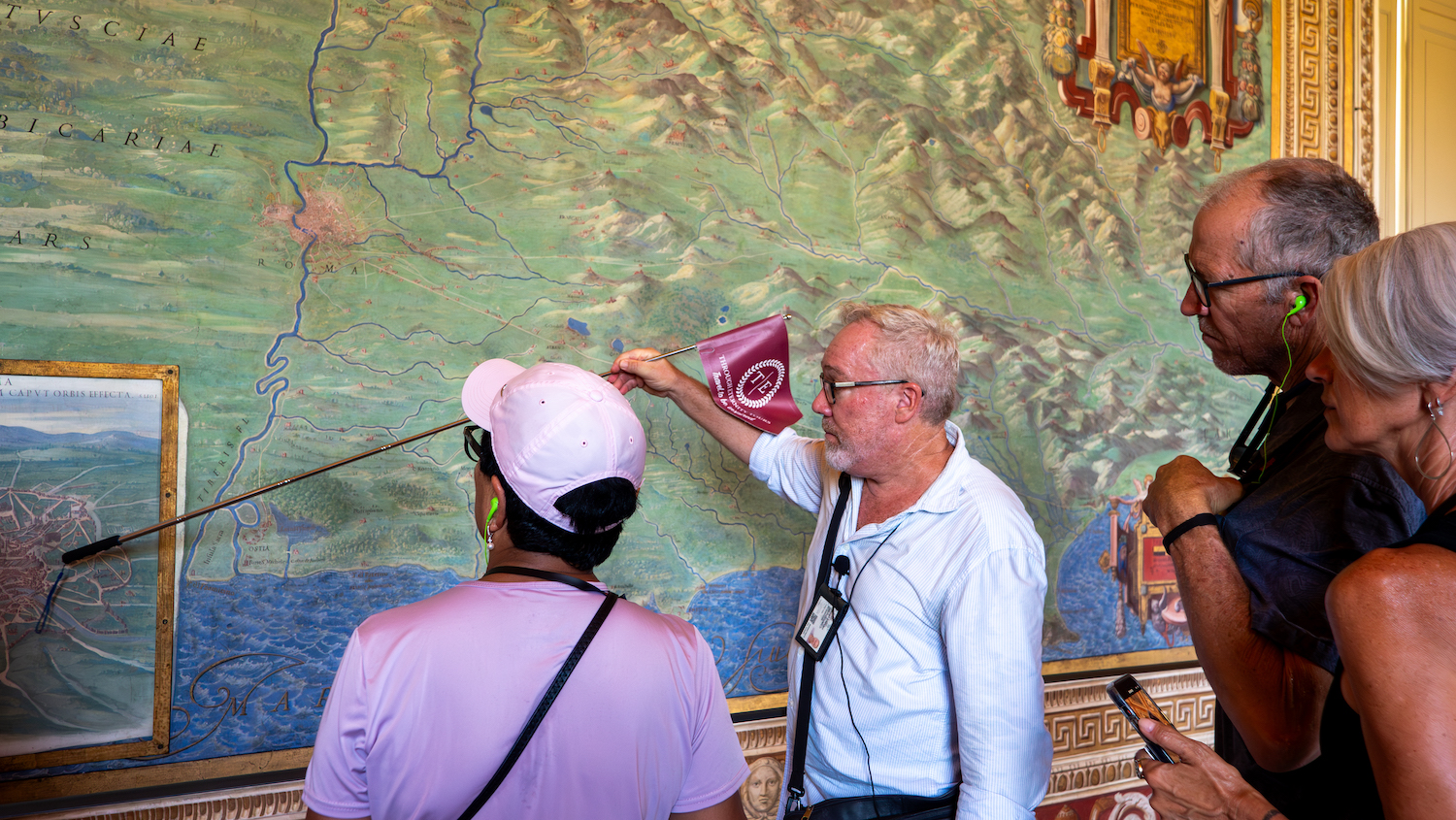
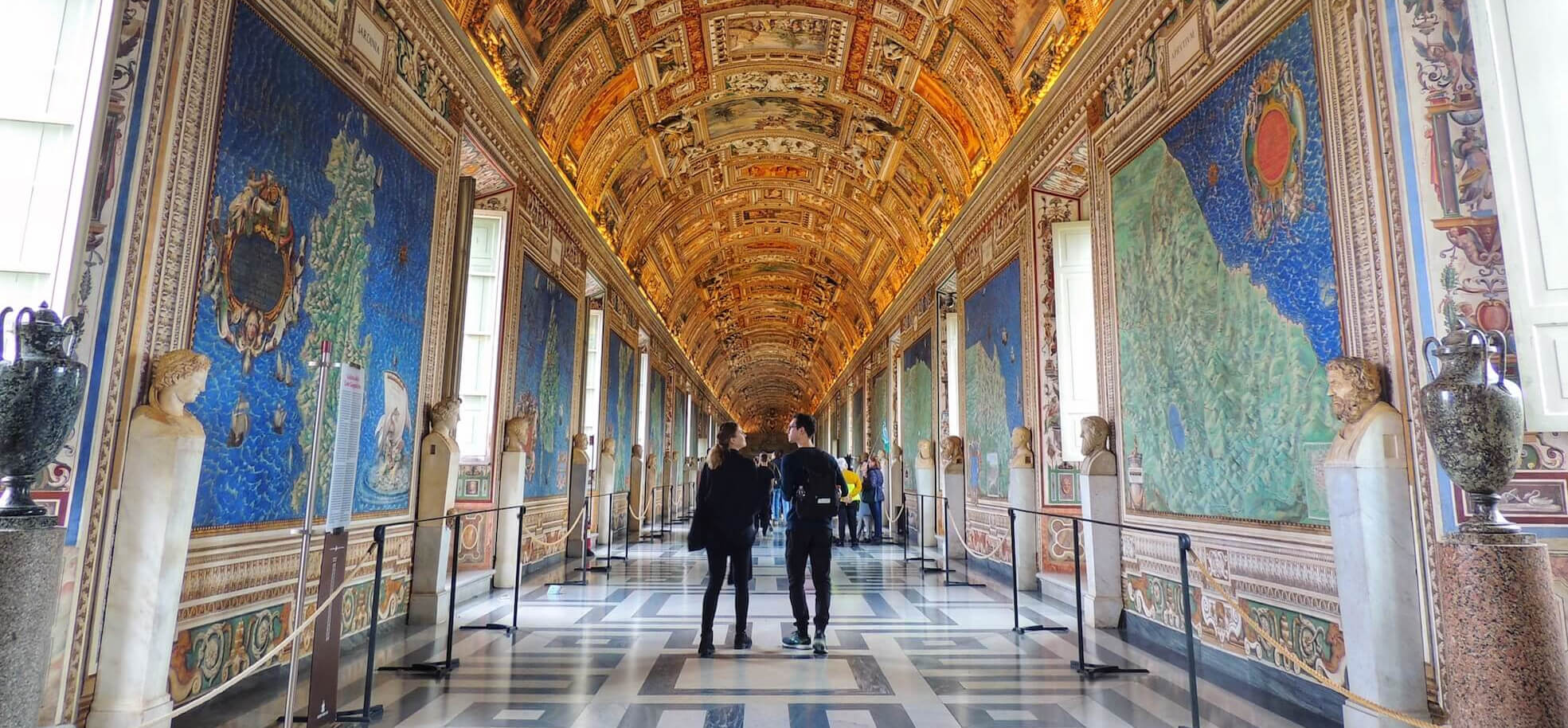
The Gallery of Maps stretches for 120 metres, painted between 1578 and 1581 by Ignazio Danti for Pope Gregory XIII, who wanted a visual survey of his entire domain. Each panel maps a region of Italy with extraordinary care: coastlines traced with precision, cities shown in perspective, and seas filled with ships, sea creatures, and allegorical detail. Overhead, the gilded ceiling runs like a continuous illustrated manuscript of Renaissance knowledge.
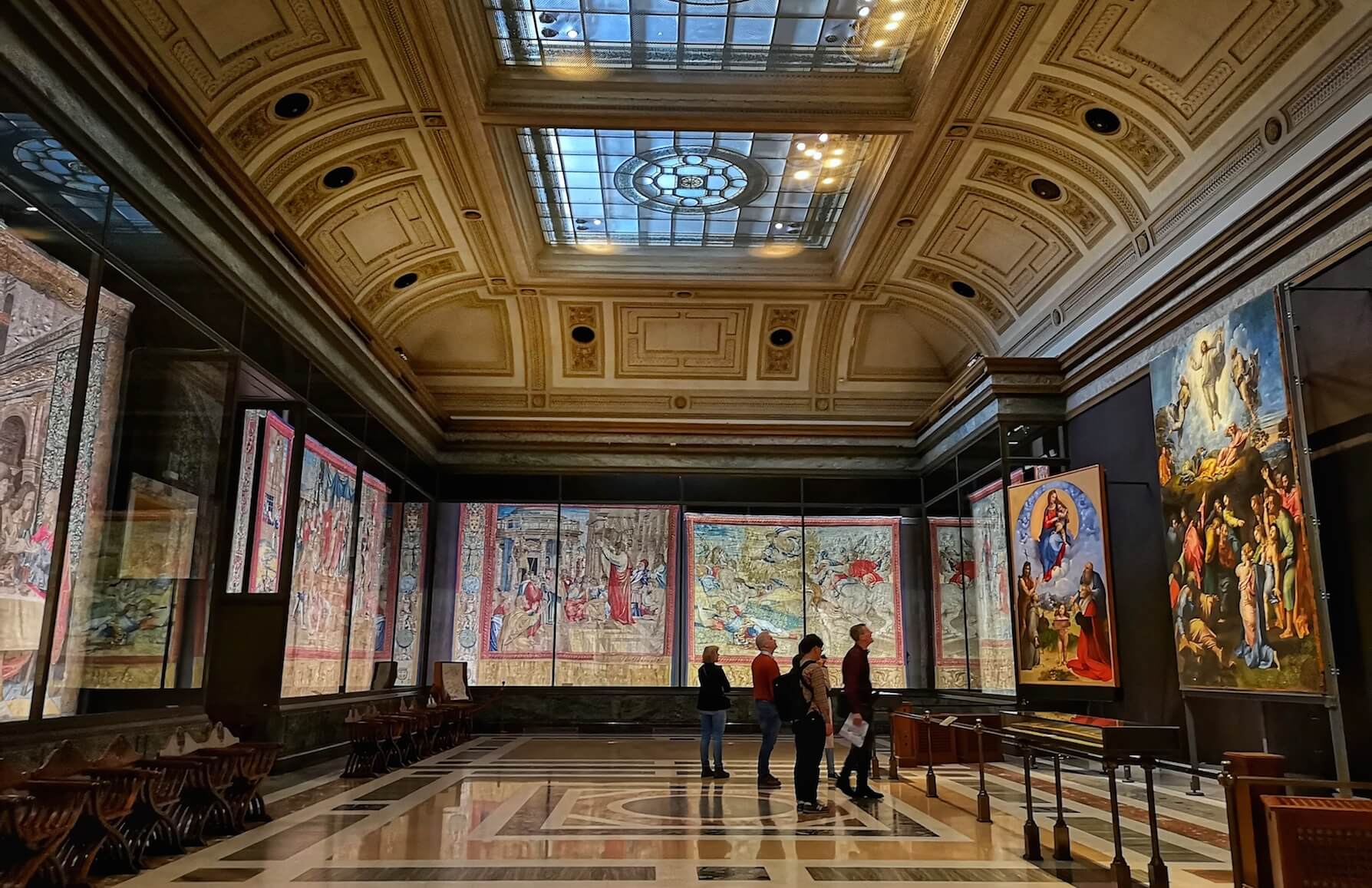
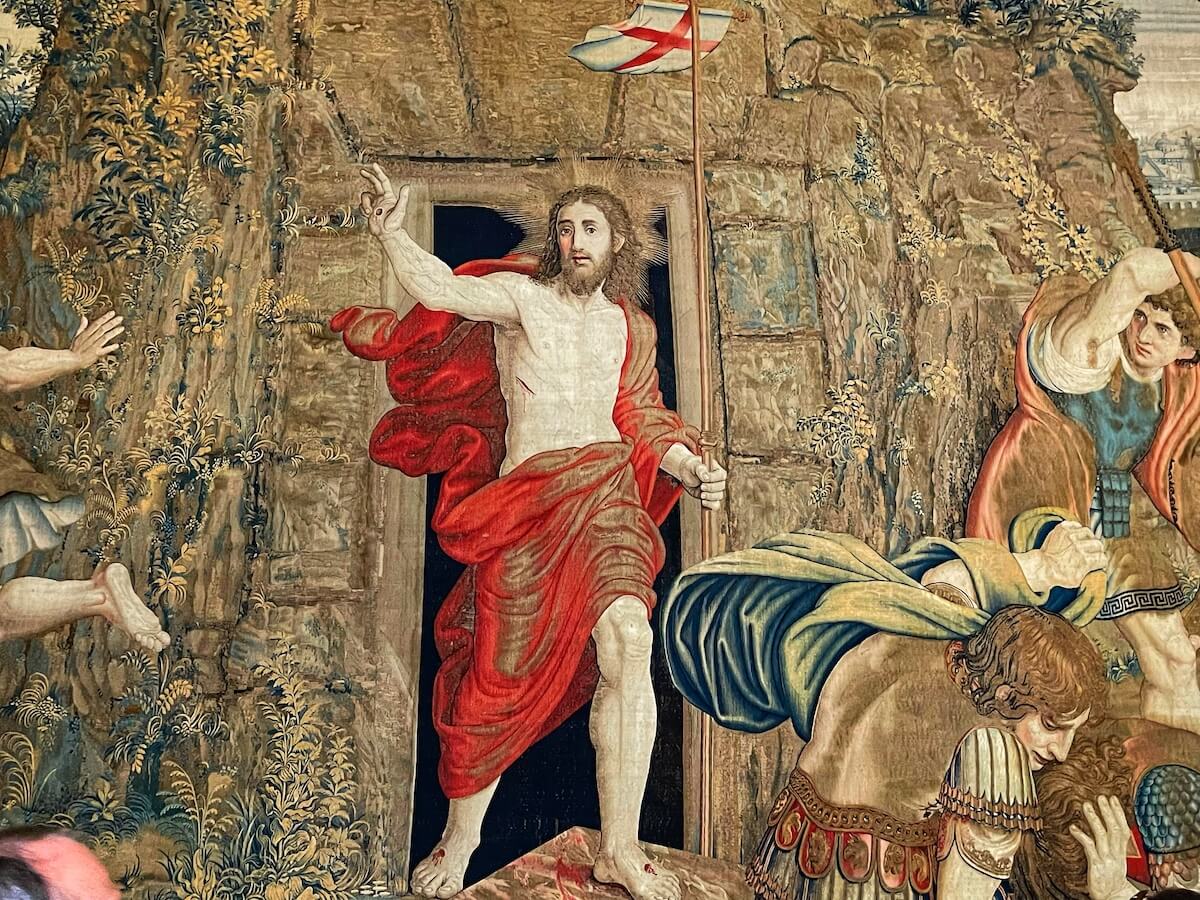
The Tapestry Gallery is no less impressive. Woven in Brussels from designs by Raphael’s workshop, these works combine technical brilliance with visual storytelling on a monumental scale. The famous Resurrection tapestry is the standout — Christ appearing to follow you as you move — but every panel repays close attention, especially when you can actually pause long enough to notice the detail.

Raphael’s Four Rooms in Full
Frescoes Fit For a Pope
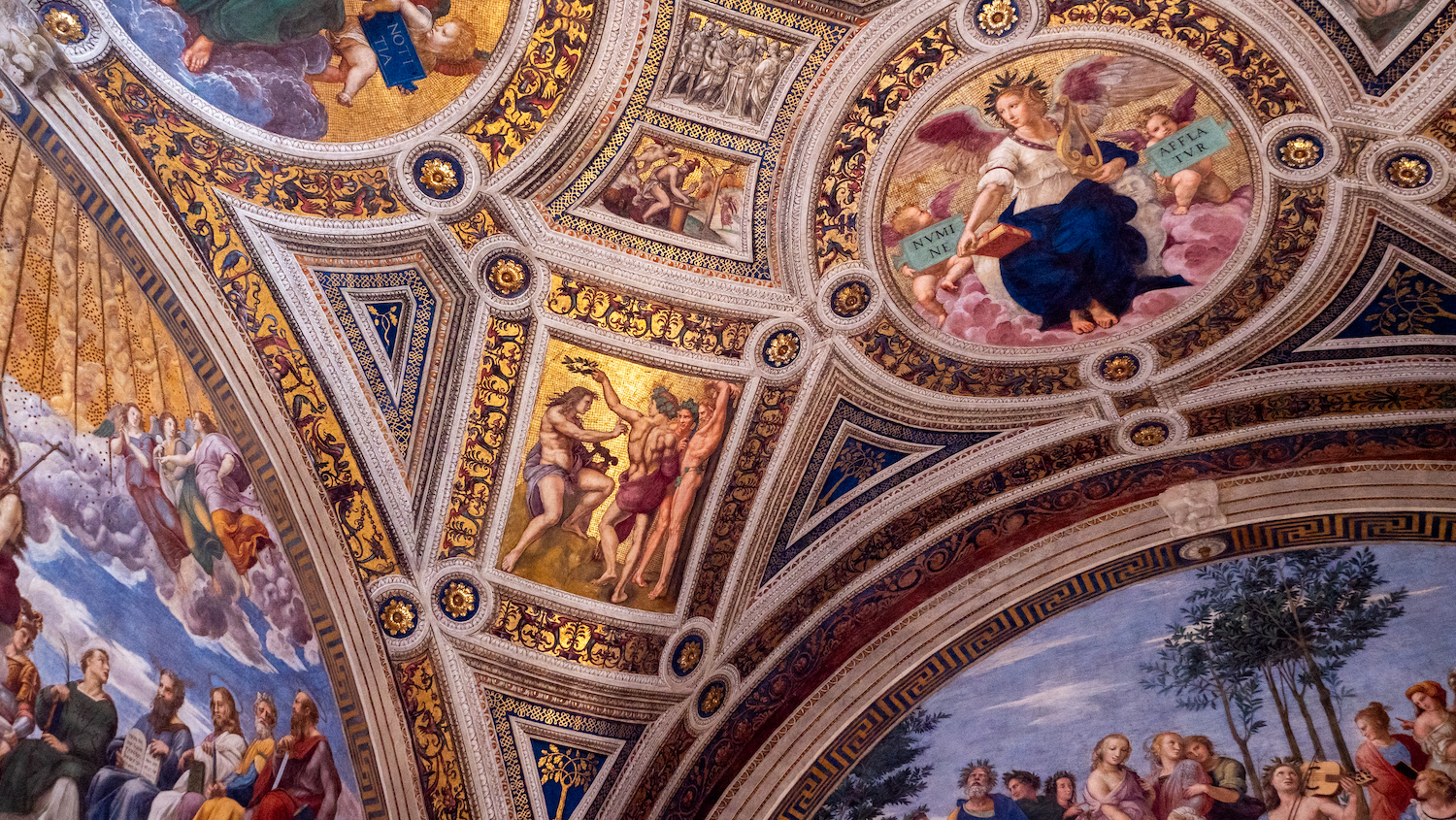
Raphael’s rooms were originally the private apartments of Pope Julius II, and they remain one of the clearest expressions of Renaissance ambition anywhere in the Vatican. On this tour, you don’t rush them — you experience them as a sequence of ideas.
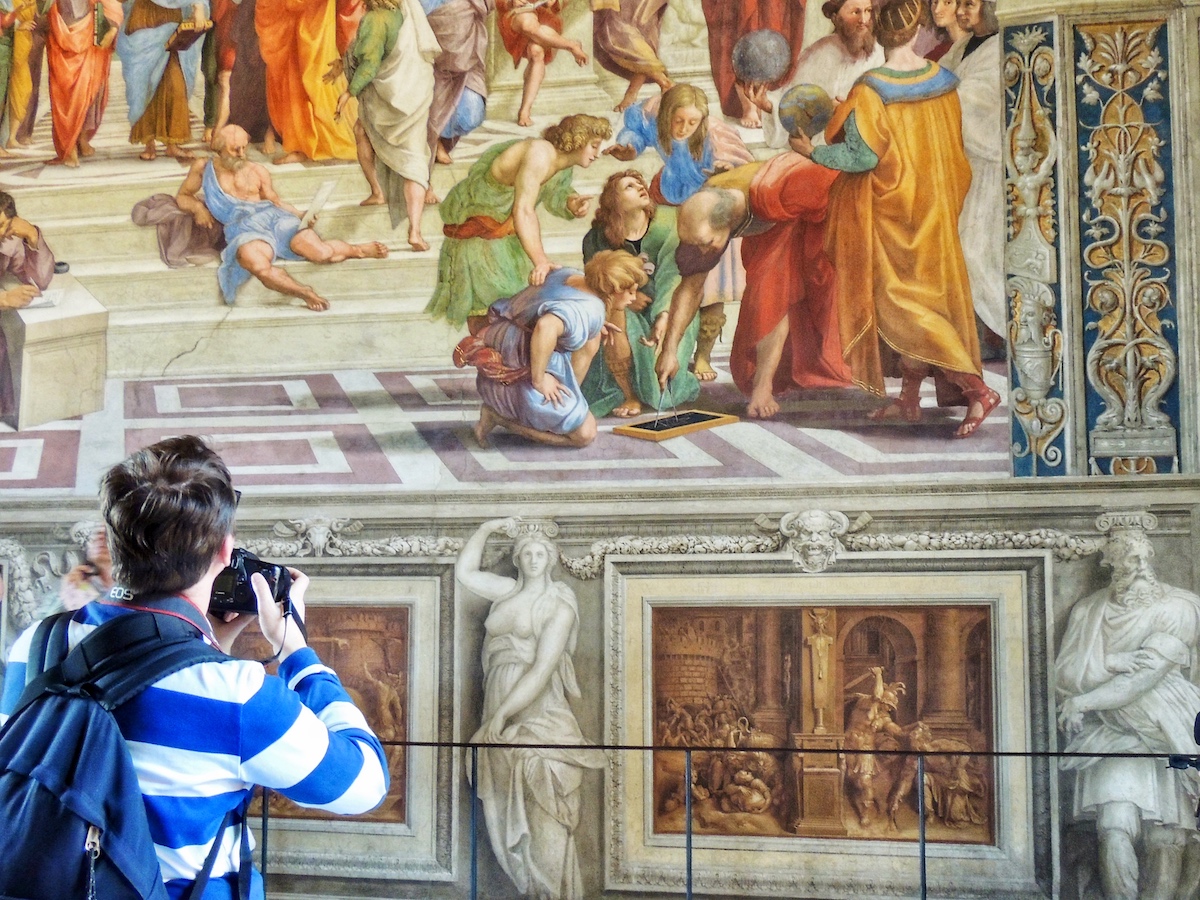
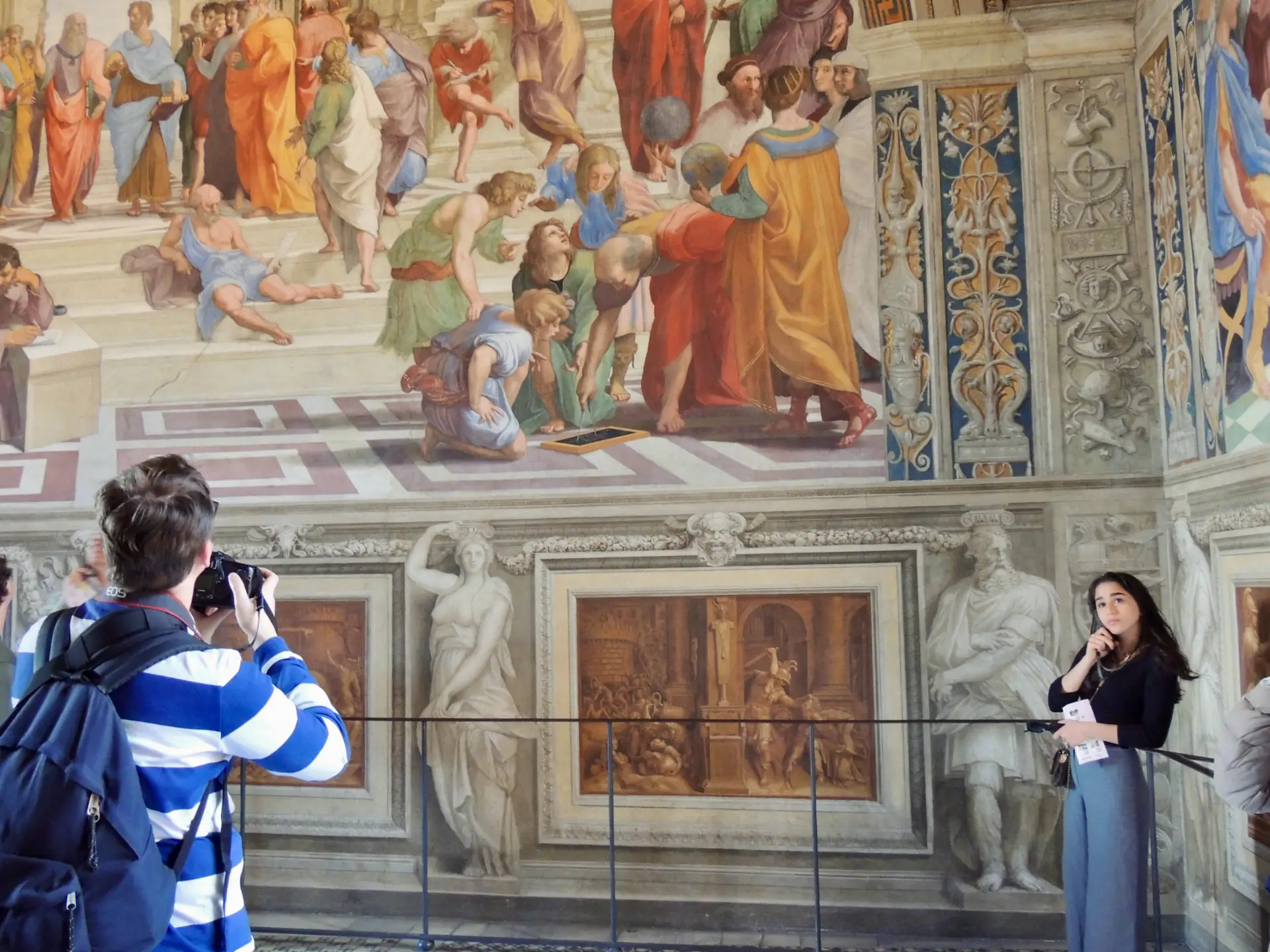
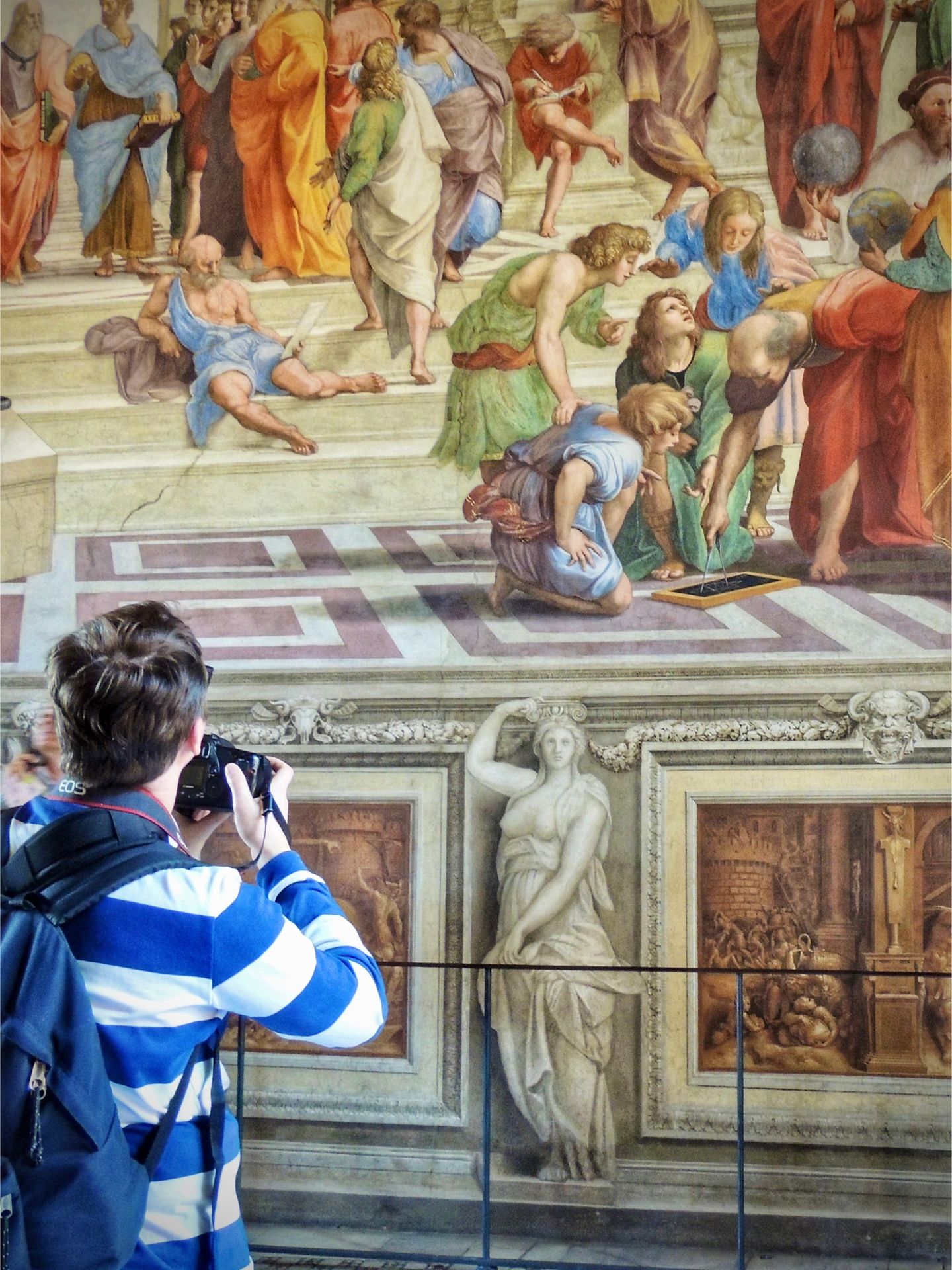
The Stanza della Segnatura introduces the intellectual world of the Renaissance: theology, philosophy, poetry, and law, all brought together in a single visual programme. The School of Athens is its centrepiece — Plato pointing upward to the world of ideas, Aristotle gesturing toward the physical world, surrounded by figures like Euclid, Socrates, and Pythagoras. Raphael even slips in portraits of his contemporaries, including a brooding Michelangelo-like figure in the foreground as a quiet tribute (or challenge) to his rival.
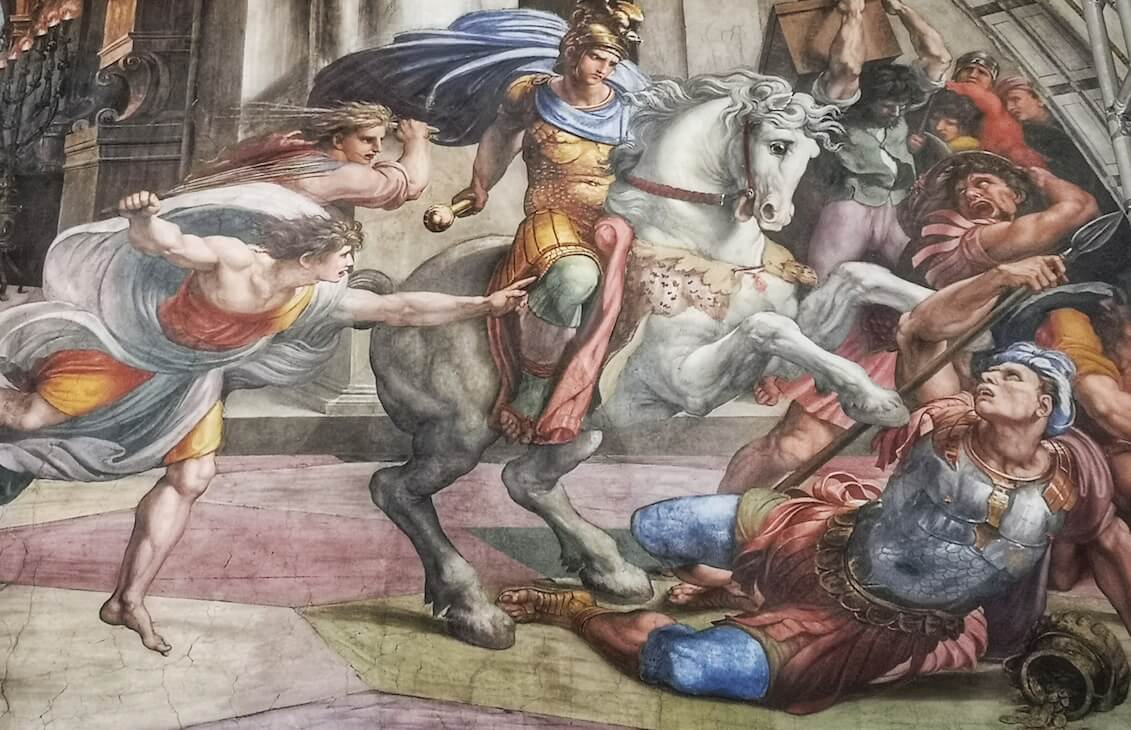
From there, the tone becomes more dramatic. In the Room of Heliodorus, divine intervention enters the story — the Expulsion of Heliodorus, the Mass at Bolsena, and other scenes that underline the protection of the Church in moments of crisis.
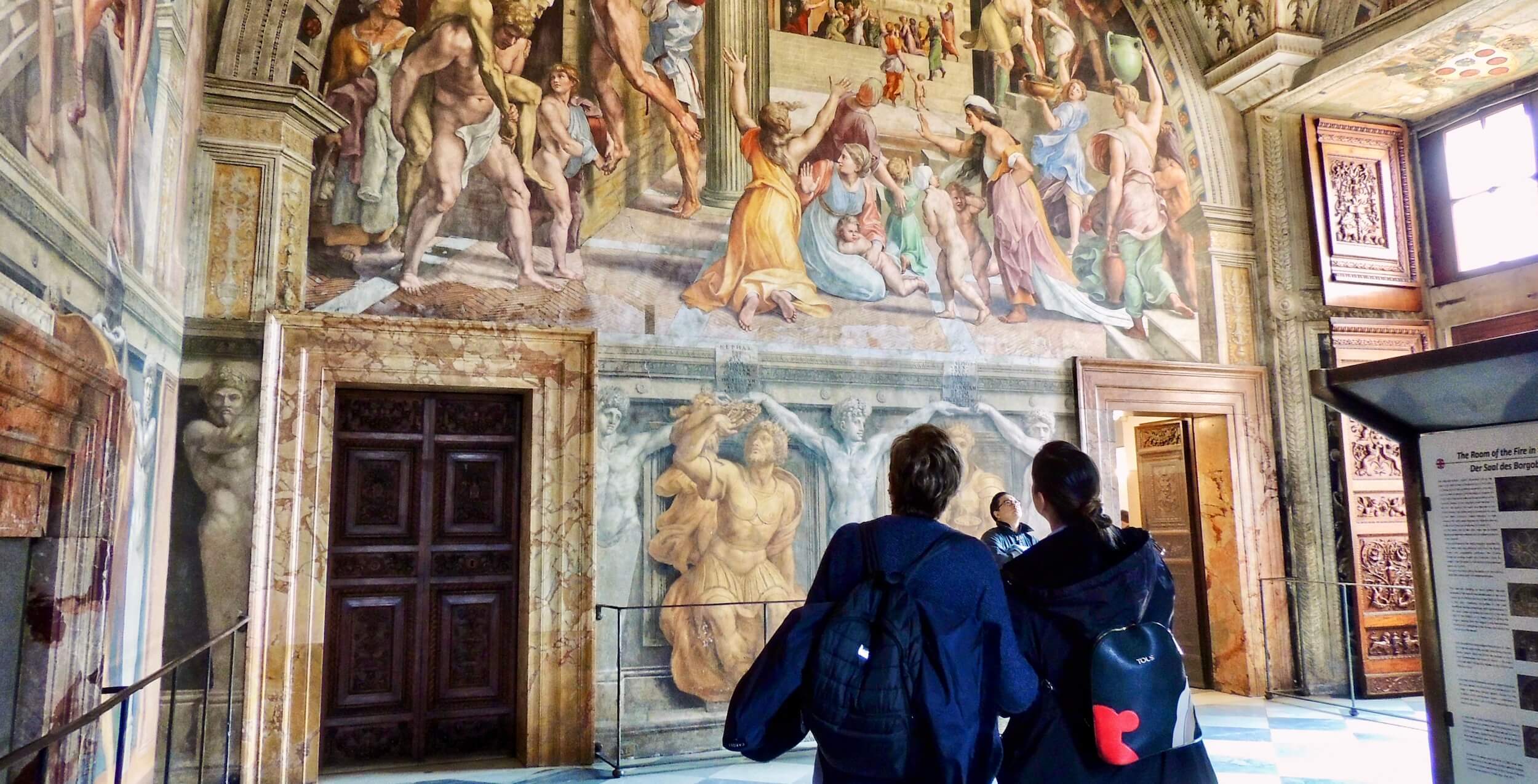
The Fire in the Borgo shifts into near-theatrical intensity, with collapsing architecture, panicked figures, and a miraculous intervention attributed to Pope Leo IV. Even here, Raphael weaves in classical references and narrative complexity that reward a slower look.
Finally, the Room of Constantine, completed largely by his workshop after Raphael’s early death, extends the story into the foundation of Christian imperial power — bridging the ancient world you’ve just seen with the Christian world you’re about to enter fully.

The Sistine Chapel
Michelangelo In-Depth
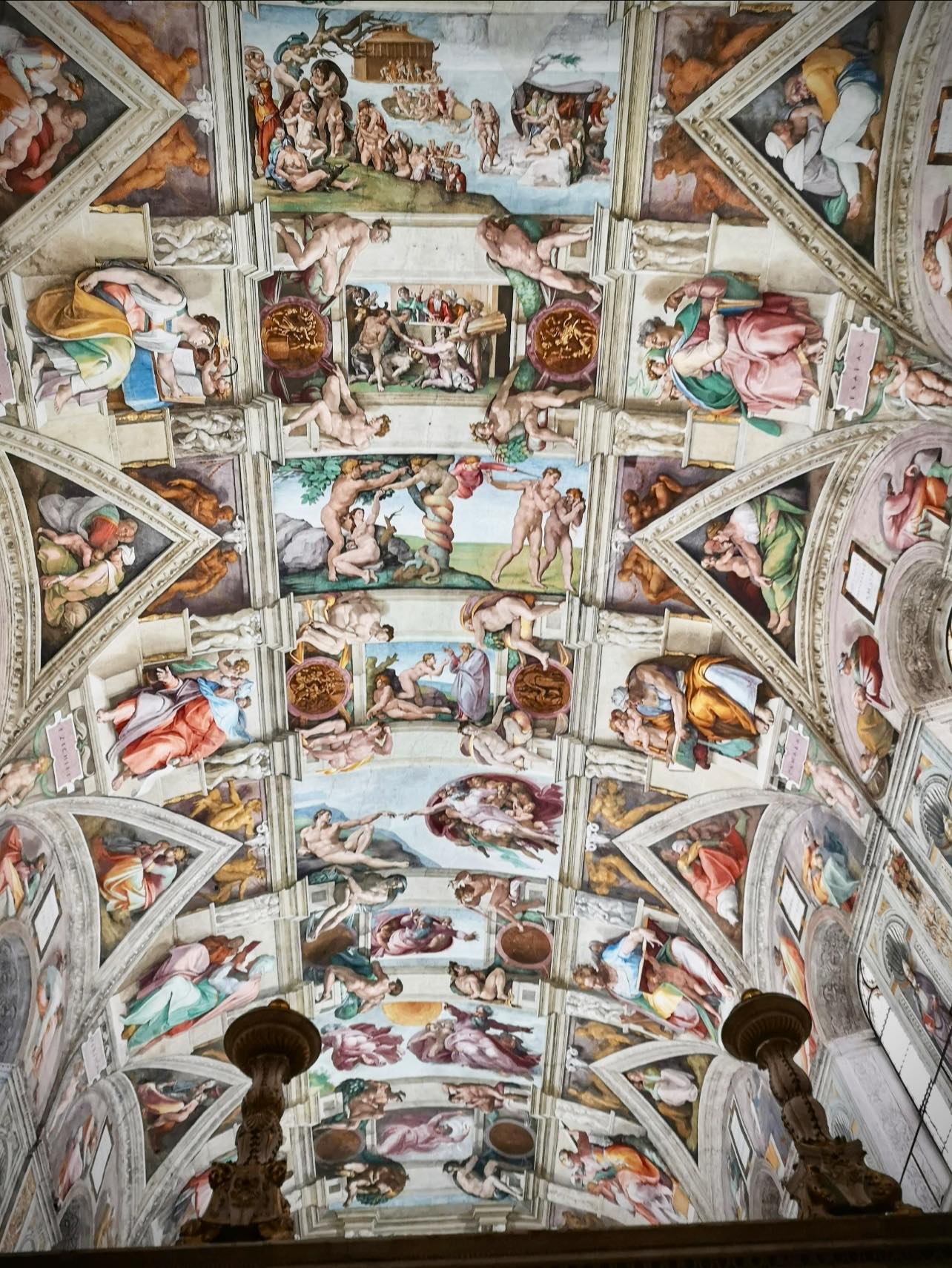
By the time you reach the Sistine Chapel, everything you’ve seen begins to connect. The ancient sculptures that inspired Michelangelo’s figures, the humanist philosophy that shaped the programme’s theological framework, the nature of Julius II’s ambitions and personality, the specific rivalry with Raphael that seems to have pushed Michelangelo to greater extremes of invention.
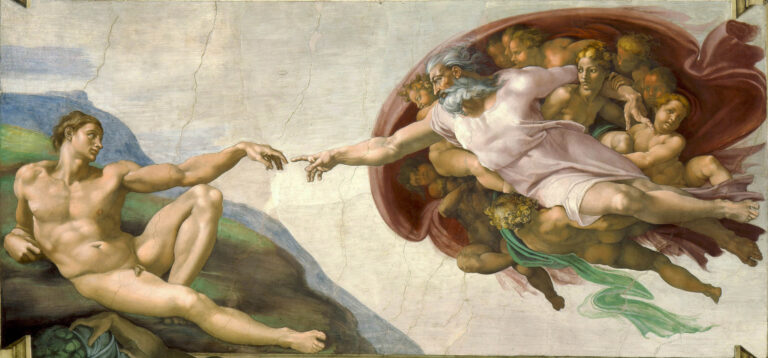
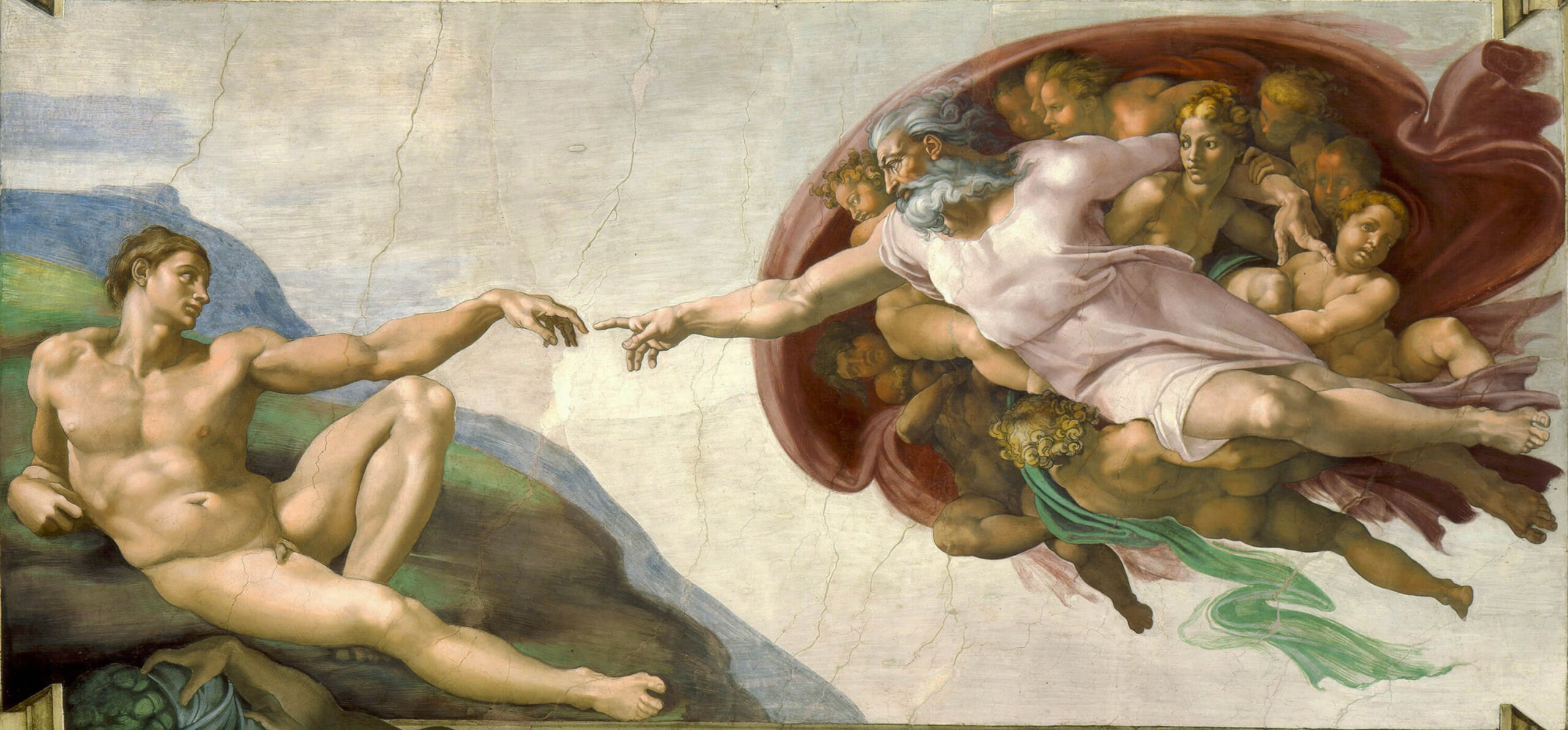
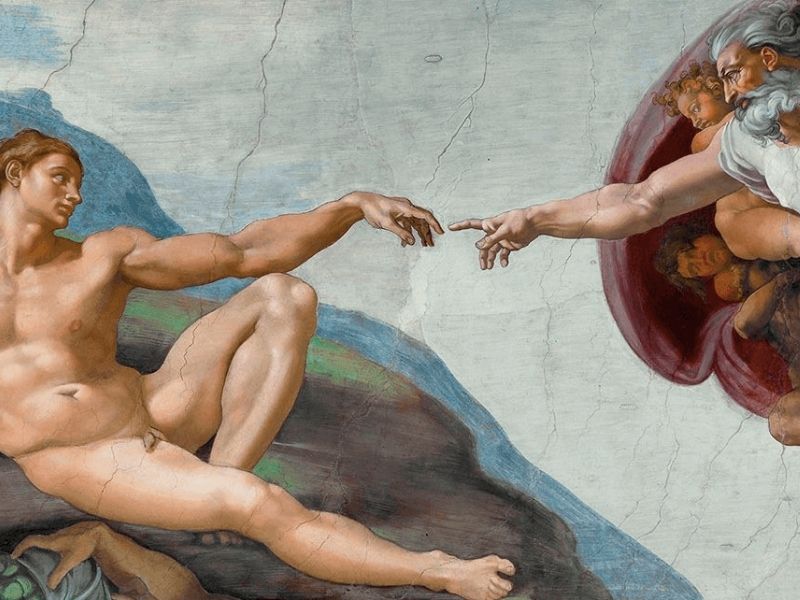
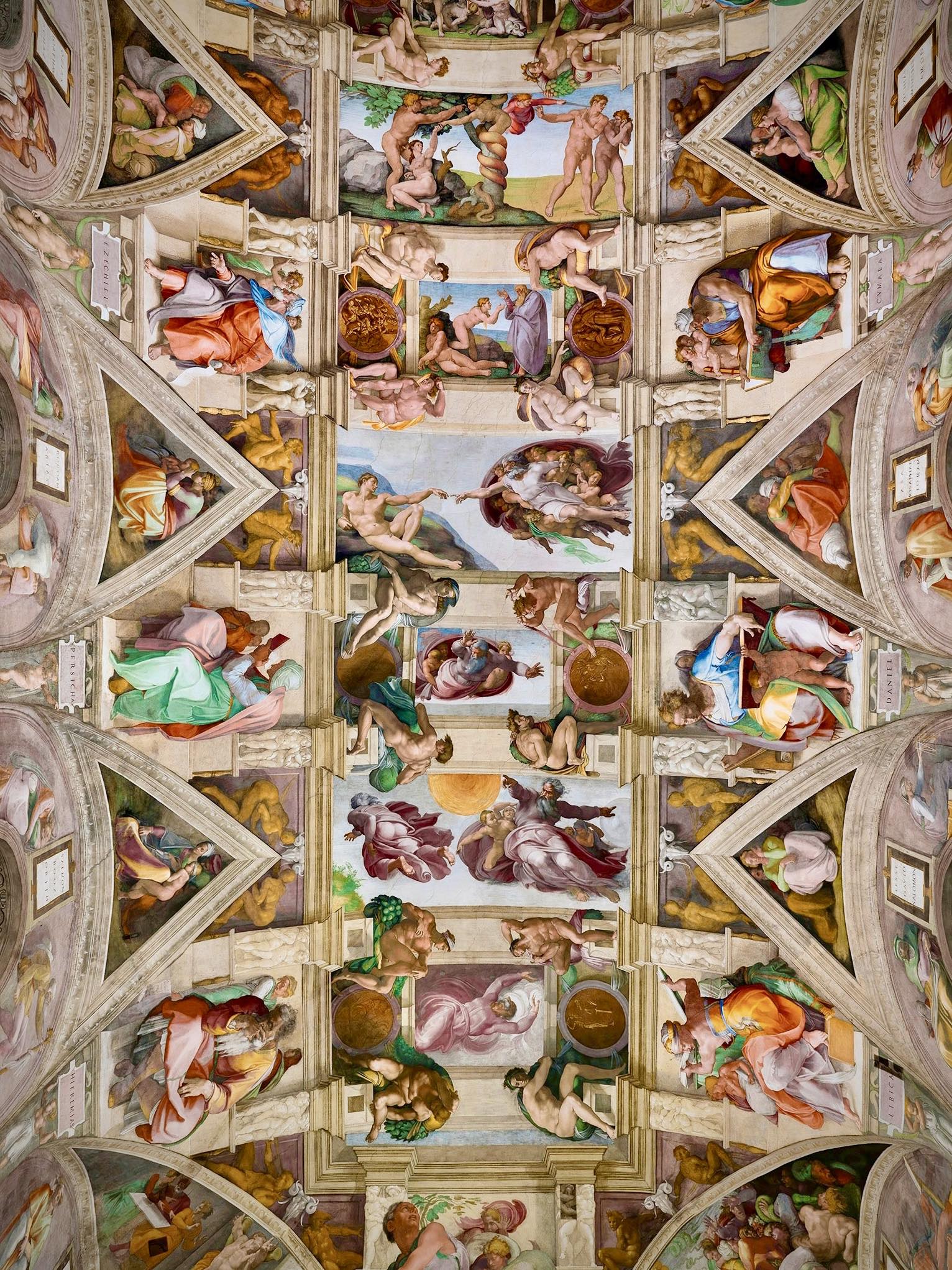
The ceiling is a programme of extraordinary complexity: nine scenes of Genesis, twelve prophets and sibyls, twenty ignudi, the complete genealogy of Christ in the lunettes, and dozens of smaller narrative panels in the spandrels and lunettes. Your guide will walk you through the full scheme — the biblical narrative, the theological argument, the aesthetic choices — and then give you time to look.
The Last Judgement, painted thirty years later by a Michelangelo still reeling from the shock of the brutal sack of Rome in 1527, is the work of a man in a different emotional register from the ceiling’s muscular confidence. The saved and the damned, the angels and the demons, the extraordinary central figure of Christ — here is the vision of a man who has spent his life in contemplation of death and judgment, painted with an urgency that the earlier ceiling only occasionally achieves.
Don’t leave without finding Michelangelo’s self-portrait. He painted his own face in the flayed skin St. Bartholomew holds aloft. The expression is difficult to read, but the choice is unmistakable.

The Pinacoteca
Three Paintings That Tell The Story of Italian Art
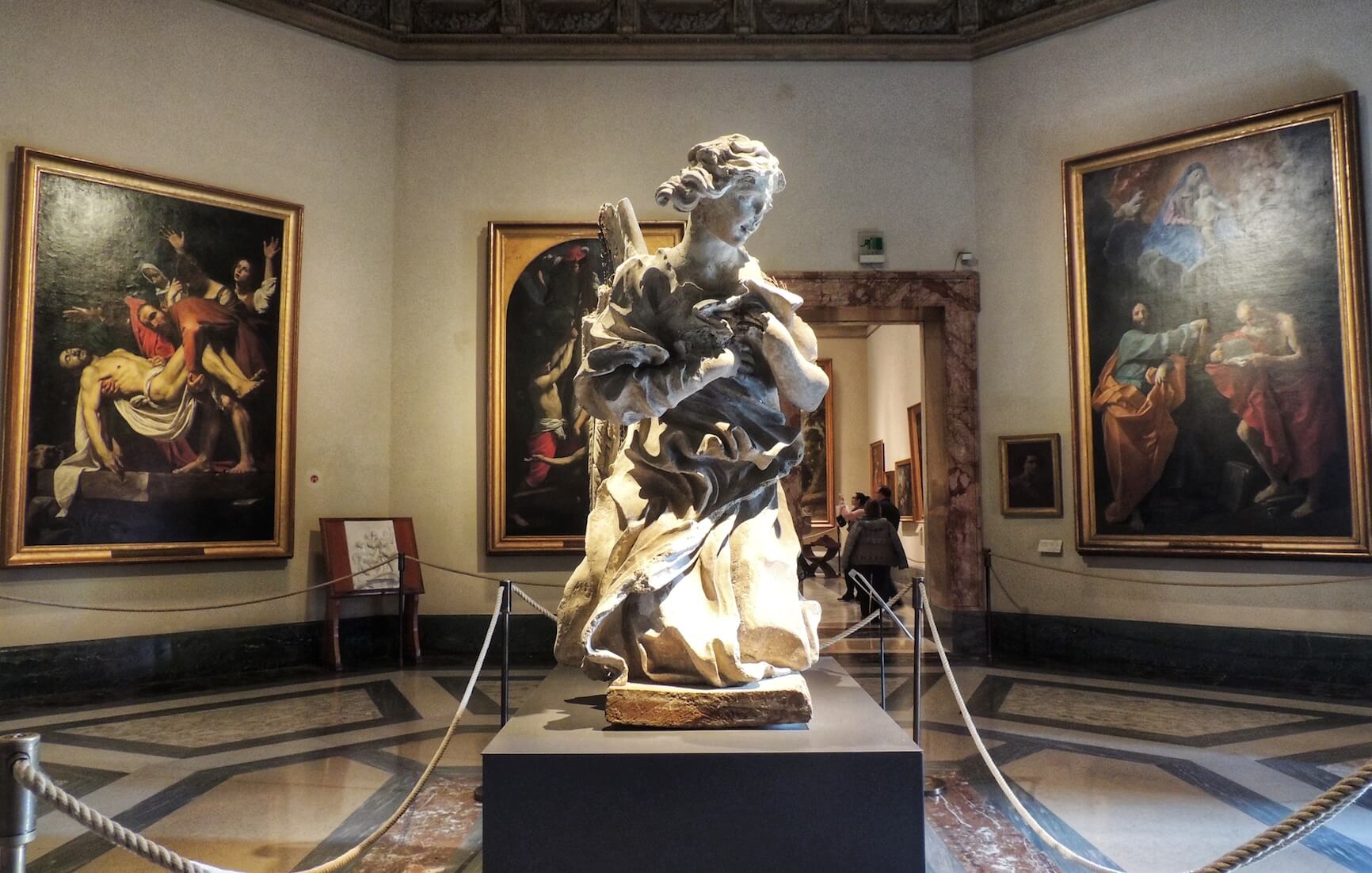
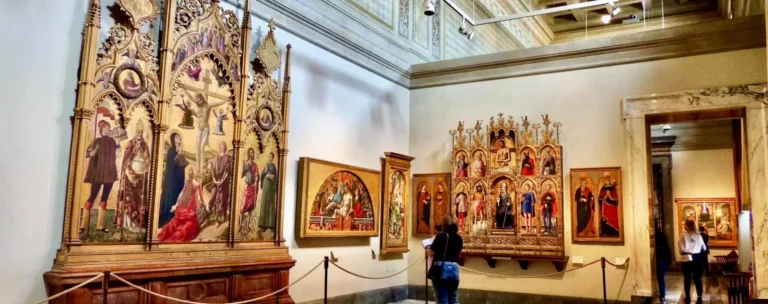
The Vatican Picture Gallery occupies a separate wing beyond the main museum route, added in 1932, and contains one of the finest collections of Italian painting in existence. Most visitors never reach it. On this tour, it is one of the highlights. The masterpieces here are numerous, but three in particular stand out.
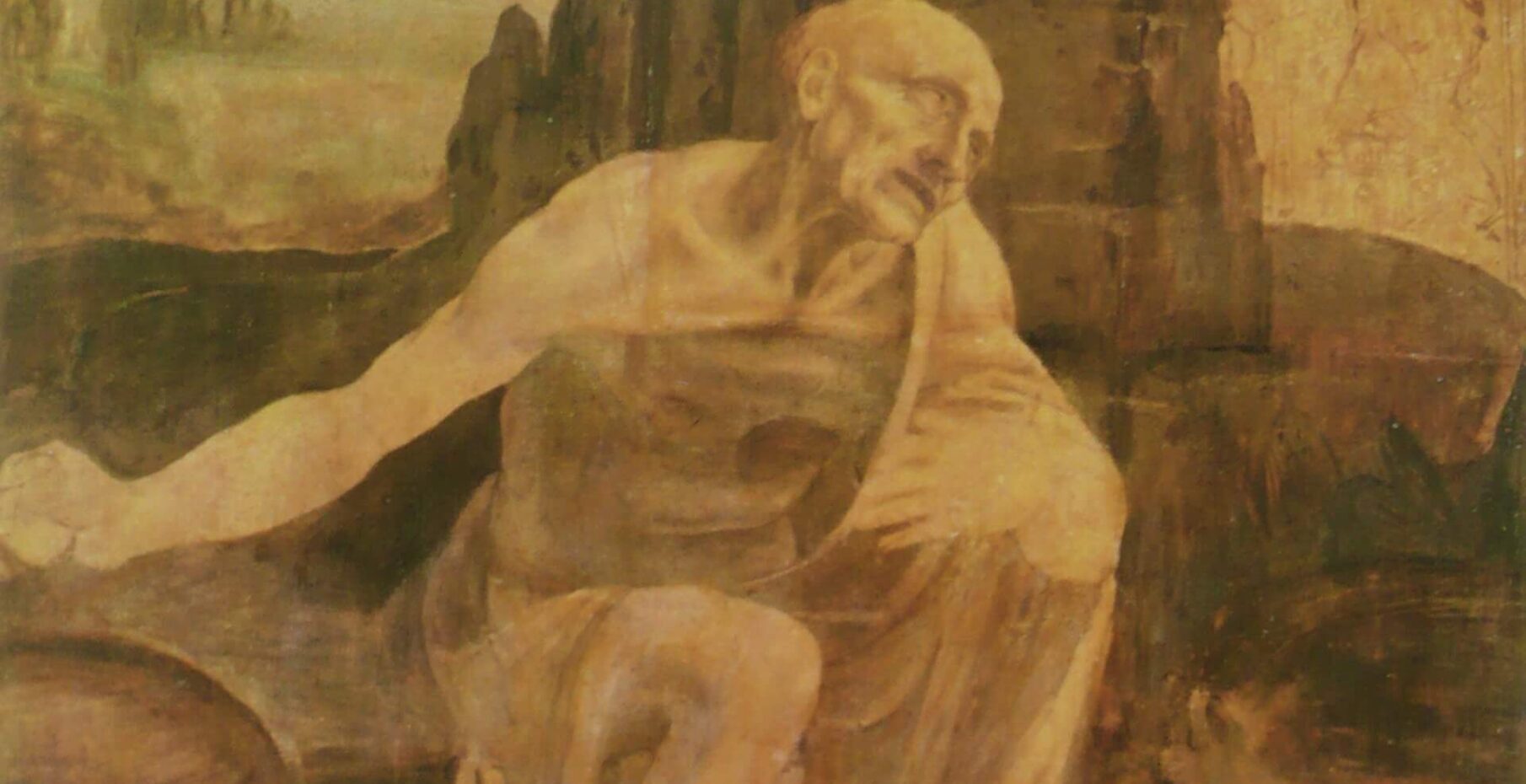
Leonardo’s Saint Jerome is unfinished, raw, and unlike anything else in the Vatican. The aged hermit kneels in the desert, beating his chest in an act of penitence, his anatomy exposed by Leonardo’s merciless draughtsmanship to a degree that makes the figure almost unbearable to look at. This is the only Leonardo in Rome, and it is one of the most intimate and painful things he ever made.
Caravaggio’s Entombment of Christ is one of the most powerful depictions of grief in Western art. The weight of Christ’s body, the strain of the figures lowering him, and the stark stone slab combine into a scene of extraordinary physical and emotional intensity — no idealisation, just presence and loss. Every element has been calculated for maximum impact.
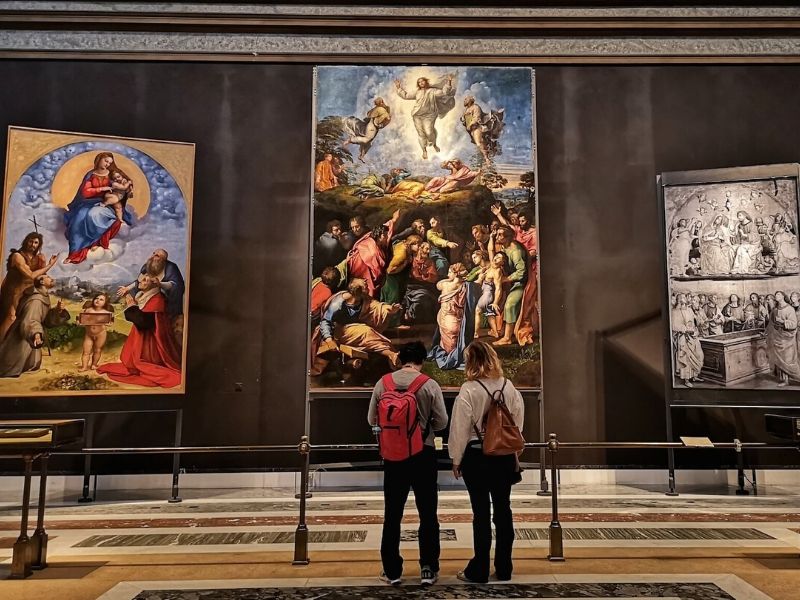
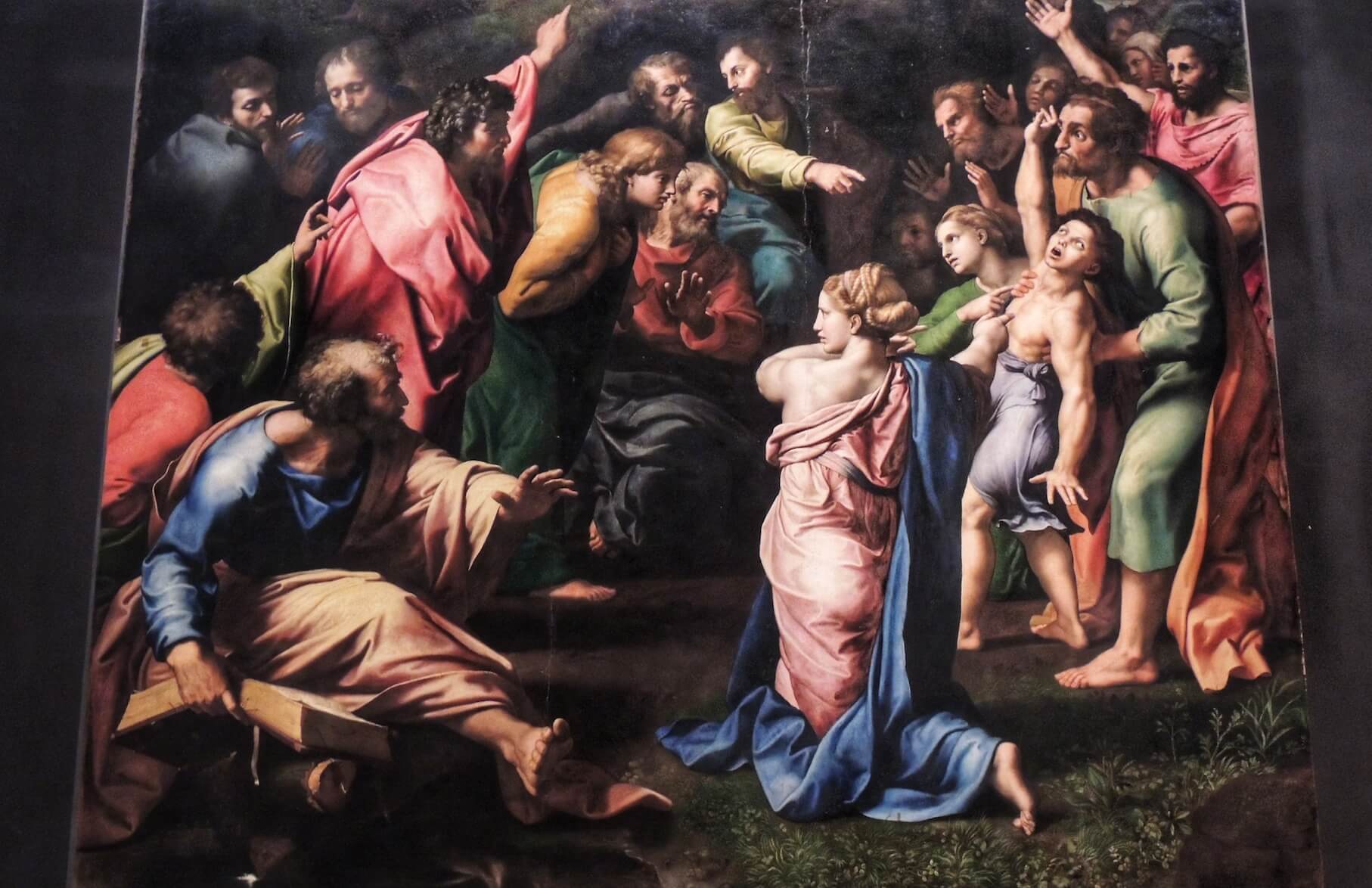
Raphael’s Transfiguration, his final work, pulls in two directions at once: above, Christ floating in radiant light between Moses and Elijah; below, chaos as the apostles struggle to heal a possessed boy. The contrast between the two registers — divine clarity and human confusion — makes it one of the most complete statements in Renaissance painting.

St. Peter’s Basilica
Masterpieces of Faith
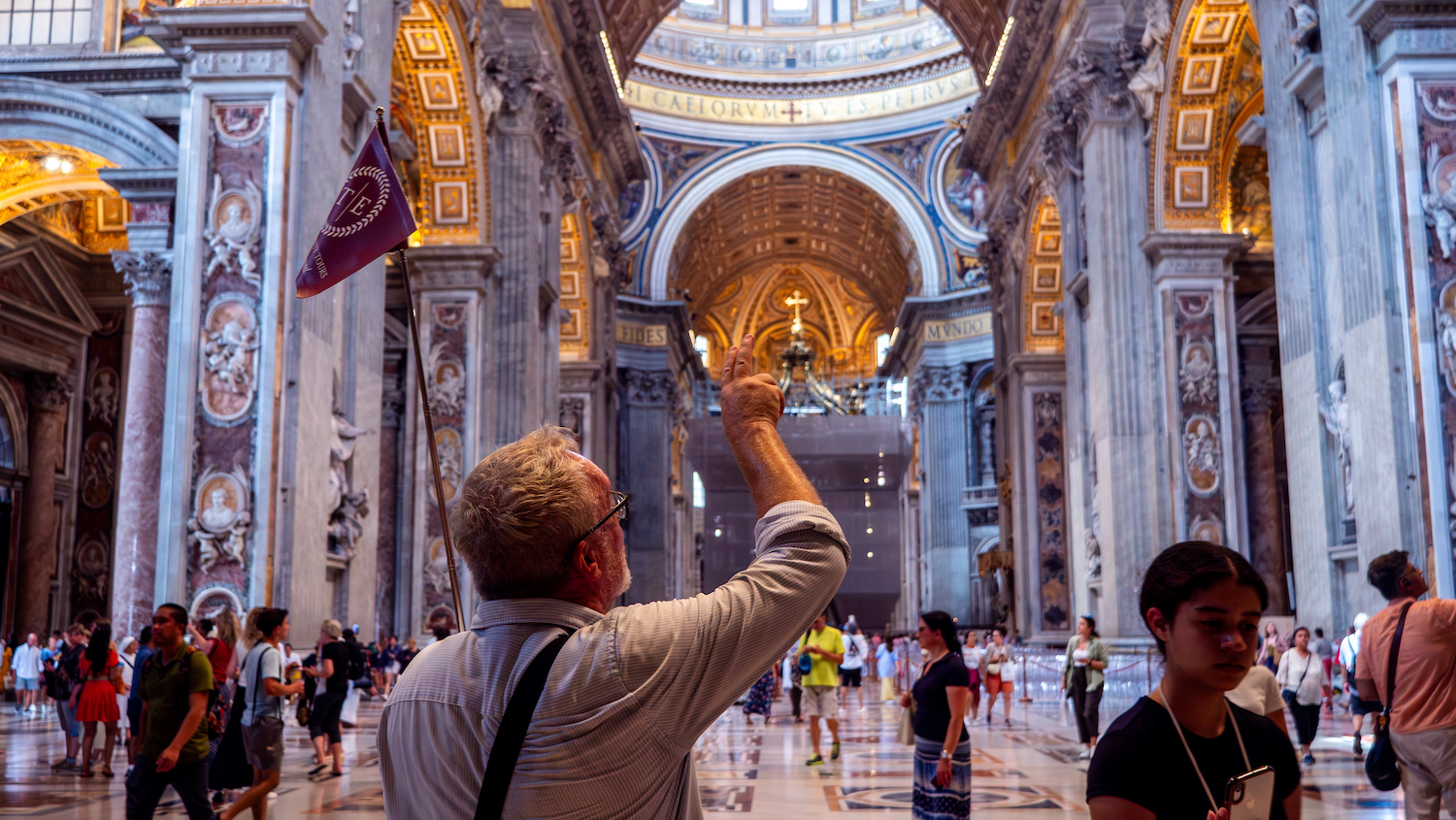
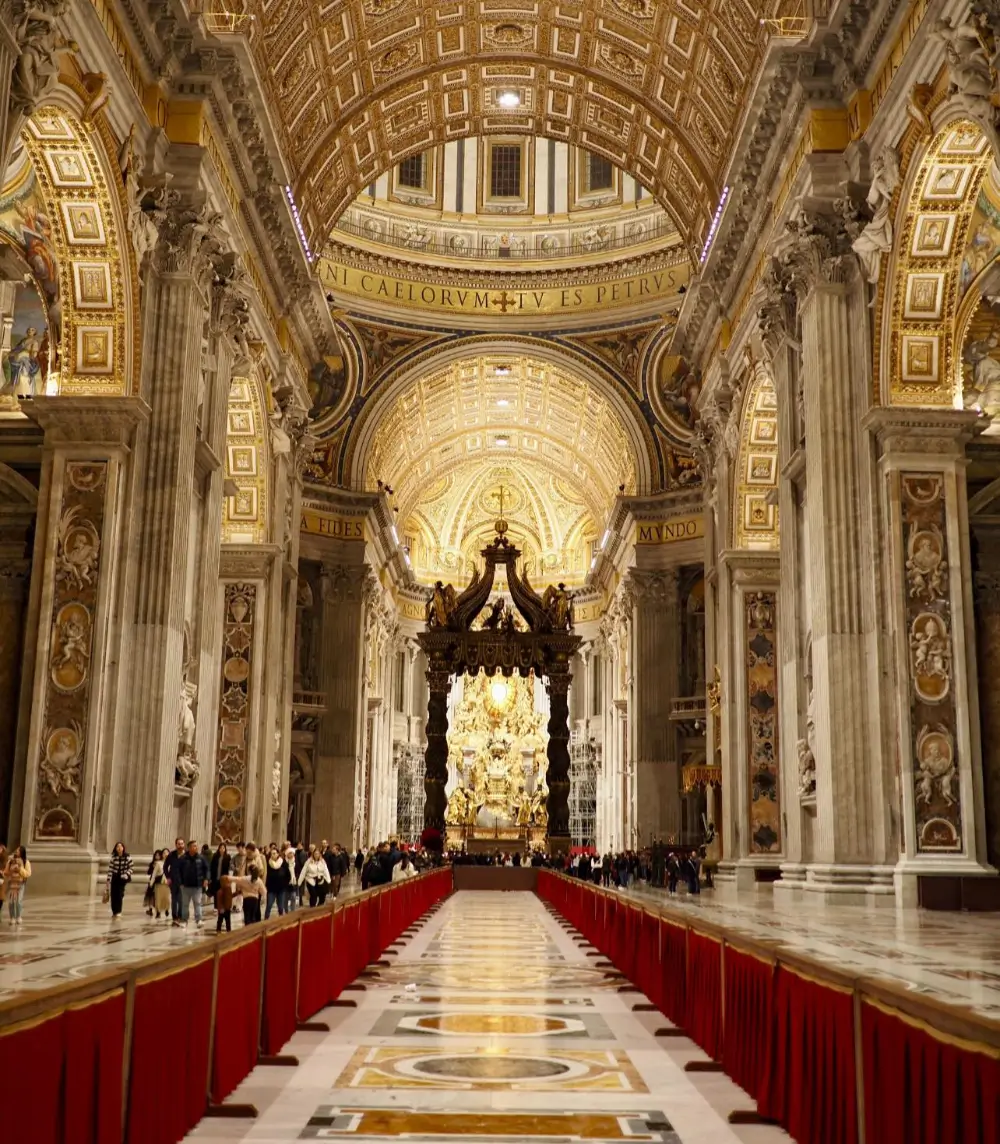
Our tour concludes in St. Peter’s Basilica – we’ll be able to enter the basilica directly without waiting in line via a special entrance in the Vatican Museums. More than just a church, St. Peter’s is the culmination of everything you’ve been moving through: artistic, political, and spiritual ambition at the highest level.
Built over the tomb of St. Peter, it is the heart of the Catholic Church and one of the defining architectural achievements of the Renaissance. It was commissioned under Julius II, the same pope behind the Raphael Rooms and early phases of the new St. Peter’s — a reminder that much of what you’ve seen was part of a single, vast vision of papal power and renewal.
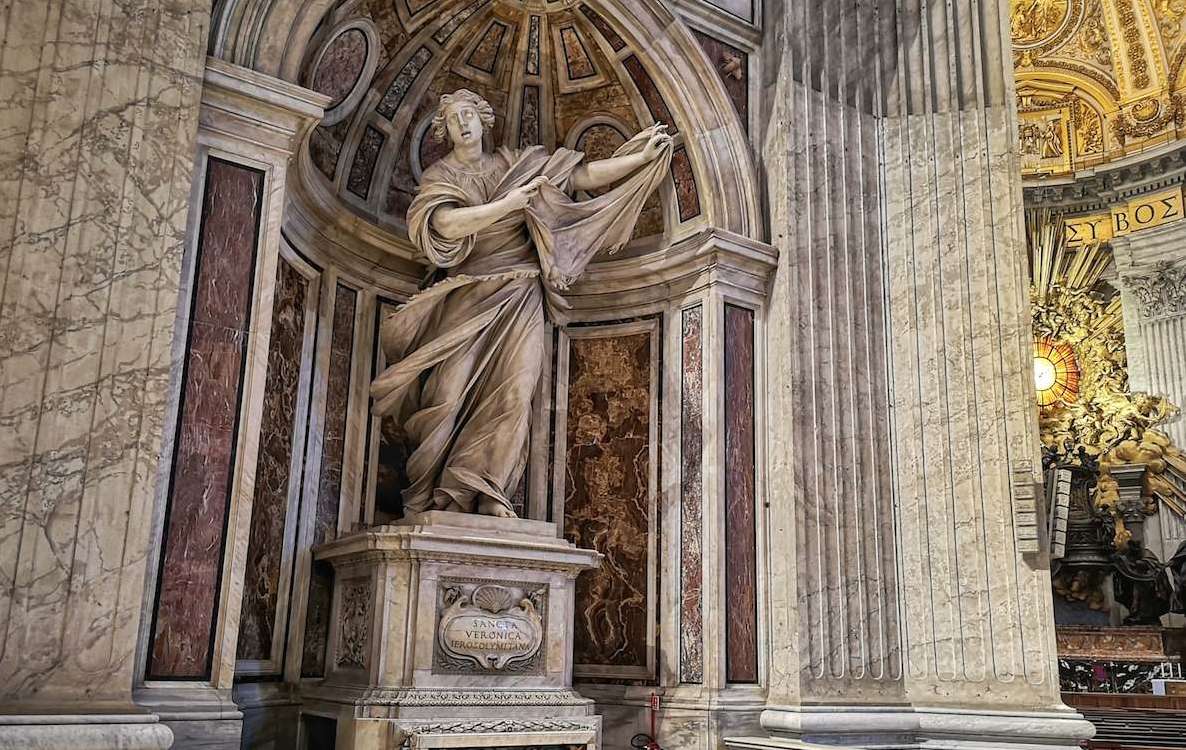
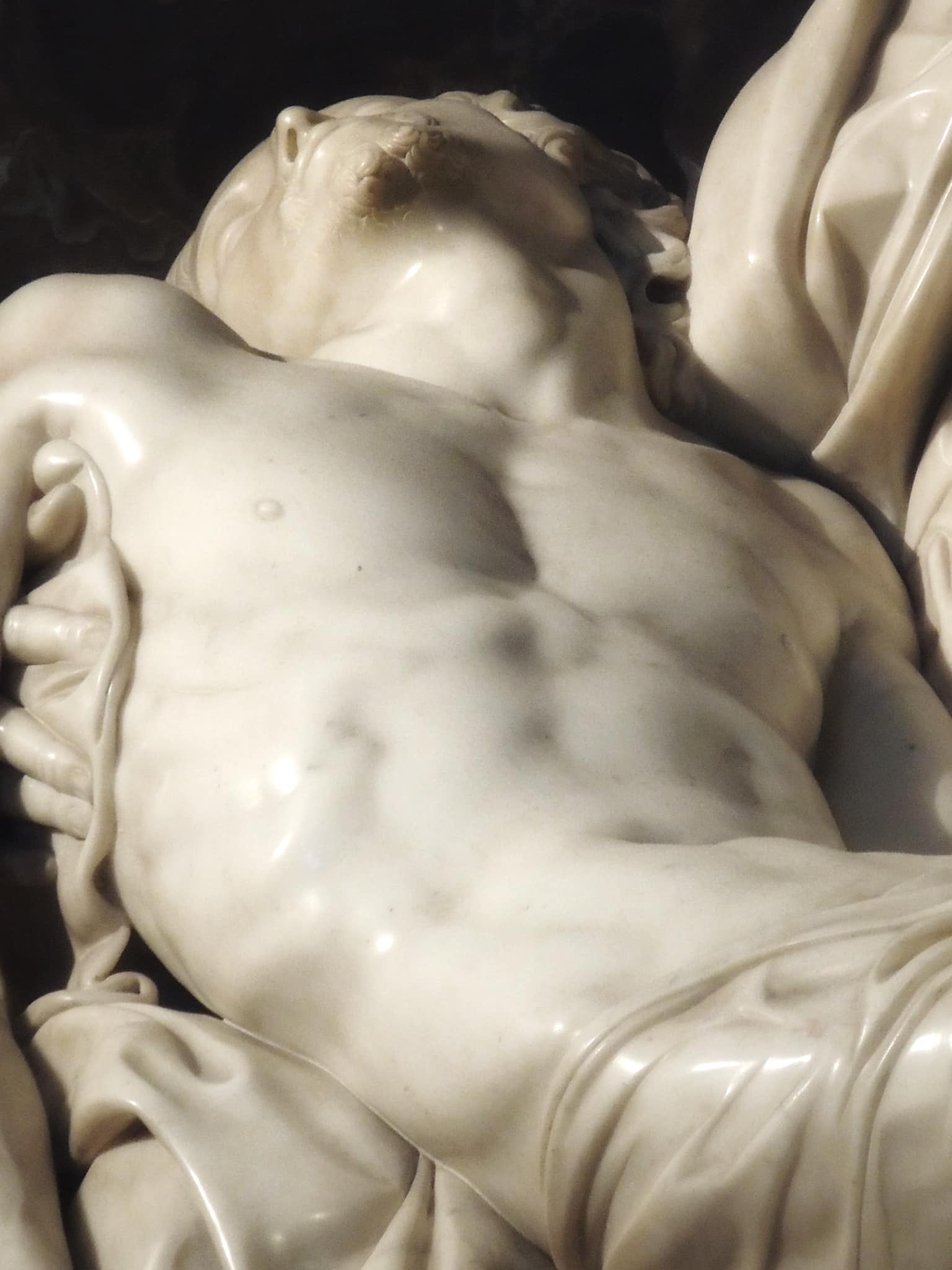
Inside, your guide brings the key works into focus: Michelangelo’s Pietà, carved when he was just 24, unusually signed across the sash of the Virgin; Bernini’s monumental baldacchino, a gilded bronze canopy marking the high altar above the apostle’s tomb; and the vast crossing beneath Michelangelo’s dome, where the scale of the building becomes fully apparent.
You’ll also pass through chapels and monuments that trace the evolution of the papacy itself, from Renaissance ambition to modern devotion — including the tomb of St. John Paul II, a place of quiet pilgrimage and reflection for visitors from around the world.

Create Your Custom Journey
Our dedicated team is here to help you design the perfect trip. We’re happy to assist every step of the way.
What Our Guests Are Saying
Guests Reviews
Bel tour, guida preparatissima. Tanta roba anche con 5 ore a disposizione. Avrei tagliato un po’ sulla parte delle pale d’altare, concentrandomk di più sulle sculture e sulle sale con le carte geografiche e busti. Bello san pietro, insomma soldi spesi bene
Worth the extended time!
I cannot recommend the extended 5-hour tour of the vatican enough! We had a small group of 5 people which made navigating the crowds so much easier. You could spend weeks in the museums and basilica but it still wouldn’t be enough time. Without a guide i would be so lost. The extended tour went by quickly, but it was the perfect amount of time for a first-time visitor. Our guide, cynthia, was fabulous. She was so kind and patient and made sure to make our experience as personalized as possible. I was blown away by her knowledge and so grateful to have this curated tour. I was 5 months pregnant at the time of tour and worried 5 hours would be too much, but it wasn’t! We even climbed the basilica on our own at the end. I read through several websites and blogs to pick the best tour to suit our needs and i am so thankful we went with througheternity. If you have the option to do the extended tour, i would absolutely take the opportunity.
Breathtaking journey of history
phenomenal experience led by a guide guia whose passion and depth of knowledge made for an extraordinary historical journey, chronicled in a perfect manner. I would booked another private tour in a second!
Not worth the price
while we appreciated the guide’s enthusiasm and kindness toward our family, we were not impressed overall. Many visitors are now making their way to the sistine chapel first to avoid the crowds, but through eternity tours was not willing to honor that request. Instead, we wasted 30 minutes outside listening to partially erroneous information (michelangelo did not pack the sistine on his back..) and the tour ended 20 minutes early. Our objective was to enjoy as much of the museums as possible, including the often missed pinacoteca, but there was no reason for 50 minutes of our five hour tour to be wasted.
Alberto is the true master of the vatican city!!
Our vatican vip experience with alberto was, in a word amazing. Alberto’s knowledge of art and history, his passion for his faith and his home city and his vast experience as a professor and guide was evident from the first moment. His insights into the time period, the artists, the painting styles, the political temperament of the popes and the times and his overall passion for the subject matter made our 5+ hours with him absolutely fly by! If i could give 10 stars out of 5 it wouldn’t be enough. He was informative, funny, insightful, charismatic and above all, genuinely kind. We all loved him, learned so much from him and truly appreciate the treasure he is to anyone lucky enough to have him as a guide, teacher and tutor. Thank you, alberto!! You were magnifico!! Grazie mille!
Other Tours You May Like…