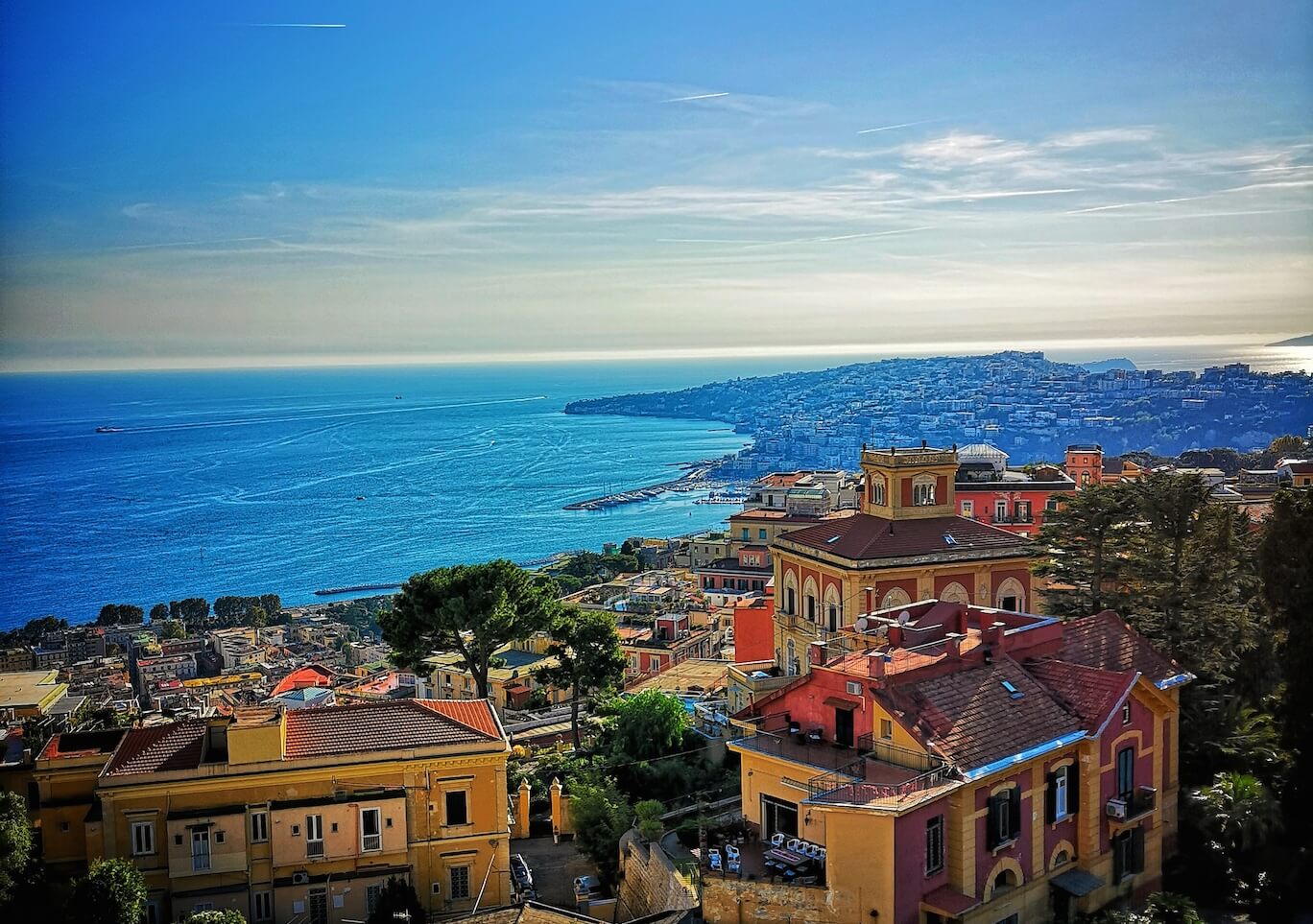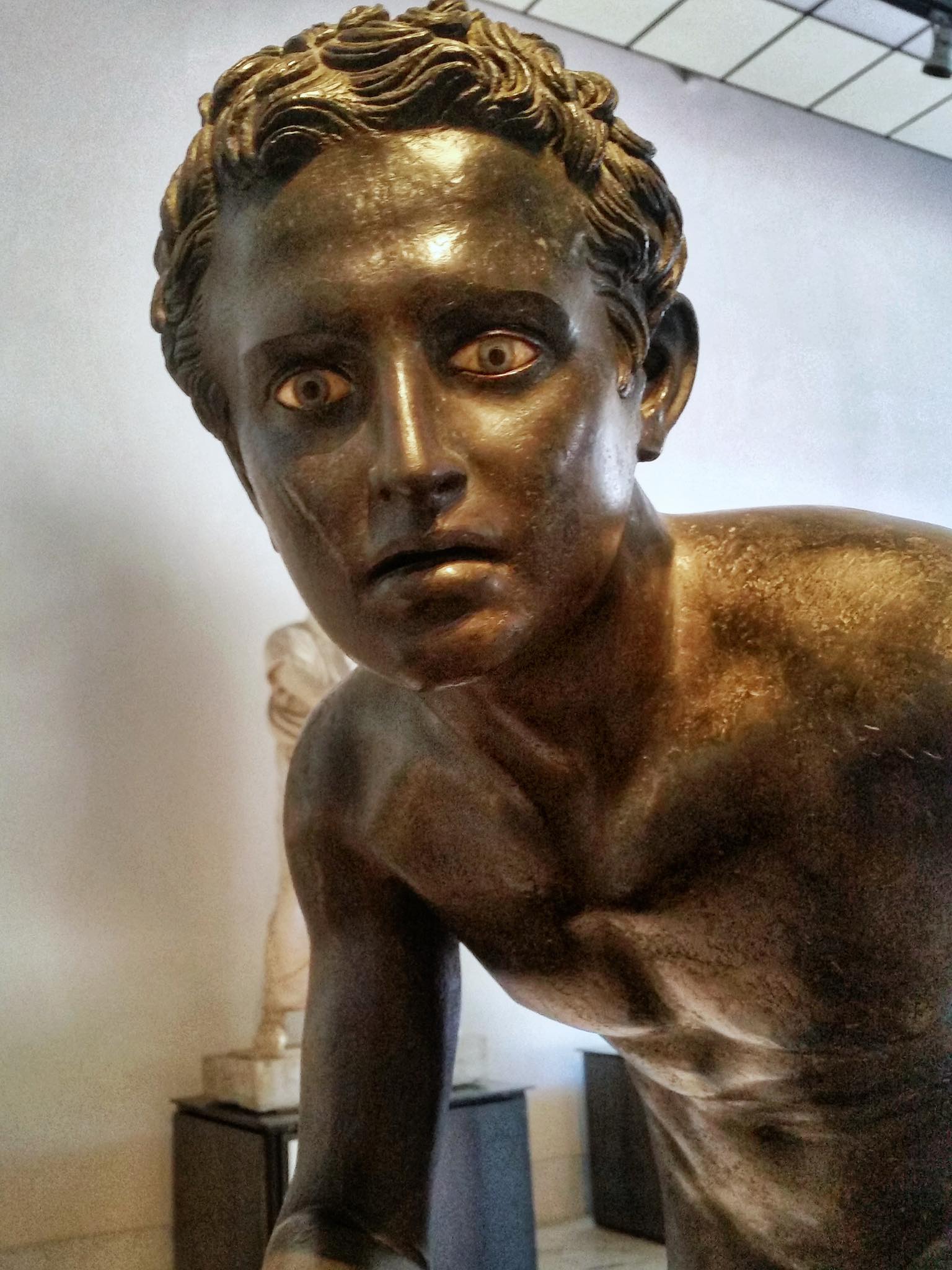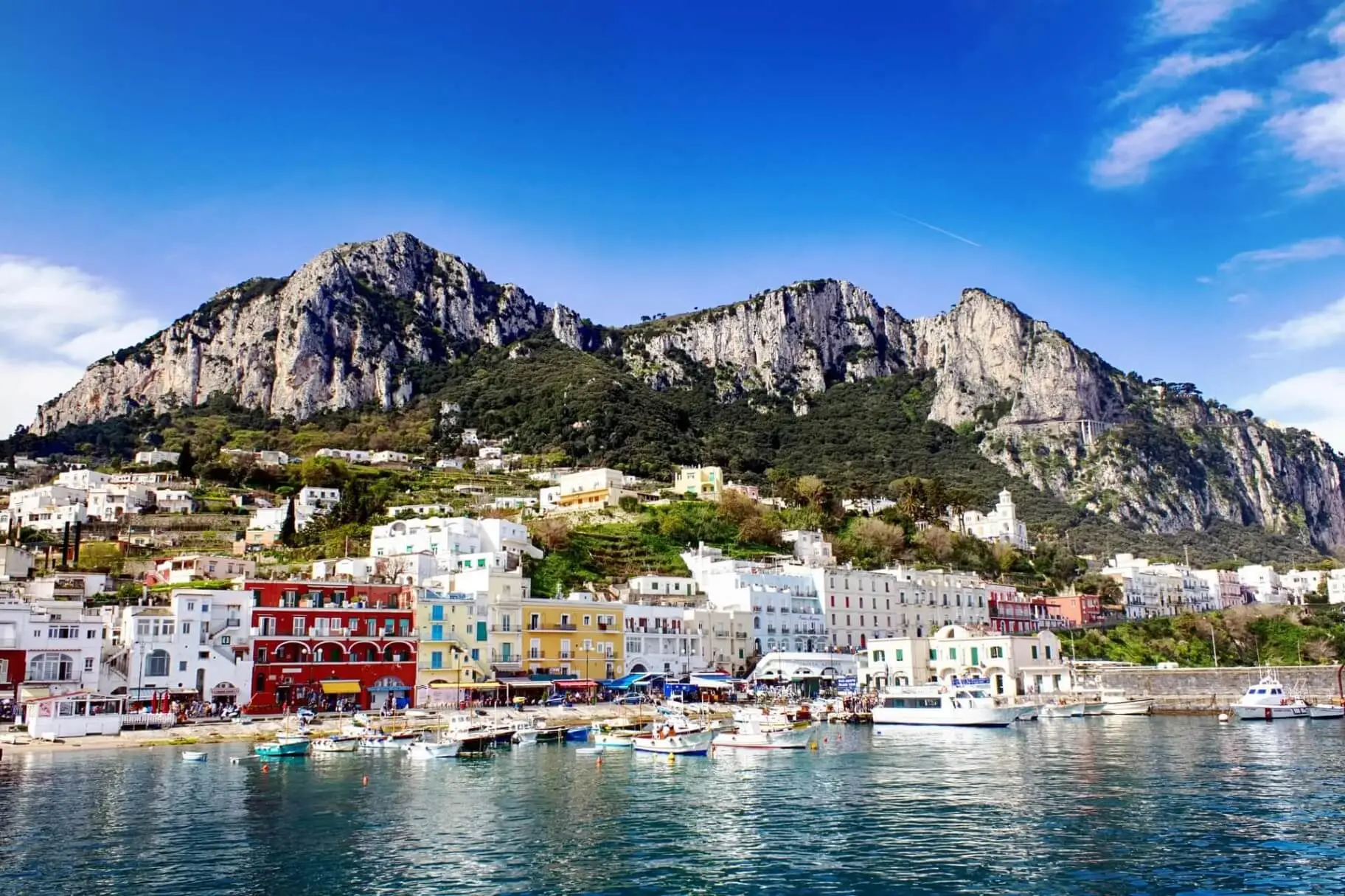
Capri is a tiny morsel of an island but exquisite. Here you see right away, in a day, so much beauty that you remain inebriated and cannot accomplish anything…In Capri I feel drunk without having touched wine…
– Maxim Gorky
Is the island of Capri the most beautiful in the Mediterranean? The rocky jewel that rises spectacularly from the waves off the coast of Naples is definitely a top contender. The island’s jaw-dropping scenery has made it a haven for the rich and famous for nearly 2,000 years, from the time when the Roman emperor Tiberius retreated here to rule his empire far from the intrigues of Rome – reportedly forming the nasty habit of tossing his political enemies off Capri’s tallest cliff and into the foamy surf below.
Since then characters as varied as Vladimir Lenin, the Chilean poet Vladimir Neruda and billionaire German industrialist Friedrich Krupp have spent time on the island, drawn here by the intoxicating landscape so evocatively described by Maxim Gorky during his 6 year sojourn here. Capri remains a must-visit for anyone searching for a slice of Italy’s fabled dolce vita.
If you’re wondering about the best things to do on Capri, the answer lies in a mix of natural beauty, history, and simple pleasures: from boat trips around its dramatic coastline to exploring ancient ruins, from panoramic viewpoints to charming out-of-the-way Anacapri. Whether you’re visiting for a day or lingering longer, Capri is full of surprises.
Find out why Capri should be on every Italian itinerary with us!
Check Out Our Campania Experiences
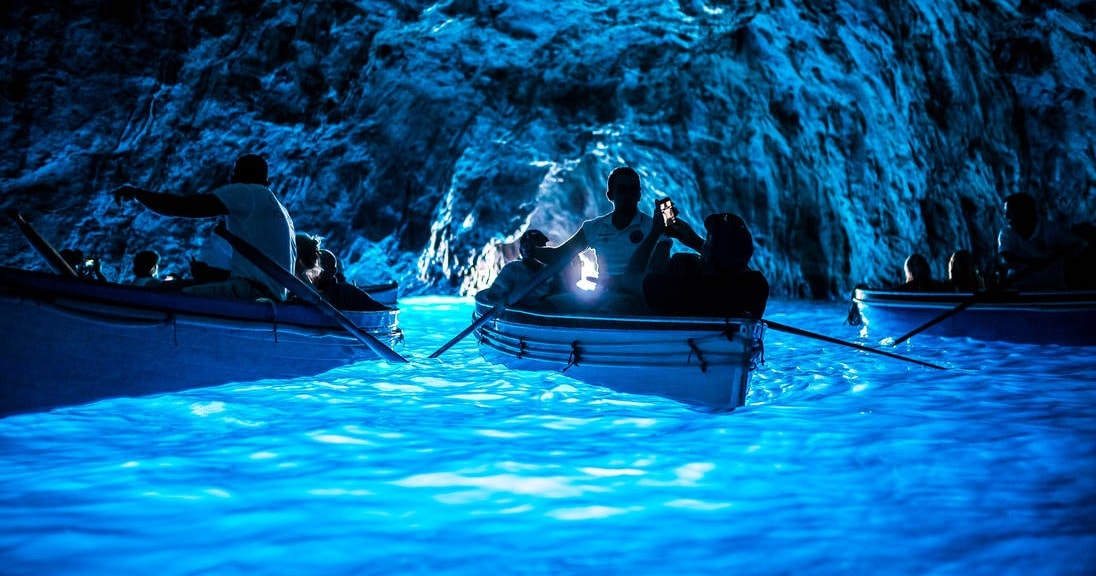
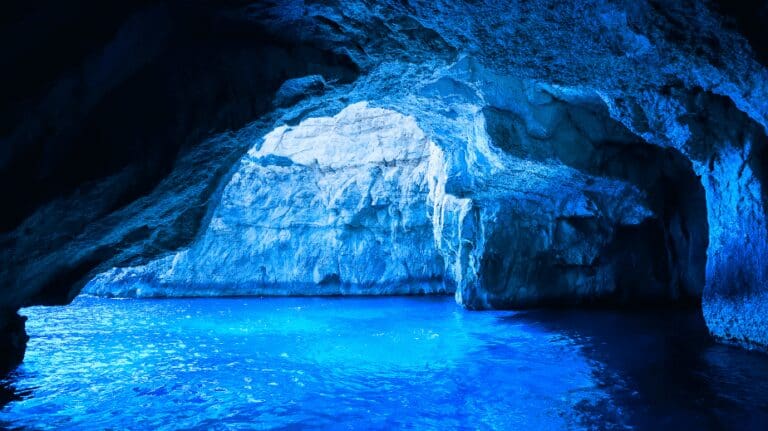
Easily the most famous attraction on Capri, this iconic sea grotto is illuminated by an ethereal blue glow that has to be seen to be believed. Although the roof of the cave rises as high as 15 metres, the grotto’s entrance is only just over a metre high, filtering and refracting the sunlight that enters via a small underwater opening to produce the unique azure hues. Although the grotto was well-known to natives of the island, it only achieved international prominence when German writer and painter duo August Kopisch and Ernst Fries visited in the company of local fishermen in 1826. It turns out that the Grotta Azzurra was also known to antiquity – the emperor Tiberius built a dock and nymphaeum within the grotto during his reign in the first century AD.
The grotto is only accessible via the sea. To visit the Blue Grotto, join a boat tour from Marina Grande, or better yet take a private tour of Capri including an exclusive visit to the Grotta Azzurra.

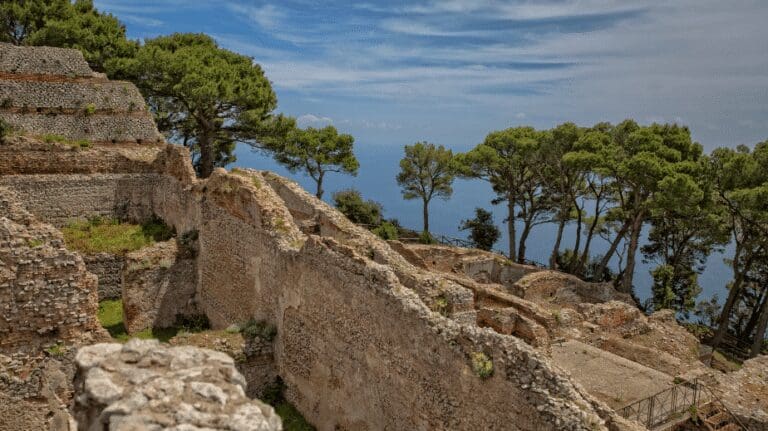
It’s impossible not to be impressed by the otherworldly beauty of Capri, glittering island jewel of the Mediterranean. But its beauty hides a sinister past. In 26 A.D., assailed on all sides by an increasingly hostile senate, the widely disliked Roman emperor Tiberius retreated from public life in Rome to an island refuge high atop Capri’s forbidding cliffs. Isolated from the outside world, Tiberius soon descended into paranoia and lost his handle on reality.
According to the salacious account of ancient writer Suetonius, life at the emperor’s Villa Jovis was debauched beyond belief: here the emperor was free to indulge his unspeakable fantasies at will, and enemies of the self-exiled Emperor were regularly thrown to their deaths in the foaming waters far below. Some historians question whether Suetonius’ account was more character assassination than truthful expose – nonetheless, the mysterious self-imposed exile of Rome’s second emperor hangs heavy over Italy’s paradise isle, and a hike up to the remains of the Villa Jovis is an absolute must-do when on Capri.
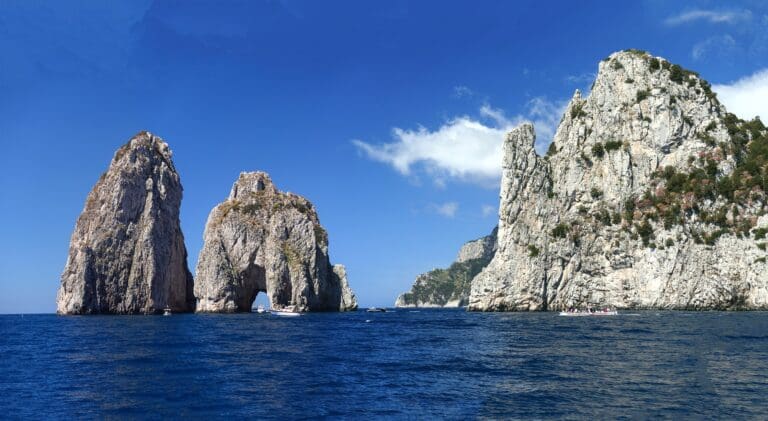
The most iconic natural landmarks on Capri are these three magnificent sea stacks that rise imposingly from the depths of the Mediterranean to a height of 100 metres just off the island’s coast. The rock formations are respectively known as Stella, Mezzo (the middle stack which is pierced by a sea arch) and Scopolo, which is colonised by a unique breed of blue lizard.
The Faraglioni are almost unbelievably picturesque, and you’ll be hard-pressed to resist the temptation to snap dozens of photographs of these dramatic natural phenomena. For the best view of the sea stacks, head to the Punta Tragara belvedere, a scenic 15 minute walk from Capri town past some of the island’s swankiest hotels.
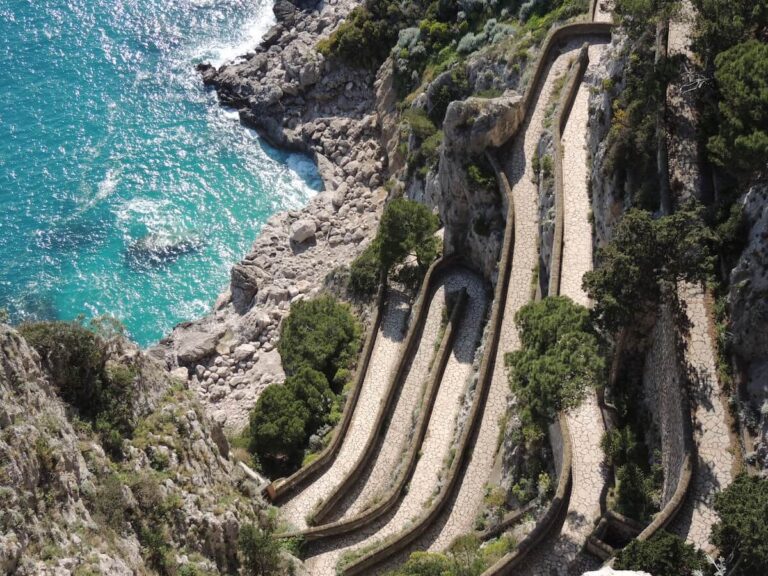
Make your way past the ritzy bars and boutiques of Capri town and onwards towards the top of the island, where the leafy Gardens of Augustus provide much-needed respite from the crowds of daytrippers. Framed by the Charterhouse of St. James, the tranquil gardens were originally part of the luxurious villa of German industrialist and arms manufacturer Friederich Krupp, who made his home on the island at the beginning of the 20th century. The terraces of the garden are home to a wonderful array of Mediterranean flora, and from here the views across to the Faraglioni are breathtaking.
Leading down from the gardens to the Marina Piccola far below is the truly extraordinary Via Krupp, a snaking brick-paved footpath that descends towards the sea in a series of hairpin turns. The dizzying trail is currently closed due to the danger of falling rocks, but you can get a great view of its incredible engineering from the Gardens. Works are underway to make the path accessible once again, and should be completed in the coming years.
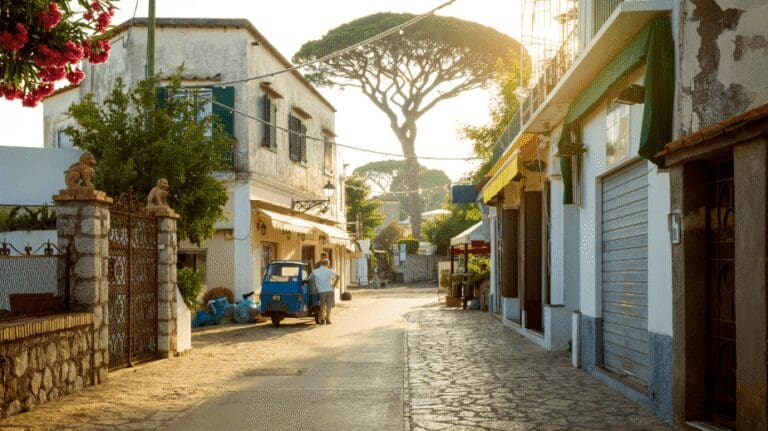
Beautiful as Capri is, the glitz, glamour and eye-watering prices that characterise the island’s main town can easily become a little much. If you and your wallet feel the need for a change of pace, then be sure to make the journey to the other side of the island to Capri’s second town of Anacapri.
Anacapri is the polar opposite to its more famous neighbour: a sleepy village made up of relaxed piazzas and quiet streets wreathed in fragrant Mediterranean flowers, you’ll also find much more reasonably priced restaurants and bars than in the main town.
But Anacapri isn’t just about atmosphere—it’s also home to some of the island’s most rewarding sights. From here, you can take the chairlift to the summit of Monte Solaro for sweeping views across the Bay of Naples, visit the peaceful Villa San Michele, or explore quieter corners of the island far from the day-tripping crowds.
Regular buses connect Anacapri with Capri town and Marina Grande, making it easy to dip in and out. But once you arrive, you may find yourself lingering longer than planned—drawn in by a side of Capri that feels more authentic, more relaxed, and altogether more livable.
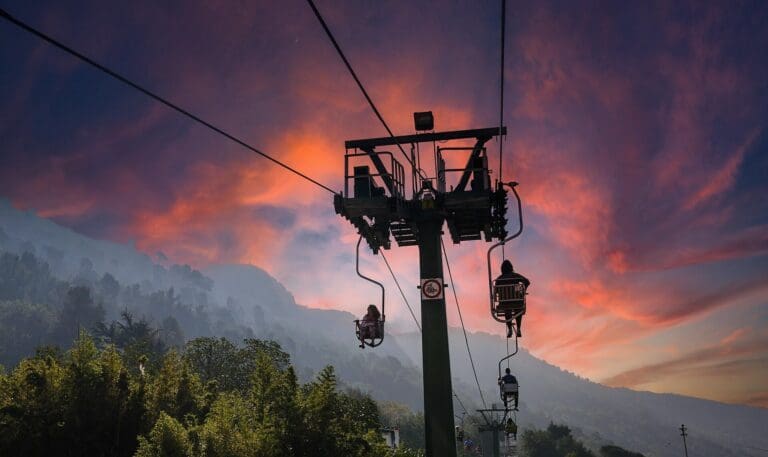
One of the most spectacular views on Capri is to be found from the summit of Monte Solaro, fully 589 metres above the sea level far below. It’s the highest spot on the island, and the panorama extending across all of Capri, the Bay of Naples and off to the Amalfi Coast beyond is breathtaking. The journey to the top of the mountain is an adventure in its own right. Make your way to Piazza Vittoria in Anacapri and take the chairlift ride to Monte Solaro, which takes a mere 12 minutes (a return ticket is 12 euro).
If you’re in the mood for a hike then the route to the summit takes a little over an hour. The nearby Cetrella hermitage, a rustic 17th-century religious refuge surrounded by wild-growing lemon-scented herbs, is definitely worth a stop on your way up the mountain.
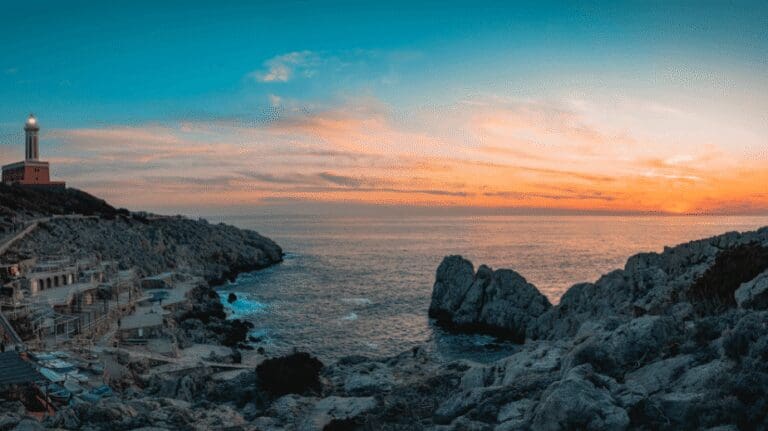
After a long day traipsing across the island’s rocky terrain, you’ll have definitely earned yourself a restorative drink. Our favourite place to enjoy a sunset cocktail is in the shadow of the Punta Carena lighthouse, where views of the tangerine-orange sun sinking into the inky embrace of the sea are truly unforgettable. Pull up a seat at Bar Malibu, whose panoramic terrace overlooks the water, and enjoy the show.
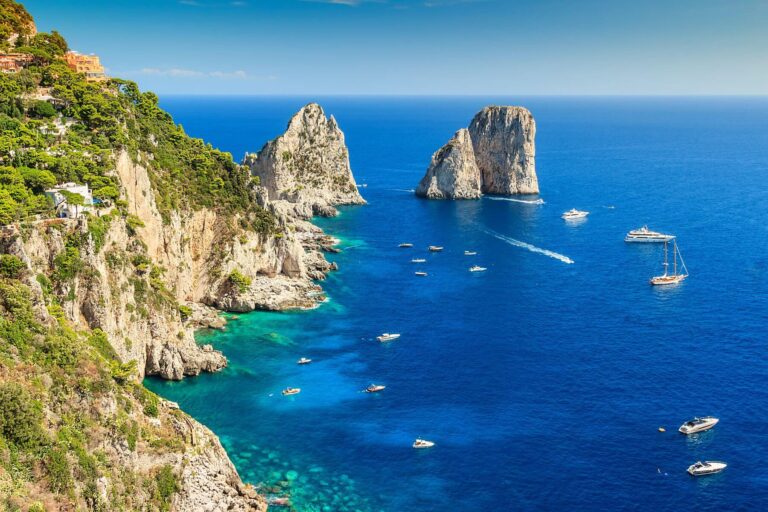
One of the great pleasures of visiting Capri is seeing it from the water. The island’s dramatic cliffs, hidden grottoes, and iconic rock formations like the Faraglioni are best experienced by boat, whether on a private tour or a shared excursion.
Regular ferries and hydrofoils connect Capri with Naples and Sorrento, making it an easy addition to almost any southern Italy itinerary. Once on the island, a mix of buses, funiculars, and taxis link the main points of interest, though part of Capri’s charm lies in simply wandering its winding streets on foot.
For those short on time, organized day trips from Naples often combine transport with guided exploration, offering a stress-free way to experience the highlights in a single day.
Best Time to Visit Capri
Capri is at its best in the shoulder seasons of spring (April–June) and early autumn (September–October), when the weather is warm, the sea inviting, and the crowds more manageable. July and August bring peak summer energy—along with higher prices and busier streets—while winter offers a quieter, more local feel, though some businesses may close.
How to Get to Capri from Naples or Sorrento
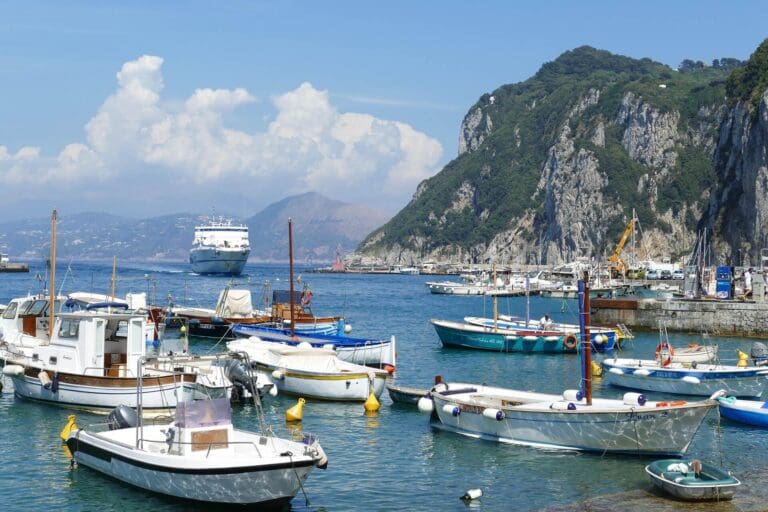
The easiest way to reach Capri is by ferry or high-speed hydrofoil from Naples or Sorrento. Journey times range from around 20 minutes from Sorrento to roughly an hour from Naples, depending on the service. Boats arrive at Marina Grande, where you can take the funicular up to Capri town or continue onward by bus or taxi.
Capri Day Trip vs. Overnight Stay
Capri can absolutely be visited as a day trip—and many people do—but staying overnight allows you to experience a quieter, more atmospheric side of the island once the last ferries depart. Early mornings and evenings, in particular, reveal a calmer Capri that feels a world away from the daytime crowds.
Through Eternity Tours offer expert-led private itineraries and group tours of Capri. To get the best experience of Italy’s most famous island make sure to check out the offerings on our website, and get in touch to plan your visit!