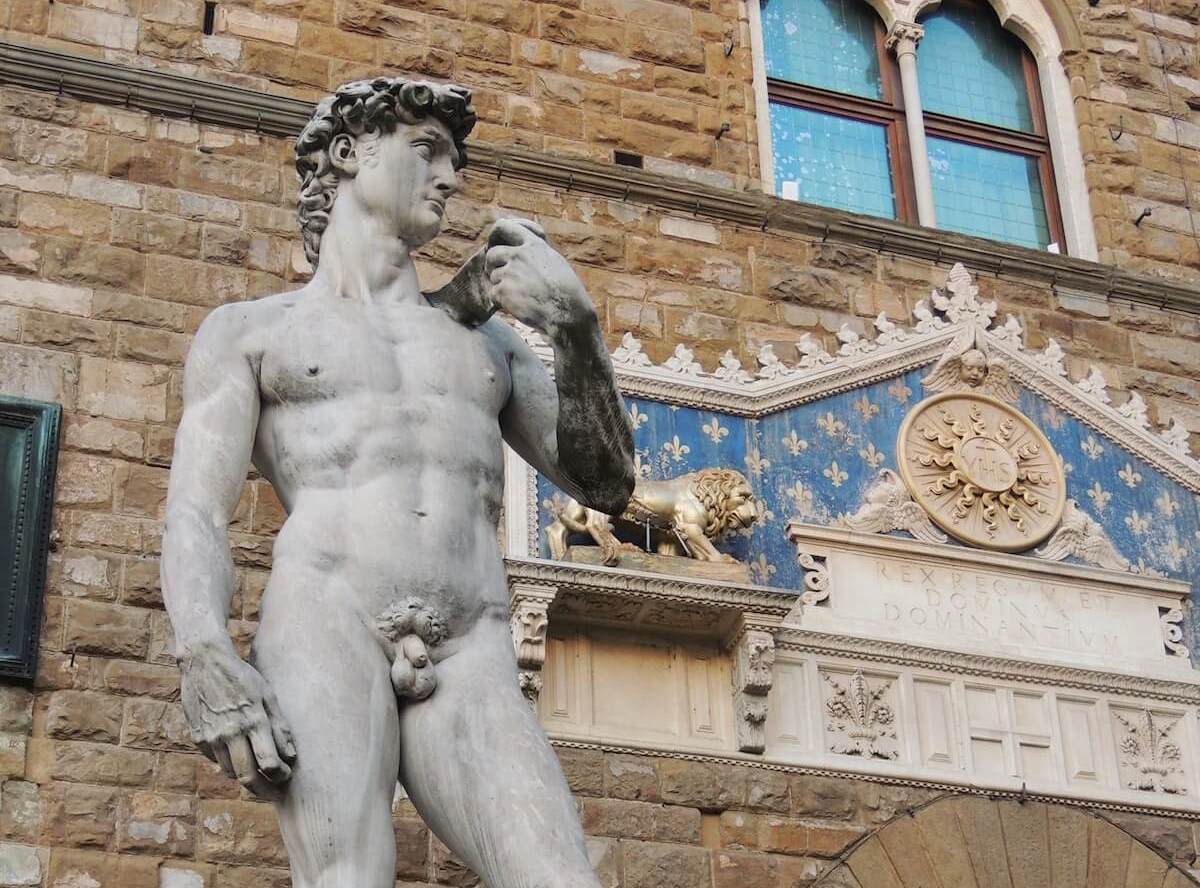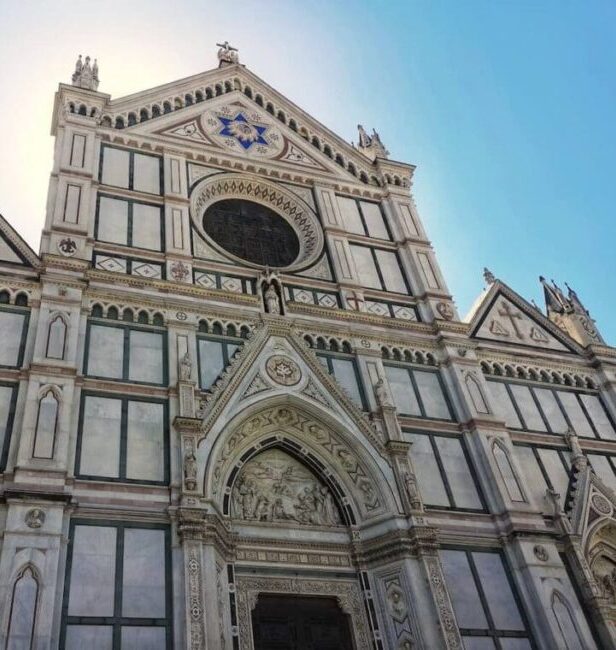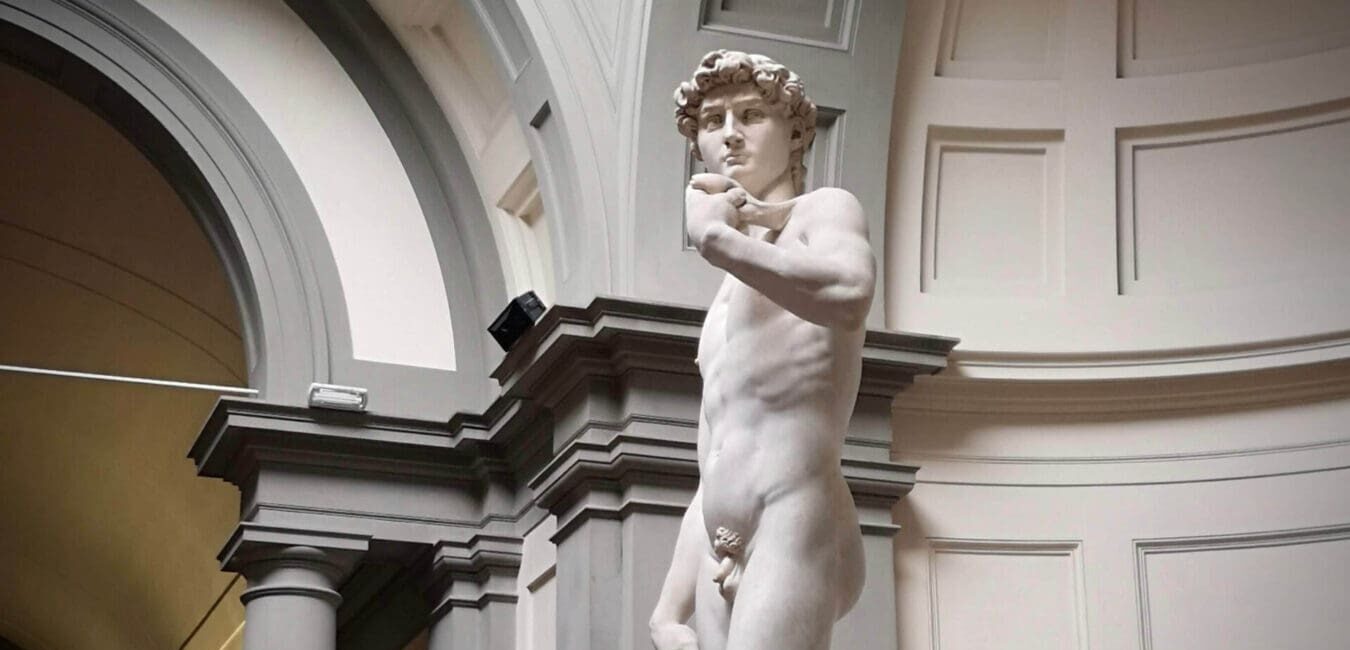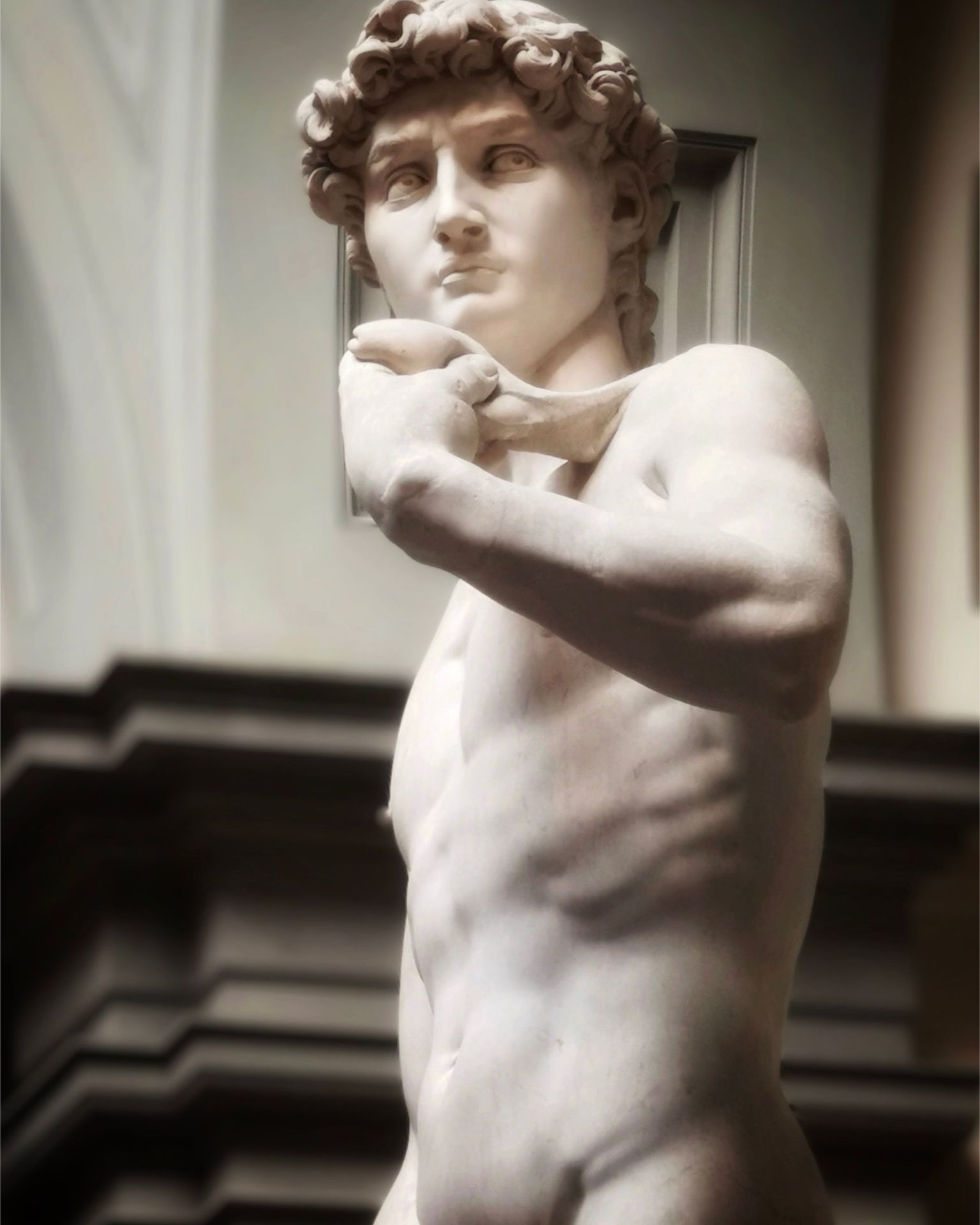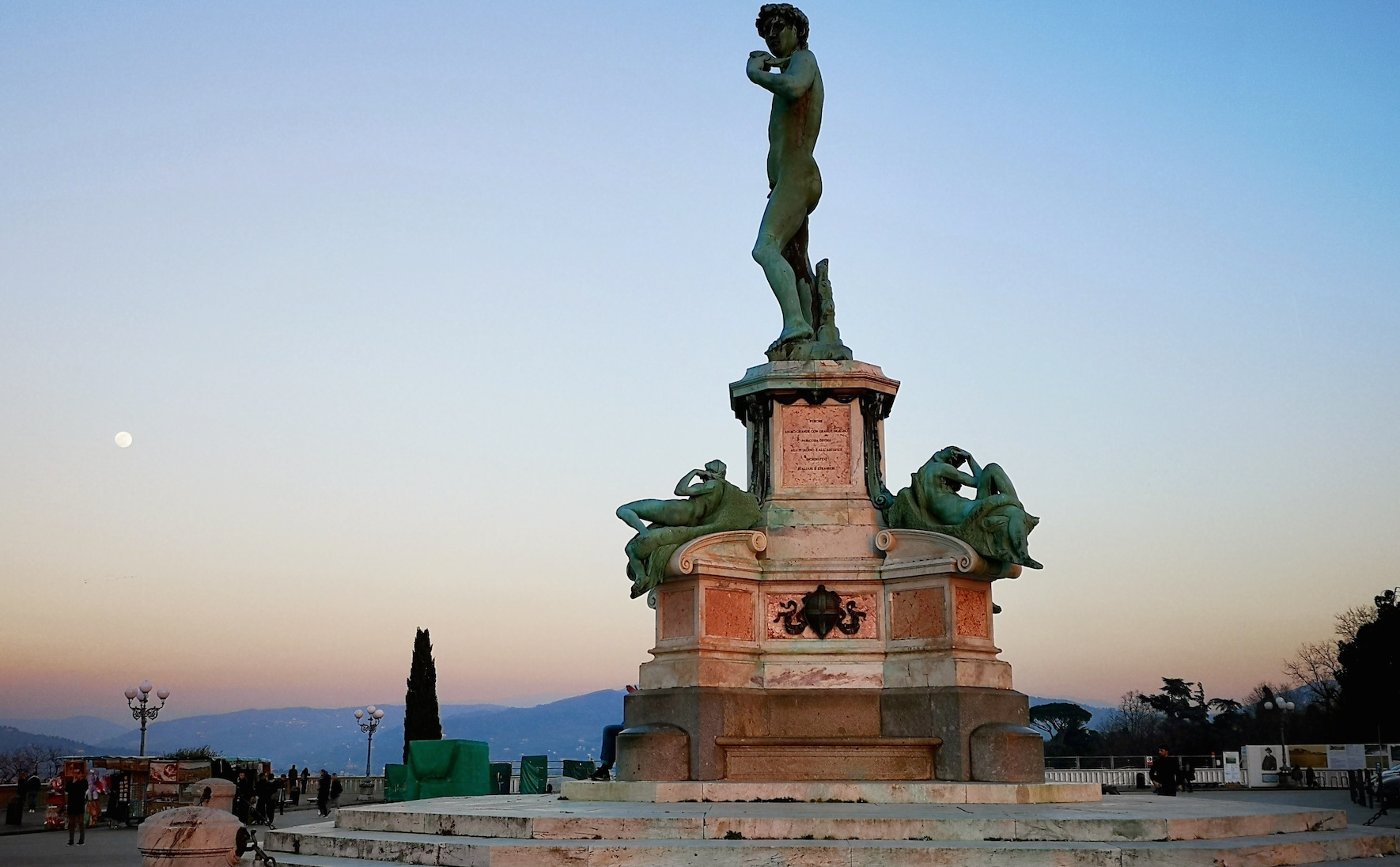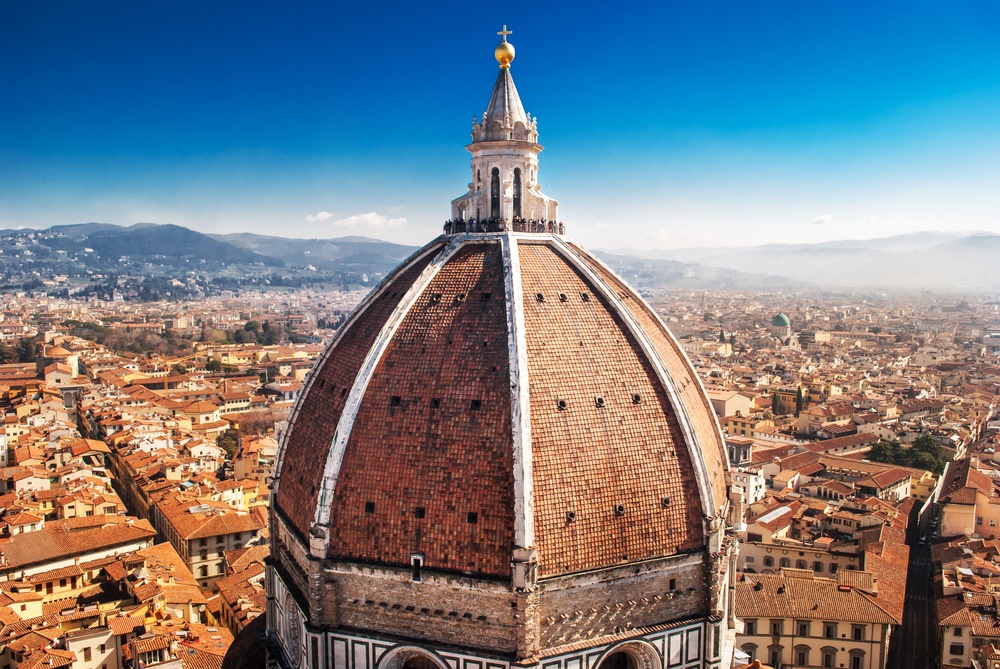
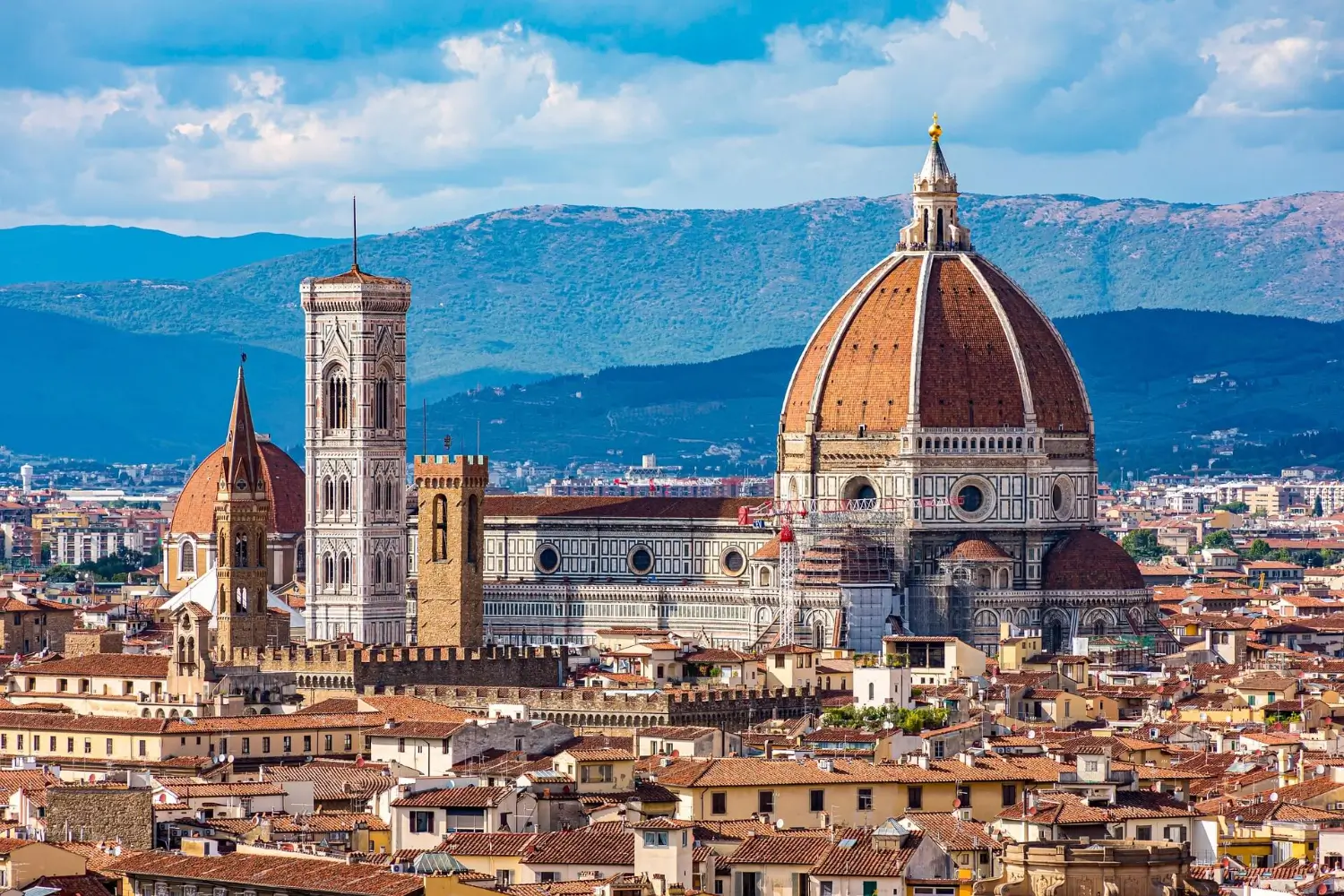
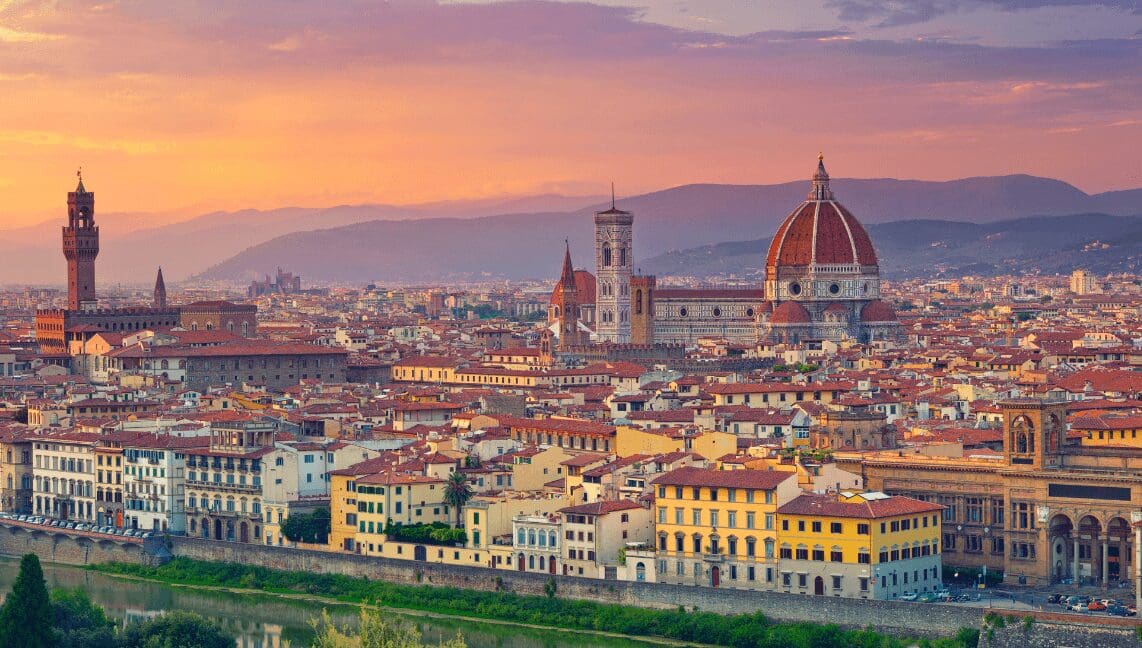
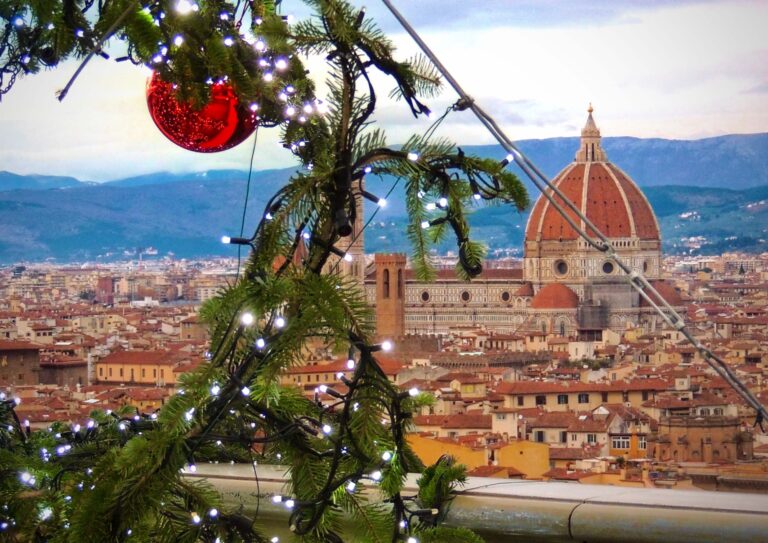
Aside from Michelangelo’s David, the Duomo is probably the most iconic of Florence’s symbols, completely dominating the city’s skyline. It’s an amazing monument from any perspective, equally impressive whether admired from a distance, or seen up close. You get stunning views of the Duomo—and the whole of the city centre—when you climb the hill on the other side of the river, and admire the panorama from Piazzale Michelangelo, but for a more unexpected view, try exploring the side streets near the Piazza del Duomo.
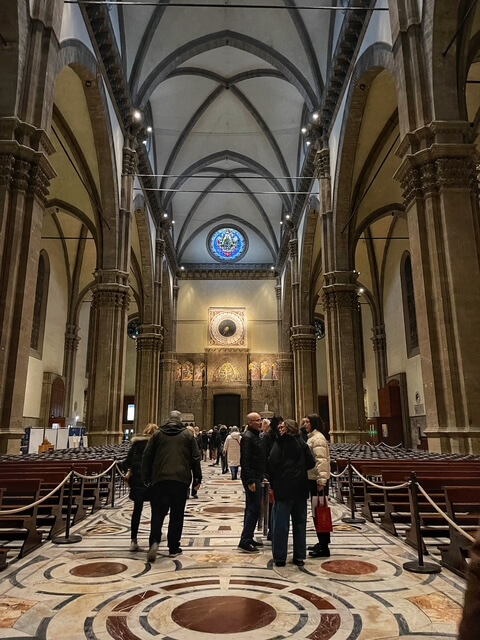
When you turn a corner, the gigantic dome suddenly rises up at the end of the street, quite unexpectedly. It’s a monument that never fails to surprise, and on our Florence tours you can go inside the Duomo and discover the artwork and history of this beautiful building.
Florence Tours
See Florence's Iconic Duomo
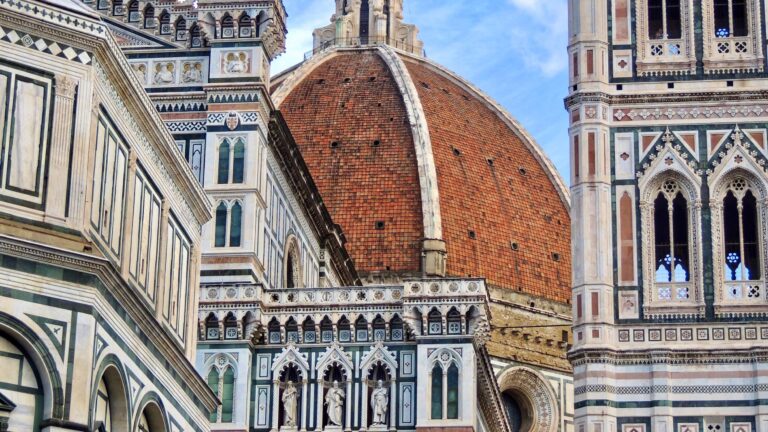
The Duomo was built in the 15th century, replacing a crumbling cathedral that had been built in the 5th century. The construction of the Duomo was an immense project that would take more than a hundred years to complete; work began in 1296, but by 1418 the building was still without a dome. In order to find an architect who was up to the challenge, a competition was held. The main competitors were Lorenzo Ghiberti, best known for his work on the Baptistery doors, and Filippo Brunelleschi, who had the support of the Medici.

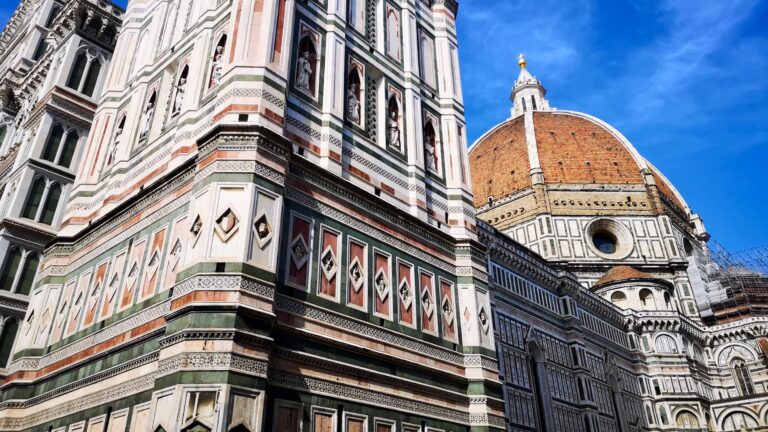
Brunelleschi was already recognised as an accomplished architect, having designed the Ospedale degli Innocenti and worked on several churches. The Duomo, however, was a project on an unprecedented scale, and the overseers did not have much confidence in Brunelleschi. The architect had an ambitious plan to build one dome inside the other, using a complex and costly network of scaffolding, but he refused to explain how he would achieve this, as he was afraid that a competitor might steal his idea. A heated argument ensued, and Brunelleschi was dismissed as “a buffoon and a babbler”.
But in the end, Brunelleschi had his way. Over the next 16 years he would work tirelessly on the dome, inventing ingenious lifting mechanisms and using a 65-foot crane to achieve his vision. The engineering was revolutionary for the time, and the sheer scale of the dome was awe-inspiring. It was made of more than four million bricks, and even when the building work was still in progress, it would have towered high above the rest of the city. Even today, no other building comes close to the enormous size of the Duomo.
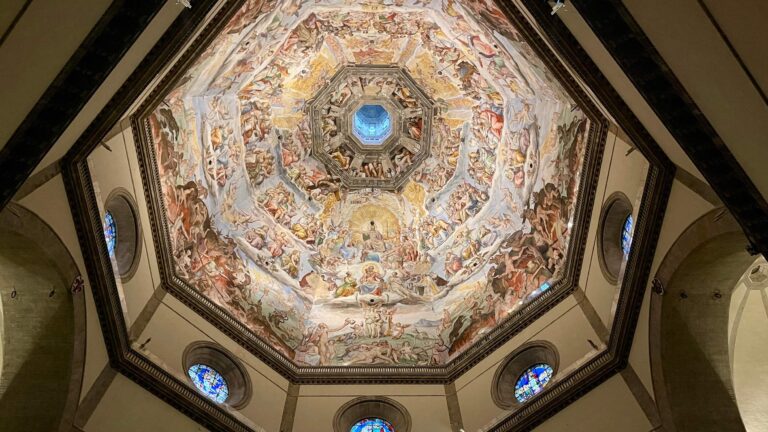
As the dome grew skywards, parapets were built to prevent workers from falling off the scaffolding or suffering from vertigo, and Brunelleschi ordered their wine to be diluted with water. This decision was, unsurprisingly, not very popular. Even less popular was Brunelleschi’s response to workers striking over pay. He replaced them with workers from Lombardy, and when the original workers ended their strike and returned to work, they were paid even less than before.
Brunelleschi also had to contend with ambitious rivals such as Lorenzo Ghiberti, who was appointed as a co-superintendent. The two architects did not see eye to eye, and there were squabbles over salaries and building methods. Ghiberti installed some wooden beams while Brunelleschi was ill, but when Brunelleschi returned and saw what Ghiberti had done, he declared that the work had been done incompetently, and that the beams would have to be removed.
Ghiberti’s assistant, the architect Giovanni da Prato, grew so incensed that he wrote a sonnet calling Brunelleschi “a miserable and imbecile beast”. Da Prato even claimed that he would kill himself if Brunelleschi’s plans were successful.
Despite scepticism and opposition, Brunelleschi eventually achieved his aims. The dome was consecrated in 1436, a cause for celebration for the whole city. Brunelleschi was revered as a genius, and when he died ten years later, he was buried in the cathedral that had been his life’s work. In those times it was rare for an ordinary person—an architect—to be buried in the crypt of a cathedral, as this space was usually reserved for saints. Brunelleschi’s burial is evidence not only of his incredible achievement, but of changing attitudes in Renaissance Italy. Artists and architects came to be valued on a higher level, recognised for their creative genius.
Experience the Best of Florence