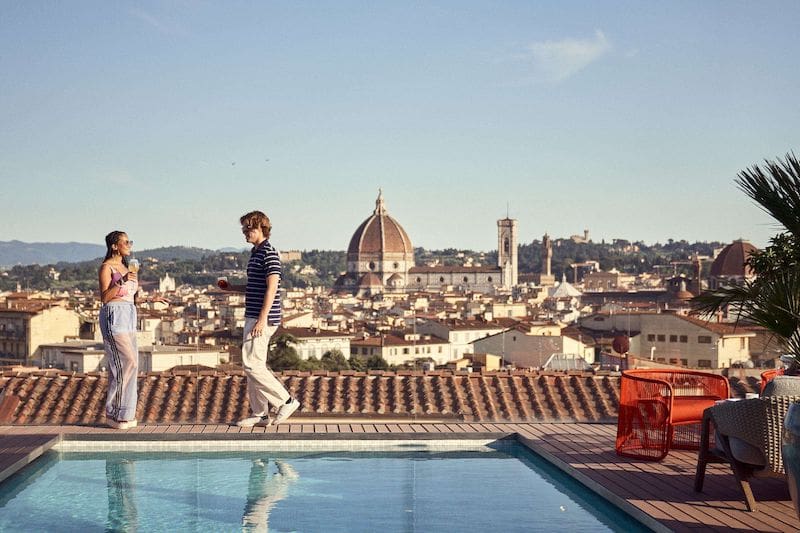
Living in harmony with the rhythm of a city is never easy. Some cities dictate the pace of your walk, your thoughts, and even your imagination. Florence, however, is a valid exception. First as a student and later as a professional, I wandered its streets, fully immersing myself in its beauty and, in many ways, recharging my soul.
What’s impossible not to love about Florence is how it invites you to live outside, to experience it by walking through its streets rather than staying indoors. This is why the markets remain among the best opportunities to reconnect with the world and its people—a sensory feast of smells, tastes, and colors embodying life.
Florence Tours
Get the inside track on life in the city
Florence boasts a rich history of markets, thanks to its squares, which have always been the city’s social heartbeat. They are just as iconic as its monuments, historic buildings, and places of worship. The city’s two historic markets, the San Lorenzo Market and Sant’Ambrogio Market, are among the most vibrant and authentic parts of Florence’s daily life. These markets combine the charm of traditional open-air shopping with the prestige and historical value of their unique settings.
Their origins date back to when Florence briefly served as Italy’s capital between 1870 and 1874. Built to replace the old market in what is now Piazza della Repubblica, these spaces were created during urban renewal efforts in the late 19th century. Today, they remain central to Florence’s identity, serving both locals and visitors. But what do these markets tell us about contemporary Florence, and what makes them special? Here’s a closer look, with a mix of history and anecdotes.
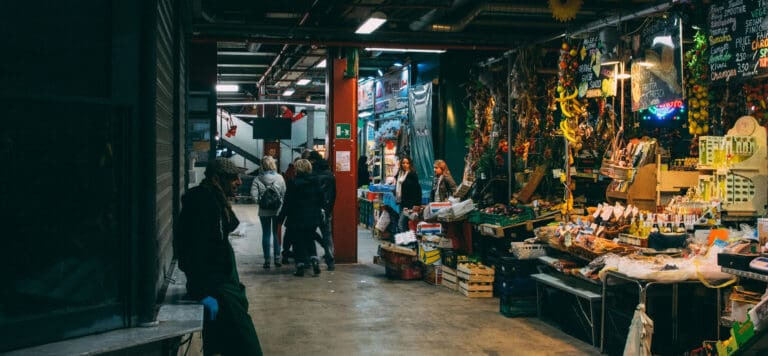
Walking out of Florence’s central train station and down the narrow Via Sant’Antonio, you’ll quickly find yourself in the San Lorenzo neighborhood—often referred to as “the Medici district.“ This area is rich in history and art and serves as a hub of local life.
Here, the market is divided into two parts:
ONE
The Outdoor Market of San Lorenzo
Where?: Piazza San Lorenzo, 50123 Florence, Metropolitan City of Florence, Italy
Spanning from Piazza San Lorenzo to Via dell’Ariento, this open-air market surrounds the Basilica of San Lorenzo in Florence’s historic center. Life begins early here as vendors set up their stalls in Piazza San Lorenzo, showcasing an array of Tuscan goods. This quiet neighborhood transforms into a bustling hub of activity, a metropolitan bazaar where old and new, ephemeral and sublime, mingle in an unmatched blend. As they say in Florence, “art and tripe make good neighbors.”
TWO
The Indoor Market of San Lorenzo
Where?: Piazza del Mercato Centrale, Via dell'Ariento, 50123 Firenze FI, Italy
The Mercato Centrale, housed in a stunning 19th-century structure made of iron, glass, and cast iron, covers about 5,000 square meters. This market combines grandeur with practicality, designed by Giuseppe Mengoni, the architect behind Milan’s Galleria Vittorio Emanuele II. It opened in 1874, celebrating its 140th anniversary with a major renovation in 2014. Today, it’s not just a place to shop but also a space to live, share, and immerse oneself in culinary culture. The ground floor offers fresh produce and local specialties, while the recently refurbished upper level features artisan shops, restaurants, and cafés.
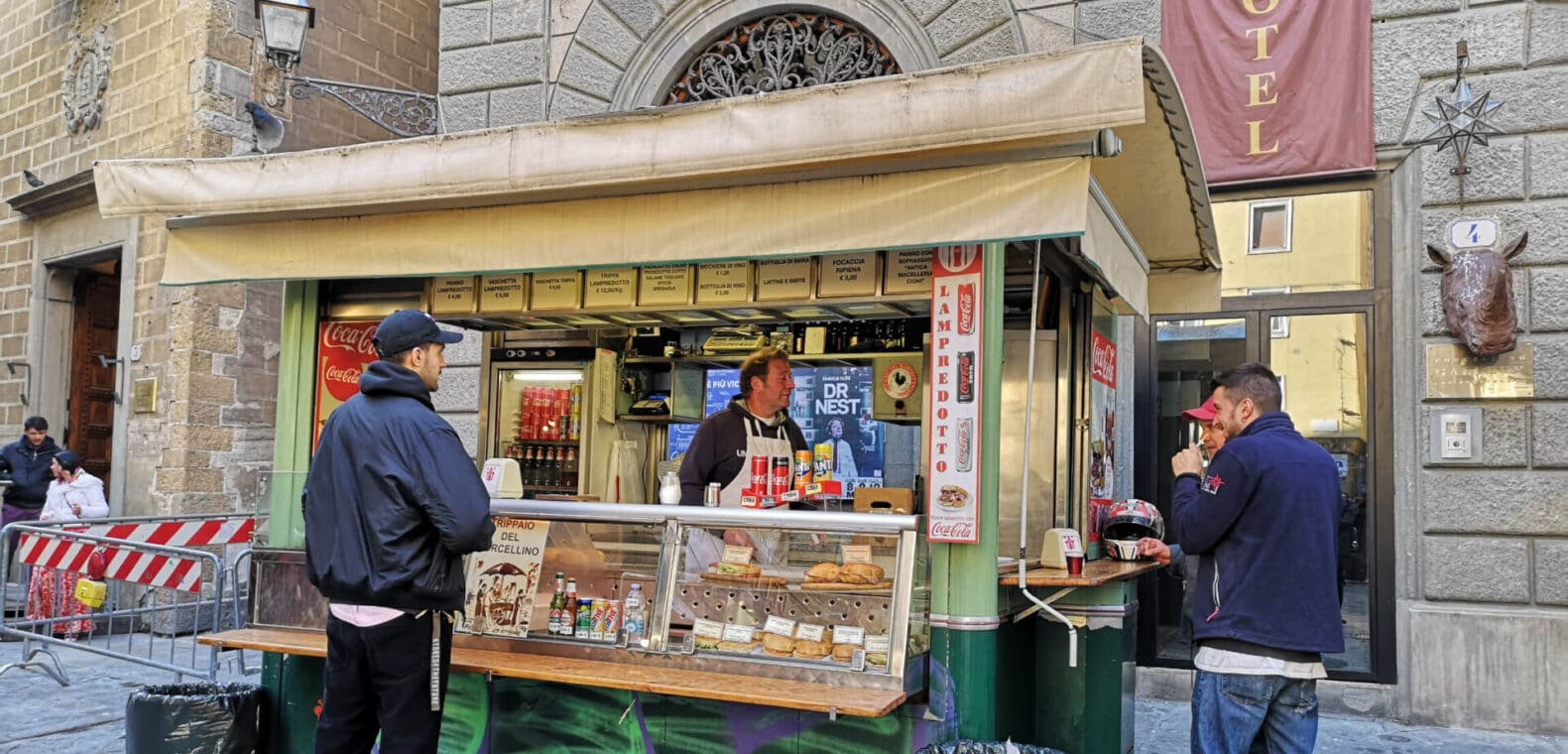
Each vendor operates independently, offering specialties like fresh pasta, meats, cold cuts, lampredotto, porchetta, and pizza. Visitors are encouraged to grab a drink, take a seat, and savor the experience. The Mercato Centrale is more than a market; it’s a meeting point where human connection matters as much as the quality of the goods. Shopping here is an opportunity to share recipes and cultural traditions passed down through generations.

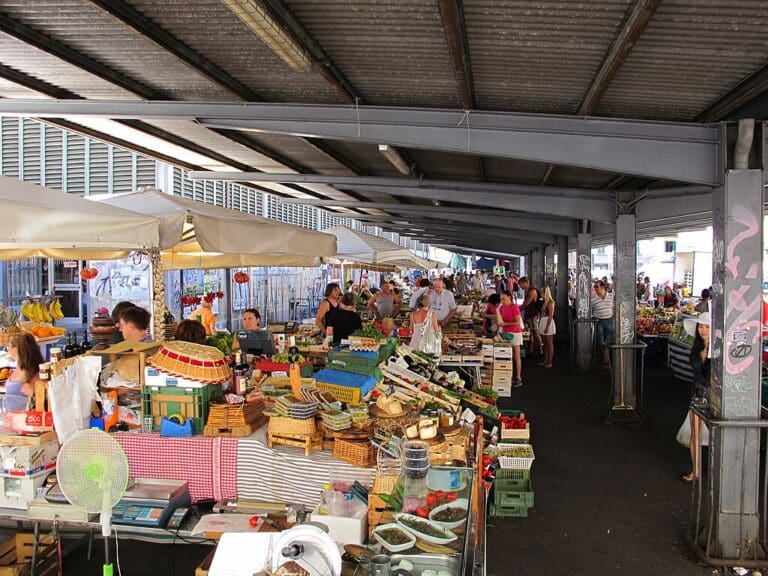
The Sant’Ambrogio Market is another beacon of Florentine authenticity, a microcosm of humanity waiting to be discovered. Established on May 29, 1873, it is Florence’s oldest market. Originally a livestock market, it naturally evolved into a broader commercial hub following the closure of the old market in Piazza della Repubblica.
Located in Piazza Ghiberti, the market was built in a secularized area once belonging to the nuns of Santa Verdiana. Designed by Giuseppe Mengoni—also the architect of the Mercato Centrale—the structure features a smaller-scale design using iron and glass. This urban project carried out in what was then farmland, integrated seamlessly into the vibrant local community, a theme explored in Vasco Pratolini’s 1955 novel Metello. Sant’Ambrogio remains a lively and essential part of the neighborhood.
Many Florentines claim Sant’Ambrogio is the best market in the city. You can find almost anything here—stalls both inside and outside sell everything from typical Tuscan products, fresh fruits and vegetables, and a variety of meats to seafood, pantry goods, and tripe. Small eateries, trattorias, and osterias are sprinkled throughout, embodying the local saying: “If you leave with an empty stomach, you were never really there.“
Today, the Mercato di Sant’Ambrogio remains the heart of its neighborhood, bustling with tourists, architecture students, workers, and long-time residents. It’s a place where tradition and daily life converge, offering a glimpse into the soul of Florence.
Where
Sant'Ambrogio Market
Piazza Lorenzo Ghiberti, 50122 Firenze FI, Italy
Florence Tours
Plan Your Visit to Florence