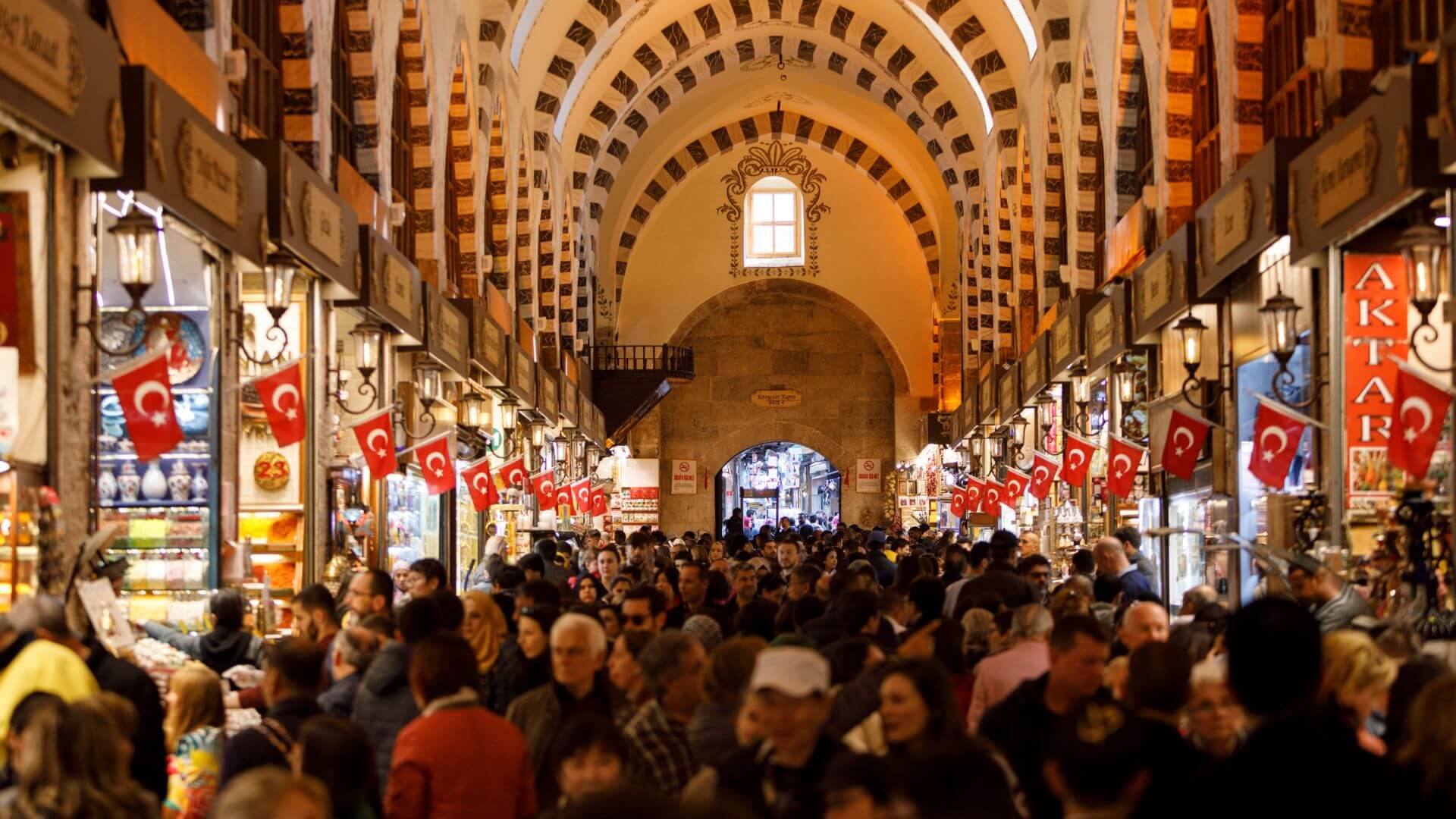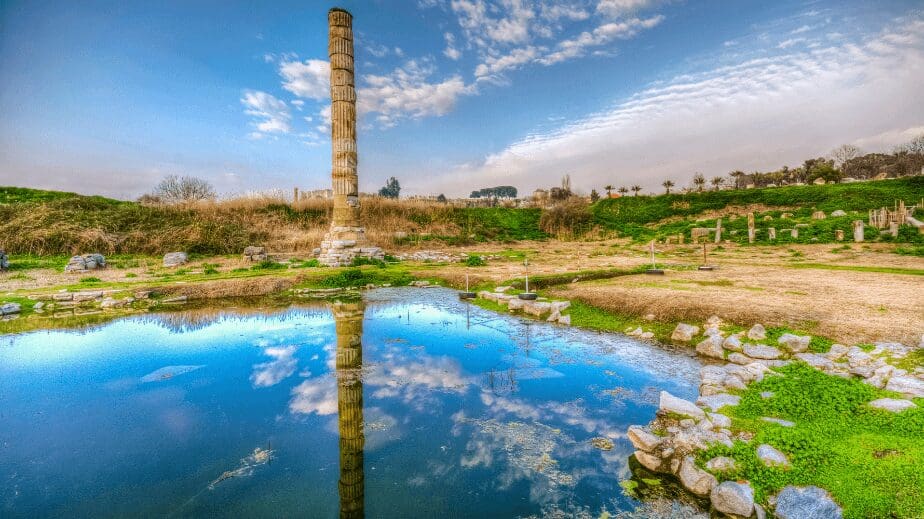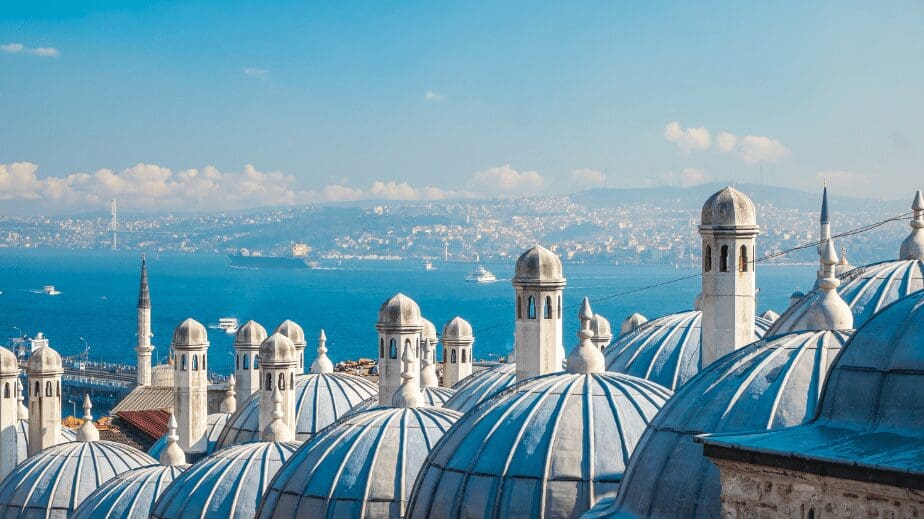
The city of Istanbul has been enchanting visitors for centuries with its long history and unique and eclectic culture. It is ancient, modern, colorful, vibrant, sacred and profane. Surely this is why it draws visitors who are equally eclectic. From foodies to history buffs, this city has more to tase and to explore than one visit can provide.
The architecture of the city is as unique as its history. Rolling hills covered in a mix of ancient and modern architecture all overlooking water. The city is after all surrounded by water. There was a reason why from the 4th to the 13th centuries Istanbul, then Constantinople, was the largest and richest city of Europe hands down.
Best Istanbul Tours
Explore the Delights of Turkey
Background
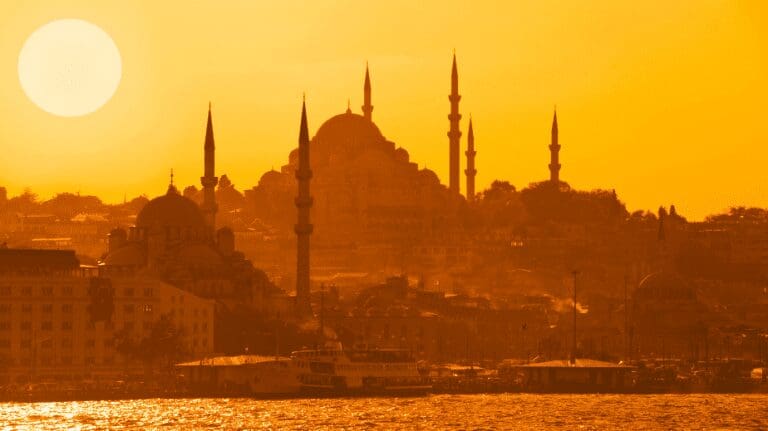
The new Roman capital, first known as Nova Roma, then Constantinople after the Emperor Constantine, was built here because of its strategic location (linking of two continents) and its position linking trade routes from the Black Sea, through the Bosphorus to the Aegean and Mediterranean Seas. The city was closer than the old capital of Rome, to both the frontiers and to the wealth of the east. Constantine and the emperors who followed would build up the city making it worthy as the capital of the empire and fortify it with a unique multi ringed wall system (still studied today). It would become famous for its domed churches decorated in exquisite mosaics. Its race track, the hippodrome, where the chariot races took place (and a few bloody political protests too!) The cities aqueducts were a marvel as were the huge cisterns lined with columns, some whose bases included carved Gorgons, and an impressive imperial palace.
Growth and expression through its buildings didn’t stop with the end of the old empire. When becoming the seat of the Ottoman Empire the city continued to grow and the city flourished. Now elaborate mosques with pencil minarets dotted the hills. Sprawling new palaces arose, like the Topkapi Palace with its many courtyards and pavilions overlooking the Bosphorus from up above its hill. The Dolmabahce Palace which later became the home of the Sultan up to the end of the Ottoman Empire, is as beautiful as it is elegant, gracing the edges of the Bosphorus straight.

The 15th/16th centuries and the Michelangelo of the Ottoman world...

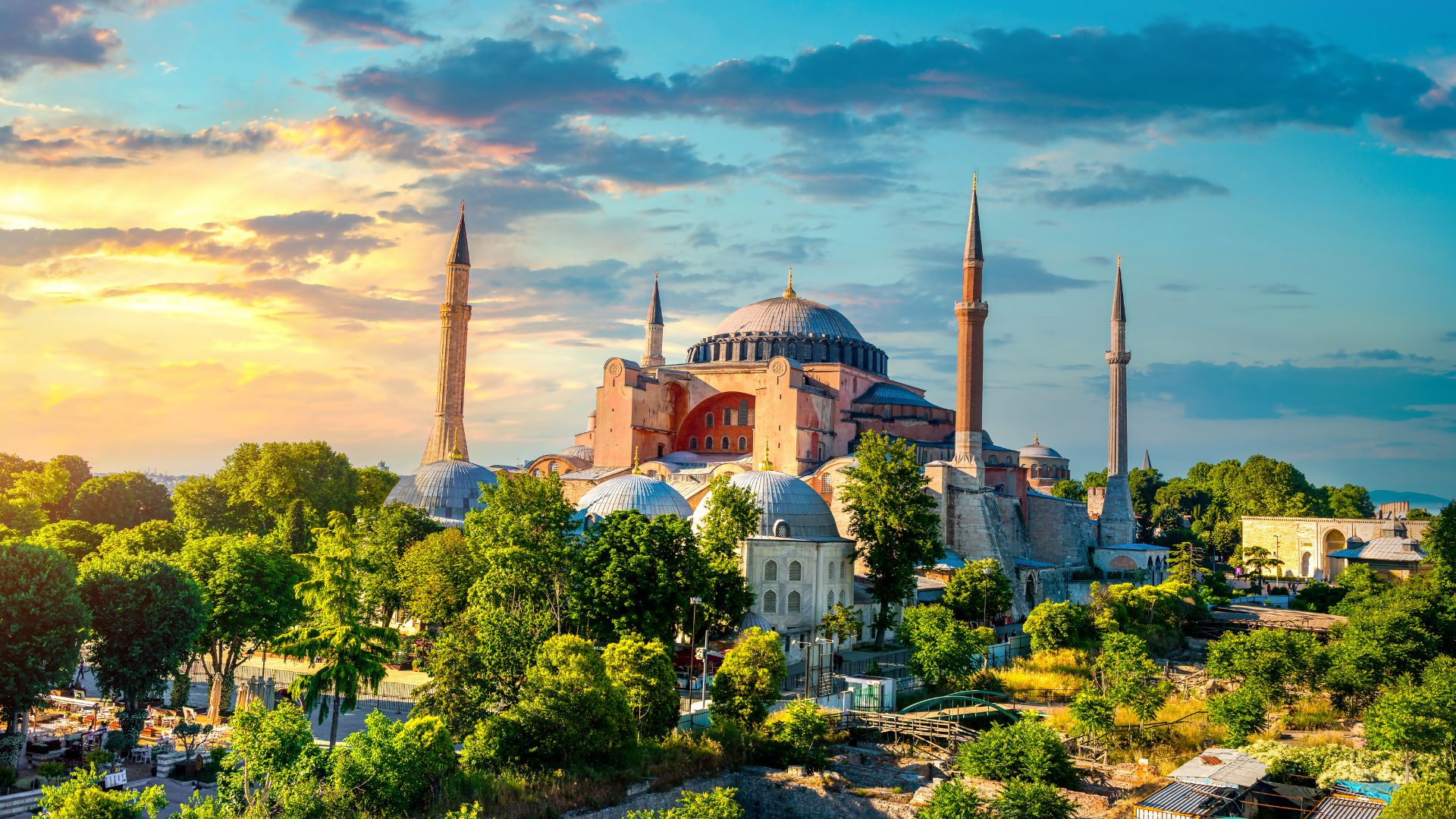
The Ottomans, led by Sultan Mehmed II, breached the famous (unbreachable) walls of Constantinople in 1453. The doors of the ancient Hagia Sofia were broken down, and those taking refuge were slaughtered or put into slavery. Symbols of the faith were destroyed but the building itself was saved being transformed into a mosque. Other famous churches like Hagia Irene were also saved in the same method. As the the Istanbul’s walls were being rebuilt, the city began its new life, or rebirth led by the Ottoman sultans. This was the age of “rebirth”, the Renaissance.
Even great renaissance masters of Italy like Michelangelo Buonarotti and Da Vinci had been in contact with Sultans over the construction of a bridge across the Golden Horn. Michelangelo seems to have declined the offer, but Da Vinci’s notes have been preserved to today (although his plan was declined as the design was too much ahead of its time).
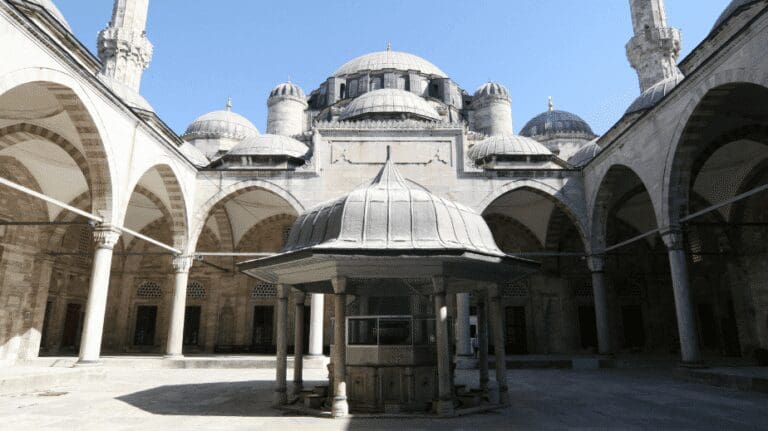
Sultans like Suleiman the Magnificent, ushered in a new era sponsoring the arts, and multiple architectural projects. One of the most famous architects of this period, also known as the Michelangelo of the Ottoman world, was Mimar Sinan. He was an architect for 3 sultans spanning the years 1538-1588. Like Michelangelo and Da Vinci, Mimar Sinan was also a military architect. Some of his most famous works include the Süleymaniye Mosque, Kanuni Sultan Suleiman Bridge, Selimiye Mosque and several important aqueducts.
A look to the past to find something new…….
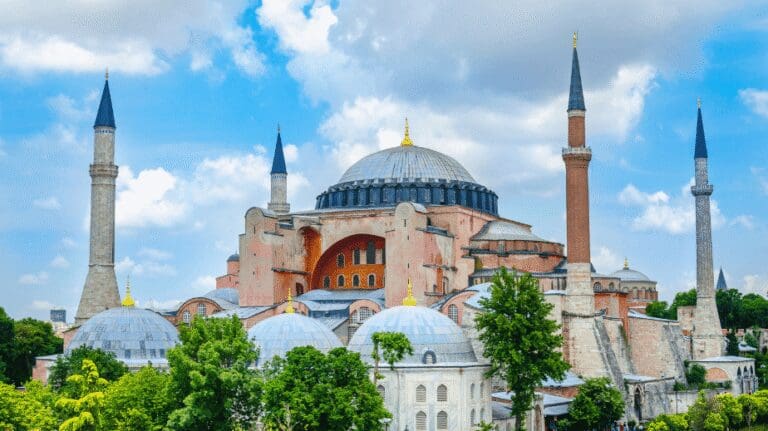
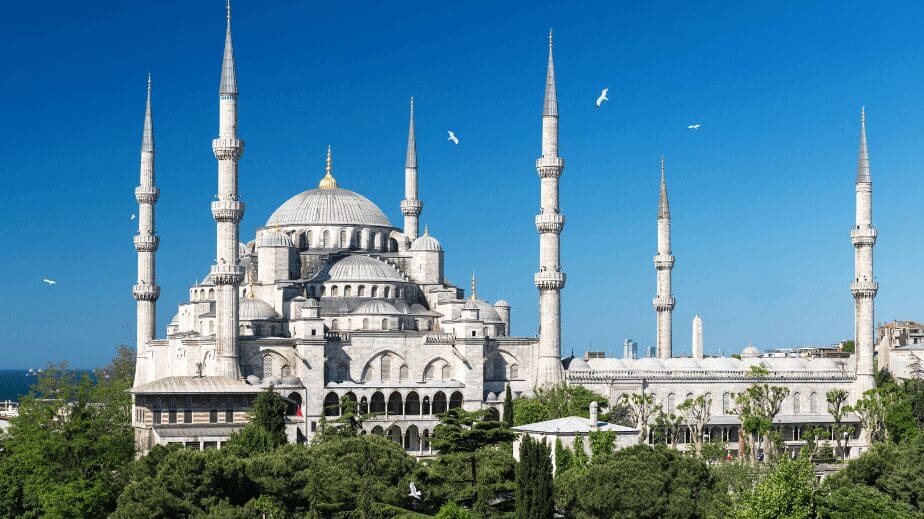
A favorite spot to view two of Istanbul’s most iconic buildings is in Sultanahmet Square. Standing in the center of the gardens and fountains you can admire the two structures that most dominate the city landscape. Hagia Sofia and the Sultan Ahmed Mosque (the Blue Mosque). In fact, it is a lovely place to sit on a bench and enjoy the beauty. Here you can admire both the majesty of the two buildings but also the similarities.
When the church of Hagia Sofia was built in the age of the emperor Justinian, the emperors by now had more in common culturally with the art and architecture of the east than of the west. The great churches of Rome were initially built in the ancient Roman basilica form. These churches had a Latin cross plan. That is a long central naive and side naives. In the church of Hagia Sofia, the plan chosen was very eastern. It was a square plan with an equilateral cross layout and a great dome centered above. This was done by the innovative use of the pendentive thus creating a method to allow a round dome of massive weight to sit atop a square building.
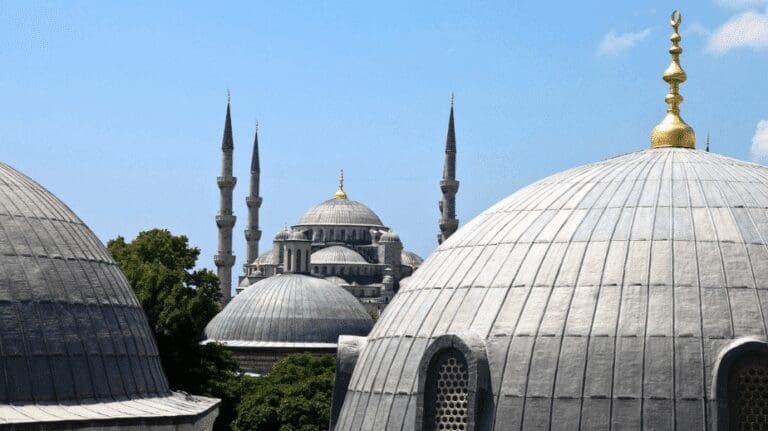
In admiring the two buildings you can clearly see how the Byzantine architecture was inspiration not just in other Christian cities like Ravenna, Italy or in only Christian buildings. The inspirations taken from Byzantine architecture were used and incorporated in Ottoman design.
Additions and alterations like multiple domes and arcaded courtyards added even more uniqueness and interest to the structures. The internal decorations, colors and use of calligraphy set the buildings apart. Also the addition to the tall thin minarets, known as “pencil” minarets give feeling of reaching to the heavens.
Where east and west meet…..
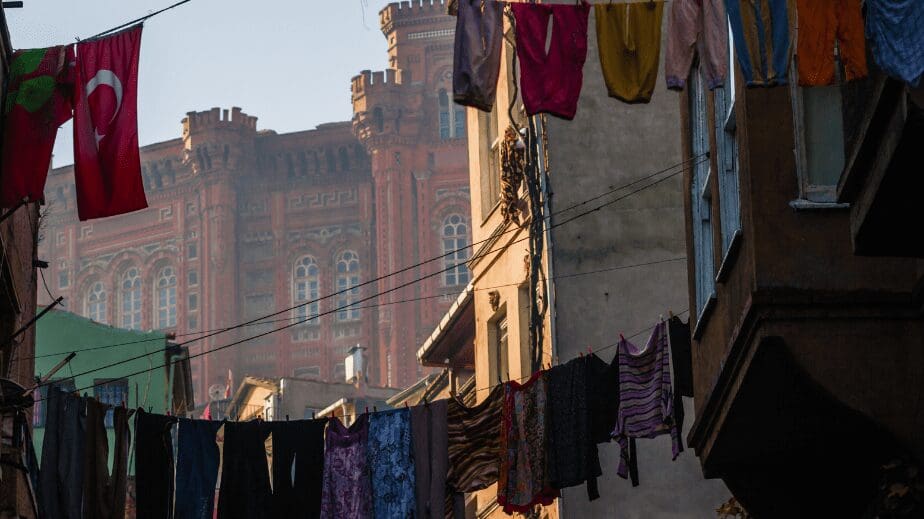
There are many wonderful neighborhoods with varying types of architecture which are worth the visit. The neighborhood of Balat with its brightly colored buildings and wonderful cafes is worth a stroll. The residents of the neighborhood are traditionally a melting pot and the it can be seen in the buildings like the Greek Orthodox College and the beautiful Bulgarian church of St. Stephen.
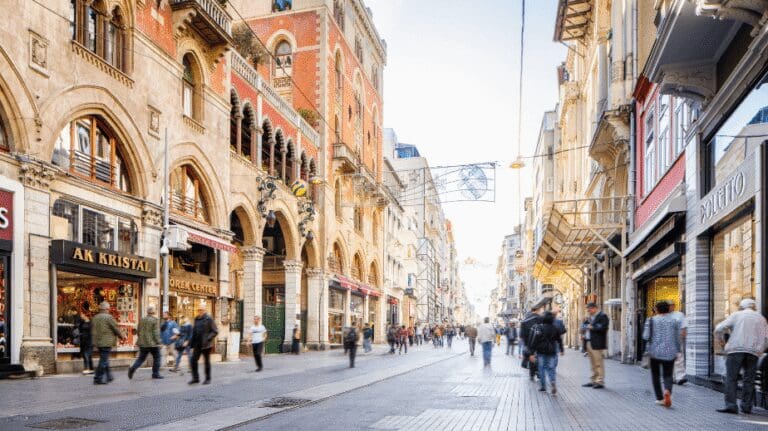
Pera was the old European neighborhood, now known as Beyoğlu. Here is where the Grande Rue de Péra was found (todays Istiklal Street), filled with international shops. There was a mixed European population, some like the Genoese had been well established since the 13th century. A visit to the Galata tower built in1349 by the Genoese community is also worth a visit.
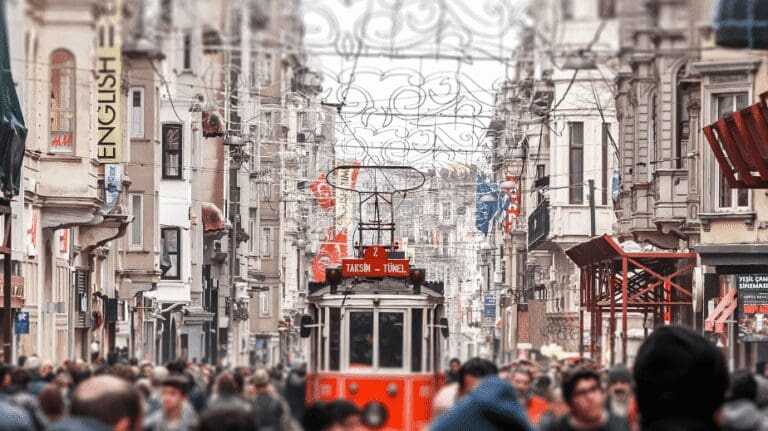
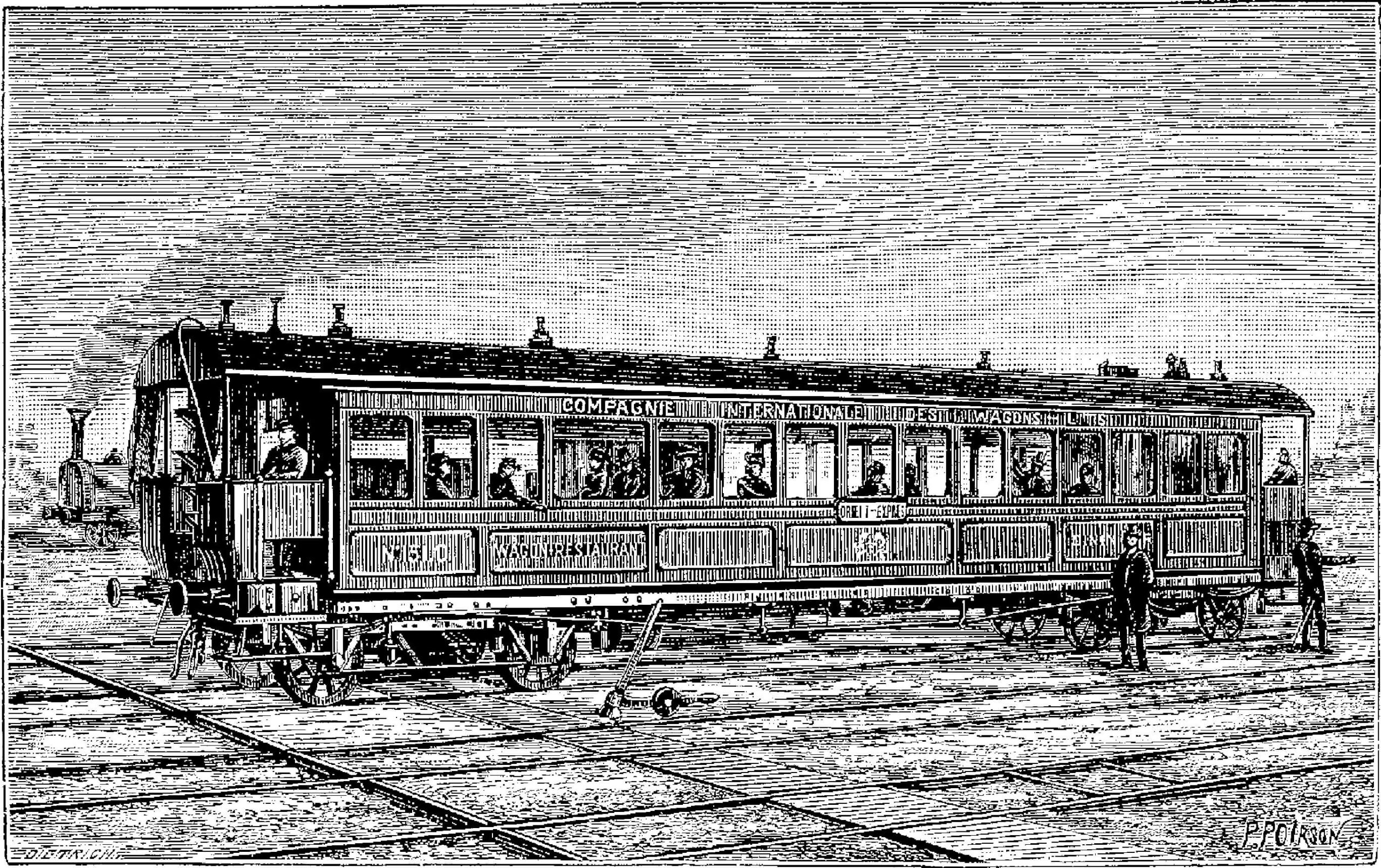
During the 19th century, this part of the city was one of the most modern zones in Istanbul. Here there was electricity, telephone lines, trams and even a subway, (the second oldest in the world only to London). As a matter of fact, the famous Pera Palace Hotel, with its striking Art-nouveau façade, was the first location other than the palace of the Sultan himself to have electricity, an elevator AND hot running water. This gem of a hotel which is also a museum worth visiting, was built in the age of the historic Orient Express. Even Agatha Christie herself had a preferred room here (#411).
A modern touch…..
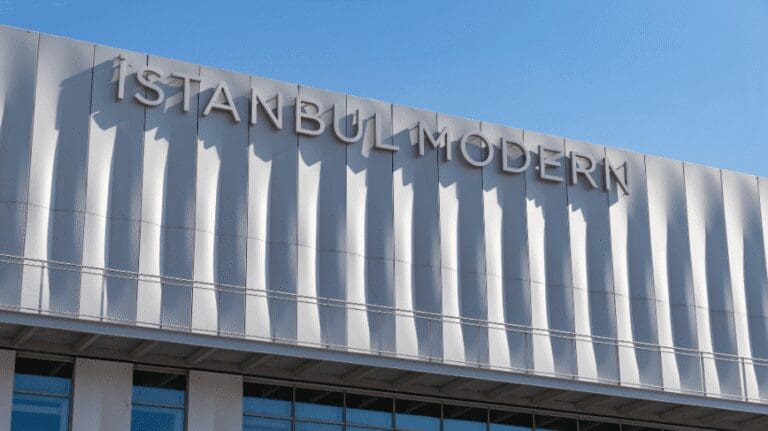
Today, Istanbul continues to build upon its ancient landscape, ever new, ever changing. The city’s new buildings come from both Turkish and international architects and architectural firms. The city’s long awaited rebuild for the Istanbul Museum of Modern Art, was a design by the Italian Renzo Piano. The museum which has only recently opened in May of 2023 can be found in the waterfront zone of Karaköy.
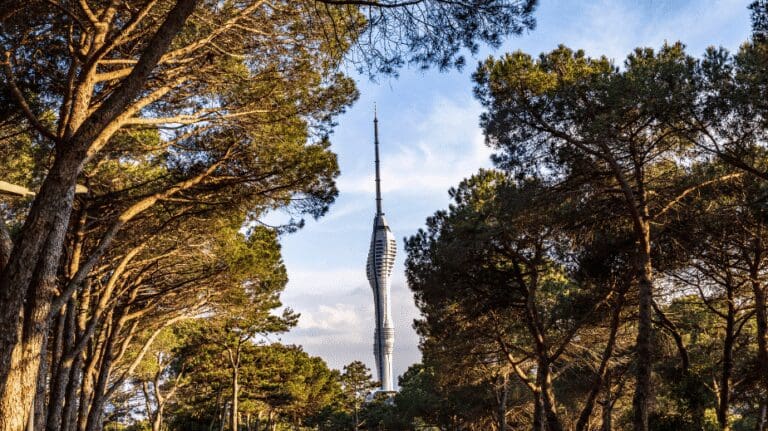
Another structure gracing the new skyline which cannot be missed do to its height of 369 meters high, is the Camlica TV and Radio Tower. Completed in 2020 and now open to the public. A modern mosque worthy of note is the Yesilvadi Mosque. From the new Ataturk Cultural Center to the Apple Bagdat Avenue store, the city continues its long history as a center of architecture as rich and diverse as its past.
Book Your Istanbul Experience