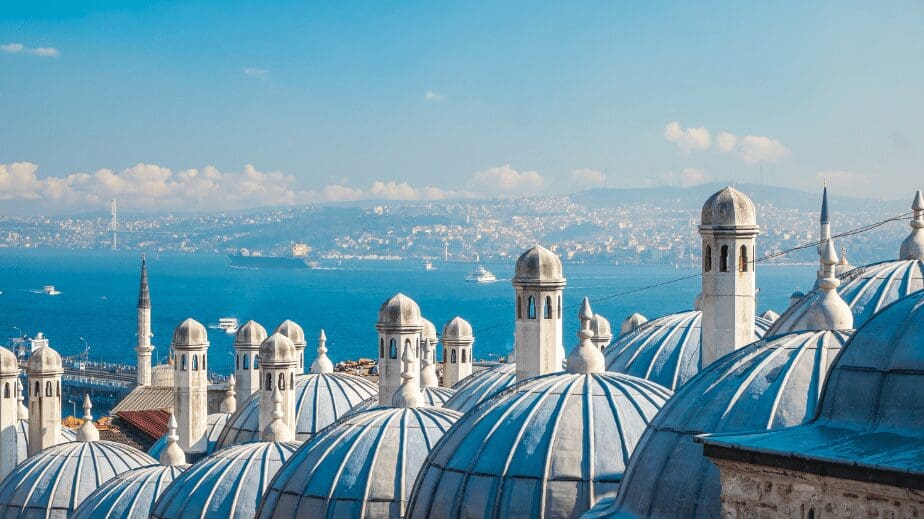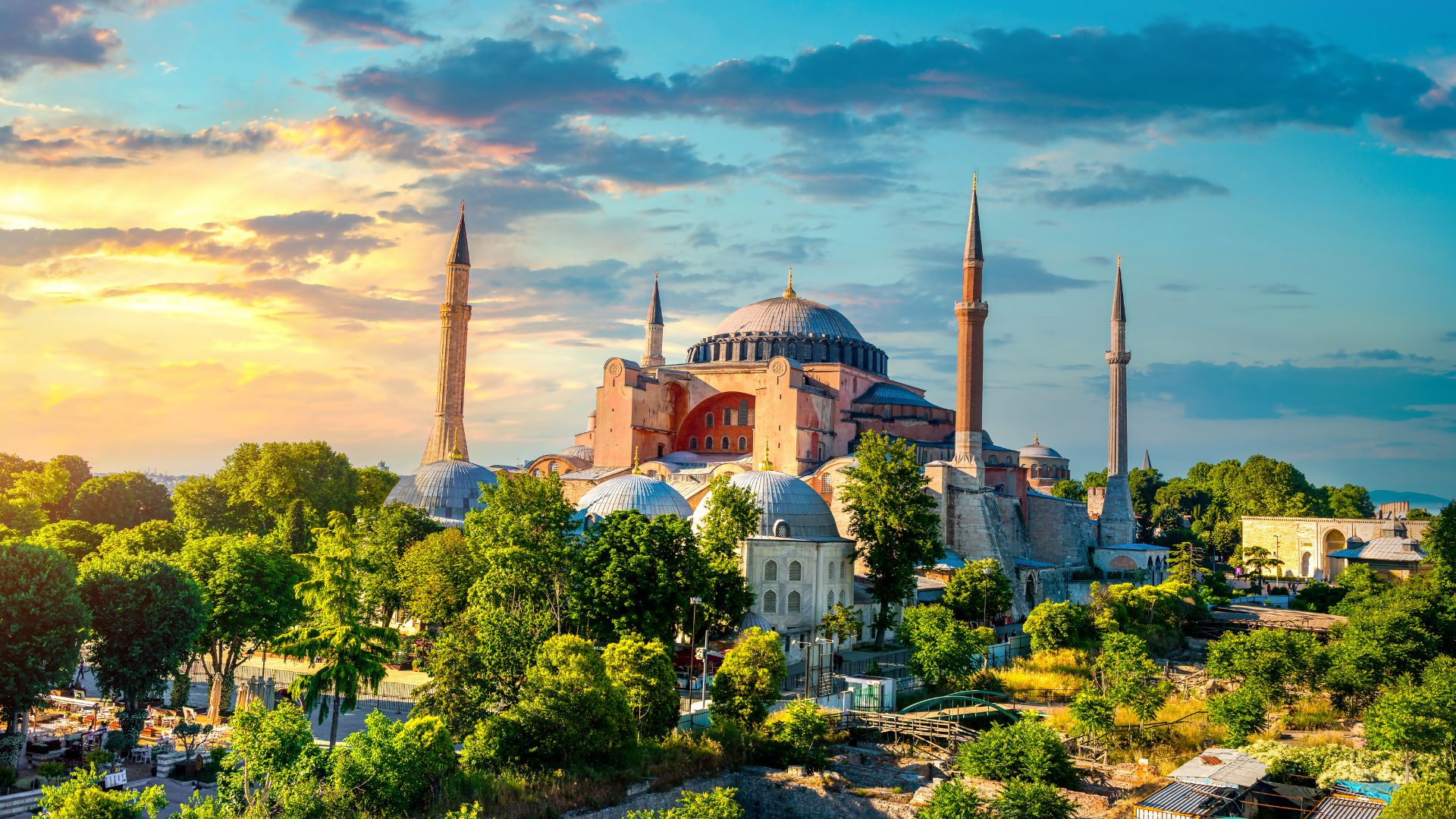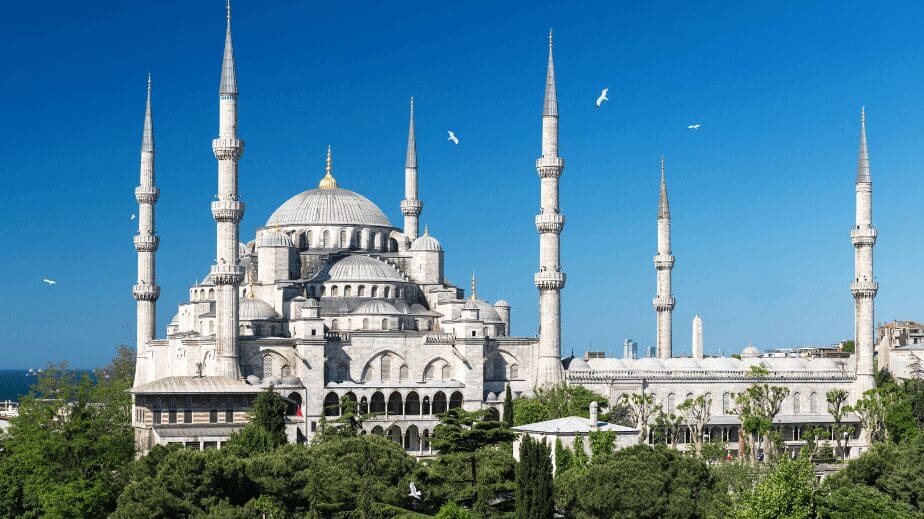
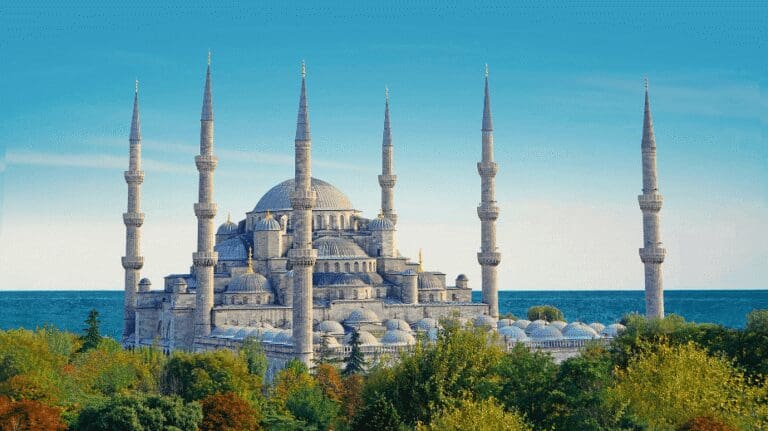
The Blue Mosque of Istanbul is a seventeenth century masterpiece of Ottoman architecture and an iconic cornerstone of the city’s unique skyline. With its six tall minarets reaching up to the heavens and its multiple domes, the Blue Mosque is a powerful balance to the great Hagia Sofia which it faces across the square. Hagia Sofia, Byzantine wonder, flanked by an Ottoman jewel, and most certainly not by accident. Why is it positioned there facing another icon but of Roman and Christian Constantinople?
Its name is the Sultan Ahmed Mosque, but who was this Sultan and why is the mosque referred to only as blue? Let’s go deeper into the mysteries of this UNESCO World Heritage Site, and see why visitors have been coming to it in prayer and in wonder since its founding in 1616.
Best Istanbul Tours
Explore the Delights of Turkey
The Sultan
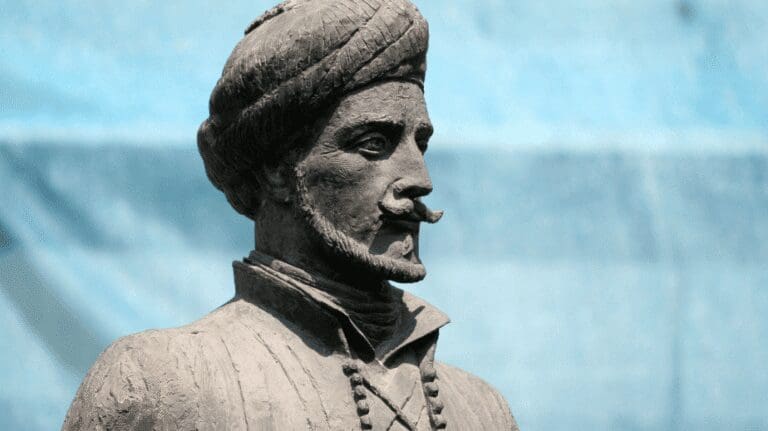
After the death of Sultan Mehmet III in 1603, Ahmed I ascended to the throne at the young age of 14 years old, and ruled for a short 14 years, before dying of typhus at only 28. The young Sultan was known as intelligent, pious, a lover of sports and also poetry. It was under his reign that fratricide at ascension to the throne was abolished. His years as Sultan were were not easy and often plagued by conflict. Conflicts in Europe with the Hapsburgs, conflicts with the Persians and also rebellions at home in Anatolia. Through the conflicts he showed himself to be an adept ruler and also one who preferred peace, which can be seen in a number of treaties signed during his reign.

The construction of the Blue Mosque
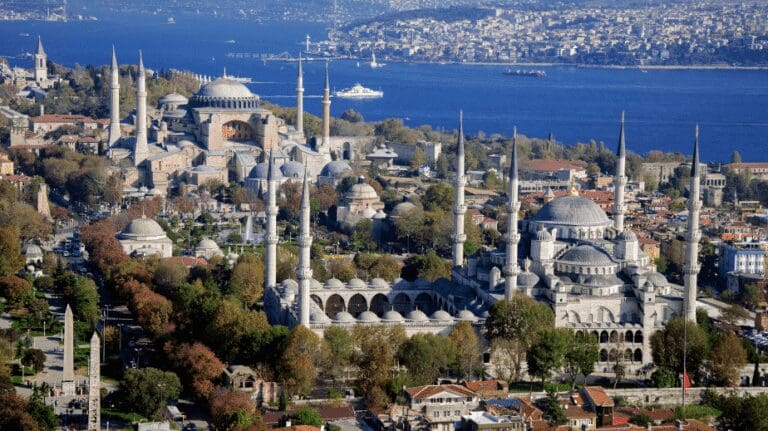
The groundbreaking for the Blue Mosque took place in 1609 and the mosque was completed in 1616, a short 7 years later. The location chosen for this new magnificent structure was across from the famous Church of Hagia Sofia. It was a statement being made by the young and religious Sultan, as it was designed to compete with, or more likely overshadow the majesty of the old church by now also a mosque. The architects beautifully combined aspects of Byzantine style into Islamic architecture. The mosque contains a major dome, four semi domes and eight minor domes. The complex also housed a school, hospital, soup kitchen for the poor and the Sultan’s tomb.
The money and the minarets
There were in fact some controversies regarding the project at the time. It had been years since a grand architectural project had been done within the city including about 40 years since the last new mosque, but projects in the past were completed after wars and funded by booty of spoil. Ahmed I decided on the great project regardless. Don’t forget the great, great, grandfather of Ahmed I, was non other that Suleyman the Magnificent, known not just for his conquests and political reforms but also for his support of the arts.
The wars during the reign of Ahmed I, didn’t end in conquest and he brought back no great spoils. They ended in treaties and also in many concessions made regarding tribute. This was the case of the treaty signed with the Hapsburgs, less tribute was coming into the state. This meant the new grand project of the mosque was being funded by using public funds from the treasury which was previously unheard of.
The project for the mosque was also designed with six massive minarets. There seems to be a few legends around the minarets including the Sultan being so surprised that it equalled the six minarets of the mosque of Mecca, that a seventh minaret was added to the older mosque so as not to overshadow it. One story has it the architect confused the Sultan’s wish to have minarets made of gold with six minarets since the words in Turkish are very similar.
The curious chain in the courtyard
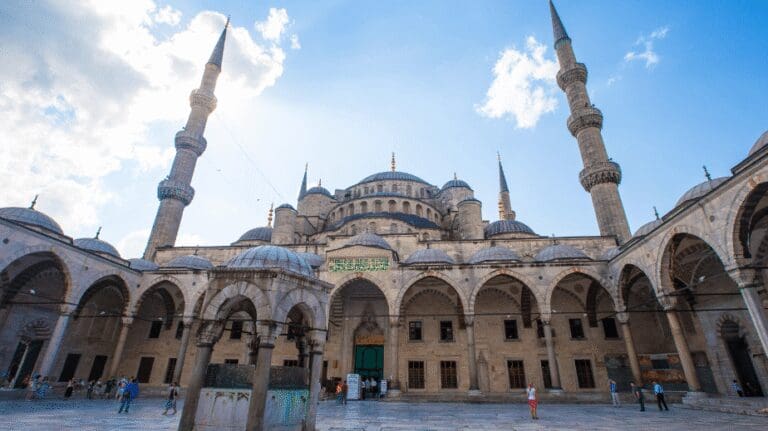
In the beautiful courtyard of the mosque complex there is a curious iron chain which hangs on the western side courtyard entrance. This was the entrance used by the Sultan. The chain was placed there as a sign of humility. Since only the Sultan could enter the mosque complex on horseback, even the sultan needed to bow his head to enter.
Where Did the Mosque Get its Name?
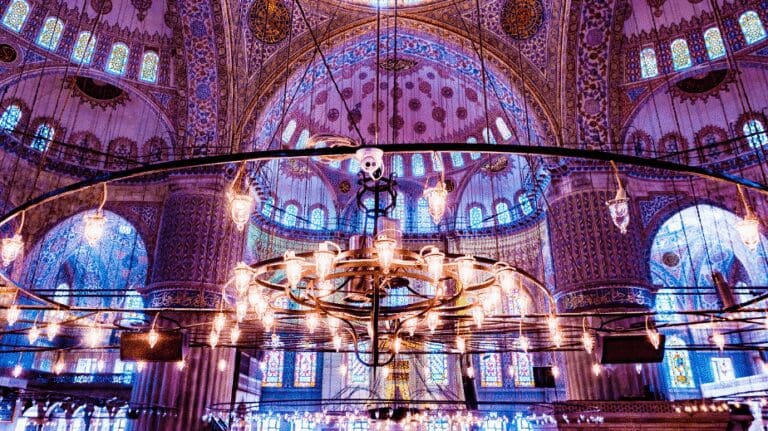
One needs only to walk inside the Blue Mosque to understand its name. Everywhere you look, the decorations make as much of an impression as the incredible architecture that inspires from the outside. Very quickly the dominant blue of the tiles, the stained glass windows and even the elegant carpets of red with blue tulip details on the floor remind you of why Sultan Ahmed’s mosque is referred to as blue.
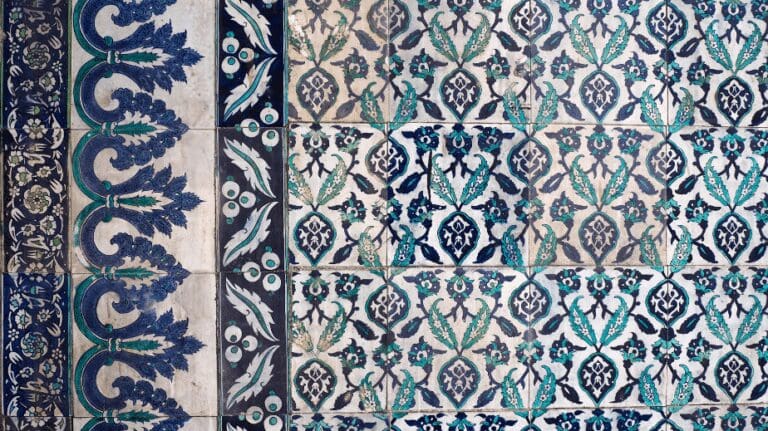
There are over 20,000 Iznik tiles used in the decorations. These beautiful tiles were produced traditionally in Iznik, which is located in Bursa, on Lake Iznik. Iznik was the site of the ancient Greek city of Nicaea. It was here that in the 16th and early 17th century a pottery and tile industry thrived. The tiles are white with blue and green decorations, and in the Blue Mosque you find beautiful floral decorations mostly of tulips. There are also over 250 hundred elegant stained glass windows mostly blue in floral design, adding to the beauty of the domes, the lighting and of course the calming embrace of the color blue.
Book Your Istanbul Experience