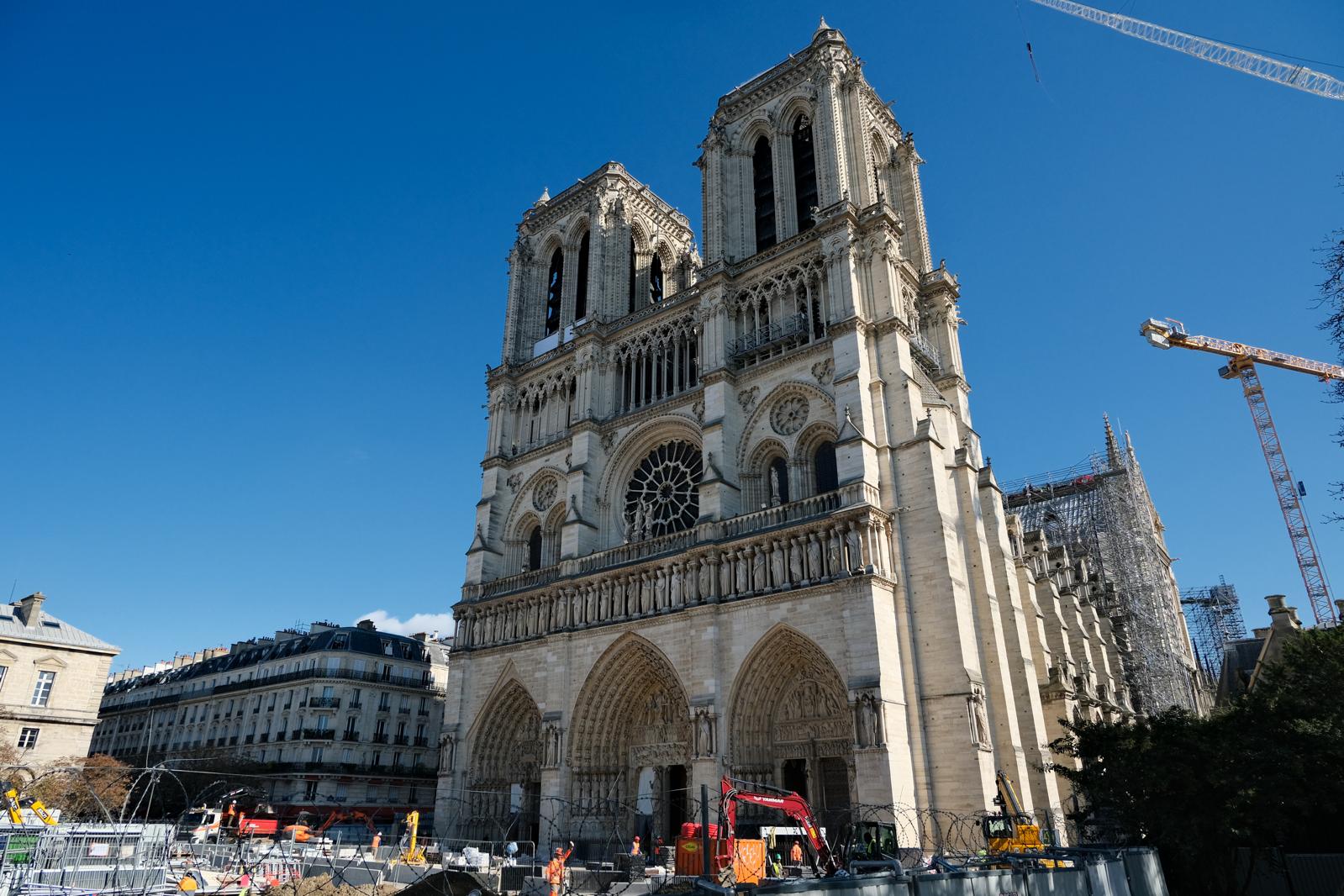
Legend has it that Victor Hugo, in attempting to finish his mammoth work Notre-Dame de Paris (Hunchback of Notre Dame for us English speakers), instructed his valet to remove all his clothes from his house so he would not have any excuse to leave and find distractions outside. Whether this is true or not, a naked Victor Hugo desperately finishing his book speaks to the state in which the Notre Dame cathedral found itself at the start of the 1830s.
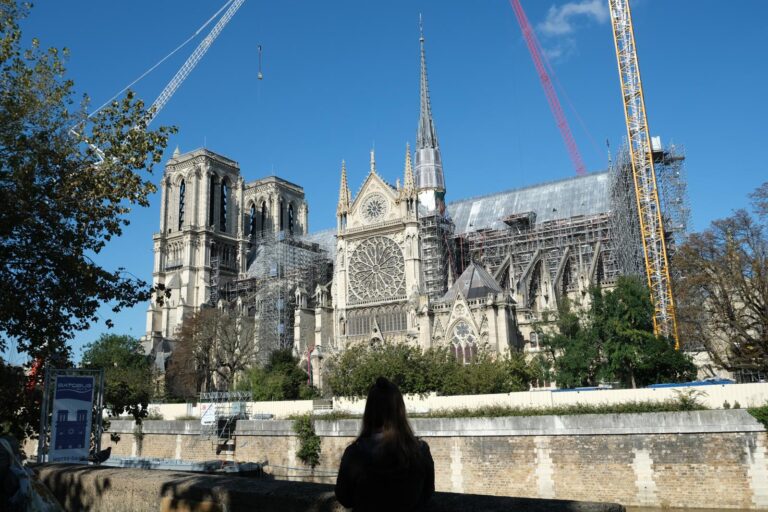
As Notre Dame prepares to reopen after the huge fire that almost destroyed her back in 2019, I will take a look at the history of the construction of Notre Dame and the many restorations that have followed.
Best Paris Tours
Explore the City of Light!
“ He therefore turned to mankind only with regret. His cathedral was enough for him. It was peopled with marble figures of kings, saints and bishops who at least did not laugh in his face and looked at him with only tranquility and benevolence. The other statues, those of monsters and demons, had no hatred for him – he resembled them too closely for that. It was rather the rest of mankind that they jeered at. The saints were his friends and blessed him; the monsters were his friends and kept watch over him. He would sometimes spend whole hours crouched before one of the statues in solitary conversation with it. If anyone came upon him then he would run away like a lover surprised during a serenade.”
– Victor Hugo
The Great Restorations of Notre-Dame de Paris
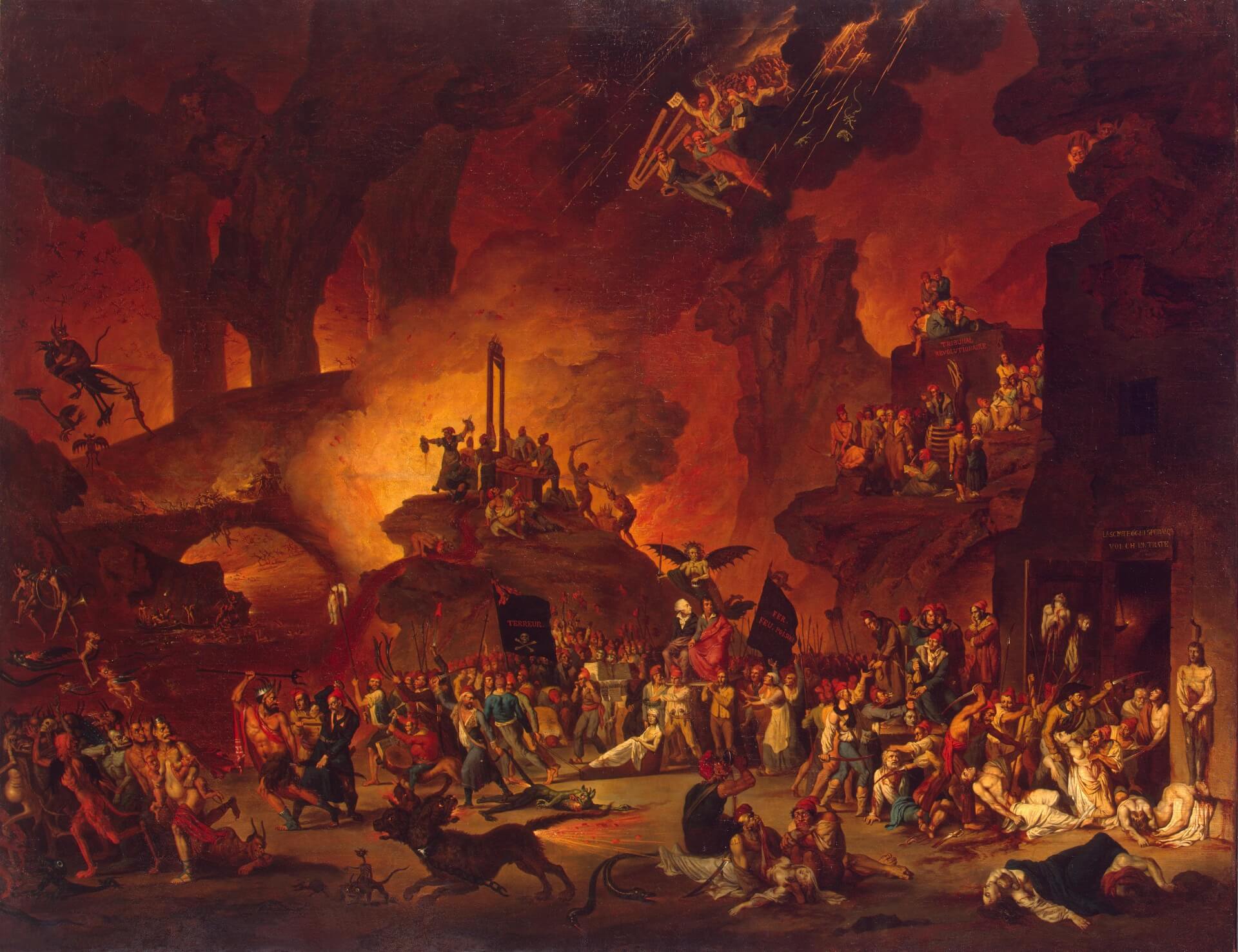
Crumbling and ravaged by the effects of the French Revolution, the Napoleonic wars and civil disturbances which still to this day affect the French capital, the great cathedral was in dire need of restoration. Victor Hugo’s romantic masterpiece followed an essay he had written called “War on the Demolishers”. Hugo realizing that the amount of people reading an essay about gothic architecture, and those reading a wonderful love story might be different. He was correct and the publication of The Hunchback led to massive interest in restoring the Notre Dame.
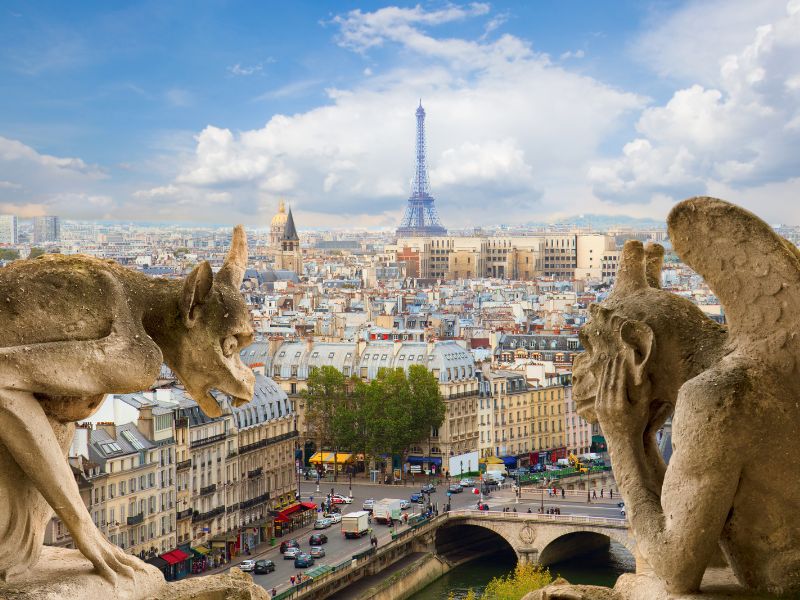
Viollet-le-Duc, who also worked on Mont Saint-Michel, was responsible for that work. He restored and saved the gargoyles and chimeras that Hugo’s novel made into living entities. A new spire graced the top, and the great cathedral of Paris gained a new life.
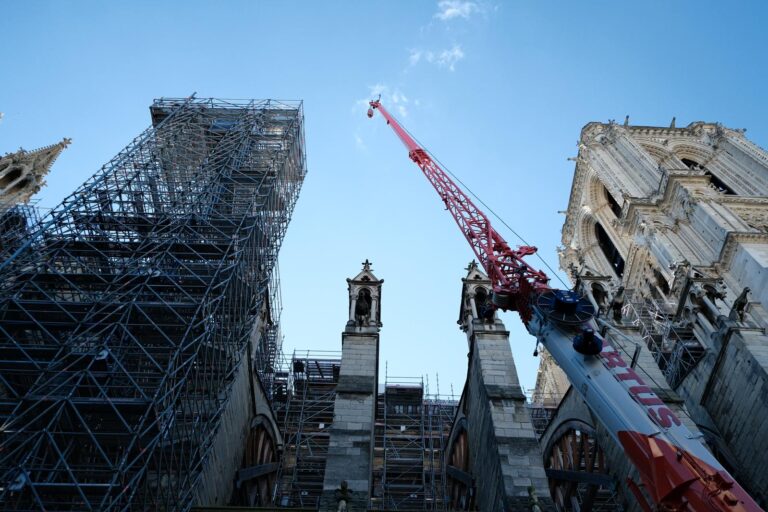
We are part of the same story today as the work to restore the Notre Dame Cathedral after the fire of April 2019 reaches its conclusion this year. On December 8th, the Feast of the Immaculate Conception will take place inside the restored ribbed vaulting of the ceiling. Following this, France’s most visited historical site will open to the public. The most visited attraction in France is Disneyland, which, in my opinion, cannot compare to the magic of Notre Dame, no matter how good Space Mountain is.
For those lucky visitors coming to Paris following the opening, the French tourist board will have an app, designed to give out the free tickets to the cathedral. The church is always free, so be aware of websites selling paid tickets to enter!
The Notre Dame restoration of the last few years is part of a longer story of work on the most iconic of Parisian monuments (well, maybe the Eiffel Tower, but I just love gothic architecture). Originally constructed between the years 1163 and 1345 and built mostly in the High Gothic style, it sits literally in the center of the city. You can find point zero right in front of the cathedral, and you will be able to do so once the cafeteria set up for the workers of the Notre Dame is removed in December.
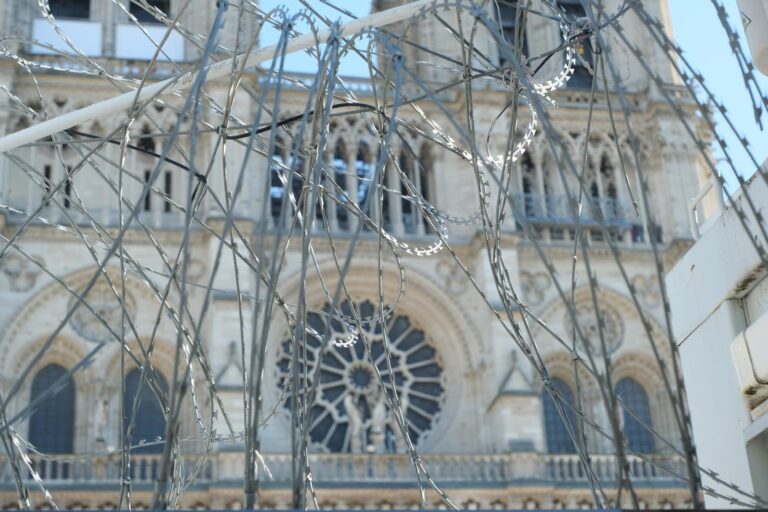
Gothic architecture spans a period of around four hundred years, longer than the history of the United States, and goes through a few different styles. Early Gothic, like the burial place of the kings of France at the Basilica of Saint Denis comes first. Followed by High Gothic, Gothic Rayonnant (the Sainte-Chappelle, go visit it), and finally Late Gothic or Flamboyant Gothic. There are lots of differences between the styles that can be explained to you by any good guide in the city, always recommended. However, all gothic architecture shares one major similarity.
It’s all about light.
Informed by an understanding of religious texts, a Gothic church functions as a gateway to heaven on earth. The pointed arches rise towards god, and as much light is allowed to enter as possible. Building a building with huge windows inside of it is more difficult than a building with no windows. Hence, we have a combination of techniques to give stability, which gives Gothic some of its most recognizable features: ribbed vaulting, flying buttresses, and pointed arches. The stained glass windows subsequently allow streams of colored light to flow into the building.
Those lucky visitors who come after the church’s reopening and its restored stained glass windows will be able to imagine the awe these buildings would have inspired in 1345. They are still awe-inspiring today.
Some of the stained glass windows were destroyed in the 2019 fire and will be replaced by more modern windows, but we are very lucky to still have the main rose windows intact. Stained glass dating to the 1250s is very rare, especially in a building that was used to store gunpowder during the French Revolution!
Around a thousand people have worked on the Notre Dame restoration, from carpenters to catering staff. Restored with love and care, using many techniques from the fourteenth century in doing so. Oak beams cut down with hand axes, skills that often were learned on the job, giving a new life not only to the building but techniques and ways of working that could easily be lost. These restorers are part of a long line of people, who have loved and cared for the building.
From the first stonemasons in 1163, through the gothic revivalists of the 19th century to the hands of craftspeople of 2024, we should be very grateful for the great work that they do.
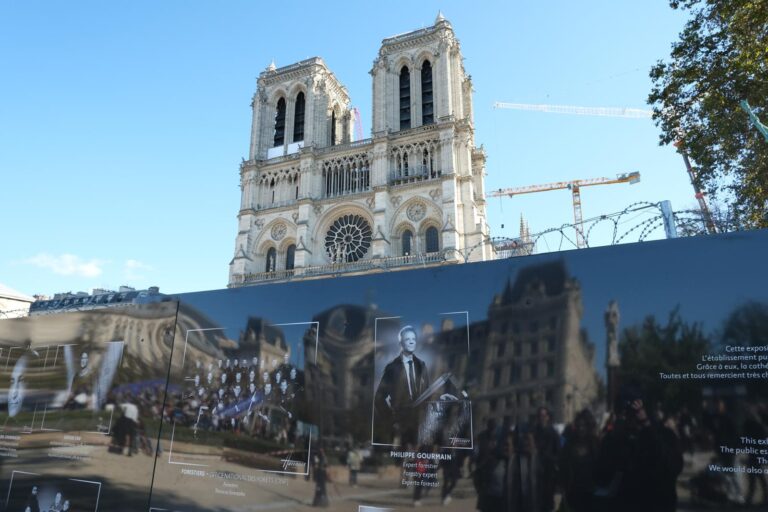
During the Olympics which so successfully came off in Paris this summer, triumphant athletes rang a bell signaling their victory. The bell that clanged so many times for victory in the Stade de France, will not fall silent afterwards. It is heading off to grace the towers of the restored Notre Dame. To take its place alongside the other massive bells, includes the great 17th century bell which is called Emmanuelle. They will ring to signal the reopening of the church and Notre-Dame de Paris will once again be welcoming visitors.
It is an exciting time to be in Paris, come and visit! Until then I will leave you with a quote from my favorite naked writer, Victor Hugo and his beloved cathedral:
“Paris of the fifteenth century; look at the light through that surprising host of steeples, towers, and belfries; pour forth amid the immense city, break against the points of its islands, compress within the arches of the bridges, the current of the Seine, with its large patches of green and yellow, more changeable than a serpent’s skin; define clearly the Gothic profile of this old Paris upon a horizon of azure, make its contour float in a wintry fog which clings to its innumerable chimneys; drown it in deep night, and observe the extraordinary play of darkness and light in this shadowy labyrinth of buildings; throw into it a ray of moonlight, which shall show its faint outline and cause the huge heads of the towers to stand forth from amid the mist; or revert to that dark picture, touch up with shade the thousand acute angles of the spires and gables, and make them stand out, more jagged than a shark’s jaw, upon the copper-coloured sky of evening.”
Book Your Paris Experience