When it comes to crypts, an air of eerie unease comes with the territory.
But the underground ossuary that Rome’s Capuchin friars have carefully curated for centuries beneath their church of Santa Maria della Concezione on Via Veneto takes things to a whole new level. As you pass the crypt’s dread threshold, an inscription gives you an idea of what’s to come: ‘That which you are, we once were; that which we are you shall be.’
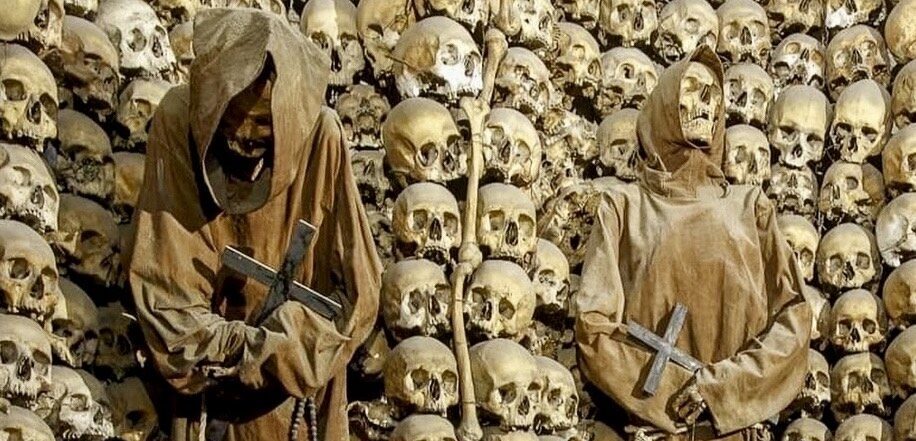
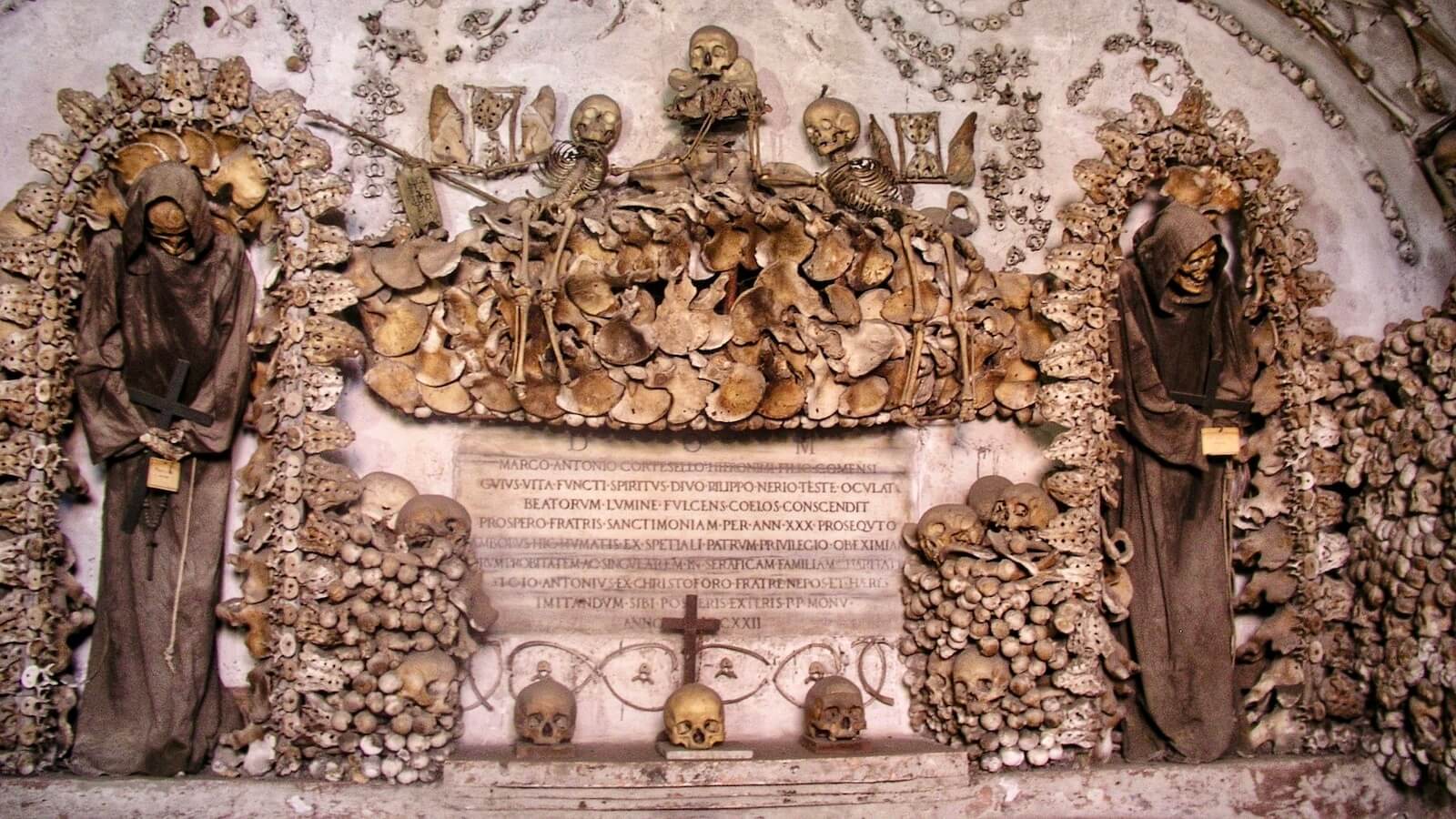
As soon as you enter the crypt’s main passage, you’ll see what they meant: every inch of the walls and ceilings are decorated with human bones arranged into artworks and patterns of dazzling complexity. Beautiful and grotesque at the same time, the crypt posits death as the great leveller – everyone has to face the reaper sooner or later.
When the great American writer Nathaniel Hawthorne visited the Capuchin Crypt in the 19th century, he was dismayed by what he saw, writing that ‘the soul sinks wretched and forlorn under all this burden of dusty death…Not here can we feel ourselves immortal, where the very altars in chapels of horrible consecration are heaps of human bones.’ But this extraordinary underground is much more than a gloomy ode to death.
To celebrate the launch of our new Secrets Beneath Rome: Capuchin Crypt and Catacombs Tour, here are six things you need to know about the incredible Capuchin crypt in Rome!
Rome Tours
Explore a Hidden Side of the Eternal City
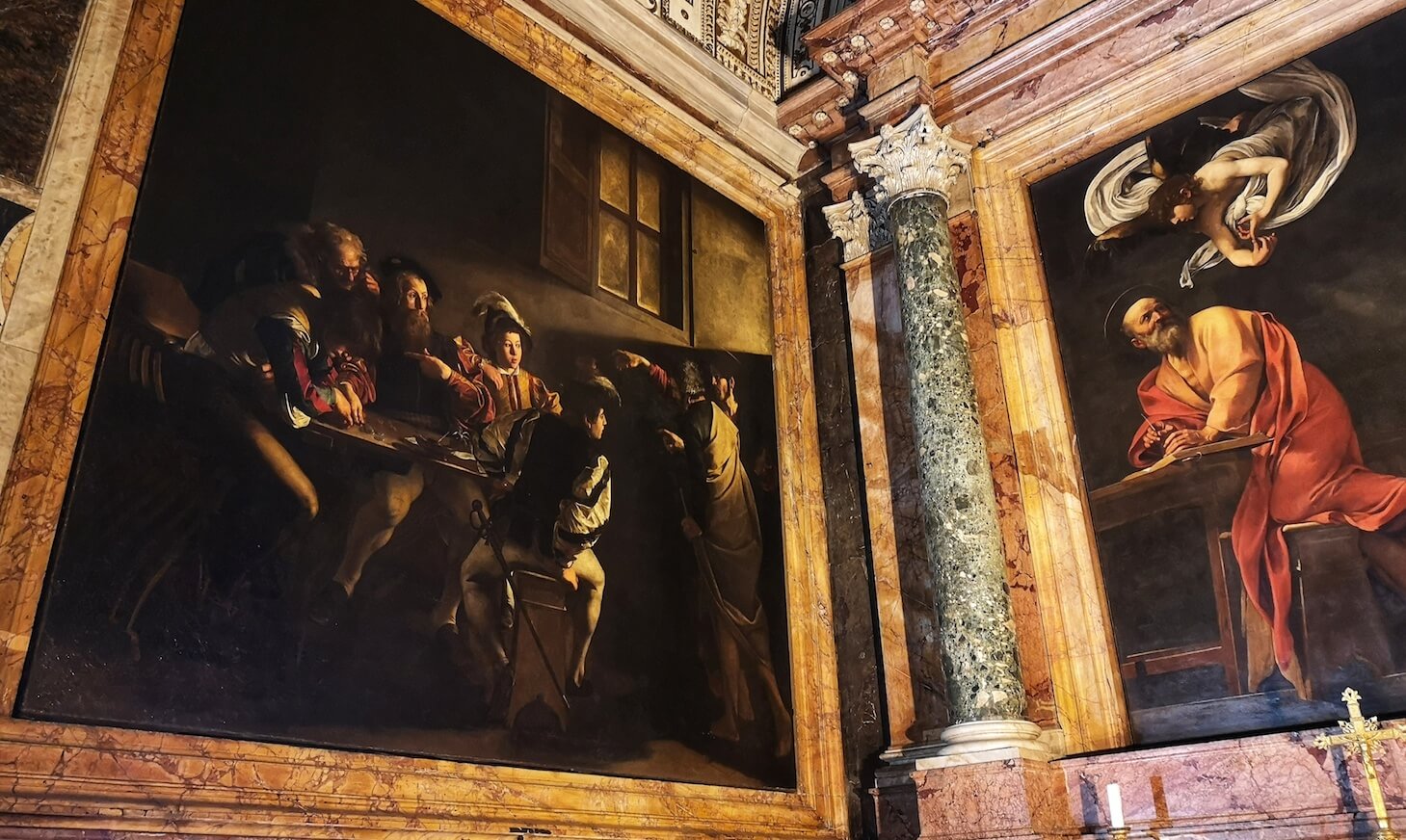
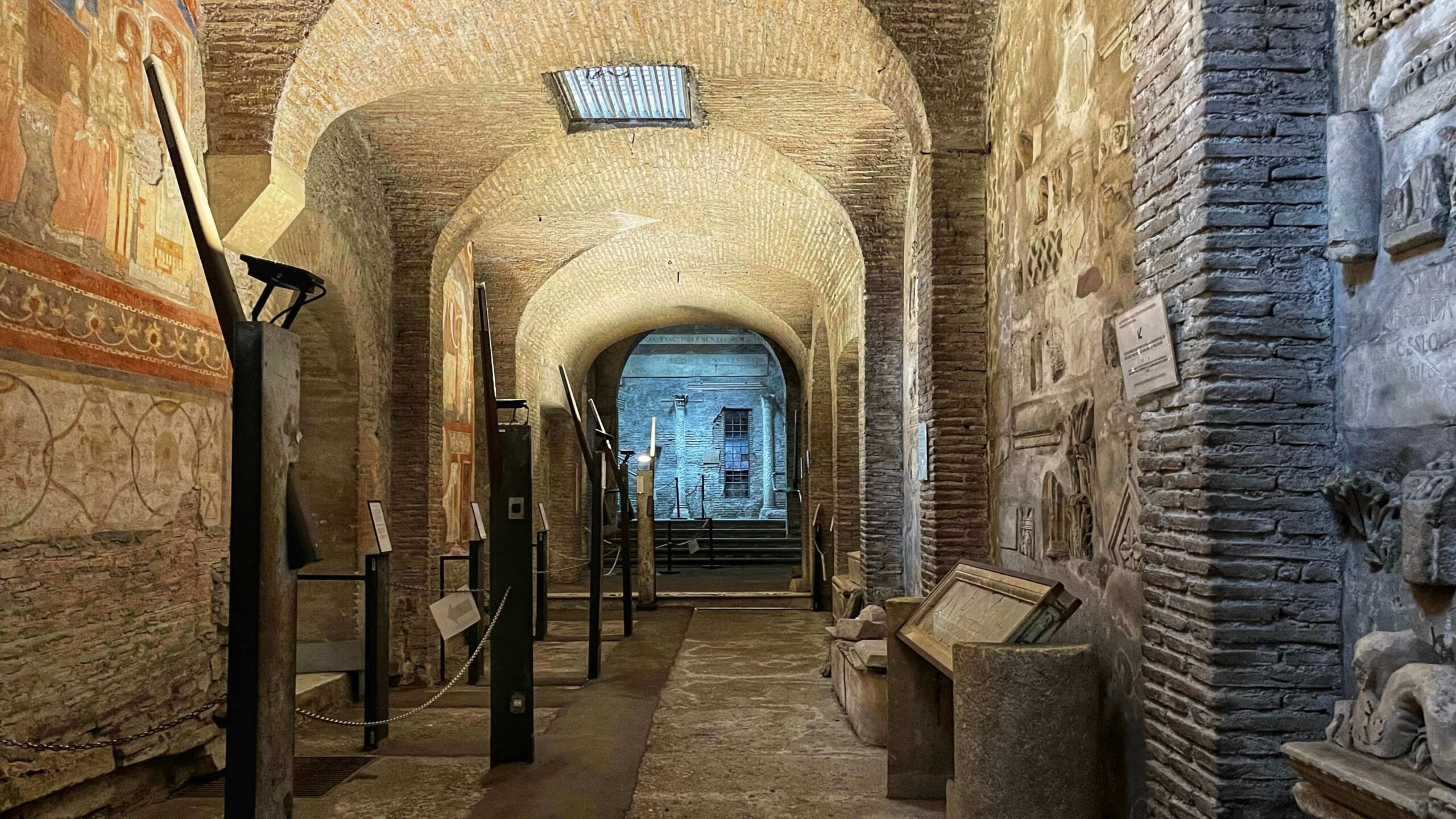

The Capuchin Crypt is located beneath the church of Santa Maria della Concezione dei Cappuccini in Rome. The church itself was commissioned by Pope Urban VIII and built between 1626 and 1631, intended as the headquarters of the Capuchin order of friars – an offshoot of the Franciscans.
When the Capuchins moved into their new HQ, they brought the remains of their fellow friars, previously buried in the grounds of their old church, with them. Sources speak of hundreds of wagonloads of bones making their way across town at the direction of Friar Michele of Bergamasco in 1631, before being deposited in the new church’s underground crypt.
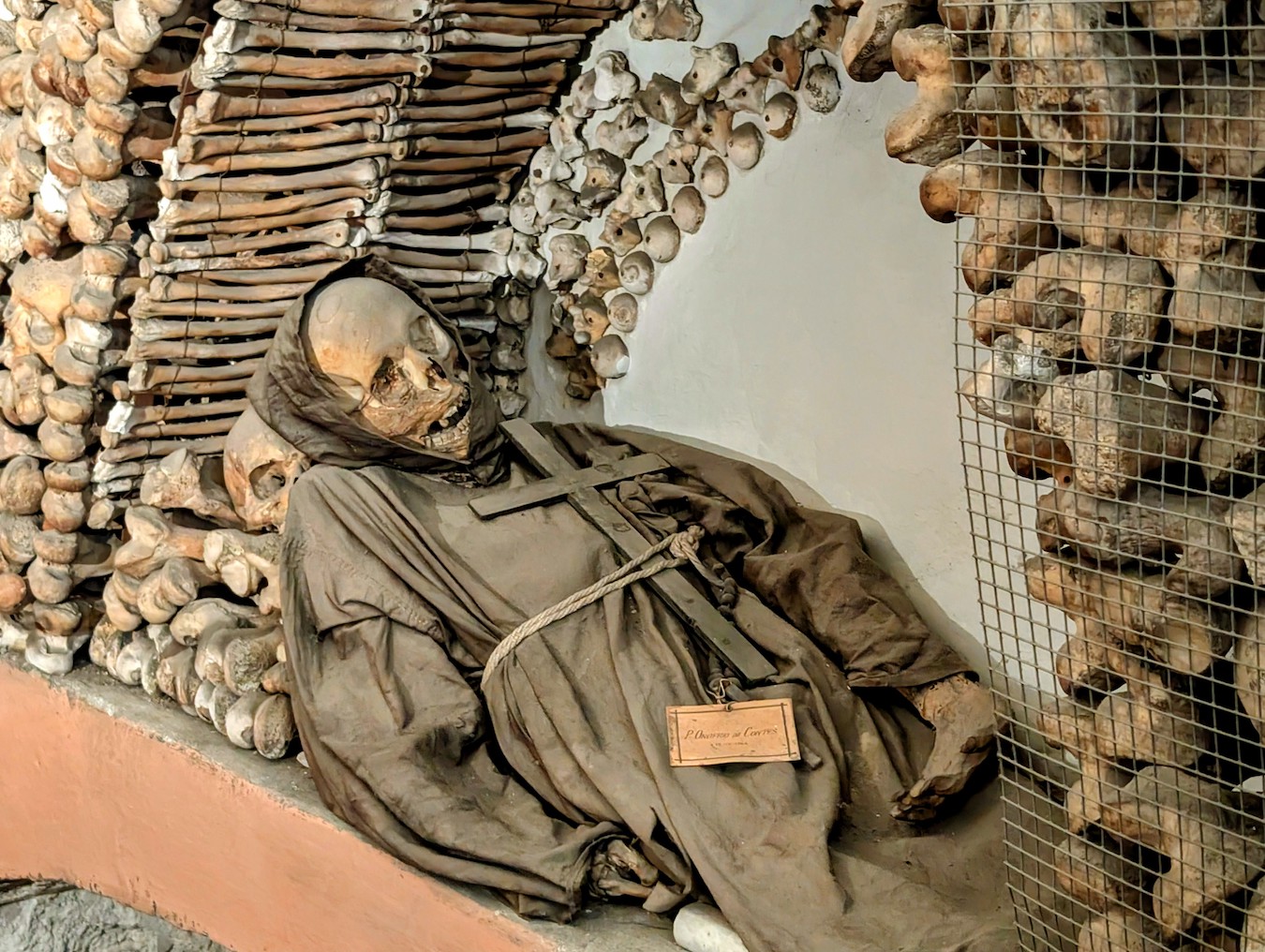
The crypt as we see it today, with its distinctive skeletal decorations, was created later in the 17th century. Its walls are adorned with the skeletal remains of over 3,700 Capuchin friars – serving as a poignant reminder of the transient nature of human life.


Thousands upon thousands of tibias, femurs, skulls, pelvises and more are massed into great piles against the walls of the crypt, transformed into the building blocks of architectural features. Who needs bricks and mortar when you’ve got 4,000 skeletons to work with!?
The skeletal remains are not randomly deposited but meticulously arranged to form intricate and hauntingly beautiful patterns. Skulls, femurs, and pelvis bones are used to create elaborate designs including architectural features such as ominously swaying chandeliers, triumphal arches, niches and even representative motifs such as a clock, a winged hourglass, a starry sky and even a butterfly. Look out too for an angel of death, wings forged from the shoulder blades of a Capuchin friar.

We don’t know who came up with the idea of rearranging the bones in the Capuchin crypt into the extraordinary shapes and patterns we see today, although various theories have been put forward, including one Father Raffaele from Rome, a highly-regarded Capuchin painter, and the Viennese artist-friar Father Norbert Baumgartmer, a number of whose works can be seen in the adjacent church.
More fancifully, one legend claims that a fugitive artist took refuge in the sanctuary of the Capuchin crypt, and set about organising the bones found down there into elaborate artworks as an act of contrition and recognition of his own sinful nature. Still another tall-tale gives the authorship to a group of Capuchin friars who, escaping the horrors of the guillotine during the Reign of Terror after the French Revolution, whiled away their exile in the macabre task.

The crypt’s design reflects a deep spiritual symbolism. The skeletal displays are intended to evoke contemplation on the fleeting nature of life, the inevitability of death, and the spiritual journey beyond the physical realm. As you enter the crypt, you’re greeted with a sign that makes clear the spiritual message underpinning the decorations: ‘What you are, we once were. What we are, you someday will be.”
This sombre message sets the tone for the contemplative experience within the bone-adorned chambers. Franciscan and Capuchin spiritualism emphasises private contemplation of the nature of mankind, death and the divine, as exemplified in the Caravaggio painting of St. Francis in Contemplation that you can see in the museum above the crypt, where the holy man gazes rapt upon a skull in the wilderness. Entirely unafraid of the reaper, St. Francis famously penned a verse in his Canticle of the Creatures in praise of “Sister Death.”

Memento mori, literally meaning “remember that you will die,” is a recurring theme in art and philosophy that became a central aspect of early modern spiritually. A constant awareness of the transience of life and the importance of preparing your soul for the afterlife was an important part of dying a good Christian death, and this is reflected in the array of skills and skeletons, grim reapers and decaying bodies that you’ll find in Baroque funeral art in churches across Rome.
The Capuchin Crypt takes this concept to an extraordinary level, however, confronting visitors with the stark reality of mortality through the tangible presence of actual human remains transmogrified into artistic cautions of human mortality.

The crypt is divided into several small chapels, each with its own distinct theme and known according to the types of bones principally used in the decorations.
The crypt of the skulls, for instance, is dedicated to the craniums of deceased monks, whilst another showcases the tibias and femurs of legions of defunct friars. In the aptly named Crypt of the Pelvises, great piles of pelvises arranged into walls and arches seem to be on the brink of tumbling down into the gloomy space.
In the Crypt of the Three Skeletons, three ex-friars have escaped the fragmentation mania and are instead depicted in their skeletal entirety, draped in the brown robes of the order. One clutches a scythe in an echo of the Grim Reaper, whilst another grips a scales – symbolic of the weighing of deeds that will take place at the Last Judgement.
Dive Deeper into Rome