Have you heard of the Capuchin church and monastery of Santa Maria della Concezione in Rome?
The complex was built between 1626 and 1631 as the new headquarters of the Capuchin monks, a very popular religious order in early-modern Italy. So far, so normal.
But when the Capuchins moved into their new complex on Via Veneto, they did something rather odd: unwilling to part with the mortal remains of their fellow friars that lived and died whilst living in the old monastery in centuries past, they brought them with them. Contemporary documents recount cartload after cartload of bones being transported across town on the orders of Father Michele of Bergamo in 1631.
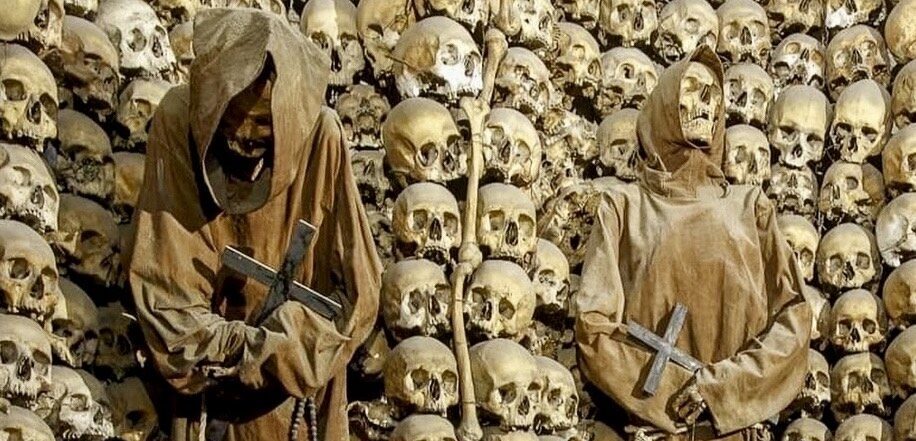
A century after the skeletons were safely deposited in the crypt beneath Santa Maria della Concezione, the monks did something even odder, rearranging the mounds of bones into incredible patterns and artworks on the walls of the underground rooms.
The bones of no fewer than 3,700 defunct friars feature in the macabre decorations, unfolding over six rooms leading off a single subterranean corridor.
Today you can visit the incredible Capuchin crypt alongside a small but fascinating museum that details the life and work of the Capuchin order, providing valuable context for the somewhat gruesome bone decorations below!
Read on for our picks of what you need to see on a visit to Capuchin Museum and Bone Crypt!
Rome Tours
Explore a Hidden Side of the Eternal City
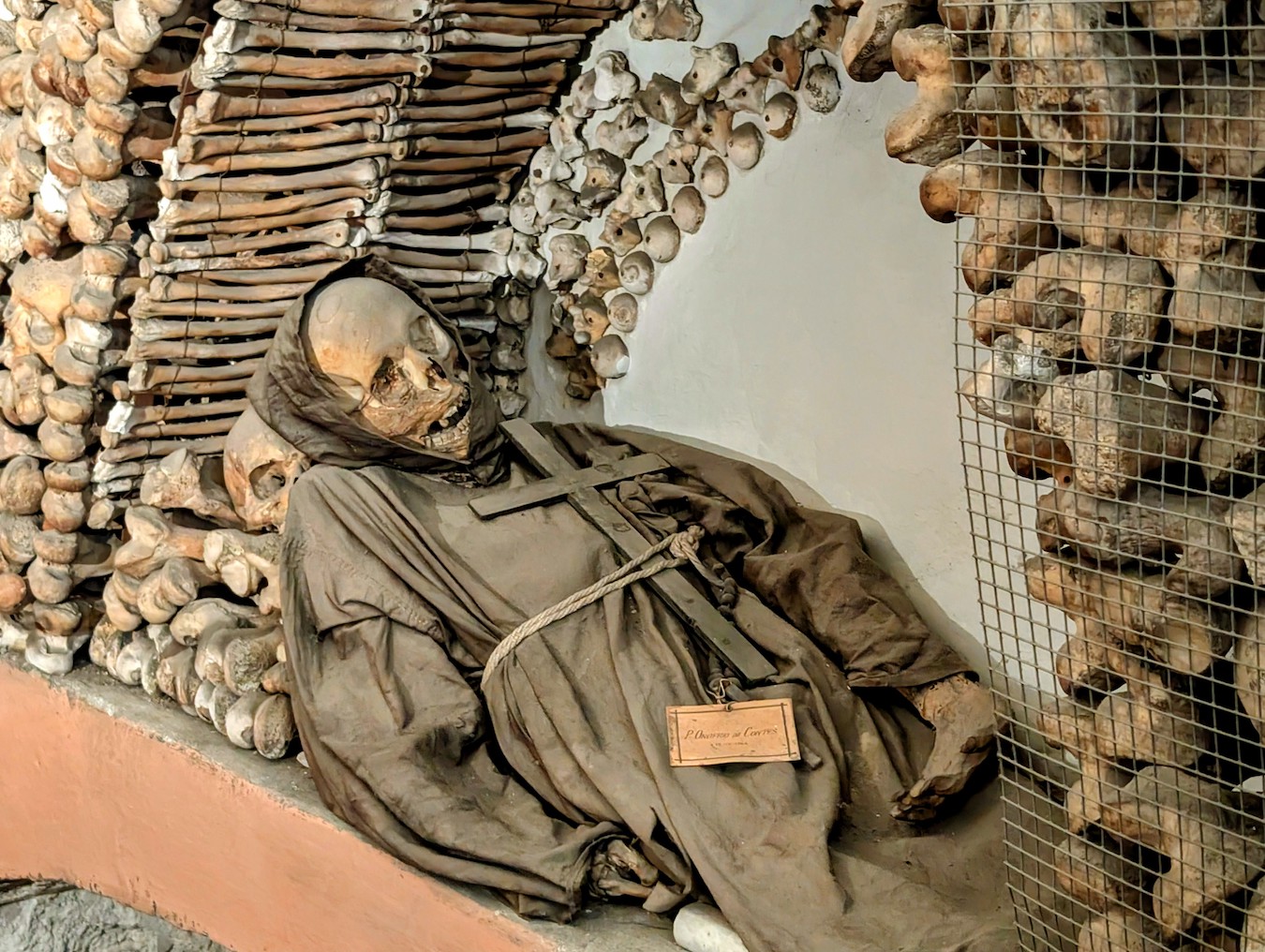
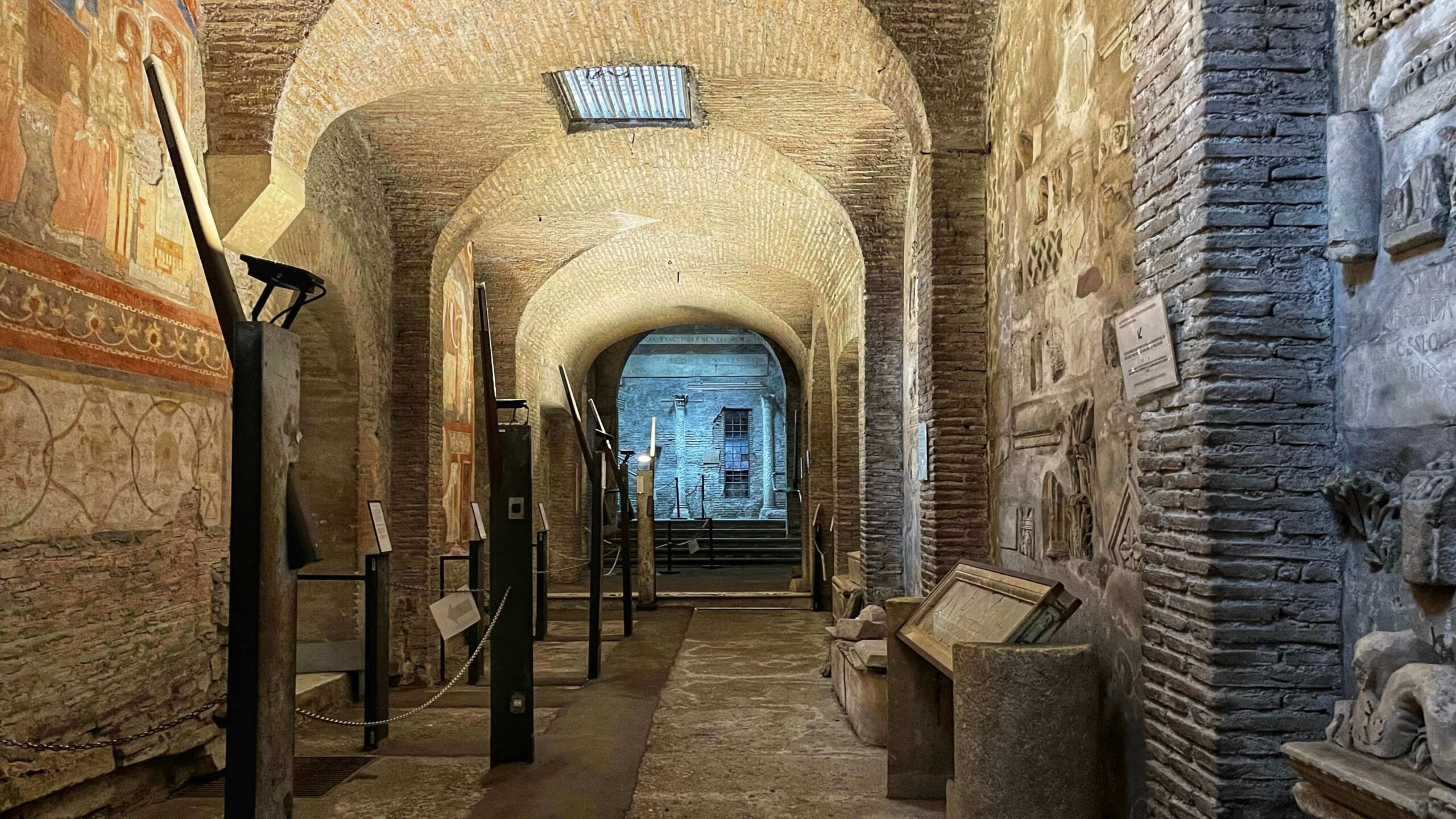
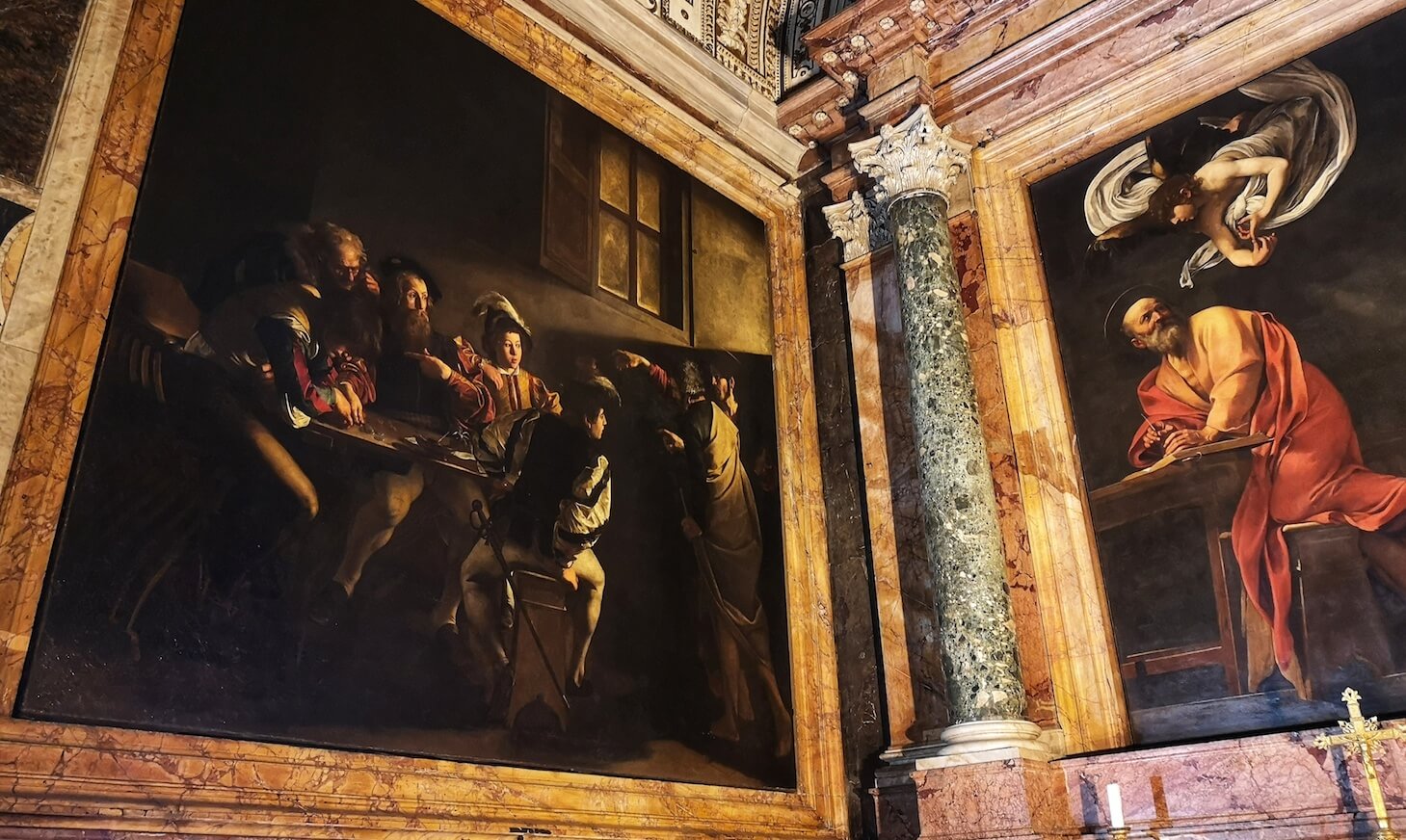

The Capuchin order is an offshoot of the Franciscans, founded in 1528 with the goal of returning to a simpler, more humble life of spiritual contemplation in line with the teachings of Saint Francis. The distinctive habit worn by Capuchin monks is similar to the traditional Franciscan habit, and is characterised by a brown robe (representing the earth), with a hood tied by a cord held fast by three knots – each knot represents one of the vows taken by members of the Capuchin order: poverty, chastity, and obedience. The term “Capuchin” itself originates from the pointed hood or “cappuccio” worn by the friars, resembling a hooded cowl.


An important aspect of the Capuchin order’s mission was ministering to the sick and injured of the communities they served, and so the monks became experts at growing and processing plants and herbs with medicinal effects. The Capuchin monks of Rome tended a flourishing garden of medicinal plants in the grounds of their monastery, and produced a variety of elixirs, poultices and remedies aimed at everything from relieving pain to alleviating the symptoms of a wide range of maladies. The various preparations were meticulously recorded in notebooks and passed down from one generation to the next, ensuring that the community’s skill in the art of apothecary didn’t die out.
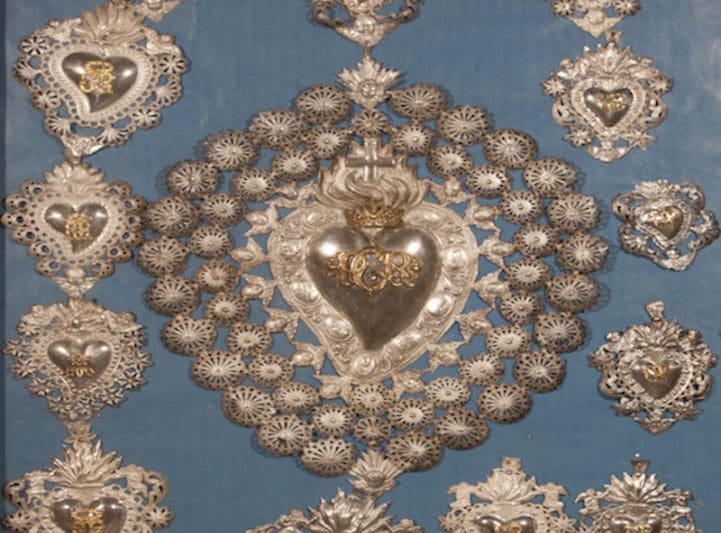
The practice of offering body-part ex votos is a fascinating aspect of Catholic faith and spirituality. These ex-votos are small objects depicting body parts, sometimes intricately made and sometimes very crude, that are offered at religious shrines as requests for divine intervention to cure illnesses or expressions of gratitude at miraculous healings. The ex-voto typically takes the shape of the afflicted body part – hands, feet, hearts, eyes, ears and noses are all very common. The silver ex-votos on display in the museum are particularly fine examples, tangible expressions of faith that acknowledge the intercession of saints or the Virgin Mary in response to prayers for healing or assistance.

The great Baroque painter Caravaggio reflected the spirit of his time in his dramatic religious images, and he painted St. Francis of Assisi, founder of the Franciscans and spiritual father of the Capuchin movement, in a number of different guises over the course of his career. The work that Caravaggio painted for the church of the Capuchins, now on display in the museum, depicts St. Francis meditating before a rustic cross and skull in a dark wilderness.
Painted in the artist’s signature chiaroscuro style, the canvas captures St. Francis in deep contemplation, bathed in divine light. The particularly Capuchin emphasis on humility and poverty is evident in the saint’s modest attire and austere surroundings. St. Francis’s frank contemplation of the human skull in his hands meanwhile demonstrates the Order’s embrace of death as a welcome conduit to eternal life. St. Francis even famously penned a verse in his Canticle of the Creatures in praise of “Sister Death.”
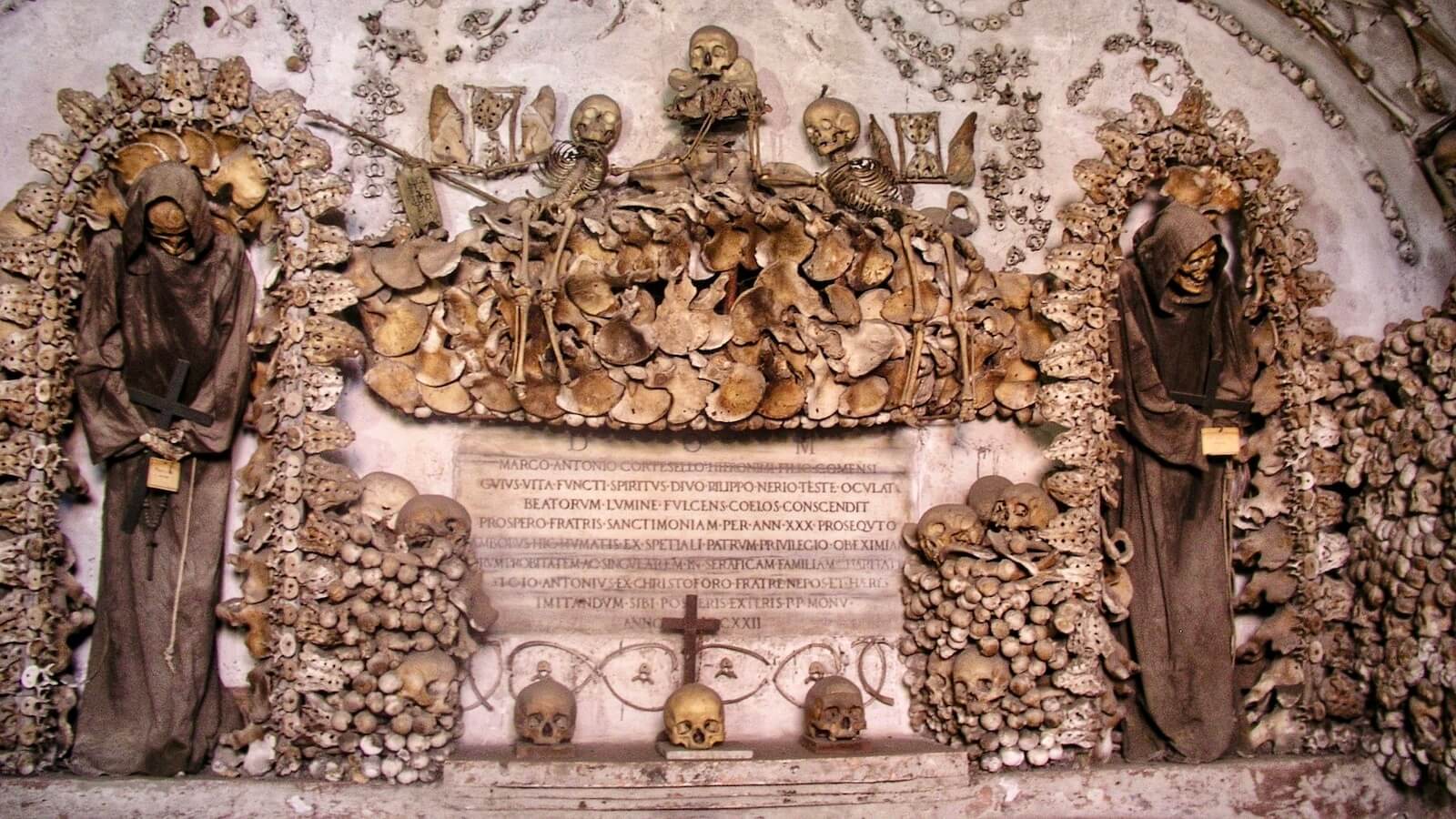
Caravaggio’s painting provides the perfect context for a visit to the Capuchin bone crypt, as its approach to mortality is fully in line with the motivations of the monks in creating the macabre underground chapels. When the Capuchins moved into their new complex on Via Veneto, they brought the remains of their fellow friars, previously buried in the grounds of their old church, with them. The distinctive skeletal decorations were created later in the 17th century. The crypt is divided into six separate chapels leading off a single corridor, each decorated with different types of bones taken from the skeletons of 3,700 defunct friars.
Despite appearances, this extraordinary underground is much more than a gloomy ode to death. Instead, it’s a profound meditation on the transient nature of human life and the complex philosophical relationship between body and soul.
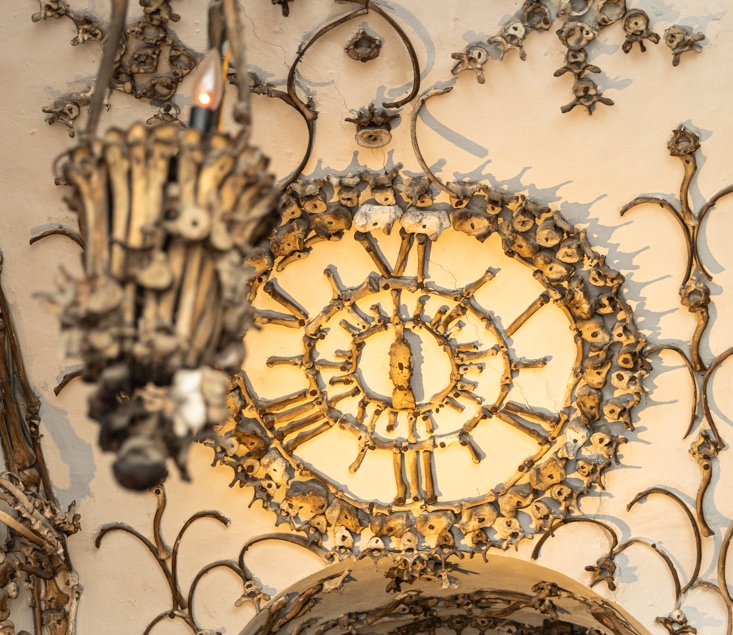
The first space you’ll visit is known as the Crypt of the Three Skeletons. An inscription recorded here sets the tone for the entire visit: Quello che voi siete noi eravamo; quello che noi siamo voi sarete – “what you are we once were; what we are you will be.” This is a classic example of a memento mori, a reminder of the fleeing nature of life and the inevitability of death. The message is clear: prepare your soul for the afterlife, as the body’s time on earth is limited.
The crypt gets its name from the 3 skeletons standing watch over proceedings in their robes, but look out too for some seriously creepy details including a clock without hands on the ceiling, and a Grim-Reaper-inspired skeleton gripping a scythe and scales – he’s weighing the deeds of men and determining their worthiness to pass into the Kingdom of Heaven.

This is the largest crypt in the underground complex, and features niches formed from various bones. The niches house the complete skeletons of Capuchin friars, who wear the distinctive brown robes and hood of the order. The pointed hood is known as a capuccio in Italian, and gives us the word for Italy’s most famous milky coffee – Viennese coffee enthusiasts in the 18th century noted the similarity in colour between the drink now known as a cappuccino and the Capuchin robe, and the name stuck!
18 crosses serve as gravemarkers on the bare earth floor, and according to tradition the dirt itself was brought from the Holy Land of Jerusalem four centuries ago. Look out for the symbol of the Franciscan order here too – the robed arm of a Franciscan monk and the bare arm of Christ joining to embrace the Catholic faithful, topped by a crown made of bones.
This crypt is named for the soaring wave of human pelvises that seems about to tumble down from the walls and engulf the chapel. Take a look at the wall outside this crypt and you’ll spy a rather rakish skeleton sporting a natty bowtie – made from a shoulder blade.

As the name of the chapel implies, skulls are the order of the day in this part of the crypt complex. An extraordinary array of crania fills up the space here. The back wall consists of a series of three arches made up of, you guessed it, skulls. Take a close look in the central arch and you’ll spy an hourglass made from various bones. And yes, it’s got wings, fashioned from the shoulder blades of one of the defunct Capuchin friars.

The final room in the underground complex closes the interpretive cycle with a painting depicting the Resurrection of Lazarus. The point is clear: in the Capuchin theory of spirituality, all the death we have been looking at with eyes wide with horror is just a prelude to the eternal life of heaven, which is made possible by the intervention of Christ. So whilst the bone crypt might seem macabre and horrifying to us, its real intent is actually the opposite – a life-affirming message of hope.
Dive Deeper into Rome