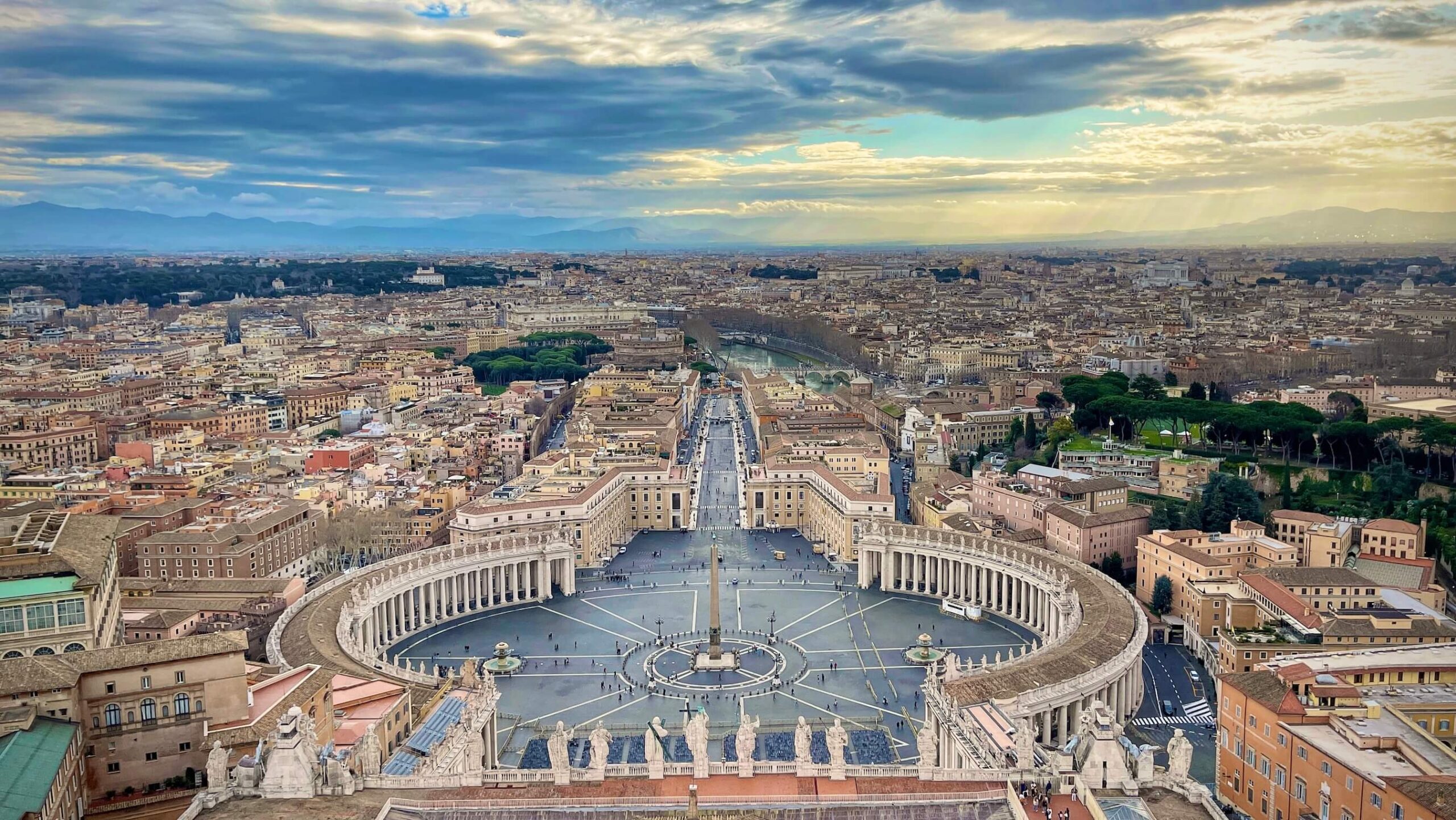
Look up almost anywhere in Rome and sooner or later your eyes will find it: the great dome of St. Peter’s Basilica rising above the city skyline.
Designed by Michelangelo in the sixteenth century, the dome has become one of the defining landmarks of the Eternal City. But it is only the most visible part of a monument whose story stretches back nearly two millennia, to the burial place of Saint Peter, the fisherman turned apostle whose tomb lies deep beneath the basilica’s altar.
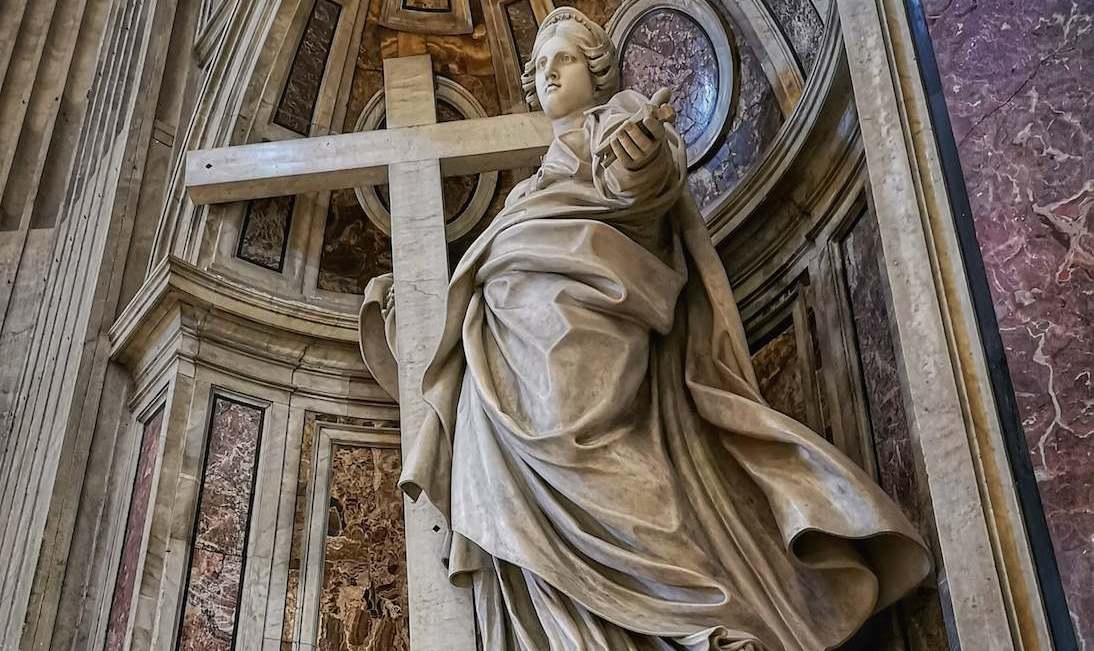
Over centuries, popes enlisted the greatest artists and architects of the Renaissance and Baroque to transform this sacred site into the grandest church in Christendom. Bramante, Michelangelo, Bernini, and countless others left their mark here, filling the basilica with masterpieces of sculpture, painting, and architecture.
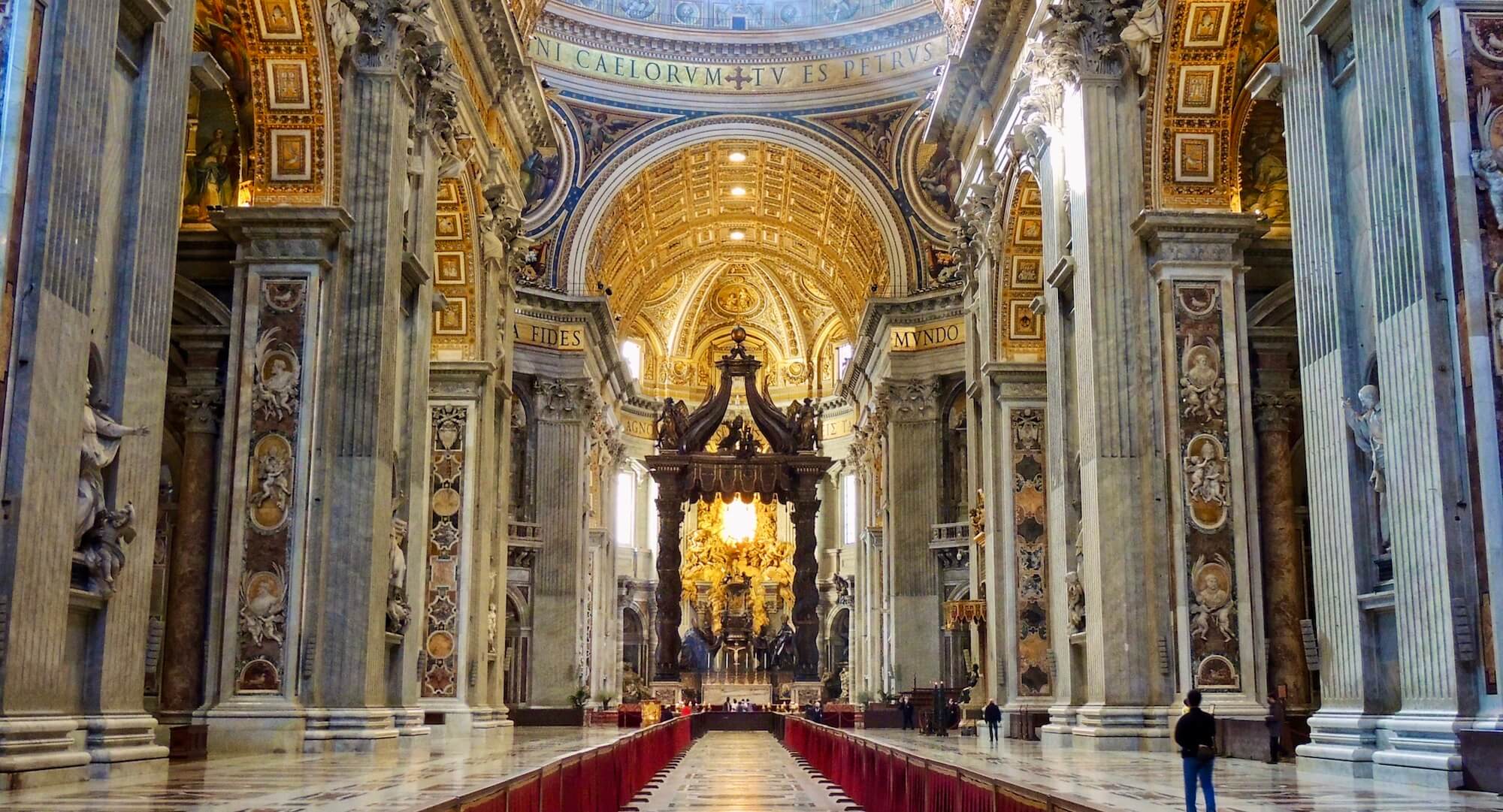
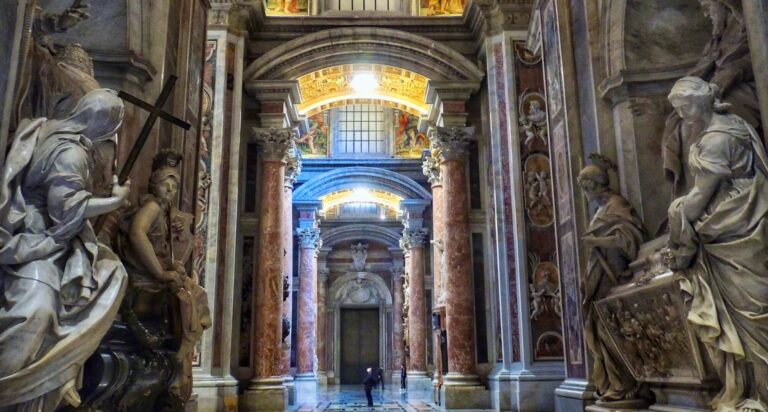
Step inside, and the sheer scale of the space is almost impossible to grasp at first: sunlight pours down from the vast dome high overhead, marble saints gaze from towering niches, and a colossal bronze canopy rises above the high altar.
Today, St. Peter’s stands not only as the spiritual center of the Catholic world, but also as one of the most remarkable artistic spaces ever created. But with its immense scale, countless chapels, and layers of history, knowing where to begin can be a challenge. In this guide, we explore the history of the basilica, the extraordinary works of art it contains, and everything you need to know to plan your visit.
 Want to explore St. Peter's Basilica with an expert?

From Michelangelo’s Pietà to Bernini’s baldachin, St. Peter’s is filled with masterpieces that reveal centuries of papal history and ambition. Our expert-led tours bring the basilica’s art and architecture to life.
Visit St. Peter's Basilica
Vatican Tours
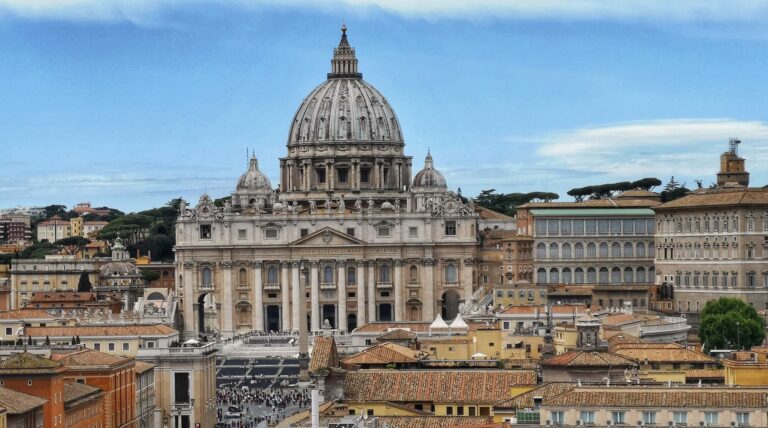
The current St. Peter’s Basilica – built over the site of the original 4th-century Constantinian church – was one of the most ambitious projects of the Renaissance. Taking more than 120 years to complete before its consecration in 1626, it united the genius of Bramante, Raphael, Michelangelo, and Bernini under a single soaring vision. At 190 meters long and crowned by a dome that rises 136 meters above the floor, it remains the largest church in the world, capable of welcoming 60,000 worshippers at once.
Yet St. Peter’s is far more than a feat of scale. Its chapels, sculptures, and altars form a living museum of faith and art, a place where the achievements of Renaissance and Baroque Rome come together in breathtaking harmony. No story of Western art can be told without a visit to St. Peter’s, and the basilica can lay a strong claim to being the most spectacular church in existence.

The story of St. Peter’s Basilica goes all the way back to the time of the Emperor Nero, and the notorious fire that razed Rome to the ground in 64 AD. Seeking a scapegoat for a devastating inferno that he may well have started for his own ends, Nero hit upon the idea of blaming the eccentric and widely mistrusted new religious sect known as the Christians. You can learn more about the megalomaniac Nero and his tyrannical reign by visiting the extraordinary Domus Aurea, or Golden House of Nero – one of our favourite things to do in Rome.
The unscrupulous emperor ushered in a wave of persecution, and hundreds of members of the upstart religion were tortured and crucified in the Circus of Nero. Circus means racetrack in Latin – you will probably encounter the largest ancient racetrack of all when in Rome, the Circus Maximus – but alongside the usual business of breakneck chariot races, the cruel tyrant decided to add some blood sport to the entertainment. The location of Nero’s Circus? Across the river to the north-west of central Rome on the Vatican Hill.
Amongst the Christians executed in the Circus was one of Christ’s oldest companions, a certain fisherman from Bethsaida by the name of Peter, whom Jesus himself had anointed as the spiritual leader of the new faith. Peter requested that he be crucified upside-down as he considered himself unworthy to emulate the Messiah’s own crucifixion on Golgotha 30 years prior. The Roman authorities agreed, and Peter met his end with his eyes inches from the earth of Circus.
The site of St. Peter’s martyrdom soon became an important place of worship for the clandestine Christian community, and soon after the emperor Constantine finally legalized Christianity in the year 313 AD, a great church was built over the apostle’s tomb with the Emperor’s blessing.
For over a millennium Constantine’s great basilica stood as the epicenter of Christianity, drawing Christians from across the world to Rome. The centuries inevitably took their toll, however, and by the opening years of the 1500s the church was in a state of terminal decline, slowly sinking into the foundations of the ancient circus.
Despite many influential voices calling for the Constantinian basilica to be repaired on account of its spiritual and historic importance, the ambitious Pope Julius II – whom you might know as Michelangelo’s patron in the Sistine Chapel – decided that the only thing to be done was to build a massive new state-of-the-art church on the same site. Sparing no expense, Julius entrusted the enormous responsibility of designing Christianity’s most important edifice to Donato Bramante, the father of High Renaissance architecture.
Julius and Bramante died within a year of each other however, and the architect’s controversial plan for a domed, centrally-planned building (that is, in the form of a cross with equal length arms) inspired by the Pantheon was put on ice.
Various illustrious Renaissance artists and architects, including Raphael, proposed designs to complete Bramante’s church, but the devastating Sack of Rome in 1527 meant that little progress was made for decades. In 1547, Pope Paul III surprisingly made the aged Michelangelo supervisor on the project, at the grand old age of 71. The decision proved to be a masterstroke.
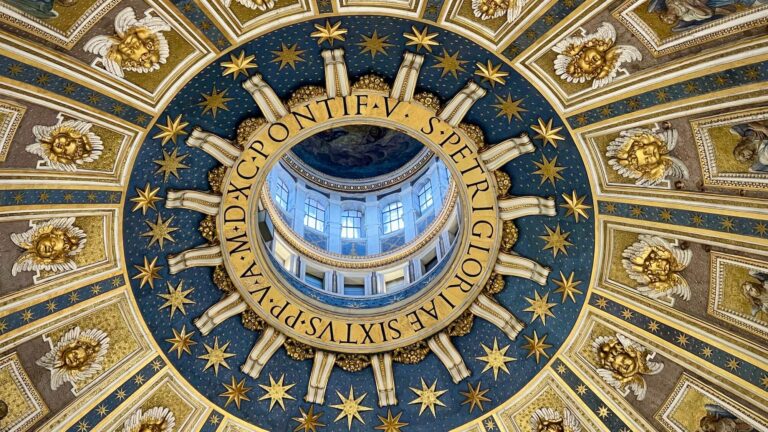
Michelangelo only took on the job only with great reluctance and after much grumbling, disdaining the plans of his predecessor Antonio da Sangallo. He soon set about entirely revising the plans for the church, and it’s to Michelangelo that we owe the basilica’s distinctive undulating interior and the massive dome crowning its center – still the world’s tallest, half a millennium later.
Michelangelo took inspiration from the two greatest largest domes in Italy at the time – the ancient Pantheon in Rome and Brunelleschi’s Renaissance Duomo in Florence – to come up with an elegant double-shelled construction that was capable of supporting the massive dome, which weighs in at an eye-watering 40,000 tonnes. The dome rises 136.57 meters, or 448 feet, over the floor of St. Peter’s basilica, and is supported by four mighty piers each fully 120 meters tall.
The new church took over 150 years to complete, and Michelangelo too died before the work was done. The basilica was given its final shape by Carlo Maderno, who added two more bays to the church in order to transform it into the shape of a more theologically resonant Latin cross and designed the facade.
Giacomo Della Porta was the final architect to have a hand in the work, finally completing the dome in 1590. If you want to see what Michelangelo’s church would have looked like in its entirety, keep an eye out for a fresco of the proposed project in the vestibule of the Vatican Library as you are making your way to the exit of the Vatican Museums from the Sistine Chapel.
A popular urban legend recounts that the Lateran Pact (the agreement between the church and the Italian state that brought the Vatican City into existence) forbids any buildings that reach higher than Michelangelo’s cupola to be built in Rome; whilst the oft-repeated claim has no basis in fact, it does seem something of an unwritten rule that St. Peter’s remains the reference point for any construction projects in the Eternal City, and to this day it remains the city center’s highest point.
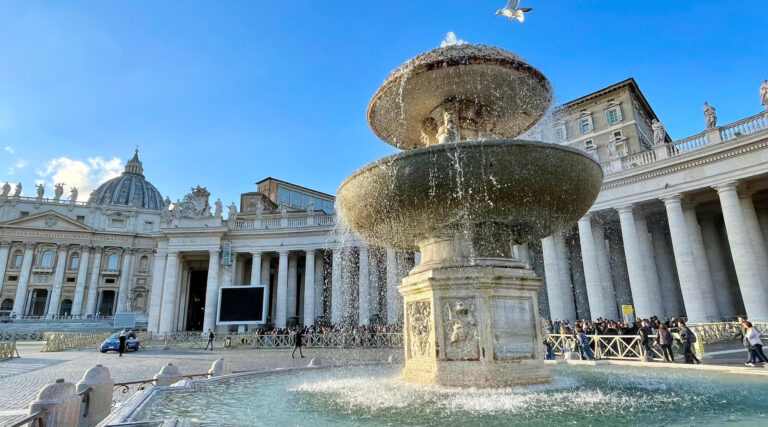
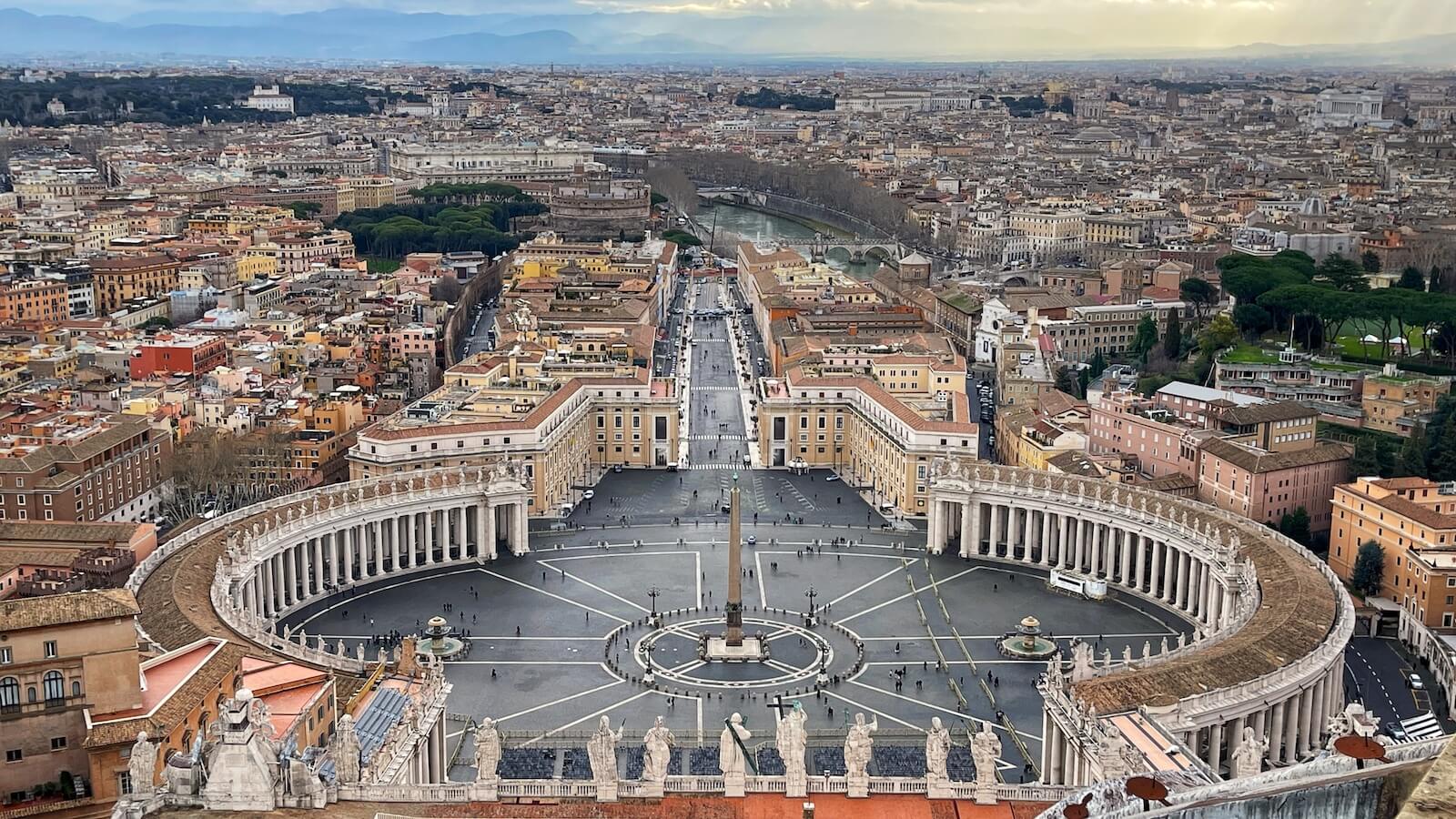
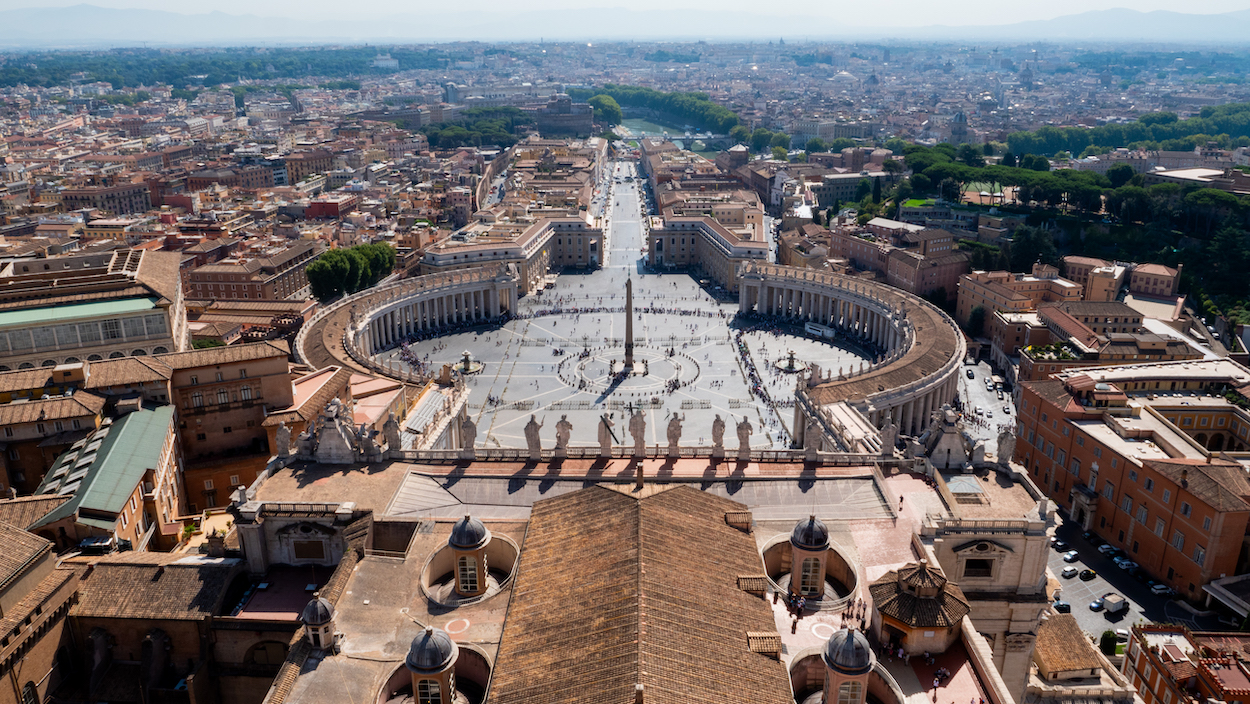
The last great architect to make an important contribution to St. Peter’s was the Baroque master Gianlorenzo Bernini, who constructed the famous colonnade that frames the piazza outside the church. Here two lines of massive columns swell outwards to seemingly embrace the waves of pilgrims that come to pay their respects at the tomb of St. Peter in an extraordinary piece of urban planning.
At the center of the piazza is a massive 40-meter-tall Egyptian obelisk brought to Rome in 37BC, re-erected in front of the basilica in the 1580s in an incredible feat of early-modern engineering. For centuries it was taken as common knowledge that a golden orb atop the ancient obelisk contained the ashes of Julius Caesar himself. To everyone’s disappointment, when the globe was opened during the 1580s operation it was found to be empty.
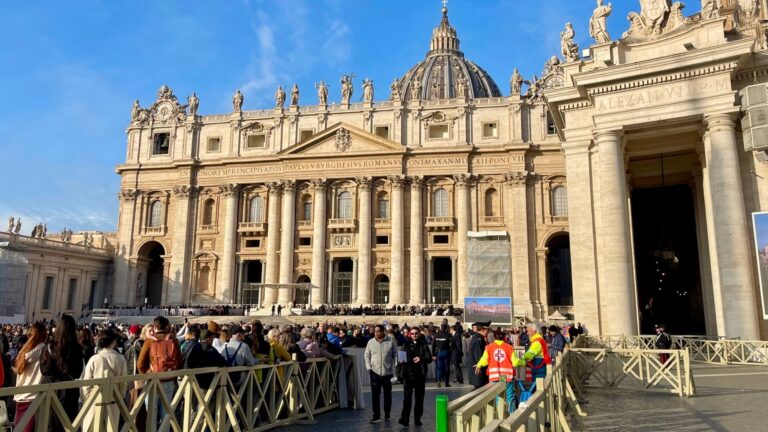
The 2025 Jubilee celebrations makes this year a very exciting time to visit St. Peter’s, which will be at the epicenter of all the action. While the atmosphere will be incredible, this will also make visiting St. Peter’s Basilica more crowded than usual, as millions of pilgrims flock to Rome. Expect longer security lines, restricted access on major event days, and possible closures for papal ceremonies. Planning ahead is crucial – consider booking a guided tour for priority entry and expert insights. That way, you won’t have to worry about unexpected disruptions putting a spanner in the works!
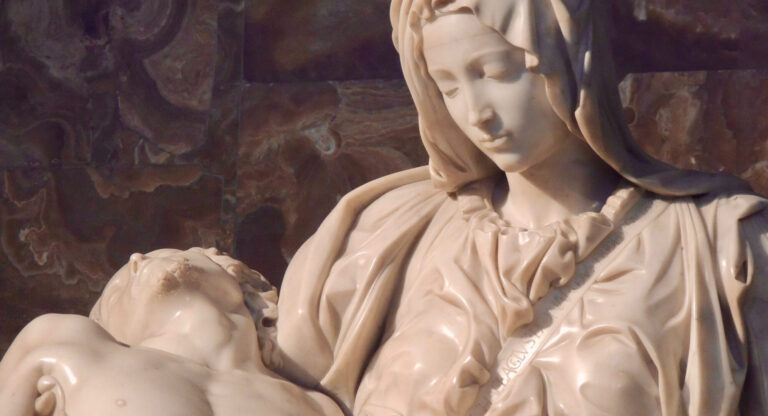
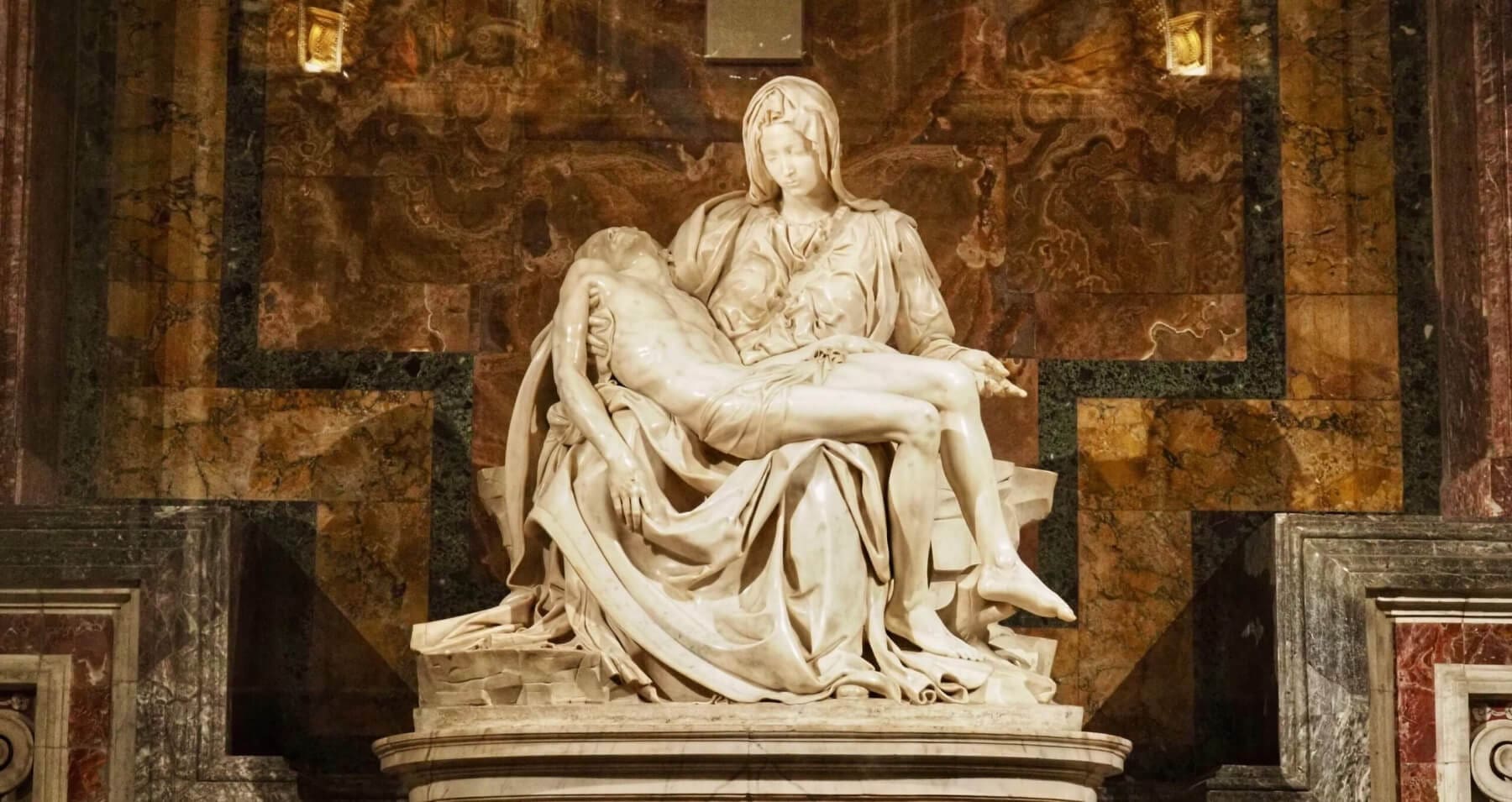
To decorate the vast new church, many of the finest artists of the Renaissance and Baroque eras contributed artworks to the interior. Amongst the highlights to look out for in St. Peter’s are:
- Michelangelo’s wonderful Pietà
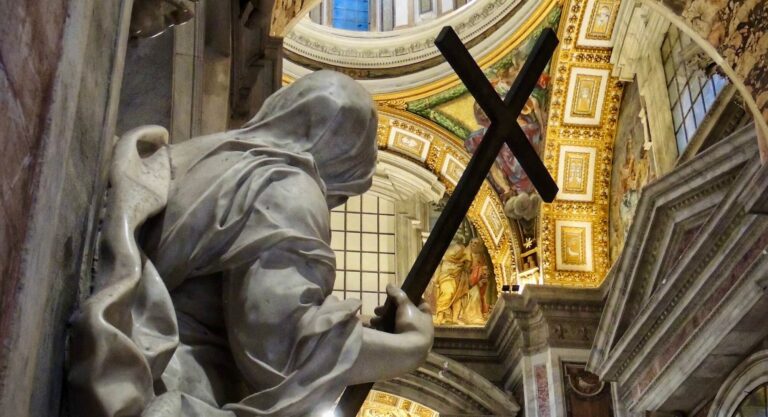
- Bernini’s Longinus and the Crossing Sculptures
- The Baldacchino
- John Paul II’s grave
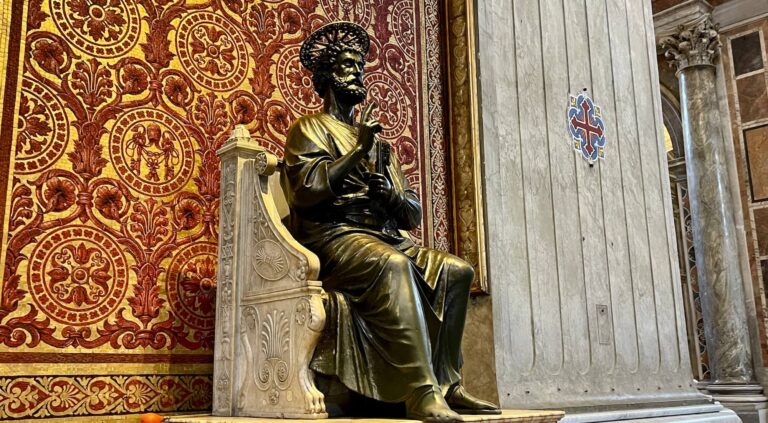
- Arnolfo di Cambio’s statue of St. Peter
- The Cathedra Petri, or St. Peter’s Chair
These artworks are only the beginning, however. To find out what you need to see, check out our detailed guide to the highlights of St. Peter’s below.
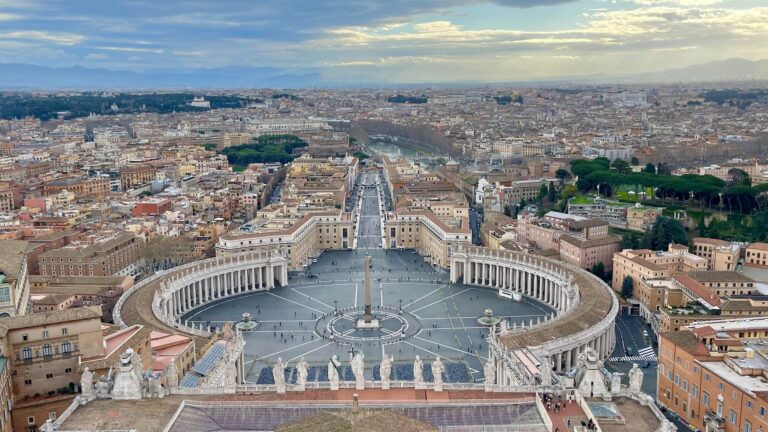
If you are up to the challenge, then be sure to climb to the top of the dome and admire one of the best views in all the city. The climb takes place in two stages. The first involves ascending up the interior of the dome itself, offering amazing views down into the basilica and a close-up look at the mosaics that decorate it (practically invisible from the floor of the church far below).
If you want to reach even higher and you’re feeling fit, then you can keep going for another 320 steps right up to the very top of the cupola – the panorama over the city from the top has to be seen to be believed.
To find out how to climb the dome of St. Peter’s and what you need to look out for on the ascent, check out our guide to climbing the dome of St. Peter’s Basilica in Rome below.

St. Peter’s Basilica is open from 7AM until 7PM each day. To avoid the worst of the crowds, we recommend that you time your visit either very early in the day (ideally before 8AM) or shortly before closing time. I must admit that I’m not much of an early bird, so you’ll usually find me in the church around sunset. The light in the basilica at this time is particularly lovely.
Whatever you do, don’t arrive in St. Peter’s Square in the late morning or afternoon and expect to breeze in. This is even more true in 2026, as massive crowds of pilgrims are making their way to the Vatican this year.
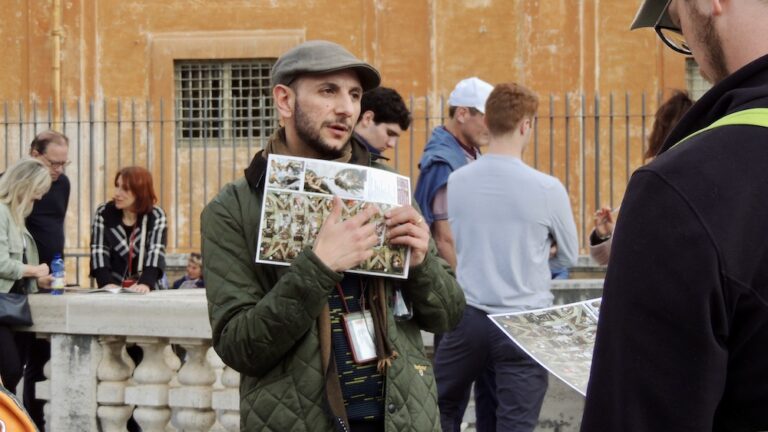
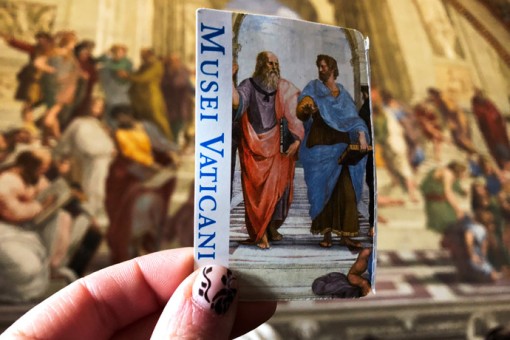
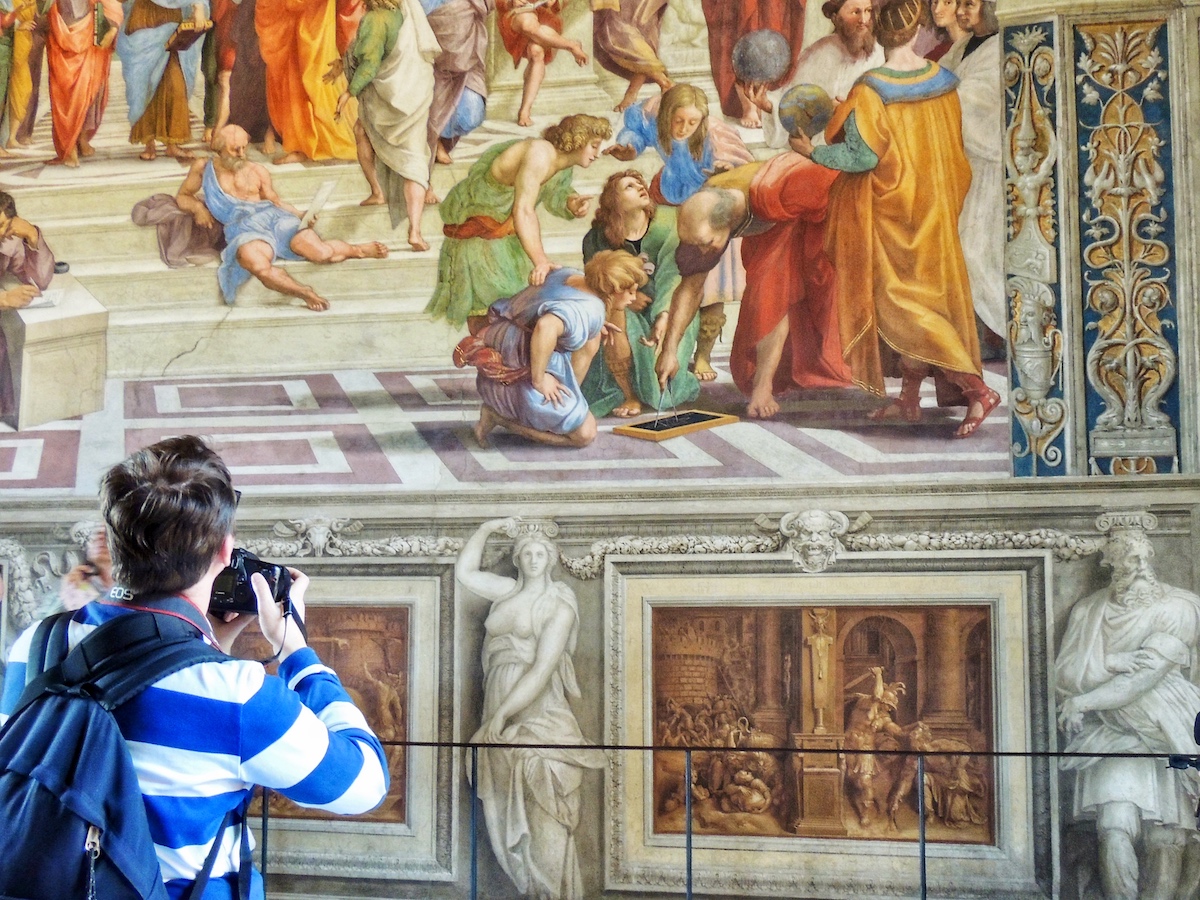
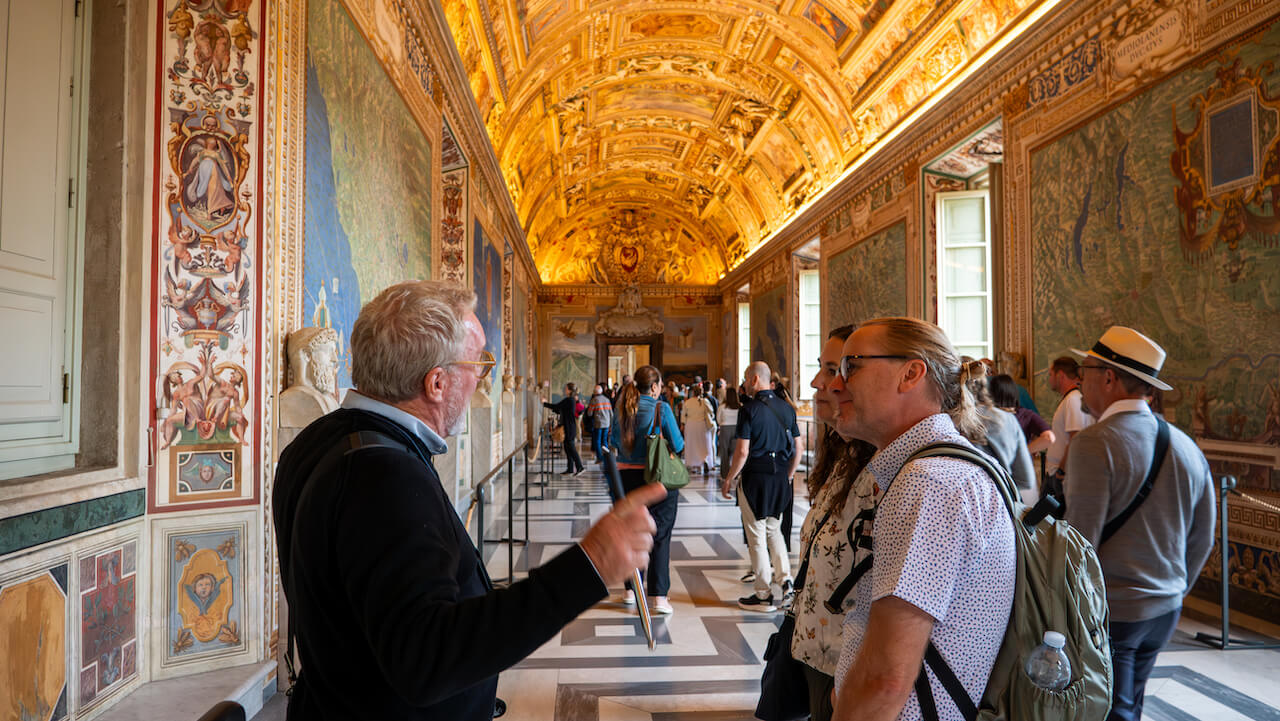
It’s likely that you will want to visit the Vatican Museums alongside St. Peter’s when in Rome. Usually you can’t enter St. Peter’s directly from the Vatican Museums – you will have to exit and then make your way around the walls to St. Peter’s square, where you’ll have to join the long queue. But if you take a special guided Vatican tour, you will be able to bypass this and reach the basilica directly from the Sistine Chapel via a special exit, skipping the lines.
Remember the dress code. If your shoulders and knees aren’t covered, you will be refused admission. So leave the hot-pants at home and bring a scarf or shawl.
We hope you enjoyed this guide to St. Peter’s Basilica! If you are ready to visit for yourself, Through Eternity tours offer expert-led small group and private itineraries to St. Peter’s and the Vatican Museums. Check out our range of tours here!
Ready to visit St. Peter's?
Book Your Tour Here!