In our daily lives, how many times have we wished we were someone else or somewhere else?
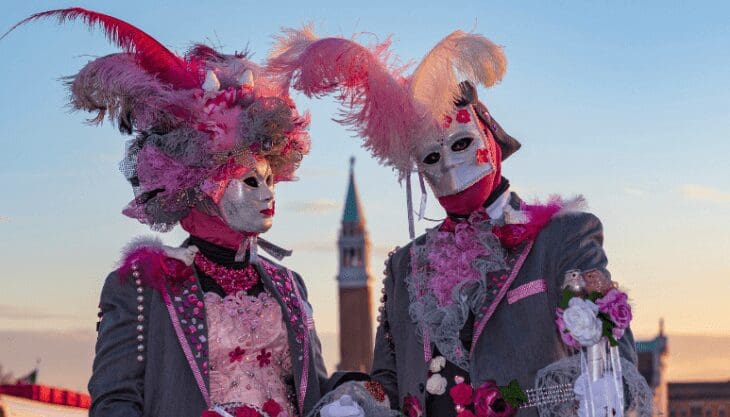
How often have we wanted to put on a mask and be unrecognizable to skip work or avoid some people we don’t like much? Unfortunately, our society is overloaded with pressures, and sometimes we forget about life’s pleasures. But what if I tell you that once (or perhaps more) in a year, you can escape and pretend to be another version of yourself? It is not magic, it’s Carnival.
In particular, the Venetian Carnival occurs yearly, following the Catholic Calendar. So, when we wonder about the importance of this Celebration, we consequently doubt the importance of other ones, such as Christmas or Easter. And, come on, are we really in the position to need a reason to celebrate? Everyone needs some fun!
Venice Tours
Discover the Delights of Venice
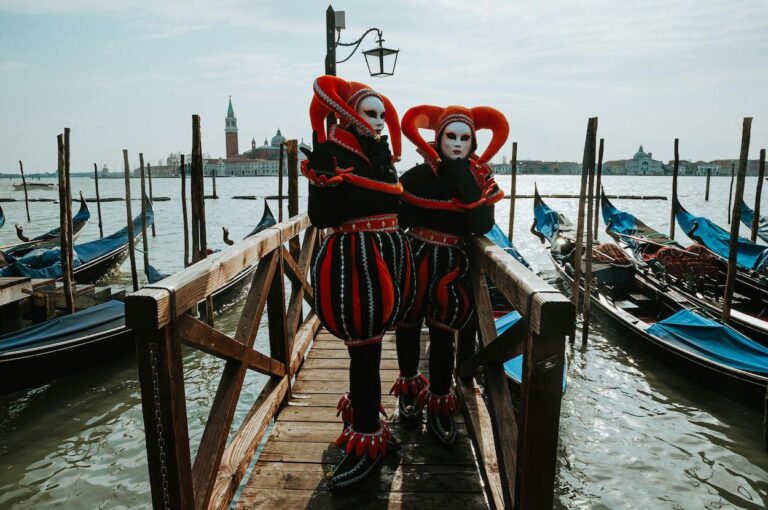
The birth of the Venice Carnival has common roots with the other ones celebrated worldwide. This celebration was already present in the past, and it was used to mark the end of winter and welcome the Spring.
People used to honor the prosperous Spring with huge parties, re-inventing and freeing themselves. Carnival has a powerful connection with religion too. In 1094 we can recall the first evidence of Carnival in Venice, in the said year, Doge Falier allowed people to participate in celebrations around Lent. The contemporary word ‘Carnival’ is derived from the Latin term “carnis laxatio” which refers to “the abandonment of meat”, linking it to the Catholic tradition of giving up meat during Lent.
However, the rising pressure of the Church in the XIII century ordered to restrict the celebration in a shorter and better defined time: Carnival had to be celebrated for a few days before Ash Wednesday. In an interview for Ca’ Foscari, the professor Gilles Bertrand, who is one of the top experts regarding Carnival, stated that the real Venetian Carnival shaped around the XIV century after the” Fat Thursday “to celebrate the victory of Venice on the rival city of Chioggia (1378-1381). The day substituted the usual celebration related to the Three Marys (Tre Marie).
This tradition, which has been revived today in new forms, could be considered one of the earliest organized carnival-like celebrations sponsored by the authorities. It took place on February 2, the Feast of the Purification of the Virgin, and was linked to the legendary retaliation against pirates who, around the year 973, had kidnapped twelve poor brides to whom the Doge had granted a dowry.
Every year, the liberation of these young women was commemorated with a boat procession to Santa Formosa, organized alternately by different districts. Over time, this waterborne parade was complemented by a land procession and three days of banquets and festivities, held from January 30 to February 2. These celebrations strengthened civic unity and provided a prominent role for women in the festivities.
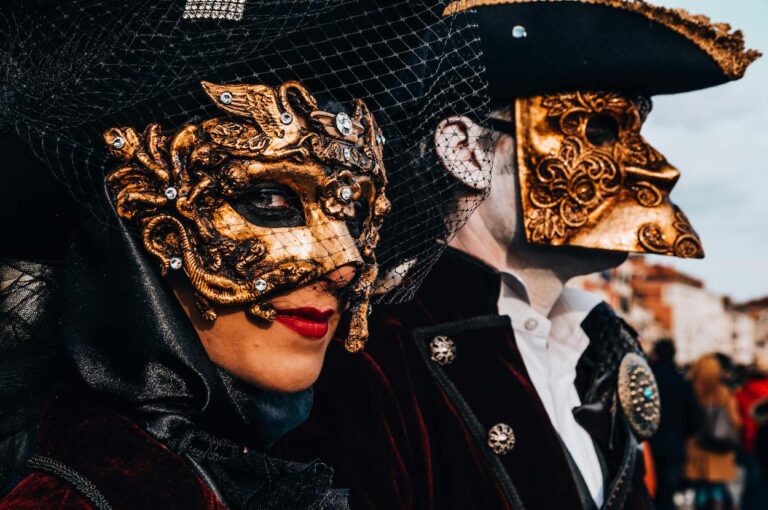
But as much as Carnival was about fun and freedom, there were strict rules to ensure that it didn’t spiral into chaos. You may not know that all the people who dressed up for Carnival had to respect some moral rules that are still valid today. For example, wandering around Venice, have you ever noticed that if you speak to someone wearing a mask while dressed in regular clothes, they won’t respond with words but only with gestures? |
This is because, traditionally, masked individuals were not allowed to speak to one another, at most, they could whisper.
Moreover, as you walk through Venice, you may have noticed people frequently bowing to each other. This custom dates back to the ancient Carnival tradition, where masked figures were expected to bow upon every encounter.
The same respect observed among those in costume should also be maintained by those without masks. So, don’t try to uncover the identity of the person behind the mask or force them to speak. Doing so would break the code!
During Carnival working was forbidden for every Venetian. Anyone who dared to work or engage in useful activities during Carnival could be arrested and taken to church. Or, in a much more entertaining twist—after all, it was Carnival—the industrious worker was forced to drink copious amounts of wine and crowned the King or Queen of Carnival!
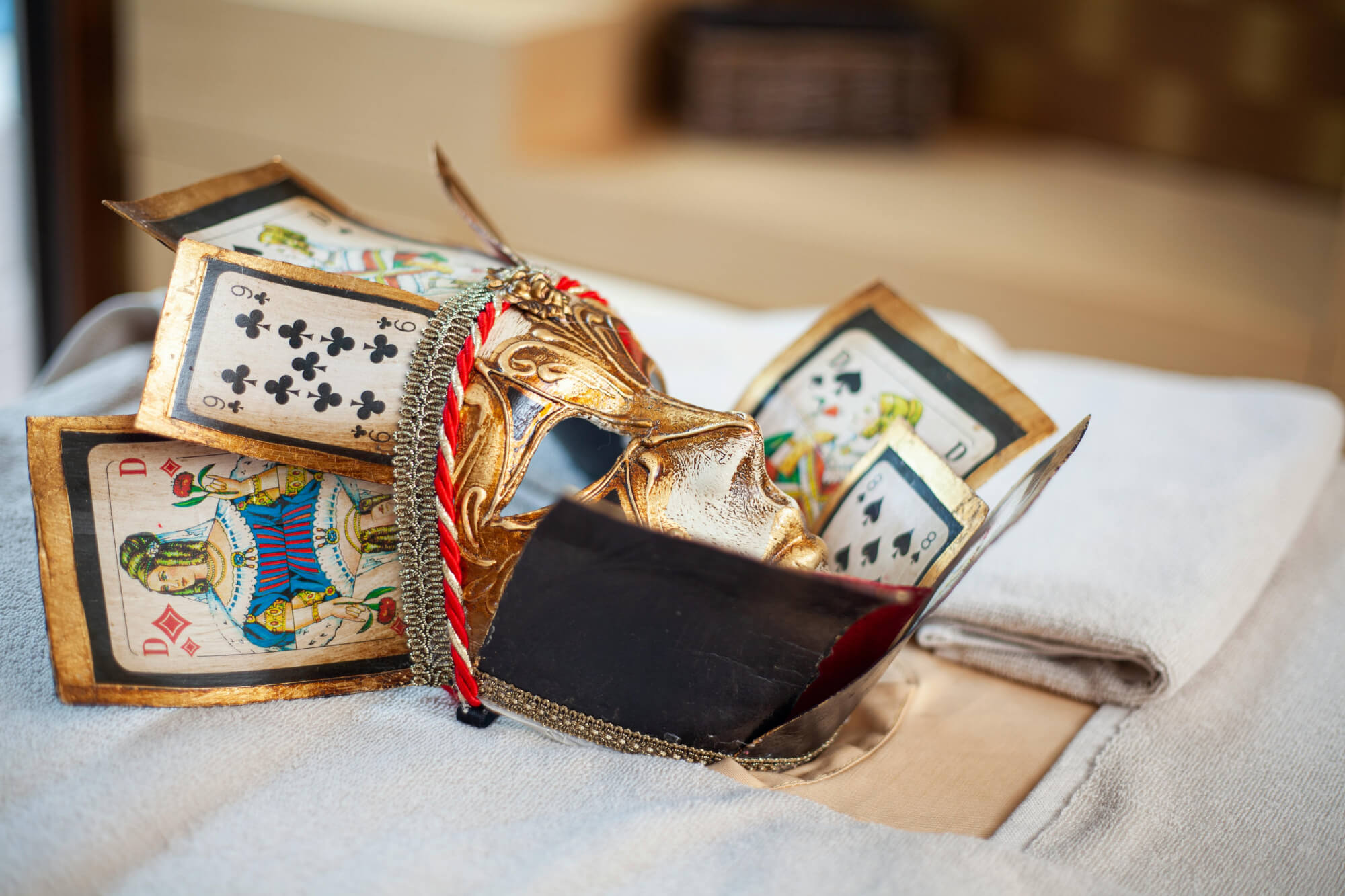
Some masks allowed Venetians to maintain anonymity during romantic escapades, transgressions, or even while committing crimes. Everyone took advantage of this, including those who were supposed to uphold morality (such as priests. )
For this reason, starting in the 14th century, the Republic sought to regulate the use of masks throughout the year. Masked individuals were forbidden from causing disturbances, entering churches, carrying weapons, or dancing in public outside the Carnival period. Masks were also prohibited for prostitutes, and it was strictly forbidden to dress as religious figures.
In the early 18th century, masks were banned from Venetian gambling houses (Ridotti). A few decades later, women were prohibited from entering theaters unless they were wearing a mask.
It was only under Austrian rule that Venetian masks were restricted solely to the Carnival period and private celebrations. Today, however, masks can be worn freely around Venice at any time of the year, though, of course, their true magic still belongs to Carnival.

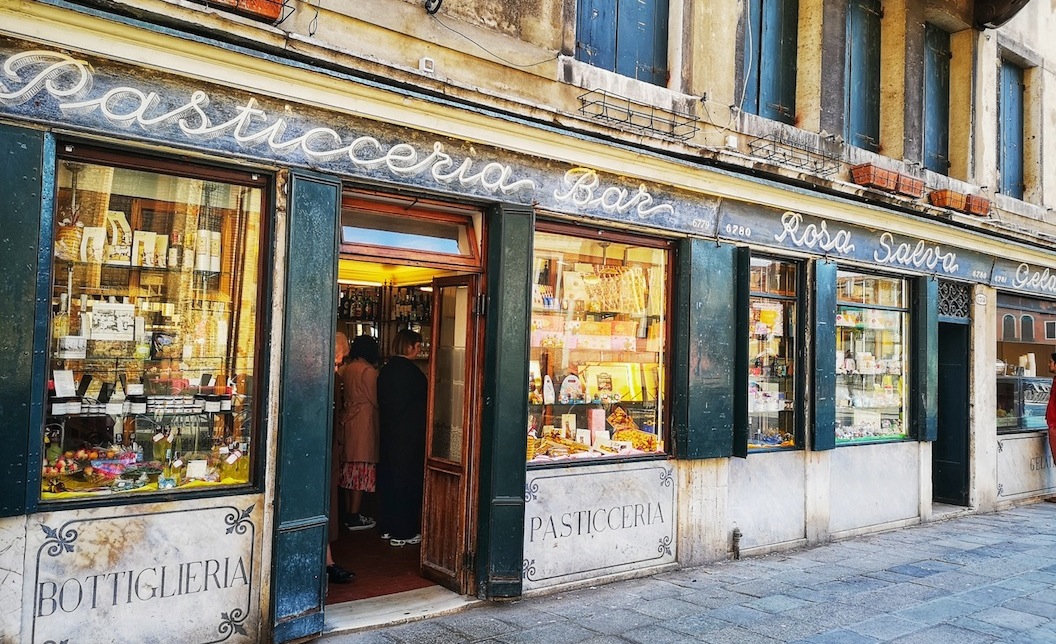
Frittelle or fritoe, are the greatest sweet treats of this period. The Venetian ones consist of a soft yeast dough enriched with raisins and pine nuts. You can’t miss the ones prepared at Tonolo (Calle S. Pantalon, 3764, 30123 Venezia VE) or Rosa Salva (Sestiere di S. Marco, 950, 30124 Venezia VE).
” Galani or Chiacchere “are thin crumbly, they are fried and spread with sugar.
” Castagnole” instead are small fried dough balls, resembling chestnuts in appearance. They can be filled with pastry cream or whipped cream, but also with rum or chocolate.
As the Carnival approaches, there’s no better way to enjoy the festive spirit than through Venice’s sweet treats – a true taste of tradition.
We hope we’ve given you some inspiration to help you plan your trip to Venice! Through Eternity Tours offer a range of insider itineraries in the Floating City, so if you’re visiting Venice this year check out our website or get in touch with our expert travel planners today!
Book Your Venice Adventure!