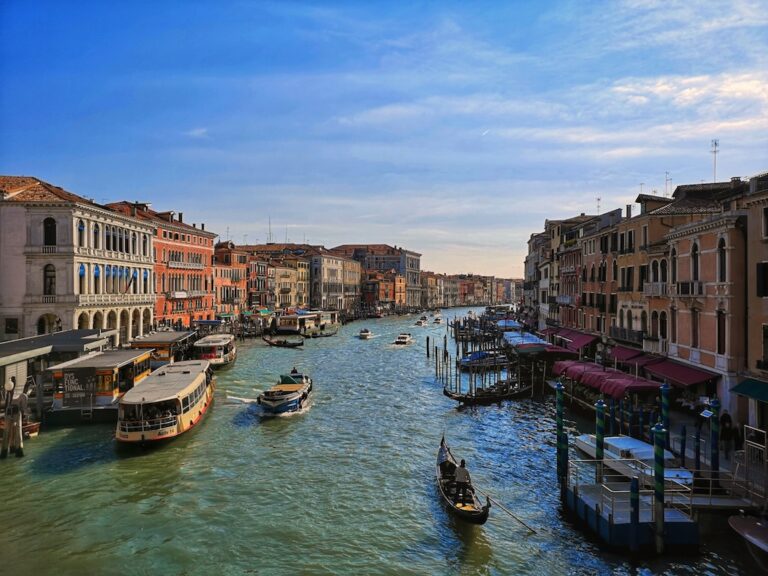
Nothing heralds the passing of winter like the Venetian Carnival, and for curious travellers the spectacular annual celebration of the city’s special spirit is a must-see.
Every Spring people from across the globe descend on the floating city to take part in this unique celebration, a joyous riot of colour, sound and spectacle. Extraordinary costumes, elaborate masks and fascinating historical re-enactments all make Venice’s two-week long party an unforgettable experience.
But what do you really know about Carnival? How has the festival evolved through history and what are the centuries-old traditions that bring it to life? In a word, what is Carnival behind the mask? Find out with our Q and A!
 Want to experience Carnival with an expert?

Venice Carnival is at its most fascinating when you understand what you’re looking at. Behind the masks, costumes, grand palaces, and elaborate rituals lies centuries of Venetian history, art, and social tradition. Our private and small-group Venice tours are led by resident art historians who can put the spectacle into context, from the symbolism of the masks to the history of Piazza San Marco and the traditions that still shape Carnival today.
Our Venice Tours
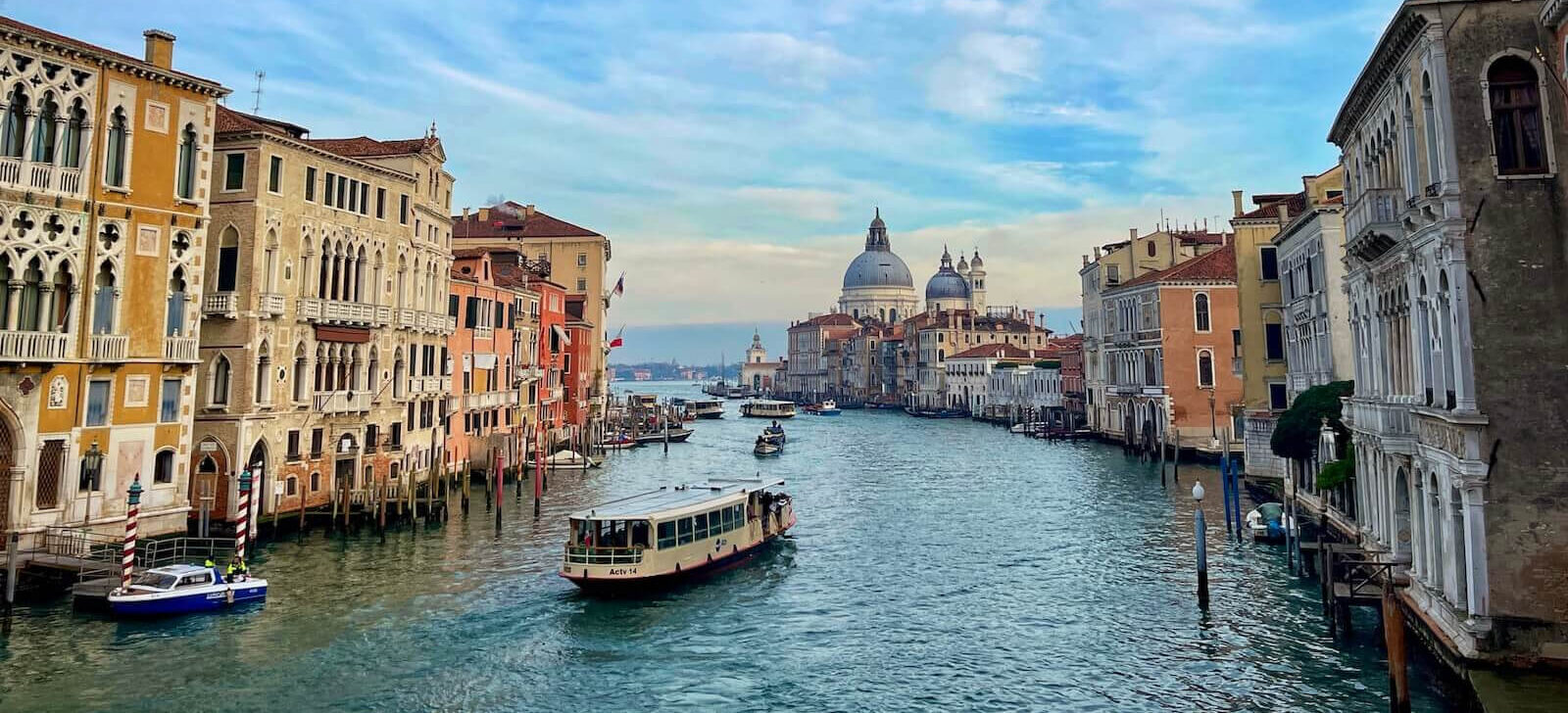

The Venice Carnival (Carnevale di Venezia) is Italy’s grandest pre-Lenten festival, a celebration of masks, costumes, and centuries-old ritual staged across Venice, Italy, chiefly in Saint Mark’s Square and along the Grand Canal. In 2026, the Venice Carnival ran from 31 January to 17 February, with the 2026 theme “Olympus – At the Origins of the Game” linking this beloved Venetian Carnival to Italy’s Winter Olympic year.
 Key Facts: Venice Carnival 2026

- Dates: 31 January – 17 February 2026
- Closing day: Shrove Tuesday, 17 February
- Location: Venice, Italy
- 2026 Theme: “Olympus – At the Origins of the Game”
- Cost: Most street events free; masked balls from around €700
- Best days: Fat Thursday (12 February) and Shrove Tuesday (17 February)

The Venice Carnival 2027 runs from Saturday, January 30 to Tuesday, February 17 2027. The festivities build across two-and-a-half weeks toward Shrove Tuesday – Martedi Grasso, or ‘Fat Tuesday’ – the last day of indulgence before the fasting of Lent begins on Ash Wednesday.
The opening weekend centres on the Festa Veneziana, a flotilla of decorated, candlelit boats parading down the Grand Canal, while the famous Flight of the Angel (Volo dell’Angelo) sees a costumed performer descend from the Campanile into a packed Saint Mark’s Square to declare the Carnival officially open. The 2026 edition took the theme ‘Olympus – At the Origins of the Game,’ a nod to the Olympic spirit as Italy hosted the Milano-Cortina Winter Games.
How Much Does It Cost to Attend the Venice Carnival?
The great majority of Venice Carnival events are free to attend: street performances, the parades through Saint Mark’s Square, and the mask contests cost nothing beyond the trip itself. Beyond that sits a paid tier for the festival’s grandest traditions. Historic masked balls run roughly €700–5,000. Il Ballo del Doge, Antonia Sautter’s legendary gala, starts from around €800; the Official Carnival Dinner Show at Palazzo Vendramin-Calergi runs approximately €700–800; themed dinner-shows elsewhere in the city start around €550. Artisan mask rental or purchase varies by atelier. Each is best thought of as an investment in a once-a-year spectacle, not a routine ticket price. One practical note: Venice’s day-tripper access fee has only ever applied on spring and summer dates, so it won’t affect a winter visit for the festival.
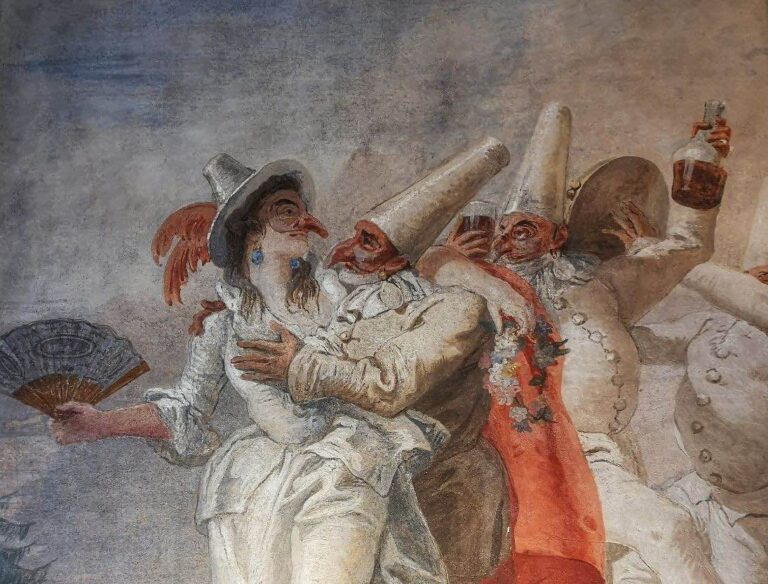
The tradition of Carnival is directly related to Lent. This is the period of religious obligation leading up to Easter when Christian communities were historically expected to follow strict dietary guidelines in imitation of the 40 days and 40 nights that Christ spent fasting in the desert and resisting the Devil’s temptations as recounted in the Gospels.
The observance of Lent is recorded in Early Christian sources, and is described as a universally practised period of fasting preceding the celebration of Easter by the 4th century AD. Rich foods were off the menu for the duration, meaning that all manner of fats, sweets, meat and alcohol could not be consumed. In order to rid their pantries of these foodstuffs before Lent began, banquets and parties frequently preceded the period of gastronomic denial. This is why the last day before Lent is known as ‘Mardi Gras’ or ‘Far Tuesday.’
Venice’s carnival is traditionally considered to date back to the year 1162, when the city threw an impromptu party in Saint Mark’s Square to celebrate a glorious military victory over the rival patriarchate of Aquileia. This party soon became a regular event in Venice that coincided with the pre-Lenten festivities. The popularity of the Venice Carnival grew steadily over the centuries, and by the 16th century had become one of the most unmissable events on the social calendar of Baroque Europe for the era’s pleasure-seeking aristocratic classes. The Carnival was outlawed for excessive licentiousness by the Austrian Emperor Francis II in 1797 and only revived in the 1970s, from which time it has grown from strength to strength once again.
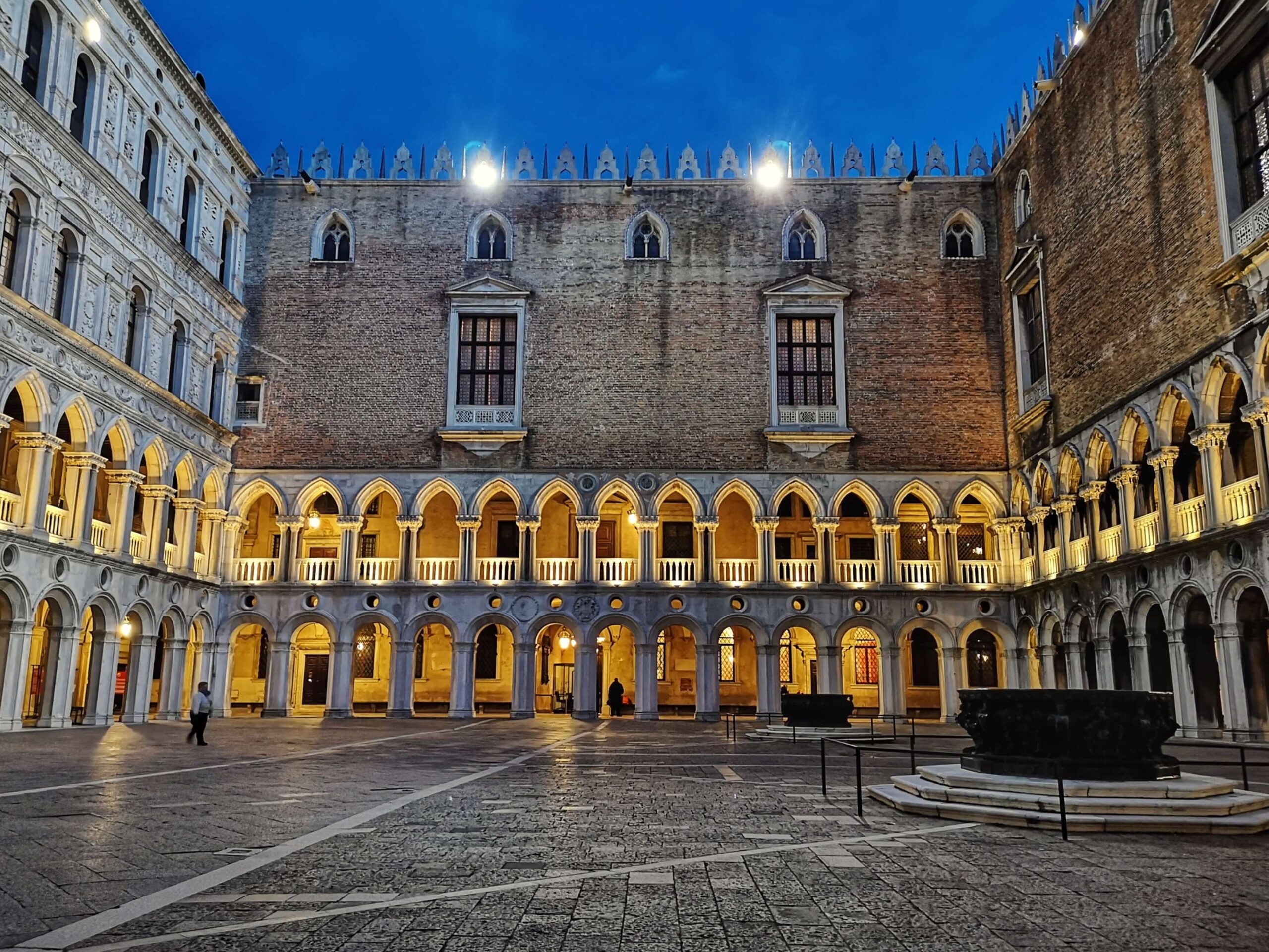
Other rooms are home to more glorious examples of Venetian art: Veronese’s Juno Bestowing Her Gifts on Venice provided the backdrop for the scheming of Venice’s ruling council of ten in the Sala Consiglio dei Dieci, whilst works by luminaries like Titan, Tintoretto and Tiepolo light up further chambers. The grandiose 15th century Scala dei Giganti, meanwhile, is one of Italy’s most beautiful staircases.
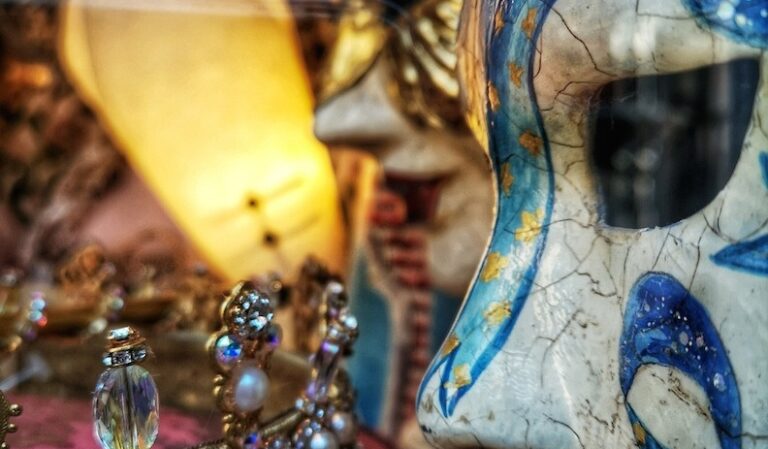
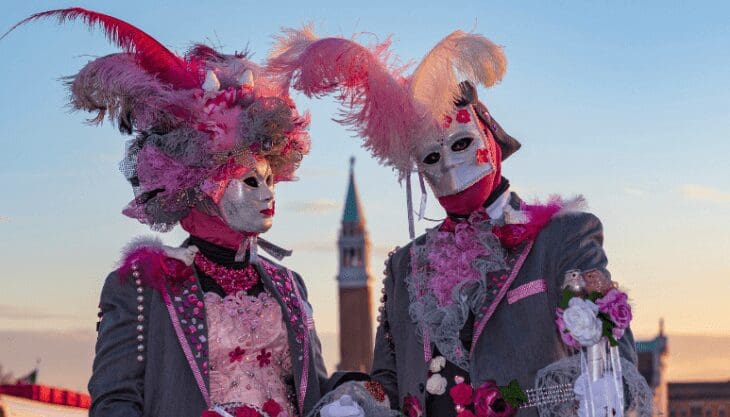
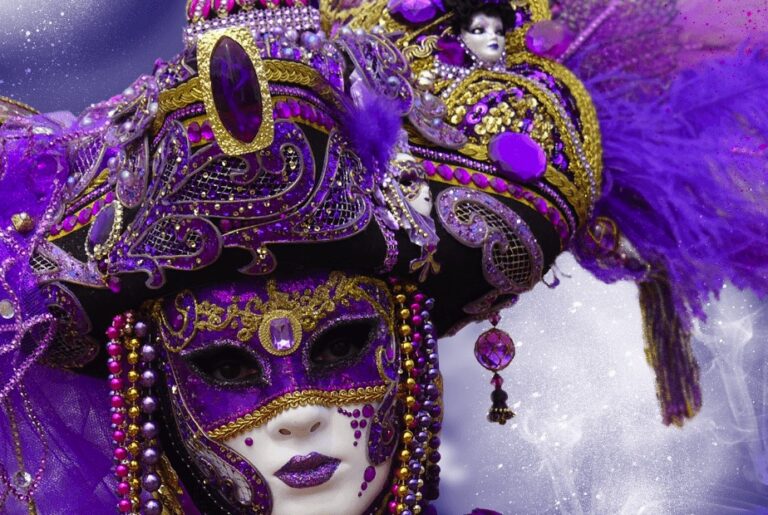
The origins of the Venetian penchant for wearing masks and disguises during Carnival are shrouded in mystery, but it has been convincingly argued that the practice is a sociological response to the strict class hierarchies and social structures that governed Venice in the Early-Modern period. These days masks are the preserve of the legions of revellers who descend on the Floating City each Spring, but they weren’t always confined to the Carnival.
Indeed, the luxury loving Venetians became so fond of the anonymity the masks gave them that they wore them whenever they could, facilitating secret trysts and gender bending parties, trips to the brothel and the gambling house.
Initially their use was permitted between St. Stephen’s Day on December 26th and Shrove Tuesday, when sumptuary laws banning lavish dress were suspended, but the rules were elastic and the periods during which wearing masks was allowed increased dramatically over time. Masks became so ubiquitous that they even had an official function in affairs of state, allowing votes, trials and ballots to be undertaken anonymously.
When in Venice make sure to climb up the campanile (tickets €8) for spectacular views across the city and its endless canals from the observation deck above. If you’re not feeling energetic, then fear not – a lift will whisk you easily to the top.
What Are the Different Kinds of Masks Worn During the Venice Carnival?
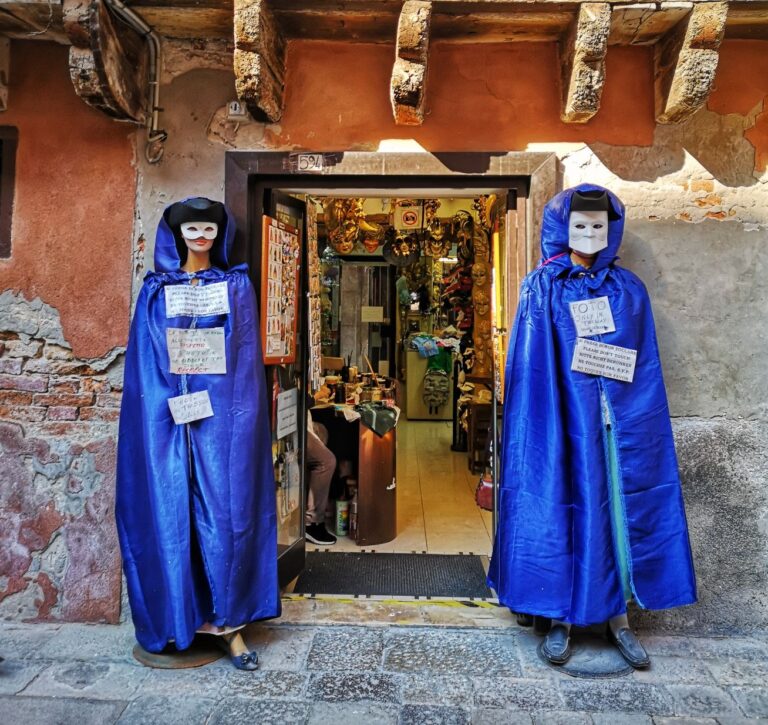
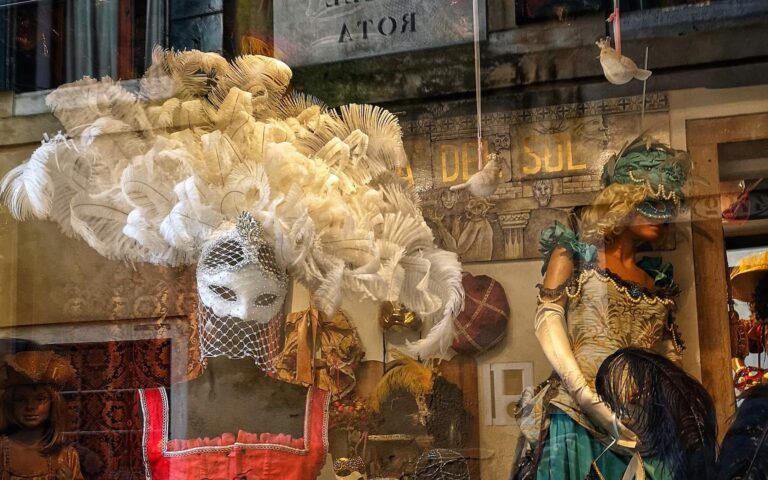
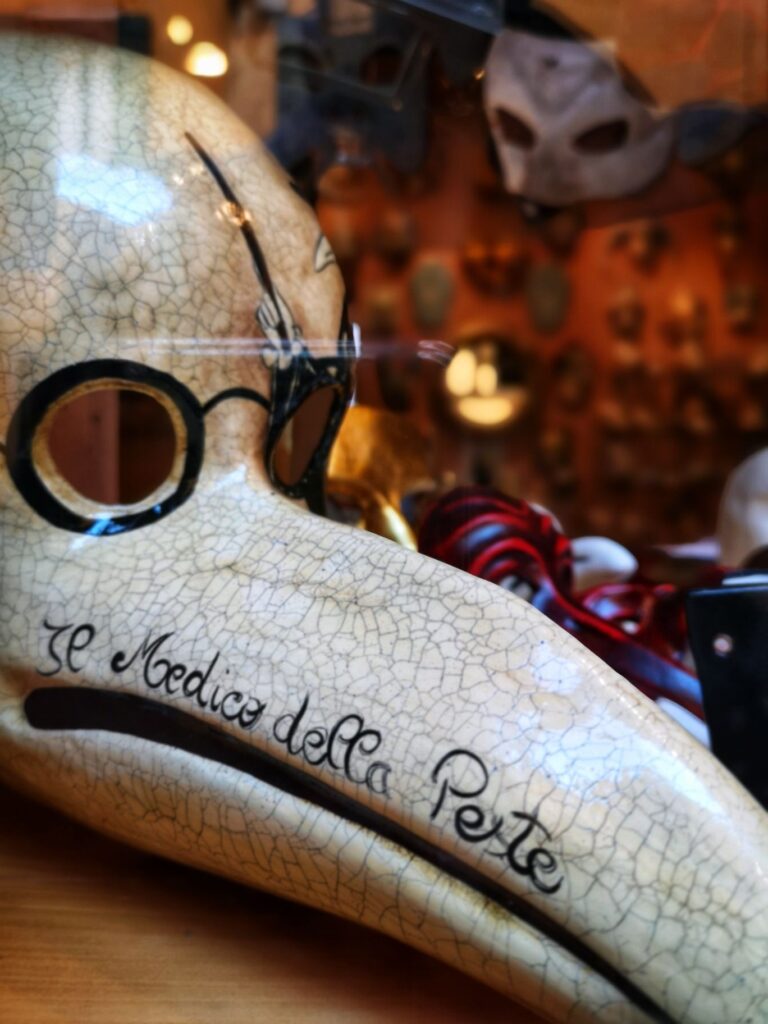
You’ll encounter a bewildering variety of masks on show when you come to the Venice Carnival, but certain typologies recur again and again. From the relatively simple masks that were widely worn during carnival in the past to more elaborate attire that derives primarily from the commedia dell’arte tradition, these are the main types of masks to look out for:
Bauta
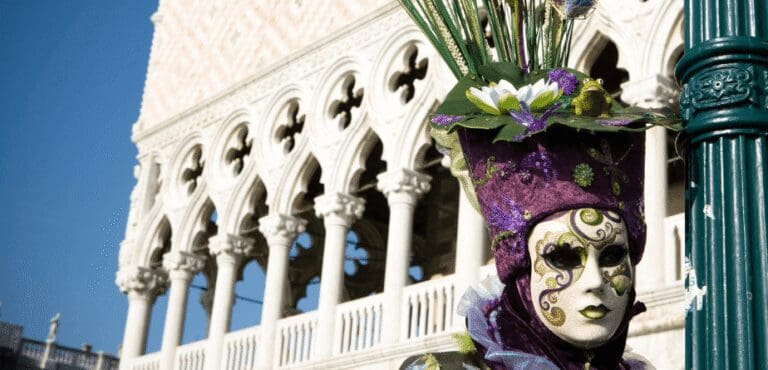
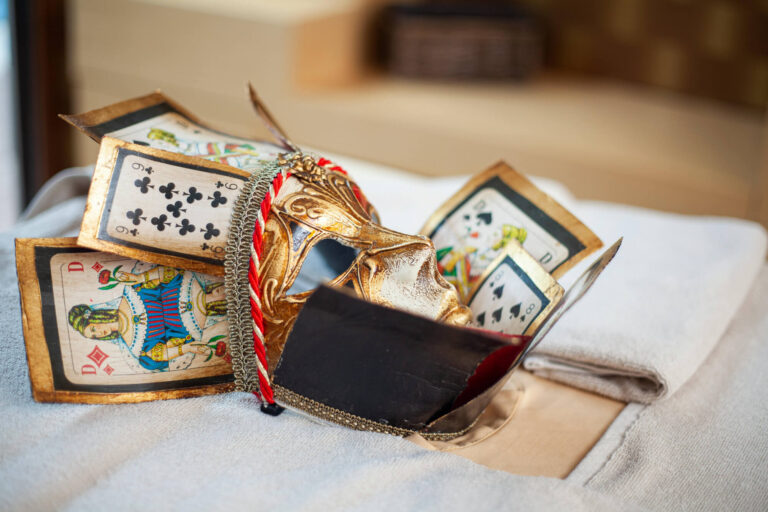
This simple white mask featuring a large nose, strong jaw and no mouth is one of the most well-known types of Venetian masks, traditionally worn with a black cape known as a tabarro and a tricorn hat. The bauta was the most common type of mask worn in the early-modern Carnival, and was also worn by members of Venetian councils during votes when anonymity had to be maintained.
Colombina
The colombina is a half-length mask that covers only the wearer’s eyes and nose, usually richly adorned on the cheeks with coloured stones and feathers. The mask is named after a female character in the commedia dell’arte tradition and is historically worn primarily by women. The story goes that an actress performing the role considered herself to be too beautiful to cover her face entirely, and this half-length mask was created just for her as a compromise.
Medico della Peste (The Plague Doctor Mask)
With its long beak and wide, staring eyes, the Plague Doctor mask is one of the most characteristic and striking sights you’ll encounter at the Carnival. The form of the mask was invented by 17th-century French doctor Charles de Lorme, who came up with it as part of a medical costume to be worn whilst treating plague victims (think of it as an early and somewhat ineffective form of PPE). Its use as a carnival mask is not historical, and dates from the revival of the festival in the 1980s.
The Volto (Larva)
The Volto, also known as the Larva, is the classic full-face Venetian mask, traditionally white and often worn with the Bauta’s dark cloak and tricorno. Its name comes from volto, meaning “face,” while larva derives from the Latin for a ghost or spectral figure. Designed to conceal the wearer’s identity, the mask became closely associated with the Bauta disguise and its promise of anonymity. Today, the smooth white face is one of the most recognisable images of Venetian Carnival.
The Moretta
The Moretta is a small oval mask covered in black velvet, historically worn by Venetian women and held in place by a small button gripped between the teeth rather than by ribbons or straps. The arrangement left the wearer unable to speak, earning it the name servetta muta, or “mute servant.” Originally of French origin, the Moretta became fashionable among Venetian women, with its enforced silence lending the mask an air of mystery and flirtation.
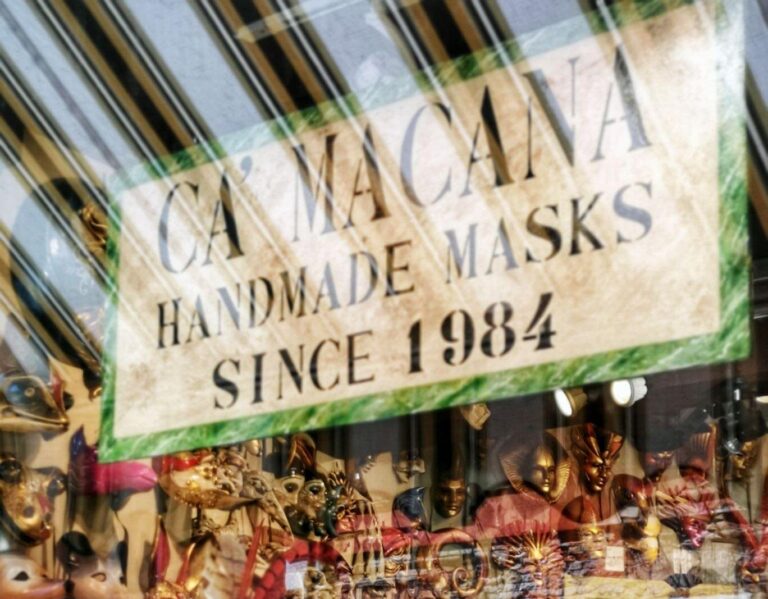
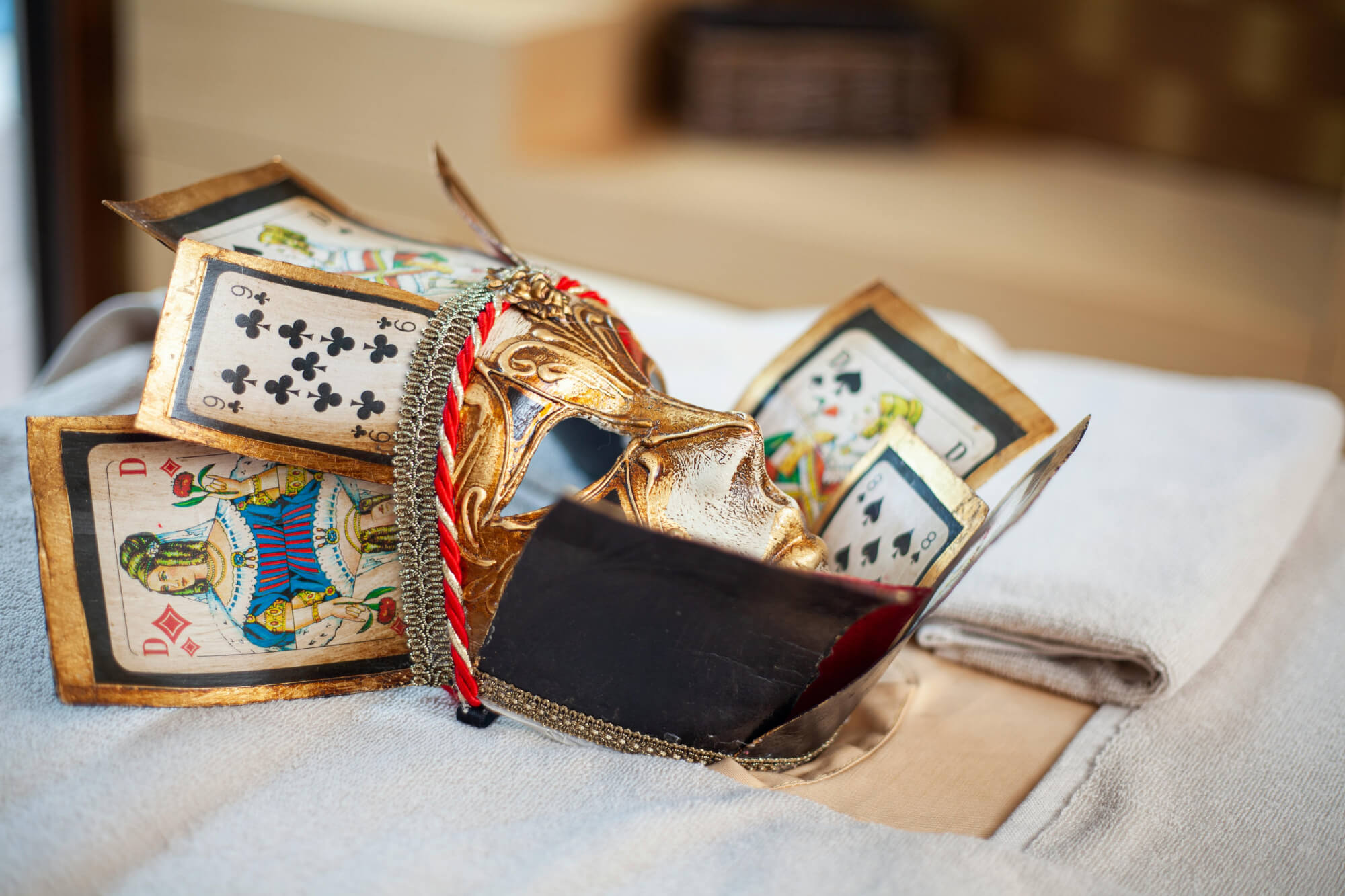
These days you sadly won’t see locals strolling around in masks outside of the Carnival, but if you want to get in on the art of disguise yourself then visiting a mask-maker’s atelier is a must when you’re in Venice. Maskmakers, known as mascherari in Italian, have historically enjoyed a prominent role in Venetian society, and the statutes of the maskmakers guild was drawn up as far back as the year 1436.
Ignore the touristy shops and stalls near Venice’s main landmarks and instead go off the beaten path to find a quality artisan mask at one of our favourite boutiques: try Ca del Sol, Ca Macana, Atelier Marega or La Gioia, each run by master mascherari still making masks by hand.
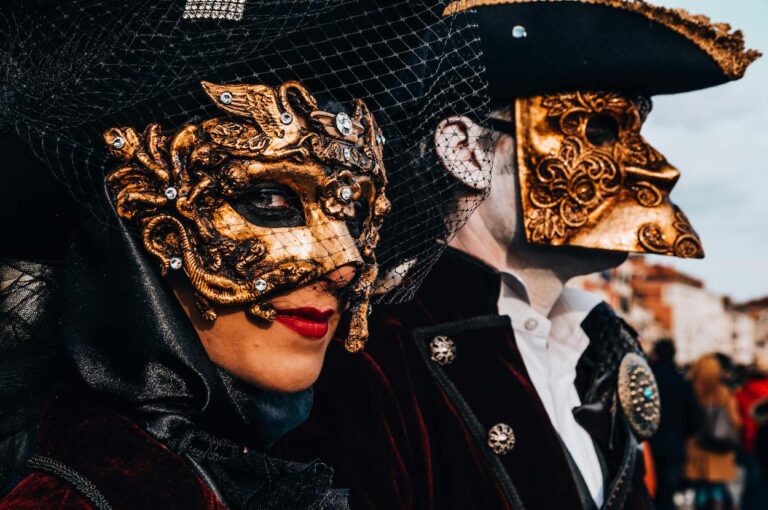
A costume is not required to enjoy the Venice Carnival — plenty of visitors watch the parades in ordinary winter coats — but dressing up transforms the experience from spectator to participant. Most travelers rent rather than commission: reputable ateliers across the city offer everything from a simple mask to a full 18th-century ensemble, and renting sidesteps the cost and storage headaches of buying.
For an authentic look, pair a Bauta or Volto mask with a tabarro cloak and a tricorn hat — the classic silhouette of the Venetian Carnival at its historical height. Whatever you choose, dress for February first: Venice in Carnival season is cold, often damp, and occasionally prone to acqua alta, so warm layers and comfortable, waterproof footwear matter more than any mask. Save the delicate shoes for the ball.
Venice Carnival Masquerade Balls: The Grandest Tradition
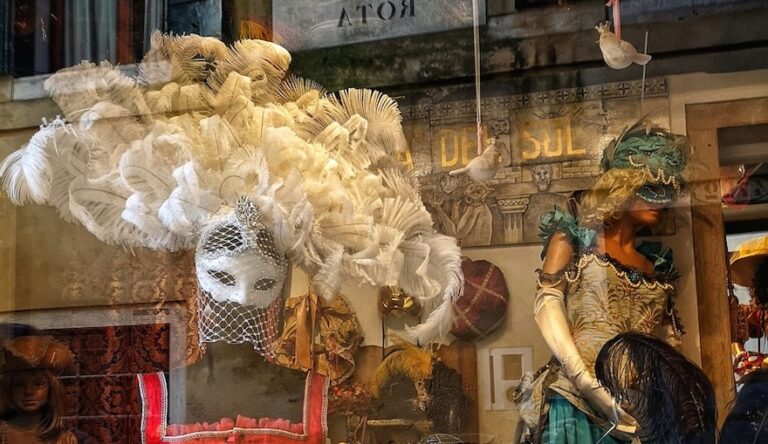
Venice’s masquerade balls are ticketed events with elaborate dress codes, and the most sought-after evenings can book up well in advance. They are also the closest thing modern Venice offers to stepping inside the city’s theatrical 18th-century world. At the height of the Republic’s Carnival tradition, masks allowed Venetians to conceal their identities and temporarily step outside the social conventions that governed everyday life. Nobles and commoners could mingle more freely, while the masked city became a place where anonymity opened doors that would normally remain closed. This was the Venice of Casanova’s lifetime: extravagant, theatrical, and famous across Europe for its appetite for pleasure. The fall of the Republic in 1797 brought the old public Carnival to an end, and it was not until 1979 that Venice’s modern Carnival was revived.
Today’s headline events carry that legacy forward. Il Ballo del Doge — Antonia Sautter’s opulent, long-running gala — takes over the Scuola Grande della Misericordia each Carnevale Grasso Saturday, with tickets from around €800 all the way to an eye-watering €10,000 for the primo seats Palazzo Pisani Moretta, its Grand Canal neighbor, hosts the Carnival’s other great ball, the Tiepolo Grand Ball. The Official Carnival Dinner Show at Palazzo Vendramin-Calergi, Venice’s grand casino palace on the Grand Canal, runs roughly €700–800. Both belong on any Venice Carnival wish list — but treat the ticket as what it is: an investment in one unrepeatable Baroque night, not an impulse booking.
What Are the Must-See Events at the Venice Carnival 2027?
There is plenty going on throughout the Venice Carnival, and much of the fun of the festival is to be found in wandering the streets and soaking up the atmosphere. There are however a number of spectacular special events to look out for that take place at the weekends.
The Festa Veneziana Water Parade
The Venice Carnival 2027 opens over the weekend of January 30th with the Festa Veneziana sull’acqua, a magical water pageant of illuminated, costumed boats gliding along the Cannaregio Canal and out onto the Grand Canal. Born on the water, this is the most atmospheric way to begin the festival – and a far calmer alternative to the crowds of the central weekends.
The Flight of the Angel (Volo dell’Angelo)
One of Carnival’s most spectacular traditions, the Volo dell’Angelo sees a costumed performer descend on a wire from the Campanile of St. Mark’s into Piazza San Marco, recreating a tradition whose origins reach back to a famous 16th-century acrobatic feat. The original “Svolo del Turco” involved a young Turkish acrobat walking a tightrope from a boat to the bell tower; over the centuries, the stunt evolved into the airborne spectacle known today as the Volo dell’Angelo. The modern tradition was revived in 2001 and has become one of the most anticipated sights of Carnival.
The Festa delle Marie (Festival of the 12 Marie)
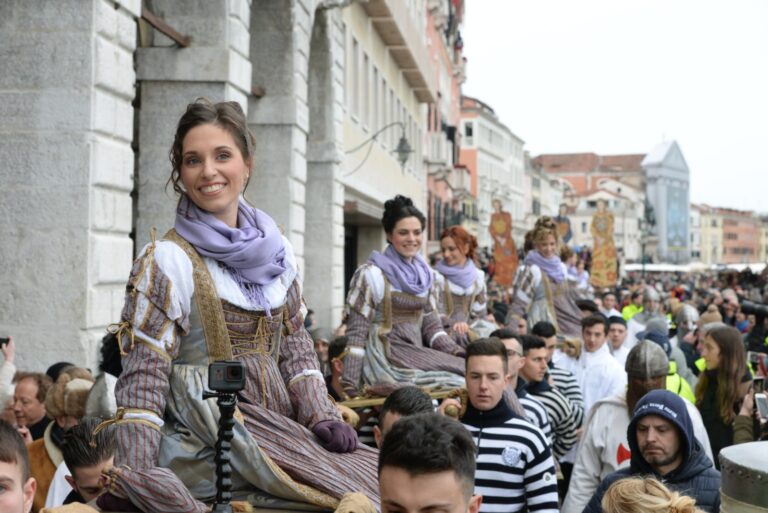
The Festival of the 12 Marias recalls a daring rescue of local Venetian women who were kidnapped by Istrian pirates in the 10th century. According to Venetian tradition, on the feast of the purification of the Virgin Mary (February 2nd) young couples planning to get married within the year would be blessed by the city’s Patriarch. In a show of solidarity, custom dictated that girls from poor families were lent precious jewels, dresses and finery by the nobility so that they wouldn’t be outshone during the ceremony.
During one of these celebrations, the young women in search of their matrimonial blessing were kidnapped by raiders. The brave Venetians fought off the intruders and rescued the girls, and the city celebrates the event with this festival on Saturday February 11th, when 12 young women in historical costumes are selected to parade through the city in a lavish procession. The winner will be selected in Saint Mark’s Square at the conclusion of the Carnival.
The Best Mask Contest (Concorso della Maschera piu Bella)
Held in Piazza San Marco over several days, the Concorso della Maschera più Bella brings some of Carnival’s most elaborate costumes onto the stage to be admired and judged. Recent editions have featured hundreds of participants, with prizes awarded for categories including the most beautiful, elaborate, imaginative, or thematically relevant costume. It is one of the best places to see the craftsmanship behind Venice’s modern mask tradition at close range.
How to Experience the Venice Carnival 2027 With an Expert-Led Tour

During Carnival, the crowds around St. Mark’s Square and along the Grand Canal can make it difficult to appreciate what you’re seeing. The masks, costumes, balls, and public rituals all have stories behind them, and much of that history is easy to miss when you’re navigating the crowds on your own.
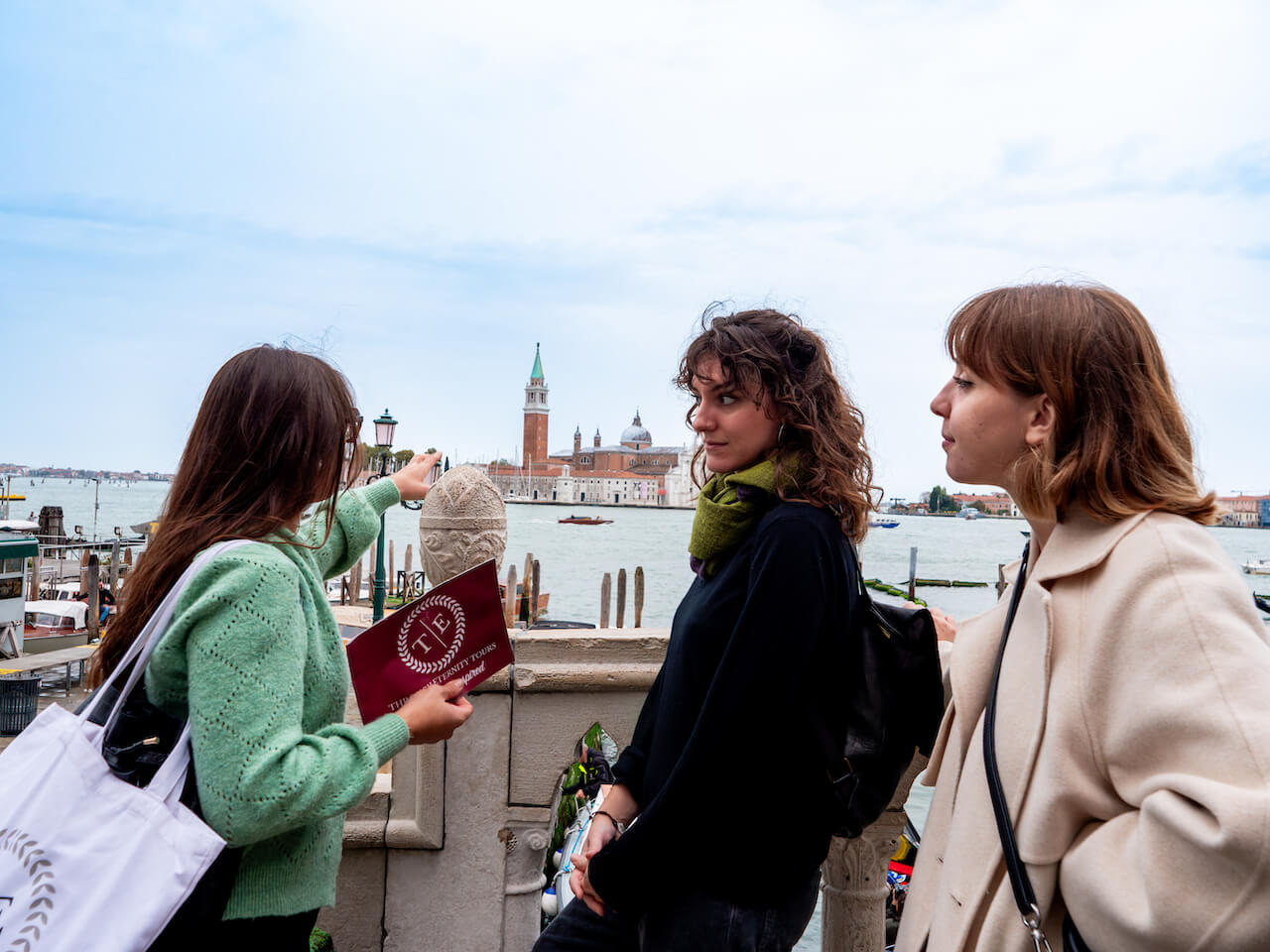
An expert guide gives those details a place in the larger story. Through Eternity offers small-group tours for 12 guests or fewer as well as private Venice tours, led by resident art historians who know the city’s art, architecture, and history firsthand. During Carnival, that means looking beyond the spectacle to understand the traditions behind the masks, the social world of the historic balls, and the rituals that have shaped Venice’s Carnival over the centuries.
Our guides can also advise you about reserved and timed admission where relevant, while being clear about what those arrangements actually provide. During Carnival, some areas can be exceptionally busy, and no legitimate tour operator can promise that every queue will disappear – but this is one time of year in Venice when crowds actually add to the experience.
Booking directly with Through Eternity also puts you in contact with the people who plan and lead the tours rather than an intermediary. You can ask questions before you arrive, understand exactly what is included, and choose the experience that best fits your time and interests.
When is Venice Carnival 2026?
The Venice Carnival 2026 ran from Saturday, 31 January, to Shrove Tuesday, 17 February 2026.
Is the Venice Carnival free?
Yes, for the most part. The great majority of events — parades, street performances, and the mask contests in Saint Mark’s Square — are free to attend; only the formal masked balls and dinner-shows require a ticket.
Where does the Venice Carnival take place?
Across Venice, Italy, with events concentrated in Saint Mark’s Square and along the Grand Canal, plus neighborhood campi such as Campo San Polo and the Cannaregio district.
Do I need a costume for the Venice Carnival?
No. A costume isn’t required to watch the parades and street performances, though renting a mask and cloak from a Venetian atelier adds to the experience if you want it.
When is Venice Carnival 2027?
The Venice Carnival 2027 is scheduled for 23 January to Shrove Tuesday, 9 February 2027, per the festival’s official program
Venice Tours
Discover the Magic of Venice