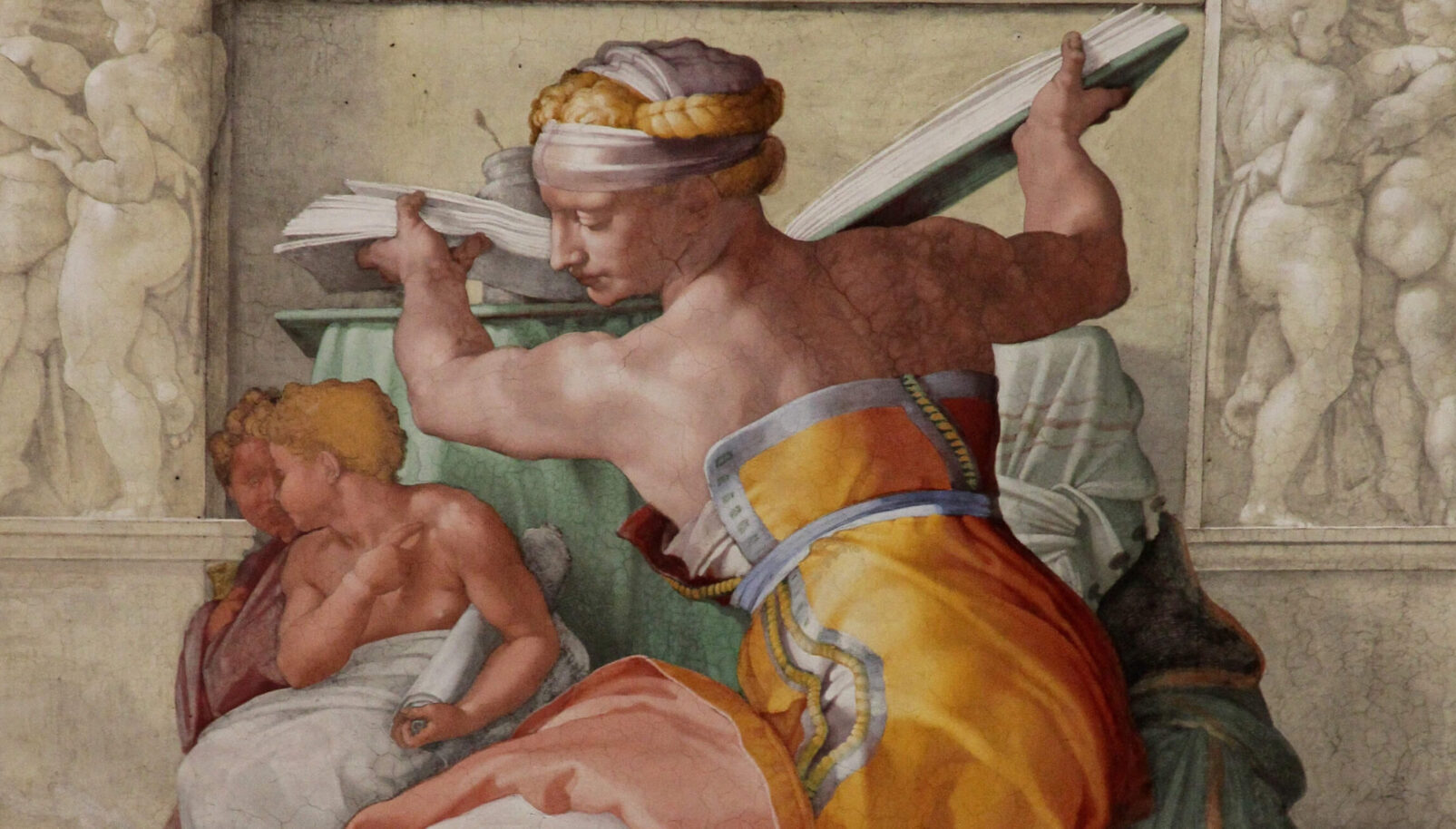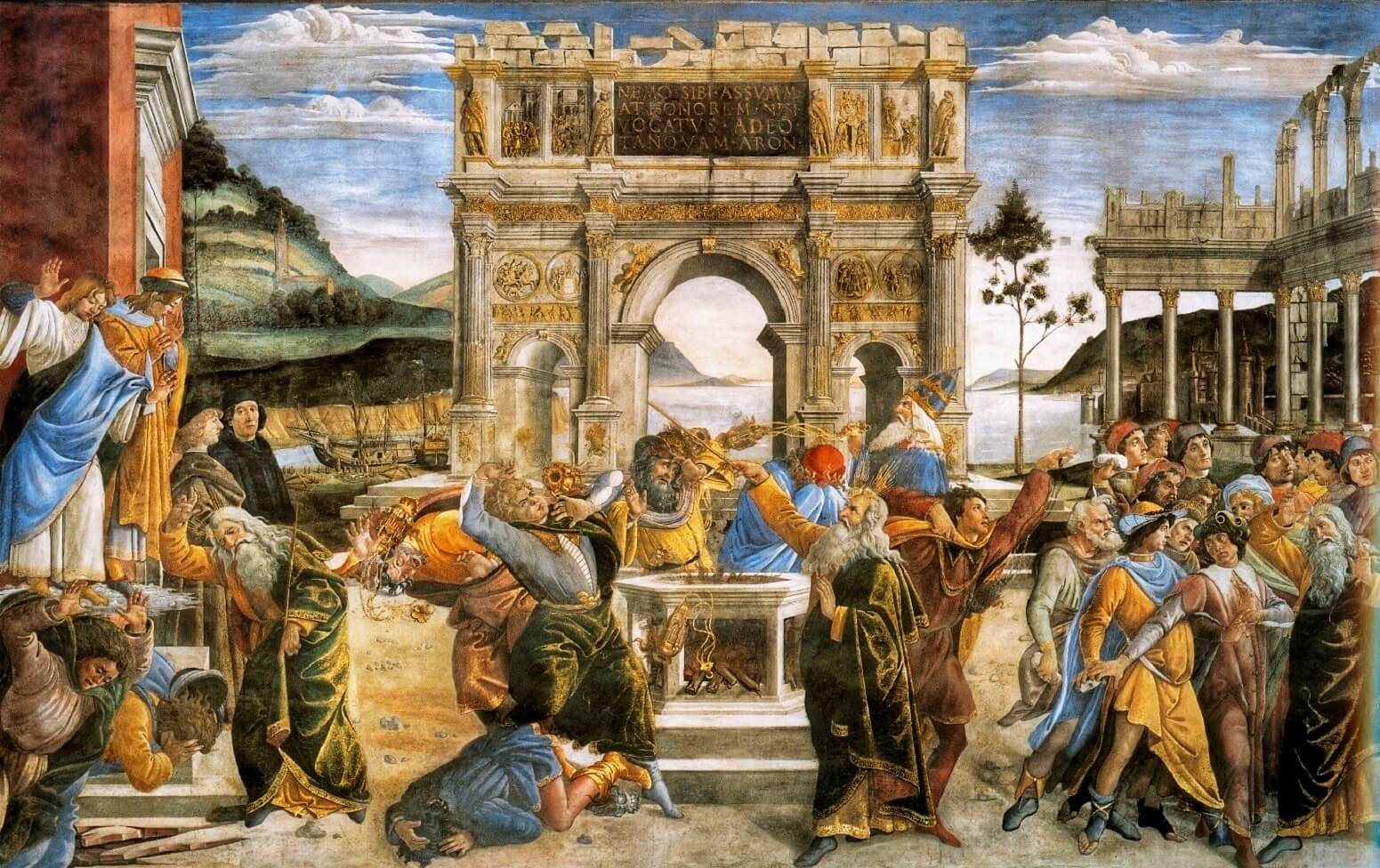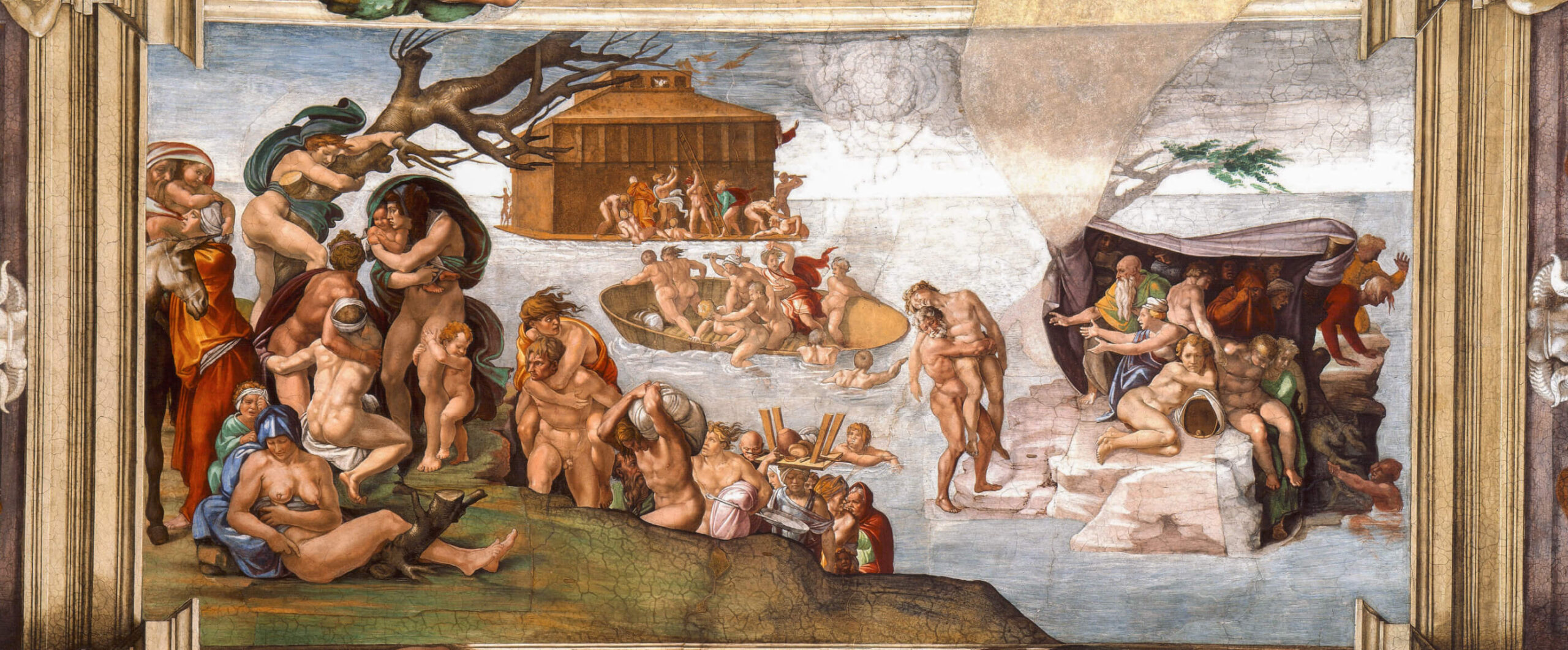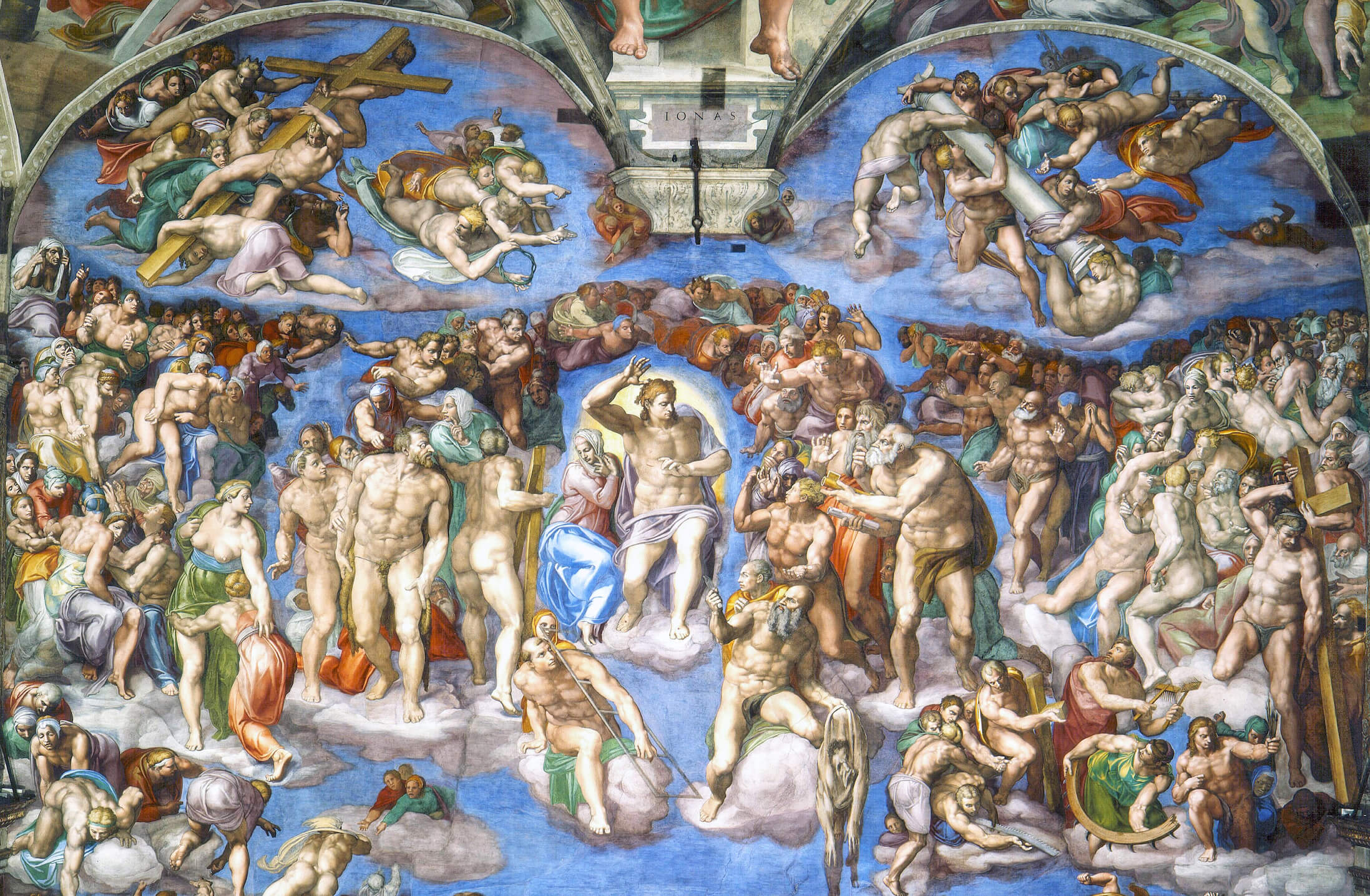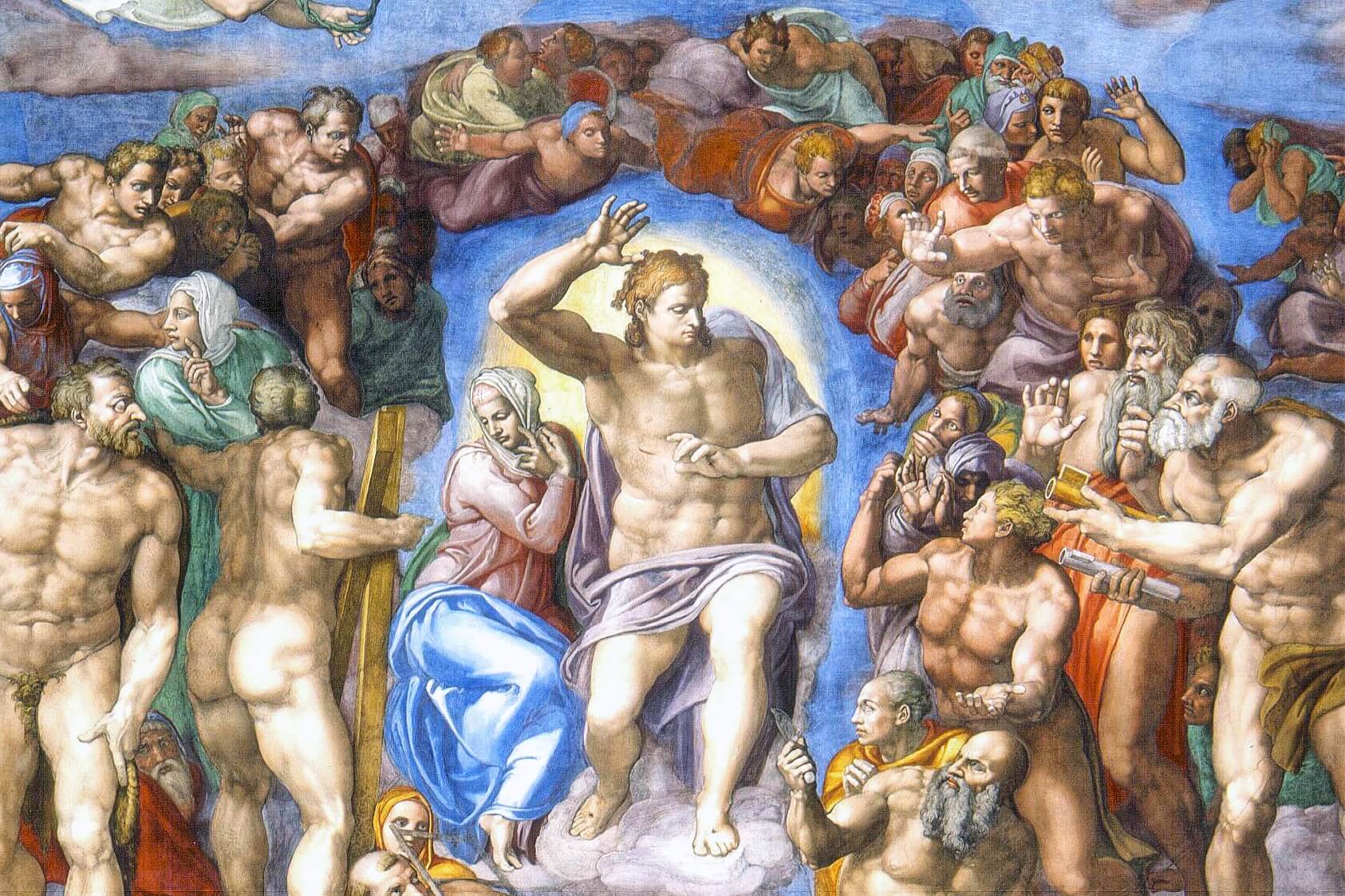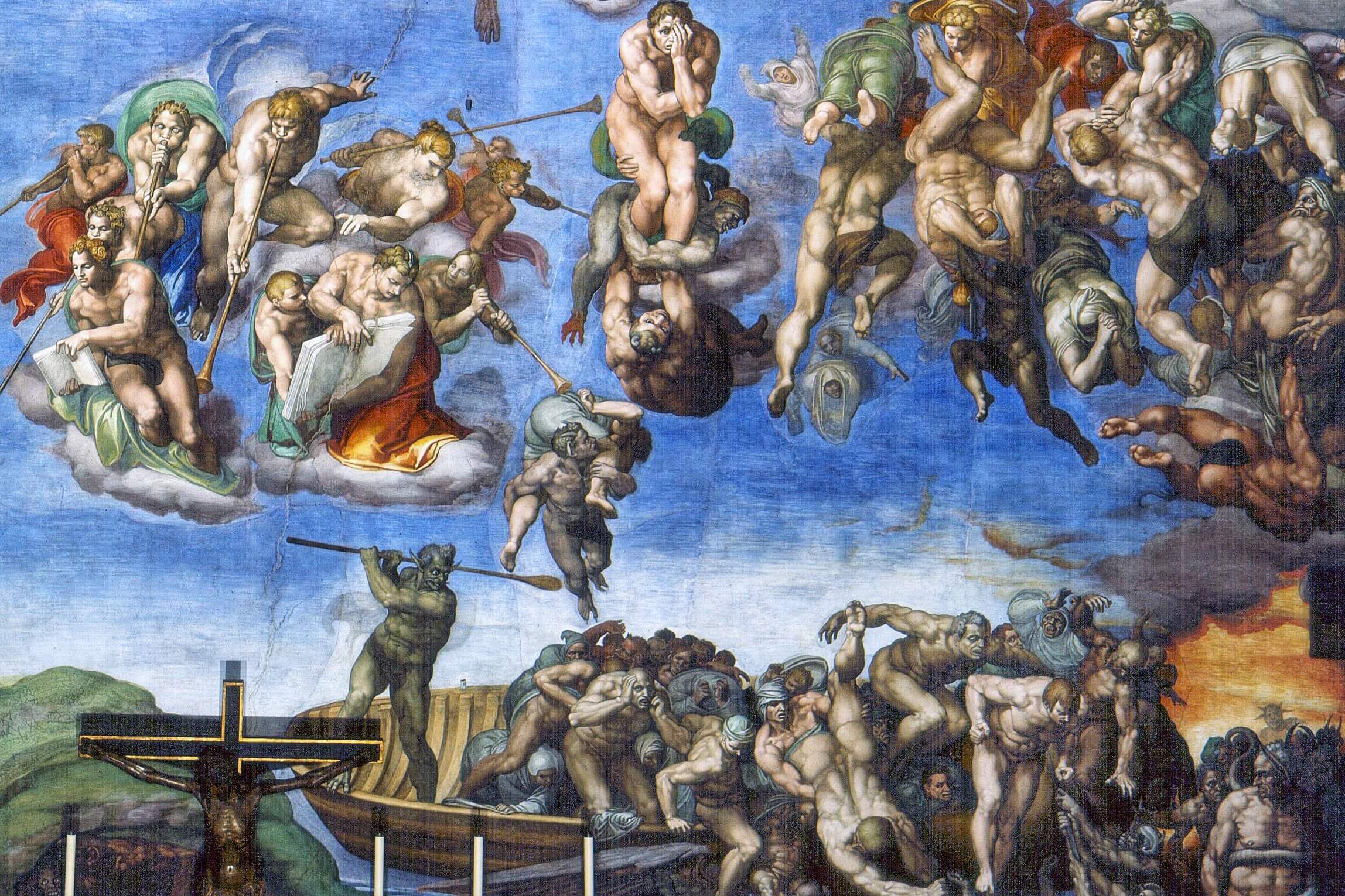
In the massive fresco of the Last Judgement that covers the entire altar wall of the Sistine Chapel, Michelangelo confronts us with one of the most terrifying visions of divine retribution ever painted. Christ stands majestically at the centre of a vortex of powerful nude bodies, imperiously inviting the souls of the saved to join him in heaven with one hand, even as those he damns with the other are dragged downwards to an eternity of torment beneath the chapel’s floor. This iconic image is almost bewilderingly complex, containing within its nearly 400 figures a rich story of spirituality and worldly power. Each of these figures has their own story to tell, but one of the most fascinating of all concerns a real-life tale of personal vendetta.
 Want to understand Michelangelo's Sistine Chapel frescoes?

From the Creation of Adam to the Last Judgment, Michelangelo transformed the chapel into one of the greatest achievements of Renaissance art. Our Vatican tours reveal the stories, symbolism, and ambition behind the frescoes.
For the devout Michelangelo, the perfection of the nude human form was both the highpoint of artistic creation and the purest expression of the divine in the world of men. But not all of his contemporaries were convinced of the edifying potential of naked flesh.
When Pope Paul III came to assess Michelangelo’s progress on the commission, his prudish master of ceremonies Biagio da Cesena tagged along. Appalled by the nudity all around him, Biagio remarked that the decorations were more fitting for a brothel than the pope’s private chapel. Michelangelo was upset at this affront to both his artistic ability and his highly refined sense of spirituality, and viciously retaliated – not with his fists, but with his brushes.
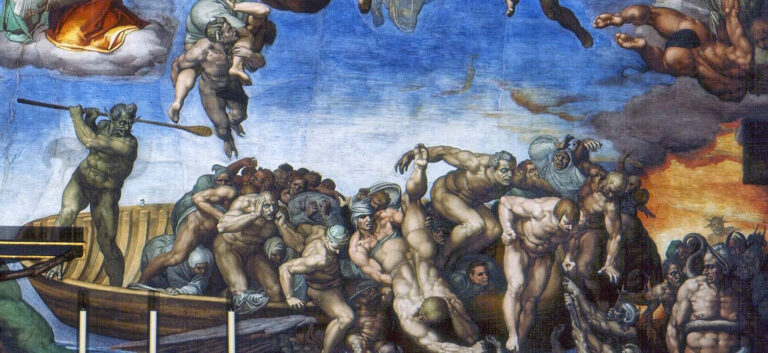
Reworking the vision of hell in the lower portion of the fresco, the old master added another figure to the ranks of the damned: Biagio himself appears in the repulsive guise of Minos, the sentencing judge of hell in Dante’s Divine Comedy. His tail, in the form of a giant serpent, coils around his body and gnaws at his genitals for all eternity. Biagio was unsurprisingly horrified at his unexpected immortalisation, and begged the Pope to order his removal. But Paul was unmoved, offering his master of ceremonies the unforgettable response: ‘Messer Biagio, you know that I have from God power in heaven and on earth; but my authority does not extend into hell, and you must have patience if I cannot free you from there.’
Biagio wasn’t alone in his distaste for Michelangelo’s work: voices criticising the Last Judgement’s nudity grew louder as the years went by, and Daniele da Volterra finally covered the offending parts with loincloths in 1565, earning him the derisive nickname of il braghettone, or the britches-maker. But despite the revisions, the pope’s prediction held firm: today Biagio remains where Michelangelo painted him nearly 500 years ago, perhaps proving once and for all that the brush really is mightier than the sword.

Explore the Sistine Chapel