There are some sights in Rome that no amount of prior research quite prepares you for.
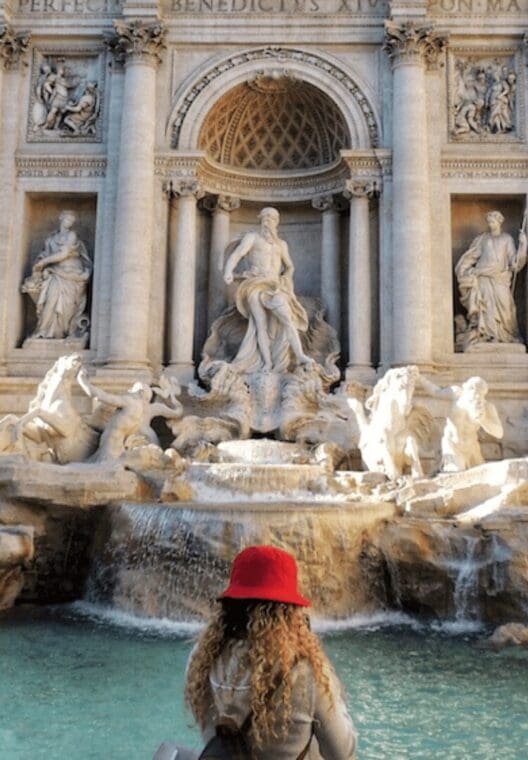
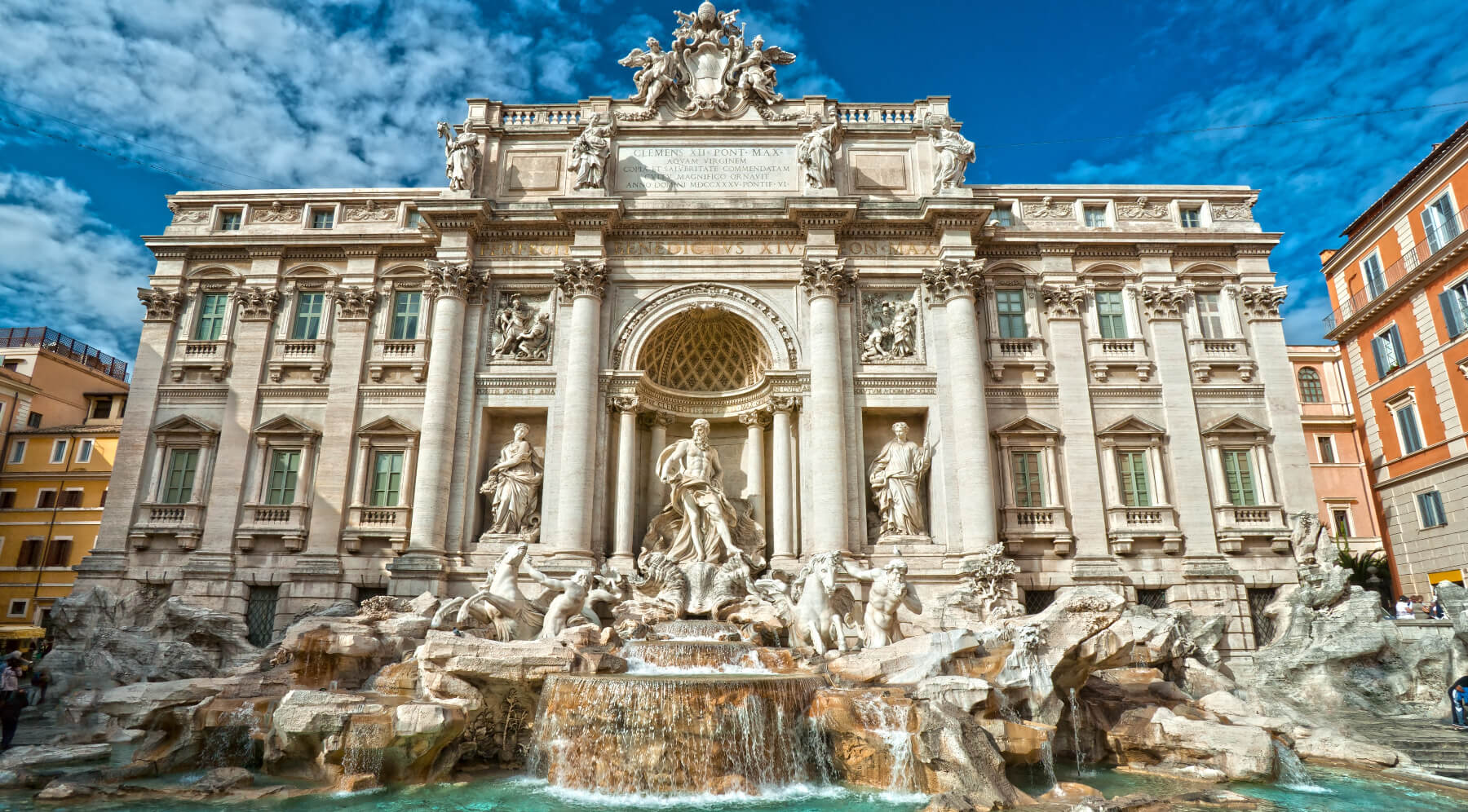
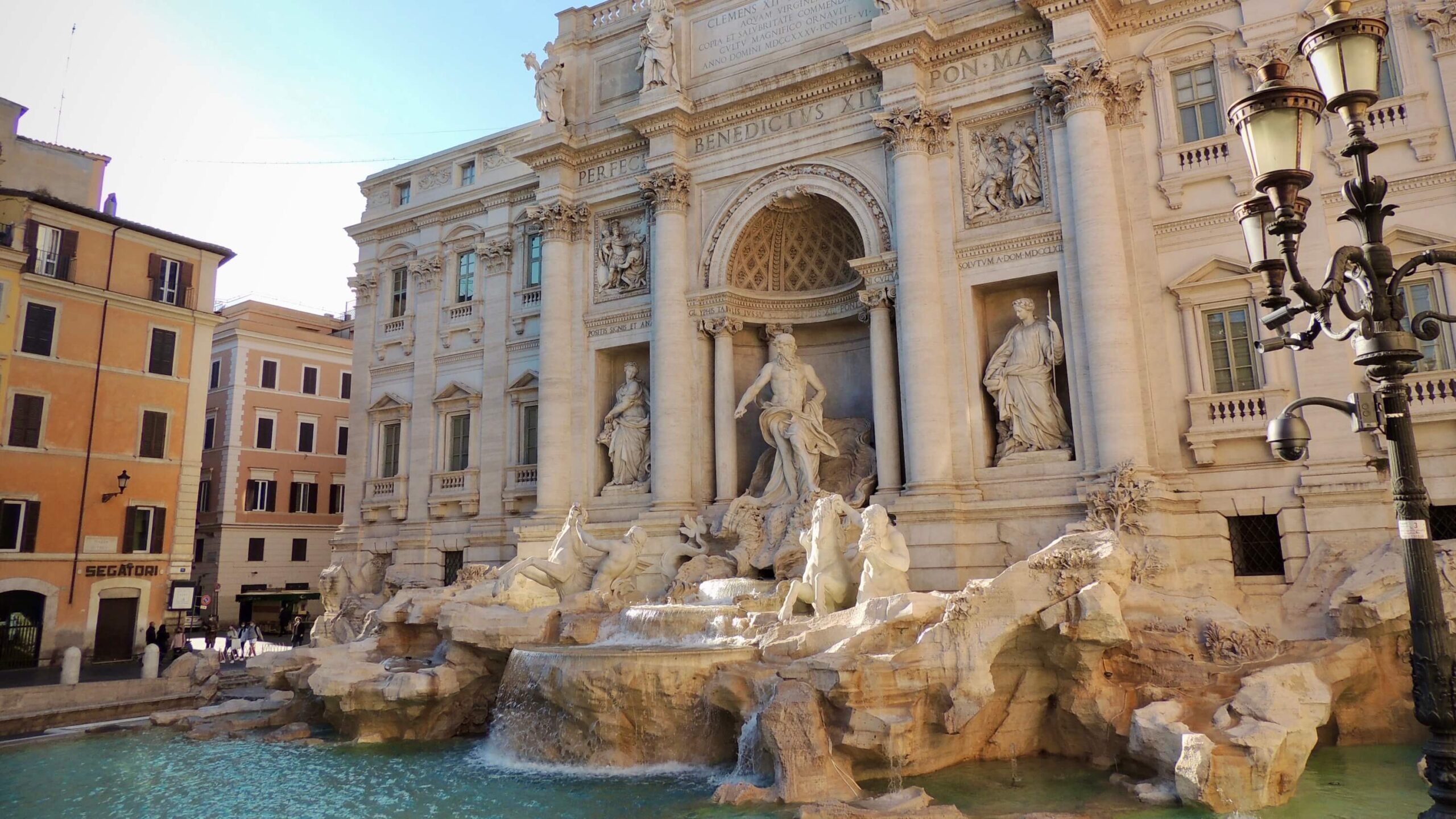
The Trevi Fountain is one of them. Rome’s most spectacular baroque monument is hidden amongst the narrow, winding lanes of the historic centre, and you hear it long before you see it — first a low murmur, then a rush, then a roar — until you turn the last corner and the small Piazza di Trevi opens up before you and the fountain erupts into view.
After a thorough restoration completed in preparation for the 2025 Jubilee, it has never looked better: the sculptural details are crisp, the marble is luminous, and the new lighting system makes it glow like a stage set after dark.
But how much do you actually know about the Trevi? Read on for seven things you need to know before you go — and for full practical information on visiting, see our complete Trevi Fountain guide.
Rome Tours
See the Eternal City at its Best!
The magnificent baroque fountain you see today is merely the latest chapter in a story that stretches back over two millennia.
Rome has always been a city of water, and the massive scale of the ancient metropolis was only possible because of the series of aqueducts that brought vast quantities of fresh water pouring into the city from the surrounding countryside.
One of the most important of these was the Aqua Virgo, constructed in 19 BC at the behest of Marcus Vipsanius Agrippa — the same general and statesman whose name appears on the portico of the Pantheon — to supply the enormous baths complex that bore his name, complete with ornamental canal and artificial lake.
The aqueduct continued to serve Rome for five hundred years before Gothic invasions in the 6th century damaged it severely, reducing it to a shadow of its former self.
A modest fountain was built at the aqueduct’s surviving terminus; over the centuries it became known as the Trevi, from trivium — the Latin for the intersection of three roads where it stood. With the return of the popes to Rome in the 15th century, the ancient water supply was restored and Rome’s great renaissance began.
The 15th-century architect Leon Battista Alberti renovated the Aqua Virgo in 1453, now rechristened the Acqua Vergine. It remains in service to this day, supplying water not only to the Trevi but to all of Rome’s most famous baroque fountains, including those of Piazza Navona.

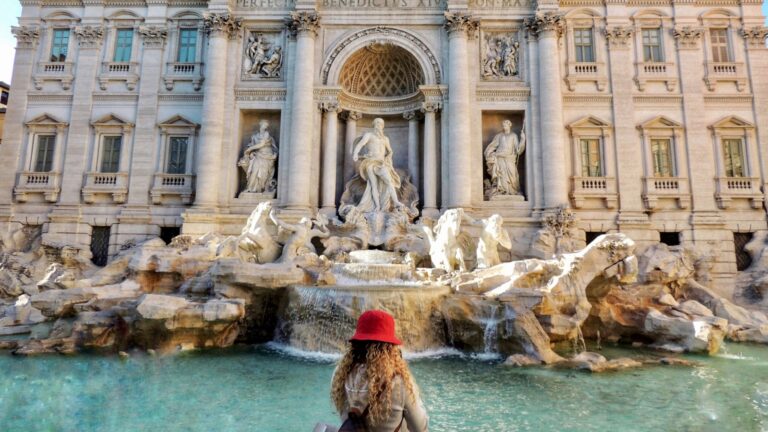
Restoring the city’s ancient water sources heralded Rome’s resurgence in the Renaissance after a millennium of decline, and the 15th-century architect Leon Battista Alberti helped renovate the aqueduct in 1453.
In the centuries to come the sites where fresh water arrived in the city were ceremoniously marked with fabulously elaborate fountains. After doomed projects involving great artists such as Gianlorenzo Bernini and Pietro da Cortona came to nothing, in the 1730s Pope Clement XII finally hired the Roman architect Nicola Salvi to provide a fitting Baroque monument to showcase the now rechristened Acqua Vergine.
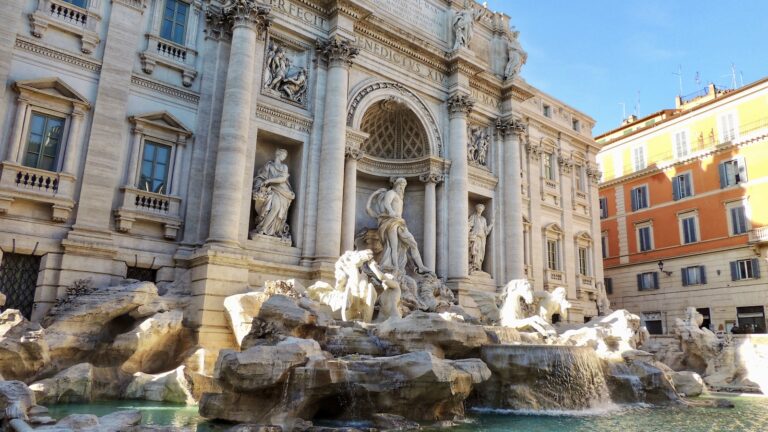
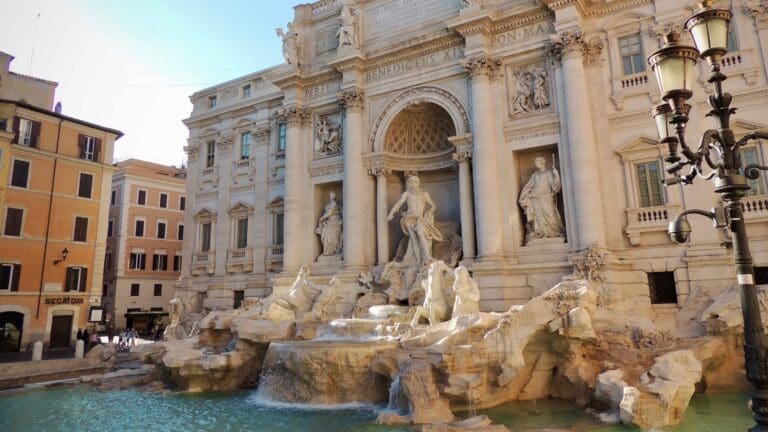
Salvi came up with a brilliant design that fused the massive classical façade of the Palazzo Poli behind with the new organic form of the immense fountain, a mountain of porous Travertine stone fully 86 feet high and 160 feet wide.
In Salvi’s epic masterpiece of ancient mythology, the sea-titan Oceanus advances towards us from a central niche directing the flow of the gushing waters as seahorses and tritons cavort all around him, whilst fake cliffs tumble down from the palazzo and into the square below. This is the Baroque at its most dramatic.
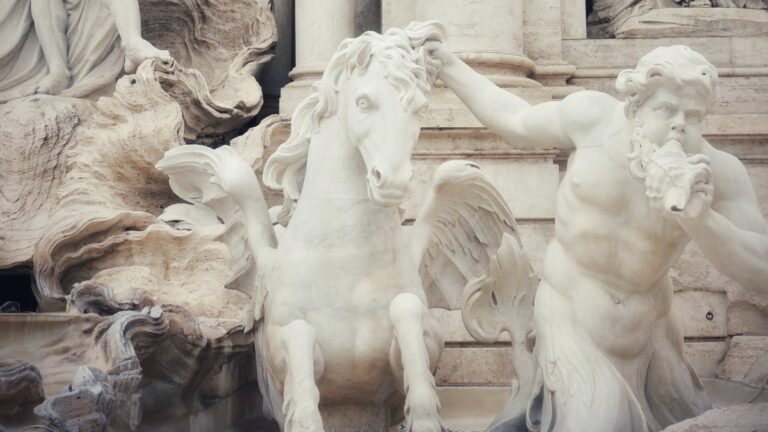
Work on Salvi’s design began in 1732. It was, to put it mildly, not straightforward. The construction project accumulated a grim litany of accidents and injuries: a stonecutter was crushed by a falling block of travertine, a mason fell from the scaffolding to his death, and an apprentice slipped on the marble and cracked his skull fatally.
The project took thirty years to complete, and Nicola Salvi did not live to see it finished: he died in 1751, fourteen years before the inaugural ceremony, with the fountain still in progress.
According to some accounts, Salvi himself was its final victim, having spent so many years on the building site inhaling stone dust that he succumbed to the resulting respiratory disease.
The fountain was finally inaugurated with great ceremony in 1762, under Pope Clement XIII. Salvi’s name is inscribed on the structure; the finishing work was completed by Pietro Bracci, who carved the figure of Oceanus, and Giuseppe Pannini, who finished the sculptural programme.
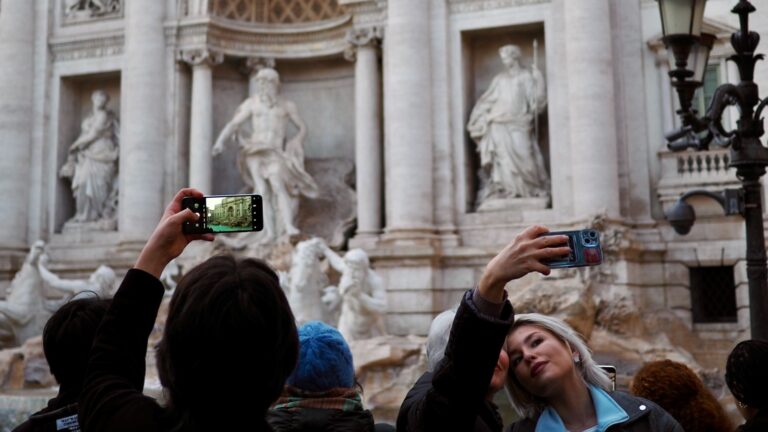
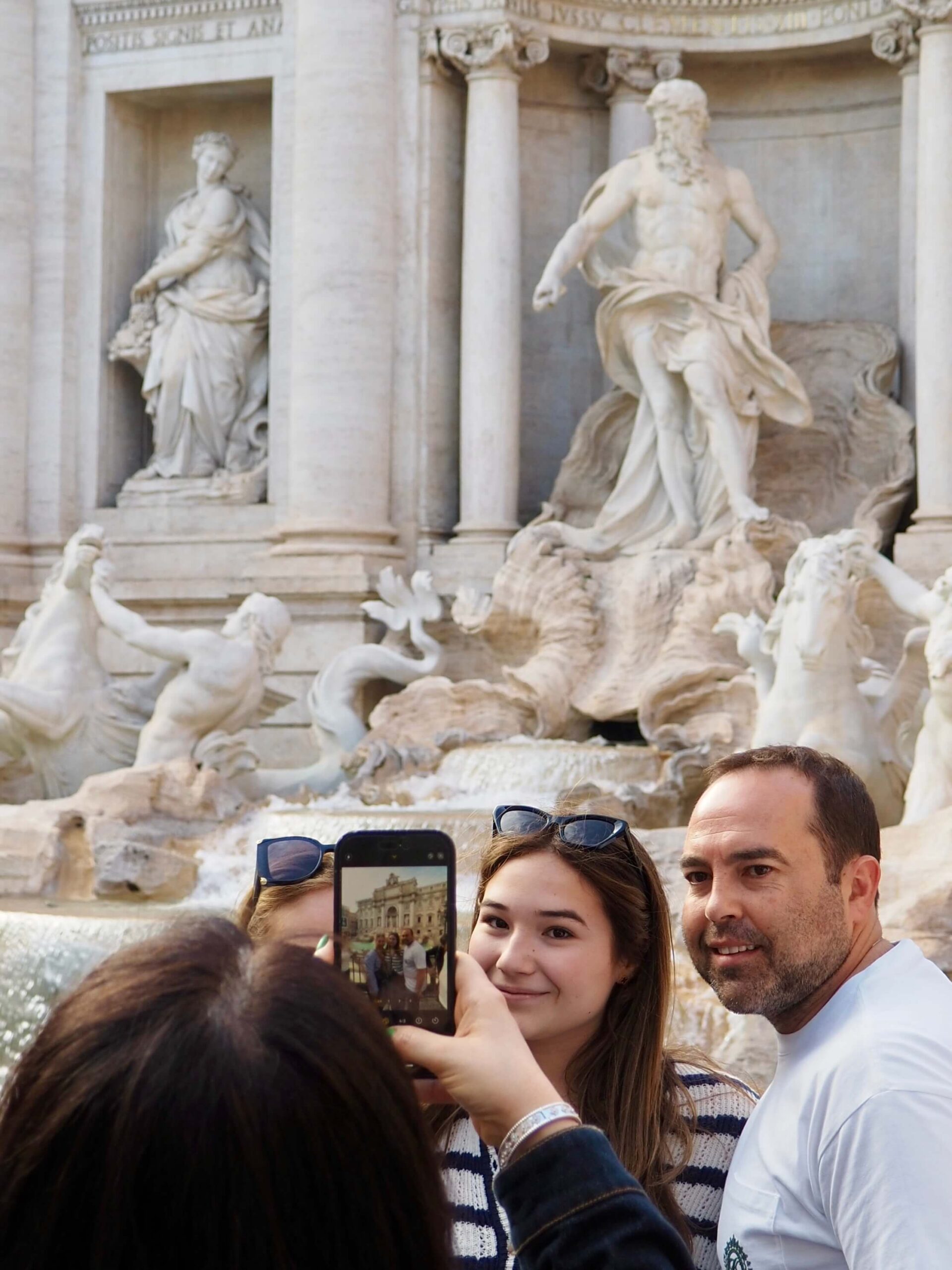
We all know the ritual – turn your back, toss a coin into the Trevi fountain over your right shoulder, and one day you’ll be sure to return to the Eternal City.
But although the tradition recalls ancient practices of burying coins into the foundations of wells, fountains and springs as offerings to the gods, it seems that the practice at the Trevi was actually invented by a German academic and guide by the name of Wolfgang Helbwig looking to spice up his tours in the late 19th century.
As a fitting conclusion to the cultivated jaunts he organised around the Eternal City for his northern guests, Helbwig decided to organise farewell banquets in front of the Trevi fountain.
Searching for a dramatic culminating gesture to end the festivities, he instituted the pseudo-classical ritual in an effort to drum up repeat custom.
It worked better than he could ever have imagined, and legions of tourists dreaming of their own return visits to the Eternal City dump unimaginable quantities of small change into the fountain each week.
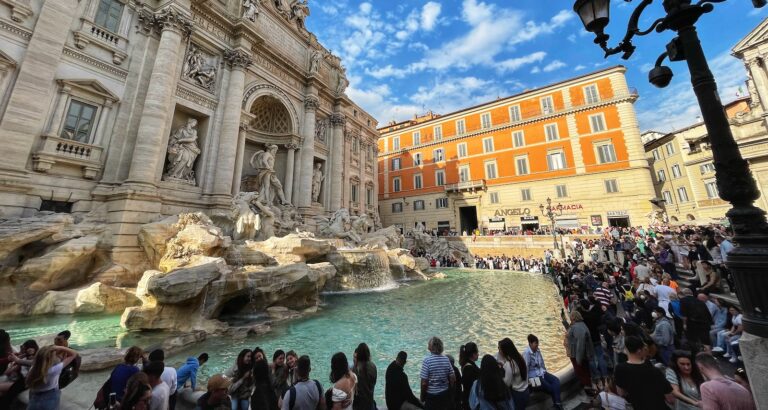
It’s estimated that more than 3,000 euros are thrown into the fountain each and every day – that’s upwards of a million euros per year.
In an attempt to thwart enterprising thieves unable to resist the lure of such a haul, the coins are collected every night and donated to the Roman Catholic charity Caritas, who use the money to provide food for the city’s poorest residents. But in times past the bandits had the upper hand.
For more than 30 years Roberto Cercelletta, ironically known by Romans as d’Artagnan after the swashbuckling French musketeer, had been supplementing his income by extracting coins from the fountain every morning just before dawn with a special sword-shaped magnet.
D’Artagnan maintained that his was a legitimate profession, and even got his mug on the front page of the New York Times as a cause célèbre in 2002. The courts unfortunately disagreed, and d’Artagnan was convicted multiple times for robbery before his untimely death in 2013.
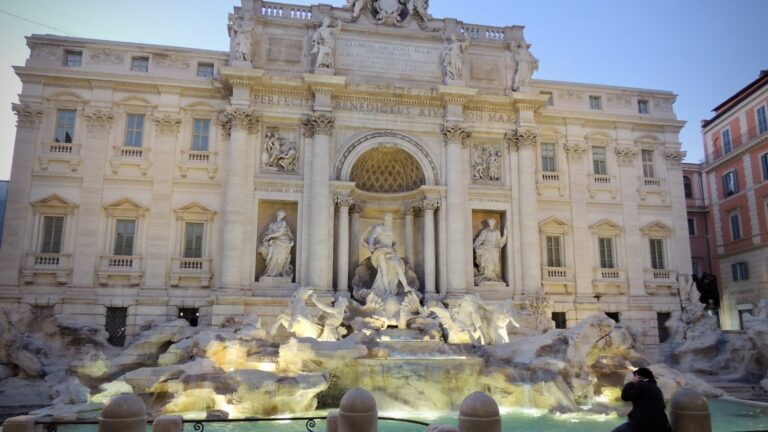
The Trevi is almost unbelievably picturesque, especially when the sun starts to set and the artificial lights begin to take over, twinkling and glinting off the fountain’s turquoise waters – it’s no wonder it has played muse to film directors and cinematographers since the dawn of moving pictures.
In the 1950s, the glamour of postwar Rome attracted the Hollywood studios to Cinecittà, and two landmark films cemented the Trevi’s global iconography: Roman Holiday (1953), in which Audrey Hepburn and Gregory Peck cavort in its streets, and Three Coins in the Fountain (1954), which literally built its plot around the tossing-in-coins mythology.
Between them, these two films collected five Academy Awards and permanently fused the Trevi with the fantasy of Rome.
Younger viewers will recognise the fountain meanwhile from teen staples such as the Olsen twins’ When in Rome and Hillary Duff’s The Lizzie McGuire Movie. But for true cinephiles, the Trevi can conjure only one scene…
But for true cinephiles, the Trevi conjures only one scene: the nocturnal sequence in Federico Fellini’s La Dolce Vita (1960), in which the ravishingly beautiful Anita Ekberg wades into the fountain at dawn in an evening gown as Marcello Mastroianni looks on in dumbfounded adoration.
It remains one of cinema’s most bewitching images, and it is impossible to stand at the fountain’s edge and not think of it.
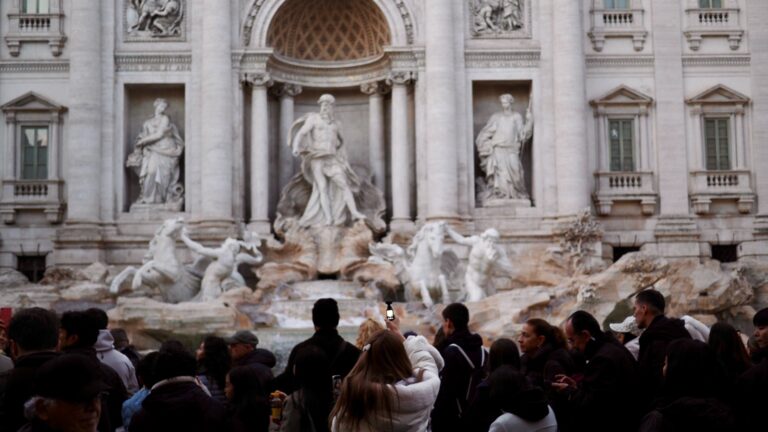
It’s one of the most seminal takes ever put to celluloid. The ravishingly beautiful Anita Ekberg wades serenely into the water of the Trevi fountain at dawn in Federico Fellini’s 1960 classic La Dolce Vita, luxuriating beneath the cascade.
The Vatican condemned the scene’s sensuality at the time, though audiences quickly hailed it as a work of genius. But what’s good for one of cinema’s most enduring icons might not be good for you.
An overexcited young English couple, their minds dancing with cinematic fantasy, decided to take the plunge in the dead of night last summer – unfortunately the piazza wasn’t as deserted as in the movie, and after being ordered out by police were slapped with hefty fines.
And they’re not the only ones. A year earlier another tourist went the full Ekberg and waded in clad in evening dress and fur stole.
Beyond the inevitable fines and police caution though, there’s another reason why you should pause before jumping in – the apparently inviting waters of the fountain are exceptionally cold, and according to cinematic legend Ekberg’s co-star Marcello Mastroianni famously had to down a bottle of vodka before being able to pluck up the courage to enter the freezing water.
Better to take a seat on the side-lines then, and soak up the unique atmosphere of the Roman night.
Note: From February 2026, a new €2 entry fee applies to the basin-level viewing platform directly in front of the fountain. See our complete Trevi Fountain guide for full details.
How much water flows through the Trevi Fountain?
The Acqua Vergine aqueduct supplies approximately 80,000 cubic metres of water to the fountain per day. The water is recycled and recirculated by pumps rather than flowing through and draining away.
Does the Trevi Fountain have a ticket?
From February 2026, a €2 fee applies to the basin-level viewing area directly in front of the water. The piazza itself, from which you can still see the fountain, remains free to enter. For full details, see our complete Trevi Fountain guide.
What is the Trevi Fountain made of?
The Trevi Fountain is constructed primarily from travertine limestone, the warm honey-coloured stone quarried from the hills east of Rome that was used for most of Rome’s ancient and baroque monuments, including the Colosseum. The sculptural programme includes figures carved in white marble.
Is the Trevi Fountain named after three things?
Yes. The name Trevi derives from trivium — the Latin for the intersection of three roads — referring to the three ancient Roman streets that converged near the original modest fountain that marked the terminus of the Aqua Virgo aqueduct. The name has nothing to do with the number three in any other sense.
If you want to hear more fascinating tales about Rome’s most iconic fountain, check out Through Eternity’s Introduction to Rome Small Group Tour!
Rome Tours
Discover the Magic of the Eternal City