Under the shadow of a stately Pile,
The dome of Florence, pensive and alone,
Nor giving heed to aught that passed the while,
I stood, and gazed upon a marble stone,
The laurelled Dante’s favourite seat. A throne
In just esteem it rivals.
– William Wordsworth
Describing the magnificence of Florence’s Piazza del Duomo, garlanded with its otherworldly cathedral and Brunelleschi’s magical dome, is a task beyond all but the most profound pens. Luckily, the great English poet William Wordsworth was up to the task!
The image Wordsworth conjures of Dante sitting lost in thought as he gazes up at Florence’s most fabulous landmark is powerfully evocative, and tells you all you need to know about why you too need to visit the Piazza del Duomo when in the city.
Truth be told, there’s even more to see in this magnificent square now than there was in Dante’s day. Remarkably, the stone upon which Dante once sat remains (at least, according to local lore), but the view is even better these days.
During Dante’s lifetime the cathedral was under construction, and still without a dome; the finest minds in Florence were unable to work out how to span the enormous edifice until Brunelleschi came along a century later to fashion what might be the single greatest icon of the Renaissance.
In addition to the cathedral of Santa Maria del Fiore, other must-see highlights in the Piazza include the stunning Giotto-designed campanile, the fascinating and under-visited Museo del’Opera del Duomo and the glittering baptistery of Saint John. Find out everything you need to know about these sites in our guide to visiting Florence’s Piazza del Duomo!
Florence Tours
Experience the Magic of Florence
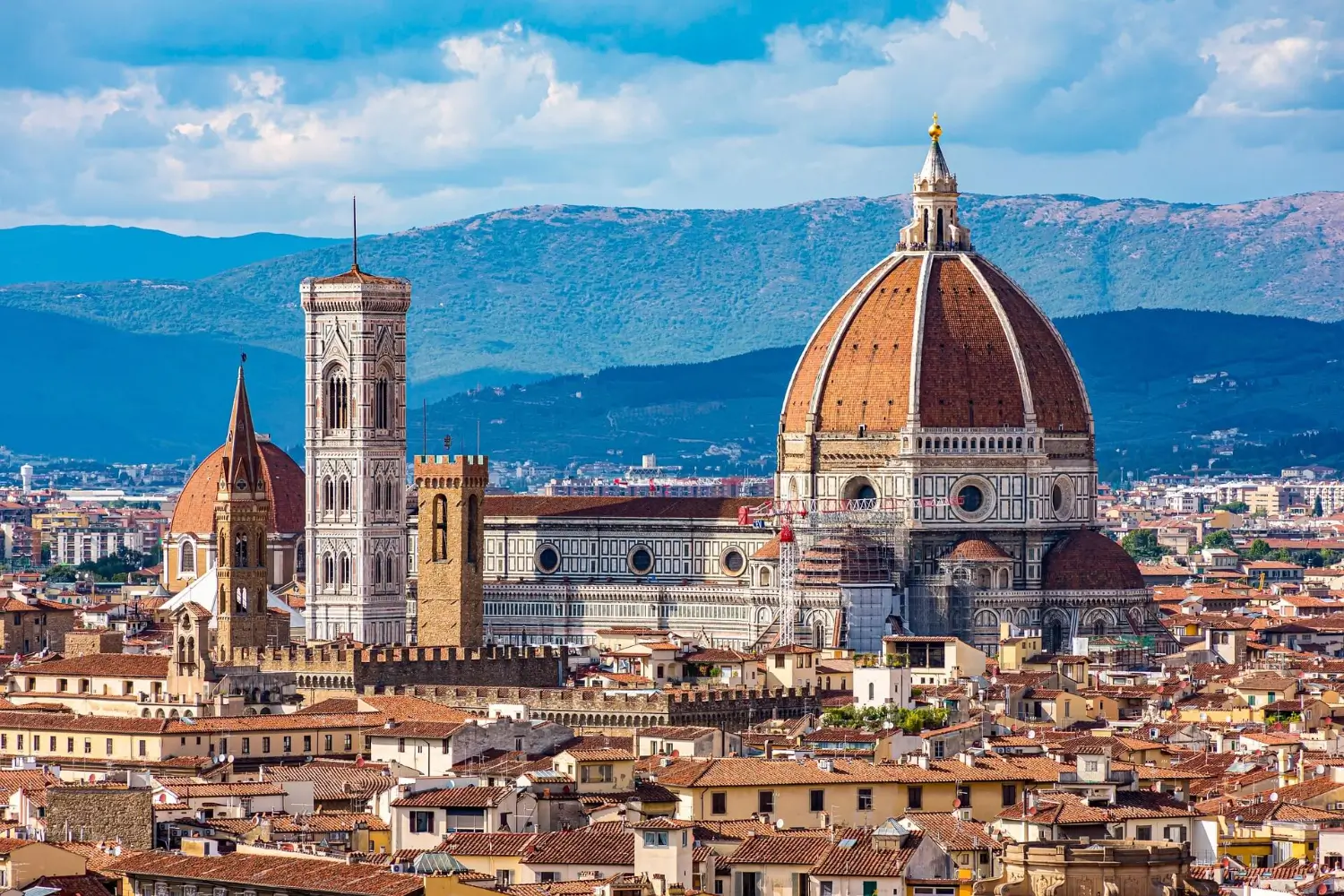
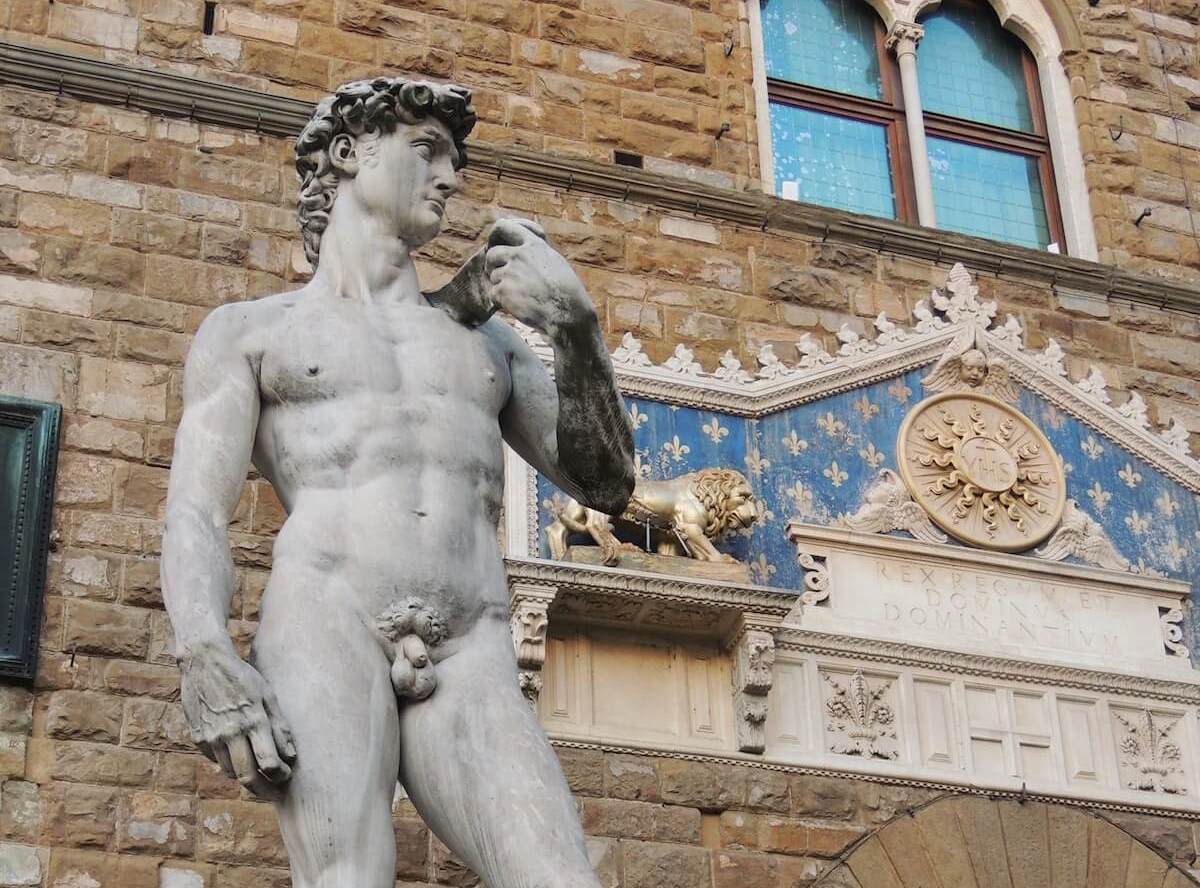
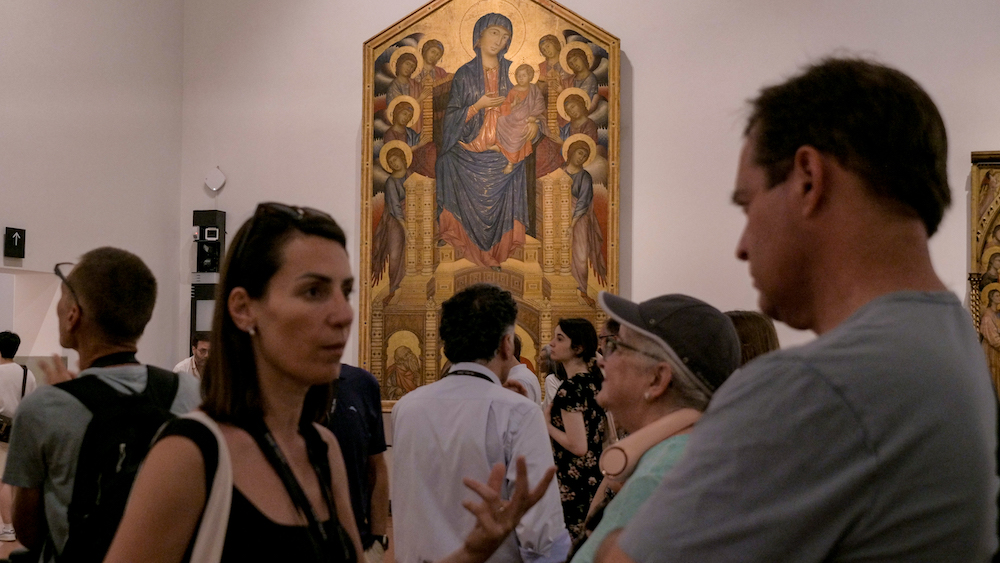
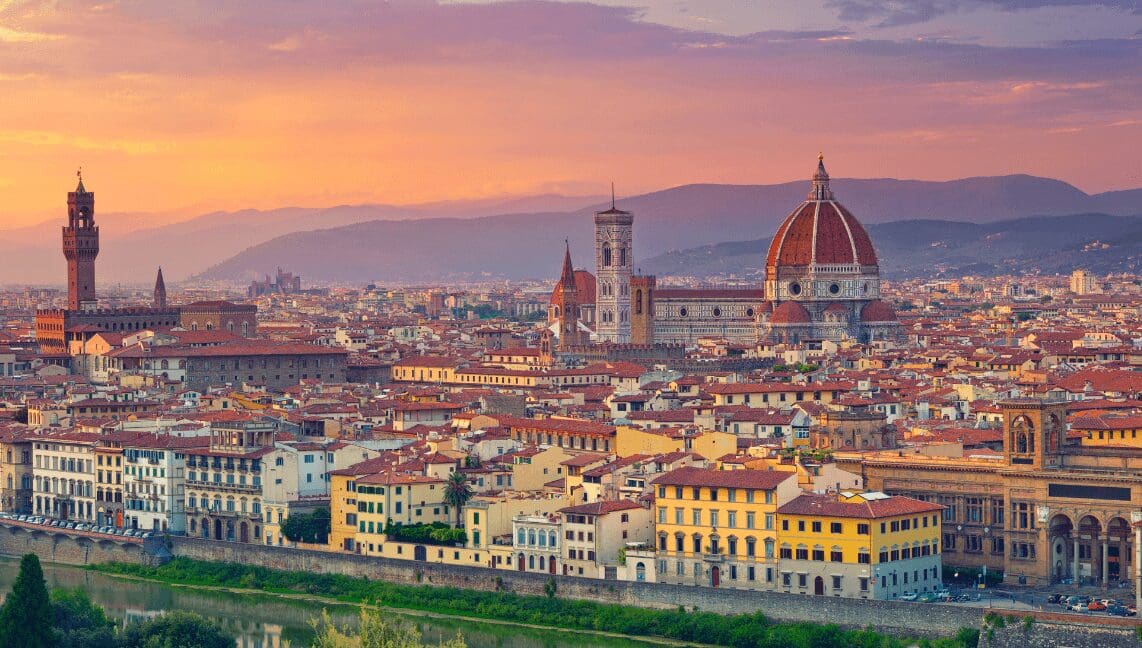
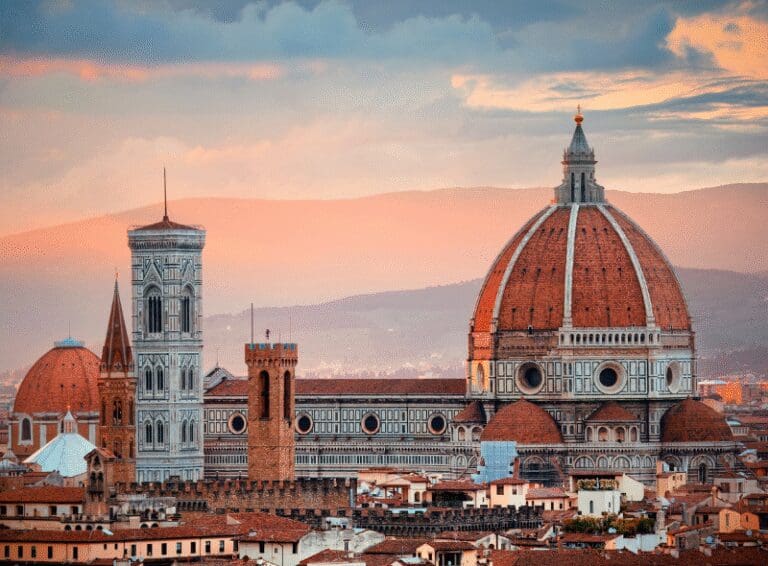
Walking through Florence’s narrow streets, nobody ever forgets the moment when the Duomo bursts into view for the first time, like some colossal mirage rising from the city’s heart. As you approach, the sheer size and grandeur of Santa Maria del Fiore is truly breathtaking. And for good reason: this is no ordinary cathedral!
A medieval church had stood on this site since the 11th century, but by the closing years of the 13th century the comparatively diminutive Santa Reparata was no longer considered a fittingly grand focal point for the ambitious and increasingly wealthy Florentine Republic.
And so work began on a cathedral that would rival, and even surpass, the grand houses of worship recently constructed by local rivals Siena and Orvieto. The cathedral, initiated by Arnolfo di Cambio, took over a century to complete, but it was worth the wait.
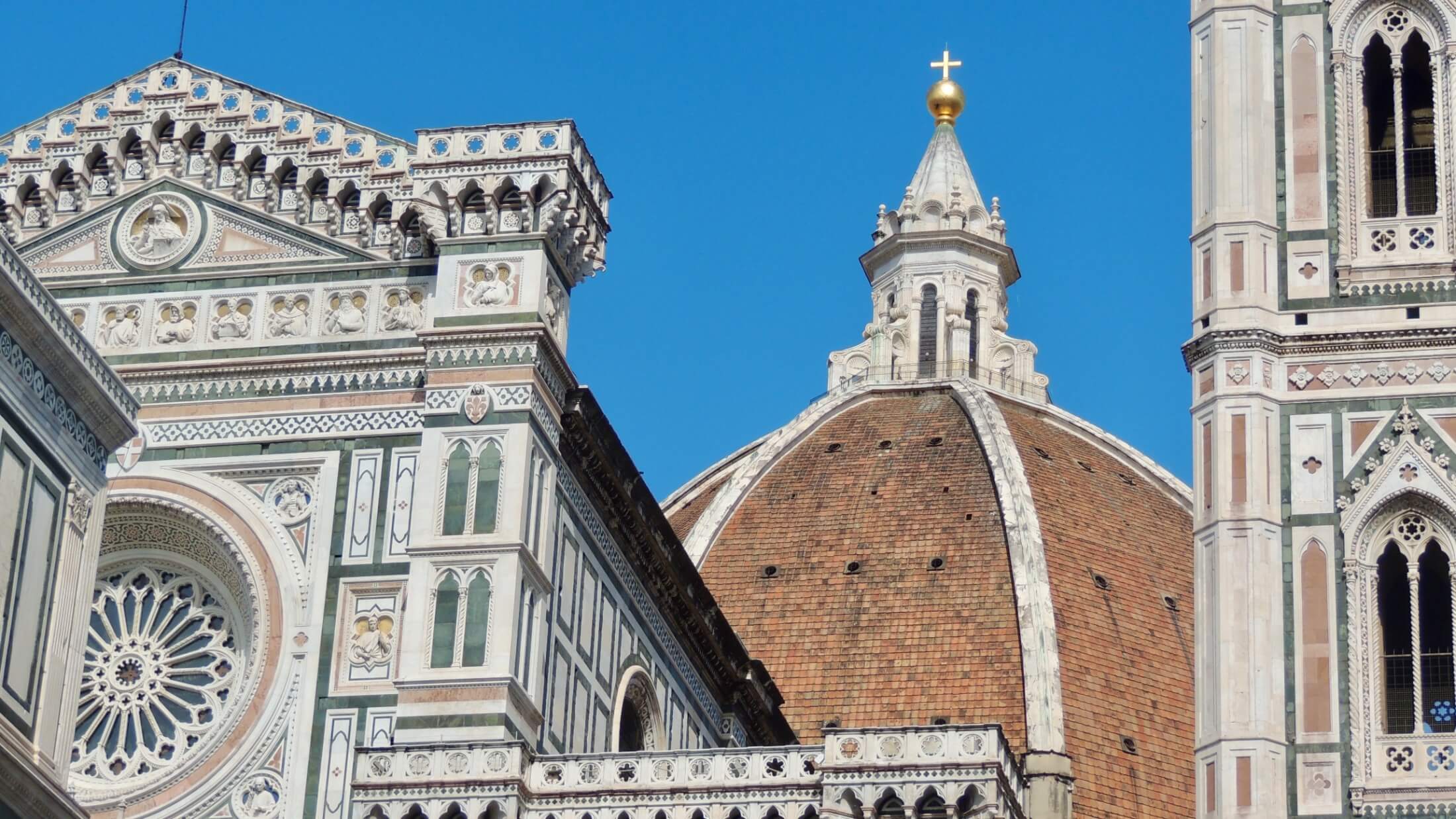
Finally topped with Brunelleschi’s iconic dome, Florence became the proud owner of the finest landmark of the Renaissance. Over the course of 16 years from 1420 to 1436, Brunelleschi succeeded in the apparently impossible task of spanning the immense space of the cathedral, coming up with an innovative double-shell structure to support what remains the largest masonry dome ever built. If you’re not afraid of heights, take the opportunity to climb Brunelleschi’s dome – the views from the top reward each of its 414 steps.
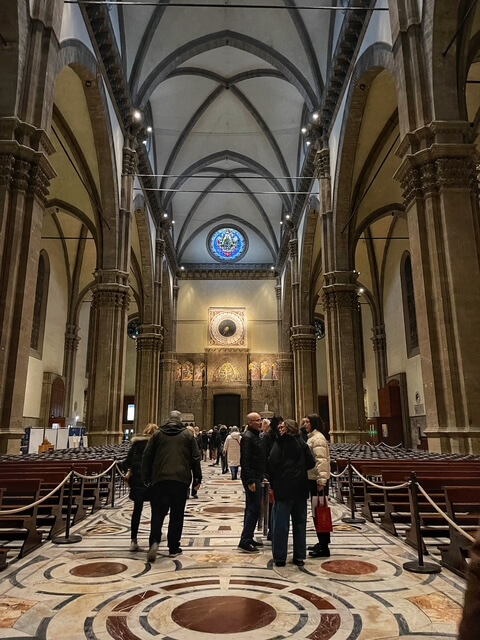
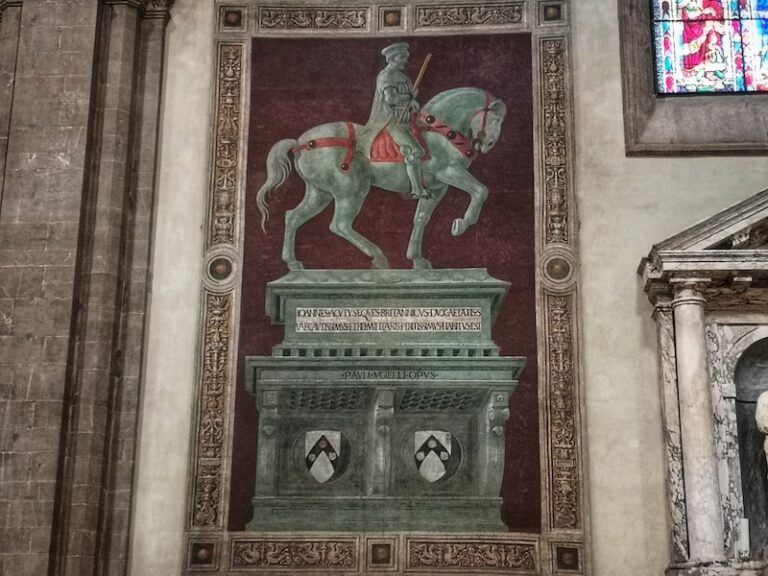
But don’t just stop at the exterior. Step inside and you’ll be greeted with Giorgio Vasari’s massive fresco of the Last Judgement, which spirals up the dome’s interior in a dizzying apocalyptic vision. Down below, you’ll find Paolo Uccello’s grand equestrian portrait of the English soldier-for-hire John Hawkwood, as well as a stunning 15th-century painted clock by the same artist, one of the world’s oldest working mechanical timepieces.

And of all I saw and of all I praised,
The most to praise and the best to see
Was the startling bell-tower Giotto raised:
But why did it more than startle me?
– Robert Browning
English poets, it seems, really had a thing for Florence’s Piazza del Duomo. This time it’s Robert Browning’s turn, and the object of his appreciation is the glittering bell tower that towers over the adjacent cathedral.
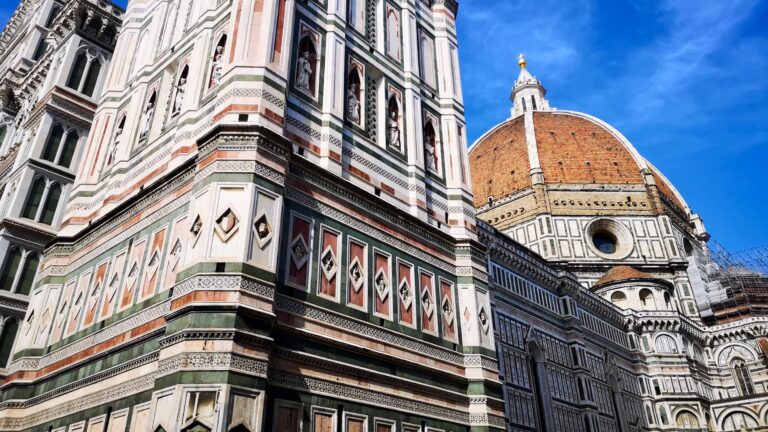
With its lovely polychrome marble decoration and elegant proportions, the startlingly beautiful campanile is certainly one of the great triumphs of the Florentine Romanesque. But it might surprise you to learn that this architectural masterpiece was not the brainchild of a renowned architect or engineer, but rather one of history’s greatest painters.
Widely regarded as the father of Renaissance art for his masterpieces in Florence, Padua, Assisi and beyond, Giotto’s reputation with the brushes was unrivalled. In early-modern Italy the distinctions between the profession of artist and architect were not so strictly drawn, and prowess in the former field often led to commissions in the latter. So it was for Giotto, who was handed the task of constructing the 84-metre tall bell tower in 1334.
Completed by Francesco Talenti after Giotto’s death in 1359, the soaring red, white and green marble pattern still stands as a vivid statement of the aesthetic ideals of 14th-century Florence. The extraordinary sequence of sculptures that adorn the bell tower, meanwhile, are the fruits of some of Italy’s greatest 14th and 15th century sculptors – Donatello, Andrea Pisano and Luca Della Robbia amongst them.
If you’ve got the legs for it, you’ll want to have a go at climbing the bell tower as well – you’ll be rewarded with a unique close-up look at Brunelleschi’s cathedral dome, looming so close to you that you can almost touch it!
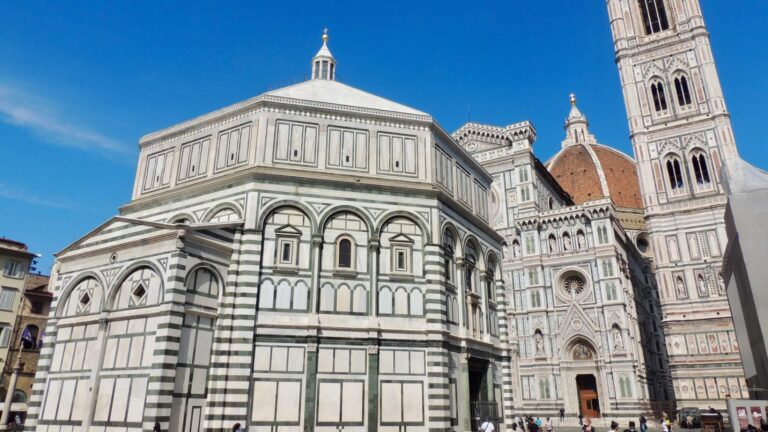
Dedicated to the city’s patron saint John the Baptist, the stunning octagonal baptistery adjacent to the Duomo is one of the oldest buildings in Florence. Another pristine example of Florentine Romanesque architecture, the Baptistery is best known for its extraordinary series of bronze doors designed by Lorenzo Ghiberti.
The most famous are the East Doors, so beautiful that they were dubbed the Gates of Paradise, and which took Ghiberti 27 years to complete. The originals are now safely housed in the nearby museum, and exact replicas have taken their place at the Baptistery.
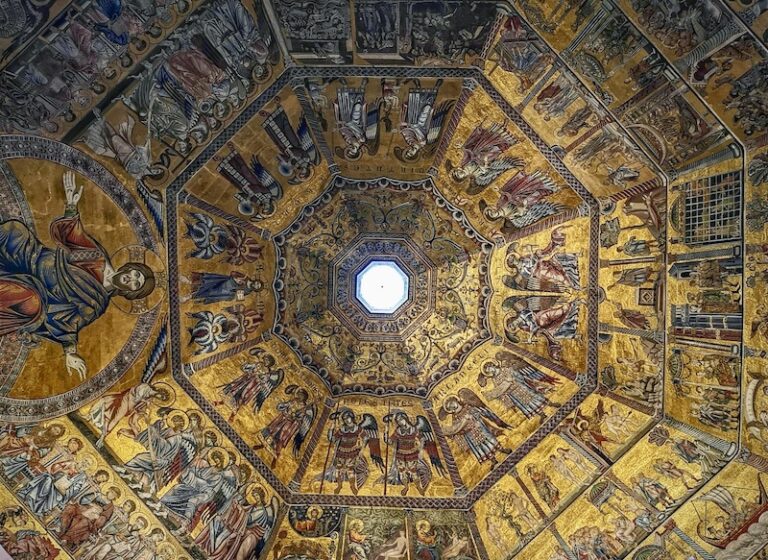
Venture inside, and you’ll be blown away by the glittering mosaics that cover the ceiling. One of the world’s most important medieval mosaic cycles, the ceiling was created between 1225 and 1330 by expert Venetian craftsmen (if you have visited St. Mark’s in Venice with us, you’ll know that Venetians were highly skilled in the technique) to designs by the leading lights of the Florentine art scene.
The bewilderingly complex iconography includes scenes from the book of Genesis, the life of John the Baptist, the Last Judgement, depictions of heaven and a truly terrifying hell, as row after row of angels soberly preside over proceedings. You could easily spend hours poring over these magnificent mosaics.
It was in these incredible surroundings that the great and good of Florence were baptised for centuries, and so welcomed into the civic and spiritual fold of the city. Dante reflected the feelings of his contemporaries when he wrote lovingly of his own baptism in ‘mio bel San Giovanni’ – my beautiful San Giovanni.
Located on the north side of the Piazza del Duomo, the Museo dell’Opera del Duomo is an underappreciated treasure trove of Renaissance art, home to some of the city’s most significant masterpieces. Established in 1891, the museum was created to preserve and display works initially created for the Cathedral, the Baptistery, and the Campanile that were either too precious or too fragile to remain in situ.
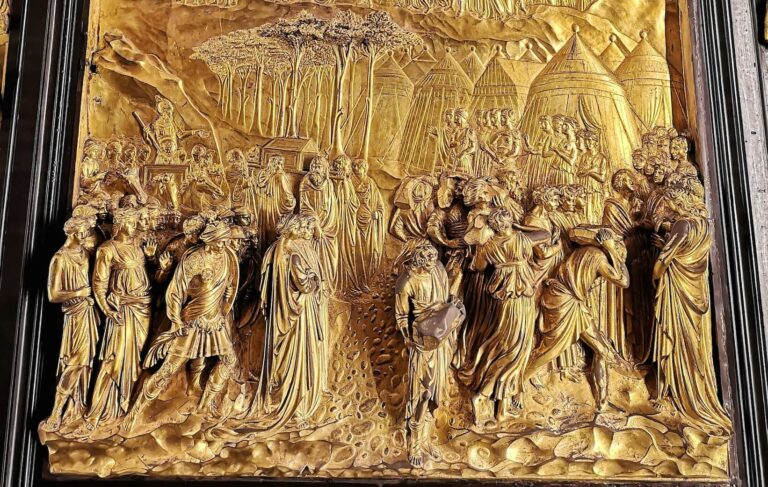
The main reason you absolutely must visit the Museo dell’Opera del Duomo is to see Ghiberti’s original Gates of Paradise, now gleaming again as they were when first unveiled over 500 years ago thanks to a painstaking restoration.
The doors showcase a series of biblical narratives depicted with breathtaking technical skill and no little emotional depth – it was Michelangelo himself, not an easy man to please at the best of times, who conferred upon these magnificent portals their heavenly nickname.
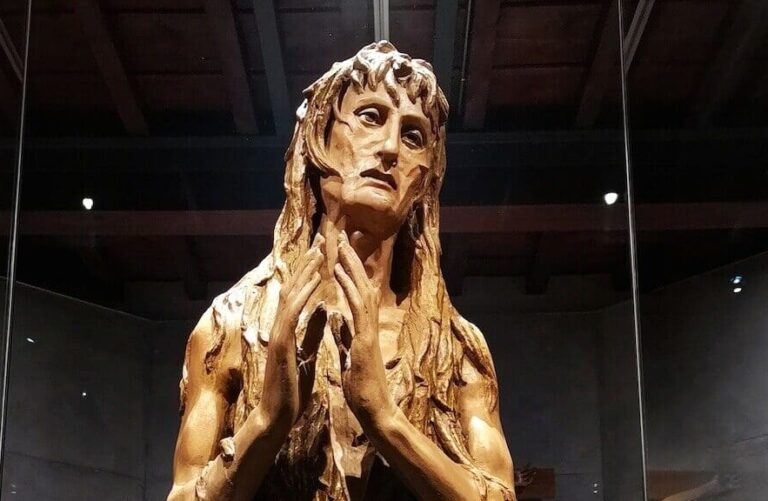
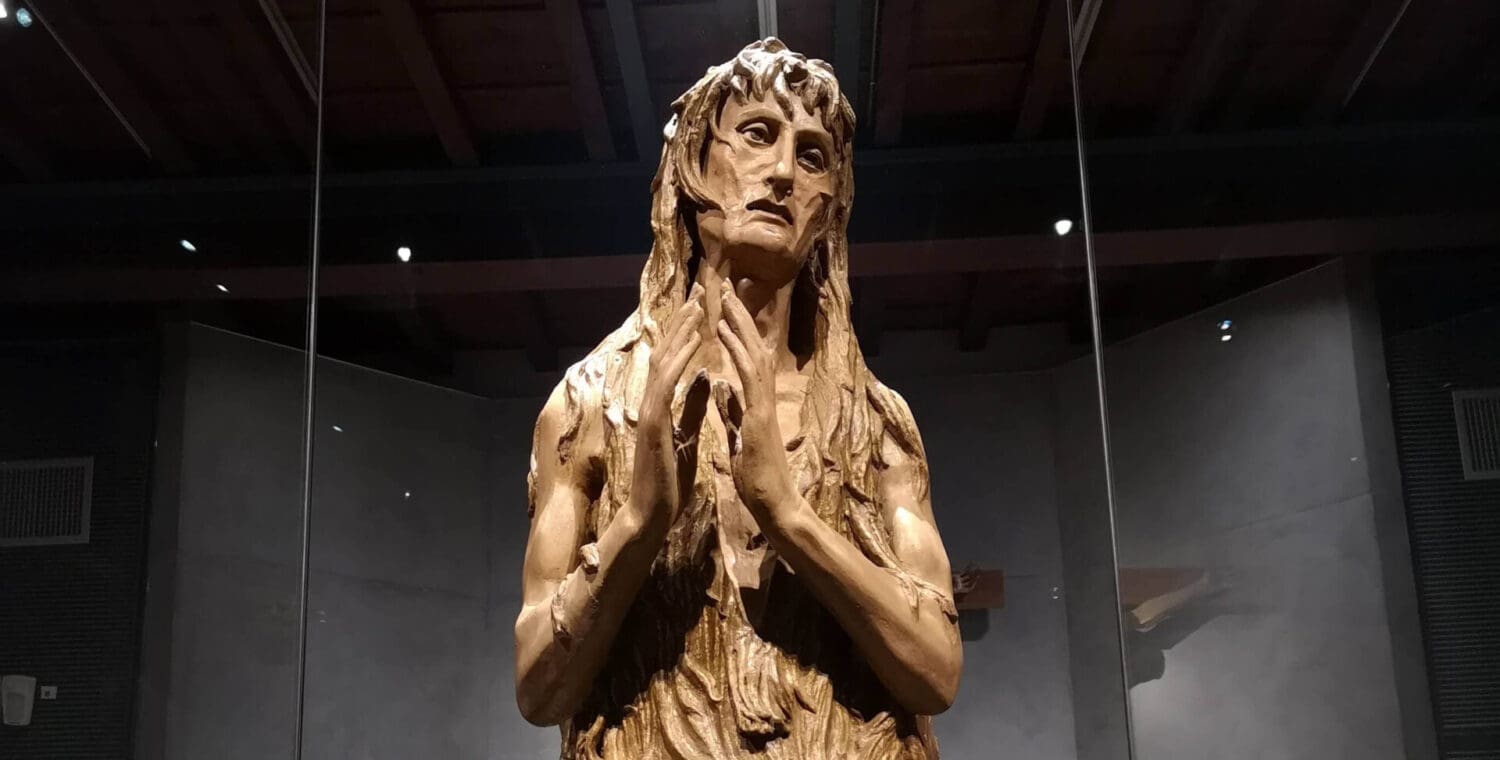
The museum is also home to a number of groundbreaking sculptures by Donatello. Look out for his Penitent Mary Magdalene, where the haggard and anguished saint could hardly be further from the Renaissance stereotype of elegance and reason.
Likewise, Micehlangelo’s Florentine Pietà, an unfinished work depicting Christ’s descent from the cross, differs markedly from the canons of Renaissance beauty observable, for example, in the same artist’s Pietà in St. Peter’s Basilica in Rome.
Finally, as Brunelleschi was such a pivotal figure in the history of the Duomo, it’s fitting that a good part of the museum here is dedicated to his legacy too. One fascinating room features wooden scale models of the evolving plan for the dome, as well as the haunting death mask of the architect himself.
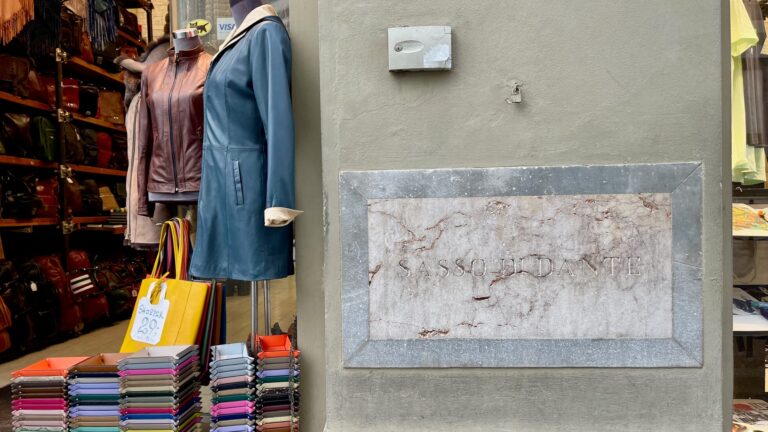
We opened this article with the evocative image of Dante Aligheri sitting on a rock in the piazza, lost in thought, as he contemplated the ongoing building works at the cathedral that would change the face of Florence forever. And so what better way to end our time in the Piazza del Duomo than on the very rock where the poet sat?
Located on the south side of the piazza, a nicely finished piece of pink marble features an 18th-century inscription that reads “SASSO DI DANTE,” or Dante’s stone, marking the supposed spot where Dante watched the world go by.
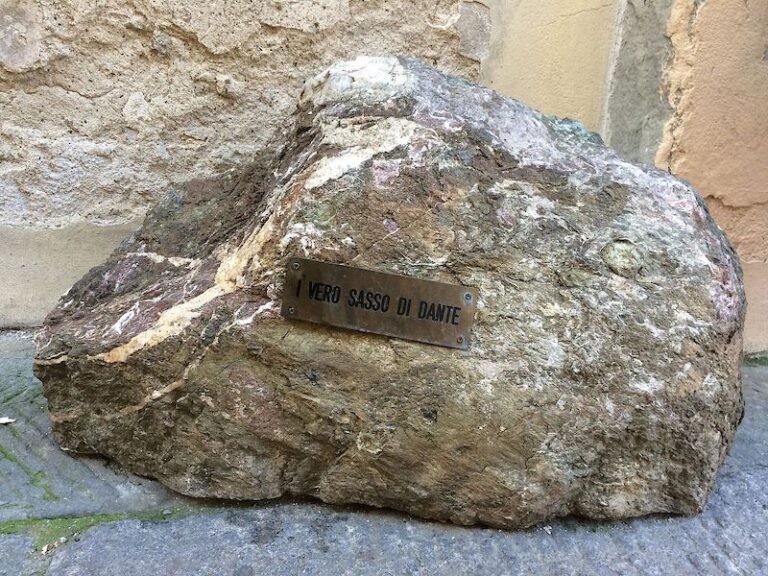
Keep heading south into adjacent Piazza delle Pallottole, and you’ll find a rival claimant for the title of Dante’s rock, however! Here, dumped unobtrusively on the pavement, you’ll come across a much smaller and rougher hunk of stone with a label affixed to its surface reading “I’ vero Sasso di Dante,” or “the real stone of Dante.”
We’ll let the historians battle it out over which stone was once warmed by Italy’s greatest writer, but we’ll follow the bard’s example and set a while longer gazing on the wonderful landmarks of Piazza del Duomo – without doubt one of the best places to visit when in Florence!
We hope you enjoyed our guide to Florence’s amazing Piazza del Duomo! If you’d like to visit the places described in this article, Through Eternity offer small group and private itineraries to the best sites in Florence led by art historians. To see the full range of our tours in Florence, or to arrange a customized itinerary to suit your interests, check out our Florence Tours page here.
Florence Tours
Immerse Yourself in the Magic of Florence!