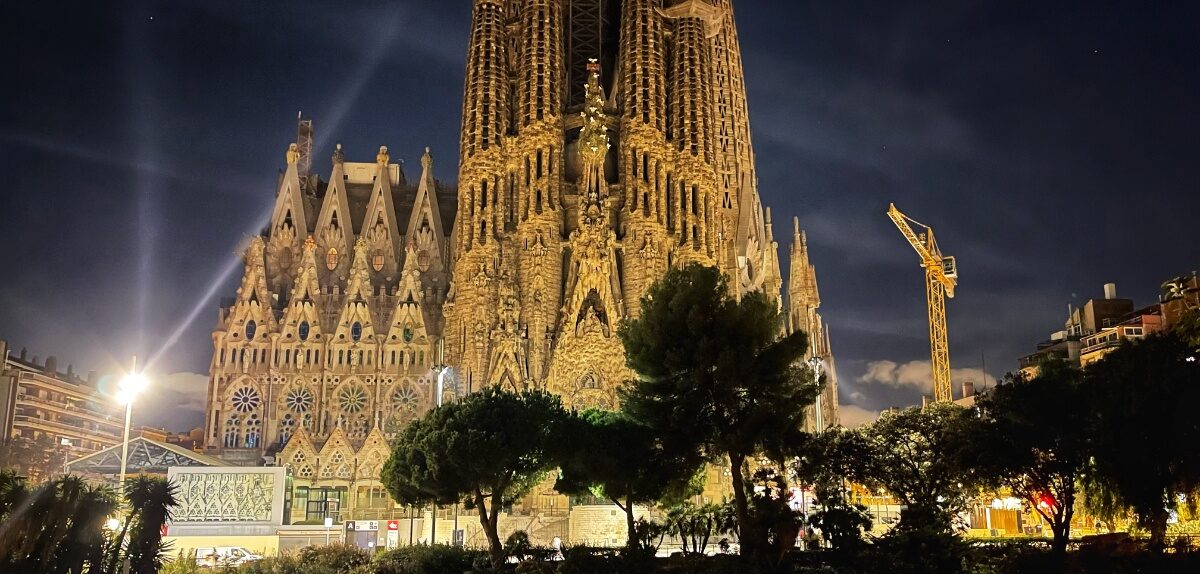
Well over a century and counting in the making, Antoni Gaudí’s iconic, awe-inspiring Sagrada Familia is Barcelona’s greatest landmark.
Gaudí first began work on the massive church in 1883, and the building that would come to be considered the defining work of both Catalan modernism and Gaudí’s own glittering career obsessed the architect for the final 43 years of his life.
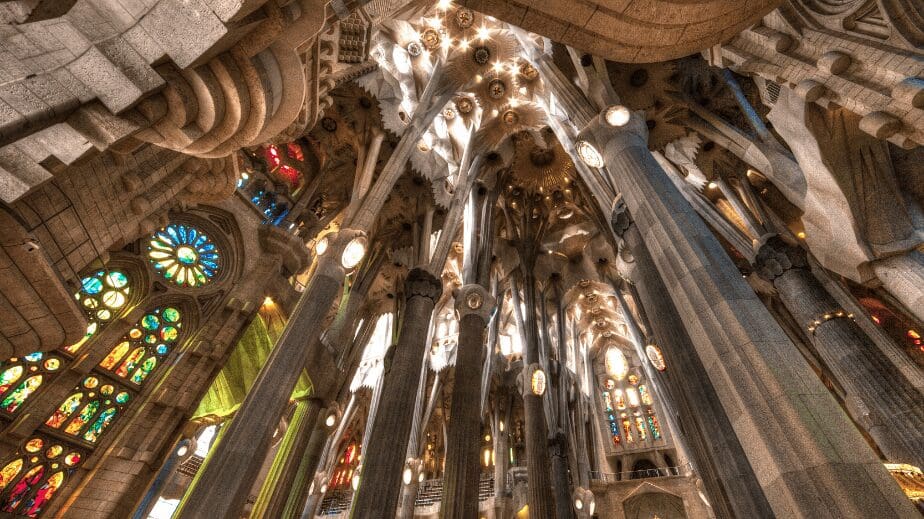
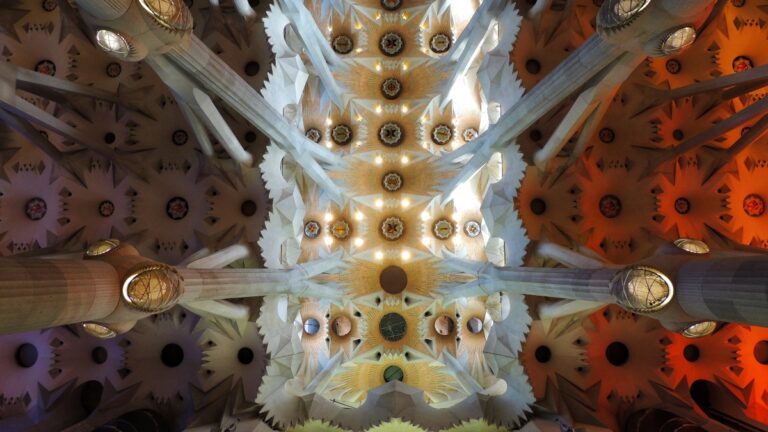
Like the great medieval cathedrals that inspired Gaudí, the construction of Sagrada Familia has become a centuries-long undertaking inextricably bound up with the fortunes of the city. Inside, impossibly slender columns spring from the floor and subdivide into innumerable branches at the roof-line, making you feel like you’ve entered an enchanted forest. The constantly shifting light that floods in from stained glass windows high above adds to the mystical, transcendental atmosphere.
The Sagrada Familia really does have to be seen to be believed, but the church is so large and packed with complex symbolism, magnificent artworks and things to see that it can be hard to know where to start. We think that the best way to see the basilica is on an expert-led tour of the Sagrada Familia. But if you want to go it alone, then you need to do your research first. Find out what you need to see at the Sagrada Familia before you go with our online guide!
Barcelona Tours
Discover the Magic of Gaudi!
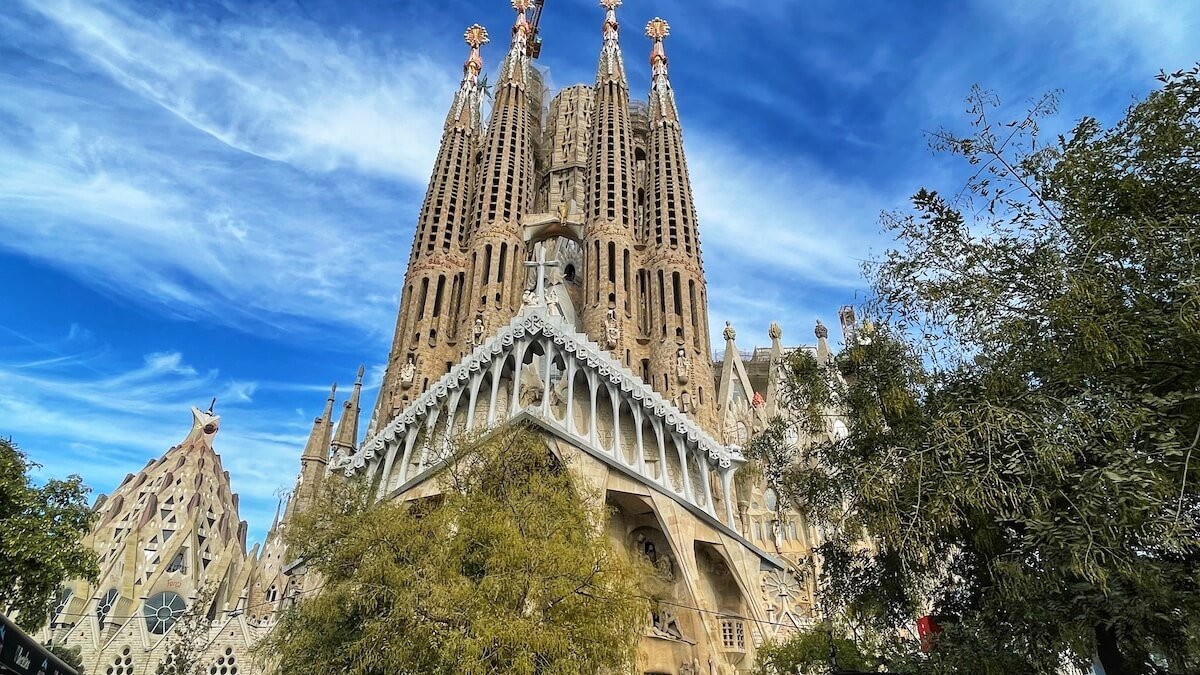
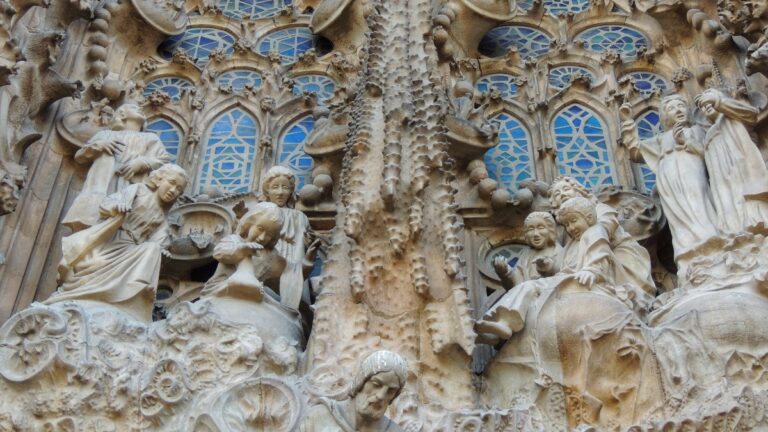
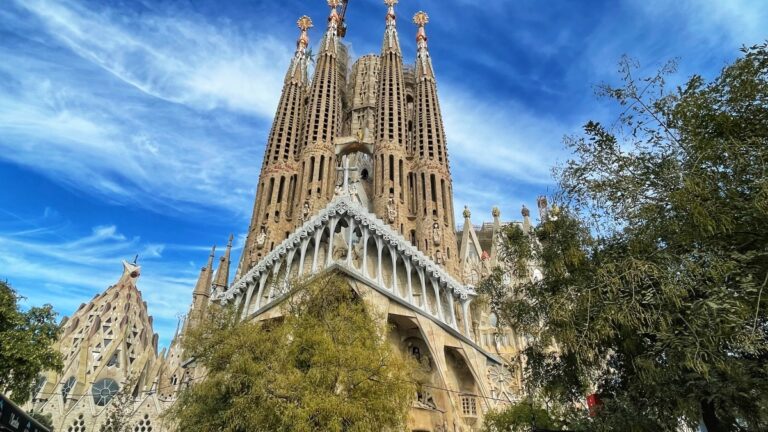
Gaudí conceived of the Sagrada Familia as a great visual bible in stone, and so the main facades of the church each allude to a different aspect of the Christian redemptive arc. The Nativity Facade faces the sunrise, and symbolises the birth of Jesus. It’s the only part of the basilica that was completed during Gaudí’s lifetime, and appears like some encrusted rock face, such is the incredible wealth of sculptural detail etched into its stones.
The stunning array of sculptures depict scenes of Christ’s birth, along with representations of nature, animals, and various biblical characters. Look out for the Holy Family themselves, as well as the Three Wise Men, the Shepherds come to adore the Christ child, as well as all manner of angels joyously heralding the birth of Jesus. Intricately carved animals, including some charming turtles, add to the riotous display, and showcase Gaudí’s interest in the convergence of nature and spiritualism. The style adopted for the sculptural work of the Nativity facade is adapted to the theme – gentle undulations and swooping curves convey the peaceful and joyous atmosphere of Christ’s birth.

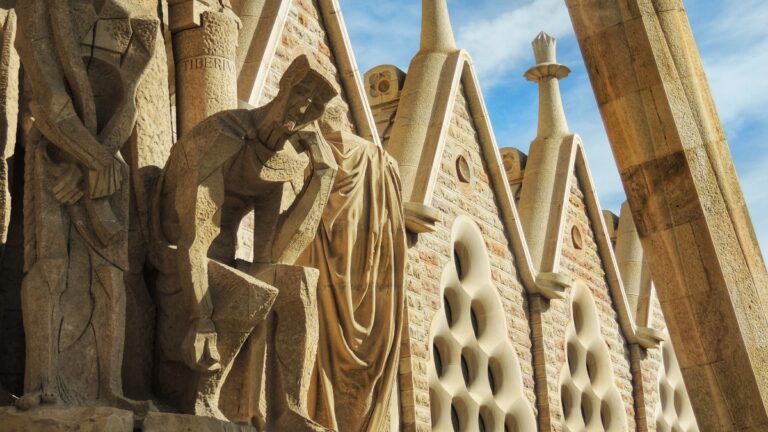
Facing the sunset, the other major facade of the Sagrada Famila represents the suffering, crucifixion, and death of Jesus Christ. It’s a stark contrast to the Nativity Facade, and is characterised by angular, severe lines and sculptures depicting the events leading to Christ’s crucifixion. The sculptures themselves, by local artisan Josep Maria Subirachs, are also completely different to the intricate works on the Nativity facade – their minimalism, abstraction and economy of line mark them out as true masterpieces of modern expressionist art.
Of the 12 sculptures on the Passion facade that tell the story of Christ’s final moments, from the Last Supper to the Resurrection, perhaps the most famous is the Kiss of Judas, where Christ and his wayward follower are entwined in an enigmatic embrace that will seal Jesus’ fate. Other moments in the story of Christ’s Passion represented include Pontius Pilate washing his hands at Christ’s Judgement, the Way to Calvary, where Jesus labours under the weight of his cross, the Scourging at the Pillar, and, of course, the Crucifixion itself at the facade’s centre.
Sculptures of the twelve apostles flank the central figure of Christ, depicting their reactions to his crucifixion. Each apostle’s expression and posture symbolise different emotions—grief, shock, despair, or solemn contemplation. The crown of thorns and other symbols of Christ’s suffering are also represented, including nails and the lance with which the soldier Longinus pierced Christ’s side. Weeping angels, meanwhile, provide an empathetic link for the viewer witnessing Chris’s suffering.
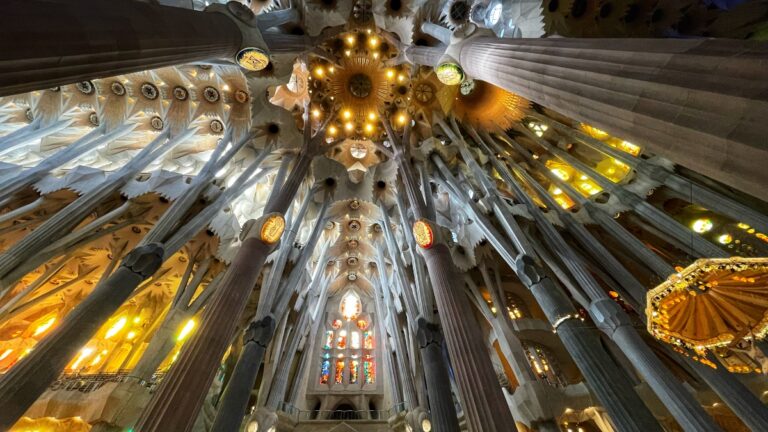
Moving inside the church, the nave of the Sagrada Família is a vast and awe-inspiring space, constituting the central area of the basilica where congregants gather for worship. As with the great medieval cathedrals that inspired it, the nave of the Sagrada Família is incredibly high, soaring over 45 metres (150 feet) above the church floor.
The columns that support the nave are designed to resemble tree trunks, branching out at the top, creating a spiritually charged forest-like atmosphere that gives the impression that you’ve just stepped into an enchanted sacred grove.
The ceiling of the nave is intricately vaulted, creating a sense of grandeur and elevation. The vaults are adorned with colourful patterns and designs, and the play of natural light through the stained glass windows enhances the ethereal ambiance within the space. The nave of the Sagrada Família perfectly reflects Gaudí’s visionary approach to architecture, seamlessly blending spiritual symbolism with natural elements and innovative design.
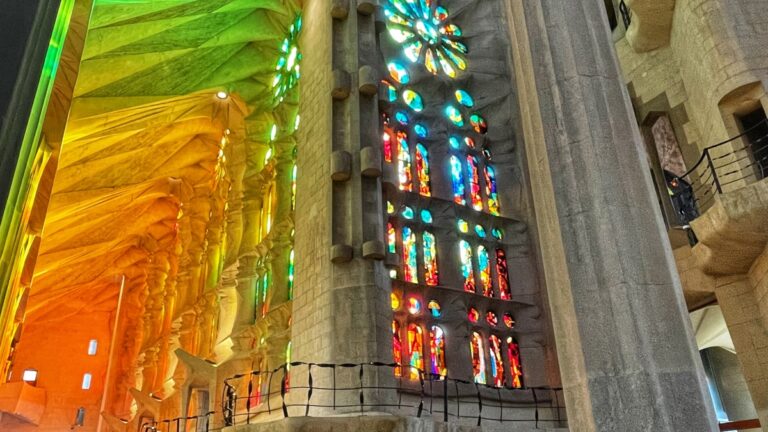
The first thing that strikes you when you enter the Sagrada Familia are the extraordinary effects of light that transform the church into a wondrous kaleidoscopic symphony of colour. This is thanks to the array of stained glass windows that flood the interior with rays of refracted light, creating a mesmerising, other-wordly atmosphere.
Working with a painterly eye, Gaudí designed the windows colours so that the colours are darker at the bottom, becoming progressively lighter towards the top, where light streams in in abundance. The lower reaches of the windows tend to feature more illustrations and text, where they are more legible. The colour schemes of the stained glass windows also vary based on their orientation within the basilica, with east-facing windows featuring warmer colours associated with sunrise, while those facing west might have cooler colours associated with sunset.
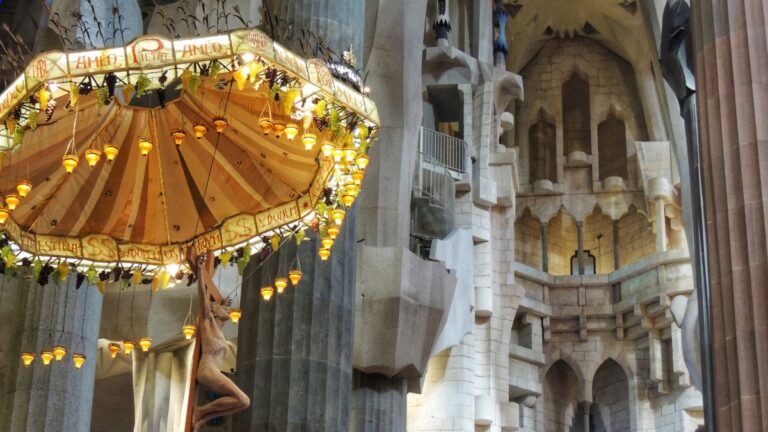
As the place where the Mass is celebrated, the High Altar is one of the most important parts of the Sagrada Familia. The altar itself is made from a massive block of precious porphyry marble carved in Iran. Columns on either side are dedicated to the apostles Peter and Paul. The most striking aspect of the altar, however, is the heptagonal canopy seemingly floating in mid-air above, a replica of a baldachin that Gaudí himself produced for the cathedral of Palma de Mallorca. The 7 sides of the canopy allude to the 7 gifts of the Holy Spirit. Suspended from the canopy is a sculpture depicting the Crucified Christ, surrounded by illuminated lamps.
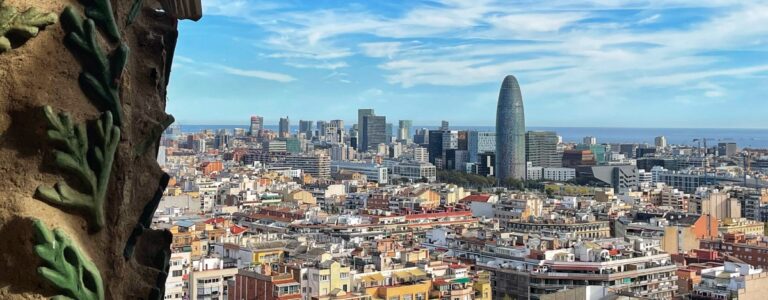
Linked to the facades, on a visit to the Sagrada Familia you can climb two towers: the Nativity or the Passion towers. Each tower provides a different, but equally spectacular view of Barcelona. The Nativity tower offers views of the eastern part of Barcelona, including the Mediterranean Sea and the city’s eastern neighbourhoods. The ascent takes you up a narrow spiral staircase, but don’t worry: it’s not a particularly challenging climb. As you make your way up it’s possible to get great up-close looks at the highly detailed sculptural work on the Nativity facade.
The Passion Tower also involves a climb up a narrow spiral staircase, but the view from the top is worth it – a lovely panorama of the western part of Barcelona, showcasing the Eixample district and the nearby hills. Take a look at the sculptures on the Passion facade as you make the ascent, and you’ll see just how different the sculptural style adopted for the tragic narrative of Christ’s passion is from that used on the Nativity facade. The gently undulating curves have been replaced with sharp lines and angles, harmonious scenes replaced by dark tales of anguish.
Tickets to the Sagrada Familia sell out well in advance, so it’s essential that you plan ahead. All tickets are timed and must be purchased in advance via the official site to avoid long lines. We recommend reserving your time slot at least a week or two in advance, especially in high season. Prices for 2025 are:
- Basilica + Audioguide app: €26
- Guided Tour (includes app): €30
- Basilica + Towers + App: €36
- Guided Tour + Towers + App: €40
Alternatively, to take the stress out of your visit, Through Eternity offer a range of private tour itineraries that explore the Sagrada Familia and other Gaudi masterpieces in Barcelona. You’ll benefit from the insights of an expert local guide, and won’t have to worry about tickets, timings, or any practical concerns – we’ll take care of everything!
Plan Your Barcelona Visit Today!