The foremost figure in the Catalan modernist movement, avant-garde architect and designer Antoni Gaudí has arguably had a greater impact on the city of Barcelona than anyone else.
Over the course of his long career spanning the late 19th and early 20th centuries Gaudí was responsible for the creation of many of the city’s most famous landmarks – from the iconic Sagrada Familia church to a series of residential houses where the old rules of architecture seem to fall away to be replaced by fantastical dream-like environments where surreal spaces, intricate forms and vibrant colors propose an entirely new conception of the built environment. Getting to grips with Gaudí is a vital part of any trip to Barcelona, and this week on our blog we’re looking at where to see the architect’s work at its inventive, original best.
Barcelona Tours
Discover the Magic of Gaudi!
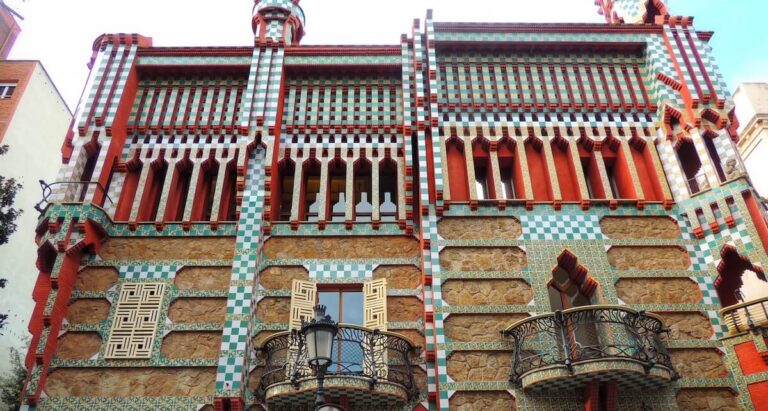
Antoni Gaudí’s first commission – he was just 30 when stockbroker Manuel Vicens i Montaner hired him to design a palatial modernist residence in the well-heeled Gracia neighborhood in the 1880s – Casa Vicens is a masterpiece of brick and colored tiles that appears as somewhere between a Gothic castle and a glittering Moorish palace. Oriental influences abound, and the facade is a kaleidoscope of bright tiles arranged in complex geometric patterns, filigree window shutters, and exotic towers.
Enter the beautiful shady garden via a bronze gate ornamented with date palm designs before making your way into the tranquil interior, where Gaudí once again drew inspiration from the natural world in designing the forms and decorative patterns. A recurring motif is the yellow complexion that the architect found flowering all over the site before works began.
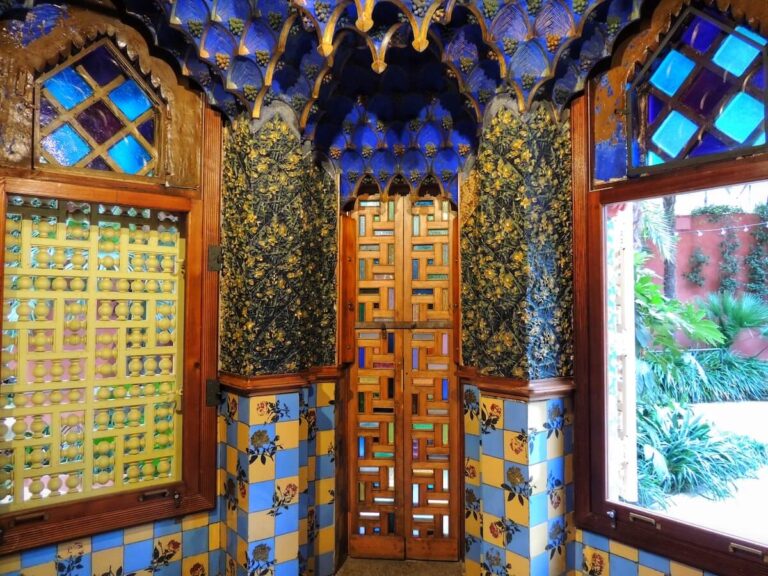
The Fumador, or Smoking Room, is one of the most original and fascinating spaces in Gaudí’s architectural oeuvre. A masterpiece of the Orientalist style decorated with marvelous ceramic tiles, stained glass and a jaw-dropping, highly sculptural ceiling, the villa’s wealthy owner would retire here to smoke and discuss the important events of the day with illustrious guests. In a further nod to the East, the roof features chimneys, towers and turrets that recall the fabulous Islamic architecture of southern Spain.

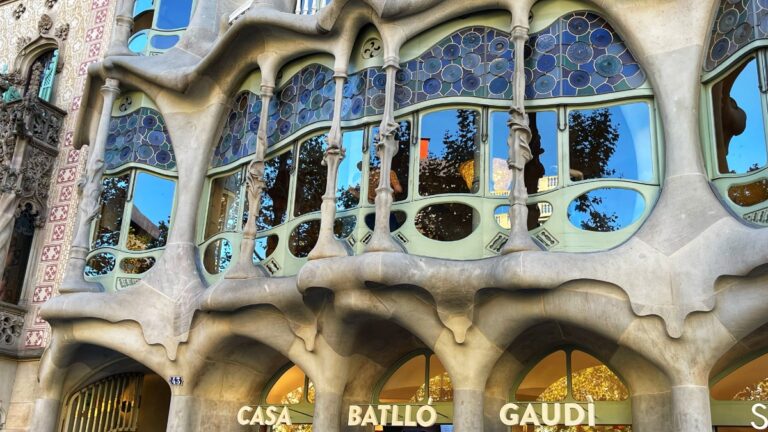
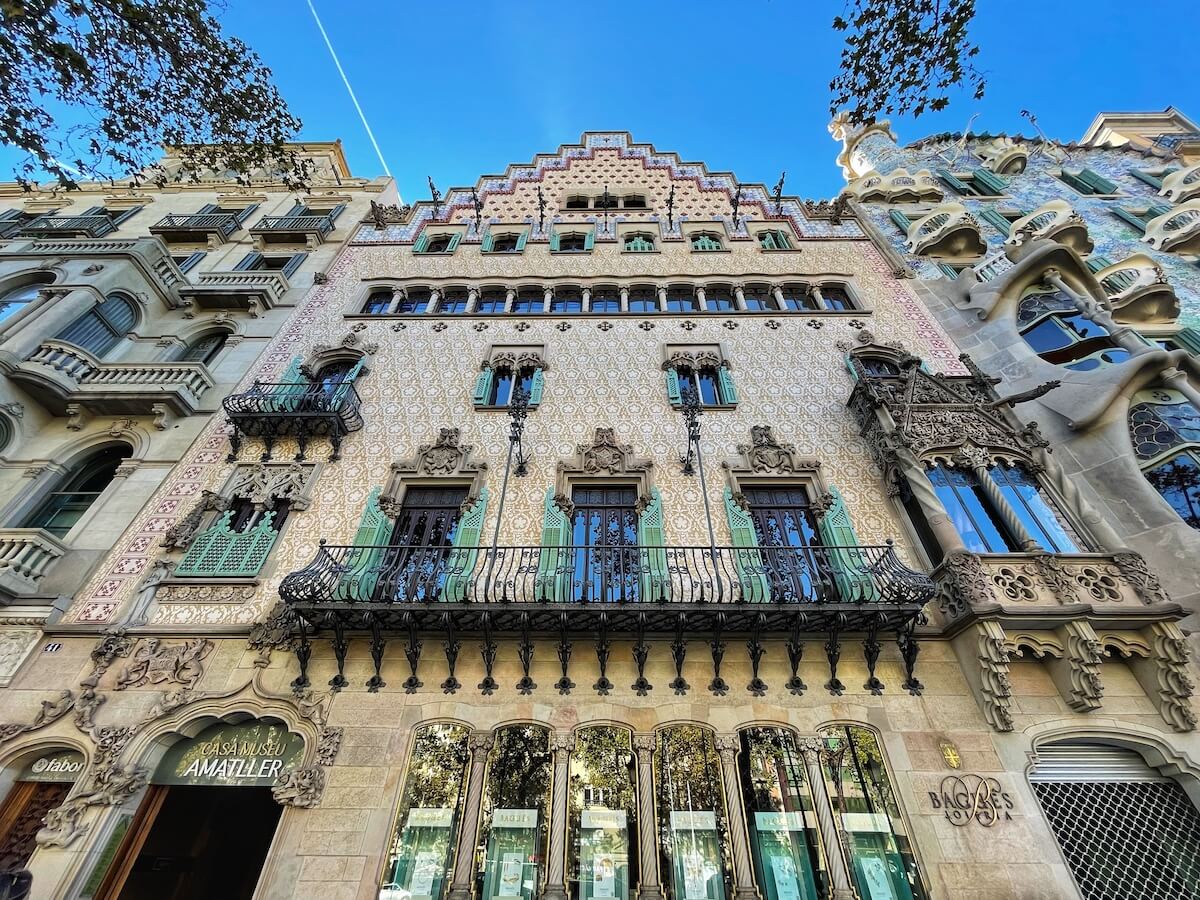
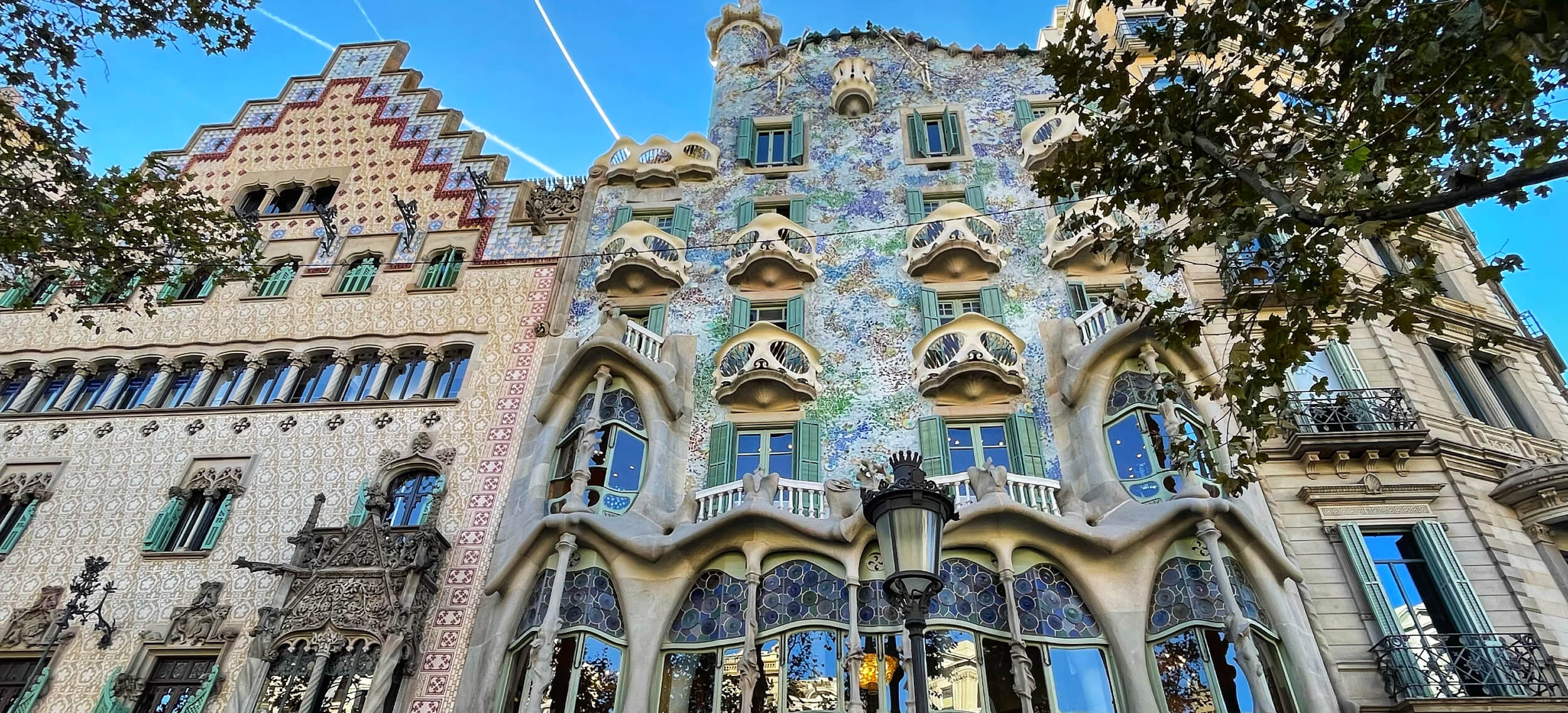
Gaudí let his imagination run riot at mind-bending Casa Batlló, which appears as if in a dream rising from the stately Passeig de Gracia boulevard in downtown Barcelona. The startlingly beautiful facade pulses with a strange life: with balconies resembling toothy mouths and an undulating, scaly roof, the entire house is reminiscent of a creature from another world. Not for nothing is the Casa Batlló sometimes known as the casa del ossos the house of bones. The facade’s subtle undulations and shimmering blue-green coloration also recalls the waves of a storm-tossed sea – in Salvador Dali’s memorable formulation, ‘twilight clouds in water.
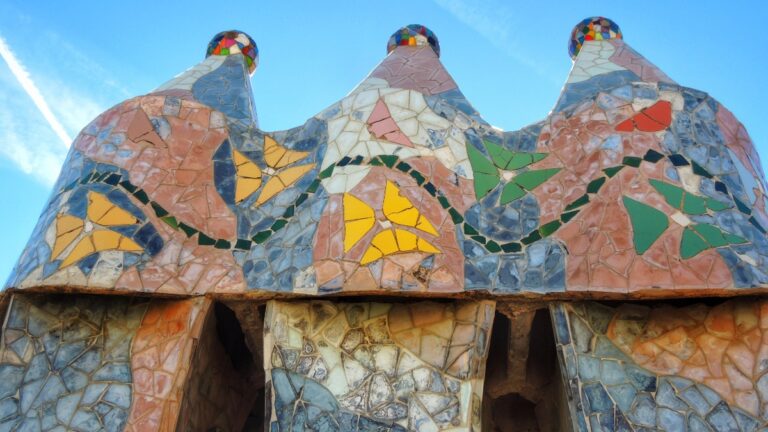
The luxurious residential villa had been built back in the 1860s, but at the start of the new century the textile magnate Josep Batlló commissioned Gaudí to completely renovate and modernize the building in the latest avant-garde fashion. The architect needed no second invitation. Behind the facade, the house unfolds in sweeping curves and complex geometries, with hardly a straight line in sight. Extraordinary light effects are emphasized and refracted by the colored tiles that feature in every room, while sinuous, highly colored chimney tops transform the roof into a mystical wonderland.
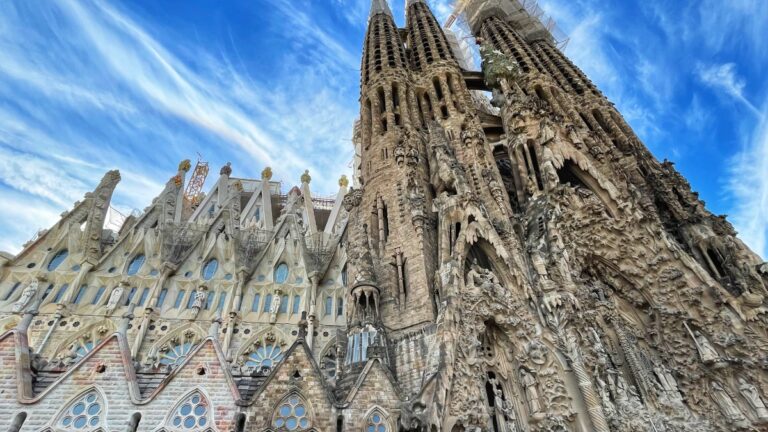
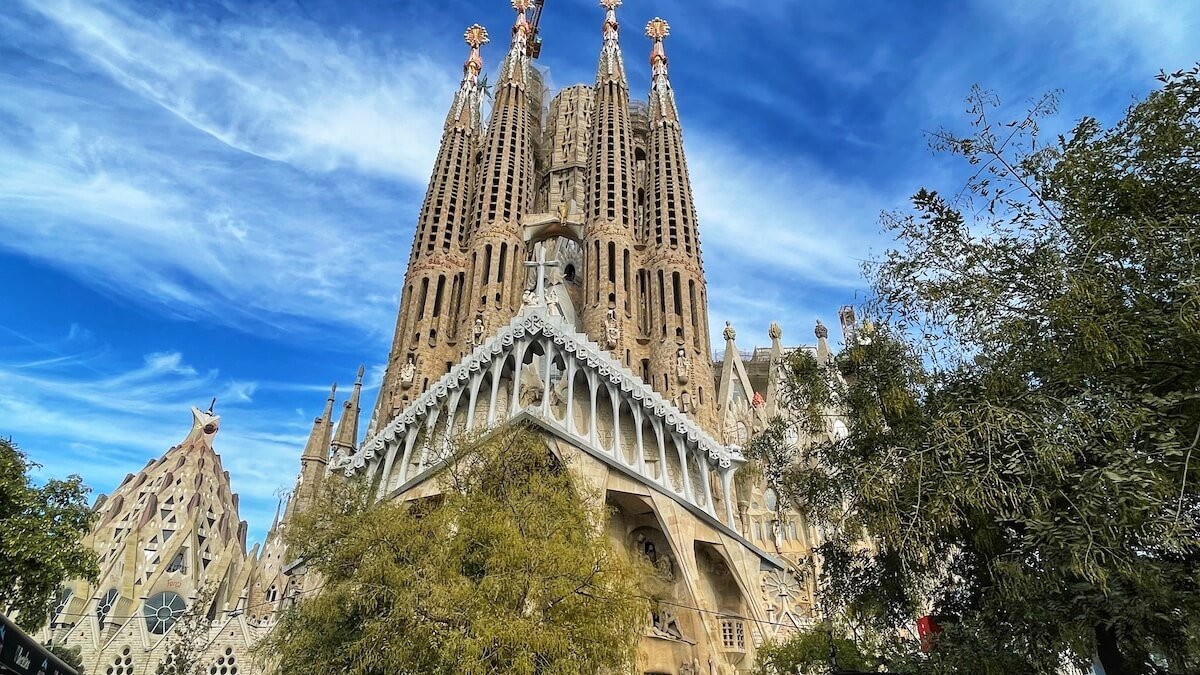
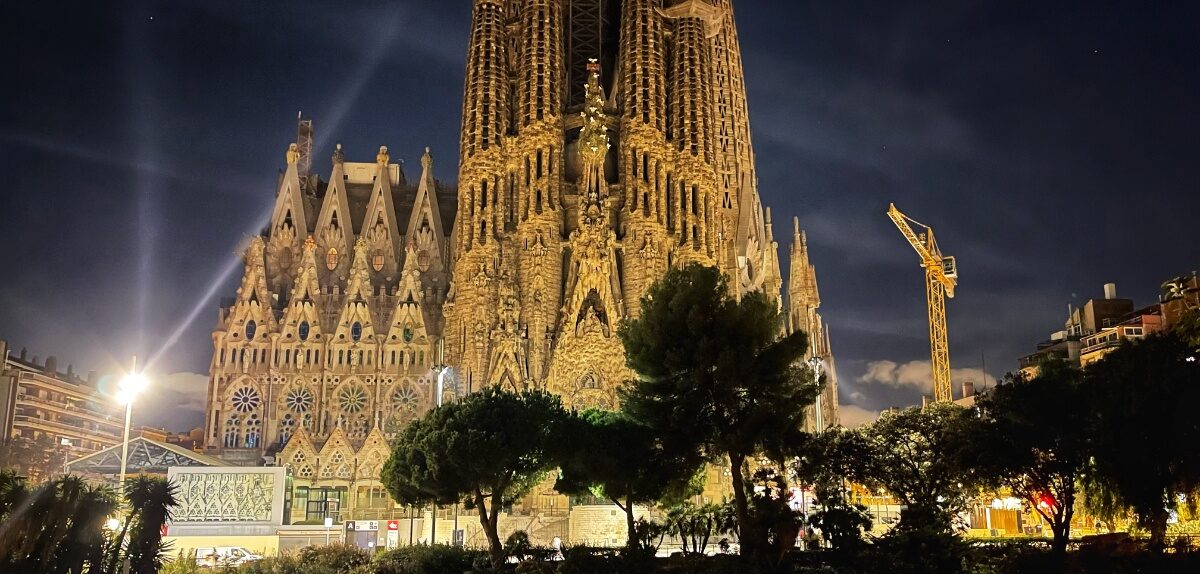
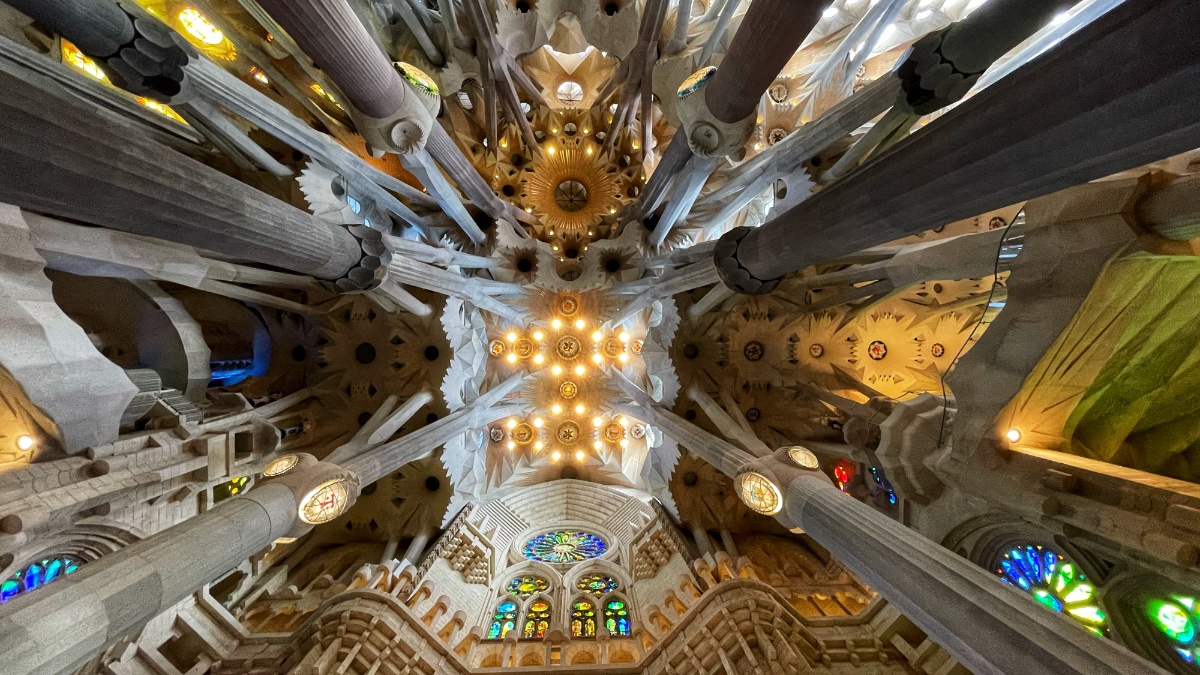
Well over a century and counting in the making, the iconic, awe-inspiring Sagrada Familia really does have to be seen to be believed. The massive church can be seen from all across Barcelona, with delicate gingerbread spiers soaring over 300 feet into the sky. Gaudí first began work on the Sagrada Familia in 1883, and the building that would come to be considered the defining work of both Catalan modernism and Gaudí’s own glittering career would obsess him for the final 43 years of his life. Like the great medieval cathedrals that inspired Gaudí, the construction of Sagrada Familia has become a centuries-long undertaking inextricably bound up with the fortunes of the city.
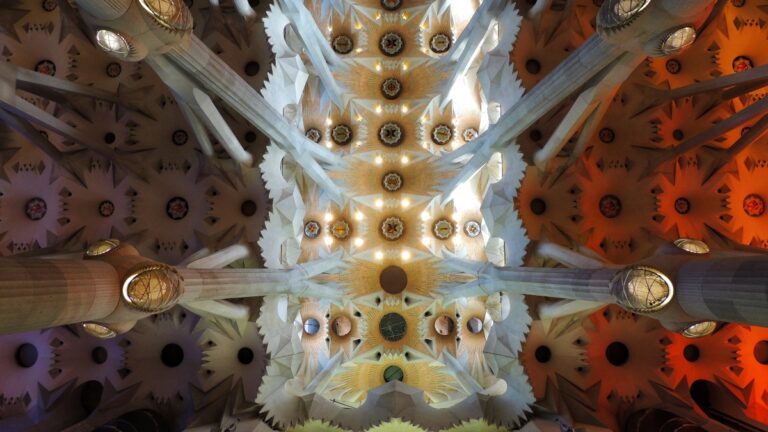
If the exterior of the Sagrada Familia is impressive, with its distinctive facades each following a complex iconographic scheme relating to different periods in Christ’s life, the basilica’s interior takes things to a whole other level. Impossibly slender columns springing from the floor and that subdivide into innumerable branches at the roof-line make you feel like you’ve entered an enchanted forest, whilst the constantly shifting light that floods in from stained glass windows high above adds to the mystical, transcendental atmosphere.
Nowhere captures the unique magic of the Catalan capital better, and a visit to the Sagrada Familia is a must when in Barcelona.
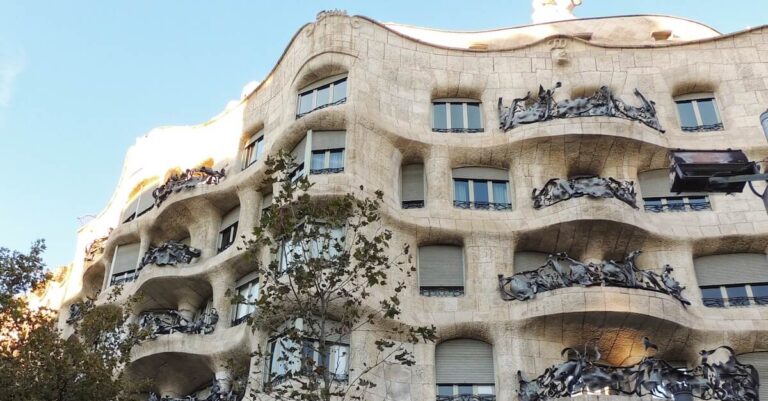
The final domestic building that Gaudí would design before devoting his life to the Sagrada Familia, the strange, forbidding Casa Milà was commissioned by the politician and socialite Pere Milà and his fabulously wealthy wife Roser Segimon on the fashionable Passeig de Gràcia between 1905 and 1910. The massive building was conceived of as a multi-purpose building that combined office space and well-heeled apartments arranged around spectacular internal courtyards.
The rippling, rough-hewn gray stone facade, studded with no fewer than 33 writhing wrought-iron balconies, has inspired the building’s nickname – La Pedrera, or The Quarry. The resemblance of the building to an eroded cliff face is no coincidence; Gaudí’s extraordinarily original architectural style was founded upon a conviction that nature is the greatest architect of all, and his designs frequently fall back on paradigms inspired by the natural world.
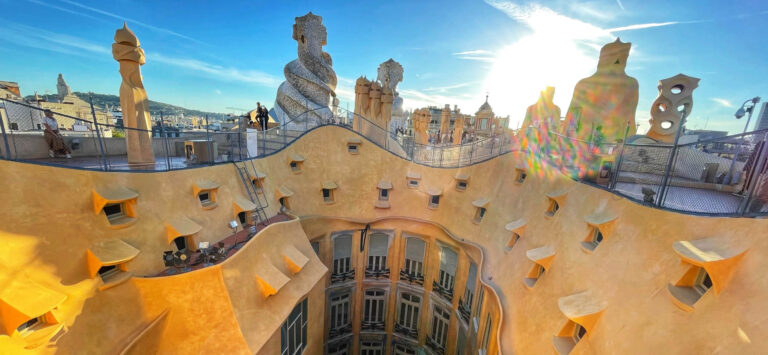
The organic theme continues inside, with two jaw-dropping courtyards inspired by flora and fauna including butterflies. In the attic story, 270 catenary brick arches elegantly support the roof terrace above, which is the building’s crowning achievement. Make the climb up the curving stair-well and step out into the blinding sunlight, where a series of highly sculptural chimneys and ventilation towers seem to morph before your eyes into a squadron of knights standing silent guard over the skyline of Barcelona.
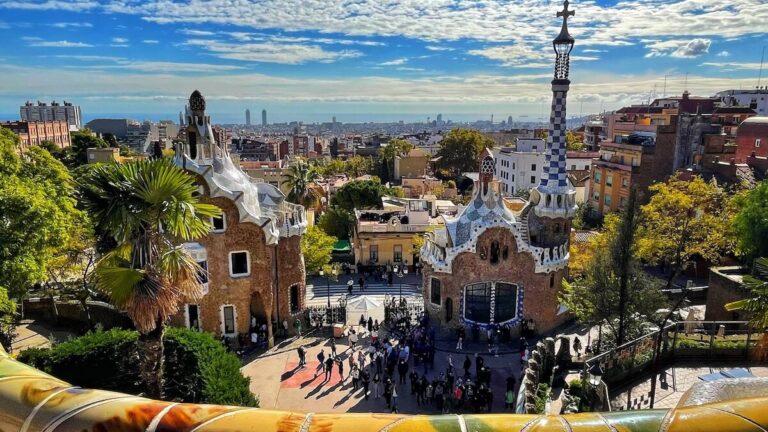
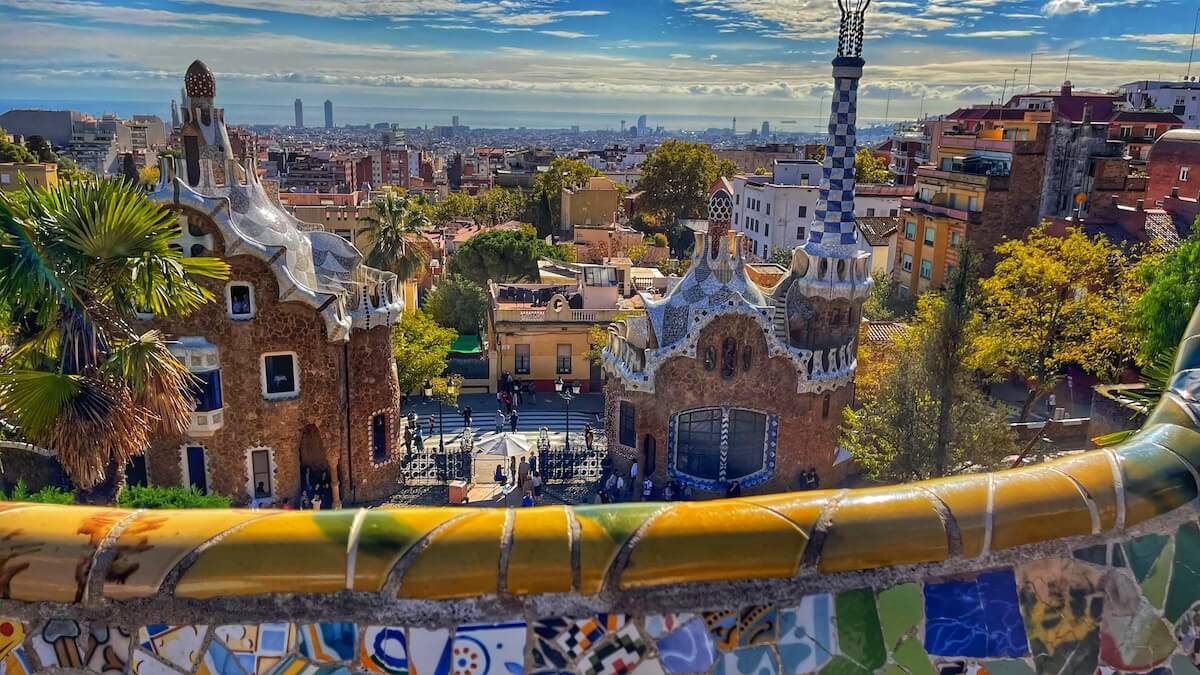
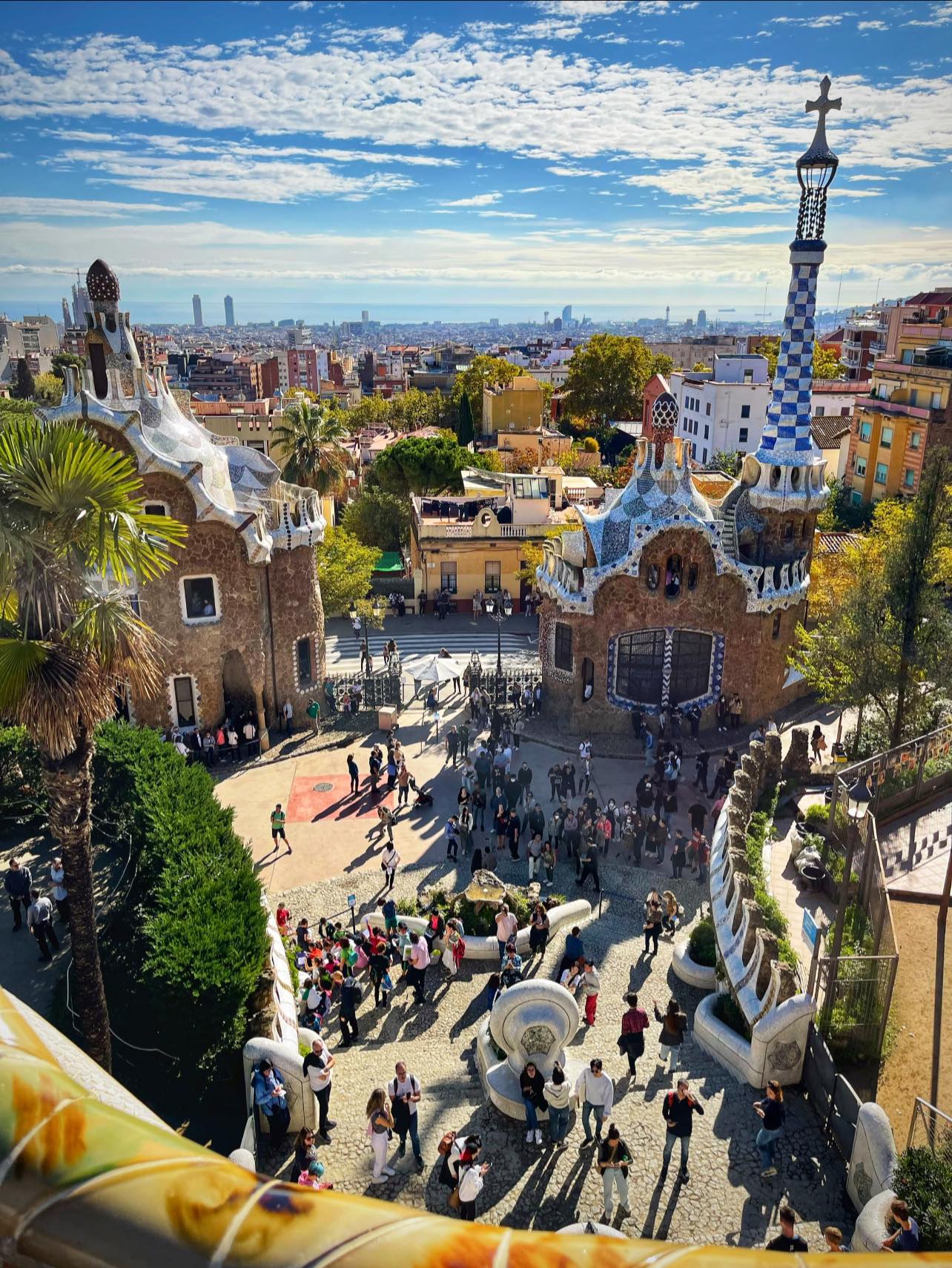
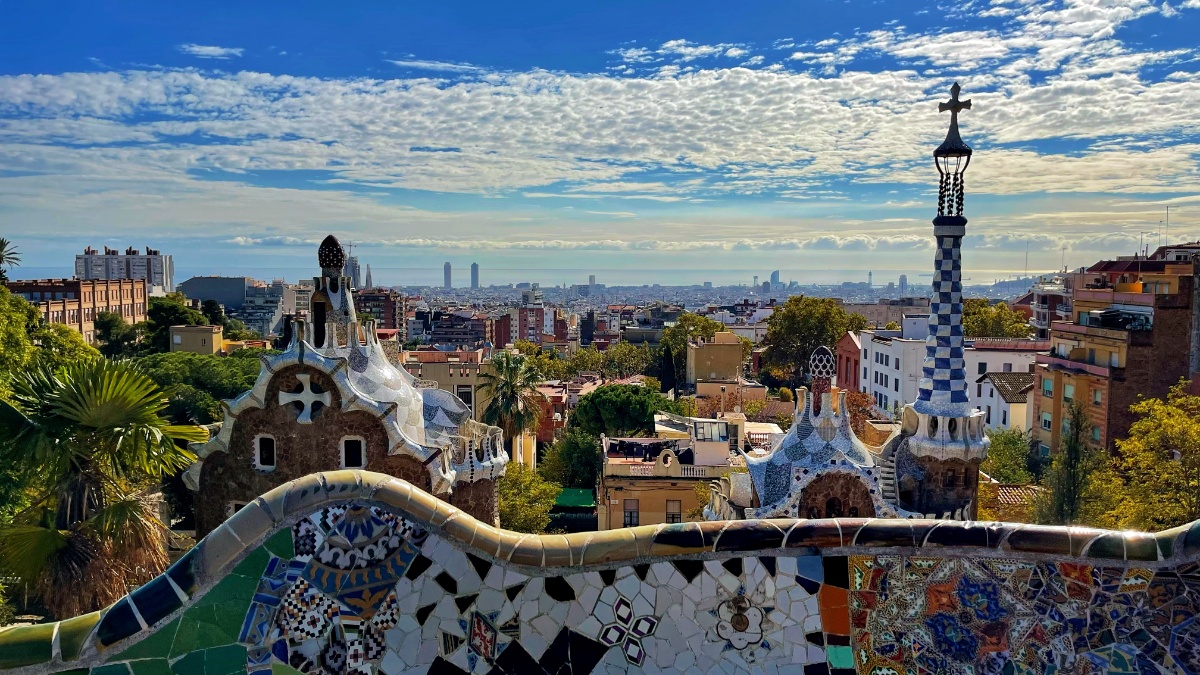
The playful side of Gaudí’s approach to architecture is showcased at its most characteristic in the Park Güell, situated high on a hill in the city’s northern suburbs. Commissioned by the eye-wateringly rich businessman Eusebi Güell in 1900, the 30-acre complex inspired by the English garden city movement park was originally conceived as a new type of residential complex for Barcelona’s newly prosperous middle classes.
Unfortunately for Güell, public interest in the plan was lacking, and only one of the residential plots was ever sold. Instead, the Park became an experimental space where Gaudí – who moved into a house here in 1906 – could try out some of his most revolutionary ideas about the nature of space, architecture and the built environment.
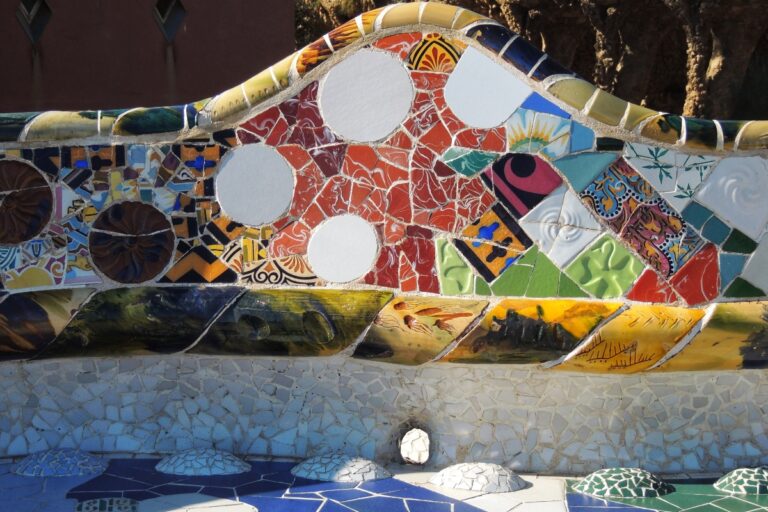
Like some great architectural theme park, Park Güell features paths meandering through landscaped gardens and wildernesses studded with some truly fantastical buildings – gingerbread houses drawn straight from the pages of a fairytale, magnificent structures studded with Gaudí’s signature trencadis mosaic tiles, an open-air colonnade where muscular doric columns transport you into a mind-bending artificial forest – these are just some of the downright surreal treats in store.
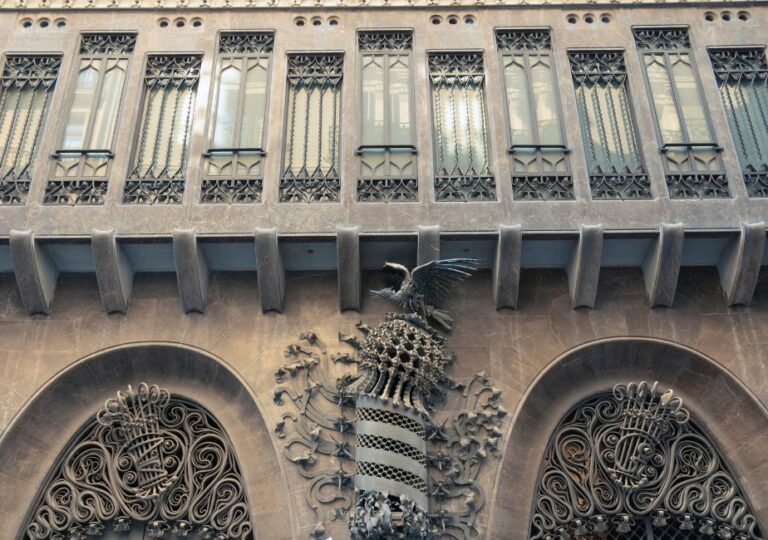
One of Gaudí’s early masterpieces, this rather forbidding palace just of La Rambla was commissioned by the architect’s longtime patron Eusebi Güell in 1885. Designed in a unique neo-gothic idiom that seems to update the tenets of a Venetian palazzo for the industrial age, ornamental details include wrought iron arabesques, stained glass windows and exotic tiles inspired by Islamic design.
The interior is dominated by the impressive grand staircase and features immense blocks of sandstone and meaty granite columns; the light streaming in from the stained glass windows above gives the impression of a futurist re-imagining of a medieval cathedral – something that Gaudí would develop further in the incredible Sagrada Familia across town in the coming decades.
Through Eternity Tours offer a variety of expert-led itineraries in the Catalan capital, where we explore everything from the modern architecture of Gaudí and his contemporaries to Barcelona’s Gothic quarter, tapas tours and much more. To discover our full range of Barcelona tours, check out Through Eternity’s Barcelona website here.
Plan Your Barcelona Visit Today!