Welcome to Pisa’s Field of Miracles!
Most people know Pisa for one thing and one thing alone: the iconic Leaning Tower that lists into the sky at an impossibly rakish angle in the city’s otherworldly Piazza dei Miracoli. But there’s an awful lot more to the city than this miracle of dodgy engineering.
For centuries Pisa was one of Europe’s most influential cities, a naval superpower whose fearsome fleets and control of the Mediterranean’s trade routes made it a worthy rival to the city-states of Venice, Florence and Genoa. Things might have gone a bit pear-shaped from the 15th century, but through centuries of political decline the city has remained a cultural powerhouse.
These days it’s a vibrant modern city home to Italy’s most prestigious university, buzzing nightlife, great restaurants and a thriving cultural scene all unfolding amidst stunning Medieval and Renaissance monuments, from the iconic Leaning Tower to Romanesque architectural gems, stunning piazzas and more. In our opinion it’s one of Italy’s most underrated cities, and deserves to be on your radar when planning your next European break.
To help you get started, in the first of our two part guide to our favourite places to visit and things to do in this captivating city, this week’s blog is taking a closer look at the extraordinary cultural heart of Pisa: the Piazza dei Miracoli, or Field of Miracles.
Tuscany Tours
Visit Pisa on a Day Trip!
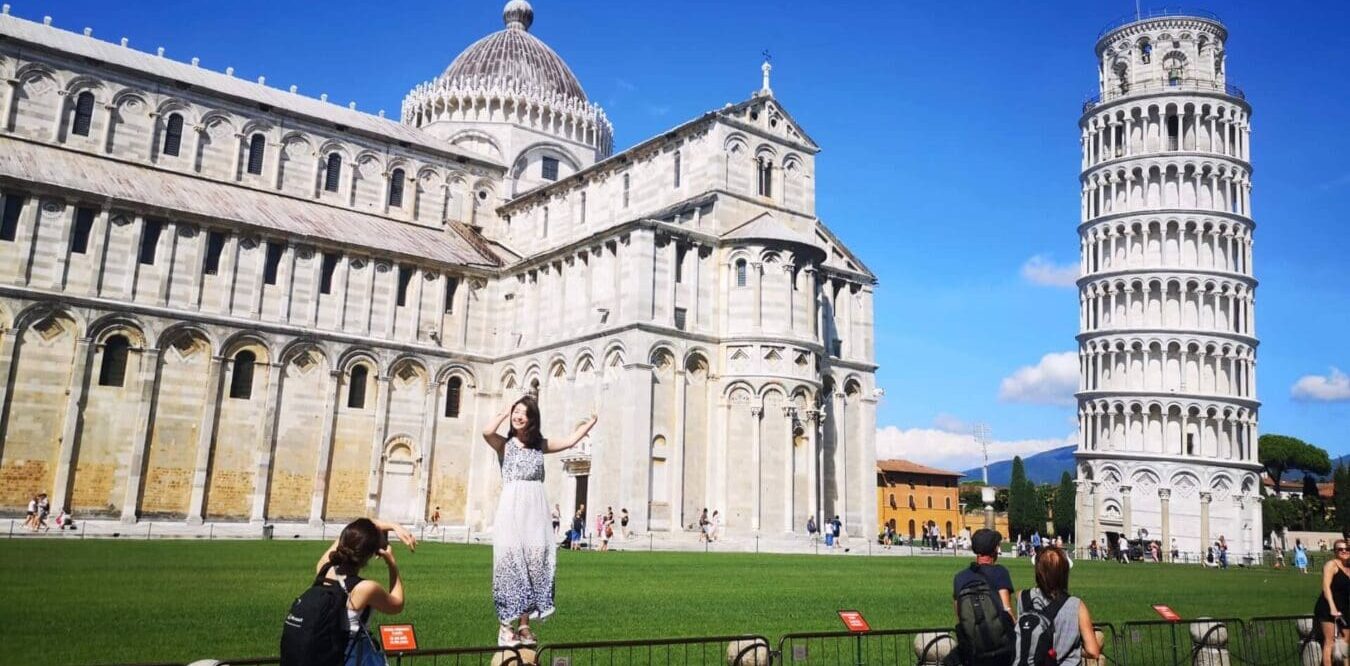
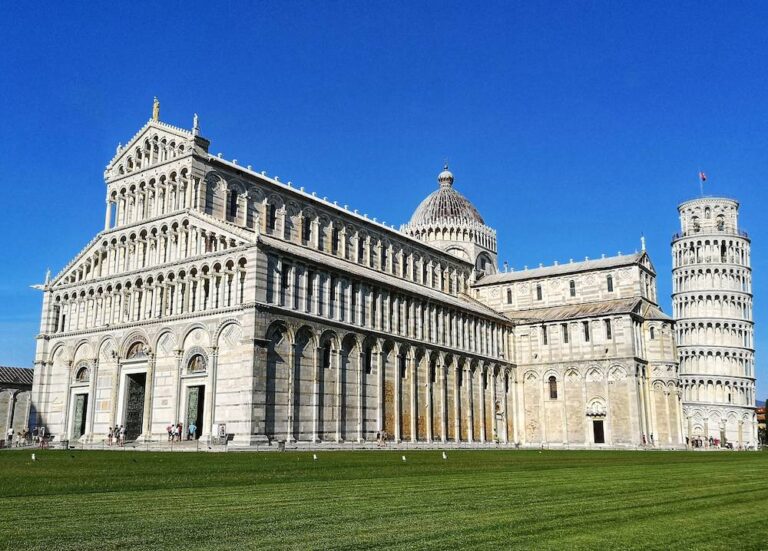
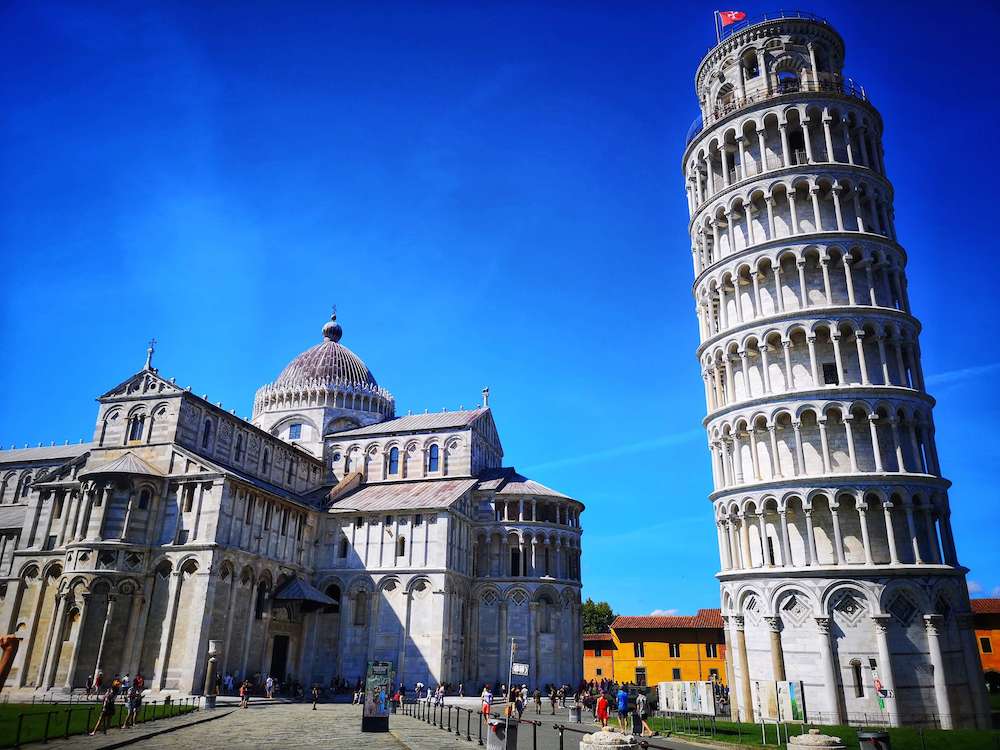
With its series of jaw-droopingly beautiful white marble monuments rising from a serene carpet of green grass, Pisa’s Piazza del Duomo can lay a solid claim to being the most beautiful public space in Europe. Dotting the lawns are the magnificent Duomo at its centre, the adjacent Baptistery, the monumental cemetery of the Camposanto and, of course, the iconic Campanile known to the world as the Leaning Tower.
These days the Piazza del Duomo is widely known in Italian as the ‘Piazza dei Miracoli’ or Field of Miracles, inspired by the poet Gabriele d’Annunzio’s description of the space in the early 20th century as a “prato dei Miracoli” for the miraculous beauty of its harmonious architecture. But the story of the Piazza dei Miracoli goes back a lot longer than that.
The Duomo was first begun all the way back in 1064 when Pisa was at the height of its power, and the authorities chose an odd spot for the new cathedral, outside the city’s protective walls to the north-west. Their exact motives are unknown – perhaps it was because the ground here was higher, and they hoped the elevation would protect the area from the Arno’s recurring devastating floods.
Whatever the precise reason, the blank slate offered by the green field site allowed some of Italy’s finest artists and architects to construct an architectural ensemble of incredible stylistic coherence over the course of the next 2 decades, providing the world with the finest expression of the Pisan Romanesque anywhere.
Ironically, the development of Piazza del Duomo coincided neatly with the decline of Pisa as a city-state to be reckoned with, culminating in their rout by Genoa in 1284. And so grand plans to redevelop the city around this new nexus never materialised, isolating the Piazza forever on the outskirts of the city centre.

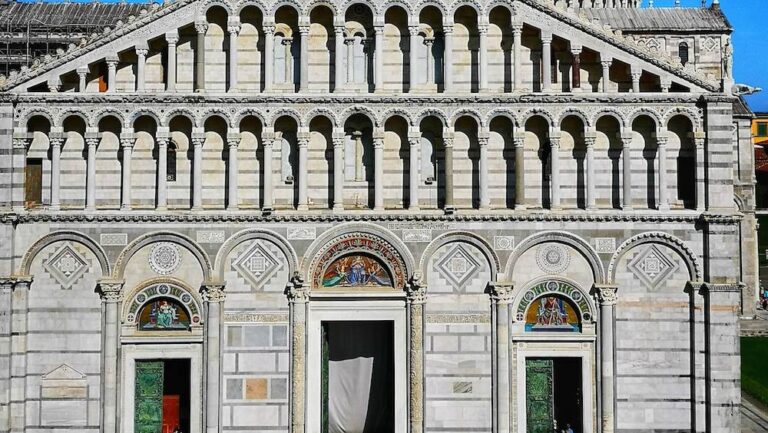
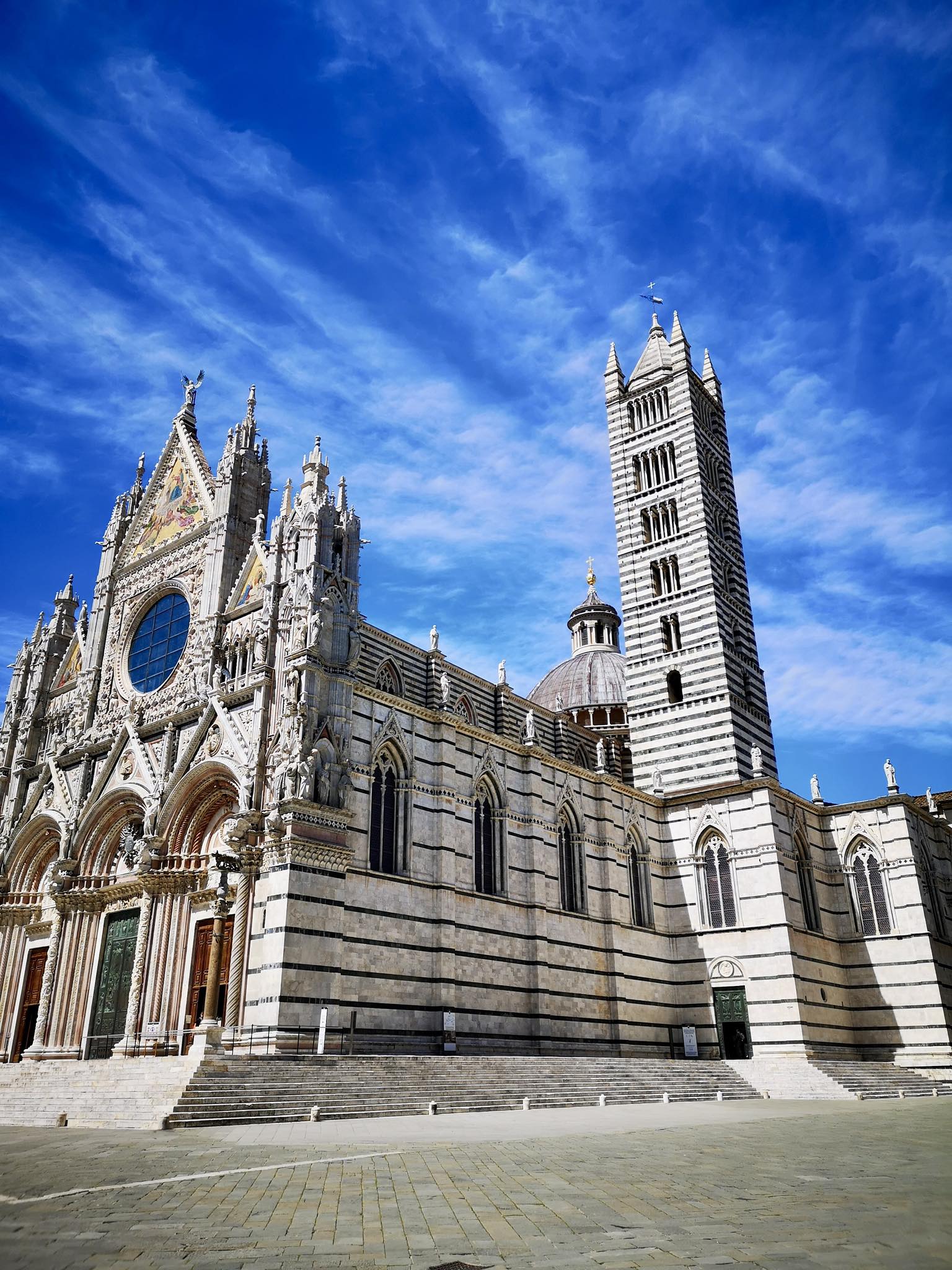
The first and historically most important building in the Piazza del Duomo is the Cathedral of Santa Maria Assunta itself. Designed to plans drawn up by the architect Buscheto in 1064 and consecrated in 1118, the lavish cathedral was paid for by loot acquired in Pisan adventuring in Sicily the previous year. And it was money well spent: the cathedral’s exterior is an almost perfect expression of Romanesque architectural principles – layers of stunning loggias rise above characteristic stripes of white and grey limestone studded with marble decorations of fabulous beasts, vines and more.
Many aspects of the design and decorations seem inspired by buildings from the east, and Pisan sailors no doubt returned from their travels with new ideas and inspirations: the elliptical cupola and characteristic arches inside are no doubt of Islamic inspiration. Imposing columns dividing the nave and apse meanwhile were looted from Palermo’s mosque the same year the cathedral began.
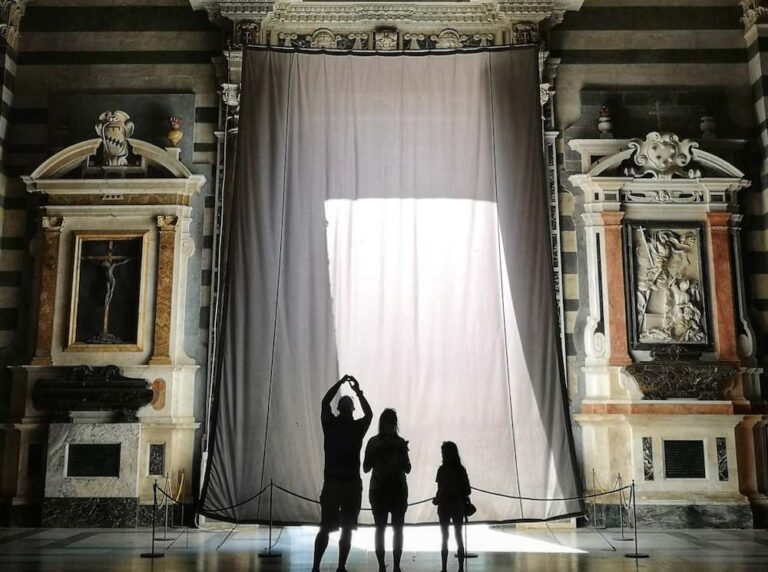
Whilst fire devastated the cathedral in 1595, many stunning medieval artworks remain. Top of the list is the extraordinary apse mosaic depicting Christ seated on a throne flanked by the Virgin and Saint John the Evangelist: the proto-Renaissance master Cimabue had a major hand in the mosaic, working here in 1302 until his death.
\
No less impressive is the elaborately sculpted pulpit begun by Giovanni Pisano in the same year, a dizzyingly complex relief dense with figures taken from the Old and New Testaments. Somehow Pisano managed to squeeze in the entire Christian story of salvation here, from the Annunciation to the Last Judgement, a tale littered with highly expressive characters and emphasised with allegories. Look out for a self portrait of the artist, tucked in between the evangelists Matthew and Luke.
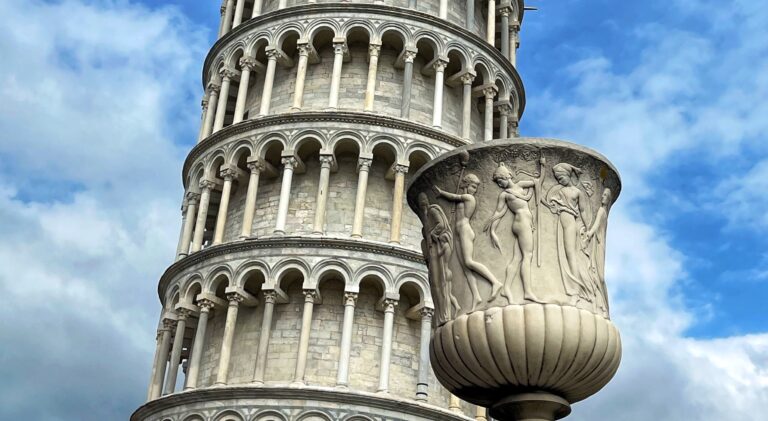
By far the most famous monument in the Piazza del Duomo is the cathedral’s extraordinary bell tower, known to one and all as La Torre Pendente, or the Leaning Tower. And it really does live up to its name, listing a nerve-racking 3.9 degrees off the vertical. Begun in 1173 almost a century after the foundations were laid for the cathedral and only finally completed 200 years later in 1372, the stunning 56-metre-high bell tower is easily one of the world’s most beautiful buildings, an elegant confection of logge and blind arcades that would be renowned the world over even if it weren’t for its gravity-defying lean.
The culprits responsible for the tower’s drunken sway were Pisa’s famously marshy soil combined with too-shallow foundations, and the tower had already begun to list during the prolonged construction. The decision to add three further levels to the already pendulous tower in 1275 and the subsequent addition of the belfry at the top in 1350 certainly didn’t help, and over the centuries the lean only increased.
State of the art engineering work finally stabilised the tower in the 1990s, saving it from imminent collapse – but the trademark tilt is still as immediately striking the first time you see it as its ever been. For a real thrill make the ascent to the top, an unforgettable 294 step climb up each galleried level.
And finally, did you know that the Leaning Tower only very narrowly avoided destruction during the Second World War? Allied troops were convinced that the structure was being used by the Nazis as a reconnaissance tower, and tasked young American GI Leon Weckstein to find out. Just one word to High Command would have seen the tower blown to smithereens, but, struck by the beauty before him, Weckstein found himself compelled to spare the Tower.
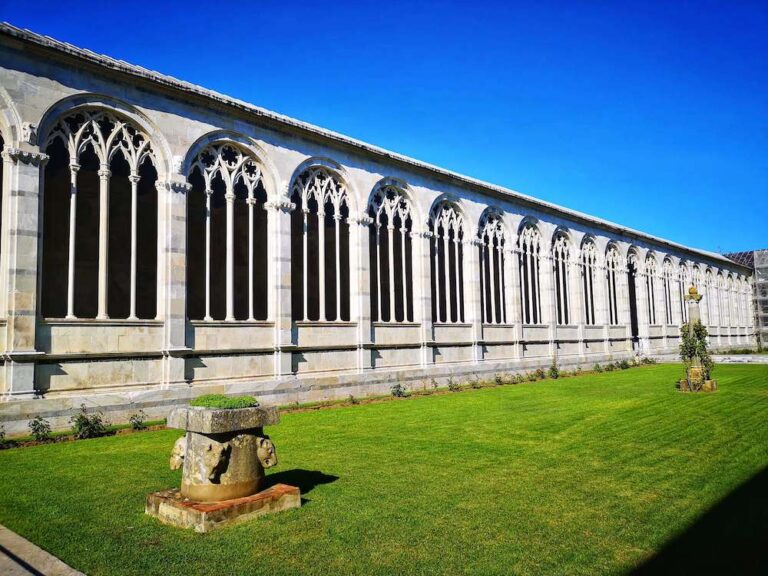
Whilst the perilously leaning tower might be the iconic, postcard-worthy highlight, there’s a lot more to appreciate in Pisa’s amazingly beautiful Piazza dei Miracoli. As iconic as the Leaning Tower no doubt is, for our money the real highlight of Pisa’s Piazza dei Miracoli is the monumental graveyard known as the Camposanto, whose 14th and 15th century fresco cycles that snake around the magnificently beautiful Gothic cloister are glittering highlights of the early Renaissance.
‘Camposanto’ means ‘sacred field’ in Italian, and owes its title to the fact that it was built around a trove of soil taken from Golgotha and brought to Pisa as a spoil of war after the third crusade. The vast cloister was begun in 1278 and is composed of 43 blind arches running around a central lawn, and contains thousands of gravestones and memorials, from Roman sarcophagi to dedications to the city’s most prominent citizens from the Middle Ages and beyond.
Featuring works by Benozzo Gozzoli, Spinello Aretino, Taddeo Gaddi, Francesco Traini and others, the roll-call of the artists who contributed to the Camposanto’s decorations in the 14th and 15th centuries reads like a who’s who of Tuscan Early-Renaissance masters. Don’t miss Pietro Pucci’s fascinating imagining of medieval cosmology in the north gallery, where concentric rings of existence radiate outwards from the earth to God and distant heaven.
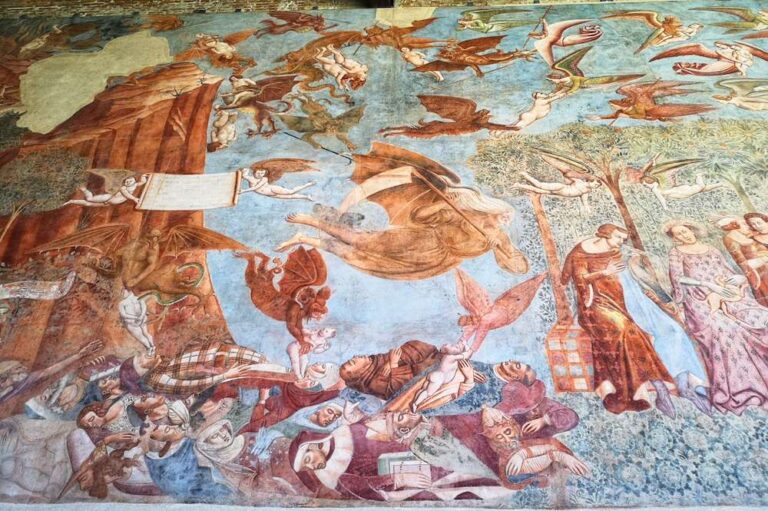
But the real highlight is the epic Triumph of Death extending along the Camposanto’s southern wall – massively damaged in an Allied bombing raid in 1944, after nearly 70 years of restoration work the fresco was finally returned to its rightful home in 2018.
Now generally considered to be the work of Buonamico Buffalmacco in the 1330s, the Triumph of Death challenges viewers to confront the terrible inevitability of their mortality in the medieval tradition of the Memento Mori, warning those who have failed to live well that a life of eternal damnation awaits them.
At the centre of the composition a manic, swivel eyed Grim Reaper swoops downwards on batwings with scythe held aloft and aimed squarely at a group of pleasure-seekers. A huddled group of desperate and maimed beggars invoke Death’s release, but the Reaper ignores this easy prey and instead has eyes only for the oblivious party in the garden of delights, lost to the idle pleasures of music, falconry and the hunt.
Angels and devils fly through the air around the Reaper seeking to harvest the souls of the dead for their respective domains – for those destined to a life of eternal torment in hell, the massive Last Judgement fresco to the right of the Triumph of Death leaves little doubt as to the horrors that lay in store, with the underworld presided over by one of the most vicious looking Satans in the story of art.
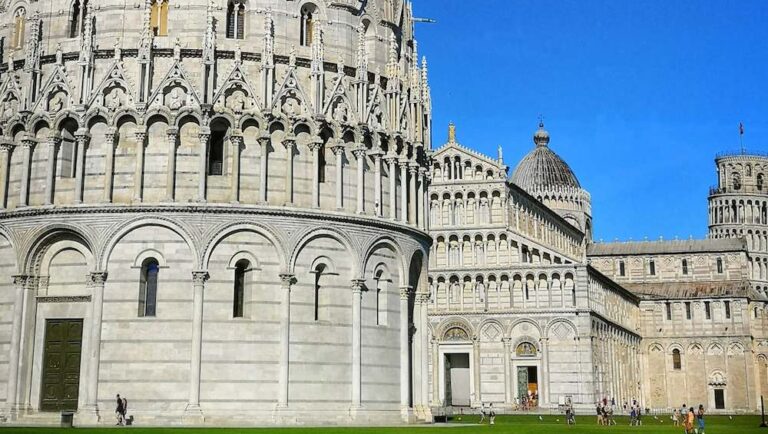
The fourth jewel in the Field of Miracles’ glittering crown, Pisa’s baptistery often feels like the Tower and Cathedral’s unloved step-brother. And yet it too is truly spectacular. Possibly the most perfect example of Pisan Romanesque architecture in existence, the three storey 55 metre high edifice is Italy’s largest baptistery. Begun in 1154 but taking over two centuries to complete, the baptistery’s lower storey is a picture of Romanesque elegance with its blind arcades.
But time moves on, and the later upper levels evolve into an elaborately Gothic display with pointed arches and complex decorative details. The extraordinary sculptural work inside and out is by the unmatched 13th-century father and son team Nicolo and Giovanni Pisano, who also worked to such great effect in the Cathedral. Their pulpit here is one of the finest creations in western culture, the expressive humanity of their figures heralding a revolution in art.
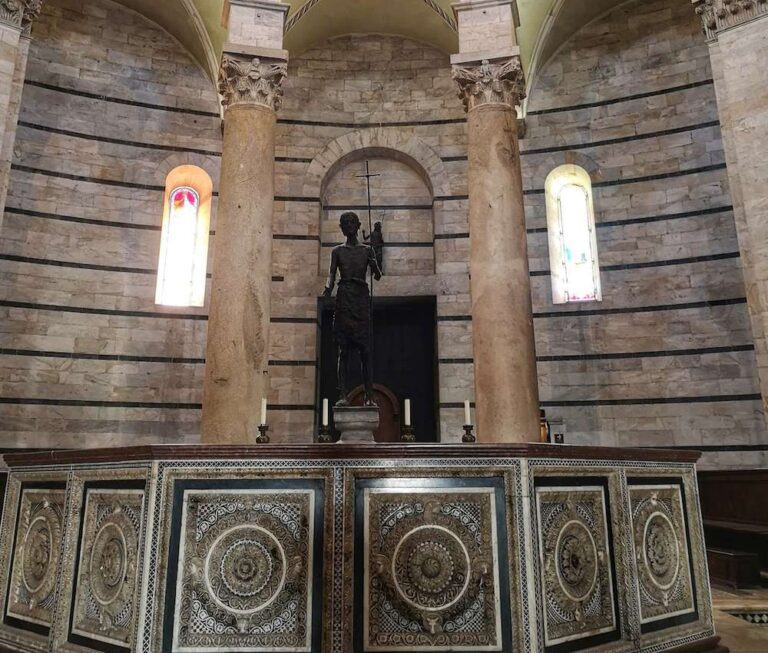
The spare, minimalist octagonal interior is notable for its fabulous acoustics, which if you’re lucky an attendant will demonstrate by singing a few notes that will echo and reverberate around for what seems an impossibly long time. Don’t forget to make the climb to the baptistery’s upper gallery for a great view down into the baptistery as well as a breathtaking panorama of the Leaning Tower from its windows.
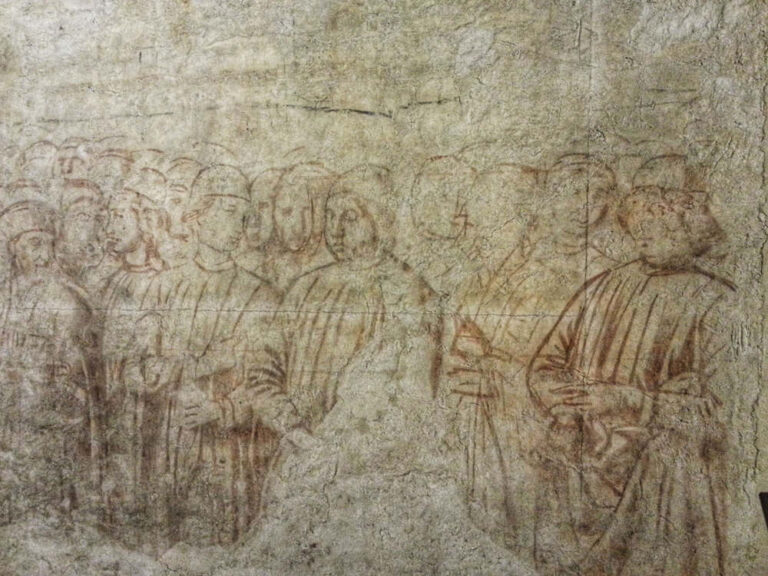
From Giotto’s Arena Chapel in Padua to Michelangelo’s Sistine Chapel, many of the greatest artworks ever created have been crafted in the medium of fresco. But do you know how the Renaissance masters went about their task? Get an inside look at the hidden aspects of the process in the Sinopie museum, located across from the Leaning Tower in a former medieval hospital.
The Spedale Nuovo was designed as a pilgrims’ refuge to plans by Giovanni di Simone between 1257 and 1286, one of the conditions demanded by Pope Alexander IV for rescinding the city’s wholesale excommunication by his predecessor Pope Gregory IX as punishment for supporting the Holy Roman Emperor Frederick I in an attack against delegates of the church.
After seeing active service for nearly 800 years, in 1969 it was decided to convert part of the complex into a museum to house sinopie from the Camposanto. A sinopia was the preparatory underdrawing which guided painters in their final large-scale compositions, applied to the walls by means of holes punched through large paper drawings; the outlines would emerge onto the wall surface by holding the drawings up to the wall and dusting them with red chalk.
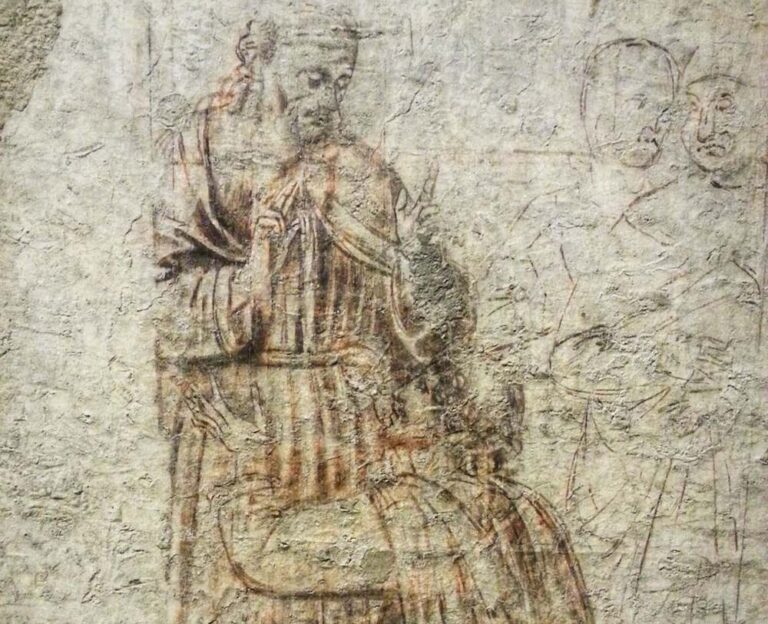
Usually hidden by the final fresco, the sinopia drawings here are taken from the nearby Camposanto, when the 14th-century frescoes were removed from their walls after bomb damage during World War II. Magnificent drawings by Benozzo Gozzoli, Francesco di Traino, Piero di Puccio and others offer a unique insight into the hidden practices of the workshops of Renaissance artists. Video installations and full-scale models complete the story of how a fresco is born.
We hope you enjoyed our virtual exploration of Pisa’s extraordinary Campo dei Miracoli! To continue our journey through this beautiful city, be sure to check out part two of our online Pisa guide where we suggest 11 of the best things to do and see in the city beyond the Field of Miracles!
Tuscany Tours
Discover the Magic of Pisa and Beyond