Rome. The Eternal City. Caput Mundi.
Perhaps the world’s most famous metropolis for going on 2,500 years, you might think that you already know everything there is to know about Italy’s ever-fascinating capital city. But with so many layers of venerable history behind it, the truth is that Rome is always capable of surprising even those who know it like the back of their hands, visitors and locals alike. That’s why we’ve decided to count down a personal list of ten things and places in the city that you might know, helping you discover an unexpected side of Rome!
Want to Explore Rome Off The Beaten Track?
Discover Rome's Hidden Corners With Us
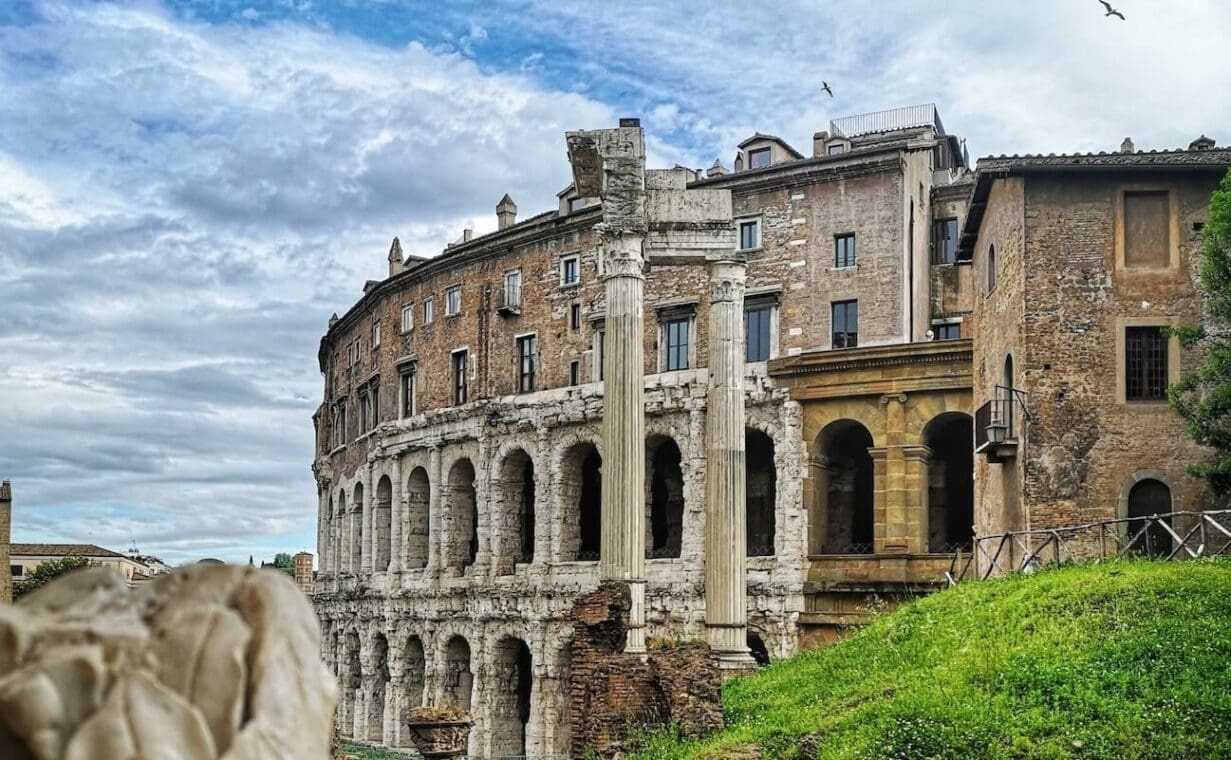
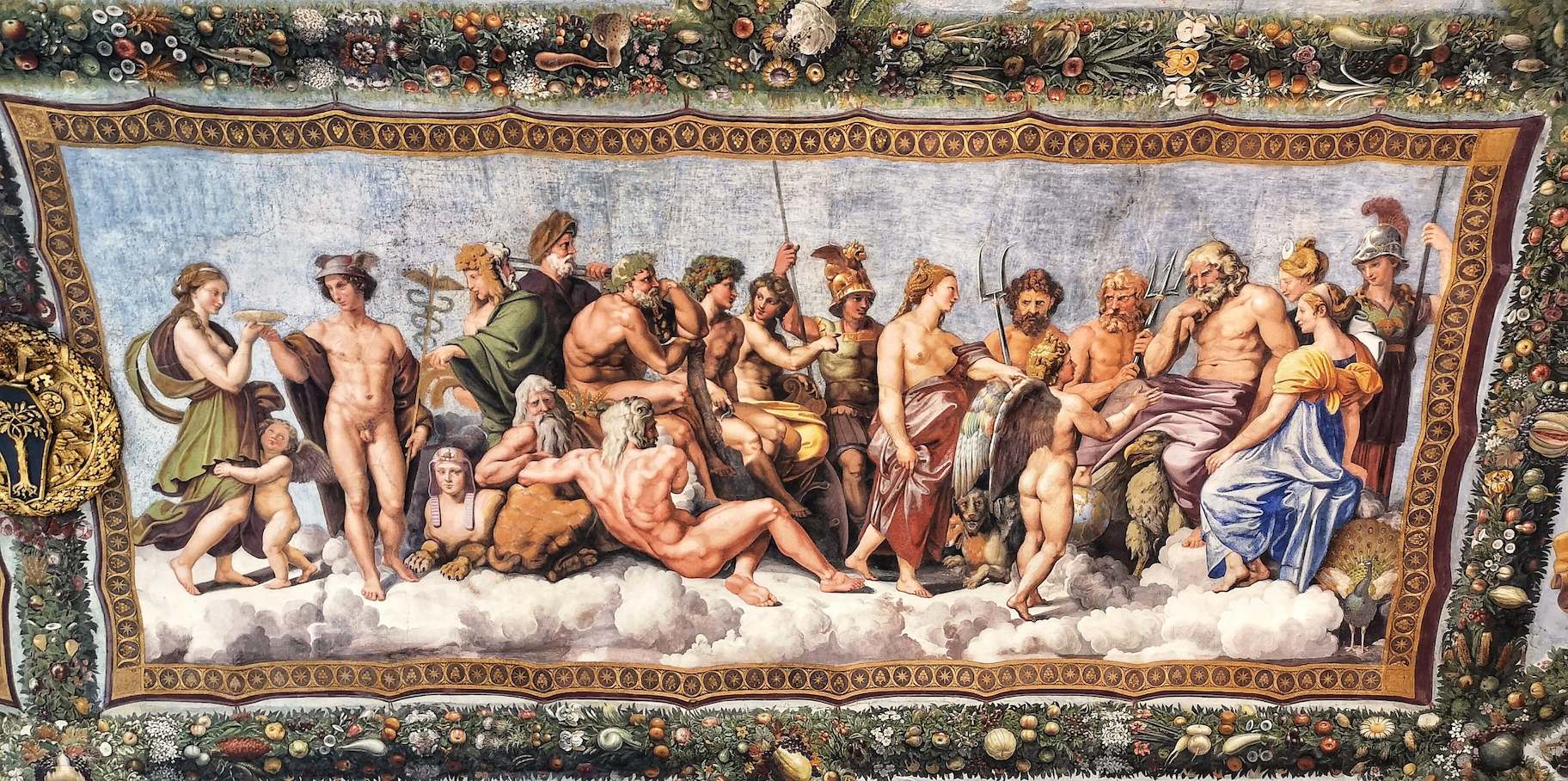
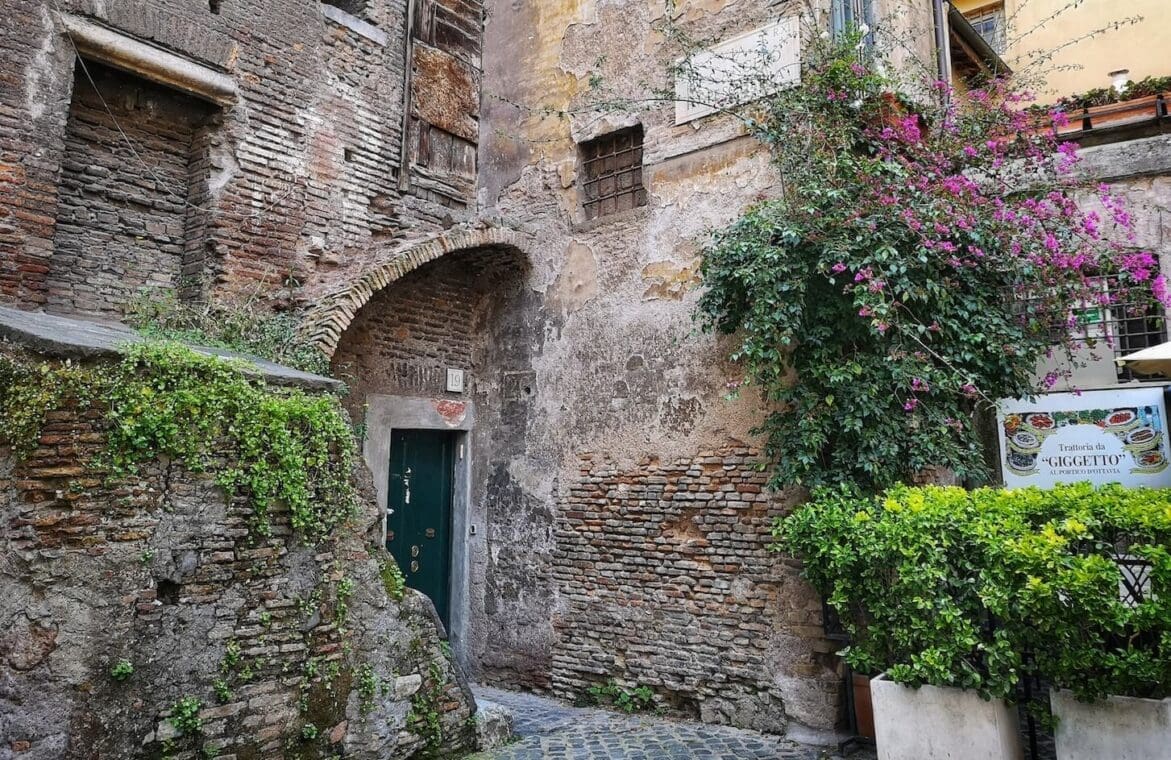

Inscribed into the fabric of Rome’s extraordinary Pantheon is a rather misleading inscription: “Marcus Agrippa made it.” It’s true that Agrippa commissioned the original Pantheon, a temple to all the pagan Roman gods, during the reign of Augustus in around 20 BC – but that’s not the building we see today. Don’t worry though, the present construction isn’t some modern knock-off; the emperor Hadrian completely rebuilt Agrippa’s Pantheon to a new design in 126AD, and thanks to its early conversion to a church when the Roman Empire adopted Christianity it’s been in constant service ever since.
That very probably makes it the oldest building still in continuous use anywhere in the world. It also means that the Pantheon is ancient Rome’s best preserved edifice, and its awe-inspiring dome (142 feet in diameter) remains the largest unreinforced concrete dome ever built nearly 2000 years after construction. The French writer Stendhal marvelled in the 1800s that he had never met anyone who wasn’t overcome with emotion at the first site of the Pantheon, which touched the level of the sublime – and it remains a miraculous testament to ancient engineering, one of the true wonders of the world.
Where
The Pantheon
Piazza della Rotonda


“Will anybody compare the idle Pyramids, or those other useless though renowned works of the Greeks with these aqueducts, with these many indispensable structures?” So said Frontinus, Rome’s water commissioner in the 1st-century AD, justifiably proud of the incredible aqueducts that brought life-sustaining water flowing into the ancient world’s greatest metropolis.
Many of the aqueducts still stand today, but if you really want to see these imposing monuments to the ancient invention at their best then head to the incredible Parco degli Acquedotti in the city’s southern outskirts. Wandering along abandoned dusty trails as they weave through the majestic remains of the massive Acqua Claudia built by Caligula in 38AD is an awe-inspiring experience.
Where
Parco degli Acquedotti
Via Lemonia, metro stop Giulio Agricola

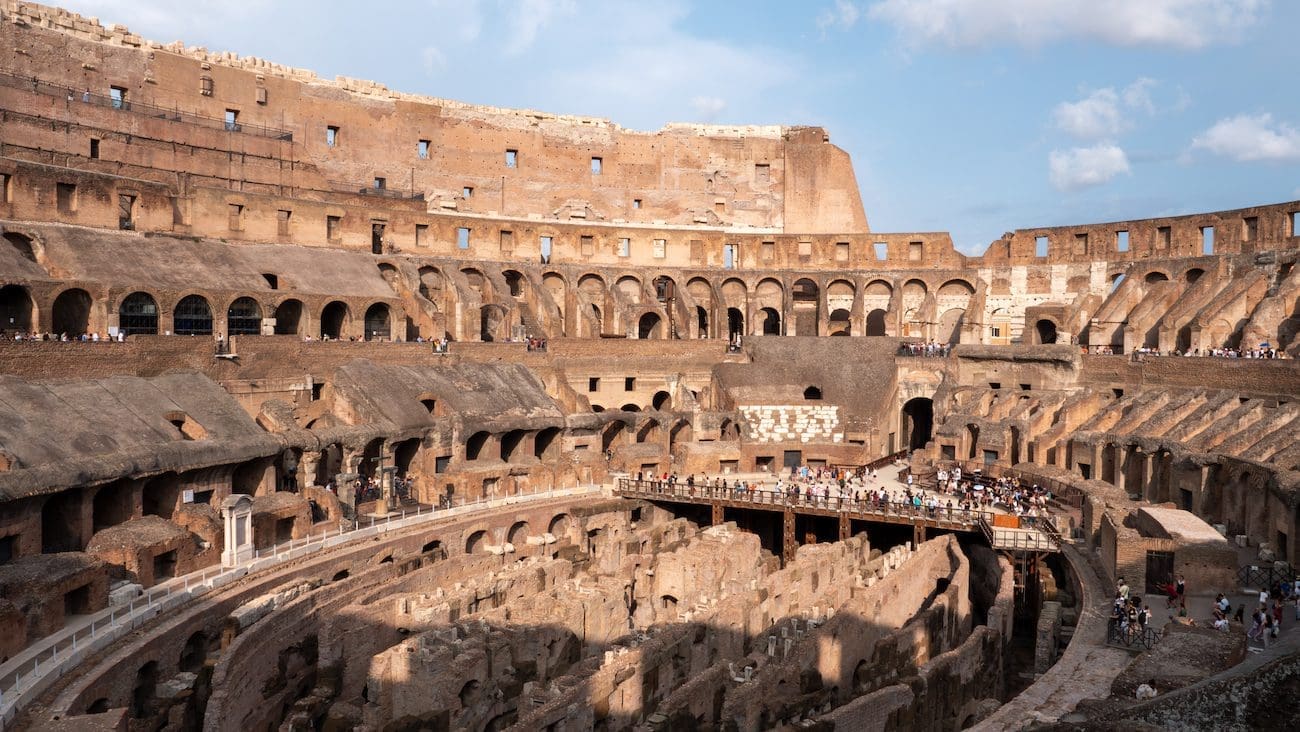
Last Sunday’s Super Bowl in Miami was unsurprisingly a sell-out, with 62,417 fans squeezing in to the Hard Rock stadium to watch Kansas City win their first title in 50 years. The 2018 football World Cup Final in Moscow topped that with 78,000 in attendance, and the largest sports stadiums in the world these days like the Melbourne Cricket Ground can pack the rafters with around 100,000 spectators. Impressive enough, but nothing compared to ancient Rome’s greatest stadium – no, not the Colosseum, but the nearby Circus Maximus where chariot races took place before heaving crowds of sports-obsessed fans cheering on their favourite faction.
It’s a peaceful today, but at the height of the Roman empire the vast Circus would have been a deafening hive of activity, the roar of massive crowds drowning out the sound of thundering hooves as chariots sped around the track. According to ancient sources the Circus had an incredible capacity of 250,000 spectators, putting that Super Bowl sell-out in perspective!
Where
Circus Maximus
00186 Rome, Metropolitan City of Rome Capital, Italy

When most of us think of the Mall, we think of the good ol’ USA. Mega malls the size of small European states where consumer choice is limited only by your bank balance and imagination, in America retail therapy is a way of life. But as the Book of Ecclesiastes says, there’s nothing new under the sun – the first covered shopping mall in recorded history is actually in Rome, and it’s still standing today!
This is Trajan’s Market, a huge and curving multi-level commercial complex built into the side of the Quirinal hill by the architect Apollodorus of Damascus on the orders of the emperor in around 112 AD. Described by an ancient contemporary as ‘a construction unique under the heavens,’ the covered market featured more than 150 individual units known as tabernae – shops selling everything from olive oil to fruit and vegetables, meat and fish, as well as numerous taverns offering libations to thirsty shoppers. The complex is now a museum, and so you can take a stroll down the market’s central Via Biberatica and pop into various tabernae as you pass.
Where
Trajan’s Market
Via Quattro Novembre, 94
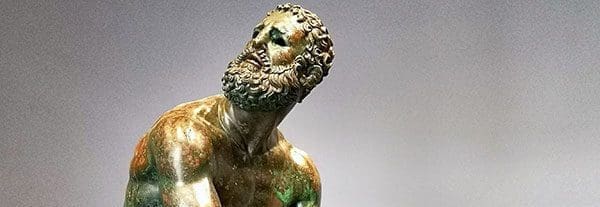
If you’ve come to Rome in search of ancient sculptures, chances are you’ll be au fait with the Laocoon and Apollo Belvedere in the Vatican, or the massive equestrian statue of Marcus Aurelius in the Capitoline Museums. But what might be the city’s most impressive statue is to be found elsewhere, and isn’t even Roman at all. This is the extraordinary Boxer at Rest, a Greek portrait of a bruised but unbowed pugilist in the aftermath of a bout, the brutality he has just gone through written into the features of his weary face and battered body.
Created in the Hellenistic period somewhere between the fourth and second centuries B.C, the details of this ancient bronze are incredible – the boxer’s perfectly sculpted muscles are the natural tools of his trade, whilst the nasty looking bruises picked out in deliberate purple discolorations of the metal are the profession’s grim consequences. Ancient pugilism was a nasty business – the leather straps wrapped around his hands (himantes) were the only protection the boxer had, and the tough ox-hide could lacerate an opponent’s flesh with every blow.
Find the Boxer in the criminally under-visited Palazzo Massimo alle Terme. Despite being chock-full of masterpieces from the ancient world the museum is not well-known by tourists, so you won’t have to battle the crowds to get up close and personal with the Boxer.
Where to Go
Palazzo Massimo alle Terme, National Museum of Rome
Largo di Villa Peretti, 2, metro stop Termini

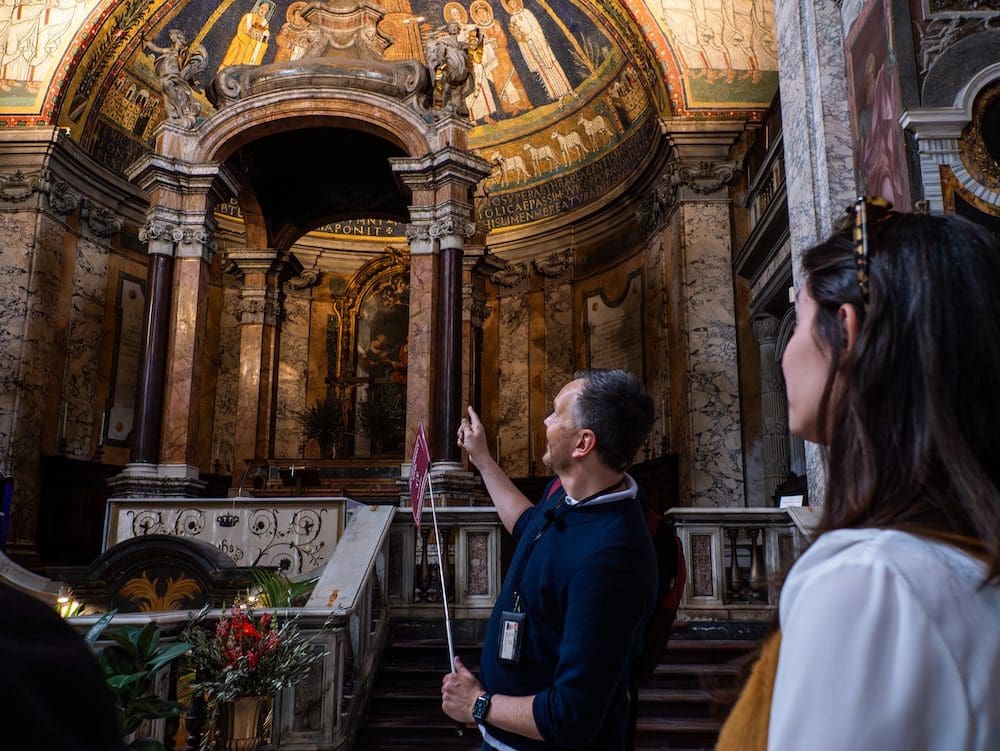
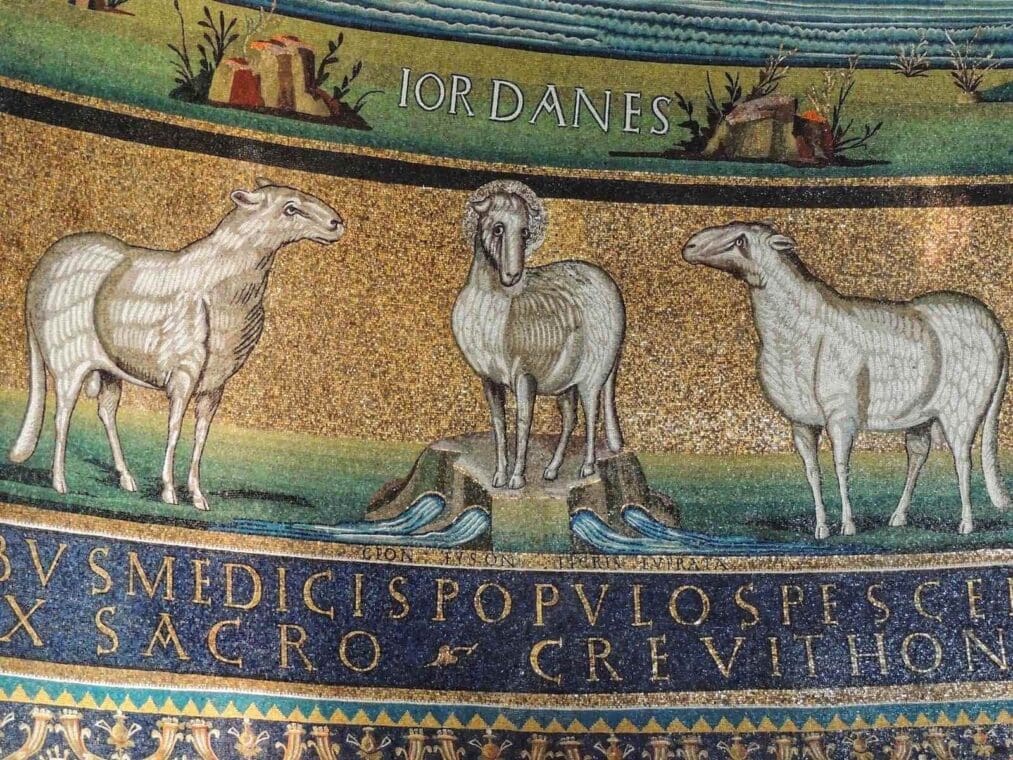
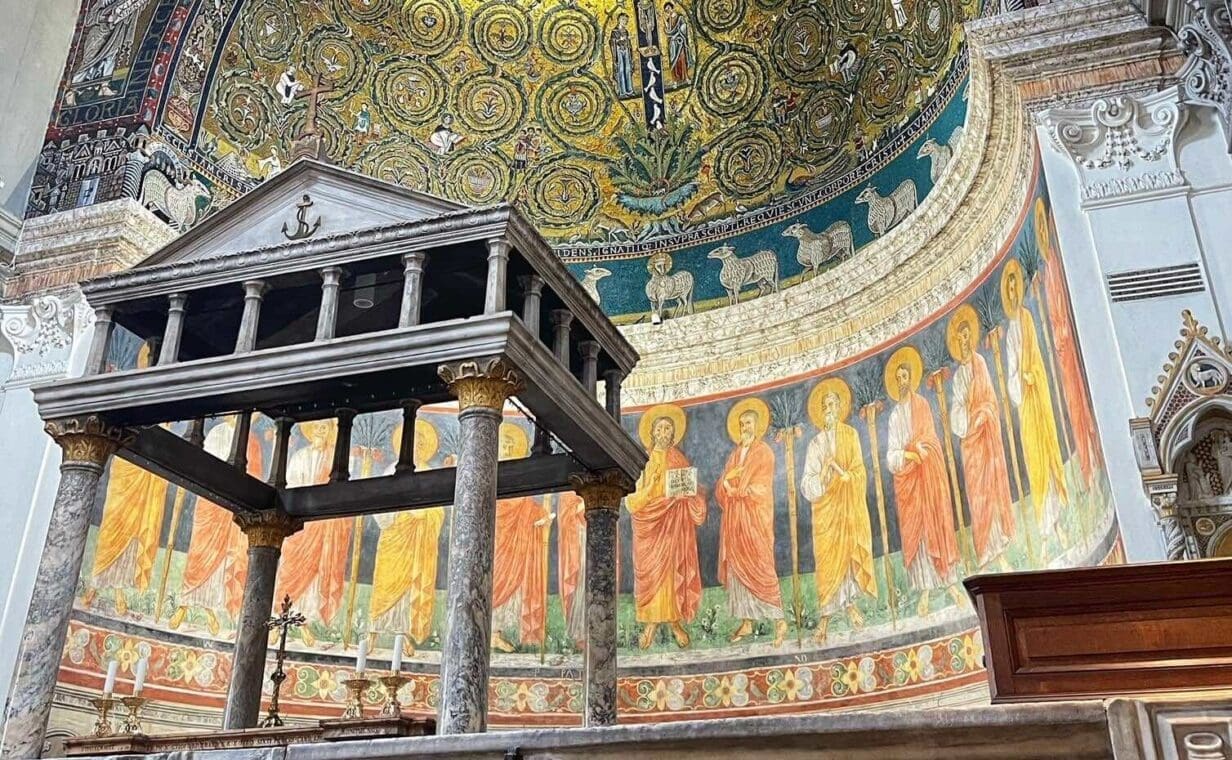
All that glitters is gold… Did you know that some of the most beautiful Byzantine frescoes in the world are in Rome? You needn’t head to far-flung Istanbul or even Ravenna to enter into the glittering and elegant world of the medieval mosaicists – their works are hidden in plain sure all across the Eternal city. From Santa Maria Maggiore to Santa Cecelia in Trastevere, medieval mosaics are everywhere – but our favourites are the incredible 9th century artworks commissioned by Pope Paschal for the ancient church of Santa Prassede, tucked away in the Esquilino neighbourhood. When you cross the threshold of the tiny but spellbinding chapel of Saint Zeno, you feel like you’ve stepped into another world: every surface glitters with mosaics created by expert artists who had fled Constantinople where burgeoning iconoclasm meant they were suddenly out of a job.
Where to See It
Santa Prassede
Via di Santa Prassede, 9/a, metro stop Vittorio Emanuele or Cavour

The majestic dome with which Michelangelo completed St. Peter’s Basilica in the 16th century is visible all across Rome, and spectacular views of this city icon are to be found from every hill and vantage point. But what might be the best view of them all is completely invisible at first sight. Make the climb up the Aventine Hill to the doorway of the Priory of the Knights of Malta – a medieval order of crusaders – and take a peek through the uninviting portal’s tiny keyhole. Incredibly, a wonderful telescoped view of St. Peter’s opens up before you, symmetrically framed by the hedges of the Priory garden. The unique vista is the brainchild of the renowned 18th-century architect and artist Giovanni Battista Piranesi, who was buried here when he died in 1778.
Where to See It
Priory of the Knights of Malta
Piazza dei Cavalieri di Malta, 3, Metro Stop Circo Massimo

Hidden away in the northern part of Rome’s city centre is one of the city’s most unusual urban ensembles. This is Via Bernardo Celentano, a pedestrianized residential street otherwise known as Piccola Londra, or Little London. This unique corner of the Eternal City was the brainchild of the London-born mayor of Rome Ernesto Nathan, who dreamed of transforming the architectural dynamics of the capital when he came to power in 1907.
In order to bring his dream to fruition, the mayor drafted in the architect Quadrio Pirani to construct an exemplary street designed on English ideals of urban design between the bustling thoroughfares of Viale del Vignola and Via Flaminia – intimate two and three story houses surrounded by front gardens, wrought iron fences and balustraded stairways that are more Fulham than Flaminio. This was the only part of Nathan’s grand plan to be built, but it remains a fascinating and little known slice of Anglo-Italian fusion in the heart of the Eternal city.
Where to Go
Piccola Londra
Via Bernardo Celentano, Tram Stop Flaminia Vignola (Line 2)

As any new arrival to the Eternal City will soon learn, time here is fluid, more of a suggestion than a binding summons. Indeed, if you’ve ever found yourself high and dry at a Roman bar when your friend strolls in 30 minutes late, you’ll know that Romans have elevated creative timekeeping to the level of high art. And it was ever thus. It wasn’t until Napoleon arrived in the city in 1804 that locals began measuring time as we know it; before that, an hour would last different lengths of time depending on the time of year, causing unending headaches for unwary visitors.
Things were slow to change even with the institution of more regulated timekeeping, and when Pope Pius IX came to power in 1847 he was so frustrated at the daily cacophony of church bells ringing all across Rome more or less at random that he demanded a round of cannon fire be fired at noon each day so the bell-ringers could co-ordinate their timings. Ever since 1904 the cannon has been fired from its perch high up on the Janiculum hill, where it still marks the passage of time in the Eternal City to this day.
Where to Go
Cannone del Gianicolo
Via Garibaldi, Bus Stop Piazzale Garibaldi

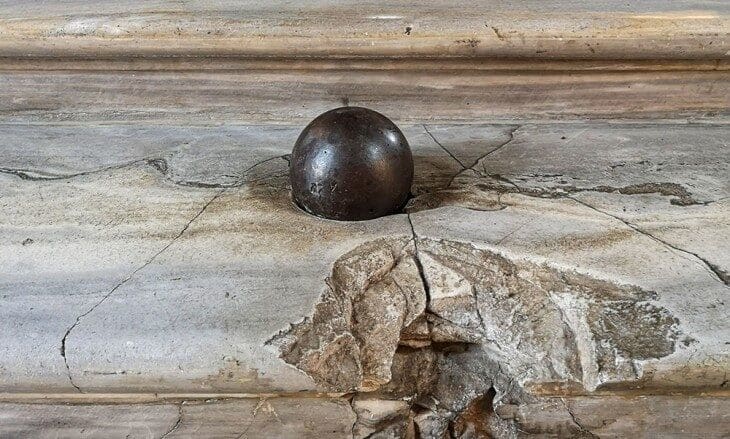
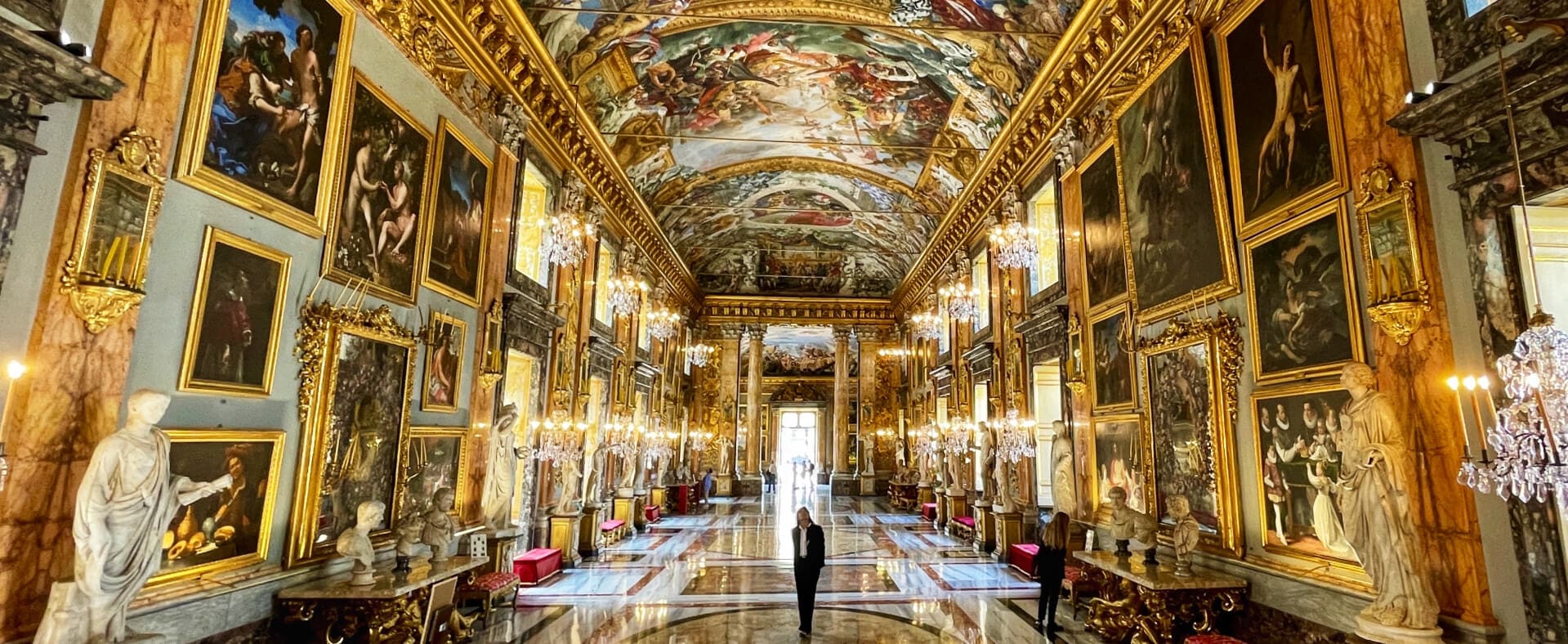
The cannon fire coming from the Gianicolo hasn’t always been so benign, however. Back in 1849, when a liberal uprising declared Rome a Republic free from Papal rule, the pro-Papal French army general Charles Oudinot ordered a shelling campaign against the rebels from their position high on the hill. A stray cannonball made its way through the front window of magnificent Palazzo Colonna across town, home to one of Rome’s most prominent aristocratic families.
The Colonna’s star burned brightest in the age of the Baroque, when they set about turning their residence into what is probably Rome’s most mind-blowingly opulent Baroque palace. Today the palace hosts one of the city’s finest collections of art in soaring halls of gold, and the cannon ball is still to be found right where it landed over 170 years ago, embedded into the marble steps of the Grand Hall. Palazzo Colonna is only open on Saturday mornings until 2 PM, but is a must-see!
Where to Go
Palazzo Colonna
Via della Pilotta, 17, Bus Stop Piazza Venezia
Book Your Rome Experience