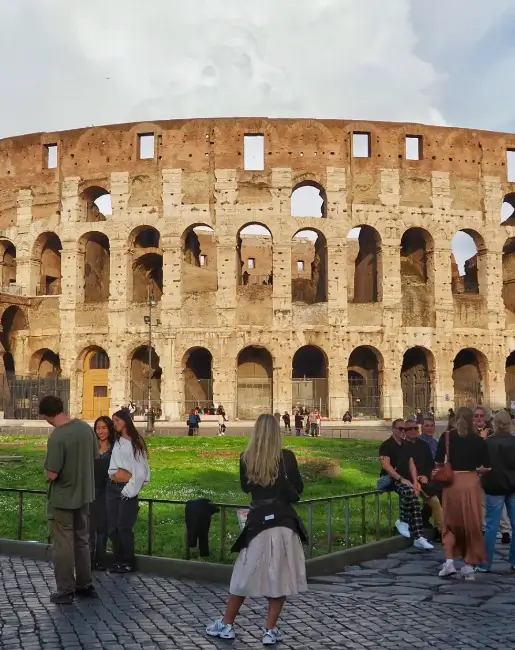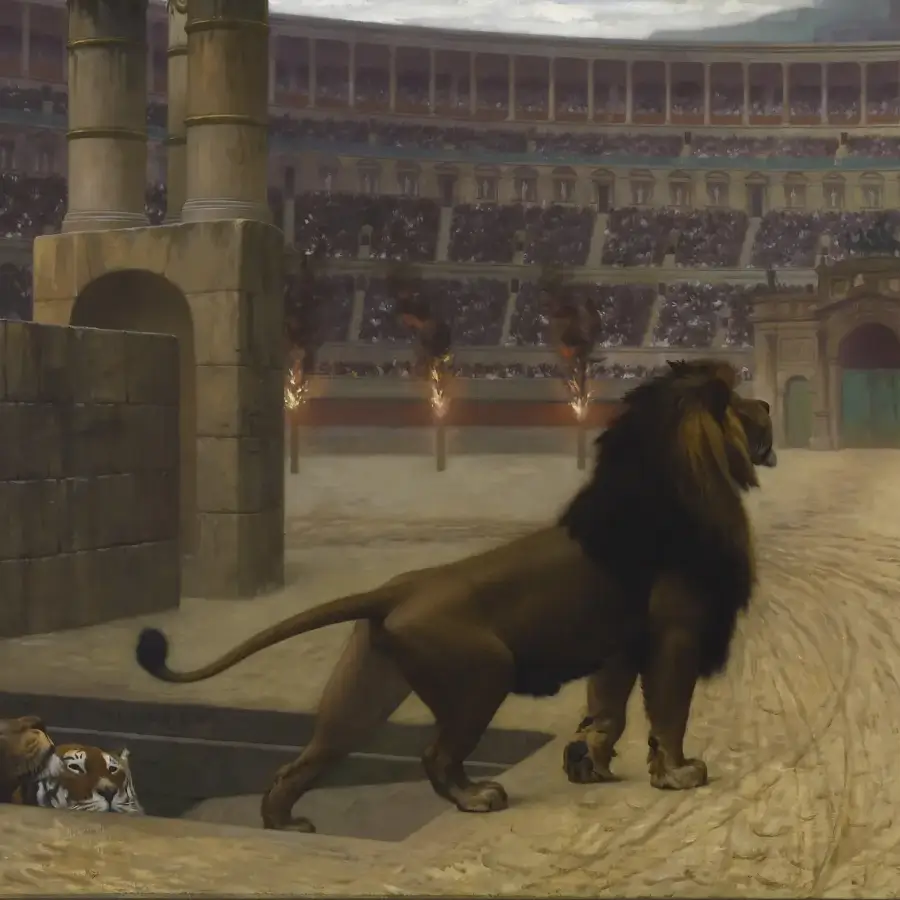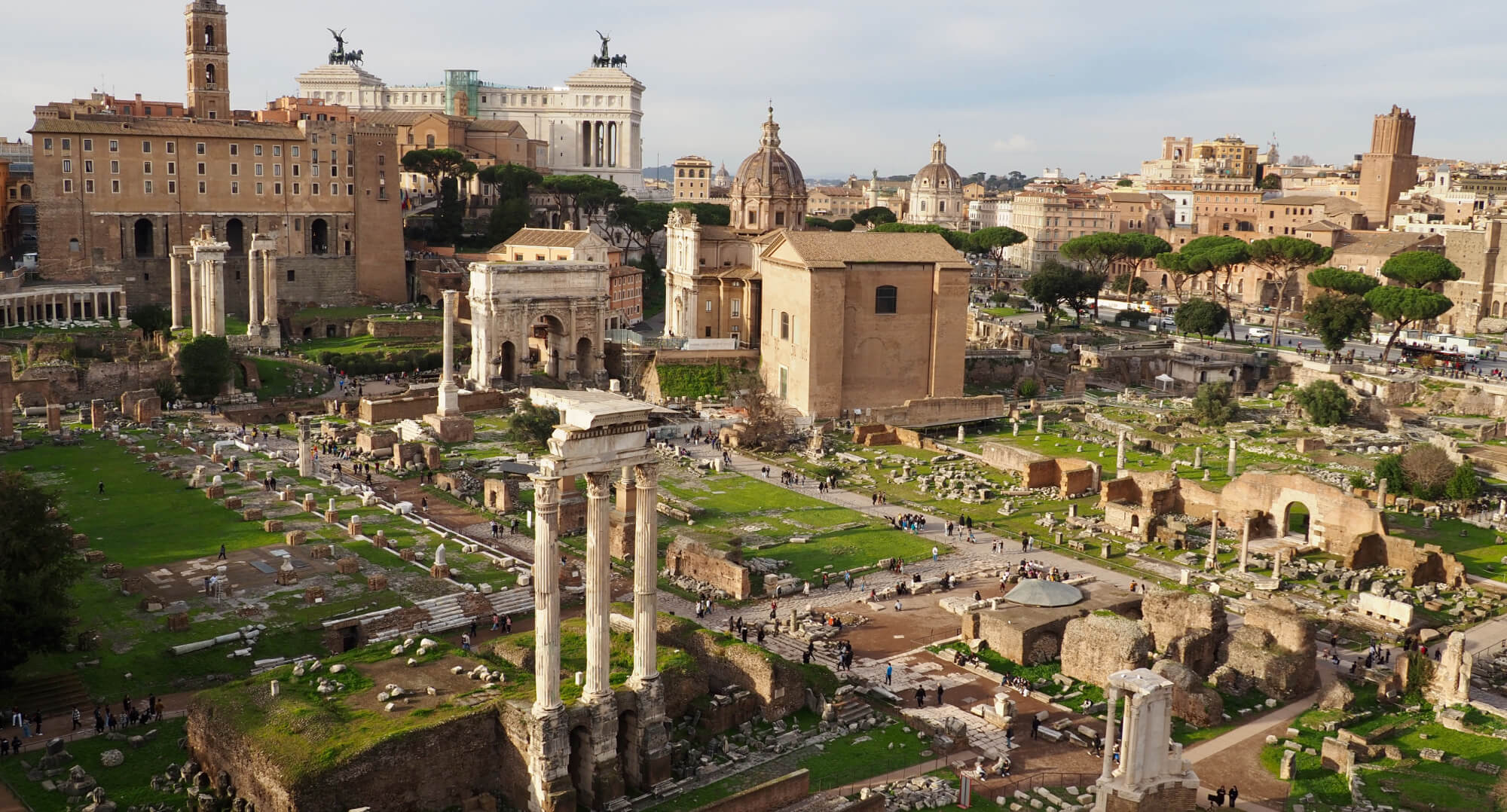
While the Colosseum may capture the imagination of travellers dreaming of Rome, it’s often the Roman Forum that lingers longest in the memory.
Once the bustling heart of the ancient empire — a place of triumphs and treachery, temples and tribunals — the Forum remains one of the most powerful windows into the past you can experience anywhere in the world. Charles Dickens called it “the ghost of old Rome… the most stately, solemn, grand, majestic, mournful sight conceivable,” and even now, standing among its ruins, it’s easy to see why. In this guide, we’ll walk through the Forum’s unmissable highlights — from the Arch of Titus to the Temple of Saturn — uncovering the stories, legends, and enduring drama behind the stones that shaped Roman history.
Ancient Rome Tours
Explore the Ancient City
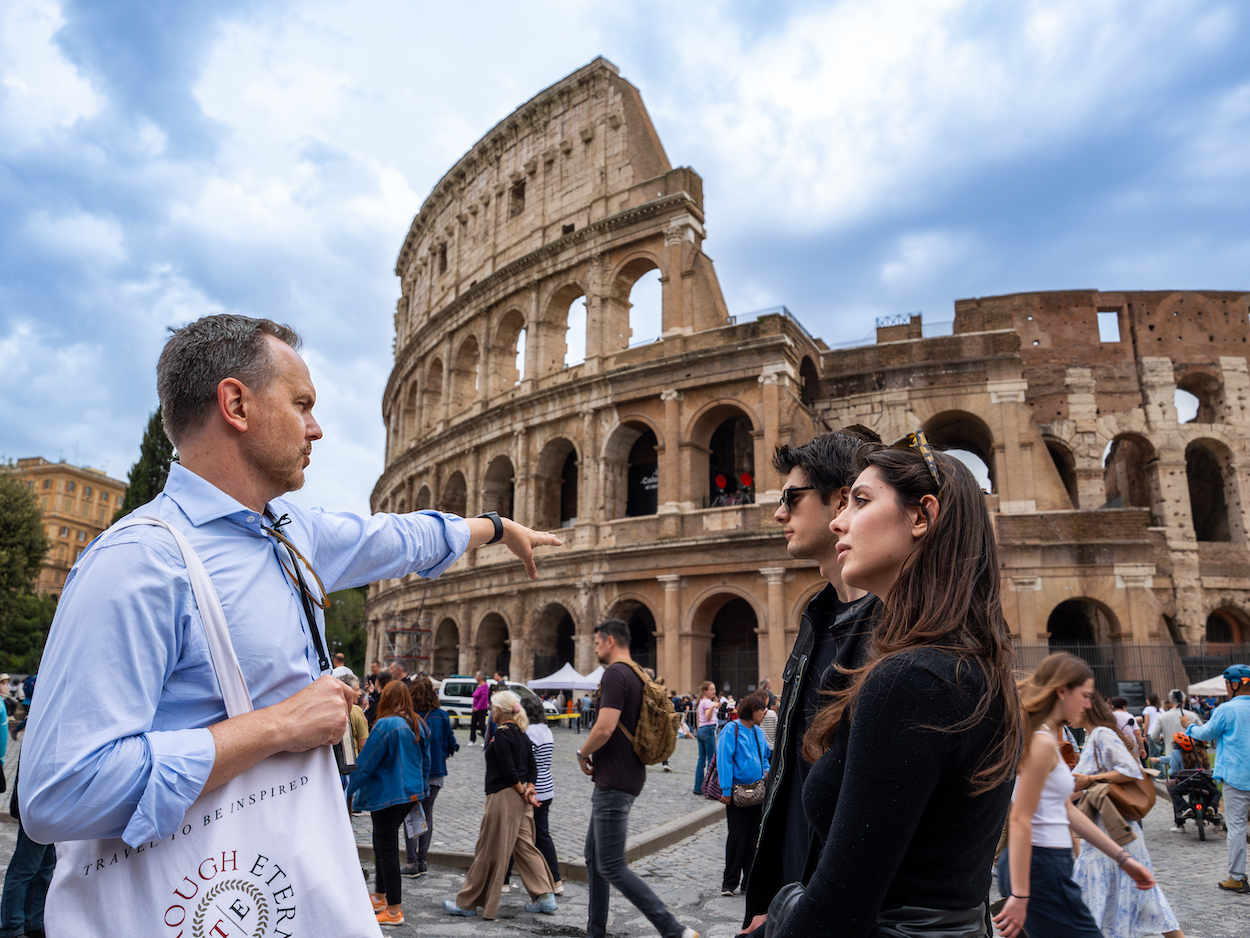
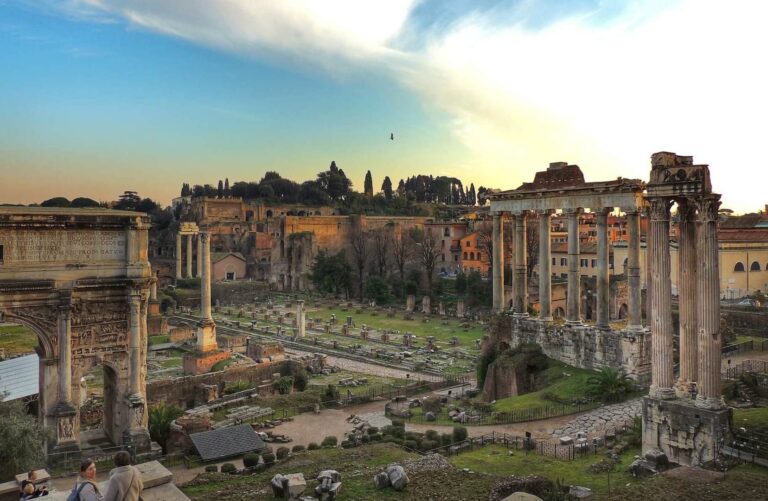
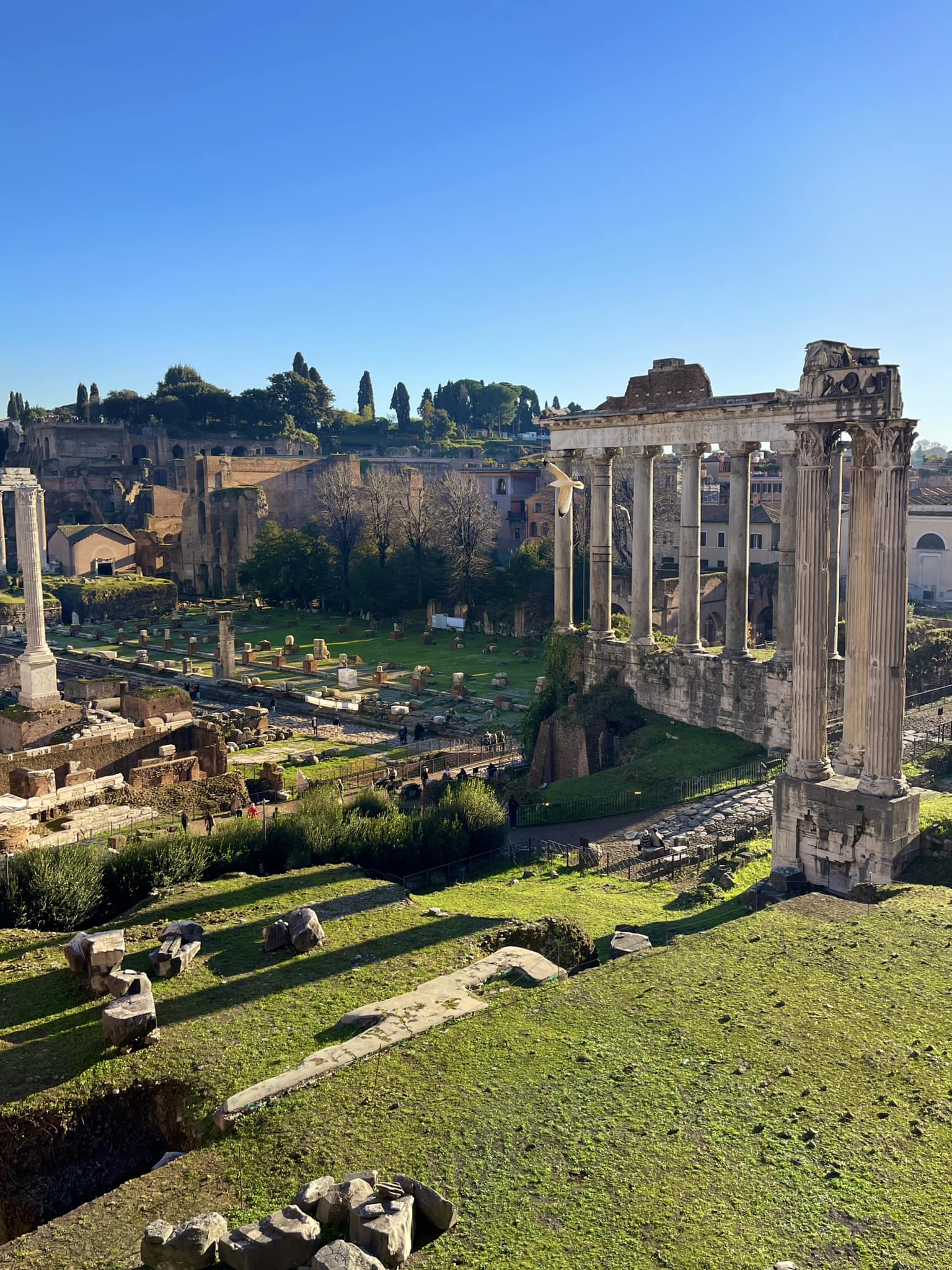
The eight surviving Egyptian granite columns of the temple of Saturn in the Roman Forum pay silent homage to one of the pagan world’s most mysterious cults. Saturn is the Roman iteration of the Greek god Kronos, and was associated with agriculture and wealth. Saturn was particularly venerated each year during the Saturnalia festival on the 17th of December, a rowdy celebration where revelry reigned and slaves were temporarily given the rights of full citizens.
The temple has a long and tangled history stretching all the way back to the earliest years of the Roman Republic, although the structure we see today dates to the 4th century AD after fire devastated an earlier edifice. The centrepiece of the temple in antiquity would have been a massive cult statue of Saturn himself, probably carrying a scythe, his legs bound in woollen garments. During Saturnalia his legs were symbolically freed from their bindings. The temple also held an important public function as the site of the Aerarium, or state treasury.

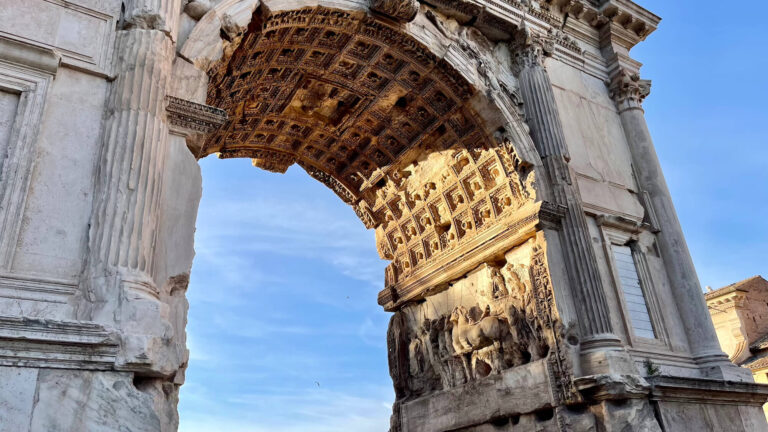
Built by the emperor Domitian in 81 AD to posthumously honour his brother Titus’s successful subjugation of an uprising in Judea, the magnificent carvings on the underside of this triumphal arch depict the dark tale of military conquest in fascinating detail. In one scene we can see the Roman legions carrying off the treasures of the Sacred Temple in Jerusalem, including a menorah.
In another, Titus processes in glory as winged Victory crowns him with a laurel wreath. Located at the highest point of the Via Sacra at the entrance to the Forum, Roman triumphal parades passed beneath the Arch of Titus for centuries – a permanent reminder of the Flavian dynasty’s legacy.
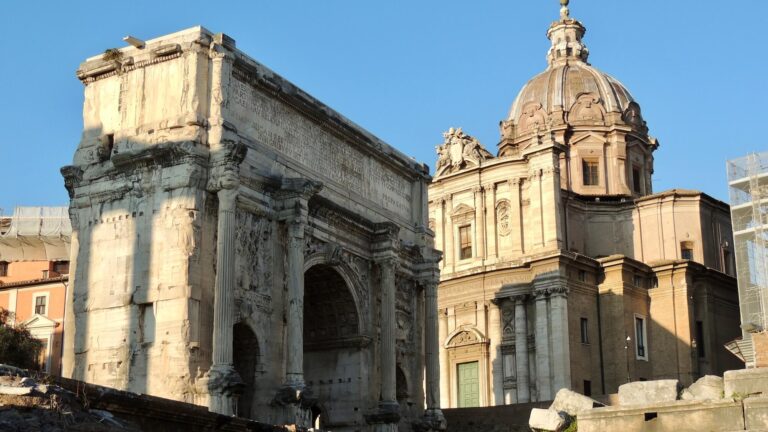
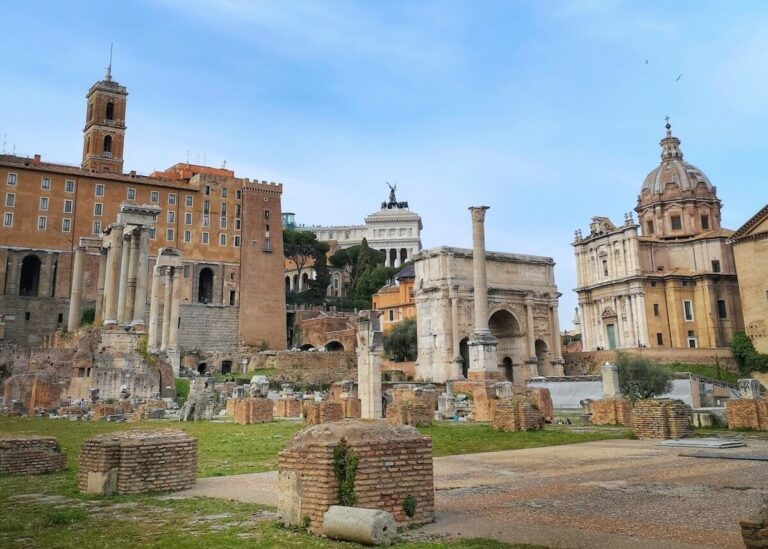
Towards the other end of the Forum another superbly intact triumphal arch stands out amongst the ancient ruins. Constructed in 203 AD, the triple arched edifice commemorates the victory of Roman legions over the Parthians in what is modern day Iran. An inscription originally paid homage to Septimius Severus as well as his sons Caracalla and Geta, lauding their ‘outstanding virtues at home and abroad’; Geta’s name was soon chiselled out, however, after being murdered by his brother in 211 AD.
The Arch of Septimius Severus is also fabulously decorated with relief carvings. They have been badly damaged by the ravages of time, but what remains still gives a sense of their original splendor. The themes revolve around the recently concluded war: Septimius Severus himself leads the way, rallying his army and forcing the surrender of enemy troops, as well as besieging the cities of Edessa, Seleucia, and Nisibis. Look out for the depictions of defeated Parthian warriors in chains, portrayed with impressive, expressive power.
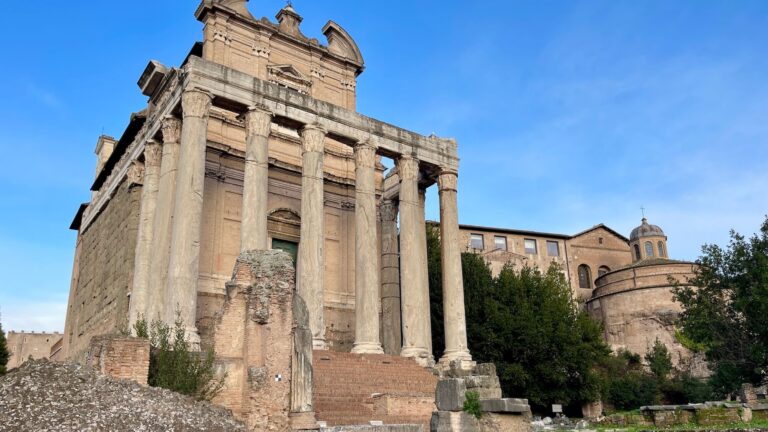
Part ancient temple and part Baroque church, depending on your perspective, this fascinatingly schizophrenic edifice is either called the temple of Antoninus and Faustina or San Lorenzo in Miranda. Located in the heart of the Roman Forum, the original ancient temple was built by the emperor Antoninus Pius to honor his wife Faustina and subsequently rededicated to them both on the death and deification of the emperor himself. The spectacular portico is one of the best-preserved pieces of the city’s ancient urban fabric – but what’s up with the unmistakably Baroque structure tacked on?
Well, in the 7th or 8th century, the temple was transformed into a Catholic church, thus saving it from the depredations of the centuries. It seems the temple only survived by the skin of its teeth, however: some scholars believe that the deep grooves cut into the tops of the columns are evidence of an attempt to pull the them down with ropes to scavenge their precious marble. The winged facade dates from the early years of the 17th century, the work of the otherwise rather obscure Orazio Torriani.
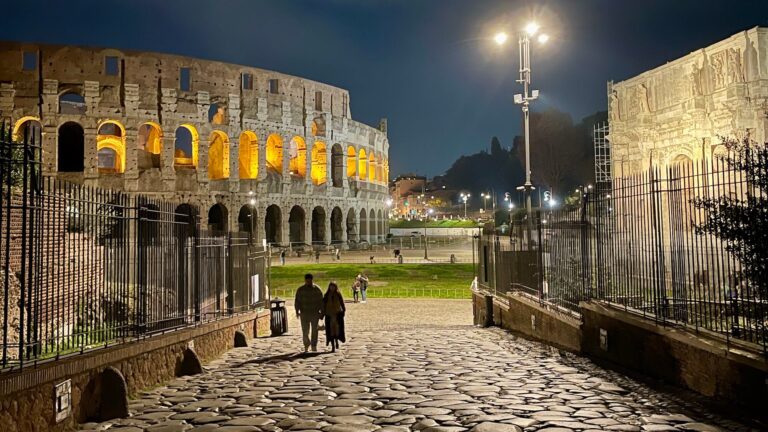
History is all around in the Roman Forum, and it’s beneath your feet, too. Ancient Rome’s most important road, the Via Sacra, led from the Colosseum through the Forum and onwards to the Temple of Jupiter Capitolinus at the height of the Capitoline hill. It formed the most important section of the processional route of Roman triumphs, celebratory parades held to commemorate Roman military victories.
After a redesign by Nero in the wake of the Great Fire in 64 AD, the road was lined with grand marble colonnades, thus cementing its position as the great artery of ancient Rome. Ovid writes that the street was named the “Sacred Road” in deference to the number of temples that lay along its path, but religion wasn’t the only game in town. Shops and businesses lined its route too, while gamblers, prostitutes and lollygaggers of all stripes loitered along its length. In short, the Via Sacra offered a perfect cross-section of the ancient city in all its variety.
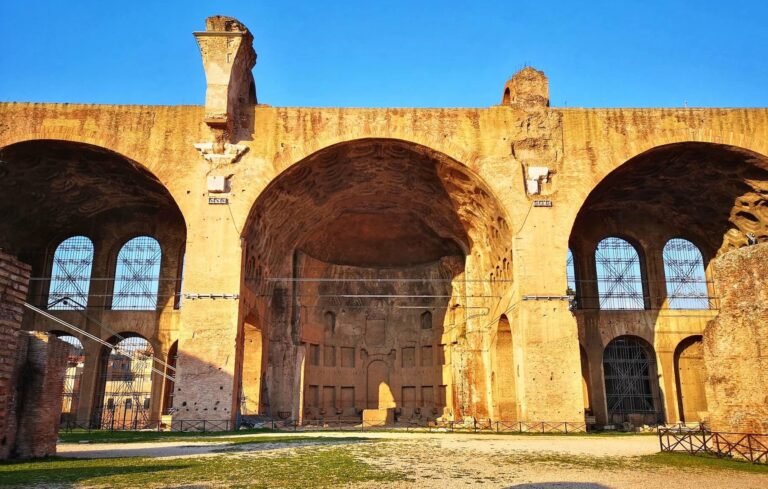
Immediately recognizable thanks to its enormous size, the Basilica of Maxentius was begun by the emperor of the same name in 308 AD before being completed by his rival Constantine after the latter’s victory at the Battle of the Milvian Bridge. To leave no doubts as to the building’s new patron, a massive statue of Constantine over 15 meters high was installed within – you can see the massive head, hands, and feet today in the Capitoline Museums.
The surviving part of the structure today features three enormous barrel vaults studded with huge coffers; although only a tiny fragment of the majestic original building, it gives a vivid sense of the awe-inspiring scale of ancient Rome. Originally, the Basilica would have been covered in marble, and if you look closely, you can see the holes in the masonry where the marble cladding was affixed via enormous clamps.
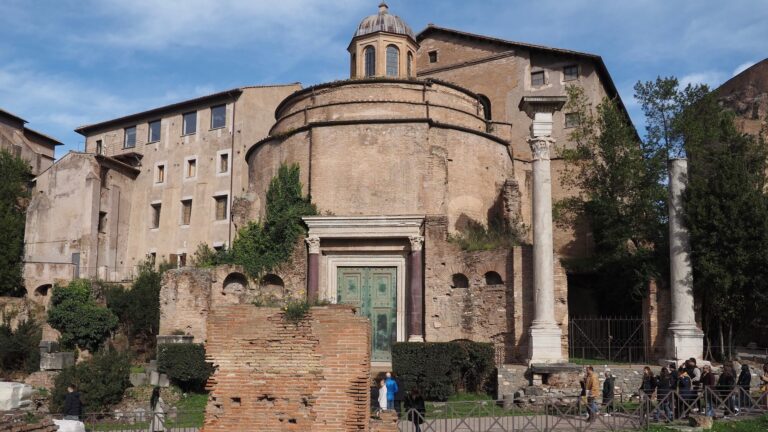
No, not that Romulus. Nothing to do with the legendary founder of Rome, the Temple of Romulus was actually built in honour of Valerius Romulus, son of the Emperor Maxentius, who met an untimely death in 309 AD. Like the nearby Basilica of Maxentius, this beautiful structure was also completed by Constantine after his rise to power. The temple was transformed into part of the church of Santi Cosma e Damiano in late antiquity, once more ensuring its survival in relatively good condition, and fragments of medieval frescoes still grace its walls.
The real highlight of the building, though, is its brilliantly green bronze door, an original 4th-century survival. Amazingly, the ancient lock is still operational – look out for Forum custodians locking up the temple at closing time with an enormous ancient key!
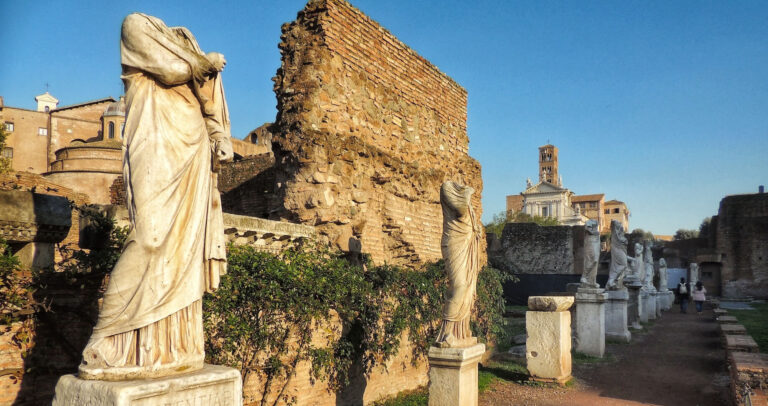
Revered keepers of the city’s sacred flame, the Vestal Virgins were amongst the most important groups in ancient Rome. It was their solemn task to ensure that the flame in the Temple of Vesta was eternally lit – if the fire was extinguished for any reason it boded ill for the city’s fortune. Demands of propriety and chastity on the Vestals were onerous, and a single slip-up could mean a horrible death by being buried alive. But in return, the Vestals were amongst ancient Rome’s most powerful women – they could own property, were transported around the city in covered carriages and even enjoyed primo seats at the Colosseum during the games.
The Vestals were chosen as young girls by the Pontifex Maximus to serve a 30 year term, and the 6 incumbents lived in the magnificent house of the Vestal Virgins in the heart of the Roman forum where their statues still look down over the atrium of their long abandoned abode. It’s one of the most beautiful areas of the Forum today, richly evocative of the powerful and mysterious women who once lived there.
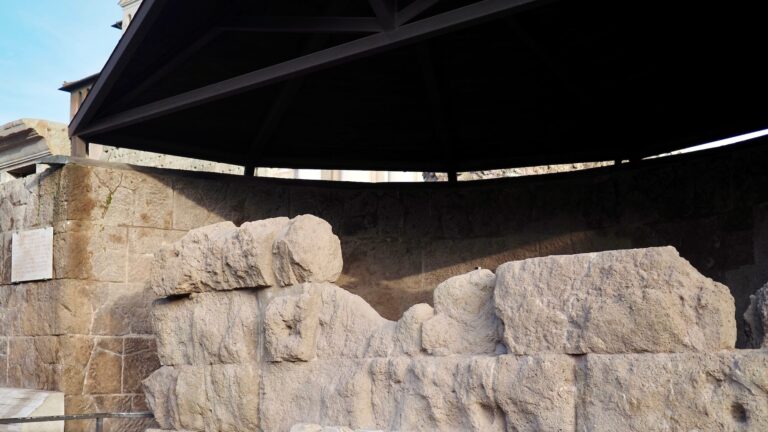
Beware the Ides of March…On March 15th, 44 BC the course of Roman history changed forever. The all-powerful Julius Caesar, just declared dictator for life and seemingly on the fast track to absolute sovereign power, was cut down in the Theatre of Pompey by a group of 60 senators unwilling to stand by as the Roman Republic descended into autocratic rule.
After Marc Anthony’s famously emotive speech over the corpse of Caesar in the Forum immortalised by Shakespeare, the slain leader’s body was burned on the spot and a shrine set up in its place. When the Republican faction was defeated in the ensuing Civil War the Senate wasted little time in deifying Julius. Octavius finally dedicated the temple to his adoptive father on 18th August 29 BC, shortly before his ascension to the status of Rome’s first emperor as Caesar Augustus. Originally the temple stood on a high rostra, whilst a massive cult statue of Julius stood within. Not much is left of the temple today, but it’s easy enough to find in the Forum, where visitors often leave flowers and coins in memory of Caesar.
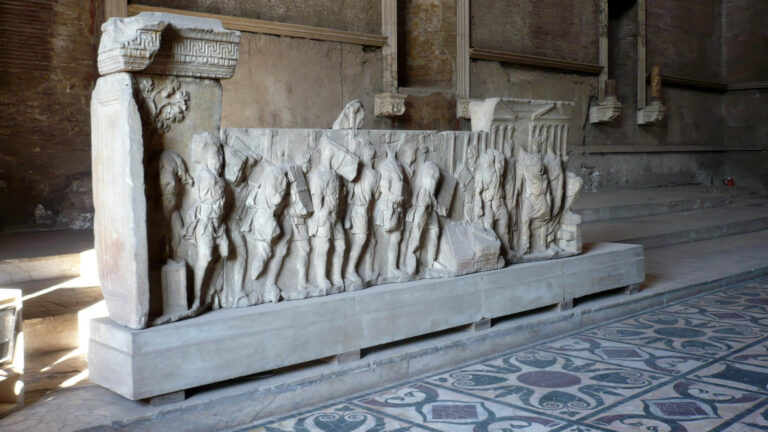
The Senate House of ancient Rome, the construction of the Curia Juliia was begun on the orders of Julius Caesar in 44 BC to replace an older fire-damaged edifice, and was completed after his assassination by Octavian. In reality ‘curia’ simply meant ‘meeting house,’ and there were a number of these institutions in the ancient city where the Senate might meet. The Curia Julia was however by far the most important. Thanks to its conversion to a church in 630 AD the Curia is in an impressive state of preservation, and inside you can still admire the stunning opus sectile floor – a technique where coloured stones are combined in complex geometric patterns – installed as part of a restoration by Diocletian in the year 238.
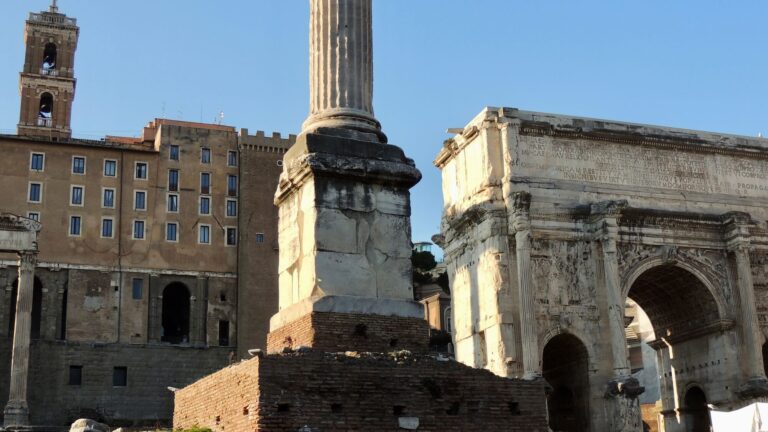
The most recent monument to be built in the Roman Forum, the still-standing Column of Phocas is a comparatively modern addition to the area’s urban fabric, erected in 608 AD to honour the Eastern Roman Emperor who gives the column its name. The beautiful fluted column with Corinthian capital was certainly crafted many centuries earlier, possibly at the height of the empire in 2nd century. The gilded statue of the emperor that originally topped the column didn’t last long – Phocas was deposed and killed two years later, and his likenesses were destroyed.

Tickets
Most tickets to the Roman Forum also include access to the Colosseum and Palatine Hill, with several options available depending on what you’d like to see:
- 24-Hour Ticket (€18.00) – Standard entry to the Colosseum (at a reserved time), Roman Forum, and Palatine Hill, plus access to any ongoing exhibitions.
- Full Experience Ticket with Arena Access (€24.00) – Includes everything in the standard ticket plus access to the Colosseum’s Arena floor and the SUPER sites (special locations within the Forum and Palatine Hill).
- Full Experience Ticket with Underground Access (€24.00) – Includes the Colosseum’s underground levels in addition to the Arena, Forum, and Palatine Hill.
- Forum Pass SUPER (€16.00) – Grants access to the Roman Forum, Palatine Hill, and Imperial Fora (but not the Colosseum). This ticket is valid for 30 days from the date of purchase and includes access to SUPER sites.

Opening Hours
The Roman Forum is open daily, with hours varying by season:
- March 30 – September 30: 9:00 AM – 7:15 PM (last entry at 6:15 PM)
- October 1 – October 25: 9:00 AM – 6:30 PM (last entry at 5:30 PM)
- October 26 – December 31: 9:00 AM – 4:30 PM (last entry at 3:30 PM)
Check official sources before your visit, as hours may change due to special events or maintenance. The site is closed on December 25 and January 1.
Book Your Ancient Rome Experience