When we think of the Colosseum, images of fearless gladiators locked in mortal combat spring most readily to mind.
But the arena’s bloodstained sand bore witness to something even more extraordinary in scale and organisational ambition: the systematic import, display and slaughter of wild animals from every corner of the known world.
Elephants from North Africa, tigers from India, hippopotamuses from the Nile, bears from northern Scotland, crocodiles from the upper reaches of the Nile — the Roman games were, among other things, the most ambitious wildlife exhibition in the ancient world, and one of the most destructive.
The exotic creatures brought to Rome were protagonists second in importance only to the gladiators themselves. They were the empire made visible: Rome’s capacity to reach across continents and bring back the most dangerous animals on earth was a statement of dominion as clear as any military triumph. To understand the animal spectacles of the Colosseum is to understand something essential about how Rome saw its own power, and how it chose to project that power to 50,000 people at once.
Today we’re delving into the fascinating and often harrowing history of these untamed stars, exploring the vast imperial networks that supplied them, the men who hunted them, and the shocking numbers that perished for the entertainment of the masses. From the deadly performances of the venatores to the grim fate of those condemned to face the beasts, join us as we uncover the legacy of wild animals in the Colosseum.
Experience The Colosseum
Enter the Ancient Arena With an Expert Guide
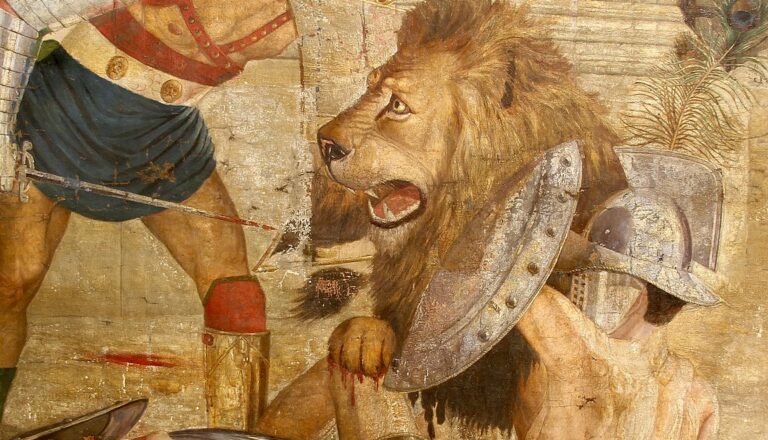
The Roman taste for public animal spectacles — venationes (hunts) — predates the Colosseum by centuries, rooted in the triumphal tradition of displaying the spoils and creatures of conquered territories before the Roman people.
The first recorded instance of exotic animals being exhibited publicly in Rome dates to 251 BC, when 142 elephants were paraded to celebrate a decisive Roman victory over Carthage at the conclusion of the First Punic War. The Carthaginians had deployed war elephants with considerable effect; Rome now displayed the captured animals as living symbols of a conquered enemy. Having no further military use for them, the Romans then proceeded to kill them, establishing a template that would persist for centuries.
The decisive innovation came in 186 BC, when the Roman consul Marcus Fulvius Nobilior staged the first recorded hunt in the arena: lions and panthers killed for sport before an audience in Rome.
The spectacle caused a sensation, and subsequent Roman leaders were quick to understand its political potential. By the time of the late Republic, the venatio had become an established institution – Julius Caesar built a dedicated wooden amphitheatre specifically for such spectacles in 46 BC, deploying 400 lions at a single event.

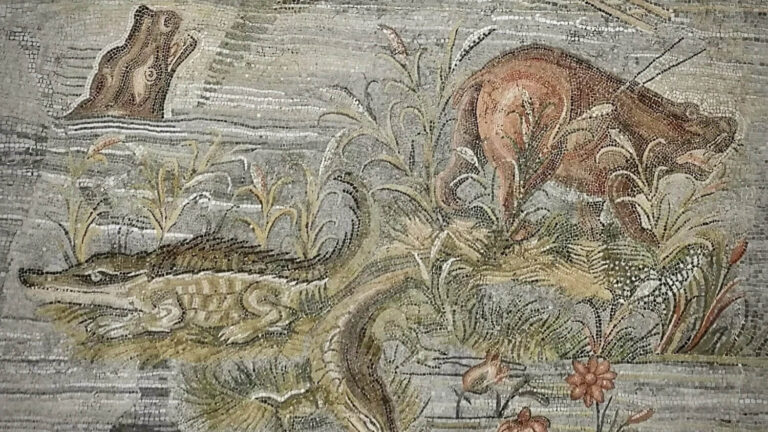
A mosaic in the Borghese Gallery shows a venatio in action.
As Rome transitioned from Republic to Empire, the scale of the animal spectacles grew in proportion to the ambitions of the emperors staging them. Augustus, Rome’s first emperor, boasted in his own autobiography (the Res Gestae) that over the course of his reign he had staged 26 shows in which more than 3,500 “African wild beasts” perished. Under his reign, 36 Egyptian crocodiles were hunted to death in a specially constructed water pool at the Circus Flaminius.
These numbers were modest by what followed. When the Colosseum was inaugurated by Titus in 80–81 AD, the celebrations lasted 100 days, during which ancient sources record the killing of approximately 9,000 animals. Trajan, celebrating his triumph over the Dacians in the early 2nd century, surpassed this with games lasting 123 days in which around 11,000 animals perished.
These figures – drawn from ancient sources and treated with appropriate caution by modern historians – represent a commitment to spectacle so extreme as to constitute one of the ancient world’s first documented environmental catastrophes.

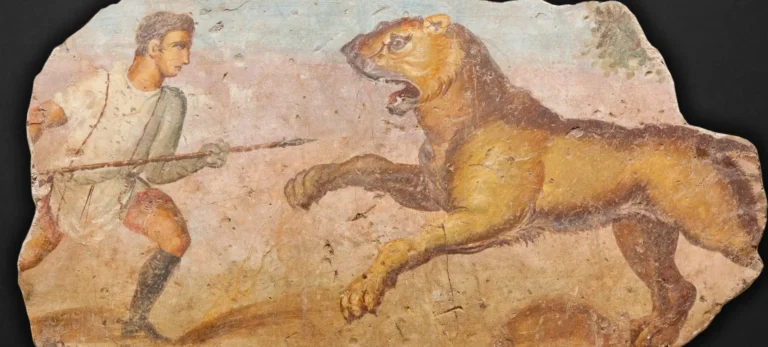
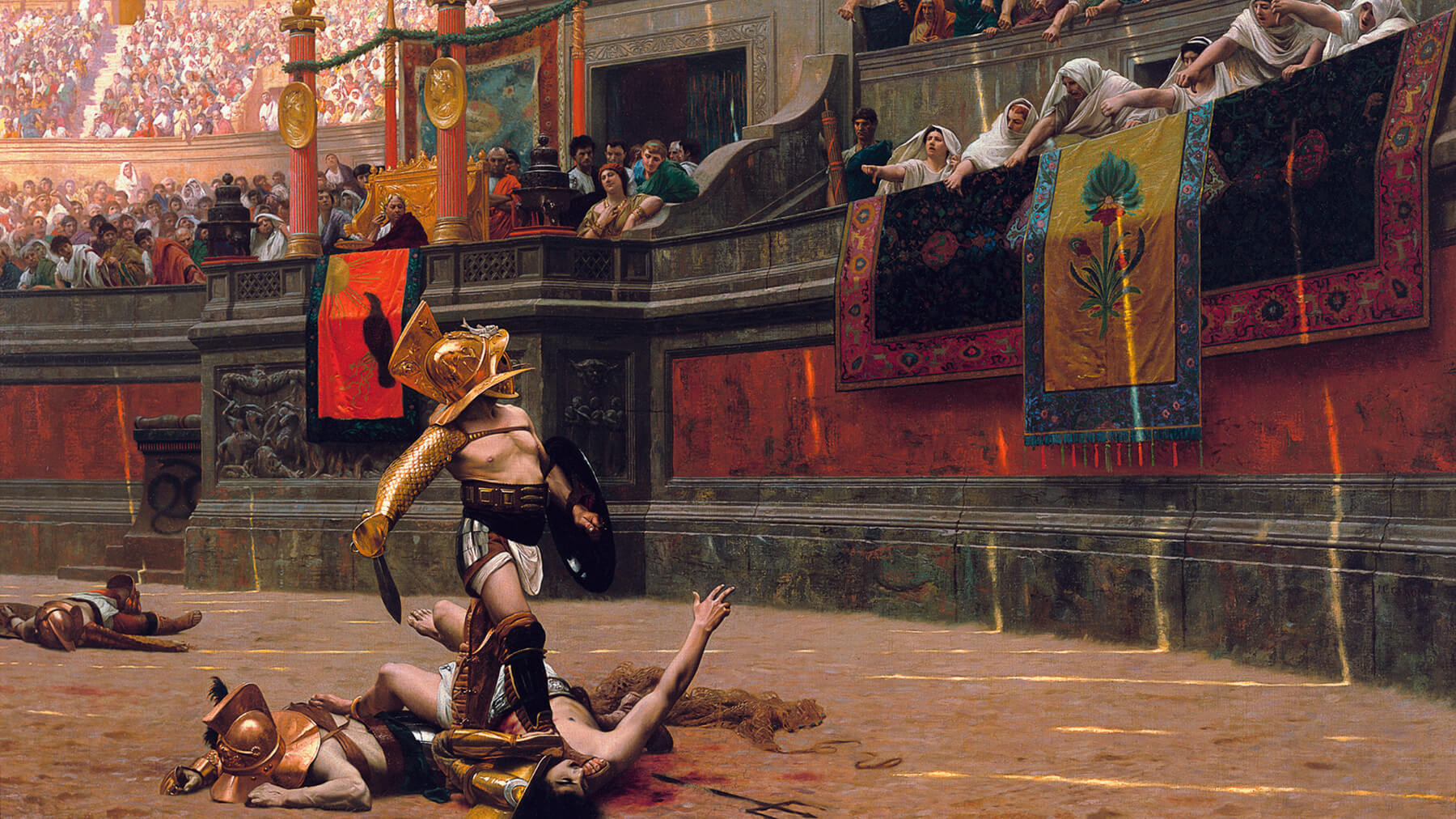
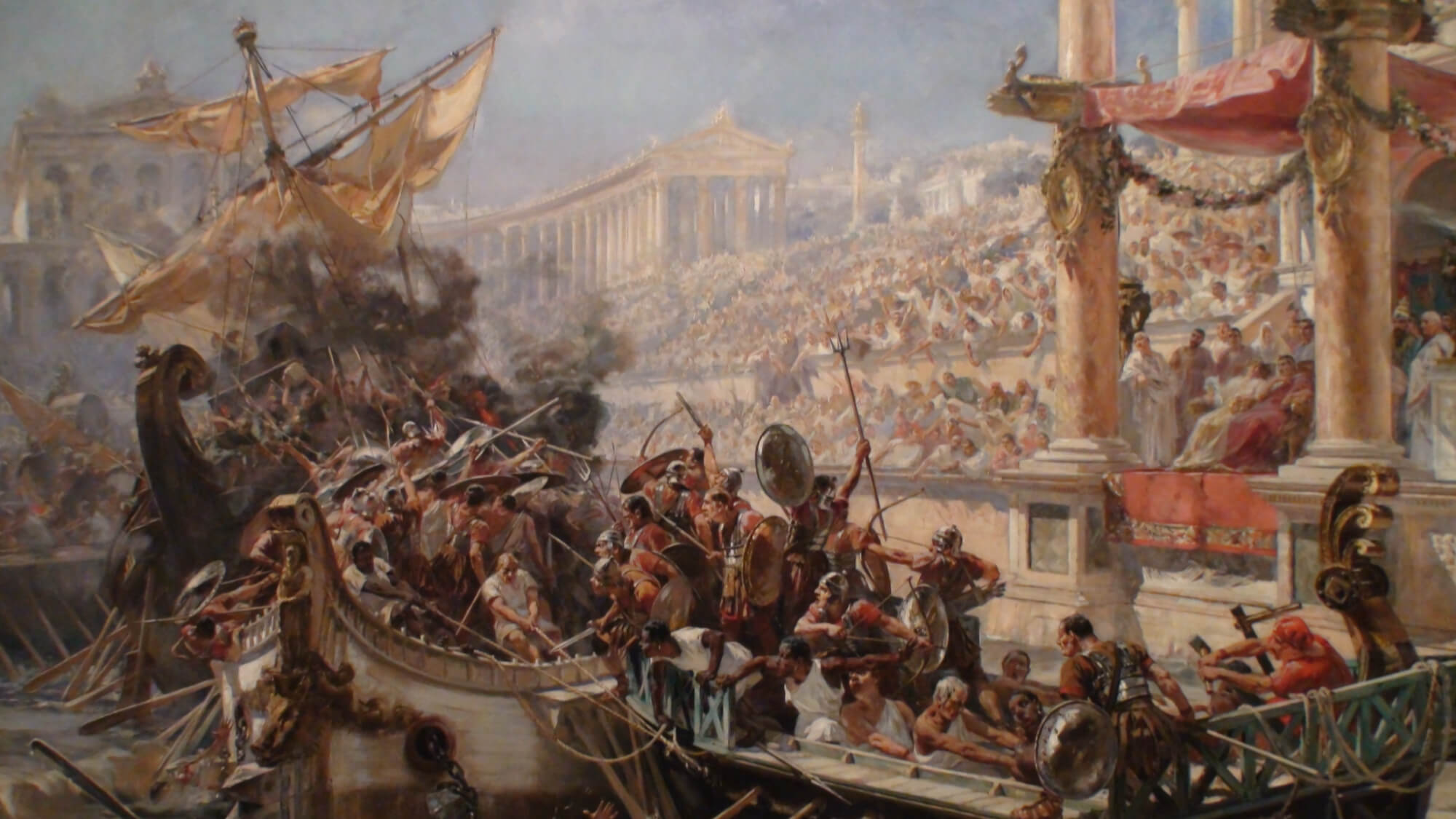
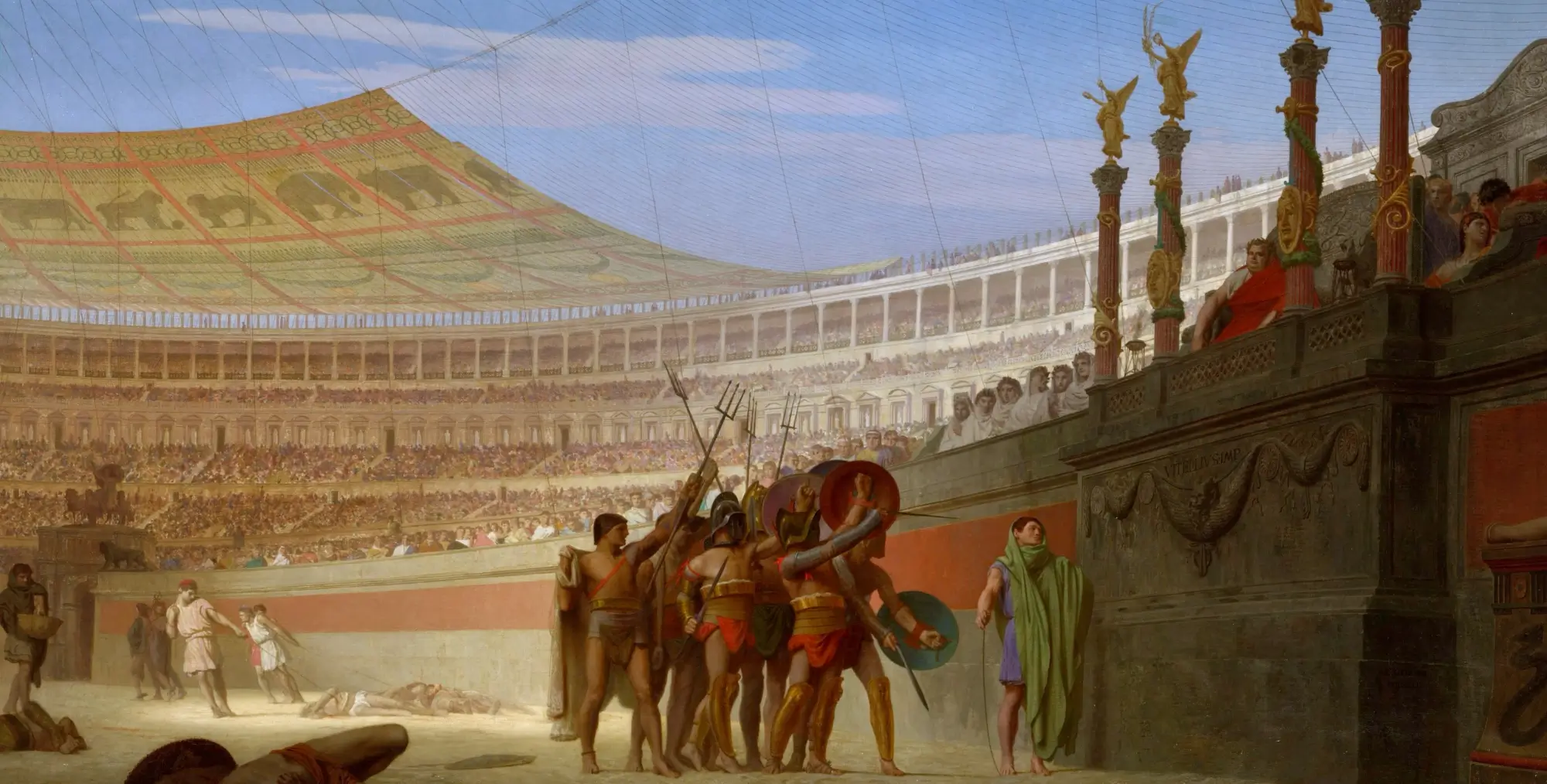
The morning programme at the Colosseum was typically given over to the animal spectacles, before the midday executions and the afternoon gladiatorial bouts. What the audience watched was not simply animals being killed but an elaborate theatrical production.
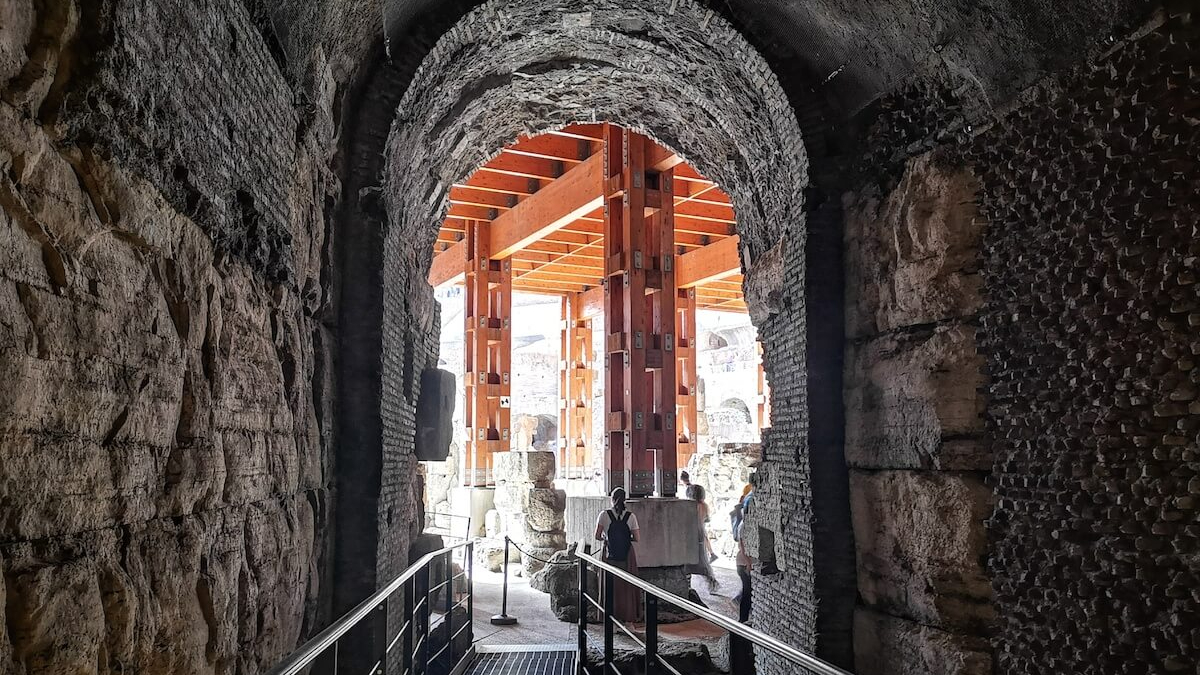
The arena would be transformed for the venatio by elaborate stage scenery — temporary forests, rocky outcroppings, desert landscapes, mountain terrain — all constructed from props and materials hauled up through trapdoors from the underground hypogeum by teams of slaves working the machinery below. The intention was to recreate the distant corners of the empire from which the animals had come, bringing the world’s wild places into the centre of Rome.
The fighters who faced the animals fell into two main categories. The venatores (hunters) were skilled professionals, and like the gladiators were trained in specialist schools called ludi. The most famous of these was the Ludus Matutinus, founded by the hunting-obsessed emperor Domitian.
The bestiarii were lower in status — men condemned to fight animals with minimal training and often inadequate weapons. The distinction between the skilled professional and the condemned criminal was part of the dramatic structure of the morning programme.
At the bottom of the pecking order were the condemned criminals sent out against multiple predators unarmed during the damnati ad bestias in an exhibition that combined judicial execution and popular entertainment. Some executions were instead staged as mythological reenactments: the poet Martial describes a condemned man dressed as Orpheus being torn apart by a bear when his lyre failed to charm it, and another representing Prometheus spread-eagled on a rotating machine while an eagle tore at his liver.
Generally, those enjoined to hunt or do battle with wild animals at the Colosseum had backgrounds similar to the gladiators. Prisoners of war, slaves and desperate poor saddled with life-threatening debts swelled the ranks of the venatores. Whilst they rarely attained the celebrity status open to the most popular gladiators, the venatores were nevertheless an integral part of the show.
The tasks of the venatores were multiple, and included training the wild animals to fight spectacularly against each other in the arena – not always an easy undertaking, as the beasts were often forced to act against their nature. A third-century coin shows an elephant doing battle with a bull in the amphitheatre, whilst a particularly popular part of the Colosseum’s opening games pitted elegant crane birds fighting each other for the crowd’s entertainment – both unnatural scenes testament to the venatores’ dark skill.
Other sources recount bears forced to fight pythons, lions battling crocodiles and other exotic combinations. Sometimes the animals even had to be chained to each other to force them to fight.
To stop the panicked and enraged animals causing mayhem by jumping into the rows of senators and VIPS just feet from the arena in the front row, the floor was surrounded by a net topped with sharpened elephant tusks that would impale any creature attempting to clear it. As a further safety measure, rows of archers were poised to unleash a volley of arrows lying in wait just beyond.
But the main part of the venatores’ job consisted in hunting the animals themselves. In the artificial stage-sets of the arena, the hunters would take down lions and bears, cheetahs, bulls, elephants and crocodiles with arrows and spears. The most dangerous kind of activity the venatores could engage in were armed battles with the wild beasts, in which they wore light tunics and carried short spears.
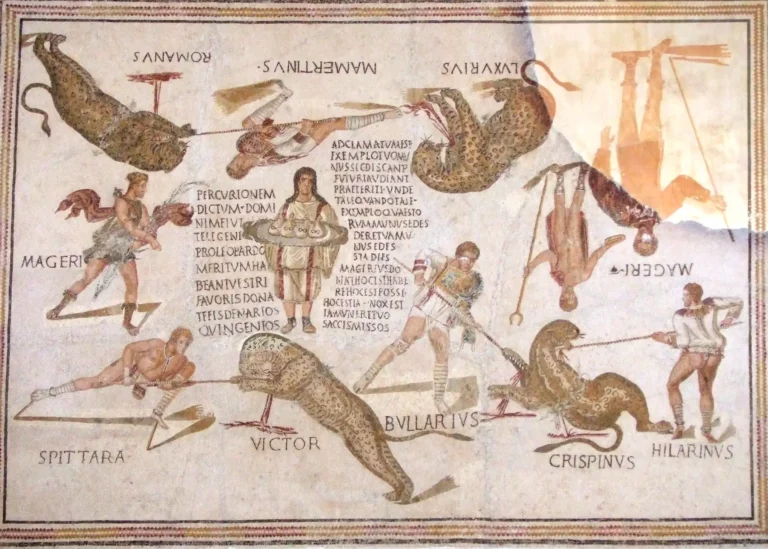
We have a great idea of how the hunting spectacles progressed during Roman games because they are depicted in countless surviving mosaics and frescoes from all across the empire. One of the most interesting is the so-called Magerius mosaic, commissioned to commemorate the eponymous Magerius’ generous sponsorship of a games in Tunisia.
Lightly dressed venatores, whose names are commemorated in inscriptions, expertly dispatch leopards (also named) with spears – one even does so on stilts – as an attendant proffers bags of cash for each animal killed.
Venatores weren’t necessarily forced to fight: joining the fray was considered a way to show one’s courage, and youthful elites occasionally entered the arena with the animals – usually, however, they enjoyed a degree of personal safety not open to the jobbing pros.
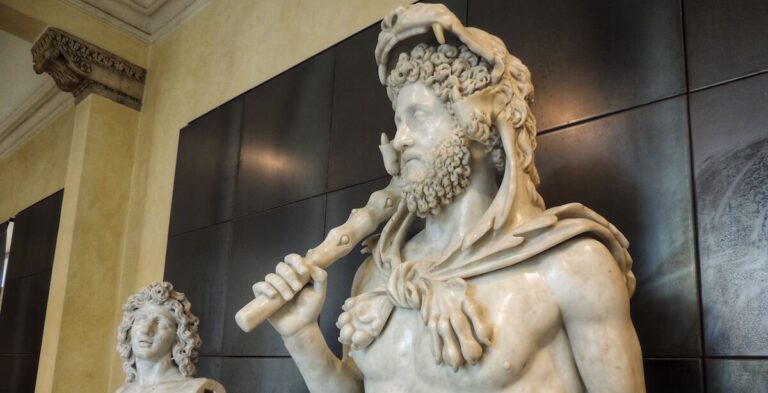
Whilst the Emperor Commodus probably didn’t engage in fully-fledged one-to-one gladiatorial combats as portrayed in the film Gladiator (despite boasting that he had won an incredible 12,000 bouts over his ‘career’), he certainly did relish slaughtering beasts in the arena. So proud was he of his exploits in dispatching wild animals, that Commodus frequently had himself depicted as a second Hercules – complete with lion’s pelt and club.
When he joined the games at the Colosseum he definitely wasn’t fighting fair though – in all likelihood the animals were tied up and didn’t have the opportunity to fight back, and Commodus often remained safely distant on a raised platform firing arrows at them.
Once, according to Cassius Dio, the emperor personally picked off a hundred bears as a warm up act to the games. One of his favourite tricks was decapitating ostriches with his arrows, then tossing their heads into the crowd.
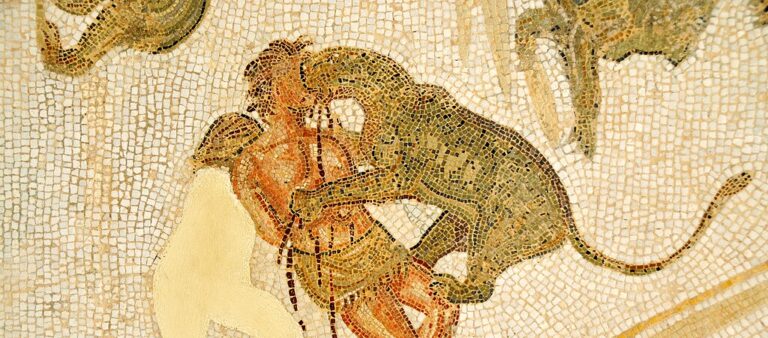
Beneath the venatores on the pecking order in the arena were the bestiarii. The bestiarii were unarmed, and tasked with baiting the animals to make them more ferocious or teasing them with whips, lassos and bright rags.
They were also responsible for managing what was perhaps the least savoury aspect of the entire games, the so-called damnatio ad bestias in which prisoners condemned to death were thrown to the wild animals in the arena in fulfilment of their punishment.
Usually reserved for enemies of the state and prisoners of war, damnatio ad bestias unfolded in one of two ways. In the first, the condemned was expected to fight the beast, and was furnished with a spear, or more rarely a sword. With such minimal tools they usually didn’t stand a chance. On the rare occasion that they managed to defeat an animal, another would be promptly released to finish the job, cutting short any momentary euphoria.
Others, the lowliest of criminals, were not expected to fight at all– instead they were exposed naked to the lions, panthers, tigers, boars and leopards without weapons or protection. Sometimes they were dressed in animal skins to further incite the beasts. These gruesome capital sentences were a warm up act for the gladiator contests, and usually took place during the lunch-interval, a sort of macabre half-time show.
Not surprisingly, the prospect of such a violent and publically humiliating death proved too much for many of those condemned to perish in the arena, and there are numerous recorded examples of prisoners committing suicide in the cells of the Colosseum’s underground before their turn on the sands above.
According to Symmachus, a group of 29 Saxon prisoners strangled each other rather than face the animals, whilst one particularly lurid tale recounted by Seneca relates how a German prisoner escaped to the bathroom just before a show and choked himself to death with the first thing that came to hand – the sponge with which Romans wiped themselves after answering the call of nature.
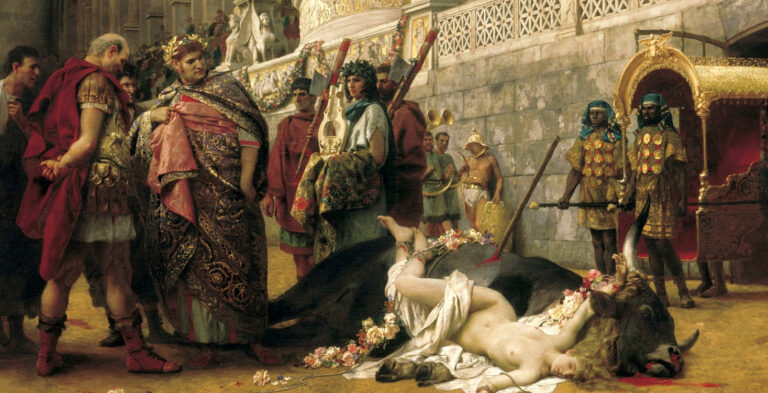
The Roman event-planners in charge of the games’ programmes were nothing if not inventive, and the afternoon damnatio ad bestias was not always a static affair. Sometimes they were transformed into full-scale re-enactments of Greek myths, which were brutal affairs at the best of times. Those condemned to take part in these perverse stagings were forced to take on the role of the tragic victim suffering all manner of bizarre torments. A few examples will give you an idea.
Hercules famously burned to death before his apotheosis towards the land of the gods, and the anyone condemned to take on his role at the games made his appearance in the Colosseum wielding a club and wearing a tunic soaked in pitch, before being immolated alive.
The musically inclined Orpheus meanwhile was recognisable from the lyre he carried, and the Colosseum was transformed into a verdant woodland full of animals for his gruesome star turn. Instead of charming a bear with his music as the hero does in the ancient myth, however, here Orpheus was torn apart by the disenchanted animal, with only his lyre to defend himself.
According to Greek mythology, Icarus flew too close to the sun on homemade wings and fell to earth as a result of his hubris. In the Colosseum re-enactment, a victim was given paper wings and then flung from the highest point of building hundreds of feet in the air and onto the arena floor far below, splattering into a bloody mess before the Imperial box to the delighted squeals of its guests.
In a tale blood-curdling even by the standards of ancient myth, finally, the handsome youth Attis castrated himself out of grief after breaking his vow of faithfulness to the mother of the gods Cybele. Sources recount that condemned men forced to reprise this role as part of their executions met a similar fate, castrated on the sands of the arena.
The logistics of supplying the Colosseum’s appetite for exotic animals were staggeringly complex, requiring a network of trappers, agents, transport specialists and holding facilities that stretched from the Atlas Mountains of Morocco to the forests of Scotland, from the upper Nile to the banks of the Caspian Sea.
Wild animals of every imaginable stripe were brought to Rome from the most distant corners of the Roman empire to feature in high profile games at the Colosseum. The Scriptores Historiae Augustae explicitly praised the emperor Antonius Pius for his munificence in staging a games featuring ‘all the animals of the whole earth,’ and it seems such claims were scarcely an exaggeration.
Lions, rhinos, crocodiles, hippos, cheetahs, rhinoceroses, monkeys and elephants were all transported from Africa to the capital; tigers, leopards, panthers, and cheetahs made the perilous journey from Asia, whilst bears were captured and taken to Rome from the highlands of Scotland – mysterious Caledonia wasn’t even part of Rome’s dominion, and so the bears had to be caught on furtive raiding expeditions beyond Hadrian’s wall. Polar bears were recorded in the games of the Emperor Gordian III in the 3rd century.
Less fierce animals made appearances too: zebras and ostriches pulled chariots before being slaughtered, and elephants were trained to dance and do tricks before being bathed in their own blood. The intelligent pachyderms occasionally inspired pity amongst the audiences – Pompey wowed the people with a massive venationes in dedication of his own theatre in 55 BC, and the crowd were reportedly delighted at the sight of 500 lions being put to the sword.
But when the elephants had their turn, Plutarch remarks that the crowd felt only ‘compassion and a kind of feeling that that huge beast has a fellowship with the human race.’ Once the organisers even tried adding giraffes to the mix, but their docile nature was such that even the blood-thirsty Romans didn’t much enjoy seeing them slaughtered, and the idea was quickly abandoned.
Whilst ancient sources are more interested in recounting these exceptional beasts, untold numbers of easier to source deer, goats, boars and cattle also served as prey for the arena hunts.
The animals were captured using nets, lures and pit traps by specialist units — often attached to the Roman military, for whom hunting exotic animals was a prestigious and relatively pleasant diversion from garrison duty at the empire’s frontiers. Herbivores required patience and good dogs; large predators required far more elaborate operations, with multiple teams coordinating the drive and capture of animals that were very capable of killing the people trying to catch them.
The journey to Rome was perilous for the animals and expensive for their handlers. Many perished in transit from the stress of confinement, from disease, from the climatic shock of being moved from tropical or desert environments to the cooler climate of central Italy.
Ancient sources suggest that mortality during transport was considerable, which is reflected in the prices paid for exotic specimens: a healthy tiger or rhinoceros arriving in Rome represented the successful completion of a chain of operations that stretched across thousands of miles and months of travel.
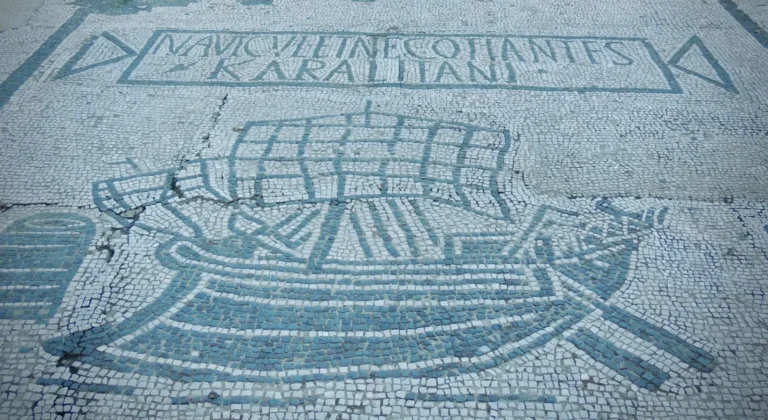
Local municipalities along the main supply routes were legally required to provide food and accommodation for animals in transit. Ostia Antica was the major hub for the arrival of wild animals from overseas to the capital; mosaics representing the companies responsible for the trade are still visible in the Square of Corporations in the archaeological site.
Once in Rome, the animals were held in a menagerie complex on the Caelian Hill known as the vivarium before being transferred to the underground hypogeum in the final days before the games. There they waited, in darkness and confined spaces, their roaring and howling audible from the arena above, until the trapdoors opened and they sprang into the light.
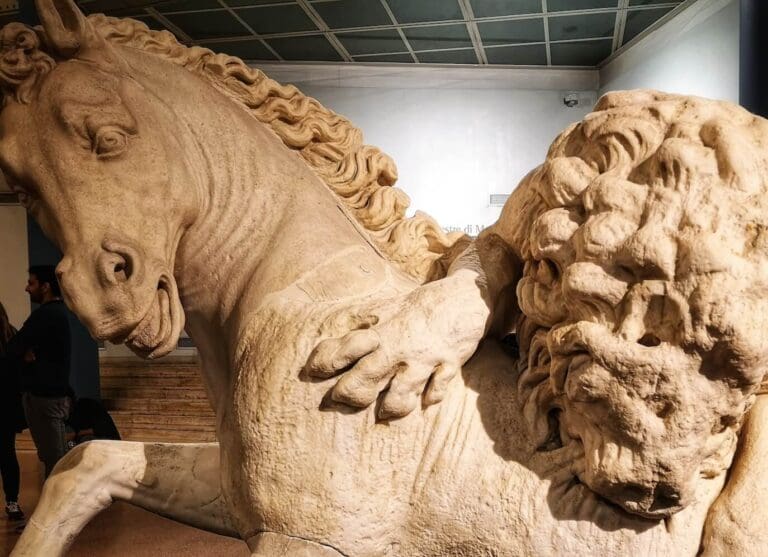
Augustus’ boast that 3,500 wild beasts perished in games during his reign pales in significance when compared to the sheer scale of bloodletting that took place at the Colosseum in the centuries to come. Reliable data is somewhat scant, but the numbers that have been passed down to us from ancient sources are nonetheless pretty staggering.
Suetonius’ claim that over 5,000 animals were butchered on a single day during the Colosseum’s inaugural games might be taken with a pinch of salt, but the historian Cassius Dio’s more sober estimate that over 9,000 beasts were killed over the course of the 100 day inauguration is scarcely less shocking.
The scale of the Roman appetite for exotic animals over four centuries of games had measurable consequences for wildlife across the ancient world.
The Barbary lion, a North African subspecies of lion that populated the Atlas Mountains and the Saharan fringes, was hunted to the point of regional extinction, its population devastated by centuries of Roman demand. The North African elephant was entirely extinct by the early medieval period; while the causes are complex, Roman demand for elephants — both for the games and for military use — is believed to have been a significant factor. Hippos disappeared from the lower Nile; leopards from large areas of North Africa; forest elephants from regions where they had previously been abundant.
By the 3rd and 4th centuries, the growing difficulty of finding adequate numbers of exotic animals, as well as the growing expense of transport and maintenance, began to force changes in the programme. The games continued, but the variety and quantity of animals declined. The celebration of Rome’s millennium in 248 AD included 32 elephants, 10 elk, 10 tigers, 60 lions, 30 leopards and a rhinoceros; while an impressive list to modern eyes, it was but a shadow of the 11,000 animals that Trajan had killed in a single programme a century and a half earlier.
The last documented animal hunts in the Colosseum took place around 523 AD, by which point the Western Roman Empire had already collapsed. The venationes ended not with a decision but with an exhaustion: of imperial finances, of military reach, and finally of the animals themselves.
What animals were used in the Colosseum?
An extraordinary range, from the very large to the unexpected. Lions, leopards, tigers, bears, elephants, hippopotamuses, rhinoceroses, crocodiles and giraffes were among the most celebrated. More commonly, vast numbers of deer, boar, ostriches, zebras, wild cattle and other game animals provided the bulk of the hunting spectacle.
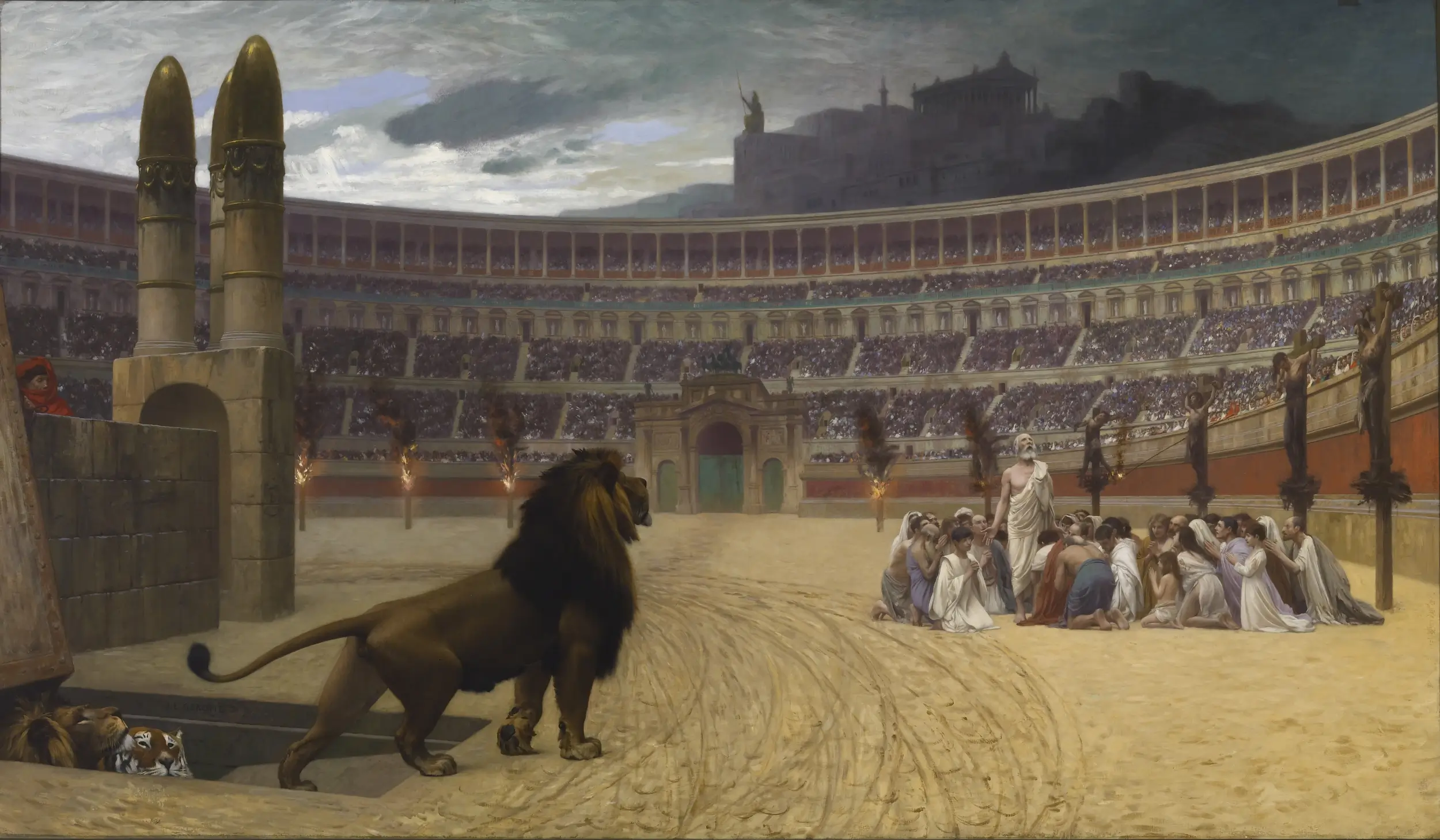
Were Christians really thrown to lions in the Colosseum?
This is one of the most persistent and contested questions in Roman history. There is no contemporary evidence for Christian martyrdom specifically in the Colosseum, and the association developed primarily in the medieval period, many centuries after the events it claims to record. Christians were certainly executed in arenas across the empire, but the specific identification of the Colosseum as the site of mass Christian martyrdom is not supported by early sources.
How many animals were killed in the Colosseum?
The numbers given in ancient sources are large and should be treated cautiously. Titus’s inaugural games reportedly saw the killing of around 9,000 animals; Trajan’s Dacian triumph around 11,000. These figures come from literary sources written some time after the events and may reflect rhetorical inflation. However, even if the actual numbers were significantly lower, the cumulative toll across four centuries of games represents one of the most destructive episodes of human impact on animal populations in the ancient world.
What is the difference between a venator and a bestiarius?
A venator was a trained professional animal hunter — a skilled combatant specialised in fighting animals, trained at dedicated schools and accorded the status of a professional fighter. A bestiarius was typically a condemned criminal sent against animals with little or no training or adequate weapons, essentially serving a death sentence in the arena.
Did the Romans feel any concern about animal welfare?
The question would probably have been unfamiliar to most Romans, who viewed the natural world as a resource. However, there are occasional Roman texts that express discomfort with the spectacle — Cicero, writing in 55 BC about Pompey’s games featuring elephant hunts, notes that the crowd felt unexpected sympathy for the animals and turned against the sponsor.
Book Your Ancient Rome Experience