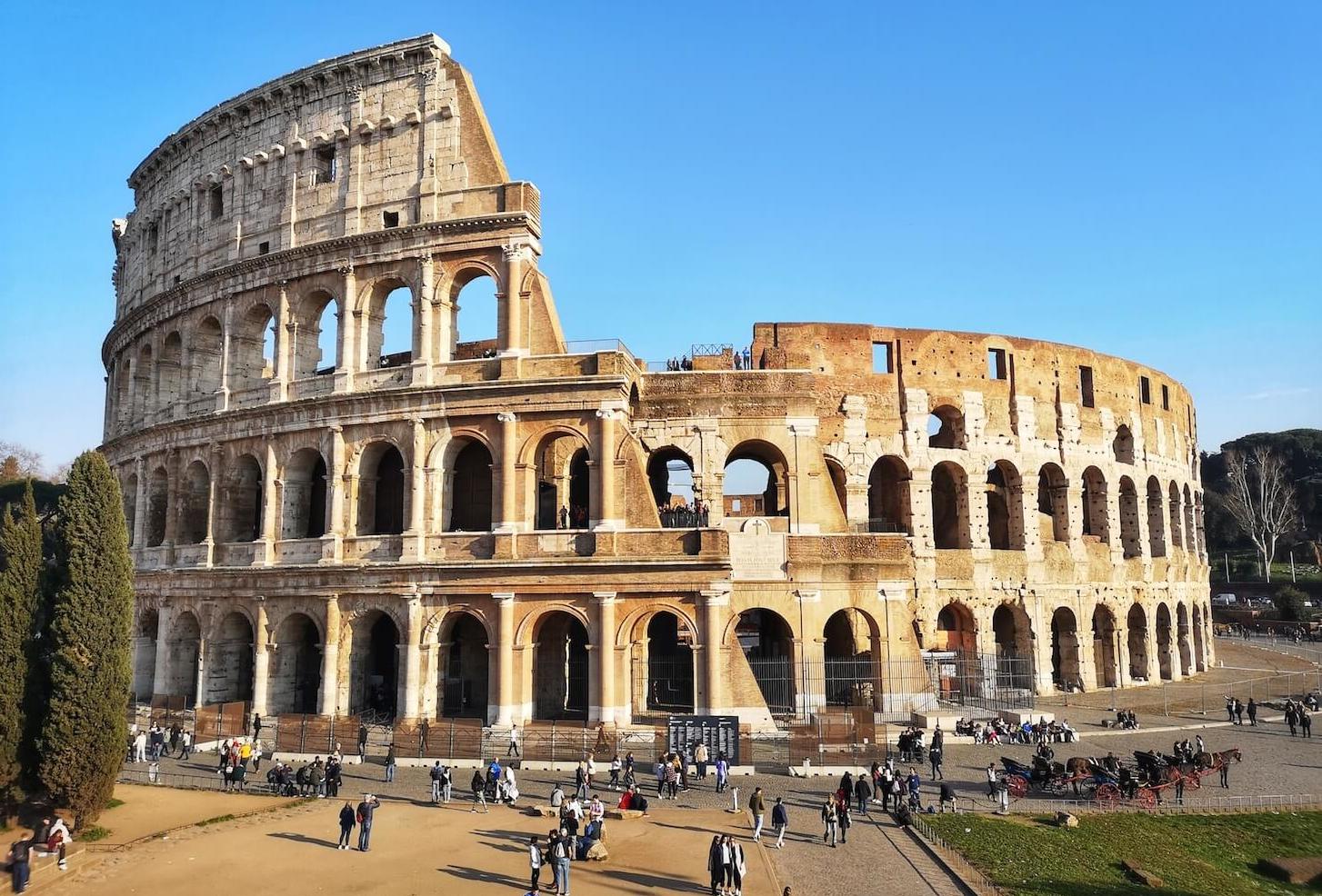
Beneath the blazing sun and crumbling arches of the Colosseum lies a world that the crowds above never saw.
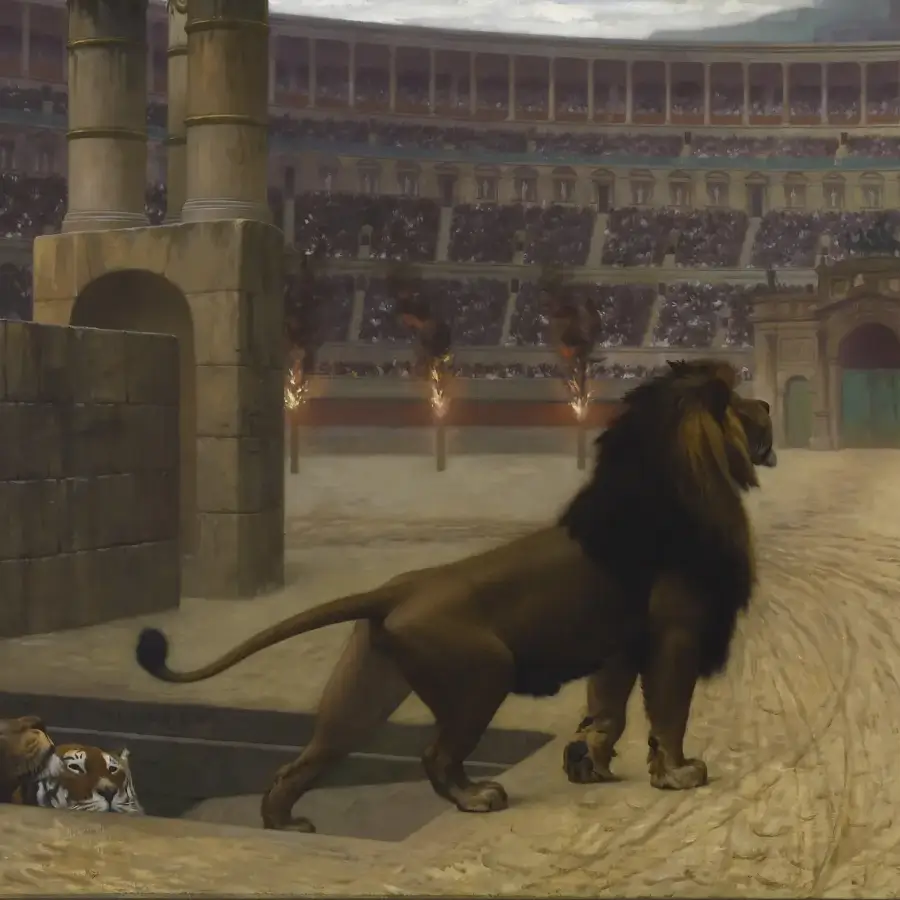
Down in the shadows, where torchlight once flickered against damp stone, gladiators adjusted their helmets and steeled themselves for what was coming. Wild Animals — lions from North Africa, bears from the Atlas Mountains, tigers transported across continents at extraordinary expense — paced in iron cages in the darkness, driven half-mad by confinement and noise.
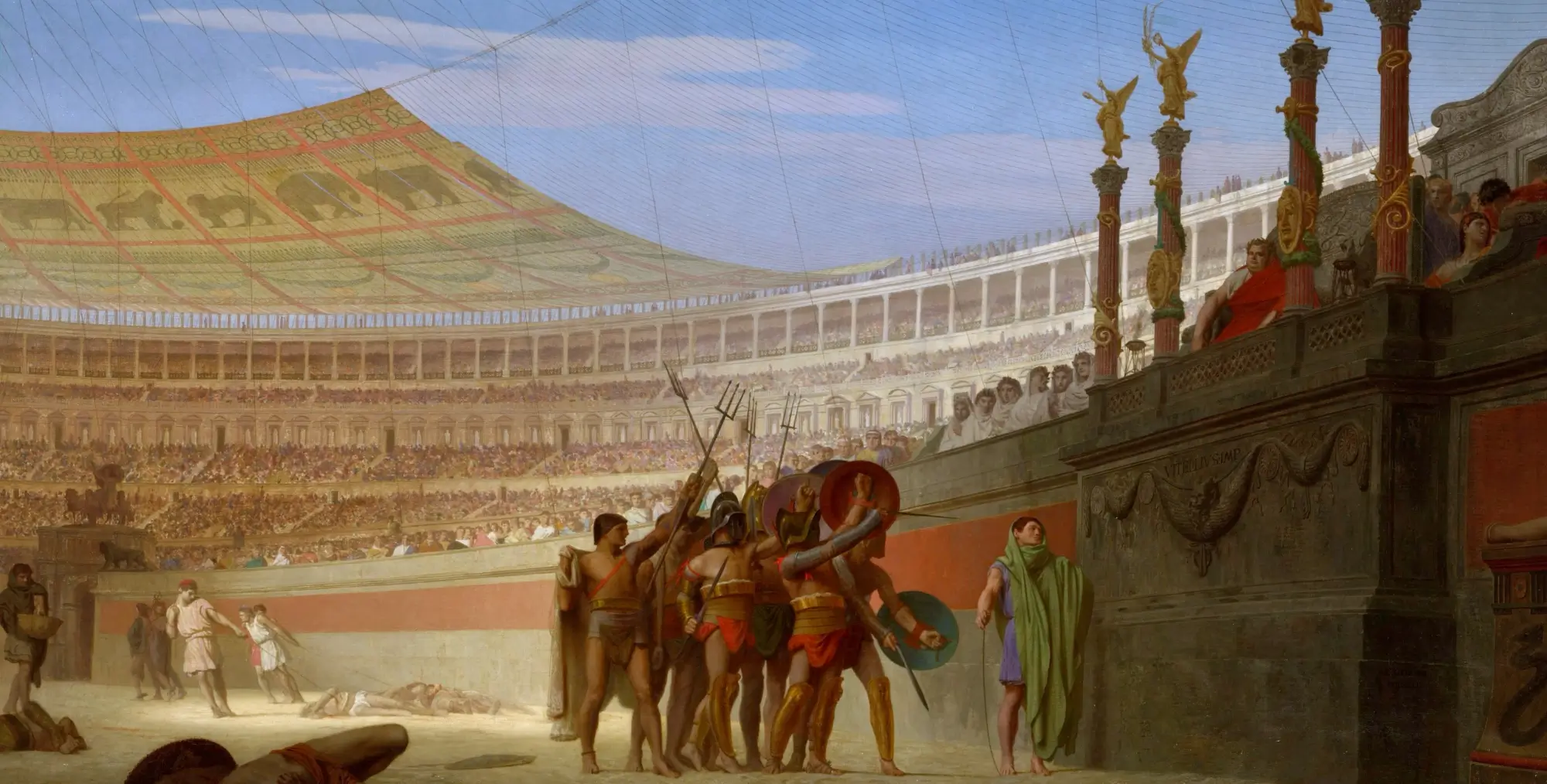
And above them all, through 32 trapdoors set into the arena floor, the roar of 50,000 spectators filtered down like distant thunder.
This was the hypogeum — from the Greek for “underground” — the vast subterranean machinery that made the spectacles of the Colosseum possible. It was, in the most literal sense, the backstage of the ancient world’s most ambitious theatre: a two-level network of tunnels, corridors and chambers running beneath the entire footprint of the arena, operated by hundreds of slaves and animal handlers who never saw the light during the games.
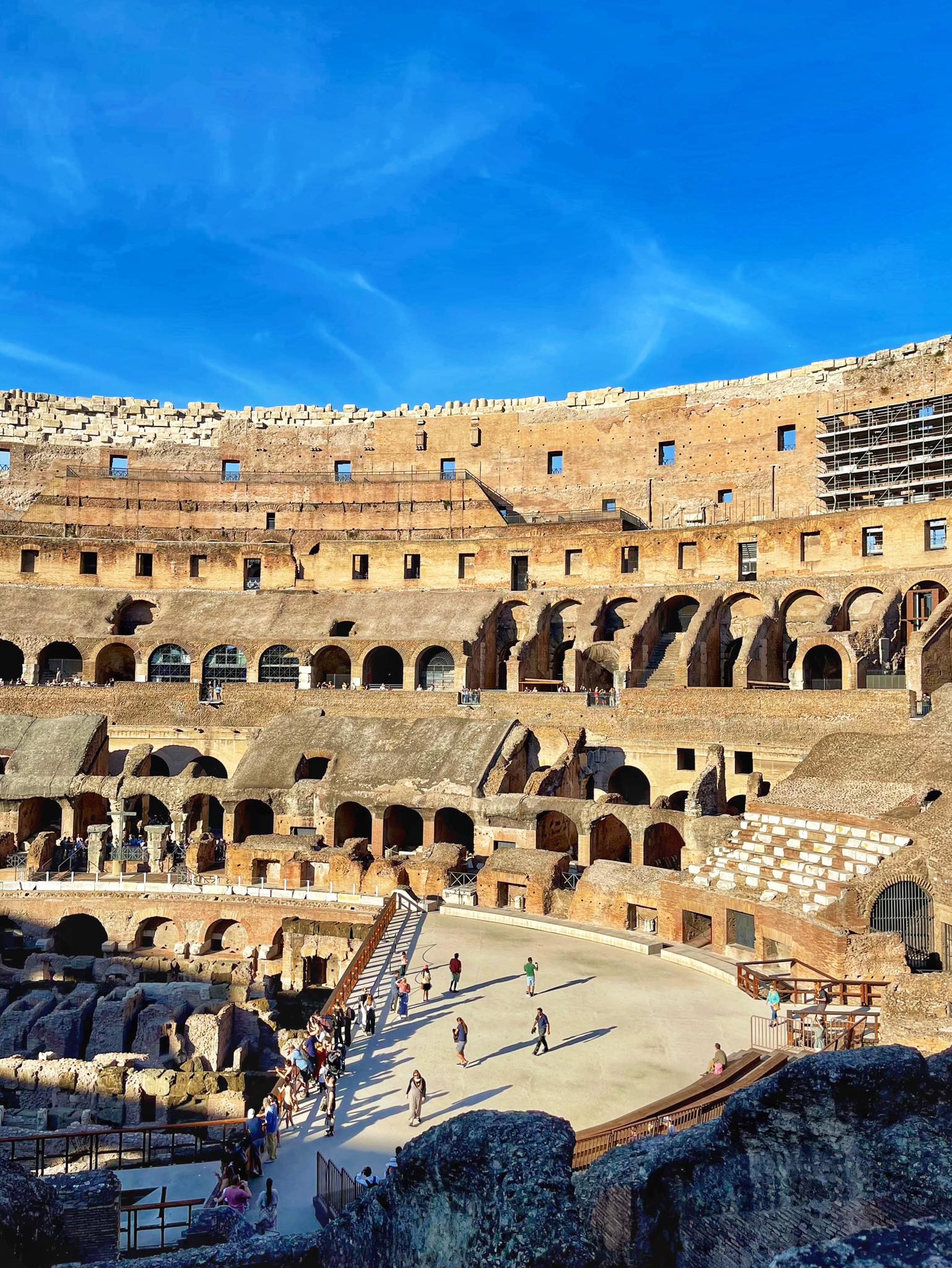
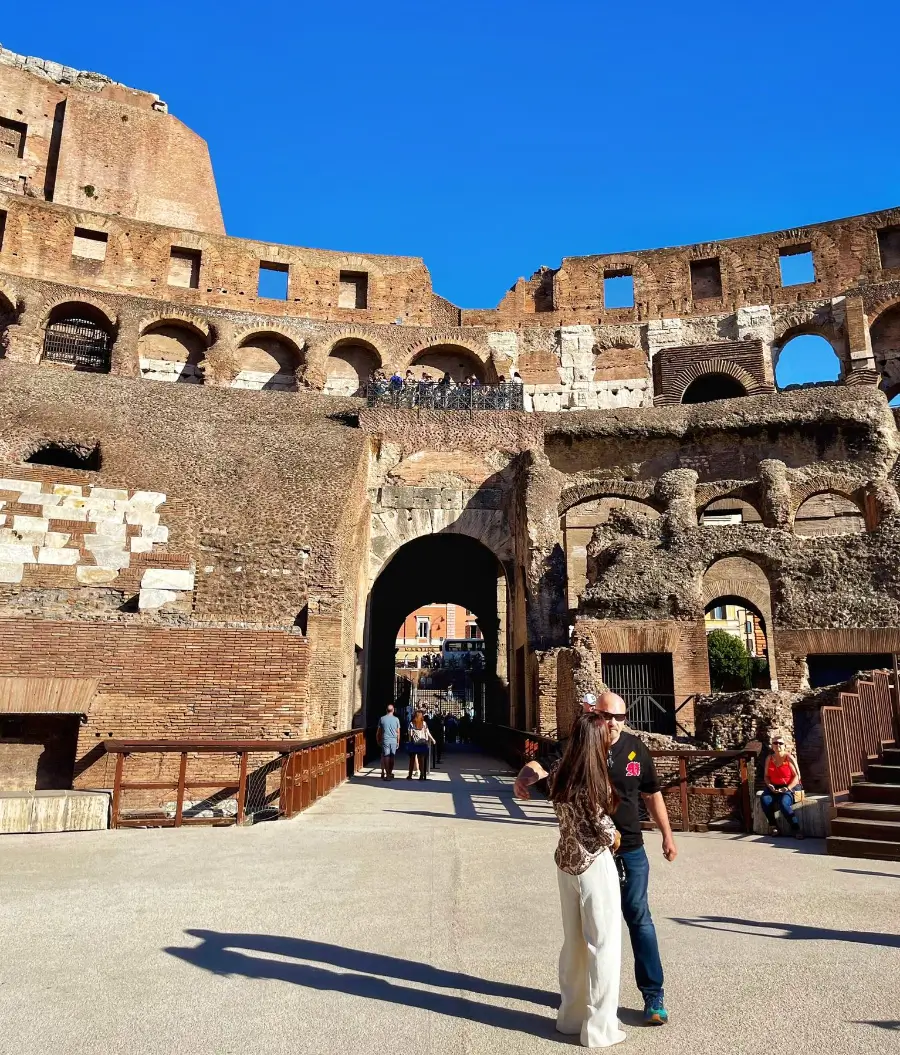
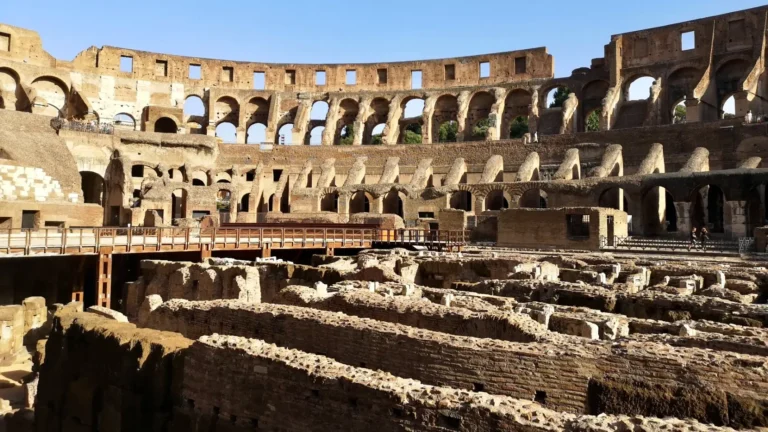
If you have ever visited the Colosseum and gazed down at the exposed hypogeum from the arena level, you will have sensed something of its atmosphere. But unless you have actually descended into it, you have only glimpsed the surface.
This guide tells the full story of what happened down there — and what you will find when you go.
Tour the Colosseum Your Way
Experience the Ancient Amphitheater
The Colosseum was inaugurated by the Emperor Titus in 80–81 AD with a hundred days of spectacular games — and at that point, the hypogeum did not exist.
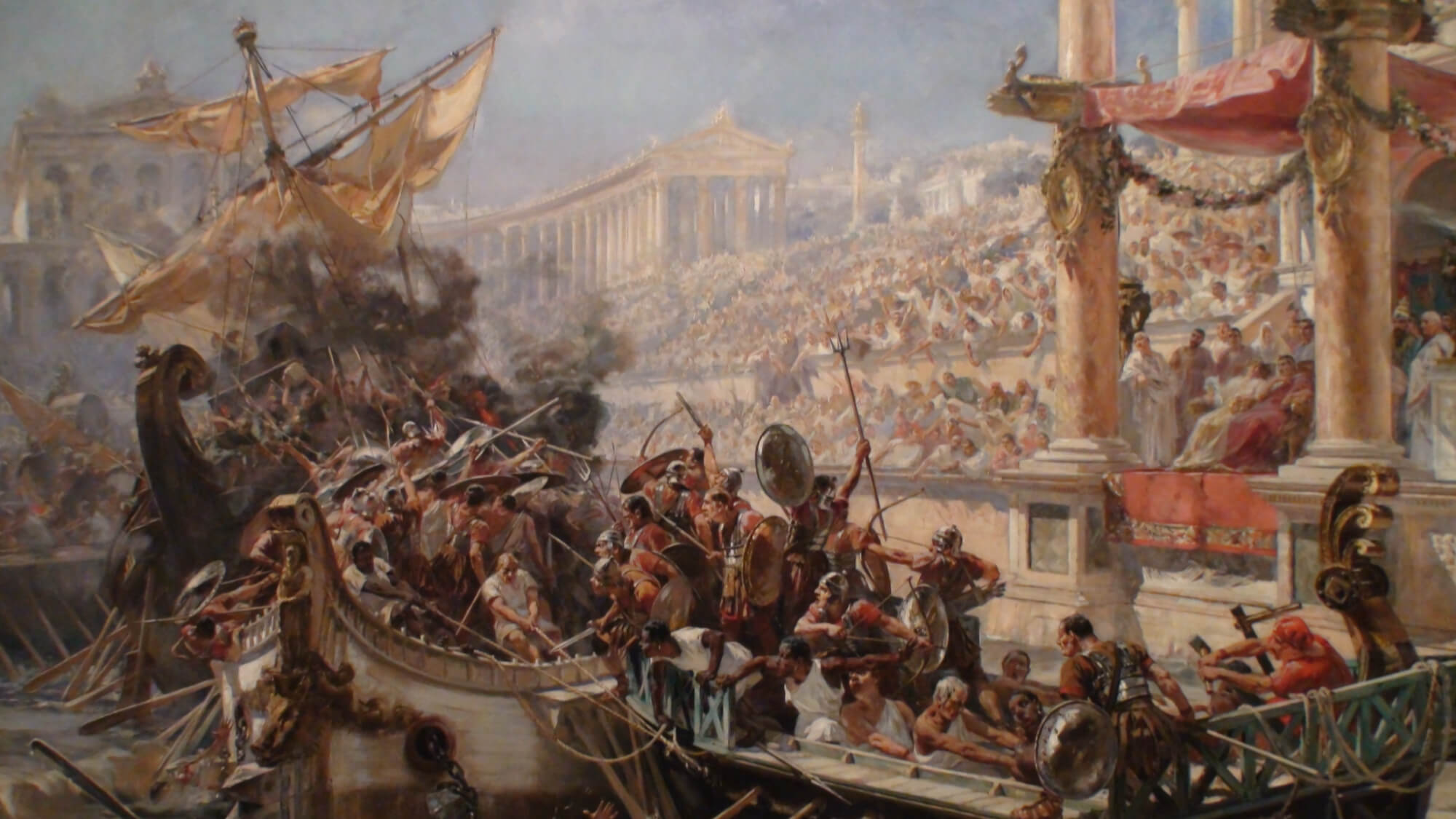
The building opened without its underground level, which is why the earliest games at the Colosseum could include something that became impossible once the hypogeum was built: the flooding of the arena for mock naval battles, known as naumachiae.
These extraordinary spectacles — which involved warships manned by condemned criminals fighting each other on a shallow lake within the arena walls — required an unobstructed, waterproofed arena floor. They were staged at the Colosseum for only a brief window after the inauguration, before Titus’s brother and successor Domitian constructed the hypogeum in approximately the mid-80s to 90s AD.
Once the underground complex was in place, flooding the arena became impossible — but what was lost in water was more than compensated by the extraordinary range of effects the hypogeum made possible on dry land.

The hypogeum was an extraordinarily complex piece of engineering — the backstage infrastructure of an entertainment complex whose special effects would be impressive in any century.
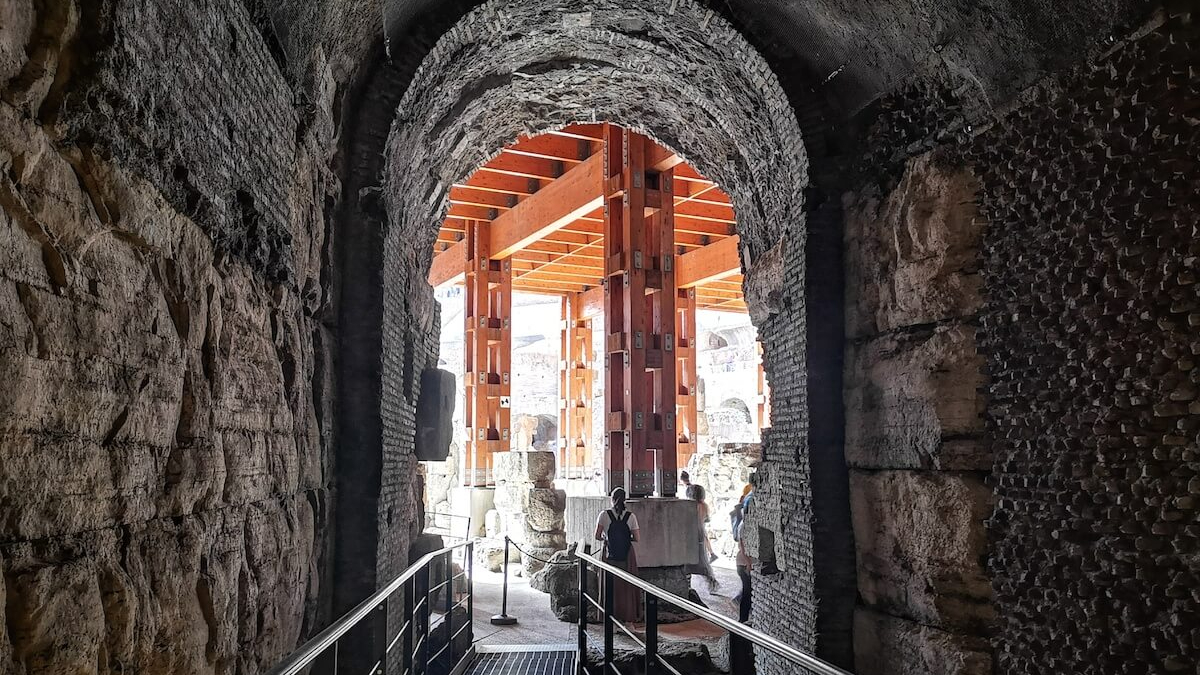
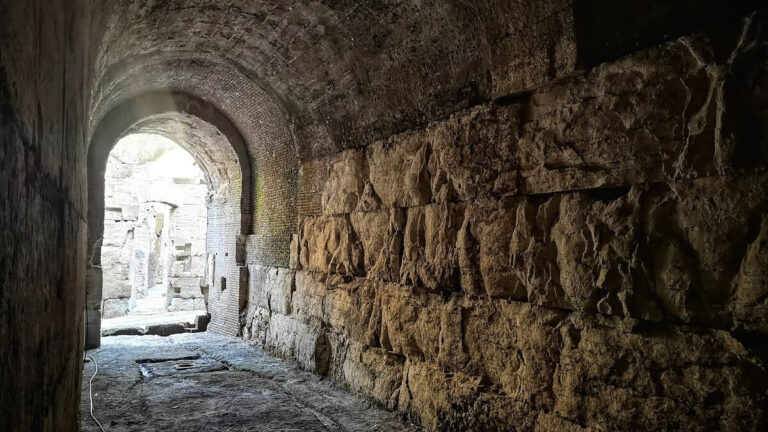
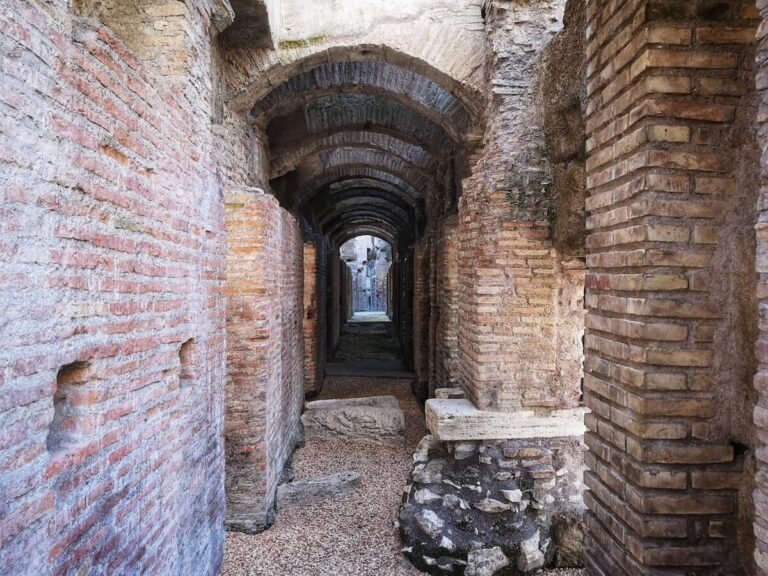
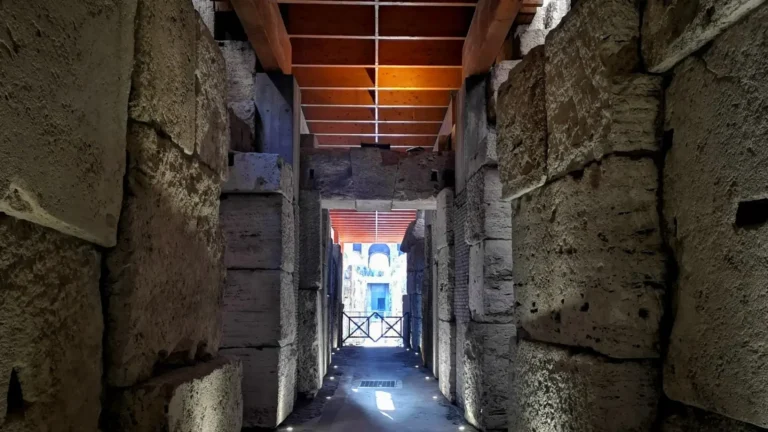
The structure consisted of two underground levels connected by a network of corridors, chambers and access tunnels running along the full length and breadth of the arena. The walls were built in Roman brick and concrete (opus caementicium), with barrel-vaulted ceilings that supported the weight of the wooden arena floor above.
The central corridor ran along the major axis of the elliptical arena; lateral passages branched off at regular intervals to reach specific areas beneath the floor.
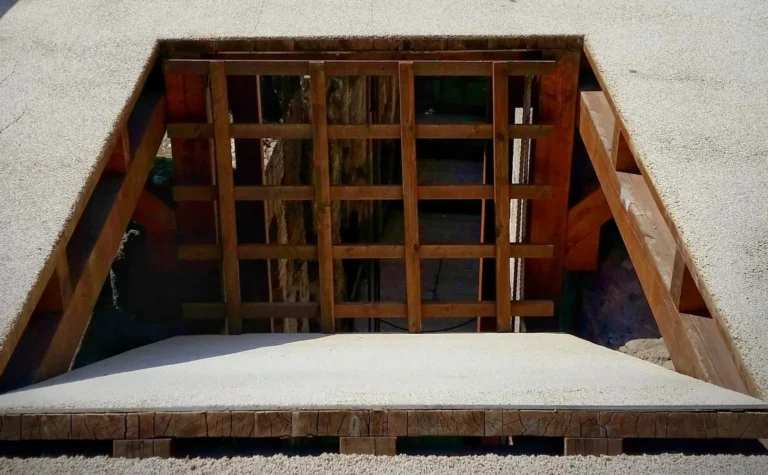
A reconstructed trapdoor set into the Colosseum’s arena floor.
The most dramatic feature of the hypogeum was its system of 32 trapdoors, each connected to a vertical shaft leading up to the arena floor above.
These shafts were equipped with elevator mechanisms — capstans powered by teams of slaves, operating a system of ropes, counterweights and pulleys that could raise a cage of animals or a scenic element rapidly from the darkness below to the sunlit arena above.
The effect for the audience — a wild animal suddenly erupting through a trapdoor in the sand, apparently from nowhere — was part of the calculated theatrical illusion of the games. The ancient writer Herodian marvelled at how “a hundred lions appeared in one group as if from beneath the earth.”
A fully reconstructed version of one of these elevator mechanisms has been built in the hypogeum based on meticulous archaeological research, and forms one of the most arresting things a visitor can see on the underground tour today.
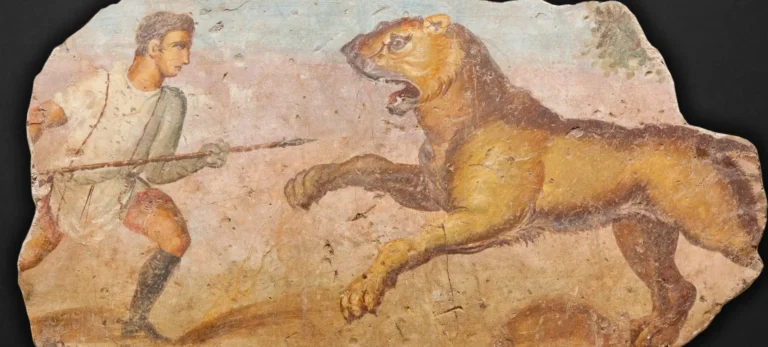
The hypogeum was divided functionally between its animal-holding areas and its gladiatorial preparation spaces, though both populations occupied the same dark, noisy, anxious environment.
The animals — lions, tigers, leopards, bears, rhinoceroses, crocodiles and the full menagerie of creatures brought to Rome from across the empire — were held in large cages in the lower level of the hypogeum, transferred there from the permanent menagerie (vivarium) on the Caelian Hill in the days before the games.
There they waited, driven increasingly frantic by the darkness, the noise from above and the proximity of other predators. When their moment came, they were loaded into hoisting cages and raised to the arena — emerging through the trapdoors into an explosion of light, crowd noise and the smell of sand and blood.
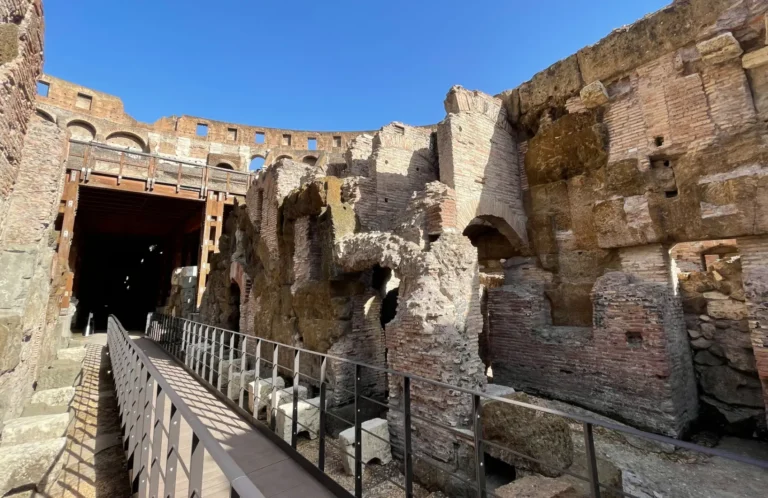
The entrance to the Colosseum’s hypogeum.
The gladiators arrived by a different route. On the day of the games, fighters made their way from the Ludus Magnus — the main gladiatorial training school immediately adjacent to the Colosseum, connected to it by an underground passage that still partially survives and can be seen from street level on Via Sacra — directly into the hypogeum.
There they were given weapons and armour and awaited their moment to emerge before tens of thousands of roaring spectators above. In the Ludus Magnus, all training was conducted with wooden weapons.
The lanistae who ran the schools were understandably cautious about handing sharp steel to men in close confinement, fearful they might revolt or take their own lives in desperation. The hypogeum was the first place a gladiator might hold the deadly instruments of his lethal art.
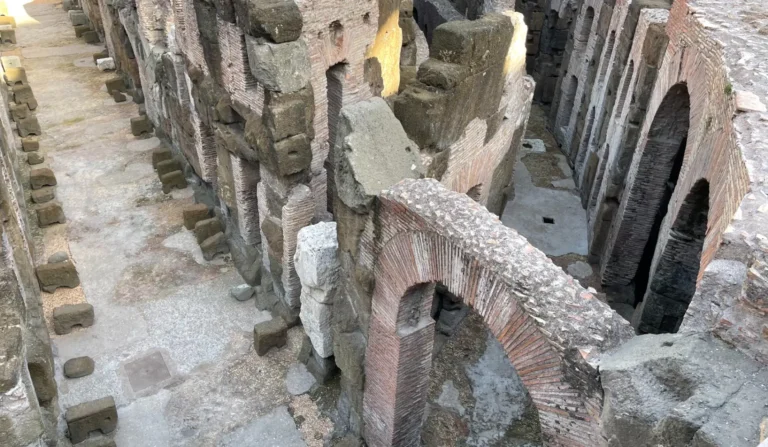
The experience of waiting in the hypogeum on the day of the games must have been terrifying. Ancient writers offer rare glimpses of what it felt like from the inside, and the extraordinary lengths that some prisoners condemned to die in the arena went to in order to avoid their fate.
Seneca recounts how one German slave choked himself to death with a toilet brush rather than face the Colosseum’s fatal entertainments. The detail is appalling, and it tells you something very specific about what the hypogeum represented to those who passed through it on their way to the arena.
As the agonised screams of their maimed comrades filtered down from the arena — there were no windows here, only the guttering torchlight glinting off grimy stone walls — who knows what thoughts ran through the minds of the gladiators and the condemned as they awaited their summons to the sands above?
It was claustrophobic, chaotic, and perilous — a world of gladiators and trainers, slaves, animal handlers, soldiers, and officials. All the props needed to transform the arena into exotic landscapes for the hunts and mythological reenactments were stored here, to be hauled up by yet more slaves at the right moment, like the backstage of some enormous and gruesome theatre.
For those charged with keeping everything running smoothly, it was a nerve-racking existence: even the smallest mistake in timing or stagecraft could result in a fatal “promotion” — a starring role in the next round of executions. Only by exploring these shadowy passageways can you begin to grasp the full complexity of the Colosseum’s spectacles of death, and the astonishing feats of Roman engineering that made them possible.

One of the least appreciated aspects of the Colosseum’s underground is how extensively it was used as a prop store and production facility, not just an animal pen and holding area.
The venationes (wild animal hunts) were staged in elaborate recreated landscapes: temporary forests, desert terrain, rocky outcroppings, mountain crags, all constructed from props and scenery hauled up through the hypogeum’s trapdoors by the mechanical elevators.
The intention was to recreate the distant corners of the empire from which the animals had been sourced, bringing the frontiers of the known world into the amphitheatre. Spectators who had never seen North Africa might glimpse something of its landscape as the backdrop to a rhinoceros hunt; those who had never been to the forests of northern Europe could watch a Caledonian bear in a simulated woodland setting.
This theatrical ambition went further than set dressing. Some of the midday executions at the Colosseum were staged as mythological reenactments — condemned men assigned the role of Orpheus, Prometheus or other figures from myth and killed in the manner that myth prescribed, the whole thing a form of deadly live theatre.
The logistical support for these productions — the costumes, the props, the timing — came from the hypogeum. It was, in every meaningful sense, the backstage of a production whose stakes were life and death.
After the last games were held in the Colosseum in the late 5th and early 6th centuries AD, the building passed through its long medieval transformation into a fortress, cemetery and quarry.
The hypogeum gradually filled with earth, rubble and accumulated debris, and its existence, still dimly remembered in written sources, faded from practical knowledge.
The first modern attempts to excavate the underground complex were made in the early 19th century, under the direction of Carlo Fea during the Napoleonic occupation of Rome.
Work began in 1811 but was halted repeatedly by flooding from groundwater — the same hydraulic problem that had made the original engineering of the hypogeum so challenging. Further attempts in 1874 met the same obstacle.
It was not until the 1930s, under a major excavation programme driven by the Mussolini government, that the hypogeum was finally fully cleared. Workers removed approximately twelve metres of accumulated soil and debris to expose the corridors and chambers that had been buried since the medieval period.
The excavation revealed the elevator mechanisms, the animal pens, the gladiatorial preparation rooms and the access tunnels substantially intact.
Subsequent decades of archaeological research and conservation have further clarified the hypogeum’s organisation and function, and since the 2010s the underground complex has been open to the public via guided tours. Without question, it’s one of the single most atmospheric parts of the entire Colosseum.
What is the hypogeum of the Colosseum?
The hypogeum is the two-level underground complex beneath the Colosseum’s arena floor. Built under the Emperor Domitian approximately a decade after the building’s inauguration in 80 AD, it served as the backstage infrastructure of the games — housing animals in cages, providing preparation spaces for gladiators, storing theatrical scenery, and operating the 32 elevator mechanisms that raised animals and props through trapdoors to the arena above.
Can you visit the Colosseum underground?
Yes, but it requires a specific ticket or guided tour beyond the standard admission, and numbers are strictly limited each day. Access is only available with a licensed guide. The experience is one of the most atmospheric in the entire Colosseum and is strongly recommended for anyone with a serious interest in the history of the games. See our underground Colosseum tours for details.
Why wasn’t the hypogeum part of the original Colosseum?
The original building, inaugurated under Titus in 80–81 AD, opened without an underground level specifically to allow the arena to be flooded for mock naval battles (naumachiae). Once Domitian built the hypogeum in the 80s–90s AD, the flooding became impossible but the range of ground-based spectacles became far more sophisticated.
How were animals raised to the arena from the underground?
Through a system of 32 trapdoors connected to vertical shafts equipped with elevator mechanisms, consisting capstans operated by teams of slaves using ropes, pulleys and counterweights, capable of raising heavy loads rapidly from the underground level to the arena floor. A reconstructed example of one of these mechanisms can be seen in the hypogeum today.
What happened to the Colosseum’s underground after the games ended?
After the last games in the late 5th and early 6th centuries, the hypogeum was gradually abandoned and filled with earth and debris over the following centuries. It was excavated in earnest only in the 1930s, when a major programme under the Mussolini government cleared the accumulated soil and exposed the ancient structures. Archaeological research has continued since, and the hypogeum was opened to guided public tours from around 2010.
Is the Colosseum underground suitable for children?
Yes, especially for older children with an interest in history. Most guides find it an extremely engaging space for younger visitors, particularly the animal pens and the elevator mechanism. The underground is not recommended for very young children or prams due to the uneven floors and tight spaces.
Experience the Colosseum at its Best