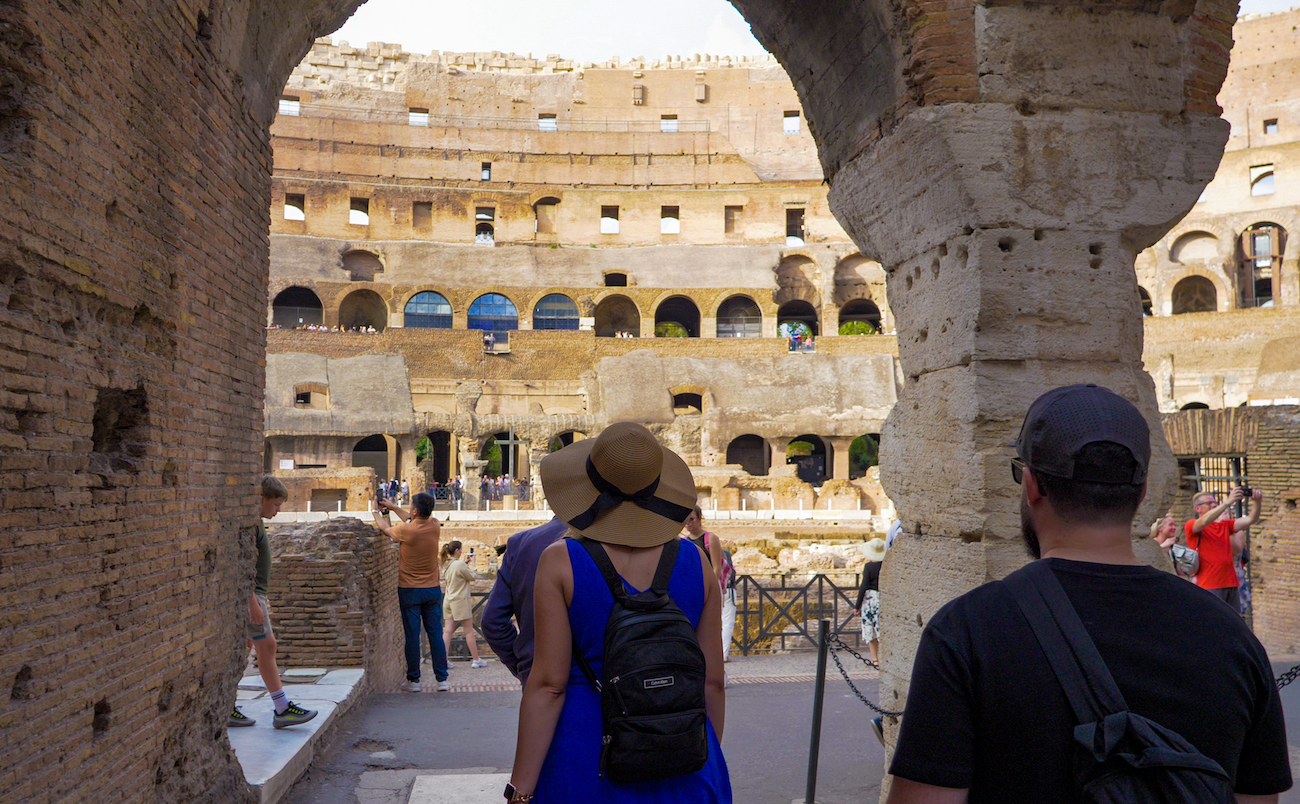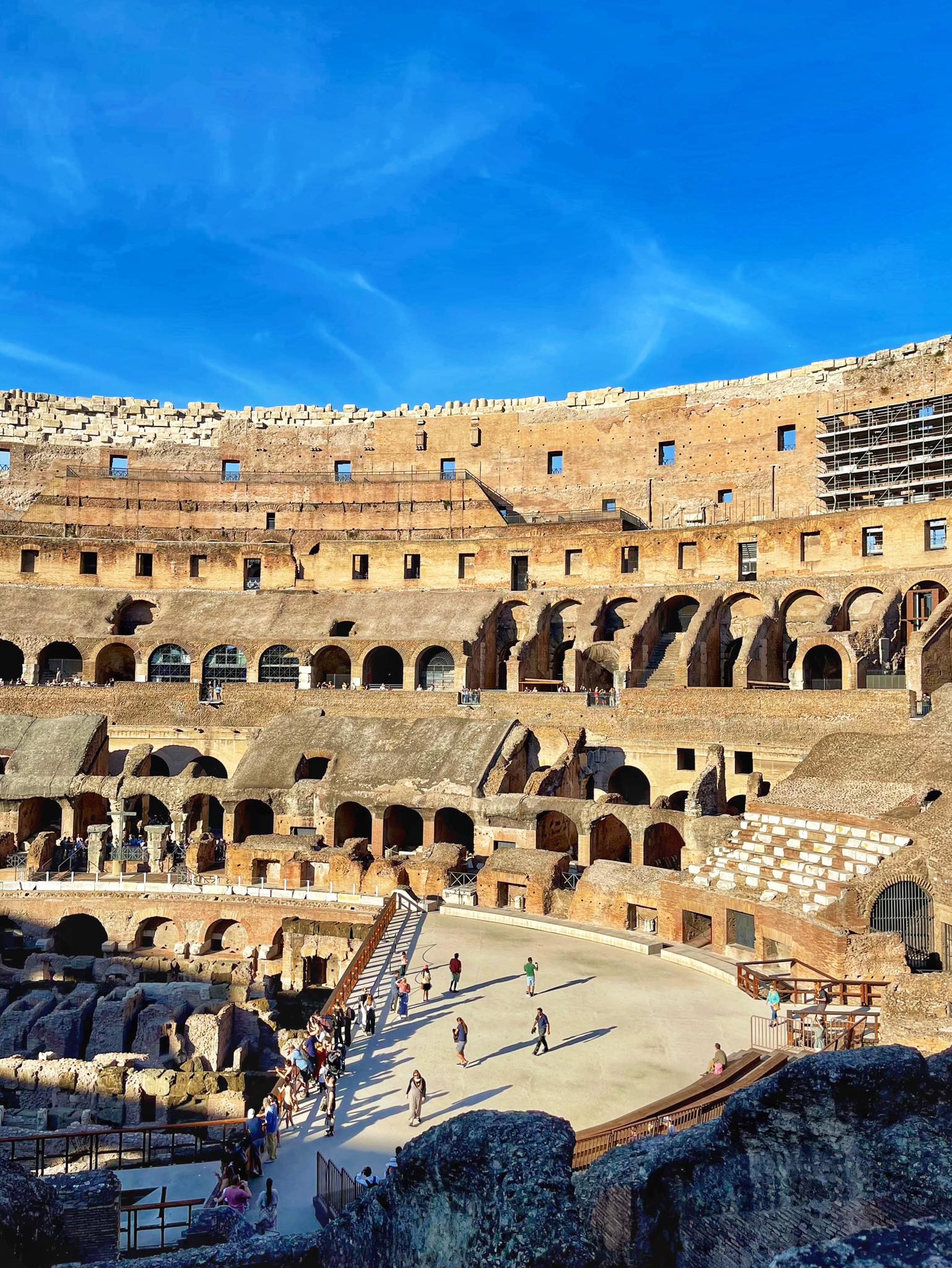
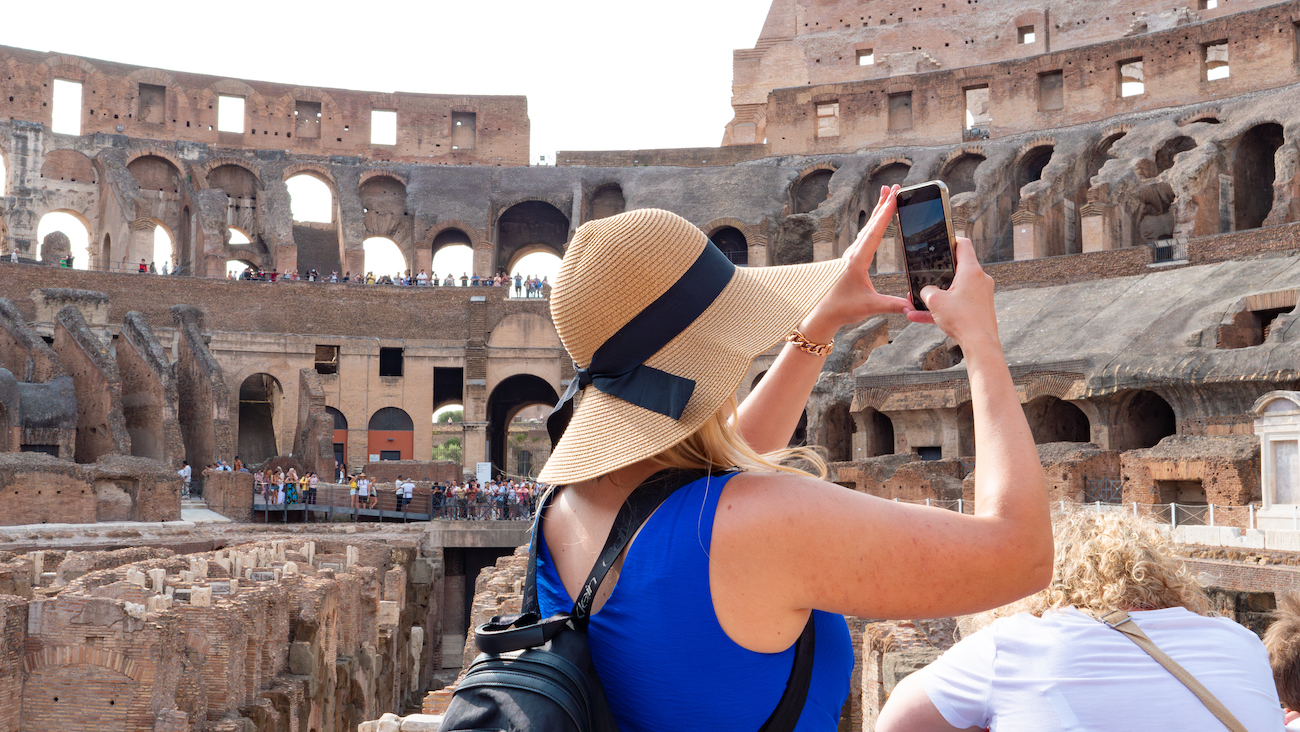
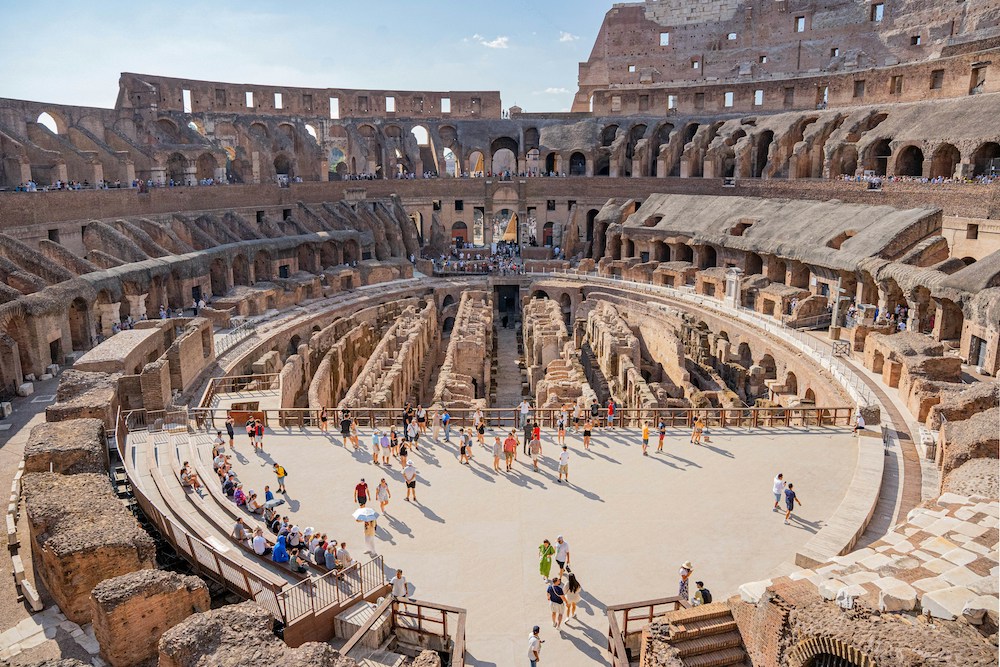
There are many ways to visit the Colosseum, but in our experience nothing matches the moment of stepping out onto the arena floor itself: looking up at the tiers of seats rising in every direction and suddenly, viscerally understanding the scale of what happened here.
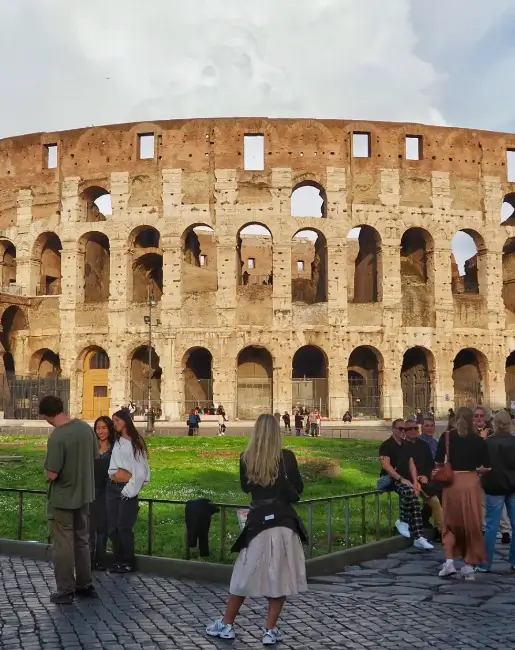
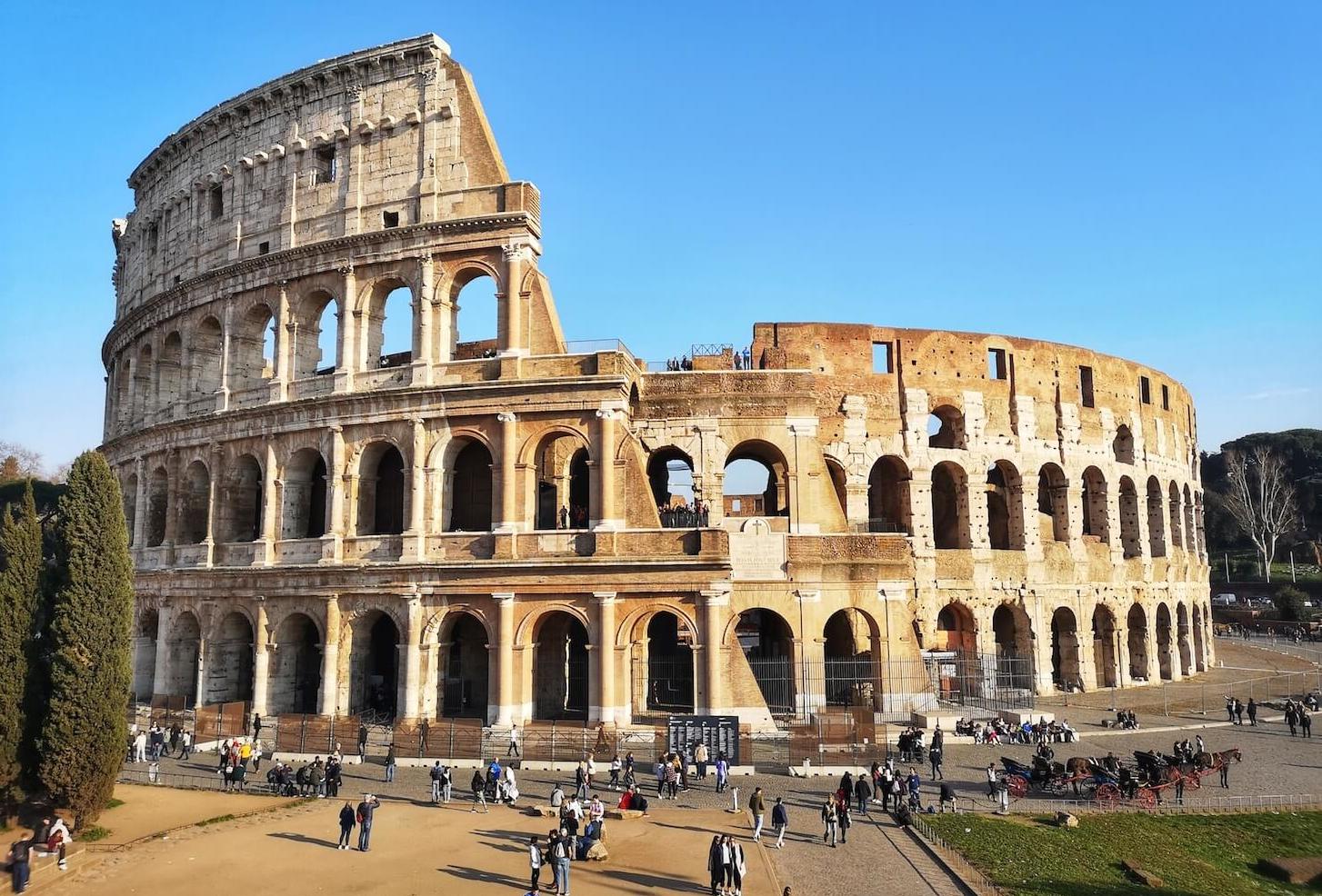
The building that appeared monumental from outside becomes overwhelming from inside — you are, for a moment, the smallest thing in the picture.
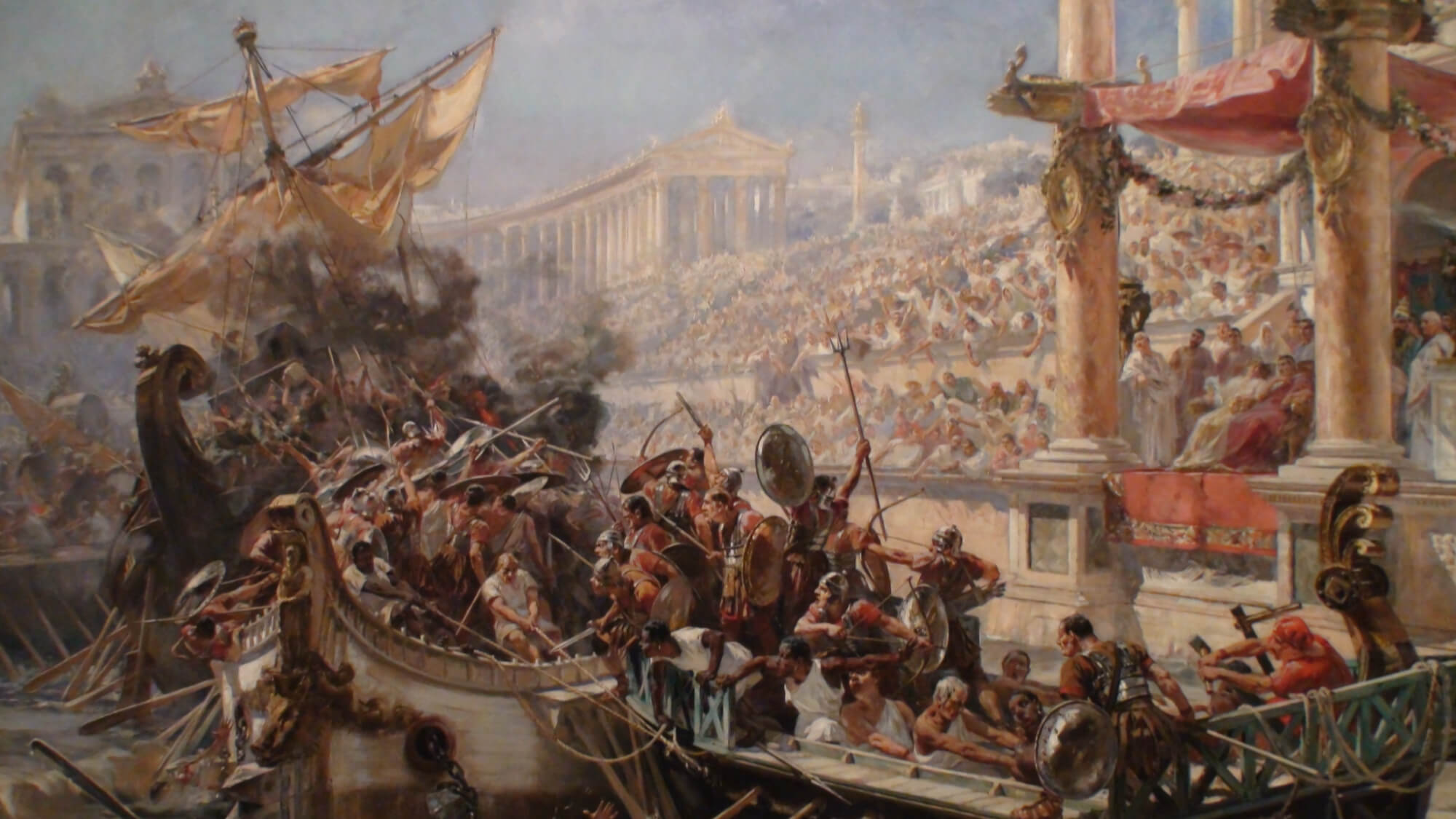
The arena floor is also, as it turns out, a place of remarkable complexity and historical depth. What looks from above like a simple sandy ellipse was in fact the visible surface of an enormously sophisticated machine, and it witnessed some of the most extreme events in the history of human spectacle.
Here are five things worth knowing about it before you step out onto the sand.
Ancient Rome Tours
Explore the Colosseum
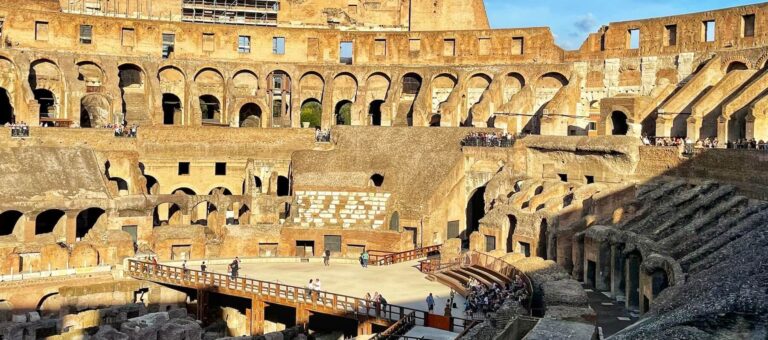
The name of sports venues, boxing rings and concert halls across the world traces its linguistic ancestry to the floor of the Colosseum.
Arena is Latin for sand, specifically the sand that covered the wooden floor of the ancient amphitheatre. The Romans chose sand for practical reasons: it provided a firm footing for the gladiators and animals who fought on it, and it absorbed the inevitable products of violent spectacle — blood, urine, and worse — that would otherwise have made the floor dangerously slippery. After each bout, arena attendants (harena) raked and replaced the soiled sand to prepare for the next.
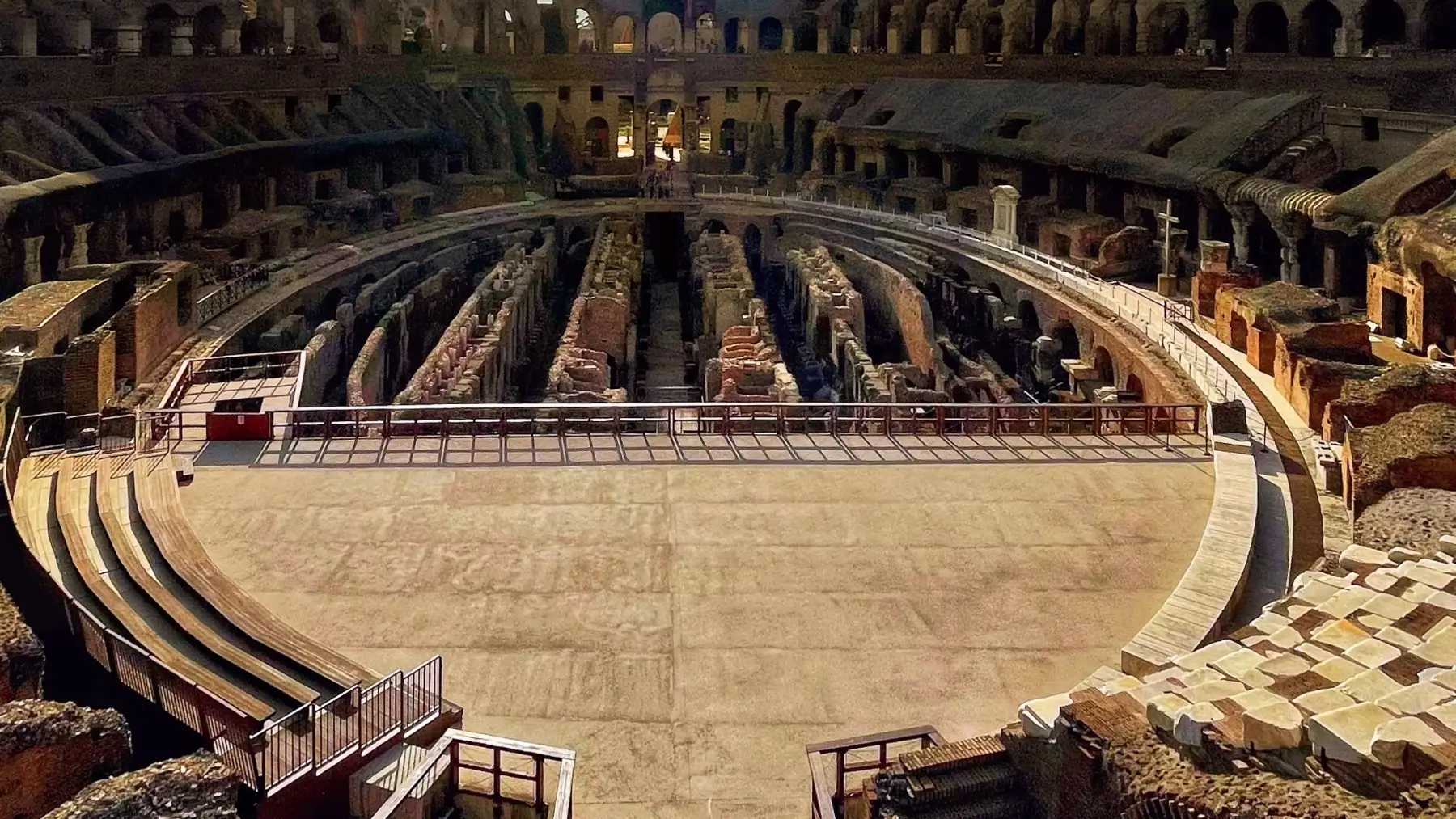
The word passed from the specific (the sanded floor of this building) to the general (any sanded performance space) and eventually to any venue where people compete in front of spectators. The wooden floor that supported the sand no longer exists — it was stripped away during the medieval period, revealing the underground hypogeum beneath, which visitors can now see from the surviving sections of the floor that have been reconstructed on the south side of the arena.
These reconstructed sections allow visitors to stand approximately where gladiators once stood and look up at the surrounding seats — an experience that is as close as any modern visit can come to the perspective of the arena’s ancient participants.

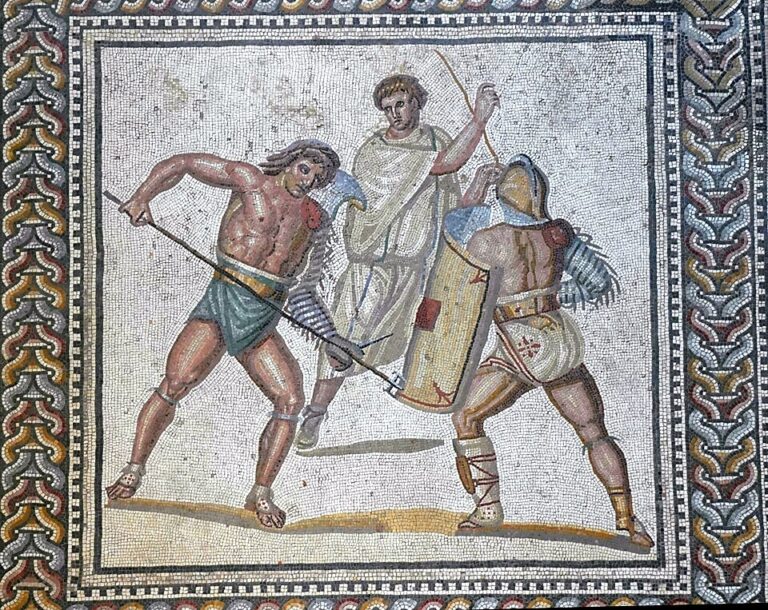
The Roman gladiatorial contest as depicted in popular culture — two men entering, one man leaving, the death of the loser routine and expected — misrepresents the financial reality of the ancient games.
Gladiators were expensive. A fit, healthy fighter in his prime represented a substantial investment by his lanista (trainer-owner): years of feeding, housing, training, medical treatment and equipment.
The editor (the sponsor of the games, typically a politician seeking public favour or emperor himself) hired gladiators from their lanistae and paid according to the reputation and record of each fighter. The death of a top-ranking gladiator represented a financial loss, and neither the lanista nor the editor were particularly keen to see such a valuable asset wasted.
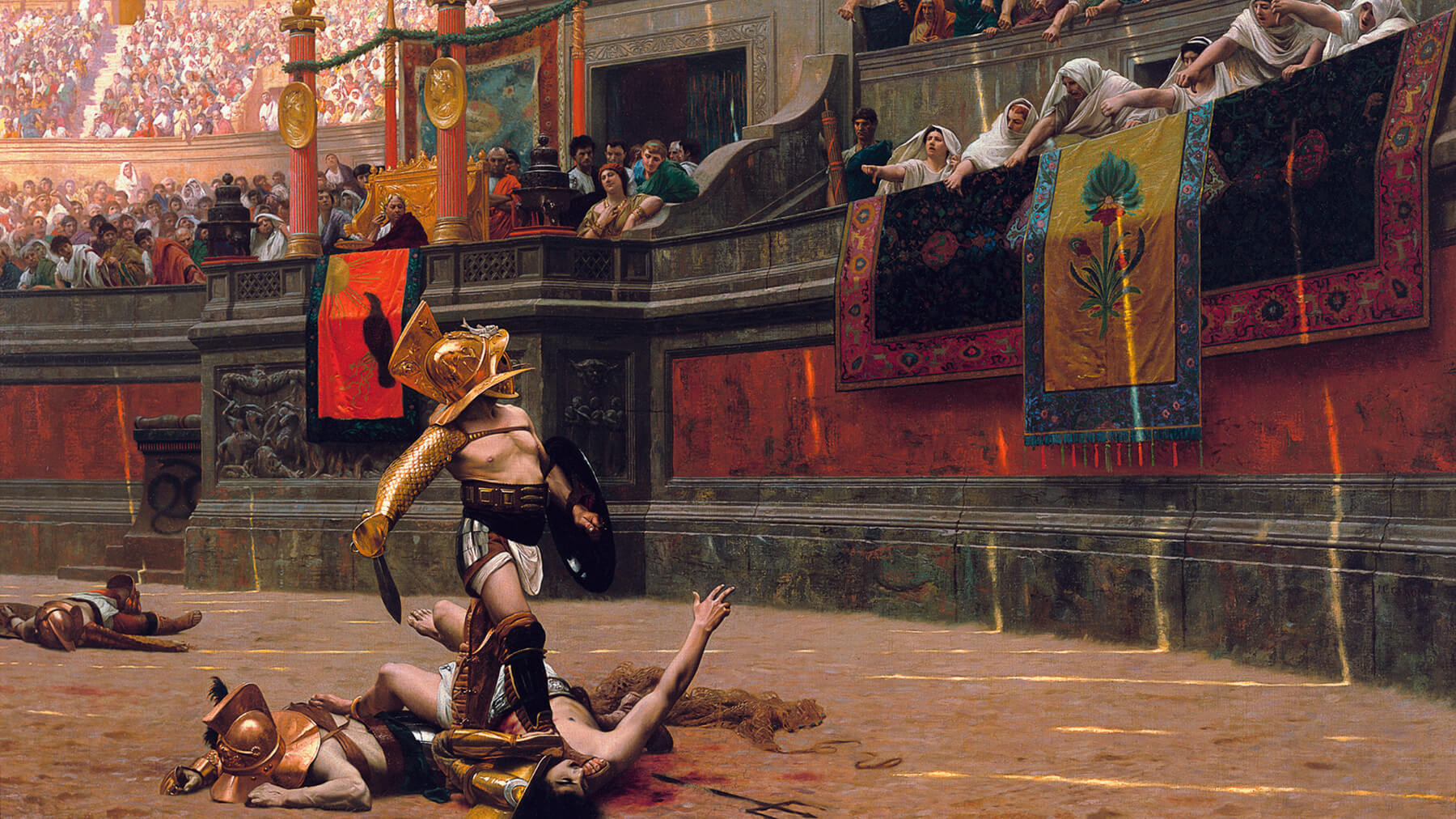
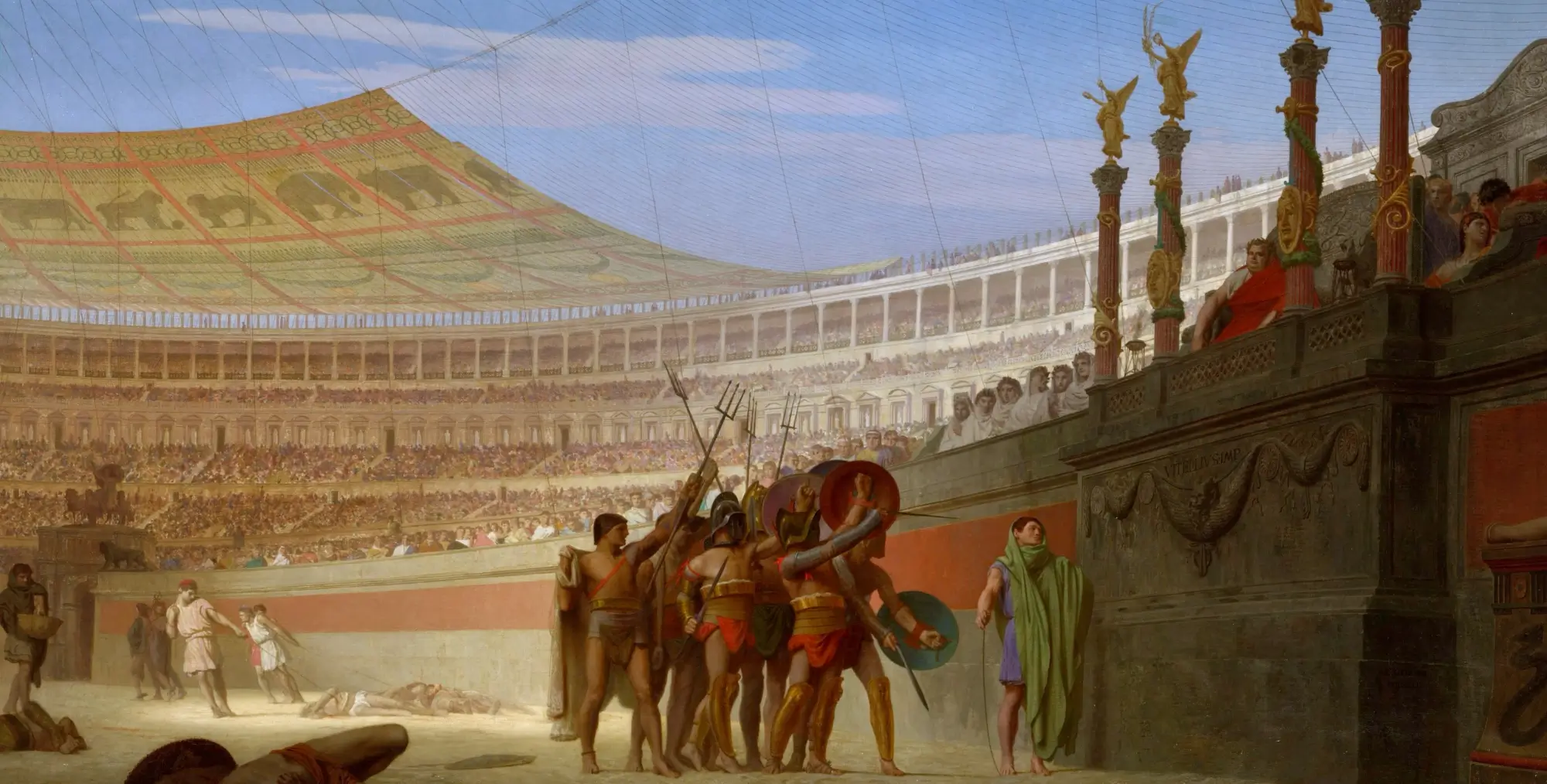
Fights to the death without the possibility of mercy, known as sine missione, were staged, but they were not the norm. In the more common scenario, a defeated gladiator could appeal for mercy by raising his left hand or dropping his shield; the crowd would signal their preference with noise and gestures; the editor would make the final decision, sometimes deferring to the Emperor if present.
If he was popular or had fought courageously, there was every chance that the emperor would spare the gladiator’s life, ready to fight another day. Emperors usually read the mood in the amphitheatre and followed the will of the crowd, with the notable exception of Caligula, who reportedly dispatched even popular defeated gladiators with undisguised glee.
Successful gladiators could fight for years, accumulating victories, prize money and fame. Veteran fighters who had won their freedom from the lanista could continue to fight as free men for large fees — the emperor Tiberius, according to Suetonius, offered such veterans 100,000 sesterces for a single bout.
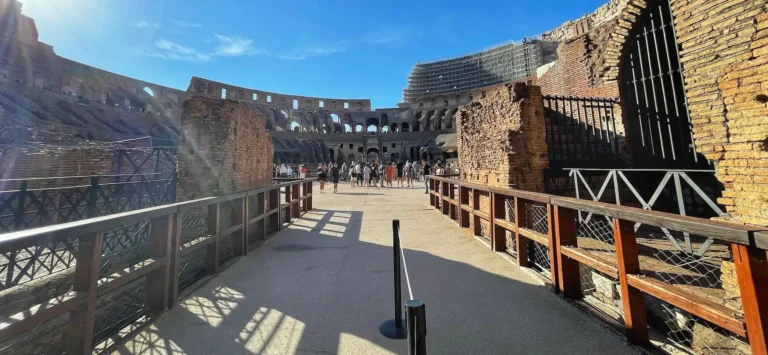
The arena floor was connected to the outside world by two gates on the main axis, and the distinction between them was total.
The Porta Triumphalis — the Gate of Triumph — was the gate through which the victorious gladiator left the arena, receiving the acclaim of the crowd as he walked. This gate can still be seen during a tour of the Colosseum on the western side of the arena.
Passing through it meant survival, prize money, and the continuation of a career. In addition to a palm of victory, if his performance was exceptionally impressive the victor might receive the great honour of a laurel wreath in recognition of his valor.
If a gladiator enjoyed a sustained spell of success in the arena he could even hope to win his freedom – if the emperor so desired he would present the soon-to-be-free gladiator with a wooden sword known as a rudis, symbol of his change in status. For gladiators who earned their freedom, the moment of passing through the Porta Triumphalis while their supporters cheered was the equivalent of a championship parade.
Famous veteran gladiators, who participated in the games as free men and were wildly popular with the crowd, could bargain handsome paydays in return for their performances. The author Suetonius notes that when the emperor Tiberius was looking to put on a spectacle for the ages during his reign, he offered a number of these ancient pin-ups a cool 100,000 sesterces for a single fight. Not bad money if you can get it!

As you might imagine, the outlook wasn’t nearly so rosy for the vanquished if they died in combat or were condemned to death via the emperor’s ‘pollice verso’ – a gesture of the thumb that indicated the gladiator’s fate (whether this took the form of the famous ‘thumbs down’ of popular imagination is unclear from ancient sources).
In this case the defeated gladiator kneeled before his conqueror and grabbed his leg as the latter drove his sword deep into his neck. To ensure that the loser was definitely dead, two men dressed as the mythological figures Charon and Mercury strode out onto the amphitheatre. Mercury, ancient messenger to the gods, seared the fallen gladiator with a hot metal rod.
If the gladiator reacted, then Charon, the ferryman who carried souls across the river Styx to the afterlife, stepped in to finish the job, battering the writhing victim’s head in with an enormous mace.
The dead gladiator’s body was dragged off from the stage via the Porta Libitinaria — the Gate of the Death Goddess — which was the counterpart to the Porta Triumphalis on the other side of the arena. Libitina was the Roman goddess associated with death and funerals.
From the Porta Libitinensis, the fallen were taken to the spoliarium — a room adjacent to the arena where their armour and weapons were stripped for reuse. The recycling of gladiatorial equipment was a matter of economic necessity; nothing was wasted.
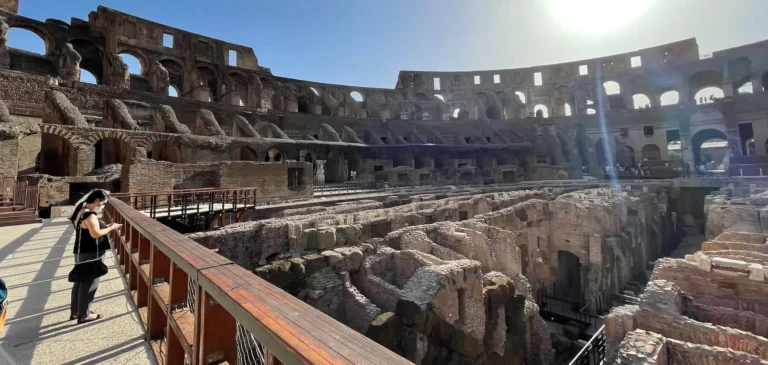
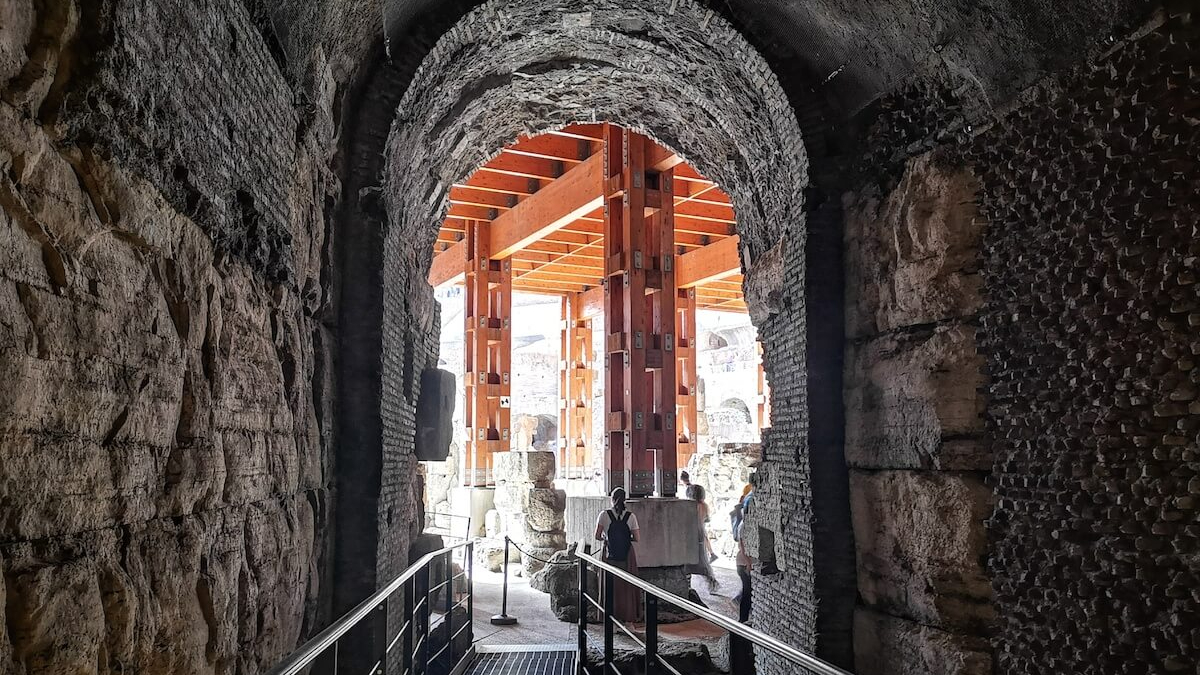
What looked to the audience like a sandy ellipse was in fact the surface of an enormously sophisticated piece of engineering: the trapdoor-punctuated floor of the hypogeum, the vast underground network of corridors, rooms and mechanical systems that enabled the spectacles above.
The wooden arena floor was not a simple surface but a structure of considerable complexity, with no fewer than 32 trapdoors set into it at regular intervals.
These trapdoors were connected by shafts to the hypogeum below, where teams of slaves operated massive capstans and elevator mechanisms to raise animals, props and scenery to the arena level.
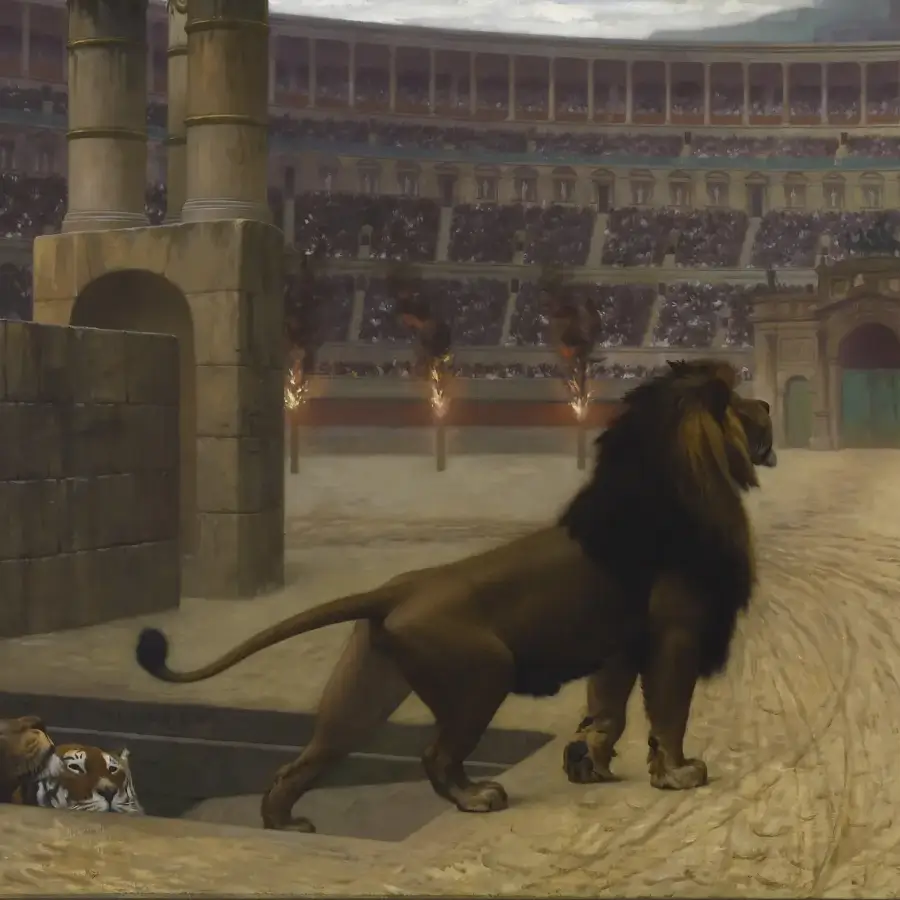
A wild animal that had been waiting in a darkened cage below could be hoisted to the arena floor in seconds, emerging through a trapdoor in a burst of light and noise.
The mechanism was used not just for animals but for the elaborate theatrical staging of the games: artificial forests, rocky outcroppings, moving scenery and props could be raised from below to transform the arena into any landscape the programme required.
The spectacle was simultaneously entertainment and illusion, and the Colosseum was a theatre as well as a killing ground – with the machinery of deception hidden just below the audience’s feet.
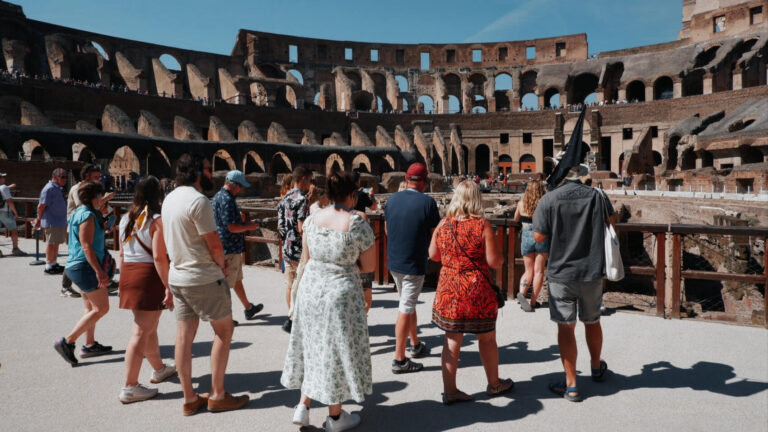
Can you walk on the Colosseum’s arena floor today?
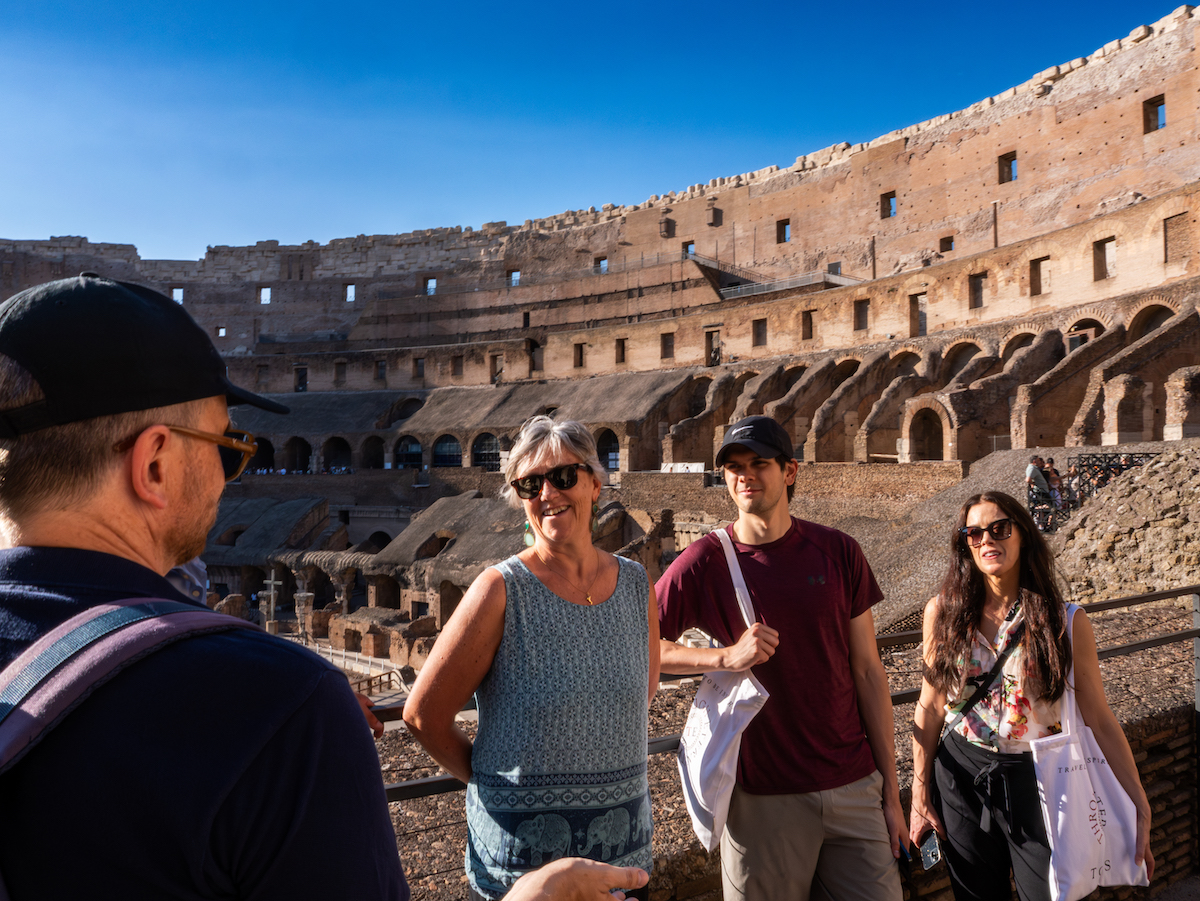
Yes — access to a reconstructed section of the arena floor is available on selected ticket types and guided tours. This is one of the most interesting experiences the Colosseum offers, giving a direct sense of the view from the arena looking up at the surrounding tiers. Numbers are strictly limited each day, so booking in advance is essential. See our Colosseum arena floor tour for details.
What was the Colosseum’s arena floor made of?
The original floor was made of timber — wooden beams and planks covered with a layer of sand approximately 30–60cm deep. The timber has long since been stripped away, exposing the underground hypogeum beneath. A section of the wooden floor has been reconstructed on the south side of the arena using traditional materials.
What is the hypogeum and can you visit it?
The hypogeum is the underground network of corridors, rooms and mechanical systems beneath the arena floor — the backstage machinery of the ancient games. It is one of the most atmospheric parts of the entire monument. Access requires a specific ticket or guided tour beyond the standard admission; numbers are limited. See our underground Colosseum tour for details.
How big was the Colosseum’s arena floor?
The arena measured approximately 83 metres long and 48 metres wide — a relatively modest space when experienced from inside, which makes the scale of the surrounding seating all the more impressive. The apparent size of the arena is considerably smaller than the building’s overall footprint, which measures 188 metres by 156 metres.
Were women allowed to watch the gladiatorial games?
Yes, though they were required by Augustan law to sit in a segregated section at the very top of the building, in wooden seating that no longer survives. The distinction applied to the gladiatorial games; women appear to have had more flexible seating at other types of spectacle.
Ancient CityTours
Explore the Colosseum!