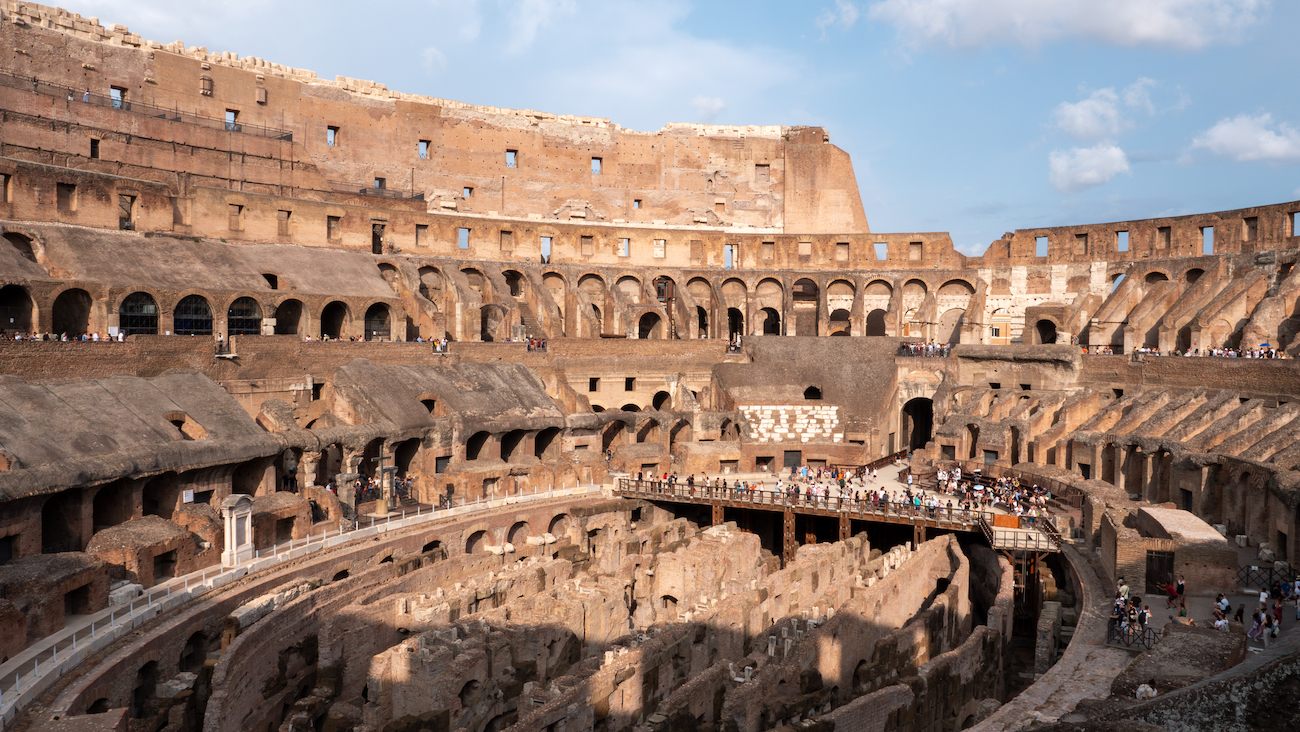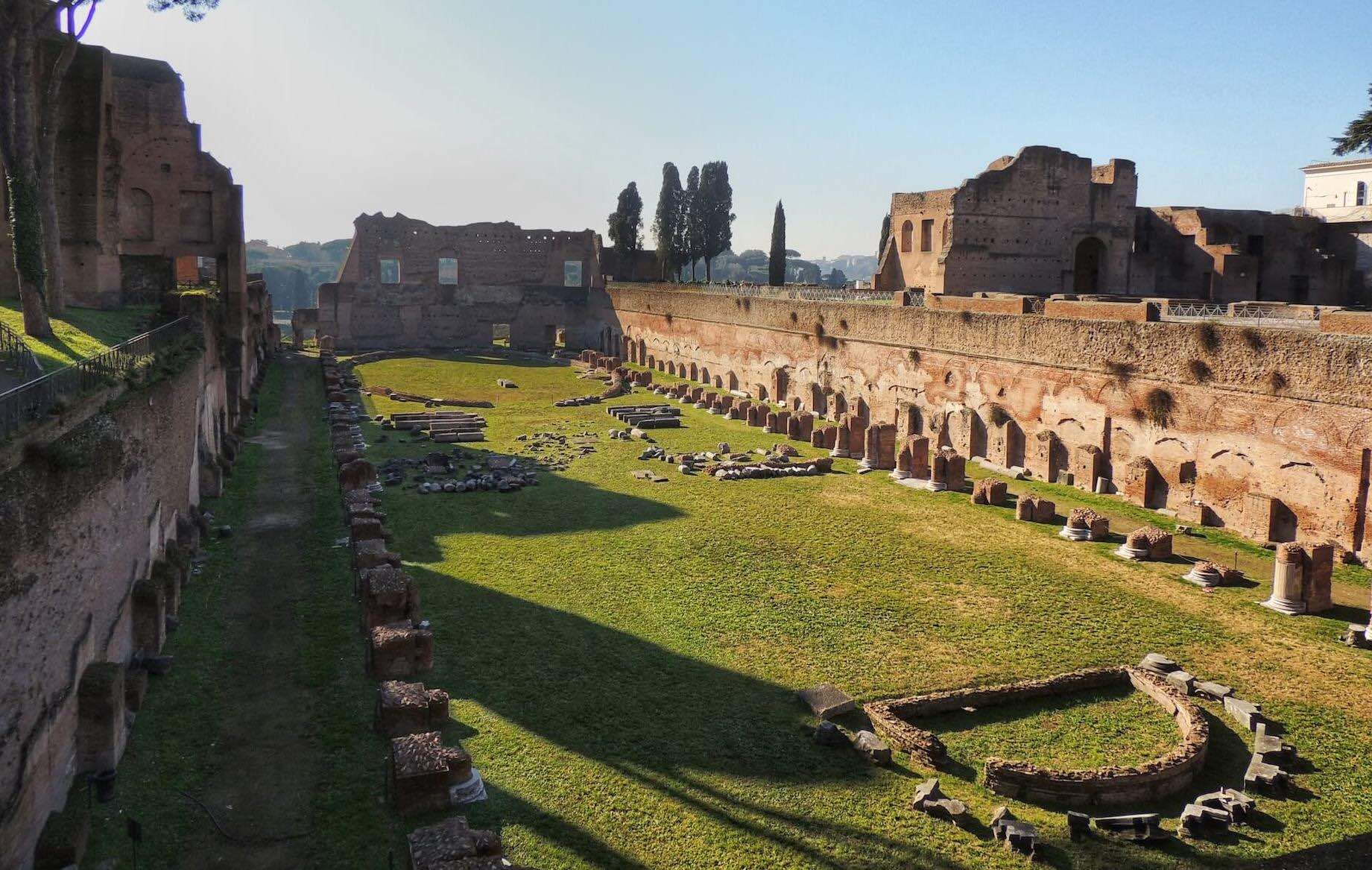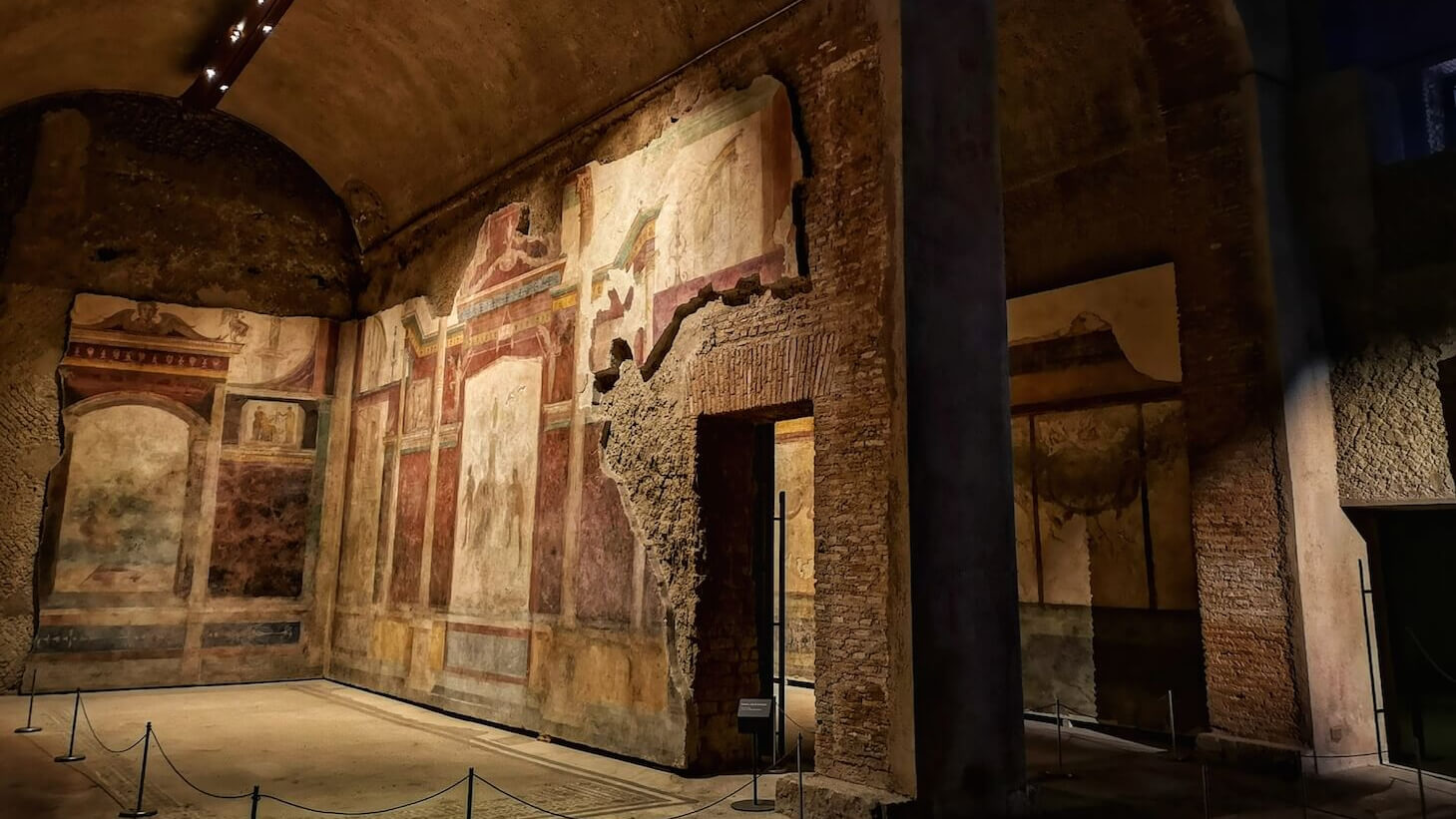
Mythical birthplace of Rome and home to the ancient emperors, the Palatine Hill plays a vital role in the story of the Eternal City.
Hidden among the ruins of the massive imperial palaces built by successive rulers intent on showing their absolute power are more intimate testaments to the rise of Rome. Today we explore the Houses of Augustus and Livia, homes to Rome’s first emperor and his powerful wife over 2,000 years ago.
Ancient Rome Tours
Get to the Heart of Ancient Rome
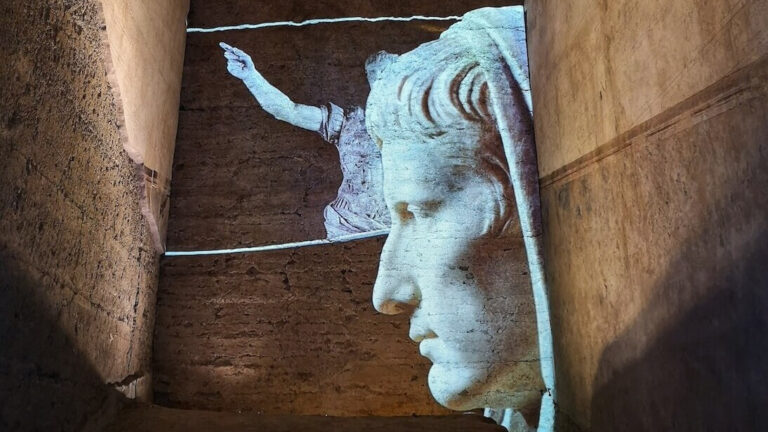
No story of Rome can be told without the commanding presence of Augustus. Born as Gaius Octavius in 63 BC, he emerged from the shadow of civil wars that threatened to tear the city apart after Julius Caesar’s assassination. Over a career spanning more than 40 years, he became Rome’s first emperor, ruling from 27 BC to 14 AD. Augustus reshaped the city and its image, boasting that he “found Rome a city of bricks and left it a city of marble,” and ushered in a long period of stability known as the Pax Romana.
Auspiciously born near the Palatine Hill – the legendary site where Romulus and Remus were found — Octavius spent his early years in Velletri. But fate would return him to the Palatine, where he established residence after confiscating a modest house from the orator Quintus Hortensius, whose son had sided with Brutus at the Battle of Philippi.

In the late Republican period, the Palatine was a leafy suburban enclave, home to villas of Rome’s elite. With Augustus’ rise, the hill became the epicenter of imperial power, yet the emperor himself maintained a relatively modest dwelling, expanding it carefully by joining neighboring properties around two peristyle courtyards.
A major expansion in 36 BC was marked by a lightning strike, interpreted as a message from Apollo. In response, Augustus constructed a temple to Apollo and linked it to his residence via a private corridor, subtly reinforcing his status as Princeps civitatis, Rome’s “first citizen.”
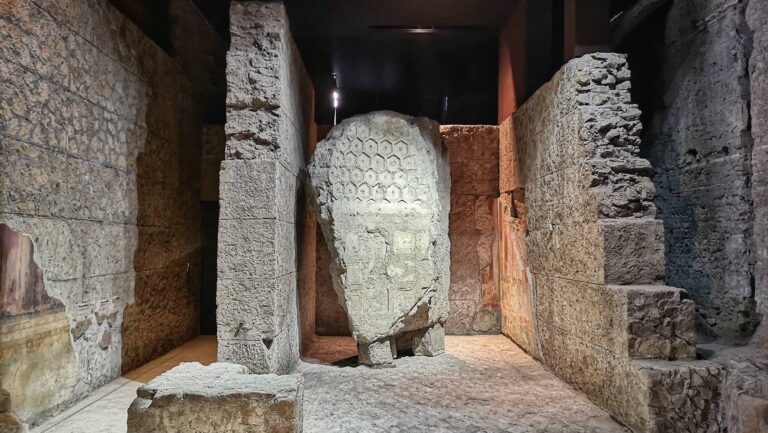
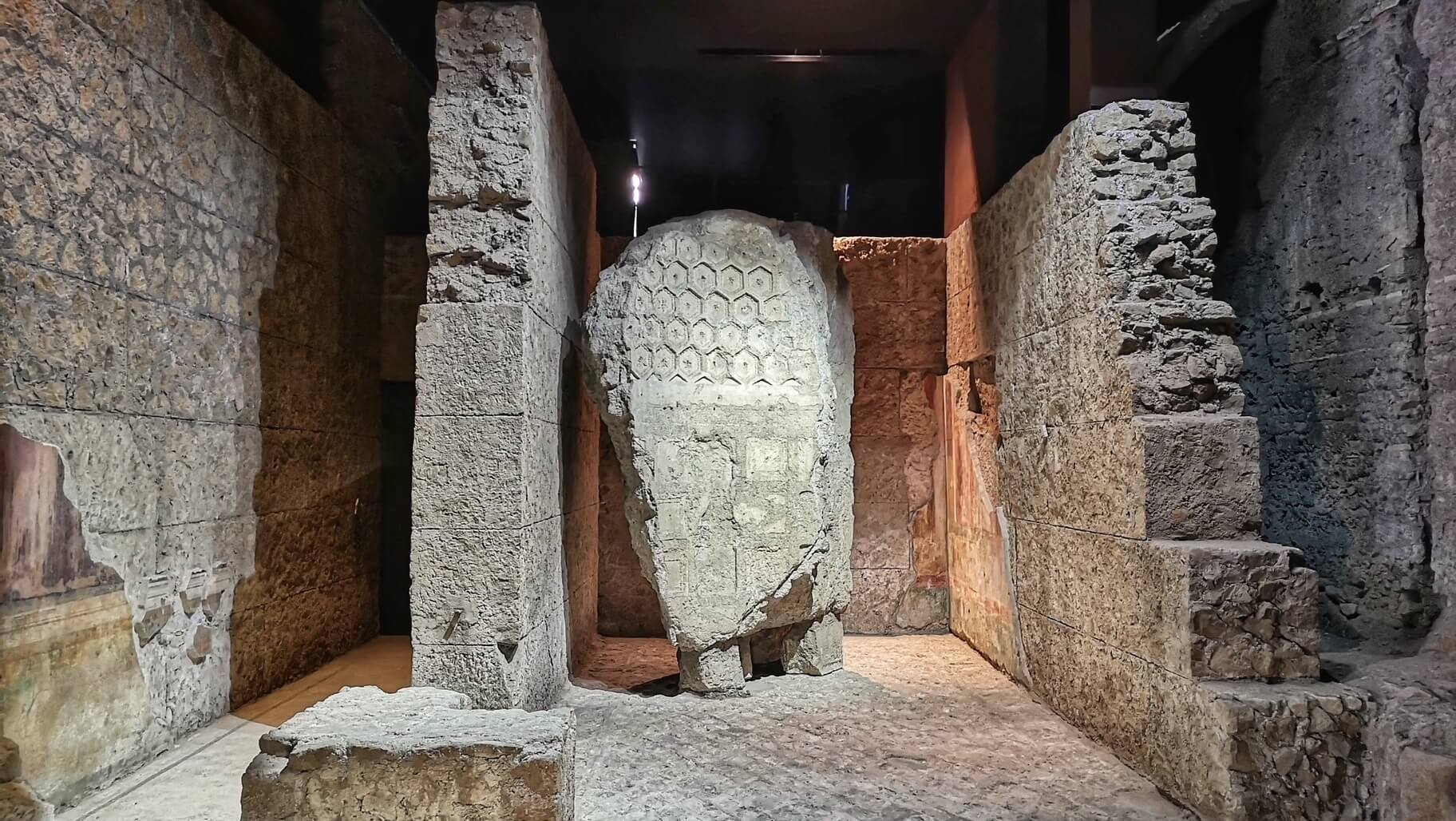
Incredibly, the House of Augustus still stands today, a rare and intimate glimpse into the domestic life of Rome’s first emperor. Suetonius famously records that Augustus “slept in the same bedroom in winter and summer for 40 years,” a testament to his reputed frugality, yet the house itself contains some of the finest surviving examples of Roman painting. Ovid described it as “a house worthy of a god,” and walking through its rooms today, it seems that the poet was hardly exaggerating.
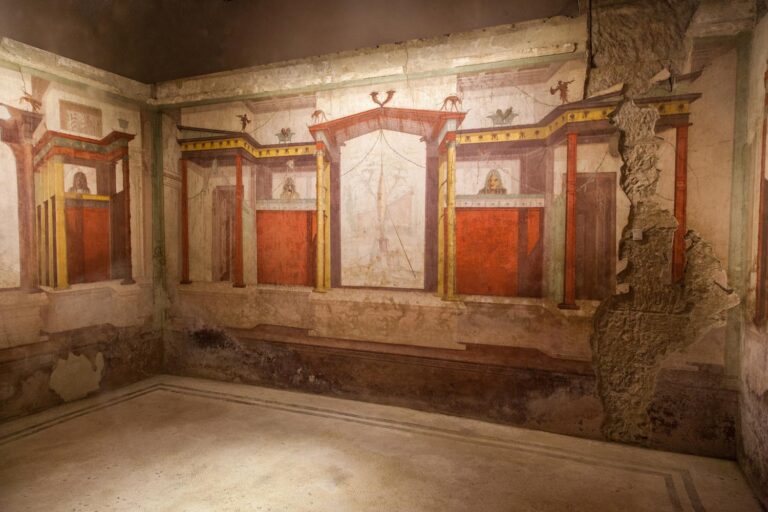
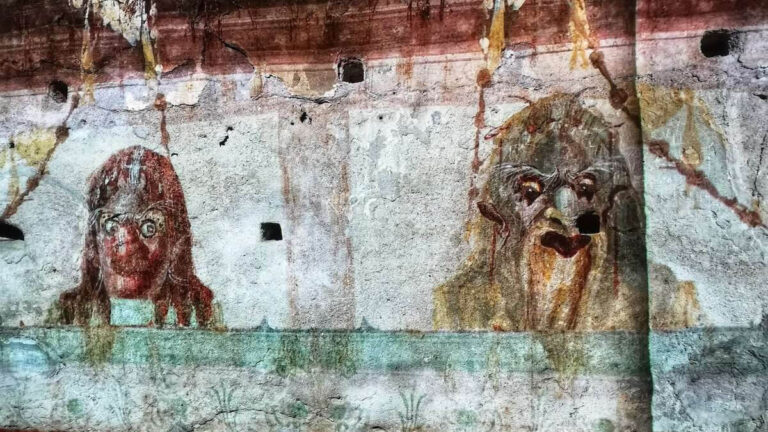
The decoration of the domus is predominantly in the Second Pompeiian Style, distinguished by vibrant colors, intricate geometric motifs, and illusionistic architectural elements that create a striking sense of depth and three-dimensionality. Among the most remarkable spaces is the Room of the Masks, a cubicula where theatrical masks peer down from the walls, set within brilliantly colored, stage-like architectural frameworks that evoke the drama of the ancient theatre. Nearby, the Room of the Pines offers a more serene atmosphere, its walls adorned with delicate pine branches and Doric columns that suggest a quiet, naturalistic retreat.
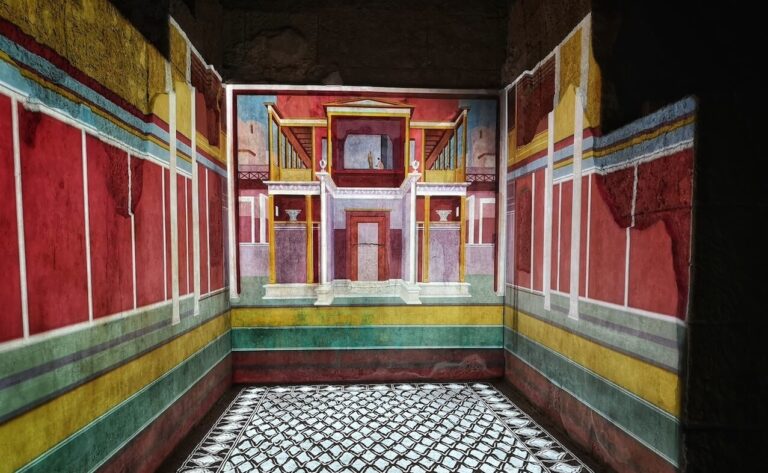
The Room of Perspective Paintings, by contrast, delights the eye with vivid primary colors and stunning illusionistic vistas that seem to extend the walls into imagined architectural spaces, expanding the interior beyond its physical boundaries. A ramp leads to the upper storey, where the ceilings feature exquisite imitation coffering: red lozenges alternate with green and blue square coffers, each decorated with flowers and enhanced with subtle shading, giving the ensemble an almost tangible depth.
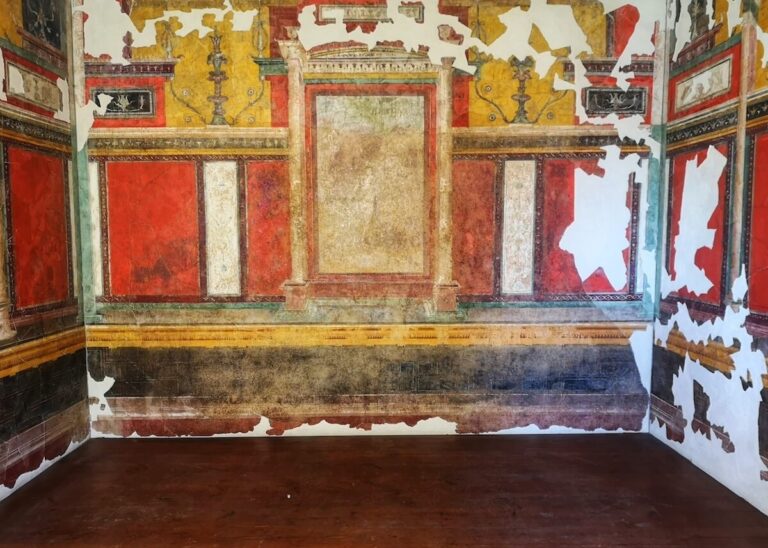
Perhaps the most impressive room in the House of Augustus is the upper-storey study, known as the technyphion – a term meaning “little workshop” in Greek. Suetonius mentions that Augustus would retreat here when he wished to think or study in private. While there is little direct evidence that this room was indeed the emperor’s study, the exceptionally rich decorations certainly indicate that this was one of the most important areas of the Domus.
The room is adorned with frescoes that feature Egyptian motifs, such as obelisks and gryphons, interspersed with elaborate candelabra, plants, and fantastical creatures. These decorations suggest a blend of Roman and Egyptian influences, reflecting the empire’s expansive reach and Augustus’ desire to associate himself with the grandeur of Egypt.
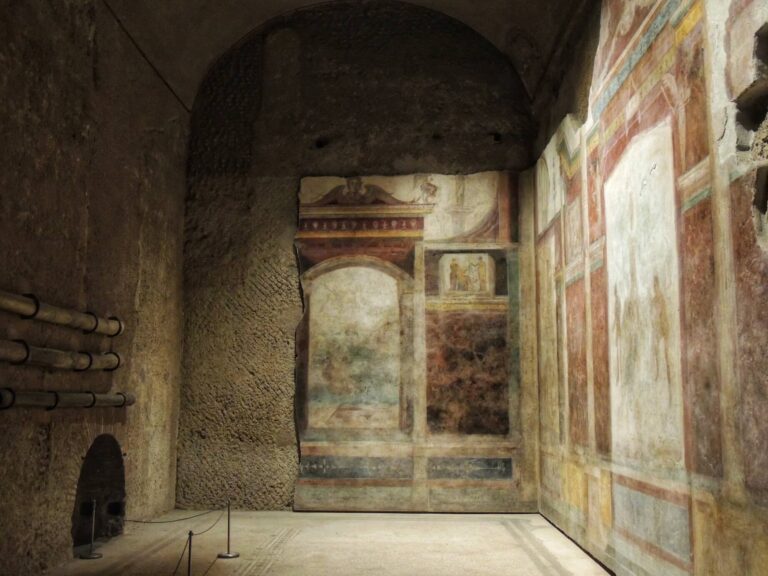
Next door to the House of Augustus is the no-less impressive House of Livia, somewhat tenuously identified as the dwelling of the emperor’s wife thanks to an inscription found on a lead pipe here in the 19th century. Discovered during excavations on the Palatine Hill in 1839, the refined two-storey domus is likely in reality another wing of the House of Augustus, centred around a quadrangular atrium. Rooms leading off the atrium feature fabulously refined frescoes on the walls, whilst original black and white mosaic floors gleam underfoot.
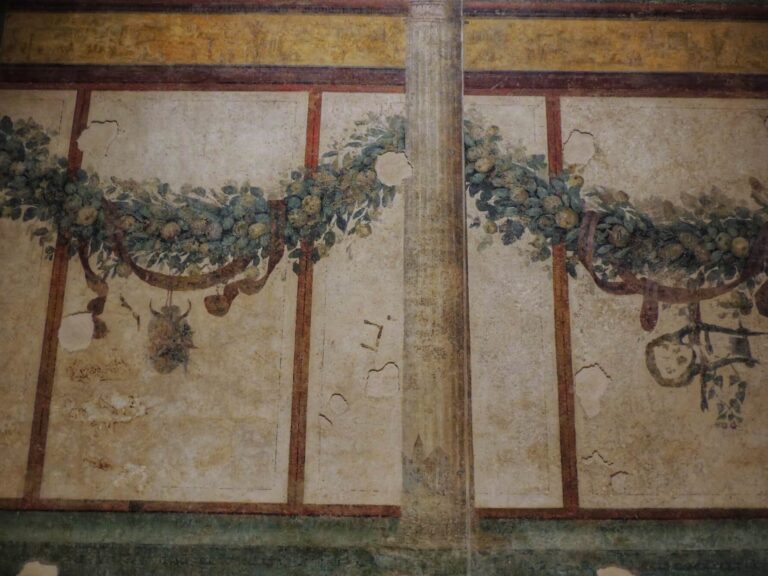
Here too the decorations in the House of Livia date from the so-called Second Style, and feature fictive architecture, imaginary landscapes and mythological scenes framed by fantastic geometrical motifs.
The central tablinium is known as the Room of Polyphemus, thanks to a large fresco (now sadly illegible) depicting the story of the one-eyed monster’s love for the sea-nymph Galatea on the far wall. On the room’s other walls frescoes depict Mercury rescuing Io as well as various architectural ensembles.
Other rooms feature stunning festoons and garlands, along with fantastical creatures and trophies. The triclinium, or dining room, is decorated with beautiful landscapes framed by illusionistic architecture in brilliant shades of red.

Tickets
The Houses of Augustus and Livia form part of the special S.U.P.E.R. sites in the Forum and Palatine Hill.
- A Forum SUPER ticket cost 18, reduced to 2 for EU citizens aged 18-25.
- Unlike other tickets to the ancient city that include the Colosseum, you do not need to choose an entrance time for Forum Super Tickets. Instead, the ticket is valid for a single entrance at any time in the month after purchase. Once your ticket has been validated on entry to the Roman Forum, it will be valid for the remainder of that day.
- Tickets can be purchased either online or at the ticket office on site. You can also choose to join an expert-led tour that includes the SUPER sites.
Opening Hours
- From 26 October 2025 to 29 March 2026, the SUPER Sites are open from 9.30am – 3.30pm.
- The House of Augustus is closed on Mondays, whilst the House of Livia is closed on Tuesdays. All the SUPER sites remain closed on days of free admission to the Roman Forum.
Click here for a detailed guide to the SUPER Sites and how to visit.
Book Your Ancient Rome Experience