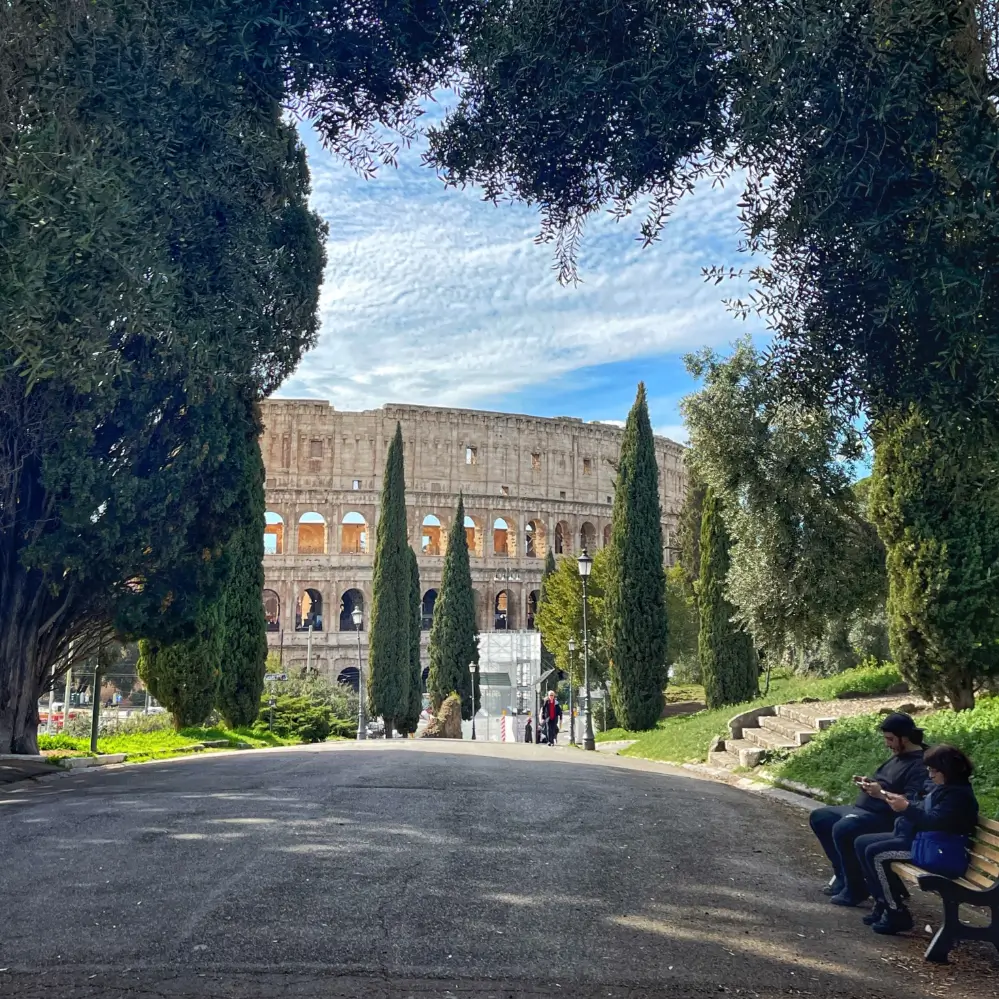
The Colosseum is the most visited ancient monument in the world. It’s also probably the most misunderstood.
Begun in 70 AD, on the orders of the emperor Vespasian, it was conceived as a gift to the people of Rome and proof of his generosity. The massive stadium regularly packed crowds of 65,000 people and more into bleachers towering high into the Roman sky to watch the brutal and bloody games unfold.
But there’s a lot more to the Colosseum than meets the eye. The version most of us carry in our heads — assembled from Hollywood epics, school textbooks and a brief visit on a hot afternoon — is an impressive structure but a partial one. The real Colosseum is considerably stranger, and much more interesting, than the standard version.
What follows are ten things about the Colosseum that might surprise even people who think they know it well – perfect reading prep before visiting the Colosseum for yourself. How many did you know?
Ancient Rome Tours
Explore the Colosseum

The name “Colosseum” does not refer to the building’s own enormous dimensions, as most people assume. Instead, it derives from the Colossus of Nero: a colossal bronze statue roughly 35 metres tall that stood at the main entrance to Nero’s vast Golden House complex, close to where the amphitheatre was subsequently built.
After Nero’s death, the statue was rededicated to the Sun God by successive emperors, who modified it by adding a crown and changing the features. The building that rose near it on the site of Nero’s drained lake was officially the Flavian Amphitheatre, named for the dynasty that built it.
The popular name, literally meaning ‘the place near the colossal thing,’ took hold during the early medieval period and stuck. The statue itself was eventually melted down, probably sometime in the medieval period; the name it gave the building has survived for fifteen centuries since.


The Romans were deeply organised people, and the management of a 50,000 plus strong crowd required a ticketing system of considerable sophistication.
Unlike today, admission was free: the games were staged as imperial gifts to the Roman people.But like tody, you still needed a ticket to get in. Early tickets were broken shards of pottery scratched with seat information; by the height of the empire they had been formalised into bone or ivory discs called tesserae.
These discs specified the entrance arch to use (each of the 76 public arches was marked with a Roman numeral above it, still visible today on the surviving arches), the tier, the row, and the seat.
The system was functionally identical to a modern stadium ticket, and it served the same purpose: crowd control, seating hierarchy and the prevention of disputes.

The seating plan of the Colosseum was not merely a matter of convenience but a public diagram of Roman social hierarchy, with your position in the building broadcasting your status in society to everyone who could see where you were sitting.
The Emperor’s box (ringside, south side, optimal sightline) was at one extreme. The Vestal Virgins, the sacred priestesses who maintained Rome’s eternal flame, had their own reserved ringside section, one of the most coveted positions in the building.
Like season-ticket holders in the NFL or Premier League, members of the senatorial class sat on named marble seats in the first-tier podium, close enough to the arena to be occasionally splattered with blood from the combat below — a proximity that was apparently considered a sign of honour rather than a drawback. Some of these seats survive with their original owners’ names carved into them.
The equestrian class took the next tier; Roman citizens above them; poorer citizens and foreigners higher still. Women were required by Augustan law to sit in a segregated area at the very top, in wooden seats that no longer survive. Slaves stood in whatever space they could find.
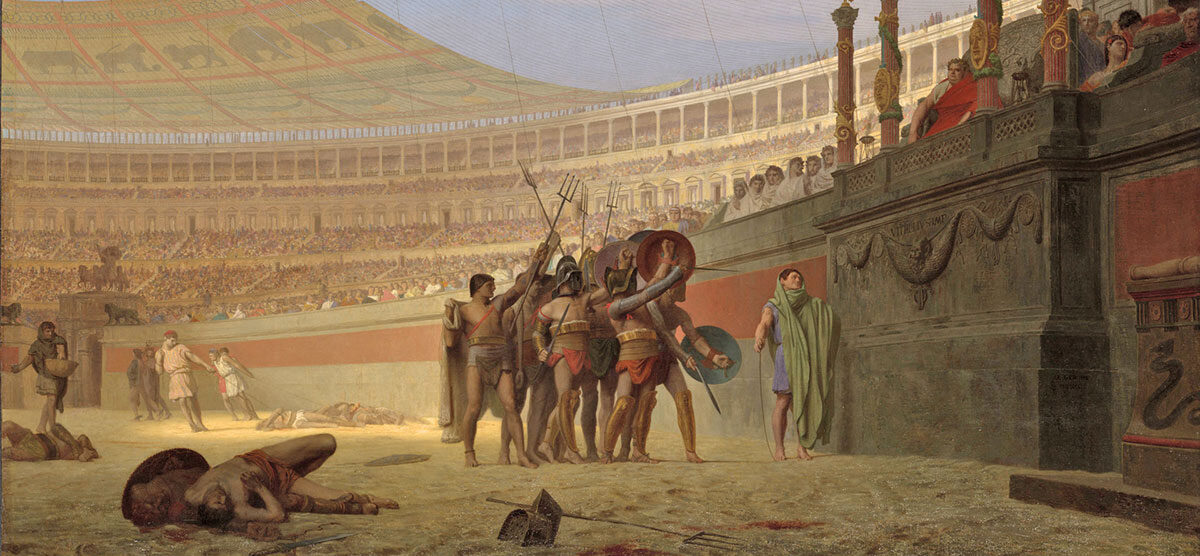
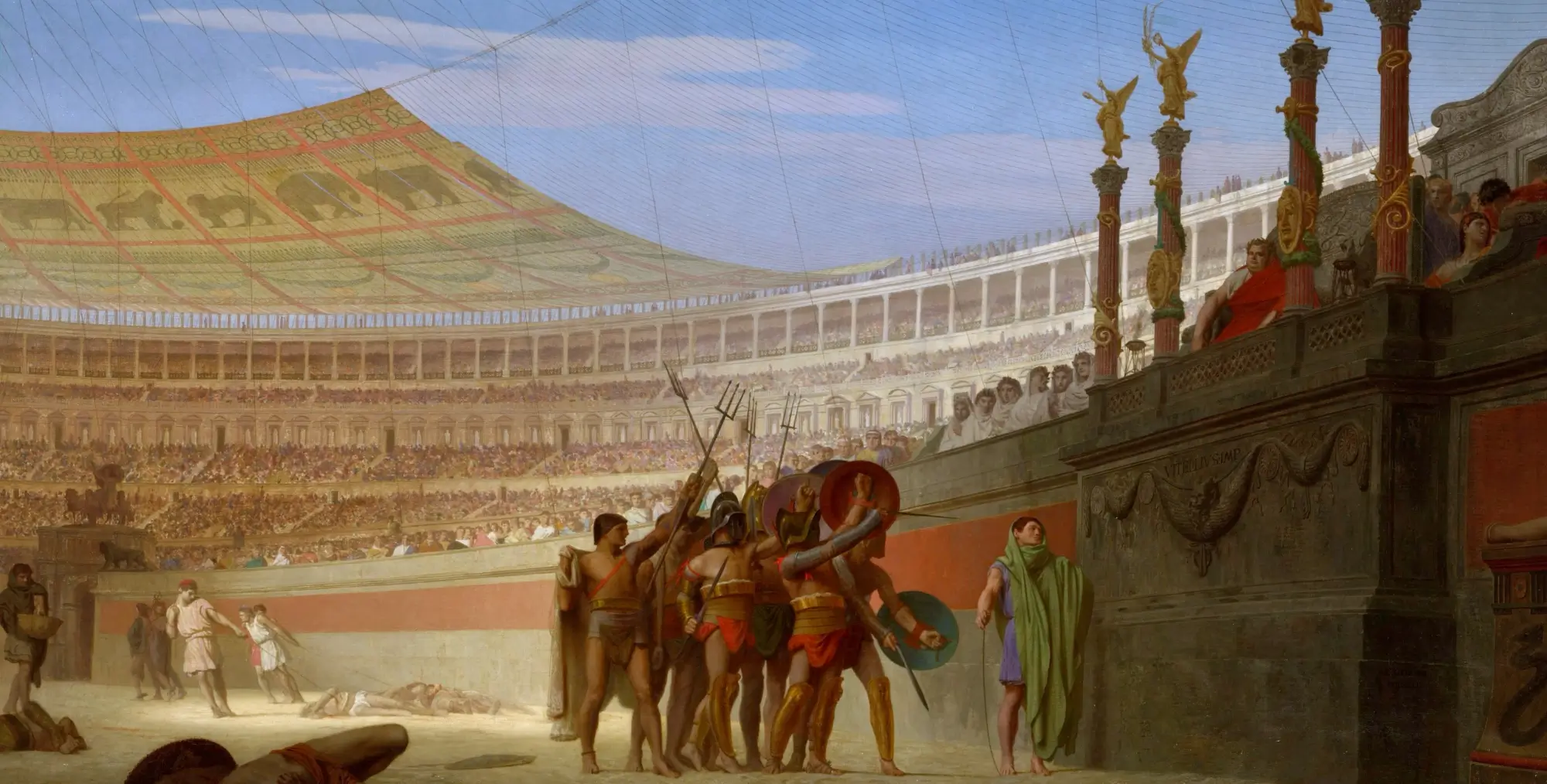
When the Roman summer sun beat down on 50,000 spectators for hours at a time, some form of protection was essential. The solution was the velarium — an enormous retractable awning made from linen or canvas, the same material used to make sails for Roman warships, stretched across the upper levels of the building on a system of wooden booms and ropes.
The velarium did not cover the entire building but was arranged on a system of 240 poles extending from the attic wall, creating a shade canopy that sloped inward toward a large central opening — like an enormous, ephemeral version of the oculus in the Pantheon’s dome. The seating area was shaded; the arena floor remained in direct sunlight. It wasn’t raised at all when high winds or rain was in the offing, leaving the spectators at the mercy of the elements.
Operating the velarium required the skills of experienced sailors. The rigging was complex, the fabric heavy, and the whole system needed to be deployed and retracted quickly in response to changing weather, changing its angle as the sun made its way across the sky. From their panoramic perches high up on the amphitheatre’s top tier, the sailors manipulated the infinity of ropes that extended and retracted the unwieldy awning with admirable dexterity.
For this reason, a detachment of the Roman naval fleet from Misenum, near Naples, was permanently stationed in barracks close to the Colosseum specifically to operate the awning. Their barrack complex, the Castra Misenatium, has been partially excavated beneath the modern neighbourhood around the Colosseum.
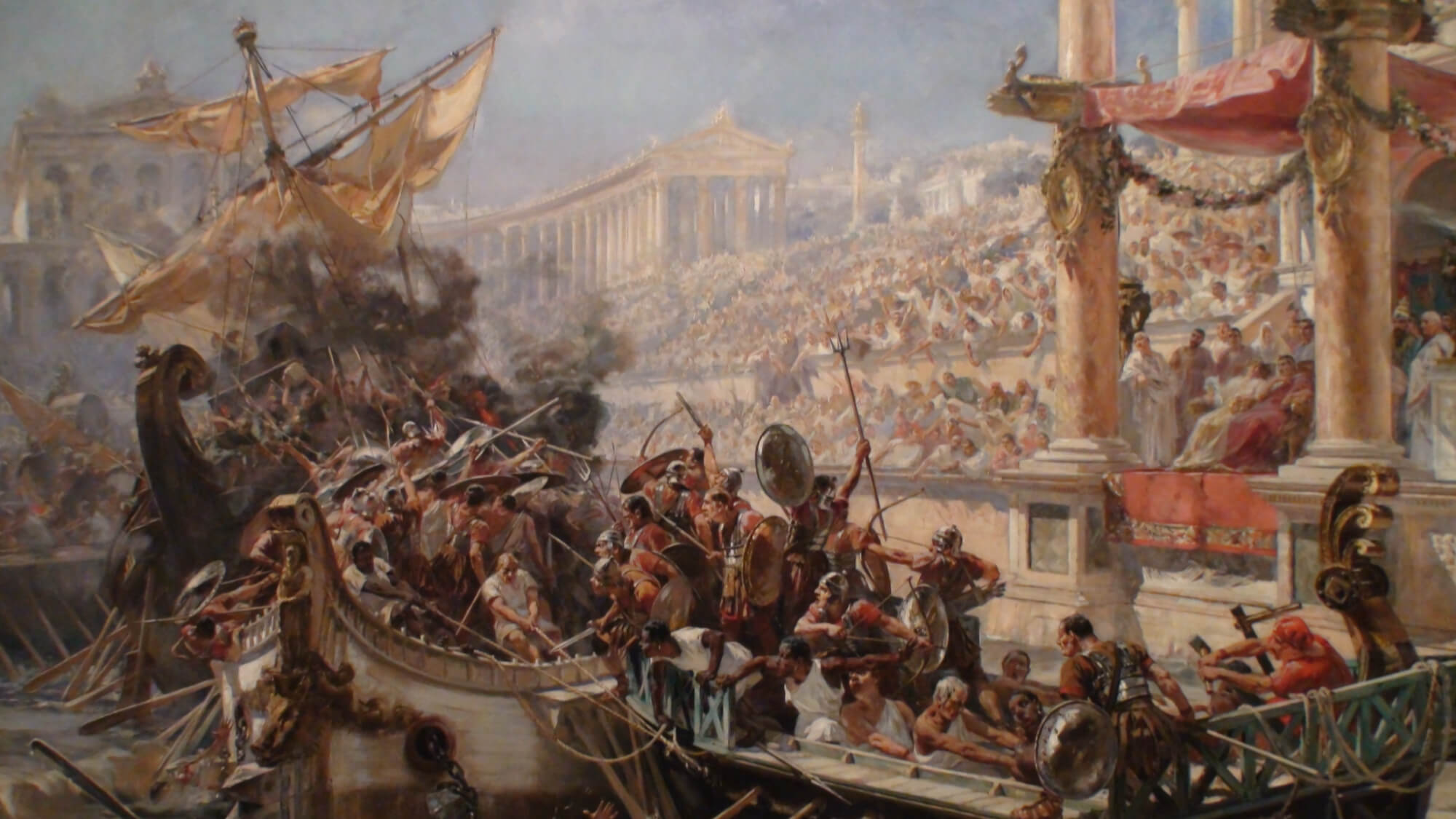
For a short period of time after its completion, the Colosseum played host to dramatic sea-battles known as naumachiae. More frequently, these bloody war games were staged in lakes outside the city, such as the massive spectacle put on by the emperor Claudius on Lake Fucinus – this involved 100 warships carrying 19,000 soldiers and rowers, all of whom were expected to kill, be killed, or drown.
Under the emperor Titus, contemporary sources record that the arena of battle was relocated to the Colosseum flooded with water specially for the purpose via a complex system of sluice gates, canals and pools. Land animals such as horses and bulls were trained to enter the water and play the role of sea-monsters in the perverse charade.
The Colosseum was obviously a tiny space for full-fledged maritime warfare, and the water level would have been extremely shallow; thus, entire fleets of custom-made miniature ships with shallow hulls were constructed to commence battle in what must have resembled a great oversized bathtub.
Given the close-quarters involved these must have been chaotic affairs where it was difficult to tell friend from foe, as oarsmen rowed furiously, archers fired arrows across the bows of opposing ships, and sword-wielding gladiators prepared to board and repel boarders in turn. These spectacles were often historical re-enactments of glorious victories of the Roman navy that ended with bodies floating in seas of blood.
The naumachiae at the Colosseum ended when Domitian constructed the elaborate underground hypogeum — the backstage machinery of the arena — in the late 1st century, after which flooding the arena was no longer possible.

Now largely the preserve of particularly strict Sunday School teachers and religious preachers, the English word ‘fornication’ has an ancient architectural origin that is as surprising as it is delightful.
Fornix is the Latin word for an arch or vaulted space; the arched undercrofts beneath the Colosseum’s tiers of seating were, by the end of the games, well established meeting places for the prostitutes who gathered to do business after the events, when the crowds were aroused and their inhibitions loosened.
Fornix thus eventually became Roman slang for a brothel, and through the late Latin and early medieval period the derived word fornicatio accumulated its moral connotations.
What began as a description of a curved architectural element became, by a roundabout etymological route, one of the more judgmental words in the English language.
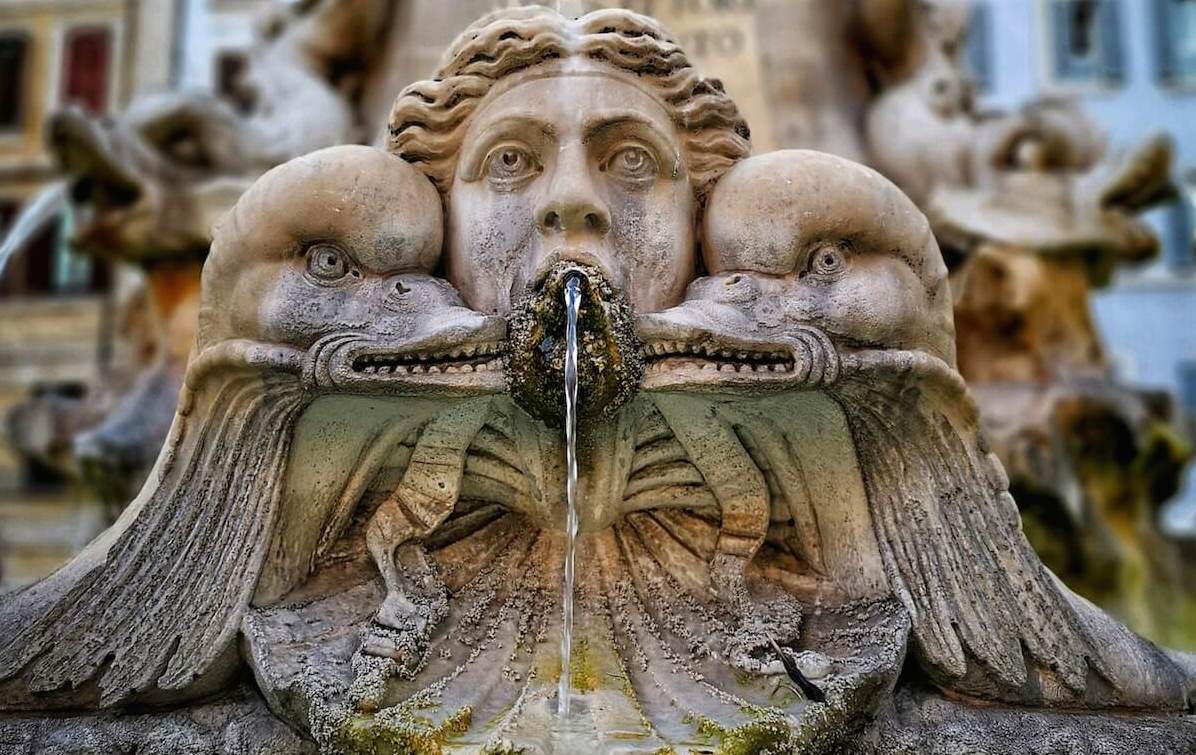
The Romans were not an audience content to sit in discomfort. The Colosseum was furnished with more than 100 drinking fountains, fed by a hidden network of lead pipes — essentially a miniature version of the city’s own aqueduct system, running through the walls and floors of the structure.
Today Rome is scattered with public fountains that flow cold and clear, a godsend in the summer heat that we can trace to the public water provision established in the city thousands of years ago.
Clean, cold running water was available throughout the building, a practical necessity for a crowd of 50,000 people watching hours of bloody entertainment. The provision extended further: the Colosseum also had public toilets — rows of seats over channels of flowing water that carried waste away into a drainage system beneath the building.
By the standards of public hygiene in most of the ancient world, this was genuinely impressive, and it reflects the same logistical intelligence that allowed 50,000 people to fill the building and empty it within fifteen minutes.
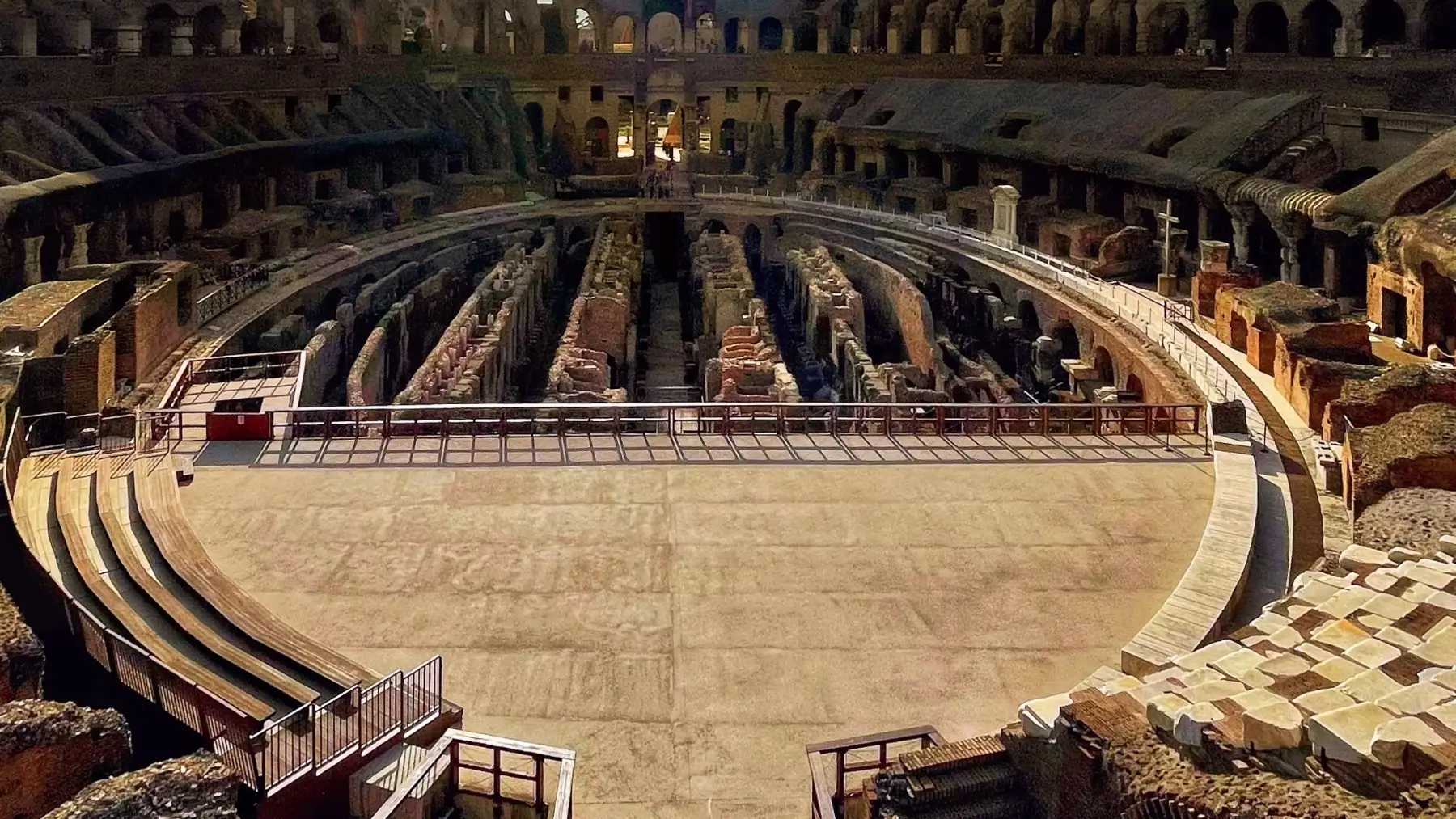
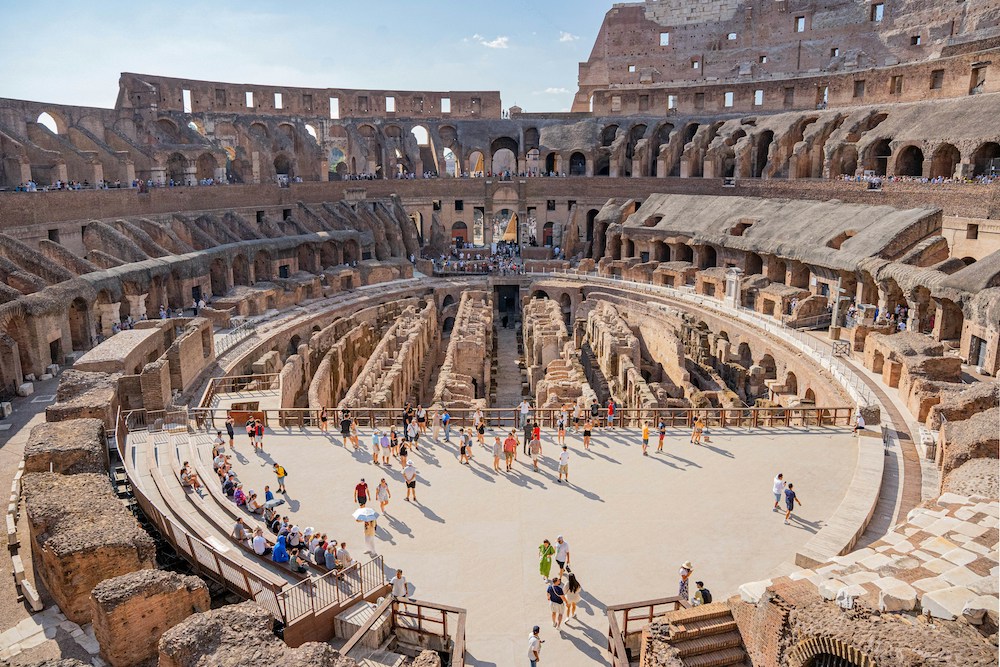
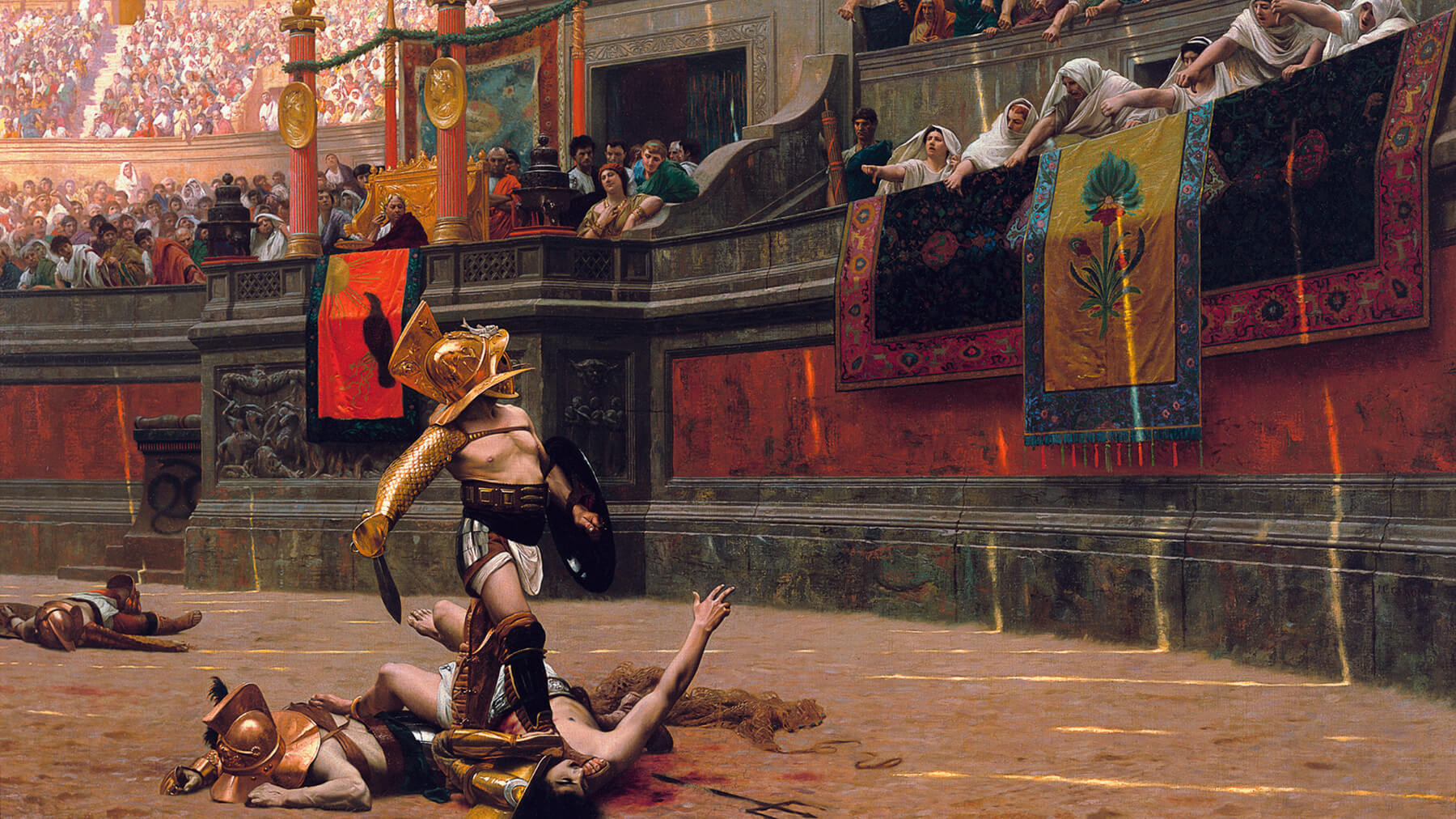
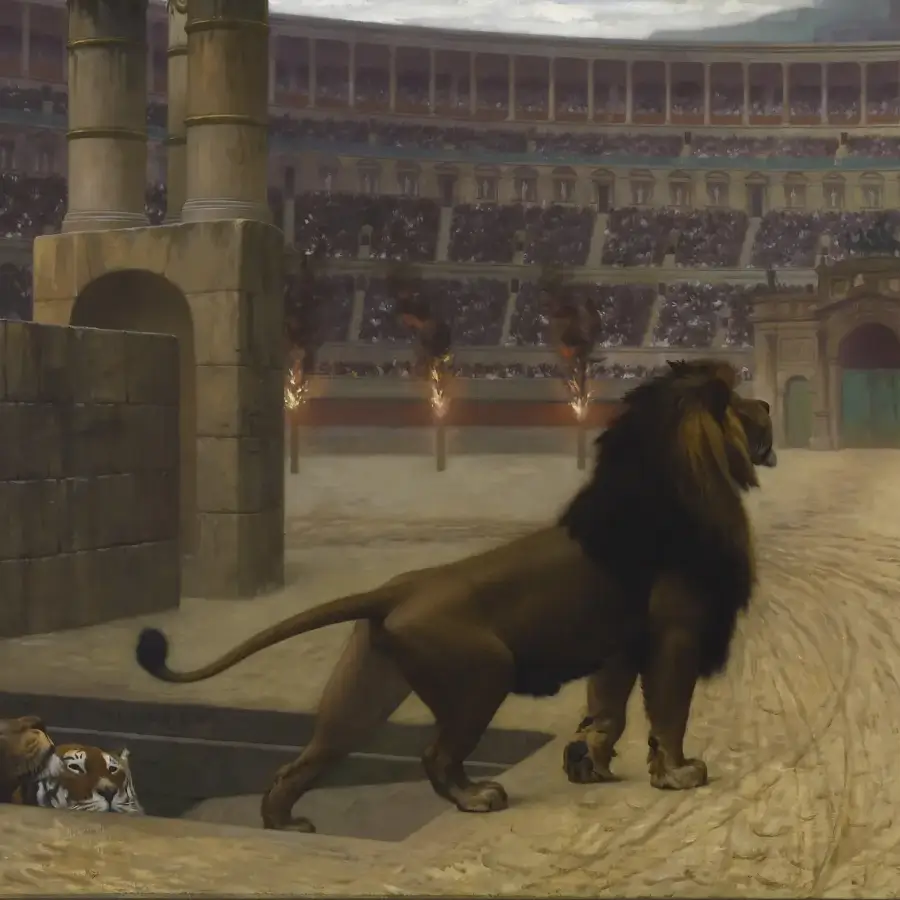
The Colosseum’s arena floor was covered in a layer of sand that provided a firm foothold for the gladiators, and also absorbed all the blood, urine, faeces and vomit that were the inevitable product of the violent spectacle. After each bout, arena attendants (harena) raked and replaced the soiled sand to prepare for the next.
The link between the sand and the place of combat lives on to this day with our word ‘arena’ signifying a venue surrounded by seats where sports or other public events take place. The word passed from the specific (the sanded floor of this building) to the general (any sanded performance space) and eventually to any venue where people compete in front of spectators.
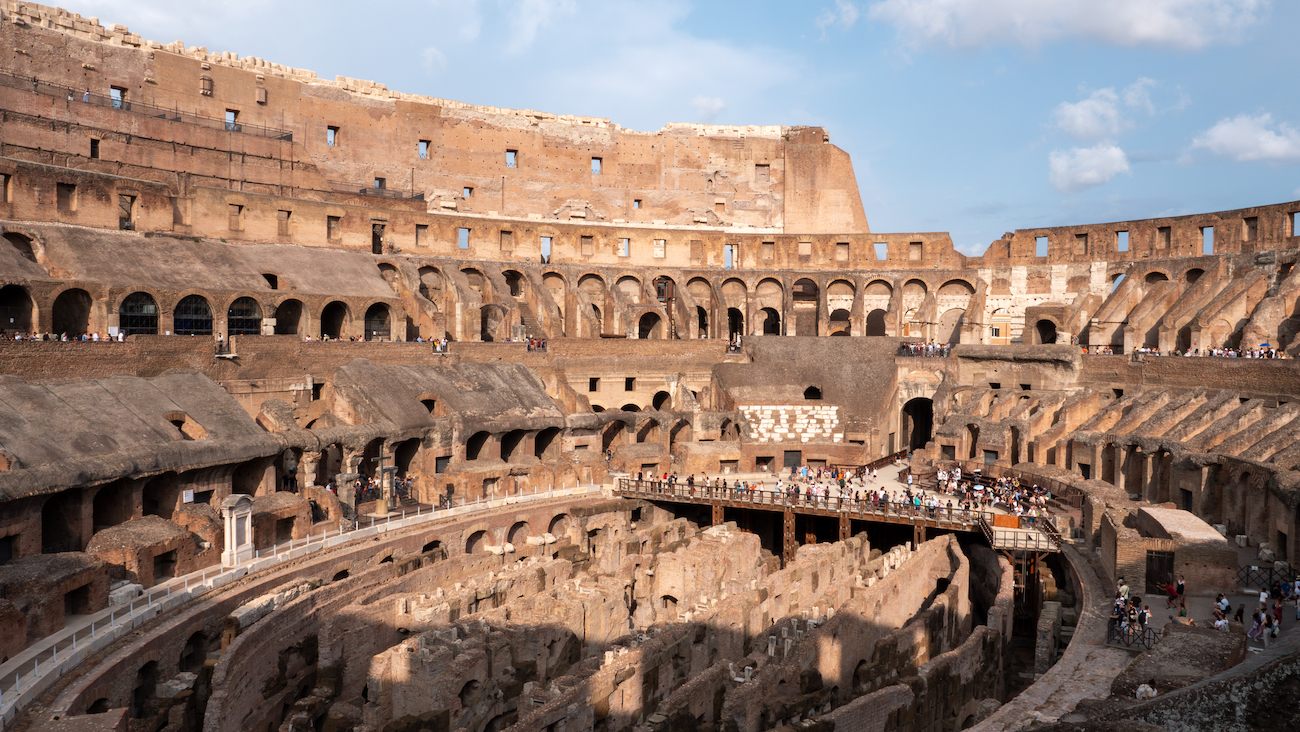
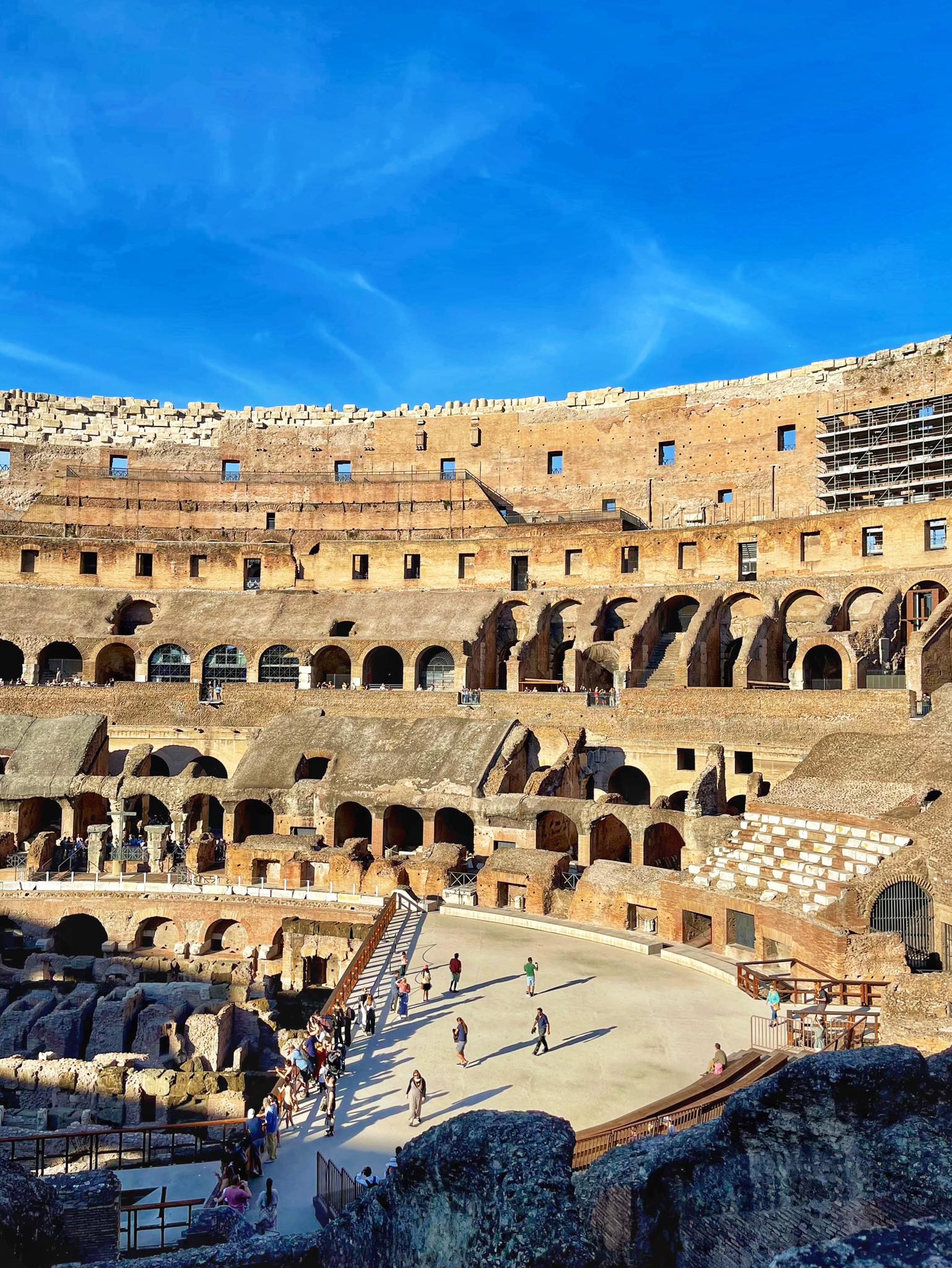
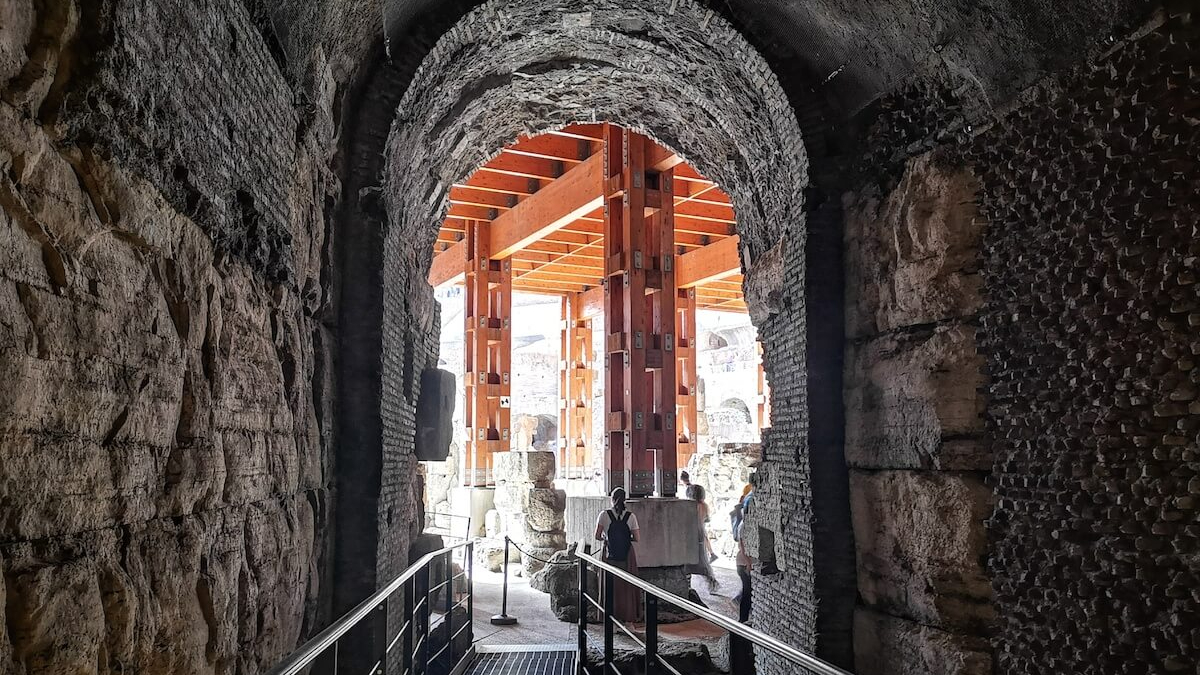
The wooden floor that supported the sand no longer exists — it was stripped away during the medieval period, revealing the underground hypogeum beneath, which visitors can now see from the surviving sections of the floor that have been reconstructed on the south side of the arena.

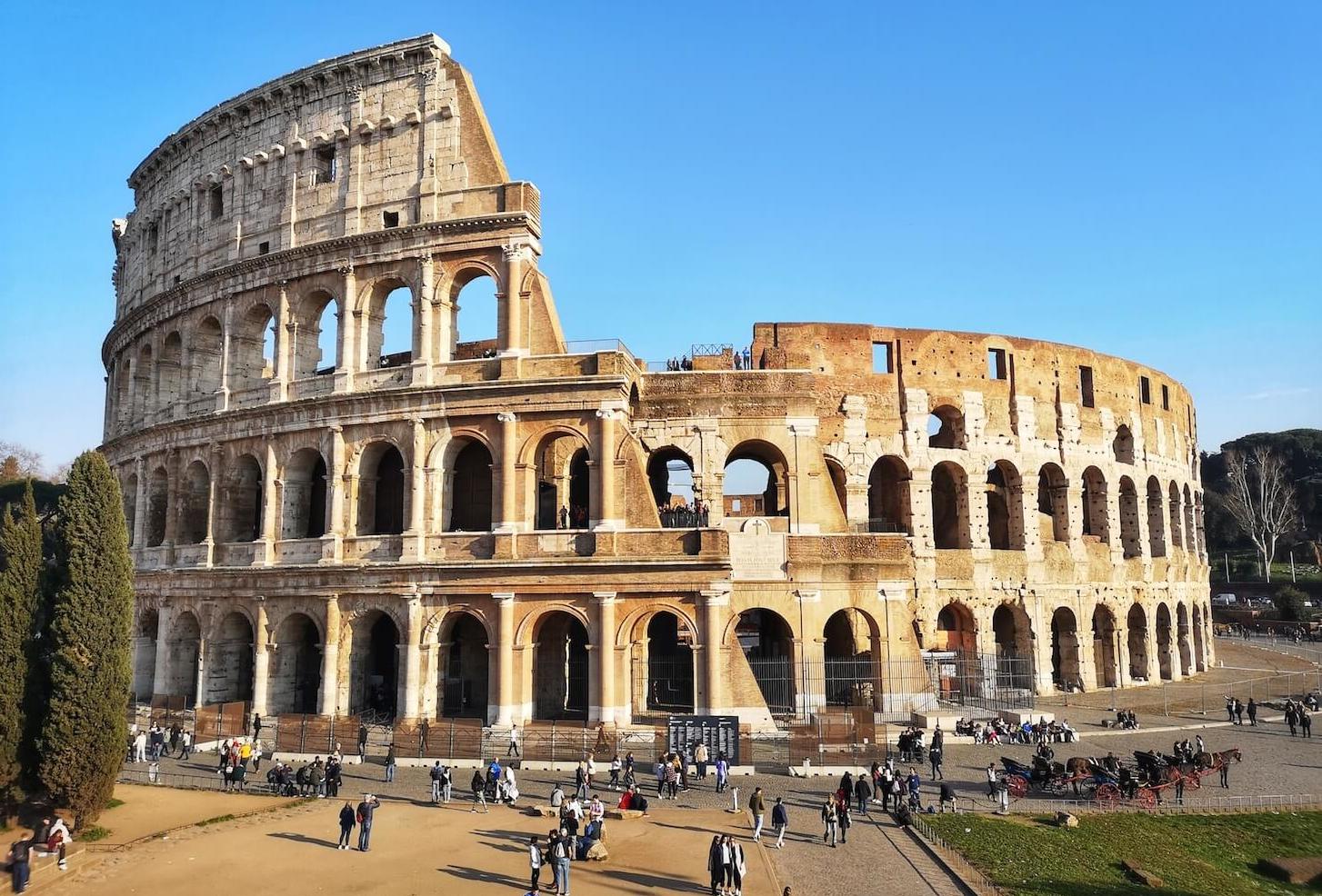
Have you ever wondered why the facade of the Colosseum is pockmarked with holes?
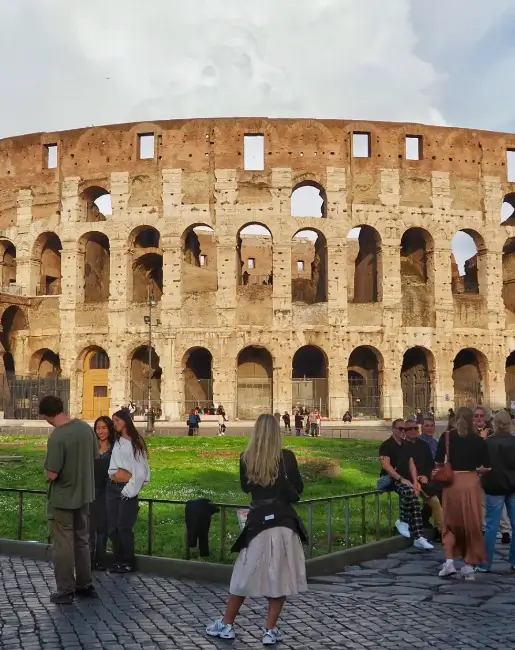
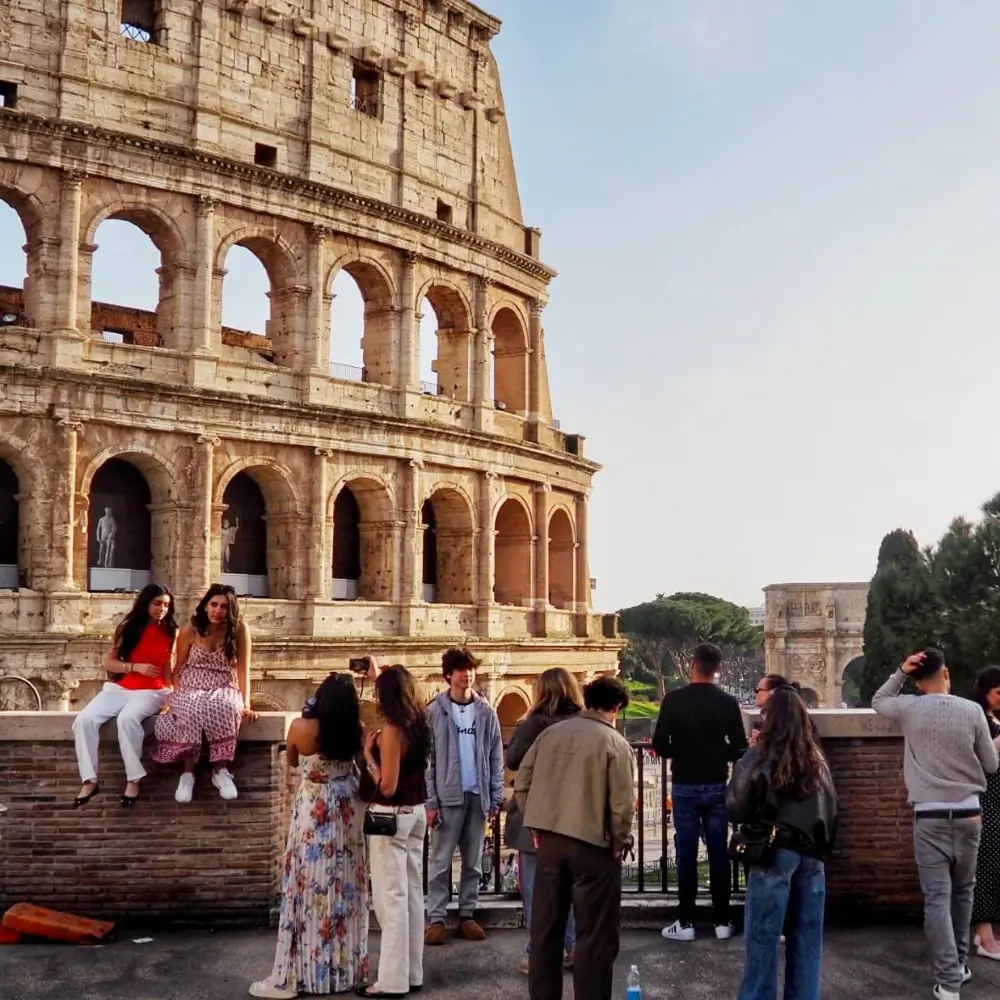
The outer façade of the Colosseum’s ‘Swiss cheese’ appearance speaks to the building’s history after it fell into disuse and decline. Looters hovered up all the precious materials in the amphitheatre’s fabric, including the massive metal clamps that helped keep the building’s various floors together.
These clamps would mostly have been melted down and turned into weapons during the Middle Ages. One study estimates that the clamps alone were comprised of 300 tonnes of iron. That’s a lot of weapons!
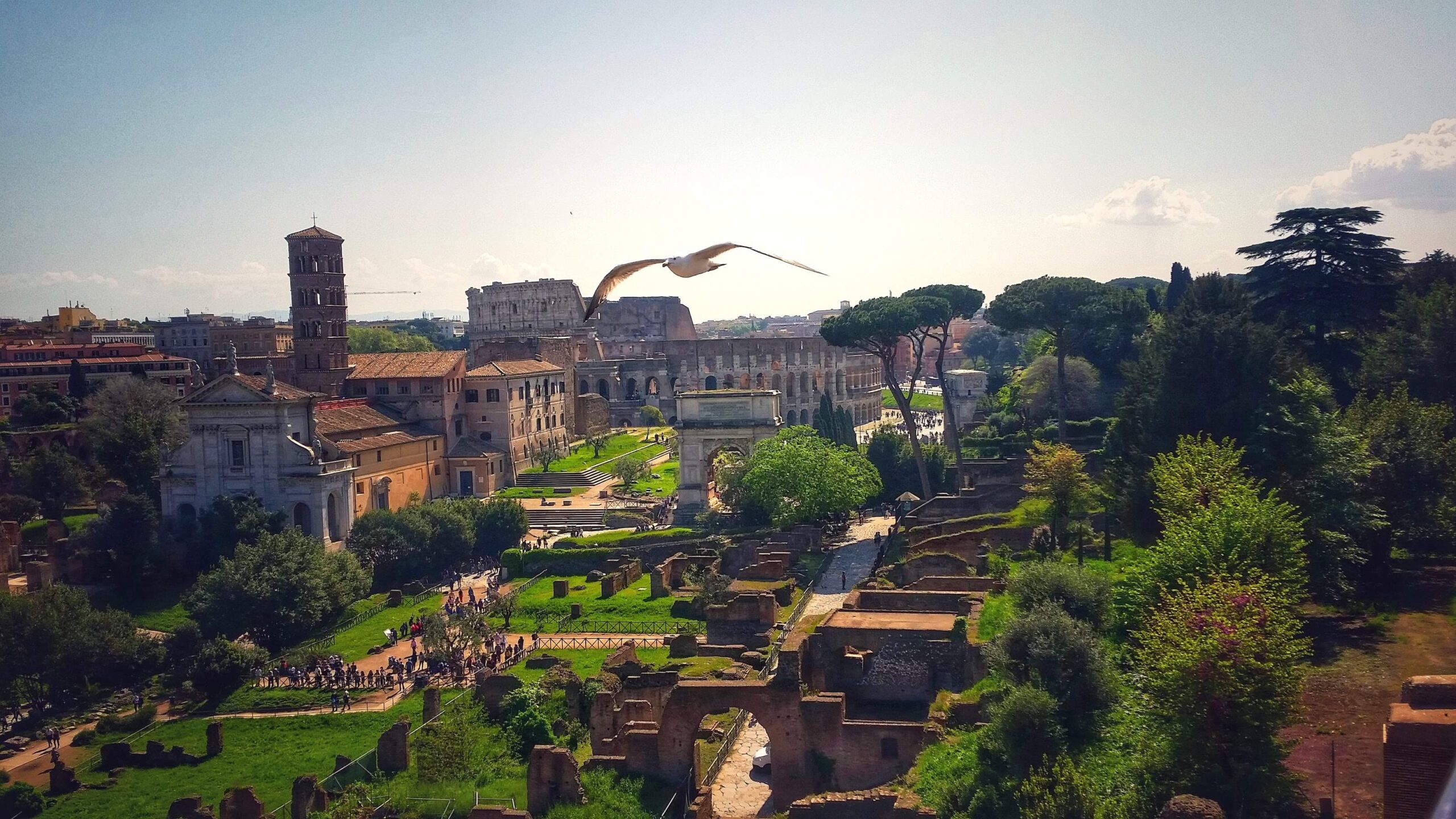
As long as the Colosseum stands, Rome shall stand; when the Colosseum falls, Rome shall fall; and when Rome falls, the world shall fall.
These words were written not by a Roman poet but by an English monk — the Venerable Bede, writing in Northumberland in the early 8th century. It is a matter of debate whether Bede was referring to the bronze Colossus of Nero or the amphitheatre itself, but the sentence attached itself to the monument and became one of the most-quoted lines in the history of travel writing about Rome.
The prophecy’s persistence says something interesting about the Colosseum’s cultural status. It transformed a ruined Roman entertainment venue into something like a monument to civilization itself — whose survival and Rome’s became symbolically identical. If the building came down, Rome — and by extension the world — would follow.
Thankfully for us, it’s still there!
What is the most surprising fact about the Colosseum?
This depends on the visitor, but the ones that showcase the extraordinary engineering engineering skills of the Romans tend to stick in the mind, like the retractable velarium roof and the fact that the arena was flooded for mock naval battles in its earliest years). The combination of extreme sophistication and extreme brutality in the same building remains the most persistently disorienting thing about the Colosseum.
Are there still original seats in the Colosseum?
The marble seating that lined the cavea was largely stripped and reused in medieval and Renaissance construction. However, on the north side of the building some sections of the original seating still survive, and a number of marble blocks bearing senators’ names have been recovered from the site. The travertine structure that supported the seating is largely intact and can be walked through on most Colosseum tours.
When did the Colosseum stop being used for entertainment?
The last reliably recorded gladiatorial combat dates to 435 AD; the last animal hunts to around 523 AD. After that the building passed through several centuries of intermittent use as a fortress, cemetery, housing block and quarry before its gradual emergence as a protected monument in the 18th and 19th centuries.
How long did it take to build the Colosseum?
Construction began around 70–72 AD and the main structure was complete for the inauguration by Titus in 80–81 AD — roughly a decade. The underground hypogeum and final upper tier were completed by Domitian in the following decade. By the standards of any era, building the world’s largest amphitheatre in ten years represents an incredible feat of planning and execution.
Ancient City Tours
Explore the Colosseum!