"While the Colosseum stands, Rome shall stand; when the Colosseum falls, Rome shall fall; when Rome falls, the world shall fall."
The English monk Bede fundamentally linked the fate of Rome with that of the Colosseum way back in the 8th century; luckily for us, the magnificent amphitheater is still standing, and remains the most iconic landmark in the Eternal City nearly 1,300 years after Bede penned his prophetic words.
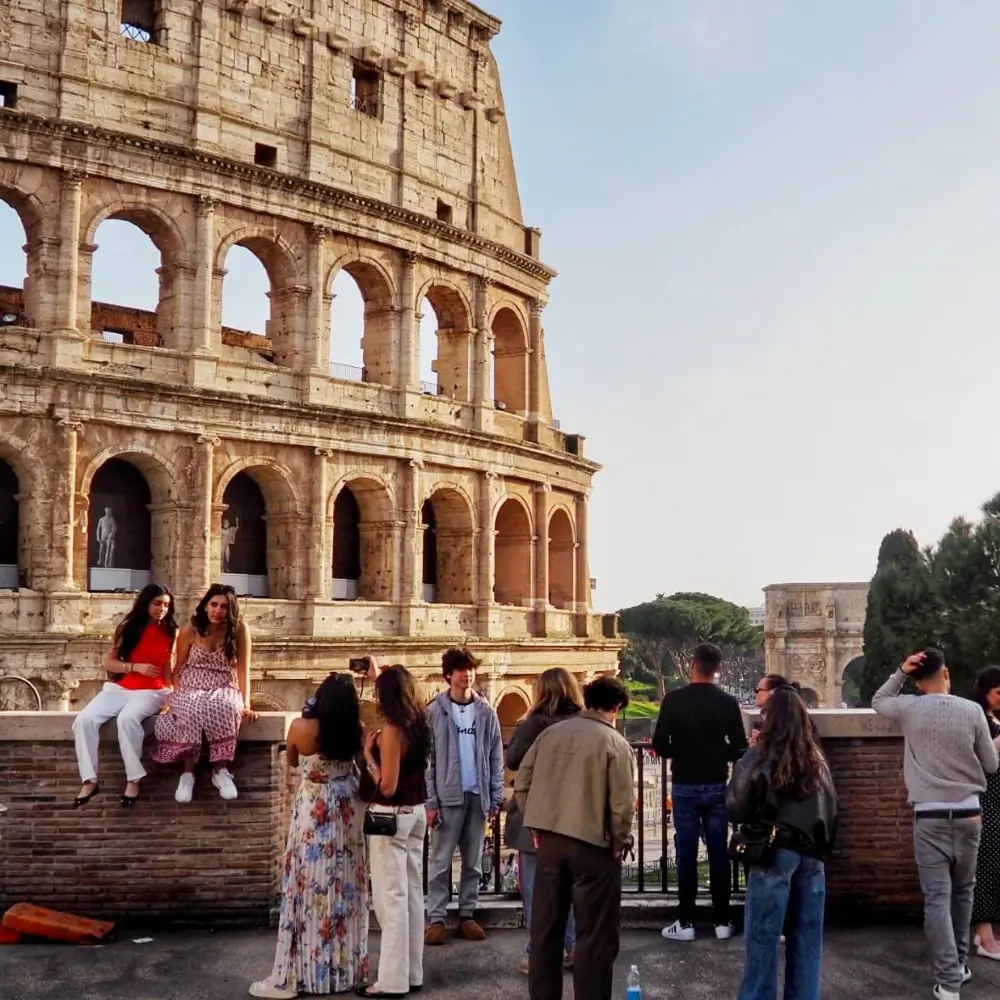
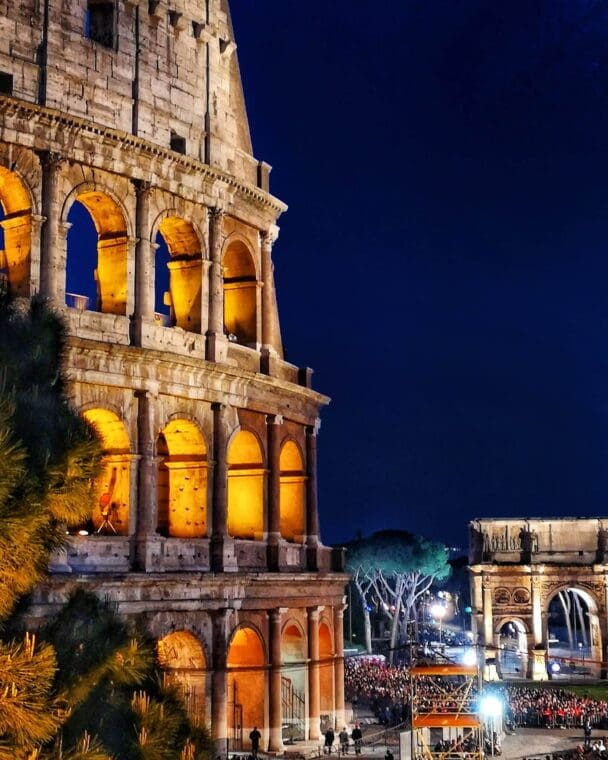
Astonishingly massive and wonderfully evocative of the ancient culture that moved heaven and earth to construct it, when you come to the Colosseum you feel as if you can reach out and touch the distant world of antiquity across the gulf of centuries. Nearly two thousand years of weathering, looting, earthquake and restoration have not diminished it.
Even though we might think we know the Colosseum all too well from world of popular culture, from mugs and postcards, calendars and novely aprons, witnessing its endless rows of arches gleaming in the Roman sun for the first time can turn even the most jaded traveller into a child filled with wonder.
This guide tells the essential story of the Colosseum: how it was built, why it was built, what happened inside it, what became of it after the games ended, and what you need to know before you visit. If you want to find out all the practical details you need to know about visiting the monument, then be sure to check out our detailed guide to visiting the Colosseum in 2025 here.
Ancient Rome Tours
Explore the Colosseum
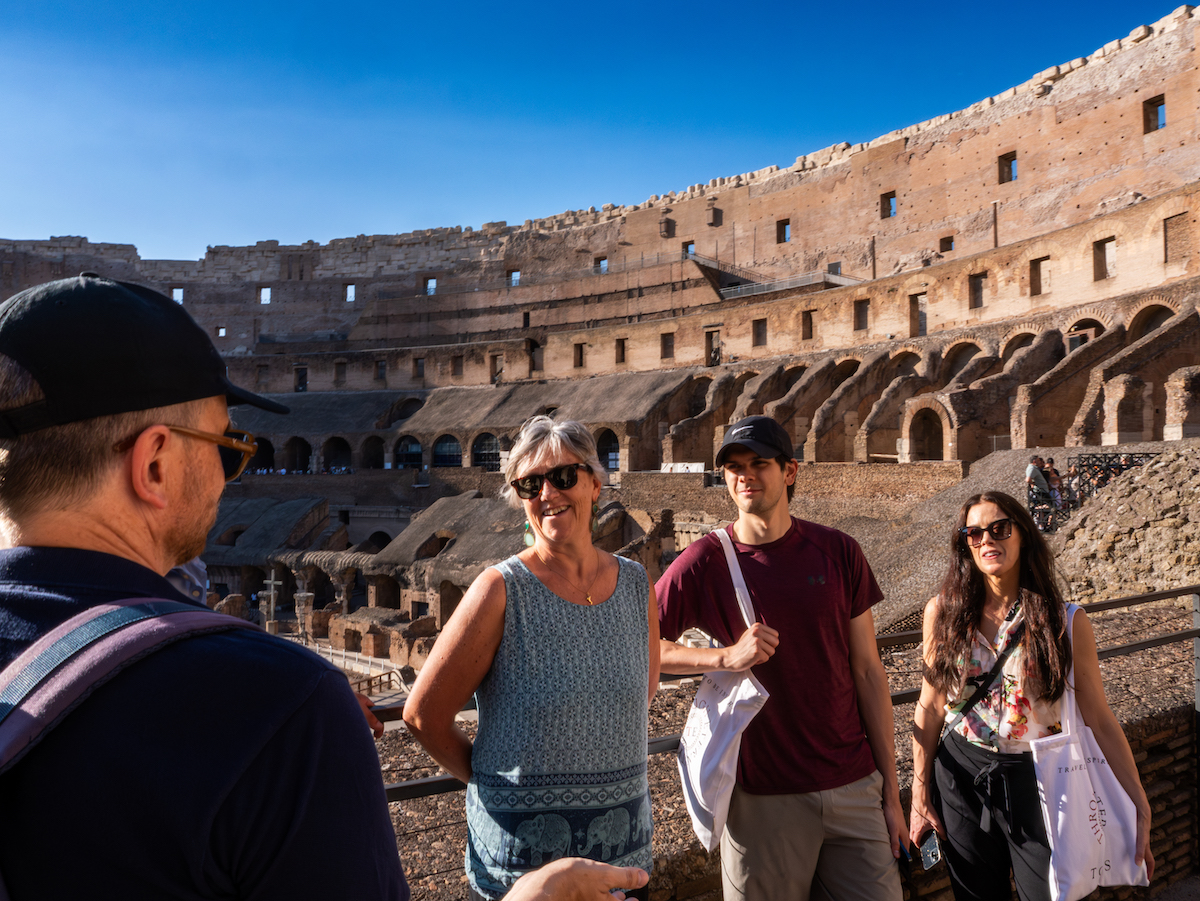
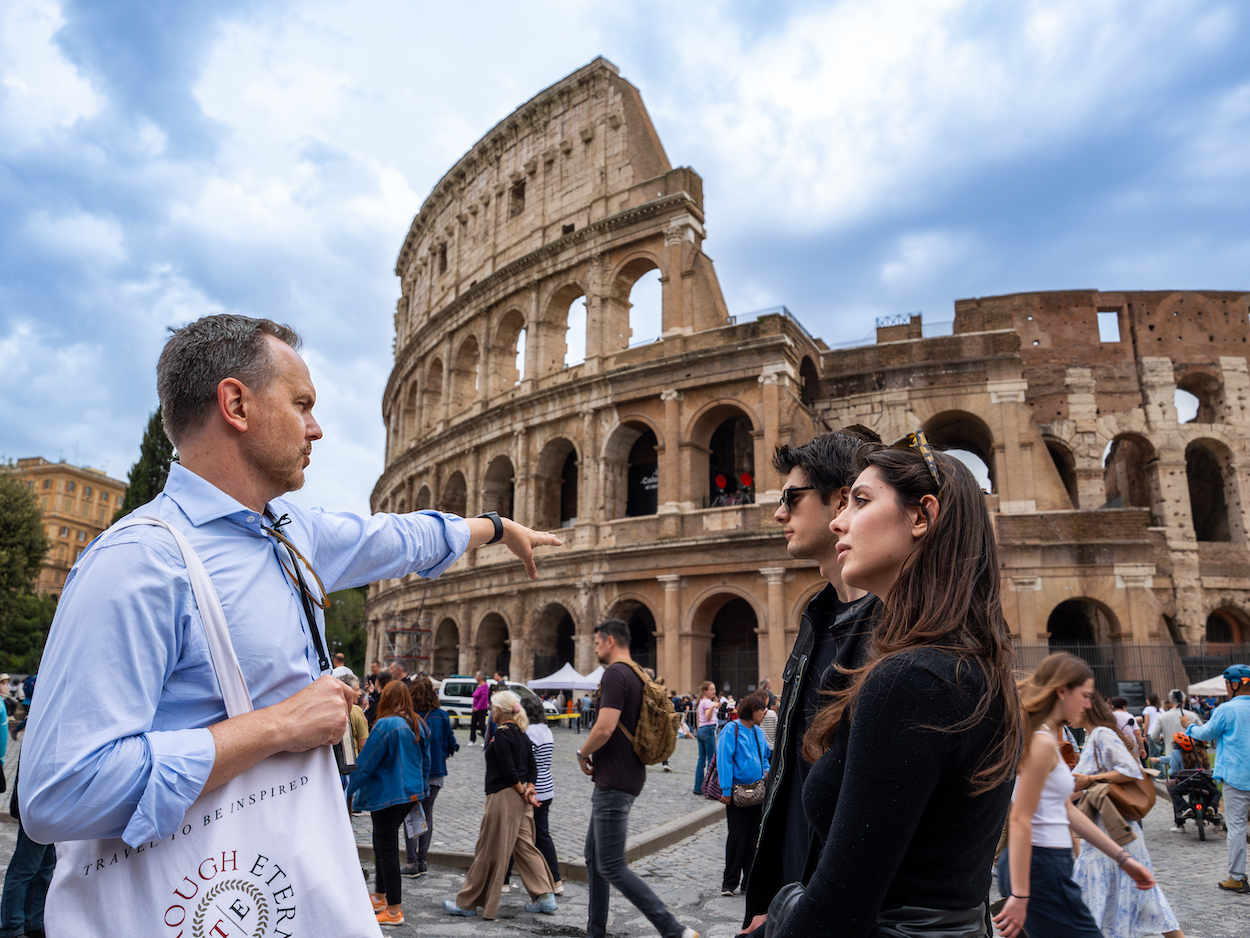
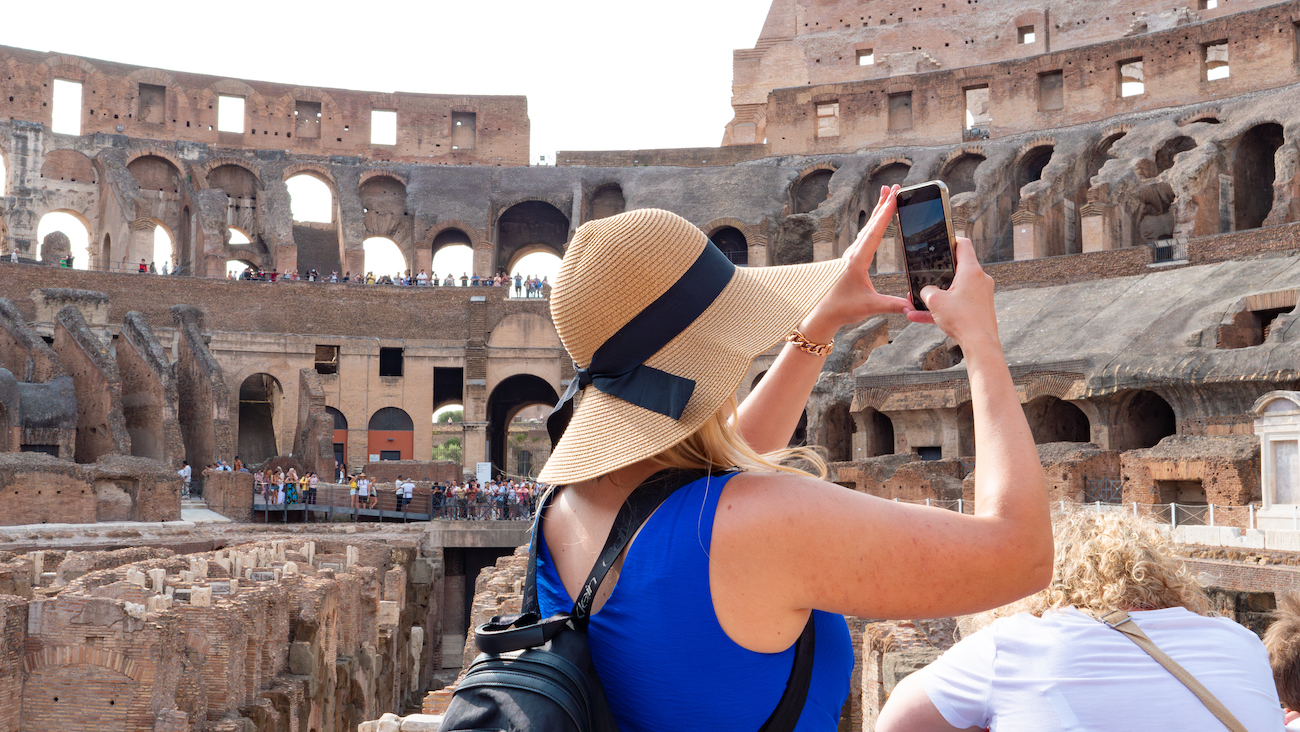
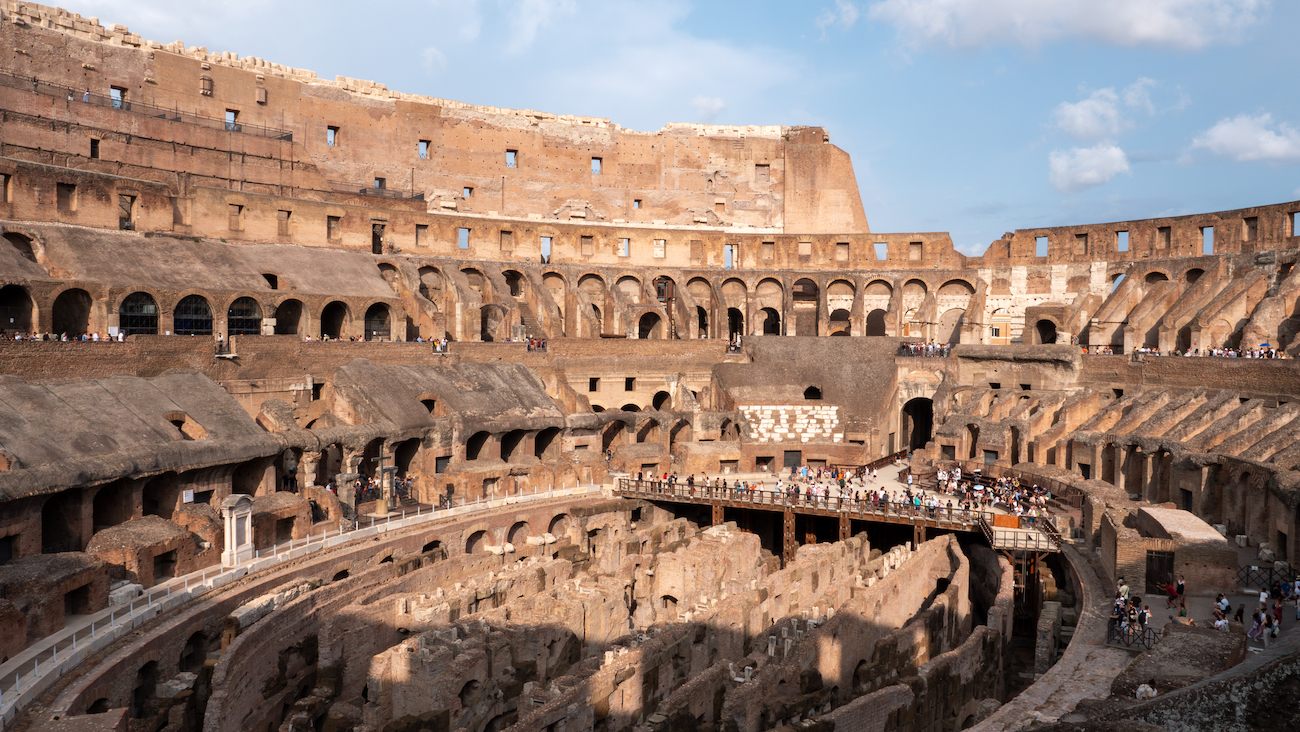
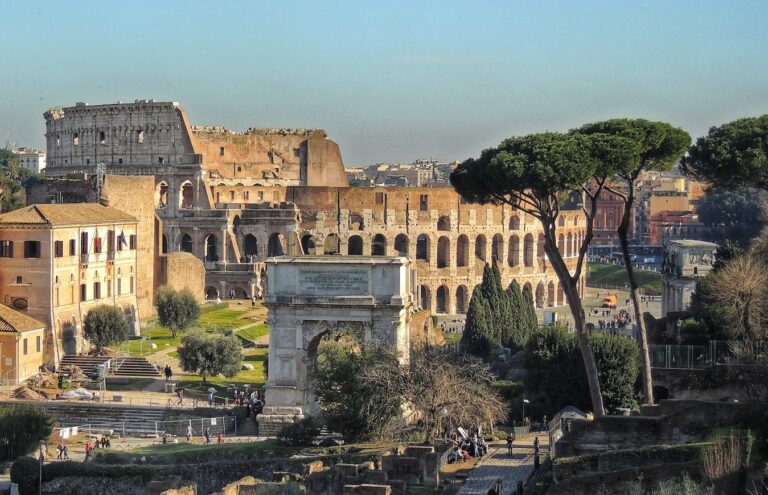
Like many of the most interesting things in life, the Colosseum is a paradox: as both the symbol of an incredibly advanced civilisation whose skill in engineering was centuries ahead of its time and at the same time a gore-stained monument to an insatiable collective bloodlust, a visit to the Colosseum reminds us of how ancient Rome was both eerily similar to our world and totally alien to it.
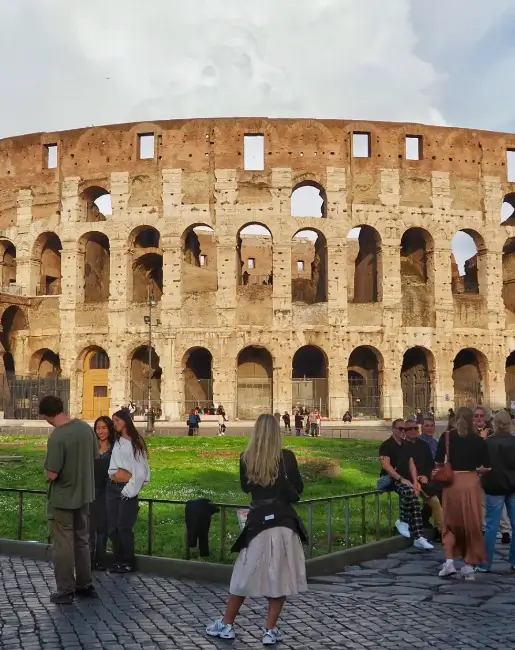
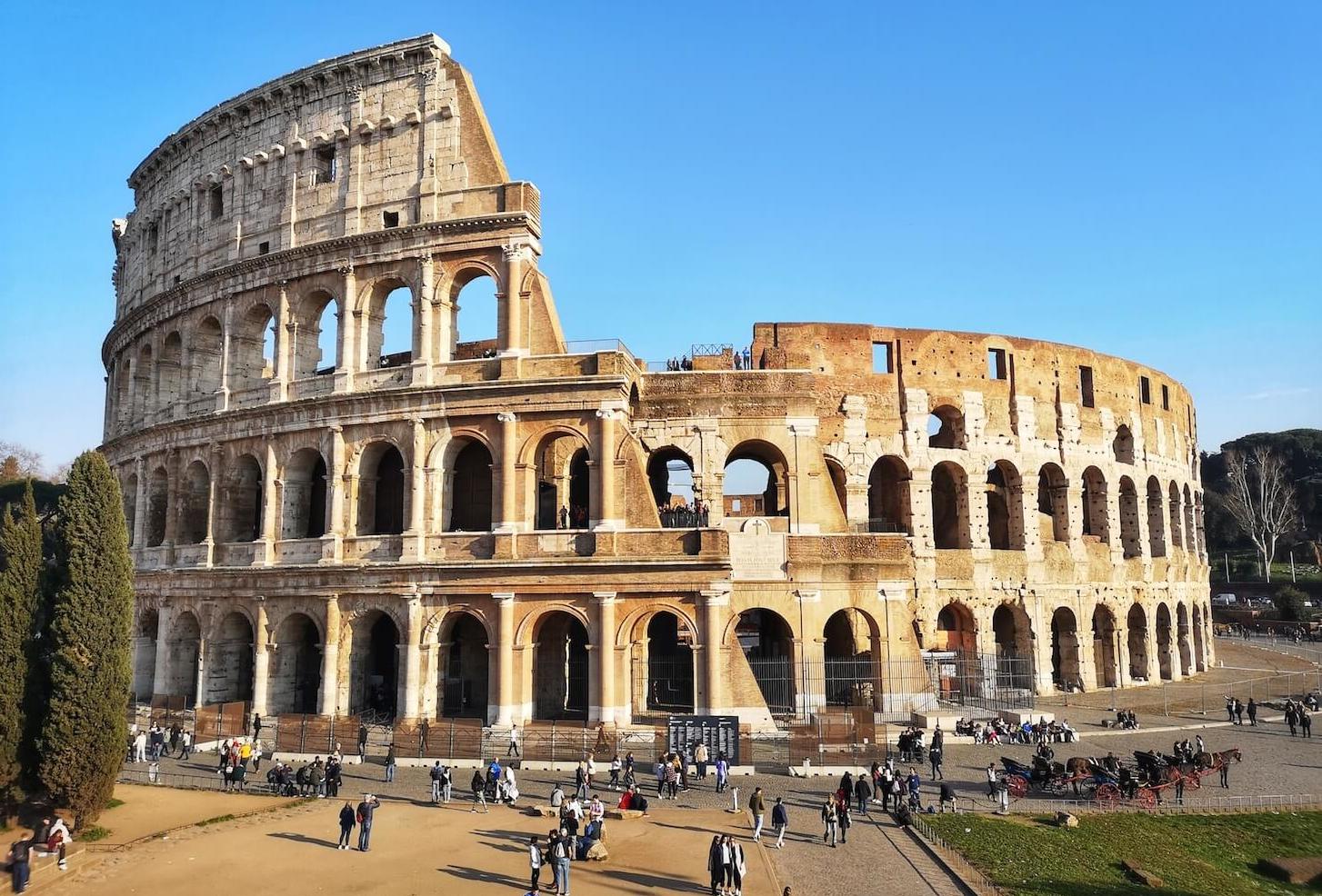
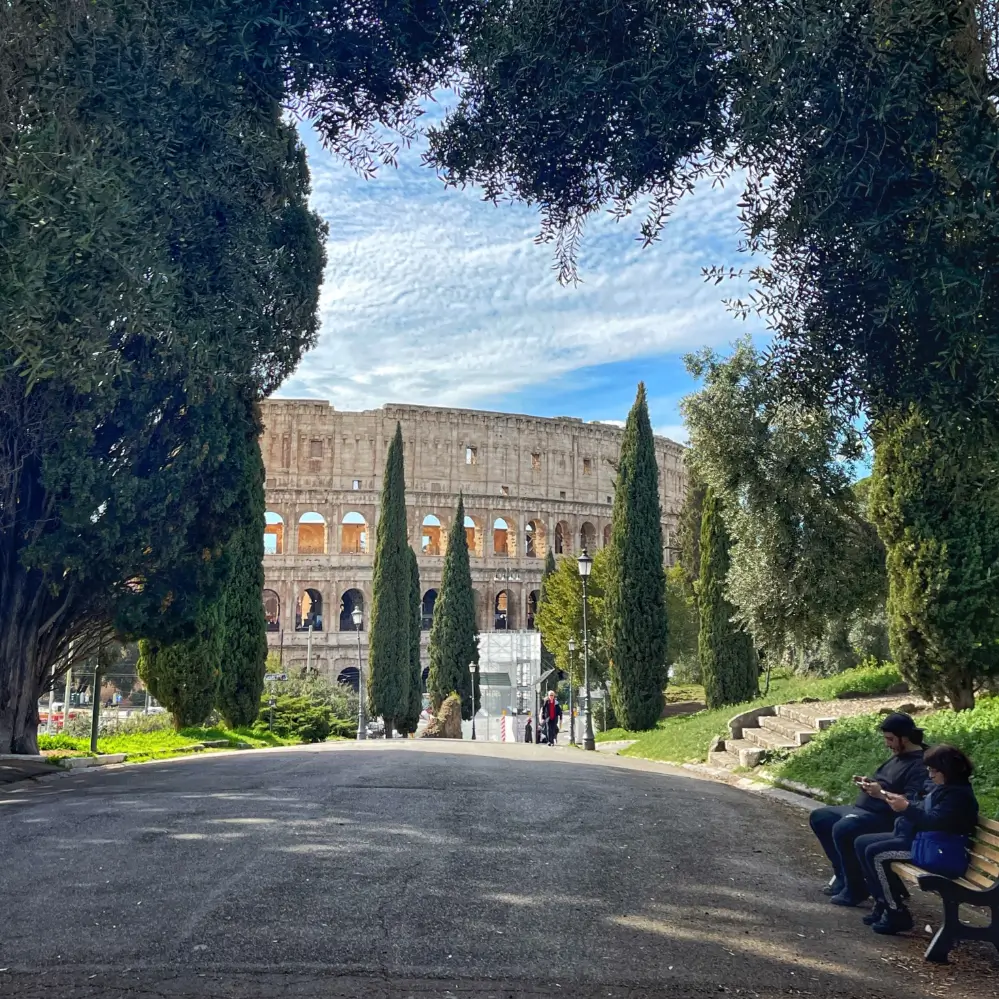
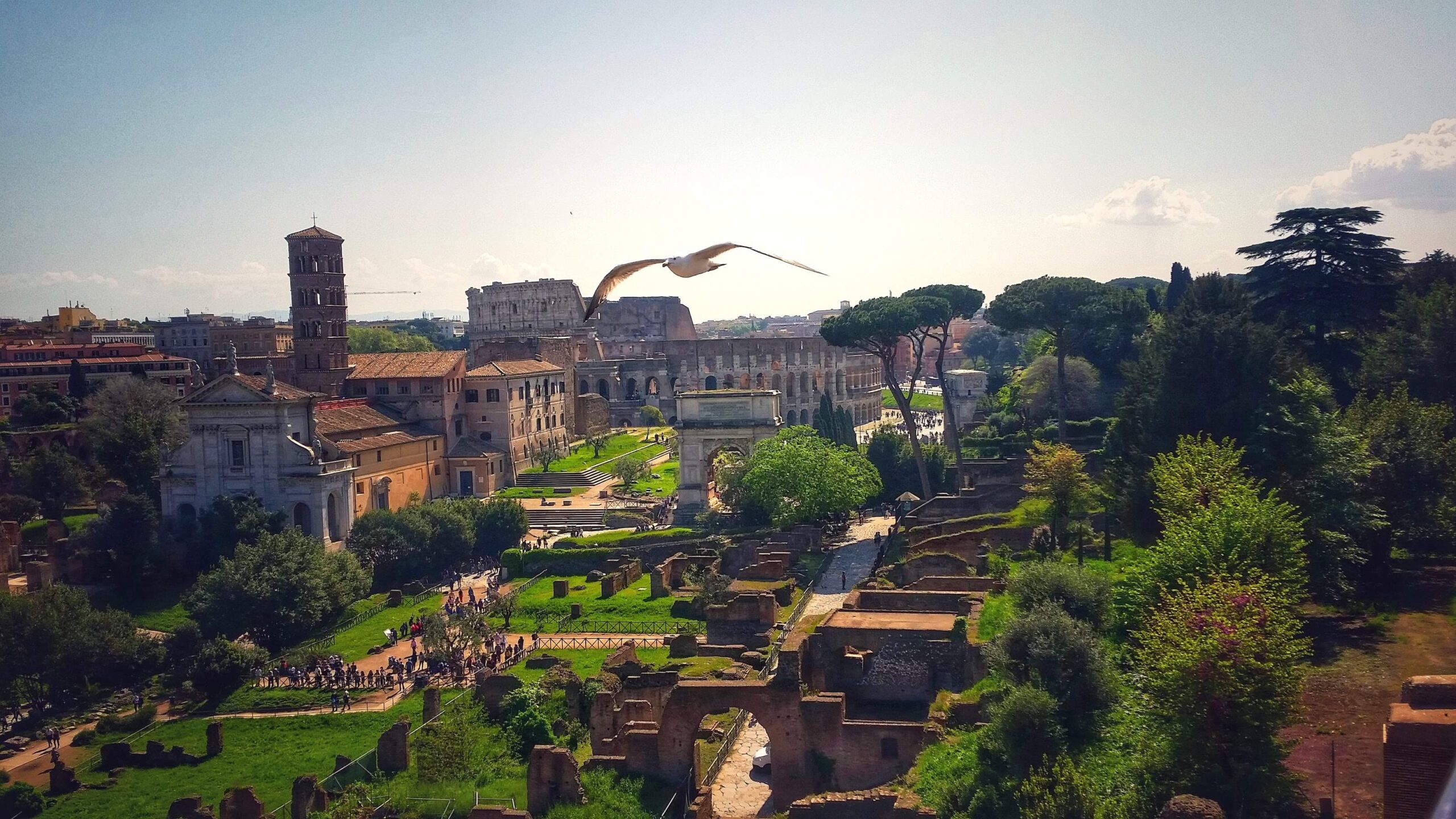
The Colosseum remains the largest amphitheatre ever built, and the most immediately recognisable icon of the ancient world nearly two millennia after its construction. The structure is visible from all over the city, and is centrally situated next to the Roman Forum and Palatine Hill, the antique centre of political power and site of the Imperial palaces respectively.
The Colosseum was designed specifically for entertainment, a place where all Roman citizens could go to let their hair down and forget about the hardships of daily life. It was begun around 72AD on the orders of the emperor Vespasian as a gift to the people of Rome and proof of his generosity. The massive stadium regularly welcomed crowds of 65,000 people and more to its events, which were open to all Roman citizens of the city (they were free, too).
To inaugurate its completion, the emperor Vespasian’s son and successor Titus celebrated with 100 days of non-stop games including exotic animal hunts, executions, music, and of course gladiator battles. The tradition of the games would continue here for fully five centuries as a key guarantor of social cohesion in the Imperial capital.
Known to antiquity as the Flavian Amphitheatre, the Colosseum only gained its current title many centuries after the games had ceased. To understand why, we have to travel back in time, back to the reign of one of the most notorious villains of Roman history: Nero.

Nero is remembered to history for many things. Persecuting Christians and other minorities, fiddling cheerfully as Rome went up in flames, casually assassinating his enemies, and even ordering the murder and dissection of his own mother.
The egotistical Nero was convinced both of his own divinity and his artistic genius, proud of his skills as an actor, dancer, musician and orator. His dying words reflected the esteem in which he held himself right up to his last breath – lamenting his passing, the emperor wistfully reflected ‘what an artist dies with me.’
Nero blamed the devastating fire that gutted the city in 64 AD on the mysterious and cultish Christians who were unwilling to integrate into pagan Roman society, but they were just the scapegoats. Many historians speculate that Nero started the fire himself; at the very least, he massively profited from its destruction of two-thirds of the city.
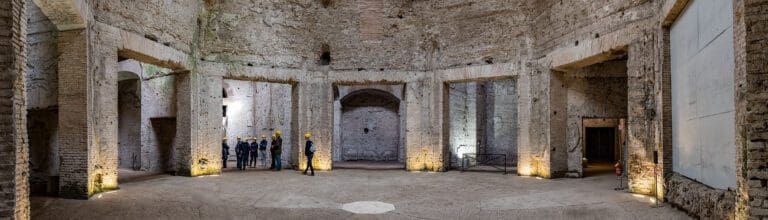
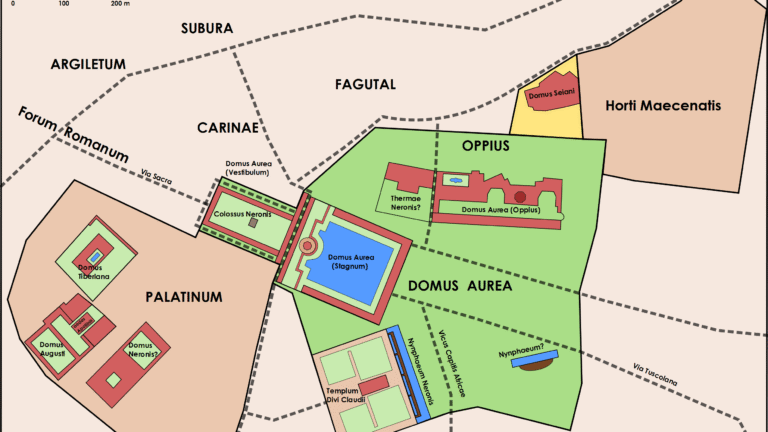
Before the ashes were even cold, he began the construction of his unimaginably massive Domus Aurea, or Golden House. The palace was so massive that Nero never even succeeded in visiting all its rooms, but the emperor was content. Here, he claimed, he could finally ‘live like a human being.’
The centrepiece of this gargantuan testament to Nero’s prodigious ego was a massive artificial lake surrounded by elegant columns – in order to supply the lake with water Nero had to divert the course of the Claudian aqueduct, a vital cog in the city’s infrastructure.
For good measure the emperor marked the entrance to his palace with a bewilderingly large statue of himself in bronze. All of 120 feet tall, the effigy was intended to rival the Colossus of Rhodes, one of the wonders of the ancient world.
Ancient sources describe the complex with a mixture of awe and disgust. The city had been devastated; Nero built himself a paradise on the ruins.
Unsurprisingly this didn’t go down too well with the populace, many of whom had been evicted from their homes to make the Domus Aurea possible. Nero didn’t get to enjoy his pleasure-palace for long. Amidst plummeting popularity ratings and whispers of insurrection, he committed suicide in 68 AD. With a single stroke, the Julio-Claudian dynasty was over.
Vespasian, the general who emerged from the chaos of the Year of the Four Emperors to found the Flavian dynasty,sought to make a clean break from his hated predecessor. And so the palace was pulled down and its lake drained and filled in. On the site of the private lake that so vividly symbolised the contempt Nero held for the city’s populace, Vespasian erected a fundamentally public monument, a gift to the people whose support he desperately needed if he wasn’t to go the same way as Nero.
Where Nero had taken from Rome, Vespasian would give back. The Colosseum — officially the Flavian Amphitheater — was his gift to the Roman people.
It is more than a little ironic, then, that sometime after the fall of the Roman empire the abandoned structure started being referred to as the Colosseum in reference to the colossal statue of Nero that once stood there. By the medieval period, the amphitheater had come to be called the Colosseum because of its proximity to this statue — the colosseum being the place near the colossal thing.
The Colossus of Nero itself was eventually melted down, probably in the medieval period, but its name lives on in the monument that outlasted it.
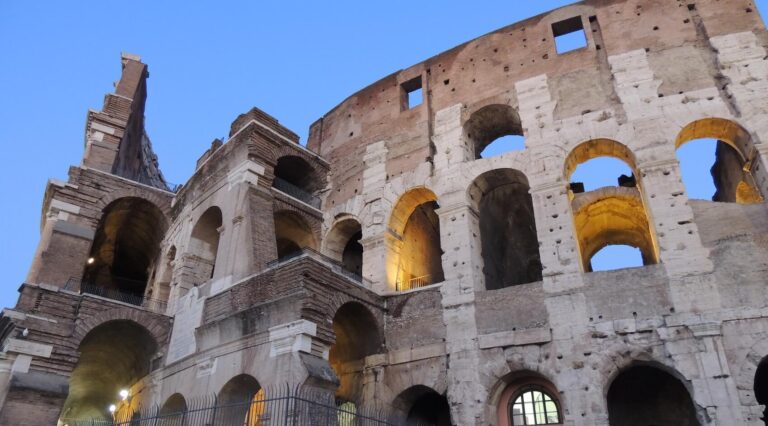
The Colosseum was the largest oval-shaped structure in the ancient world — and the choice of oval over the circular plan common to earlier amphitheatres was deliberate. Roman engineers reasoned that the compressed oval would give more spectators a better sightline to the action below, concentrating the audience around the long axis of the arena rather than distributing it equally around a circle.
The finished building measured approximately 188 metres long, 156 metres wide and 48 metres high — roughly the height of a modern twelve-storey building – and was constructed from enormous travertine stone blocks riveted together with massive iron clamps.
Some historians maintain that four separate building contractors were each responsible for one quadrant of the building project, which was amazingly completed in just 10 years; when you consider that the great cathedrals of the medieval world often took centuries to complete, it puts the achievement of the Roman architects and engineers into perspective.
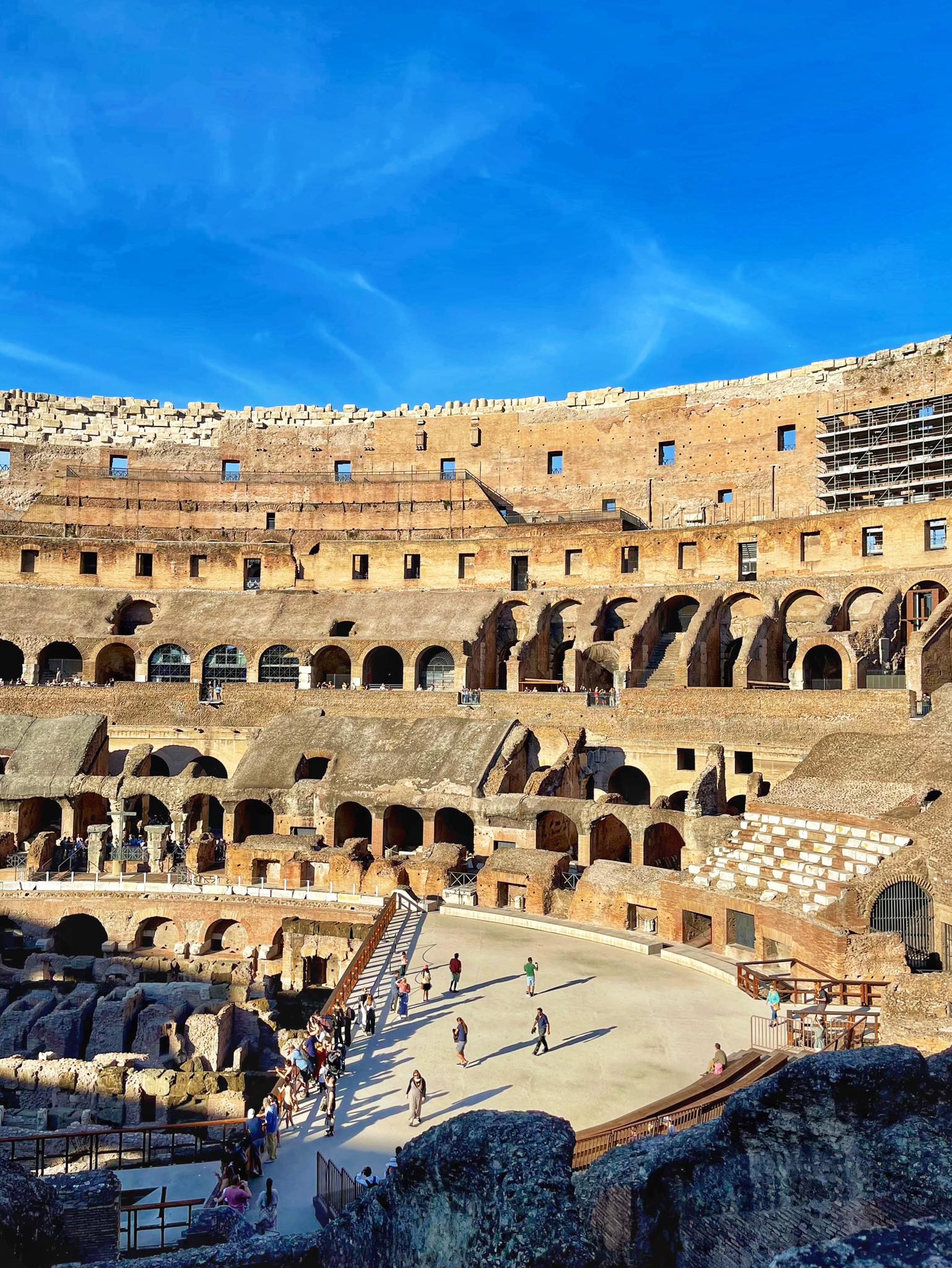
The building materials were varied and hierarchically deployed. The load-bearing structure was travertine limestone and tufa; the interior walls and vaults were faced with brick and concrete; the seating was marble. To construct just the exterior, 240,000 cartloads of stone were brought to the city from the quarry of Tivoli 20 miles east of Rome. The arena floor itself was timber covered with a thick layer of sand — arena is simply the Latin word for sand, a linguistic inheritance that survives in our own word for any large performance space.
The exterior facade was a design classic that would prove enormously influential on subsequent European architecture: three tiers of arched openings, each framed by engaged columns in a different classical order — Doric on the ground floor, Ionic in the middle tier, Corinthian above — capped by a solid attic storey with Corinthian pilasters and square windows. This stacking of the classical orders became standard Renaissance and Baroque practice; you can trace a direct line from the Colosseum’s facade to the courtyard of the Palazzo Farnese, the facade of St Peter’s Basilica, and ultimately to classical revival architecture around the world.
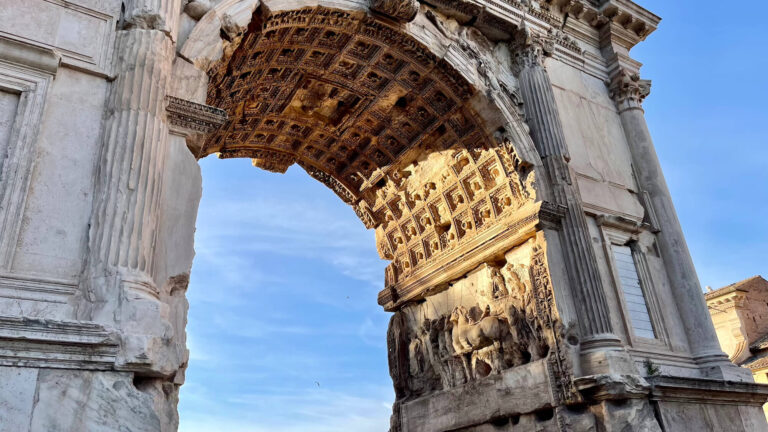
Yes. The incredible speed at which the Colosseum was constructed wasn’t just down to the ingenuity of Roman engineers.
It is testament too to the limitless man-power that they could count on from the tens of thousands of Jewish slaves forcibly brought to Rome from Jerusalem in the wake of the Jewish Revolt in 72AD, as well as the massive cash-injection to the Imperial coffers from the riches pilfered during the Sack of that city’s temple (a pillage immortalised on the contemporaneous Arch of Titus nearby).
Most likely, skilled tradesmen worked side-by-side with forced labour to bring the project to fruition.
Something to bear in mind as you explore the amazing remains of antiquity in the Eternal City: the achievements of ancient Rome were to a large degree built on the back of ruthless conquest. As a result of these dark beginnings, Rome was the first city in Europe to have a sizable Jewish population – a community that still survives to this day as an integral part of the city’s complex social fabric.

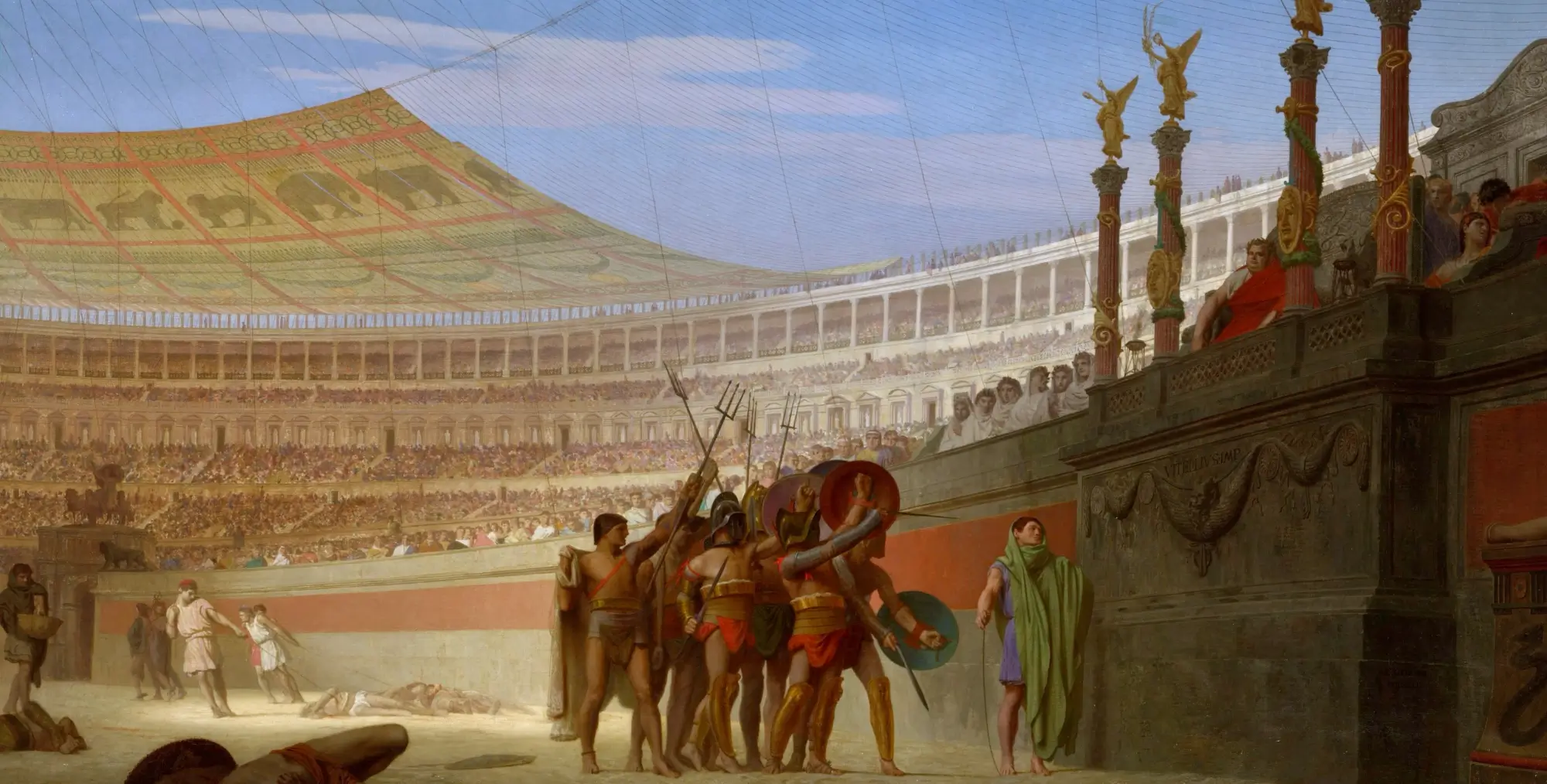
The spectacular games that took place at the Colosseum were all-singing, all-dancing propagandistic showpieces. Although gladiatorial combat and choreographed animal hunts had become increasingly popular entertainments in the Roman Empire as the Republican era reached its peak, it wasn’t until the dawn of the Imperial age that they would become the pre-eminent form of public spectacle in the ancient world.
As the democratic institutions of Rome receded in importance and power become centralised on the figure of the Emperor alone, it became increasingly important for the incumbent despot to remain in the good books of the unruly disenfranchised masses. As Russell Crowe’s Maximus puts it in Gladiator, ‘win the crowd…’
What better way to demonstrate the astonishing might of the Roman Empire and the empathetic concern of its all-powerful figurehead than free, high-octane entertainment? If TV was the 20th century’s opiate of the people, then the games were Imperial Rome’s equivalent. For the ancient satirist Juvenal, to keep the masses satisfied all you need to do was ensure a plentiful supply of panem et circenses, or bread and circuses.
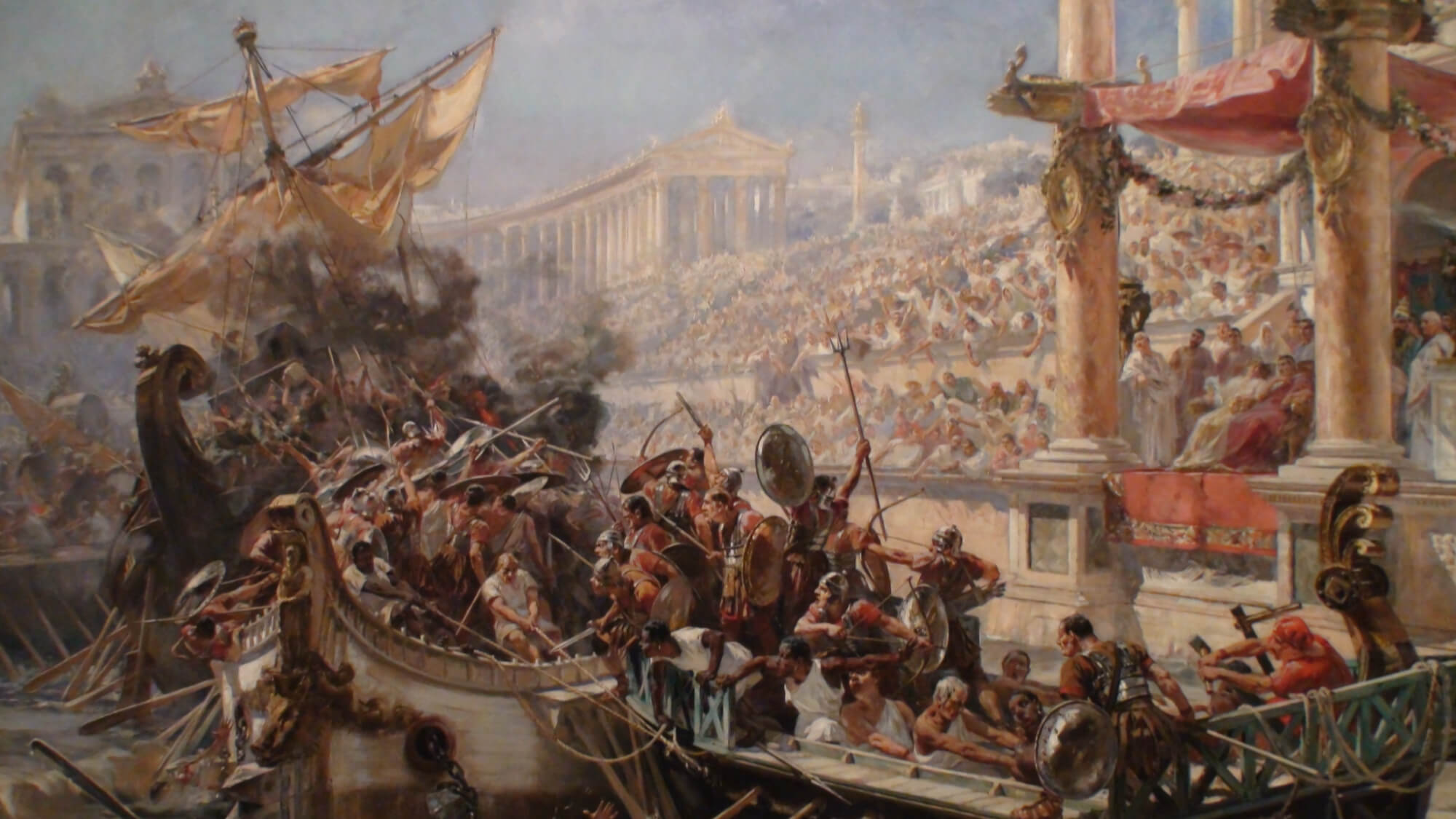
Upcoming games were advertised well in advance, and were eagerly anticipated by the city’s populace, who probably betted on the games just as they avidly gambled on the chariot-races in the Circus Maximus. On the morning of the games spectators flooded in through 80 different entrance arches and up countless stairways and passages to their allocated seats to await the procession that marked the inauguration of the games to the sound of trumpets and fanfares.
At the end of the procession out came the gladiators, the star attractions that the masses of spectators had come to see. Their turn in the arena would only come later, though.
For a full account of a day at the ancient games in the Colosseum, see our dedicated article here:

The day began with a grand procession — the pompa — in which participants, officials and dignitaries made a circuit of the arena to music and fanfare.
The morning was typically given over to the venationes: wild animal hunts in which skilled fighters called venatores or bestiarii pursued and killed exotic creatures brought from across the empire, or in which animals were set against each other, or against condemned criminals.
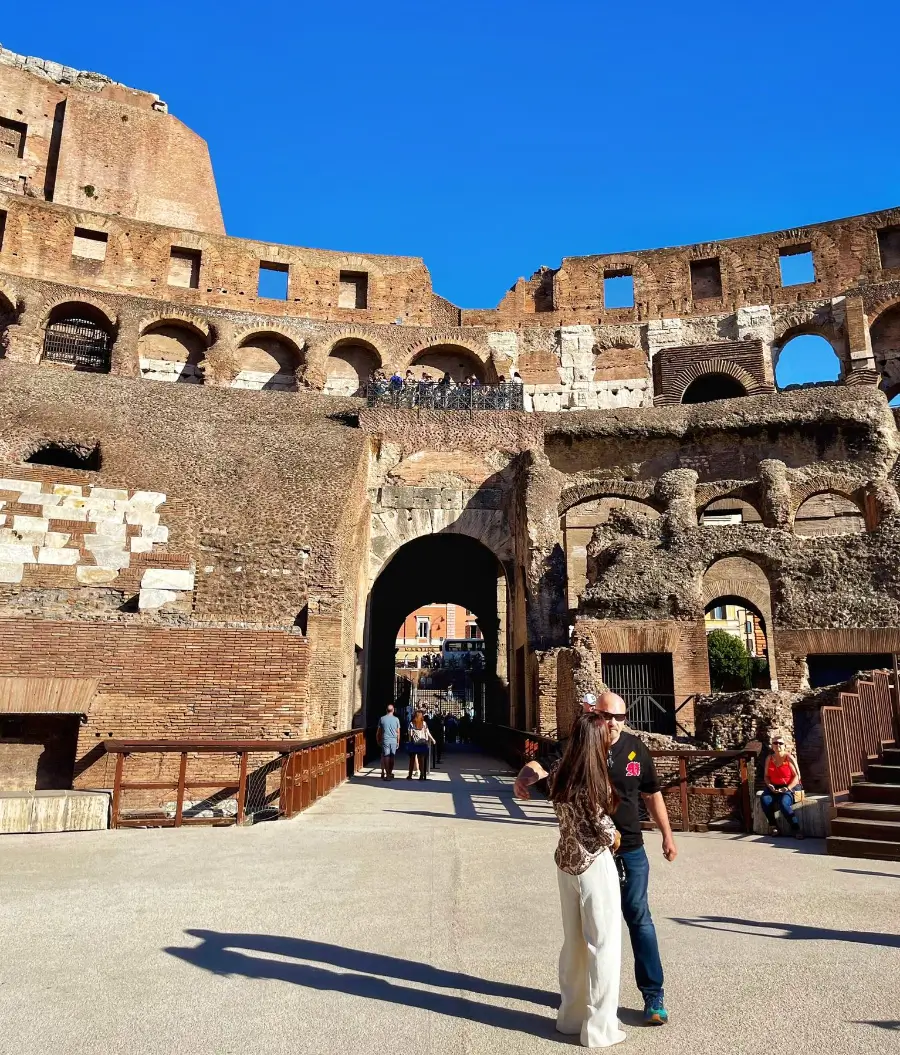
The elaborate staging of the morning spectacles often recreated distant landscapes — forests, deserts, mountain crags, constructed from temporary scenery and props hauled up from the underground hypogeum through trapdoors in the arena floor.
All manner of animals, from ferocious lions, tigers and bears to elephants and even ostriches were slaughtered at the Colosseum. For the lowdown on these orgies of bloodletting that drove a number of species to the verge of extinction, check out our stand-alone article explaining the tradition of animal hunts in the Colosseum:
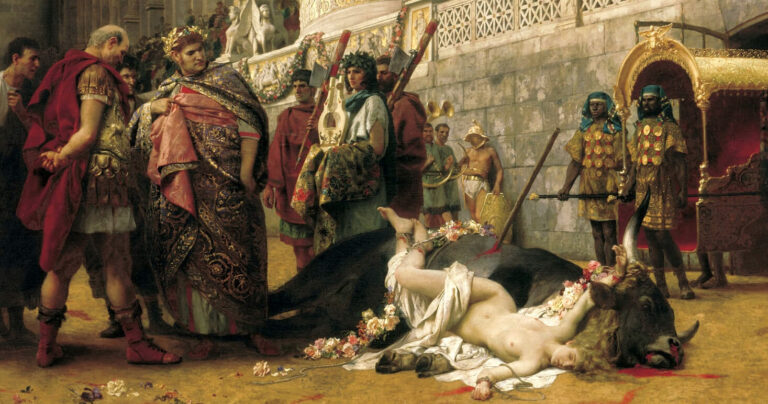
During the midday interval, the ludi meridiani took place, where condemned criminals were thrown to the surviving beasts or made to re-enact grisly ancient Greek myths, and burlesque comedies were staged to break up the rhythm of slaughter.
Those condemned to participate in these perverse stagings were forced to take on the role of tragic victims, and suffered all manner of bizarre torments; the musically inclined Orpheus, for example, was immediately recognisable to Roman audiences from the lyre he carried, and the Colosseum was transformed into a verdant woodland full of animals for his sickening star turn.
Instead of charming a bear with his music as the hero does in the ancient myth, however, here Orpheus was torn apart by the disenchanted animal, with only his lyre to defend himself.
According to the Roman poet Martial these horrifying charades were a great hit with the public, and he immortalised them in a series of epigrams that provide a vivid and disquieting insight into the cruel reality of ancient Rome:
A man offered his exposed guts to a Highland bear.
His shredded limbs clung onto life though they gushed with blood.
Finally he got the punishment he deserved…
The criminal had surpassed all ancient folklore
Through him what had been merely myth
Became real punishment.
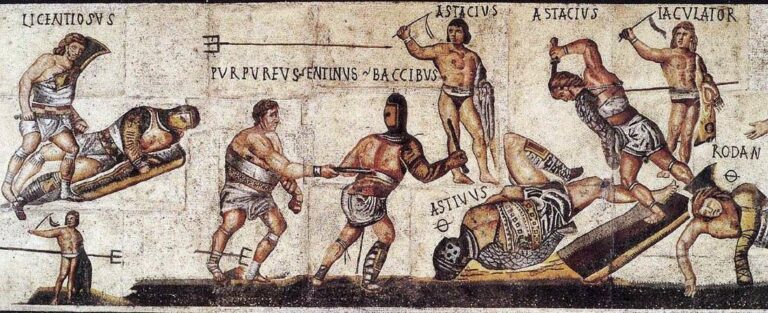
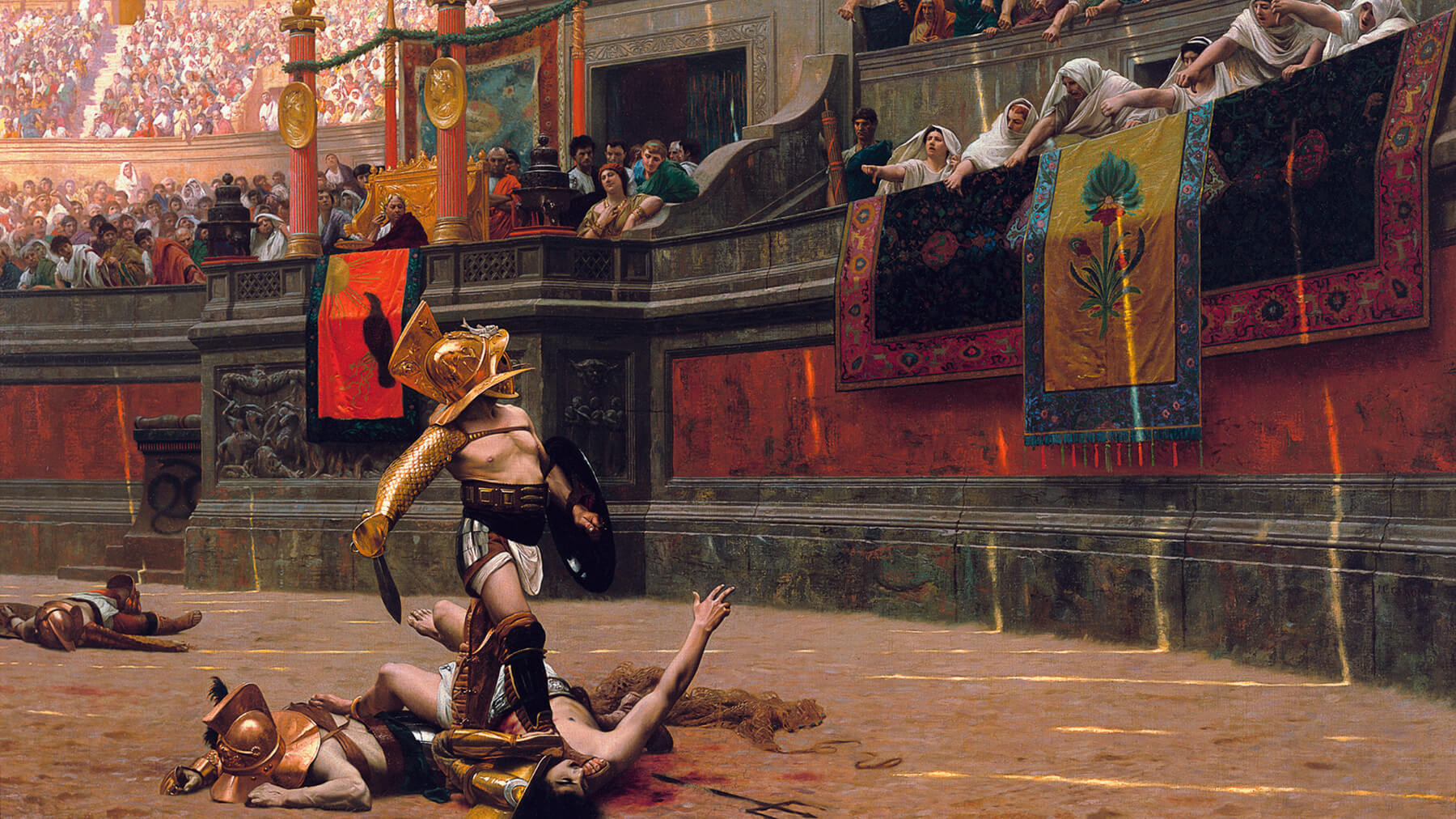
The afternoon was the main event: gladiatorial combat. The gladiators were not the casual slaves of popular imagination but professional athletes — highly trained specialists who might fight a handful of times per year and whose bodies represented a substantial investment by their lanista (trainer-owner).
The financial logic of the games meant that genuine fights to the death were not as common as films suggest: it was expensive to train a gladiator, and wasteful to kill a crowd-pleasing performer. Defeat could mean death, but it did not have to. The crowd could vote for mercy; the editor (sponsor of the games) could grant it; the Emperor, if present, had the final word.
For a detailed explanation of gladiator combat in the Colosseum, including who the combatants were, how they trained, how the fights unfolded according to strict protocols and what happened to the victors and the vanquished, check out our in-depth guide to gladiators in the Roman Colosseum:
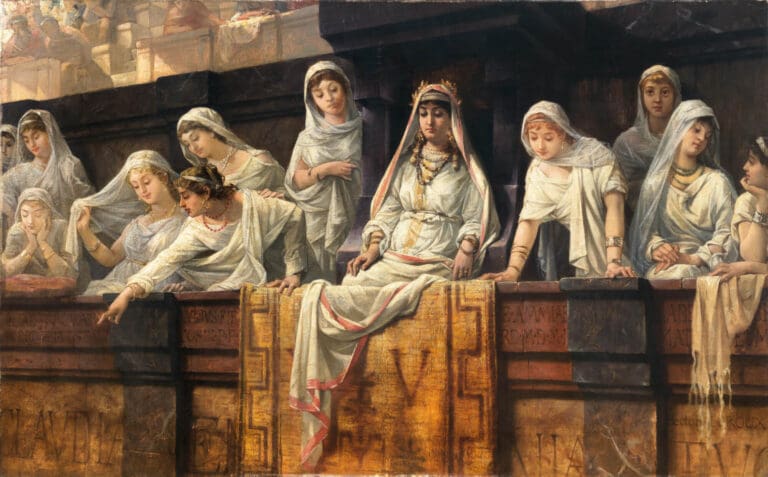
The Colosseum’s seating plan was a precise reflection of Roman social hierarchy — a diagram of the entire city’s power structure rendered in marble and stone.
The best seats in the house were, naturally, the Emperor’s: a dedicated imperial box, positioned on the south side of the arena with the optimal sightline, from which the emperor watched the games, received petitions, and made the gestures of mercy or condemnation that gave Roman bloodsport its peculiar theatrical charge.
The north side held a corresponding box for the city’s magistrates and officials. Running around the lowest level of seating — the podium — were the numbered marble seats of the Senate, positioned close enough to the arena that senators were occasionally splattered with blood from the combat below. Some of these senatorial seats still bear their owners’ names, carved into the stone.
Above the Senate came the ima cavea (lower seats) for the equestrian class; the media cavea for Roman citizens; higher still, the summa cavea for the poor, slaves and foreigners. Right at the top, in a wooden-floored gallery above the stone structure, stood the women — seated separately, in compliance with an Augustan decree that gender-segregated the games.
The very nosebleed seats, at the top of the fourth tier, were standing room only; the view of the arena from here, while distant, would have been spectacular.
The Vestal Virgins — Rome’s sacred priestesses, guardians of the sacred flame in the Forum — occupied their own privileged ringside position, one of the more enviable perquisites of a role that otherwise demanded thirty years of celibacy and the penalty of being buried alive for any infraction.
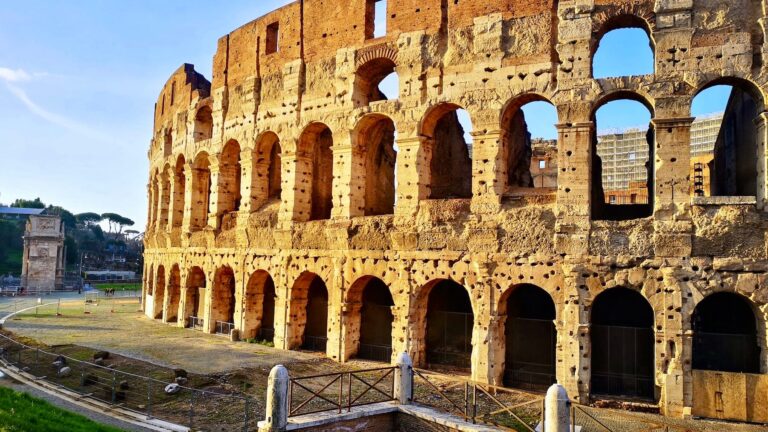
As the empire declined it became increasingly unfeasible to maintain such a gargantuan building, and the Christian emperors of the 4th and 5th centuries were markedly less keen on gladiatorial combat than their pagan predecessors.
The last known games were held in 404 AD, and blood-sports were officially prohibited in the year 438. The last animal hunts — which persisted longer — ended around 523 AD. The Colosseum was finally abandoned after a devastating earthquake in the sixth century.
After that, for several centuries, the building entered a strange and complex afterlife. Some fairly inept restoration attempts failed, and the amphitheatre was left to the looters for centuries to come, who stripped it of its valuable materials and turned it into the shell.
A series of natural disasters including devastating fires and earthquakes continued to undermine the edifice over the centuries. The powerful medieval family of the Frangipani converted the abandoned amphitheatre into a residential fortress in the opening decades of the 13th century, but pope Innocent IV expropriated it for the church not long afterwards in 1244.
A particularly powerful earthquake sent the southern façade tumbling in 1349, and the rubble filled site became something like a glorified quarry thereafter, its massive stones carted off for other building projects. It has been estimated that two-thirds of the original material of the Colosseum was removed and reused over the centuries, much of it finding its way into the palaces and churches of the Renaissance city.
Later, Pope Sixtus V attempted to exploit the building to kick-start the city’s economy by opening a woollen mill there to provide women with a way out of prostitution in the late-16th century, but his ambitious plans fell through.
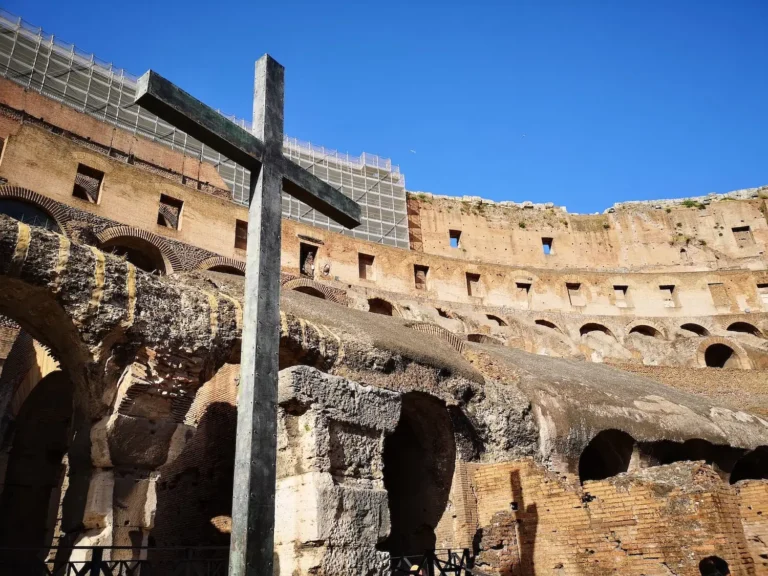
When you visit the Colosseum, you might wonder what’s going on with the cross and accompanying inscription attached to the eastern wall of the ancient amphitheatre.
The plaque was installed by Pope Benedict XIV in 1750, and explains how ‘the Flavian Amphitheatre, famed for its triumphs and spectacles, dedicated to the gods of the pagans in unholy cult, was purified from foul superstition by the blood of martyrs.’
This referenced the common belief that the Colosseum was a regular venue for Christian persecution in the ancient empire. Although persecution was a fact of life for early Christian communities in Rome, whether they were actually tossed to starving lions on the sands of the arena is widely questioned by historians.
Still, we should be grateful for these early-modern embellishments – the survival of the Colosseum in such good condition owes much to its consecration as a holy site by Benedict’s predecessor Clement X back in 1675.
As with so many other pagan buildings in Rome – most famously the Pantheon – the Christianization of the Colosseum paradoxically ultimately proved its salvation, protecting it from further looting and damage and ensuring progressive restorations over the coming centuries.
For more on the Christianization of the Colosseum and the related Via Crucis Easter tradition, see below.
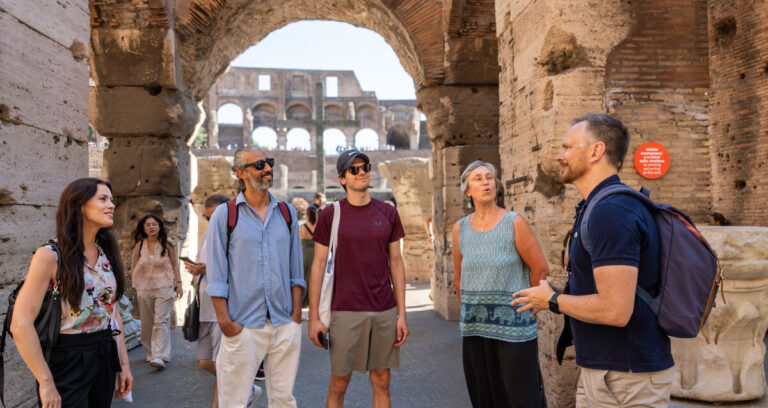
The Colosseum received more than 15 million visitors every year — making it one of the most visited sites in the world — and managing a visit well requires some advance planning.
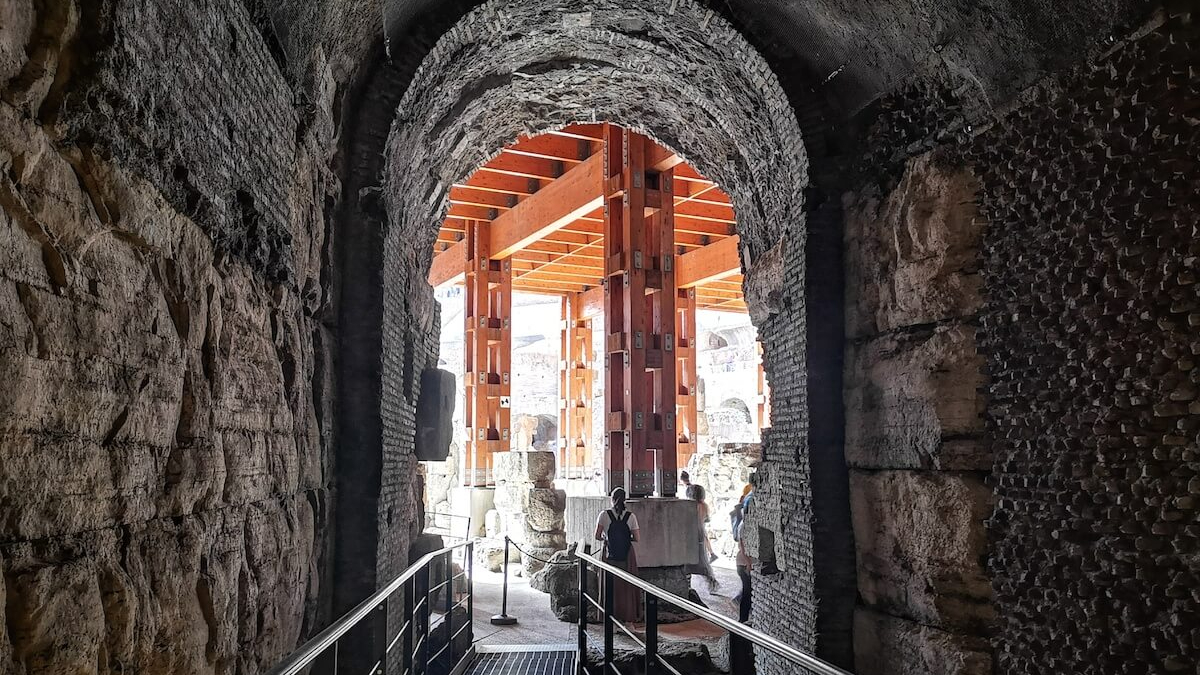
The standard ticket covers the Colosseum, Roman Forum and Palatine Hill on a single 24-hour admission. More comprehensive tickets allow access to the underground hypogeum, the arena floor, or the upper tiers, all of which require separate booking and are available only in limited numbers. In high season (April through October) tickets sell out well in advance, and the queues for same-day walk-up admission can be extremely long.
The most rewarding way to visit, for first-timers in particular, is with a guided tour. The sheer complexity of the site — the layers of history, the social context of the games, the engineering innovations of the underground — benefits enormously from explanation, and a good guide transforms what can otherwise be a beautiful but impenetrable ruin into a fully inhabited world.
We have been running expert-led tours of the Colosseum for over twenty-five years, and the difference between visiting with and without a guide is one of the most consistent things our guests tell us. See all the options here:
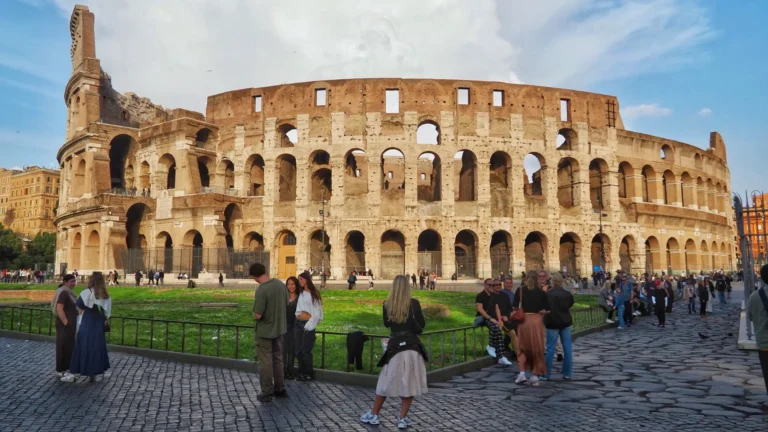
When was the Colosseum built?
Construction began around 70–72 AD under the Emperor Vespasian and was completed under his son Titus, who inaugurated it in 80–81 AD. The underground hypogeum and final tier were added by the Emperor Domitian in the following decade.
How many people did the Colosseum hold? Modern scholars estimate a seated capacity of around 50,000–65,000 spectators. Ancient sources mention higher figures, but archaeological analysis of the seating dimensions suggests the lower range is more reliable. The vomitoria — the wide exit corridors — were designed to empty the building in approximately fifteen minutes.
Why is it called the Colosseum?
Despite popular assumption, the name does not derive from the building’s own size. It derives from the Colossus of Nero — a giant bronze statue approximately 35 metres tall that stood near the amphitheatre’s entrance. The building was officially the Flavian Amphitheatre; the popular name Colosseum, referring to the colossal thing nearby, took hold in the medieval period.
Were gladiators always killed?
Not necessarily. A fight to the death (sine missione) was expensive — gladiators were highly trained professionals whose upkeep and training represented a significant investment. Defeated gladiators could appeal for mercy, and the crowd, editor and emperor all played roles in determining the outcome. Modern scholars believe the death rate per bout was much lower than popular culture suggests.
Did Christians really die in the Colosseum?
This is contested. There is no contemporary evidence for the martyrdom of Christians in the Colosseum specifically, and the tradition appears to have developed primarily in the medieval period. However, the association became deeply embedded in Christian Rome and contributed significantly to the Colosseum’s protection from further demolition.
How do I book tickets?
Tickets must be booked in advance, especially in spring and summer when the site frequently sells out. See our full guide to booking Colosseum tickets here.
Ancient City Tours
Explore the Colosseum!