Of all the magnificent monuments that dot the landscape of Rome’s historic centre, perhaps none is more evocative — or speaks more directly to the lyrical grandeur of the Eternal City — than the Pantheon.
The best-preserved ancient building in Rome and possibly anywhere on earth, the iconic temple offers a window into almost 2,000 years of continuous history: from the reign of the Emperor Hadrian, who commissioned the building we see today around 125 AD, to the worshippers who still attend Sunday mass in its ancient nave.
Whether you’re visiting for the first time or the fifth, there is always something new to notice. Here are nine facts that will deepen your appreciation of this incomparable building.
Rome Tours
Visit the Pantheon
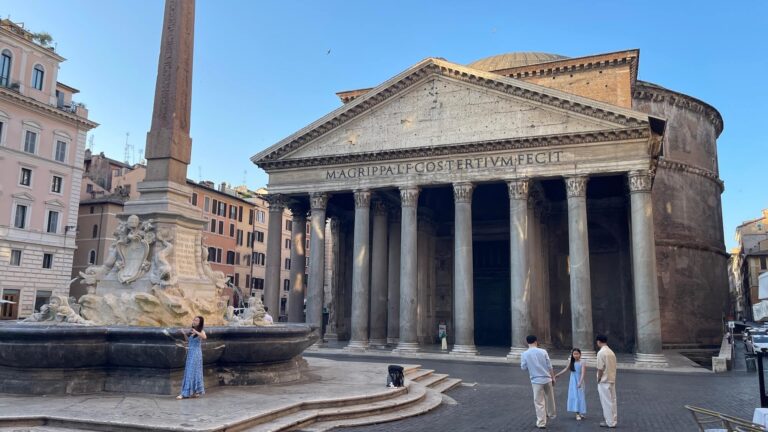
Pantheon means ‘all gods’ in Greek, but the exact function of the great edifice remains, fascinatingly, a matter of debate among scholars.
As Rome’s grandest and most impressive temple, it was certainly adorned with statues of the greatest Roman gods — and may well have been used for the worship of the entire divine pantheon. But there is no firm archaeological evidence for ancient cult buildings designed to honour all gods simultaneously in a single space.
Writing barely a century after the temple’s inauguration, the Roman historian Cassius Dio offered an alternative explanation: that the building had simply been named for its dome, which he thought resembled the heavens.
Whatever its precise function, the Roman historian’s sense of awe is entirely understandable — after nearly two millennia, the Pantheon still inspires it, and the incredible temple is certainly a worthy home for any and all gods that choose to make it home!

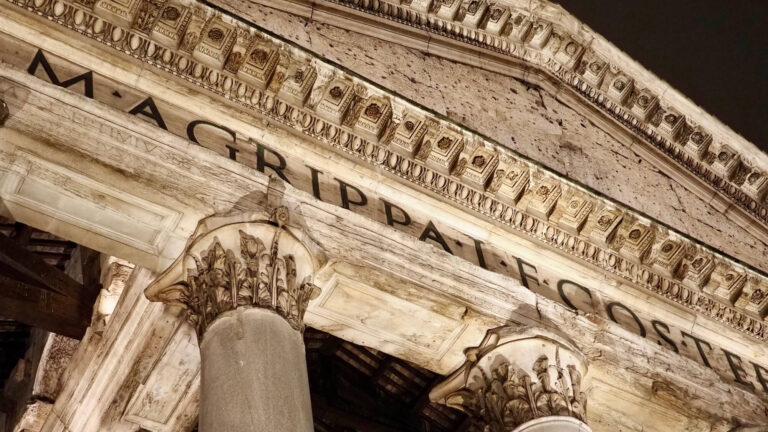
Emblazoned in massive bronze letters across the Pantheon’s portico is an unambiguous statement of authorship: M·AGRIPPA·L·F·COS·TERTIVM·FECIT — “Marcus Agrippa, son of Lucius, made this in his third consulate.” The inscription is, to put it politely, not the whole story.
Marcus Agrippa, the great general and son-in-law of the Emperor Augustus, did indeed commission a magnificent temple on this site around 25 BC. That building burned down in the great fire of 80 AD, was rebuilt under Domitian, and was struck by lightning and destroyed in 110 AD. The structure we marvel at today was commissioned entirely anew by the Emperor Hadrian around 125 AD — most probably to a design by his master architect Apollodorus of Damascus — and bears no relation to Agrippa’s original beyond the site it occupies.
In an act of pointed modesty that was itself a kind of imperial statement, Hadrian retained the old inscription in homage to his predecessor. And on the subject of the relationship between emperors and their architects: Cassius Dio records that Hadrian, a keen amateur designer who came up with many of the architectural flights of fancy at his villa in Tivoli, once showed one of his plans to Apollodorus. The old architect, unimpressed, reportedly advised the emperor to leave architecture to those who knew what they were doing.
Apollodorus’ frank response earned him a one-way ticket to exile and a lonely death. Architecture, evidently, was not a field in which one criticised the boss.
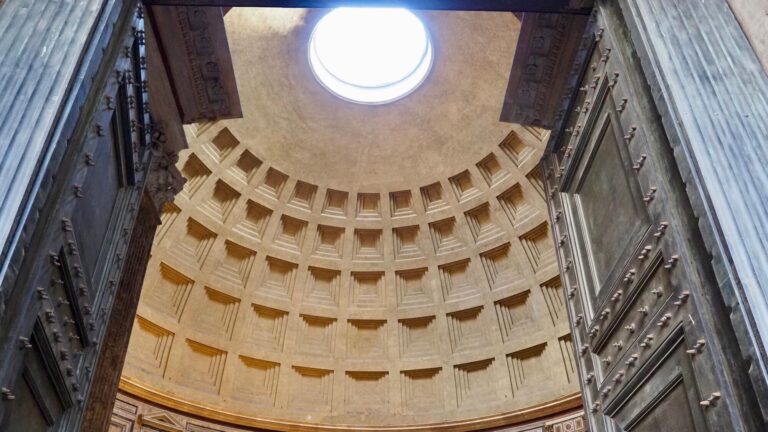
Incredible but true. In the nearly two thousand years since the Pantheon was completed, no unreinforced concrete dome of comparable size has ever been built anywhere in the world.
The dome spans 43.3 metres in diameter — precisely the same measurement as its interior height, creating a perfect sphere inscribed within the building’s drum — and weighs an estimated 4,535 tonnes. That it has stood for this long, and that no modern engineer has surpassed it, is a testament to the extraordinary sophistication of ancient Roman construction.
The secret lies in an elegant mastery of materials. Roman engineers used progressively lighter aggregates as they worked upward: heavy basalt and travertine at the base gave way to lighter tufa, with lightweight pumice — a volcanic rock of negligible density — at the summit.
The dome’s walls also thin dramatically as they rise, from six metres thick at the drum to just 1.2 metres at the crown, efficiently distributing the enormous load onto the walls beneath.
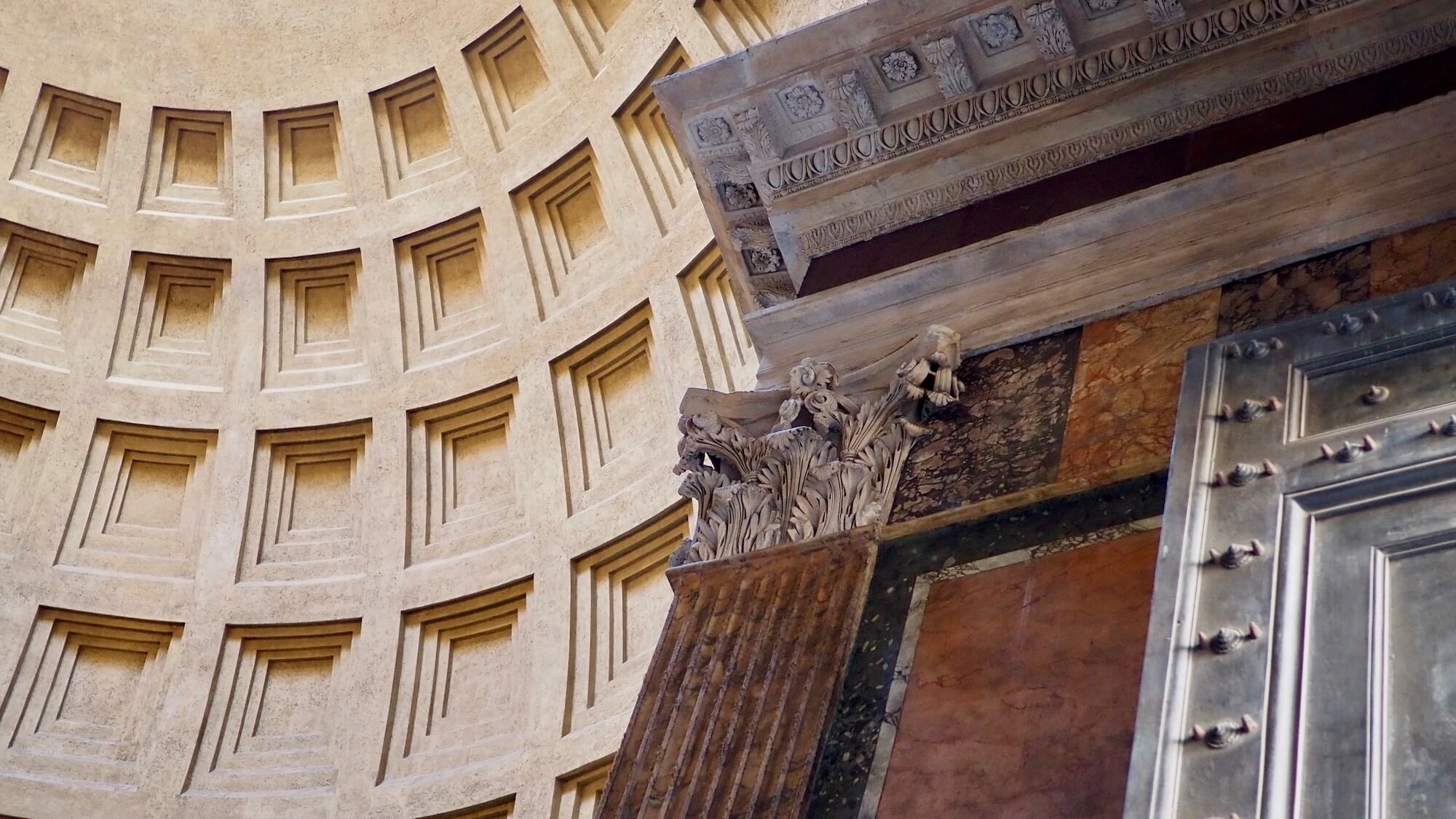
And then there are the coffers — the five rows of 28 sunken rectangular panels decorating the interior — which are not merely decorative: they remove an estimated 550,000 pounds from the dome’s total weight, lightening the load of the gargantuan edifice still further and allowing the Romans to build at a scale that has not been matched since.
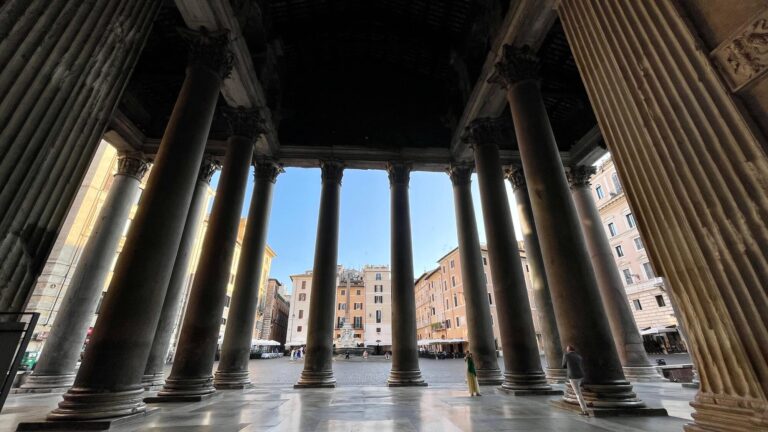
Everything about the Pantheon is conceived on an imperial scale, and its entrance portico is no exception. The grand porch is supported by sixteen enormous granite columns, each a monolith — carved from a single piece of stone — fully 40 feet tall and five feet in diameter.
They were quarried in the mountains of Mons Claudianus in the eastern desert of Egypt, a region prized for its high-quality grey and pink granite.
Transporting these immense shafts to Rome — before trains, cranes or internal combustion engines — was an engineering challenge of the first order. Dragged from the quarry on wooden sledges to the banks of the Nile, loaded onto barges and floated downriver to Alexandria, then transferred to seagoing vessels for the Mediterranean crossing, then towed up the Tiber to Rome’s port at the Campus Martius.
Each column had thus made a journey of several thousand miles before being hoisted into place by teams of labourers whose total numbers we can only guess at. It is one of the most astonishing logistics operations of the ancient world.
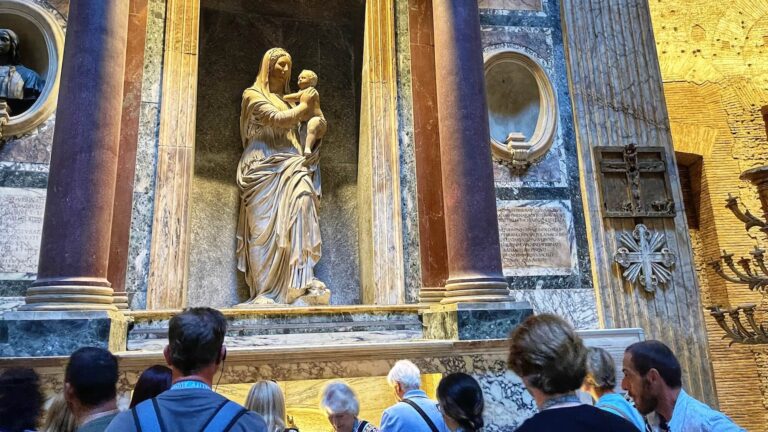
In 609 AD, the Byzantine Emperor Phocas donated the Pantheon to Pope Boniface IV, who promptly consecrated it as a Christian church: the Basilica di Santa Maria ad Martyres — the Basilica of Saint Mary and the Martyrs.
To mark the occasion, the bones of numerous Christian martyrs were transferred from the catacombs beneath Rome and interred beneath the altar, and the ancient temple became a house of Christian worship.
What might seem like an act of unforgiveable cultural appropriation turned out to be the building’s salvation. Whilst other monuments of ancient Rome were stripped for materials, built over or simply abandoned to collapse over the following centuries, the Pantheon’s status as a functioning church granted it a measure of protection that kept it largely intact.
Masses are still celebrated here to this day, and the building looks remarkably similar to the way it did when Hadrian inaugurated it — the greatest feat of preservation in architectural history.
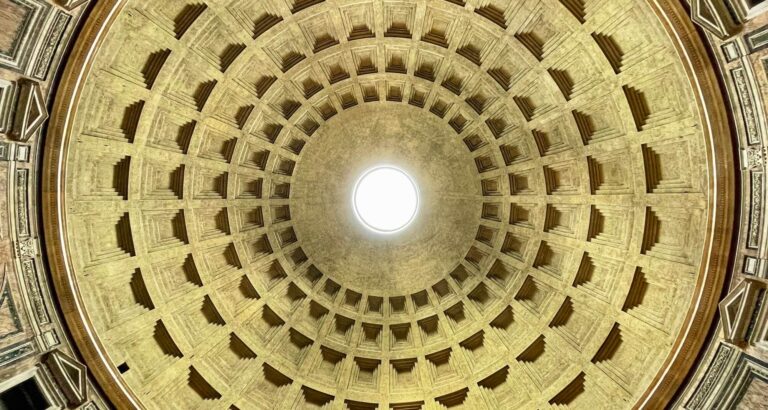
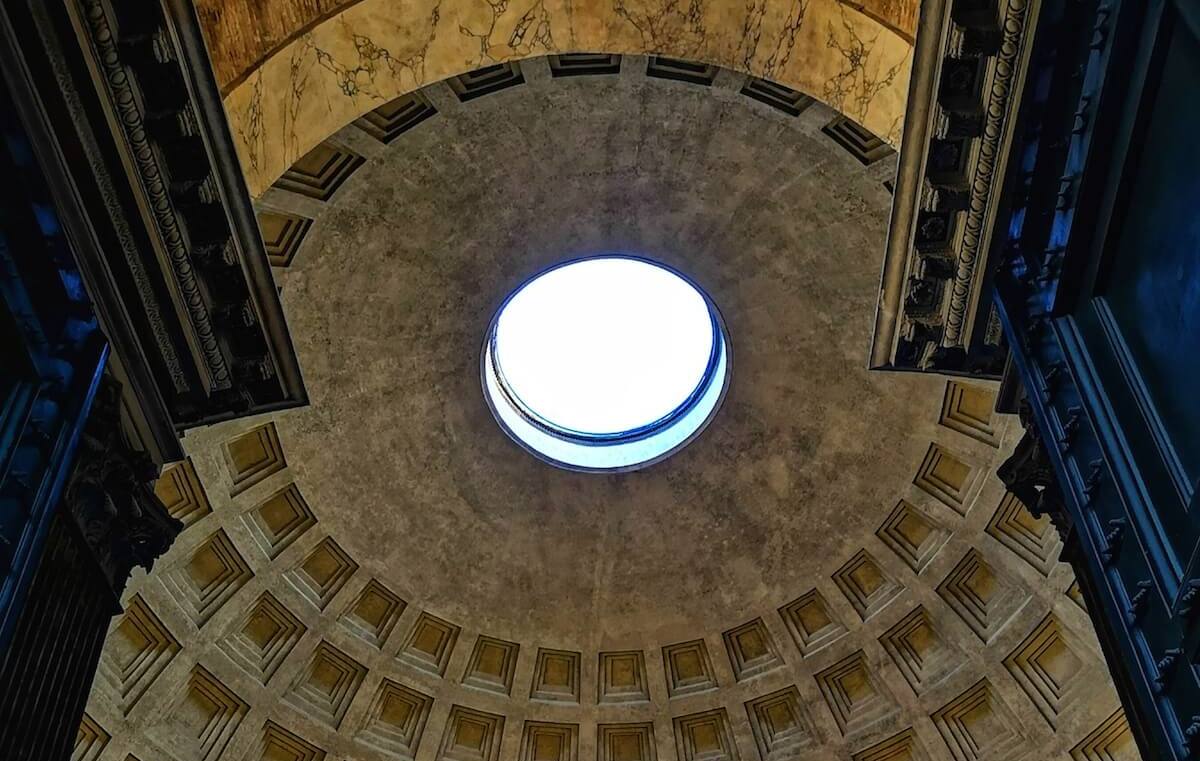
The circular opening at the apex of the dome — the oculus, or eye in Latin — is 8.9 metres in diameter, entirely open to the sky, and serves several masterfully integrated purposes.
Structurally, it reduces the weight bearing down on the dome’s summit. As a light source, it creates the dramatic, shifting shafts of illumination that change character through the day as the sun moves across the Roman sky.
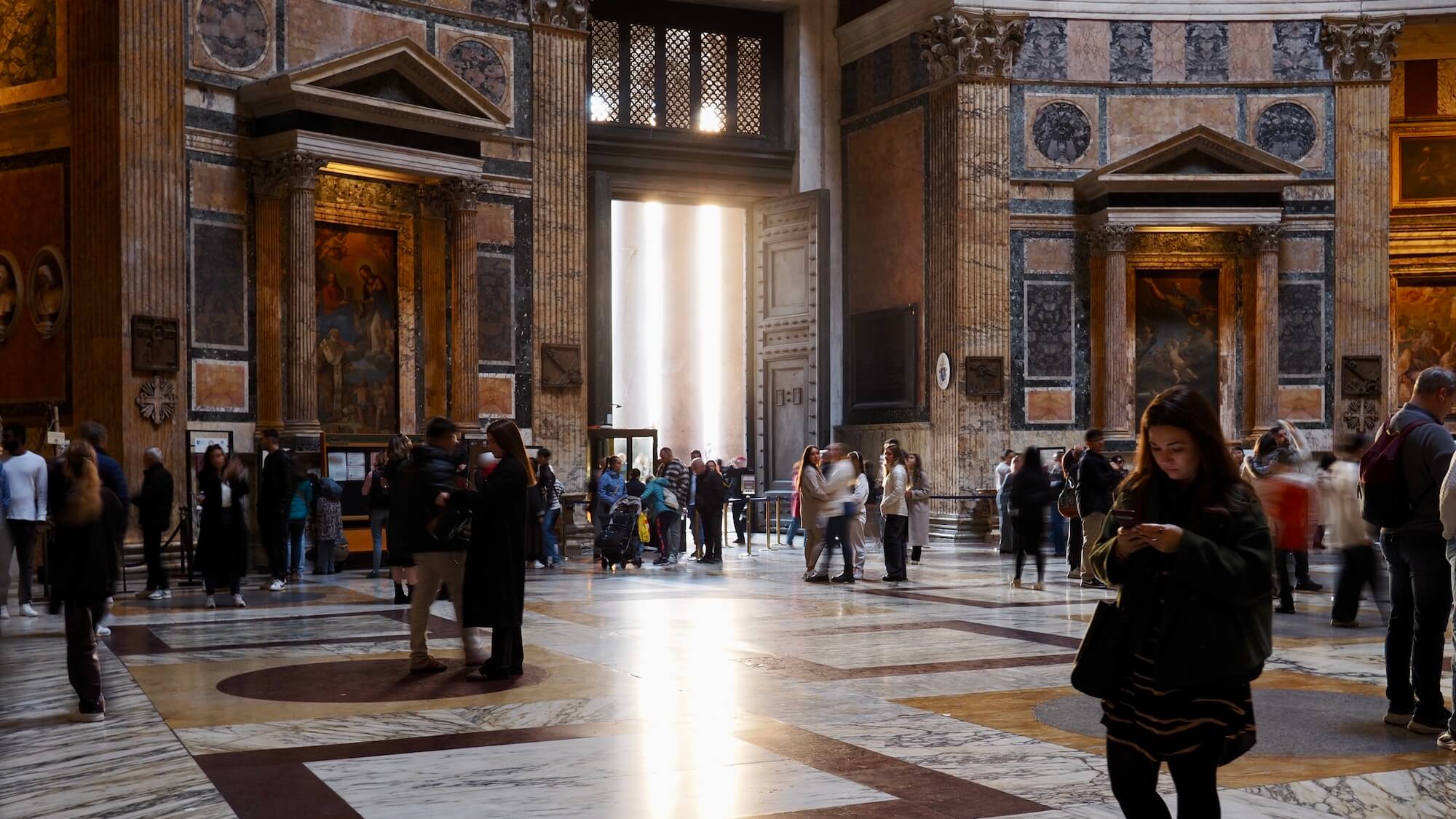
And every year on 21 April — the traditional anniversary of the founding of Rome — at exactly noon, the midday sun passes directly over the oculus and sends a beam of raking light across the interior and out through a circular grille above the entrance doors. It has been plausibly theorised that on this day the emperor himself would stand at the entrance, bathed in light, linking himself symbolically to the divine.
Medieval Christians, having lost access to the engineering knowledge that produced the oculus, came up with a more poetic explanation. When Pope Boniface consecrated the Pantheon as a church, according to the legend, the pagan demons who had infested the ancient temple were forced to flee the newly Christianised space — and in their haste bashed a hole straight through the dome as they beat their frantic retreat.
An image wonderfully vivid, if architecturally questionable.
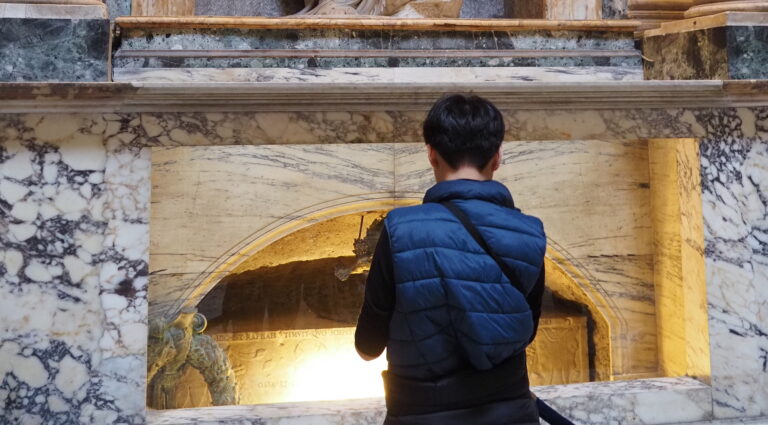
“Here lies Raphael, by whom Nature feared to be outdone while he lived, and when he died, feared that she herself would die.”
The great Renaissance painter known to his contemporaries as the “prince of painters” died on Good Friday 1520, aged just 37, struck down by fever as he worked on his final masterpiece, the Transfiguration now in the Vatican Pinacoteca.
As he lay dying, Raphael made one last request: that he be buried in the Pantheon, the building he regarded as the pinnacle of human achievement. His wish was granted with great ceremony — Pope Leo X kissed his hand, four cardinals carried his bier, and Raphael was laid to rest beneath Pietro Bembo’s lapidary inscription and Lorenzetto’s tender sculpture of the Madonna del Sasso.
Raphael started a tradition. Painter and architect Baldassare Peruzzi — the genius behind the Villa Farnesina — and the Bolognese master Annibale Carracci both followed him here in the decades and century after.
After the unification of Italy in the 19th century, the kings of the new Italian nation were buried here too. King Vittorio Emanuele II, “Father of the Homeland,” and his son King Umberto I — together with Umberto’s wife Queen Margherita of Savoy, after whom the classic pizza was named — all lie in imposing tombs flanking the interior.
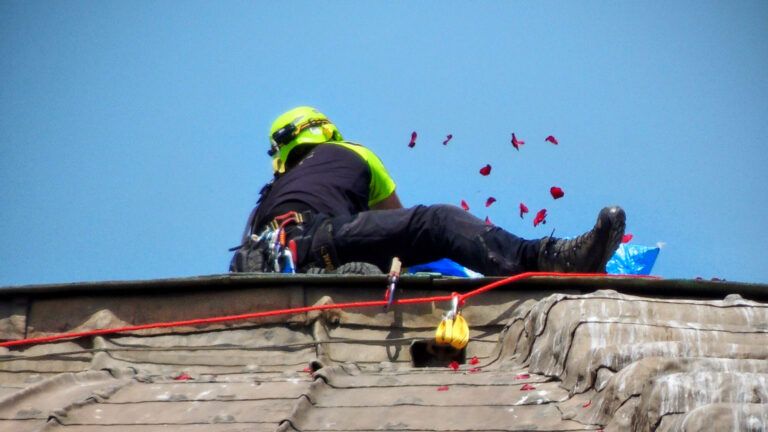
Every year, on the Christian feast of Pentecost (which falls in late May or early June), the Pantheon stages one of the most extraordinary annual spectacles in Rome.
At the end of the mass celebrated in the ancient temple, a shower of thousands of rose petals is released through the oculus by a squadron of firemen posted on the roof above, swirling and drifting through the shafts of light as they make their languid way down to the marble floor below.
The rose petals symbolise the descent of the Holy Spirit on the Apostles at Pentecost — the tongues of fire that granted them the miraculous gift of speaking in all the world’s languages.
The Pentecost rose shower has been a tradition at the Pantheon since at least the medieval period, and draws large crowds of visitors each year. If you are lucky enough to be in Rome for the occasion, make sure to arrive early: the queues form at dawn.
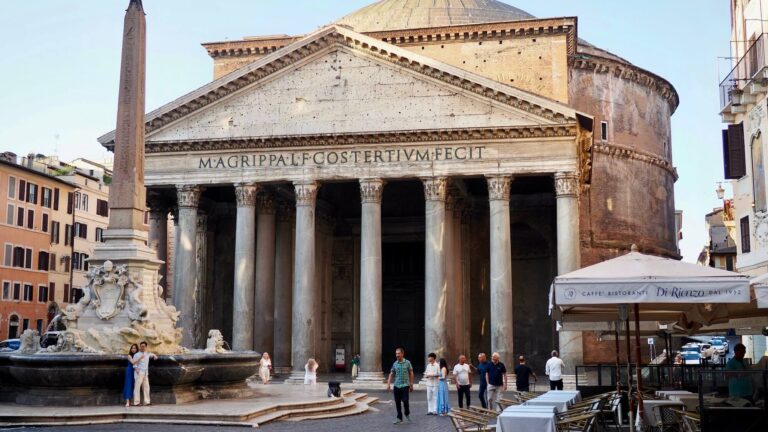
In its antique heyday, the Pantheon cut an even more extraordinary figure on the Roman skyline than it does today. The entire exterior of the dome was originally covered in gleaming bronze sheets, which must have shimmered and flashed magnificently in the Roman sunshine. The portico’s original wooden ceiling beams, too, were sheathed in the same precious metal.
Much of this bronze began disappearing as early as the 7th century, when the Byzantine Emperor Constans II visited Rome in 663 AD and made off with the portico’s bronze ceiling tiles (the story goes that he shipped them to Constantinople, where they were promptly stolen by Arab pirates — divine justice, perhaps).
Pope Urban VIII Barberini completed the plunder in the 17th century, stripping the remaining bronze from the portico to provide raw material for Bernini’s baldacchino in St. Peter’s Basilica and, in a twist the Romans found even less excusable, for cannonballs.
The outrage provoked one of Rome’s most enduring satirical quips: “Quod non fecerunt barbari, fecerunt Barberini” — “What the barbarians did not do, the Barberini did.” Later scholarship has muddied the narrative somewhat, but there is no doubt that Urban was happy to despoil the monument for his own ends, and the Romans have never quite forgiven him for it.
How old is the Pantheon?
The Pantheon we see today was built by the Emperor Hadrian around 125 AD, making it almost 1,900 years old. An earlier temple on the same site was commissioned by Marcus Agrippa around 25 BC, but it burned down and was rebuilt twice before Hadrian replaced it entirely.
Is the Pantheon free to visit?
No. Since July 2023, a small entry fee of €5 applies to most visitors. From July 2026 this will rise to €7. EU citizens aged 18–25 pay a reduced rate of €2. Children under 18 enter free, as do Rome residents and those attending religious services. Entry is also free for everyone on the first Sunday of each month.
When is the Pantheon open?
The Pantheon is open daily from 9:00 AM to 7:00 PM, with last entry at 6:30 PM. It is closed on 25 December. Hours on 1 January may vary — check official channels before visiting on New Year’s Day.
What is the hole in the roof of the Pantheon called?
It is called the oculus, from the Latin for “eye.” It is the only source of natural light in the building. Despite being permanently open to the sky, the slightly sloped floor and its drainage system manage rainwater effectively.
Is the Pantheon the oldest building in Rome?
The Pantheon is the best-preserved ancient building in Rome and is among the very oldest structures still in continuous use anywhere on earth. Its near-unbroken use as a place of worship — first as a Roman temple, then as a Christian church — for almost two thousand years is without parallel in architectural history.
Can you go inside the Pantheon for free?
Entry is always free on the first Sunday of each month. Free tickets for these days are available in person on site, but expect queues. Those attending mass inside the church also enter free of charge. Residents of Rome can always enter for free, too.
Book Your Pantheon Experience