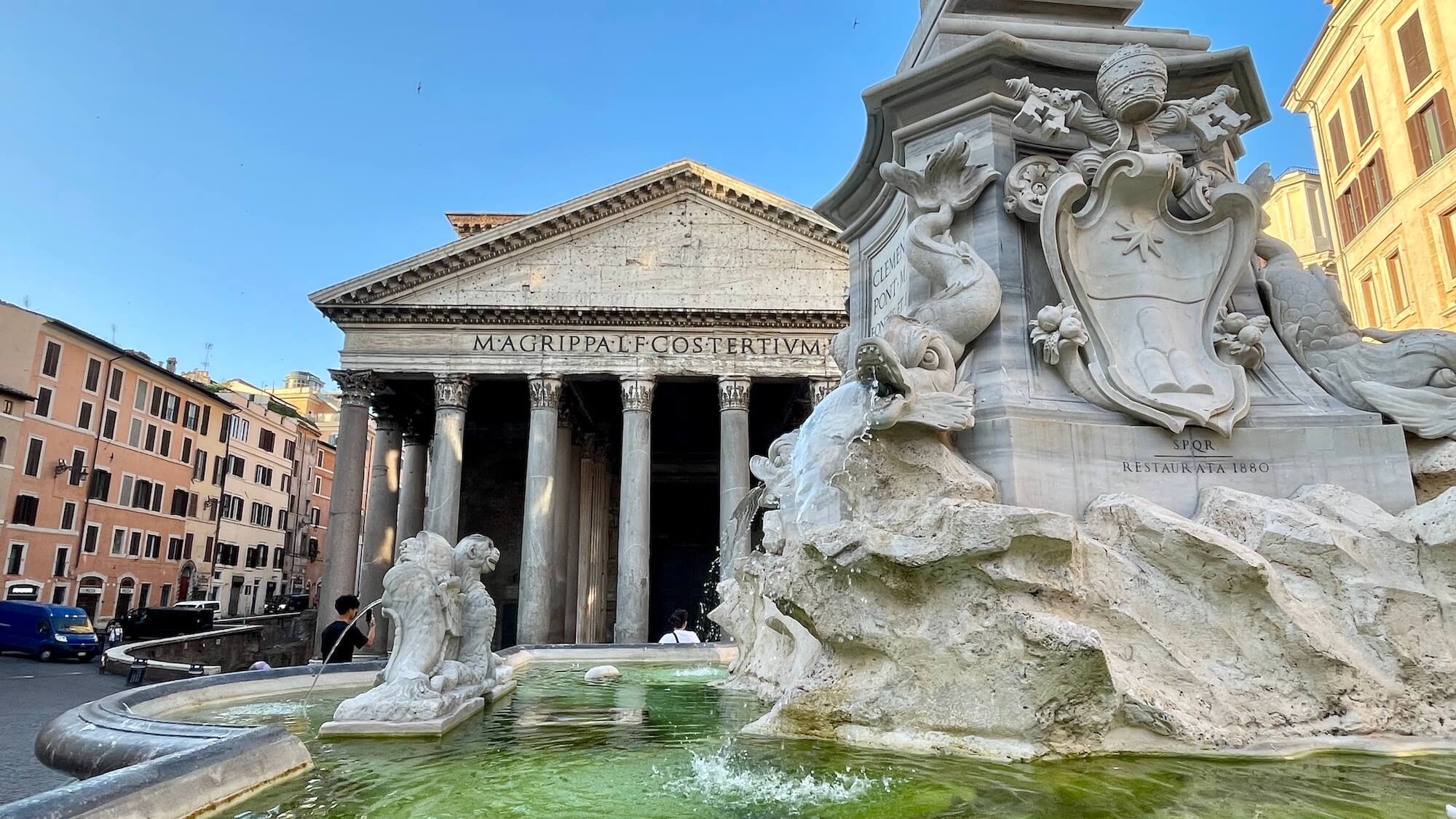
Visiting the Pantheon costs €7 for a standard adult ticket, and a visit takes around 30 minutes. Pantheon opening hours are 9 am to 7 pm daily, with last entry at 6:30 pm. Purchase Pantheon tickets online or book a guided tour to simplify entry. Free admission is available on certain days and for eligible visitors.
Nowhere in Rome quite matches the first moment you step inside the Pantheon.
Michelangelo thought the ancient temple to be so perfect that it must have been fashioned by angels rather than men, and his great rival Raphael was so in awe of the building’s perfect symmetry that he chose to be buried here for all eternity.
We are inclined to agree with their assessment. Walking past the Pantheon every day is one of the great perks of living in Rome. Every time I pass, I am reminded of the extraordinary legacy the ancient world left us here in the Eternal City.
When you come to Rome you simply have to visit this wonder of the ancient world for yourself. But what’s the best way to visit the Pantheon? Do you need to get a ticket? What should you look out for inside? Is a guided tour worth it? Read on for everything you need to know about visiting the Pantheon in 2026.
Rome Tours
Visit the Pantheon
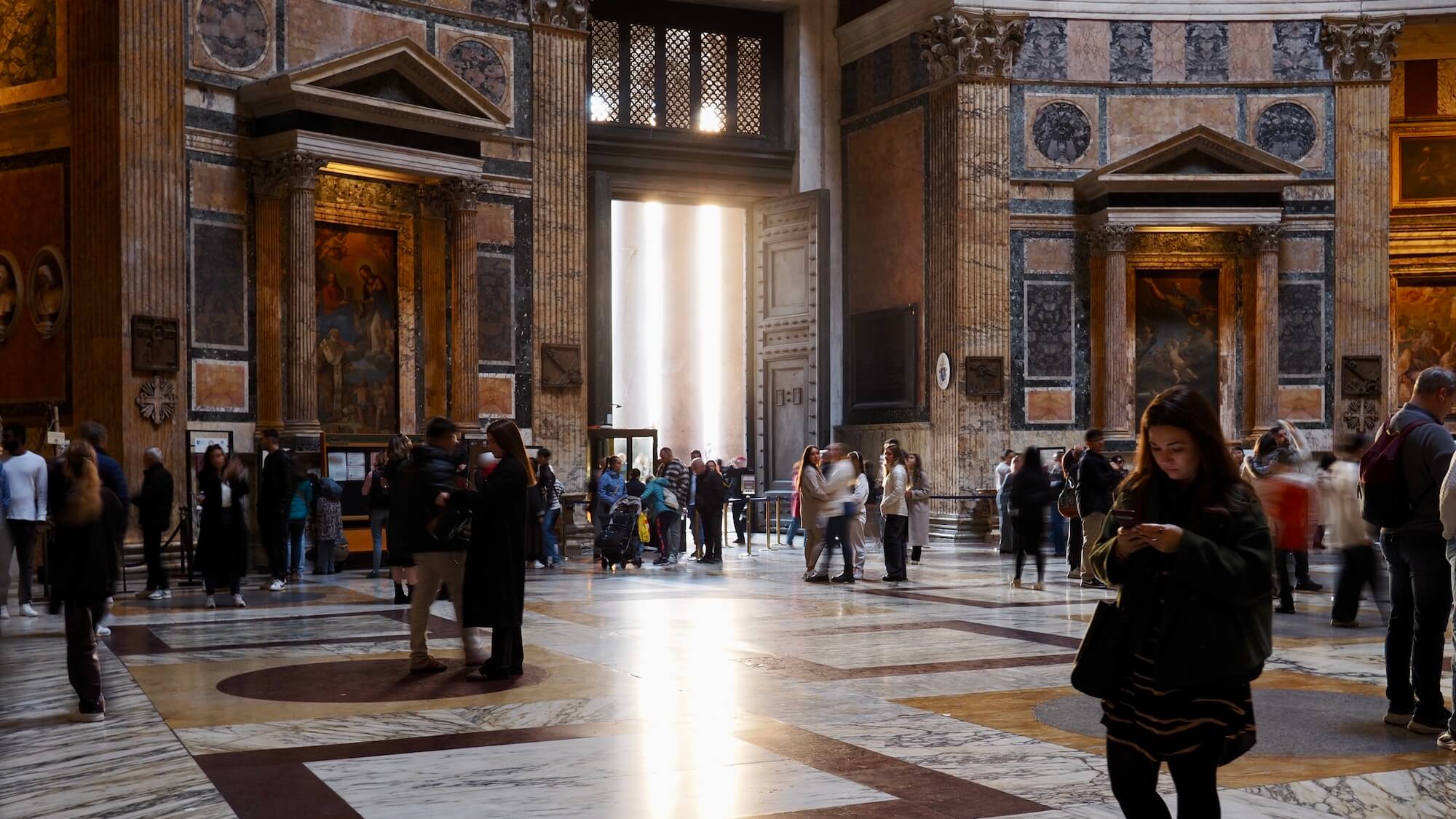
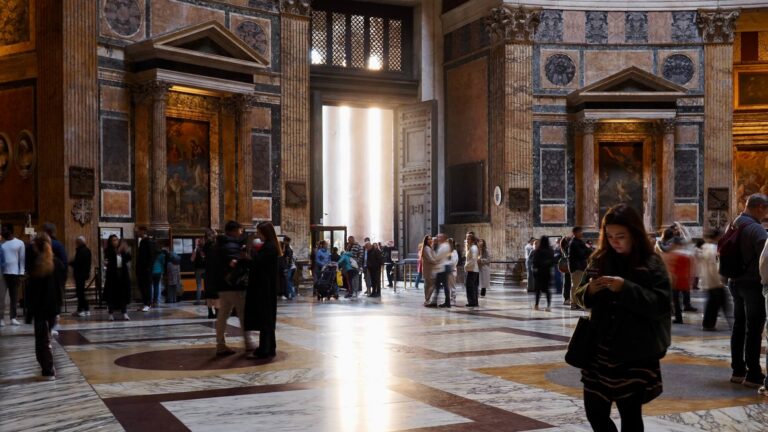
The Pantheon is a temple located in what was the heart of ancient Rome in an area known as the Campo Marzio, or Field of Mars.
It’s traditionally understood that the Pantheon was dedicated to all the Roman gods. Its name comes from the Greek words pan (all) and theos (god), and the building was decorated with statues of important Roman deities. The precise meaning of its name and whether it was formally dedicated to all the gods remain uncertain, however.
After the fall of the Roman Empire the temple was converted into a Christian church known as the Basilica of St. Mary and the Martyrs. The building’s status as a Christian house of worship saved it from the plunder and neglect that befell so many other ancient Roman structures, and masses are still held inside.
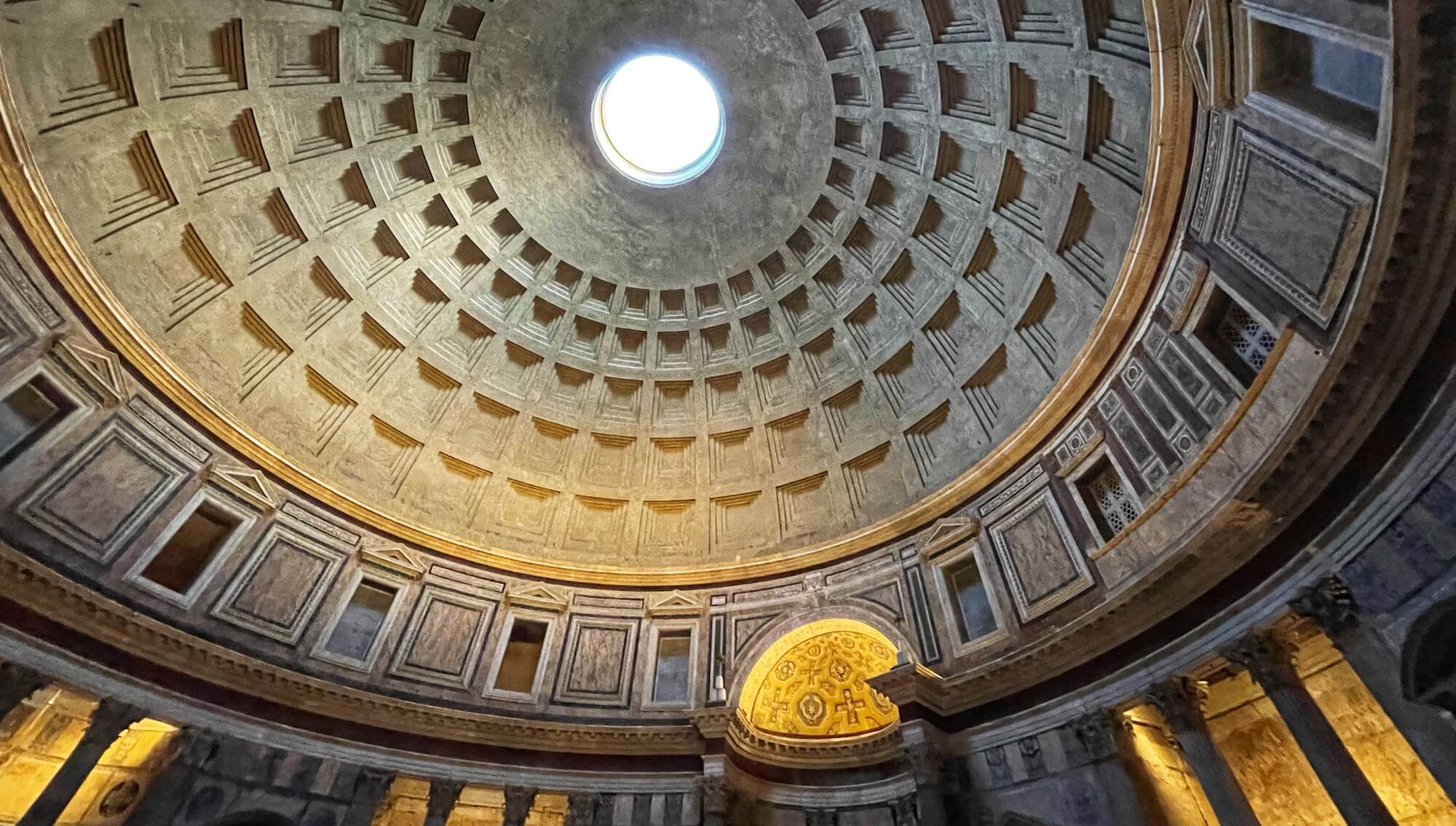
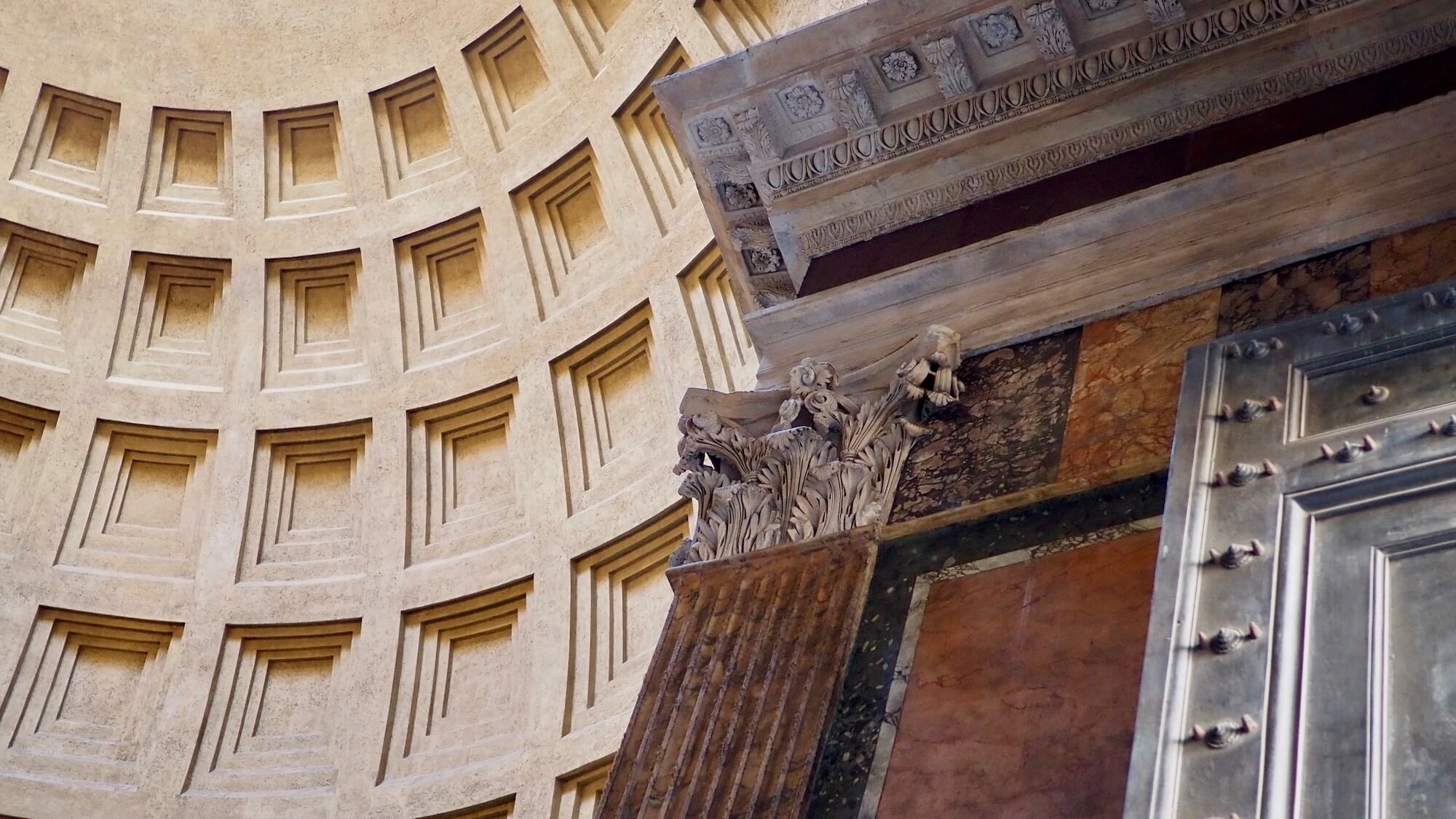
Its most famous feature is its dome: the largest unreinforced concrete dome ever built, spanning and incredible 43.3 metres. The building has inspired a line of architectural successors stretching from Brunelleschi’s dome in Florence to the Panthéon in Paris to the United States Capitol in Washington.
It’s a truly awe-inspiring experience stepping into this ancient marvel, and is without question one of Rome’s must-visit sites.

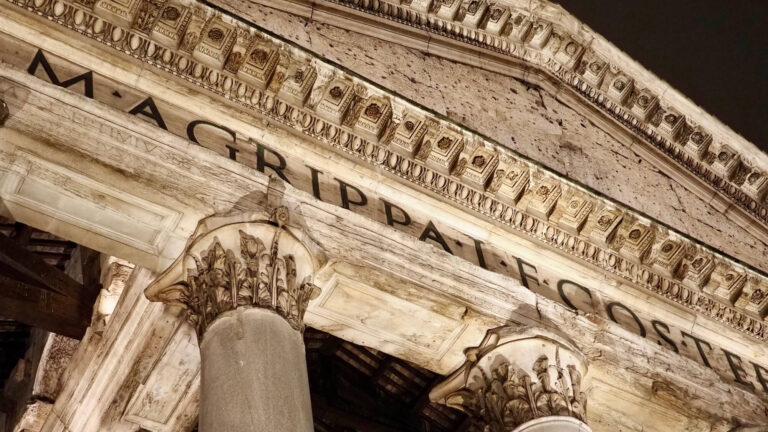
The Pantheon has a layered building history. The first temple on this site was commissioned by the general and statesman Marcus Agrippa, son-in-law of Augustus, around 27 BC. His name still appears prominently on the portico today, in an inscription that reads M·AGRIPPA·L·F·COS·TERTIVM·FECIT: “Marcus Agrippa, son of Lucius, consul for the third time, built this.”
Agrippa’s building was damaged by fire in 80 AD and restored under Domitian. It suffered another catastrophic fire around 110 AD, traditionally attributed to a lightning strike during the reign of Trajan. The magnificent structure we visit today emerged from the subsequent rebuilding, completed under the Emperor Hadrian between approximately 118 and 128 AD.
Exactly how that reconstruction unfolded remains a matter of scholarly debate. Brick stamps suggest that much of the building work may have begun under Trajan, before Hadrian completed the project. The architect is also uncertain, although Apollodorus of Damascus, Trajan’s celebrated architect, has often been proposed.
So why does the surviving building bear Agrippa’s name rather than Hadrian’s? Hadrian made a habit of restoring monuments under the names of their original founders, preserving their connection to Rome’s past. The inscription is thus not a mistake: it commemorates Agrippa’s earlier temple, even though the building beneath it belongs to a later phase of Roman architecture. Hadrian’s act of respect had an unintended historical consequence: for centuries, the inscription helped obscure just how much of the Pantheon had been rebuilt.
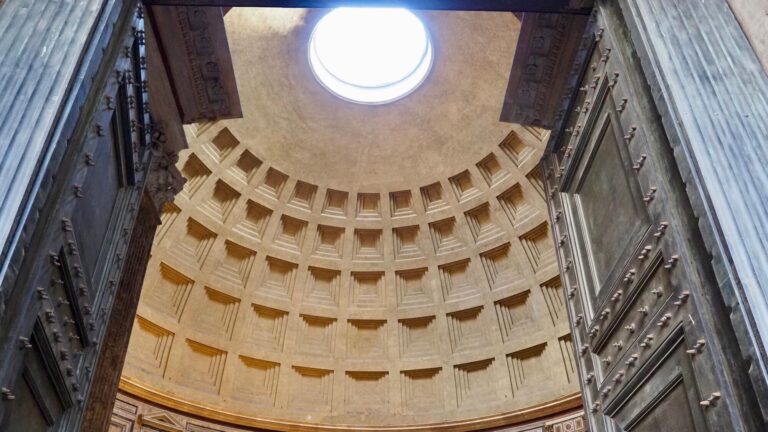
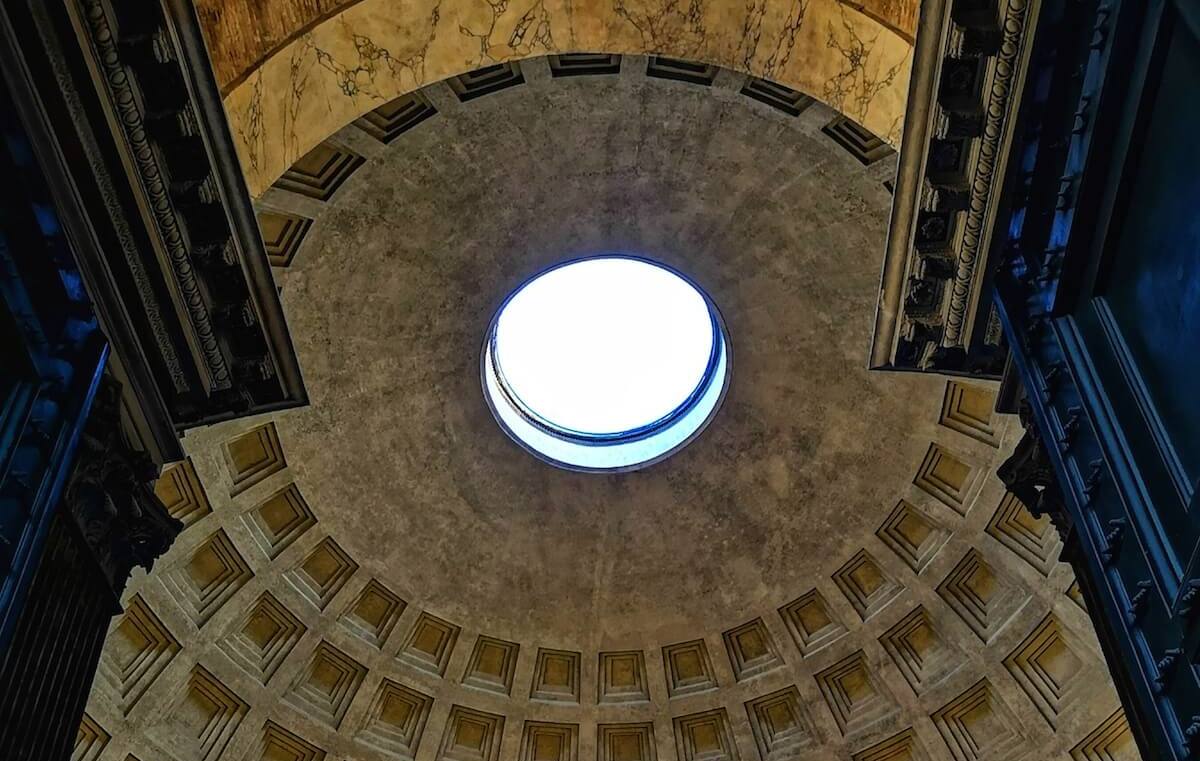
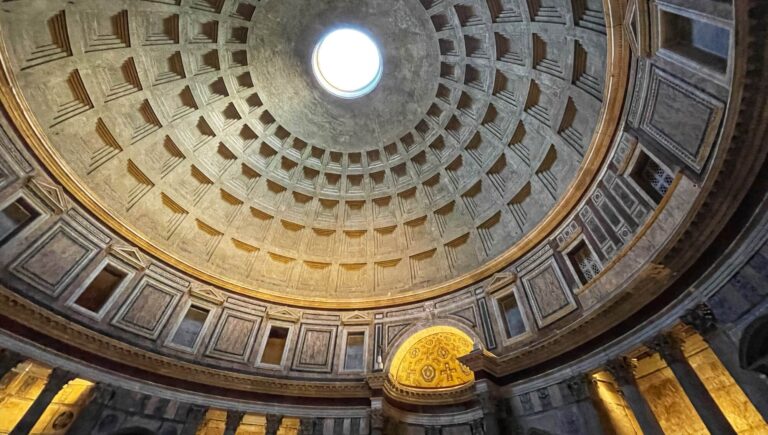
The hole in the roof is called the oculus, Latin for eye, and it does several jobs at once. The first is structural. Holding up that vast concrete roof was the central problem facing Rome’s engineers, and the oculus removed a great deal of weight from the dome’s weakest point, its crown.
The oculus is also the building’s main source of natural light. As the sun crosses the sky, the light inside shifts continuously, drawing a slow disc of brightness around the walls and floor. The floor is gently sloped and drilled with drainage holes, so the rain that falls through runs away rather than pooling.
It’s also been theorized that the oculus further served as a kind of massive sundial marking the passage of the hours, as well as illuminating the Pantheon’s doorway on the occasion of Rome’s birthday every year – April 21st.
After the fall of the Roman empire, when the engineering knowhow of the ancients had been lost, a pious legend sprang up that claimed the oculus was created by pagan demons fleeing the building when it was converted into a Christian church in the 7th century AD.

Every year on the 21st of April at 1 pm Central European Time (corresponding to noon solar time), a shaft of light descends through the oculus at the summit of the dome and travels down the interior. On this day, the geometry of the sun’s position aligns perfectly with the geometry of the building, and the beam illuminates the bronze entrance doors below in a disc of golden light that lasts for approximately two minutes and fifty seconds.
This was not an accident. The effect was intentional, and designed, it is believed, as a piece of imperial theatre. The 21st of April is the date when Rome has celebrated its founding since antiquity.
During the days of empire, the emperor would enter the temple at precisely this moment, his body bathed in sunlight streaming from the heavens, as if the gods themselves were endorsing his arrival.
The building, in other words, was functioning as a stage, and the sun as a spotlight. Even by the standards of Roman architectural ambition, it is a breathtaking set piece.
Scholars have identified several other moments in the year when the oculus’s light aligns with significant features of the building, including the equinoxes and certain festival days, suggesting that the Pantheon was designed to function as a kind of celestial calendar, marking the sacred rhythm of the Roman year in light. But April 21 is the most charged of all.
If you want to see the effect, visit the Pantheon on April 21 and make sure to be inside sometime between 12 noon and 1pm. The alignment occurs at approximately 12:59 pm local time (accounts that describe the event as taking place at noon fail to account for daylight savings time). The event is arguably the highlight of Rome’s annual birthday celebrations, and the Pantheon is extremely busy as a result. Book your timed ticket well in advance as slots sell out quickly.
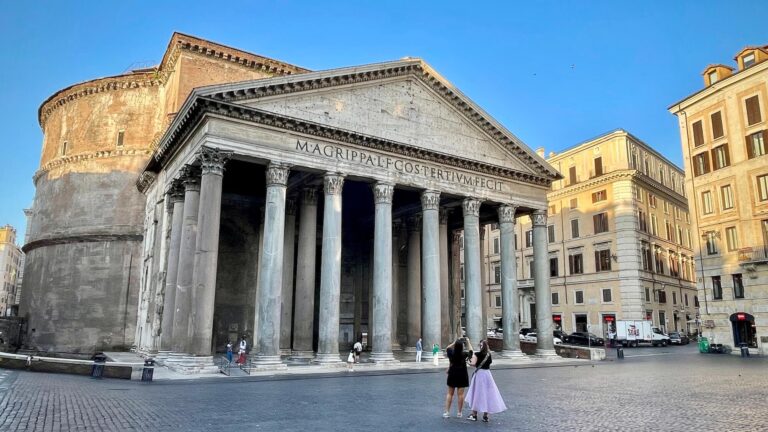
Visiting the Pantheon is straightforward, but it is no longer the walk-straight-in experience it was a few years ago. Here is what you need to know before you go.

Tickets: Do I Need to Pay to Enter the Pantheon?
- Yes. Rome introduced an admission charge in 2023 in response to visitor numbers that had reached roughly nine million a year.
- Standard adult admission is now €7. EU citizens aged 18 to 25 pay a reduced rate and should bring proof of age and nationality.
- Residents of Rome can still enter the Pantheon for free, as can those attending mass in the church.
- Visitors under the age of 18 also get in free, regardless of country of origin.
- People with disabilities and their designated traveling companion can also access the monument for free.
- Entrance is free for everyone on the first Sunday of each month. Free entrance tickets can be obtained directly on site, but expect to queue. You cannot pre-book tickets for the free Sunday openings.

Opening Hours
- The Pantheon is open daily from 9am to 7pm. Last entry is at 6.30pm, and the on-site ticket desk closes an hour before the doors do.
- Please note that as the Pantheon is also a working Catholic church, religious celebrations can sometimes cause a temporary suspension of visits.
- The Pantheon closes on 25 December. In 2026 the Pantheon was open on 1 January from 12pm to 5pm, though hours on New Year’s Day change from year to year, so check the official Pantheon website first.
- The quietest time to visit is early morning, shortly after the doors open at 9:00 AM. Late afternoons can also be more manageable. Avoid midday during the summer high season, when queues can be extremely long.
You have three options. You can buy on site at the ticket kiosks, book online in advance through the official portal, or join a guided tour that includes entry.
Buying on site is the simplest and the slowest. Kiosk queues build through the morning, and at busy times tickets sell out altogether.
At busy times, tickets can also sell out. During high season it makes more sense to purchase your tickets in advance. You can do this via the Pantheon’s official ticket website here. You’ll need to register an account with your name and email address; afterwards you’ll be able to book a ticket valid for a one-hour time slot on the specific day you choose – make sure to be on time!
Alternatively, you can book a guided tour of the Pantheon with priority entrance, which handles the ticket for you and adds the expertise of an experienced local guide.

The Pantheon is a working church, officially known as the Basilica of Santa Maria ad Martyres, so visitors should dress appropriately. Shoulders must be covered, and very short shorts or skirts, excessively low-cut clothing and transparent garments are not permitted. Staff can refuse entry if these rules are not followed. Absolutely no food or drink is allowed inside the monument.
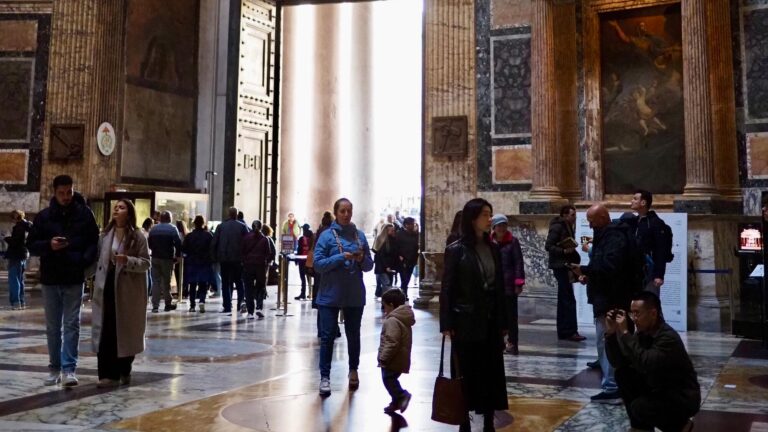
The entrance leads into a single, circular interior beneath the enormous dome. Allow around 30 minutes to look at the architecture, the oculus, the tombs and the side chapels, although you may wish to stay longer.
Visitors are asked to behave respectfully and keep quiet, particularly when religious services are taking place. Mobile phones must be silenced, and calls are prohibited inside. You can, however, use your phone to take photos and video. Entry during Mass is reserved for worshippers.
There is no cloakroom, so avoid arriving with bulky luggage that you cannot comfortably carry. You might be refused entry if you arrive with luggage that is too large. As always in Rome, it’s best to travel light!
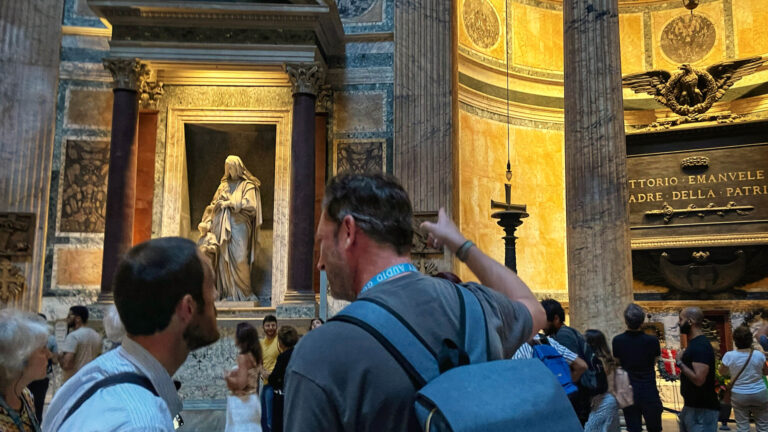
The Pantheon rewards deeper knowledge. Its dome, its history, the significance of the tombs, the stories behind the building’s survival — all of this is easy to miss on an independent visit.
Walking in alone and gazing up at the dome is, of course, breathtaking; but understanding how it was built, why it has survived when so much else did not, and who is buried here adds an entirely new dimension to the experience.
Through Eternity offers small group tours of the Pantheon with priority entrance, as well as private itineraries combining the Pantheon with other highlights of Rome’s historic centre. A guided tour also eliminates any ticketing headaches, particularly during the busy summer months.

The Pantheon stands in Piazza della Rotonda, right in the heart of Rome’s historic center. If you’re already downtown, walking is usually the easiest way to reach it. If you’re coming from further afield, such as from Termini Station, then you can take a bus.
- The 30, 40, 62, 64, 81, 87 and 492 lines all stop at Largo di Torre Argentina, which is a 5-minute walk from the Pantheon.
- If you’d like to take the metro then the nearest stops are Barberini and Spagna on the A line. From either of these stations it’s a lovely 15-20 minute stroll right through the historic center and past some of the city’s greatest landmarks, like the Spanish Steps and the Trevi Fountain.
- Driving to the Pantheon is best avoided. It lies within Rome’s historic-centre limited traffic zone (ZTL), where private cars without authorisation cannot enter during restricted hours. Taking a taxi is much easier. Licensed taxis are exempt from the ZTL restrictions and can drop you very close to the Pantheon, although the final few meters may need to be covered on foot. If you need a taxi afterwards, the main rank at Largo di Torre Argentina is around a five-minute walk away; you can also request a taxi by app.
A great deal, and most of it is missed by visitors who walk in, photograph the dome and leave. Start outside, with the sixteen granite columns holding up the portico. Amazingly, these 40-foot-tall granite columns were quarried in Africa and brought all the way to Rome in single monoliths.
Then have a gander at the equally gargantuan bronze doors that lead into the temple: these are the oldest bronze doors in the world – the lock itself is also almost 2,000 years old! Despite their enormous weight, the doors are so well-designed that they can be easily pushed open by a single person.
Once inside, gaze up at the oculus opening that pierces the roof. The ceiling is studded with a series of hollowed out indents known as coffers. In addition to being very beautiful, the coffers also helped to lighten the dome’s massive weight: it’s estimated that they helped to make the dome 550,000 pounds lighter!
You’ll also want to look out for the tombs dotted about the Pantheon’s interior. Amongst the luminaries buried here are the great painter Raphael, whose dying wish it was for him to be interred in his favorite building. Here too are the first two kings of a united Italy, King Vittorio Emanuele II and King Umberto 1, alongside his wife Queen Margherita of Savoy – the woman who gave her name to the iconic Pizza Margherita.
For a complete guide to what you need to see in the Pantheon, check out our dedicated guide here:

A visit to the Pantheon takes around half an hour, leaving plenty of time to explore some of Rome’s finest art and architecture on foot. Start in Piazza della Rotonda, then follow this short itinerary through the historic center.
A two-minute walk brings you to Santa Maria sopra Minerva, where Bernini’s elephant carries an ancient Egyptian obelisk outside the church. Inside, look for Michelangelo’s marble Risen Christ, one of the many Michelangelo sculptures you can see in Rome for free.
Continue for about four minutes to Sant’Ignazio, famous for Andrea Pozzo’s extraordinary ceiling illusion. From the right spot on the floor, the painted architecture appears to rise into a dome, although the church has no actual dome above it.
In roughly five minutes, you’ll reach Piazza Navona, built over the ancient Stadium of Domitian. Look beyond Bernini’s Fountain of the Four Rivers to the square’s long, curved outline, which still follows the shape of the Roman stadium. Along the way take time for a quick stop off at the church of San Luigi dei Francesi, where Caravaggio’s majestic paintings depicting the life and death of St. Matthew helped to launch the young artist’s meteoric rise to artistic superstardom.
The Trevi Fountain is about a ten-minute walk away. Visit early or later in the evening if you want a better chance of seeing its sculptural details without the thickest crowds. which can be heavy during the afternoon.
Alternatively, head six minutes towards Largo di Torre Argentina, where excavated Republican-era temples lie below street level. As the site of Julius Caesar’s assassination, it’s a must-stop for anyone interested in ancient Rome. For more ideas, explore our guides to 11 hidden ancient sites in Rome and off-the-beaten-path ancient sculptures. Or discover these neighbourhoods with a private tour of Rome’s historic centre.
How much are Pantheon tickets?
A standard adult Pantheon ticket costs €7. Reduced tickets cost €2 for eligible EU citizens aged 18–25. Admission is free for visitors under 18, residents of Rome and everyone on the first Sunday of the month.
Do I need to book Pantheon tickets in advance?
No, advance booking is not compulsory: you can buy Pantheon tickets online or at the monument. However, booking a time slot in advance is a sensible option during busy periods. The Pantheon opening hours are generally 9 am to 7 pm, with last entry at 6:30 pm, although religious services can affect access. Booking online helps you plan your arrival, but it does not guarantee that you will avoid every queue. Buy tickets through the official Musei Italiani portal.
What happens inside the Pantheon when it rains?
Rain really does fall inside the Pantheon through the open oculus at the top of the dome, which is open to the sky. The ancient Roman architects designed the floor with a slight curve and drainage openings that help carry the water away. It’s a fascinating site, and makes visiting the Pantheon is one of the best things you can do on a rainy day in Rome.
Can I visit the Pantheon for free?
Yes — on the first Sunday of each month, entry is free for everyone. Free tickets are distributed on site on the day. Be aware that these sessions can be very crowded.
How long should I spend at the Pantheon?
Around 30 minutes is enough for an independent visit. The Pantheon is a single vast room, so there is no route to follow and no queue inside. A guided visit runs closer to an hour, and most of that time goes on what you would otherwise walk past without noticing.
Is the Pantheon wheelchair accessible?
The Pantheon is largely accessible; the main floor is level with the entrance, with no steps to navigate once inside. The entrance does have a small threshold. Contact the monument directly or check the official website for the most up-to-date accessibility information.
What is the Pantheon’s official name?
It is officially called the Basilica di Santa Maria ad Martyres — the Basilica of Saint Mary and the Martyrs — following its consecration as a Christian church in 609 AD. It has been known informally as “the Pantheon” throughout its history.
Are there toilets at the Pantheon?
There are no public toilets inside the Pantheon. The nearest facilities are a short walk away, and cafés and restaurants around the piazza will let you use theirs if you buy something, even just a coffee.
Book Your Pantheon Experience