There are few sights in the world more romantic than the dazzling sweep of the Spanish Steps.
One of the great masterpieces of Baroque urban design, Rome’s most iconic staircase has been a meeting place for artists and poets, lovers and layabouts for nearly three centuries.
From the tuberculosis-stricken Romantic heartthrob John Keats to Audrey Hepburn’s bored princess in Roman Holiday, a remarkable cast of the great and the fashionable has whiled away innumerable hours here.
It is, in short, one of those places that Rome does better than anywhere else on earth: a monument so beautiful it has become simply part of how people imagine the city, part of the grammar of a certain kind of life.
When you come to Rome, you will almost certainly find yourself visiting the Spanish Steps at some point. Here is what you need to know before you arrive.
Rome Tours
Visit the Spanish Steps!
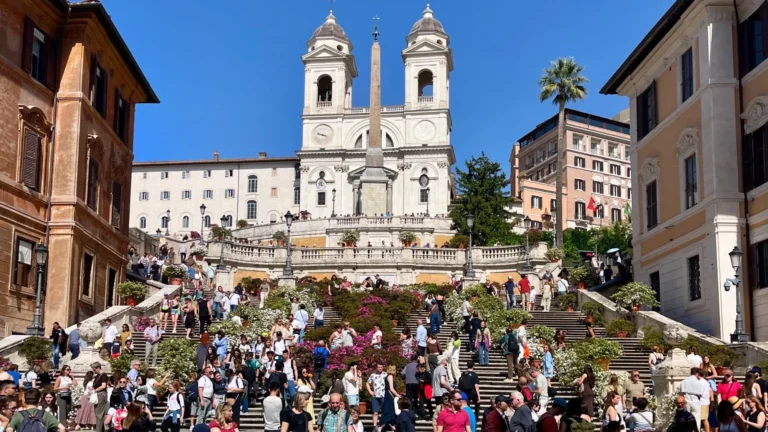
The first thing to know about the Spanish Steps is that there is nothing particularly Spanish about them. The English name is entirely misleading — the staircase began life as a French project, and its Italian name (La Scalinata della Trinità dei Monti) refers to the French church that has crowned the top of the slope since 1502.
Cosmopolitan Rome in the early modern period was a rich tapestry of different national communities, each controlling its own territory within the city.
From the Renaissance onwards, the area at the top of the Pincian Hill was in effect French property: in 1502, Louis XII of France began work on the church of Santa Trinità dei Monti, the graceful twin-towered edifice that still dominates the skyline above the Steps today.
The French church gives its official name to the staircase, and to this day a French religious order has jurisdiction over the building.
Throughout the 16th and 17th centuries, the elegant French church could only be reached from the densely populated quarter of the city below via a steep, unsightly grassy slope, an arrangement wholly unsuitable both for the dignity of the French crown and for the Minimite friars responsible for the church’s upkeep.
In 1660 a massive bequest from the will of the French diplomat Étienne Gueffier funded a competition for a grand monumental staircase linking church and city. Cardinal Mazarin solicited designs from the city’s leading architects, including Gianlorenzo Bernini and Carlo Rainaldi, but the plans were centred on a large equestrian statue of Louis XIV — a plan the Vatican viewed with unconcealed horror, and refused to sanction.
So where do the Spanish come in? The area at the bottom of the hill, centred on the imposing Palazzo di Spagna — the Spanish Embassy to the Holy See — had long been the social heart of Rome’s Spanish community. The large piazza at the base of the future staircase was already known as Piazza di Spagna.
When the English eventually adopted the name, they took it from this piazza rather than from the church or the steps’ actual history.

With the changing diplomatic landscape of the early 18th century, the project for linking the French institution at the summit with the Spanish-flavoured quarter below took on a new political significance.
The signing of a peace treaty between France and Spain in 1720 gave the Steps a new symbolic purpose: they would become a visible monument to the new accord between the great Catholic powers.
The winning design was submitted by the relatively unknown Roman architect Francesco de Sanctis, whose elegant compromise satisfied both Pope Innocent XIII — who had no intention of allowing a monument celebrating a foreign king to be built in the heart of Rome — and the French faction who had funded the project.
Look carefully at the ornamentation of the Steps and you will find the key to understanding de Sanctis’ diplomatic sleight of hand: fleurs-de-lis (the emblem of the French monarchy) and eagles (the heraldic symbol of Pope Innocent XIII) alternate across the balustrades and landings in a visual balancing act of church and secular power.
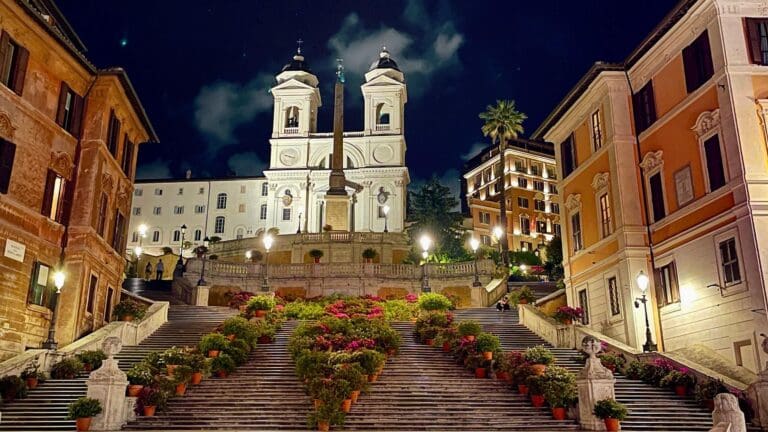
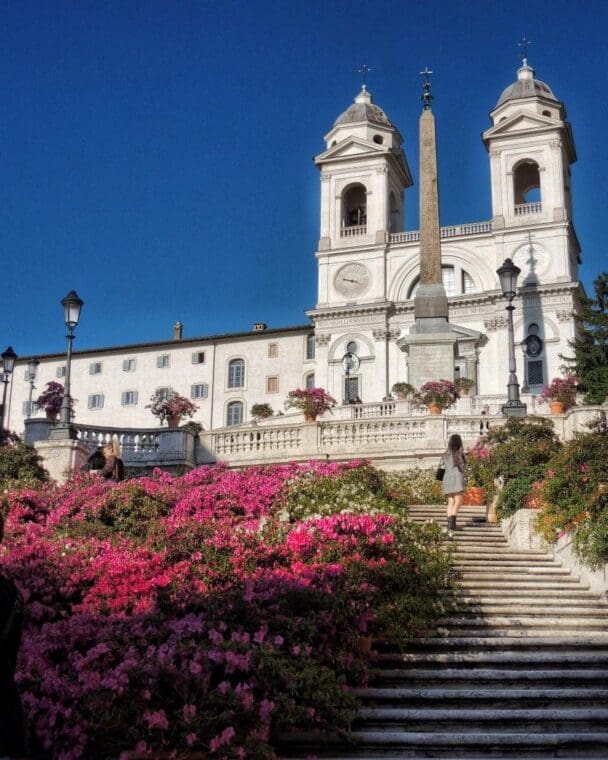
Construction began in 1723. De Sanctis’ brilliant design transformed the area’s challenging topography into a seamless piece of urban theater: the staircase’s 135 steps flow down the hill in rippling cascades of pale travertine, framed by elegantly curved balustrades and punctuated by broad terraced landings.
The design is also quietly rich in spiritual symbolism. With Bourbon ambitions for a royal monument abandoned, the French settled for an architecture of religious allegory: three flights of steps each divide into three sections, evoking the Holy Trinity. The staircase was completed just in time for its grand inauguration during the Jubilee year of 1725.
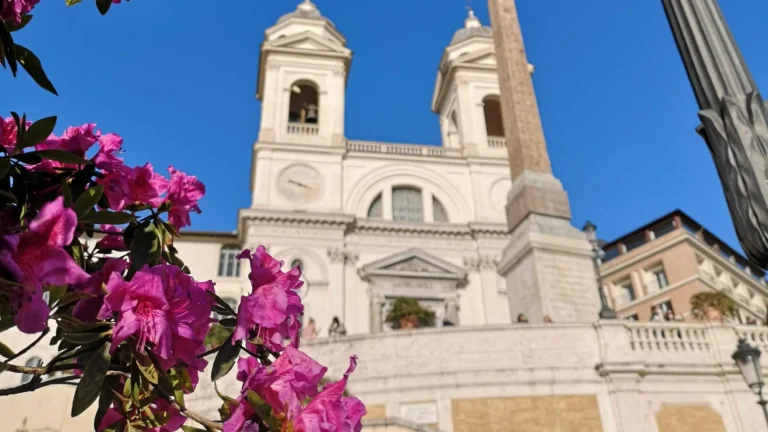
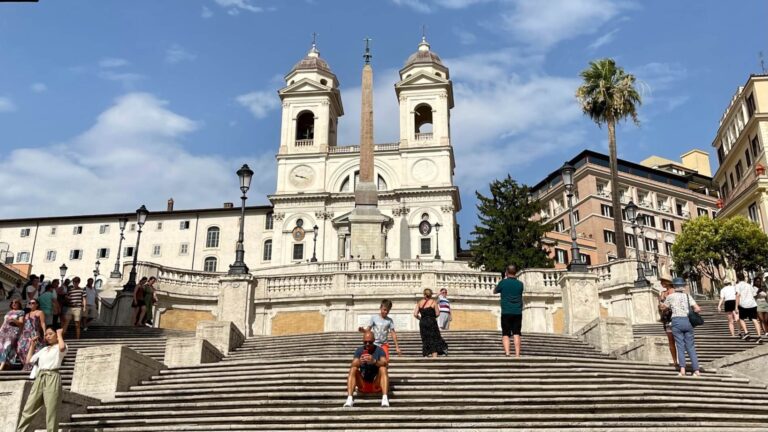
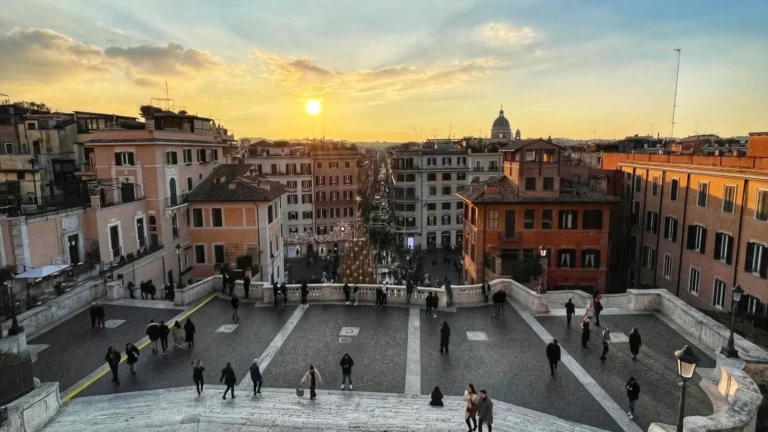
From the top, between the twin bell towers of Santa Trinità dei Monti, you can enjoy one of the finest views over Rome’s rooftops. Beside the church stands the Villa Medici, now home to the French Academy in Rome and a regular venue for exhibitions. To the right of the church is the Sallustian Obelisk, an ancient Roman imitation of an Egyptian monolith that once adorned the gardens of the Roman historian Sallust.
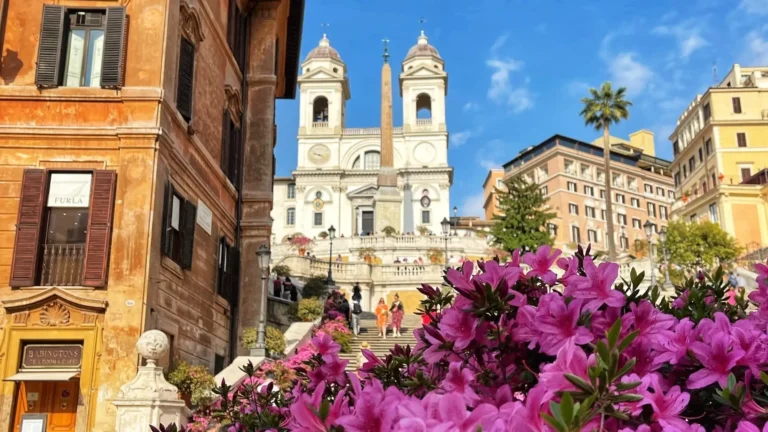
In spring — usually April and May — the Steps are transformed by hundreds of blooming azalea plants in vivid pinks and reds, which form part of an annual display that is one of Rome’s most beautiful seasonal events.
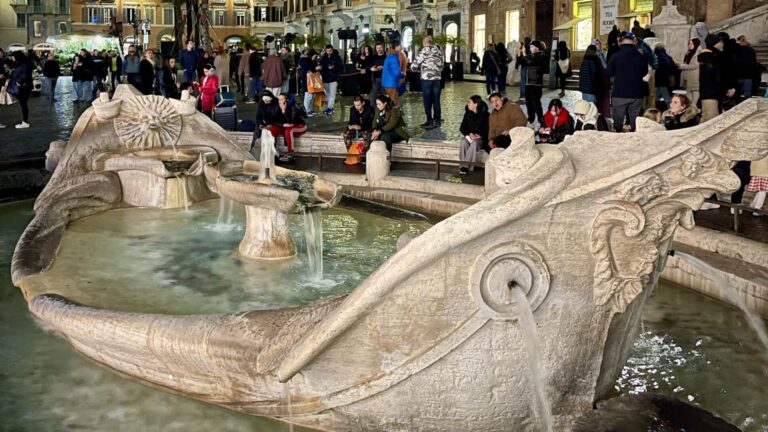
The square at the foot of the Steps is dominated by one of Rome’s most charming and least conventional fountains. The Fontana della Barcaccia (the Fountain of the Ugly Boat) was created around 1627-29 by Pietro Bernini — father of the great Baroque master Gianlorenzo — with help, according to some sources, from the young Gianlorenzo himself, who likely designed some of the decorative detailing.
The fountain’s unusual form — a partially sunken, seemingly sinking boat — has a legendary origin. During the catastrophic Christmas Day flood of 1598, the Tiber rose to such an extraordinary height that floodwaters reportedly carried a barge all the way from the river to the Piazza di Spagna.
The waters then miraculously receded. Pope Urban VIII, the Barberini pontiff, commissioned the fountain some thirty years later to commemorate the event; look closely at the boat’s sides and you will find the Barberini bees (three bees were the family’s heraldic emblem), scattered across the hull in bronze.
The partially sunken design, while visually distinctive, also solved a practical engineering problem that had defeated every previous attempt to build a grand fountain in this location: the Acqua Vergine’s water pressure at this point in its circuit was simply too low to achieve the impressive jets that would normally grace a baroque piazza fountain.
Pietro Bernini turned this apparent limitation into the defining feature of his design — the boat appears to be sinking under the weight of all that low-pressure water, which laps gently over its rim into the basin below. It is an ingenious piece of baroque problem-solving, and one of the most satisfying moments in the whole history of Roman fountain design.
The area around the Spanish Steps is one of the most densely rewarding neighbourhoods in Rome for a slow, exploratory walk. Here are the highlights:
- The Keats-Shelley Memorial House occupies the modest apartment at Piazza di Spagna 26, to the right of the Steps, where the English Romantic poet John Keats spent the last months of his tragically brief life, dying of tuberculosis in February 1821 at the age of 25. The rooms where he lived and died are preserved as a museum dedicated to the Romantic poets. Among the displays is Keats’s death mask — a peculiarly moving object, combining beauty and the cold finality of death in a way that Keats himself would have found grimly perfect.
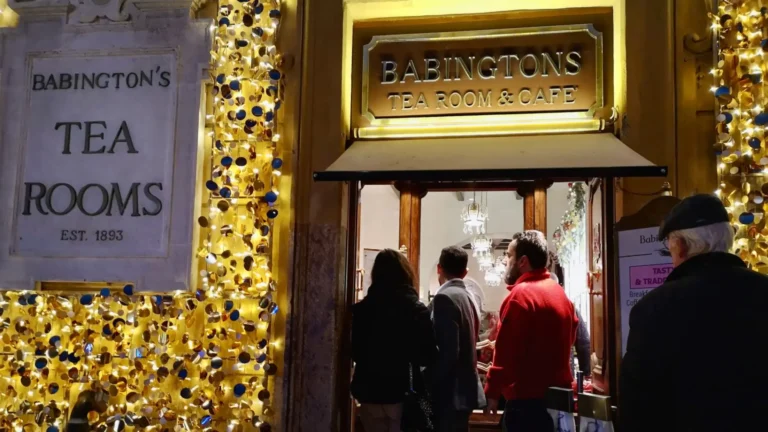
- Babington’s Tea Rooms, at the left-hand side of the Steps, has been serving tea and English-style food to visitors since 1893. It is one of the few places in Rome where you can order scones. Given the extraordinary surroundings, even those who are not great tea enthusiasts might feel the temptation.
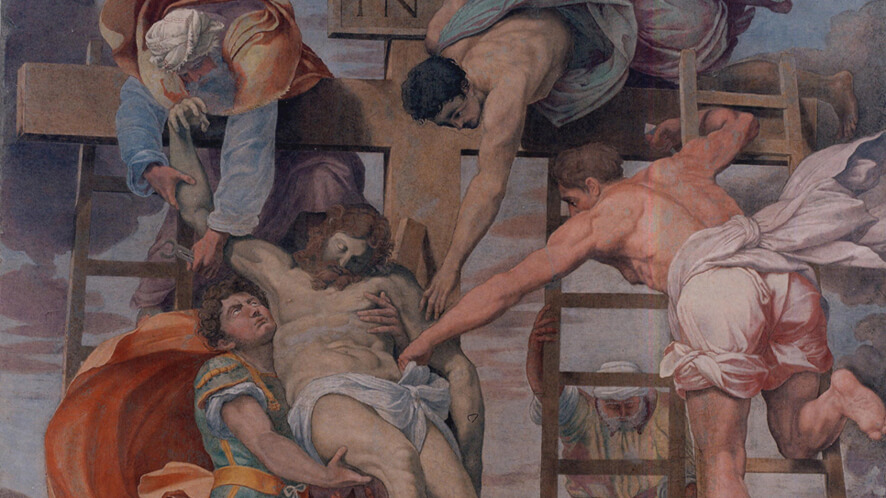
Santa Trinità dei Monti at the top of the Steps is well worth entering. Inside the Gothic nave you will find Daniele da Volterra’s Descent from the Cross (c. 1545), one of the finest Mannerist paintings in Rome — and a work that tells its own strange story. - Via Condotti leads directly away from the piazza towards the historic centre, flanked by the flagship stores of Gucci, Prada, Bulgari and other luxury houses. Whether you intend to buy or merely to look, a stroll along this street is one of the great window-shopping experiences in Europe.
- The Colonna dell’Immacolata in the southern part of the piazza was erected in 1857 by Pope Pius IX to celebrate the recently defined Catholic doctrine of the Immaculate Conception. The column is ancient Roman in origin; the figure of the Virgin at the top was added in the 19th century. Each year on 8 December (the Feast of the Immaculate Conception), the Pope traditionally has a wreath placed on the statue by Roman firefighters using an extending ladder.
Is there a fee to visit the Spanish Steps?
The Steps themselves are free to visit and access at all times.
Can I sit on the Spanish Steps?
No. Following a major restoration programme, visitors are no longer permitted to sit on the Steps. Security guards are stationed at intervals and will ask you to stand; follow their instructions. Fines for sitting (and eating or drinking on the Steps) can reach €400. Gelato and other food is strictly not permitted on the staircase itself.
When is the best time to visit?
Early morning — before 9:00 AM — is by far the most beautiful time to experience the Steps. The piazza is quiet, the light is low and golden, and it is possible to appreciate the extraordinary architecture of the staircase without being jostled by crowds. In the evenings the Steps are also lively and atmospheric, with large, sociable crowds gathering in the piazza below.
Are the Spanish Steps near other attractions?
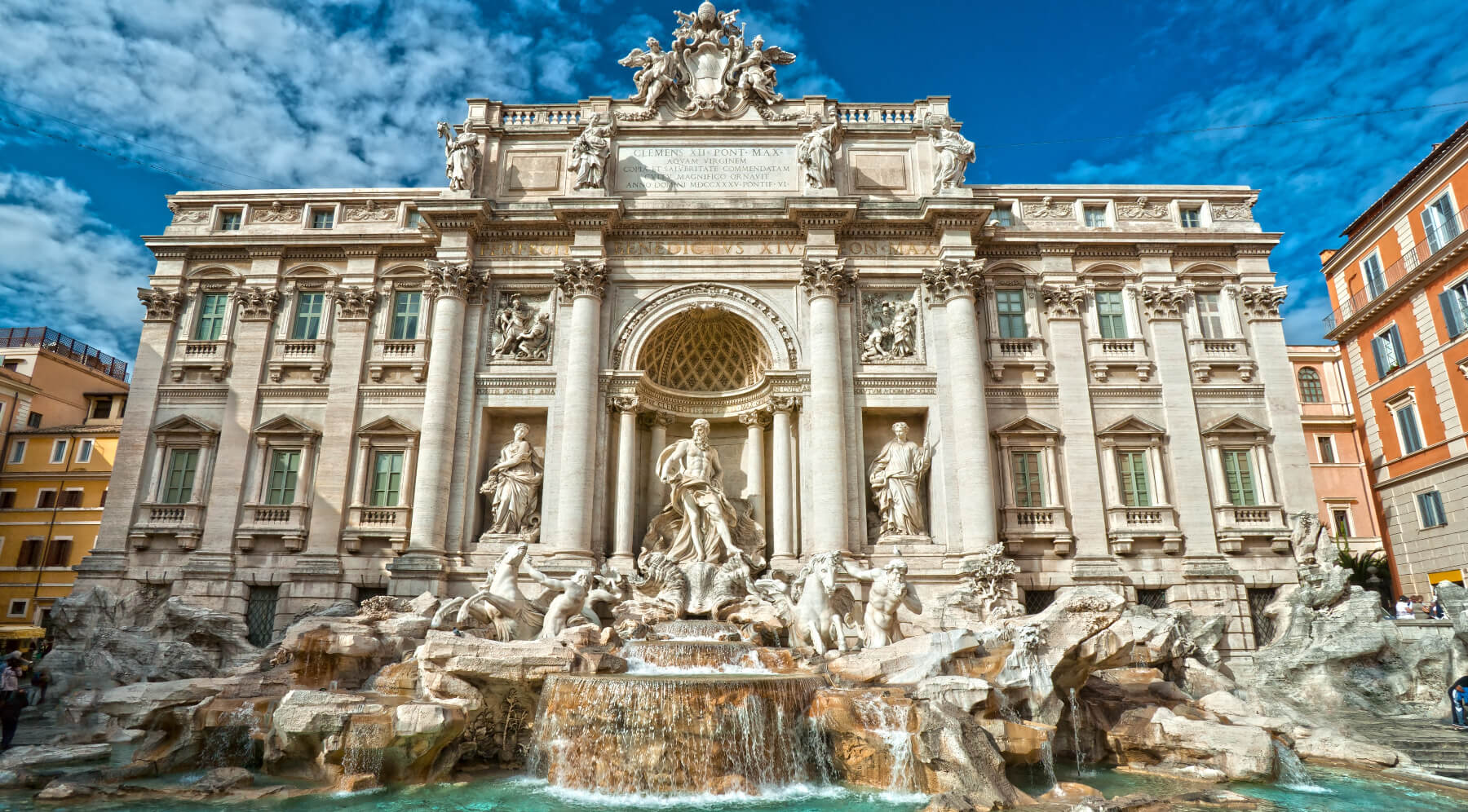
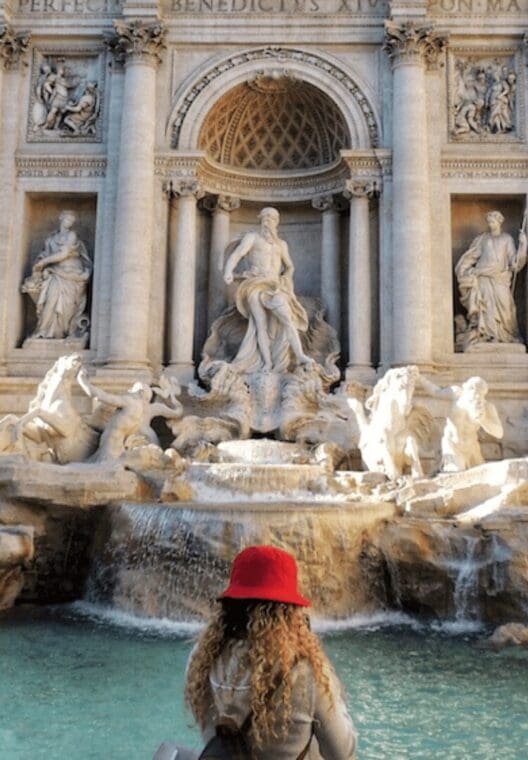
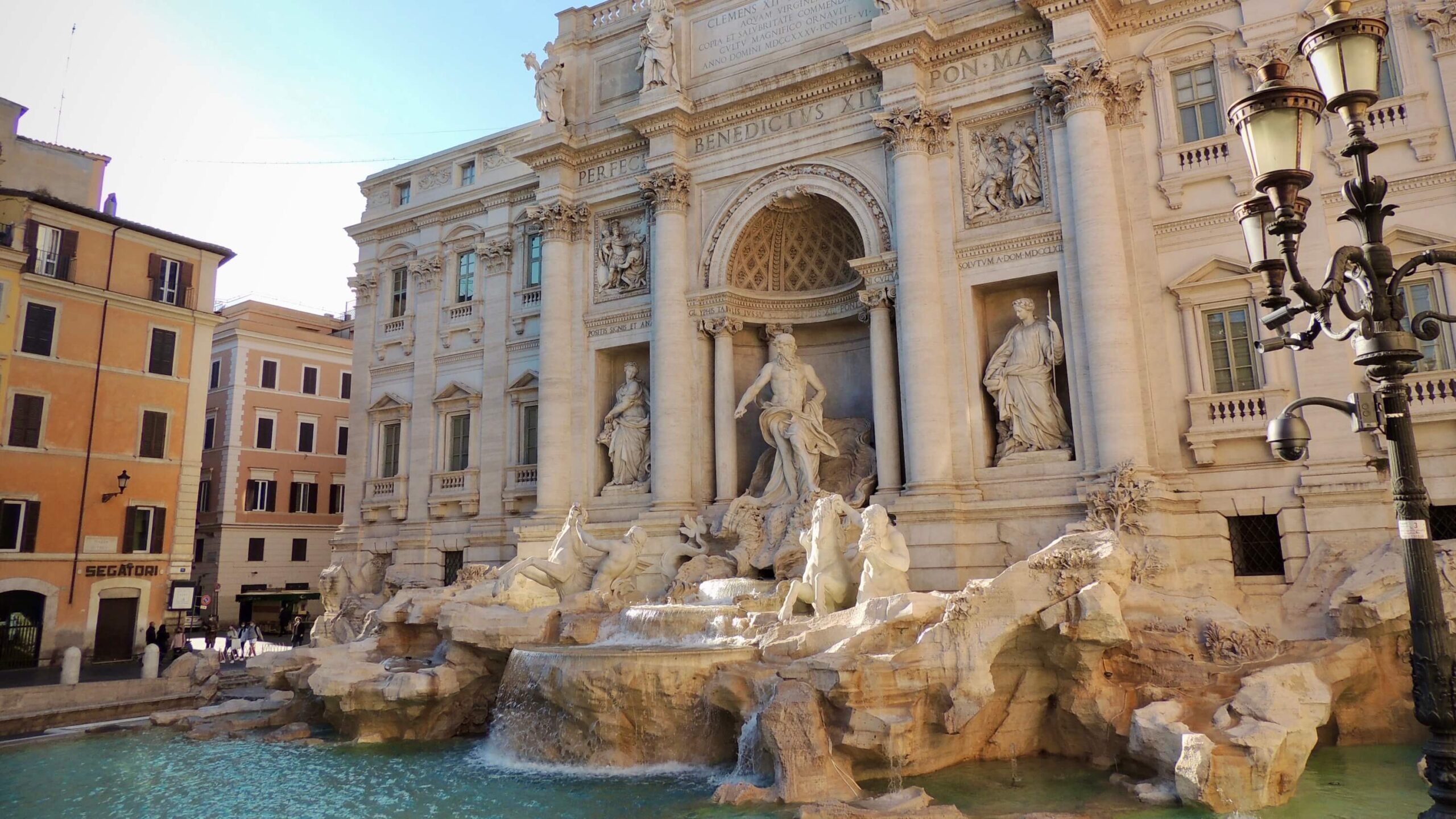
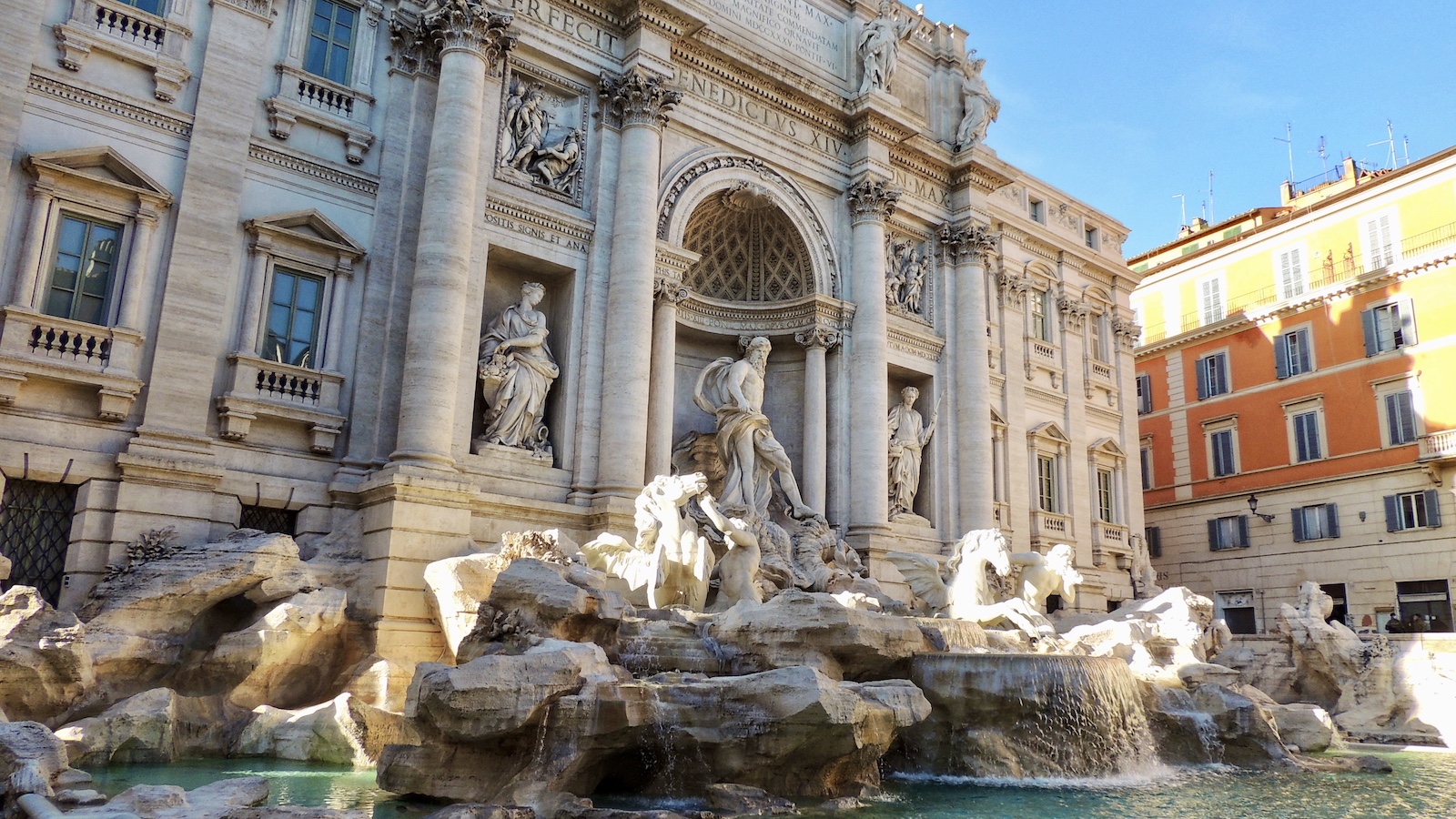
Yes. The Trevi Fountain is around ten minutes’ walk to the south-east. The Pantheon is approximately 20 minutes on foot to the south-west. The nearest metro station is Spagna on Line A, directly beneath the piazza.
Why are the Spanish Steps called the Spanish Steps?
Despite having little to do with Spain, the Steps are named for the Piazza di Spagna at their base — which in turn is named for the Spanish Embassy to the Holy See that has long occupied a palace on the square. The Steps were in fact designed by an Italian architect, funded by a French diplomat’s legacy, and built to connect a French church to the city below.
How many steps are the Spanish Steps?
There are 135 steps in total, arranged in a series of terraces and cascading flights that de Sanctis designed to evoke the image of water flowing down a hillside.
What is there to do near the Spanish Steps?
Beyond the Steps themselves, the immediate area offers the Keats-Shelley Memorial House, the historic Caffè Greco, the church of Santa Trinità dei Monti, the Villa Medici (home to the French Academy), the Sallustian Obelisk, Via Condotti for luxury shopping, and excellent connections to the Trevi Fountain and the historic center.
Are the Spanish Steps lit up at night?
Yes. The Steps are beautifully illuminated after dark, and the view from the top over Rome’s rooftops and piazzas is particularly magical in the evening light.

Book Your Rome Experience