In Rome’s extraordinary constellation of great public spaces, Piazza Navona sits right at the summit.
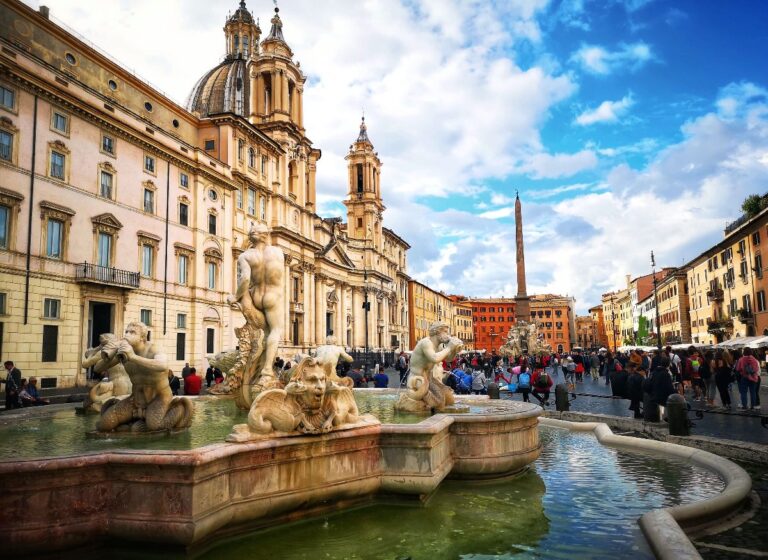
An ancient racetrack transformed over two millennia into the Eternal City’s most spectacular open-air stage, it is the piazza that has everything: Bernini’s theatrical fountains, a magnificent church by Borromini, artists at work and café tables spilling into the square. Its famous monuments have recently benefited from restoration ahead of the 2025 Jubilee, bringing renewed attention to the sculptural details of all three fountains.
Yet Piazza Navona rewards more than a quick look at its grandest sights. Follow the story behind its monuments and you’ll discover an ancient sporting arena, the ambitions of a powerful papal family and traces of the Spanish community that once made this corner of Rome its own.
Here are seven things to look out for.
Rome Tours
See the Best of the Eternal City
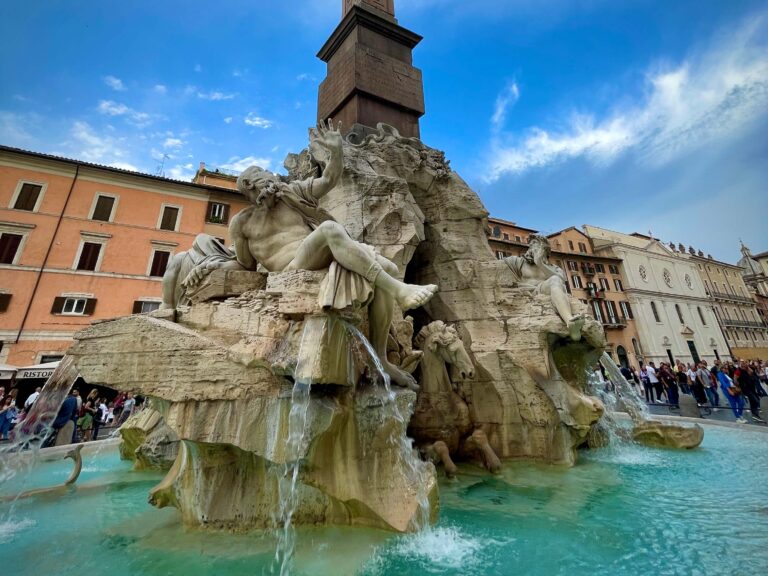
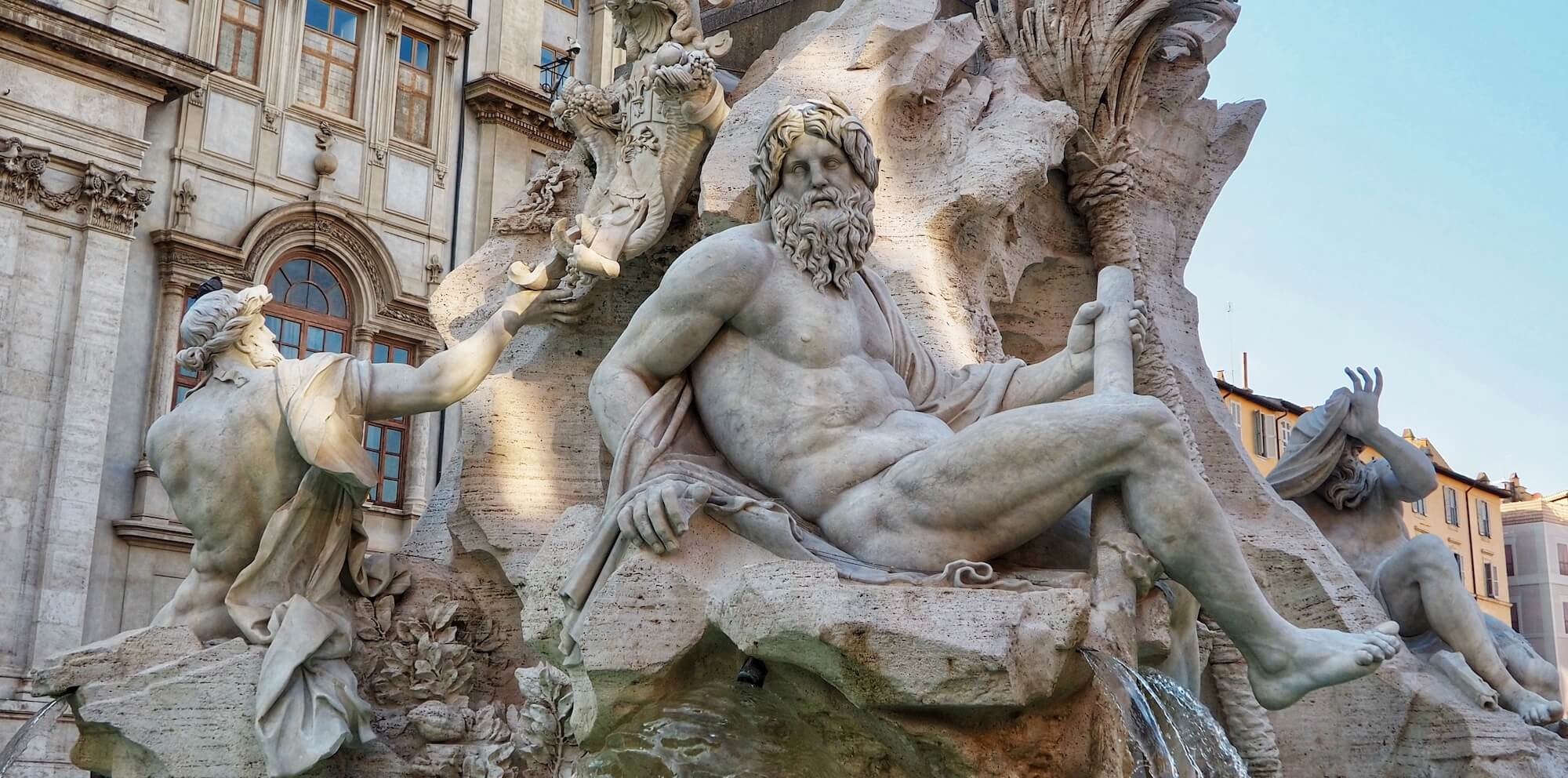
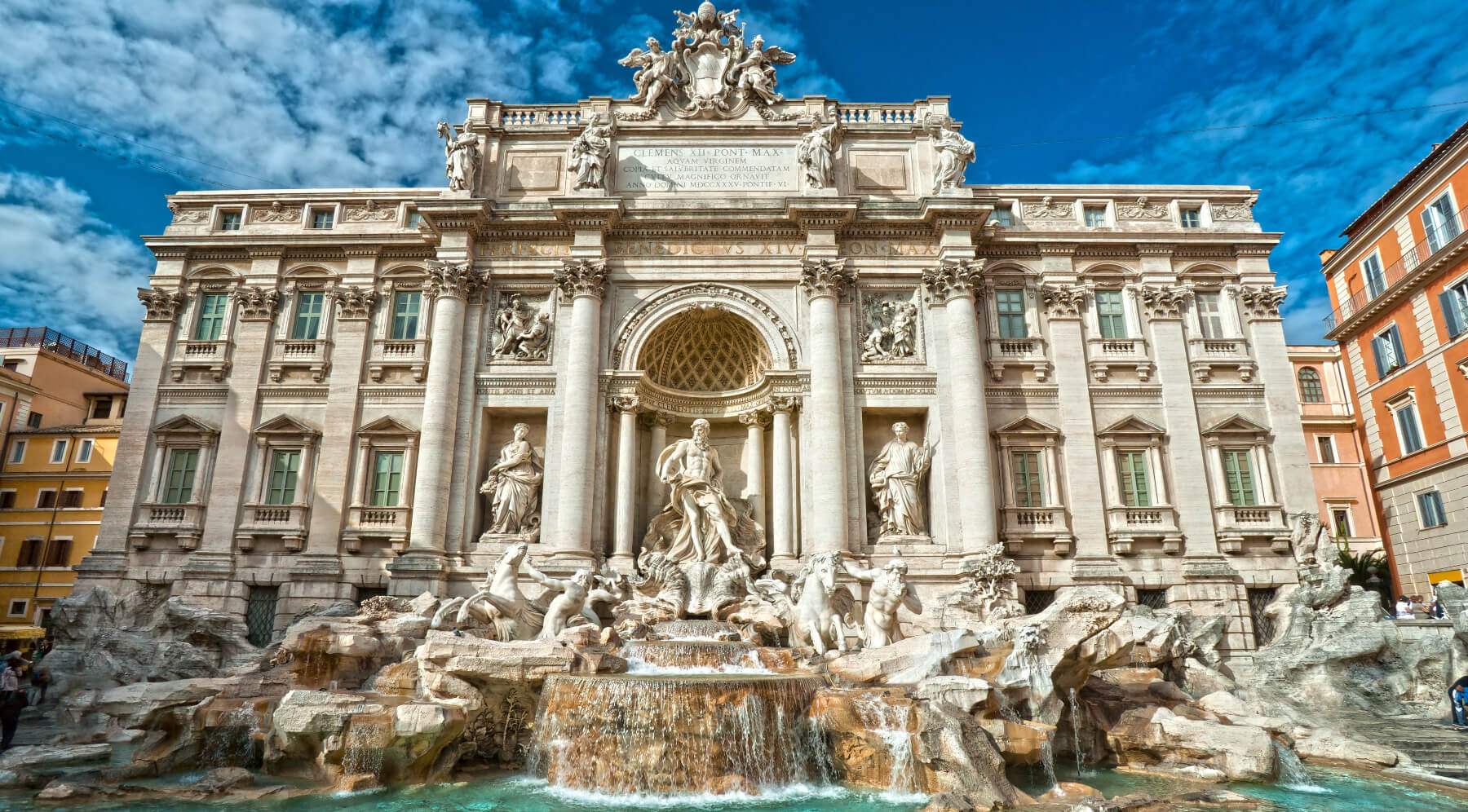
Dominating the very center of Piazza Navona, the barnstorming Fountain of the Four Rivers stands alongside the Trevi as Rome’s finest fountain. Commissioned by the Pamphilj Pope Innocent X as part of a sweeping transformation of the piazza into one grandiose monument to his powerful family, the fountain was designed by Baroque master Gianlorenzo Bernini.
Despite his status as Italy’s most sought-after artist at the time, Bernini had been previously snubbed for commissions by the Pamhilj family due to his relationship with the Barberini.
Taking the opportunity with both hands, Bernini wowed the world with an extraordinary sculptural ensemble featuring personifications of the known continents’ most important rivers holding up an Egyptian obelisk: the Danube, the Nile, the River Plate and the Ganges.
The massive figures seem to defy gravity as they float above the waters of the fountain, a perfect example of Bernini’s unique ability to astonish the viewer with virtuoso feats of artistic trickery. To read about the Fountain of the Four Rivers in more detail, check out our dedicated article here:


Standing directly opposite the Fountain of the Four Rivers, the undulating facade of Sant’Agnese in Agone is one of the most extraordinary pieces of architecture in Rome.
The church was begun in 1652 by Girolamo Rainaldi and his son Carlo as the Pamphilj family chapel, but it was Francesco Borromini who gave it the sensational form we see today when he took over the project in 1653.
The concave facade, with its twin towers flanking a bold central dome, is a masterpiece of Baroque spatial drama; it seems to breathe, as though the building itself is inhaling.
Inside, the Greek-cross-planned church is every bit as rich as its exterior promises, with coloured marbles, lavish Baroque decoration and a dome frescoed by Ciro Ferri, working in the tradition of Pietro da Cortona. Look, too, for the monument to Innocent X, whose grand project helped turn Piazza Navona into the spectacular Baroque stage we see today.
And the name? Christian hagiography holds that Saint Agnes, a young Roman girl martyred for her faith in the early fourth century, was exposed here in the ancient Stadium of Domitian. A miraculous growth of hair supposedly shielded her nakedness from the crowd before her execution. The present church replaced an earlier medieval building associated with the saint. “In agone” does not, as you might think, refer to the painful martyrdom of the young saint Agnes – it means “at the site of the competitions,” a reference to the piazza’s ancient origins as Domitian’s racetrack.
Entry is free. Hours: Tuesday–Sunday 9:30am–12:30pm, 3pm–7pm.

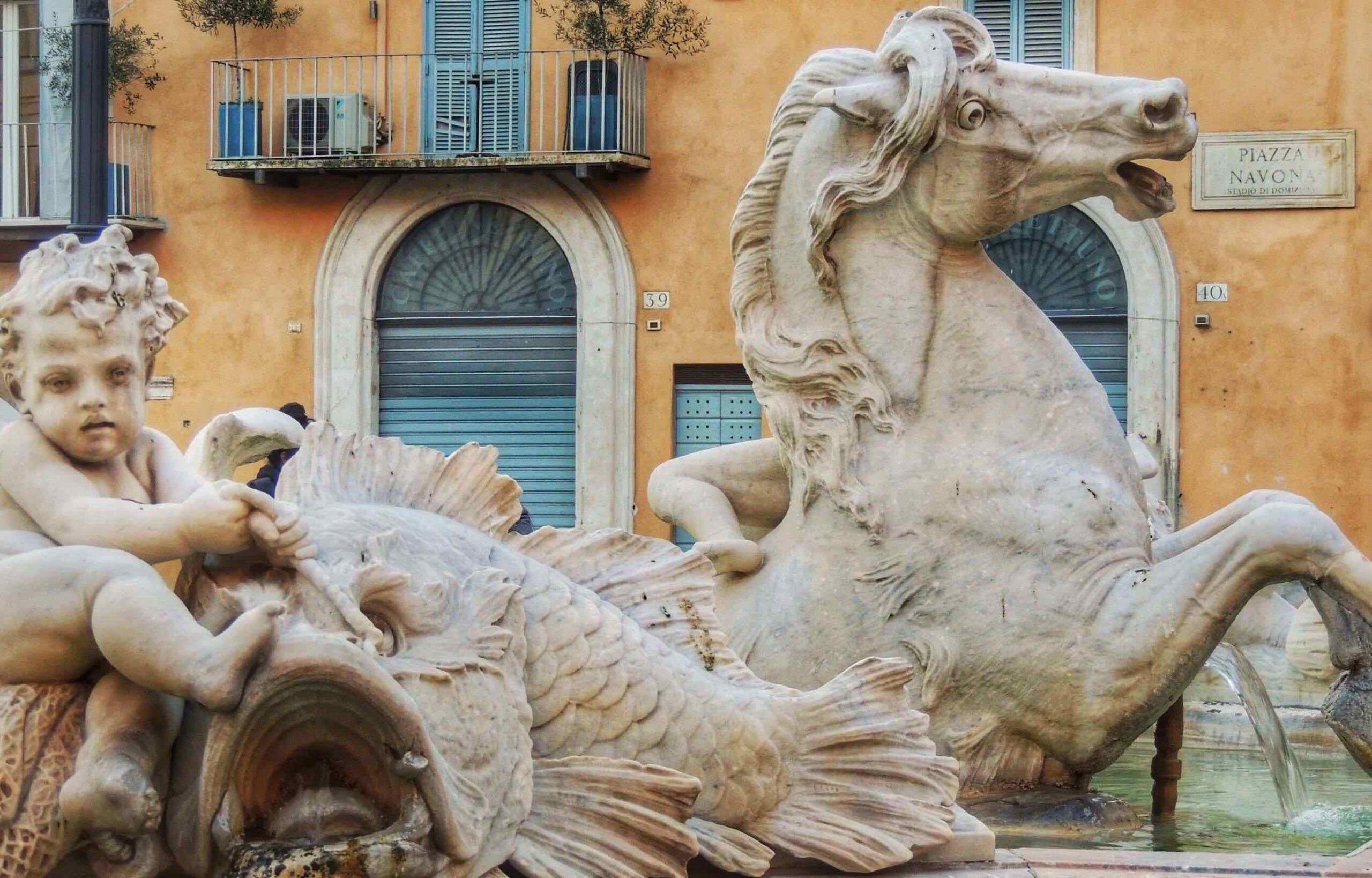
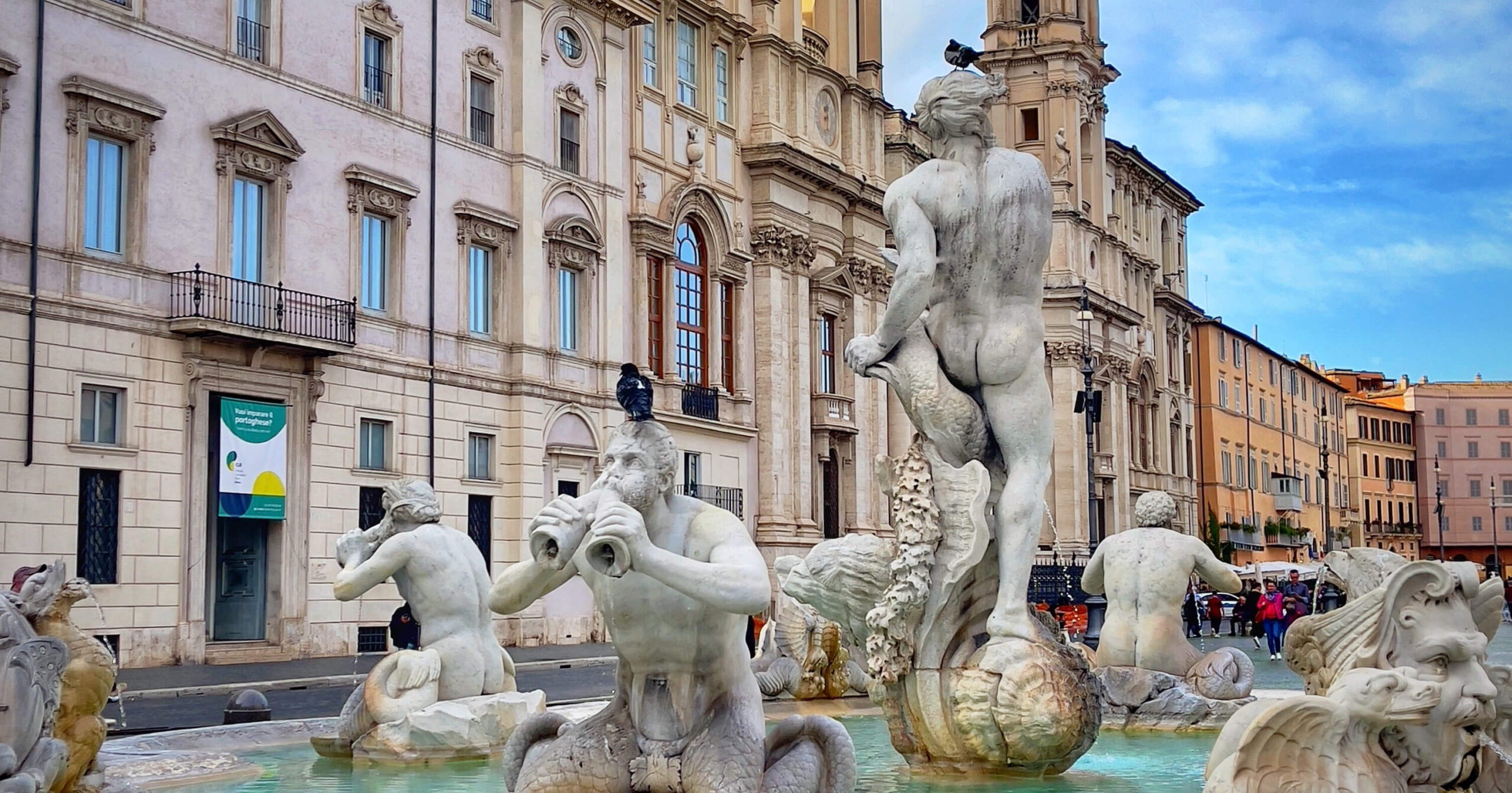
Situated at the southern end of Piazza Navona, the Fontana del Moro was begun in 1575, when Pope Gregory XIII had Giacomo della Porta design the fountain decorated with sculptures of tritons, dragons and theatrical masks.
In the middle of the next century the Pamphilj pope Innocent X entrusted Gianlorenzo Bernini with redesigning the fountain – Bernini’s vision of two dolphins supporting a snail wasn’t well received, and he quickly had it replaced with the maritime figure we see today gripping a dolphin’s tail.
Despite the fountain’s title, it seems that the identification of the figure with a Moor is a much later accretion; it isn’t certain that Bernini originally meant to represent a North African here at all, and the figure was referred to as Triton or Neptune in contemporary sources.

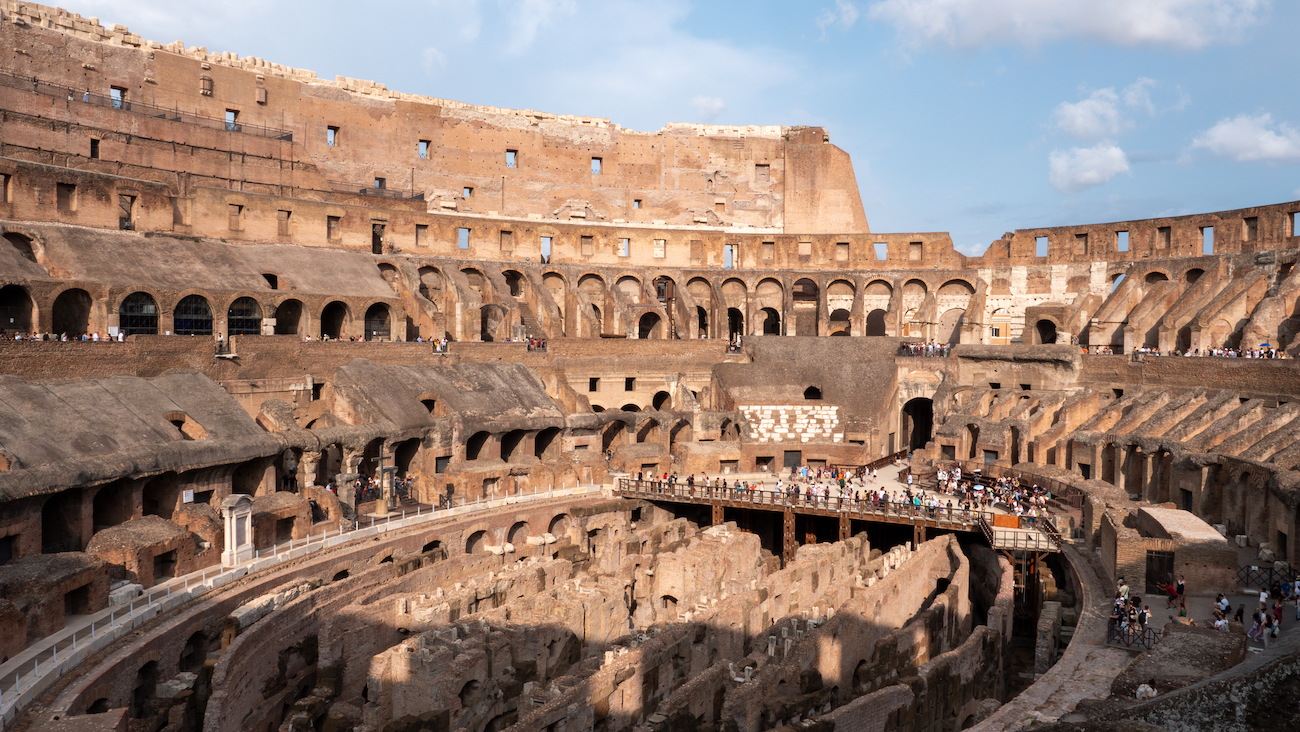
Piazza Navona owes its distinctive elliptical shape to its original function in antiquity as a racetrack – for foot races rather than chariot races – known as the Stadium of Domitian. Domitian was the final emperor in the Flavian dynasty, succeeding Vespasian and Titus, who were responsible for the construction of the Colosseum across town.
Domitian was a prolific builder, and transformed the city with dozens of large-scale infrastructural projects during his reign including this athletics venue which was completed around 86 AD. It’s estimated that the stadium could accommodate up to 30,000 people.
“Stadion” was a unit of measurement in antiquity, corresponding to around 180 meters, and refers to the standard length of races.
Although it’s impossible to get a sense of the impressive scale and architectural refinement of the long-disappeared structure, you can visit the ancient remains of the stadium’s seating area located about 15 feet below the surface of the modern piazza, which have been extensively excavated since the 1930s.
The Museum of the Stadium of Domitian is located at Piazza Tor Sanguigna 3, just off the northern end of the piazza. Open daily, 10am–7pm. Admission €9.

At the northern end of Piazza Navona, the Fountain of Neptune has a history that is rather less Baroque than its present appearance suggests. Giacomo della Porta designed the original fountain in 1574, during the expansion of Rome’s water supply following the restoration of the Aqua Virgo aqueduct. For centuries, its basin remained comparatively plain, without the dramatic sculptural groups that now surround it.
Those arrived in the nineteenth century, after a competition launched by the city in 1873. Antonio della Bitta sculpted Neptune grappling with an octopus, while Gregorio Zappalà supplied the surrounding sea creatures, including nymphs, sea horses and putti. Their writhing forms give the fountain plenty of theatrical energy, a charming full stop to the piazza’s sculptural flights of fancy.

Running almost the entire length of Piazza Navona’s western side, the enormous Palazzo Pamphilj is the building from which much of the 17th-century transformation of the piazza was directed.
Commissioned by the newly elected Pope Innocent X in 1644 from architect Girolamo Rainaldi, it quickly became the effective center of Pamphilj power and the setting for the political intrigues surrounding the pope and his formidable sister-in-law, Olimpia Maidalchini. Her influence was such that Roman satirists nicknamed her La Pimpaccia di Piazza Navona, a highly unflattering sobriquet that captured the hostility she inspired.
Inside, Pietro da Cortona painted the magnificent frescoes of the palace gallery in the 1650s, creating one of the great Baroque decorative schemes in Rome. The palace later became the seat of the Brazilian Embassy, established here in 1960, and for years remained largely out of reach for ordinary visitors.
That has now changed. The embassy offers free guided tours on Mondays, at 11am in Italian and 3pm in Portuguese. Groups are limited to 20 people, and advance reservations are made through the Brazilian Embassy’s Eventbrite page. Tours are subject to availability, so check the booking page before visiting.
Standing at the base of the palace and looking up at its façade while simultaneously looking at the fountain Innocent X commissioned across the piazza gives you a vivid sense of how seventeenth-century papal politics played out in stone and water.

Almost entirely overshadowed by the bombastic Baroque drama of Sant’Agnese in Agone across the square, not many visitors venture into the church of Sacro Cuore that faces it across Piazza Navona. The fact that it’s practically hiding in plain sight makes it an ideal spot to escape the crowds when the bustle of the square gets too much, however. Stop off here to be enveloped in almost total tranquility in the gloomy but interesting interior.
Before it became Nostra Signora del Sacro Cuore, this was San Giacomo degli Spagnoli, Rome’s national church for the Spanish community. Its history stretches back to the Middle Ages, but lost many of its most precious artworks when the Spanish national church was relocated to Santa Maria in Monserrato degli Spagnoli in 1818. The building eventually passed to the Missionaries of the Sacred Heart and was substantially remodelled in the late nineteenth century.
Some interesting artefacts remain, however: the highlight is the Renaissance Chapel of St James, designed by Antonio da Sangallo the Younger for Cardinal Giacomo Serra. Its original decoration included a statue of St James by Jacopo Sansovino, now replaced with a copy. Pellegrino Aretusi’s dynamic 16th-century frescoes survive on the walls of the chapel.
Piazza Navona is a public square, so you can explore it at any time without a ticket. Allow around an hour to admire its fountains, look inside Sant’Agnese in Agone and take in the surrounding architecture. Add another 40 minutes or so if you want to visit the underground remains of the Stadium of Domitian.
When to visit: Early morning is best for appreciating the architecture before the square gets busy. Later in the day, the café terraces fill up and the piazza becomes livelier, while the fountains are particularly atmospheric after dark. Evening also finds painters and portraitists at work around the square.
Visiting Sant’Agnese in Agone: Entry is free, but the church closes at lunchtime and all day Monday. Check the official website for current opening hours before setting out. Guided visits to the crypt are a separate experience and can be booked through the church’s official website.
Exploring beneath the piazza: The Stadium of Domitian has its own entrance on Via di Tor Sanguigna, near the northern end of the square, and requires a separate ticket. Check the official visitor information for opening hours and admission details.
Getting There: The piazza is easily reachable on foot from the Pantheon (10 minutes), Campo de’ Fiori (10 minutes) and Castel Sant’Angelo (20 minutes). Several buses stop a short walk away, including routes 30, 70, 81 and 87, with stops along Corso del Rinascimento and Corso Vittorio Emanuele II. There’s no Metro station particularly close to the piazza, so the bus is generally the more convenient option if you’re coming from further across the city.

Is Piazza Navona worth visiting?
Absolutely. It brings together some of Rome’s most striking Baroque architecture, Bernini’s theatrical Fountain of the Four Rivers and the remains of an ancient stadium beneath the streets. It is also a lively part of the modern city, making it a good place to pause while exploring the historic centre.
Is Piazza Navona free to visit?
Yes. Piazza Navona is a public square, and you can explore it and admire its fountains without buying a ticket. Entry to Sant’Agnese in Agone is also free, although opening hours apply. The underground Stadium of Domitian is a separate paid attraction, and guided visits to the church’s crypt may require advance booking.
What are the three fountains in Piazza Navona?
From north to south, they are the Fountain of Neptune, the Fountain of the Four Rivers by Gian Lorenzo Bernini, and the Fountain of the Moor. The fountains began as simpler public water features before successive additions gave them the sculptural decoration seen today.
Can you visit the Stadium of Domitian?
Yes – the excavated underground remains are open to visitors from the entrance on Piazza Tor Sanguigna, on the northern side of the piazza.
How long should I spend in Piazza Navona?
An hour is enough to explore the square and its main monuments at a relaxed pace. Allow longer if you want to visit the Stadium of Domitian underground or take a guided tour of the crypt at Sant’Agnese in Agone.
What is the best time of day to visit Piazza Navona?
Early morning (before 9am) for quiet contemplation, or evening after 6pm for a lively atmosphere and the beautiful illumination of the fountains.
Rome Tours
Discover the Magic of the Eternal City