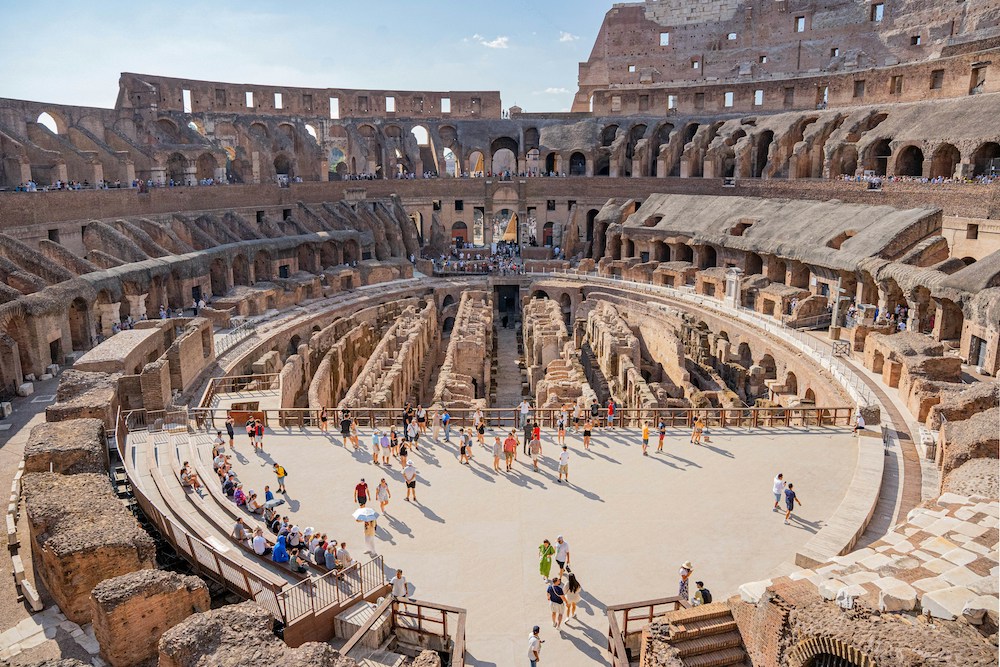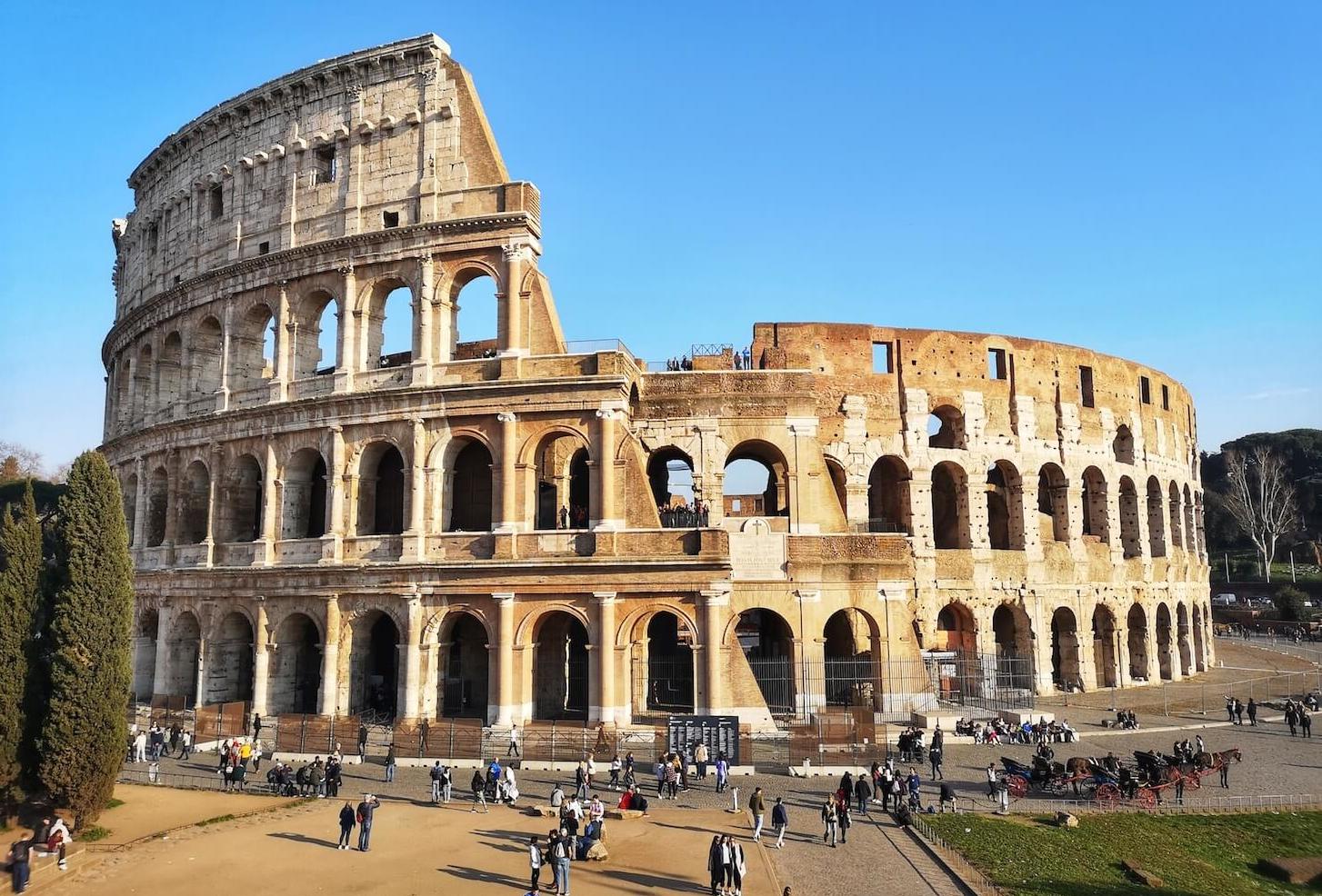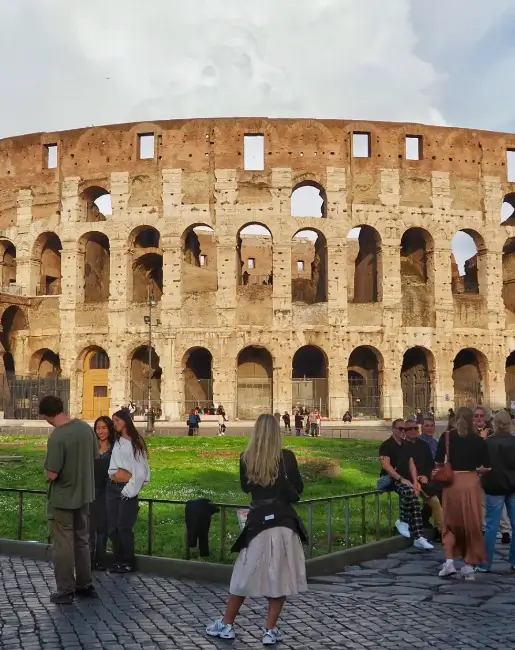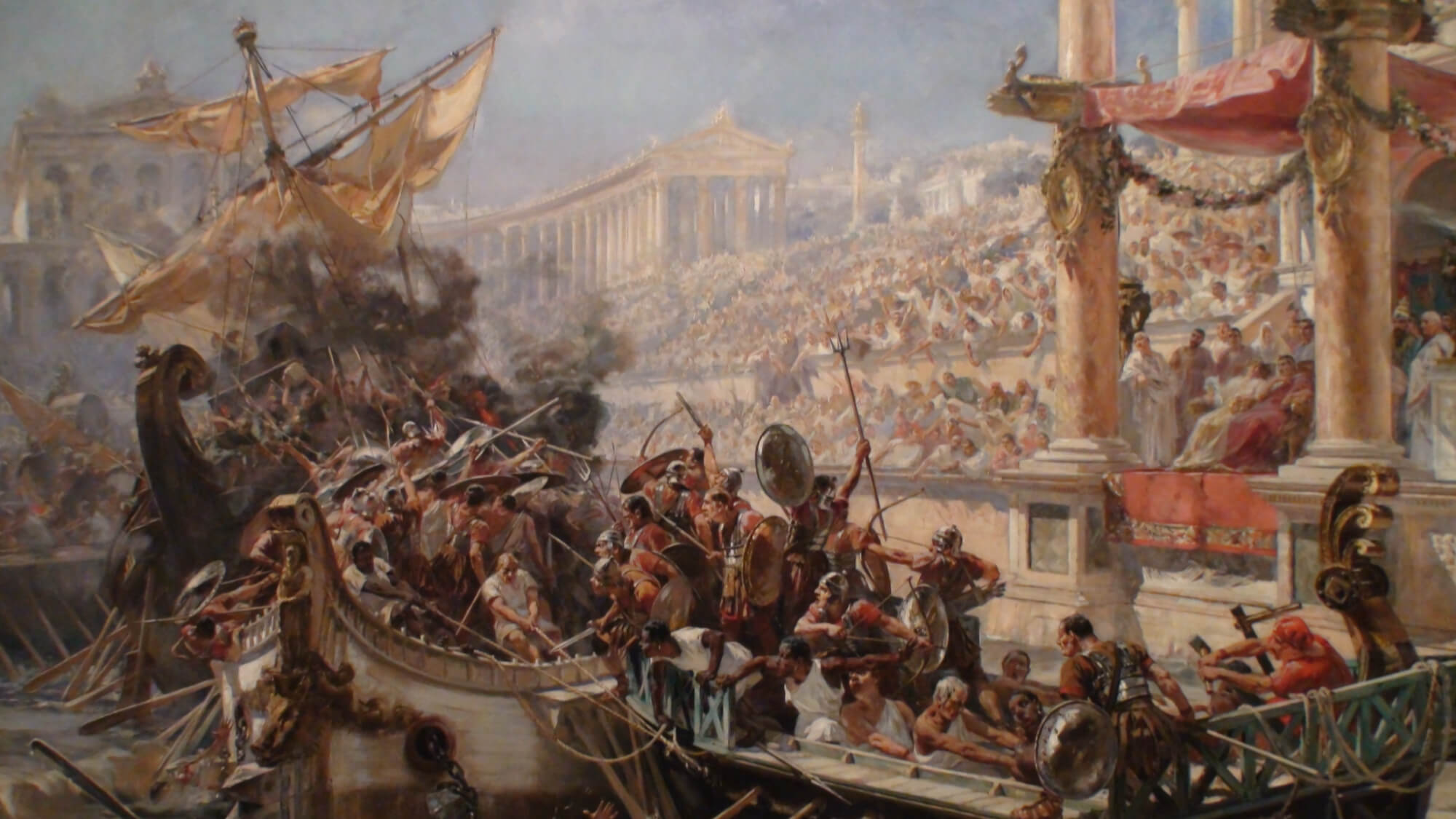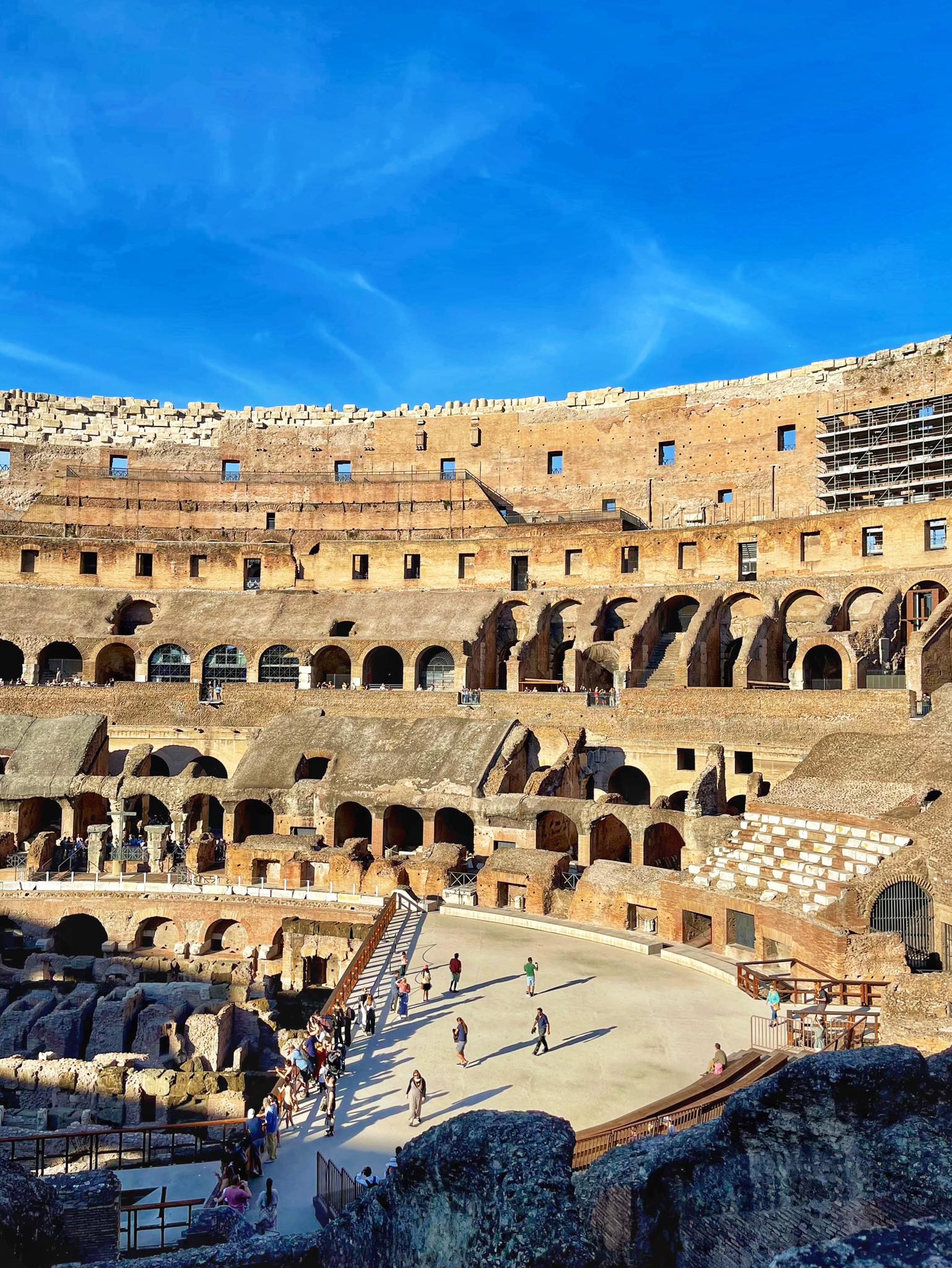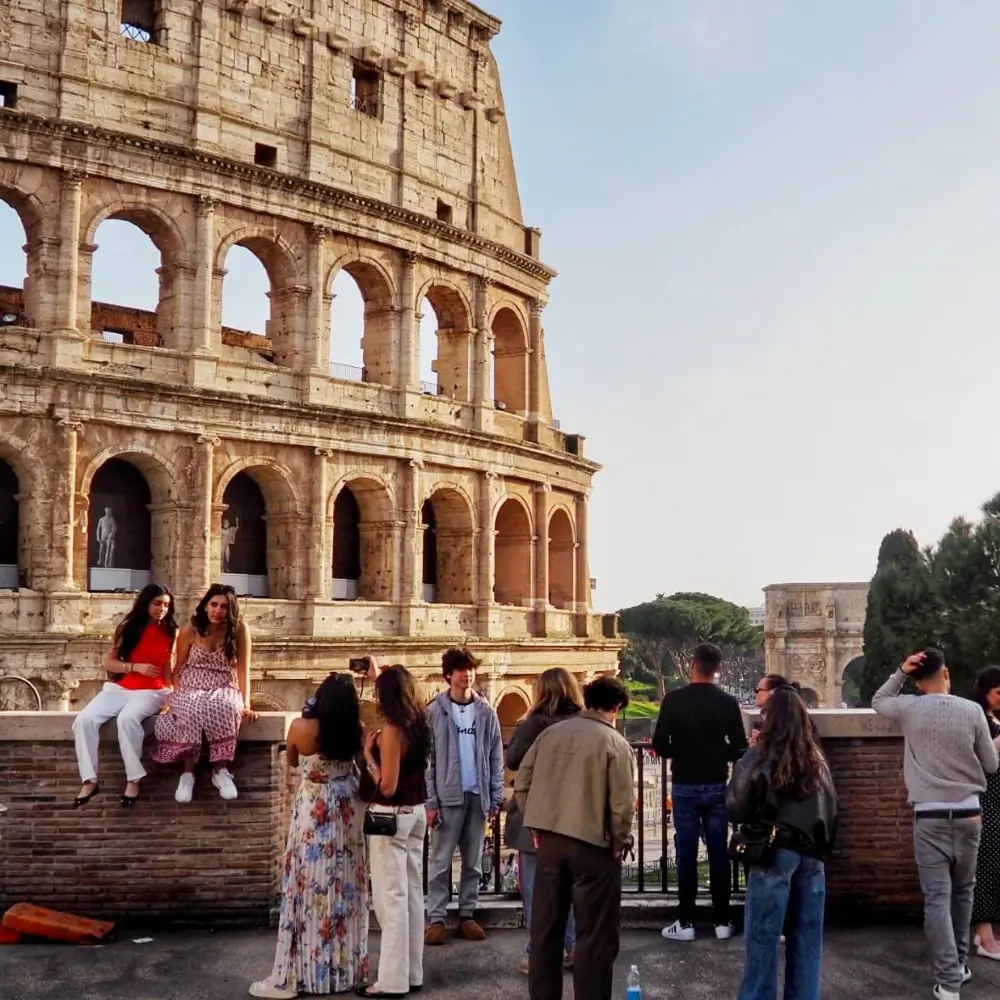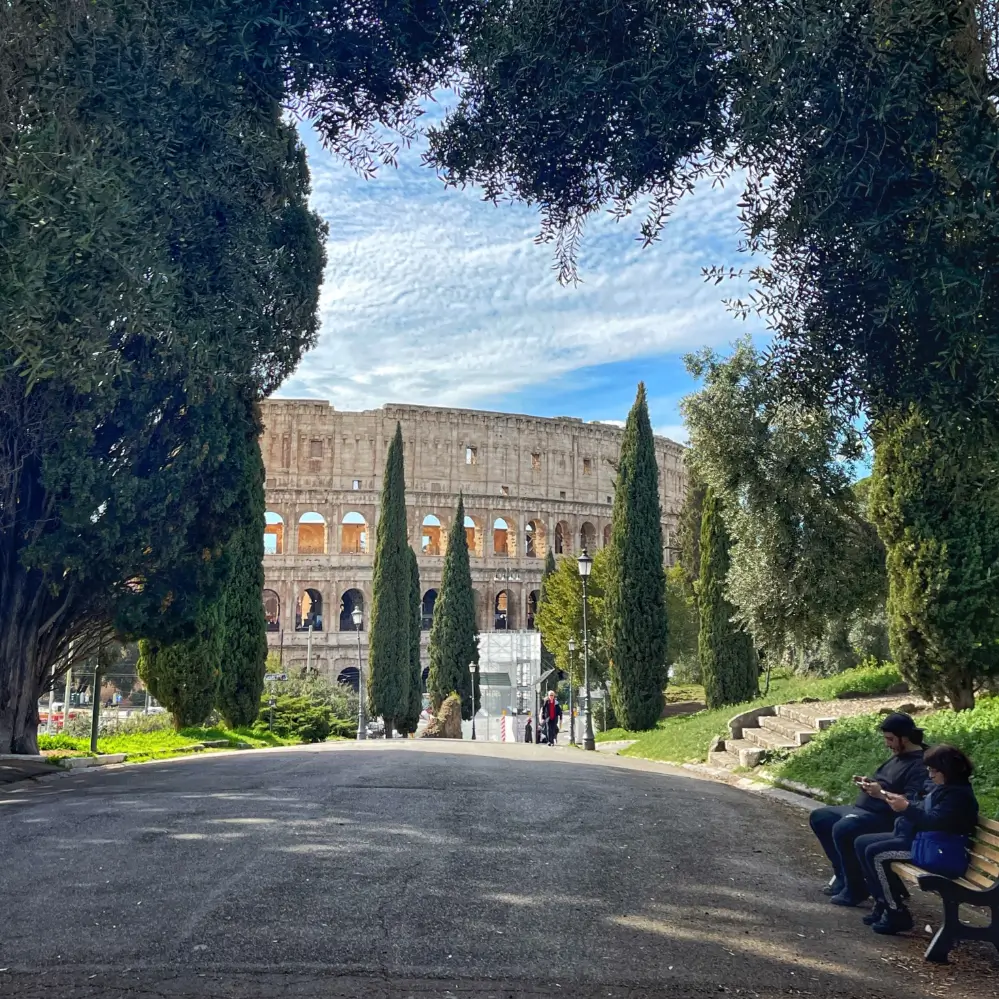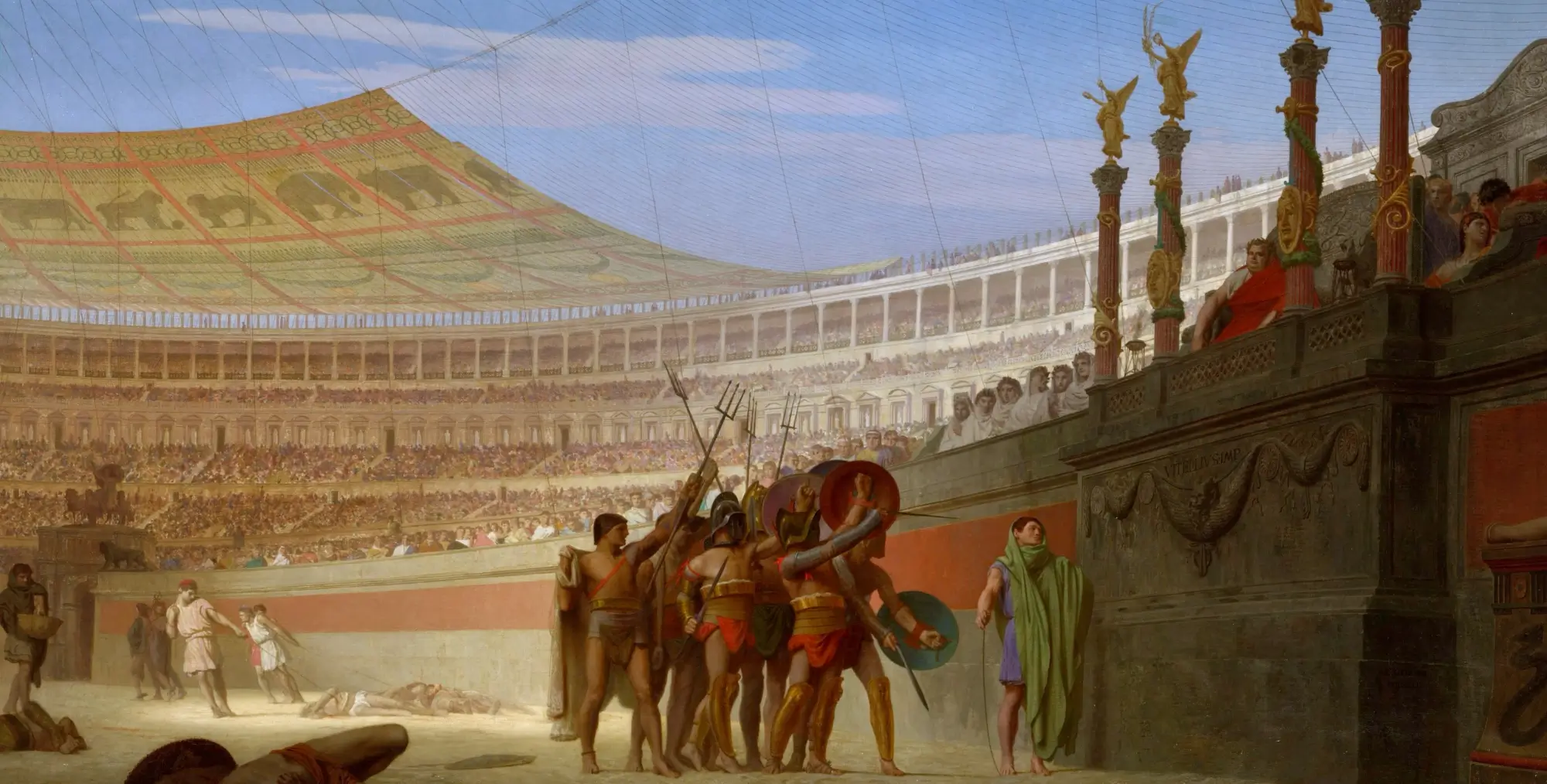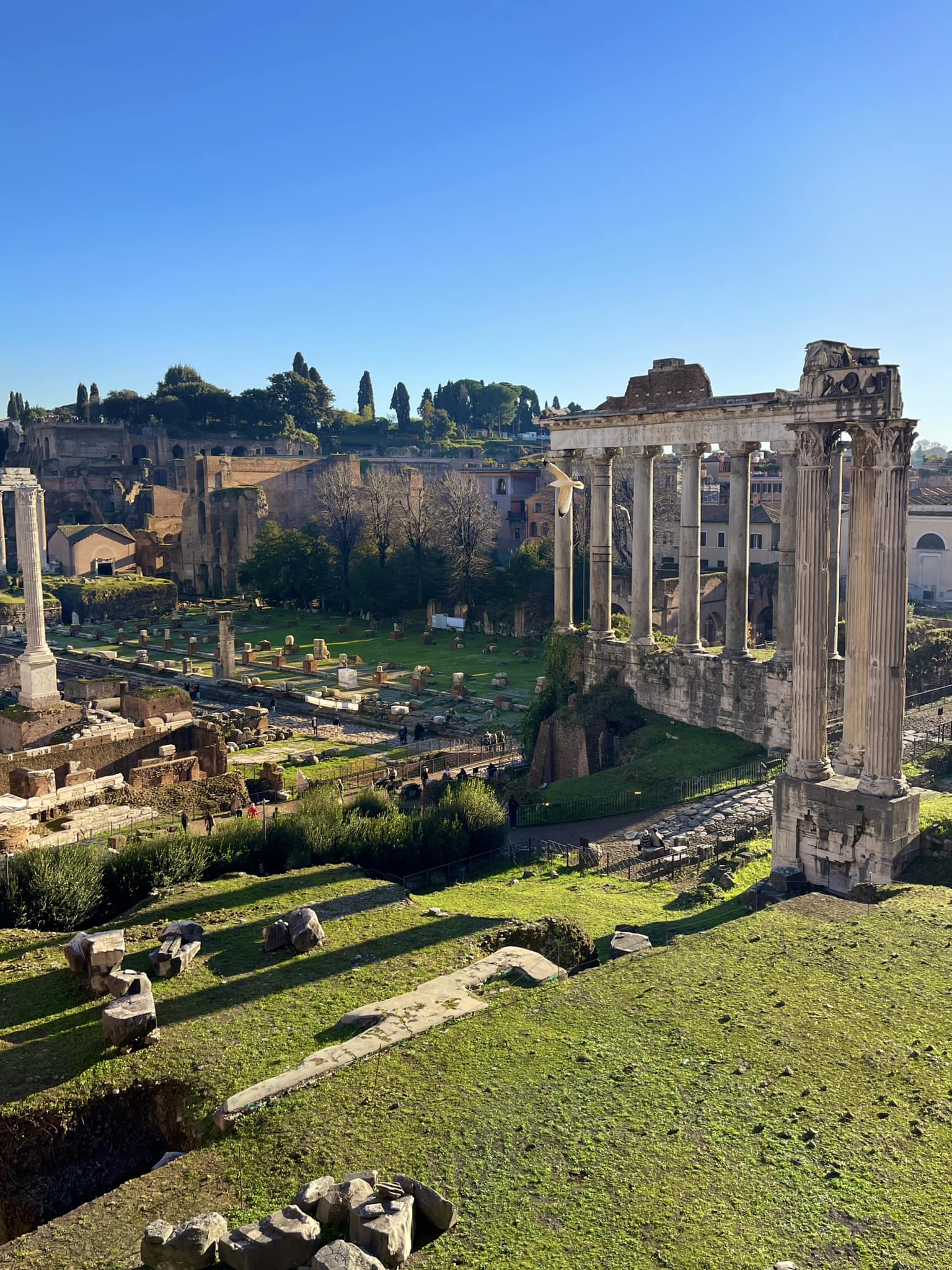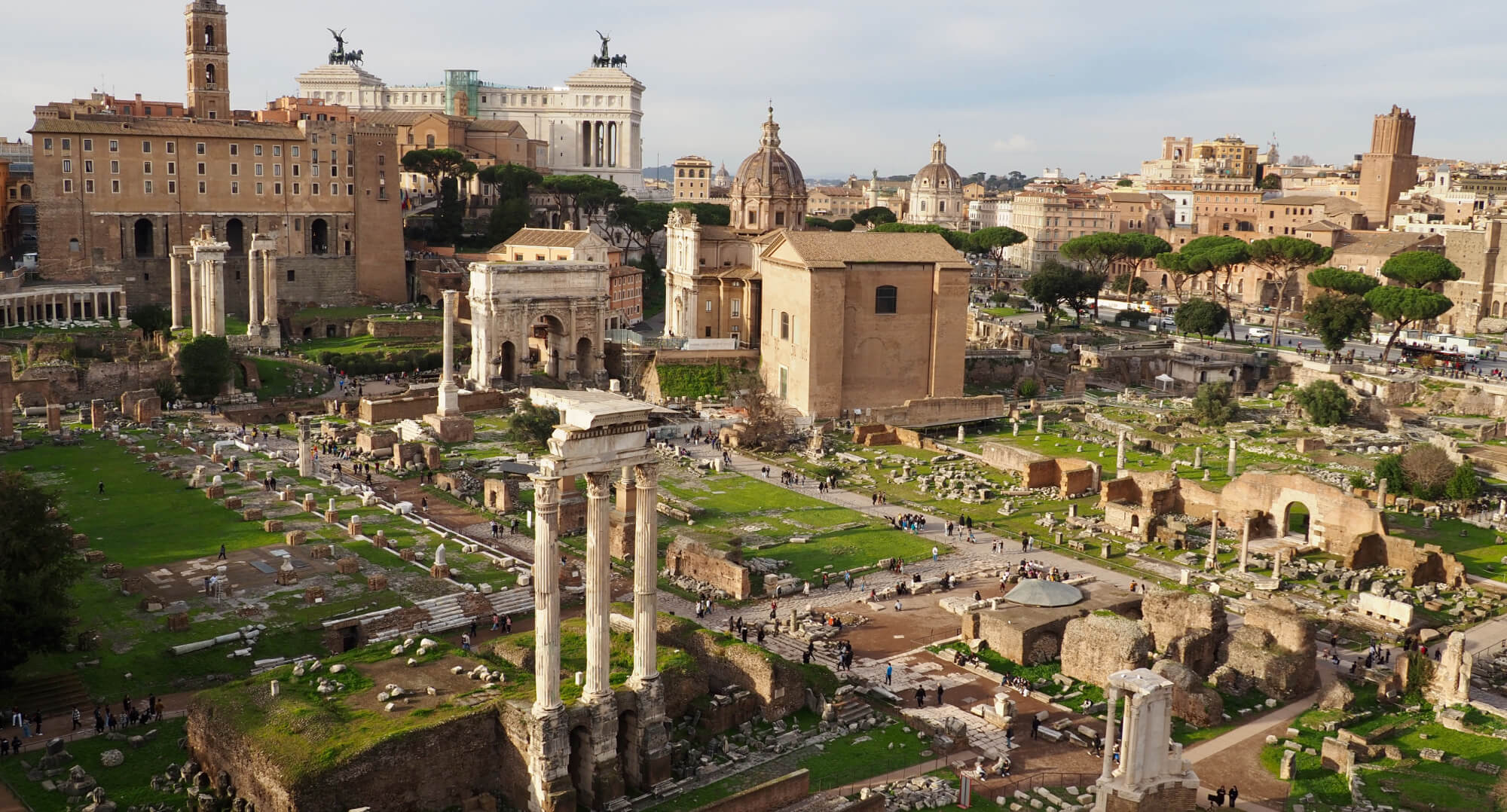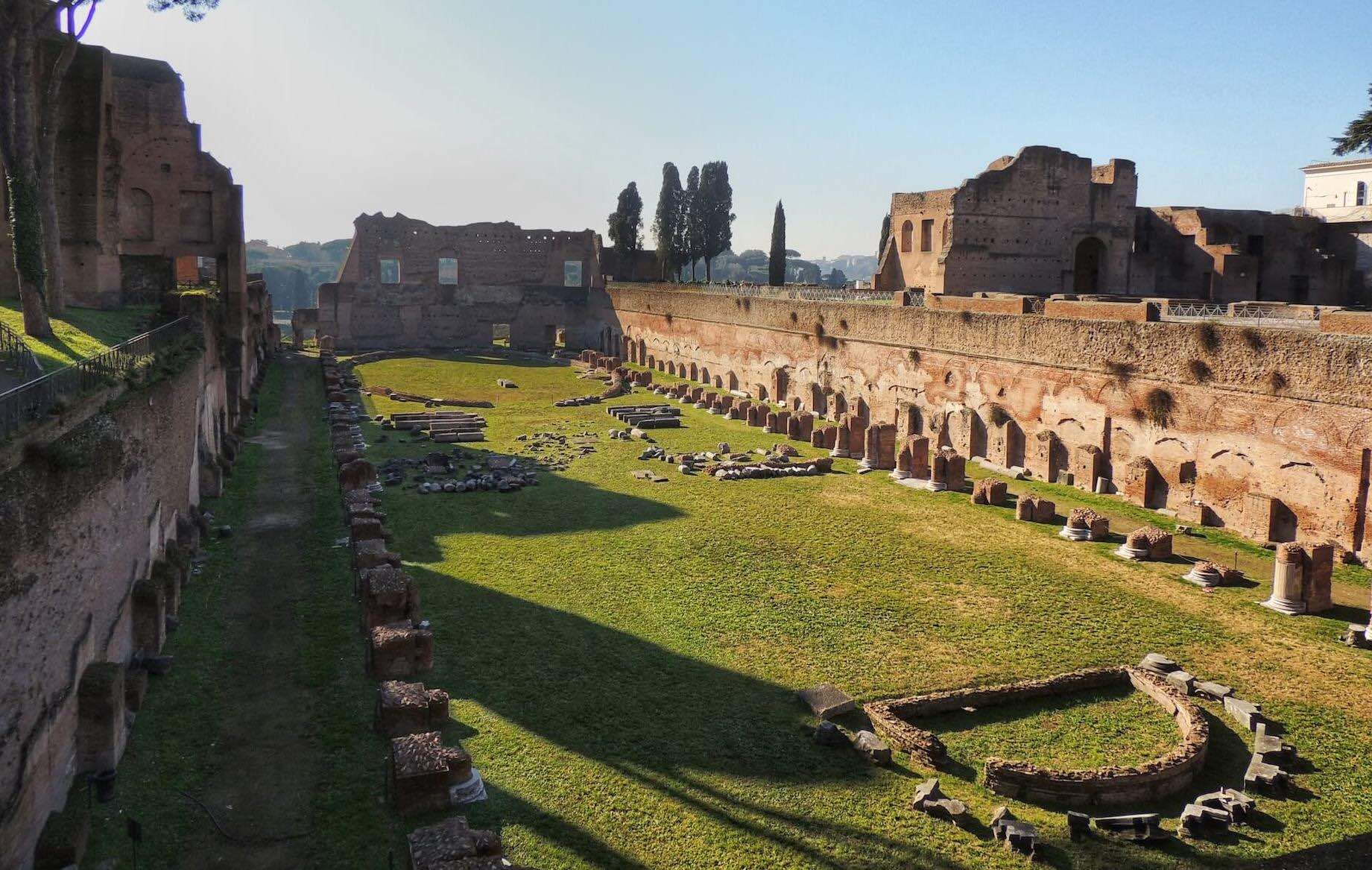
Rome was the largest and greatest city of the ancient world, and a roll-call of its most famous classical monuments today immediately conjure up splendid visions of a glorious antique past: who could imagine visiting the Eternal City without following in the footsteps of the gladiators at the awe-inspiring Colosseum, or exploring the ancient imperial palaces on the Palatine Hill?
No trip to Rome would be complete without immersing yourself in the daily life of antiquity in the Forum, meanwhile, or standing in the centre of the yawning Circus Maximus, where daredevil chariot races were cheered on by crowds of over 300,000 spectators.
But in Rome, these world-famous landmarks really are just the beginning. Traces of the ancient world are everywhere you look: ancient temples embedded in medieval churches, aqueducts still striding through the suburbs, mausoleums hidden in quiet parks, bath complexes converted into train stations.
Coming across these lesser-known ancient remains is one of the great pleasures of visiting the Eternal City, and it’s why you’d need a lifetime or more to uncover all the surprises Rome has to offer.
This week on our blog we’re counting down 11 of our favourite off-the-beaten-track ancient monuments in the city. How many have you seen?
Ancient Rome Tours
Explore the Best of Ancient Rome!
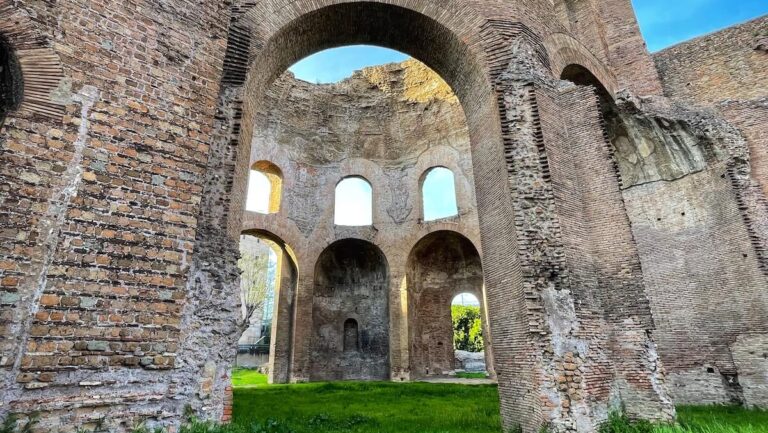
Just inside the Aurelian walls, hemmed in between tram tracks and railway lines in a slightly forlorn corner of the city east of Termini station, stands one of the most impressive and thoroughly undervisited ancient monuments in Rome.
For centuries this massive 12-sided brick rotunda was known as the Temple of Minerva Medica — Minerva in her guise as goddess of medicine — a name derived from a statue of Minerva holding a snake that was mistakenly believed to have been found on the site in the 16th century.
In reality, latest scholarship suggests it had nothing to do with Minerva, and probably wasn’t a temple at all: it is now generally identified as a nymphaeum — an elaborately decorated monumental fountain building — or a dining hall in the sprawling Horti Linciani villa complex, a luxurious 3rd-century estate built under the Emperor Licinius Gallienus.
Exactly what it was used for in practical terms, we cannot say with confidence. What we can say is that the building was evidently extraordinary: the dome spanning its interior, at 25 metres in diameter, was the third largest in the ancient city after the Pantheon and the Baths of Caracalla.
The dome’s upper portion collapsed in the 18th century, giving the ruin its dramatic, fractured silhouette — the one that so captivated Piranesi, JMW Turner and a long line of Romantic artists who painted and engraved it. Despite its crumbling condition and its slightly improbable setting, it remains one of the most picturesque ancient ruins in Rome.

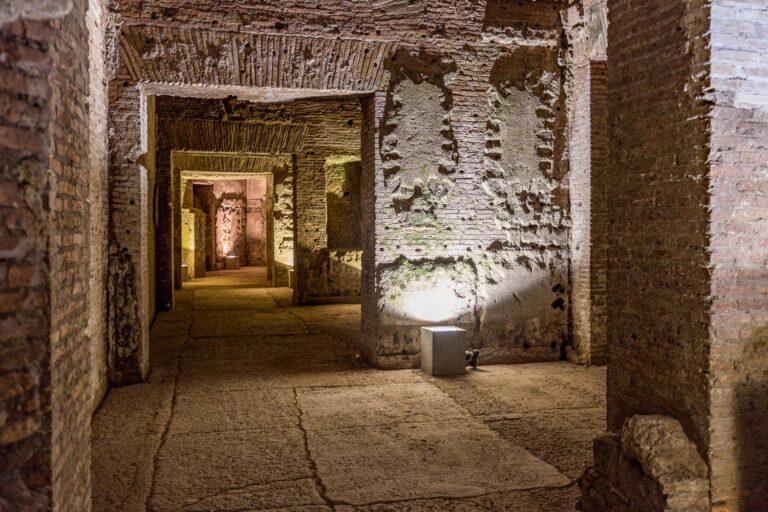
The mad, bad and egomaniacal Nero is one of history’s most enjoyable villains, and he certainly knew how to live well.
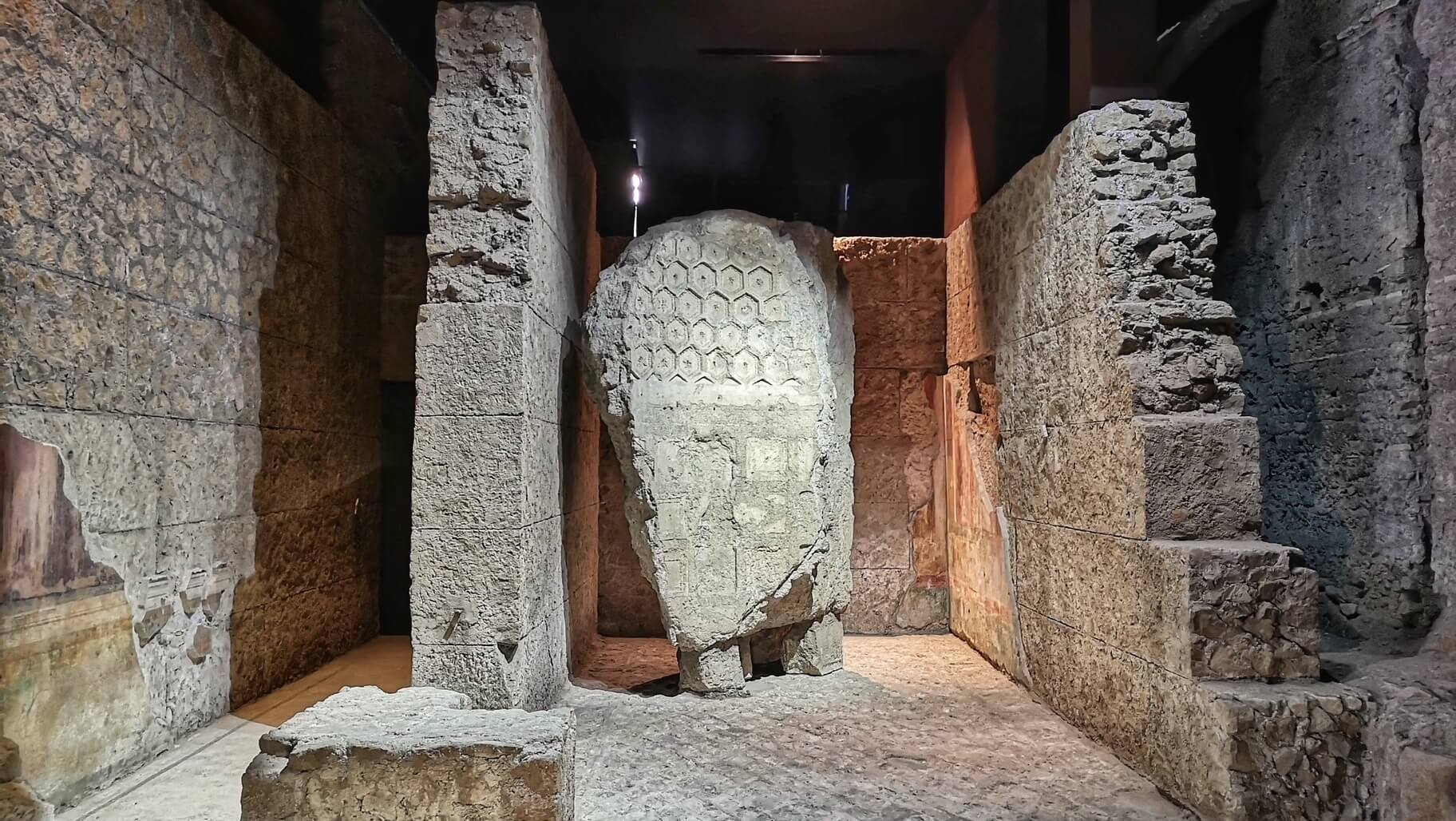
His vast palace complex — the Domus Aurea, or Golden House — was the most spectacular private building in the ancient world, its highlights including a revolving dining room open to the stars, a series of artificial ponds and waterfalls, gardens and vineyards spreading across what is now the Palatine and Caelian hills, and at its centre a colossal artificial lake ringed by colonnades. Before the lake stood a 30-metre-tall statue of Nero himself in the guise of the sun god.
When Nero was finally toppled in 68 AD, his successor Vespasian moved quickly to erase the memory of his predecessor’s megalomania. The artificial lake was drained, its site given to the people of Rome as the foundations of a massive public arena — what we now call the Colosseum, whose very name derives from the colossal statue of Nero that once stood nearby. The Domus Aurea itself was systematically dismantled and buried.
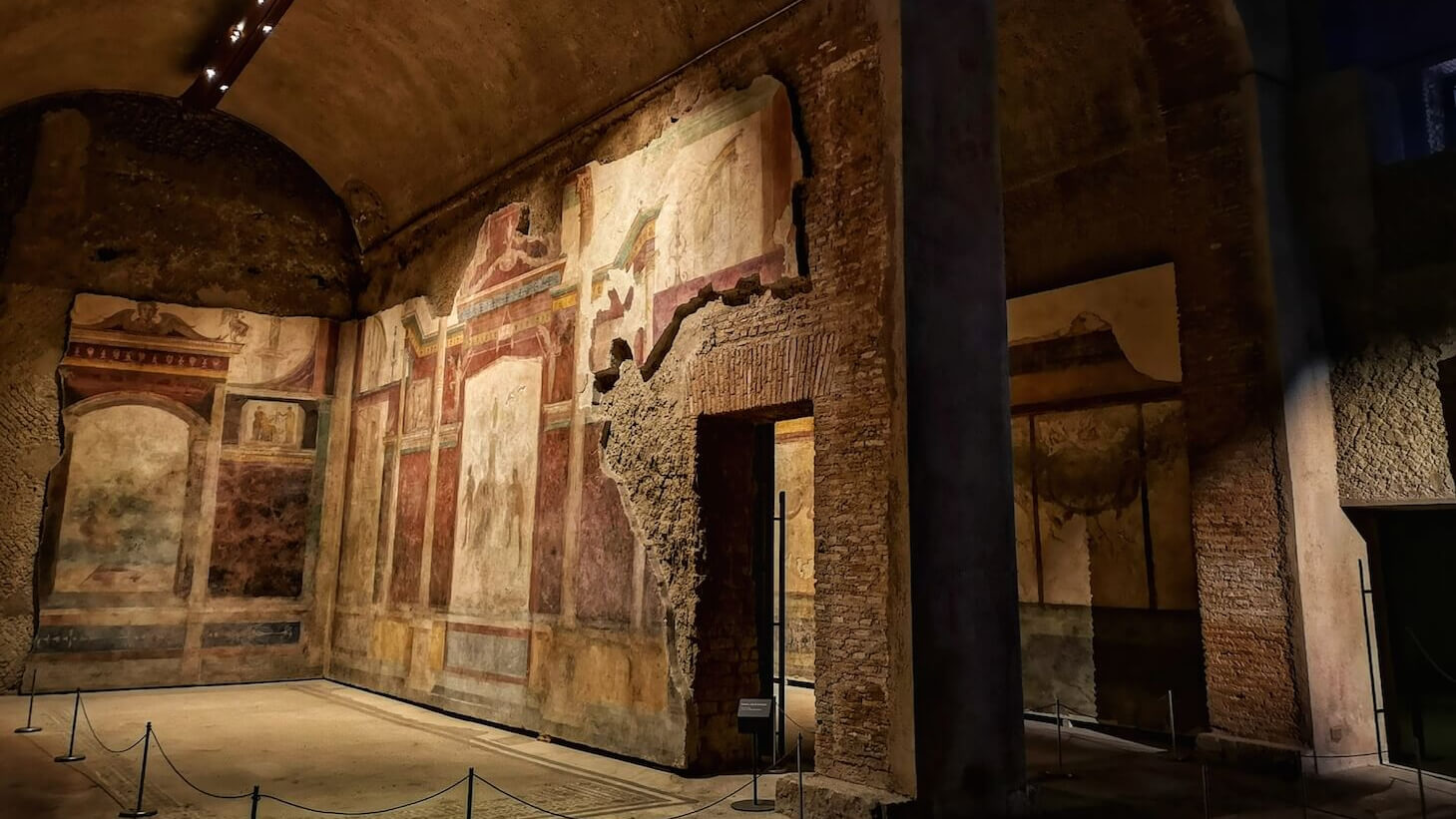
For centuries the buried palace lay forgotten, until Renaissance artists discovered its underground rooms by accident in the late 15th century, climbing down through holes in the ceiling to find vaulted chambers still covered in extraordinary painted decorations. The discovery caused a sensation.
Artists including Raphael, Pinturicchio and Ghirlandaio all descended into the buried grottos to sketch the delicate ornamental motifs — known to them as grottesche (from grotte, caves), and to us as grotesque — that covered the ancient walls. Their influence on Renaissance decoration was immediate and lasting.
Today you can visit the Domus Aurea on a special guided tour that brings this remarkable underground world to life — one of the most exciting archaeological experiences in Rome, and one that most visitors entirely miss.
“Will anybody compare the idle Pyramids, or those other useless though renowned works of the Greeks with these aqueducts, with these many indispensable structures?”
So said Frontinus, Rome’s first-century water commissioner, justifiably proud of the engineering achievements that made possible the greatest city in the ancient world.
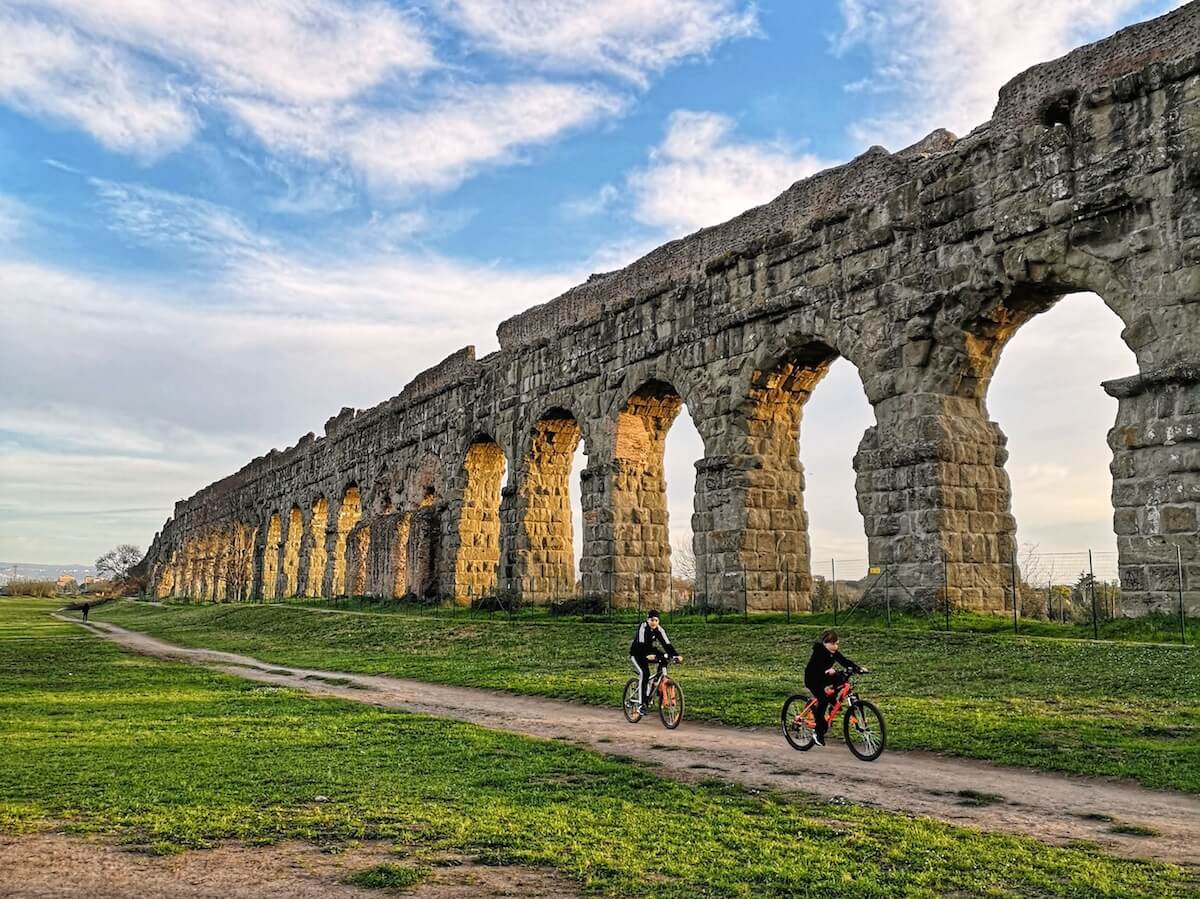
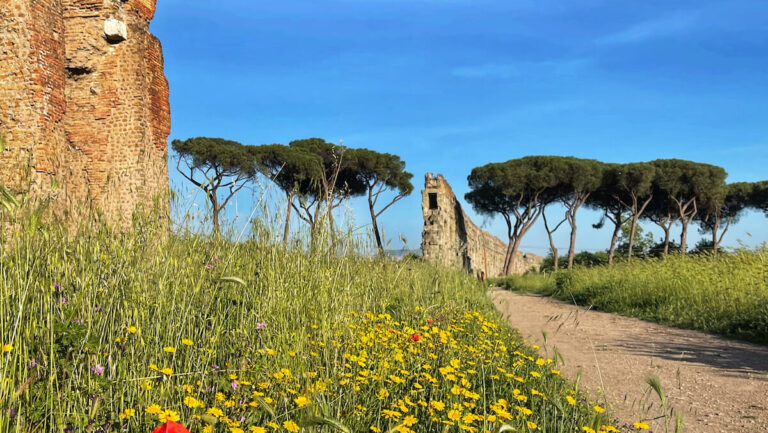
To see those achievements at their most dramatic, head to the Parco degli Acquedotti in Rome’s southern suburbs — a beautiful public park where the vast arcades of the Acqua Claudia still march across the landscape in a series of majestic brick arches reaching up to 30 metres in height.
One of four great ancient aqueducts whose remains survive in this area, the Aqua Claudia was begun by Caligula in 38 AD and completed by his successor Claudius, bringing fresh water into Rome from springs 69 kilometres away in the Alban hills.
It delivered approximately 190,000 cubic metres of water to the city every 24 hours — a flow equivalent to filling an Olympic swimming pool every two minutes, maintained continuously for centuries by engineering alone. Nero later diverted much of its water to supply the artificial lakes and fountains of the Domus Aurea.
The park is one of the most beautiful green spaces in Rome, and almost completely unknown to tourists. Pack a picnic and a bicycle and spend an afternoon here — you’ll share the park with dog-walkers, joggers and families rather than tour groups.
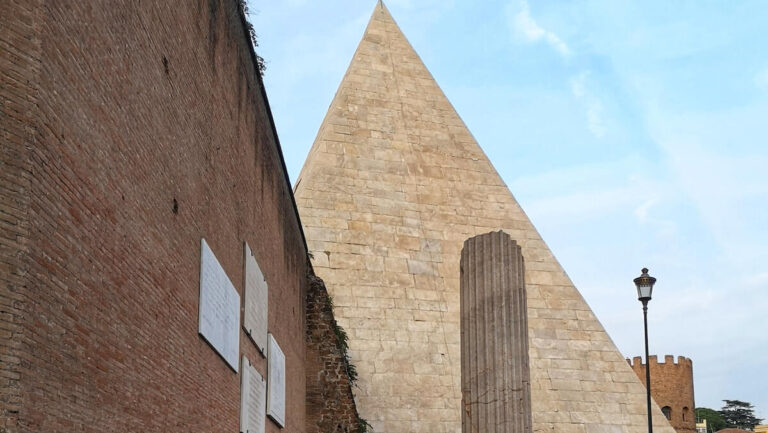
Staking a strong claim to be the most unexpected monument in all of Rome is this pristine white pyramid rising from a busy crossroads in the Ostiense quarter, just across the road from one of the city’s busiest railway stations. It makes you do a double-take every time.
The pyramid is the funerary monument of one Gaius Cestius, a Roman praetor and tribune who died in approximately 12 BC and resolved to be remembered in style.
Its construction was catalysed by the Roman craze for Egyptian fashion that swept the city after Julius Caesar and Mark Antony’s entanglements with Cleopatra, and the subsequent conquest of Egypt by Augustus — suddenly, obelisks, sphinxes and pyramids were extremely fashionable.
Cestius’s pyramid is 36 metres tall, clad in brilliant white Lunense marble, and was completed in just 330 days according to the inscription on its flanks. The interior contains a small funerary chamber with fresco decorations, accessible by appointment on special open days.
The pyramid was incorporated into the Aurelian Walls when they were built in the 270s AD, which had the happy effect of preserving it more or less intact. Beside it stands the beautiful Protestant Cemetery — one of the most romantic burial grounds in Europe, where Keats and Shelley both lie — which is worth a visit in its own right.
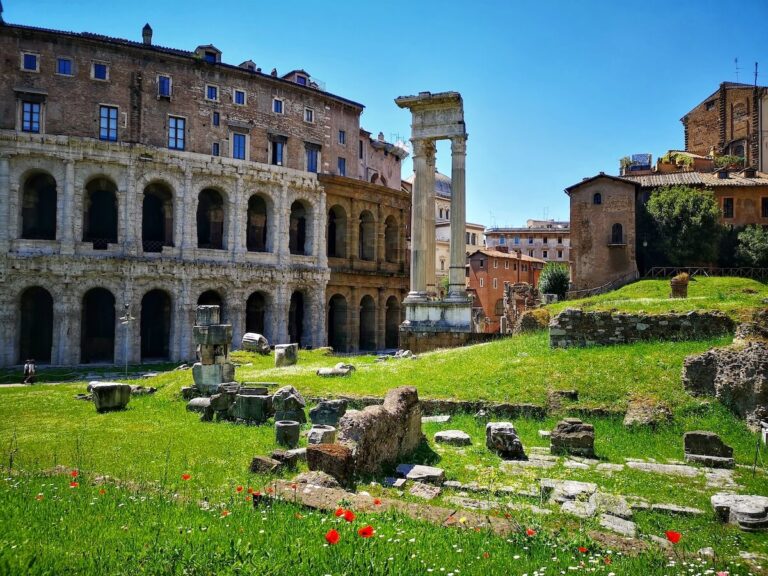
Visitors making their way from the Jewish Ghetto towards the Circus Maximus and the Palatine Hill regularly do a surprised double-take at the massive curved facade that rises from a jumble of archaeological excavations near the Tiber.
It looks, at first glance, like a miniature Colosseum — and the resemblance is not coincidental. The Teatro Marcello predates the Colosseum by nearly a century, and was likely an important influence on the later building’s design.
Begun by Julius Caesar and completed by Augustus in approximately 13 BC, the theatre held an estimated 15,000–20,000 spectators and was named by Augustus after his favourite nephew Marcellus, who died at just 19 before seeing it completed.
Unlike the Colosseum, the events that took place here were of an altogether more civilised nature — theatrical performances and musical recitals rather than gladiatorial combat.
After the fall of the Western Empire, the building’s massive walls proved too useful to simply abandon. The theatre became a fortress for the powerful Pierleoni family in the medieval period, then passed to the Savelli family, who commissioned Baldassare Peruzzi — the same architect who designed the Villa Farnesina — to build a Renaissance palace directly on top of the ancient arcades in the 16th century.
That palazzo, whose windows protrude incongruously from the ancient brickwork, is still in use as private apartments today, making the Teatro Marcello one of the most extraordinary cases of architectural layering in a city full of them.
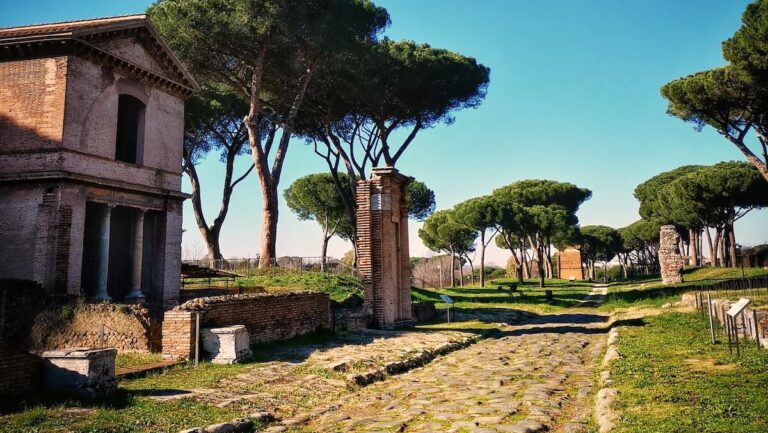
One of Rome’s most important – and surprisingly little-visited – archaeological complexes, the tombs of the Via Latina comprise a series of beautifully preserved antique sepulchres lining a stretch of an ancient Roman road hidden away in plain sight in a southern Roman suburb.
Many of the tombs date from as far back as the 1st century AD, including the Barberini or Corneli tomb, a split-level affair that includes an underground hypogeum surmounted by a richly decorated vaulted upper story featuring winged victories, marine animals and various fantastic creatures.
No less impressive are the Pancrazi tomb, also decorated with vibrant frescoes, polychrome stuccoes and mosaic floors, and the Valerii tomb, complete with 35 medallions featuring Dionysian scenes.
In any other city in the world this archaeological park would be considered a must-visit highlight, but such is the nature of Rome that hardly anyone comes here. Get there by taking the A line of the metro as far as Arco di Travertino – from there it’s an easy 5-10 minute walk. Entrance is free.
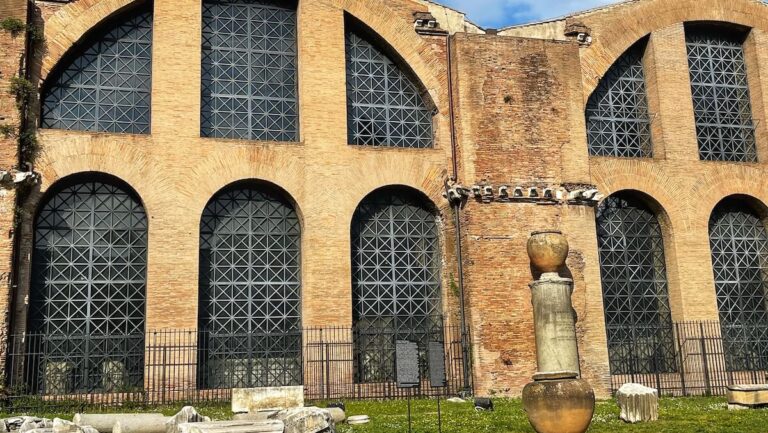
The magnificent and massive Baths of Diocletian was the largest public baths complex in ancient Rome, built between 298 and 306 AD on the orders of the emperor Maximian in honour of his co-emperor Dicoletian. The baths could hold 3,000 people at one time and took up an incredible 120,000 square metres, spreading across the valley between the Viminal and Quirinal hills.
Baths were fundamental to Roman life, where bathing was a daily activity vital for both health and socialising. Even thugh only a small part remains intact today, they give a vivid sense of how awe-inspiring the original complex must have been.
The main rooms were aligned on a central axis. First came the caldarium, where a pool was kept at scalding temperatures by an elaborate system of air ducts and pipes; the caldarium led to the tepidarium, where the temperature was less extreme; bathers would finish their spa routine by plunging into the icy waters of the frigidarium. Others features of the complex included a massive open-air swimming pool known as the natatio, as well as a series of gyms.
Today part of the baths are visitable once again as part of Rome’s National Museum (another part was transformed into a church by Michelangelo). The Baths are hidden away just across the road from Termini station, an oasis of calm that takes you back in time to the splendours of the ancient world just moments from the modern traffic.
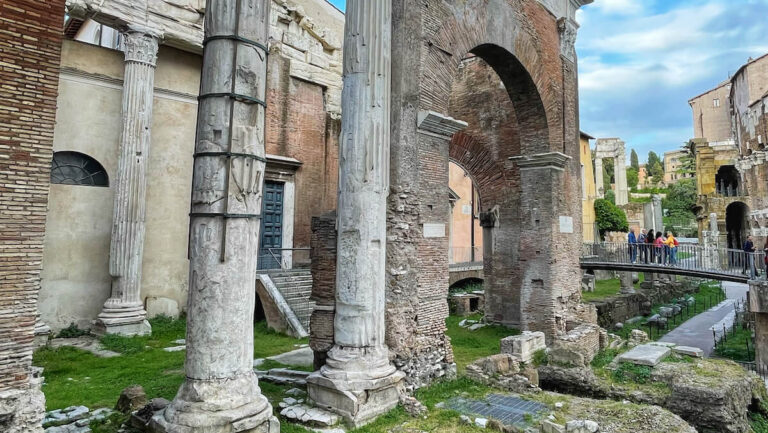
Rising from the heart of Rome’s Jewish Quarter, the Portico d’Ottavia is one of the most powerful images of architectural continuity in the entire city — a monumental Roman gateway now serving as the entrance porch of a medieval church built directly into its ancient frame.
The original portico enclosed a large sacred precinct containing two temples, and was reconstructed by Emperor Augustus in around 23 BC in honour of his sister Octavia. In antiquity it was an important cultural centre, containing libraries, schools and meeting halls in addition to the temples it enclosed.
After the fall of the Empire, the portico found a new use: the church of Sant’Angelo in Pescheria was built within its ruins in the 8th century, using the ancient columns as its entrance porch.
The surrounding area became medieval Rome’s fish market, and a Latin inscription still visible on the portico’s right-hand arch records the city’s regulation of the market: the heads of any fish measuring longer than the inscribed marble plaque were to be surrendered to the city’s conservatori — powerful administrators with an eye for a good fish soup.
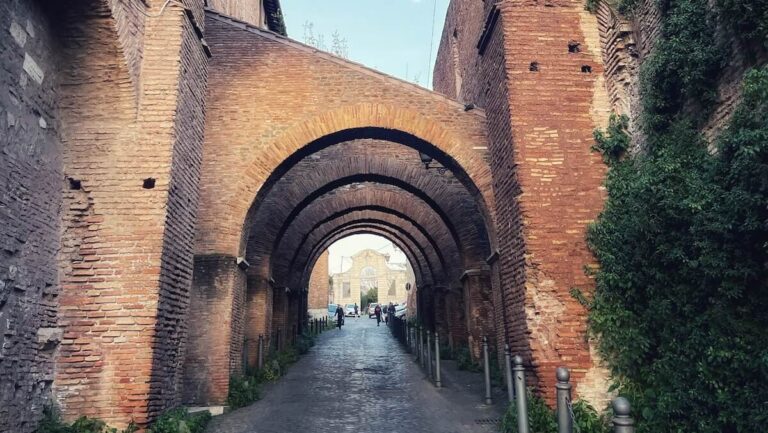
One of the few Roman streets that appears today almost exactly as it did in antiquity, the Clivus Scauri formed part of the route that led from the Circus Maximus to the Colosseum.
The road is recorded in written sources from as far back as the 6th century, and was created under the auspices of a prominent member of the well-to-do Aemilii Scauri family – probably Marco Emilio Scauro, censor in 109 BC.
The Clivus Scauri is still flanked by residential buildings from ancient Rome (which you can visit) and the remains of the ancient temple of the Divine Claudius. The arches that surmount the road and support the buildings on either side were built between the 3rd century AD and the Middle Ages.
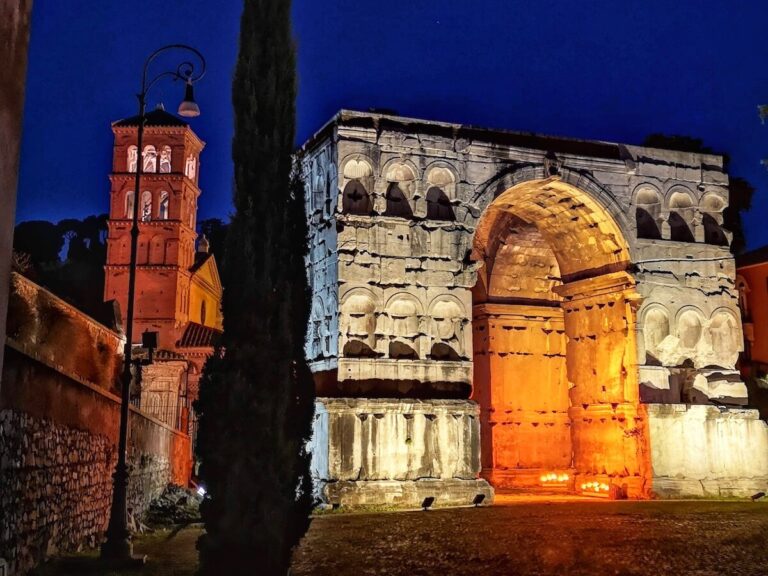
Located a short walk from the Bocca della Verità, the Arch of Janus is the only surviving quadrifrons (four-fronted) arch from ancient Rome — meaning that unlike most Roman arches, it faces in all four directions simultaneously, forming a kind of sheltered crossroads.
It dates from the early 4th century AD and stood at the edge of the ancient Forum Boarium, Rome’s original cattle market, near the spot where the Via Sacra met the ancient road to the Tiber docks.
The arch’s name derives from Janus, the two-faced Roman god of beginnings, thresholds and transitions — though there is no firm ancient evidence connecting the arch to this deity. The 48 niches in its four piers were designed to carry statues, all long since removed.
It occupies a quiet corner of a neighbourhood that sees relatively few visitors, making it one of the most accessible and least crowded ancient monuments in Rome.
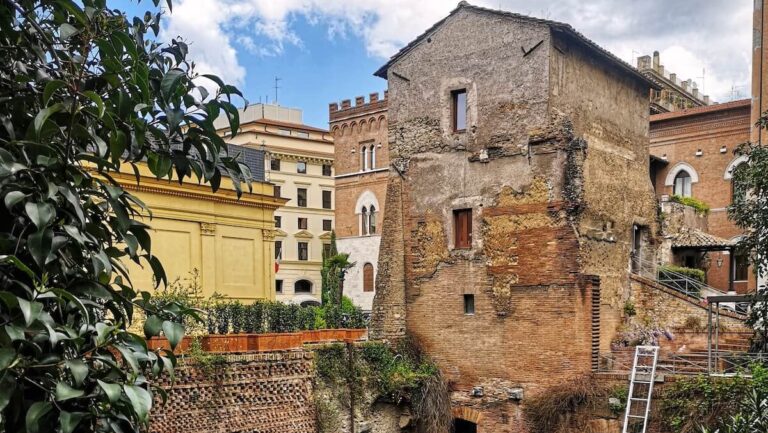
The Horti Sallustiani — the Gardens of Sallust — were once the largest private park in ancient Rome: a vast pleasure garden of landscaped terraces, orchards, fountains, sculpture galleries and colonnaded walks, spreading across the valley between the Pincian and Quirinal hills in the area now occupied by the streets behind Via Veneto.
They were created by the historian and senator Sallust (86–34 BC), who purchased the land from the estate of Julius Caesar after the latter’s assassination in 44 BC.
The nature-loving historian spent his later years here in scholarly retirement, transforming the property into a paradise of cultivated beauty. After his death the gardens passed into imperial ownership and were expanded by successive emperors into one of the great pleasure grounds of the ancient city.
The rapid development of modern Rome in the late 19th century wiped out most traces of the ancient gardens, with one exception: at Piazza Sallustio, accessible by a staircase, the surviving ruins of the Horti can be seen at their original ancient ground level — a full 14 metres below the current street.
The sense of the modern city floating above the ancient one, separated by centuries of accumulated debris, is peculiarly disorienting and peculiarly Roman.
We hope you enjoyed our guide to some of ancient Rome’s most fascinating hidden sites! Through Eternity Tours offer expert-led group and private itineraries to all of Rome’s major archaeological sites, including exclusive visits to the Colosseum. If you’d like to visit any of the sites mentioned in this list with one of our resident archaeologists, get in touch with our team of travel experts today and we’d be delighted to plan your perfect itinerary!
Book Your Ancient Rome Experience