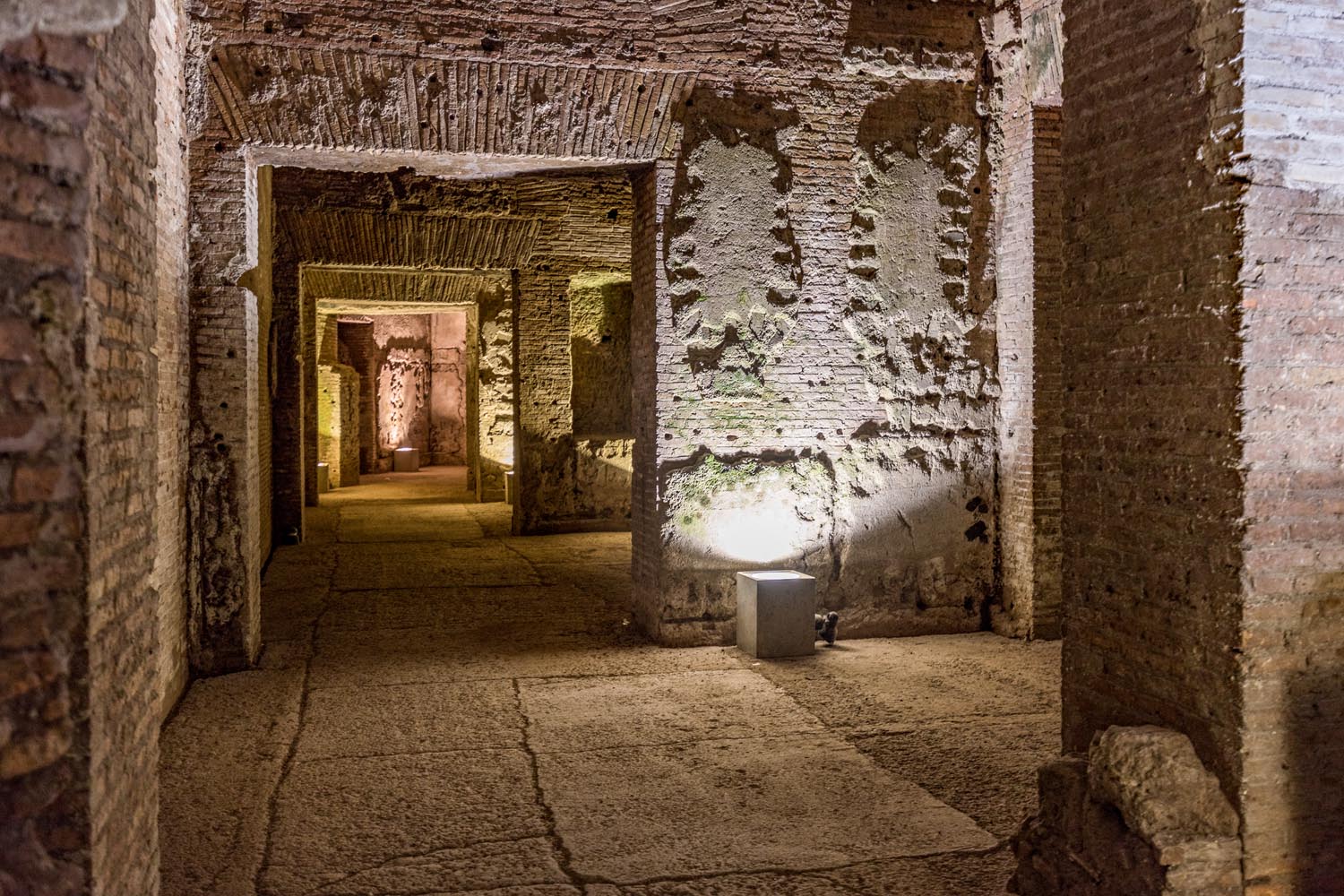
One fateful day in the 15th century, a young Roman out for a walk took a false step — and fell through time.
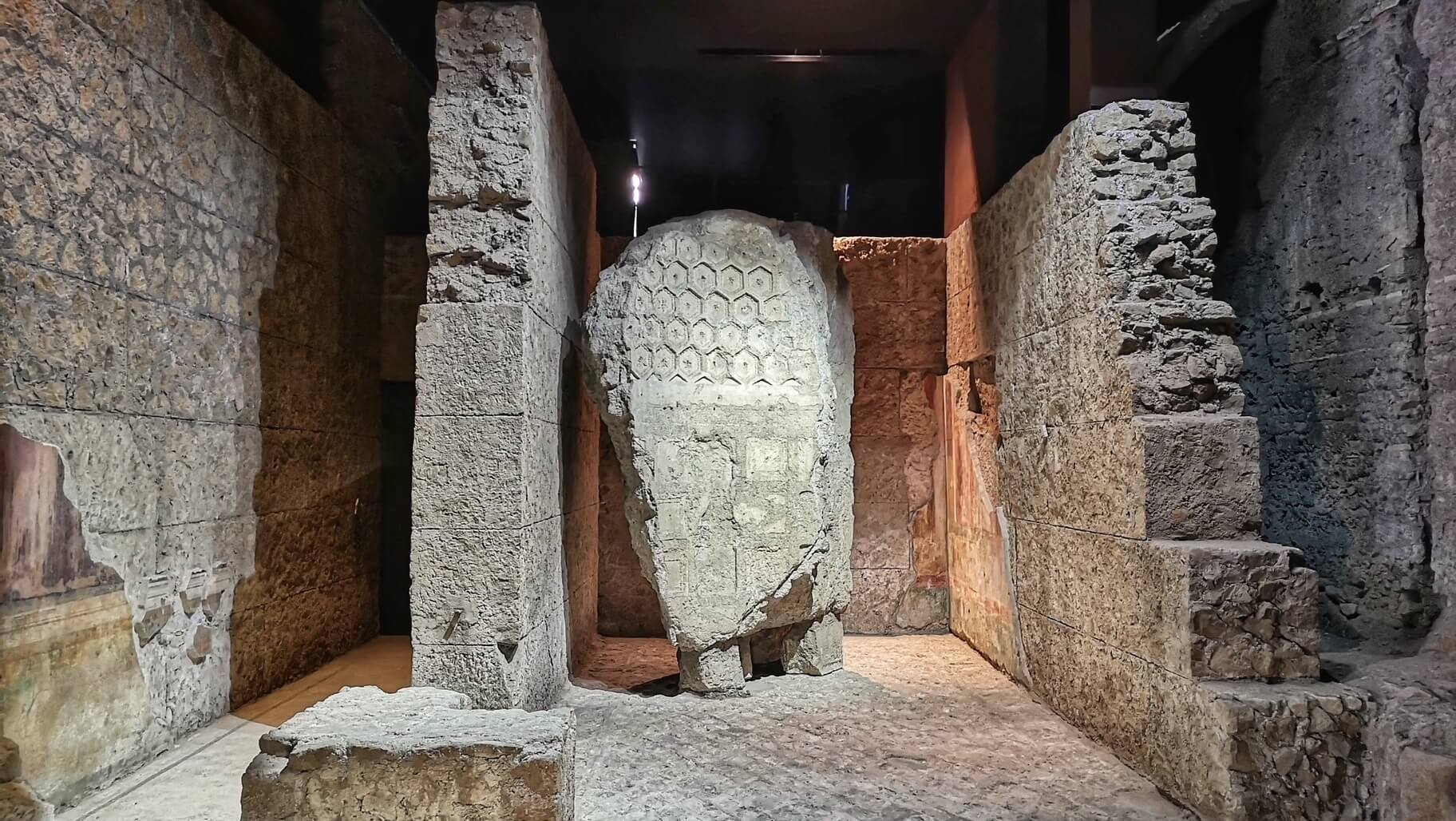
Crashing through the earth on the Esquiline Hill, he tumbled into a vast, hidden world: a cavernous space covered in dazzling frescoes, glowing in the dim light. He had no way of knowing it, but he had just rediscovered the lost palace of an emperor — the fabled Golden House of Nero, buried in the Roman soil for over a millennium.
Word of this astonishing find spread like wildfire, drawing Renaissance artists, scholars, and noblemen alike who risked life and limb to descend into the darkness and witness its wonders. Raphael came. Pinturicchio came. Filippino Lippi and Giovanni da Udine came. They lowered themselves into the earth on ropes, pressed their candles close to the ancient walls, and sketched what they found — changing the history of art forever.
Thankfully, these days you don’t need ropes or daring to explore this forgotten masterpiece. Today it’s possible to visit Nero’s Golden House on special guided tours, and it remains one of our absolute favourite things to do in Rome.
Yet despite its extraordinary beauty and history, the Domus Aurea still flies under the radar for most visitors. If you’re looking for a true hidden gem in the Eternal City, this is it. Read on for our complete guide to visiting the Domus Aurea in 2026.
Rome Tours
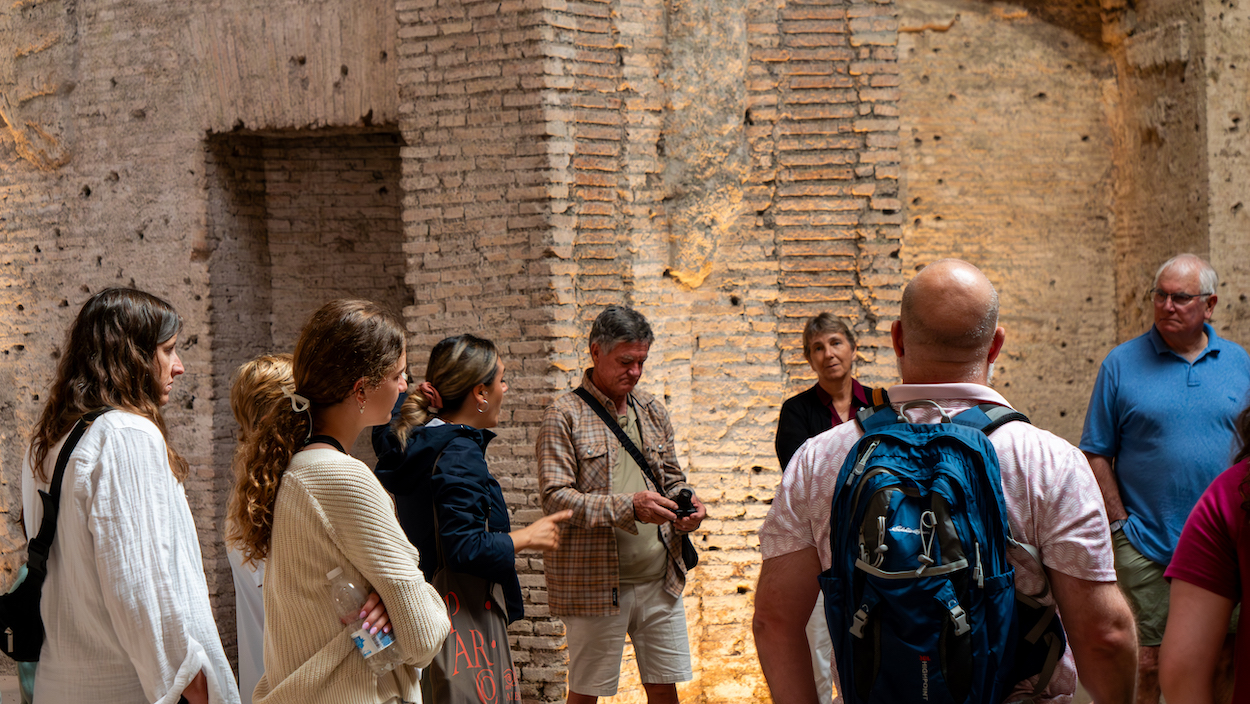
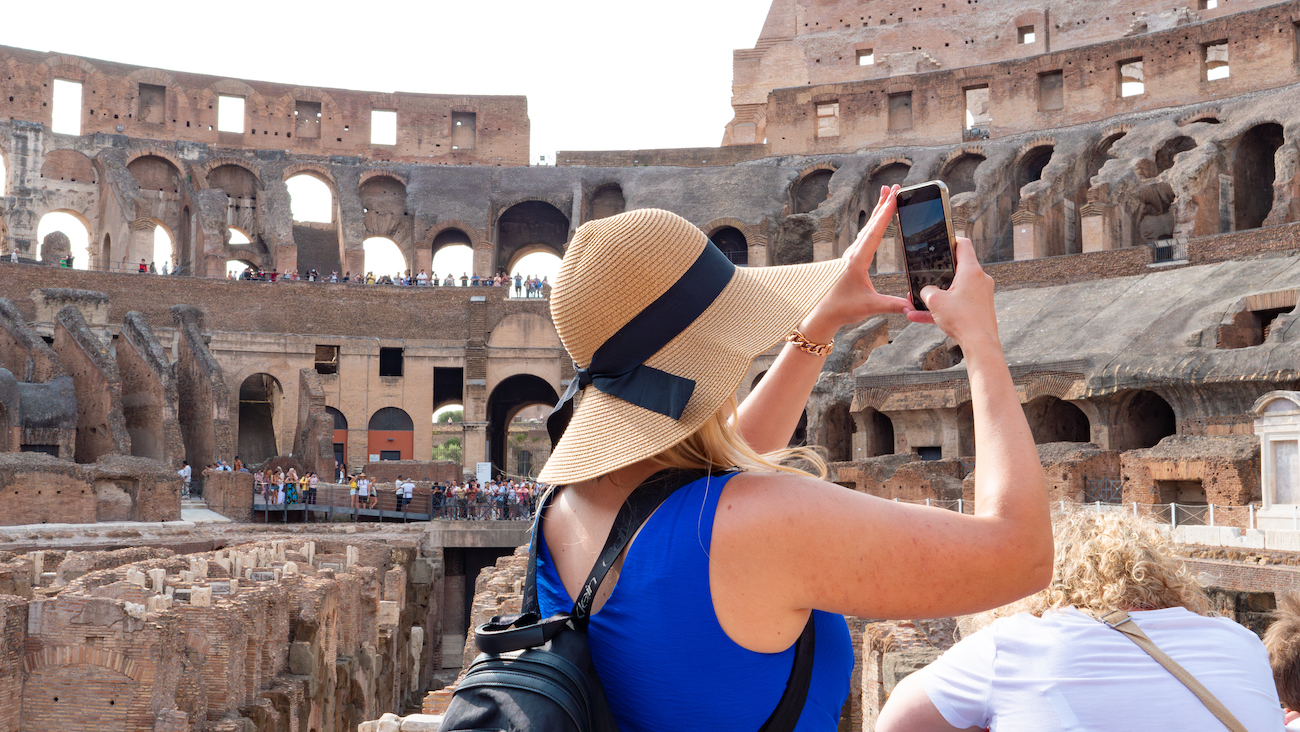
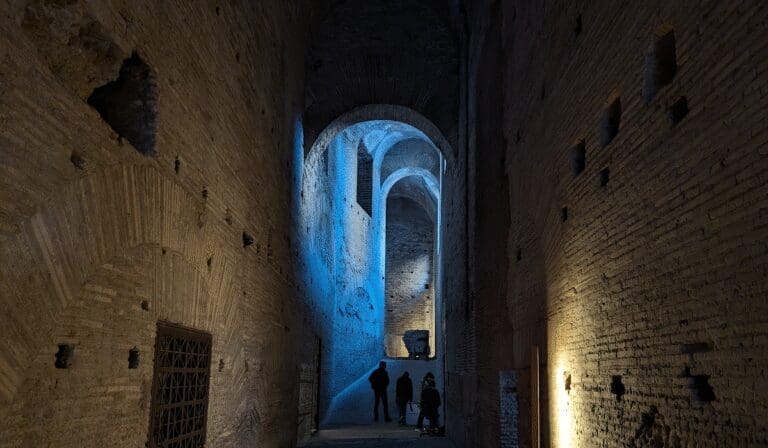
The Domus Aurea — Latin for Golden House — was the most opulent palace in ancient Rome, built by the notorious Emperor Nero in the aftermath of the great fire that devastated the city in 64 AD.
Nero had extravagant tastes at the best of times, and the destruction of so much of central Rome handed him an opportunity he seized with characteristic lack of restraint: a vast swathe of the city’s choicest real estate, cleared of its ruins and put at the service of a palace complex of staggering ambition.
You would expect the palace of an emperor to be luxurious, but even by the standards of Roman emperors the Domus Aurea was excessive. By some estimates the palace and its grounds extended over as much as 300 acres — a private estate carved out of the heart of the most densely populated city in the ancient world, incorporating wooded parkland, vineyards, farmland and a large artificial lake where the Colosseum now stands.
There were over 300 rooms, though few bedrooms, suggesting that the palace was designed primarily as a space for entertainment rather than as a residence in any conventional sense.
Nero’s legendary parties were held here, and their reputation preceded them. Ancient sources provide suitably scandalous details: at one memorable gathering, a guest reportedly died under a cascade of rose petals showered from the ceiling — a fate that presumably no one involved had anticipated.
Nero entrusted the construction to the renowned architects Severus and Celer, whilst the extraordinary decorative programme was created by the painter Famulus. Remarkably, given its scale and complexity, most of the construction was completed in just four years.
When it was finally nearing completion, Nero — a man not given to understatement — remarked that at last he was beginning to be housed like a human being.

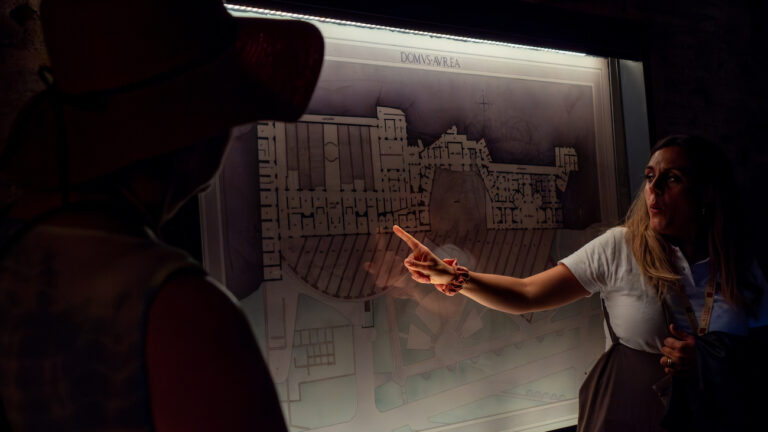
The Latin name Domus Aurea was entirely literal. The palace was lavishly ornamented with gold leaf, semi-precious stones and frescoes that shimmered magnificently in the Roman sunlight.
The ceilings of the dining rooms were inlaid with ivory panels that could be slid back to shower flowers or perfume on the guests below; the walls were covered in the finest coloured marbles and encrusted with gems; and throughout the complex, the warm glow of gold leaf caught and reflected the light in a manner that must, by all accounts, have been genuinely extraordinary.
For the ancient sources who described it — and for the Renaissance artists who later descended into its buried rooms by candlelight — the name was clearly not considered an exaggeration.
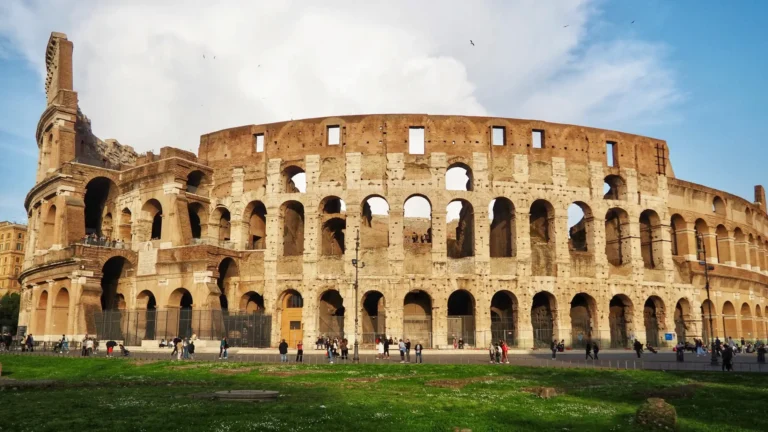
Nero didn’t get to enjoy his magnificent palace for very long. His many crimes and excesses eventually caught up with him, and as his enemies closed in he was forced to commit suicide in 68 AD, just four years after the palace’s completion. Within forty years of his death, this once-glorious complex had all but disappeared from the surface of the earth.
His successors were determined to erase every trace of his legacy. Seen as the ultimate symbol of imperial extravagance and tyranny, the Domus Aurea’s vast grounds were systematically reclaimed for public use.
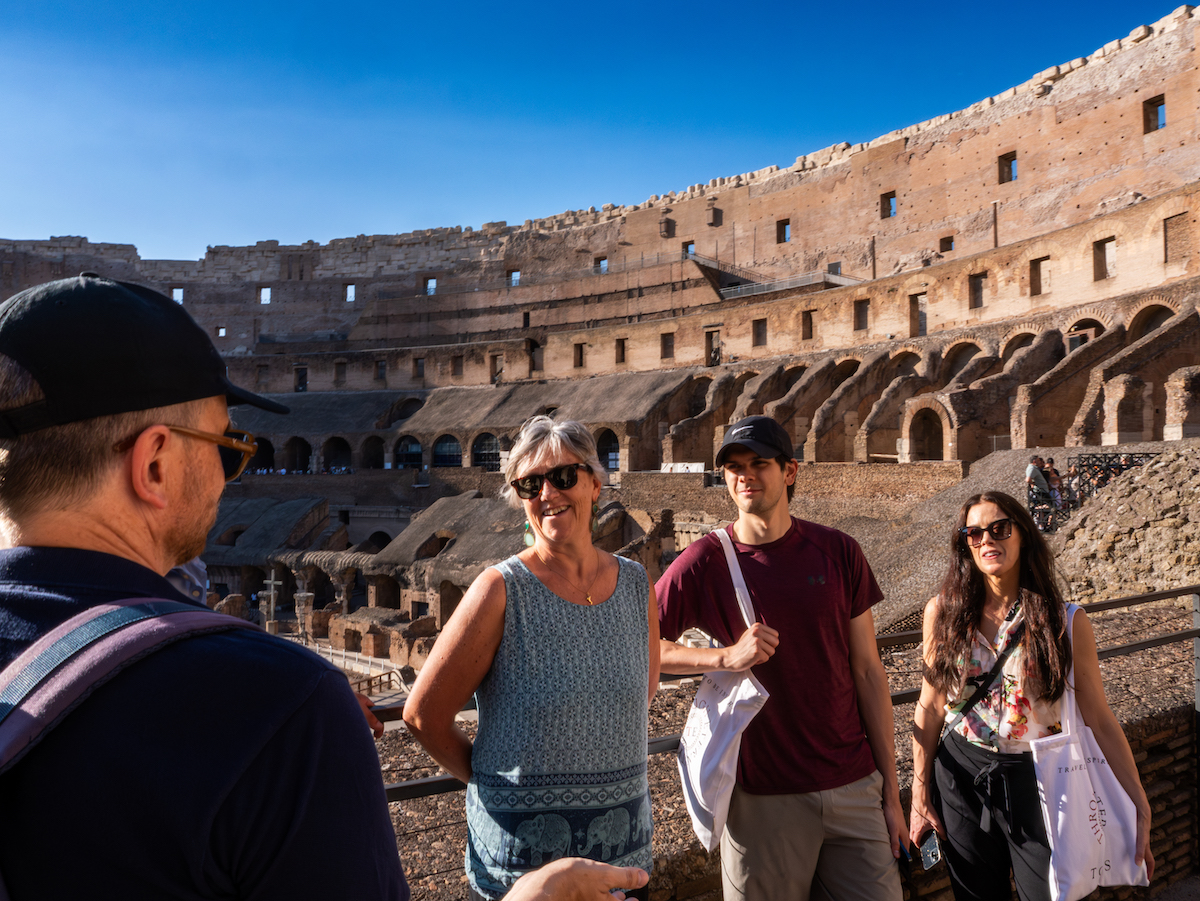
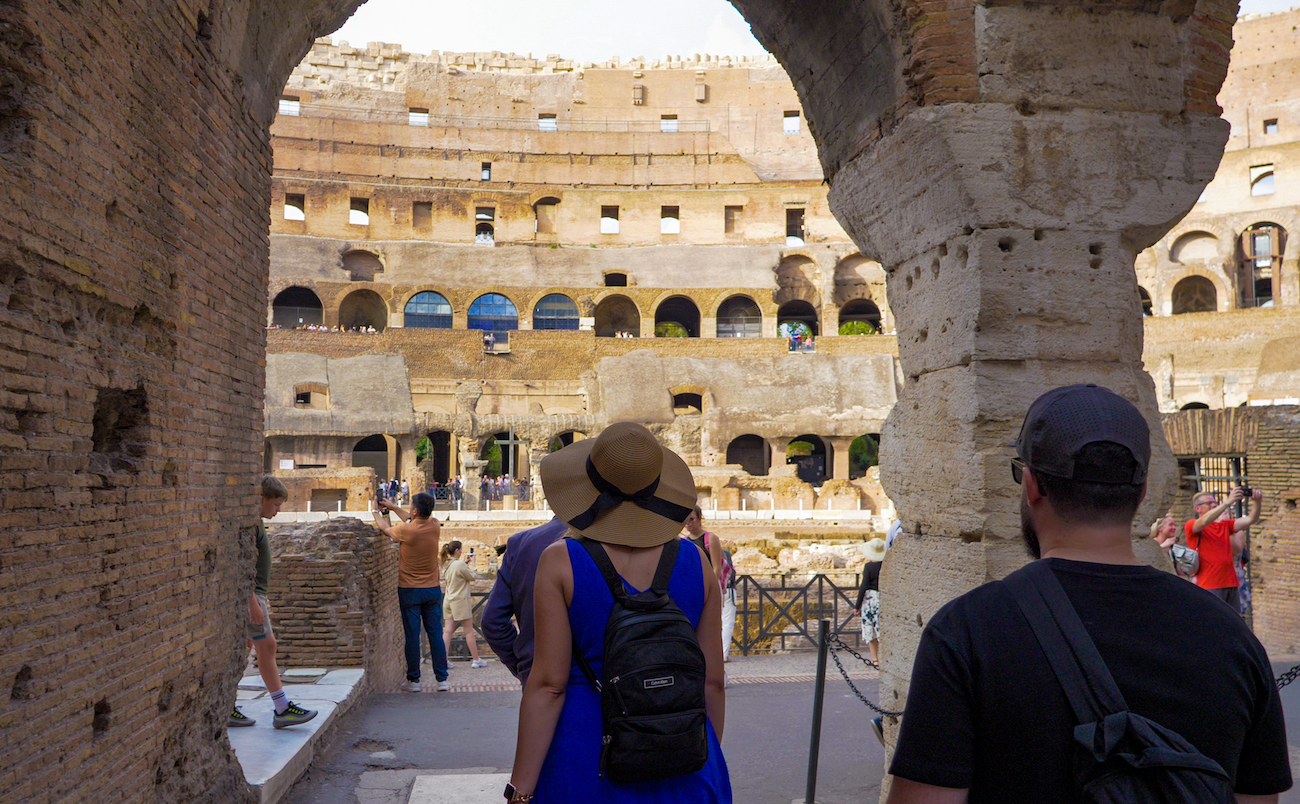
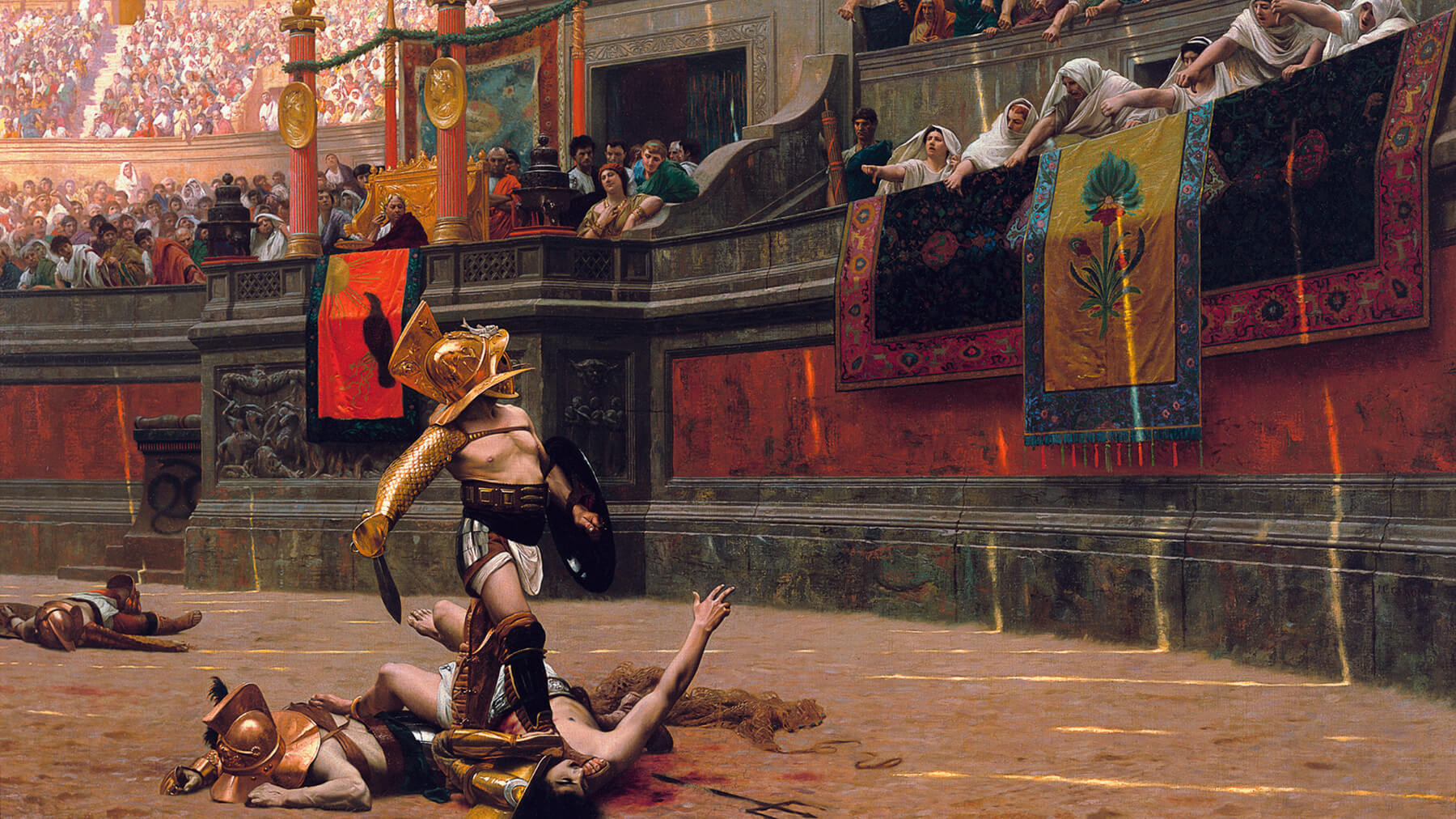
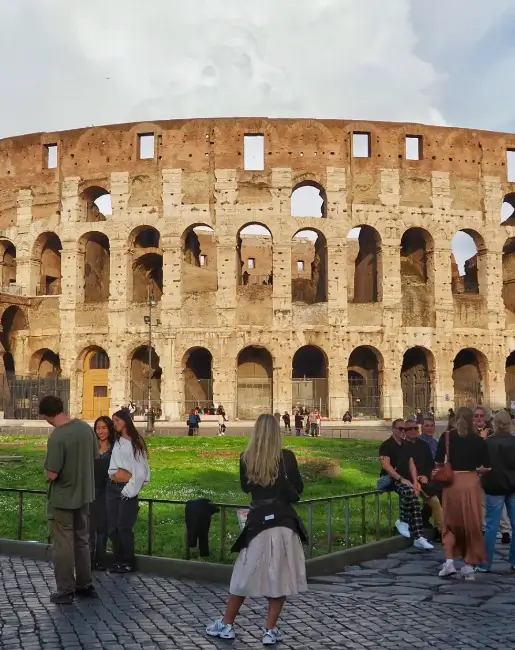
The great artificial lake at the heart of the complex was drained and, within a decade, transformed into the most famous public arena in history — the Colosseum, whose very name derives from the colossal statue of Nero that once stood nearby. Under the Emperor Trajan, the process was completed: the palace itself was deliberately buried beneath the foundations of a grand new bath complex, whose ruins you can still see scattered around the Colle Oppio park today.
Once a dazzling palace of light and splendour, Nero’s Golden House was consigned to the darkness, its memory fading across the centuries until the Renaissance brought it accidentally back to light.
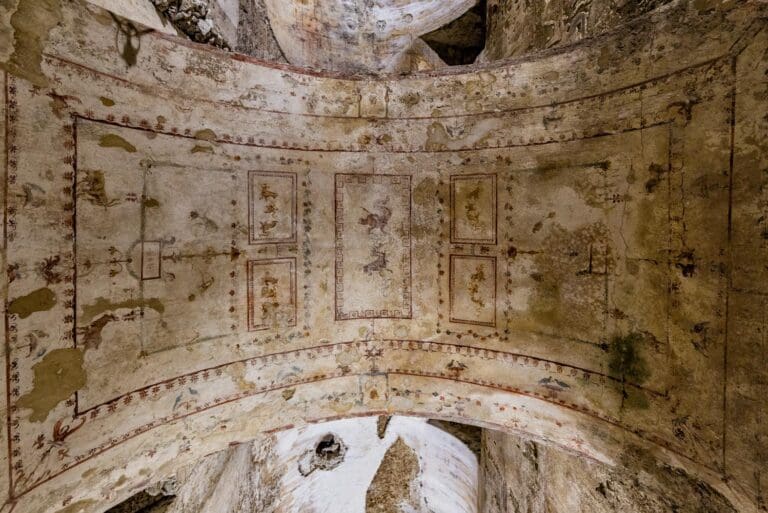
The fall through the earth on the Esquiline Hill that launched our story happened in the late 15th century, and its consequences were immediate and far-reaching.
Word of the buried rooms and their extraordinary frescoes spread rapidly through Rome’s artistic community, and a series of artists made the dangerous descent by rope to sketch what they found.
Raphael himself came, as did Pinturicchio, Filippino Lippi and Giovanni da Udine. Lowering themselves into the rooms that Nero’s architects had called grottos — grotte, in Italian — they studied the delicate ornamental style they found there with intense excitement.
The patterns they discovered and adapted — fantastical combinations of human figures, animals, flowers and architectural forms on an ivory or white ground — immediately influenced their own work and spread rapidly through Renaissance decoration.
We still call this style grotesque, from the caves where it was found: Raphael introduced it into the Vatican Logge; Pinturicchio used it across the Borgia Apartments. The rediscovery of Nero’s palace was not just an archaeological event — it was an artistic revolution.
The Renaissance visitors left their own mark on the ancient walls: signatures and graffiti scratched into the frescoes by many of the artists who descended here, which can still be made out today if you look carefully.
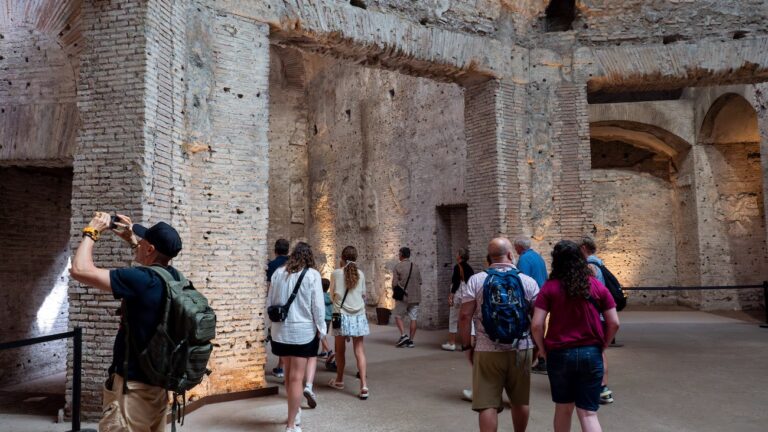
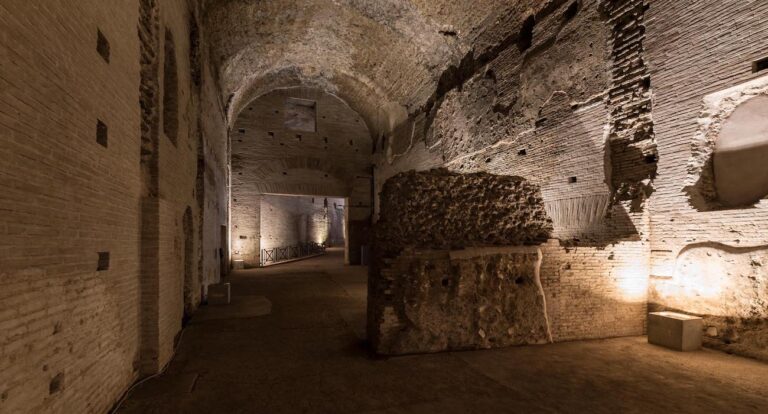
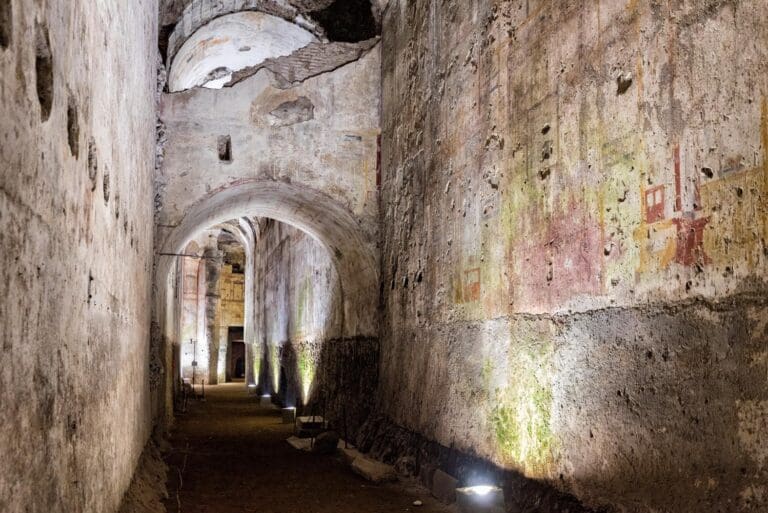
Visiting the Domus Aurea today is a genuinely extraordinary experience — an active archaeological site where excavations continue to produce new findings, explored by guided tour in the atmospheric underground spaces where the palace’s walls and ceilings have survived in remarkable condition. Here are the essential highlights.
The Octagonal Hall
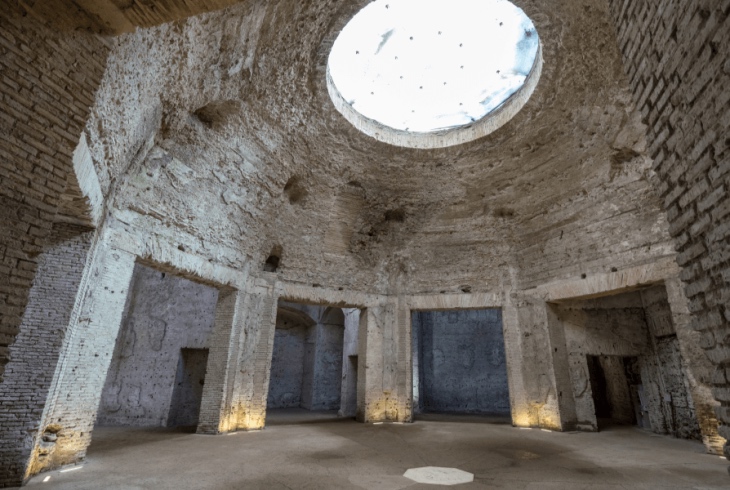
The undisputed architectural showpiece of Nero’s palace, the Octagonal Hall is a masterpiece of Roman engineering that prefigures some of the great inventions of later imperial architecture. The ceiling is pierced by a central oculus open to the sky above — in antiquity, guests reclining at the emperor’s legendary banquets would have looked up through this circular eye to watch the stars wheel overhead. Ancient sources go further: they report that the dining room itself rotated continuously, carrying its occupants through a slow, perpetual revolution that must have been as disorienting as it was spectacular. The oculus of this bold structure proved profoundly influential on later architects, and most scholars accept that it played a significant role in inspiring the design of the Pantheon a few decades later.
The Room of Achilles and Skyros
Among the finest of the Domus Aurea’s surviving painted spaces, this chamber features some of the most spectacular ornamental frescoes in the entire palace — a superb testament to the painter Famulus’s virtuosity. The room takes its name from a fresco depicting the legendary moment when Achilles, disguised as a woman among the daughters of King Lycomedes on the island of Skyros, is unmasked by the hero Odysseus. The walls and ceiling are adorned with intricate grotesque patterns and mythological figures of extraordinary delicacy and invention — evidence, if any were needed, that the stereotype of restrained classical aesthetics tells only a fraction of the ancient story.
The Nymphaeum of Odysseus
This recently restored chamber is adorned with some of the most sophisticated decorations in the palace: seashell-covered vaults and delicate mosaics creating a shimmering, grotto-like effect that once reflected the play of light from the innumerable fountains that filled this space with the sound and motion of moving water. Nymphaea — spaces dedicated to water nymphs — were a standard feature of elite Roman architecture, designed as places of relaxation and contemplation. At the heart of this one is a remarkable mosaic illustrating a scene from Homer’s Odyssey: the encounter between the wandering hero and the cyclops Polyphemus — a mythological subject entirely appropriate for a room built to evoke the watery realm.
Renaissance Graffiti
When the Renaissance artists descended into the buried palace on their ropes and by candlelight, many left their marks on the ancient walls — signatures and drawings scratched into the frescoes that are still visible today if you look carefully in the right places. The presence of these 500-year-old graffiti alongside art that is 2,000 years old is one of the Domus Aurea’s most quietly fascinating aspects: evidence, written directly into the walls, of the moment when the ancient and Renaissance worlds unexpectedly collided.
The Pentagonal Courtyard
A huge, architecturally sophisticated outdoor space that served as one of the palace’s grand ceremonial entrances, the Pentagonal Courtyard has been partly recreated for visitors through the use of virtual reality. Once adorned with lush gardens, fountains and colonnades, it gives a sense of the palace’s extraordinary exterior grandeur. Nearby, the so-called Hall with the Gilded Vault features superb surviving stucco decorations that offer another glimpse of the palace at the height of its opulence.
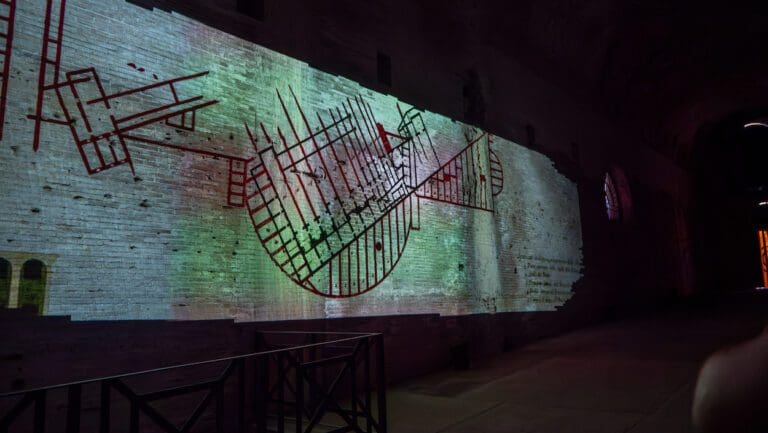
Perhaps the most memorable aspect of visiting the Domus Aurea today is the state-of-the-art virtual reality that brings the ruins dramatically to life.
During your visit you’ll have the opportunity to don VR goggles that reveal digital reconstructions of grand arcades, lavish halls and tinkling fountains bathed in golden light. Fragmented frescoes are restored to their full splendour; the Octagonal Hall spins once more; and the artificial lake glitters beyond the colonnades as it would have done in Nero’s day.
Thanks to the wonders of modern technology, we can experience the palace just as the emperor and his privileged guests once did — an opulent vision of imperial excess made briefly, brilliantly visible again. We strongly recommend choosing the VR option rather than a standard ticket: it transforms the visit entirely.

Opening Hours
Because the Domus Aurea is an active archaeological site, the excavations are open to the public for guided tours only on weekends: Friday to Sunday, from 9:00 AM to 4:30 PM, with time slots available every 15 minutes and last entry at 3:30 PM. Monday to Thursday the site is closed to visitors, as archaeologists and researchers continue the excavations.

How Much Do Tickets Cost?
The standard ticket — including a guided visit and the virtual reality experience — costs €26. This represents outstanding value for one of the most unusual and memorable archaeological experiences in Rome. The standard ticket without VR is cheaper but, as noted above, we strongly recommend the full experience.
Do I Need to Buy Tickets in Advance?
Yes — emphatically. As opening is limited to three days per week and visitor numbers are strictly controlled, tickets sell out very quickly, particularly in high season. Booking well in advance is essential. The simplest way to guarantee entry is to reserve via a tour operator — see below.
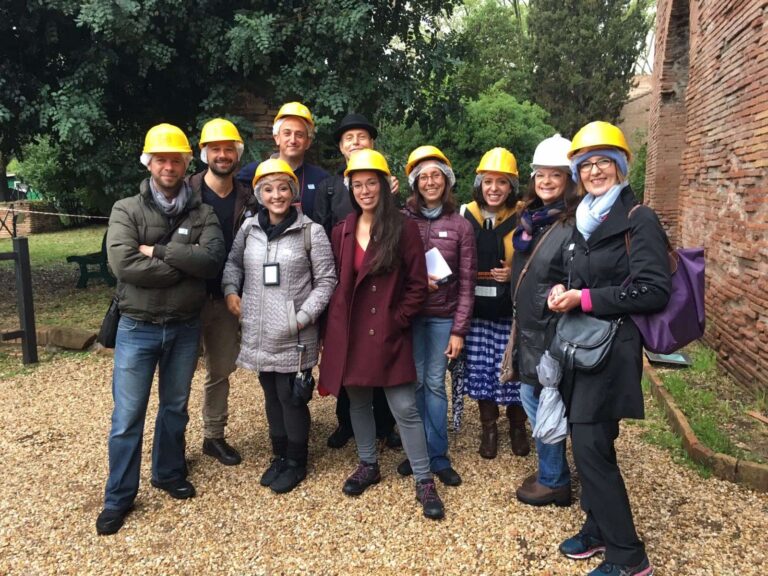
As an active archaeological dig, the Domus Aurea is exclusively accessible on a guided tour with an accredited guide. The on-site guides are generally excellent, with deep working knowledge of the ongoing excavations and the palace’s history. Tours are offered in English, Italian and Spanish, and include the VR experience with the full-price ticket.
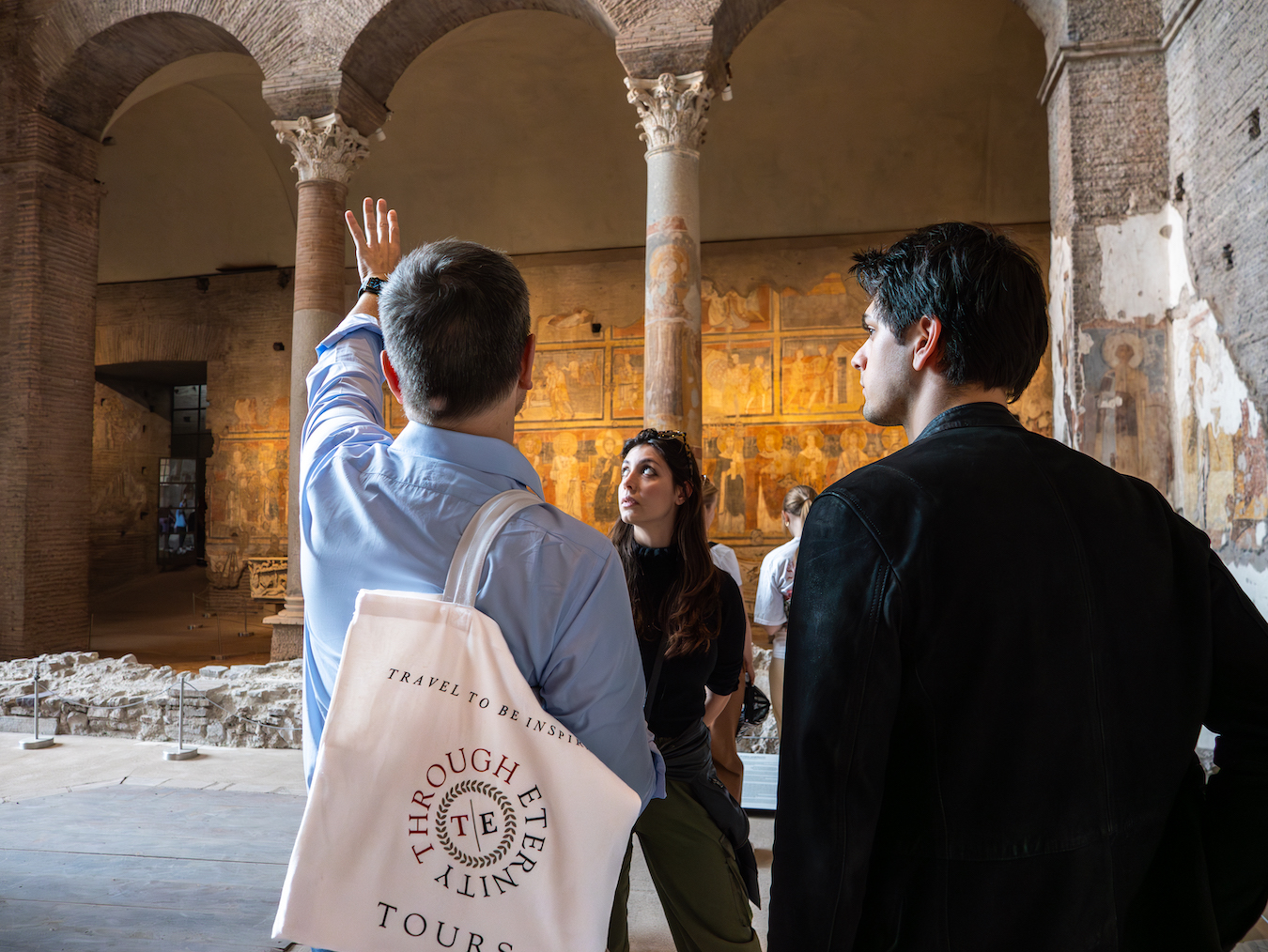
Given how quickly tickets sell out, booking your entry as part of an organised tour from an accredited operator is strongly advisable. Through Eternity’s Domus Aurea tour includes skip-the-line entrance to Nero’s Golden House in the company of an expert English-speaking guide, taking the hassle out of organising your visit entirely.
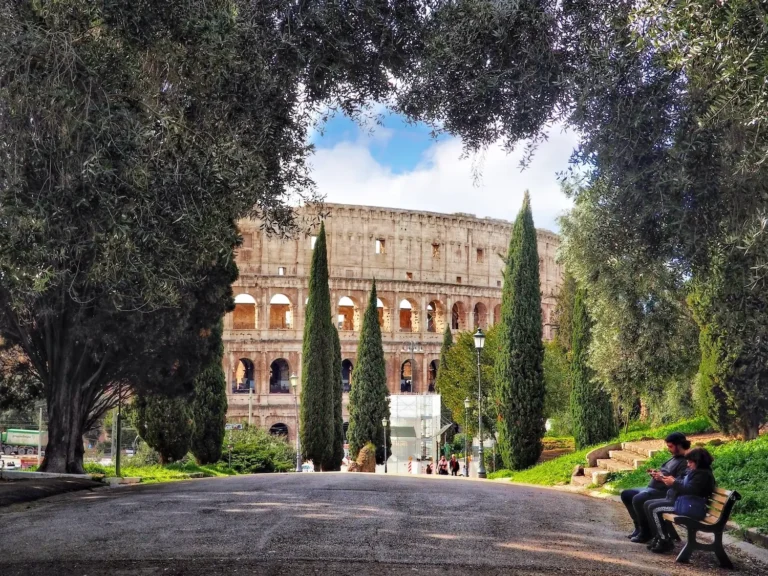
The Domus Aurea is located inside the Colle Oppio park on the Esquiline Hill. The nearest park entrance is on Via Labicana. It is within easy walking distance of the Colosseum and the Forum area.
Metro: Line B to Colosseo. From Piazza del Colosseo, walk up the hill behind you and through the gates of the Colle Oppio park — the entrance is clearly signed.
Bus: Lines 51, 85 and 87 all stop nearby on Via Labicana.
Tram: The number 3 tram stops outside the park entrance on Via Labicana.
The park itself is pleasant and makes a good approach on foot from the Colosseum, the Forum, or the Circus Maximus area.
Can you visit the Domus Aurea without a guide?
No. The Domus Aurea is an active archaeological site, and all visits must be made as part of a guided tour. This is actually an advantage — the guides are knowledgeable and the context they provide significantly enriches the experience.
Is the Domus Aurea suitable for children?
Yes, with some caveats. The underground setting is atmospheric rather than frightening, and the virtual reality element is a major hit with younger visitors. However, the site involves uneven surfaces and limited space in some rooms; very young children or those with mobility difficulties should be prepared for this.
How long does a Domus Aurea visit take?
Visits typically last approximately 75–90 minutes, including the VR experience.
Is the Domus Aurea accessible by wheelchair?
The site’s underground nature and uneven ancient surfaces make it difficult for visitors with significant mobility issues. Contact the site directly for the most up-to-date accessibility information before booking.
What should I wear to the Domus Aurea?
The underground rooms maintain a cool temperature year-round, even in the height of summer — bring a light layer regardless of the season. Comfortable shoes with grip are advisable given the uneven surfaces.
Is it worth combining with the Colosseum?
Absolutely. The Domus Aurea sits just above the Colosseum, which was built on the site of Nero’s artificial lake. Understanding the story of the Domus Aurea adds enormous depth to a Colosseum visit — the two monuments are directly, dramatically connected.
Dive Deeper into Rome