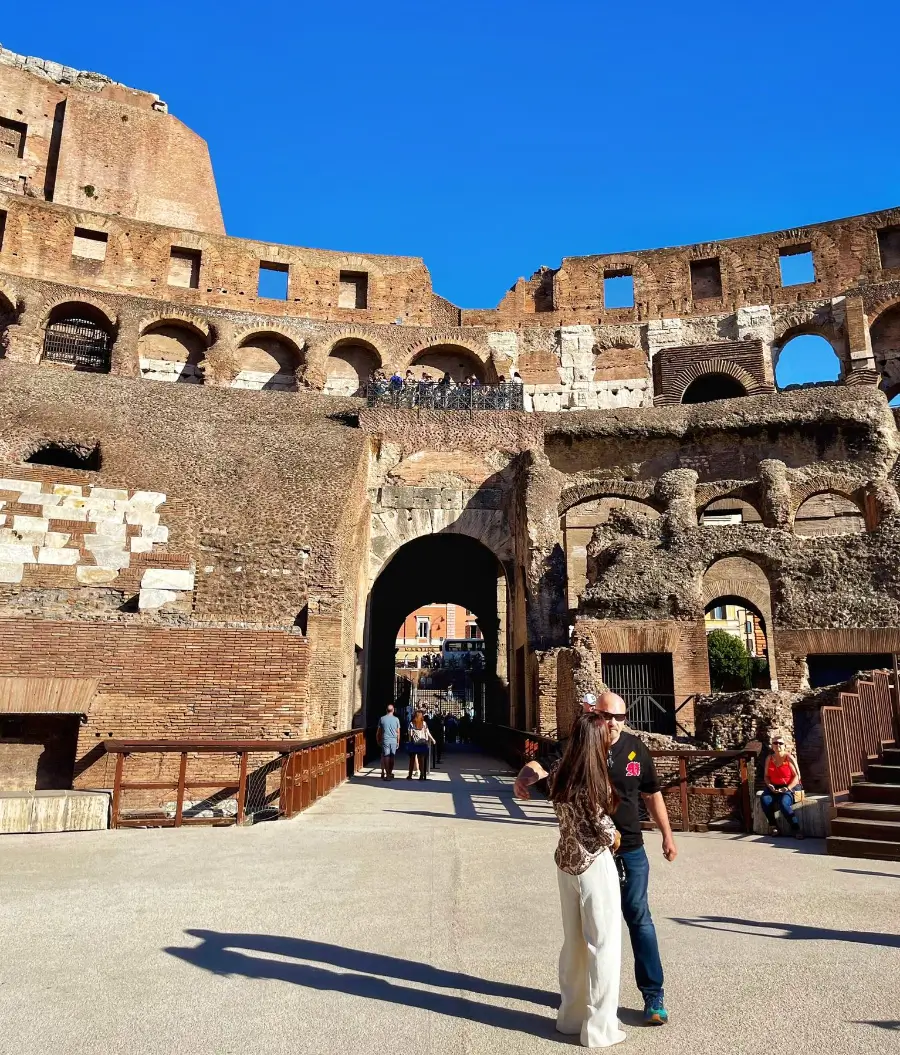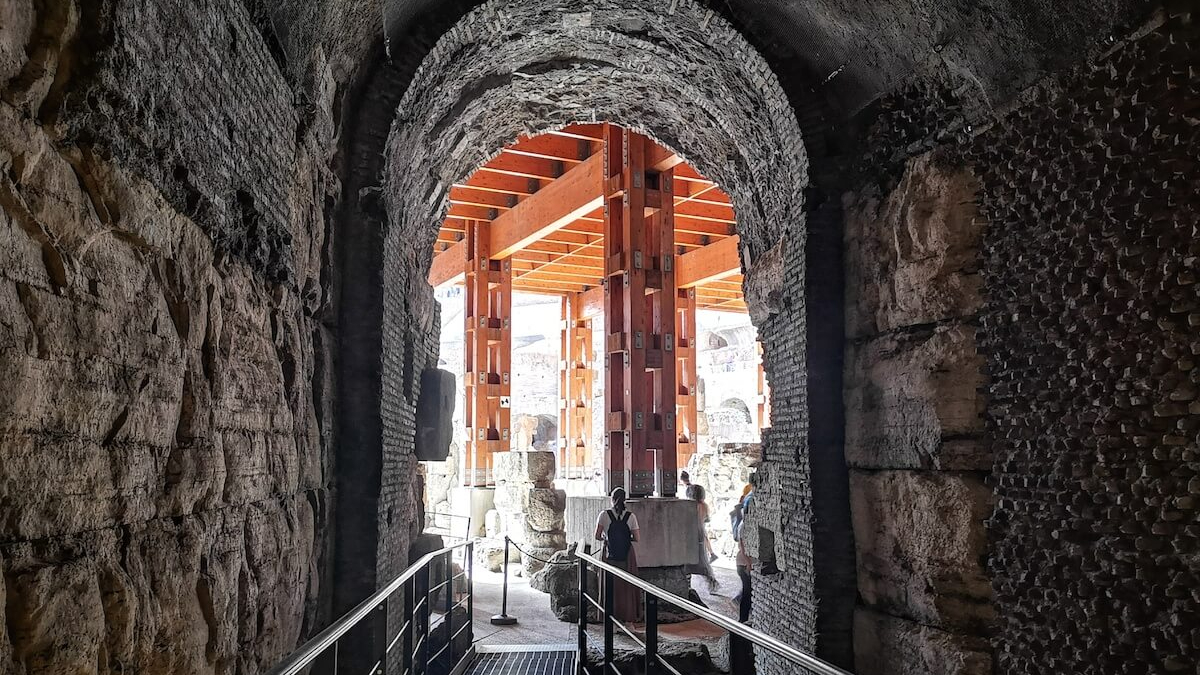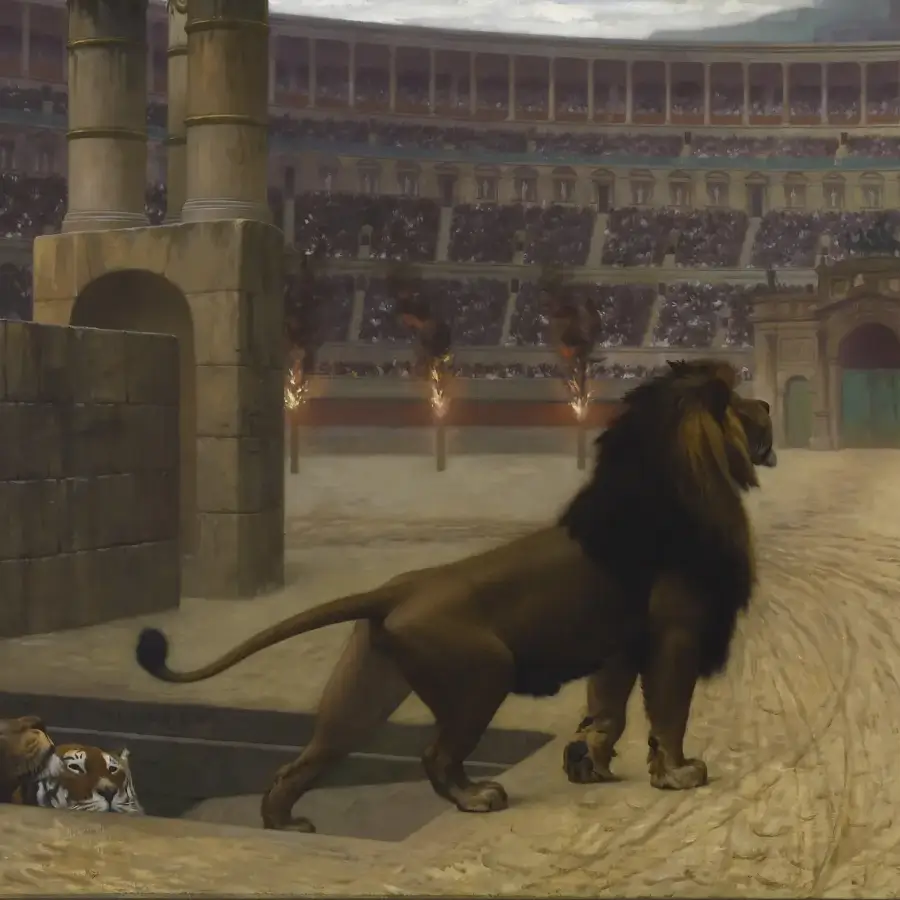
If you’ve ever found yourself struggling through the Colosseum’s ancient ruins under a blazing summer sun, you’ll know that it can feel like one of the hottest places on earth.
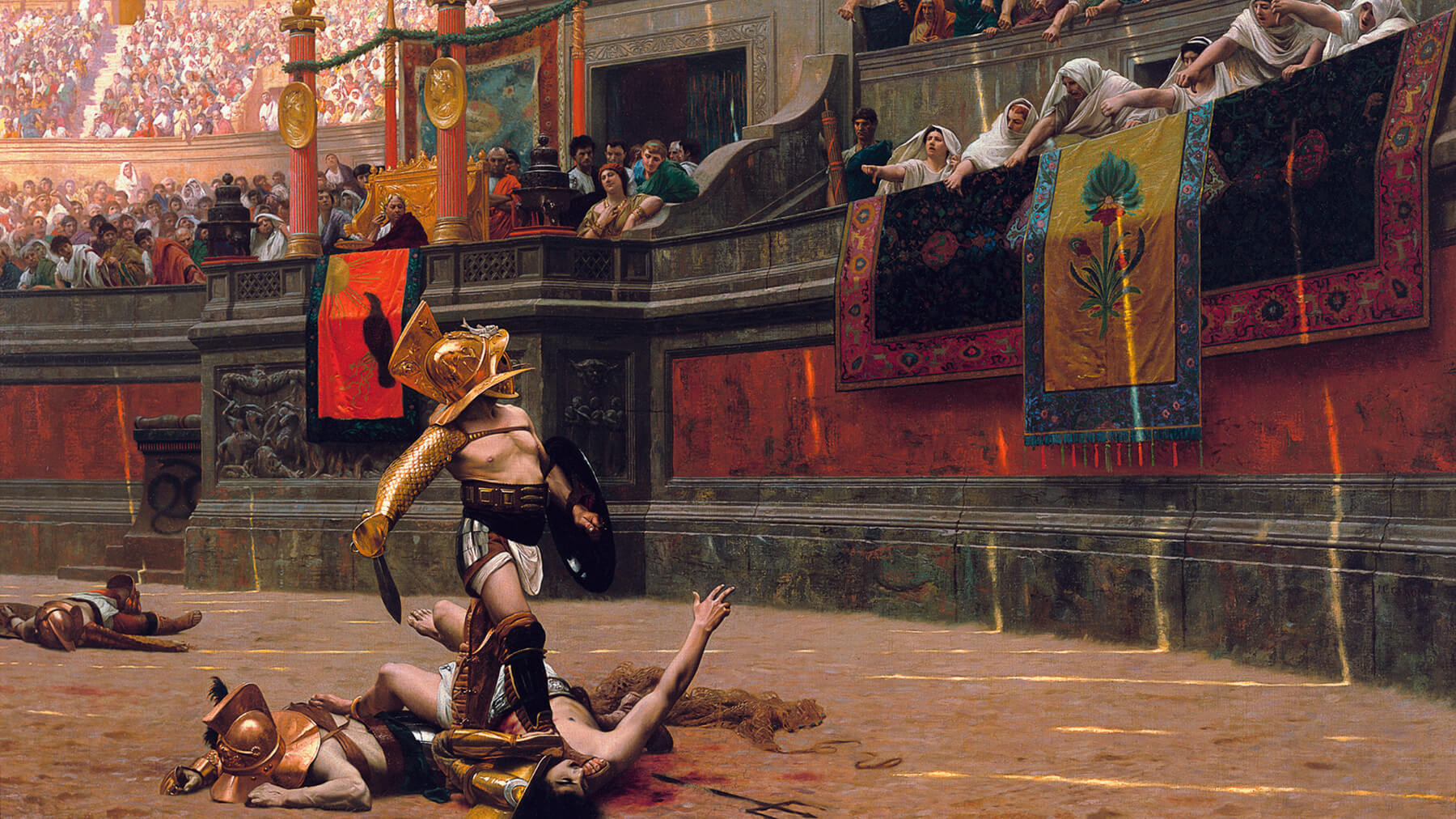
It’s easy to imagine that things were a lot worse for the 50,000 spectators who thronged the ancient arena’s marble bleachers hoping to sate their bloodlust during the brutal gladiatorial games that were held here 2,000 years ago.
As the sun beat down and was reflected off the blinding sand and stone into the massive crowds, without some kind of shade it must have been at times an unbearable experience.
As any self-respecting fan of Ridley Scott’s epic movie Gladiator will know, however, our luxury-loving ancient forebears would never have stood for such a state of affairs.
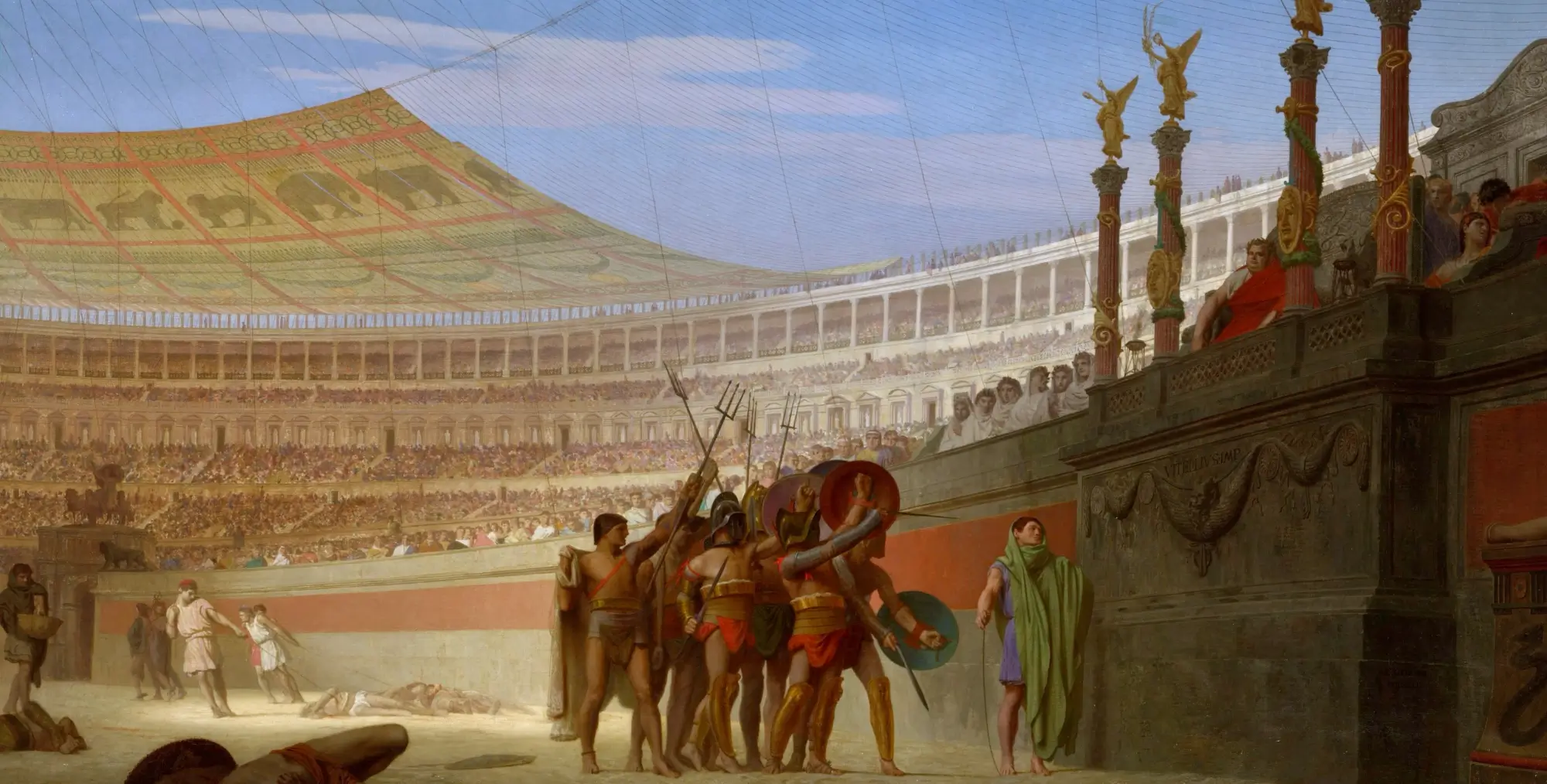
Incredibly, the massive Colosseum was covered with a roof that protected spectators from the relentless Italian sun, allowing them to settle back and drink in a day of blood-sport in shady bliss.
OK, so everyone’s favorite sword-and-sandals Russell Crowe vehicle might not be an exemplar of historically accurate film-making, but its spectacular portrayal of a fabric awning shading the crowd clamoring to get a glimpse of Maximus Decimus Meridius wreaking brutal revenge on the criminally insane emperor Commodus is actually not far wide of the mark.
The vast retractable awning known was known as the velarium — a linen canopy that shaded the entire seating area of the building during the games. It was the largest retractable roofing system in the ancient world, supported by 240 wooden masts rising from the topmost tier of the structure, operated by a permanent team of naval specialists transferred from the Roman fleet at Misenum near Naples.
Discover the full story below!
Ancient Rome Tours
Explore the Colosseum
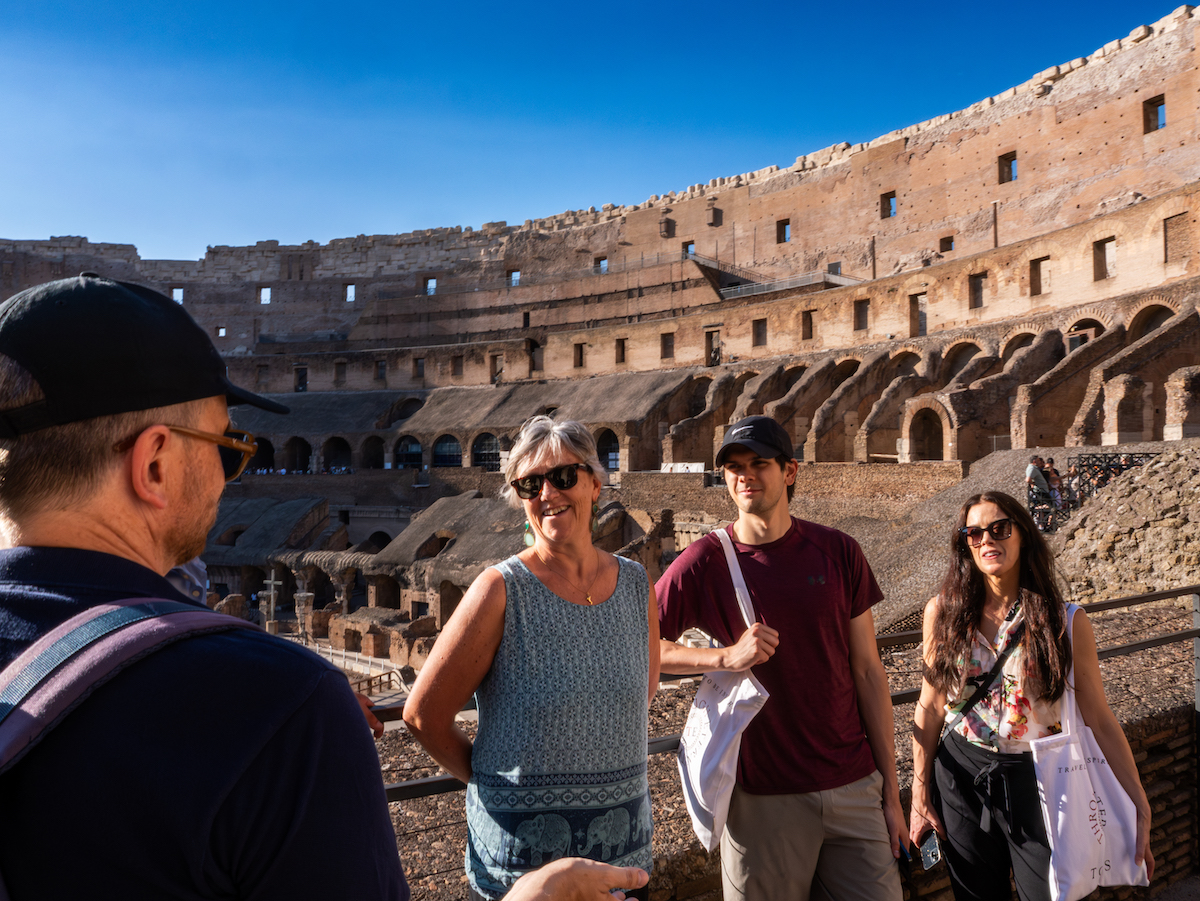
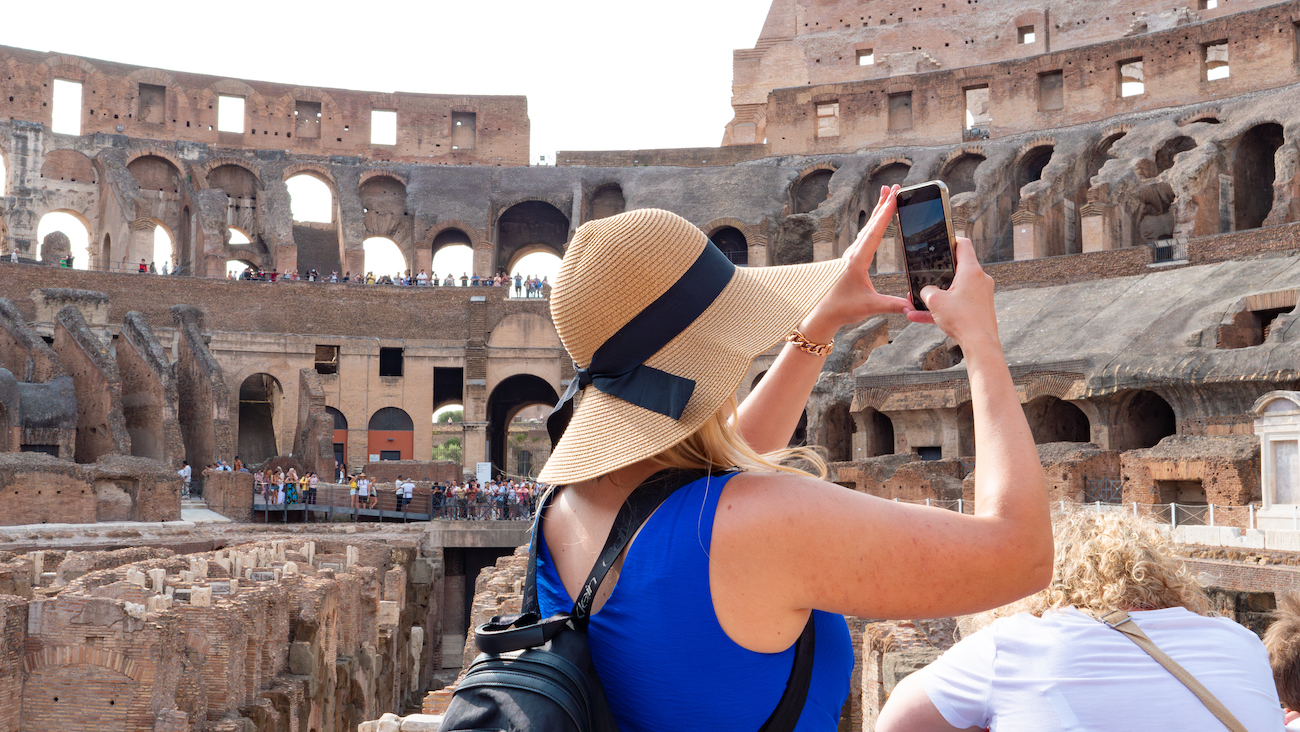
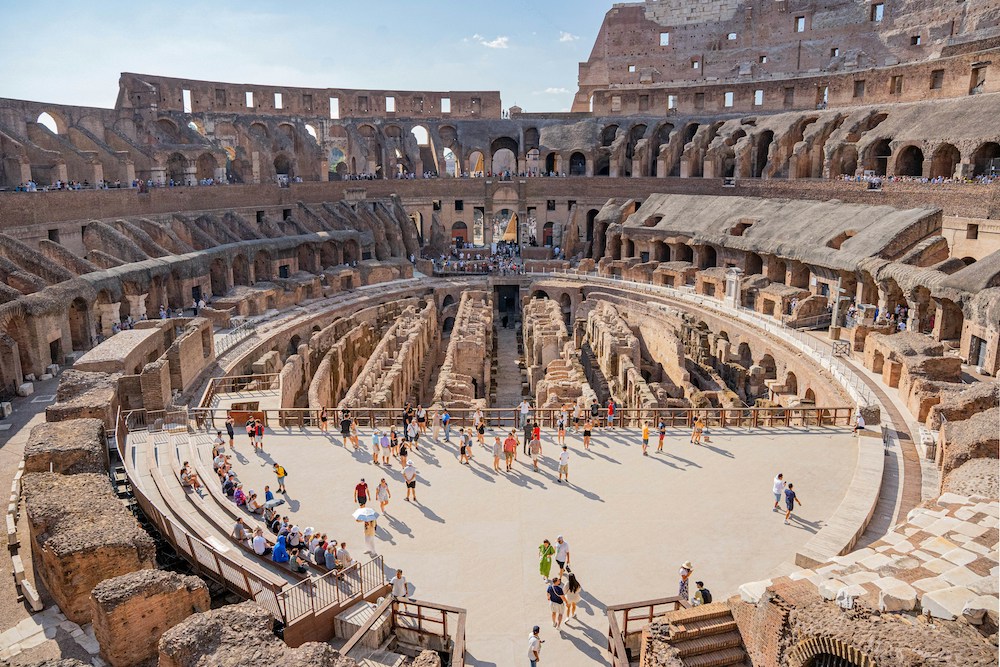
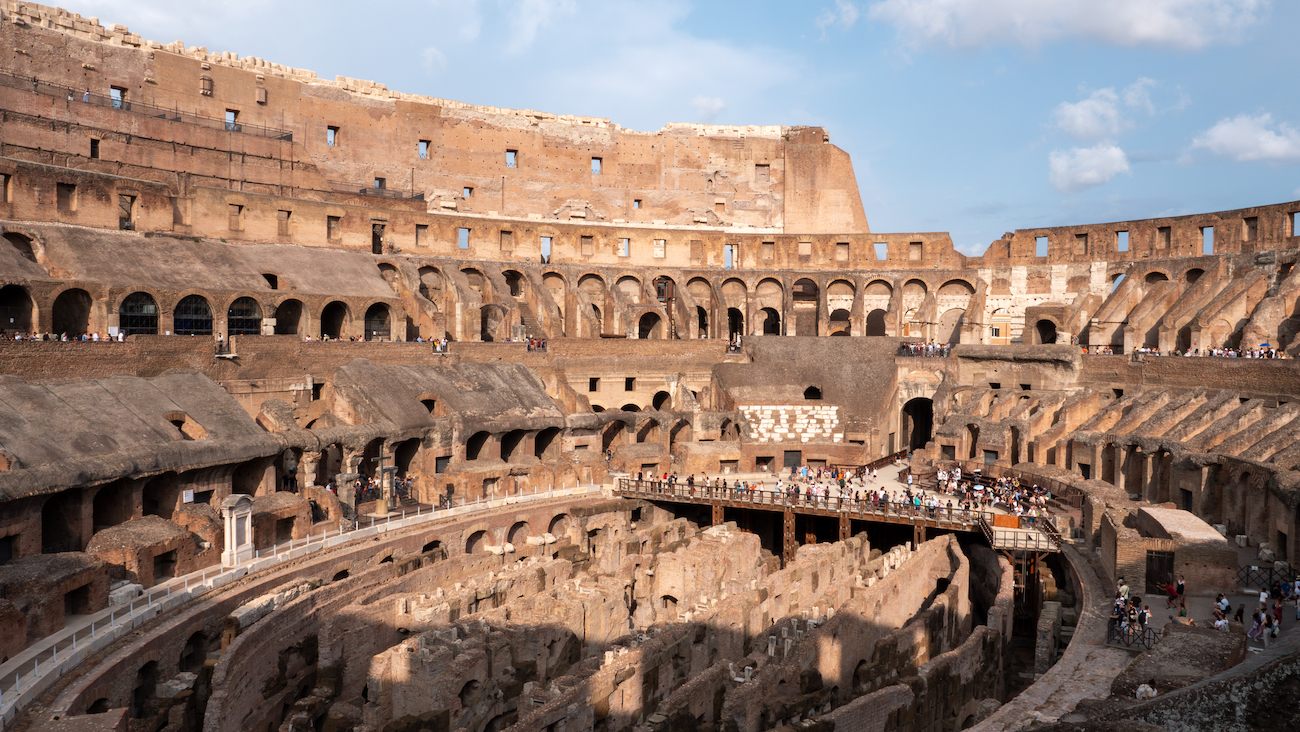
By the time the Flavian Amphitheatre was completed under the reign of the emperor Titus in 80 AD, elaborate moveable fabric roofs were commonplace in theatres and amphitheaters all across the empire – a fragment of marketing graffiti recovered from Pompeii even boasts that ‘there will be awnings’ (vela erunt) at the next games there in an attempt to drum up business.
Awnings feature heavily in ancient literary sources too. The chronicler Suetonius reports that the sadistic Caligula (who was so keen on the games that he liked to personally compete in rigged gladiator combat) often retracted the awnings of the temporary wooden amphitheatre that preceded the Colosseum at the hottest part of the day without warning, commanding the audience to remain unmoving beneath the burning midday rays on pain of death.
A generation later, the equally unhinged Nero reportedly decked out Rome’s Theatre of Pompey with a purple awning bearing a massive representation of himself driving the chariot of the Sun.
But as the largest amphitheater in the ancient world, successfully providing cover for the nearly 200 feet tall Colosseum was an altogether different kettle of fish. In a mind-boggling feat of engineering, Roman experts came up with an enormous retractable awning that would be the envy of many state-of-the-art sports stadiums even today.
Exactly how they did it remains a matter of speculation, but research in the last 20 years has given us a good idea of what it must have been like.

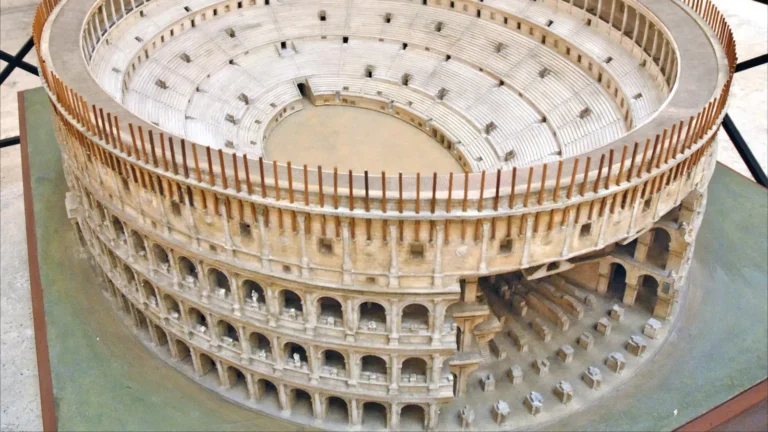
The solution that Roman engineers devised was a segmented radial system — not a single piece of fabric but a series of separate tapered wedge-shaped panels of woven linen, each cut slightly differently to accommodate the elliptical geometry of the building, stretched together across the top of the cavea on a web of ropes.
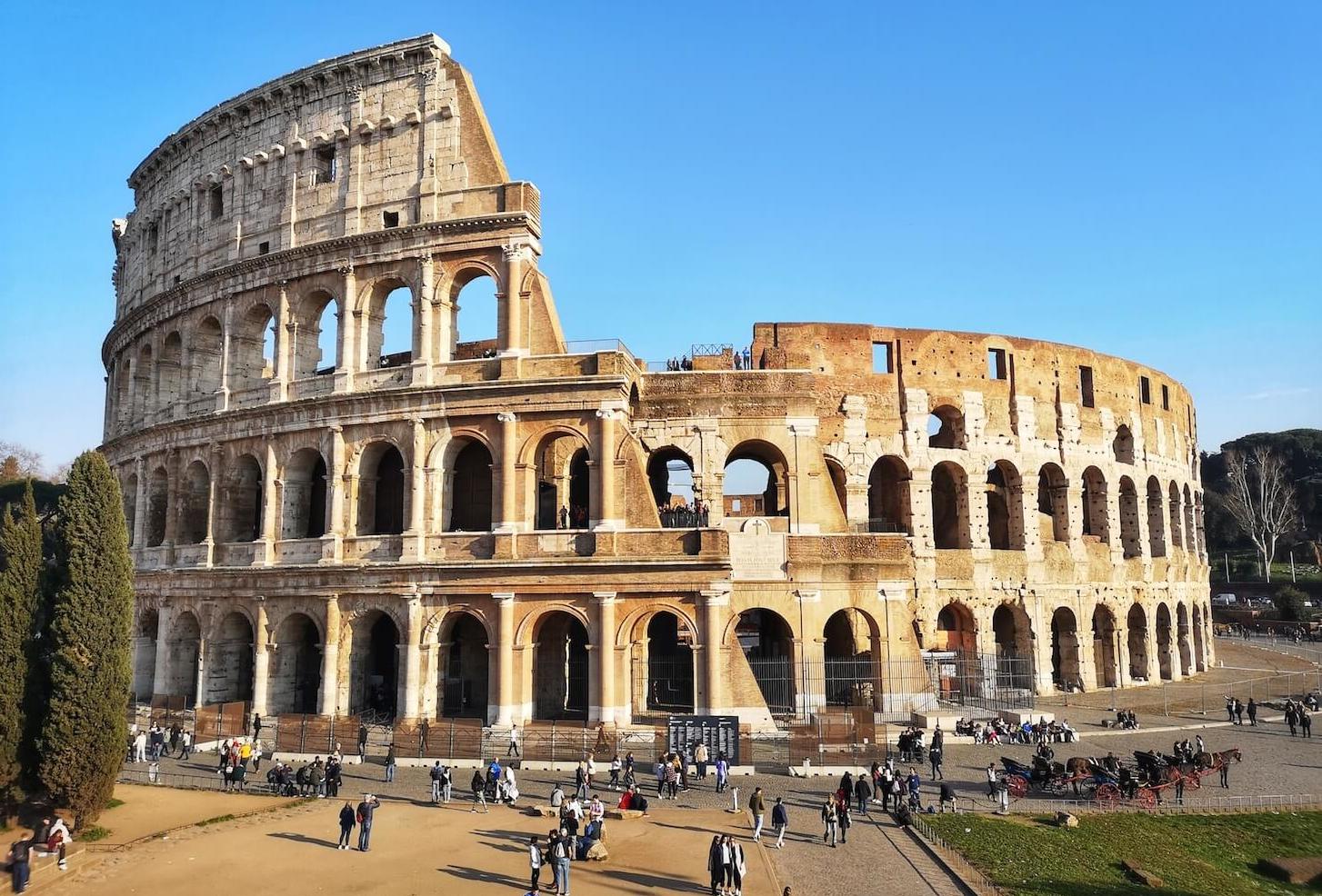
The rigging was supported by 240 evenly spaced wooden masts rising from sockets in the topmost cornice of the building; those sockets and the projecting corbels that buttressed them are still clearly visible today if you examine the upper level of the building.
The velarium didn’t cover the entire building. It sloped inward from the masts toward a large central opening — an elliptical void at the centre of the canopy — which served both to reduce the wind-loading on the structure and to leave the arena floor itself open to the sky.
The result was that the spectators in the cavea sat in shade while the action on the sand below was dramatically spot-lit by direct sunlight: think of it as a massive, temporary version of the oculus that pierces the roof of the Pantheon — the circle of sky above the arena forming a natural spotlight on the spectacle below.
The physics of deploying and retracting the velarium required sustained collective effort. Estimates suggest that fully assembling it from scratch took up to a thousand men several days of continuous work; day-to-day deployment and adjustment during the games required a smaller but highly skilled team operating in coordination from the masts and the high outer walls.
The fabric was heavy, the ropes under enormous tension, and the consequences of a sudden gust of wind catching a partially deployed awning would have been serious.
The velarium was not raised in high winds or rain — the risk of damaging the structure and injuring the crowd below was too great. On days when the games proceeded under the blazing sun with no cover, the spectators simply suffered, and the ancient sources record complaints on this score.
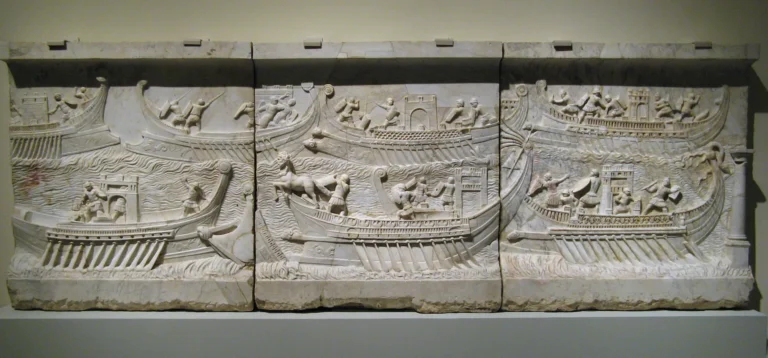
The awning was made out of the same linen or canvas fabric that was used by ancient shipbuilders to fashion sails for their galleys, and the word velarium actually derives from the Latin word for sail.
It was for good reason that experienced sailors were entrusted with operating the awning, qualified by dint of their experience with sails and rigging on the high seas. A special detachment from the naval fleet at Misenum near Naples – the same fleet whose commander, Pliny the Elder, perished in the eruption of Vesuvius in 79 AD – was stationed in barracks around the corner from the Colosseum for this very purpose, the Castra Misenatium.
From their panoramic perches high up on the amphitheater’s top tier, the sailors manipulated the infinity of ropes that extended and retracted the unwieldy awning with admirable dexterity – to avoid damaging the velarium, it wasn’t raised at all when high winds or rain was in the offing, leaving the spectators at the mercy of the elements.
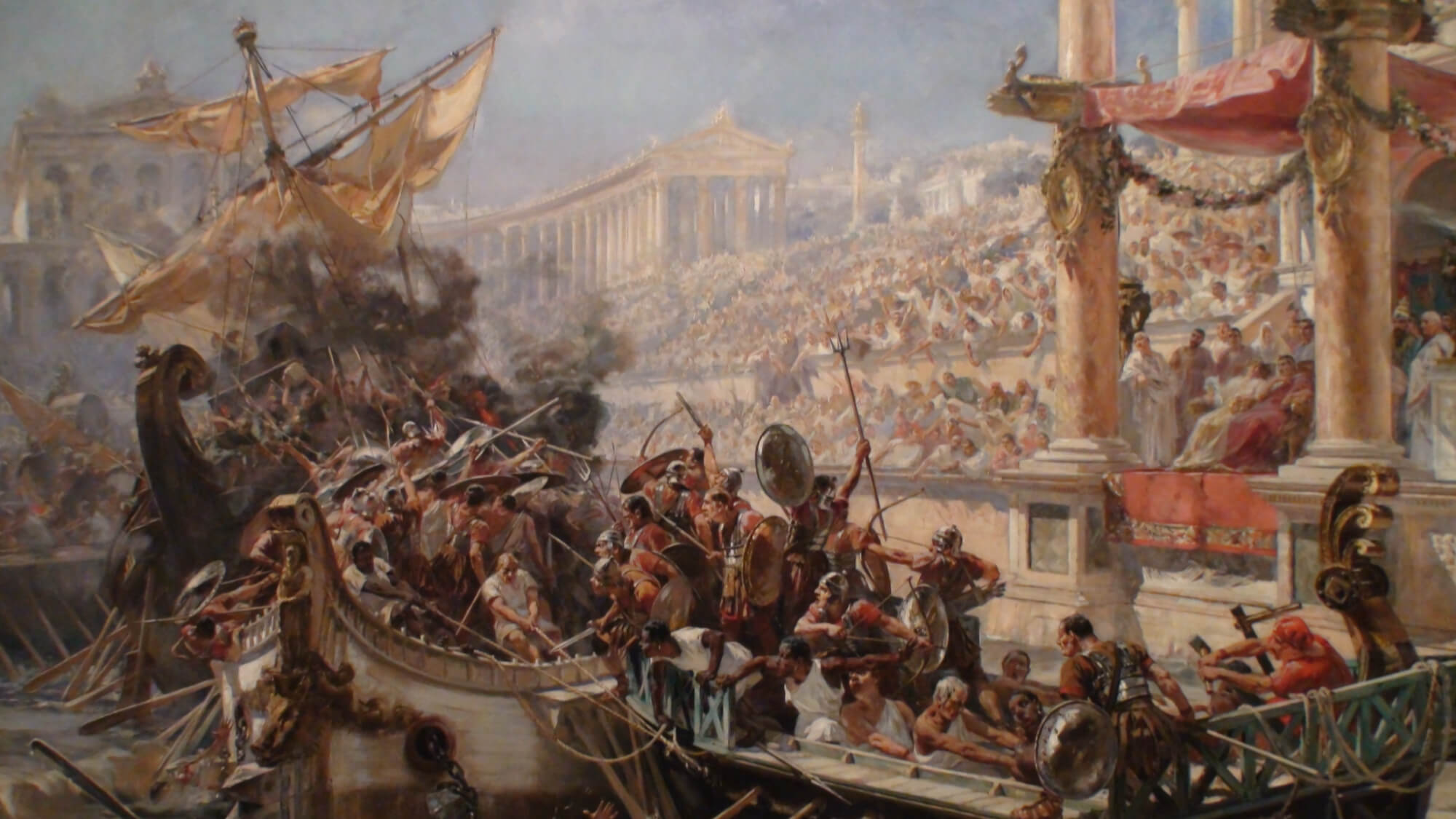
Working the velarium was a highly prestigious assignment for any slave who was conscripted into the Roman navy, but many of their bedfellows at the Castra Misenatium weren’t so lucky – the barracks were also home to sailors awaiting their turn in the bloody and fatal mock sea-battles (naumachiae) that formed a dramatic part of the earliest stagings of the Roman games at the Colosseum after its inauguration in 80 A.D.

The velarium brilliantly exemplifies both the ancient Roman capacity for practicality and its insatiable taste for drama. On the one hand the velarium was an ingenious technical solution to a practical problem; but the Colosseum’s awning was far more than a merely functional piece of engineering.
Transforming the spot-lit arena floor into a cathedral of light emerging from the surrounding shadows, the effects of the velarium must have elevated the already dramatic spectacles of life and death taking place on the sands before the eyes of the audience to an almost unbearable fever-pitch.
Every movement of the fighters, every detail of their armour, every spatter of sand was caught and amplified by the contrast between the sunlit arena and the surrounding dimness of the shaded cavea.
The poet Martial, writing about the inaugural games under Titus, compares the velarium’s shadows to drifting clouds. The 4th-century writer Claudian describes the canvas as billowing like the sails of a fleet at sea — the naval imagery entirely appropriate, given who was operating it.
Both writers convey the sense that the velarium was not just a practical convenience but part of the total aesthetic experience of the Colosseum — that the building’s designers thought about light and shadow as carefully as they thought about sightlines and crowd management.
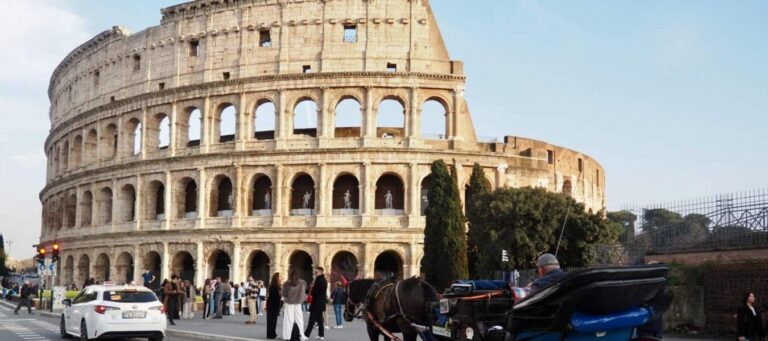
The velarium itself is long gone — the wooden masts, the linen canvas and the thousands of metres of rope that held it in place have left no physical trace.
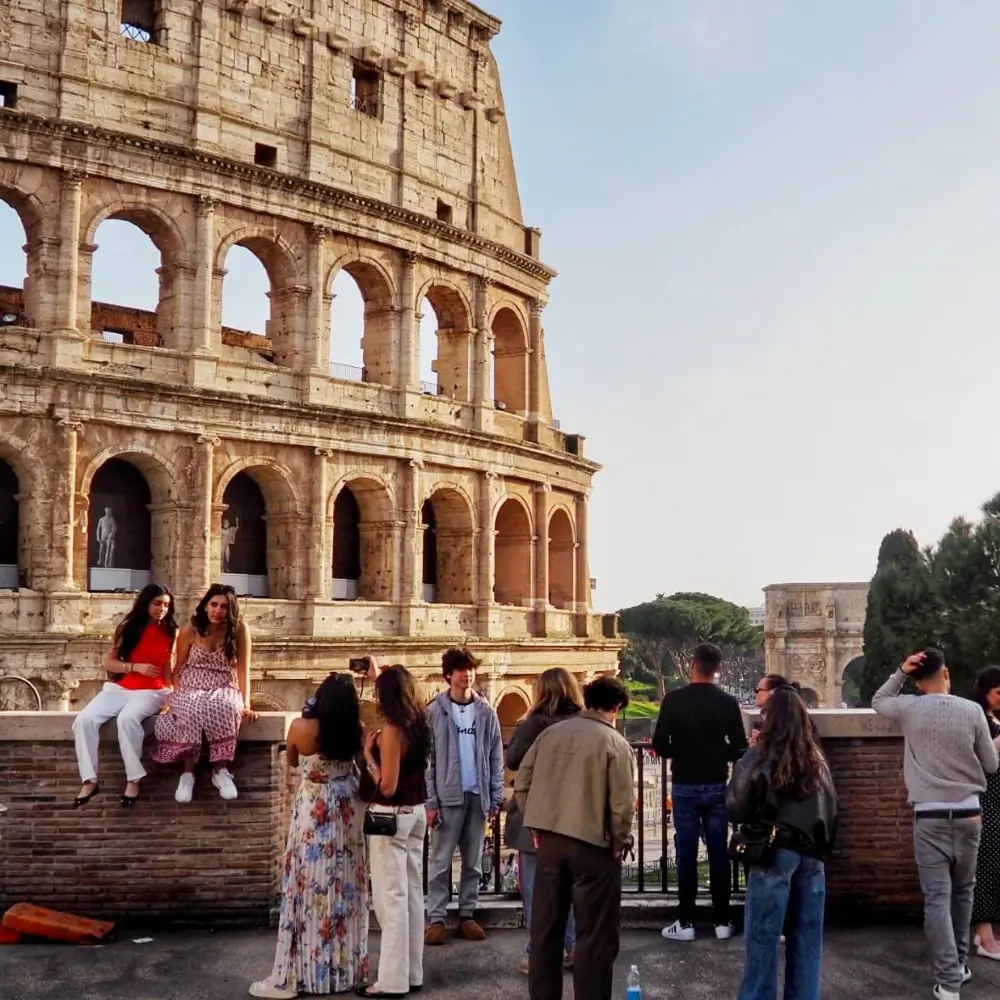
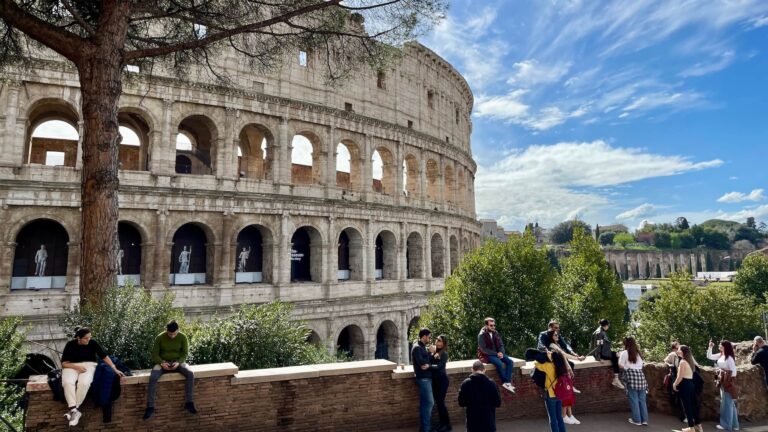
But the sockets and corbels in the Colosseum’s topmost course — the holes that held the mast bases, the projecting stone brackets that braced them — are clearly visible on the exterior of the building if you know to look for them.
On the upper cornice, 240 sets of brackets and holes run around the entire circumference of the building at regular intervals. They are not immediately obvious at ground level but are very clear from any elevated vantage point that looks across at the upper exterior.
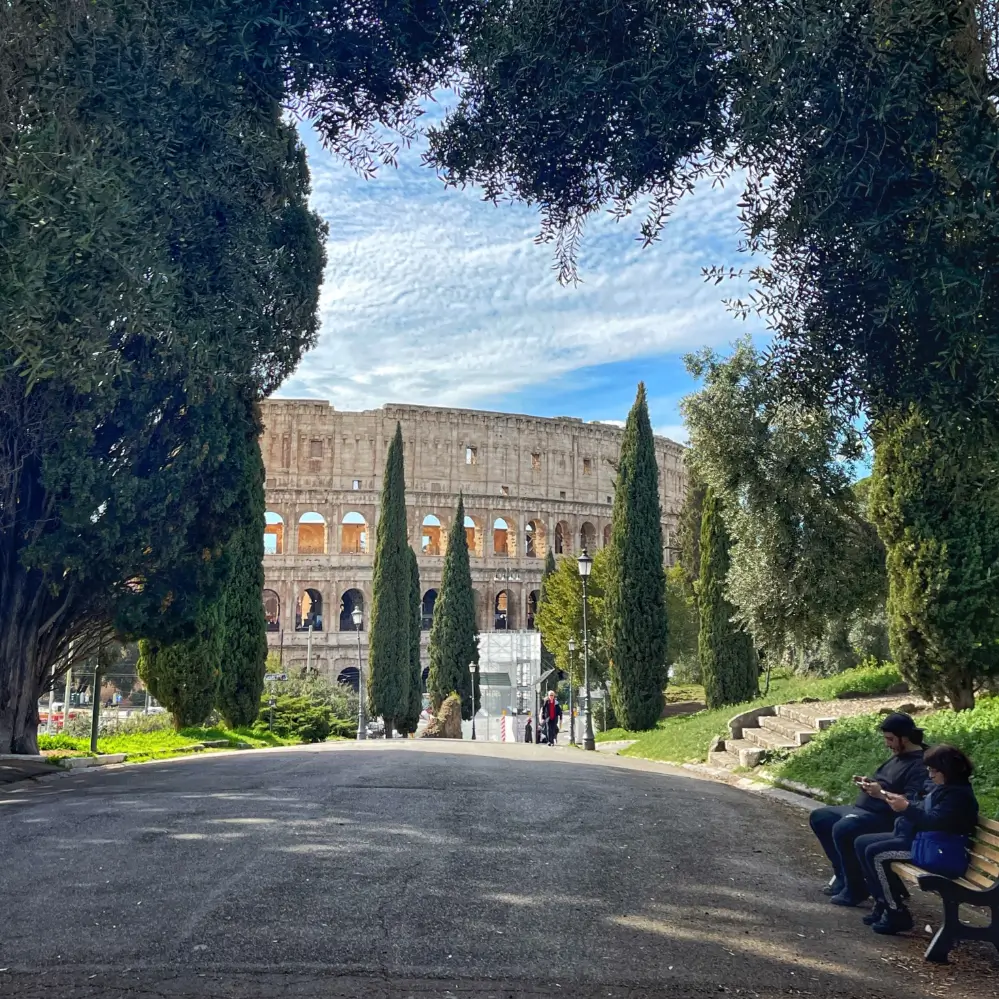
From the Colle Oppio hill park above the Colosseum, or from any position at the same height as the upper walls, the systematic pattern of the mast supports reads as a kind of ghost of the velarium — an outline of the absent engineering traced in stone.
Did the Colosseum have a roof?
Not a solid permanent roof — it had a retractable fabric awning called the velarium, which covered the seating area (cavea) but left the arena floor open to the sky. The velarium was deployed during the games to shade spectators and withdrawn in bad weather.
What was the velarium made of?
Woven linen or canvas — the same material used for the sails of Roman warships. This is also where the word derives from: velarium comes from velum, the Latin for sail (and by extension, curtain or awning).
How was the velarium operated?
By a permanent team of sailors transferred from the Roman naval fleet at Misenum, near Naples, and stationed in barracks adjacent to the Colosseum. The operation required coordinated work across 240 masts and a complex system of ropes and rigging very similar to ship’s rigging.
Can you see evidence of the velarium today?
Yes. The mast sockets and corbels in the Colosseum’s uppermost cornice are still visible on the exterior of the building. They are clearest from an elevated position such as the Colle Oppio park or from the upper tiers of the building, which were reopened in 2024.
Did all Roman amphitheatres have velaria?
Retractable awnings were common across theatres and amphitheatres in the Roman empire, though not universal. Evidence of velaria has been found at Pompeii, Nîmes, Arles, Pola and other sites. The Colosseum’s was the largest and most complex, but it was an elaboration of an established Roman tradition rather than a unique invention.
How big was the velarium?
The velarium covered the seating area of the Colosseum, which is approximately 188 by 156 metres overall. The covered area excluding the central opening would have been considerable, though exact dimensions are uncertain. Estimates suggest the total fabric could have weighed up to 24 tonnes.
Ancient CityTours
Explore the Colosseum!