Behind the power of Roman emperors and the pomp of papal courts, a hidden narrative unfolds—one of women wielding influence, shaping destinies, and navigating the treacherous currents of power.
History is traditionally written by men, about men. They did, after all, dominate the stage. However, behind the scenes, women in Rome, from ancient times to the Baroque era, often operated with remarkable cunning and strategic brilliance. These women weren’t merely passive bystanders in the grand theater of Roman history; they were the architects of alliances, the whisperers of counsel, and the silent manipulators of political fortunes.
This article delves into the lives of two extraordinary women, Livia Drusilla and Donna Olimpia Maidalchini, revealing how they defied societal constraints, mastered the art of behind-the-scenes influence, and left an enduring legacy of political power.
Rome Tours
Explore the Eternal City
Livia Drusilla: Rome's "First Lady" & Architect of Imperial Power (58 BC-AD 29)
At the dawn of the Imperial Age, Livia Drusilla emerged from the shadows as a figure of extraordinary political acumen. The wife of Augustus, Rome’s first emperor, she became the first “First Lady” of Rome. She successfully transcended the traditional role of a Roman matron and became a shrewd political operator, who was legendary for her sharp tongue and even sharper mind.
Born into a prestigious patrician Claudian family, Livia honed her political skills from an early age by watching the intricate power plays of the Roman aristocracy. Publically, Livia played the role of the ideal Roman matron to perfection; she was the modest, chaste, and loyal Roman wife, even spinning and weaving all of the imperial clothes from scratch. However, privately, she acted as Augustus’ most trusted confidante and political advisor.
This duality allowed Livia to become one of the most influential figures in Rome. She was able to develop her own circle of clients and protégés and strategically position them in roles of power, enabling her to shape Rome’s political landscape further.
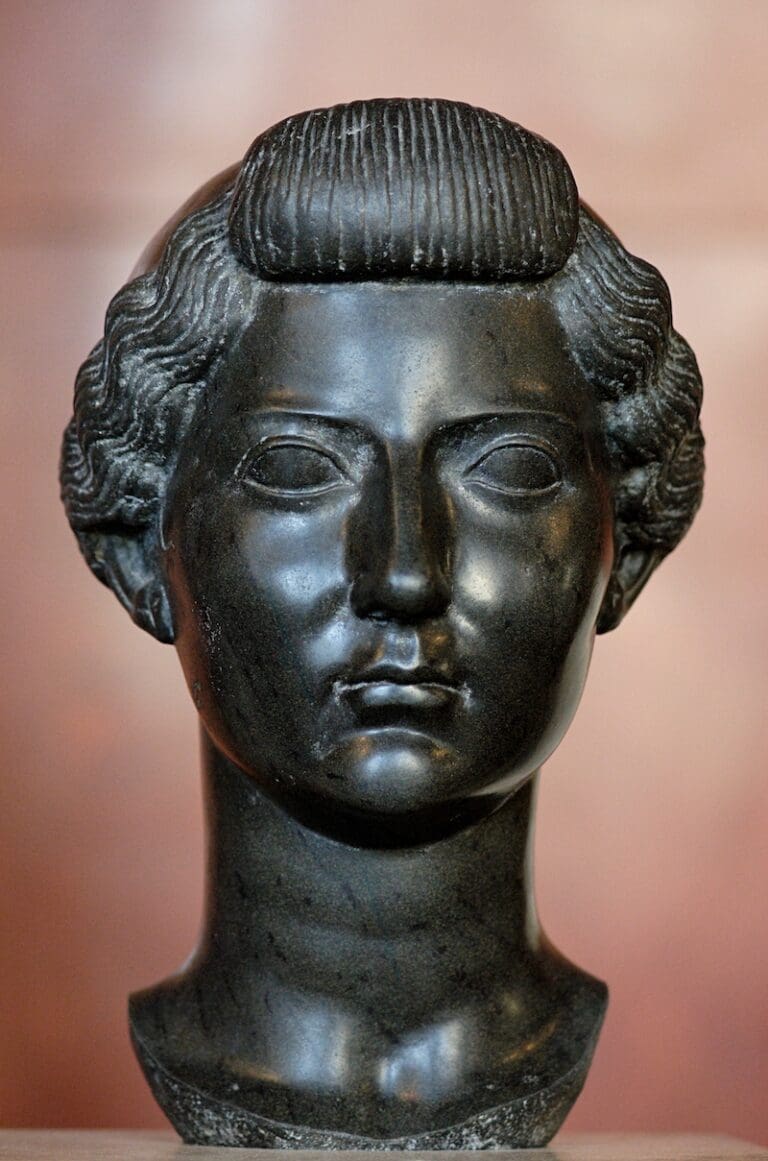
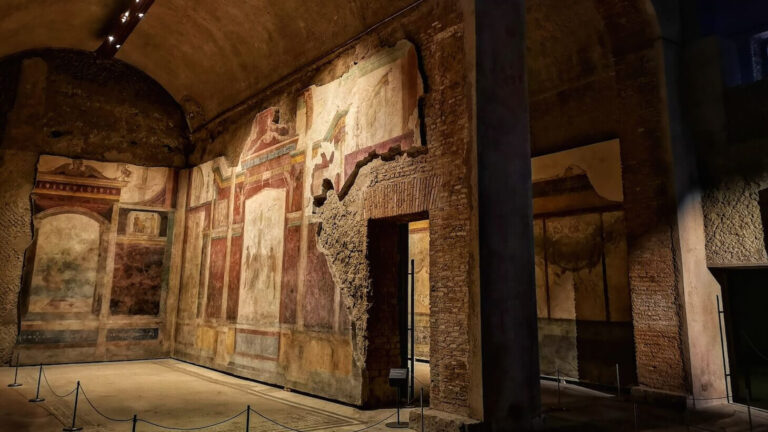
Later Roman writers depicted Livia as a master manipulator, a whisper in Augustus’s ear, and the architect of her family’s dynasty. Rumors spread that she was willing to go to any lengths to achieve her goals, even resorting to murder to put her son on the throne of Rome. But did Livia really deploy her arsenal of poisons to eliminate other potential heirs? Gossip spread through Rome like wildfire when Augustus’ favorite nephew, Marcellus, died mysteriously. Was he slipped a fatal dose in his plate of figs by Empress Livia to pave the way for Tiberius? These scandalous stories may tell us more about the insecurities of those who benefitted from a strictly patriarchal society.
Whether a cunning manipulator or a victim of slander, Livia’s legacy stands as a testament to the enduring power of a woman who refused to be ignored. Through the line of her sons, Drusus and Tiberius, Livia became the matriarch of the entire Julio-Claudian dynasty, cementing her influence over Roman history in perpetuity.

Donna Olimpia Maidalchini: The Papal Power Broker (1591-1657)
The extraordinary life of Donna Olimpia Maidalchini reads like a dramatic saga of ambition and influence, a rags-to-riches story set against the backdrop of 17th-century Rome. Olimpia was a woman who decided that she wasn’t going to accept the life path that had been set out for her and rose to become the closest advisor to her brother-in-law, Pope Innocent X, earning herself the moniker “La Papessa,” the female pope, and more derogatorily, “La Pimpaccia,” a woman of sin. It seems Rome wasn’t ready for the formidable Donna Olimpia.
Born in Viterbo to a family of modest means, the young Olimpia was destined for life in a convent as they couldn’t afford a dowry for her. Olimpia, however, had other plans. After accusing the local priest of molesting her, she was allowed to leave the convent, and at the age of 16, she found herself an elderly, frail, and very wealthy husband. When her husband died three years later, Olimpia became a wealthy young widow. She moved to Rome and married again to Pamphilio Pamphilj, from one of Rome’s most prominent families. This marriage brought not just wealth but status and access to the corridors of power. Her husband’s brother was the powerful Cardinal Giambattista Pamphilj, who, in 1644, would become Pope Innocent X.
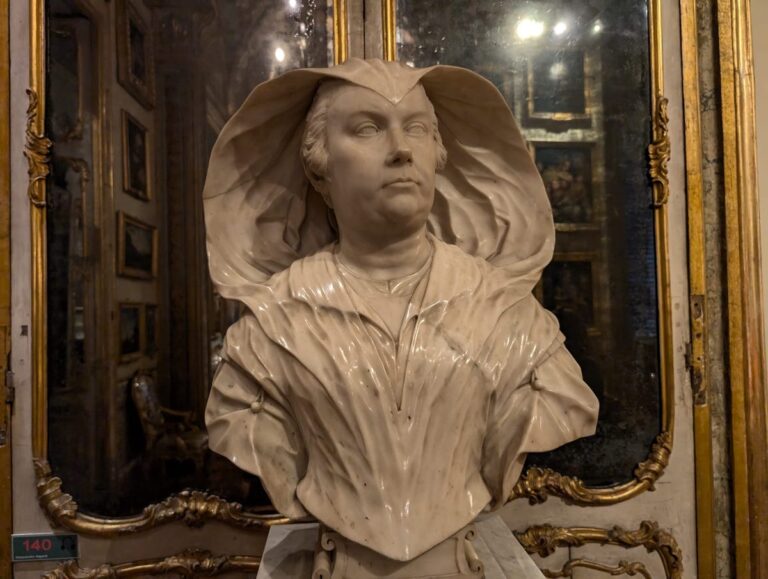
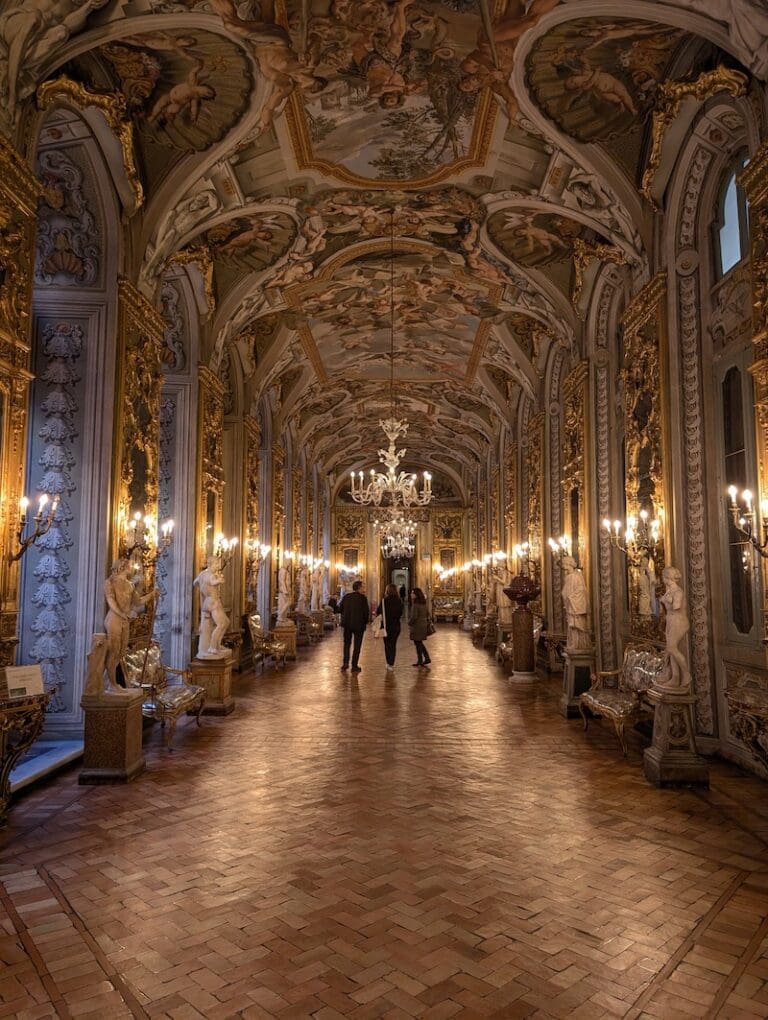
When her husband died, Olimpia chose not to remarry. Instead, she became Innocent X’s closest advisor. Olimpia was a savvy political operator who controlled access to the Pope – those wishing for an audience with the Holy Father had to first court Donna Olimpia laden with sacks of gold and diamond necklaces. Many were outraged by her behavior, but not because they thought she was corrupt (corruption in the halls of power was common at the time). What really upset them was that she was a woman who did a better job of collecting bribes than any of the men ever had.
Rumors swirled in Rome that Donna Olimpia was the real power behind the Papal throne, with many suggesting that she was the Pope’s mistress, and Cardinals decried, “We have just elected a female pope.” When Innocent X died in 1655, Olimpia’s power, influence and protection evaporated. Rome was no longer safe for her. So, she fled the city to her estate at San Martino al Cimino, never to return, but not before loading a large chunk of the Papal treasury into her carriage.
Olimpia leaves behind a complex legacy. She could be greedy, calculating, and cold, but equally, she was fiercely ambitious, audacious, intelligent, and charming – qualities praised in men. Unlike her male contemporaries, Romans still tell the legend of her ghost, forever condemned to a spectral carriage ride laden with stolen treasure, which continues to haunt the city, a testament to her enduring notoriety. Many of her male detractors would love to still have stories told about them 350 years later
A Legacy from the Shadows
The stories of Livia Drusilla and Donna Olimpia highlight an often-overlooked aspect of history – the power of women operating behind the scenes. At a time when most women’s lives were confined to the domestic sphere, these women were masters of their own destiny; they navigated the intricate web of Roman politics and subtly wielded their influence with an acute understanding of the power dynamics that shaped their world. Their quiet machinations in the shadows ultimately shaped the course of empires and papal courts.
Book Your Rome Experience