Beautiful Lago Maggiore is one of Italy’s most enchanting lake districts, the perfect destination for a relaxing weekend break away from the hustle and bustle of nearby Milan.
The large lake extends into Lombardy and Piedmont as far as Switzerland to the north, so there’s plenty to see on a visit to Lago Maggiore. The highlights are no doubt the Borromean islands, with Isola Bella’s stunning confection of landscaped gardens surrounding an ornate palace an absolute must-see.
The series of towns ringing the lake are no less worthy of your time. Beautiful lakeside promenades and elegant Belle-Epoque palaces evoke the grandeur of Lake Maggiore’s heyday in the opening decades of the 20th century. Read on for our guide to our favorite water-front towns in the region and discover where to stay on Lago Maggiore!
Italy Tours
Explore the Best of Italy!
Which Part of Lago Maggiore Should You Stay In?

For a first-time visit, Stresa or Verbania make the best base on Lago Maggiore: both sit on the Piedmont shore, face the Borromean Islands, and have ferry connections for Isola Bella and the other islands. The lake has another name in Italian, Lago Verbano, derived from the ancient Roman name Lacus Verbanus, and Verbano remains part of the region’s modern geography.
Italians commonly divide the lake into the Basso Verbano, the southern section, and the Alto Verbano, the northern stretch. The Basso Verbano runs from the lower end of the lake through Stresa and towards Verbania, closer to Milan and Malpensa, and contains the grand hotels, villas and gardens that established Lake Maggiore as a 19th-century resort. North of Verbania, the Alto Verbano becomes quieter and more mountainous, with smaller towns, good walking and a greater sense of the lake opening towards Switzerland and the Swiss border.
There is another useful distinction that can help orient us: the western shore lies in Piedmont, largely within the province of Verbano-Cusio-Ossola, while the eastern shore belongs to Lombardy. For most visitors, the western side is the natural choice for a first stay, particularly around Stresa and Verbania, where the classic lake views, lungolago promenades and ferry routes to the islands are concentrated. Head north towards Cannero or Cannobio if walking, quieter scenery and smaller lakeside towns matter more than grand hotels and gardens. The eastern shore, including Angera, Laveno and Luino, has its own character and can work particularly well for travellers approaching from Milan, but its towns are less convenient as a single base for exploring the Borromean Islands. In simple terms, choose the southern lake for the classic first-time experience, the northern lake for peace and walking, and the Lombardy shore if convenient access from Milan is your priority.

1. Verbania

Verbania is the largest town on Lake Maggiore, and perhaps the most obvious choice for accommodation on a visit to the area. Divided into three main neighborhoods, try to stay along the waterfront in central Verbania Pallanza. Access to Isola Bella is easy via regular ferry services from the docks, but there’s plenty to see in Verbania itself: don’t miss the botanical gardens of Villa Taranto on the edge of town, laid out in the 1930s by the Scottish captain Neil McEacharn on the grounds of a 19th-century villa and now home to over 20,000 different plant varieties, or the elegant Villa Giulia, whose unmistakable yellow facade and series of balconies make it a photographer’s dream. A number of restaurants serving up fine local fare on leafy terraces and lawns overlooking Lago Maggiore will ensure that gastronomes will have plenty to delight them in the capital of Verbano-Cusio-Ossola as well.
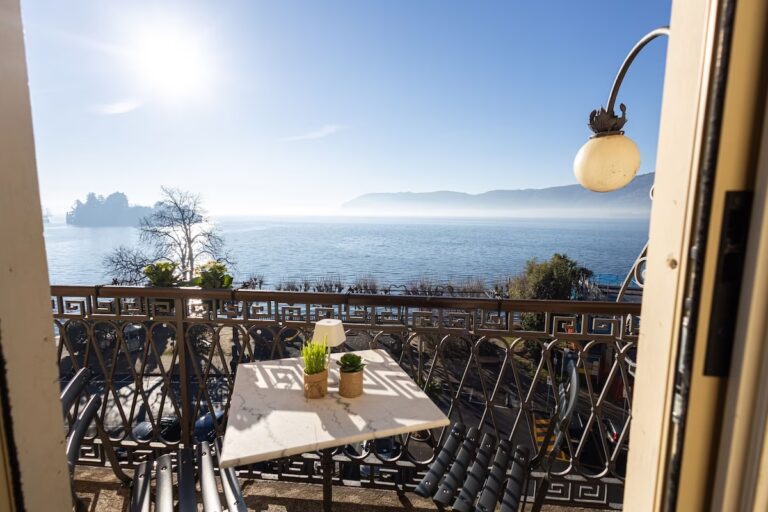
Our Favorite Hotels in Verbania
- Hotel Belvedere San Gottardo: Some of the rooms are a little dated, but for me, that adds to the charm. They are clean, many with stunning river views, and airconditioned, and on top of all that, I get to feel like I’m in an Agatha Christie novel.
Rate/Photos/Reviews - Grand Hotel Majestic: The main hotel and communal areas reek of old-world charm, but the recently renovated apartments are a slice of modern bliss. Located just above the main town, the views are unrivaled, and a private pool is a perfect spot to relax after a busy day.
Rate/Photos/Reviews
2. Stresa
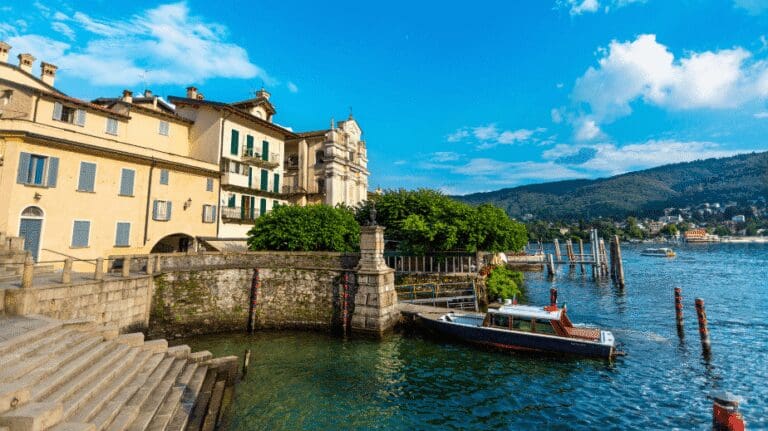
Stresa is the classic Lake Maggiore resort and, for many first-time visitors, the easiest place to stay. Its lakefront is lined with grand hotels, villas and gardens that reflect the town’s transformation into an international resort during the late 19th and early 20th centuries when wealthy families flocked here each summer from their residences in nearby Milan. The long lungolago offers views across the Borromean Gulf towards Isola Bella, Isola Madre and Isola dei Pescatori, while the centre has a good selection of restaurants, cafés and shops within easy walking distance of the water. Regular boat services make Stresa an especially convenient base for visiting the islands and other lakeside towns. The Mottarone mountain rises above the town and can still be reached by road or on foot, although the Stresa–Alpino–Mottarone cable car remains closed following an accident in 2021. For a first visit centred on the Borromean Islands, historic hotels and classic lake scenery, Stresa remains the most convenient all-round choice.
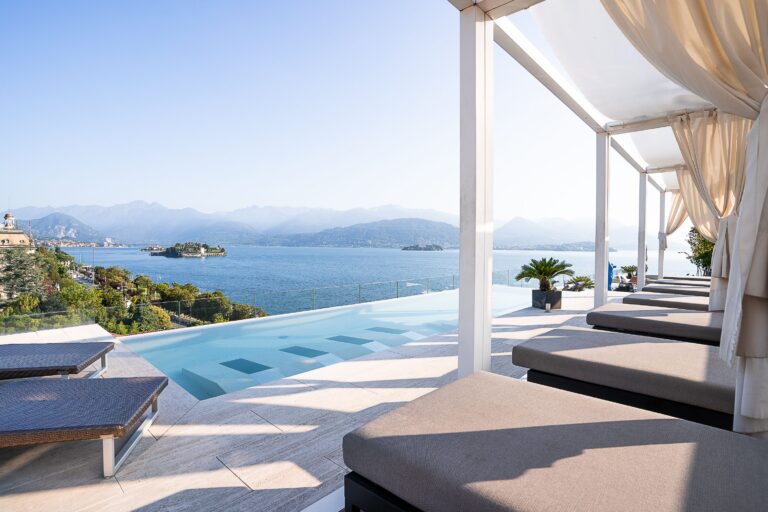
Our Favorite Hotels in Stresa
- Hotel La Palma: This upscale, family-friendly hotel is located right next to the lake. It has an outdoor infinity pool and a children’s pool, so everyone can enjoy the day. If you need to relax after a long day, you can visit the on-site spa or enjoy a meal at the resident restaurant.
Rates/Photos/Reviews - Al Campanile Aparthotel: A more accessible option than La Palma, but there’s no skimping on quality here. The rooftop terrace enjoys some of the best views of the lake in Stresa. The rooms have been recently refurbished and come with all the modern amenities you could need
Rates/Photos/Reviews
3. Cannobio

With a population of just 5,000 inhabitants, Cannobio is a much more tranquil affair than nearby Verbania and Stresa. A marvelous tree-lined lakefront promenade leading to Piazza Vittorio Emmanuele II is the perfect spot for an evening passeggiata, with the sound of boats gently bobbing in the lake providing a peaceful backdrop. If you fancy a dip, a stretch of sandy beach at the northern edge of town offers ample bathing opportunities in the Blue Flag waters of the Alto Verbano. If you choose to stay in Cannobio, then make sure to take a hike to the stunning Orrido di Sant’Anna, a deep gorge immersed in woodland 3 km from the town.
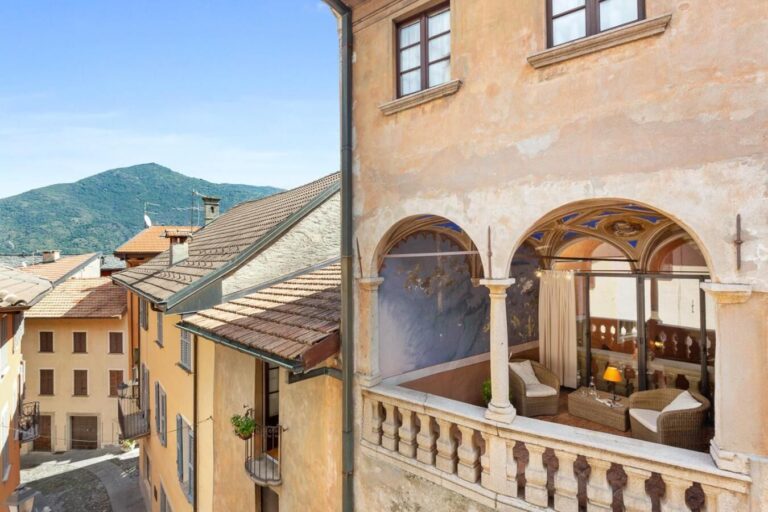
Our Favorite Hotels in Cannobio
- Hotel Pironi: This charming hotel is situated in the frame between Lago Maggiore and the medieval town of Cannobio in an ancient palace of the fifteenth century, nicely refurbished with the original architectural features.
Rates/Photos/Reviews
4. Luino
Where to Stay

Just a few kilometres from the Swiss border on the eastern side of the lake, sleepy Luino is another good option as a base for exploring Lago Maggiore. A tiny but lovely historic centre is a tangle of cobbled alleys and historic palaces perfect for anm aimless afternoon wander, and a vibrant street market takes place in the town every Wednesday. With origins extending as far back as the year 1535, over 370 stalls open their shutters selling everything from vintage antiques and bric-a-brac to local salumi and cheeses. The market is a must-visit when staying on Lake Maggiore, and ferry services are laid on from towns on the other side of the lake on market days to facilitate access.
5. Cannero

Tiny, postcard-perfect Cannero Riviera is situated on a natural inlet of Lago Maggiore to the north of Verbania not far from the Swiss border. A spectacular array of azaleas and camellias burst into life each spring, wreathing the picturesque medieval village in a riot of floral scent and colour. Olive groves and lemon trees complete the rich Mediterranean picture. The Lido di Cannero is another blue flag spot for bathing and water sports, whilst the Val Grande National Park offers a variety of hiking and biking trails in the nearby mountains. If you’re looking for a relaxed, out-of-the-way base for exploring Lake Maggiore, then the hotels in Riva Cannero are a great option.
6. Baveno
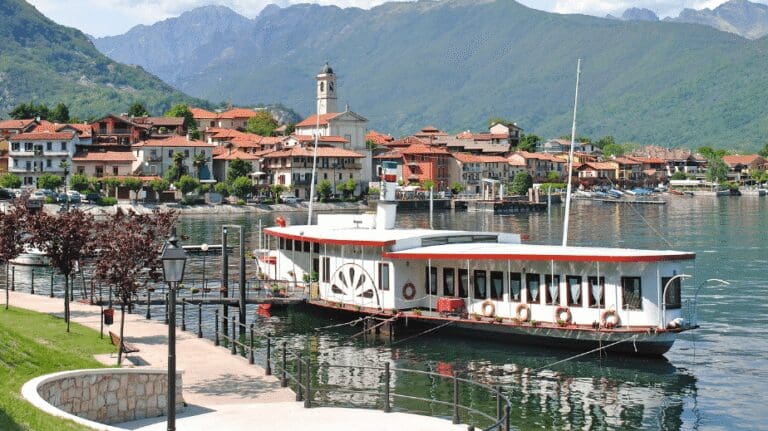
Baveno is a smaller resort immediately south of Stresa, with a lakefront facing the Borromean Islands and a long history connected to the area’s delicate, pink-hued granite, which has graced buildings around the world from Milan’s Vittorio Emanuele Gallery to the Paris Opera. Archaeological evidence records Roman settlement in the area, while granite quarrying became an important local industry from the 16th century onwards. The town’s later transformation into a resort is reflected in its series of grand 19th-century villas. Amongst the finest of these is the Villa Henfrey-Bianca, an imitation of an English castle built for English engineer Charles Henfrey in the 1870s, and the Villa Durazzo – now a luxurious Liberty era hotel that has counted Winston Churchill amongst its illustrious guests over the last century. Baveno also has a pleasant old centre, a lakeside promenade and direct boat access to the Borromean Islands, making it a quieter alternative to Stresa without sacrificing convenience.
7. Angera

Surrounded by rolling hills and forests, the medieval town of Angera glimmers from its position on the eastern bank of Lago Maggiore on the Lombardy side of the lake. The town is overlooked by the imposing Rocca di Angera, a castle associated since the 1400s with the powerful Borromeo clan who ruled this region. These days the glowering fortification is home to a museum displaying the family’s historic doll and toy collection (including some wacky mechanical numbers from the 19th century), which is well worth a visit; impressive medieval frescoes adorn the walls, while spectacular views over the countryside await from the tower. Angera itself is smaller and quieter than the major resorts on the western shore, with a historic centre, lakeside walks and access to the surrounding countryside. It is a particularly appealing choice for travellers who want history and scenery rather than the full resort atmosphere of Stresa.
Getting to Lago Maggiore and Getting Around

The nearest airport to Lago Maggiore is Milan Malpensa, roughly fifty kilometers from Stresa and rather less from the lake’s southern towns, which makes it the natural point of arrival for most visitors reaching the lake from abroad. From Malpensa airport, travelers without a car have two straightforward options: a taxi or private transfer direct to the hotel door, or a short connection into central Milan to pick up the train. Milano Centrale, the city’s grand central station, runs direct trains to Stresa station in under an hour on the fastest services and a little over that on the slower regional trains that service more stops along the route. Stresa is the more convenient arrival point for travellers staying in the centre of town, while Verbania-Pallanza station is several kilometres from the lakefront and requires a local bus or taxi. Drivers arriving from Milan or Malpensa can reach the western shore via the A26 motorway, with straightforward exits for Stresa, Baveno and Verbania.
Once you arrive, boats are one of the most useful ways to explore the lake. Navigazione Laghi, the public operator, has run scheduled navigation on Lake Maggiore since the 19th century, with the first steamship, Verbano, entering service in 1826. Its network links the principal lakeside towns with the Borromean Islands, including regular services around Stresa, Baveno, Verbania and the northern ports, as well as connections across the lake to Laveno and other eastern-shore towns. Faster services are also available on some routes. The network is most useful during the main season: the current 2026 summer timetable runs from March 29 through October 4, with reduced services outside that period. Anyone planning a day around several ferry connections should check the timetable before setting out, particularly in spring, autumn or winter.
One final practical point concerns Mottarone, the mountain above Stresa. The Stresa–Alpino–Mottarone cable car remains closed following the 2021 accident, so the summit is currently reached by road or on foot rather than by cable car.
Lago Maggiore Accommodation: What Travelers Ask Us Most

Which is the best town to stay in on Lago Maggiore?
For most first-time visitors, Stresa is the easiest base on Lago Maggiore. It has a wide choice of hotels, a handsome lakefront, a railway station with direct trains to Milan, and frequent boat services to the Borromean Islands. Verbania is a good alternative if you prefer a larger town with several distinct waterfront districts, particularly Pallanza and Intra, while Baveno offers a smaller resort atmosphere close to the islands. For the classic combination of lake views, gardens, ferries and straightforward transport, however, Stresa has the edge.
How many nights do you need on Lago Maggiore?
Three nights gives you enough time to see the main sights without turning the visit into a race. One day can be devoted to the Borromean Islands, another to Stresa and the surrounding shore, and a third to somewhere farther afield such as Verbania or the northern lake. With five or six nights, there is time to explore more slowly and venture into the Alto Verbano, including Cannero and Cannobio. A day trip from Milan is certainly possible, but an overnight stay makes it much easier to enjoy the lake after the busiest hours.
Can you visit Lago Maggiore without a car?
Yes. For a first visit focused on Stresa, the Borromean Islands and the main lakeside towns, travelling without a car is straightforward. Direct trains connect Milan with Stresa and Verbania-Pallanza, while the boat network links many of the principal destinations around the lake. A car becomes more useful if you want to explore the mountain villages above the lake or the less well-connected parts of the Alto Verbano. Keep in mind that Verbania-Pallanza railway station is not in the centre of Verbania, so you will need a local bus or taxi to reach the lakefront.
When is the best time to visit Lago Maggiore?
Late spring and early autumn are among the best times to visit, combining pleasant weather with fewer visitors than the height of summer. Spring is particularly appealing for the gardens around the Borromean Islands and Villa Taranto, while September and early October bring softer light and a quieter atmosphere. The trade-off is that boat services are less frequent outside the main summer period; in 2026, the principal summer timetable runs from March 29 to October 4.
Is Lago Maggiore better than Lake Como?
Neither is simply better; they offer different experiences. Lake Como has steeper mountains, more dramatic scenery and famously polished resort towns, while Lago Maggiore feels broader and more spacious, with the Borromean Islands and their gardens providing its signature attraction. Stresa is the obvious base for a first visit, while the northern lake offers a quieter, more outdoors-oriented experience. If your priorities are gardens, boat trips and a less intensely resort-driven atmosphere, Maggiore may suit you better; if you are looking for dramatic mountain backdrops and glamorous lakeside villages, Como may have the advantage.
This article contains affiliate links. We have affiliate partnerships with several different companies, meaning we can recommend what we love rather than what is available on just one site. We may receive a small commission for any bookings made, but this comes at no extra cost to you and helps keep our travel content free.
Book Your Italian Experience