Palace of the gods...Of all the mind-blowingly opulent palaces in Rome, the Palazzo Colonna might just be the most spectacular.
One of Rome’s most prominent families that count princes and popes amongst their ranks over the centuries, the Colonna’s star burned brightest in the age of the Baroque, when they set about turning their residence into a temple of art and luxury.
Today it hosts one of the city’s finest collections of art in soaring halls of gold – it’s only open on Saturday mornings until 2 PM, but if you want to understand the splendours of the Baroque, you’ve got to see Palazzo Colonna. Learn all about this spectacular hidden gem in Rome with our online guide!
Palazzo Colonna Tours
Visit Rome's Most Incredible Palace
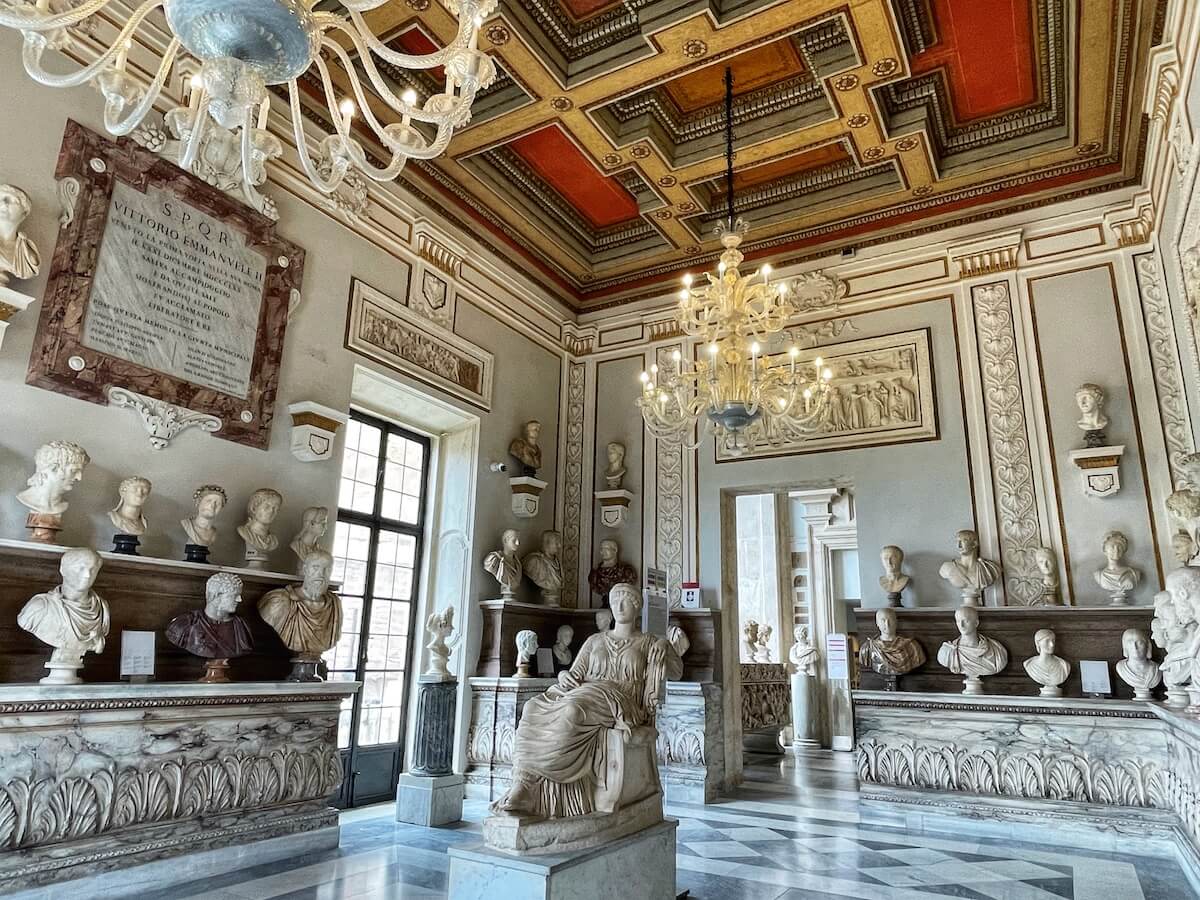
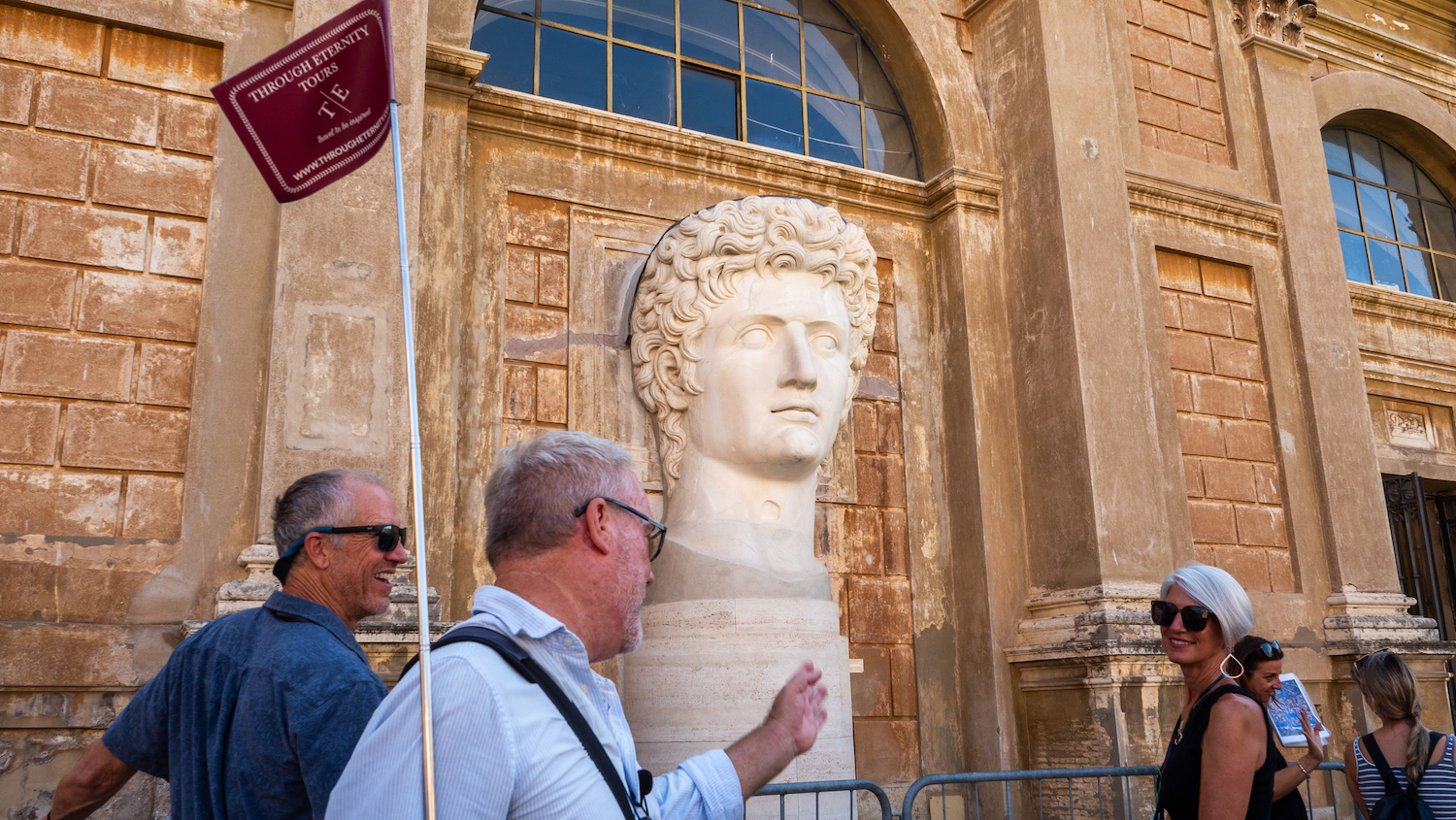
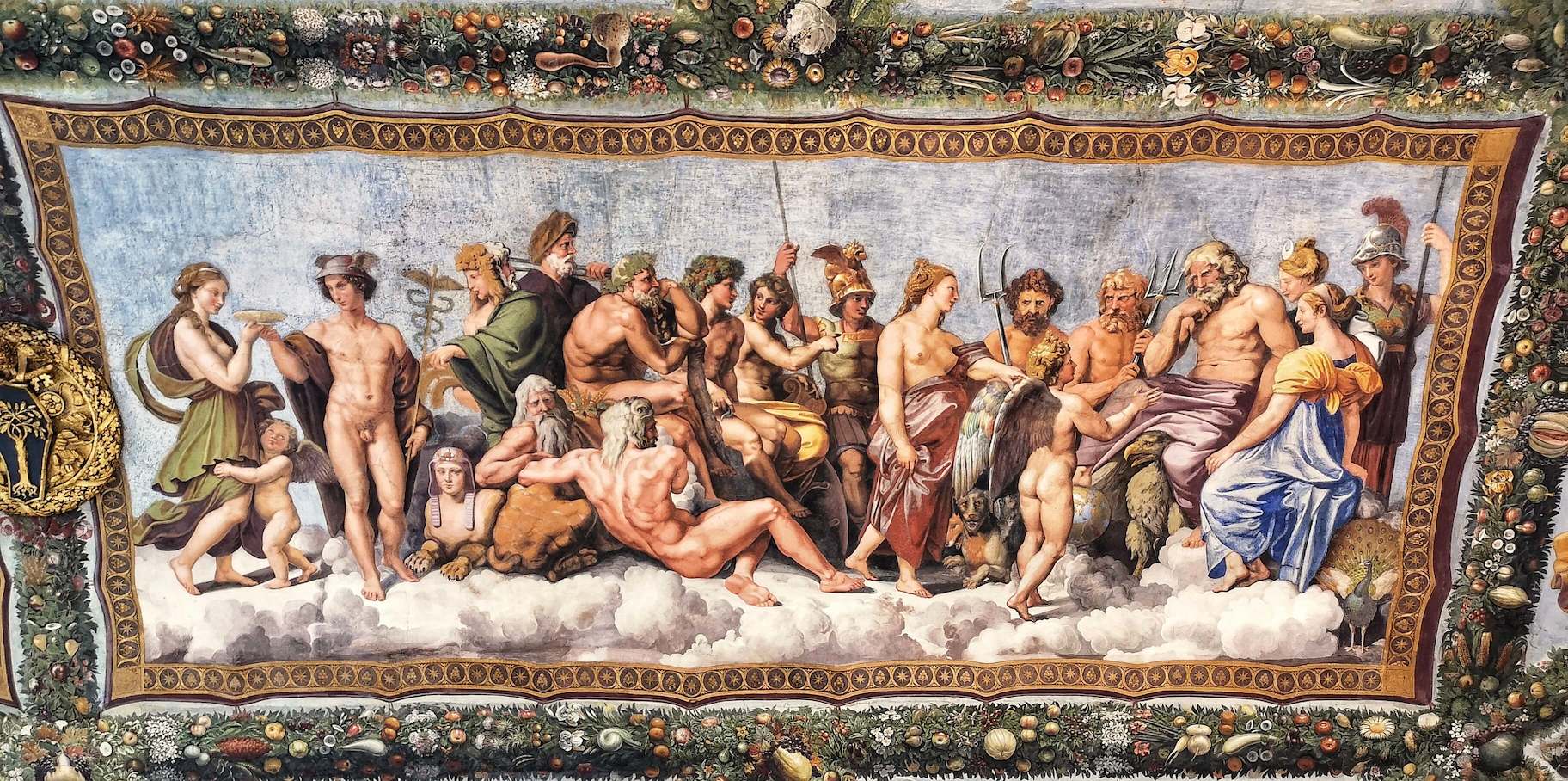
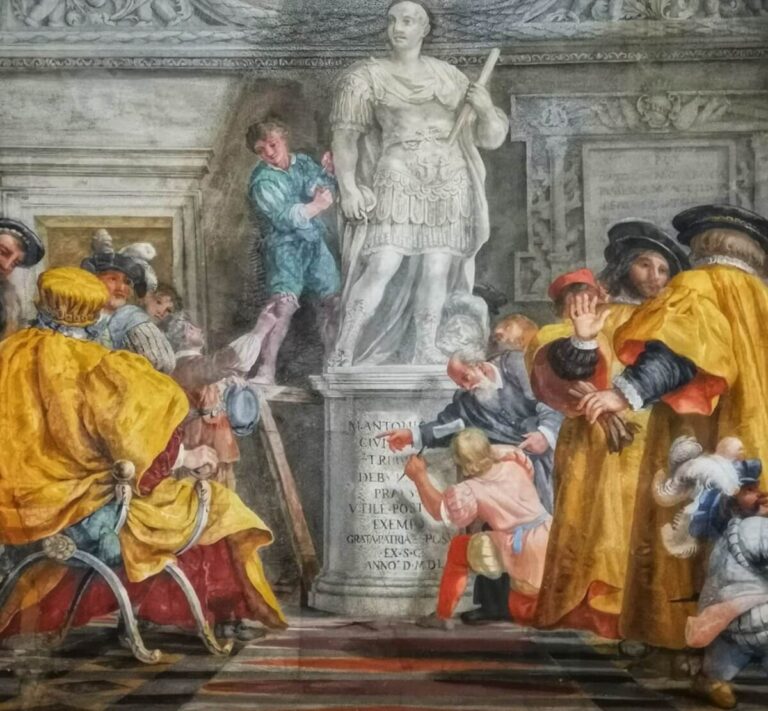
But first, some background on the family that call this magnificent palace home. The Colonna have spent nearly a millennium near the apex of Rome’s complex social hierarchy. During the Middle Ages they were one of the powerful feudal baronial families that ruled over the city and surrounding countryside with an iron fist, and were engaged in a perpetual war with their bitter enemies, the Orsini.
In the midst of the complex power-plays that characterised medieval Italian politics, at the start of the 14th century the Colonna found themselves at the centre of a conflict between the King of France and Pope Boniface VIII, who at the time was a member of another hated rival clan, the Caetani. Under the leadership of Sciarra Colonna, the family’s troops attacked the pope in his stronghold at Anagni, where Sciarra humiliatingly slapped the pontiff with his gauntlet. His authority in tatters, the pope died not long afterwards, and the Papal court decamped to France for the next 70 years.
Thanks to a series of savvy political moves, during this period numerous members of the Colonna became entrenched in the hierarchy of the Catholic church as bishops, cardinals and papal vicars, and the family’s fame rose to new heights when Oddone Colonna rose to the position of pope as Martin V in 1417.
Martin’s election brought to an end the turbulent years of the Western Schism and ushered in a new era of prosperity to the Eternal City, whose star had been much diminished during the Papacy’s exile in Avignon (a state of affairs that the Colonna had been instrumental in bringing about). Martin’s 14-year reign unfolded on the cusp of the Renaissance, and his sweeping projects of urban renewal and patronage would have a lasting impact on the city.
Although Martin V would prove to be the only pope that the Colonna would produce, the family remained firmly ensconced at the heart of Roman culture in the centuries to come. In the 16th century the renowned spiritualist and poet Vittoria Colonna struck up an intimate friendship with Michelangelo, reportedly inspiring many of his late masterpieces.
A few decades later, another Colonna would bring even greater glory to the family; Marcantonio II Colonna was a naval commander in charge of the Papal fleets, and was responsible for leading a vast alliance into battle against the advancing Turkish forces at Lepanto in the Gulf of Patras in 1571. The victory was considered one of the most momentous events in early-modern history, and made an instant hero of Marcantonio. The Colonna were in the ascendant, and the family set their sights on burnishing their image with a fabulous new palace in downtown Rome.

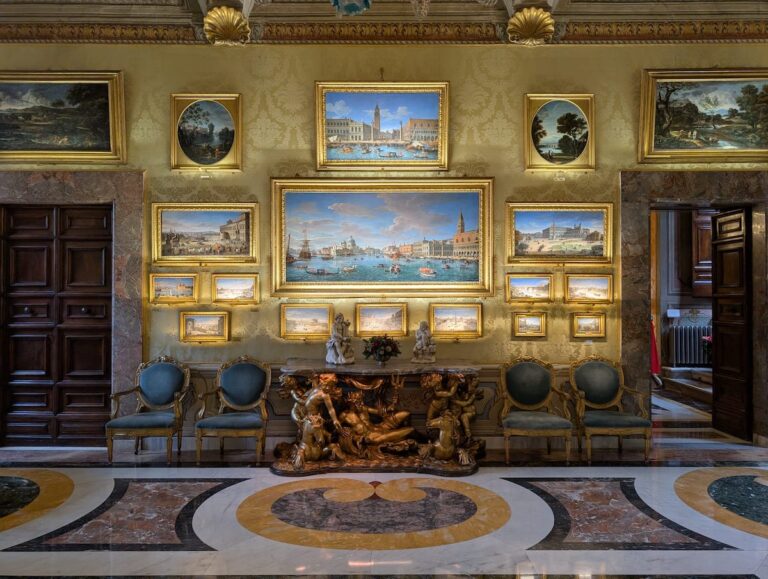
The Colonna have lived on the site where their current palace stands since the early 14th century, when the family residence was a fortress-like compound typical of Rome’s feudal barons. Oddone Colonna designated the complex the official papal residence in 1420, and additions were made here and there to the building over the coming decades to ensure it remained fit for purpose.
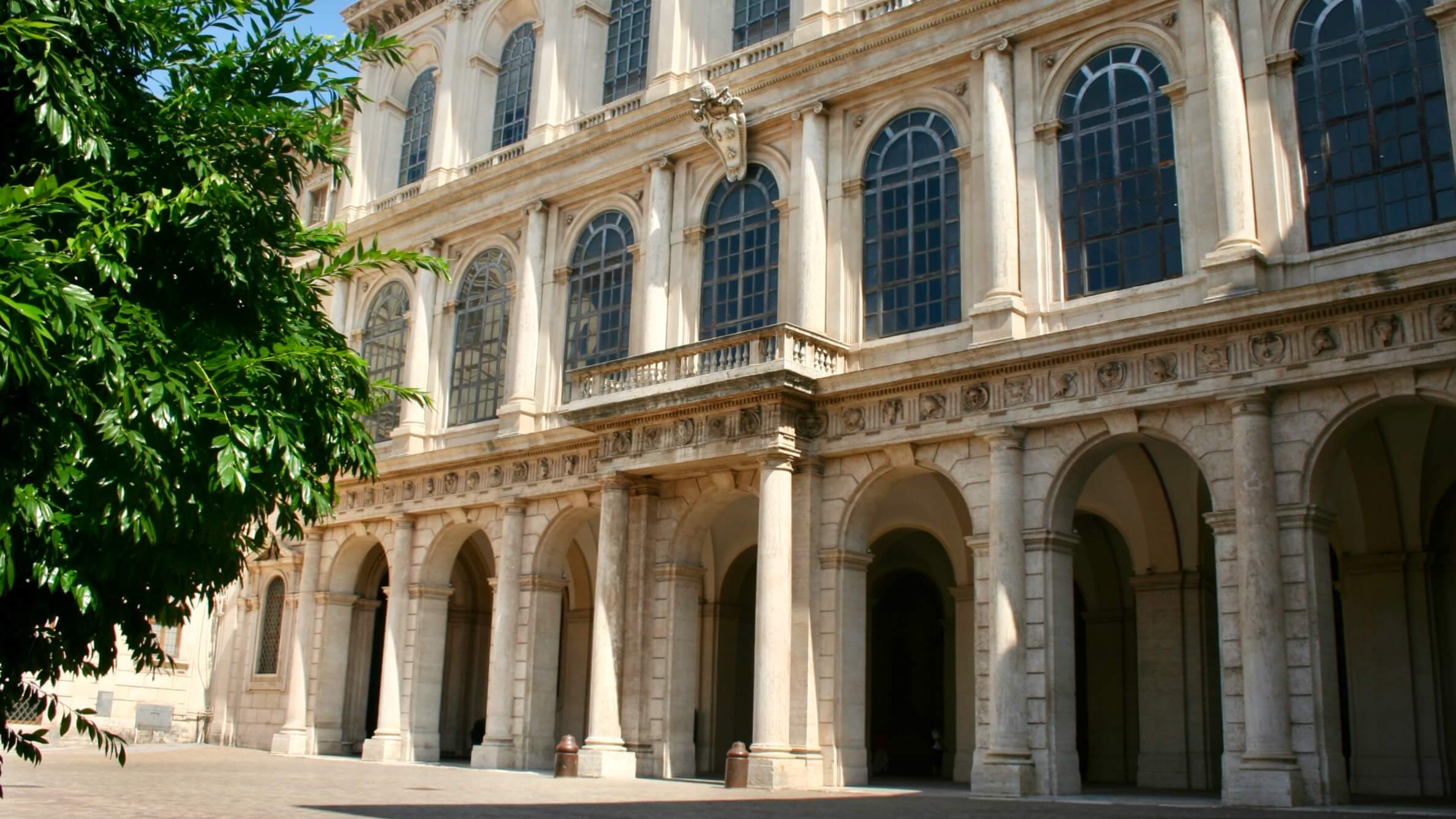
But it was not until the late 16th century that the palace began to take on the impressive shape that we know today when Prince Filippo I Colonna took it upon himself to begin the process of unifying the various medieval and Renaissance edifices into a coherent whole. Over the next 150 years, a who’s-who of renowned architects including Girolamo Rainaldi, Gianlorenzo Bernini, Antonio del Grande, Carlo Fontana and others helped transform Palazzo Colonna into one of Rome’s most opulent Baroque showcases.
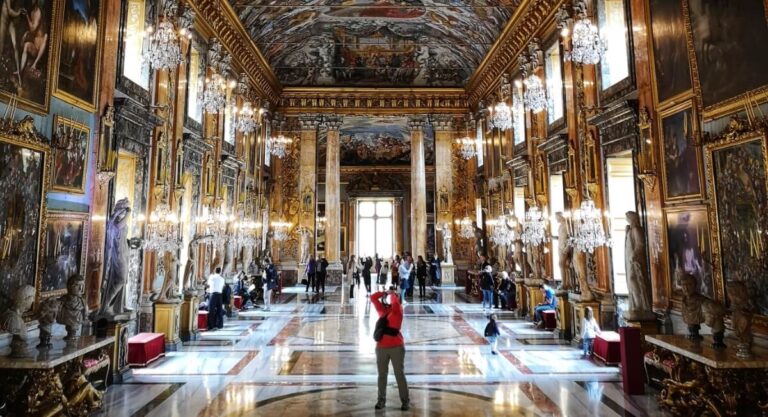
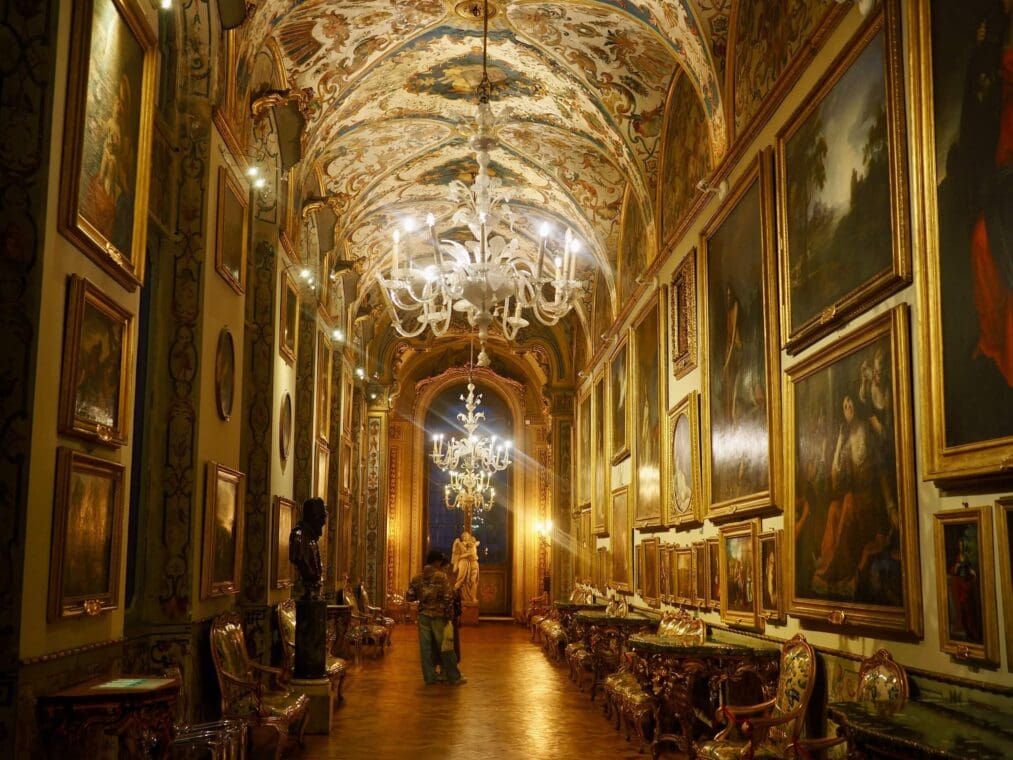
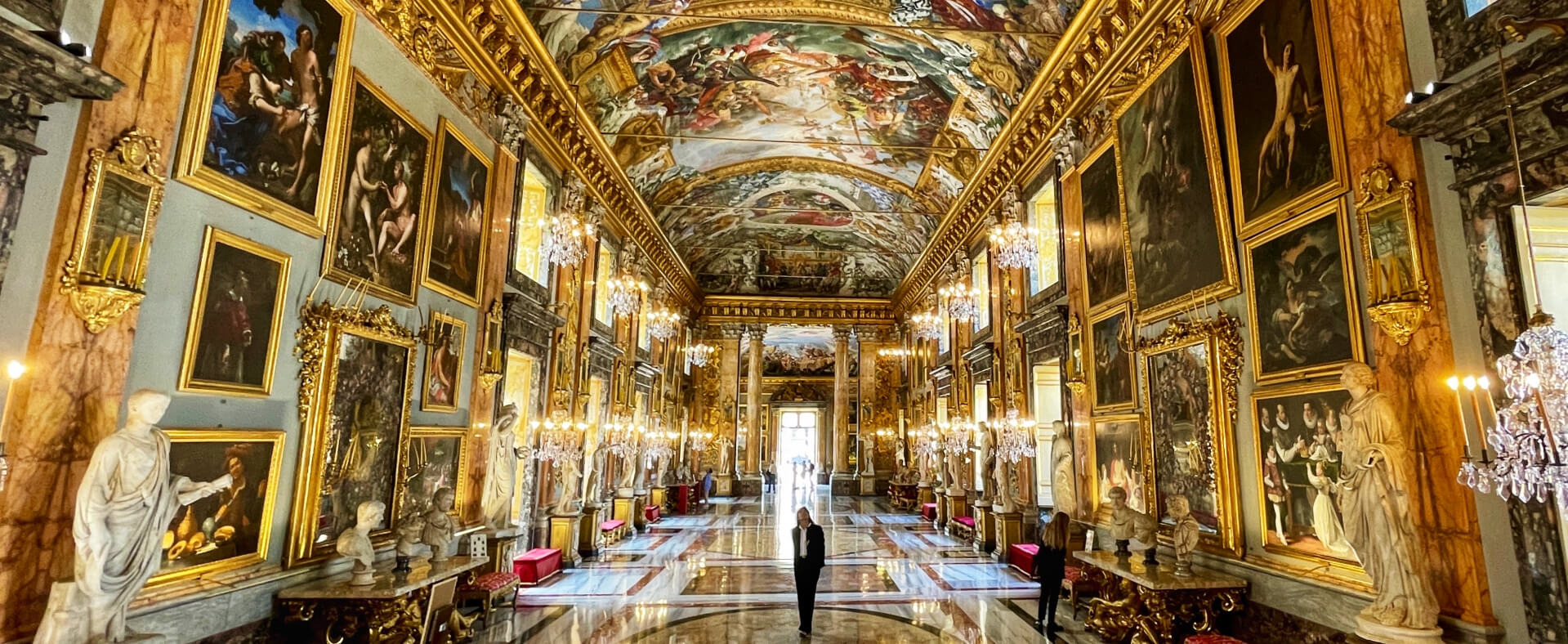
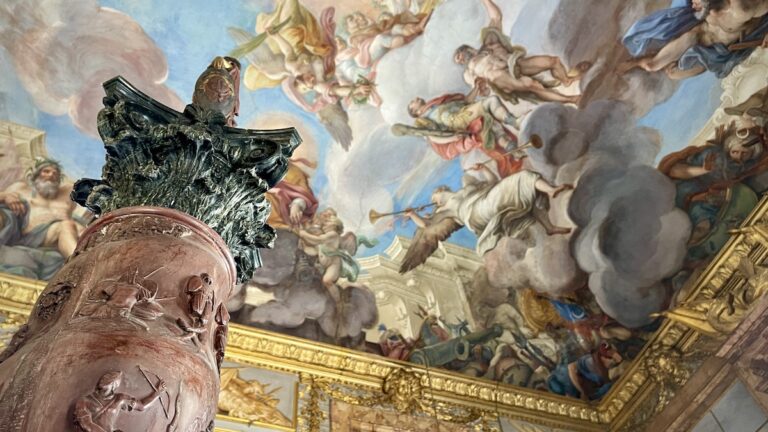
The palace’s undisputed architectural highlight is the jaw-dropping Great Hall, a vast glittering gallery filled with paintings, frescoes and priceless objects that is longer than the Hall of Mirrors at Versailles. The Great Hall was commissioned in the 1660s by Colonna prince Lorenzo Onofrio as a showcase for the family’s growing art collection, as well as a celebration of the achievements of his illustrious ancestor Marcantonio II, hero of Lepanto.
Supported by mighty pilasters and columns of precious giallo antico marble, hall’s soaring ceilings are covered with deliciously detailed and ornate frescoes by Sebastiano Rocci portraying the naval battle in spectacular technicolour; gaze on the Italian warships scudding across the ceiling as they engage the Turkish fleets, whose crews are portrayed in elaborate costumes that speak to the orientalist aesthetics of the 17th century Roman aristocracy.
The decorations culminate in the victorious Marcantonio being presented to the Virgin Mary in heaven in a fresco by Giuseppe Chiari, a crystalline statement of the Colonna’s elevated status in Roman society – and a match for newly powerful families such as the Barberini and Borghese who were also busily gilding their own reputations by building sprawling new palaces in the city.
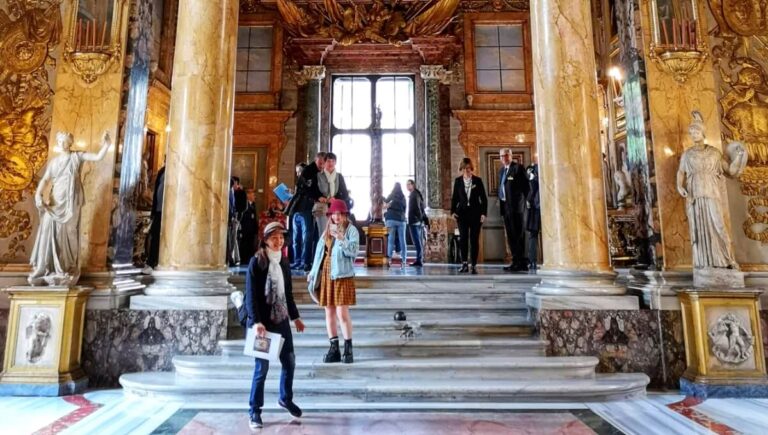
As you make your way through the gallery, be sure to look out for a cannonball lodged in the steps leading to the main hall: back in 1849, when a liberal uprising declared Rome a Republic free from Papal rule, the pro-Papal French army general Charles Oudinot ordered a shelling campaign against the rebels from their position high on the Janiculum hill. A stray cannonball made its way through the front window of Palazzo Colonna, where it remains to this day!
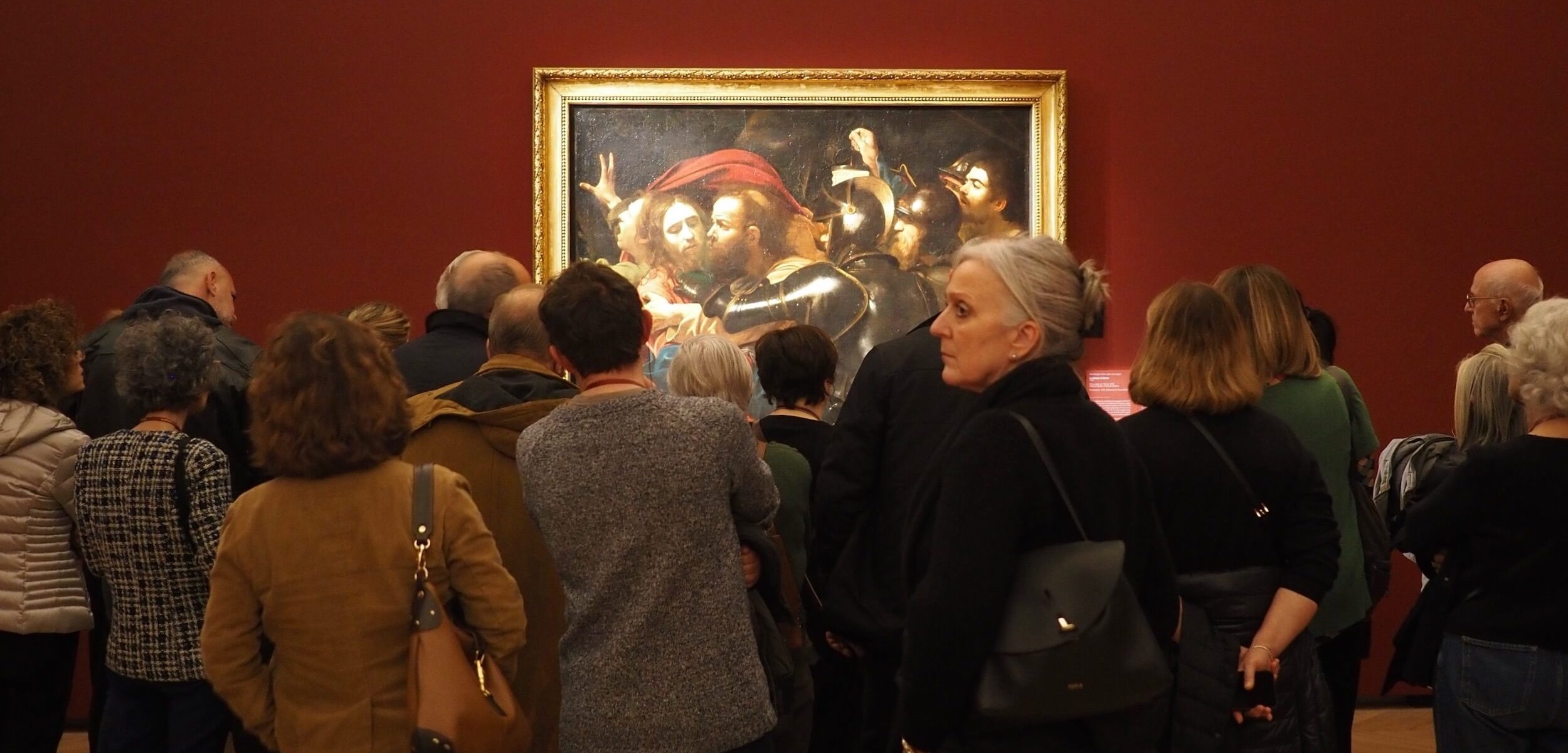
The fruit of centuries of assiduous collecting and patronage, the Colonna’s art collection is one of the finest private collections in Rome (and that’s saying something!) From photo-realistic portraits of many of the 17th century’s leading lights to idyllic landscapes, religious altarpieces, complex Baroque allegories and more, each of the palace’s ornate rooms is hung floor to ceiling with unmissable artworks.
Amongst the many highlights, be sure to look out for Annibale Carracci’s Il Mangiafagioli (The Bean Eater), a warts-and-all portrait of a peasant tucking into a bowl of pottage that is considered art’s first genre painting, and a work that would go on to inspire works by the Impressionist painters Vincent Van Gogh and Edoard Degas 300 years later.
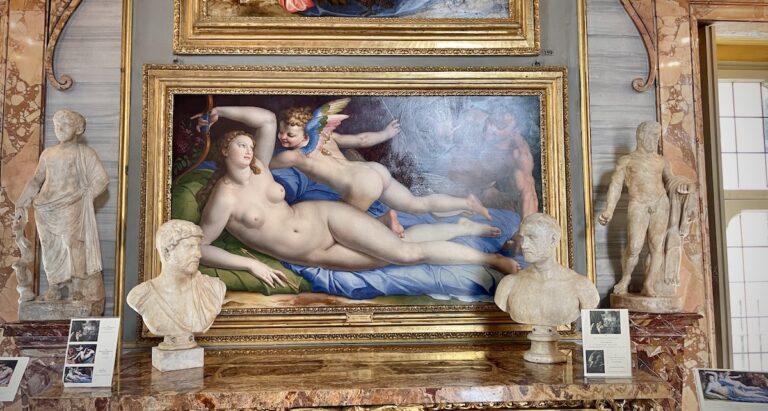
Look out too for Bronzino’s Venus, Cupid and a Satyr, a stunningly sensual expression of the courtly style of painting known as Mannerism that developed in the second half of the 16th century. The Colonna collection also includes works by Veronese, Tintoretto, Rubens, Perugino, Andrea del Sarto, Cosmè Tura, Carlo Crivelli and many other Old Masters.
A number of paintings explicitly burnish the Colonna clan’s fame, including Pietro da Cortona’s The Resurrection of Christ and of Some Members of the Colonna Family at the End of Time and Benedetto Lutti’s Apotheosis of Martin V, where the Colonna pope and his family are being introduced into the celestial firmament – another bold assertion of the Colonna’s terrestrial power.
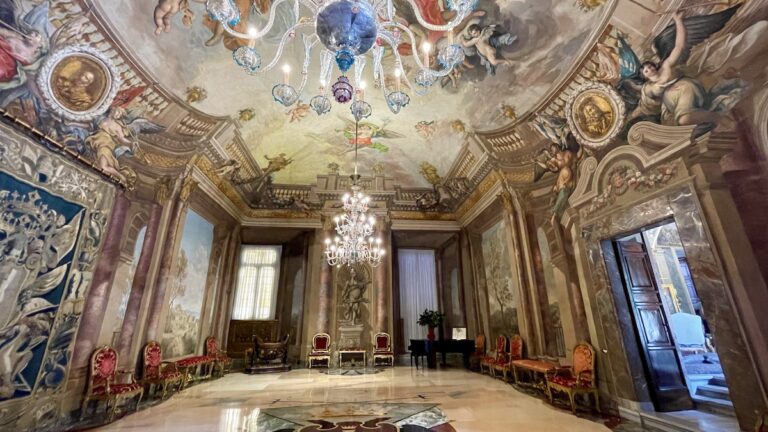
For a sneak peek into how the Roman aristocracy really lived, make sure to pay a visit to the Princess Isabelle apartments. Isabelle was the highly regarded wife of Prince Marcantonio Colonna, and presided over the palace for many decades until her death in 1984.
In these rooms she received dignitaries, financiers and nobles from across the world, including a famous state visit from no less a figure than Queen Elizabeth II of England. The rooms of the apartment are unbelievably opulent, and include a ballroom, state room and various living quarters decorated with landscape paintings by the famous 18th-century Roman artist and architect Luigi Vanvitelli.

Opening Hours
Palazzo Colonna is only open to the general public on Saturday mornings, so plan accordingly.
- Opening hours: Saturdays from 9:00 AM to 2 PM, with last entrance at 1:15 PM.
- In addition to the Saturday morning opening, it is possible to visit the palace on Friday mornings via official guided tour only, which must be booked in advance via the Palazzo Colonna official website.

Tickets
There are two ticket options for the Palace:
- General Admission (Galleria, Great Hall and Garden only): €15
- Full itinerary including the Princess Isabella Apartments: €25
Tickets can be purchased online or at the entrance on the day; while the palace is usually not particularly busy, this hidden gem is becoming more well known so we recommend that you book your ticket in advance online during high season to be on the safe side.
Through Eternity also offer private and small-group itineraries that allow you to visit the sensational Palazzo Colonna in the company of an expert art historian guide.
Visit Palazzo Colonna!