From the smoky intrigues of the papal court to the glittering salons of princely families, no story of Rome can be written without taking a peek into the city’s grand palaces.
These were the homes of popes, cardinals and aristocratic dynasties who wanted their importance to be visible. They built on a monumental scale, hired the leading architects and artists of their day, and filled their rooms with works that reflected the family’s wealth and ambitions. The result is a remarkable record of the people who once held sway in Rome and the ways they wanted to be remembered.
From Renaissance villas alive with mythological frescoes to Baroque palaces designed to make an entrance, these are ten of the most fascinating palaces in Rome. Through Eternity offer guided group and private tours of most of the sites mentioned below. Check out our Rome tours page here for the full list!
Rome Tours
Explore a Hidden Side of the Eternal City
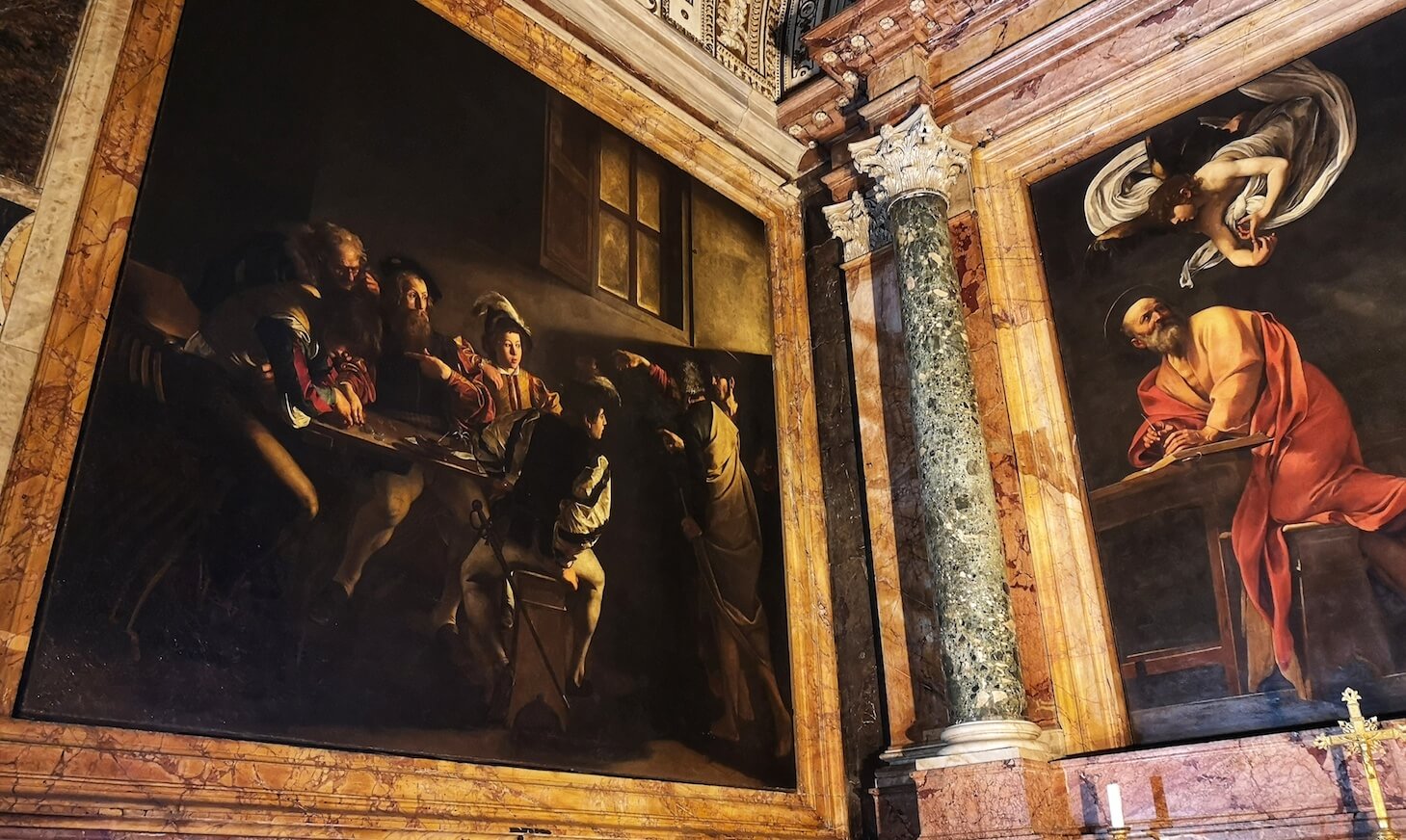
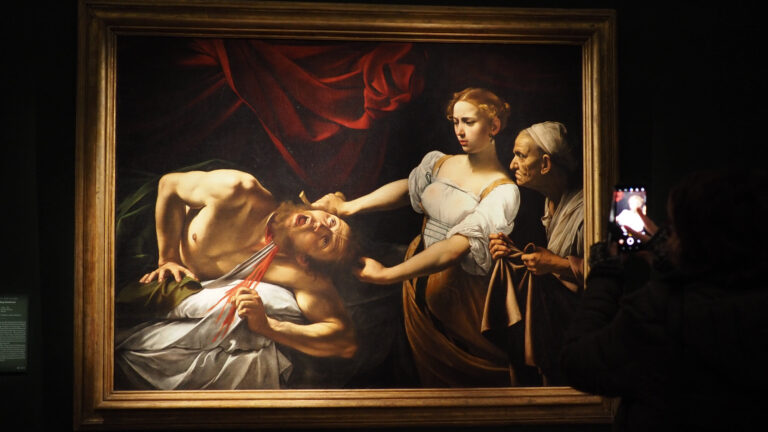
A visit to Palazzo Barberini feels like stepping into a Baroque fever dream. When Maffeo Barberini became Pope Urban VIII in 1623, his family suddenly found itself at the very centre of Roman power. A suitably magnificent palace was clearly in order.
Carlo Maderno began the project, and when he died the Barberini clan called in both Bernini and Borromini to help complete it. The result is an extraordinary architectural display of soft power. The entire palace, including its decorations, were conceived to burnish the reputation of the Barberini: it all culminates in the jaw-dropping grand salon, where Pietro da Cortona’s dizzying ceiling fresco, The Triumph of Divine Providence, dissolves the room’s architecture into a vortex of color, allegory, and buzzing Barberini bees.
The Barberini were not shy about advertising their success, and the palace’s architecture does much of the boasting for them: Bernini’s grand staircase and Borromini’s more ingenious spiral staircase offer two very different expressions of the same Baroque confidence.
Today the palace houses the Galleria Nazionale d’Arte Antica, with an outstanding collection of paintings by Raphael, Caravaggio, Holbein, Filippo Lippi, Titian and others. The result is an immersive and audacious blend of art, architecture and history, making Palazzo Barberini an intoxicating introduction to the over-the-top world of Baroque Rome.

How to Visit
Palazzo Barberini is open Tuesday through Sunday from 10am to 7pm, with the ticket office closing at 6pm; it is closed Mondays, December 25 and January 1. Admission is €15 and includes Galleria Corsini, with the combined ticket valid for 20 days; EU citizens aged 18 to 25 pay €2.

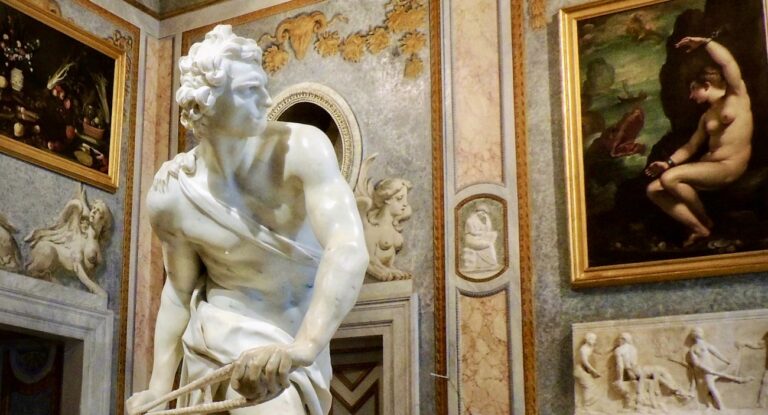
The Galleria Borghese grew out of the ambitions of Cardinal Scipione Borghese, nephew of Pope Paul V and one of the most voracious art collectors Rome has ever produced. Scipione had money, influence and, crucially, a very good eye. He also had few scruples about using his uncle’s papal power to get what he wanted.
The story of how the collection was assembled is as entertaining as the collection itself. In 1607, the painter Cavalier d’Arpino fell foul of the authorities over illegal firearm possession. Around a hundred paintings were confiscated, and they soon passed into Borghese’s hands. Among them were two youthful works by Caravaggio, including the Young Sick Bacchus and Boy with a Basket of Fruit. It was a spectacular windfall for Scipione, who was emboldened by the expropriation.
The following year, things became even more brazen. Scipione coveted Raphael’s magisterial Deposition, then hanging in the convent of San Francesco al Prato in Perugia; in the dead of night on March 18–19, 1608 it was lowered from the city walls by Scipione’s henchmen, and spirited away to Rome where it was soon to be found hanging in the Borghese villa. The episode has all the ingredients of a Renaissance art heist, except that the man behind it had the pope on his side.
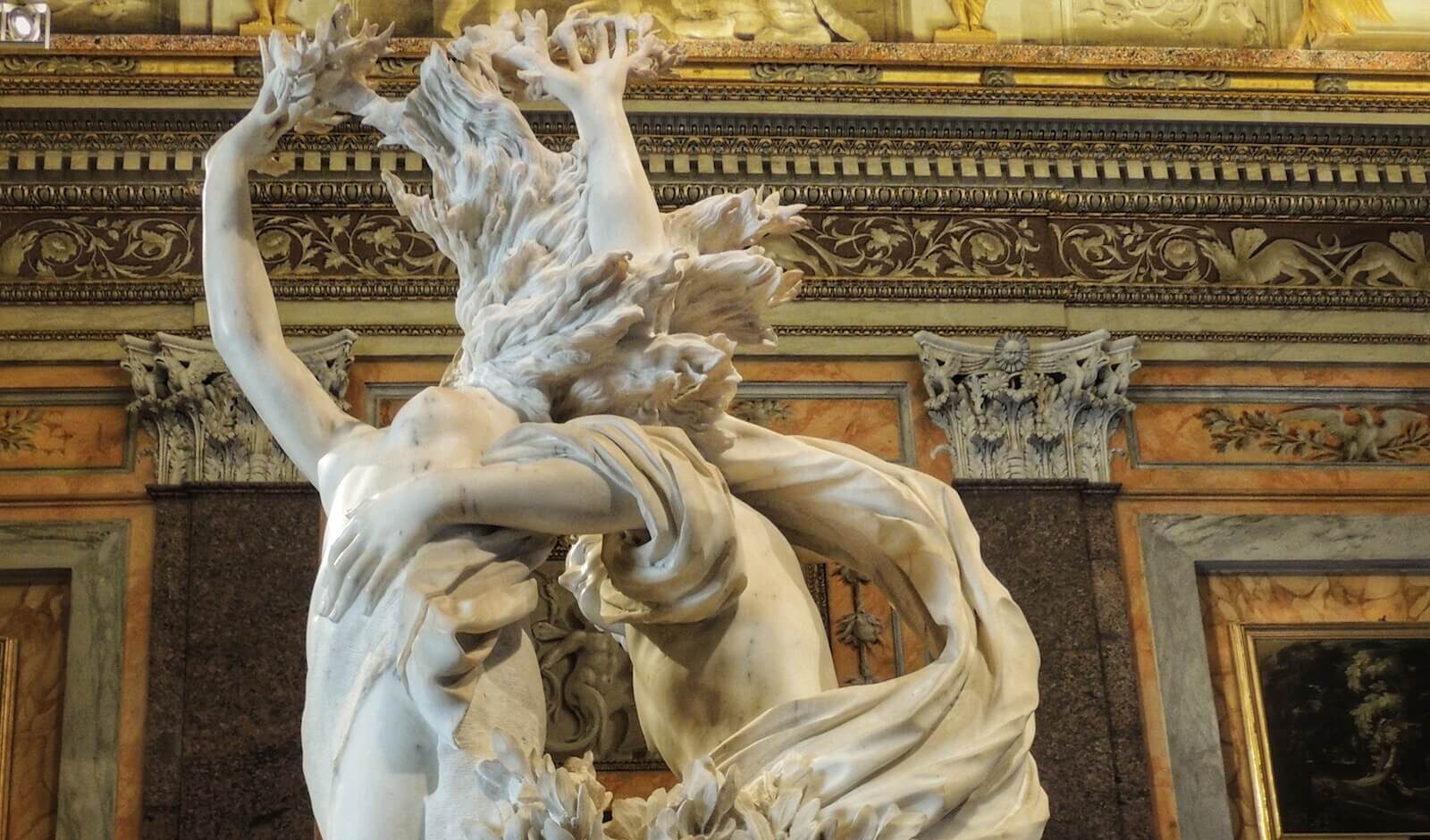
Yet it would be unfair to dismiss Scipione simply as a powerful man who bullied his way into a great collection. His taste was exceptional, and he recognised talent early. His greatest discovery was the young Gian Lorenzo Bernini, whose earliest masterpieces including Apollo and Daphne were commissioned for the Villa. Scipione understood what Bernini was capable of before the rest of Rome had caught up.
Today the palace is open to the public, and visiting it is one of Rome’s greatest treats. Ancient sculptures stand alongside the revolutionary works of Bernini, while paintings by Caravaggio, Raphael, Titian, Correggio and others reveal the breadth of Scipione’s ambitions. For art, drama, and the heady spirit of Baroque Rome, there’s no place quite like it.
How to Visit
The Galleria Borghese is open Tuesday through Sunday from 9am to 7pm, with last admission at 5:45pm; it is closed January 1 and December 25. Admission is €16, with EU visitors aged 18 to 25 paying €2, while visitors under 18 enter free. A €2 reservation fee is mandatory for every ticket, including free admission. Book well in advance, or reserve a place on a guided tour.
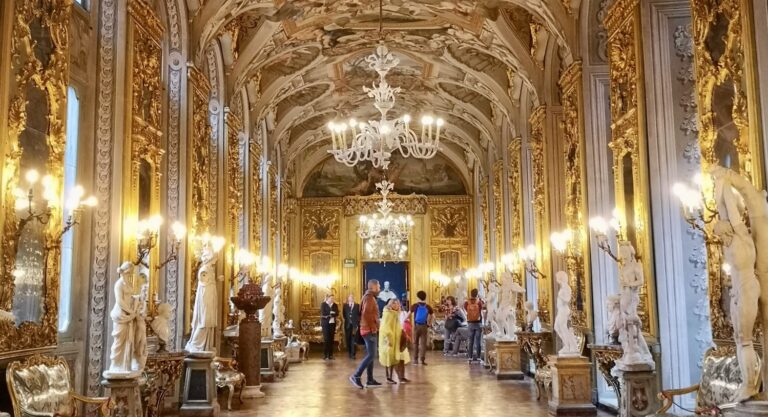
In a city where opulent palaces lurk around every bend, Palazzo Doria Pamphilj stakes its claim as the ultimate aristocratic hideaway. Accessed via a lovely courtyard garden, the sprawling pile occupies a whole block of central Via del Corso and grew over centuries as different families acquired, enlarged and married their way into the property. The palace passed into Pamphilj hands when Olimpia Aldobrandini married Pope Innocent X’s brother Prince Camillo Pamphilj in 1647.
Rome’s first family soon set about transforming the palace into a residence fitting of their elevated position. A keen patron of art, the pope established a private art gallery in the palace in 1651 to display his considerable and ever-expanding collection. The collection is anchored by one of the most famous paintings in Rome: Velázquez’s portrait of Innocent X. The pope stares out with such intelligence and suspicion that it is tempting to imagine the sitter wondering what the Spanish painter was getting up to. Innocent himself apparently admired the portrait, exclaiming “Troppo vero!” (it’s too true) when he first saw it.
In addition to Velázquez you’ll encounter a series of masterpieces by Caravaggio, Raphael and Titian amongst others, as well as the astonishing Gallery of Mirrors – a long salon where light refracts off gilt frames and plush damasks, seeming to conjure the hush of a 17th-century concert or the gaiety of a Baroque ball.
Beyond the art, the palace preserves the memory of the intrigue and scheming that characterised 17th-century politics in the Eternal City. The key figure was the pope’s sister-in-law, Olimpia Maidalchini, the pope’s formidable sister-in-law, whose influence over Innocent X was considerable and whose enemies later portrayed her as the sinister power behind the papal throne (not to mention the pope’s mistress).
Olimpia despised her beautiful daughter-in-law and namesake for thwarting her dynastic ambitions for her son Camillo, but nonetheless made good on her exalted position by earning a fortune in bribes through gatekeeping access to the pope. When Innocent died in 1655, she was forced to leave Rome in a hurry.
Amazingly, the Pamphilj family still lives in a wing of this palace, so visiting feels like peeking behind the velvet curtain of Baroque nobility. For extra insight from the horse’s mouth be sure to pick up the complimentary audioguide, where current owner Jonathan Pamphilj himself gives his personal take on the family collection.
How to Visit
The Doria Pamphilj Gallery is open Monday, Tuesday and Thursday from 9am to 7pm, with last admission at 6pm, and Friday through Sunday from 10am to 8pm, with last admission at 7pm. It is closed Wednesdays, January 1, Easter and December 25. Tickets cost €16 at the ticket office or €17 with online booking. The ticket includes the audio guide, subject to availability. The Secret Apartments, including the Bath of Diana, require a separate ticket.
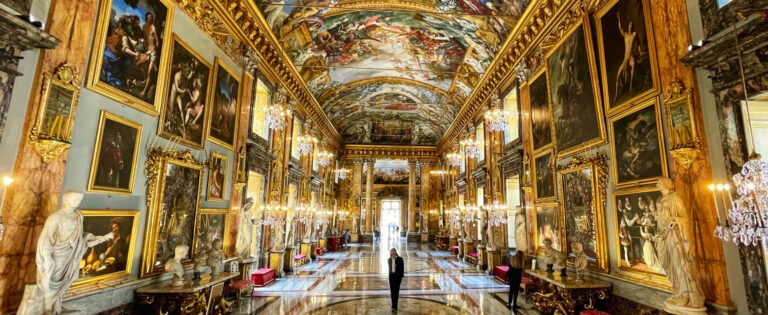
The history of Galleria Colonna stretches back eight centuries, and the building still belongs to the Colonna family. Its appearance today, however, owes much to the dramatic transformation that took place during the seventeenth century, when an austere medieval stronghold was turned into one of Rome’s grandest Baroque residences.
The Colonna were one of Rome’s great medieval families. One of their own, Oddone Colonna, became Pope Martin V in 1417 and used the palace as his Roman residence as he set about restoring papal authority and rebuilding a city that had been badly battered by decades of political turmoil.
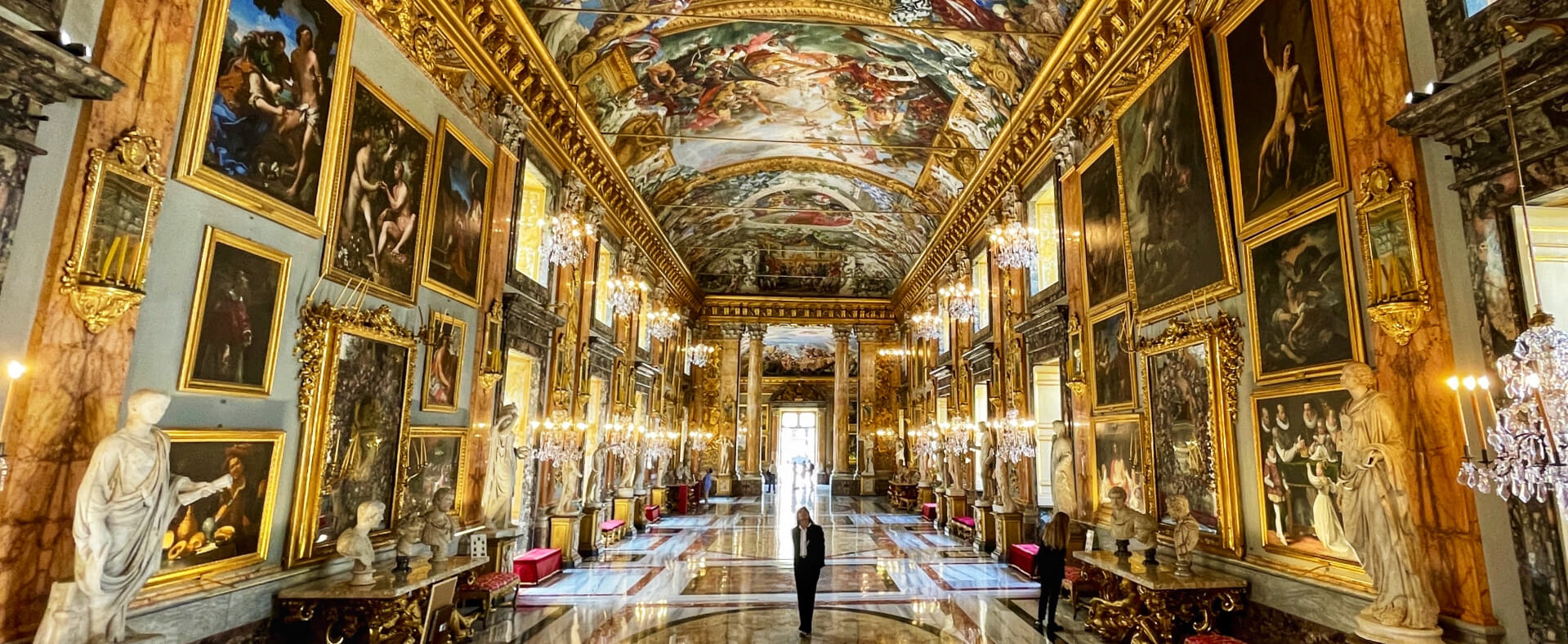
Over the following centuries the family transformed the old stronghold into an increasingly magnificent residence, culminating in the extraordinary Colonna Gallery. As soon as you set foot in these lavish, marble-lined halls, you realize what wealth really meant in Baroque Rome. Its long sequence of rooms is an exuberant procession of paintings, sculpture, gilding and painted architecture, with much of its decoration celebrating Marcantonio Colonna’s victory over the Ottoman fleet at Lepanto in 1571. The Colonna evidently decided that if they were going to display their power, they might as well make it spectacular.
Beyond the propaganda, the Colonna art collection is just as dazzling. Here you’ll find everything from the refined Renaissance allegories of Bronzino to works by Tintoretto, Veronese, Guido Reni and Guercino. But the highlight is a much humbler affair that take us far from Baroque bombast: Annibale Carracci’s The Bean Eater is a revolutionary, warts-and-all portrait of a peasant tucking into a bowl of pottage that is considered to be the first true genre painting in the history of art. Amidst the portraits, battle scenes and grand dynastic imagery, Carracci’s hungry peasant demonstrates that great art encompasses the full range of the human condition.
The private apartments reveal another side of the palace, showing how this extraordinary house continued to function as a centre of aristocratic life into the modern era. Princess Isabelle Colonna, who lived here until her death in 1984, presided over one of Rome’s most exclusive social circles and received royalty and international dignitaries in her richly decorated apartments, including Queen Elizabeth II. The rooms have been preserved with their furnishings and family photographs intact.
How to Visit
Palazzo Colonna is open to the public on Friday and Saturday mornings, including public holidays, while visits at other times are available only as private tours by reservation. Friday visits are guided and reservation-only, with the complete tour costing €35 and English departures at 9:30am and 10am. On Saturdays the palace is open from 9:15am to 1:15pm, with a €15 self-guided short itinerary or a €25 complete itinerary including the Princess Isabelle Apartment. Saturday tickets can be purchased at the entrance in Via della Pilotta or online. Alternatively you can arrange a private tour.
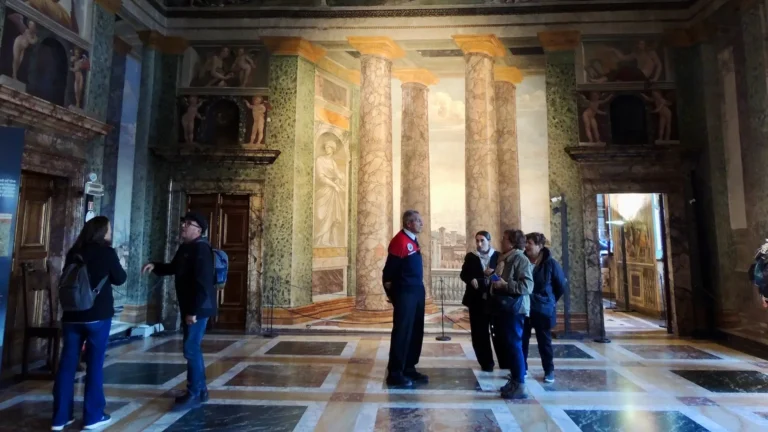
Villa Farnesina is the palace to visit when you want to see Renaissance Rome having fun. Commissioned in 1506 by Agostino Chigi, wildly successful businessman, banker to the popes and one of the wealthiest men in Europe, the villa was designed as a lavish suburban retreat where Chigi could combine business and pleasure: a stage for extravagant banquets, poetic flirtations and high-stakes diplomacy.
Chigi liked beautiful things, enjoyed entertaining on a grand scale and had the money to turn his tastes into architecture. Baldassarre Peruzzi was drafted in to design the villa, and the airy, light-filled residence set in lush gardens that he came up with bore little resemblance to the defensive-looking urban palaces that dominated contemporary Rome.
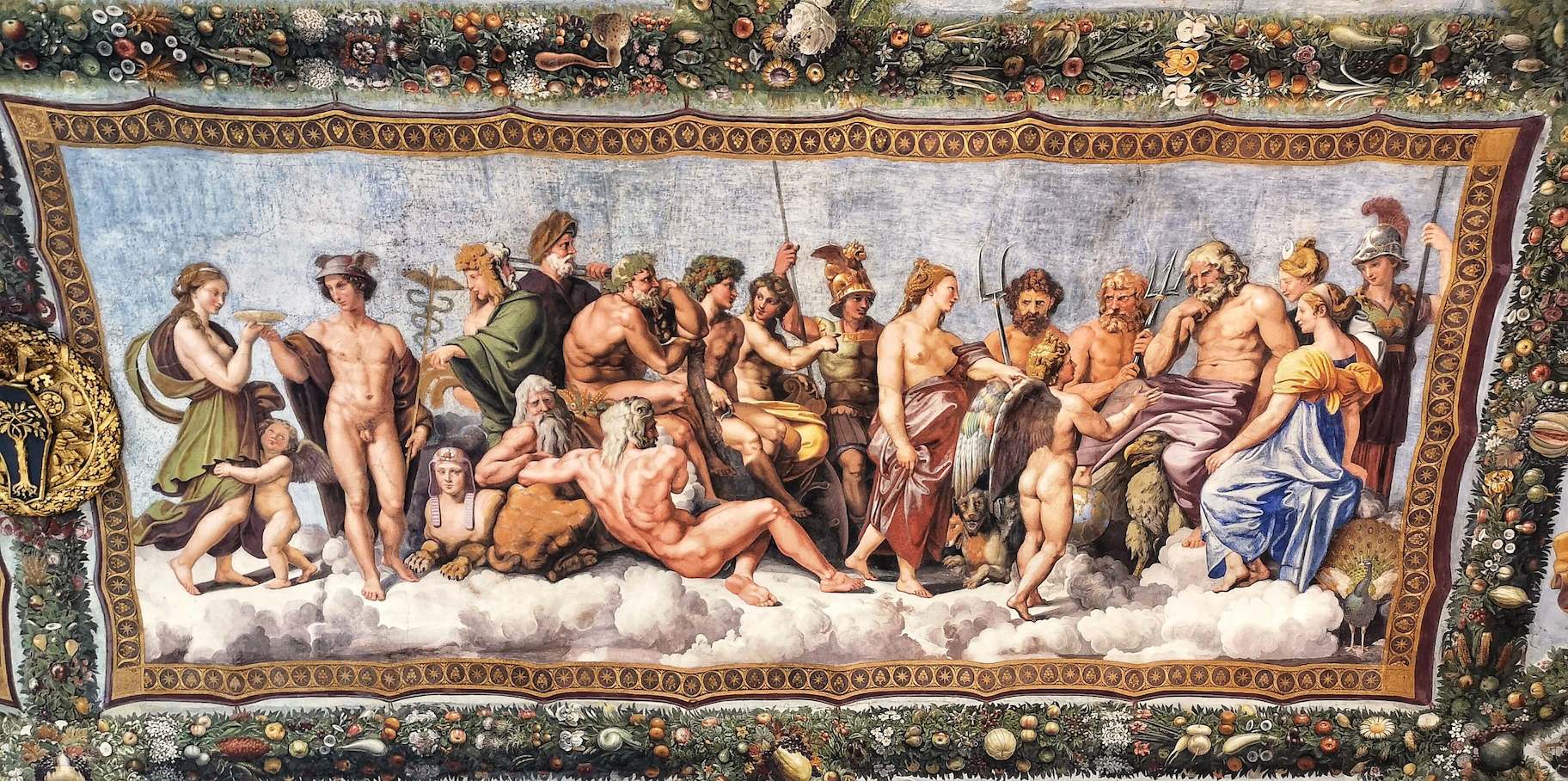
The decoration, meanwhile, was entrusted to some of the most celebrated artists of the age. Raphael and his workshop painted the Loggia of Cupid and Psyche, originally an open air colonnade on whose walls and ceiling the master portrayed the tale of Cupid and Psyche’s star-crossed romance in an opulent cycle of divine jealousy and erotic triumph – a wedding gift in paint for Chigi’s late-in-life marriage to his mistress Francesca.
Raphael’s famous Galatea dominates another room. Here the immortal sea-nymph skims across frothing waves as the jealous cyclops Polyphemus looks on. Above, Peruzzi painted the stars as they aligned on Chigi’s birth, creating a fascinating personal zodiac in fresco.
Through his enlightened patronage Chigi wasn’t merely showing that he could afford expensive art; he was demonstrating that he belonged to the sophisticated humanist culture of Renaissance Rome. Classical mythology, astronomy, ancient sculpture, architecture and painting were all recruited to construct an image of the perfect Renaissance gentleman.
How to Visit
Villa Farnesina is currently open Monday through Saturday from 9am to 2pm, with last admission at 1:15pm. It is closed Sundays except for a special opening on the second Sunday of each month, when it is open from 9am to 5pm, with last admission at 4:15pm. Admission is €12, Students pay €7, and children up to 10 enter free. Tickets can be bought directly at the villa or online. A private tour can help place the Villa in context.
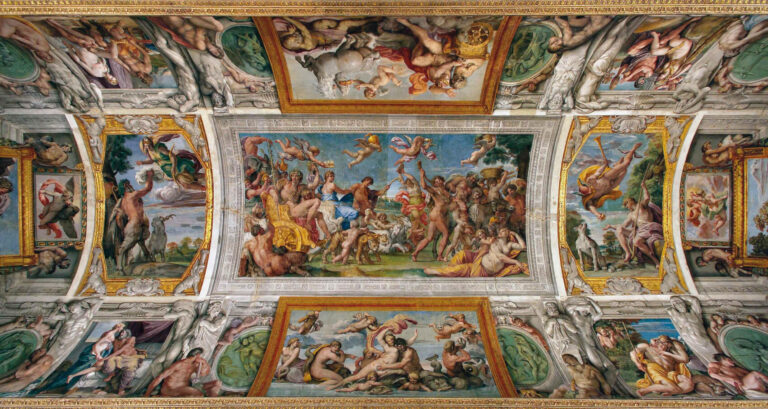
If ever a Roman palace announced that its owners had arrived, it is Palazzo Farnese. The enormous façade dominates Piazza Farnese with the cool confidence of a family that had recently acquired almost everything it wanted: wealth, power, papal connections and, in Alessandro Farnese, a pope of its own.
Alessandro had begun the palace while still a cardinal, but after he became Pope Paul III in 1534 the project took on a rather grander significance. This was no longer simply a comfortable residence for a wealthy churchman. The Farnese were building a stage set for their new status.
Antonio da Sangallo the Younger got the project underway, but after his death in 1546 Michelangelo was called in to finish the job. He raised the building’s upper storey, redesigned the central window and gave the palace its enormous crowning cornice. The effect is imposing without being fussy: everything is calculated to make the building look bigger, richer and more important than the surrounding streets and piazza.
Inside, the palace’s great showpiece is the Galleria Farnese, decorated at the beginning of the seventeenth century by Annibale Carracci and his workshop. Cardinal Odoardo Farnese commissioned the frescoes, and what emerged is one of the great turning points in the history of Baroque painting. Mythological scenes drawn from Ovid tumble across the ceiling – lovers embrace, gods quarrel, putti frolic and figures seem to climb into the real architecture of the room. It is beautiful, sophisticated and, occasionally, gloriously indecent.
Carracci was looking back to Raphael, Michelangelo and the classical world, but he was also inventing something new: a painting style capable of making the viewer forget where the architecture ended and the fantasy began. The decoration was also a family statement. By associating themselves with the ancient gods, the Farnese transformed their palace into a visual argument for dynastic greatness.
How to Visit
Palazzo Farnese is home to the French Embassy, and access is strictly limited as a result. You can however visit the Gallery through a guided tour booked in advance. Standard one-hour tours cost €15 and currently run Monday at 3pm, 4pm and 5pm, and Tuesday, Thursday and Friday at 3pm and 4pm. Tours including the newly opened Roman mosaics in the basements cost €20 and run Monday in Italian, Tuesday in English and Thursday in French at 5pm. Visitors must arrive 30 minutes before the tour for security checks and present the original ID used when booking. Backpacks and luggage are not permitted, and photography is prohibited inside.
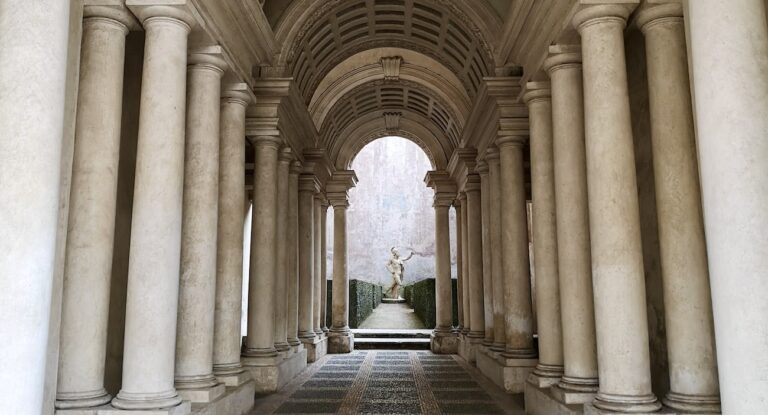
Palazzo Spada is a smaller and rather more mischievous proposition than Rome’s more monumental palaces. The building began as the sixteenth-century residence of Cardinal Girolamo Capodiferro, whose façade was decorated with an exuberant crowd of stucco gods, emperors and mythological figures.
In the 17th century, the palace passed to Cardinal Bernardino Spada. Spada was a serious collector and an admirer of the latest developments in Baroque art. He devoted decades to reworking the interiors, and commissioned renowned architect Francesco Borromini to put his stamp on the palace’s rather cramped garden. The result was one of Rome’s most celebrated illusions.
Completed in 1653, Borromini’s Prospettiva appears at first glance to be a sweeping 25-meter-long gallery of receding columns, culminating in a full-size statue at the far end. In reality, the corridor measures under 9 meters, and the statue of Mars is scarcely 80 centimeters tall. Sloped floors, shrinking columns, and a mathematically engineered vault conspire to trick the eye – a visual metaphor, it’s said, for the vanity of worldly appearances and the importance of discernment.
Upstairs, the Galleria Spada preserves the intellectual legacy of Cardinals Bernardino and Fabrizio Spada, who assembled one of the finest collections of 17th-century art in Rome. Still arranged in the style of a Baroque quadreria, the four-room gallery retains its original atmosphere, and features work by Guido Reni, Guercino and Artemisia Gentileschi.
How to Visit
The Galleria Spada is open Monday and Wednesday through Sunday from 8:30am to 7:30pm, with the ticket office closing at 7pm; it is closed Tuesdays, January 1 and December 25. Admission is €6, reduced to €2, and reservations are not mandatory for individual visitors. The Secret Garden containing Borromini’s celebrated Perspective can be visited until 6:30pm, although the interior of the colonnade itself is currently inaccessible for conservation reasons.
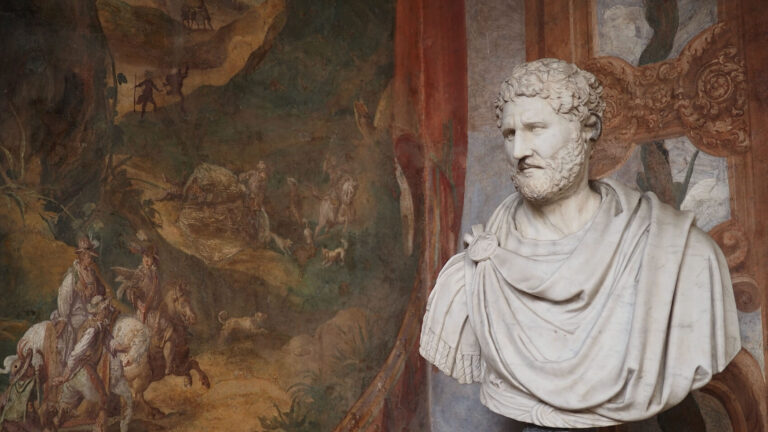
At Palazzo Altemps, ancient sculptures remain embedded in the refined world of Renaissance antiquarianism. You pass through frescoed rooms and quiet courtyards and encounter masterpieces of Greek and Roman art almost as the patrician families who once lived here would have known them: not as museum pieces but as objects that projected something fundamental about their owners.
Built in the 15th century by Pope Sixtus IV’s nephew Girolamo Riario, the palace was transformed in the late 16th century by Cardinal Marco Sittico Altemps. The German-born churchman was an enthusiastic collector of antiquities, and wasted little time embellishing his new abode with paintings, mosaics, fountains and an impressive collection of ancient sculptures.
Today the Altemps forms part of the Museo Nazionale Romano, but it retains the character of the aristocratic residence it once was. Amongst the many highlights on show here is the striking Galatian Suicide. This Roman copy of a Hellenistic original shows a defeated Gaulish warrior supporting the body of his dying wife as he prepares to kill himself, his powerful, idealised body set against the terrible intimacy of the scene.
Once part of the celebrated Ludovisi collection, it also embodies the complicated afterlife of antiquity in Rome: ancient artworks were excavated, collected, restored and displayed by wealthy families who saw the ancient past as part of their own world, sure signs of their wealth and refinement. At Palazzo Altemps, the setting remains part of the story.
How to Visit
Palazzo Altemps is open Tuesday through Sunday from 9:30am to 7pm, with last admission at 6pm. It forms part of the Museo Nazionale Romano, and the €15 combined ticket gives access to each of the museum’s sites within one week of the first visit; the concession price is €2. The National Roman Museum is closed Mondays, and its other venues currently include Palazzo Massimo and the Baths of Diocletian, while Crypta Balbi remains temporarily closed.
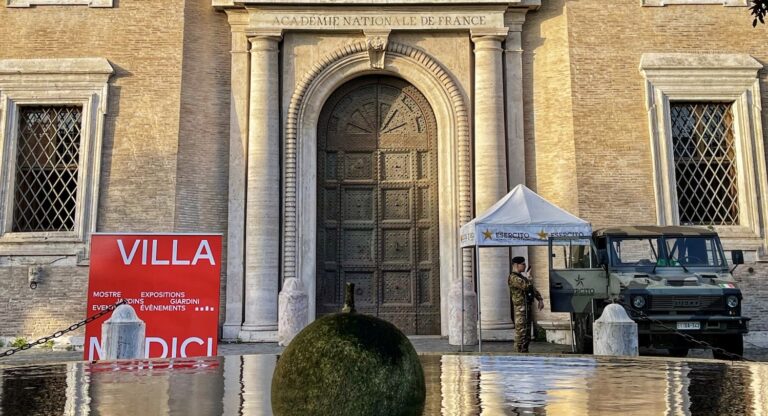
Home to the French Academy in Rome, the Villa Medici occupies one of the most extraordinary sites in the Eternal City. From its gardens and terraces high on the Pincio, the city opens out below you in a spectacular urban tapestry.
The story begins long before the Medici arrived here. The Roman general Lucullus created a vast luxury estate on this part of the Pincian Hill, and centuries later the emperor Honorius built a palace on the site. Archaeological excavations have uncovered remains of that imperial complex beneath the modern villa.
The Renaissance transformation began in the sixteenth century, but the decisive owner was Ferdinando de’ Medici, who acquired the property in 1576. A cardinal and passionate collector of antiquities, Ferdinando wanted a villa that could display his collection to maximum effect. He employed Bartolomeo Ammannati to enlarge the building and reshape the gardens, while Jacopo Zucchi decorated the interiors with elaborate mythological scenes.
Ferdinando’s vision survives largely intact today. Antiquities were built into the architecture and scattered through the gardens and the garden façade is still decorated with ancient reliefs installed there in the 16th century. Unmissable inside is Ferdinando’s studiolo, known as the Bird Room, where Zucchi covered the walls with birds, plants and fantastical natural imagery.
The Medici eventually left Rome, but the villa acquired a second life that continues to this day. Since 1803 it has housed the French Academy, making it a working home for artists, writers and researchers as well as a historic monument.
How to Visit
Villa Medici can be visited as part of a guided tour, with tours lasting approximately 90 minutes and covering the historic rooms, gardens, Belvedere and other areas of the villa. Guided tours run Monday through Sunday except Tuesday; English tours are offered several times daily, with additional departures on weekends. The full ticket costs €18 and the reduced rate is €15, including for visitors under 25; admission is free for visitors under 18. The Academy regularly hosts exbhibitions. Check the official website to see what’s on.

Brooding Palazzo Venezia offers a very different experience from the glittering aristocratic palaces elsewhere on this list. Built in the fifteenth century for Cardinal Pietro Barbo, the future Pope Paul II, it was one of the great expressions of papal power in Renaissance Rome. The palace’s deliberately severe appearance – with its battlements, massive tower and reused ancient stone – speak to a tumultuous age when a papal palace had to double as a fortress.
These days the palace is a museum open to the public; its exceptional collection of medieval and Renaissance art alongside household objects, ceramics, furniture, weapons and armour offers up a fascinating cross-section of life in the early-modern city. The lovely Giardino Grande, meanwhile, provides a hidden pocket of greenery in one of the busiest parts of central Rome – it’s free to visit, too.
For anyone interested in the city’s more recent history, however, Palazzo Venezia has an unavoidable extra dimension. Benito Mussolini made it the headquarters of the Fascist government between 1929 and 1943. The famous balcony overlooking Piazza Venezia from which Mussolini gave his rabble-rousing speeches is still there, a reminder that few Roman palaces have accumulated quite such a complicated afterlife as Palazzo Venezia.
How to Visit
Palazzo Venezia and its museum are currently open daily from 9:30am to 7:30pm, with last admission at 6:45pm. The VIVE ticket costs €18 and includes the temporary exhibition as well as the other VIVE sites — including the Vittoriano, Panoramic Terrace and Central Museum of the Risorgimento — and is valid for seven days from the selected entry date; EU visitors aged 18 to 25 pay €5, while visitors under 18 and other eligible categories enter free. The Great Garden is free to enter.
Rome Tours
Discover the Magic of the Eternal City