Many eras have left their mark on the landscape of Rome, but perhaps none have impacted the city as significantly as the 17th century.
During this period a series of great artistic masters gave expression to a very particular spirit, a spirit that survives in Rome to this day. A heady mix of religious fervour, drama and emotion, they have cast upon Rome an atmosphere that is entirely unique.
In the space of a few generations, the city was transformed — its churches refaced, its piazzas reorganised, its skyline punctuated with new domes and bell towers — by a revolution in art and architecture that we now call the Baroque. And at the heart of that revolution were three men of extraordinary, and extraordinarily different, genius.
Michelangelo Merisi da Caravaggio painted the human figure with a rawness and immediacy that art had never quite seen before. Gian Lorenzo Bernini turned marble into something that seems to breathe, and reshaped the public spaces of Rome with a theatrical confidence that has never been equalled. Francesco Borromini bent geometry to his will, creating interior spaces of dizzying spatial complexity from what appear to be the simplest of geometric elements.
They were near-contemporaries. They worked in the same city, sometimes a few streets apart. They knew each other, competed for the same patrons, inhabited the same world. And they were, in almost every significant respect, completely different.
Join us as we explore their contributions to the spectacular and contradictory world of Baroque Rome.
Discover Baroque Rome
Join a Rome Tour!
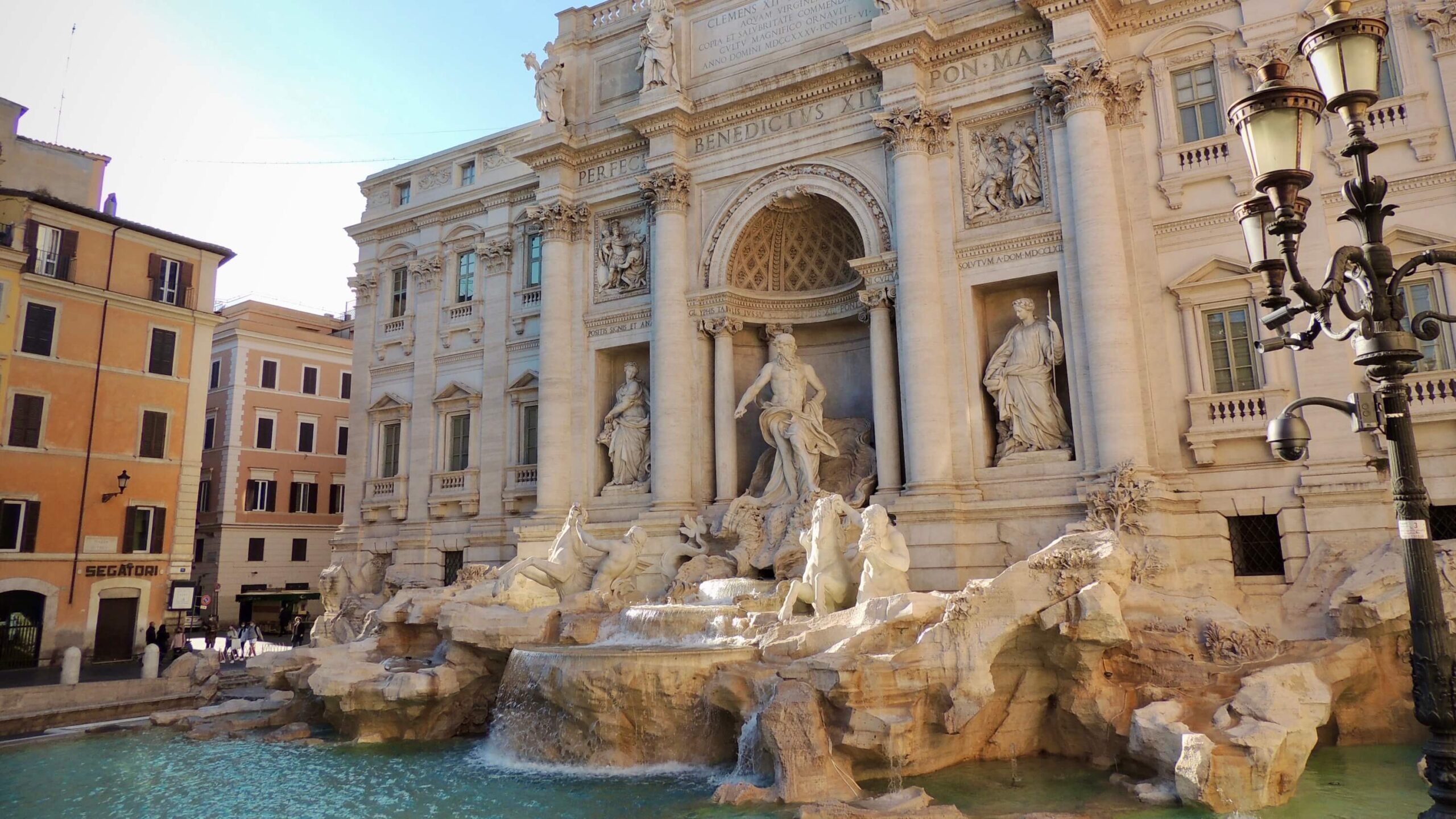
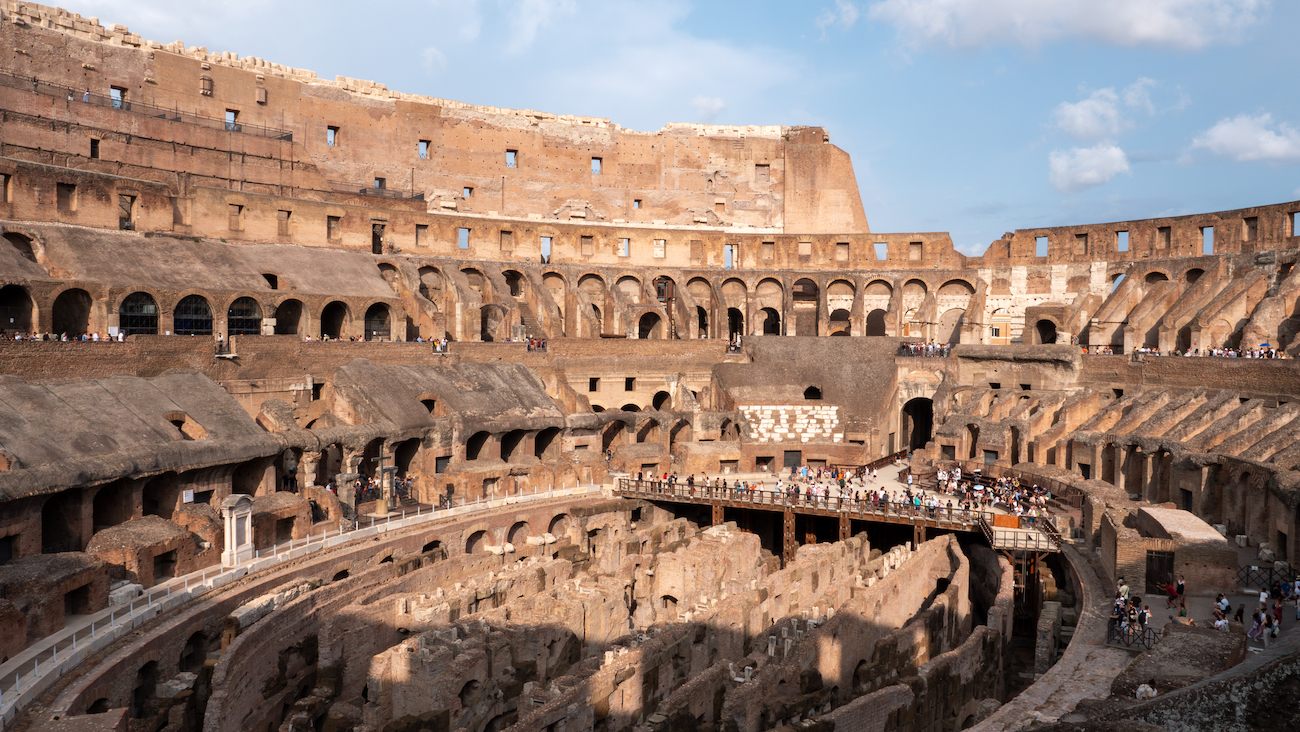
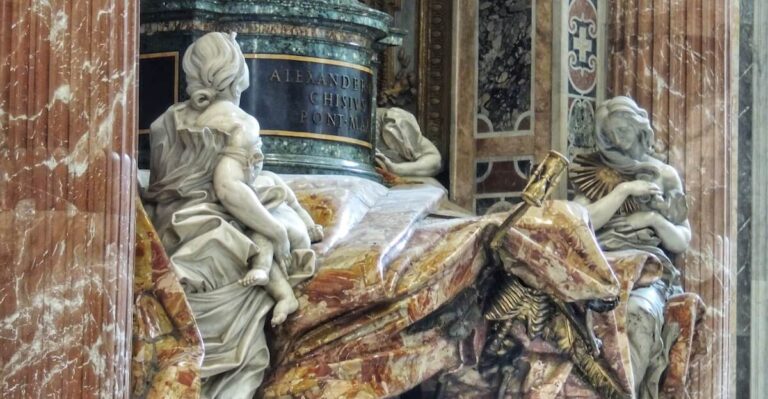
To understand the Baroque, you need to understand the historical context that produced it. The Council of Trent (1545–1563) had concluded that the Catholic Church’s response to the Protestant Reformation would be not retreat but aggression: a reaffirmation of Catholic doctrine through magnificence, through the senses, through an art that would move its audience emotionally rather than merely instruct them intellectually.
Rome was the arena in which this programme would be most visibly enacted. For a century and more, a succession of ambitious popes poured money and prestige into the city, commissioning work from the finest artists they could find. The result was an explosion of artistic production that transformed every corner of the historic centre.
Into this world came three figures who, between them, defined what the Baroque would look and feel like.

We begin in the dying years of the 16th century. The Rome in which the young, unheralded Lombard painter Caravaggio found himself was in the grip of a profoundly changing social climate.
The seismic repercussions of the religious Reformation that had been sweeping Europe for the previous half century were still being felt here at the centre of the Catholic world, and a new sense of religious conservatism was in the air.
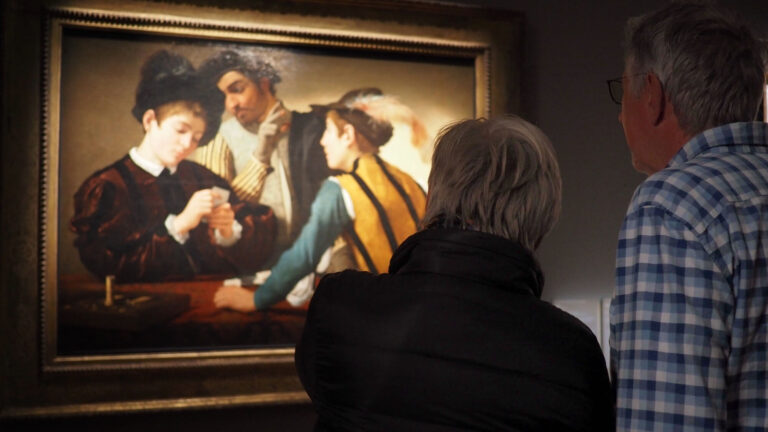
Unsurprisingly, the unruly young artist frequently found himself at odds with the wishes of his conservative patrons, and many of his masterpieces were rejected by the churches that commissioned them. Saints that looked like peasants, a Virgin Mary reportedly modeled on a prostitute, pilgrims with dirty feet – the mixture of the sacred and profane prismed through dramatic tenebrism was too much for some.
Nonetheless, the Church wanted art that moved the faithful, and Caravaggio’s revolutionary and dramatic minimalism was recognised by many as possessing a unique spiritual power that accorded perfectly with the ideals of the age.
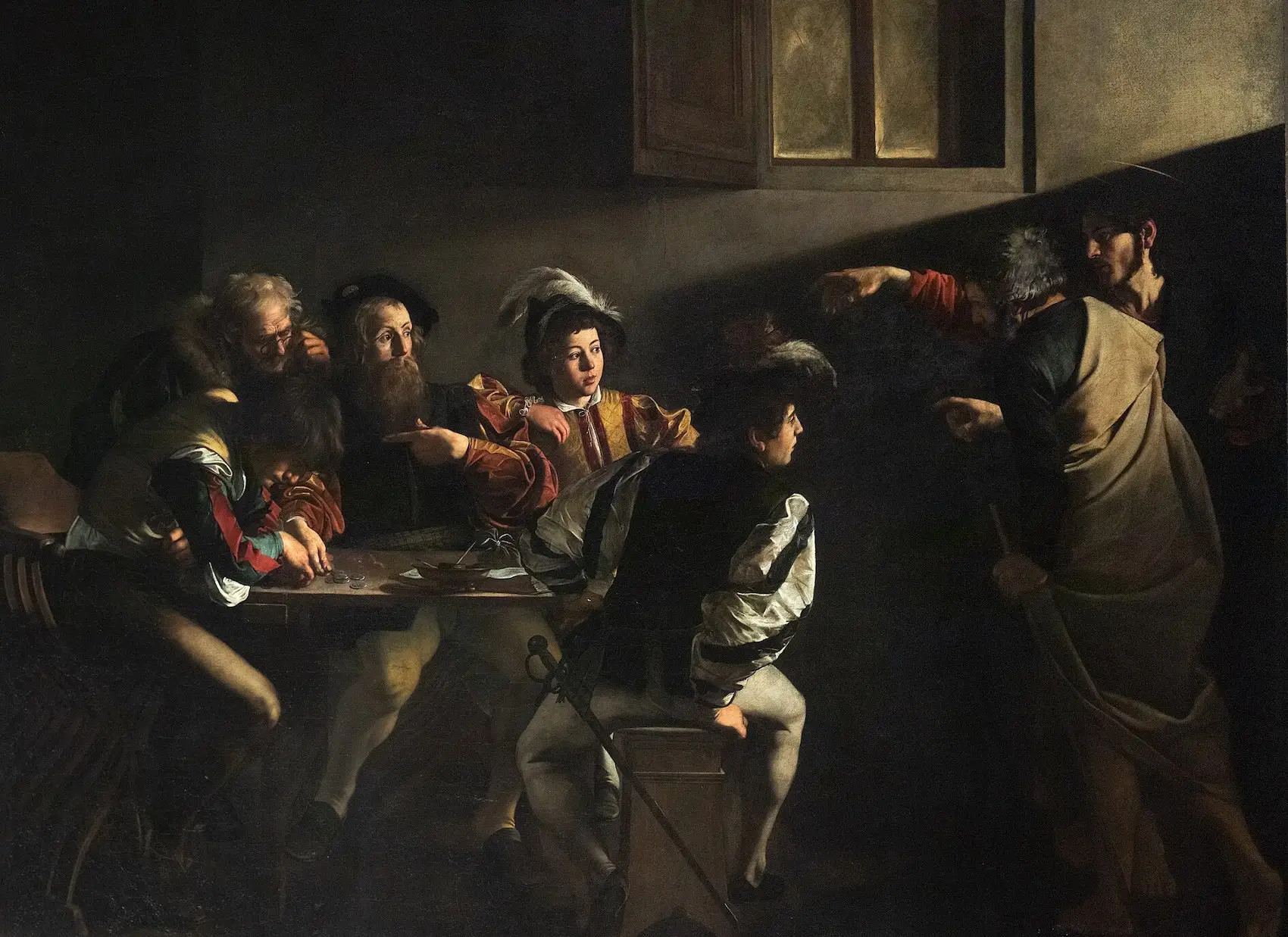
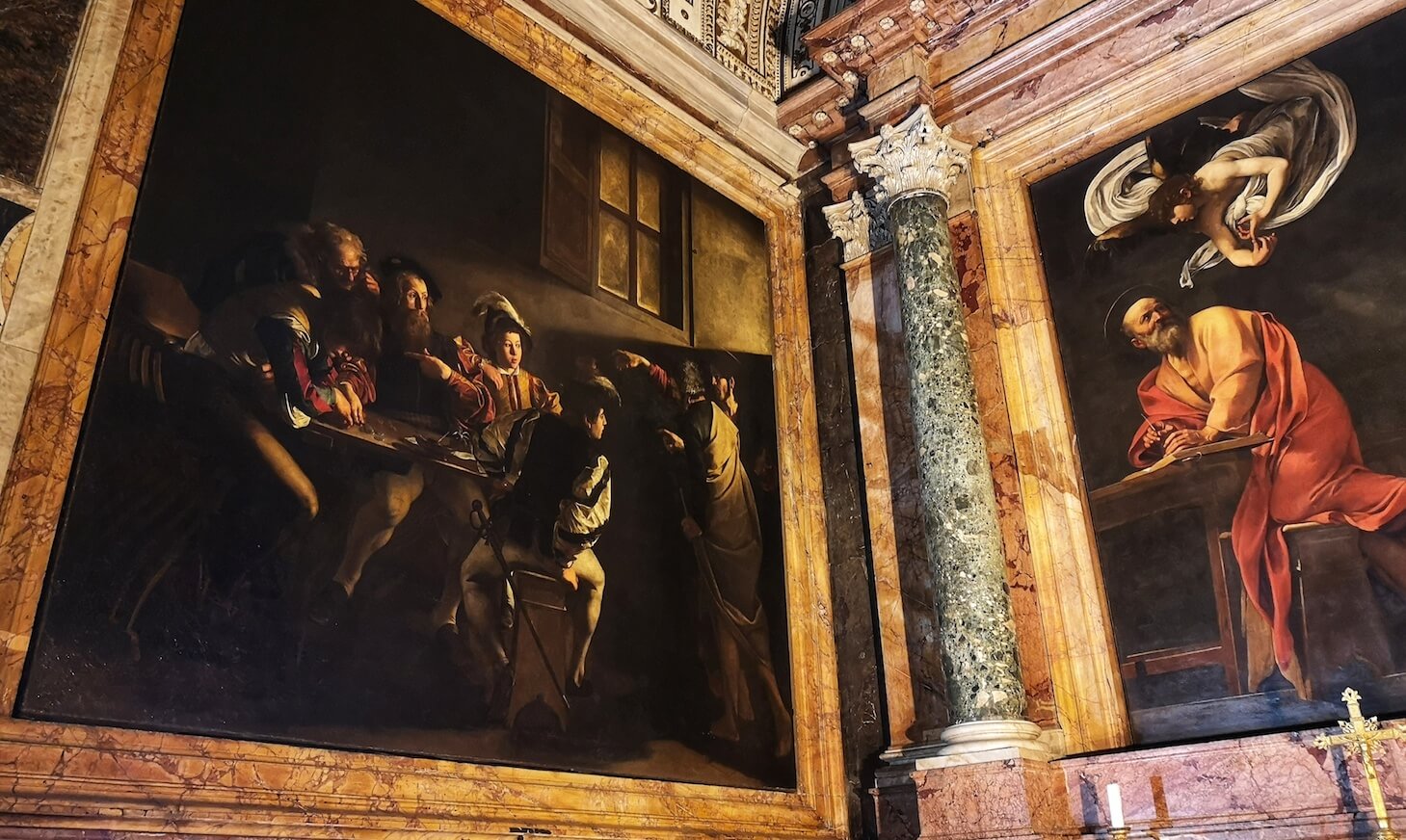
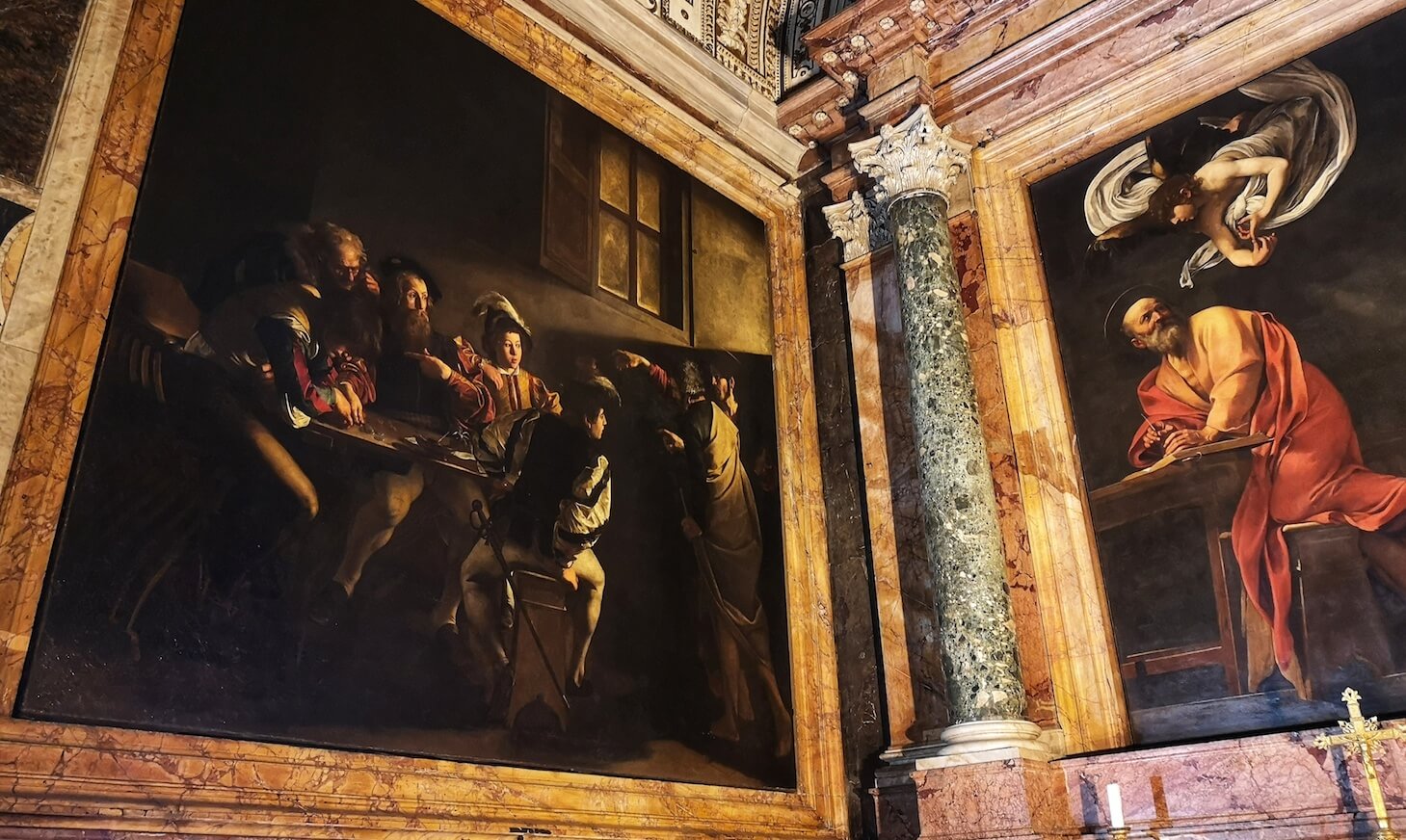
Many of the works that he painted to adorn the walls of the city’s churches remain unmoved to this day, and in works such as the Calling of St. Matthew and The Martyrdom of St. Peter we can uncover the fascinating tension between spiritual sensibility and crude naturalism that simultaneously enchanted and infuriated his contemporaries.
In the colours and forms of his paintings we can also divine the great artist’s troubled and dramatic life-story, which saw him murder over a disputed bet, suffer exile, become a Knight of Malta and subsequently survive assassination attempts from that same order, and finally die at the tragically young age of 38 in mysterious circumstances on the beach of Porto Ercole in Tuscany as he made his way towards Rome, papal pardon in hand.
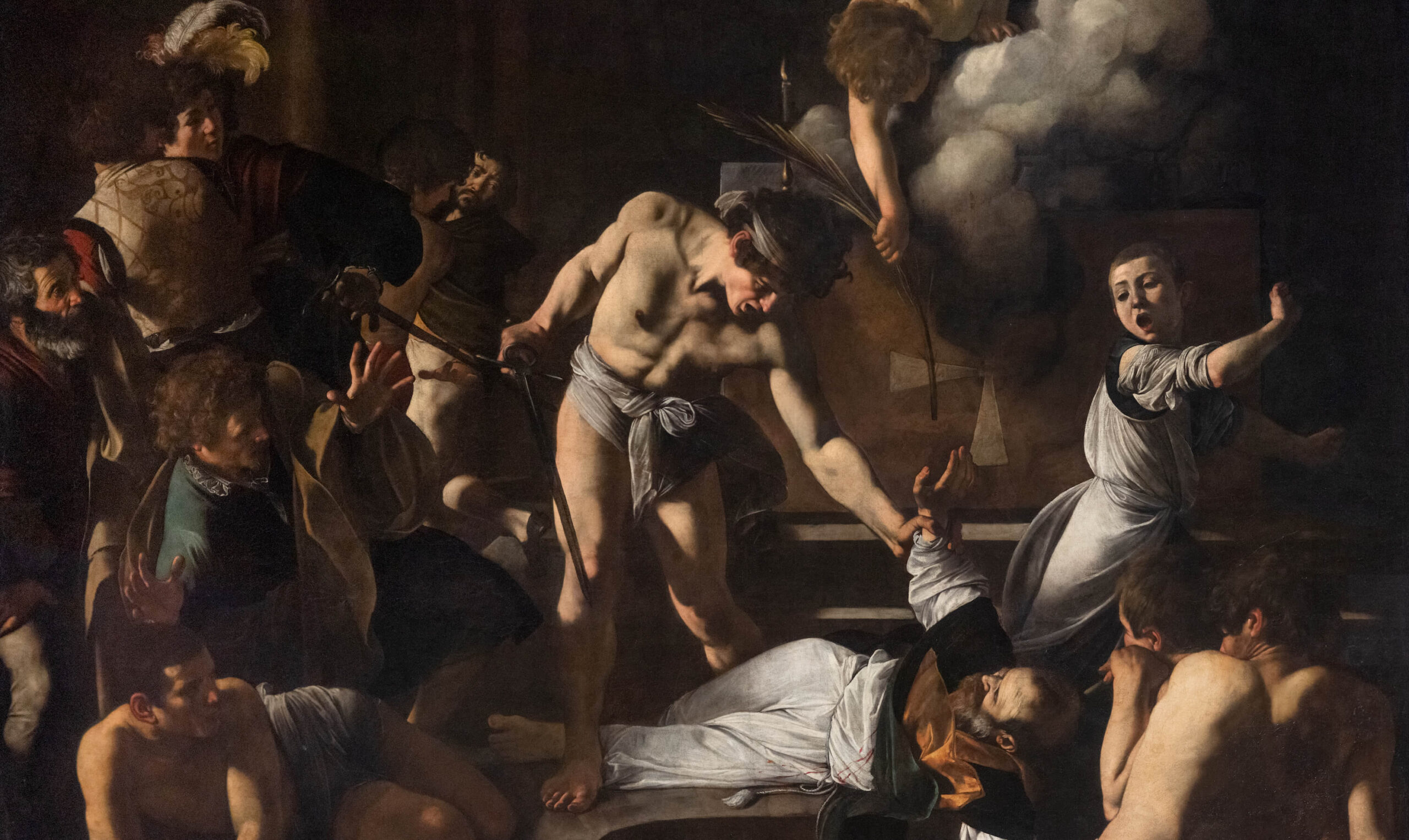
San Luigi dei Francesi contains the three Contarelli Chapel canvases — the Calling of Saint Matthew, Saint Matthew and the Angel, and the Martyrdom of Saint Matthew — which together constitute one of the defining achievements of seventeenth-century painting. The chapel has coin-operated lighting.
Sant’Agostino, a few minutes’ walk away, contains the Madonna del Loreto in which a Virgin and Child are visited by kneeling pilgrims whose dirty feet were controversial when the painting was unveiled. It is one of his most tender works.
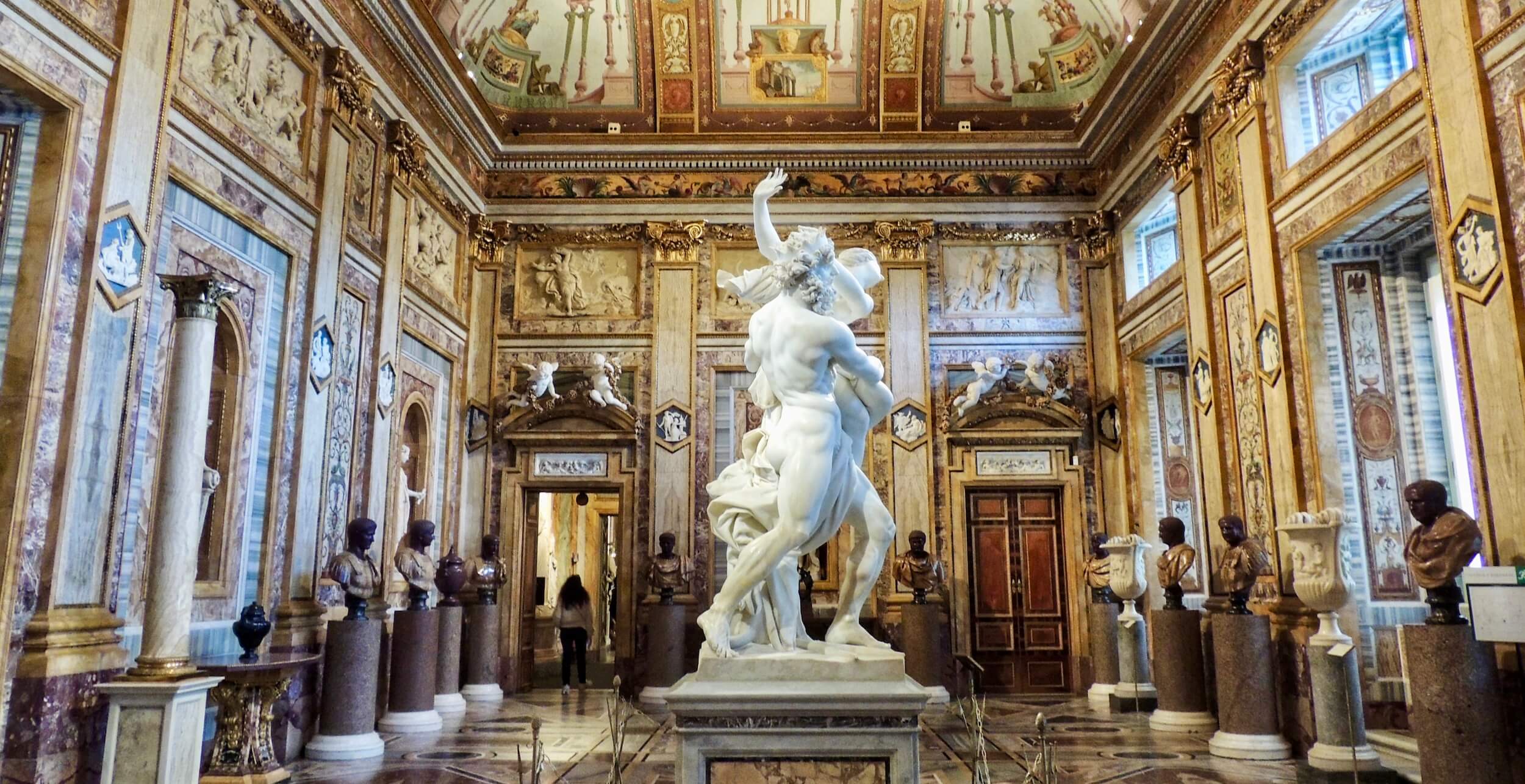
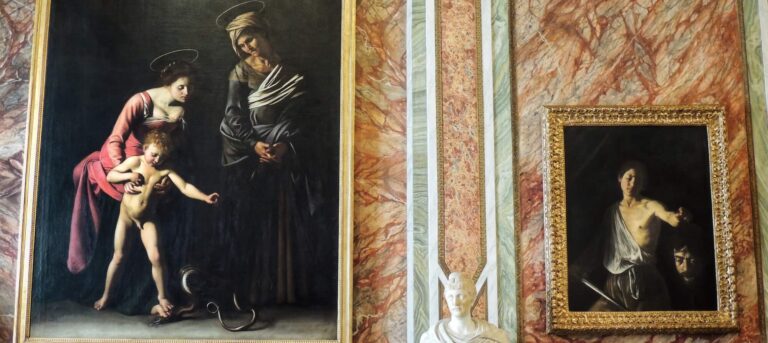
The Borghese Gallery holds a large number of Caravaggio paintings including the Boy with a Basket of Fruit (which shows the technical mastery of his early period) and David with the Head of Goliath, in whose features we recognize Caravaggio’s own. These, combined with the extraordinary Bernini sculptures in the same rooms, make the Borghese Gallery a must-visit museum experience in Rome.
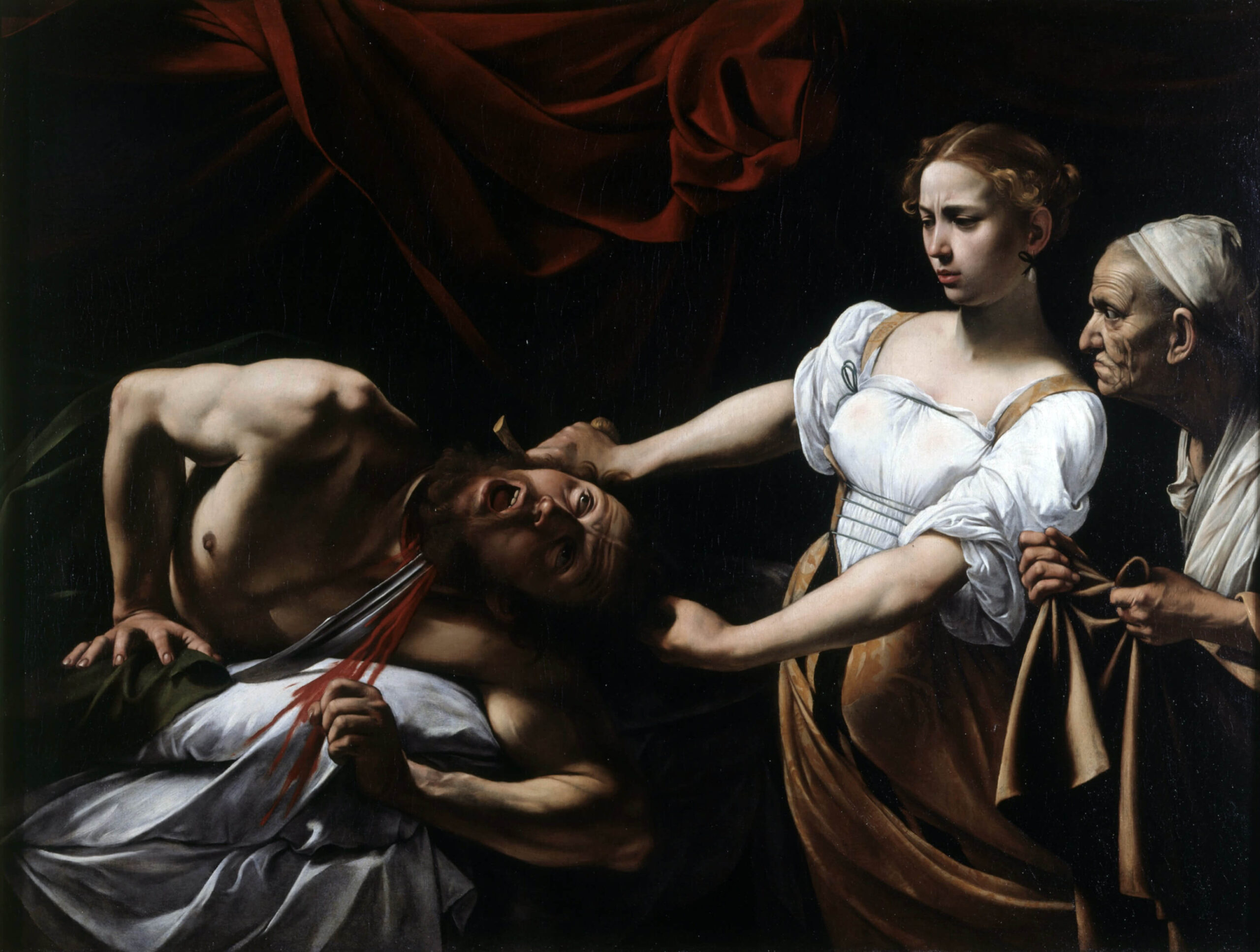
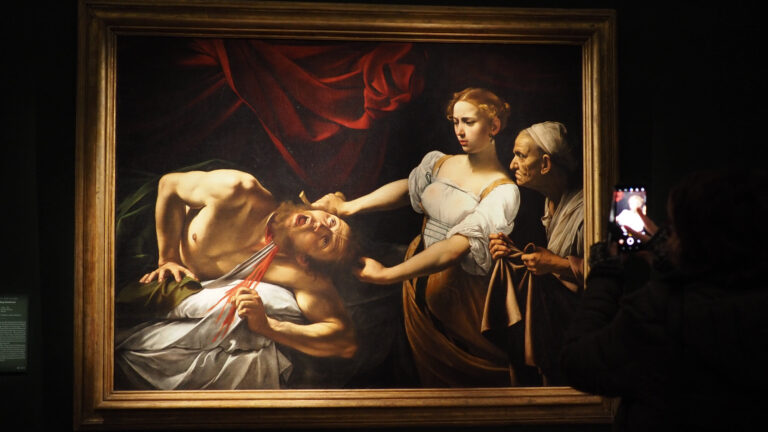
The Palazzo Barberini is home to the extraordinary Judith Beheading Holofernes, a dramatic and violent work that features everything that makes Caravaggio’s paintings so essential.
Santa Maria del Popolo, at the far end of Via del Corso, contains two masterpieces in the Cerasi Chapel: the Conversion of Saint Paul and the Crucifixion of Saint Peter. These are among his most compressed and psychologically intense works.
The Doria Pamphilj Gallery and Capitoline Museums also house Caravaggio paintings.
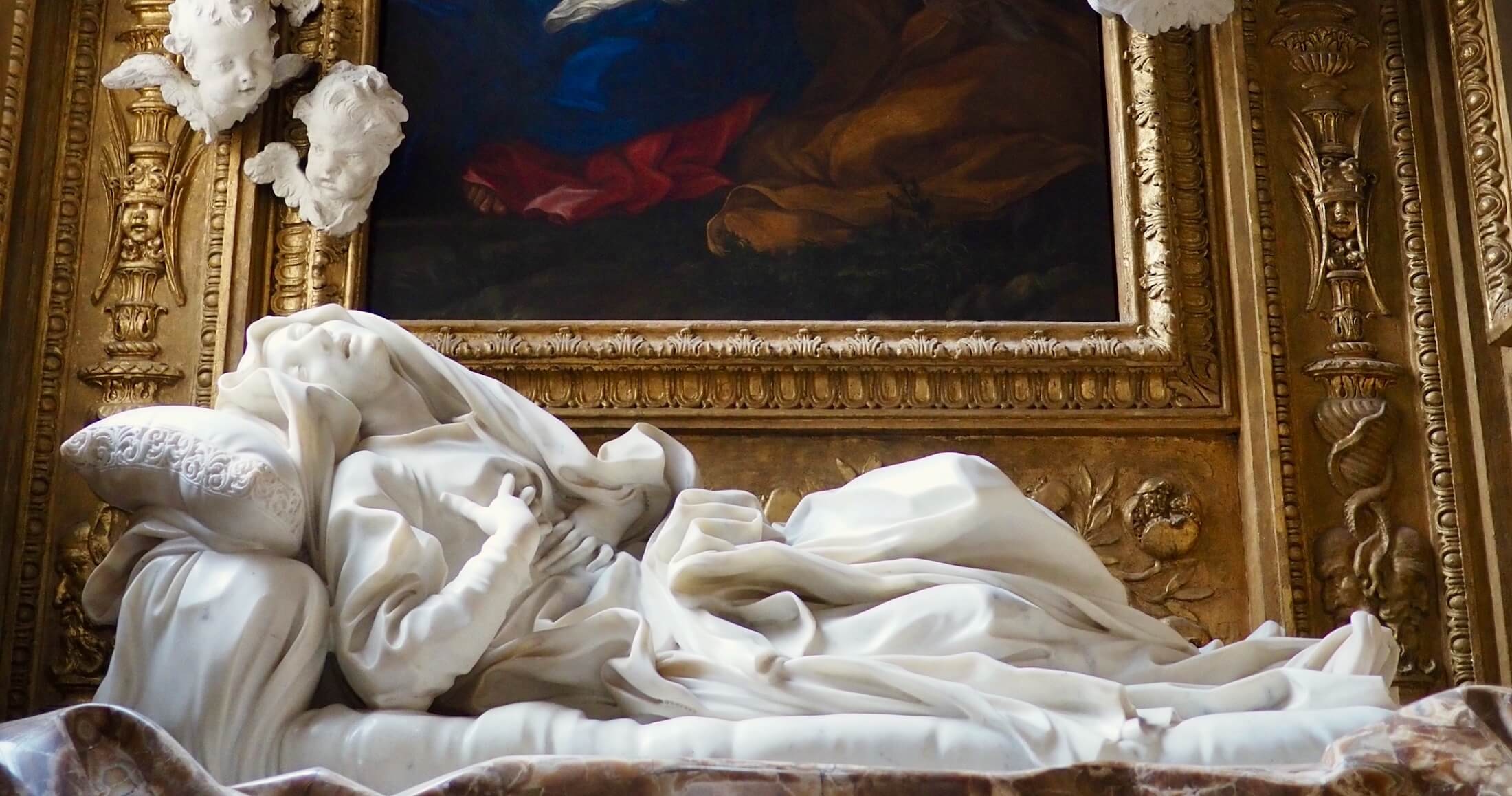
If Caravaggio was a meteor — brilliant, brief, destructive — Bernini was a fixed star. He was born in Naples in 1598, arrived in Rome as a child with his sculptor father, and dominated the artistic life of the city for more than sixty years.
He worked for eight popes. He outlived virtually every artist of his generation. He was, for much of the seventeenth century, simply the most famous artist in Europe.
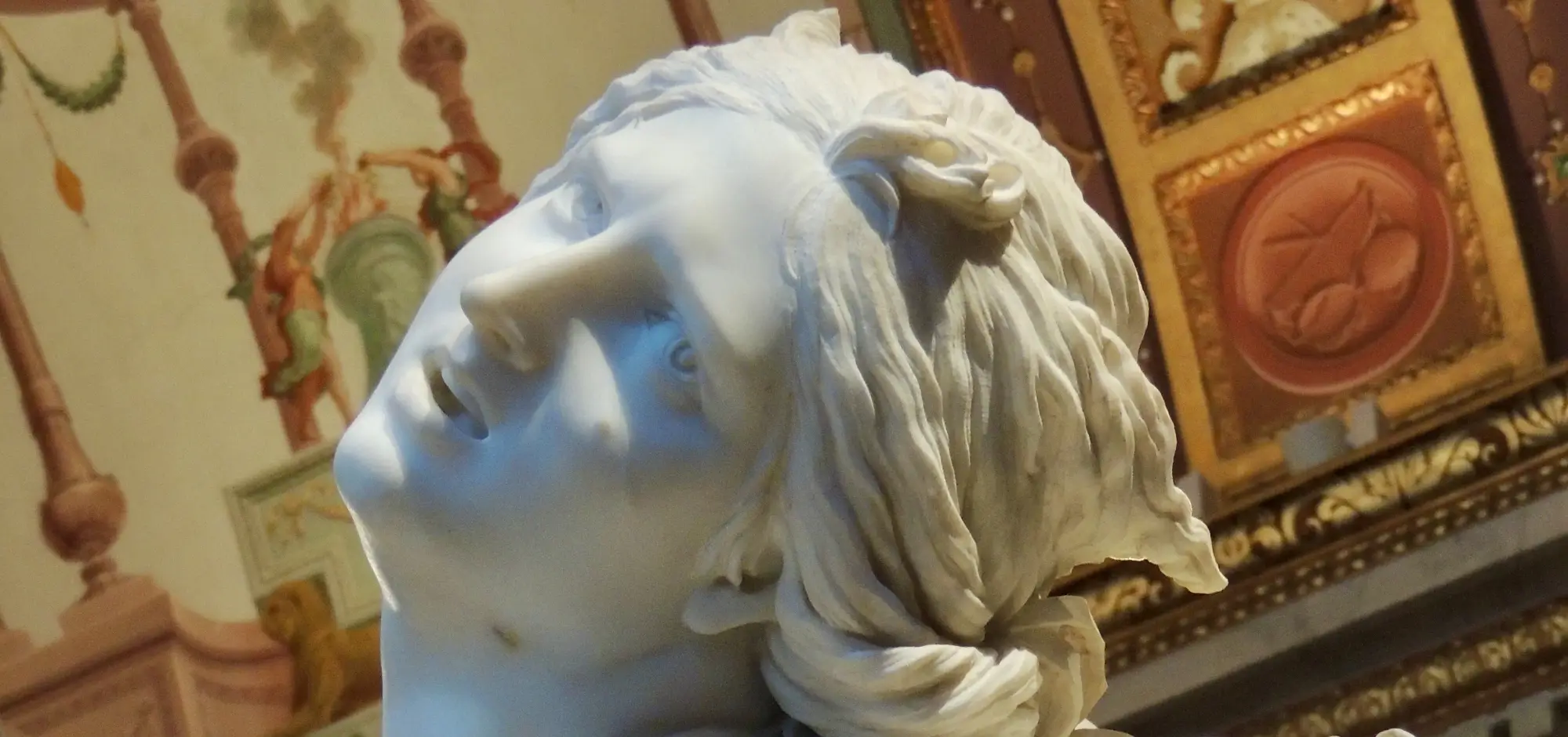
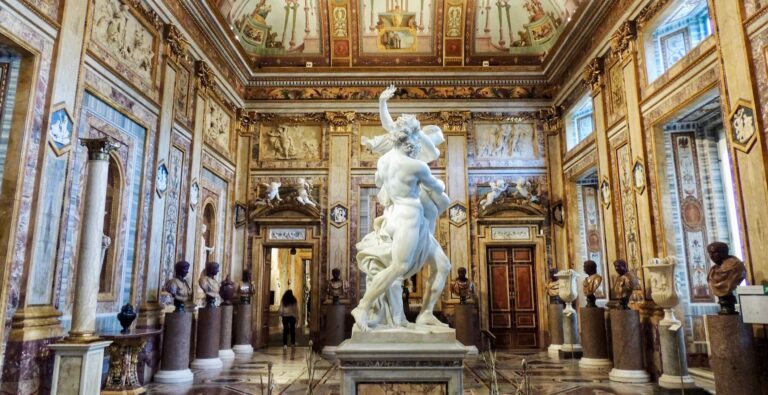
Bernini was a genius in the most literal sense: someone for whom technical difficulty did not appear to exist, whose imagination outran every constraint. His early marble groups — carved for Cardinal Scipione Borghese in the 1620s, now in the Galleria Borghese — show a sculptor who had reinvented what was possible in stone.
The Apollo and Daphne group, in which Daphne’s fingers are literally transforming into leaves and bark as Apollo reaches for her, still seems technically impossible. The Rape of Proserpina, in which Pluto’s fingers appear to compress the flesh of Proserpina’s thigh, is no less astonishing.
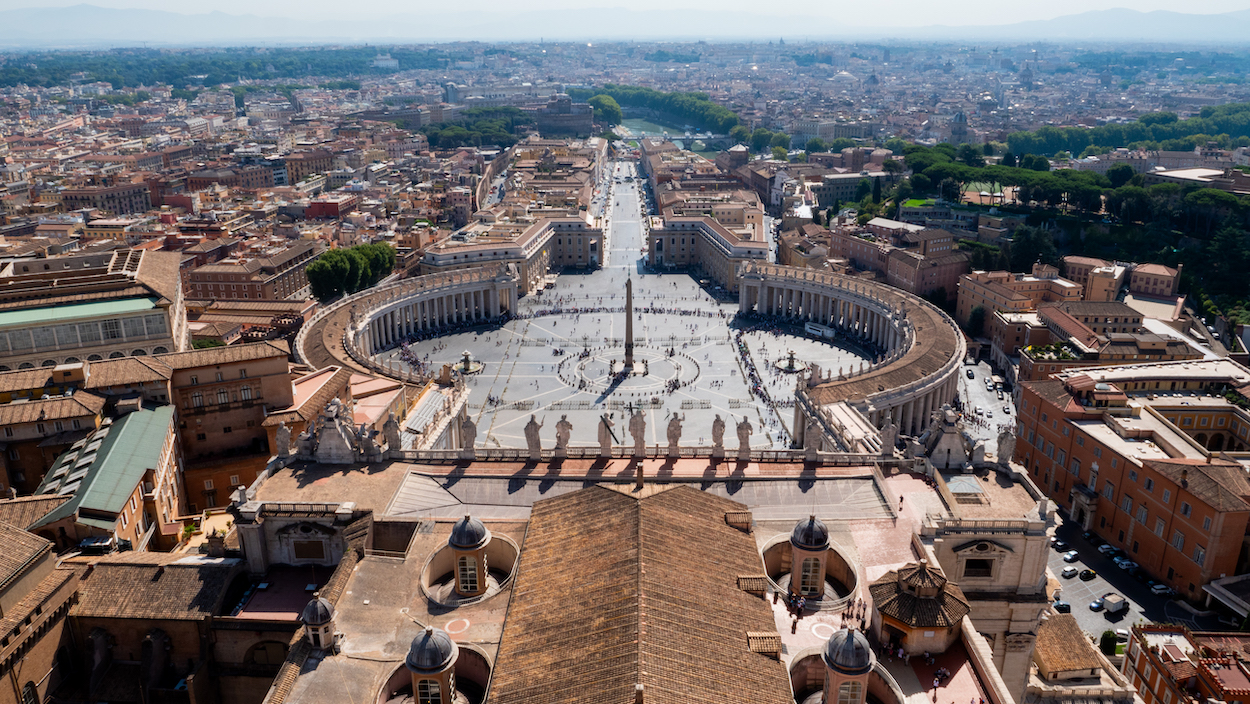
But Bernini was not merely a carver of statues. He was also the pre-eminent architect and urban designer of his generation, the creator of the colonnade of St Peter’s Square (the most important public space in Christendom), and the designer of an extraordinary range of fountains, churches, chapels, and monuments that are scattered across Rome in such density that it is almost impossible to walk through the historic centre without encountering his work every few minutes.
His relationship with the papacy was foundational. He was the Barberini pope Urban VIII’s favourite artist for decades, and the Barberini papacy gave him resources and opportunities of extraordinary scale.
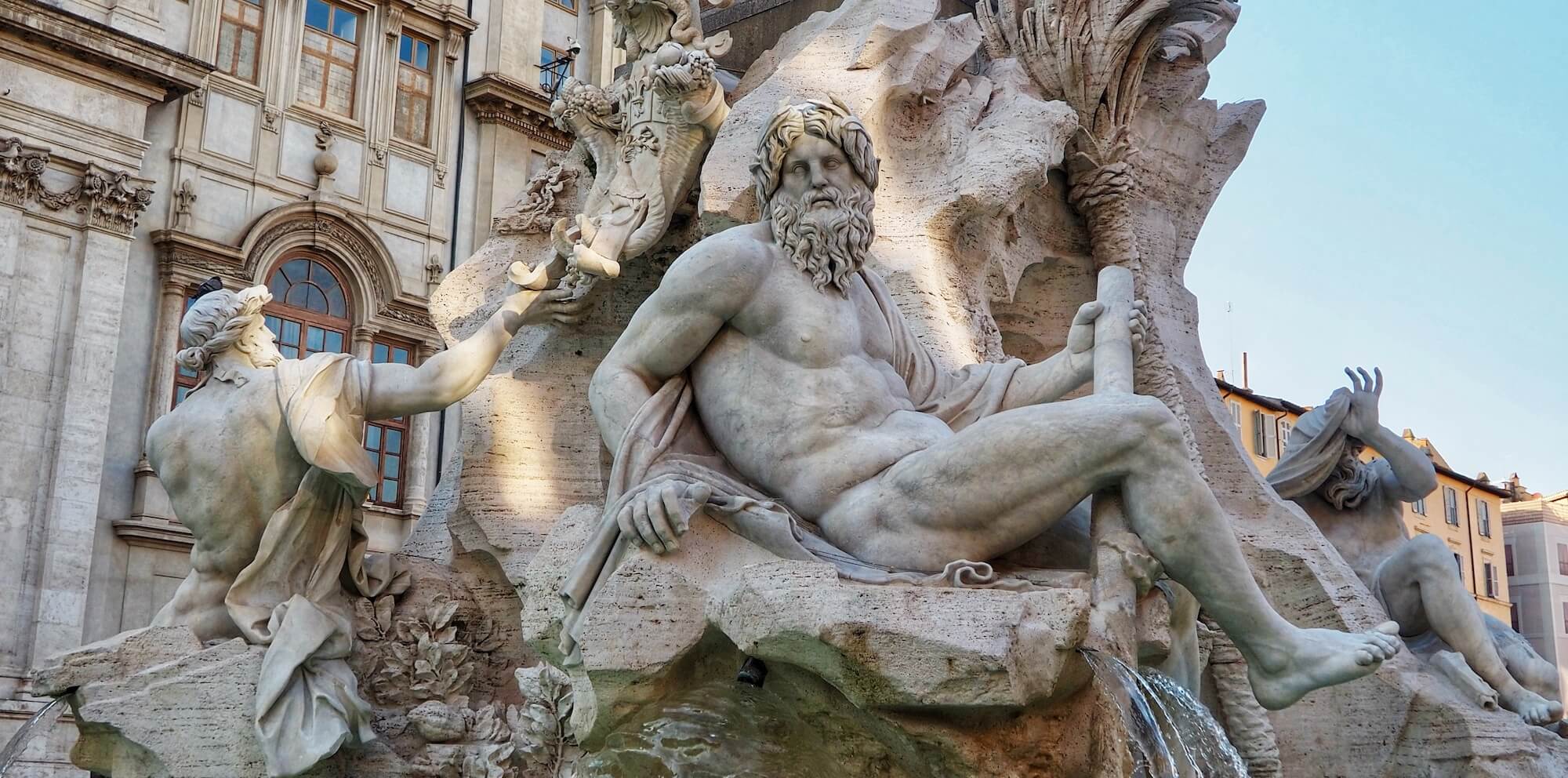
When Innocent X (Pamphilj) came to power and the Barberini fell from favour, Bernini’s star briefly dimmed — but Innocent eventually commissioned the Fountain of the Four Rivers from him anyway, reportedly after being shown a model he couldn’t resist.
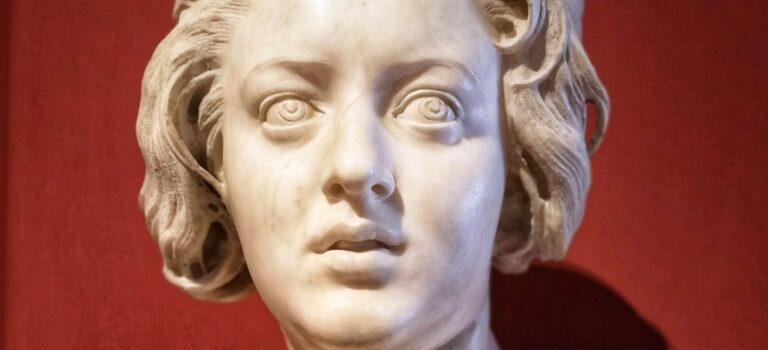
But neither was Bernini all sweetness and light. A man of tempestuous passions and prone to violent rages, Bernini’s torrid love affair with the married Costanza Bonarelli is the stuff of legend, a tale of passion, sex – and violence.
When Gianlorenzo discovered that his mistress was also involved with his own brother Luigi, he lost his head completely. Bernini threatened to kill his brother, breaking two of his ribs with an iron bar before Luigi managed to escape and skip town.
What was worse, the jealous sculptor sent an accomplice to exact violent revenge on Costanza, who suffered a slashed face as a result. Despite his heinous misdeeds, Bernini’s services were too valuable to lose.
The pope forgave him on condition he marry and keep his head down, but the tempestuous portrait of Costanza is a permanent reminder that like Caravaggio, Bernini too had his dark side.
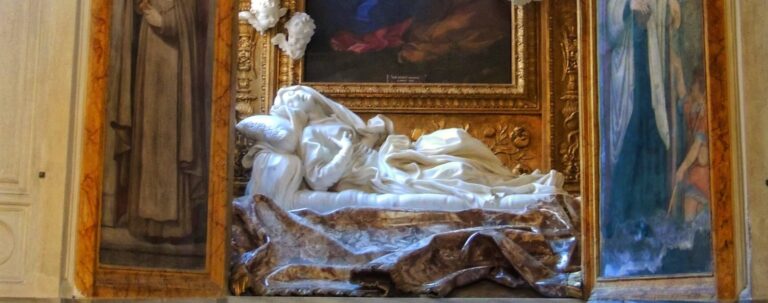
Galleria Borghese is the essential starting point: the marble groups of Apollo and Daphne, Pluto and Proserpina, Aeneas and Anchises, and David are all here, in the villa that Cardinal Borghese built specifically to display them. Tickets must be booked in advance.
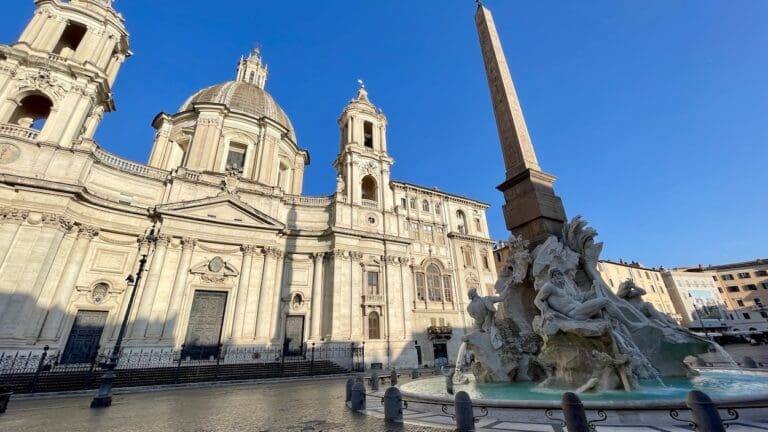
The Fountain of the Four Rivers in Piazza Navona (1651) is Bernini’s greatest fountain and one of the defining works of the Roman Baroque.
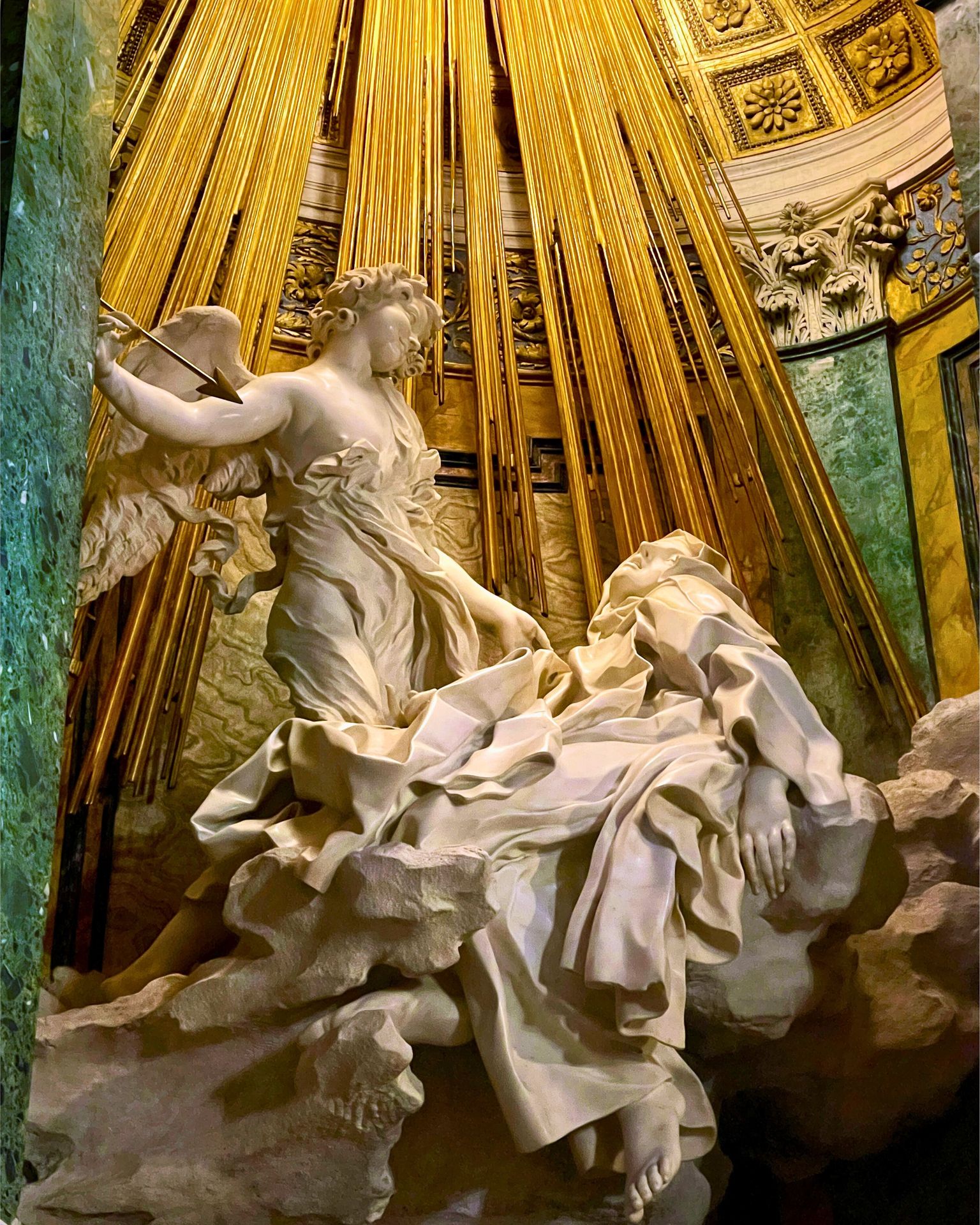
The Cornaro Chapel in Santa Maria della Vittoria, near Termini station, contains the Ecstasy of Saint Teresa (1652): a theatrical tableau in which the saint reclines in a state of spiritual rapture while an angel prepares to pierce her with a golden arrow.
The colonnade of St Peter’s Square (1656–1667) is Bernini’s greatest architectural achievement. The two curving arms of the colonnade, which embrace the piazza, were described by Bernini himself as the motherly arms of the Church welcoming the faithful.
The Castel Sant’Angelo bridge (Ponte Sant’Angelo) is lined with ten angel figures designed by Bernini (though executed by assistants) in 1669. The two originals carved entirely by Bernini himself are in Sant’Andrea delle Fratte.
This is just the beginning, and you’ll find works by Bernini all across the city. Check out our complete guide to where to find Bernini’s art in Rome below:
In almost every respect — temperament, technique, career trajectory, personality — Borromini was Bernini’s opposite. Born in 1599, a year after Bernini, he was the son of a stonemason from Lugano, and his path to prominence was slower, harder, and marked throughout by a prickly sensitivity to professional slights that made him difficult to work with and, in the end, contributed to his catastrophic final years.
Where Bernini was sociable, diplomatic, and superbly skilled at managing patrons, Borromini was solitary, confrontational, and constitutionally incapable of the kind of self-promotion that Baroque Rome required. Where Bernini’s work tends outward — theatrical, public, designed to impress at first sight — Borromini’s tends inward. His spaces reward sustained engagement, a slow unravelling of the geometric logic that underlies their apparently impossible forms.
The rivalry between them was real, bitter, and, on Borromini’s side at least, personal. Borromini had worked as a draughtsman on St Peter’s under Carlo Maderno, the man Bernini eventually replaced. He felt, not entirely without justification, that his contributions to various projects were appropriated by Bernini. He never forgave it.
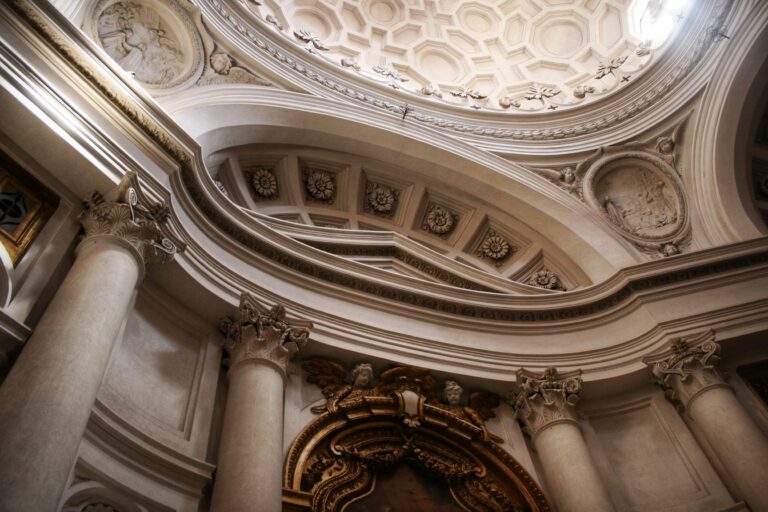
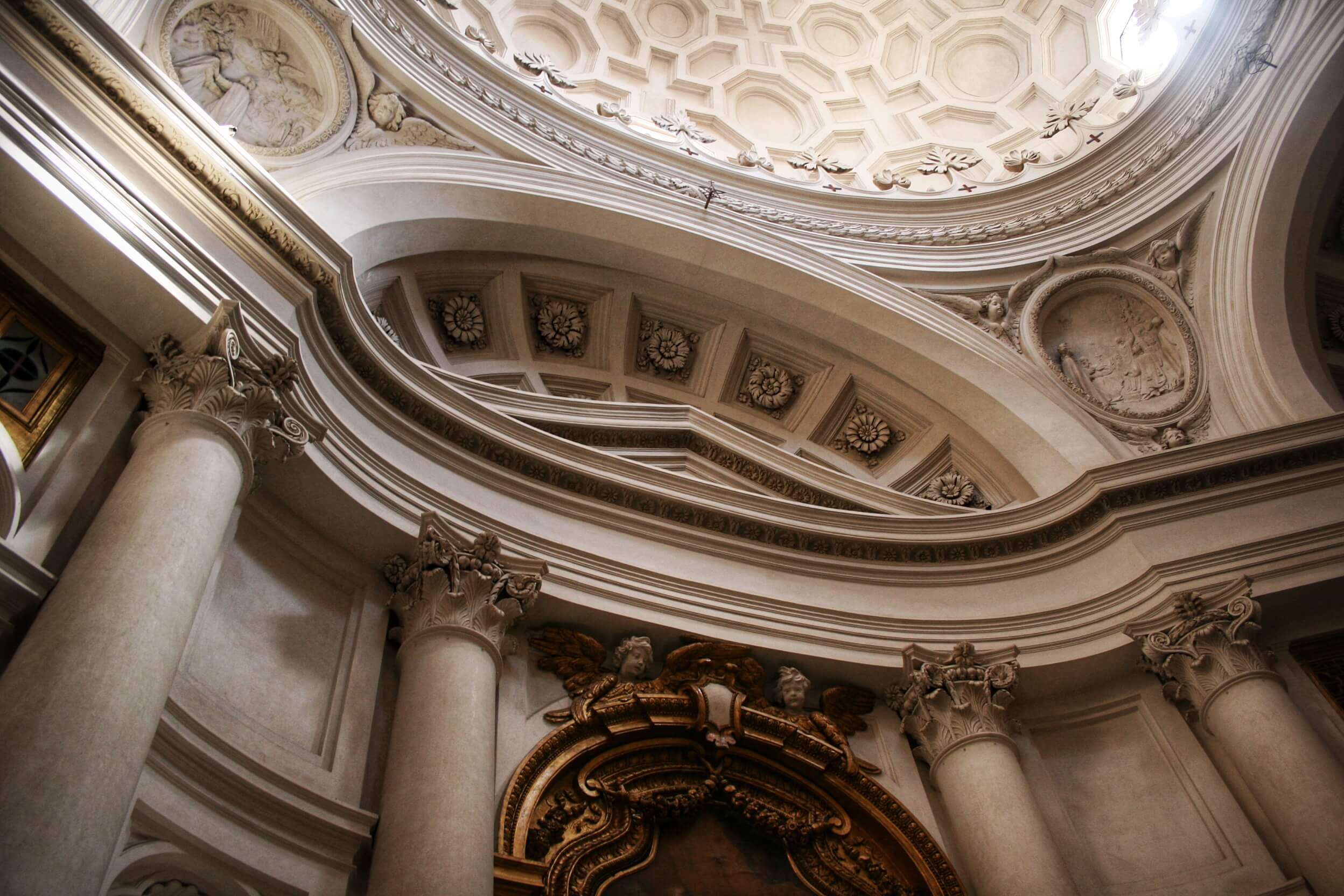
Borromini’s greatest works are small in physical scale but enormous in spatial ambition. Built on a truly tiny plot of land, ingenious San Carlo alle Quattro Fontane is a masterclass in the manipulation of curved surfaces and complex geometry.
The plan is derived from two overlapping triangles forming a hexagonal grid, but so transformed by curving walls and undulating surfaces that the geometry is impossible to read from inside the building.
Sant’Ivo alla Sapienza is even more extraordinary: a hexagonal plan — again derived from two triangles — that generates a spatial sequence of astonishing complexity, terminated by the bizarre spiralling lantern that emerges above the Palazzo della Sapienza courtyard.
Borromini died in 1667, having fallen on his own sword during a period of severe mental illness.
He left instructions that he be buried without ceremony. He was less celebrated than Bernini for the two centuries after his death, the verdict of the Baroque period which valued theatrical effect over geometric complexity.
The twentieth century reassessed him radically, and he is now regarded as one of the great architects of any period.
San Carlo alle Quattro Fontane (also known as San Carlino, for its tiny size) stands at the crossroads of the Quattro Fontane, near Palazzo Barberini. The undulating façade repays very close study. The interior and the small cloister are both extraordinary. Learn more about the church here.
Sant’Ivo alla Sapienza, in the courtyard of the old Sapienza university near Piazza Navona, is perhaps Borromini’s most complete spatial statement. The courtyard is accessible during daylight hours, but the church has restricted opening times.
Sant’Agnese in Agone in Piazza Navona has a Borromini façade and an interior that is among the finest of the Roman Baroque.
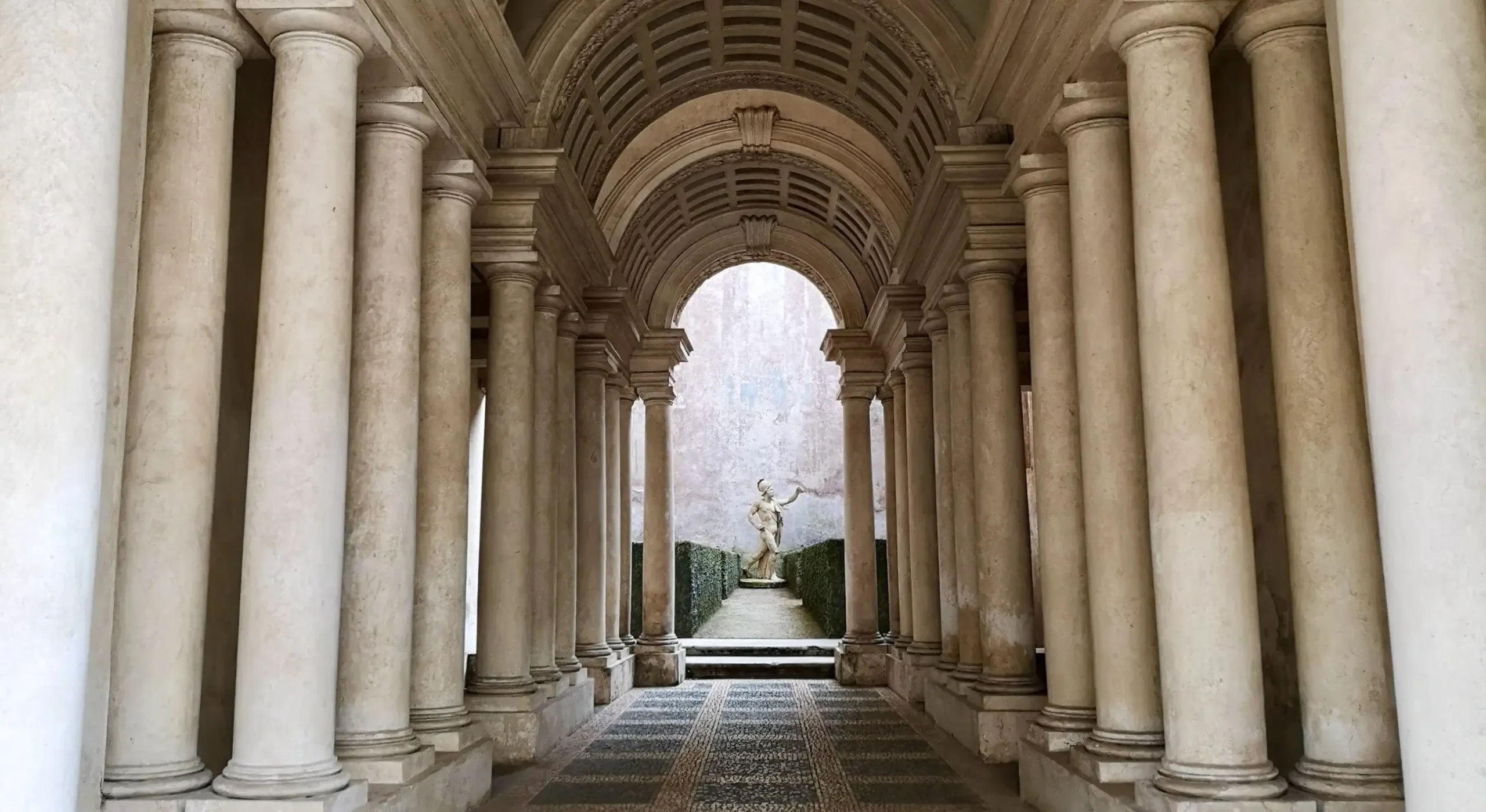
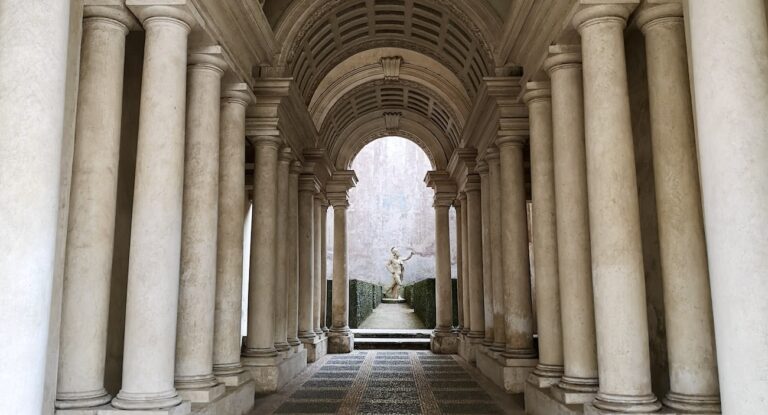
Palazzo Spada features an incredible illusionistic corridor that utilizes advanced mathematical principles to appear much longer than it actually is. It’s one of Rome’s most fascinating pieces of architectural trickery.
The Oratorio dei Filippini, adjacent to the church of Santa Maria in Vallicella (the Chiesa Nuova), is one of Borromini’s most important and least-visited buildings — a long, elegant oratory with a concave façade and an interior of exceptional quality.
What is the connection between Baroque art and the Counter-Reformation?
The Counter-Reformation was the Catholic Church’s response to the Protestant Reformation, which sought to renew religious devotion partly through the power of art. The Baroque style that emerged in Rome in the late 16th and 17th centuries — dramatic, emotional, sensually overwhelming — was in large part a deliberate strategy to inspire and engage the faithful in ways that Protestant iconoclasm could not.
Did Bernini and Borromini know each other?
Yes — they worked on the same projects in their early careers (both were involved with St Peter’s basilica), and Borromini worked for Bernini directly for a period before the relationship soured. Their rivalry was famous in their lifetimes, and Borromini never forgave Bernini for his greater worldly success. The story that the veiled Nile figure in the Fountain of the Four Rivers is shielding his eyes from Borromini’s Sant’Agnese in Agone is a Roman invention, but it captures something real about how later generations understood their relationship.
Is it better to see Baroque art in churches or museums?
Both. The Galleria Borghese allows you to see Bernini’s marble sculptures in purpose-built spaces where the light and scale have been carefully considered. But many of Bernini’s and Caravaggio’s greatest works are in the churches for which they were made, and seeing them in situ — as part of the architectural and devotional context they were designed for — is an experience that a museum cannot replicate.
What’s the best tour for Baroque Rome?
Our Baroque Rome walking tours take in Bernini, Borromini, and the Caravaggio churches in the context of the Counter-Reformation Rome that produced them. We offer a dedicated Caravaggio tour focusing on his Roman works, and a Borghese Gallery tour that concentrates on the early Bernini sculptures.

Ready to visit Baroque Rome?
Book Your Tour Here!