One of Rome’s most affecting artworks is also amongst its most unsettling.
It lies in the half-dark of a Trastevere basilica, behind a gilded altar, barely knee-height from the floor. A young woman, carved in white marble, lies on her side as though asleep. Her head is turned away from you. A cloth is wound around her neck. But the gash that killed her is there if you look closely enough. And once you start looking, it’s difficult to turn away.
This is the statue of Saint Cecilia, completed in 1600 by the sculptor Stefano Maderno, and it is an object unlike almost anything else in Rome: not a portrait of a saint in the conventional sense, but the uncanny likeness of a corpse – one that forces the viewer to confront, in the most direct terms, what exactly it means to look at another person’s death.
Best Rome Tours
Explore Rome's Hidden Treasures
The Saint
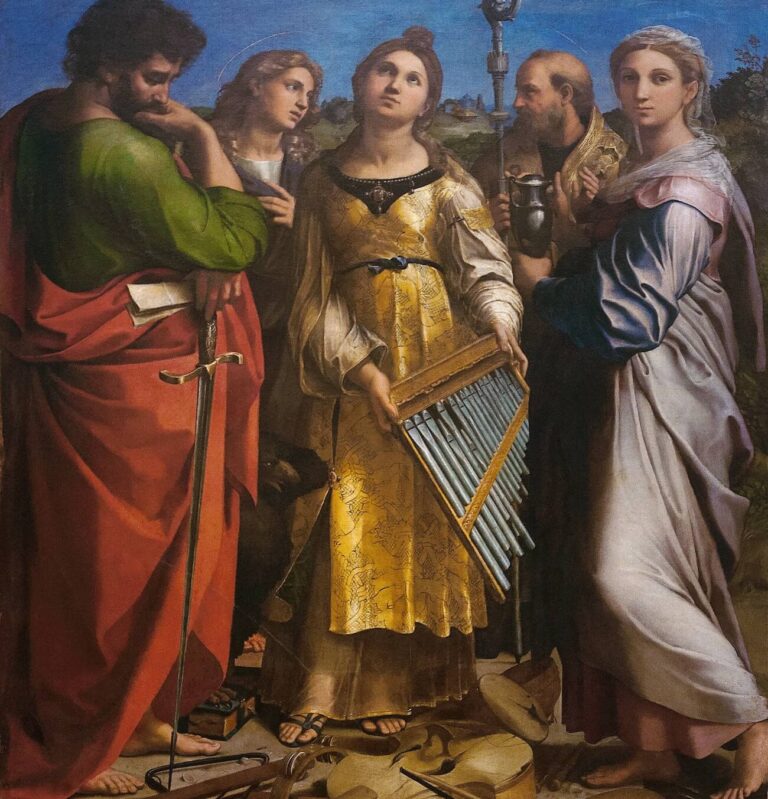
Cecilia was one of the many Roman virgin martyrs (the so-called Brides of Christ) who chose persecution and death over the abandonment of their faith in the early centuries of the Empire.
The details of her biography, as recorded in her fifth-century Acts, owe more to legend than history, but legend in Rome carries its own weight. She was, the story goes, a noble Roman woman of great piety who even managed to convert her husband Valerian to Christianity — having informed him, on their wedding night, of her lifelong commitment to chastity.
Far from being dismayed by his new wife’s revelation, Valerian enthusiastically adopted the new faith, even roping in his brother Tiburtius into the bargain. Such unconventional behaviour, particularly on the part of a noblewoman, inevitably attracted official attention, and an eventual death sentence.
Cecilia’s execution, according to the legend, was botched. Left to suffocate in the steam of the hot baths of her own house, she emerged miraculously unharmed. She was then struck three times on the neck with a sword, but this attempted decapitation too was botched, and Cecilia survived for three days, her wounds undressed, preaching and converting the local populace.
When she finally died, she reportedly prevailed upon the reigning Pope to convert her house into a church. That church became Santa Cecilia in Trastevere, built over the ruins of what excavations have suggested was indeed a wealthy Roman house.
Cecilia’s patronage of music derives from the tradition – first recorded in the medieval period – that she sang to God in her heart as the wedding hymns played at her unwanted marriage. She became the patron of all who made music, and the most Roman of all Rome’s innumerable saints.

The Church
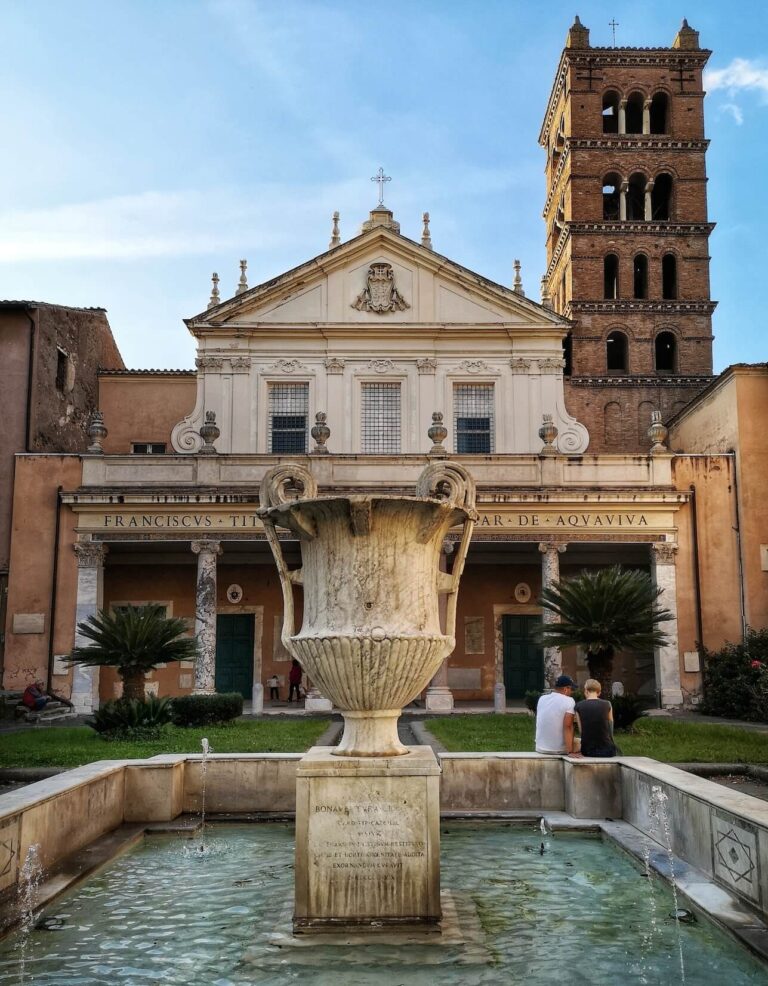
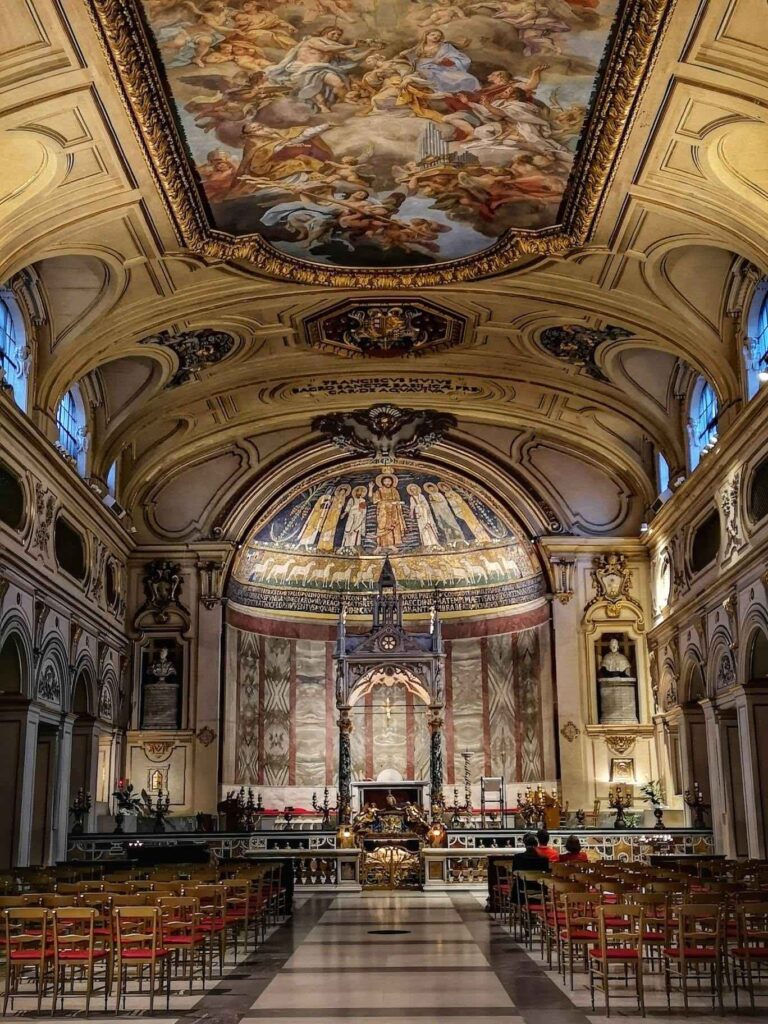
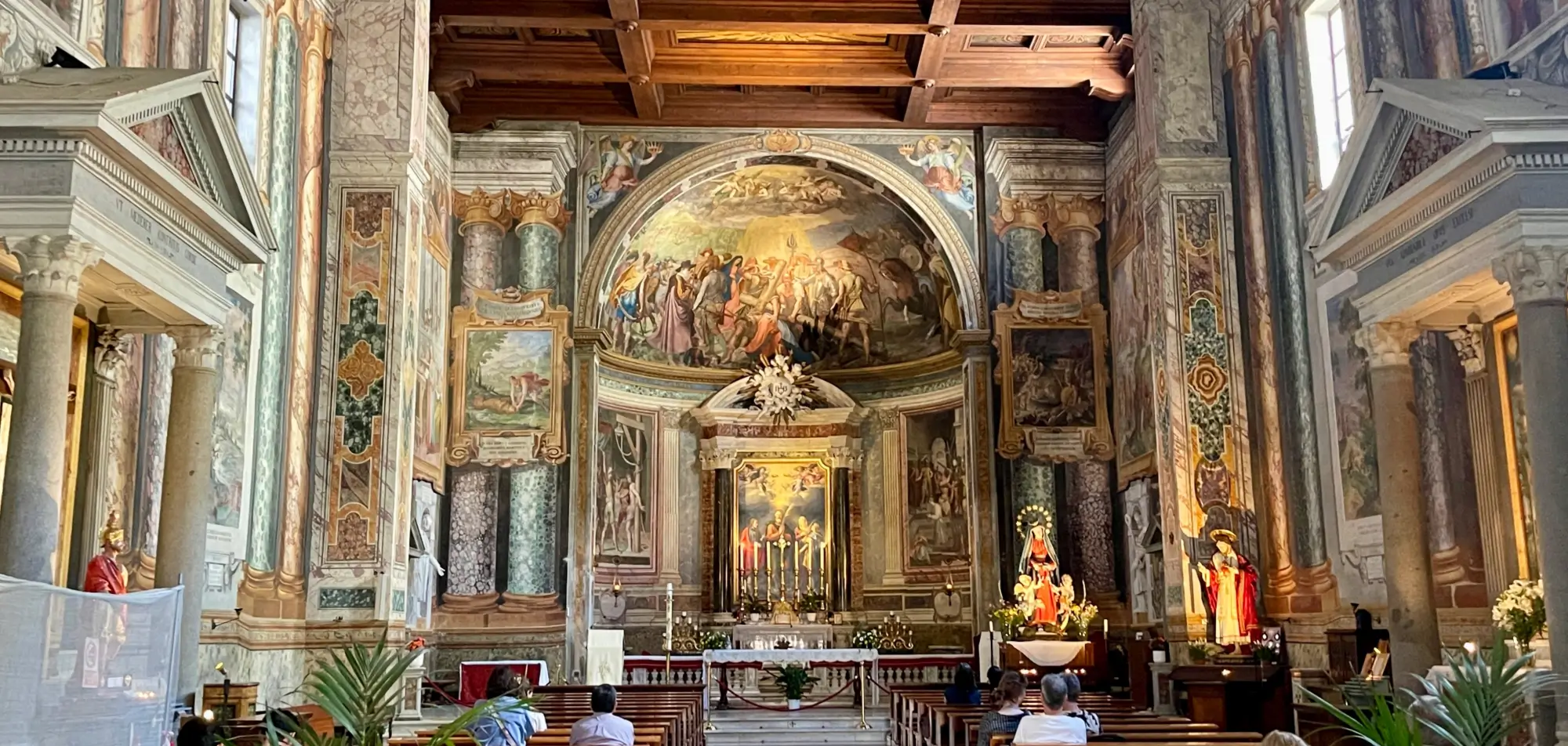
The story of Cecilia cannot be separated from the church that preserves her memory. Hidden away in the quieter reaches of Trastevere, far from the grand ceremonial routes of central Rome, Santa Cecilia is one of the city’s oldest Christian foundations and among its most historically layered.
According to tradition, the church stands on the site of Cecilia’s own house. Whether that claim can ever be proved is another matter, but archaeological excavations beneath the basilica have revealed the remains of substantial Roman buildings, including what appears to have been a wealthy residence dating from the imperial period.
By the fifth century, a church known as the Titulus Caeciliae was already established here, making it one of the earliest documented places of Christian worship in Rome.
The basilica that visitors encounter today owes much of its character to the ninth century. Around 820, Pope Paschal I undertook a major rebuilding campaign after claiming to have recovered Cecilia’s relics from the catacombs. The saint was solemnly translated back to the church associated with her name, and a magnificent new basilica rose above her resting place.
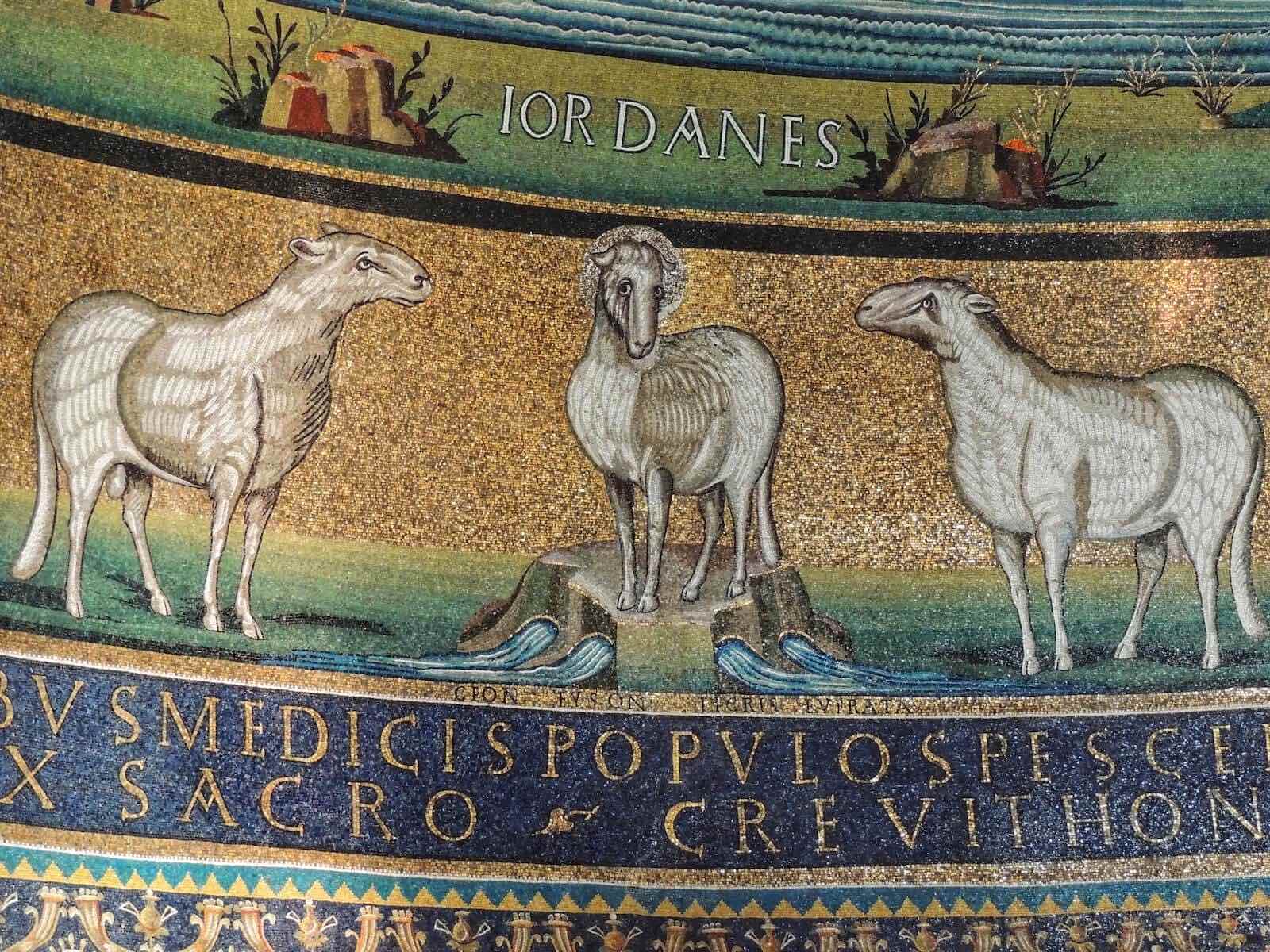
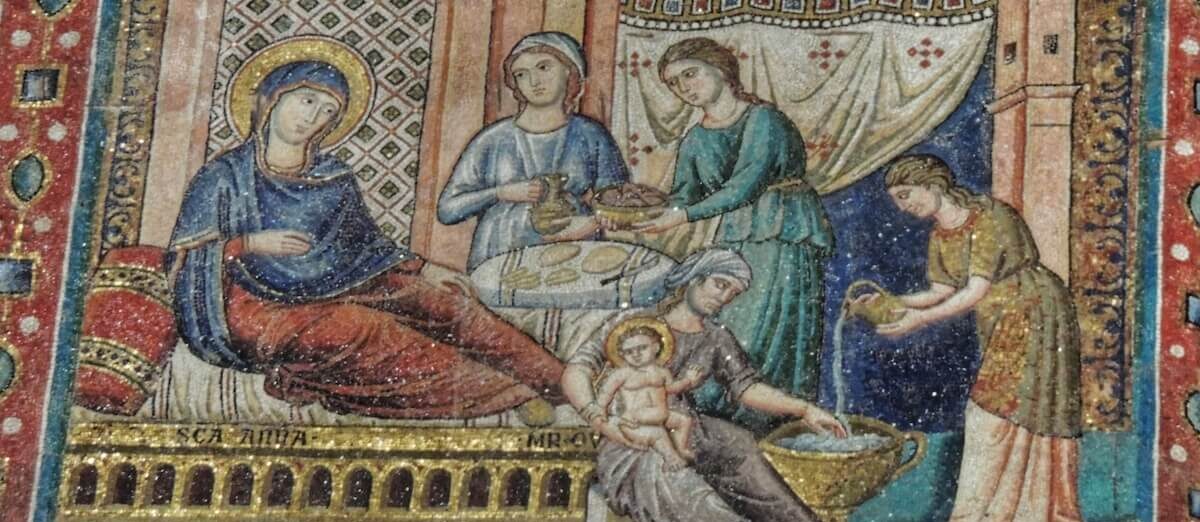
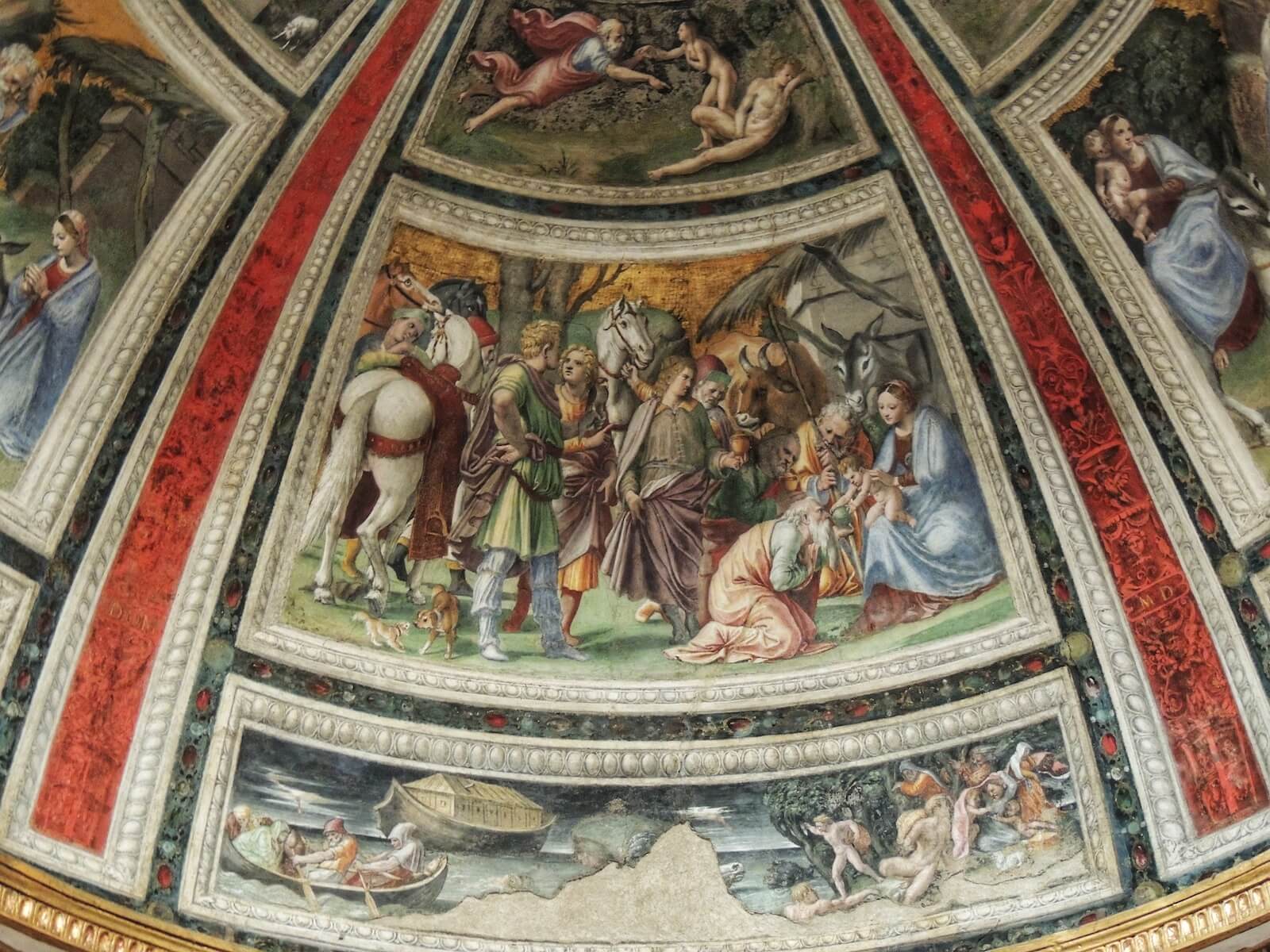
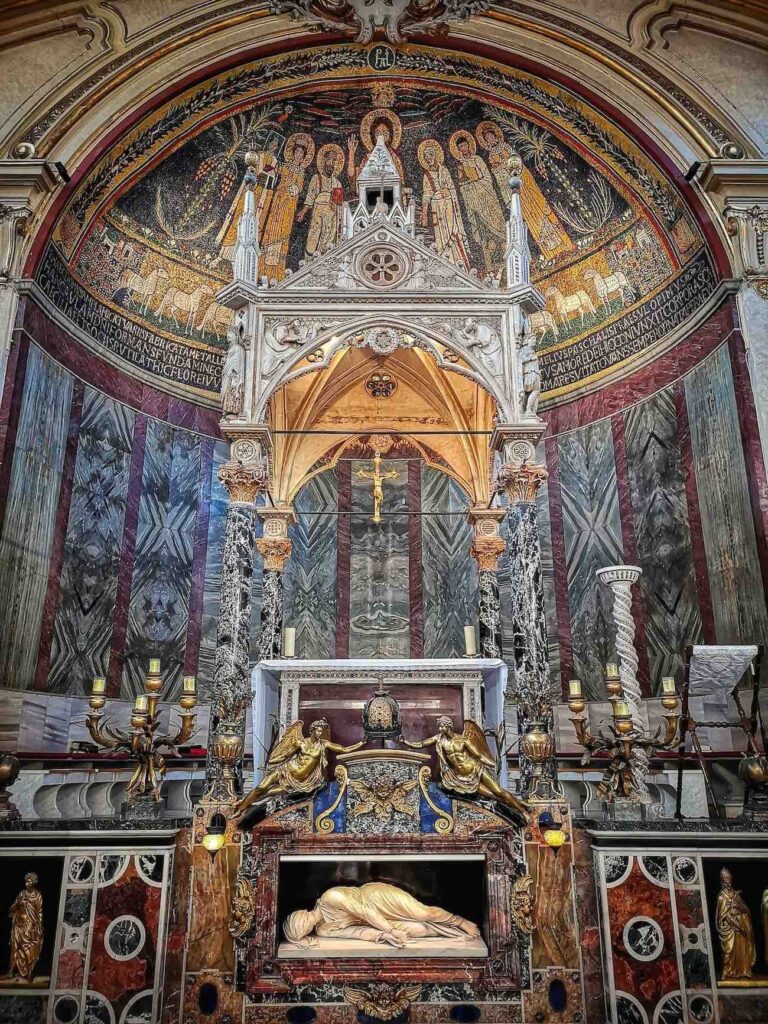
Much of Paschal’s work survives. The great apse mosaic remains one of the treasures of medieval Rome: a shimmering vision of Christ standing amid saints and martyrs against a field of gold. Cecilia appears among them, upright and serene, no longer a victim of persecution but a triumphant citizen of heaven.
Nearby stands Paschal himself, identified by the square halo reserved for living donors in medieval art, presenting his church to Christ in the hope of securing eternal reward.
The contrast between this radiant image and what lies beneath the high altar could hardly be greater. Above, Cecilia is immortal, glorified, and untouched by suffering. Below, she appears as a broken young woman whose violent death remains written into the contours of her body. Few churches in Rome juxtapose heavenly triumph and earthly mortality so powerfully.
The Discovery
Fast-forward thirteen hundred years from the legendary date of Cecilia’s death. It is the autumn of 1599, and Rome is preparing for the greatest festival of Catholic renewal the city has seen in living memory.
The Jubilee of 1600 is approaching, and in the aftermath of the seismic struggles of the Reformation and Counter-Reformation, the Church hierarchy has resolved that Rome must look its finest for the hundreds of thousands of pilgrims expected to descend on the city. The Roman cardinals have been instructed to spare no expense in restoring their churches to glory.
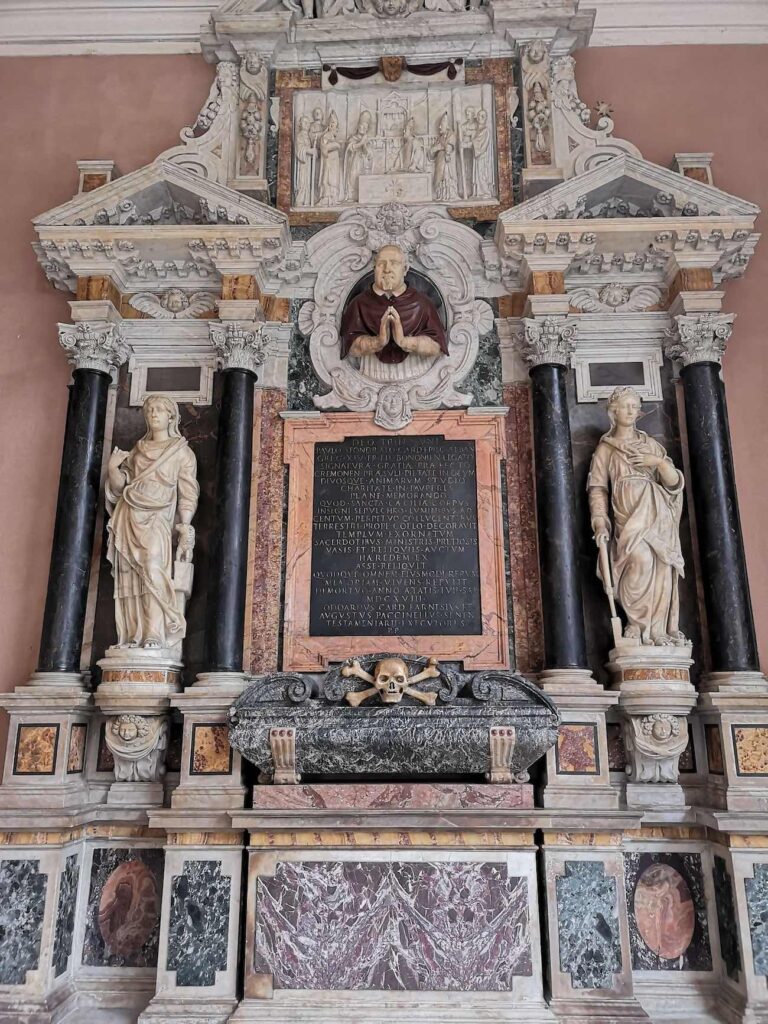
Cardinal Paolo Emilio Sfondrato, titular cardinal of the basilica of Santa Cecilia, took his responsibility seriously, ordering a comprehensive programme of renovation.
In the process, his workmen unearthed something astonishing: three marble sarcophagi beneath the high altar, which Antonio Bosio – the pioneering scholar of early Christian Rome who was present at the opening -recorded as containing the apparently incorrupt bodies of Saints Cecilia, Valerian, and their companions.
The discovery, on or around October 22, 1599, was momentous in the extreme. For a saint’s body to survive the centuries without decay was considered proof of divine favour: incorruptibility was one of the Church’s most prized miracles.
The cardinal, recognising an opportunity of spectacular proportions, moved with impressive speed. Within days, Cecilia was put on public display in a celebration that gripped the entire city. As a PR stunt it was a stroke of genius, and Sfondrato’s enduring legacy was assured.
The scenes that greeted the spectacular revelation of Cecilia’s miraculously uncorrupted body were more akin to those that might herald an arriving rock-star. Mass hysteria gripped the populace, and one chronicler described how even the Swiss Guard were powerless to stem the mighty flow of pilgrims crashing through the narrow alleyways of Trastevere.
A mere two days after she went on show, Cecilia was re-interred beneath the high altar of the church to protect her from unintentional destruction at the hands of her over-enthusiastic admirers. The sight of her tranquil repose was, however, to live on.
The Statue
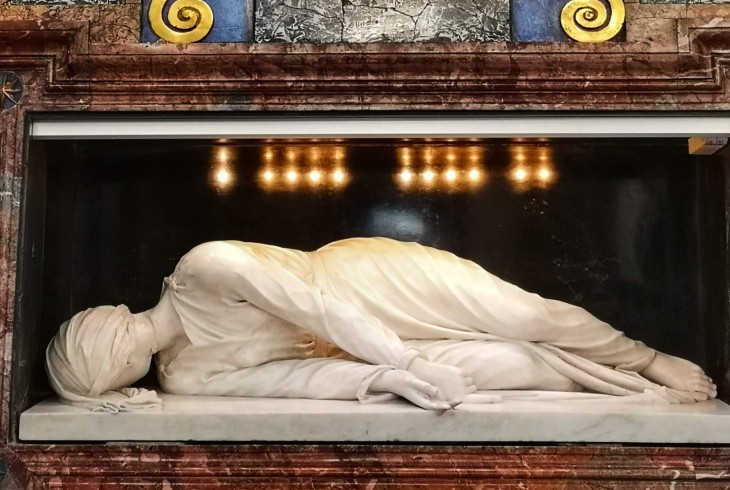
Before Cecilia was laid back to rest, Sfondrato commissioned the young sculptor Stefano Maderno – only twenty-three at the time but already a rising star on the Roman art scene – to produce a marble statue of the saint in precisely the posture in which she had been found: lying on her side, her hands extended with three fingers of one hand raised and one of the other (traditionally interpreted as a gesture pointing toward the Trinity), her veiled head turned toward the ground.
The inscription on the statue’s base matter-of-factly recounts the facts of the commission, and foregrounds Sfondrato’s role as privileged witness: “Behold the body of the most holy virgin Cecilia, whom I myself saw lying uncorrupt in the tomb. I have in this marble expressed for thee the same saint in the very same posture of her body.”
What Maderno produced remains one of the great works of early Baroque sculpture, and one of the most psychologically complex. Cecilia’s marble avatar reveals a beautiful young woman curled into the repose of death, a cloth wound around her head and a gash at her neck that bears witness to her gruesome end.
She is displayed in what seems half sarcophagus, half museum vitrine: a voyeuristic window into the private world of her dying. Her head is turned away from us, eyes downward at the cold slab on which she rests. We look at her; she refuses to return the gaze.
The religious impulse that drove the frenzied viewers of 1600 may now be only of historical interest, but our consumption of Cecilia through the proxy of Maderno’s marble is not entirely different in kind.
Art rather than faith may be our guiding impulse, but the mechanism – the compulsion to gaze, the pleasure taken in looking at another’s represented death – remains the same. Maderno gives us no option other than to look at his presentation of the dead saint like some uninvited voyeur, and in doing so compels us to ask what exactly we are doing when we stand before a work of art.
Art, as Cecilia quietly insists, has its ethics. Complex, entangling ones. An audience with her is not something you’re likely to forget.

Book Your Rome Experience