For nearly two millennia, no institution has left a greater mark on Rome’s streets and skyline than the papacy.
The centuries-old tradition of electing a new pope in conclave is something that continues to fascinate us even today. The process is steeped in tradition and ritual and shrouded in secrecy, which means that our imaginations are often left to run wild as to just what happens behind the closed doors of the Sistine Chapel.
Recent movies have transformed the process into a political thriller, and other films and novels have speculated about bizarre rituals that fall far from fact. But, if you want to become the most clued-in Vatican armchair scholar, then read on – we have separated fact from fiction for you and debunked some of the enduring myths that surround the conclave. In fact, you’ll find the truth is far more interesting than the legend!
Vatican Tours
Follow in the Footsteps of the Popes
1. Do They Tap on a Dead Pope’s Head With a Hammer?
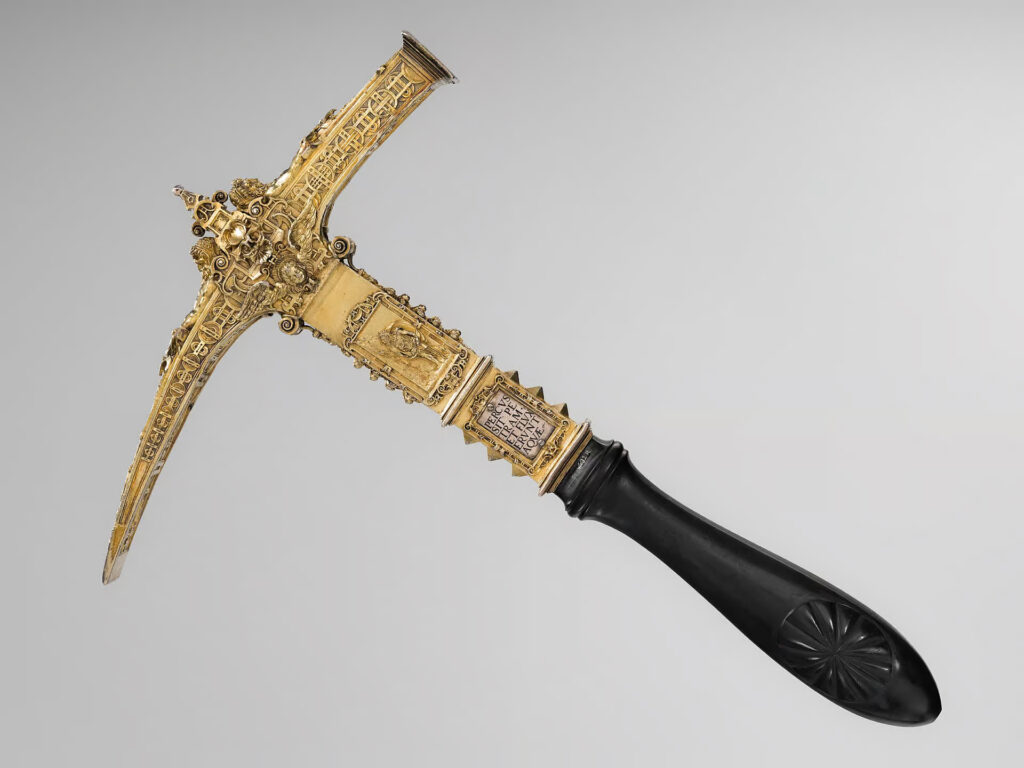
Ceremonial Hammer of Pope Julius III
No! This is an often-repeated myth that seems to have gained traction sometime in the 19th century. It’s still a hotly debated topic in scholarly circles, with some saying that it happened historically as a tradition but wasn’t a hard rule, and others argue that it is pure fiction. The official Vatican line is that it is not and has never been a practice.
But Why?
People were afraid of being buried alive – blame Dickens! There’s also likely some crossover and confusion with the rites around the opening of the Holy Door during a Jubilee Year, where a hammer was traditionally used.
Holy Years and Falling Masonry?
Before John Paul II, the Pope used to open a Jubilee Year by knocking on the Holy Door with a silver hammer three times before pushing the door open. But during the ceremony on Christmas Eve of 1974, when Pope Paul VI tapped on the sealed door, a huge piece of masonry fell, narrowly missing the Pope! Understandably, it was decided that, for safety reasons, the process should be simplified. Today, the masonry is removed in the days before, and the Pope just knocks on the door three times before opening it. Phew!
2. “A Bloke Called Kevin From Dublin” is in Charge
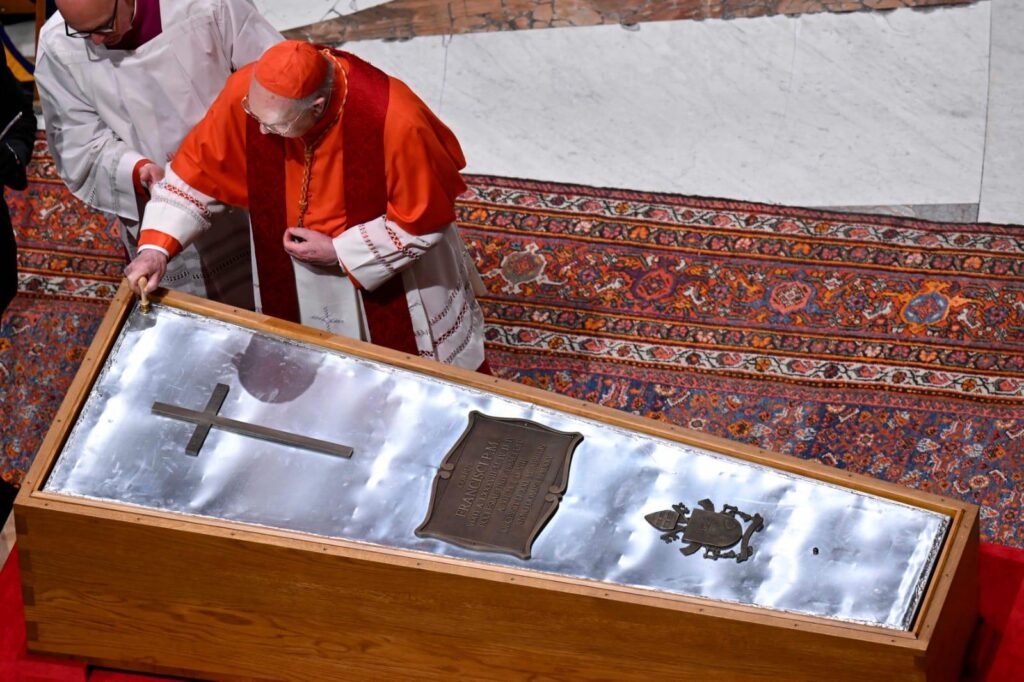
Cardinal Kevin Farrell (the current Camerlengo) affixes his Seal to Pope Francis’ Coffin
No. Really… The Camerlengo is from Dublin, Ireland
Yes. After the Pope dies, the Camerlengo is in charge. He’s the Pope’s Chamberlain.
As was widely reported in the British and Irish media, his name is Cardinal Kevin Farrell, born in Dublin.
Obviously, the Camerlengo is not always from Dublin, but it’s still one of the most important jobs in the Vatican after a Pope dies.
He’s the de facto individual in charge of many of the liturgical and practical aspects of the interregnum period. He officially signs off on the death of the Pope, defaces the Fisherman’s Ring, and organizes the Papal funeral.
3. What Was the Longest Conclave?
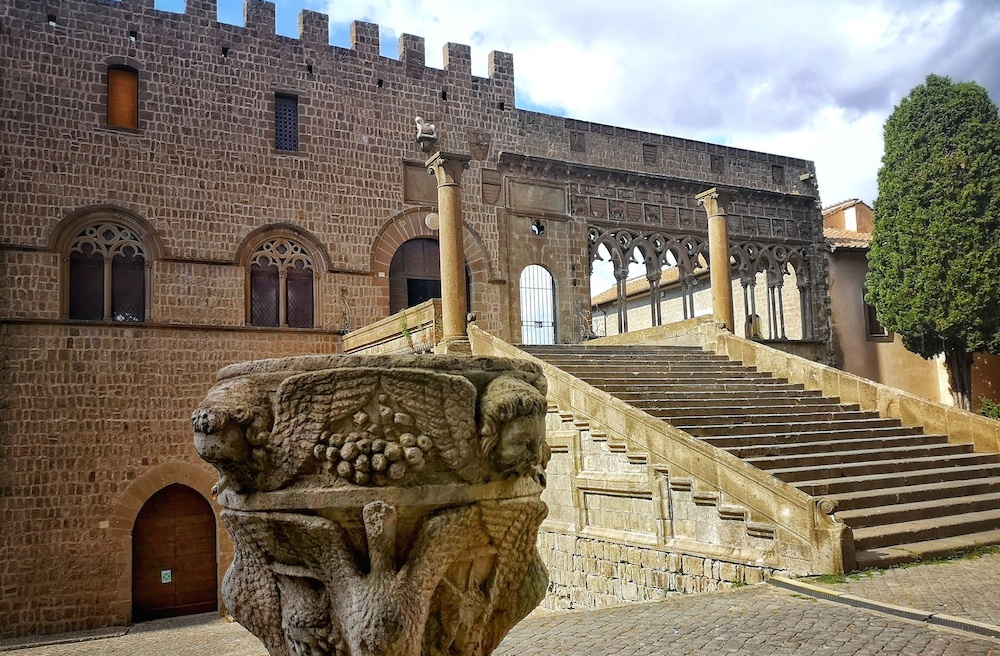
Palazzo Papi in Viterbo
The Longest Conclave
The Longest conclave in history was between 1268 and 1271
Two years and nine months! This happened long before the Sistine was built and the “modern” procedures of conclave were established. In fact, it didn’t even happen in Rome, but in the city of Viterbo, about 50 miles away.
Why?
The deadlock was so bad that a couple of cardinals died during the process! In the end, out of frustration, the locals of Viterbo decided to lock the cardinals into the Papal palace (walling up the doors and windows), and they reduced their diet to mere bread and water. When that didn’t work, they tore the roof off the hall, supposedly to allow the Holy Spirit to reach them more easily. The result? A new Pope in a matter of days! Go figure.
Between 1600 and 1900, conclaves, on average, took about 2 months, with the longest conclave in the last 200 years being that of Pope Gregory XVI in 1831, which dragged on for 51 days. Thankfully, the process doesn’t take nearly as long today. Since 1900, the average conclave has taken 2 to 3 days, and the last two conclaves have taken about 24 hours.
Learn more about the most fascinating conclaves in history with our guide here.
4. What Was the Shortest Conclave?
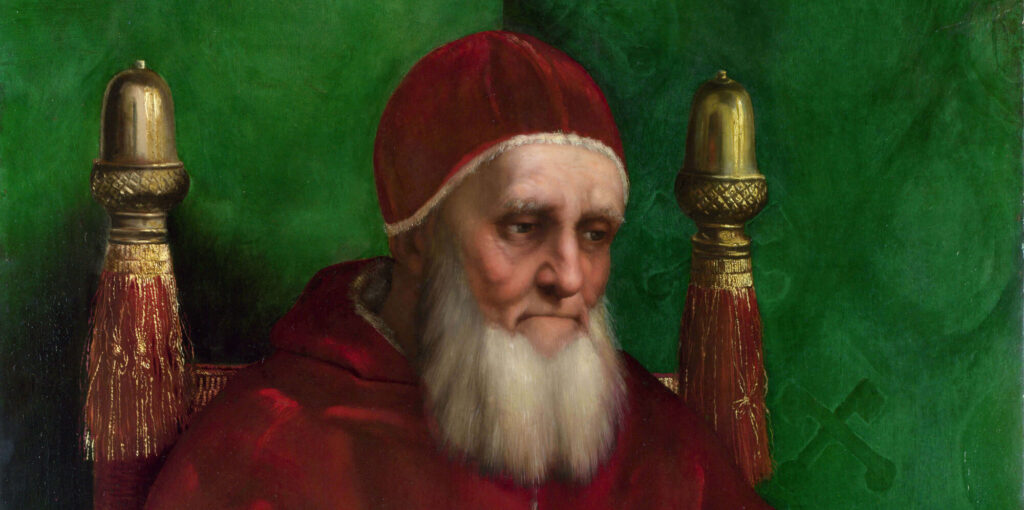
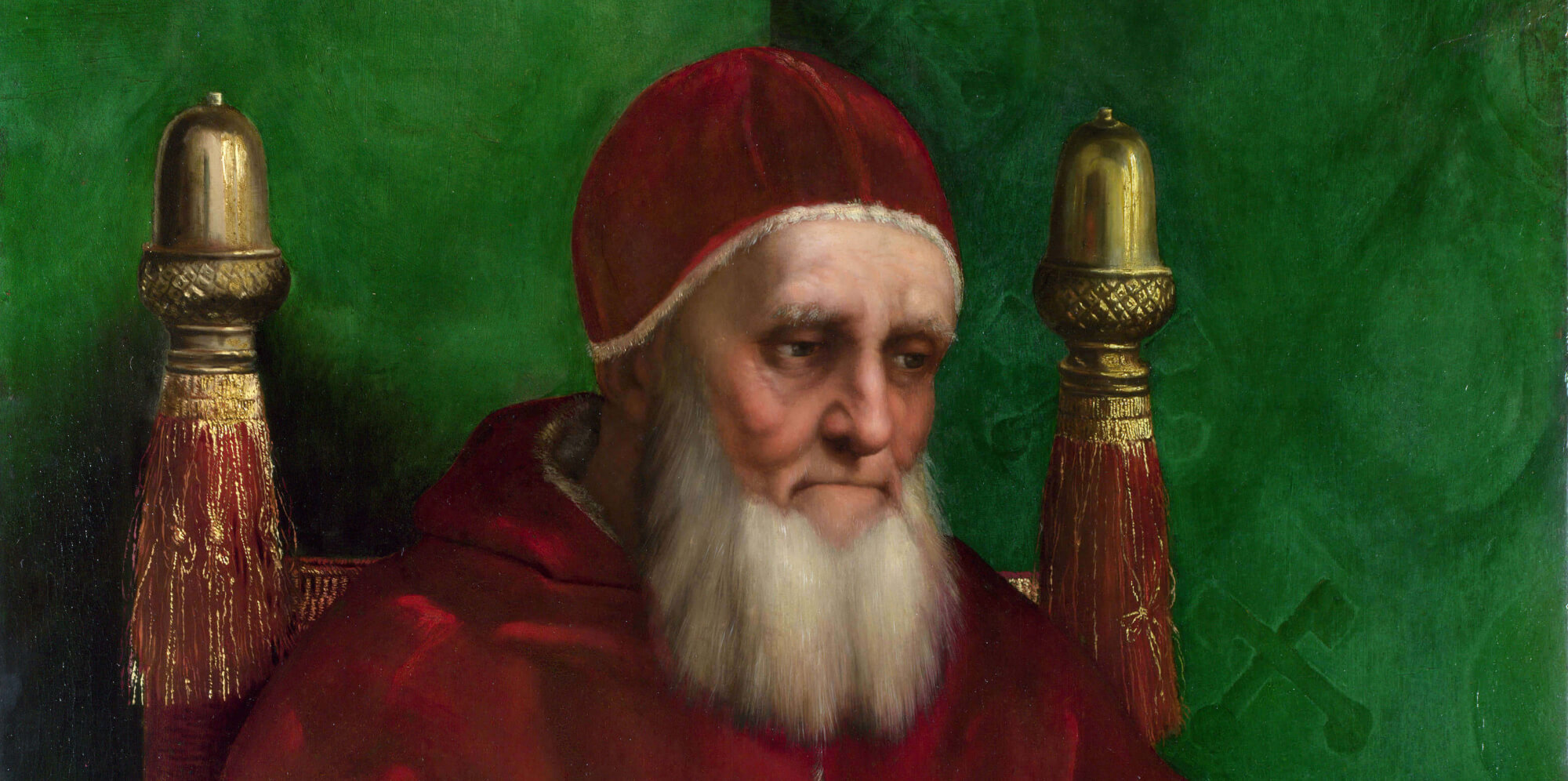
If you’re wondering about the shortest conclave, that would be in 1503, when the cardinals decided to elect Pope Julius II in just a couple of hours. He became the Pope to start the building of St Peter’s Basilica, establish the Swiss Guard, and wrangle the great Michelangelo to paint the ceiling of the Sistine Chapel. Good choice!
5. And the Weirdest Conclave?
The oddest “conclave?” Well, probably in AD 236, when a dove landed on the head of a priest called Fabian. Everyone saw it as a sign that the Holy Spirit had chosen him, and he was proclaimed Pope unanimously. Incidentally, election by acclamation is no longer an accepted method of electing a Pope.
6. Does Conclave Always Happen in the Sistine Chapel?
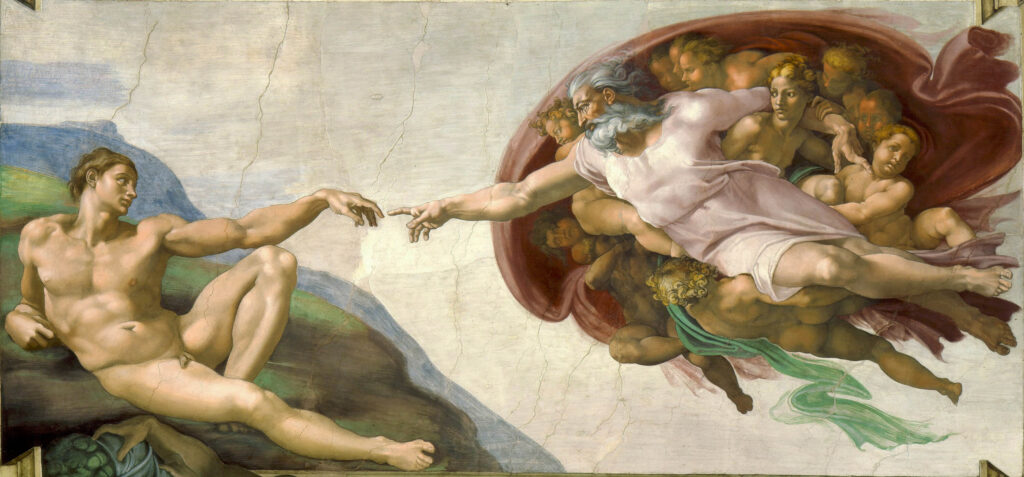
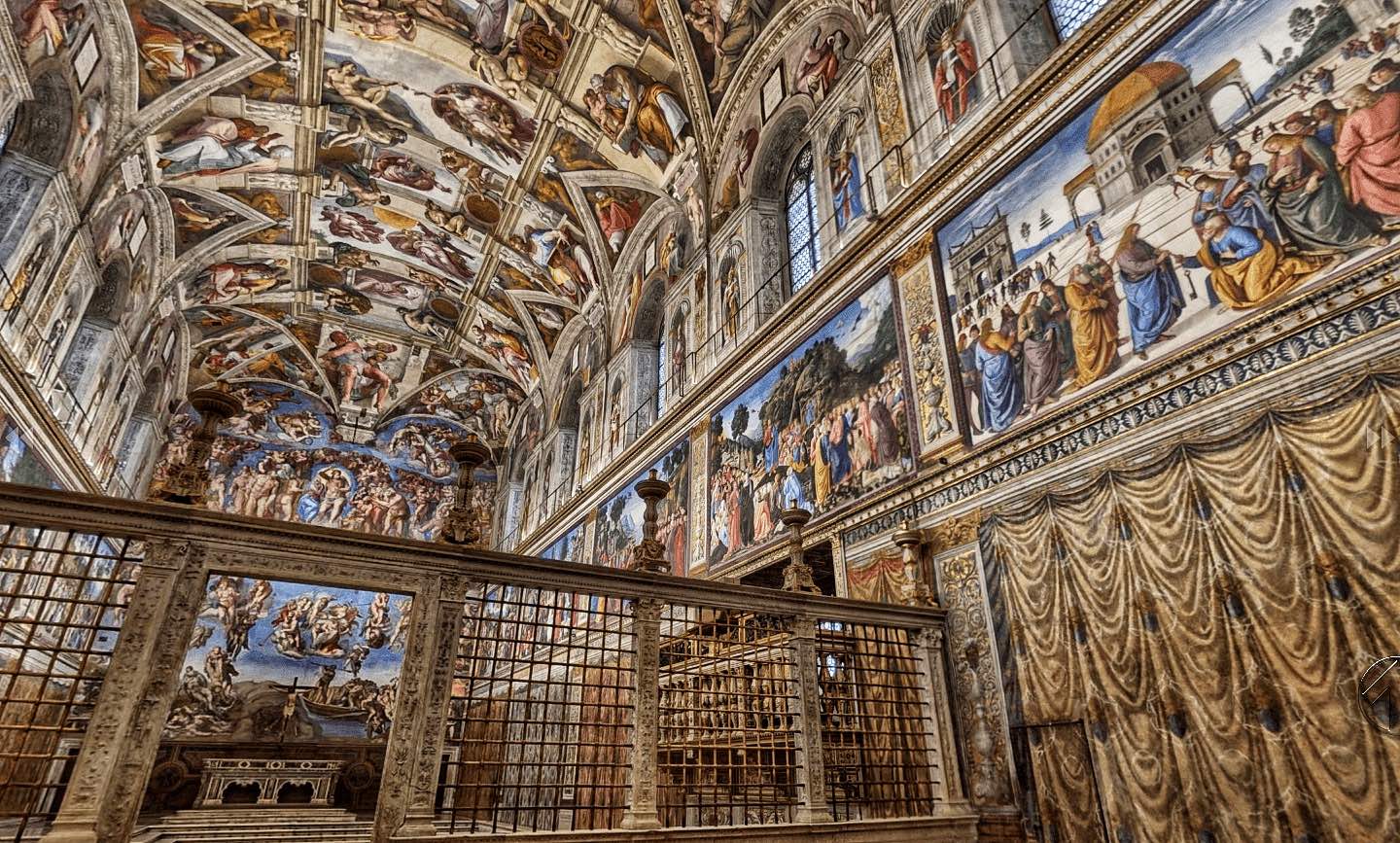
Today, Yes. But that hasn’t always been the case. Every conclave since 1878 has happened in the Sistine Chapel. The first conclave to take place in the Sistine Chapel was in 1492, the year that Columbus set sail to discover the New World. This conclave elected Pope Alexander VI – the infamous Borgia pope – an election that was notorious for allegations of simony. His election was an indicator of the kind of Pope he would become…
Before…
However, prior to the 19th century, conclaves could happen in a number of locations. The general practice was that a conclave would happen wherever the previous Pope died. So, Papal elections have happened in St John Lateran, Santa Maria Maggiore, the Quirinal Palace, San Pietro in Vincoli, the Septizodium, in Avignon France, and famously, the Papal palace in Viterbo (where the whole idea of locking the cardinals in began!)
Is Conclave a Lock-in?! And How Secret is It?
Yes, they really do lock the cardinals into the Sistine Chapel during conclave. The tradition goes back to the 13th century, and indeed, the word conclave comes from the Latin “cum clave”, meaning with key. It’s an ancient, sacred, and secretive voting process. And by the way, shhh… mum’s the word!
Security: Lock it Down!
Secrecy is essential to maintain the authority and integrity of the vote. The outside world cannot influence the cardinals, and they must swear an oath of secrecy on pain of excommunication. Did you know they actually sweep the Sistine Chapel for listening/recording devices and install communications jammers in the days before the vote starts? This is a serious operation.
Extra Omnes!: Everybody Out!
Once the cardinals gather, the words “extra omnes” (Latin for everyone out) boom out across the chapel, and the doors are sealed. Only the voting cardinals can stay inside. There is usually one vote on the first day, then four a day after that – two in the morning and two in the afternoon and the ballots are burned after each vote.
7. An Analog World: How Does the Voting Work During Conclave?
The votes are written by hand on a paper ballot. On the ballot paper is written in Latin: “Eligo in summum pontificem”, meaning: I elect as supreme pontiff. It is strongly suggested that you disguise your handwriting! The votes are counted manually, and they double and triple-check them. And yes, like in the recent movie “Conclave”, they are threaded together as they’re counted before being burned. The tally, however, is kept in the Vatican archive.
8. Erm… Toilet Please!? – It Used To be Worse…
Today
Today, the Cardinals are housed in the Casa Santa Marta, a modest guesthouse that was built by John Paul II in 1996 and was the former residence of Pope Francis. Here is where they eat and sleep during the conclave. They are bused daily from here to the Sistine Chapel for the voting process.
Roughing It
However, up until the 1978 conclave, which elected Pope John Paul II, the cardinals were sequestered in the Sistine Chapel and the rooms and halls surrounding it. That meant eating, sleeping and, ahem, performing all bathroom necessities in make-shift facilities that were by all accounts pretty uncomfortable! Think hard wooden bunks, chamber pots, and zero privacy. Even as recently as the 2005 election, there was talk of chemical toilets by the then-museum director Antonio Paolucci.
The Best Bunk?
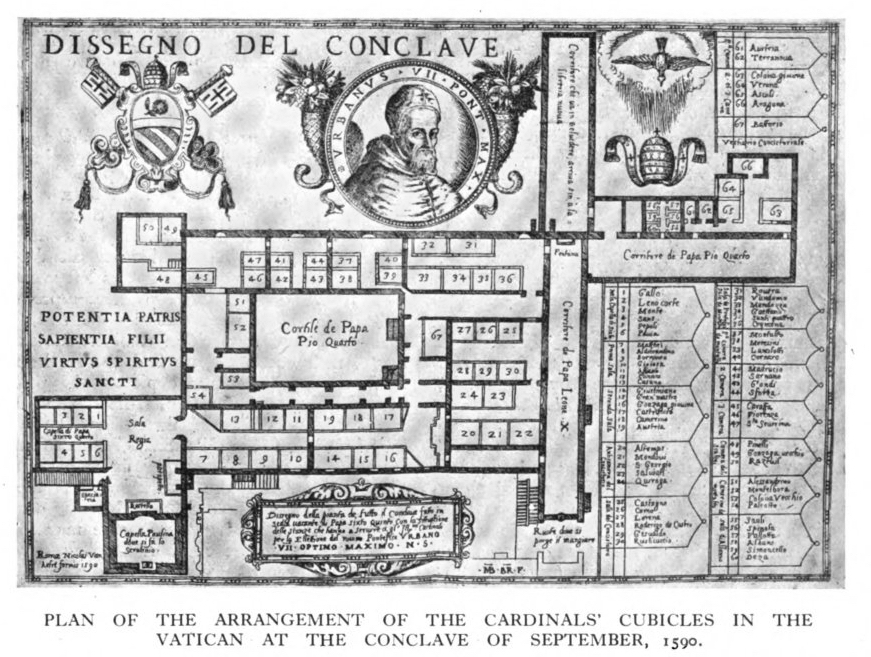
We still have maps and plans from the 16th and 17th centuries detailing where each cardinal slept. Did you know it gave rise to a whole subgenre of art? Some bunks were highly sought after as the cardinals drew lots to determine where they slept. Especially auspicious was a spot under Perugino’s Christ Giving the Keys to St Peter or Signorelli’s Testament and Death of Moses where Moses hands the golden rod to Joshua. Failing that, a spot near where the papal throne usually sat was always a good bet.
But What’s For Dinner?
The 16th and 17th centuries were the “Wild West” of papal conclaves, rife with political intrigue, allegations of simony, and even murder. During the Renaissance, rules were even introduced banning the cardinals from receiving and eating pies, ravioli, and whole chickens because it was too easy to smuggle notes inside that might influence the outcome of the election.
9. Smoke Signals and Smoke Bombs!
The smoke that emanates from the Sistine Chapel tells the world if the vote is inconclusive or successful. Black smoke – no pope. White smoke – we have a pope! “Habemus papum!”
Stoves and Fire Brigades
Yes, they actually have a stove in the Sistine Chapel. It’s not a permanent fixture but is installed for the conclave in the southwest corner by the Vatican fire brigade, with the iconic little copper chimney visible to the public in St Peter’s Square. In fact, there are two stoves: one is used to burn the Papal ballots, and the other will produce the famous black or white smoke. The origins of the use of the stove and chimney are a bit murky, but it seems it has been a constant fixture since at least 1878.
Back in the Day…
But how do you get the black or white smoke? Well, back in the day, the colored smoke was achieved by burning hay: dry hay produced white smoke, and damp hay resulted in black smoke. Well, at least in theory. In practice, the color of the smoke was sometimes a more ambiguous gray, resulting in much confusion among the crowds in St Peter’s Square!
Did it Always Work?
This was a big problem during the 1958 conclave, with Vatican Radio even announcing a new Pope until they discovered they were wrong! In 1963, they used flares in the stove provided by the Italian army! It was during the two conclaves of 1978 that the modern convention for conclave smoke emerged.
Chemistry Geeks
Ironically, the Vatican looked to modern science to solve its problem so it could maintain this archaic but iconic tradition. Smoke bombs. Yup. Today, they use chemical canisters, very similar to the type used in some fireworks or Red Arrow displays, to generate the unmistakable pigment. For the science nerds – black smoke is achieved with potassium perchlorate, anthracene, and sulfur; white smoke comes from potassium chlorate, lactose, and the conifer resin called rosin.
Accidents?
Has there ever been a smoky mishap? Apparently yes. Over the years, there have been reports of smoke billowing back into the chapel, and you should ask your guide about the curious stain or burn mark on the floor at the back of the chapel!
When Do You Look for Smoke?
Predicting when to be in St Peter’s Square to see the smoke is not an exact science. Historically, they used to issue smoke after every vote, so four times a day – around 10:30 a.m., noon, and again at 5:30 p.m. and around 7 p.m. local (Rome) time. More recently, pilgrims in the piazza have only seen smoke twice a day: at noon and in the late afternoon/early evening.
10. The Craziest Conclaves?
Take your pick!
263 – When a dove decided the outcome
268 – The one where they took the roof off!
1605 – When there were fisticuffs that resulted in torn robes!
1655 – The prank year: when the younger cardinals masqueraded as the Holy Spirit.
These aren’t even the craziest Papal stories!
11. We Get Special Coins and Stamps! – Sede Vacante
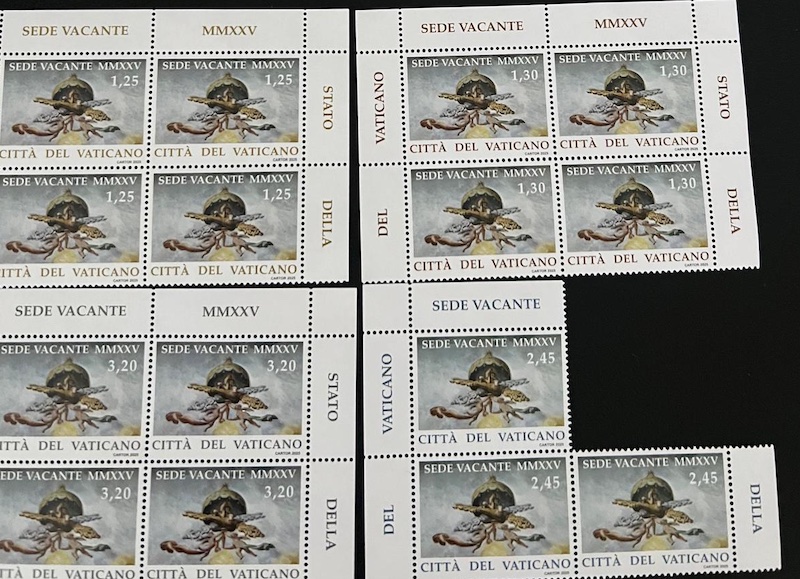
During the time between Papal reigns, the Vatican enters a time called the “Sede Vacante,” which means empty seat – referring to the empty throne of St Peter. All sorts of special liturgical and administrative procedures happen at this time in the run-up to conclave, but did you know one of the most noticeable changes happens at the Vatican Post Office?
Vatican Post Office
The Vatican Post Office is a relatively new institution. It was only established in 1929 with the signing of the Lateran Treaty, which made the Vatican the independent state we see today.
Are They Special?
In normal times, the stamps feature a wide range of historical and religious subjects. However, during the “Sede Vacante” they issue special stamps to commemorate the interregnum. These stamps feature the umbraculum (Papal parasol) instead of the Papal tiara and the crossed keys. And they’re only valid for use during the “sede Vacante” period. These special postage stamps have only been issued eight times in history, which makes them highly sought-after collector items! They also issue special coins to mark the period (the euro since 1999), which eagle-eyed collectors are always keen to get their hands on!
Plan Your Vatican Visit Today!