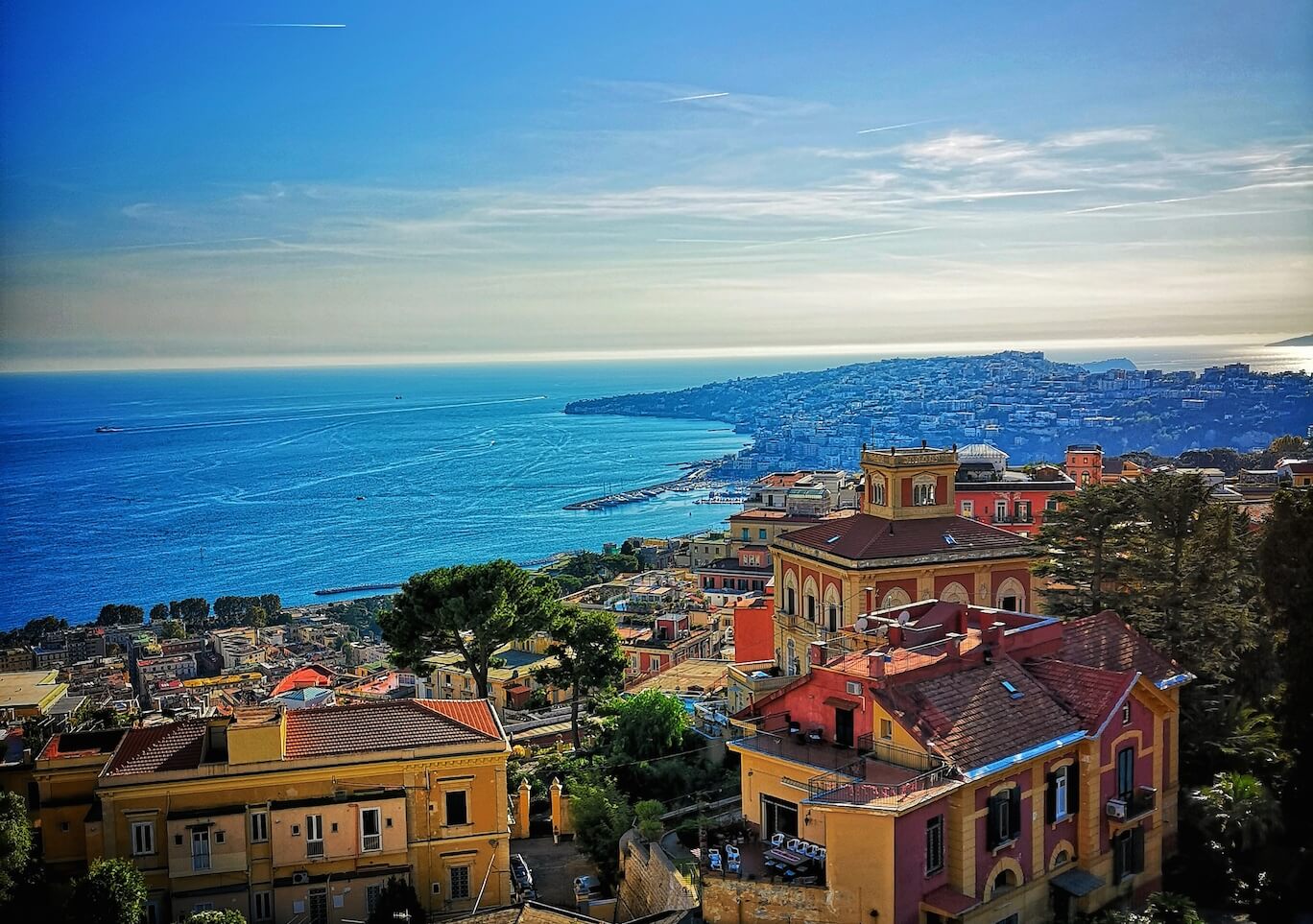
In the late summer of AD 79 Mount Vesuvius erupted with terrifying force, burying Pompeii, Herculaneum and other communities around the Bay of Naples beneath a mountain of ash, pumice and volcanic debris.
Thousands of people died as an ordinary day in one of the most prosperous corners of the Roman world descended into an unimaginable nightmare. Within hours, entire communities had been overwhelmed, their streets and houses swallowed beneath the deposits of one of history’s most devastating volcanic eruptions.
Yet the eruption left behind more than ruins. It also produced one of antiquity’s most extraordinary eyewitness accounts. Across the bay at Misenum, a young Roman aristocrat watched the strange cloud rising above Vesuvius, while his uncle sailed towards the danger in an attempt to help those trapped along the coast. Their names were Pliny the Younger and Pliny the Elder, and the letters the younger man would write about the events became our most remarkable literary testimony to the destruction of Pompeii.
 Want to explore Pompeii for yourself?

Discover the streets, houses and extraordinary stories of the ancient city on an expert-led Pompeii tour.
Pompeii Tours
Explore the Buried City
A Witness to Disaster

The two letters Pliny the Younger sent to his friend, the historian Tacitus, offer two complementary perspectives on what happened on that fateful day. The first recounts the final hours of his uncle, drawing on what the Younger himself witnessed and what he subsequently learned from the men who had accompanied the admiral on his rescue mission. The second turns to his own experience at Misenum, where he and his mother gazed on the terrifying spectacle unfolding across the bay as what began as a cloud on the horizon swallowed the landscape in darkness.
Together, they provide our most important surviving eyewitness testimony to the eruption. Pliny captures not only the physical spectacle of Vesuvius but the human terror of the disaster: the panic of the crowds, the desperate attempts to escape and the bewilderment of people confronted with what seemed like the end of the world.

Pompeii Before Vesuvius

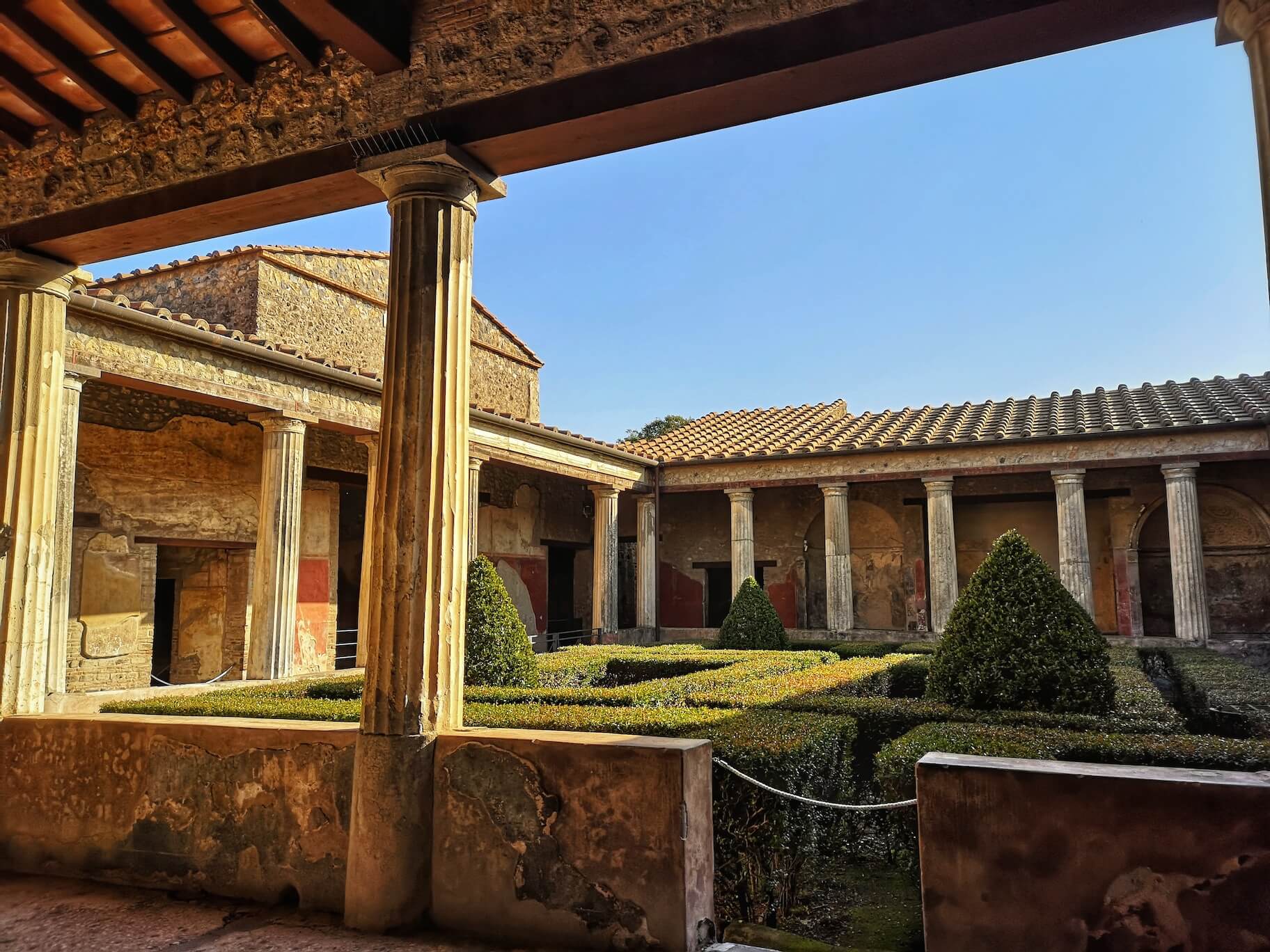
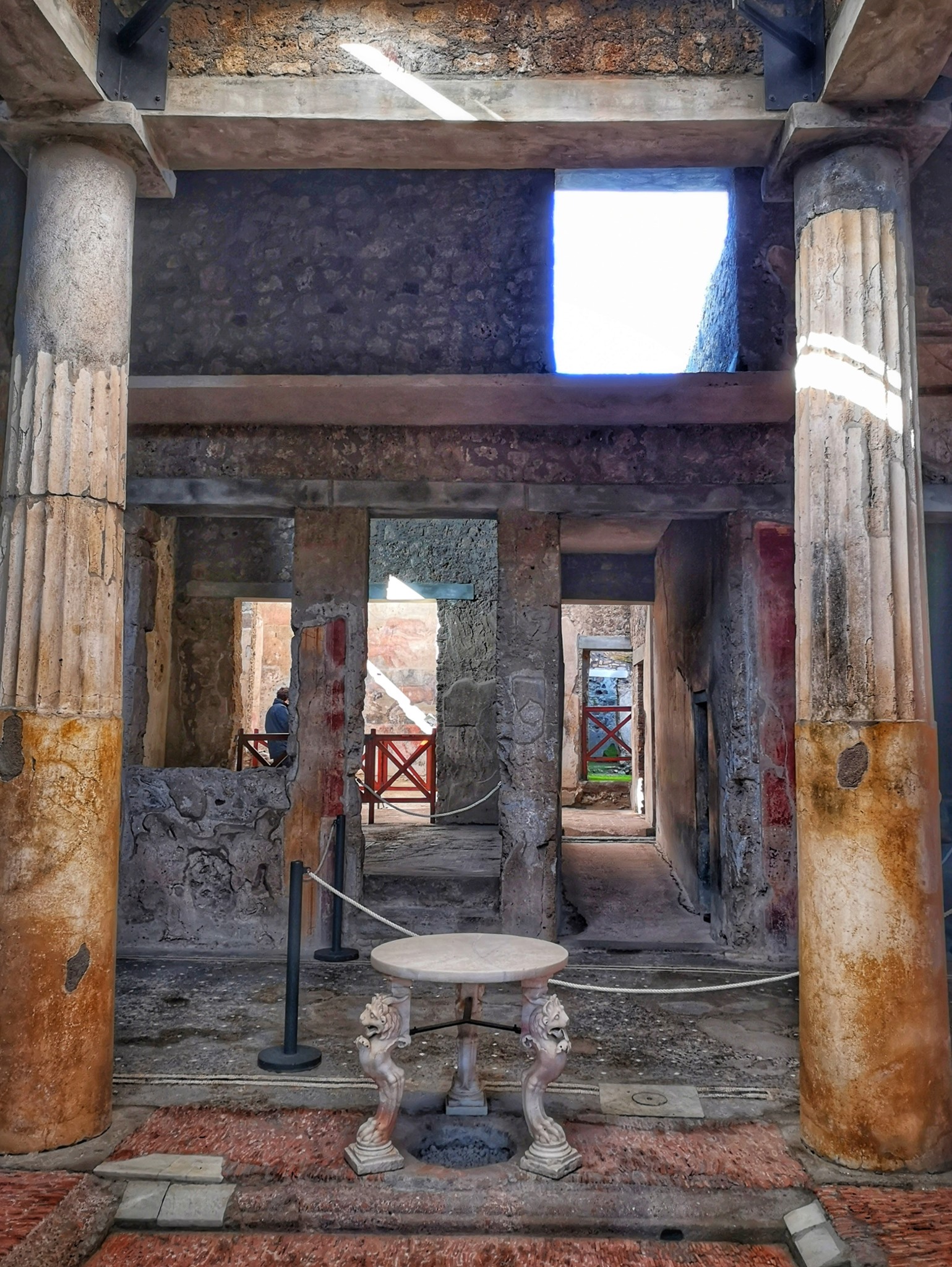
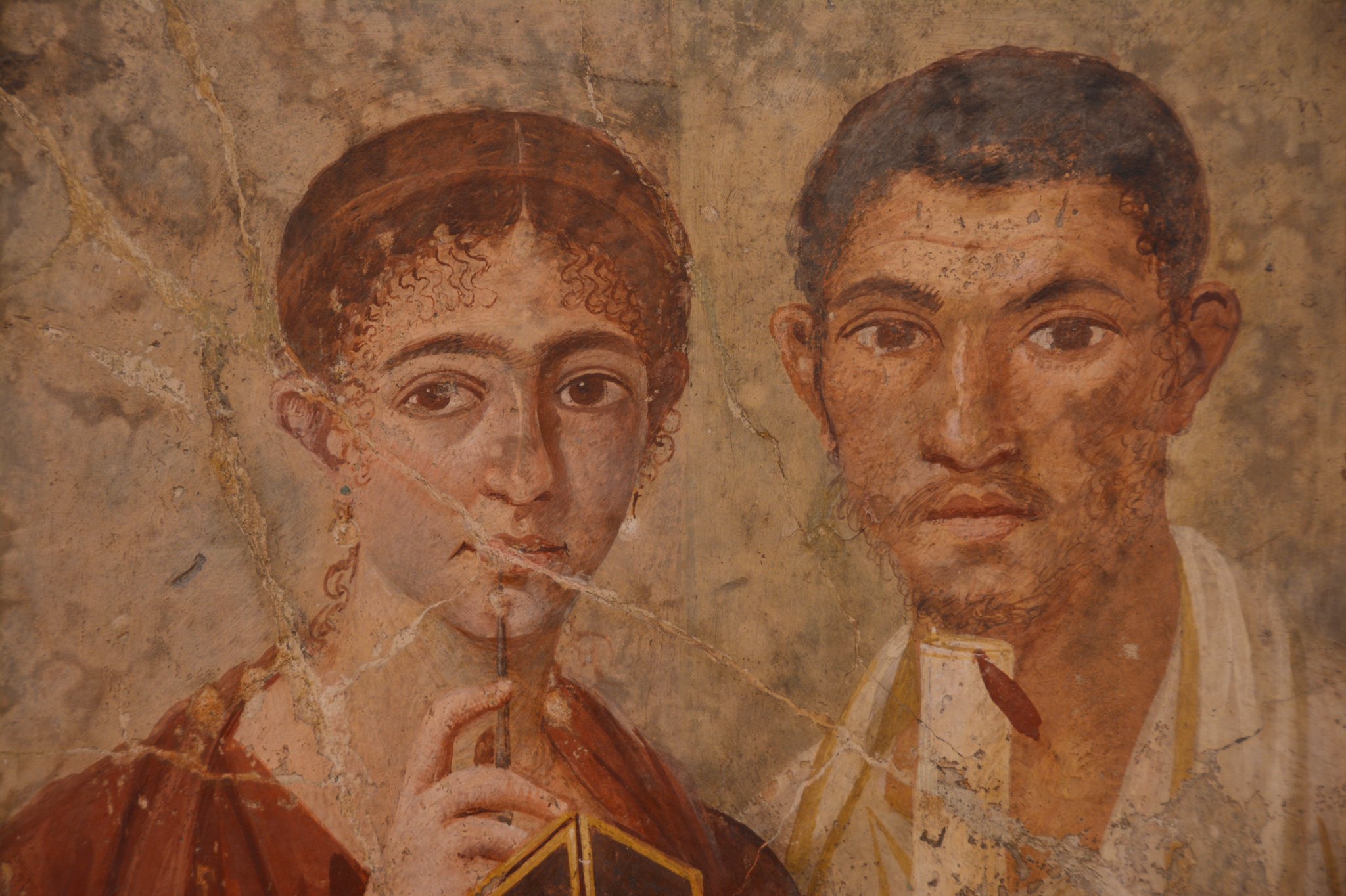
Before the eruption, Pompeii was a prosperous Roman city of perhaps 15,000–20,000 inhabitants. Its streets were lined with houses and shops; its public buildings included temples, baths and theatres; its grand houses opened onto gardens and courtyards decorated with elaborate frescoes and mosaics.
The countryside around Vesuvius was exceptionally fertile. Vineyards, orchards and farmland flourished in the rich volcanic soils (even today the wines and tomatoes produced on the slopes of Vesuvius are renowned for their quality), while the bay was dotted with opulent villas belonging to wealthy Romans.
Vesuvius itself had lain dormant for centuries, and it had been almost 2,000 years since its last major eruption – so long ago that its threat had been largely forgotten. But the landscape was not as peaceful as it looked.
In AD 62, a devastating earthquake badly damaged Pompeii and neighbouring towns, and rebuilding was still underway when Vesuvius finally awoke from its slumber. In the days before the eruption, minor seismic tremors became more frequent. Unsettling, but nothing too out of the ordinary in a region accustomed to earthquakes.
Then, sometime in the early afternoon on 24 August AD 79 – the date given by Pliny, though still debated by scholars – the mountain erupted.
The Two Plinys

At Misenum, on the opposite side of the bay, lived Pliny the Elder – commander of the Roman fleet, lawyer, and one of the the most voracious intellects of his age. His extraordinary Natural History, an encyclopedia in 37 volumes, ranged from astronomy to botany to geology, and is one of the greatest contributions to knowledge produced in antiquity.
His life was a monument to insatiable curiosity: he slept famously little, dictated text while being carried through the streets, and considered any moment not spent in study a moment wasted.
Sharing his villa was his nephew, Gaius Plinius Caecilius Secundus – Pliny the Younger. His father had died when he was young, and his uncle had become his guardian and mentor; the Elder would later adopt him in his will. Inspired by his uncle, the boy was himself a budding writer who had penned his first Greek-inspired tragedy at just 14.
On the early afternoon of 24 August, his mother drew the Elder’s attention to an extraordinary sight across the bay: a great column of smoke and ash rising into the sky. “Its general appearance,” the Younger later wrote in a letter to Tacitus, “can best be expressed as being like an umbrella pine: it rose to a great height on a sort of trunk and then split off into branches.”
Pliny the Elder too was fascinated. But soon fascination gave way to something more urgent. A message arrived from the aristocrat Rectina, whose villa lay near the foot of Vesuvius. She and others were trapped by the eruption and could escape only by sea. The admiral ordered his warships readied and set off with a twin purpose: to study the phenomenon, and attempt a daring rescue. His nephew, still a teenager, stayed behind.
The First Phase: Ash and Pumice

Pliny was watching from thirty kilometres away, and what he saw was only the outward shape of the thing: a distant column, rising and spreading like a pine tree against the sky. Across the bay, at Pompeii itself, the eruption was already an entirely different, and far more immediate, kind of event.
At around one in the afternoon, Vesuvius had exploded. The mountain’s plug of hardened rock shattered as pressure below finally broke through, and a column of ash, pumice and volcanic gas shot skyward, by some estimates reaching over 30 kilometres high into the stratosphere. Winds carried the debris steadily toward the southeast, directly over Pompeii.
At first the fall was almost gentle: white pumice stones, no bigger than pebbles, drifting down and settling on roofs and streets. But as the eruption intensified, larger fragments began to fall, and the accumulating debris soon became a deadly burden on the city’s buildings. By mid-afternoon the accumulating weight on Pompeii’s roofs was more than many buildings could bear. They began to give way.
Families who had chosen to shelter indoors found themselves trapped as the debris mounted around them. It was, geologically speaking, only the opening act: this first pumice fall belonged to an eruption that would go on to eject something like four cubic kilometres of magma – enough to bury multiple settlements on the Bay of Naples, not just Pompeii alone.
Into the Danger
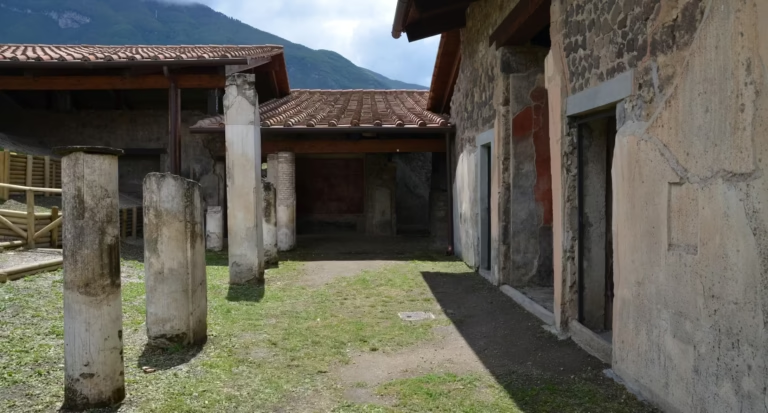
A villa at Stabiae, Ph. Carole Raddato, CC BY-SA 2.0, via Wikimedia Commons
Pliny the Elder sailed toward Vesuvius while others were fleeing in the opposite direction. As the ships approached the danger zone, pumice and burning fragments began raining down, while the sea itself became treacherous and debris obstructed the shore. His pilot urged him to turn back. Instead, Pliny ordered the ship to change course towards Stabiae, where his friend Pomponianus was sheltering.
He found Pomponianus terrified. To reassure him, Pliny embraced him, ordered a bath and sat down to dinner, behaving as though there were nothing to fear. He then retired to bed and, remarkably, fell into a deep sleep, his heavy breathing audible to the attendants outside.
But the eruption was intensifying. Stones and ash began filling the courtyard leading to his room, while the buildings shook with increasingly violent tremors. Pliny was woken and joined Pomponianus and the others, who now had to choose between remaining indoors as the houses threatened to collapse or venturing outside beneath the falling debris. They chose the open air, tying pillows over their heads for protection from the pumice and stones.
They made their way down to the shore, hoping to escape by sea, but the waves were still too rough. Then flames appeared, preceded by a powerful smell of sulphur, and the others fled. Pliny rose with the help of two servants, but immediately collapsed and died.
His nephew could only speculate later about the cause, suggesting that a dense and poisonous vapour had suffocated him, perhaps aggravated by a throat that had long been weak and prone to inflammation. The body was not recovered until the third day, when daylight finally returned. It was found intact and without visible injury, still dressed as he had been, “more like a man asleep than dead.”
The scholar who had sailed towards Vesuvius to observe its eruption had ended up becoming one of its victims.
Darkness Over Misenum

While the Elder was facing the eruption at Stabiae, his nephew was living through it at Misenum. Pliny had remained behind to continue his studies, but during the night the earthquakes became so violent that the buildings around them seemed to be shaking from their foundations.
He and his mother moved into the open area of the house between the buildings and the sea. Even then, the eighteen-year-old Pliny picked up Livy and began reading, later admitting that he could not tell whether this was courage or folly.
By morning, the danger was too great to remain. Pliny and his mother joined the crowds leaving Misenum, and once they were clear of the buildings they saw the extraordinary scene across the bay: the sea appeared to have been driven back by the earthquakes, leaving marine animals stranded on the shore, while a vast black cloud spread across the sky, broken by flashes of flame.
The cloud then began to descend, covering the sea and swallowing Capri and the promontory of Misenum from sight. Ash started to fall, and Pliny and his mother turned from the main road, fearing that if darkness came they might be trampled by the crowd. They had barely sat down when night fell around them — not an ordinary darkness, Pliny wrote, but like being shut inside a room with every light extinguished.
What followed was one of the most vivid passages in the two letters. Pliny heard women shrieking, children crying and men shouting, as people called for their parents, children and spouses and tried to recognise one another by their voices. Some prayed to the gods; others believed that the gods had abandoned the world and that the final, endless night had arrived. At last the blackness thinned like smoke, daylight returned and the sun appeared through a lurid haze. Everything was coated in ash “as though with snow.”
Pliny and his mother returned to Misenum, but there was still no certainty that the danger had passed. The earthquakes continued, and they remained there anxiously waiting for news of the Elder.
The Night of Fire

Pliny’s darkness at Misenum was terrifying, but the town survived the eruption’s most destructive phase. Across the bay that same night, a very different and far more violent darkness was descending.
As the night deepened, the eruption itself seemed to catch fire. Volcanic lightning flickered through the towering ash column – static electricity generated as billions of colliding ash particles built up an electrical charge, a phenomenon volcanologists have since observed in eruptions around the world. Earthquakes continued to shake the ground, tearing open buildings already weakened by the weight of ash.
By around midnight, roughly twelve hours after the eruption began, the nature of the disaster changed. The great column, no longer able to sustain its own weight, began to collapse in on itself.
Rather than continuing to rise and drift on the wind, it came crashing down the mountain’s flanks as pyroclastic density currents – ground-hugging avalanches of superheated gas, ash and rock fragments, racing outward at speeds now estimated in the hundreds of kilometres per hour and hot enough to kill almost instantly.
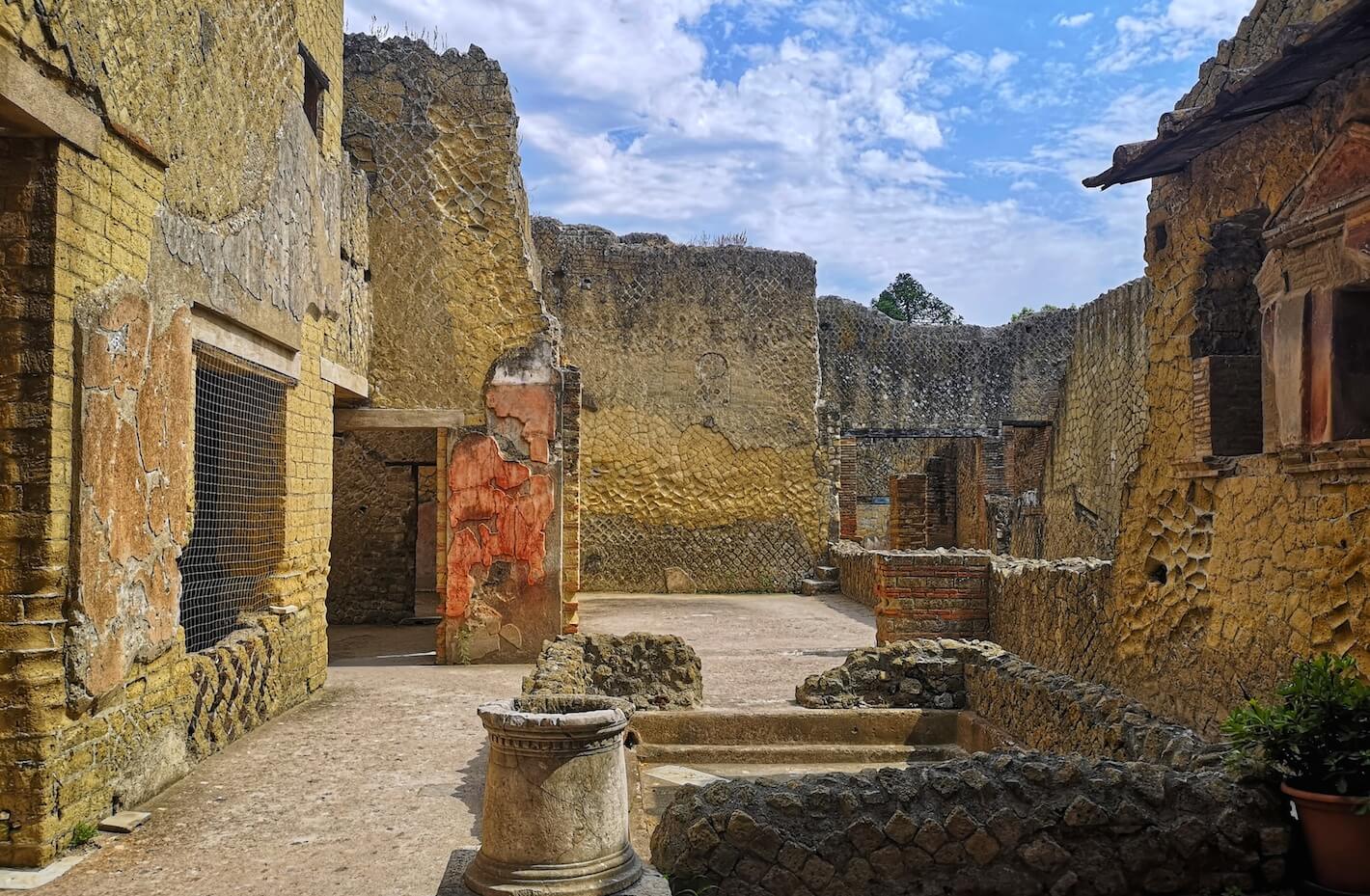
Herculaneum, which had largely escaped the pumice fall thanks to the wind direction, now met a far worse fate. Within minutes, the first surge had covered the seven kilometres from the vent and struck the town directly.
For decades, historians believed Herculaneum’s population had successfully evacuated, since so few bodies had been found within the buried streets. That assumption was overturned in the 1980s, when excavations of the ancient waterfront uncovered some three hundred skeletons packed into a row of stone boat chambers: men, women and children who had gathered there hoping to escape by sea, and who were killed instantly where they sat.
The Final Blows

At dawn on 25 August, those Pompeians who had survived the night of falling pumice dared to hope the worst was over. The rain of stone had eased. Survivors began to emerge from their houses, searching for relatives, picking their way over roofs that had caved in overnight.
But the mountain wasn’t finished.
In the final major phase of the eruption, a further surge tore down toward Pompeii at devastating speed. This time it did not stop at the walls, as earlier, weaker surges had. Darkness fell over the city again, of the same absolute, all-consuming kind that Pliny, watching from Misenum, would later struggle to put into words.
Most of those still within the city were killed by the superheated currents, overwhelmed by heat, ash and suffocating air, their final positions later preserved in the ash. Some were caught mid-flight, others found huddled with their families. Archaeologists have since recovered loaves of bread, carbonised whole in the ovens where they were baking; a dog, still chained at a doorway; men and women found clutching keys, coins or amulets. An entire moment of ordinary life, arrested in an instant and frozen for two thousand years.
A City Frozen in Time

The eruption did not erase Pompeii all at once. After the disaster, survivors returned. They dug through the deposits, retrieved possessions and salvaged whatever they could from the buried buildings. Eventually, however, the city disappeared beneath the landscape. Centuries passed.
Pompeii began to emerge again in the late 16th century, and systematic excavation began in the 18th. As archaeologists cleared the streets, an astonishing Roman city came back into view: houses still decorated with frescoes, election notices painted on walls, bakeries with their ovens, shops, temples and theatres.
In 1863, Giuseppe Fiorelli pioneered and systematised the technique that would make Pompeii’s victims so hauntingly visible. By pouring plaster into cavities left in the hardened ash by decomposed bodies, archaeologists could recover the shapes of people at the moment they died, their final positions preserved in the volcanic deposit.
Today, Pompeii gives us an extraordinary physical record of Roman life: not just grand monuments, but kitchens, graffiti, food, tools and the traces of ordinary people going about their lives.
And alongside all this archaeology, there are Pliny’s words. Through him we have not only the ruins but the voices – the fear, the prayers, and the desperate humanity of that terrible day. Without him, we would know far less about how the catastrophe unfolded. His words bridge two millennia, making the catastrophe not just an archaeological fact but a human tragedy.

When did Mount Vesuvius erupt and destroy Pompeii?
Mount Vesuvius erupted in AD 79, destroying Pompeii, Herculaneum and other towns around the Bay of Naples. The traditionally accepted date is August 24, although archaeological evidence has led some scholars to propose that the eruption took place later in the autumn. The exact date remains debated.
How did the eruption of Mount Vesuvius destroy Pompeii?
The eruption started with a towering column of volcanic gas and ash, followed by falling pumice and ash that buried the city and caused buildings to collapse. Hot, fast-moving pyroclastic currents then swept through Pompeii, completing the destruction of the city.
How many people died in the eruption of Mount Vesuvius?
The exact death toll is unknown. Archaeologists have recovered around 1,000 victims at Pompeii, but excavations have uncovered only part of the ancient city, and many inhabitants escaped before the final stages of the eruption. The total number of people who died across the region remains uncertain.
Who were Pliny the Elder and Pliny the Younger?
Pliny the Elder was a Roman author, naturalist and naval commander who died during the eruption of Vesuvius in AD 79. Pliny the Younger was his nephew and heir who lived with him at Misenum on the other side of the Bay of Naples. He survived the disaster and later wrote two letters describing the eruption and his uncle’s final hours.
Why is the eruption of Vesuvius called a Plinian eruption?
The term Plinian eruption comes from Pliny the Younger’s evocative description of the enormous cloud of ash and gas spewed into the sky by Vesuvius, which he compared to a branching pine tree. Volcanologists now use the term for powerful explosive eruptions that produce tall, sustained columns of volcanic material.
When was Pompeii rediscovered?
Pompeii was rediscovered in the late 16th century, although systematic excavations didn’t begin until the 18th century. Archaeological work has continued ever since, revealing an extraordinary amount about daily life in the Roman world – but there is still much to uncover.
Book Your Pompeii Experience