Few places bring you closer to the ancient world than the Naples Archaeological Museum. Within its grand galleries stand colossal emperors and gods carved from marble, glittering mosaics lifted from Roman villas, and the vivid frescoes, sculptures and everyday possessions rescued from the streets and homes of Pompeii and Herculaneum. It’s a collection that does much more than illustrate antiquity — it immerses you right into its still beating heart.
Quite simply, this is one of the world’s greatest archaeological museums. Housed in a magnificent neoclassical palace just beyond Piazza Dante, it combines the celebrated Farnese Collection with many of the most important discoveries ever made around the Bay of Naples. The result is an extraordinary concentration of masterpieces that can feel almost inexhaustible. To help you make the most of your visit, we’ve put together a guide to the collection, including seven works you shouldn’t miss.
 Want to see Naples' ancient treasures with an expert?
The National Archaeological Museum brings together some of the greatest surviving works from the ancient world, including the mosaics, sculptures, frescoes, and everyday objects recovered from Pompeii and Herculaneum. Our private tour puts those masterpieces into context, revealing what they can tell us about Roman life, art, and the cities buried by Vesuvius.
Naples Tours
Visit the City's Amazing Museums!
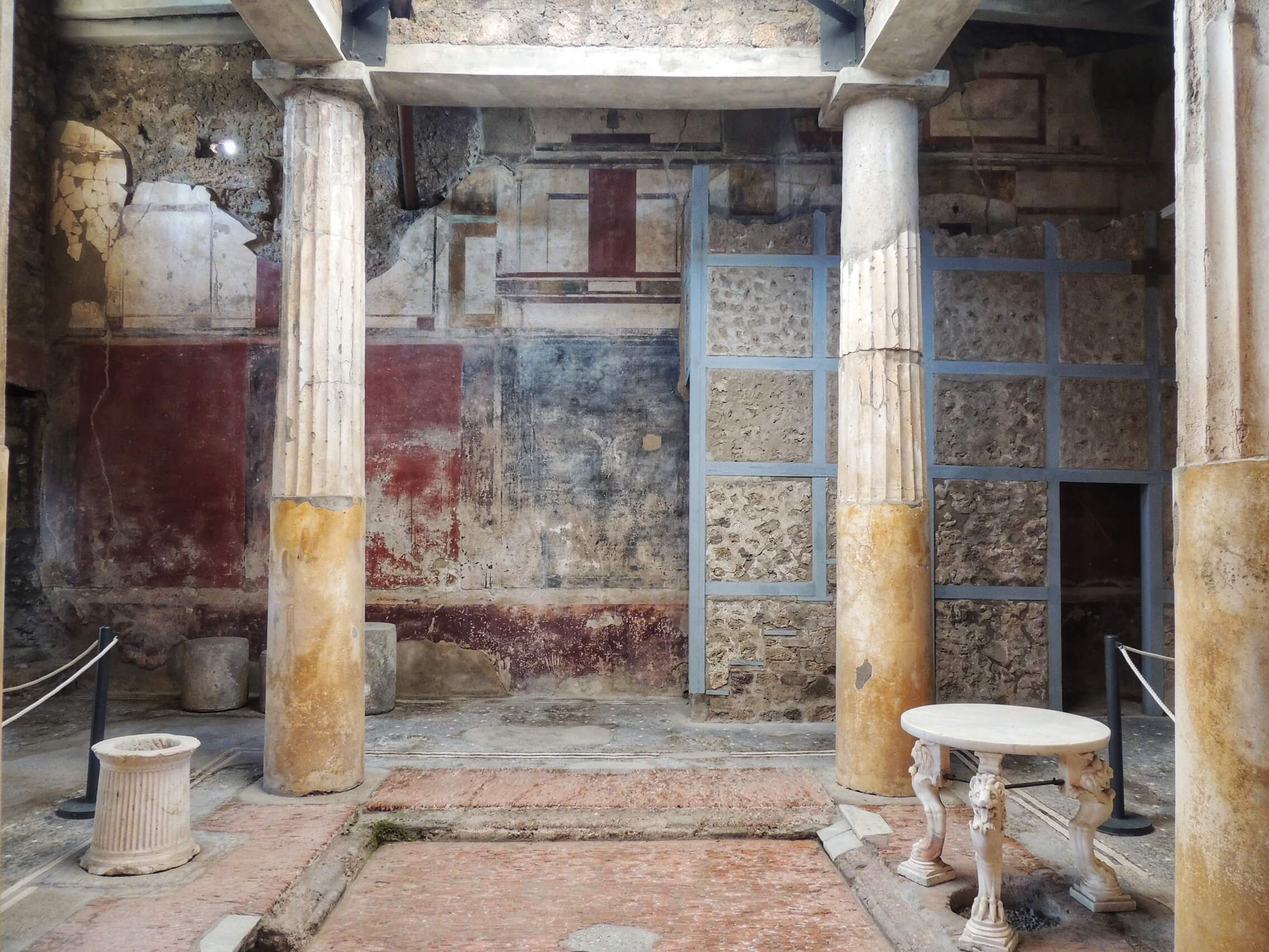
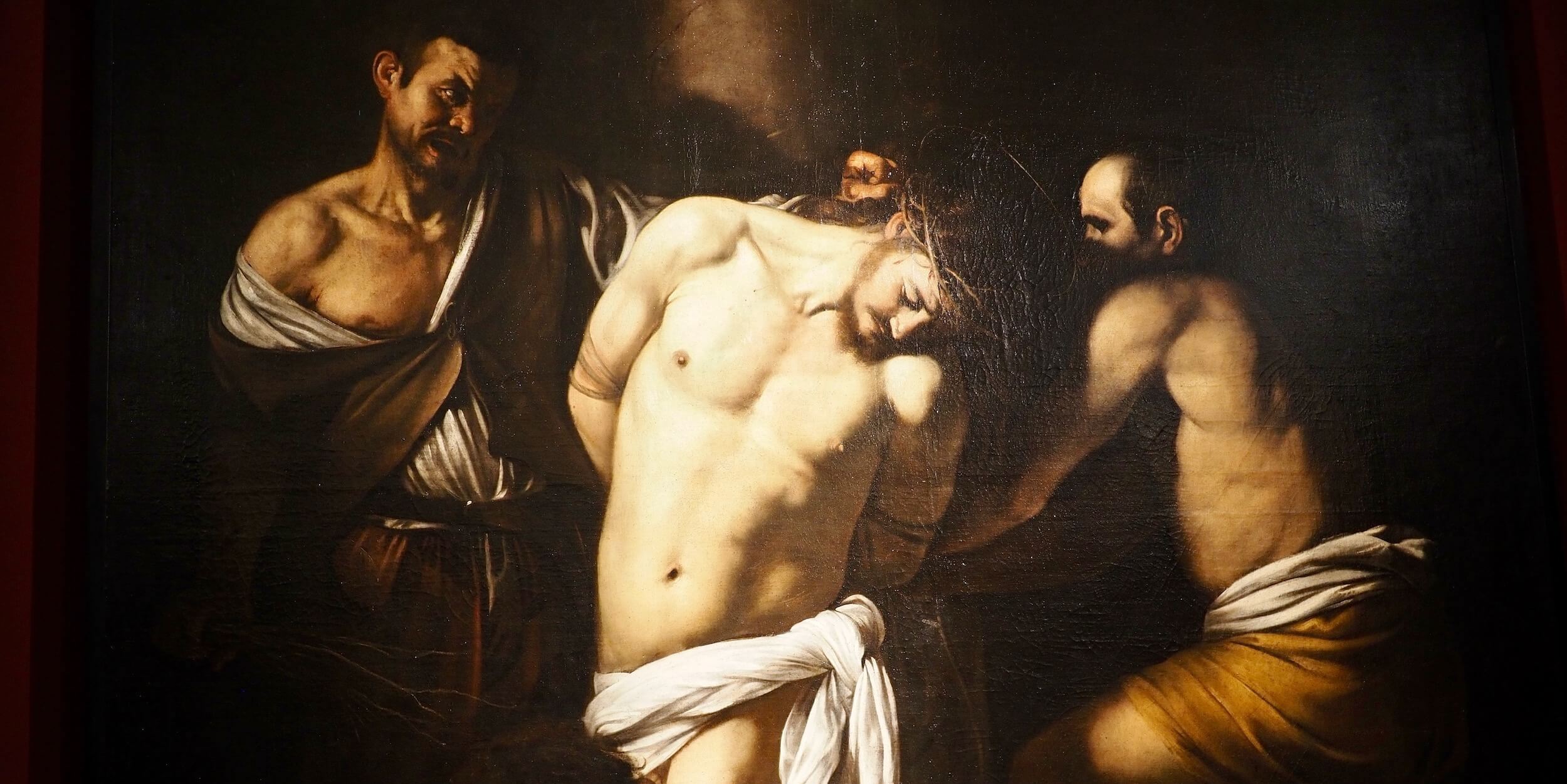
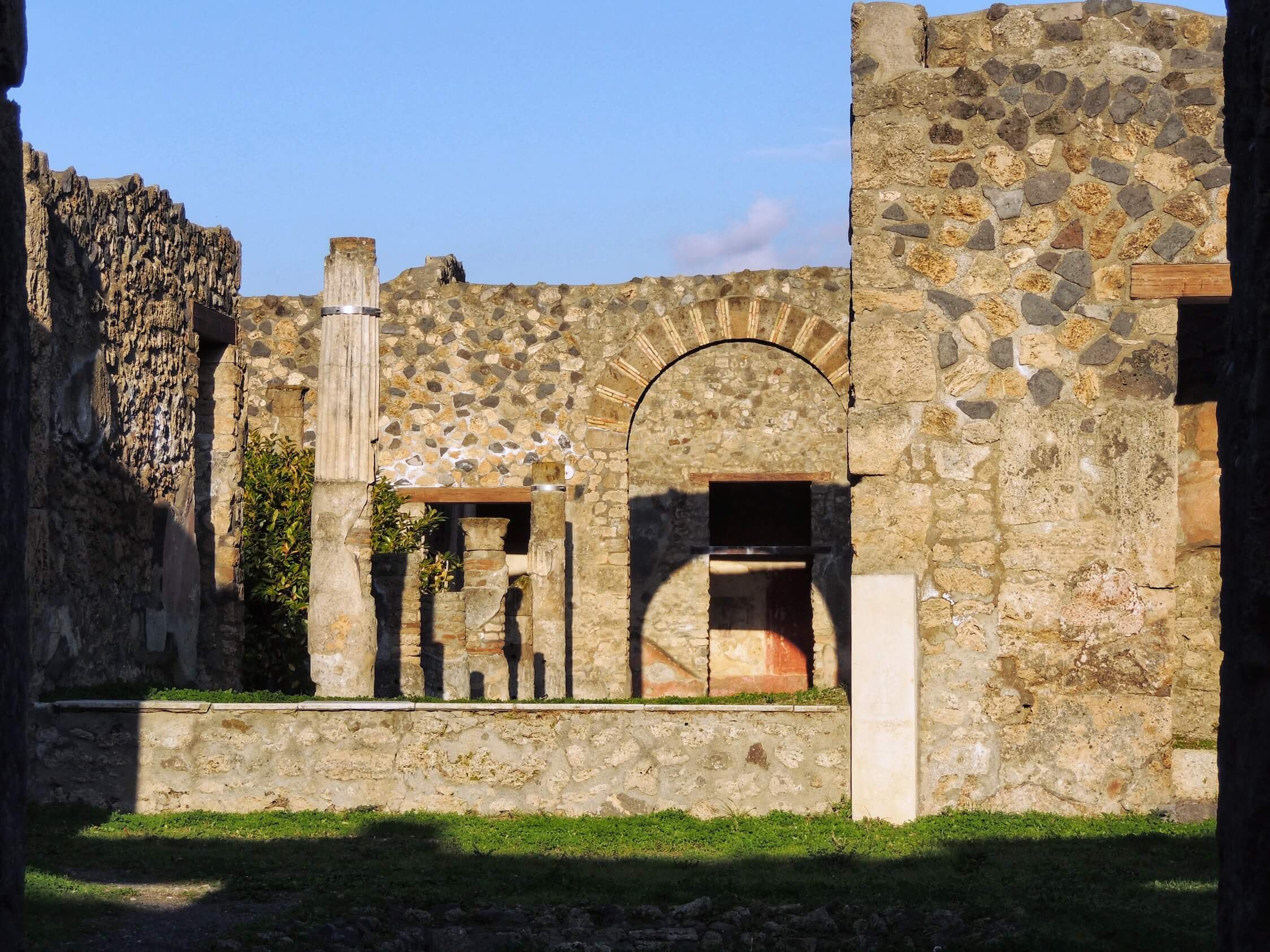

What makes the MANN exceptional isn’t one masterpiece but the collision of two unrepeatable collections under a single roof. On one side sits the Farnese collection — the greatest haul of ancient sculpture assembled by any Renaissance family, including the Farnese Hercules and Farnese Bull, the largest single sculptural group to survive from antiquity.
On the other sits an entire snapshot of Roman daily life, pulled directly from the villas, bakeries and brothels of Pompeii and Herculaneum: frescoes still holding their colour, mosaics with over a million tesserae, bronzes that once stood in a private garden. Few museums anywhere combine grand antiquarian spectacle with this kind of intimate, human-scale detail — and fewer still let you see both without the crowds of the Louvre or the Vatican Museums.


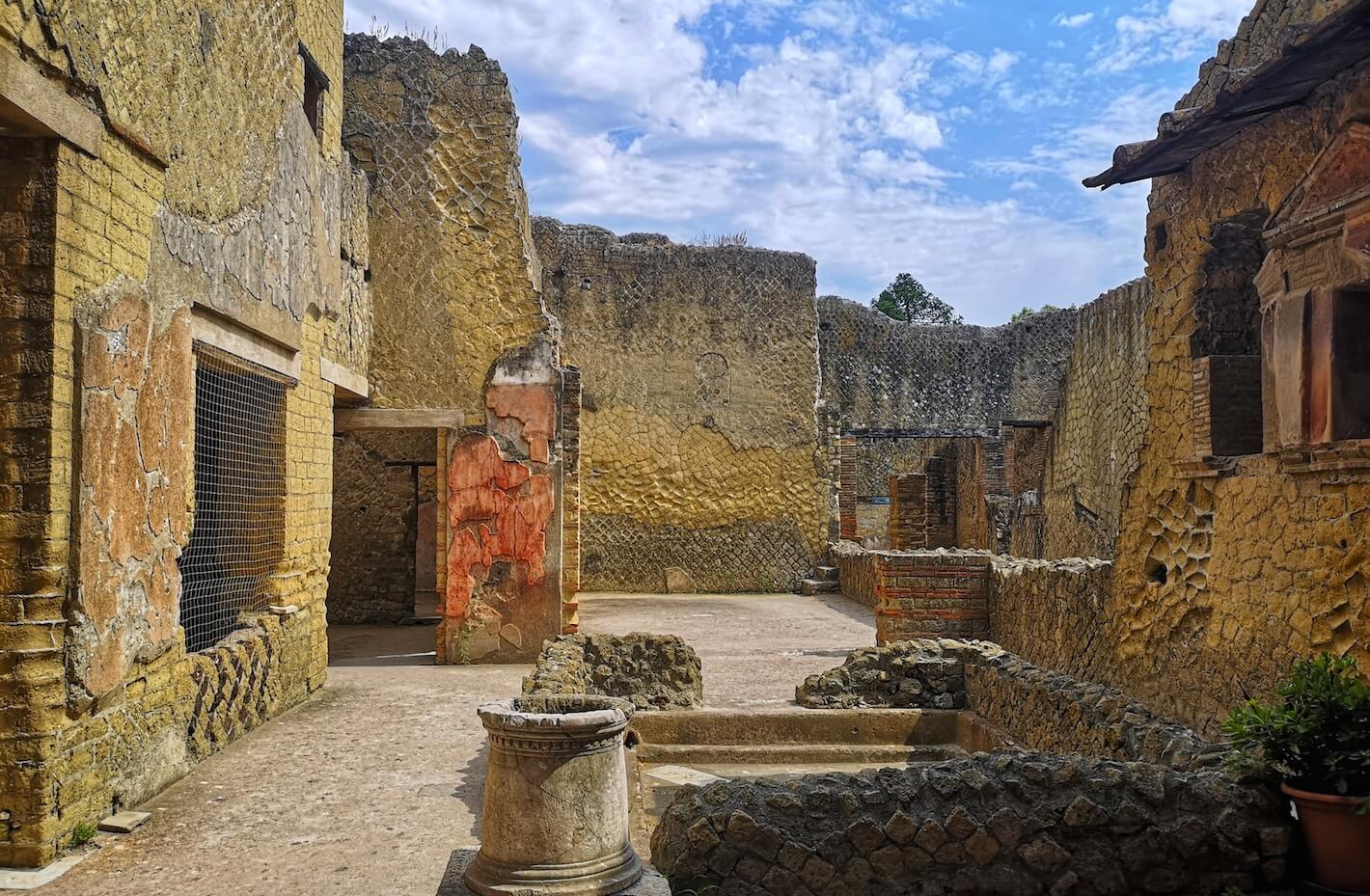
Established in the 1750s by the Bourbon King Charles III, the Museum began life as an army barracks and storehouse for the precious finds that were being daily unearthed at nearby Pompeii and too fragile to be left exposed to the elements. These days many of the most spectacular finds from the excavations there and at nearby Herculaneum have found a permanent home in the Museum – a glittering array of mosaics, sculptures, precious artefacts and more. The amazing halls of frescoes transferred from the villas and public buildings of the ruined cities meanwhile provide an unparalleled insight into the colourful and vibrant world of ancient Rome.
But the archaeological finds from Pompeii and Herculaneum are just the beginning – the museum also hosts the extraordinary Farnese collection of antiquities, the finest grouping of ancient art assembled in the Renaissance by the all-powerful Farnese clan from digs in Rome and across Italy. Raphael had a guiding hand in the development of the collection, which was initially displayed in imposing Michelangelo-designed Palazzo Farnese in central Rome. After a few complex centuries of political wrangling and dynastic shifts, the collection found its way to Naples with Elisabetta Farnese in the 18th century, the mother of the Bourbon King Charles.
So many and varied are the masterpieces housed in the Naples Archaeological Museum that we can only pick out a small selection of our favourites in our countdown, but if we pique your interest then be sure to check out our tour of the museum!

A hunk of ancient marble like no other, the Farnese Hercules unforgettably expresses the otherworldly might of the immortal ancient warrior. Like most of the finest ancient Roman statues, the massive Hercules is a copy of a much older Greek bronze original, melted down by crusaders during the Sack of Constantinople in 1205. Having finally completed the wearisome 12 labours required of him by the gods, the mighty naked warrior leans on the club with which he slew the ferocious Nemean Lion, lost in contemplation at the magnitude of his achievements.
Rediscovered in the Renaissance, the marble formed the centrepiece of the powerful Cardinal Alessandro Farnese’s unrivalled collection of antiquities in Rome, before finding its way to Naples in the 18th century. Hercules extraordinary muscular form has provided the archetypal figuration for the famous hero ever since.

The museum’s fascinating X-rated ‘secret cabinet’ collects an incredible array of erotic artefacts, phallic charms and sexually explicit frescoes and mosaics, taken from the villas, bars and brothels of ancient Pompeii and Herculaneum over centuries of excavations. For the Romans, phalluses and the phallic God Priapus in particular were potent good-luck charms; erotic frescoes meanwhile were harbingers of fertility, whilst an extraordinary carving of the half-human half-goat Pan having his way with a cloven-hoofed cousin showcases the irreverent side of ancient sexual humour.
In the 18th century the prudish Bourbons collected all the excavated smut in one place, and until relatively recently access was strictly limited to scholars in order to ensure prying eyes didn’t get any ideas – in more enlightened times the Gabinetto Segreto has become a must-see for any visitor to the Museum, providing a fascinating insight into the private lives of the ancients.

One of the ancient world’s finest surviving mosaics, this incredible battle scene is taken from Pompeii’s House of the Faun (the city’s largest dwelling), where it decorated the floor of a room overlooking the domus’ central courtyard garden. The huge mosaic, all of 2.7 metres high and over 5 metres wide, depicts the Hellenistic forces of Alexander the Great doing triumphant battle with the Persian armies of King Darius III during the pivotal battle of Issus in 333 BC.
The Greeks sweep in from the left, causing the Persians to flee in disarray, and the details of their rout are extraordinary. Here a soldier is crushed beneath the wheels of a chariot; there a defeated warrior raises his hands in supplication. Amidst the swirling tangle of bodies two figures stand out above all: the noble and suave Alexander, proudly riding in on his horse Bucephalus, and the object of his cool gaze – the panicked Darius, fleeing in his chariot.
The amazingly elaborate mosaic was created using over one and a half million individual tesserae, the tiny coloured stone tiles that, composed together, unite to form a wonderfully rich composition every bit as detailed as a painting. The mosaic’s complex perspective logic and foreshortening, combined with its elaborate composition, size and spectacular lighting effects make the Alexander and Darius mosaic unique in the story of ancient art.
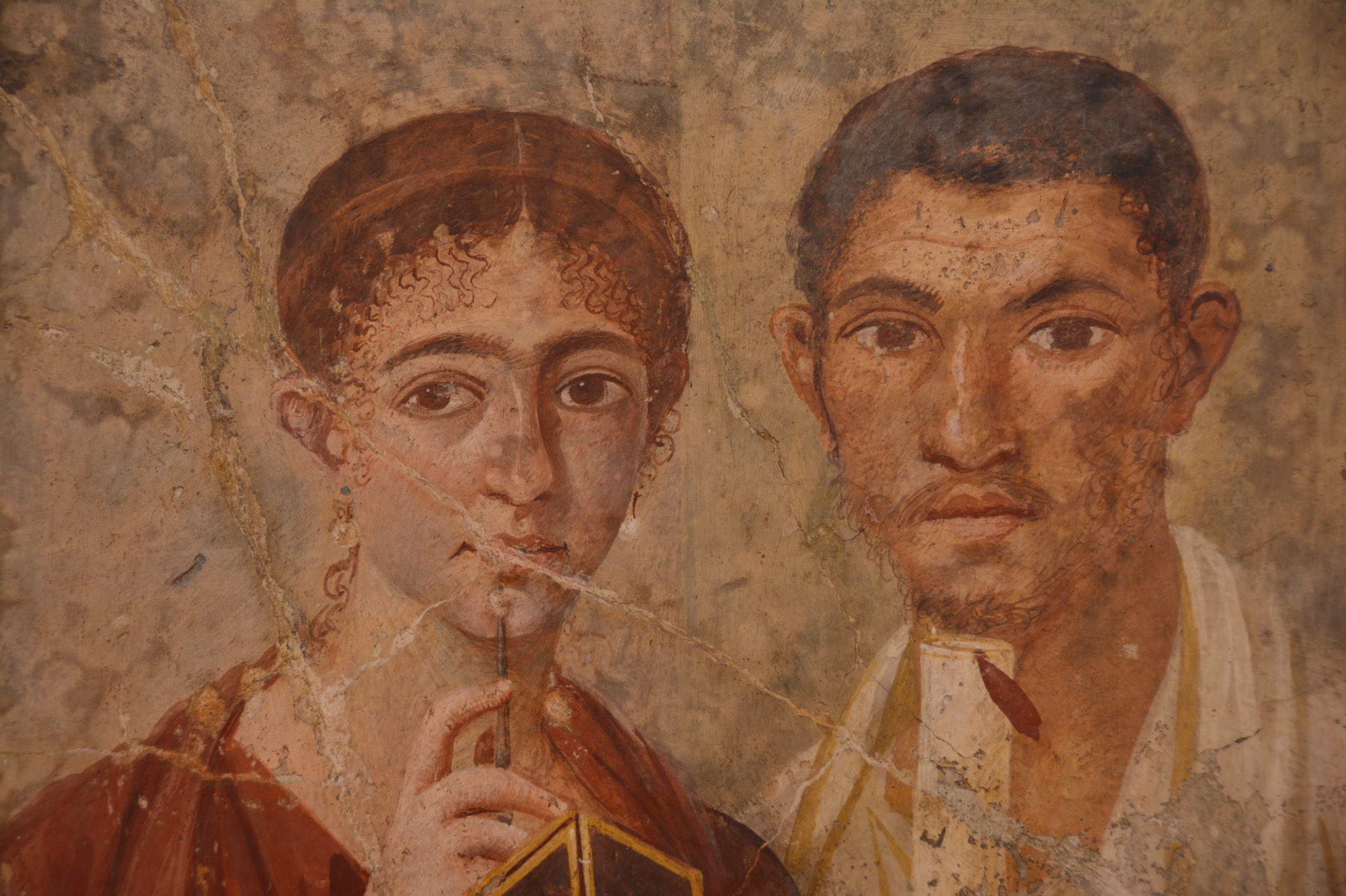
Not all of the ancient world’s most impressive artworks detail the great deeds of men or the noble sweep of history. Far more humble in scope than some of the other entries on our list, but no less impressive for it, is this charming double portrait of Pompeii bakery owner Terentius Neo and his wife.
The toga-wearing baker holds a papyrus scroll closed with a wax seal, whilst his fashionable wife clutches a stylus and writing tablet, seemingly poised in thought before penning a text.
Despite being members of the merchant classes rather than the aristocracy, the couple clearly have aspirations about their role in society. Keen to demonstrate their cultured values and education, their literacy is an obvious source of pride, and the true subject of the painting.
The equal footing on which the two are represented offers a fascinating insight into the gender politics of the ancient world, whilst the fact that Terentius himself appears ethnically North African indicates that racially mixed marriages were not a rare occurrence in the ancient empire.
For decades the portrait was misidentified as depicting a different Pompeian altogether, one Paquius Proculus, before scholars traced it correctly back to Terentius Neo’s own house on the strength of an election notice painted outside the front door — a reminder of just how much detective work still underpins even the museum’s best-loved treasures.

One of the most remarkable and complex ancient sculptures ever carved, the massive group known as the Farnese Bull depicts the dramatic moment in Greek mythology when the sons of Antiope murder her pitiless and longtime persecutor Dirce, wife of the ruler of Thebes. Enraged at her mistreatment of their mother, the half-divine Amphion and Zethus (products of an ill-fated tryst between Antiope and Zeus) tie Dirce to the horns of a raging bull, who will dash her to pieces.
The sculpture freezes the narrative at the high-point of the action: the boys industriously wind ropes around the struggling bull and their helpless victim, who raises her arms in doomed supplication. Behind the bull Antiope herself gazes impassively on, whilst an excited dog adds some levity to the dark tale.
The sculpture is probably a Roman copy of a lost Greek original attributed by Pliny the Elder to Apollonius of Tralles, and was unearthed in Rome’s Baths of Caracalla in 1545 – a fittingly colossal stage for what might just be the grandest antique sculptural group of all. Quickly finding its way into the unrivalled Farnese collection alongside the Hercules, it made its way to Naples along with the majority of the collection in the 18th century.
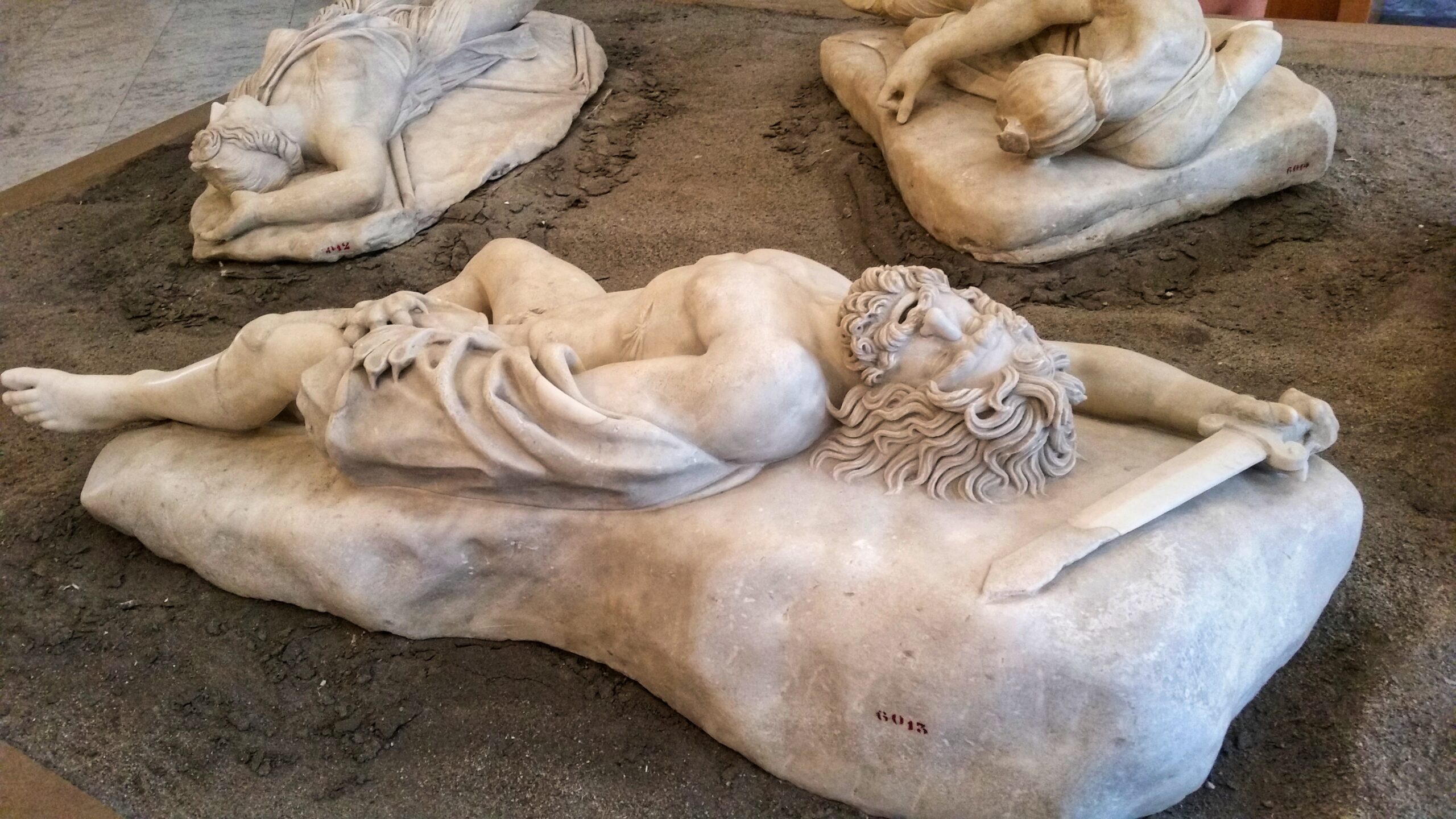
Art and death have had a profound relationship since earliest times, and amongst the most touching sculptures in the museum’s collection is this group of disparate dying figures from antiquity. Probably grouped together in the Baths of Agrippa in ancient Rome to commemorate the military triumphs of Agrippa over the Galatians in 37 BC, the sculptures were inspired by the works set up in the Sanctuary of Athena at Pergamon to celebrate the city’s own victory over the Gauls in the third century BC.
Two of the works, depicting a dead Giant and a dying female Amazonian warrior, refer to mythical battles that had great symbolic power in the ancient world – the Gigantomachy and Amazonomachy, whilst the other works depict dying warriors from real wars – a Gaulish warrior sputtering out his final breaths, and a remarkably powerful Persian soldier in distinctive Phrygian headdress, doubled over on the ground with a mortal spear wound in his side and a defeated expression on his face. The realism of the defeated warriors is simply remarkable.
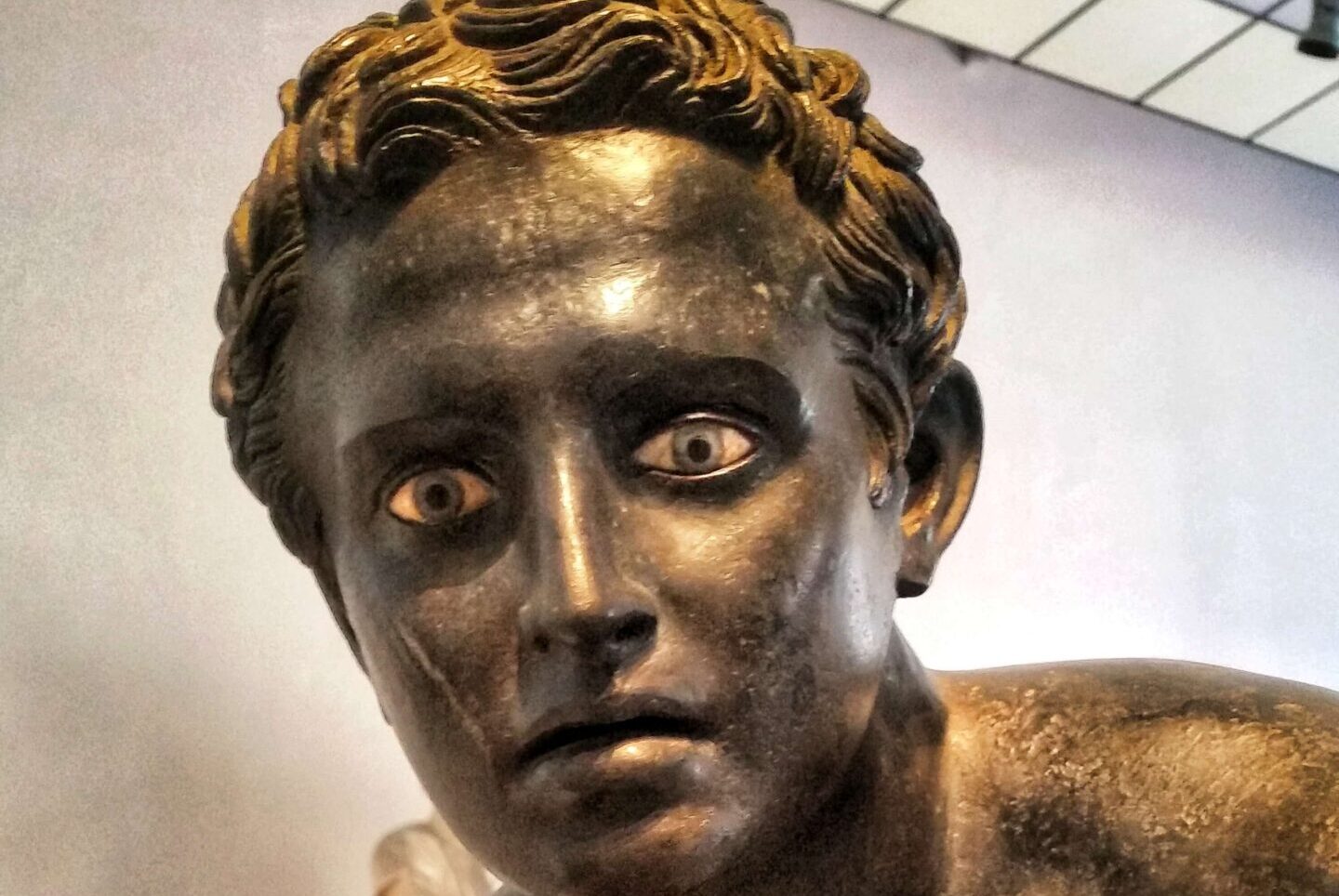
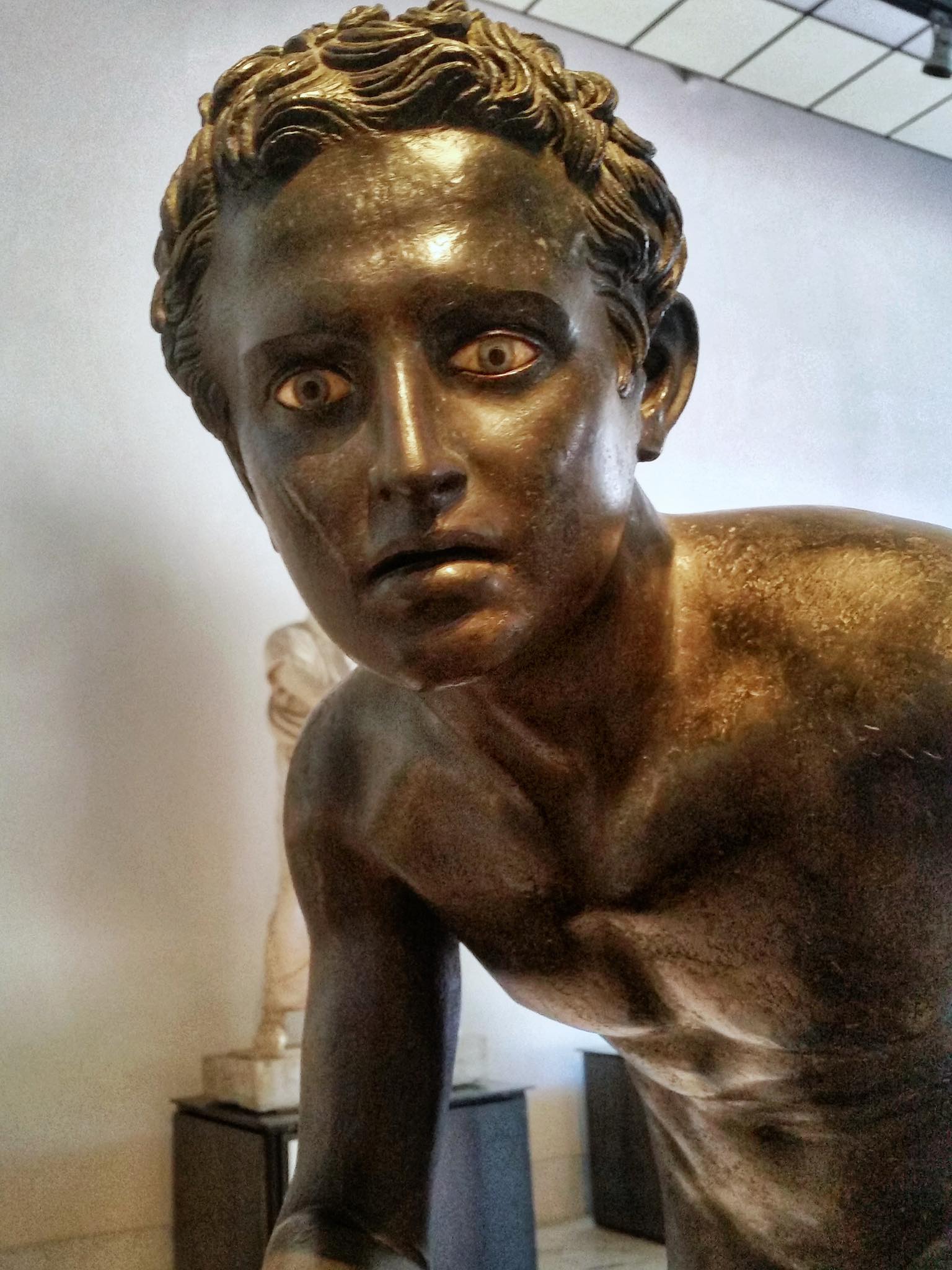
Few sculptures capture the dynamic athleticism of the classical world’s sporting heritage than these runners recovered from the luxurious Villa dei Papiri in Herculaneum, unearthed in 1754 during the earliest tunnel excavations into the buried town — among the first great bronzes to emerge from Herculaneum and an instant sensation across Europe.
1st-century-BC copies of 4th-century BC Greek originals, the athletes seem poised to spring into action in answer to the starter’s call. Runners such as these took centre stage in the ancient Panhellenic Olympics’ flagship event, the stadion, whose victor gained the honour of lighting the Olympic flame for the subsequent games.
Originally arranged around the villa’s peristyle garden, they were designed to be seen exactly as they are today: caught mid-stride, watching every visitor who passes between them. As we gaze into the incredibly detailed whites of the athletes’ eyes we can’t help but wonder – who will triumph?

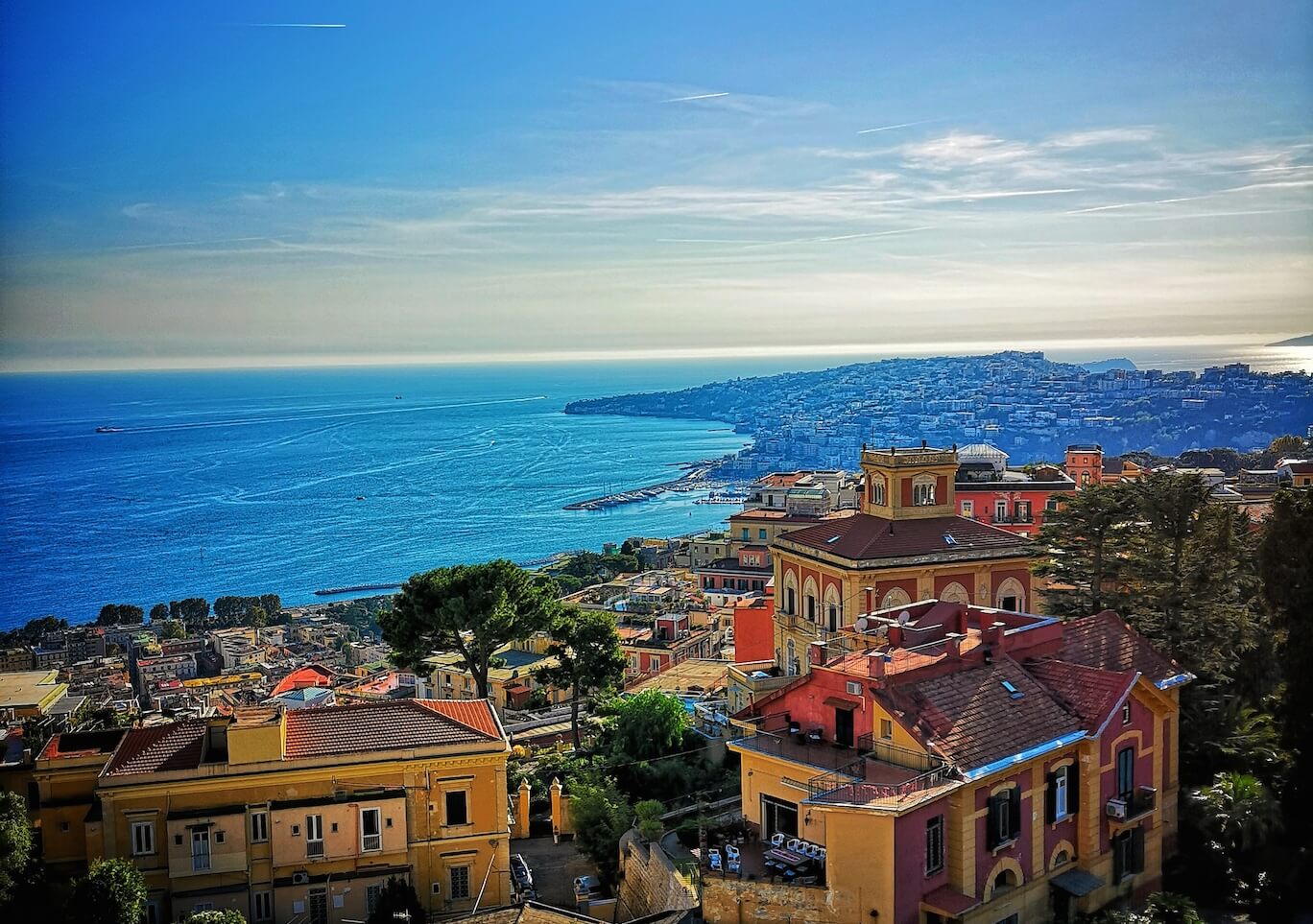
How do you want to visit Naples? With a plan — this city rewards preparation, and it’s far too easy to miss half of what matters without one.
- Recommended number of days: 2–3 days is the sweet spot — enough for the Archaeological Museum, a full day at Pompeii or Herculaneum, and time to actually wander the historic centre around Via Toledo and Piazza del Plebiscito.
Transportation: Naples’ metro is fast and easy to use — Museo and Cavour stations on Line 1 and 2 sit right by the Archaeological Museum, and Line 2 also connects to Napoli Centrale for onward trips to Pompeii and Herculaneum.
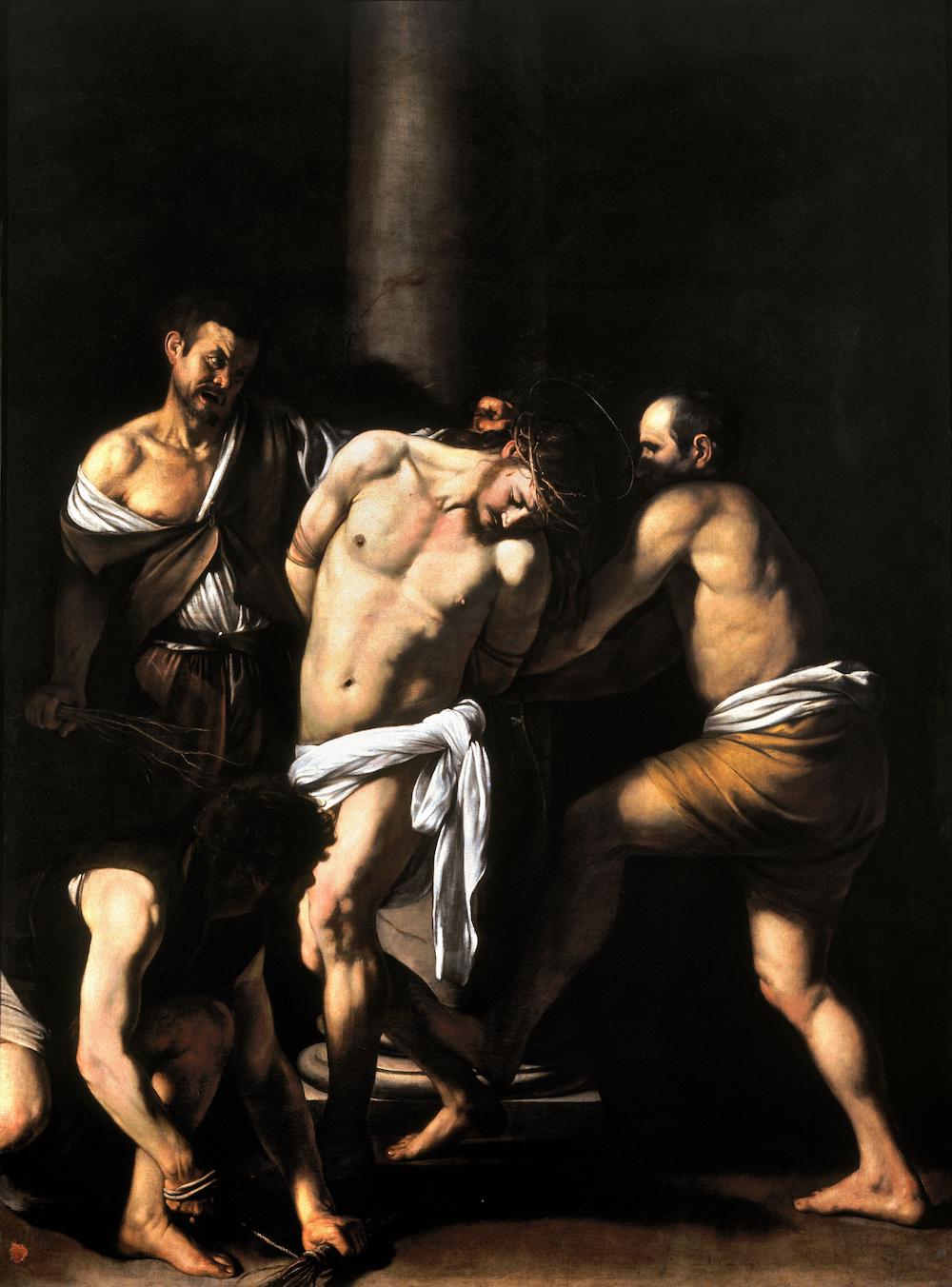
Top attractions: For starters we recommend The Archaeological Museum, the historic centro storico, Castel dell’Ovo, The Sansevero Chapel, Caravaggio’s Seven Works of Mercy, Capodimonte, the Catacombs and — just outside the city — the ruins of Pompeii and Herculaneum. - Accommodation: Base yourself near Via Toledo or in the bustling streets of the historic center around Via dei Tribunali or the Piazza del Plebiscito area for easy walking access to the museum, the port, and the best restaurants. Just up the hill overlooking the center, leafy and elegant Chiaia is another excellent meighborhood to base yourself in.
- Restaurant recommendations: Naples is the birthplace of pizza, so eat accordingly — any of the traditional pizzerie in the city will do (look for the “vera pizza napoletana” sign outside). Don’t skip a proper Neapolitan coffee at Gambrinus or Bar Mexico or a sfogliatella from one of the historic pasticcerie in the center (Attanasio, near the train station, is our favorite.)
Whatever you prioritise, buy tickets and check opening hours in advance — remember that the museum closes on Tuesdays.

How Much Are Naples Archaeological Museum’s Tickets?
Full-price admission is €20. Visitors aged 18–25 from EU/EEA countries pay a reduced €2, and entry is free for anyone under 18, plus free on the first Sunday of every month. Tickets can be bought online or at the door, though online booking is recommended in high season.
What Are the Opening Hours of Naples Archaeological Museum?
The museum is open daily from 9:00 am to 7:30 pm, with last entry at 6:30 pm — except Tuesdays, when it’s closed. It stays open on public holidays, with the exception of 1 January and 25 December.
How Long Do You Need at the Archaeological Museum of Naples?
Budget at least 2–3 hours to see the highlights — the Farnese Hercules, the Farnese Bull, the Gabinetto Segreto and the Alexander Mosaic — and closer to half a day if you are a completist and want to properly explore the Pompeii and Herculaneum galleries and the Egyptian collection as well.
How Do You Get to the Naples Archaeological Museum?
The museum sits at Piazza Museo 19, at the top of Via Toledo. It’s a short walk from two metro stops — Museo on Line 1, or Piazza Cavour on Line 2 — making it one of the easiest major sights in Naples to reach without a car.
What Is the Most Famous Artwork in the Naples Archaeological Museum?
The Farnese Hercules is usually singled out as the museum’s single most iconic piece, though the Alexander Mosaic from Pompeii’s House of the Faun runs it close as the most celebrated work from the Vesuvian excavations.
Is the Archaeological Museum of Naples Worth Visiting?
Unquestionably — for many visitors, and certainly for anyone heading to Pompeii or Herculaneum afterwards, it’s the single best museum stop in southern Italy, home to more genuine masterpieces per room than almost anywhere else in the country.
Visit Naples with an Expert Guide