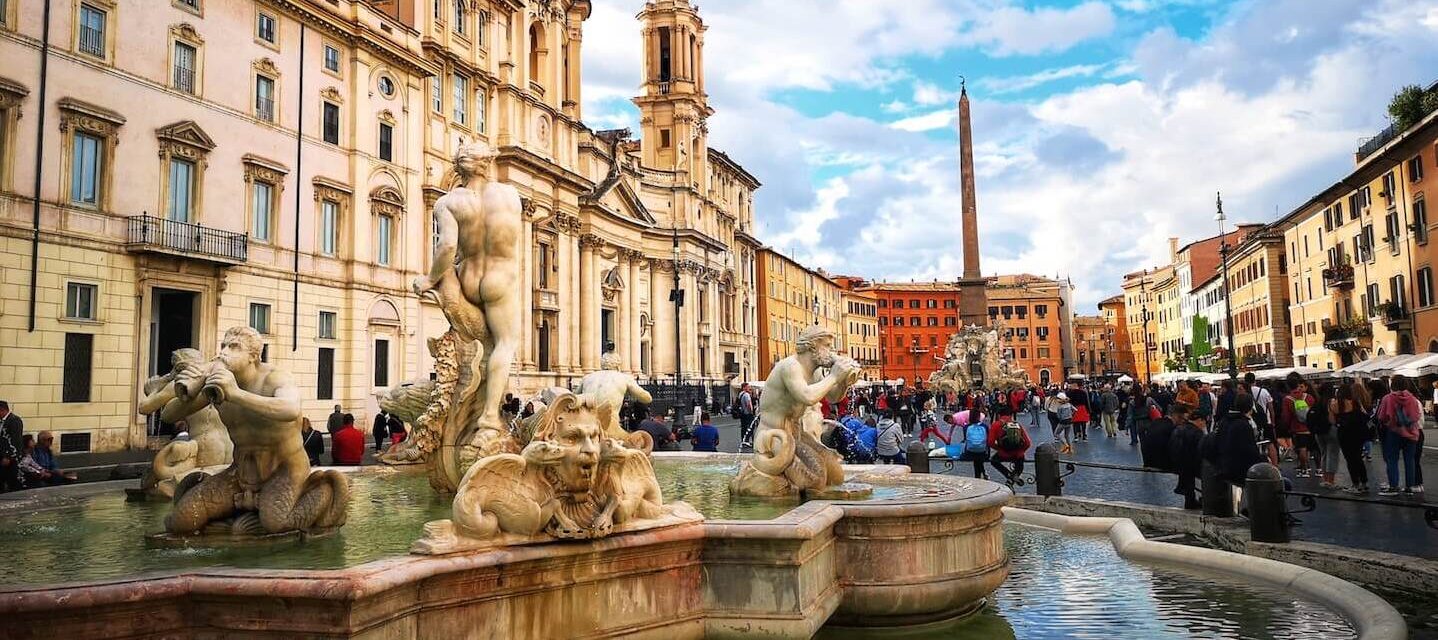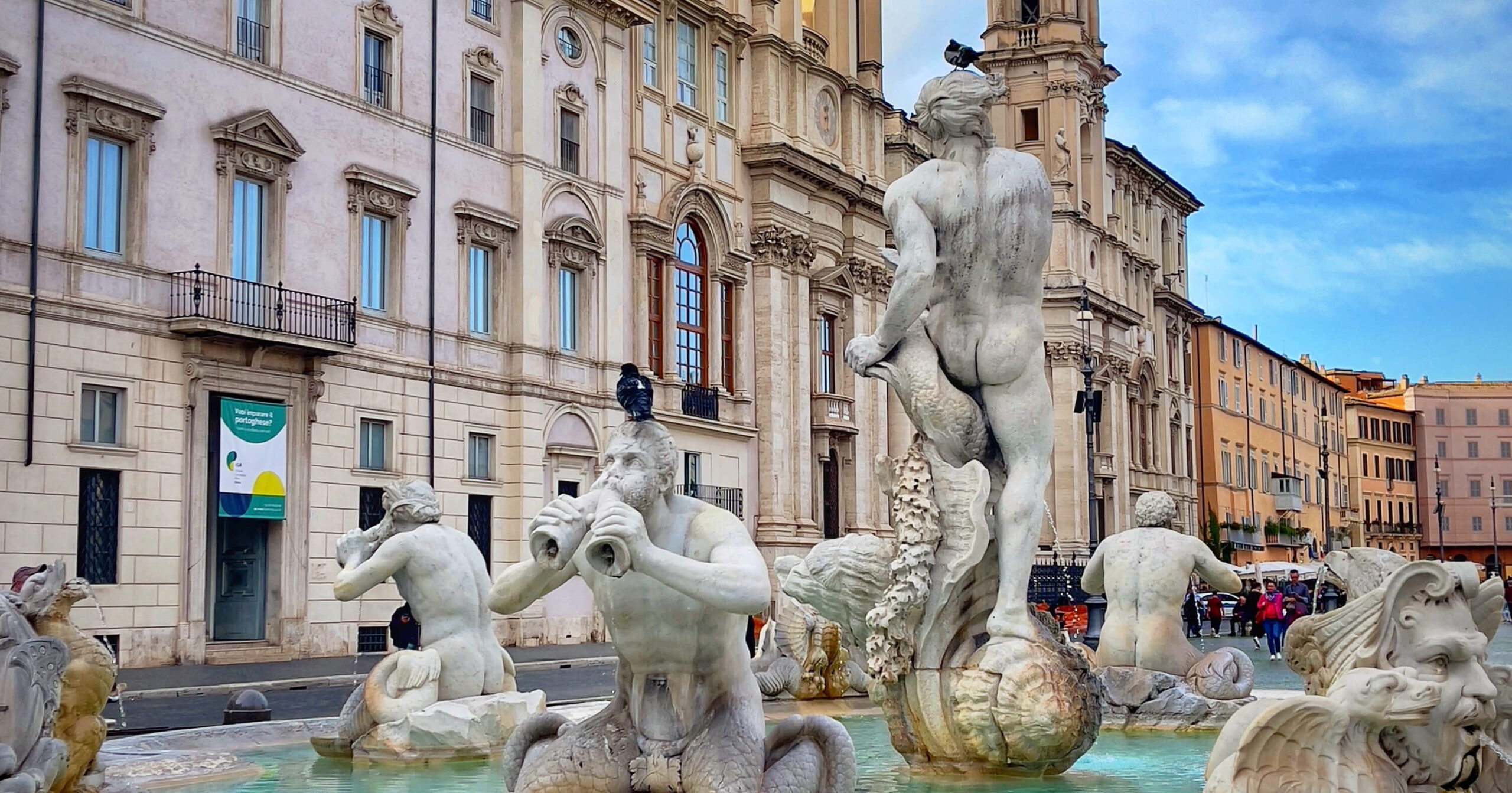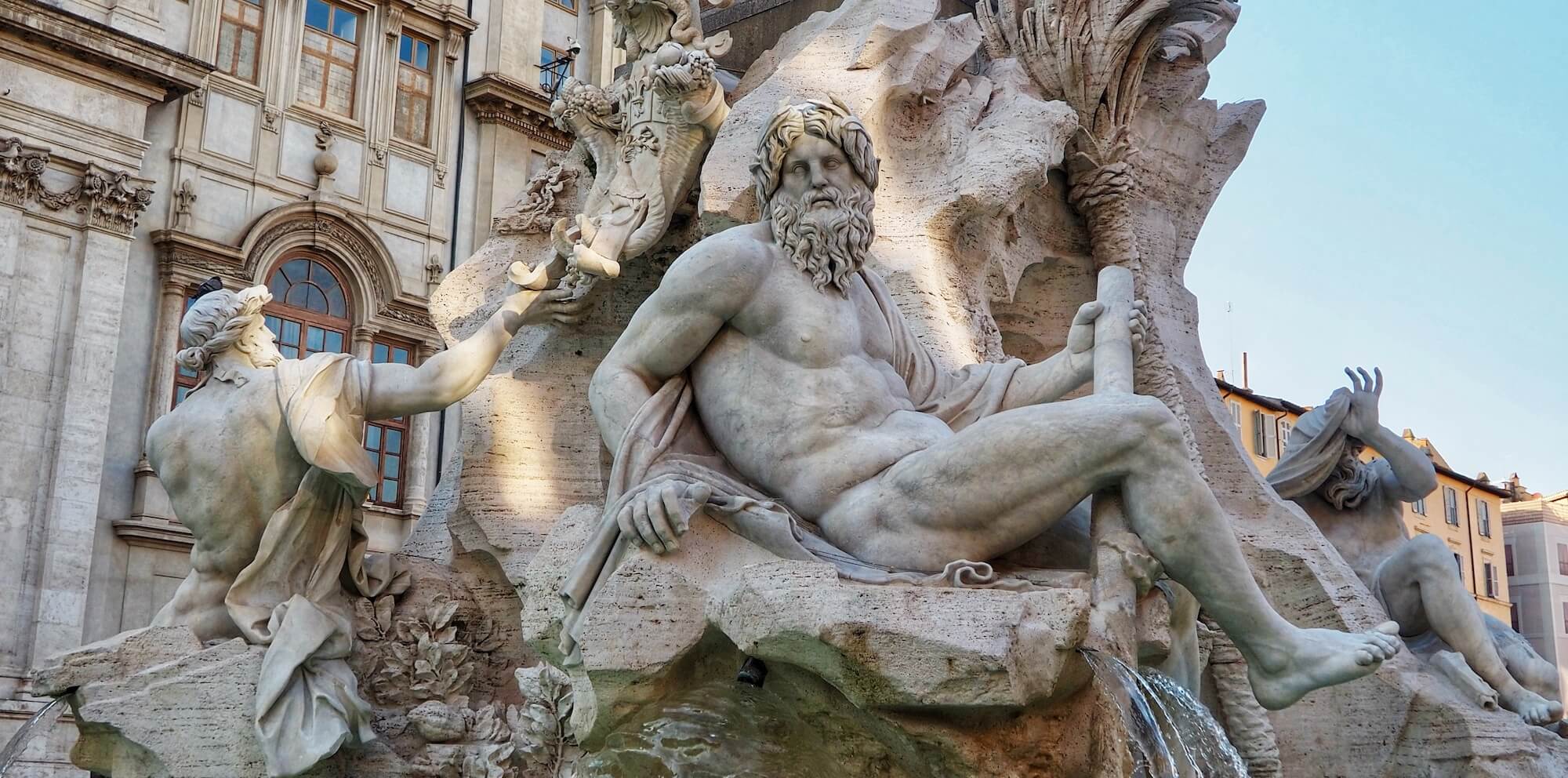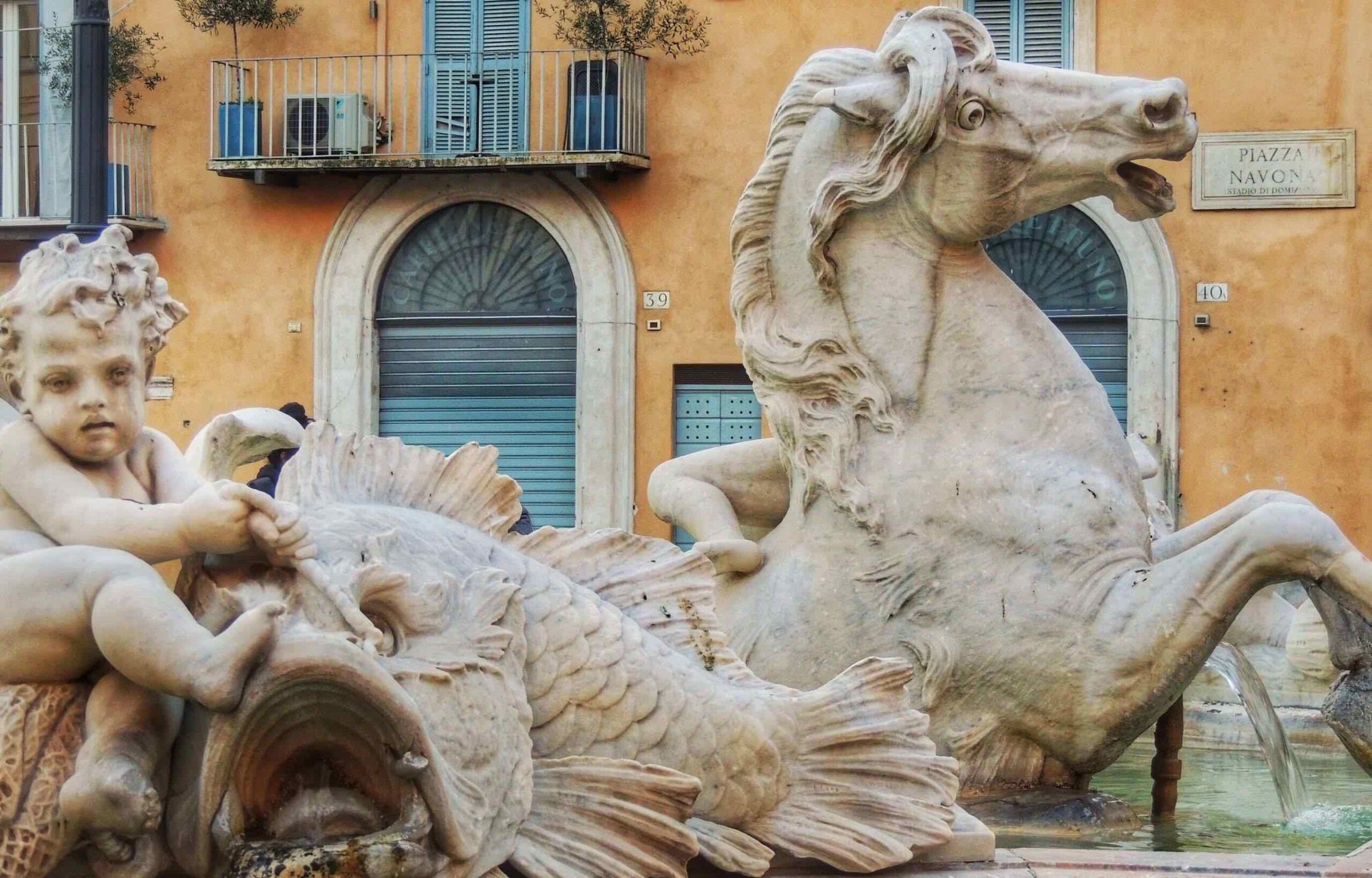
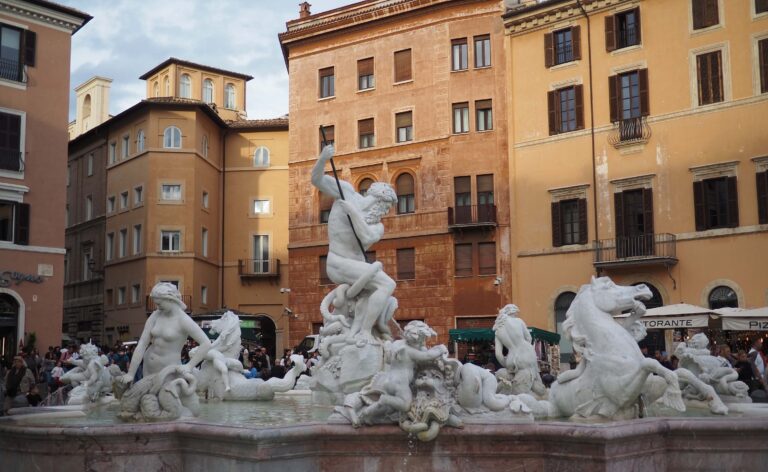
No trip to Rome is complete without time spent in Piazza Navona — whether you’re lingering over a coffee by Bernini’s Fountain of the Four Rivers, marvelling at the theatrical Baroque facade of Sant’Agnese in Agone, or simply watching the world drift by in one of Europe’s most beautiful open-air drawing rooms.
But here’s the thing: the quarter surrounding Piazza Navona is just as rich as the piazza itself, and the streets that fan out from it in every direction are among the most seductive in the entire city.
The Parione rione — Rome’s historic district that encompasses Piazza Navona and its surrounding lanes — has been a hub of urban life since antiquity. Beneath the piazza lies the Stadium of Domitian, built around 86 AD, whose oval footprint still shapes the square above.
In the Middle Ages it was one of Rome’s most densely populated neighbourhoods, chaotic and swarming with life. The Renaissance and Baroque periods transformed it into the elegant quarter we walk through today, and it has barely changed since.
This is Rome at its most concentrated, most layered, and most rewarding. Step away from the square, even by a hundred metres, and you’ll find yourself alone with history.
Rome Tours
Explore Rome's Iconic Piazzas & Fountains
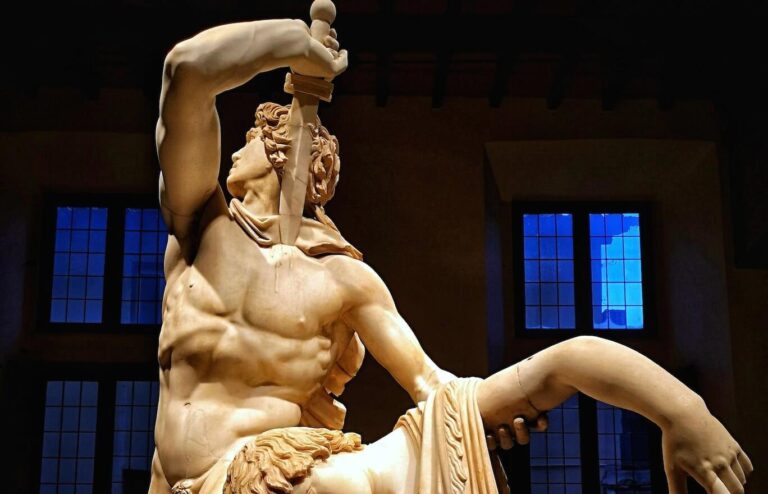
Just to the north of Piazza Navona, in a magnificent 15th-century palazzo that most visitors walk straight past, lies one of Rome’s most underrated museums.
The Palazzo Altemps is part of the National Roman Museum and houses a superb collection of ancient sculpture — including the gut-punch theatrical drama of the Galatian Suicide (also known as the Ludovisi Gaul), a Roman copy of a Hellenistic original in which a warrior plunges a sword into his own chest rather than submit to capture, his already-dead wife slumped at his feet. The sheer pathos of it stops you cold.
Also not to be missed is the Ludovisi Sarcophagus, a dizzying riot of carved figures depicting a battle between Romans and Barbarians that is as overwhelming in its density as it is astonishing in its craft.
What makes the Palazzo Altemps so special is the combination of the collection’s quality and the near-total absence of other visitors — rare and precious in this part of Rome. The palazzo itself, with its beautiful courtyard and loggias, is part of the experience.
Open Tuesday–Sunday, 9am–7:00pm, last admission 6pm. Admission €15. Included in the combined Rome National Museum ticket.

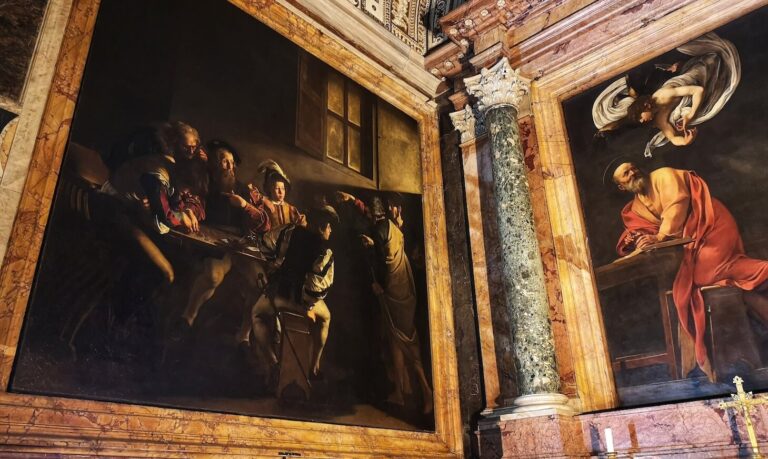
Between Piazza Navona and the Pantheon, tucked into a quiet piazza of its own, the French national church of San Luigi dei Francesi is one of the obligatory stops for anyone with even a passing interest in art.
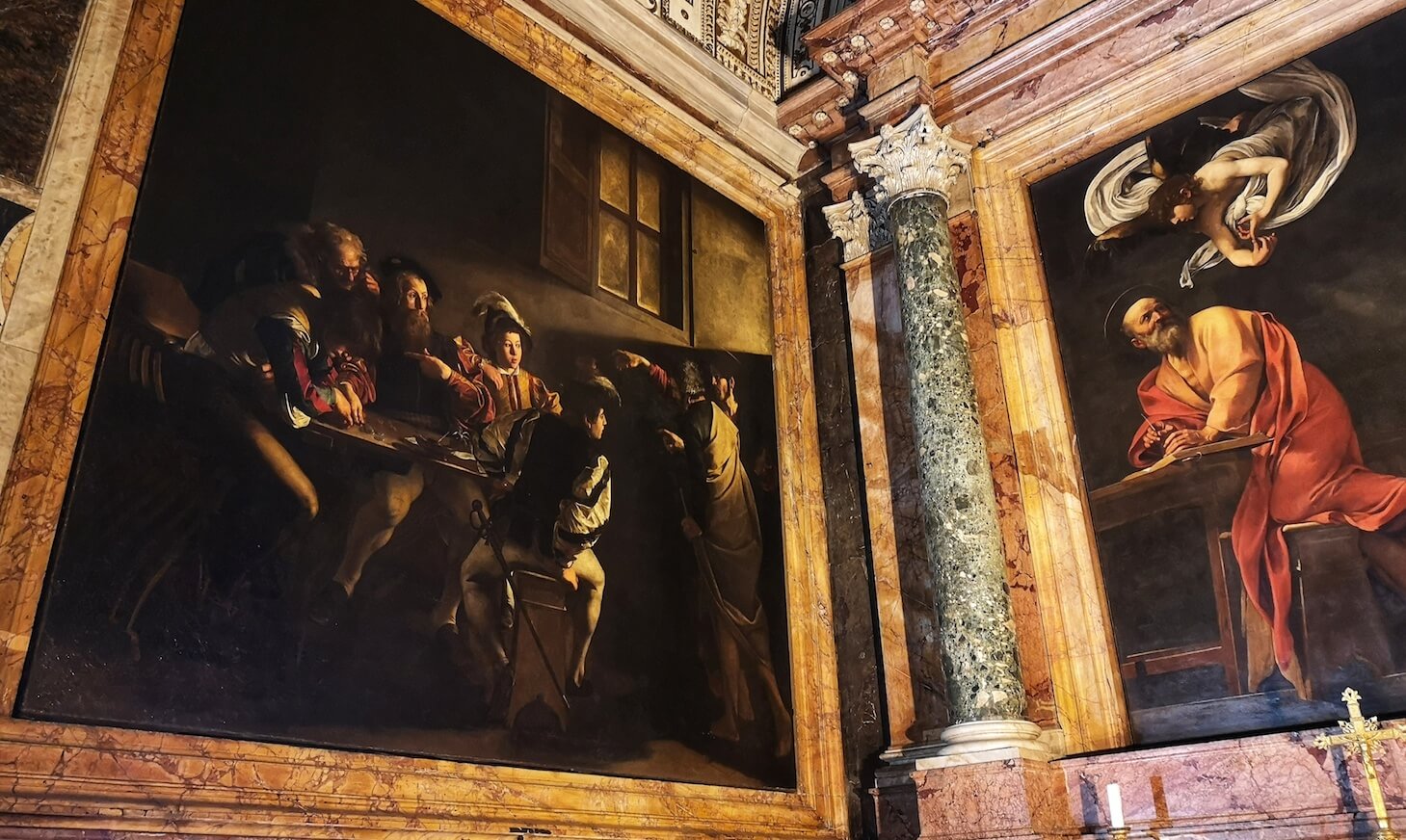
Inside the Contarelli Chapel, three paintings by Michelangelo Merisi da Caravaggio illuminate a darkened wall with an almost physical shock: The Calling of Saint Matthew, The Inspiration of Saint Matthew, and The Martyrdom of Saint Matthew, all completed between 1599 and 1602.
These are not merely great paintings — they are paintings that changed the course of Western art. Caravaggio’s radical naturalism, his brutal psychological honesty, and above all his revolutionary use of light and shadow (the technique we call chiaroscuro) transformed how artists depicted the sacred, and their influence can be traced in a direct line from the 17th century to Rembrandt, Velázquez, and beyond.
Stand in front of The Calling of Saint Matthew and watch the beam of light cut across the darkness of what looks for all the world like a Roman tavern: an utterly ordinary scene made suddenly, startlingly divine.
Entry is free. Coin-operated lighting illuminates the Caravaggio chapel.
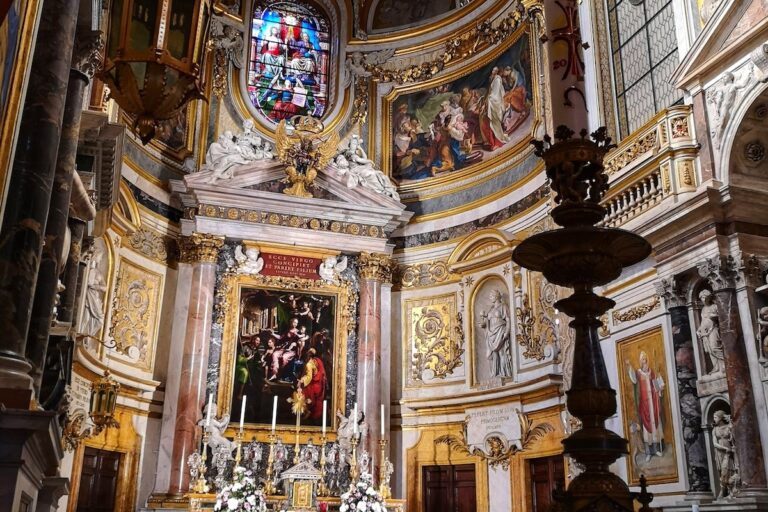
Barely fifty metres from the southern end of Piazza Navona, the church of Santa Maria dell’Anima is one of the most beautiful and least-visited in the entire centro storico — and therefore one of the most rewarding.
The church has been the home of Rome’s German-speaking Catholic community since the 15th century, and its soaring Gothic interior — flooded with a warm golden light that reflects and bounces off the gilded stucco ceiling — hits you with a gentle force the moment you step through the door.
The chapels are an anthology of exceptional Renaissance and Mannerist painting. Look out especially for the chapel of the Margraves of Brandenburg, whose superb frescoes by Francesco Salviati represent some of the finest Mannerist decoration in Rome.
The high altarpiece, Giulio Romano’s Holy Conversation, is considered one of the most important High Renaissance paintings in the city. And at the centre of the transept, the imposing tomb of Pope Hadrian VI — the last non-Italian pope before John Paul II, and reputedly the worst patron in the history of the papacy — is worth contemplating for sheer historical curiosity.
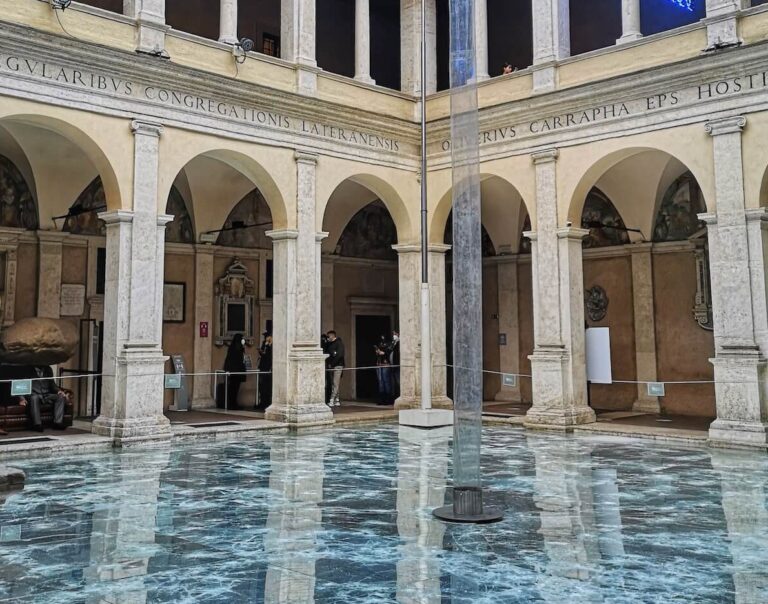
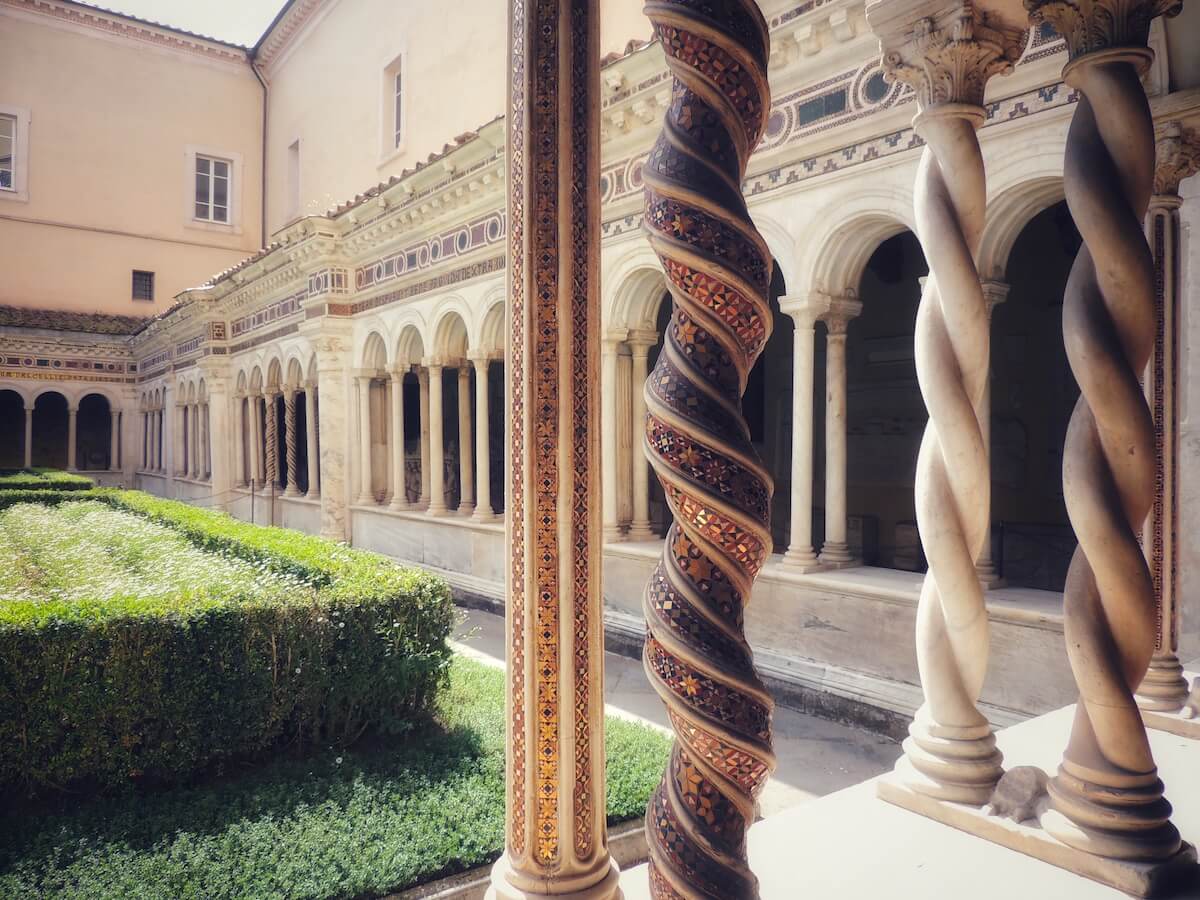
In the dense tangle of streets just west of Piazza Navona, the church of Santa Maria della Pace hides one of Rome’s most exquisite architectural spaces. Donato Bramante — the architect who would go on to conceive the original design for the new St. Peter’s Basilica, and whose rivalry with the young Michelangelo sparked one of the Renaissance’s great creative showdowns — designed the cloister here in 1504. It is among his finest achievements.
The two-storey loggia, with its graceful Ionic columns on the lower level and Corinthian pilasters above, creates a luminous, serene space of extraordinary refinement. The proportions feel almost impossibly elegant — Bramante’s genius lay in making the geometry of ancient Roman architecture feel effortless and alive rather than archaeological.
A peek through the church’s vestibule also reveals Raphael’s celebrated fresco of the Sibyls, painted in 1514 and among his most accomplished works outside the Vatican.
Today the cloister hosts a programme of temporary exhibitions and houses a charming café on the upper level — a perfect spot to pause and decompress after the sensory overload of the surrounding streets. You can also enjoy a great view of Raphael’s sibyls from the cafe’s inner room.
Hours vary by exhibition. Check current listings before visiting.
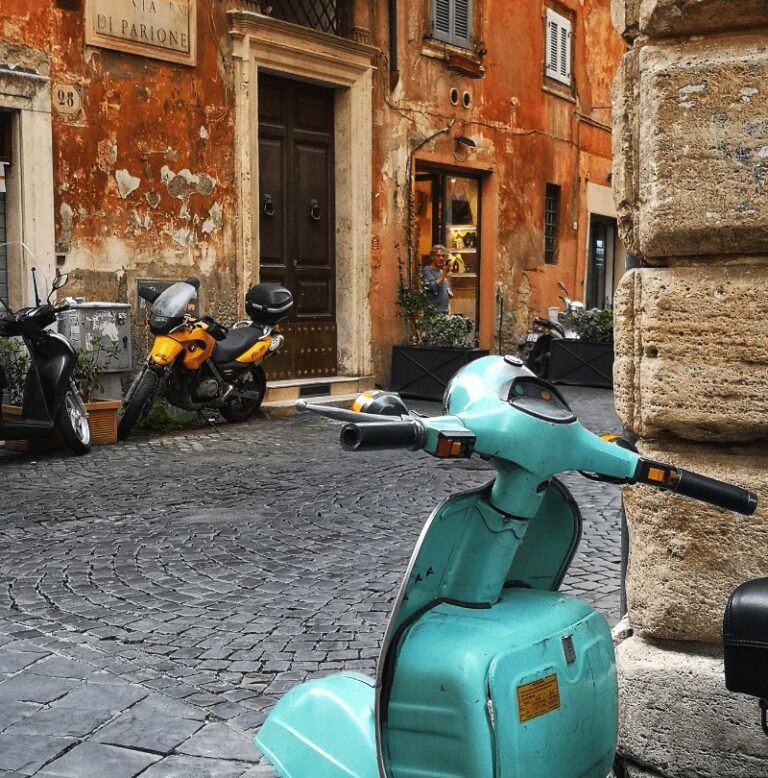
Running south-west from Piazza Pasquino (more on which shortly) towards the Campo de’ Fiori, Via del Governo Vecchio is one of the most enjoyable streets in Rome for an aimless wander.
Boutiques selling vintage clothing, independent jewellers, ceramics shops, and design studios line the pavement, interspersed with the kind of characterful neighbourhood bars and bakeries that are increasingly rare in the city’s historic centre.
At no. 38, the beloved bookshop AltroQuando hosts readings, exhibitions, and live events in an atmosphere of magnificent bibliophilic disorder. Il Piccolo, meanwhile, is one of the city center’s best wine bars. If you’re hungry, Da Tonino is one of the most traditional trattorie in the city and serves up great versions of the Roman classics.
A short walk north takes you to Via dei Coronari, another of Rome’s most refined streets, its windows full of antique dealers’ treasures and artisan workshops. Make sure you call into the Gelateria del Teatro on Via dei Coronari, visible through its glass frontage as the gelato-makers work — it’s consistently one of the finest in the city.
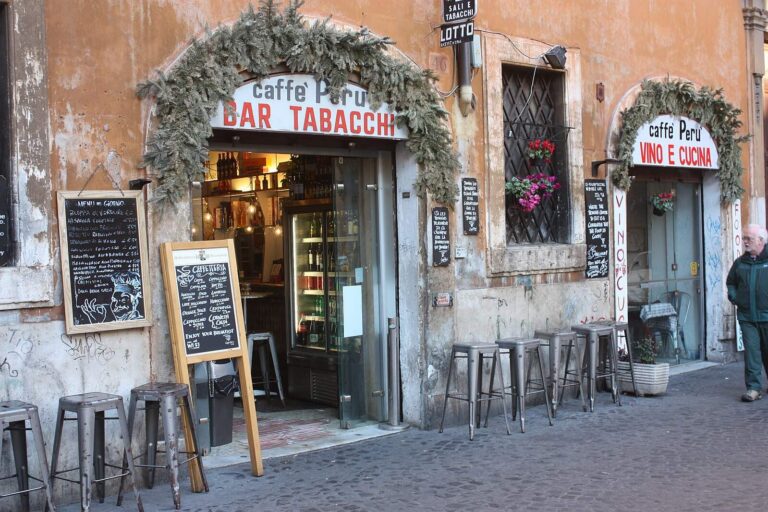
The Italian art of dolce far niente — the sweet pleasure of doing nothing in particular — is worth cultivating in this neighbourhood, which is exceptionally well supplied with places to do it in style.
The historic Caffè della Pace, on a quiet ivy-clad lane just off the piazza, is one of Rome’s most atmospheric bars; its tree-shaded outdoor tables are a particularly lovely place for an aperitivo as the evening light softens.
Bar del Fico, a few steps away on the piazza of the same name, has a more energetic, younger atmosphere, excellent for a Sunday brunch or a late-night drink.
For coffee specifically, don’t miss the legendary Sant’Eustachio il Caffè, just south of the Pantheon, whose perfectly sweetened, velvety brews have been the gold standard in Rome for decades.
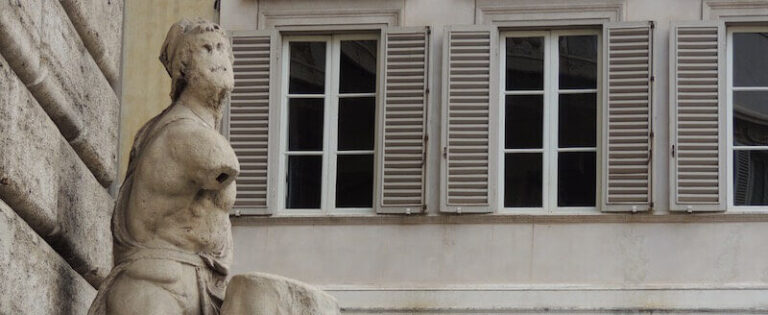
On the small piazza of the same name, just around the corner from Via del Governo Vecchio, stands Pasquino — a battered, severely eroded ancient Roman torso who has been one of Rome’s most irreverent institutions since the 16th century.
The tradition of the pasquinata — attaching anonymous satirical verses or political criticisms to the statue under cover of darkness — dates back to at least 1501, and gave us the word “pasquinade” still used in English today. Romans used Pasquino to mock popes, politicians, and powerful figures when any other form of criticism would have been dangerous or illegal.
The tradition continues in low-key form today, with notes and petitions regularly attached to the statue’s base. It’s one of those Roman details that rewards a moment’s quiet reflection on the city’s irrepressible, subversive spirit.
Also worth seeking out, just beyond the north-east corner of Piazza Navona: the Biblioteca Angelica on Piazza Sant’Agostino, a stunning 17th-century library open to visitors and one of the oldest public libraries in Europe, established in 1604. It is the kind of place that makes you want to sit down and read for the rest of the afternoon.
How far is Palazzo Altemps from Piazza Navona?
It’s a two-minute walk north of the piazza, at Piazza di Sant’Apollinare 46.
Is San Luigi dei Francesi near Piazza Navona?
Yes — about five minutes’ walk east, in the direction of the Pantheon. Piazza di San Luigi dei Francesi is clearly signposted from the piazza.
What is the best time to visit the area around Piazza Navona?
Early morning is ideal for avoiding crowds and catching the neighbourhood in its quieter, more local mode. Evenings are wonderful for aperitivi and people-watching in the surrounding bars. The area is busiest mid-morning to mid-afternoon.
Are there guided tours that cover this area?
Yes — our Introduction to Rome small group tour and Piazzas of Rome private tour both pass through Piazza Navona and many of the surrounding highlights, while our Caravaggio in Rome Tour includes San Luigi dei Francesi.
Is the Bramante Cloister free?
Admission depends on the current exhibition hosted there. Check before you visit as it changes seasonally. Visiting the cafe is free.
Rome Tours
Explore the Eternal City