The Sistine Chapel is one of the world’s most iconic cultural destinations, a living museum of site-specific art that has perhaps never been equalled before or since.
It is the jewel in the artistic crown of the Vatican Museums, and its fitting climax. Each day around 25,000 people make their way to the Chapel eager to see for themselves the lasting contributions to the story of art that Michelangelo left here more than 500 years ago.
But there is much more to the Sistine Chapel than Michelangelo’s famous ceiling. This is a place of worship and papal ceremony, decorated over successive generations by some of the greatest artists of the Renaissance, and still at the heart of the Catholic Church today. Its walls tell stories that begin long before Michelangelo took up his brush, while his later Last Judgment transformed the chapel once again.
Whilst it’s a humbling experience to be in the presence of such over-powering genius, the paintings and history of the Sistine Chapel are far from self-explanatory. That’s why we’ve come up with a series of articles about every aspect of the chapel, so when you visit the Vatican yourself you’ll know what to look out for. In this introduction, we’ll explore the chapel’s history, the artists who shaped its extraordinary interior, and what makes it such a remarkable place to visit. Along the way, we’ll point you towards our dedicated guides to the earlier Renaissance frescoes, Michelangelo’s ceiling and his Last Judgment, as well as the techniques behind his great masterpiece.
Let’s get started!
MORE ARTICLES IN THIS SERIES
- 5 Things You Need to Know About the Sistine Chapel
- The Sistine Chapel Before Michelangelo
- How Michelangelo Painted the Sistine Chapel Ceiling
- The Iconography of Michelangelo’s Frescoes
- The Last Judgement in the Sistine Chapel
 Want to explore the Sistine Chapel with a guide?

Michelangelo’s ceiling is only part of the story. Our Vatican tours put the Sistine Chapel’s frescoes into context, while also introducing you to the extraordinary art and history of the Vatican Museums.

Our Vatican Tours
As the Pope’s private chapel, you might think of the Sistine Chapel as the Vatican Palaces’ inner sanctum – holiness ground zero for the Catholic faith. Built on the orders of Pope Sixtus IV in the late fifteenth century, it was designed for religious services and official ceremonies involving the papal household. The chapel takes its name from Sixtus himself, whose ambitious programme of rebuilding and decoration helped turn Rome into a major centre of Renaissance art.
Thanks to the magnificent paintings that Michelangelo painted here between 1508-1512 at the behest of Pope Julius II, the Sistine Chapel is also the most recognisable temple of Renaissance art in the world, and for half a millennium has stood one of the pre-eminent examples of the heights to which humankind can rise in pursuit of artistic perfection. The great German writer Goethe perhaps expressed it best: “Without having seen the Sistine Chapel,” he wrote, “one can form no appreciable idea of what one man is capable of achieving.”
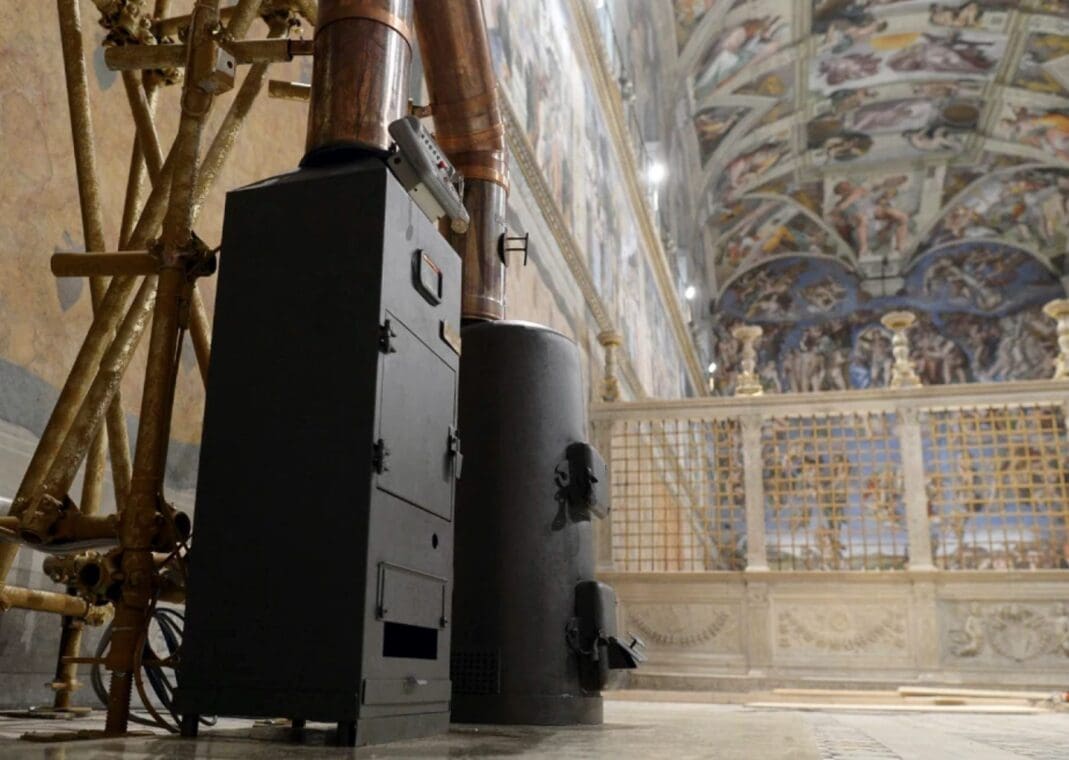
The Sistine Chapel is also where the cardinals gather during a papal conclave to elect a new pope. Here, beneath Michelangelo’s monumental frescoes, the Church’s senior clergy withdraw from the outside world to cast their ballots and decide who will lead the Catholic Church next. It is an important reminder that this extraordinary room was never intended to function as a museum: its art was created for a living religious institution, and during conclave its original ceremonial purpose endures to this day.
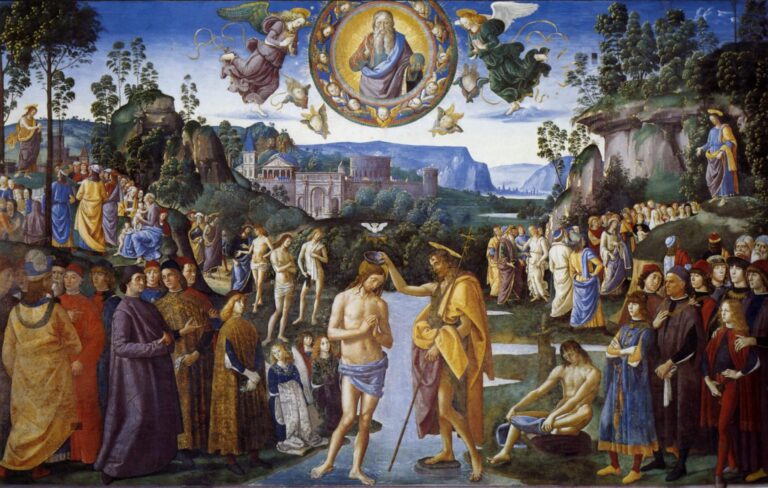
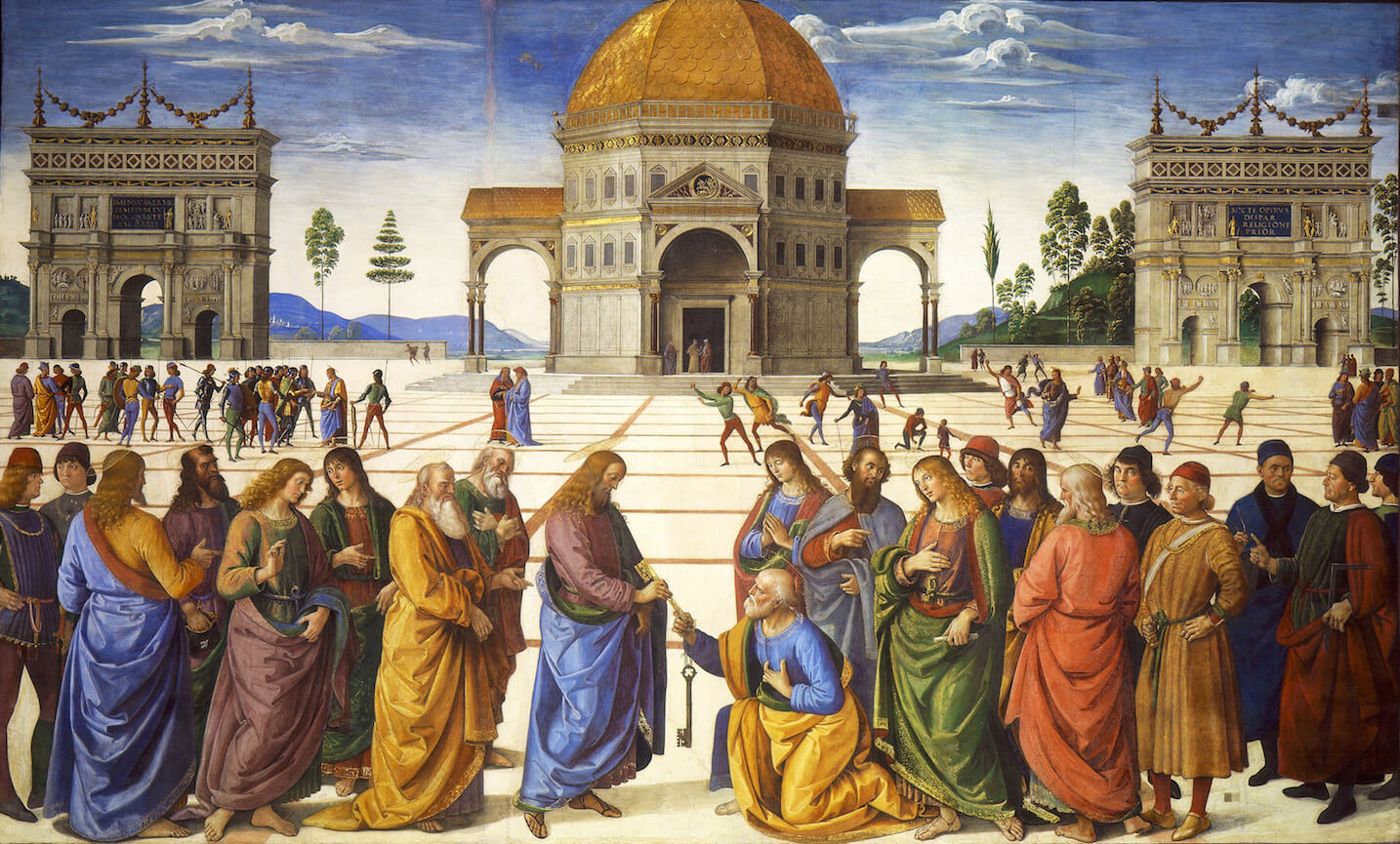
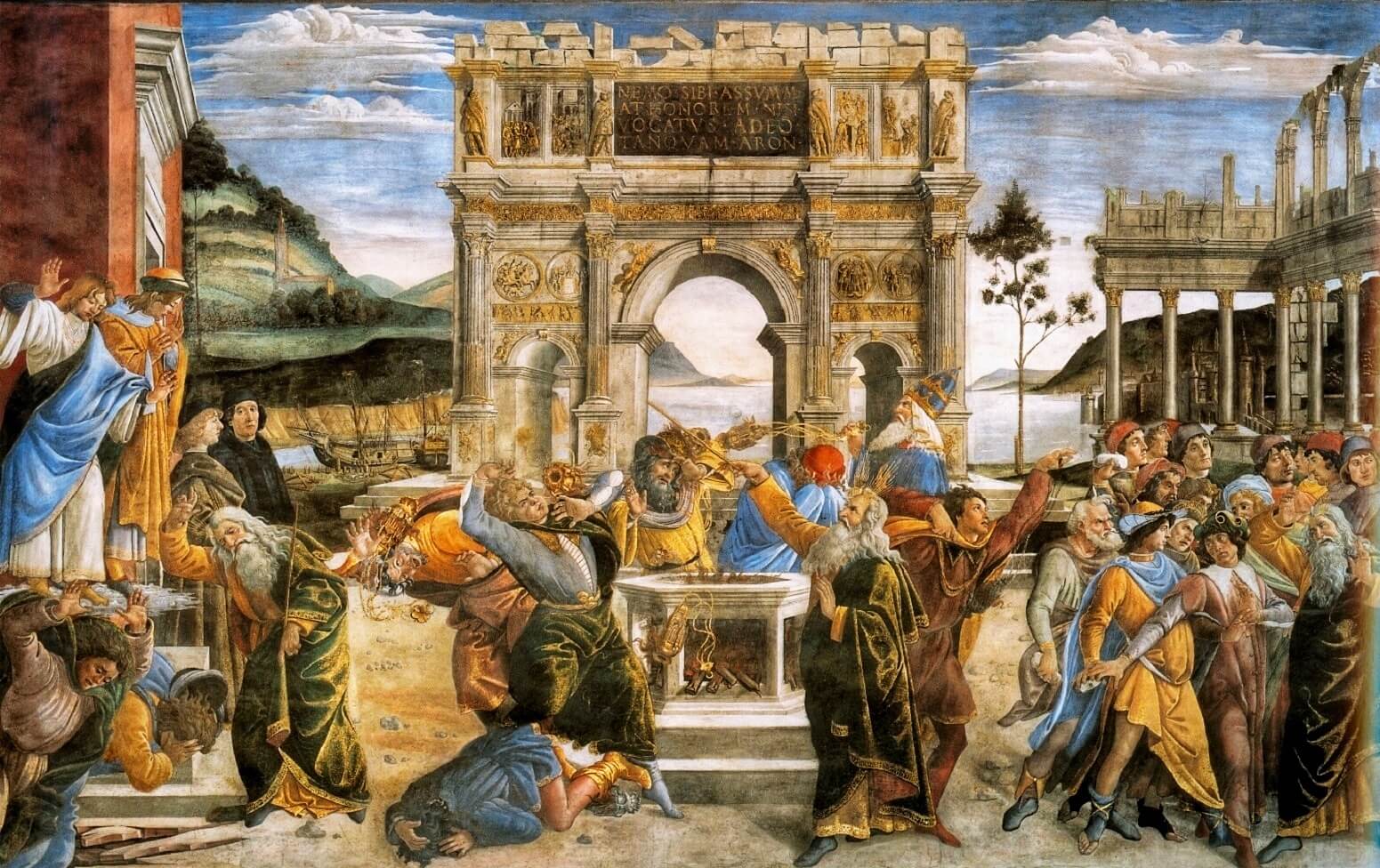
When Sixtus IV commissioned the chapel’s decoration in the 1480s, he brought together some of the finest painters of the age, including Pietro Perugino, Sandro Botticelli, Domenico Ghirlandaio and Cosimo Rosselli. Their frescoes still line the walls beneath Michelangelo’s later work, although it is easy for visitors to overlook them while craning their necks towards the ceiling.
The side-wall cycles tell stories from the lives of Moses and Christ, presenting the Old and New Testaments as complementary histories. In Christian thought, events in the life of Moses prefigured those of Christ, while the portraits of early popes above the narrative scenes helped place the papacy within this sacred history. The result was a carefully conceived programme that combined religious storytelling with a statement about the authority and continuity of the Church.
These earlier frescoes deserve a closer look in their own right, and they help explain why the Sistine Chapel was already a major artistic achievement before Michelangelo ever touched its ceiling. For a closer look at the painters, their stories and the remarkable works they left behind, see our guide to the Sistine Chapel before Michelangelo:
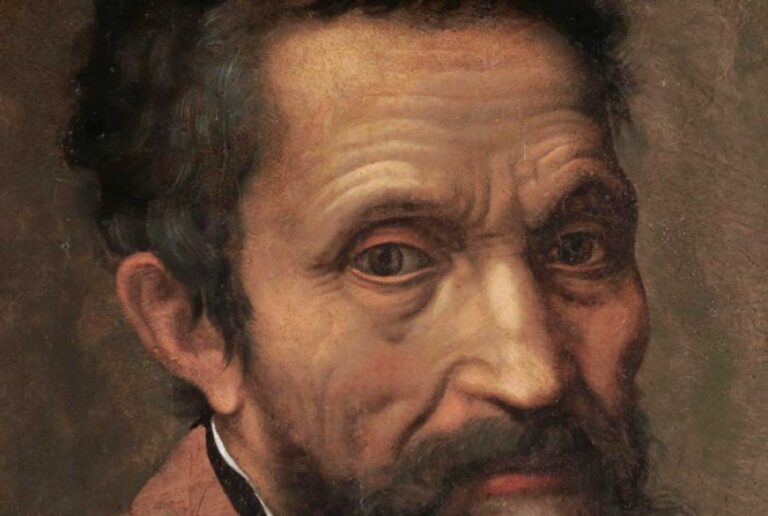
Michelangelo di Lodovico Buonarroti Simoni was born in 1475 of fairly humble stock in the tiny Tuscan town of Caprese near Arezzo, and can stake a strong claim to being the greatest master of the Renaissance. Producing a string of brilliant works of painting, sculpture, poetry and architecture over a career spanning more than 70 years, his staggering list of achievements led to his contemporaries dubbing him the divine one, ‘il divino.’
It’s hard to overstate the effect Michelangelo had on his contemporaries. Never one to mince his words, Michelangelo’s contemporary biographer, fellow painter and art historian Giorgio Vasari wrote that the master’s work ‘transcended and eclipsed that of every other artist, living or dead’ – an opinion that still enjoys plenty of support today.
Michelangelo’s decoration of the Sistine Chapel ceiling is generally considered to constitute the highpoint of the High Renaissance, an incredible period of artistic achievement when Leonardo da Vinci, Raphael and Michelangelo (amongst many, many others) strove to outdo each other with displays of their talent and invention. His restless ambition, formidable powers of invention, and intense interest in the human body would transform the ceiling into something unprecedented, with hundreds of figures inhabiting a vast and intricately imagined world.
The Sistine Chapel would become the defining achievement of his career, but it was only one chapter in a long and often turbulent relationship with Rome, where he also worked on the tomb of Pope Julius II, the design of the dome of St. Peter’s, and the great fresco of the Last Judgment on the chapel’s altar wall.
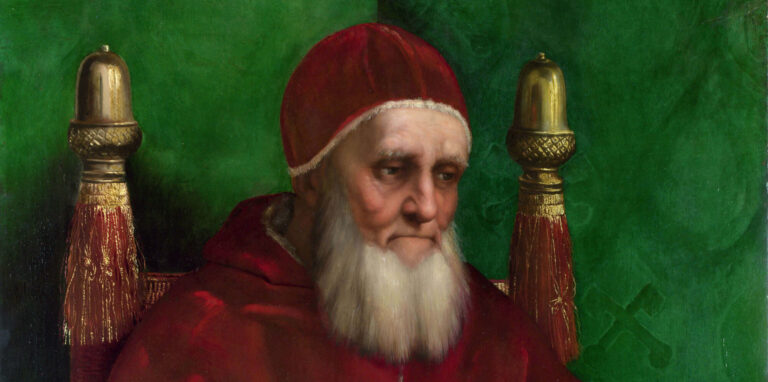
Michelangelo painted the entire ceiling of the Sistine Chapel between 1508 and 1512 at the behest of Pope Julius II, one of the most important popes of the Italian Renaissance and perhaps its most influential patron of art, rivalled only by the Medici princes of Florence. The fearsome Julius was known as the ‘Warrior Pope,’ and was committed to ensuring that he was not only God’s minister on earth but also its most powerful secular ruler.
And so he sought to display his boundless worldly power just like a king might, sending massive armies against his enemies, conquering territory and commissioning magnificent works of art. His relationship with Michelangelo was famously tempestuous, but the two men shared an appetite for projects on a grand scale.
Their first major undertaking together was a monumental tomb for Julius, intended to be installed in St Peter’s Basilica. Michelangelo threw himself into the project, only for the pope to lose interest and redirect his attention elsewhere. When Julius decided that the ceiling of his private chapel needed a spectacular new decoration, he ordered Michelangelo to lay down his chisels and take up his brush in order to bring the Pontiff’s grand vision to life.
Michelangelo was reluctant. He considered himself first and foremost a sculptor, and painting an immense vaulted ceiling was hardly the commission he had hoped for. He even fled Rome for Florence in an attempt to escape the pope’s demands, but Julius was not someone to be easily dissuaded. The fearsom pontiff’s agents tracked him down and forced him back to the Eternal City. The commission went ahead, setting the stage for one of the most extraordinary feats in the history of Western art.
Michelangelo was himself a daunting presence, accustomed to cutting down even the largest egos to size, but Julius was one of the few people to have his number. During one of their fractious meetings overs the progress of the works, Julius even struck the painter a blow with his staff. Given what Michelangelo achieved over those four years of furious creative energy, even under duress, we can only be glad that the all-powerful pope didn’t take no for an answer.

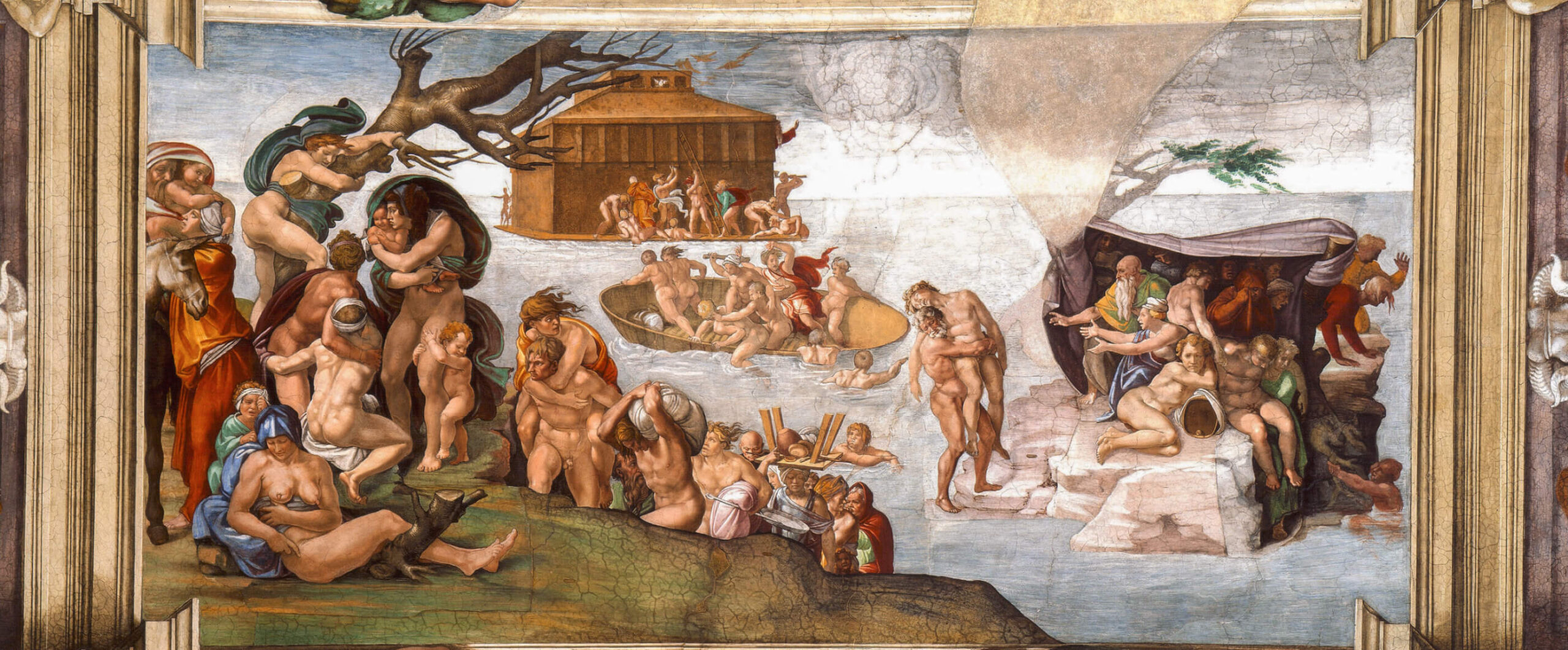
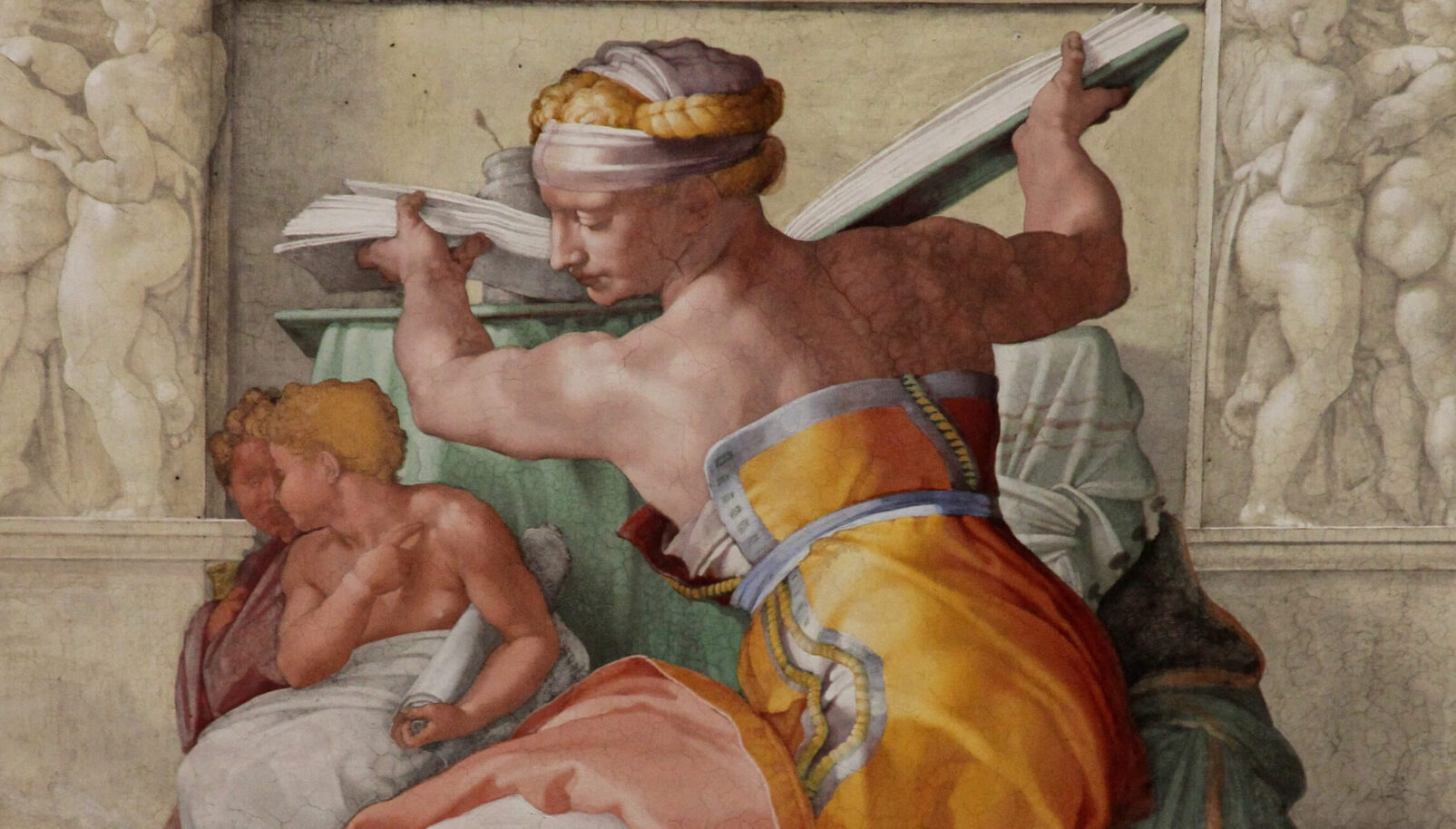
Julius ordered Michelangelo to replace the chapel’s earlier decoration – a starry sky painted by Piermatteo d’Amelia – with a vast new scheme inspired by the Book of Genesis. The result was far more ambitious than a straightforward series of biblical illustrations. Michelangelo covered the vault with an elaborate architectural framework populated by prophets, sibyls, athletic nude youths known as ignudi, and a sequence of nine central panels recounting the story of Creation, the Fall of humanity and the Flood.
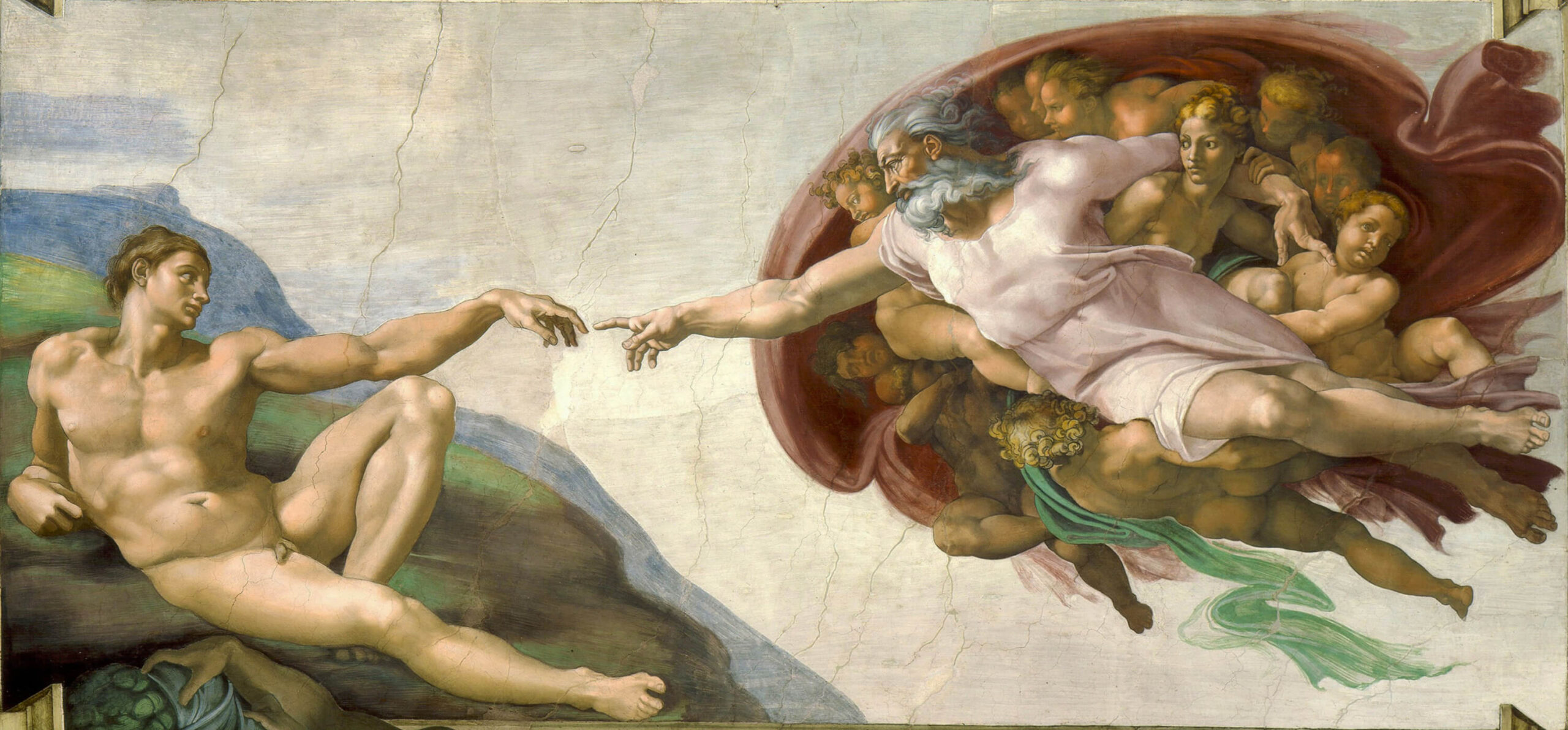
At the heart of the cycle lies the most iconic gesture in the history of art: the almost-touching fingers of God and Adam in the Creation of Adam. Yet the ceiling’s power comes from the way all its parts work together, from the monumental prophets and sibyls seated along the sides to the crowded scenes of human frailty and divine judgement. The figures seem to strain against the architecture that contains them, turning the distant vault into a living theatre of biblical history.
The ceiling was completed in 1512, and its impact on the history of painting was immense. But the story of how Michelangelo created it is almost as remarkable as the finished work itself. He was working in fresco, a demanding technique that required him to paint onto freshly laid plaster before it dried, and he had to devise ways of reaching and working across the enormous vault. As the project progressed, he refined his methods and gathered speed, leaving behind a record of his working process in the very surface of the painting.
For a closer look at the meaning and composition of the ceiling, explore our complete guide to Michelangelo’s Sistine Chapel frescoes. If you’re curious about the practical challenges of the project – from scaffolding and cartoon transfer to the physical strain of painting overhead – read our guide to how Michelangelo painted the Sistine Chapel ceiling.
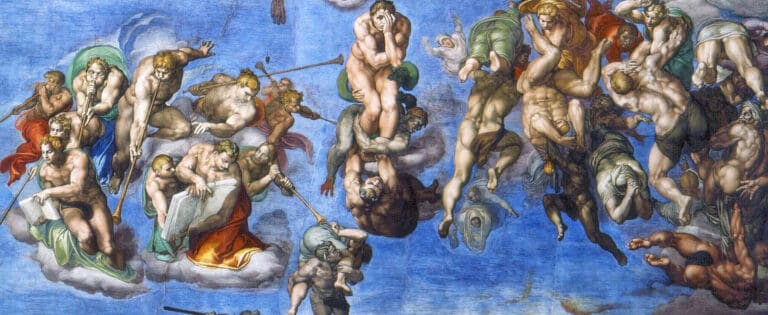
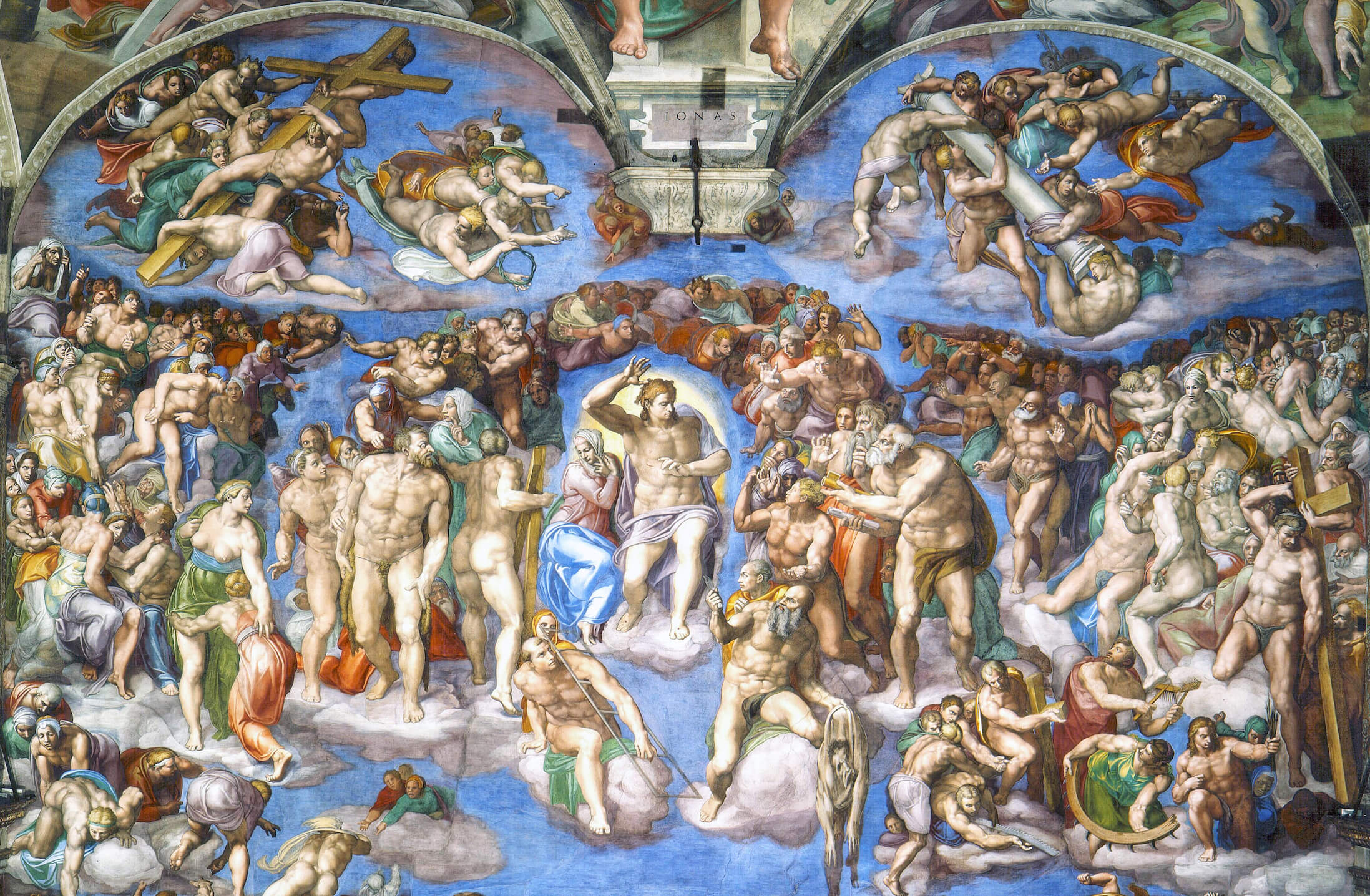
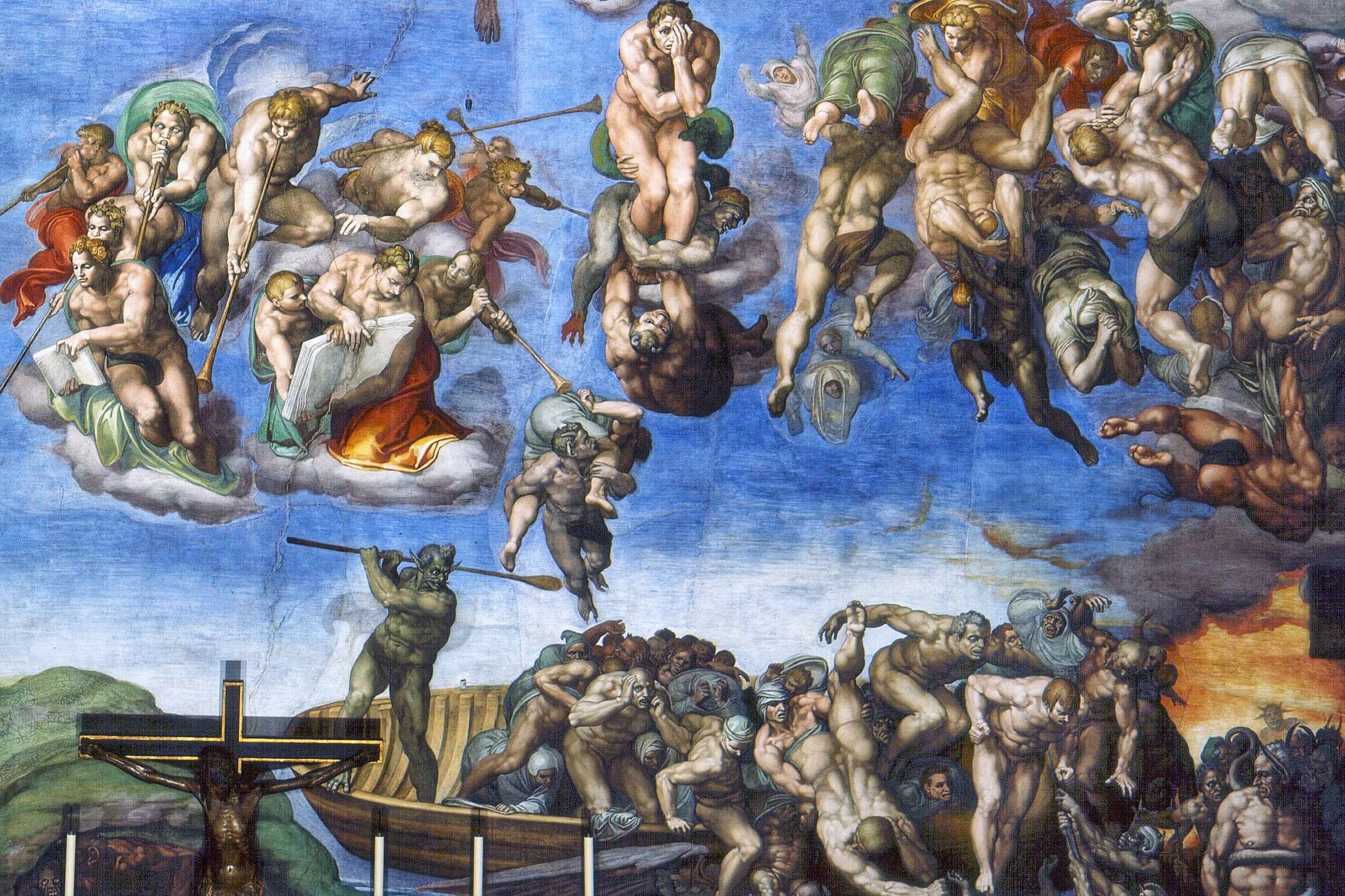
Michelangelo’s story in the Sistine Chapel did not end when he finished the ceiling. More than two decades later, Pope Clement VII commissioned him to decorate the altar wall with a vast image of the Second Coming of Christ and the final judgement of humanity. The work was completed under Pope Paul III and unveiled in 1541.
The Last Judgment is a very different work from the ceiling above it. Gone is the carefully ordered architecture of the Genesis cycle, with its succession of framed scenes and monumental seated figures. Instead, Christ dominates a swirling vision of the saved and the damned, as the dead rise from their graves and souls are drawn towards their final destinies. The mood is darker and more turbulent, reflecting an artist returning to the chapel in a very different age – the still-recent Sack of Rome had shaken the Eternal City to its very core – and at a different stage of his life.
The new fresco also transformed the chapel itself. To make room for the Last Judgment, parts of the earlier decoration on the altar wall had to be sacrificed, including works by Perugino. The decision was controversial, and the muscular, often nude figures of Michelangelo’s composition provoked debate in the decades that followed. The result remains one of the most powerful and unsettling visions of the afterlife in Western art.
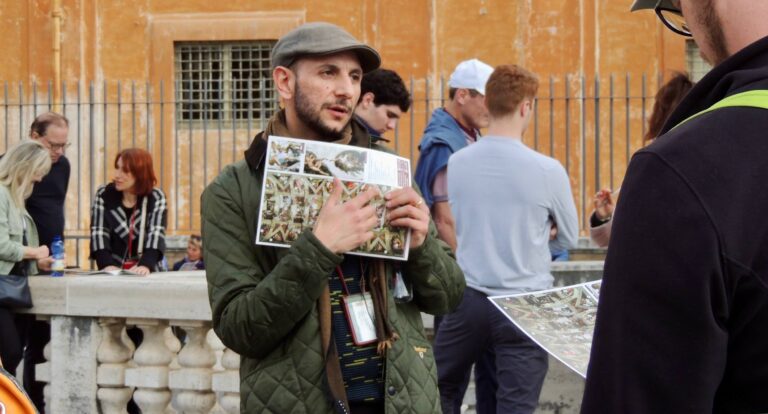
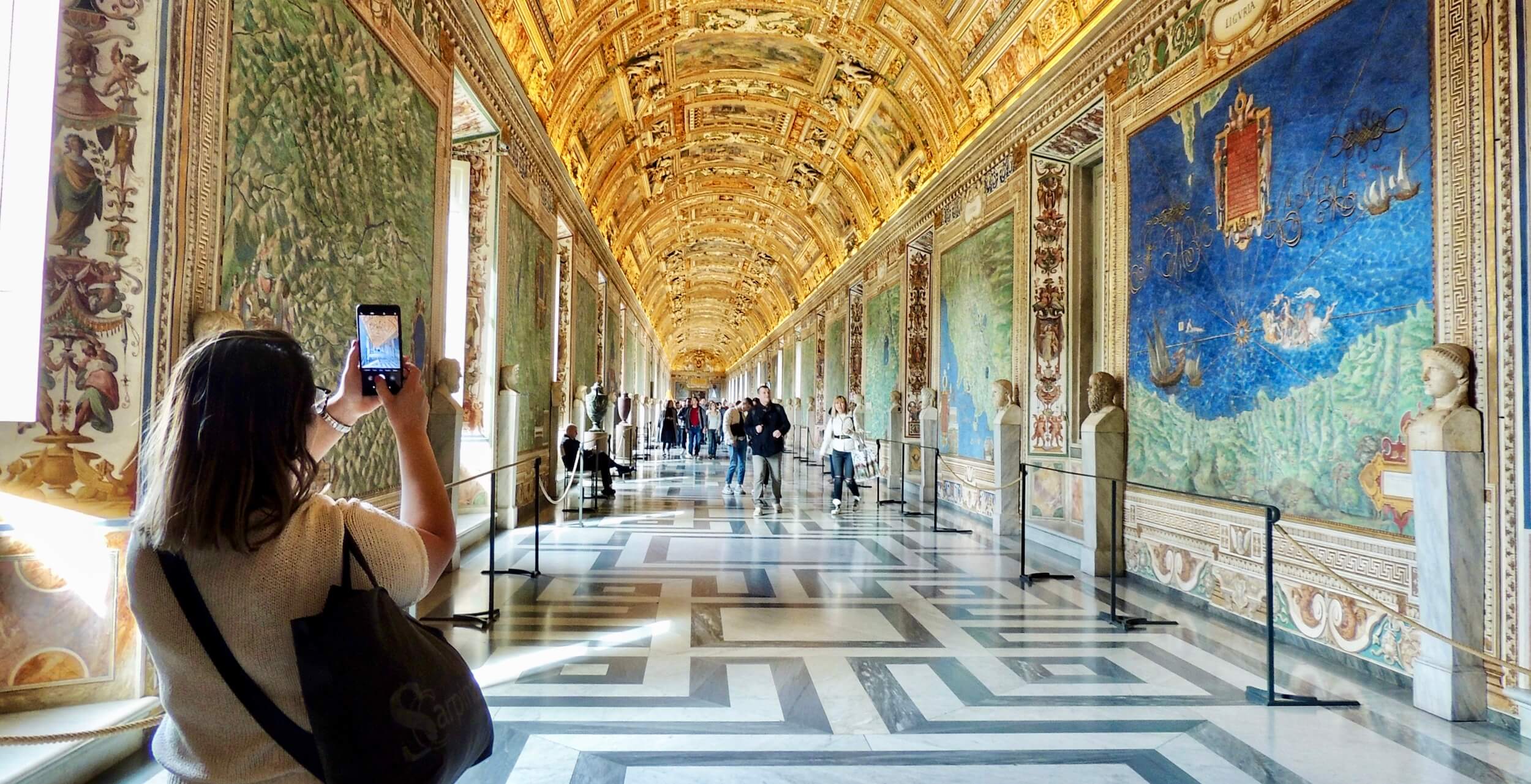
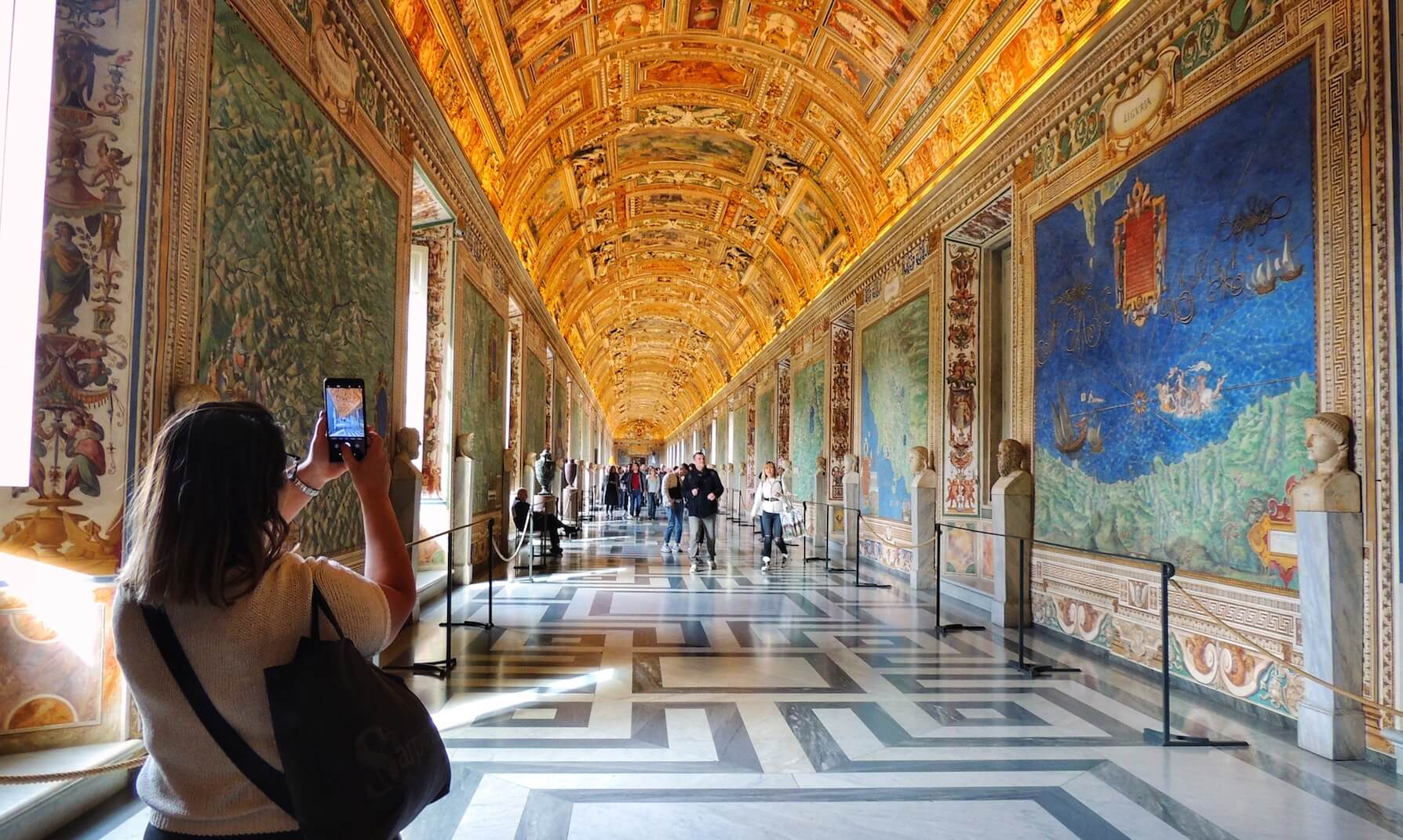
The Sistine Chapel is visited as part of the Vatican Museums, of which it forms the thrilling climax. The route through the museums takes you past centuries of art and history before delivering you into the chapel itself.
When you reach the chapel, it’s hard to know where to look first. You’ve probably come with Michelangelo’s Creation of Adam firmly in mind, that famous near-touch between God and Adam that has become one of the most recognizable images in the world. But once you’re inside, try to resist the temptation to make a beeline for it and then tick it off your list. The chapel offers up a fabulous and wide-ranging world of Renaissance painting, and the ceiling is only part of the story.
Give your eyes time to adjust, then look around. The walls are alive with scenes from the lives of Moses and Christ, painted by the leading artists of an earlier generation. Above them, prophets and sibyls twist and turn on their thrones, while the figures in Michelangelo’s biblical scenes seem to strain against the very architecture of the chapel. And don’t forget to look towards the altar, where the Last Judgment offers a very different, far more turbulent vision of humanity’s fate. The longer you look, the more you begin to appreciate just how much Michelangelo changed the game.
Of course, the Sistine Chapel isn’t a normal art gallery. It’s still a sacred space, and the rules are strictly enforced: photography is prohibited, and visitors are asked to remain quiet. It can be crowded, and you may not have as much time as you’d like to take everything in. That’s all the more reason to arrive with a little background knowledge, so you know what you’re looking at and where to focus your attention.
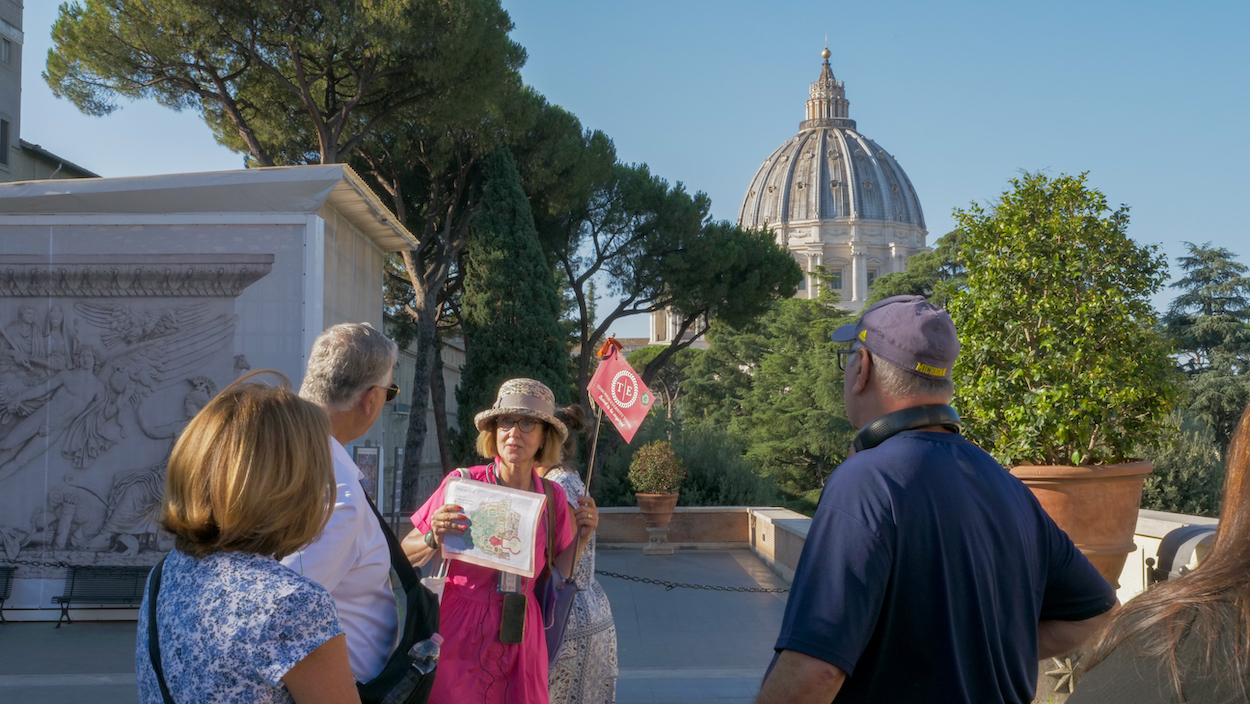
If you’d like to get more out of your visit, our Vatican tours bring the stories behind the art to life, helping you make sense of the extraordinary collection before you reach the chapel itself.
Ready to visit the Sistine Chapel?
Book Your Tour Here!