Rising steeply above the Circus Maximus to one side and the river Tiber on the other, the Aventine Hill marks the southern boundary of Rome’s historic core. One of the city’s fabled seven hills, this leafy residential enclave is often overlooked by visitors to the Eternal City. Their mistake!
Climb the hill and you’ll discover fascinating layers of history, beautiful churches, and some of the most spectacular panoramas in all of Rome.
Although it’s most famous for its views, the Aventine is more than just a pretty vantage point. Here you can step inside a 5th-century basilica untouched by time, trace the mysteries of a pagan cult beneath a Christian church, or glimpse St. Peter’s dome through a famous keyhole.
It’s a neighborhood that wears its history lightly, while offering some of the most memorable encounters in the city – with saints and emperors, crusaders and monks, myths and miracles.
Read on for our guide to what you need to see on the Aventine Hill in Rome!
Rome Tours
Discover the Eternal City
A Short History of the Aventine Hill
But first some history! Named for the quasi-mythical King Aventinus, king of the pre-Roman city of Alba Longa, the Aventine’s story is bound up with Rome’s very beginnings. Legend recounts how the twins Romulus and Remus chose different hills as vantage points to watch for omens when deciding where to found their city – Romulus on the Palatine and Remus on the Aventine.
When Romulus apparently saw more auspicious birds, he claimed the right to found the city. Remus objected, and the quarrel ended in bloody fratricide. With Romulus victorious and Remus lying dead, Rome was born. From the start, the Aventine was marked as the hill of outsiders: in contrast to the ritzy Palatine, this was the losing hill.
In the Republic, it became home to plebeians, foreign cults, and radical politics. Temples here were dedicated to the Aventine Triad Ceres, Liber, and Libera, gods beloved by commoners. The hill echoed with festivals and even scandal: Livy describes wild nocturnal rites of Bacchus here that were suppressed by the Senate. Later, more peaceful shrines arose, including the great Temple of Diana, which gave the Aventine prestige as a religious center.
By the Middle Ages, the hill’s role had shifted. Fortresses of noble families rose here, including the Savelli stronghold where a pope once relocated his court. Monasteries and churches replaced pagan temples, giving the Aventine its tranquil air. Today, those monastic gardens and basilicas remain, making the hill not just a window onto Rome’s past, but one of the city’s loveliest refuges.

1. The Keyhole
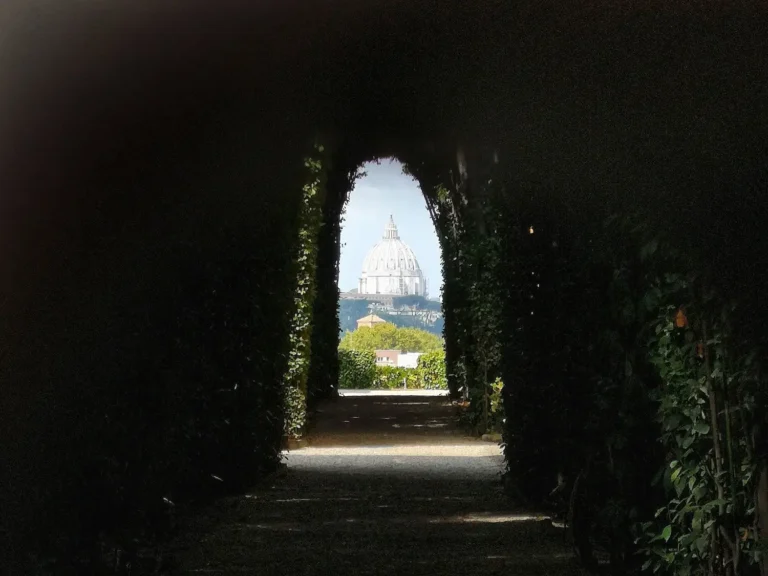
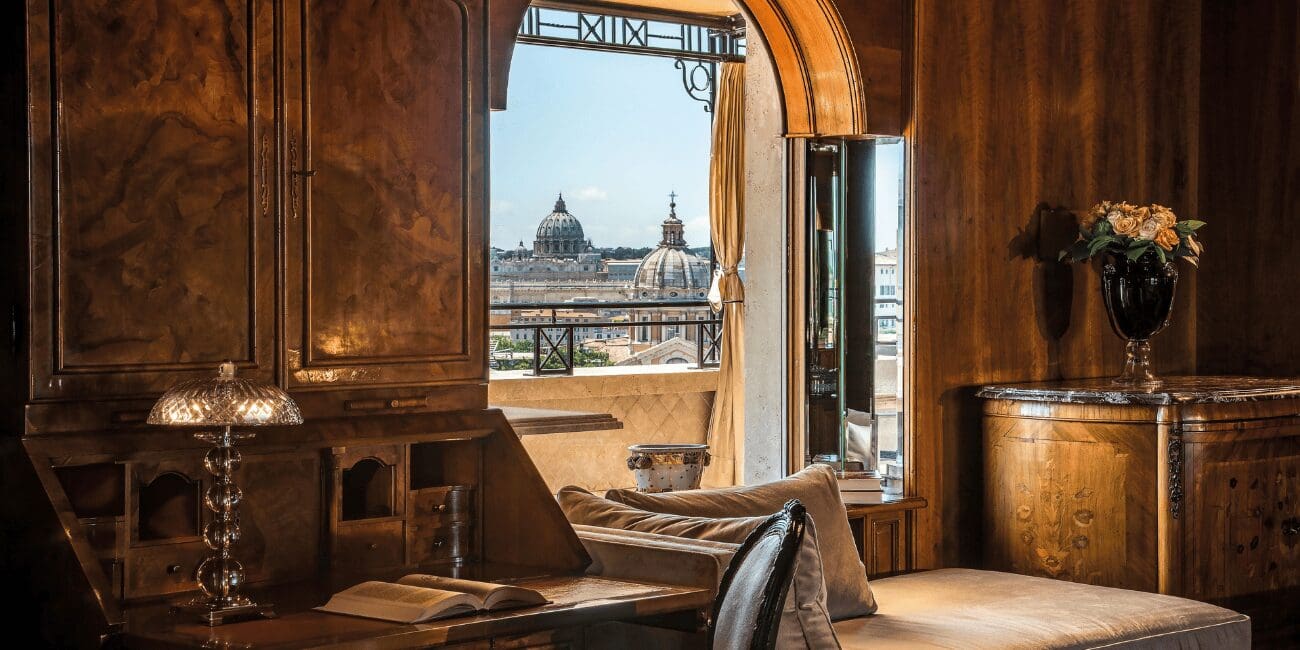
At first glance, it’s nothing but a closed green door. But press your eye to the keyhole of the Priory of the Knights of Malta, and a marvel appears: a perfect view of St. Peter’s dome, symmetrically framed by the hedges of the priory gardens. It’s a blink-and-you-miss-it wonder of perspective: one of the most surprising and enchanting sights in all of Rome.
This whimsical optical trick was the work of Giovanni Battista Piranesi, the great 18th century engraver and architect. When he redesigned this corner of the Aventine, he conceived the vista as a playful surprise for visitors: a miniature journey through Rome, from the Knights’ medieval priory, through Baroque gardens, to Michelangelo’s Renaissance dome rising over the Vatican.
There’s always a queue of visitors waiting to take a peek through the tiny portal, but your patience will be rewarded.
2. Priory of the Knights of Malta
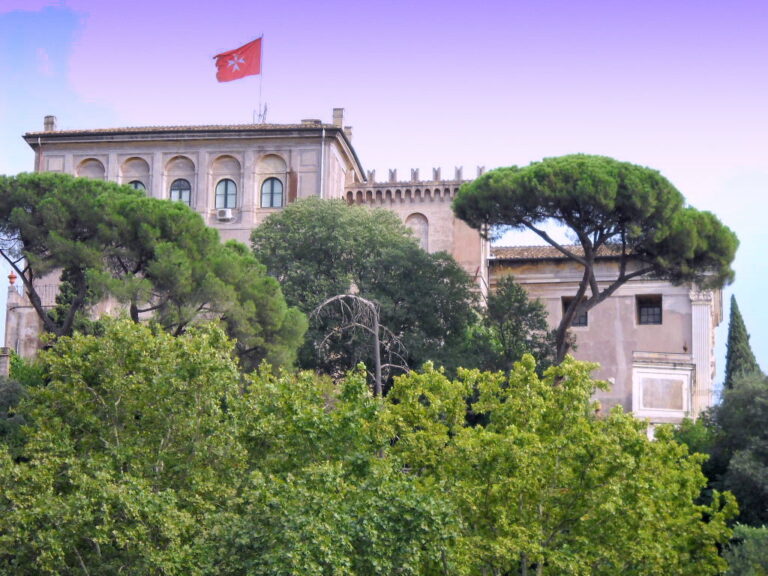
Ph. Gobbler at wikivoyage, CC BY-SA 3.0 , via Wikimedia Commons
Behind the famous keyhole lies the walled stronghold of the Knights of Malta, one of the oldest chivalric orders in the world. Founded during the Crusades to protect pilgrims and tend the sick, the order still exists today as a sovereign entity with its own flag, passports, and diplomatic status. Their Roman headquarters has stood on the Aventine since the 12th century, hidden from view behind imposing gates.
Within lies the exquisite church of Santa Maria del Priorato, remodeled in the 1760s by Piranesi. This little gem is a manifesto of Neoclassicism, where every column, sarcophagus, and emblem was carefully chosen for symbolic effect.
Piranesi himself is buried here, fittingly among the monuments he designed. The priory is rarely open to visitors, but its aura of secrecy only adds to the mystique.
three
3. The Orange Garden (Giardino degli Aranci)
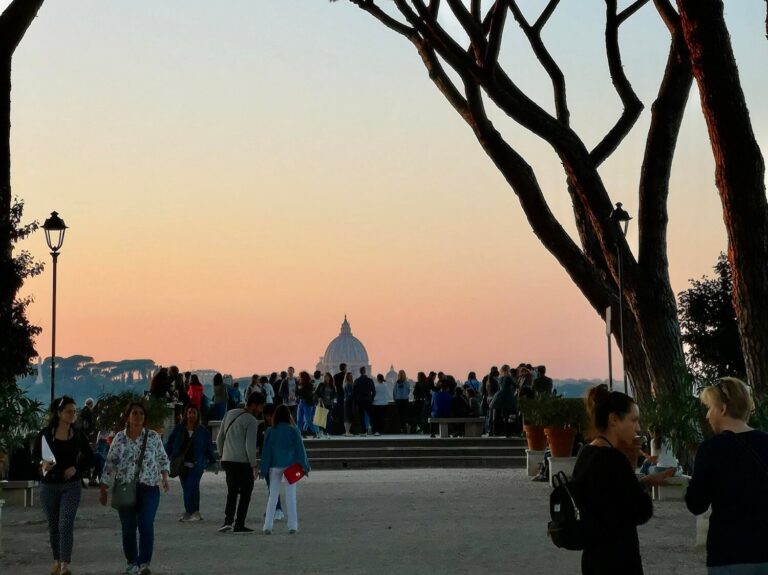
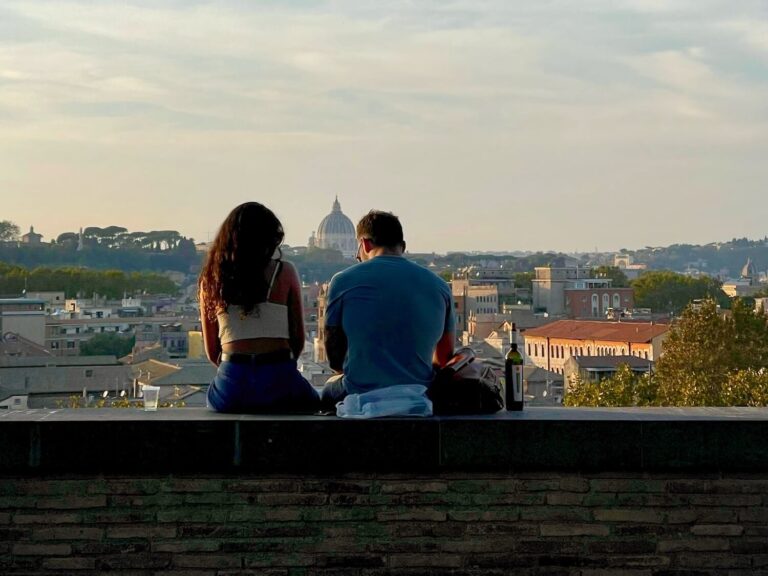
There can be few more romantic places on earth to watch the sunset than Rome’s Giardino degli Aranci. Perched on the crest of the Aventine, this leafy park is filled with fragrant orange trees, umbrella pines, and gravel walkways that lead to one of the Eternal City’s most iconic viewpoints.
From the terrace, St. Peter’s dome looms impossibly large across the rooftops of Trastevere, while the Tiber glitters far below.
The garden takes its name from the orange trees that line its walkways. In spring, the air is filled with the scent of citrus blossoms, while autumn brings the spectacle of ripening fruit glowing against the greenery.
Yet the real magic comes at dusk, when the sky flares the same fiery shade as the oranges and the whole city seems to gather here to watch Rome bathe in golden light.
4. Santa Sabina
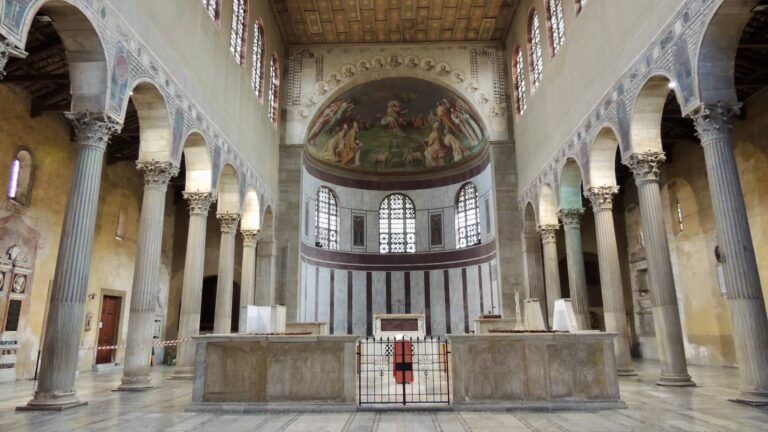
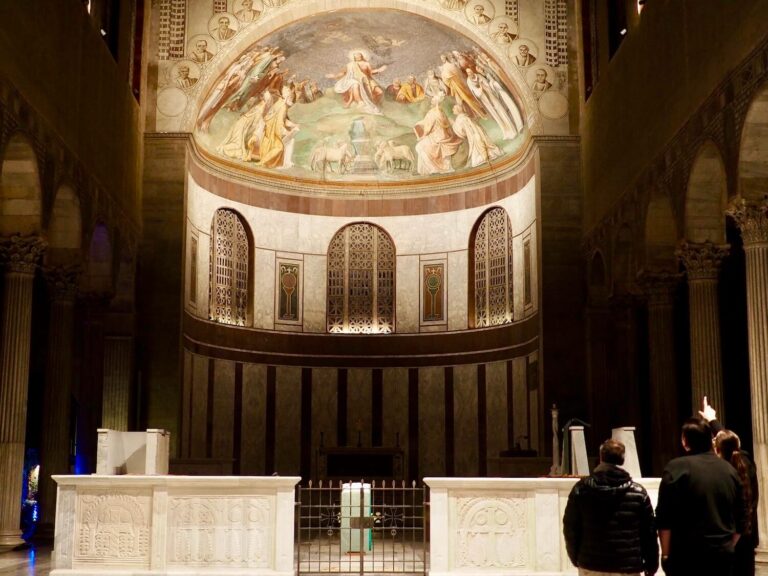
The basilica of Santa Sabina offers a rare chance to step back into the world of early Christianity. Built in the 5th century under Pope Celestine I, it is arguably the best-preserved example of a Paleochristian church in Rome, its simple lines and luminous interior giving an impression of the faith in its earliest form.
Light pours through high mullioned windows onto rows of marble columns that divide the airy nave, while the floor is studded with centuries-old gravestones worn smooth by pilgrims’ feet.
Look closer for details: the carved wooden doors, dating to around 430, feature one of the earliest known images of the Crucifixion. A rough stone near the entrance meanwhile is said to have been hurled at Saint Dominic by the Devil himself.
Spare, serene, and atmospheric, Santa Sabina allows us to imagine what Christianity must have felt like when it first took root in Rome.
five
5. Dominic’s Cloister Garden
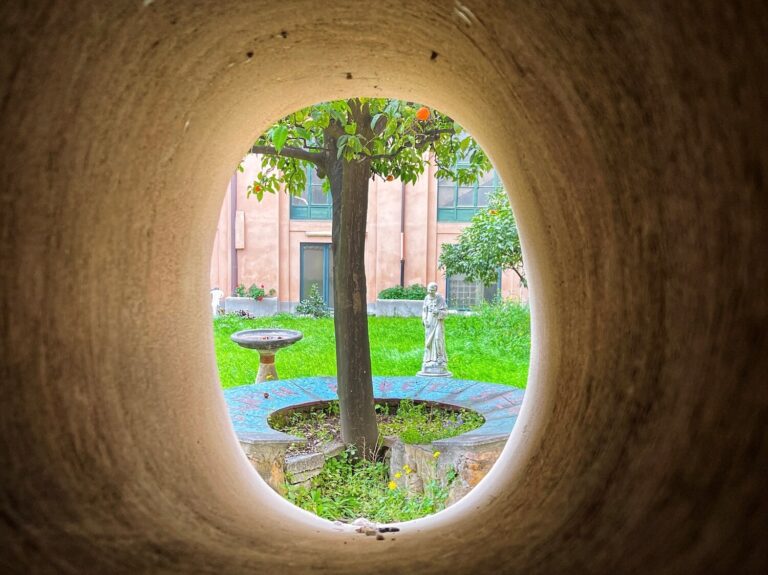
Tucked away in the grounds of Santa Sabina is a fascinating historical curiosity. A small window in the outer wall reveals a hidden cloister where, according to tradition, Saint Dominic planted an orange tree brought from his native Spain in the early 13th century.
Though the original trunk has long since vanished, the tree seems unwilling to die – sprouting again and again from its ancient roots. Some even claim it was the very first orange tree in Italy.
The survival of the tree is commemorated by a Latin verse from the Book of Job inscribed in the cloister: Lignum habet spem – “There is hope for a tree, if it be cut down, that it will sprout again.”
Over the centuries, Dominic’s oranges became prized relics. In the 14th century, St. Catherine of Siena candied the fruit for Pope Urban VI, and generations of pilgrims treasured their bittersweet taste.
six
6. Clivio di Rocca Savella
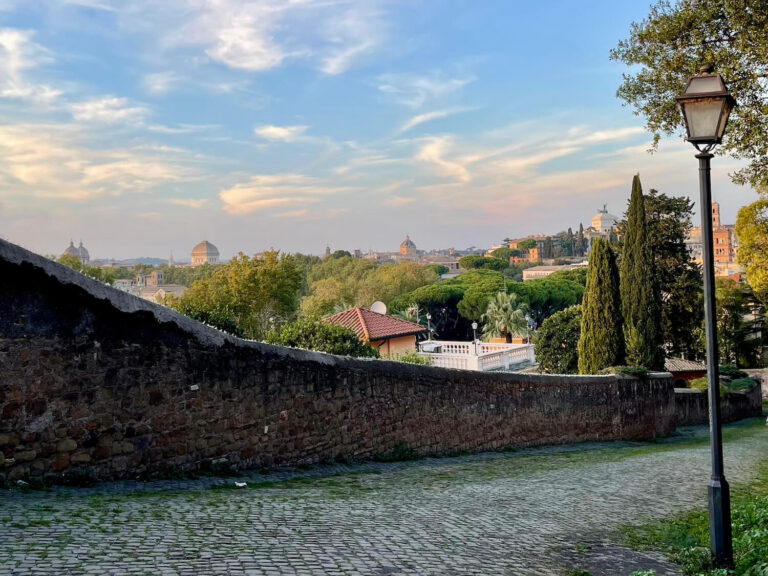
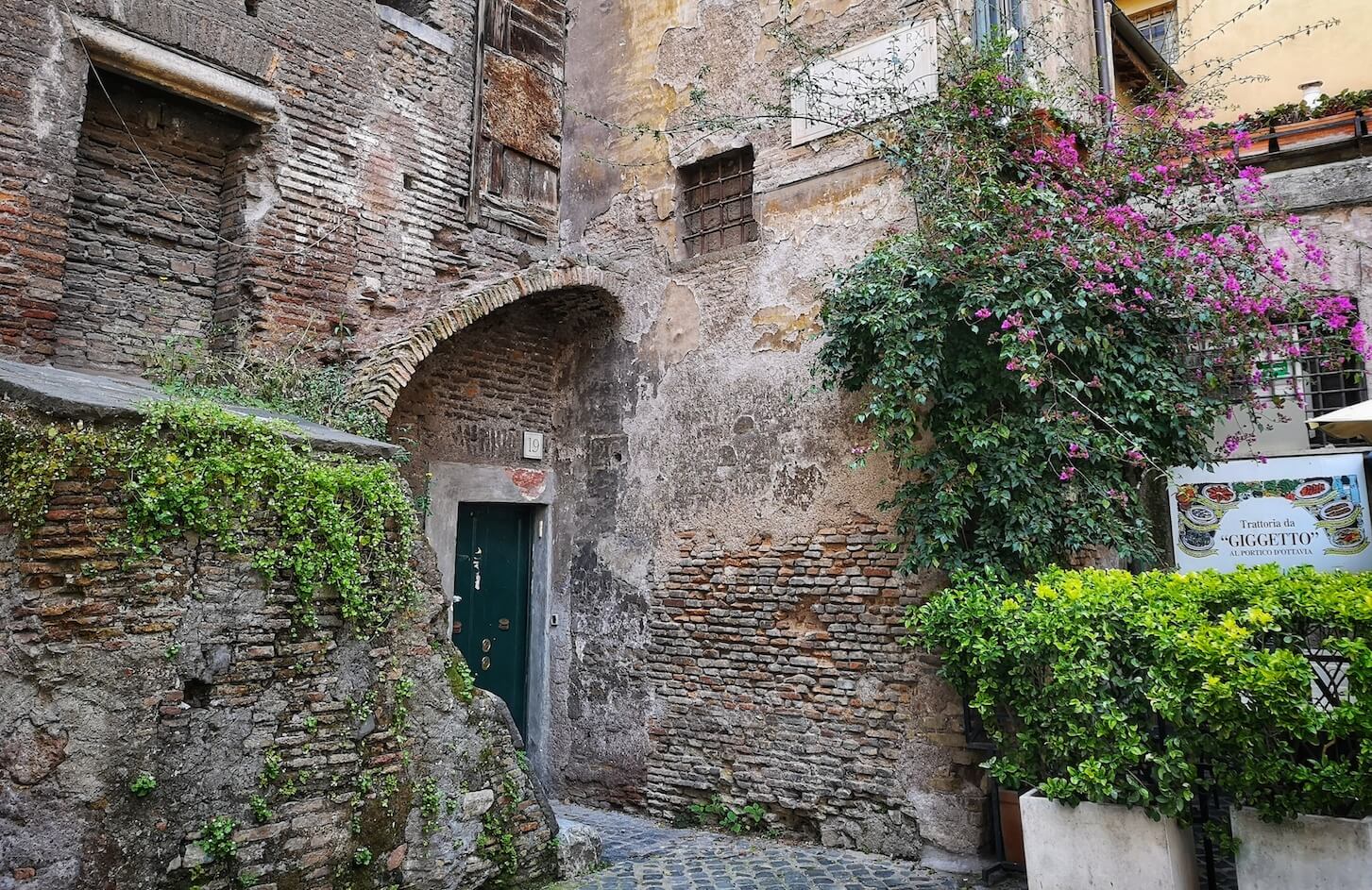
Few visitors find their way to the Clivio di Rocca Savella, a winding cobbled lane that climbs up the Aventine’s flank. In medieval times, this was one of the main access routes to the hill, and it gained new prominence in 1285 when Pope Honorius IV of the Savelli family abandoned the Lateran Palace and moved the papal court into his family fortress above.
For a brief spell, this secluded street became one of the most important approaches in all of Rome.
Today the Clivio has returned to silence, overgrown with ivy and shaded by towering walls. As you ascend, glimpses open out over the Circus Maximus and Palatine Hill far below.
The climb feels timeless, as though you are tracing the footsteps of popes, cardinals, and courtiers long vanished. It remains one of the Aventine’s most atmospheric and least-known secrets.
seven
7. Fontana della Mascherone
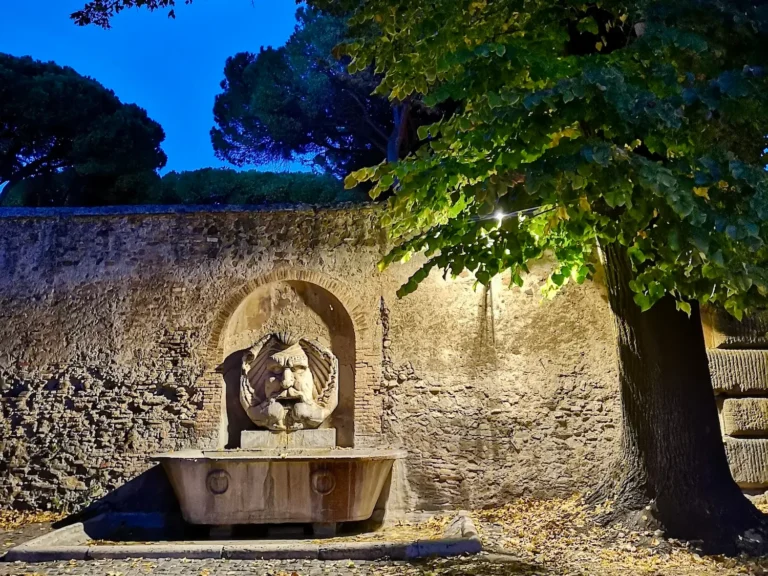
Propped up against the outer wall of the Orange Garden, the Fontana della Mascherone is a curious blend of antiquity and invention. Despite its ancient look, the fountain was actually created in 1936 by the architect Antonio Muñoz, who pieced it together from fragments of Rome’s past. Its centerpiece is a monumental stone mask designed by Giacomo della Porta in 1593.
Originally, this grotesque face adorned a drinking trough in the Campo Vaccino, the cattle market that sprawled over the ruins of the Roman Forum.
When relocated to Piazza Pietro d’Illiria, the fountain was transformed into a romantic ornament for the Aventine. The gushing water and stern visage of the mask are especially striking in autumn, when the surrounding walls are draped in fiery leaves. A stop at the Mascherone is the perfect prelude to the views awaiting just beyond.
eight
8. Santa Prisca
Ph. MumblerJamie, CC BY-SA 2.0, via wikimedia commons
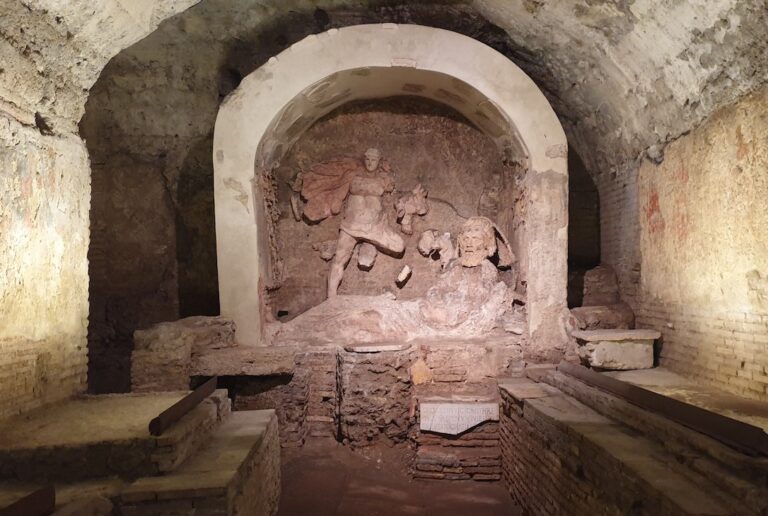
On the surface, Santa Prisca is a modest early Christian church, but beneath its floor lies one of the most remarkable pagan sanctuaries in Rome. In 1934, Augustinian friars stumbled upon a Mithraeum here – a 3rd-century temple dedicated to the god Mithras. Step underground and you’ll find yourself in a long, dim hall once used for ritual banquets, its walls still painted with vibrant frescoes of initiates and gods.
At the center is the dramatic scene of Mithras slaying the sacred bull, the so-called tauroctony, symbolizing renewal and life.
Above, the Christian church represents triumph over paganism, yet ironically, it also preserved the Mithraeum almost intact. To visit, you’ll need to arrange ahead, but it’s worth the effort. Few places in Rome make the layering of religions and centuries so vivid, from the mysteries of an Eastern cult to the steady rise of Christianity on the Aventine.
nine
9 Sant’Alessio
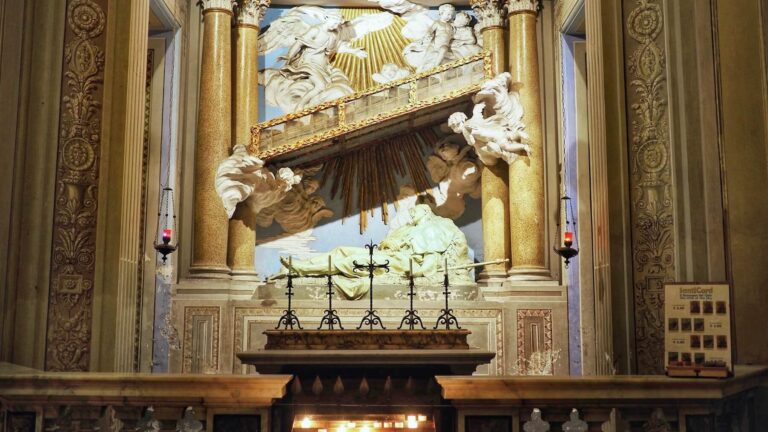
The quiet church of Sant’Alessio holds one of Rome’s strangest relics: a staircase. According to legend, Saint Alexius, son of a wealthy Roman family, renounced his inheritance to live as a beggar.
Unrecognized, he returned years later to his father’s house, where he dwelt humbly beneath the steps until his death. The worn wooden staircase preserved in the church is said to be the very one beneath which he lived.
The basilica itself has roots in the 4th century but took on its current form in the Middle Ages, with a handsome campanile and shaded cloister. Inside, a lavish baroque chapel shelters Alexius’ relics.
The church today is remarkably peaceful, a favorite for local weddings thanks to its leafy setting and romantic legends.
ten
10. The Rose Garden (Roseto Comunale)
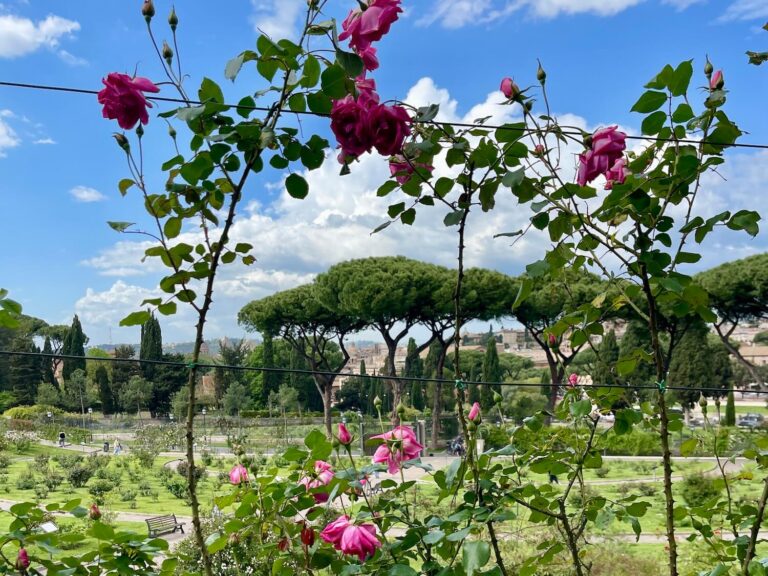
On the slope of the Aventine overlooking the Circus Maximus blooms one of Rome’s most enchanting seasonal gardens. The Roseto Comunale, or municipal rose garden, is home to more than a thousand varieties of roses, spread across terraces that were once part of the city’s Jewish cemetery.
The flowers are in full bloom in May and June, but if you’re traveling to Rome later in the year fear not: the rose garden reopens in the autumn when a second flowering fills its beds with fresh color.
If your trip coincides with the Roseto’s opening periods, it’s a magical place to wander – a living, fragrant reminder of Rome’s eternal love of beauty.
How to Visit the Aventine Hill
Getting There
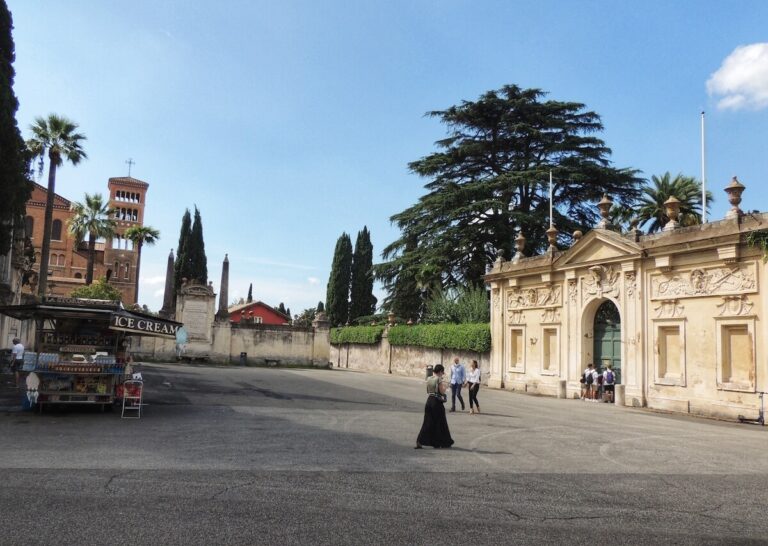
The Aventine is most easily reached via Metro Line B to Circo Massimo, followed by a gentle ten-to-fifteen-minute walk uphill. From the metro exit, the Rose Garden appears almost immediately on the slopes to your left — a good first stop if you’re visiting in season — before the path climbs to the heart of the hill. Alternatively, buses 81, 160, 175, 628, and 715 stop nearby, and tram line 3 has a stop on Viale Aventino. Driving is not recommended: the surrounding streets fall within Rome’s ZTL restricted traffic zone, and parking on the hill is extremely limited.
Planning Your Time
Allow two to three hours for a comfortable circuit of the hill’s main sights: the keyhole and Piazza dei Cavalieri di Malta, Santa Sabina, the Orange Garden, the Clivio di Rocca Savella, and, if open, the Rose Garden. The Aventine combines naturally with a visit to the nearby Circus Maximus, Mouth of Truth, or the Baths of Caracalla, all within easy walking distance.
The Best Time to Visit
The Aventine rewards early risers: even in high season, the lanes are nearly deserted before 9am, the light is soft, and the keyhole queue is short or nonexistent. The hill’s other natural peak moment is the hour before sunset, when the Orange Garden terrace becomes one of Rome’s great gathering places and the light over St. Peter’s turns gold.
Practical Notes
The Aventine is a quiet, largely residential neighborhood. The cobbled streets and occasional steep sections make comfortable, flat-soled shoes advisable. There are no major cafés or restaurants on the hill itself, so it’s worth eating before you arrive or planning to descend to Testaccio or Trastevere afterward. Dress appropriately for church visits (covered shoulders and knees).
Aventine Hill FAQ
What is the Aventine Hill famous for?
The Aventine is best known for three things: the keyhole at the Priory of the Knights of Malta, which frames a perfectly composed view of St. Peter’s dome; the Orange Garden, one of Rome’s most beautiful sunset terraces; and the basilica of Santa Sabina, among the finest surviving examples of early Christian architecture in the world.
Is the Aventine Hill worth visiting?
Unquestionably — and it tends to be much less crowded than Rome’s more obvious neighborhood destinations (we’re looking at you, Trastevere). The hill offers a rare combination of natural beauty, ancient history, and genuine tranquility. On a single walk you can move from pagan Rome to early Christianity to the Baroque gardens of an 18th-century engraver, all while enjoying some of the most panoramic views in the city. It’s also free.
How long does it take to visit the Aventine?
Two to three hours is enough to see the main sights at a relaxed pace. If you want to linger at the Orange Garden terrace for sunset, spend time inside Santa Sabina, or visit the Rose Garden during its spring season, half a day is more comfortable.
Do you need to book tickets for the Aventine Hill?
For most of the hill’s attractions — the keyhole, the Orange Garden, the Rose Garden, Santa Sabina — no booking is required and admission is free. The main exception is the Mithraeum beneath Santa Prisca, which operates on a reservation-only basis through the CoopCulture guided tour program. The church of Santa Maria del Priorato inside the Knights of Malta priory is occasionally open for guided visits; check online for current availability.
Is the famous keyhole really that impressive?
It really is. The view through the tiny portal — St. Peter’s dome, framed with uncanny precision by the tunnel of hedges Piranesi designed for exactly this purpose — is one of those Rome moments that seems to belong more to myth than reality. There is usually a short queue; early morning visits mean less waiting, but even a ten-minute wait is rewarded.
Can you see three countries through the keyhole?
So the saying goes. The keyhole sits in the door of the Priory of the Knights of Malta, whose grounds are sovereign territory of the Order — effectively their own mini-state. Through the opening you look across Vatican City to St. Peter’s, while standing on Italian soil. Three sovereignties in a single glance.
When is the Rose Garden open?
The Roseto Comunale typically opens in mid-April and closes in mid-June, with hours from 8:30am to 7:30pm daily; entry is free. It reopens for a shorter autumn season in October when the roses flower again. The spring window is the more spectacular of the two: peak bloom falls in May, when over 1,100 varieties are in full color.
Is the Aventine Hill accessible?
The hill involves uphill walking and some cobbled streets, so those with limited mobility should be prepared for uneven terrain. The Rose Garden has an accessible entrance on Clivo dei Publicii. The Mithraeum at Santa Prisca is not wheelchair accessible, as entry requires descending a staircase.
Book Your Rome Experience