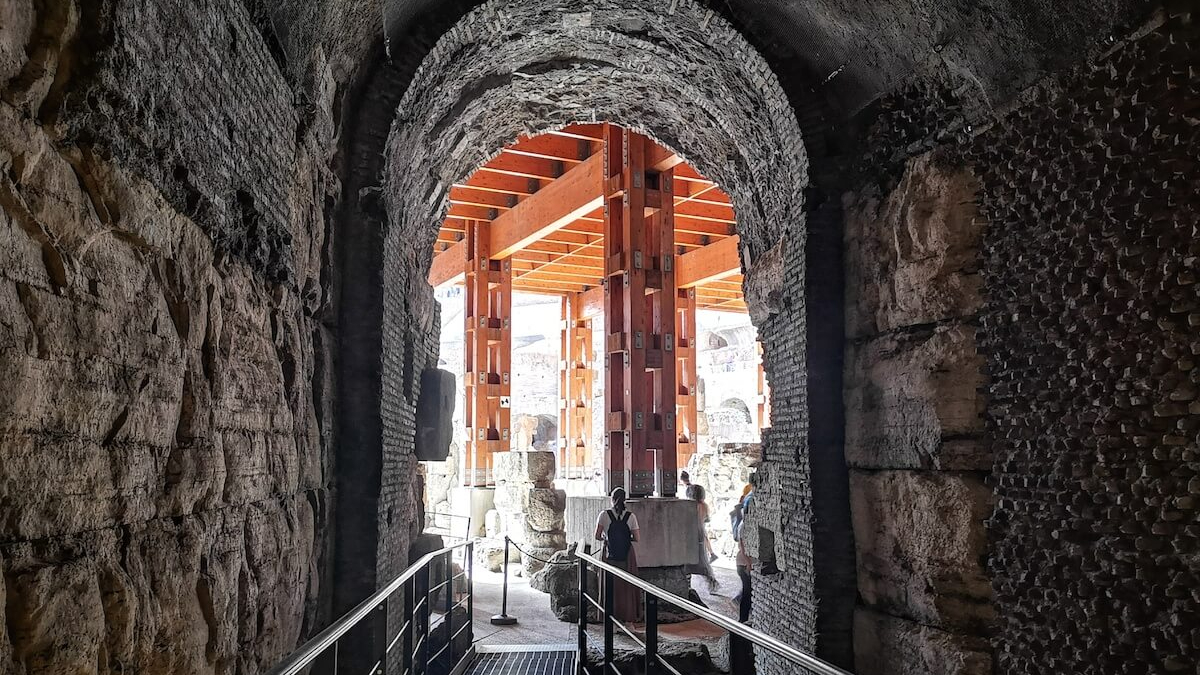
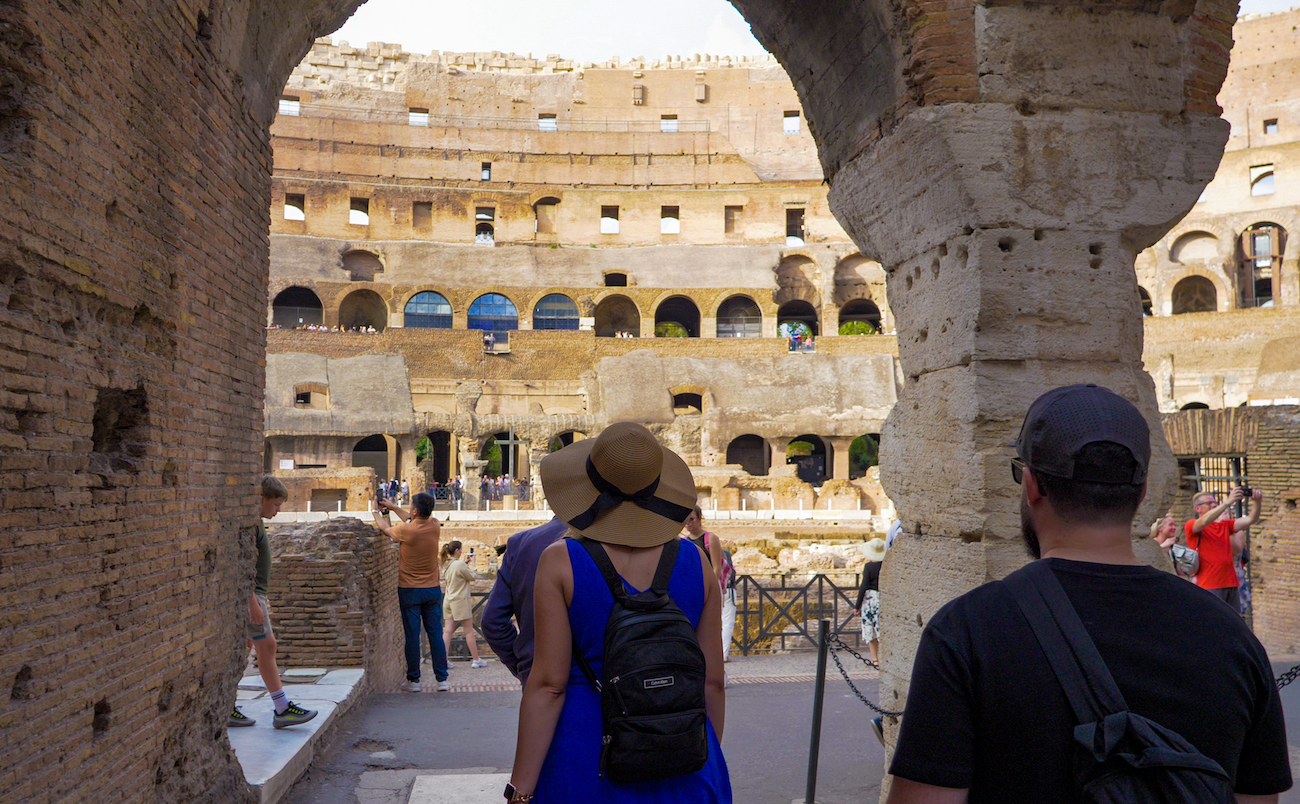
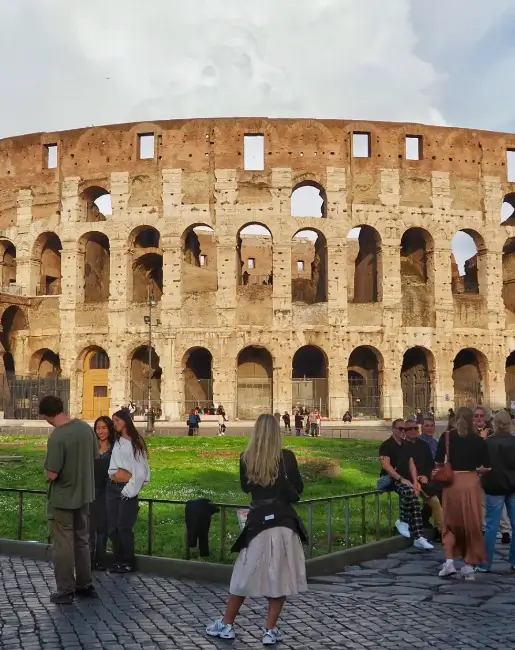
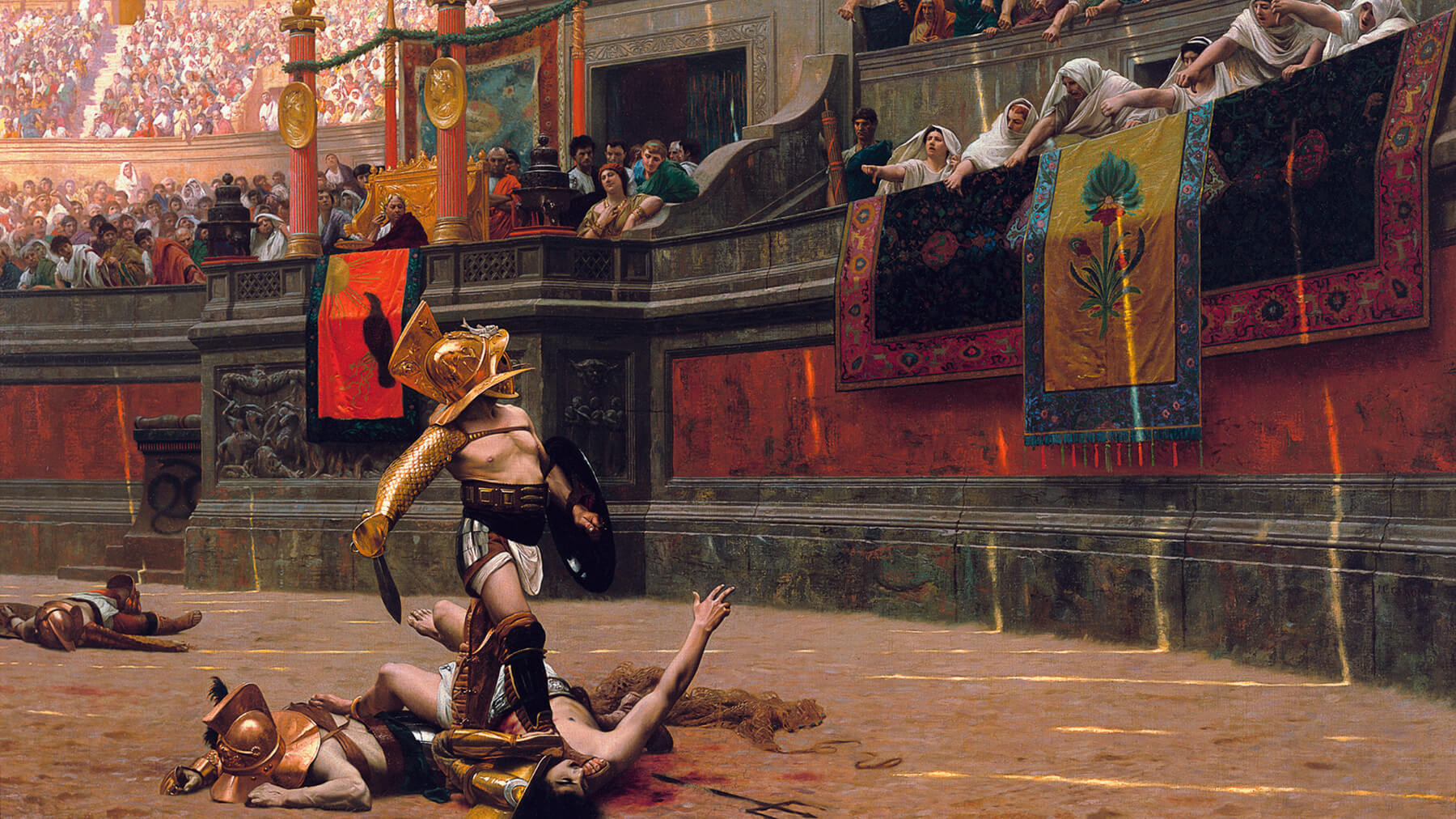
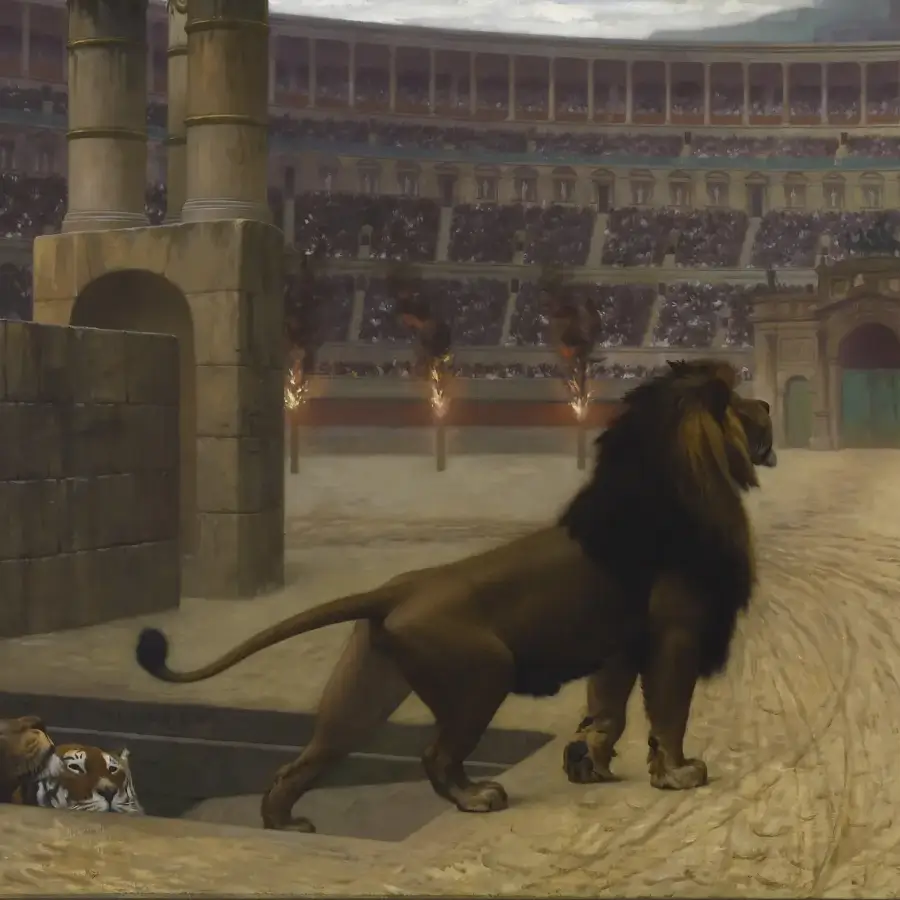
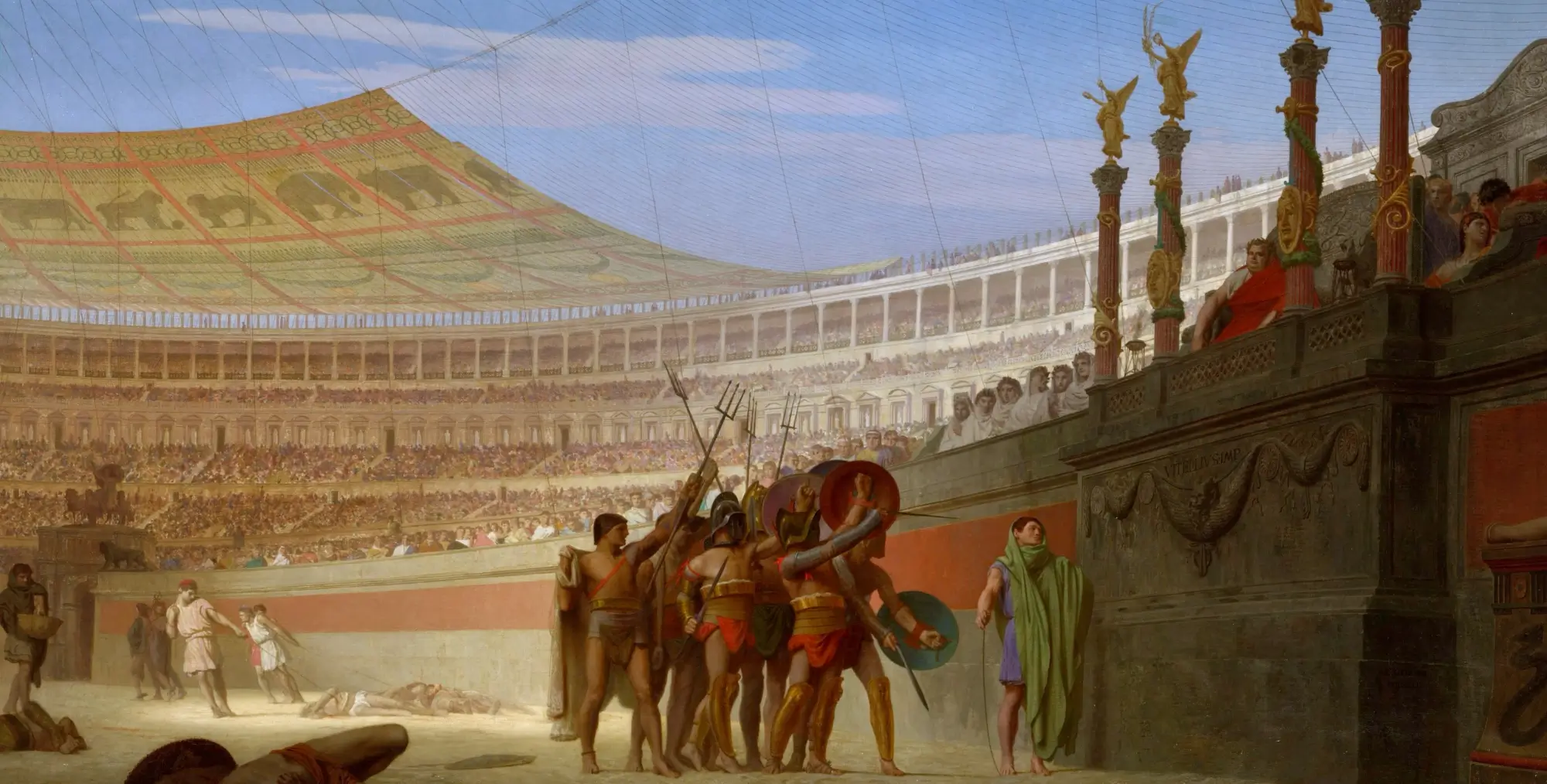
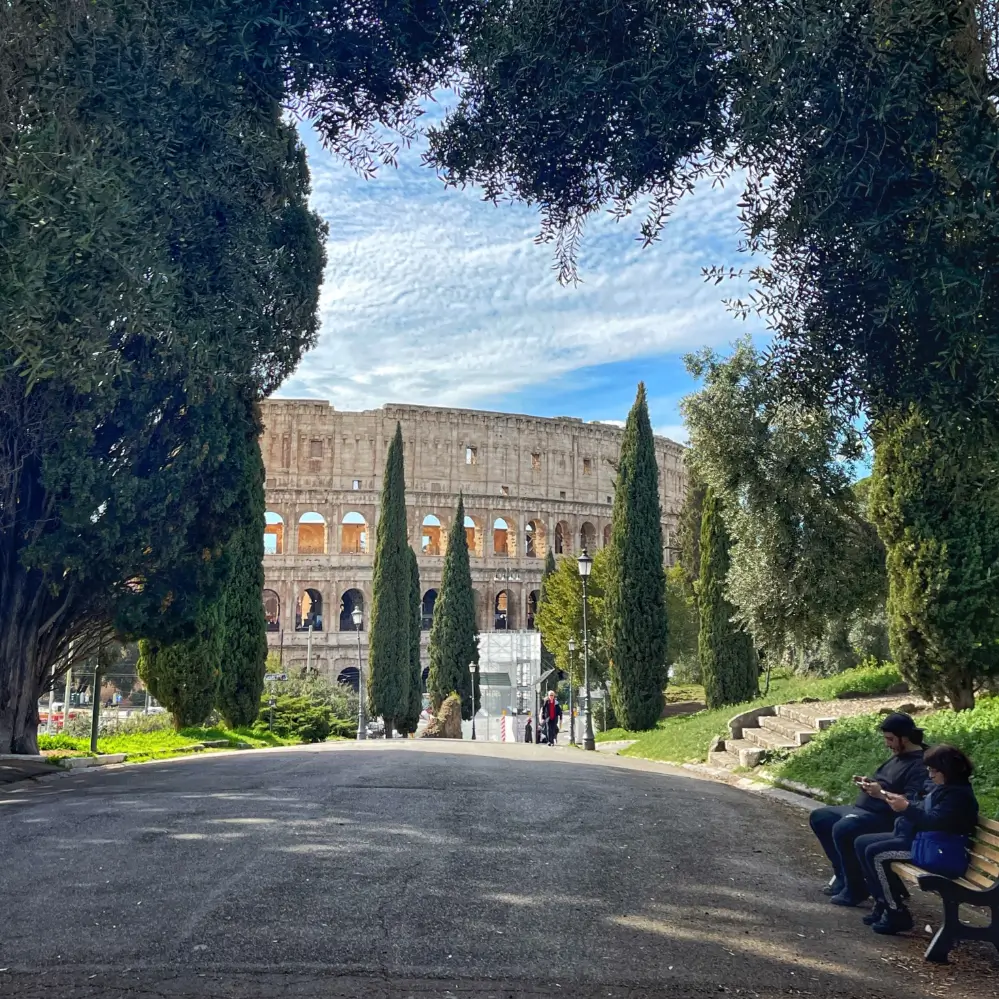
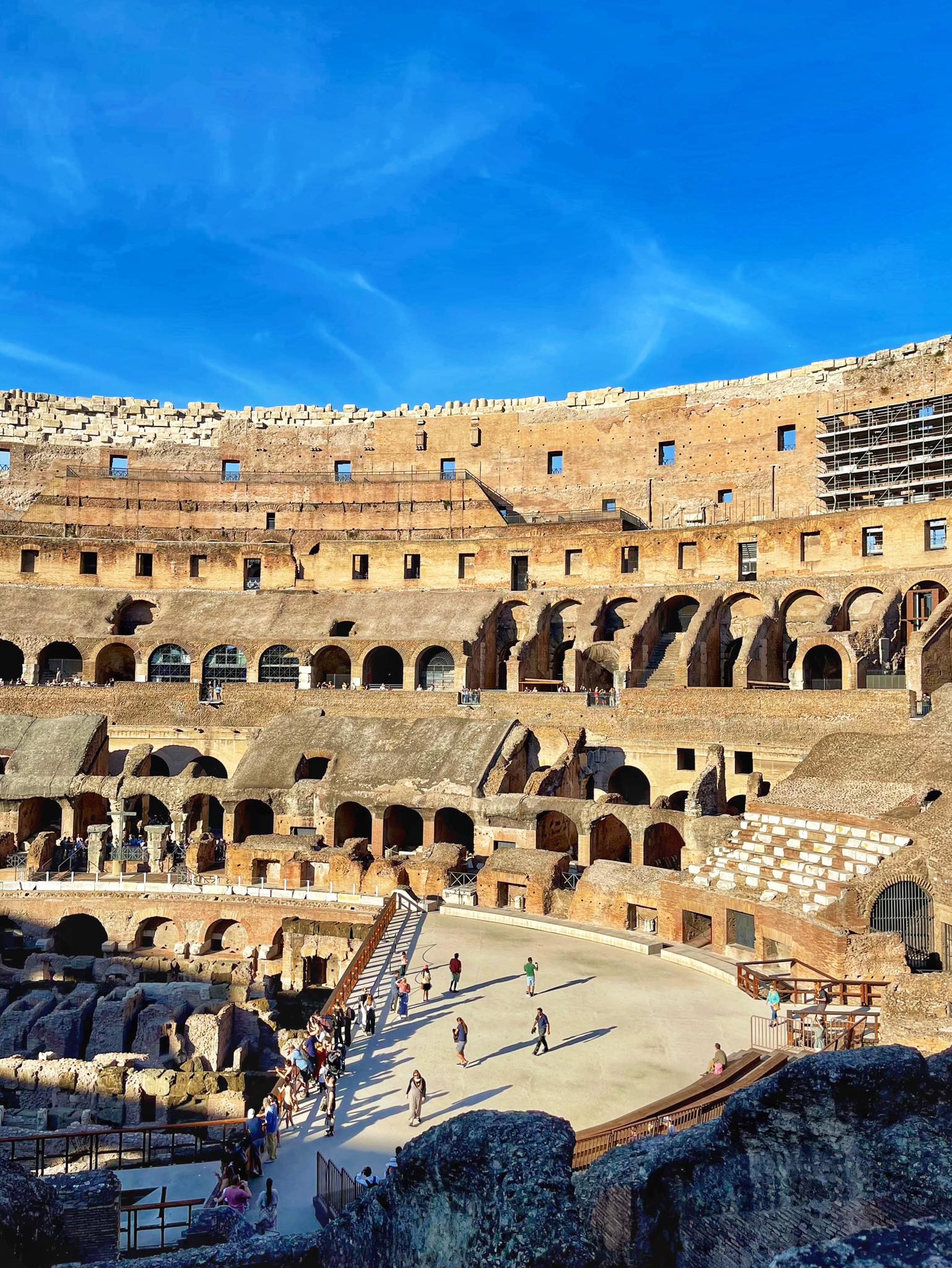
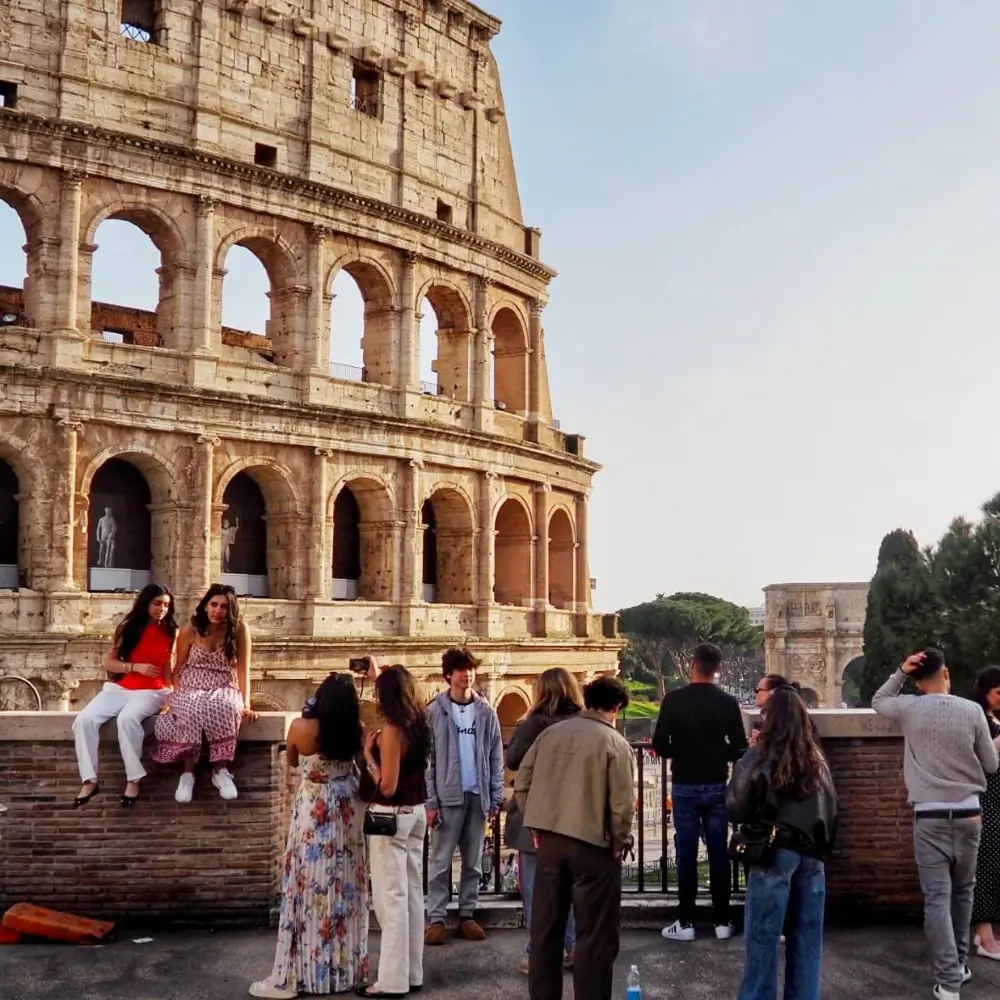
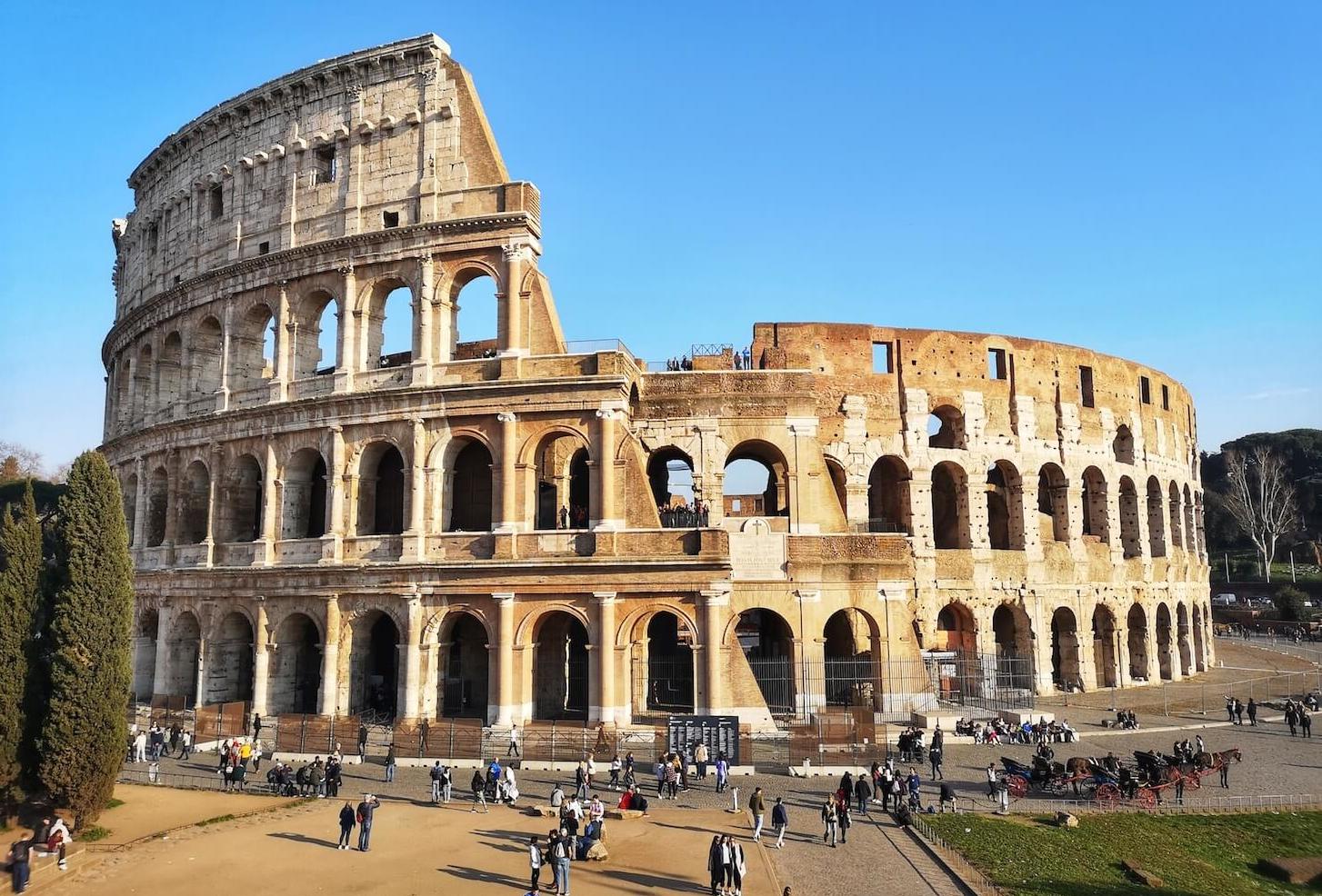
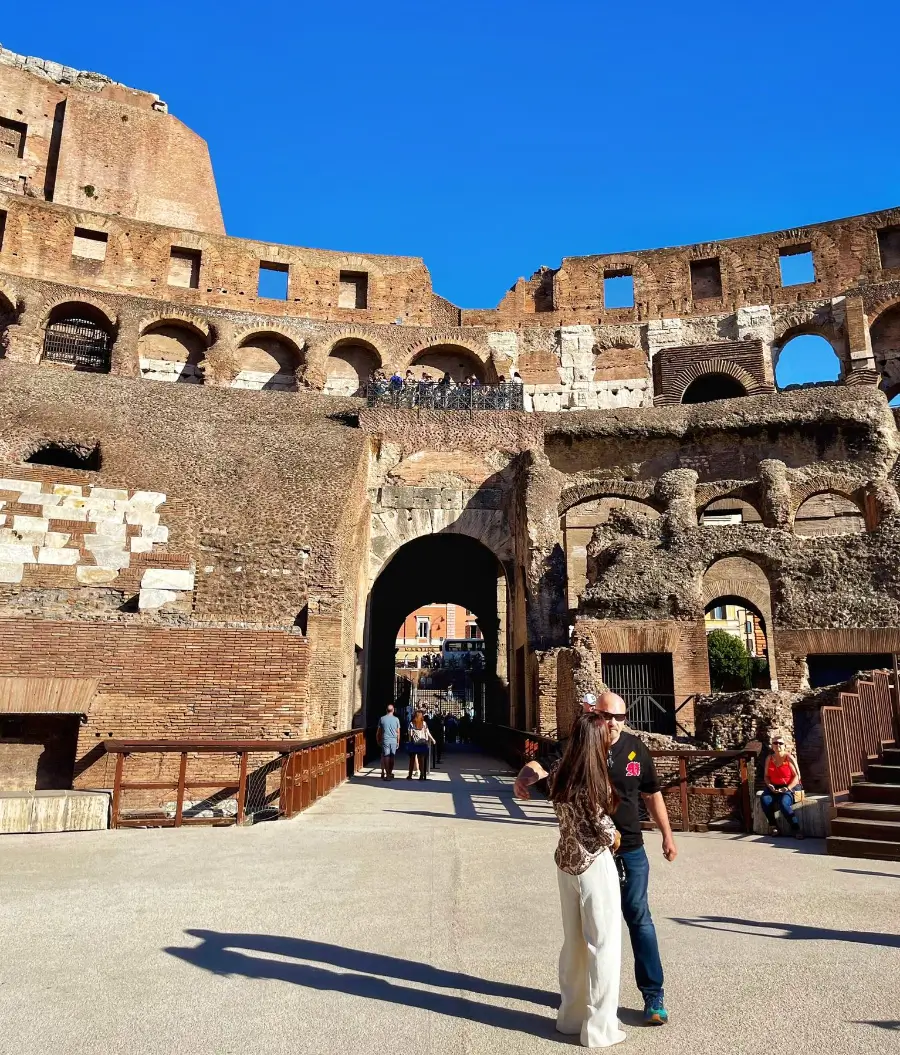
Nowhere else in Rome provides a more vivid window into the grandeur of the ancient world than the area surrounding the Colosseum.
The amphitheatre itself is one of the greatest buildings ever constructed, but the neighbourhood it stands in is just as rich in things to see.
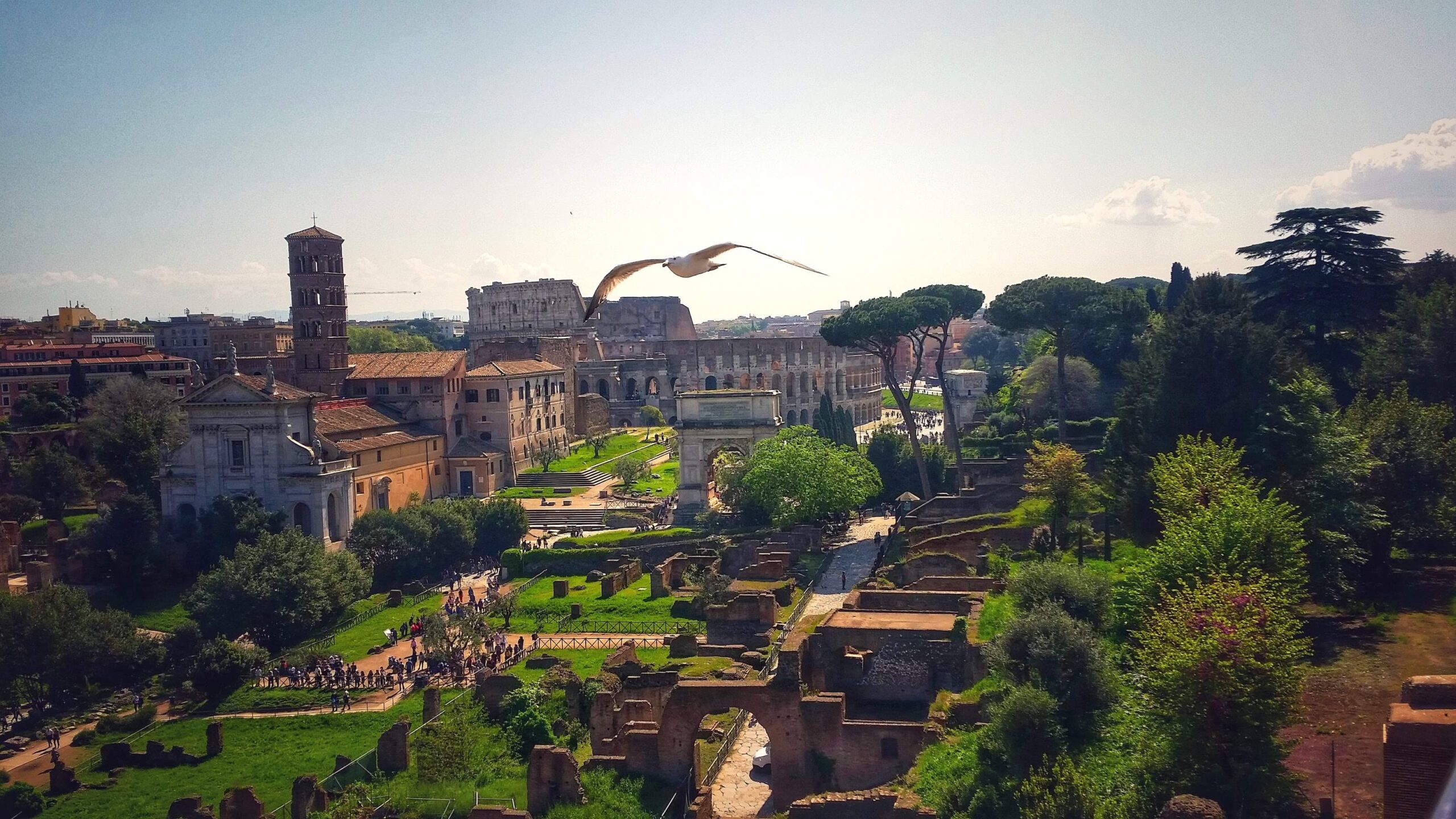
The Roman Forum was the beating heart of the world’s most powerful city for nearly a thousand years; the Palatine Hill is where Rome began, and where its emperors built their impossible palaces; Nero’s Golden House, a palace so extravagant it became the defining symbol of imperial excess, lies buried within a few minutes’ walk of the Colosseum. An array of stunning hidden churches and charming piazzas round out the picture.
Most visitors to the Colosseum come for the amphitheatre, catch a glimpse of the Forum on the way out, and miss most of everything else. This guide is for the people who want to do better than that.
What follows is a curated list of the sights and experiences within easy walking distance of the Colosseum — from the obvious and essential to the genuinely hidden. You could spend a full day in this area without ever leaving the shadow of the ancient city, and you wouldn’t run out of things to see. Find out how!
Rome Tours
Explore a Hidden Side of the Eternal City
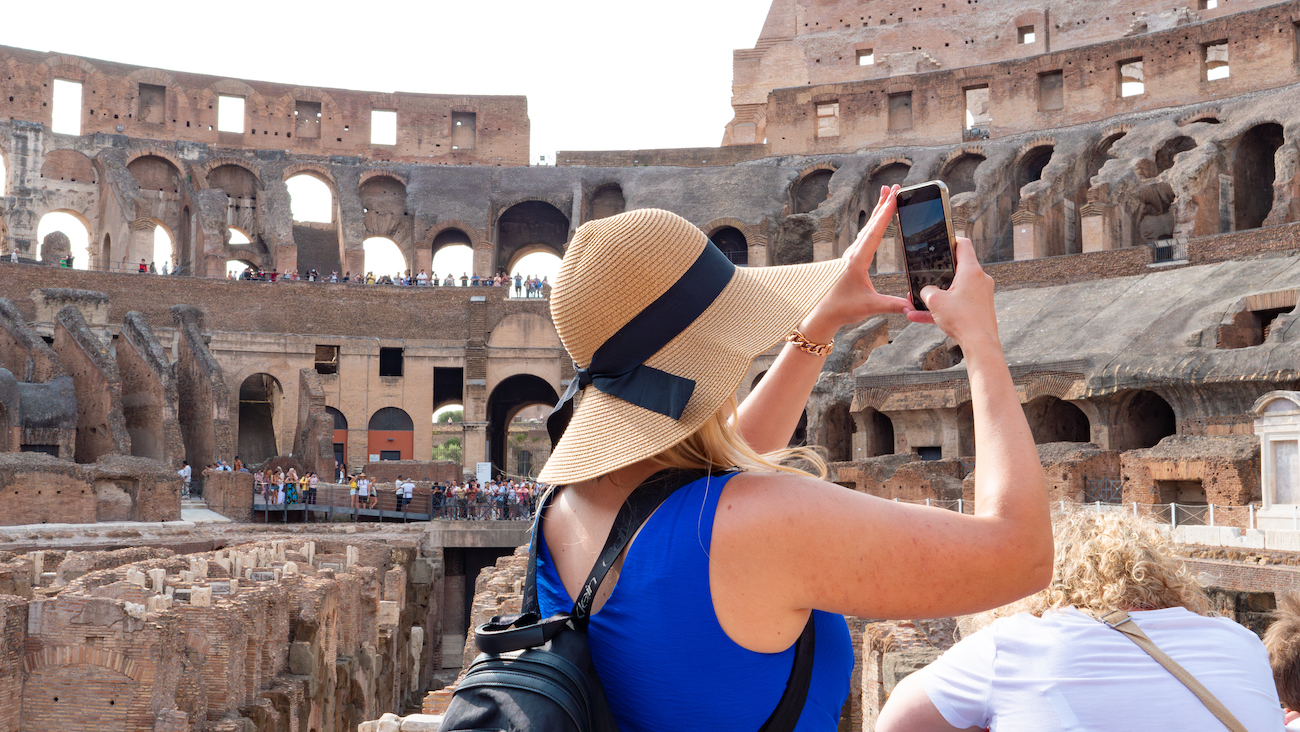
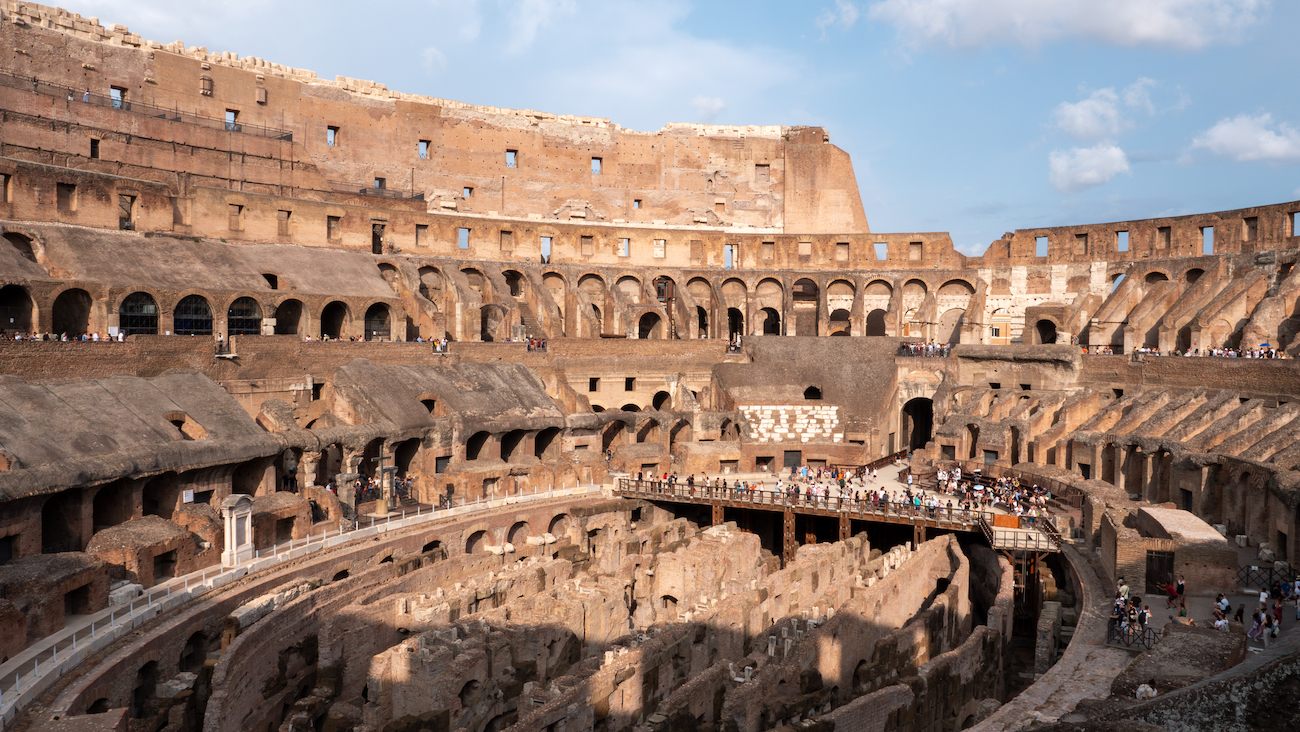
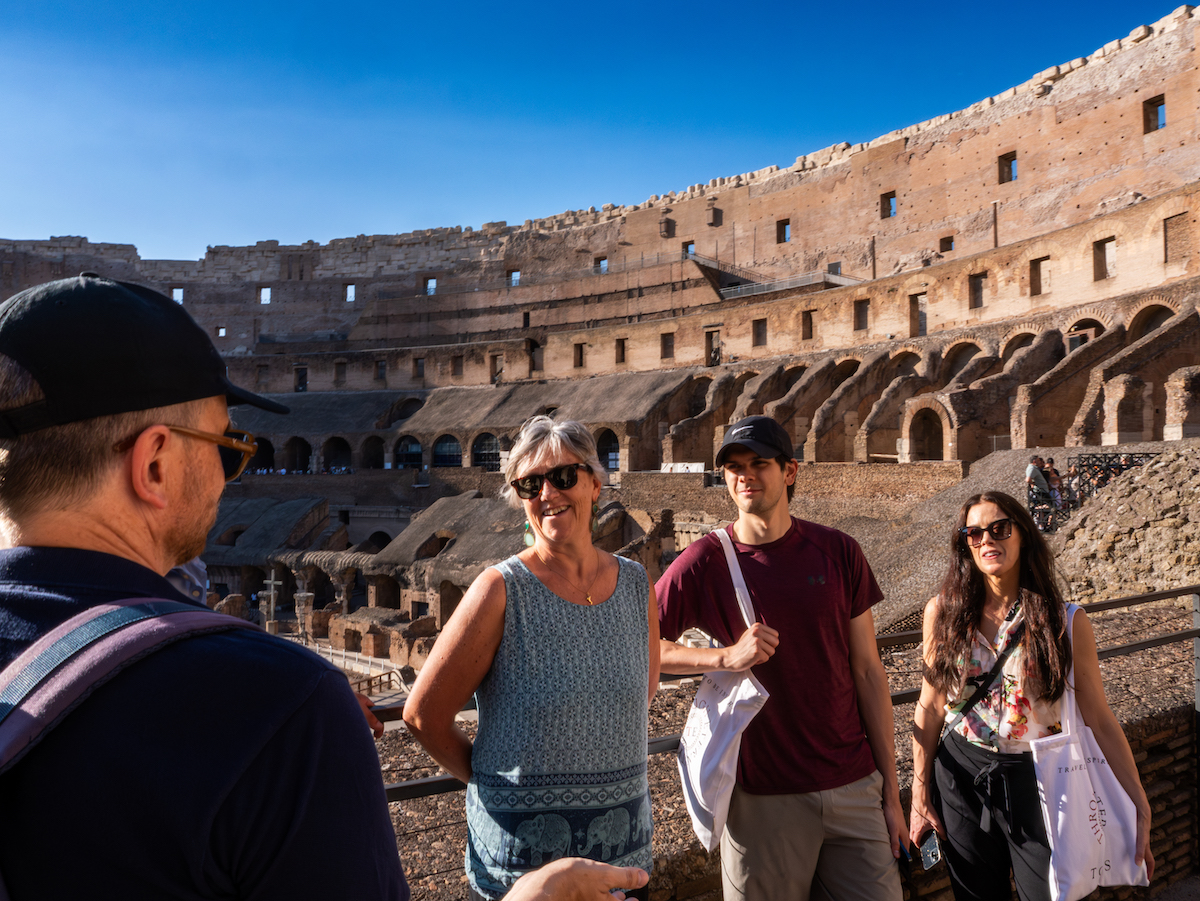
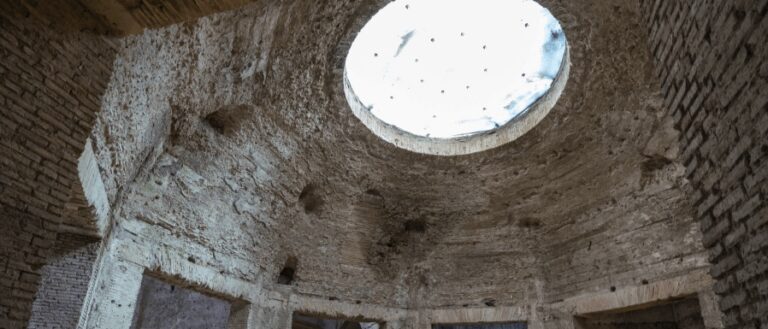
No history of the Colosseum can be told without affording a central role to the vast Imperial palace known as the Domus Aurea, or Nero’s Golden House – and luckily it’s just a few minutes walk away.
Built by Nero over the smoldering ruins of the city after a devastating fire reduced Rome to ashes in 64 AD, this gargantuan palace was almost unimaginably opulent, complete with 300 rooms and a rotating dining hall open to the stars of the night sky.
But Nero’s excesses were proving too much for the Roman populace, and it wasn’t long before the tyrant was forced to commit suicide. All traces of him were obliterated from the face of Rome, and the palace was buried by the engineering projects of the new regime – the most important of which was the Colosseum itself, built over the site of an artificial lake that was at the center of Nero’s palatial complex.
Much of the palace remained intact, however, hidden from the eyes of the world for centuries beneath the earth. These days it’s been excavated, and you can admire the incredible architecture and decorations of the hedonistic emperor’s home on a special limited-access tour that rounds out your understanding of the nearby Colosseum. Click the link below to find out more!


If the Colosseum was where ancient Romans came to let their hair down, the nearby Roman Forum was all business. This was the nerve center of the ancient empire – an area filled with important temples, courthouses, government buildings, shops, sweeping public squares and more.
It might seem like a confusing jumble of ruins today, but here you can really feel ancient history come alive like nowhere else – especially if you visit the Forum with an expert archaeologist.
Evocative highlights include the Temple of Saturn, the Basilica of Maxentius and the House of the Vestal Virgins – check out our in-depth guide to what you need to see in the Forum here. It’s easy to let your mind run free here, conjuring the image of Julius Caesar confidently orating in the Senate, or Cicero strolling down the cobbled Via Sacra that ran down the center of the site.
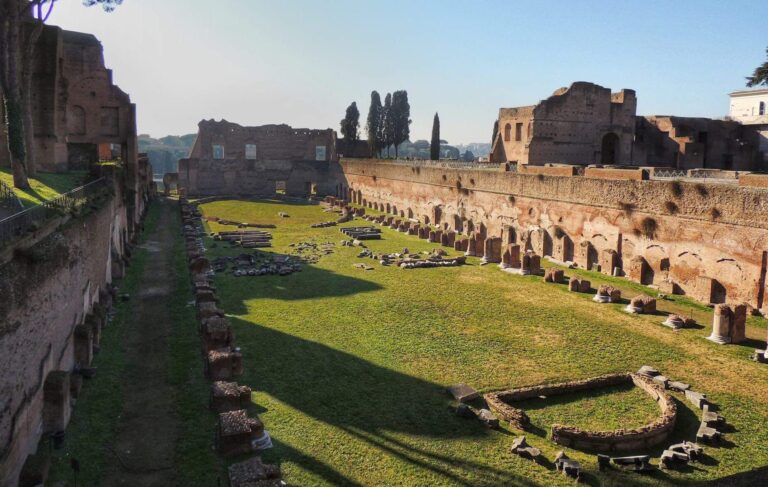
Too often overlooked by visitors to the city en-route to the nearby Colosseum and Forum, the Palatine Hill is the third major site of ancient Rome’s archaeological complex.
This hill overlooking the valley of the Roman Forum is where the long history of Roman civilization began: Rome’s first settlement is believed to have been made here, a tale embellished and expanded in the mythological legend of Romulus and Remus.
As Rome grew, the Palatine became one of the most well-heeled neighborhoods in the city, a leafy enclave far removed from the dust and chaos of the metropolis below.
During the Imperial era the all-powerful Roman emperors built their huge-palaces here, ruling over the ancient world’s greatest empire in the lap of luxury. The grand ruins of their palatial abodes still take the breath away – so luxurious were they that the word ‘palace’ entered European languages from the name of this single hill.
The views from the Palatine across the Forum to the Colosseum, meanwhile, are among the finest in Rome.
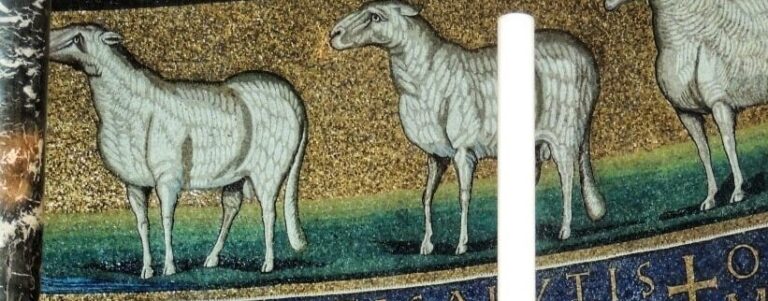
A short walk from the Colosseum down Via dei Fori Imperiali, the spectacular ancient church of Santi Cosma and Damian is built right into the fabric of the Forum itself.
The church, dedicated to the Greek doctor brothers Cosmas and Damian, was founded in the year 527 by Pope Felix IV, and repurposed the architecture of the Temple of Peace and Temple of Romulus.
What makes it a must-visit in the Colosseum area are its amazing sixth-century apse mosaics, widely regarded as amongst the most extraordinary testaments to Christian late antiquity in Rome.
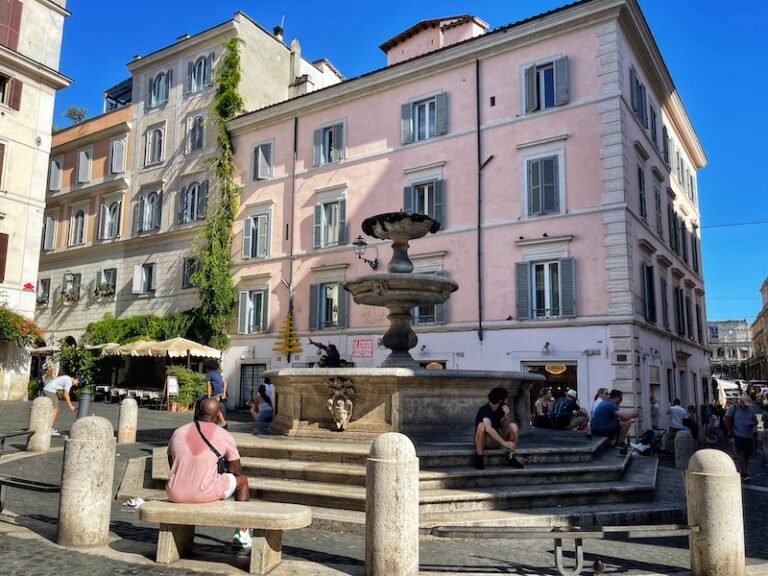
After a busy day exploring the Colosseum, Forum and Palatine Hill, you’ll no doubt be hungry – and thirsty! Ditch the tourist traps around the ancient amphitheater and make a bee-line for the nearby Monti neighborhood, just a 10 minute walk from the Colosseum.
In antiquity this was ancient Rome’s most dilapidated slum, known as the Suburra. But time changes everything, and these days it’s quite the opposite: a picturesque tangle of cobbled streets and pristine piazzas, charming cafes and great restaurants – the perfect place, in short, to take advantage of aperitivo hour.
The heart of the action is beautiful Piazza Madonna dei Monti, an always lively and atmospheric corner of the neighborhood filled with visitors and locals alike chatting, sipping and eating long into the evening.
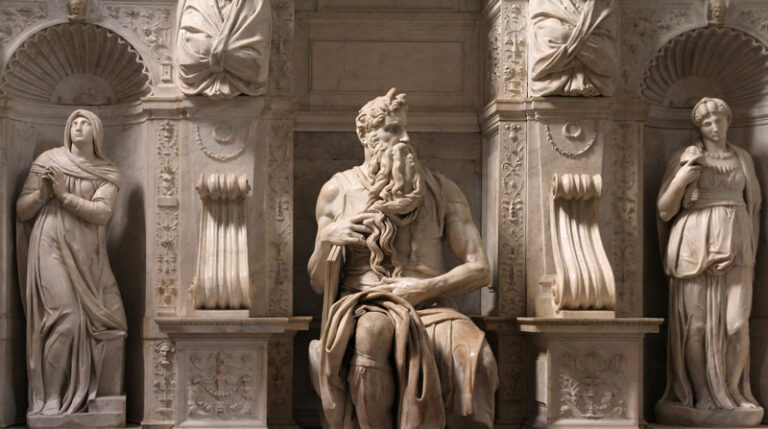
Art lovers will not want to miss paying a visit to the church of San Pietro in Vincoli, a 5-10 minute walk away from the Colosseum. The reason? It’s here that you can admire the imposing Moses that Michelangelo carved for the tomb of Pope Julius II.
Forced to dramatically reduce the scale and complexity of the planned project, Michelangelo viewed the overall tomb as the biggest failure of his career; but the Hebrew prophet he created as its centerpeice remains a breathtaking masterpiece.
Moses’ eyes seem to blaze with anger, and his intense expression embodies the famously irascible Michelangelo’s ‘terribilità’ – the unique power of his work to evoke awe and fear.
Michelangelo was reportedly so captivated by the figure that he implored the statue to come to life. When the seated prophet did not respond to his command to ‘speak!’, the frustrated Michelangelo struck the lifelike figure’s thigh with a hammer.
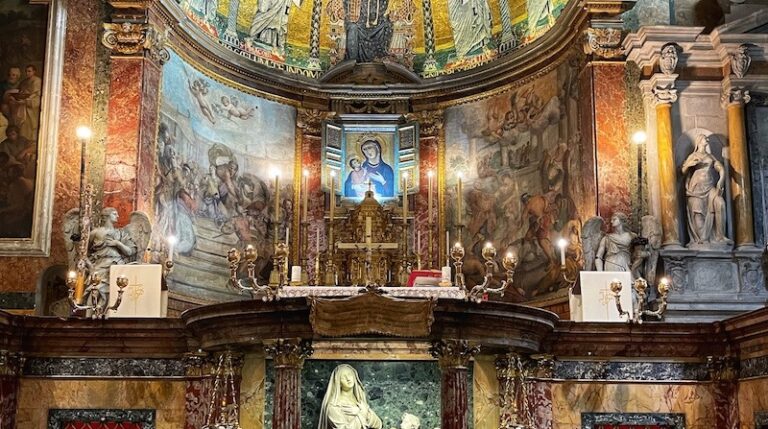
Another delightful church that’s free to visit near the Colosseum, the basilica of Santa Francesca Romana is hidden in plain sight atop the Roman Forum.
A classic Roman palimpsest, the present church was constructed in the 10th century on the legendary spot where the pagan magician Simon Magus made the fatal decision to test his powers against the apostolic duo Peter and Paul.
The sorcerer’s levitation trick quite literally fell flat when the saints fell to their knees in pious prayer, sending Magus tumbling to his death.
You can still see the supposed imprints of Peter’s knees in the marble where the apostle in divine imprecation; various other relics, mosaics and sculptures adorn the beautiful interior, which offers a welcome respite from the blazing sun and shade-deprived ancient city nearby.
Take a peek out the church’s side door for a great view onto the Via Sacra and Arch of Titus.
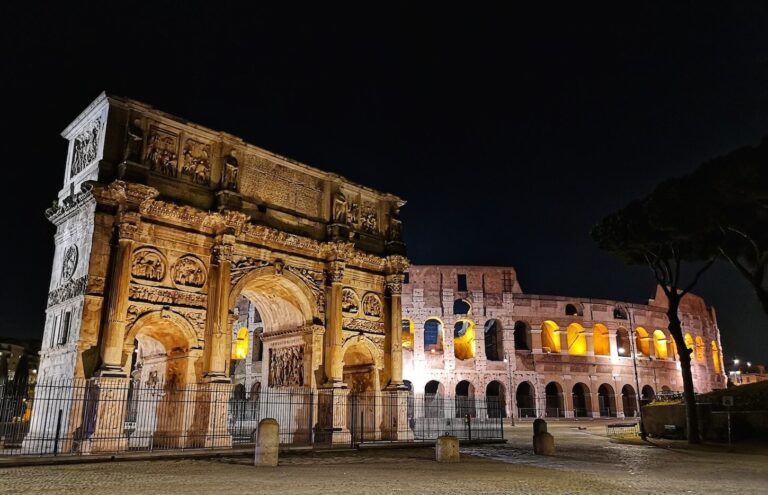
When visiting the Colosseum, you’ll be sure to notice the large, impressive triumphal arch located in the piazza in front of the amphitheater.
There can be few more vivid symbols of the power invested in the emperors of ancient Rome than the triumphal arches that once dotted the city: according to contemporary sources there were no fewer than 36 triumphal arches in Rome at the height of the Imperial era.
Edifices without any real practical function, the soaring tripartite arches were instead imbued with a purely symbolic power, constructed to celebrate the reigning emperor’s glorious military victories and role as protector and leader of the vast Roman Empire.
The most impressive triumphal arch still standing is arguably the Arch of Constantine, located in the shadow of the Colosseum and built by order of the emperor to commemorate his victory over his bitter rival Maxentius at the beginning of the fourth century AD.
The wonderful bas reliefs that decorate the arch, however, were taken from earlier monuments and repurposed to celebrate Constantine.
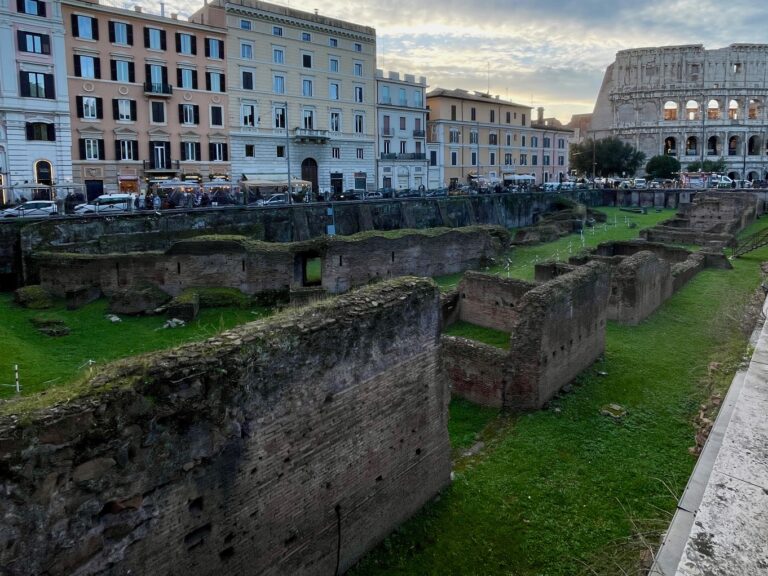
Immediately adjacent to the Colosseum on its eastern side, the substantial ruins of the Ludus Magnus — the Great Gladiatorial School — are visible from the street.
The Ludus Magnus was the largest of four gladiatorial training schools that clustered around the Colosseum, and the most important: it was directly connected to the amphitheater by an underground passage (part of which still survives) through which the gladiators were transferred on the days of the games.
The school contained its own small arena — a miniature version of the Colosseum — where fighters trained, surrounded by tiers of seating for spectators; it also contained the gladiators’ barracks, a hospital and the administrative offices of the professional fighting world.
It is from here that the gladiators entered the hypogeum beneath the Colosseum on the days of the games, making the Ludus Magnus not just an archaeological curiosity but an essential part of understanding the full geography of the ancient spectacle.
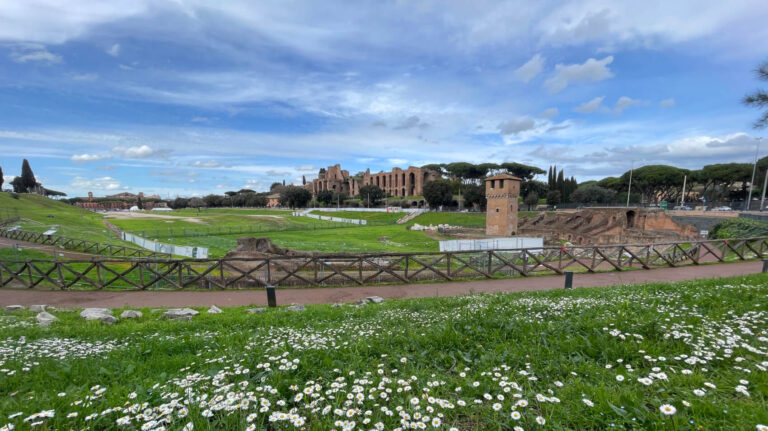
A fifteen-minute walk south-west from the Colosseum along the Via dei Cerchi, between the flanks of the Palatine and Aventine Hills, the Circus Maximus is the oldest and largest entertainment venue in ancient Rome — and, for the Romans, the most beloved.
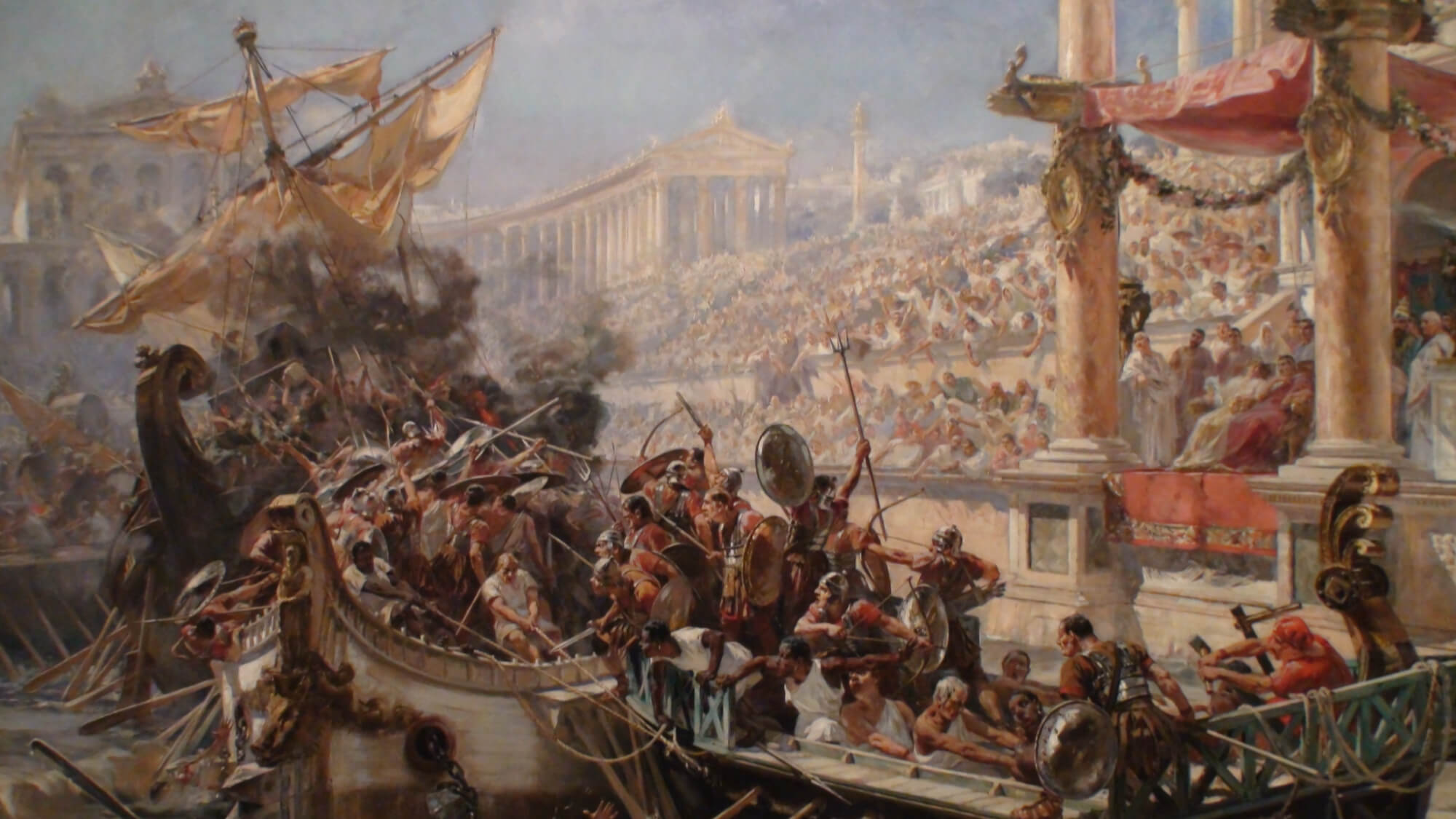
While the Colosseum hosted the gladiatorial games that have captured posterity’s imagination, it was the Circus Maximus that the Roman crowd returned to most often and most enthusiastically: this was where the chariot races were held, and chariot racing was the premier spectator sport of the ancient world.
At its peak, the Circus Maximus could accommodate upwards of 250,000 spectators — a figure that makes even the Colosseum look modest — making it the largest sporting venue in the history of the world.
The track was 600 metres long and ran between two turning posts (metae) around which the charioteers made their seven laps in a race that combined speed, tactics and considerable danger. The crashes, known as naufragia, or “shipwrecks,” were as popular with the crowd as the victories.
The site today is a long open valley, largely unexcavated, whose scale can still be read in the landscape even though little of the ancient structure survives above ground. Recent excavations have revealed the starting gates on the western end, and a visitors’ centre provides context and reconstructions.
The Circus is open to the public, largely free, and makes an excellent complement to the Colosseum visit — a reminder that the gladiatorial games, for all their fame, were only one dimension of the Roman entertainment world.
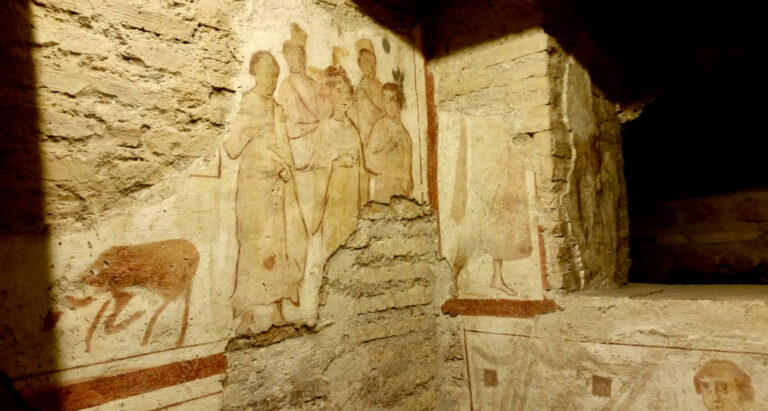
One of Rome’s most rewarding and least visited ancient-Christian sites lies a short walk south-east of the Colosseum, up the Caelian Hill: the Basilica dei Santi Giovanni e Paolo, built in the 4th century over the house of two imperial officials, Giovanni and Paolo, martyred under Julian the Apostate in 362 AD.
The basilica is remarkable for what lies beneath it. A complex of Roman houses, preserved almost intact beneath the church, can be visited on a guided tour and contain some of the finest ancient Roman wall paintings still in their original location.
Secular mythological paintings, Christian devotional images and Jewish decorative motifs all mingle in the same domestic spaces, a snapshot of a religiously pluralistic 4th-century Rome that the history books rarely capture.
The Caelian Hill itself is one of the quietest and least visited of Rome’s Seven Hills, with shaded gardens, medieval churches like Santi Quattro Coronati and Santo Stefano, as well as extraordinary views of the Colosseum and Palatine across the valley.
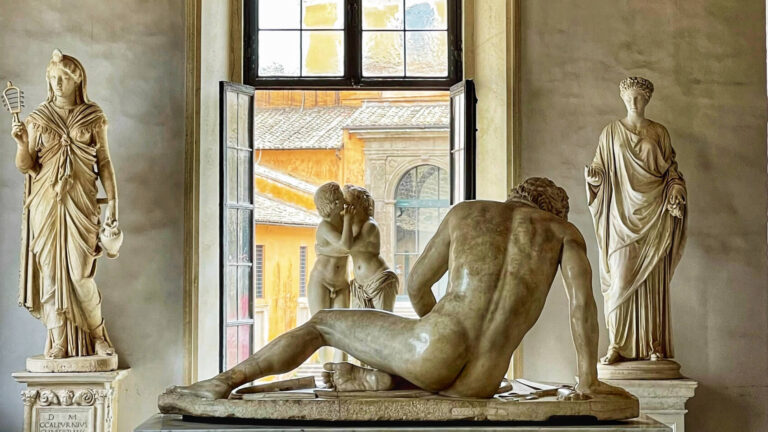
Twenty minutes’ walk from the Colosseum along Via dei Fori Imperiali, the Capitoline Hill and its museums are an essential complement to any visit to the ancient city.
The piazza at the summit was designed by Michelangelo, who planned its trapezoidal geometry, the double ramps (cordonata) and the placement of the ancient bronze equestrian statue of Marcus Aurelius at its centre — one of the defining masterworks of Renaissance urban design.
The Capitoline Museums, founded in 1471 (making them the oldest public museums in the world), contain the finest collection of ancient Roman sculpture outside the Vatican, including the Capitoline Wolf, the Spinario, the colossal fragments of the statue of Constantine, and the original Marcus Aurelius bronze now housed inside.
The museums also contain the remarkable Tabularium — the ancient archive building whose terrace offers one of the most spectacular views of the Forum and Colosseum available in Rome.
Dive Deeper into Rome