For a brief moment, once every 25 years, Rome changes. Ancient doors sealed for decades are opened, pilgrims stream in from across the world, and the city’s great basilicas take on a renewed sense of purpose and ceremony. This is the Jubilee – a tradition that reaches back centuries, blending ritual, movement, and the lived experience of faith in the Eternal City.
The Jubilee of 2025 has now come to a close, but its rhythms still shape how we understand Rome. From the solemn opening of the Holy Door at St. Peter’s Basilica on Christmas Eve to the steady flow of visitors passing through the city’s four great papal basilicas, the Holy Year offered a rare chance to experience Rome not just as a collection of monuments, but as a place of ongoing tradition.
Whether you visited during the Jubilee itself or are planning a future trip, understanding how the Holy Doors function – and why they are the most potent symbols associated with this year of pilgrimage. – offers a deeper way into the city. What follows is a guide to the Holy Doors of Rome, how they were used during the 2025 Jubilee, and what you can still see today.
Rome Tours
Explore Rome With Us During the 2025 Jubilee
What Are The Holy Doors?
For Catholics around the world, the Holy Doors represent the most visually significant symbol of the Rome Jubilee. The opening and closing ceremonies are a highlight in this year of forgiveness, and passing through these holy portals is a vital part of the pilgrimage.
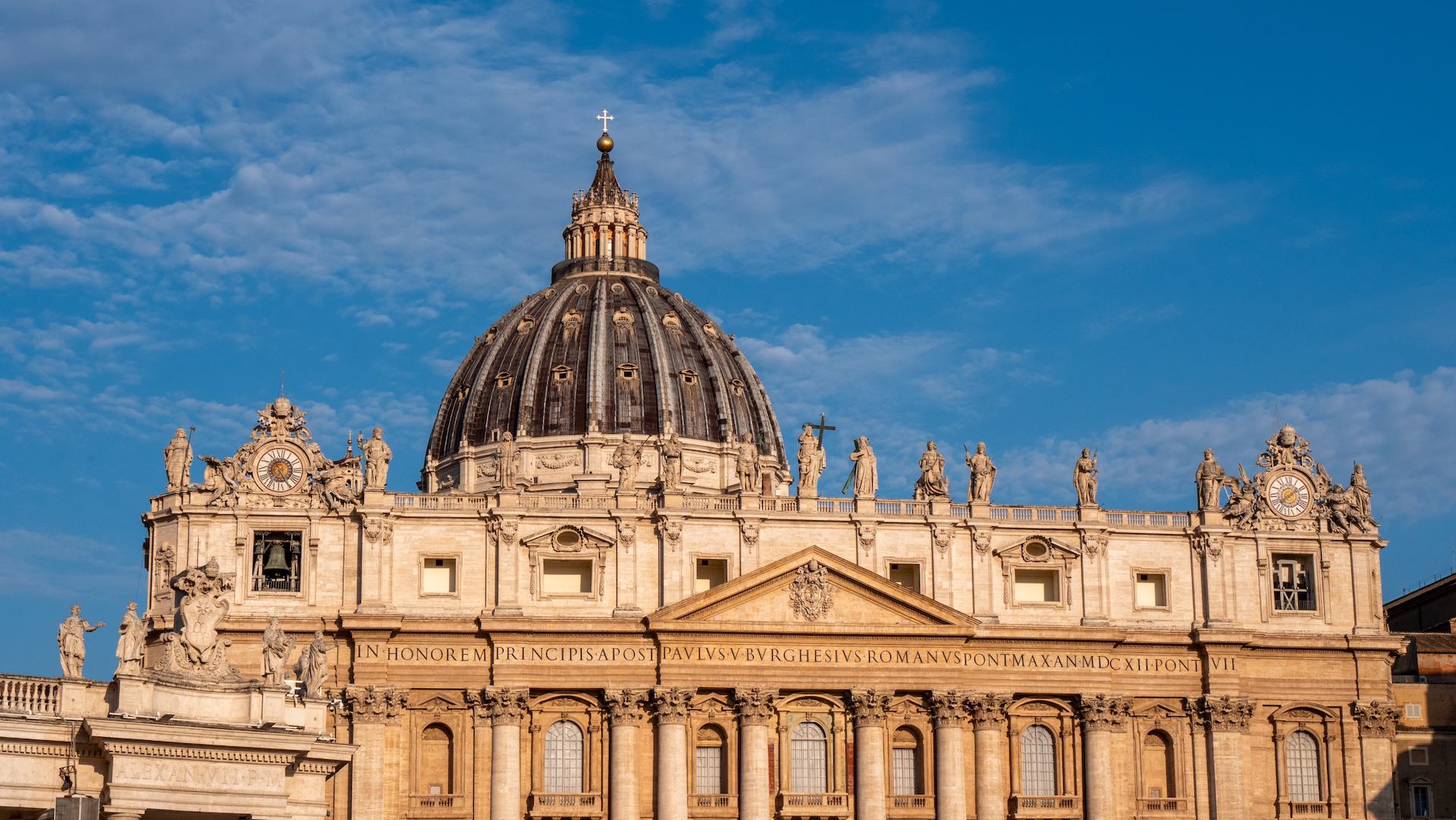
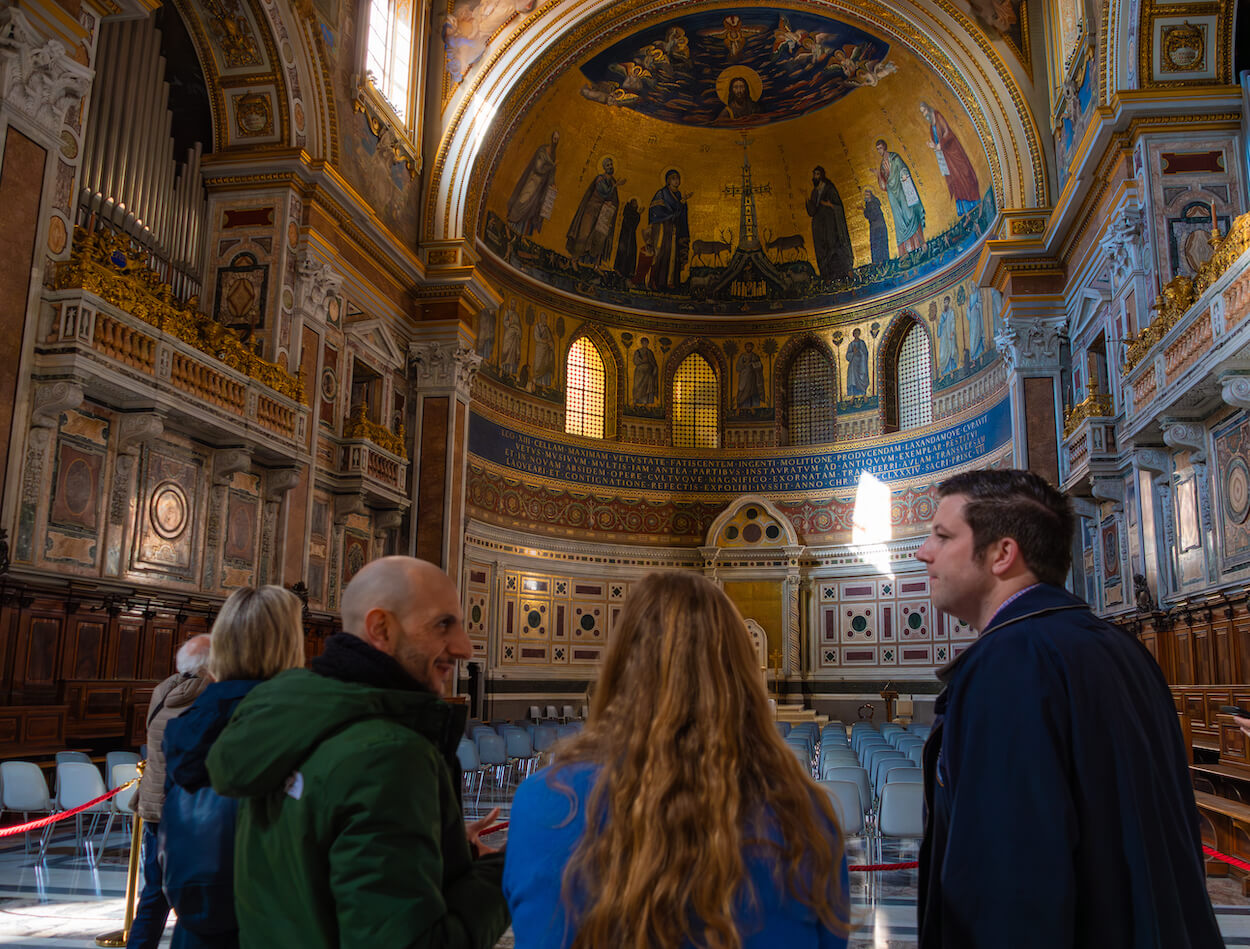
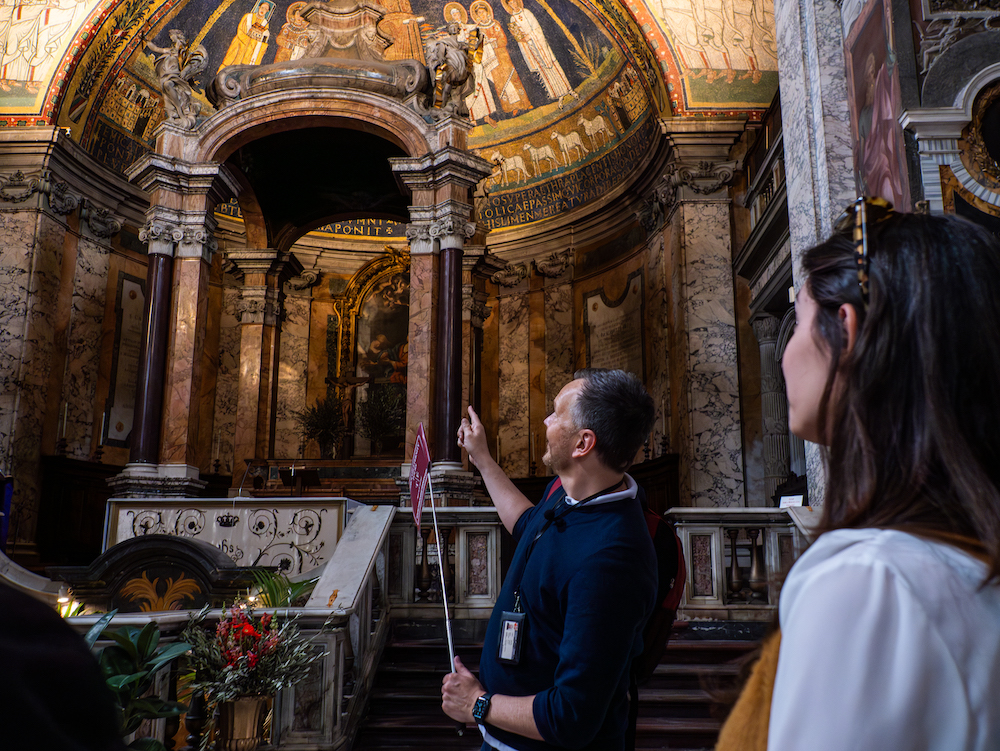
Today, you can find the Holy Doors at St Peter’s Basilica, San Giovanni in Laterano, Santa Maria Maggiore, and Saint Paul’s Outside the Walls. Over the centuries, Popes have inaugurated other Holy Doors at pilgrimage sites elsewhere in the world, such as at Santiago de Compostela, but the four doors in Rome form the core of the Jubilee pilgrimage.
History of the Holy Doors
The first Jubilee was celebrated by Pope Boniface VIII in 1300; however, the idea of a “Holy Door” arose much later as the concept of the Jubilee itself evolved.
At first, the Pope asked pilgrims and locals to go on pilgrimage to St. Peter’s Basilica and St. Paul’s Outside the Walls. By completing this pilgrimage, the faithful would receive a plenary indulgence and be absolved of their sins.
Over the centuries, the timing of a Jubilee has varied from every 100 years to every 50 (like the traditional Jewish Jubilee), to every 33 years (the age of Christ), and every 25 years (the tradition today).
The first mention of a “Holy Door” was in 1423. Giovanni Ruccellai, a merchant from Viterbo, tells us that Pope Martin V opened a door at the Basilica of San Giovanni in Laterano for the Jubilee. He describes how the wall encasing the door was knocked down and how the pilgrims scrambled to take pieces of the wall with them as relics. Then, the pilgrims would pass through the door and be granted a plenary indulgence. He then tells us that this door was bricked up again at the end of the Jubilee.
It was only in 1500 that Pope Alexander VI Borgia inaugurated the other three Holy Doors that we know today: St. Peter’s Basilica, Santa Maria Maggiore, and Saint Paul’s Outside the Walls.
Just like today, these Holy Doors were sealed and bricked up in between Jubilee Years.
The Ceremonies Surrounding the Holy Doors
The doors and the opening and closing ceremony have changed a lot and simplified over time.
The monumental bronze doors that we see today are a modern addition. Initially, the sealed “door” was a bricked-up portal on both sides. During the Jubilee Year, the Church installed a wooden door to close the Basilicas each night.
The elaborate ceremony to open and close the door used to be more of an exercise in demolition and brick laying compared to what we see today!
Imagine, up until 1975, the Pope used to approach the walled-up door in the portico of St. Peter’s Basilica. He would then use a silver hammer and strike the door three times. The wall was rigged to collapse by the Sampietrini (men of St. Peter’s). To close the door, the Pope had to break out his trusty silver trowel and lay the initial bricks to seal the sacred gate.
All of this changed in 1975, when Pope Paul VI, when striking the wall, was almost hit by falling pieces of masonry! Sensibly, to avoid any other masonry mishaps and avoid flattening the Pope, the Vatican decided to simplify the ceremony, making it a safer process.
Today, the rear of the Holy Door is bricked up in between Jubilee years (although the Pope no longer does the brick-laying). However, this wall is dismantled before the opening ceremony. Instead of striking the door with a hammer, the Pope now pushes the door open to signal the opening of the Holy Year.
At the end of the Jubilee, the Pope is the last person to walk through the door before he closes it. The door is then bricked up and sealed on the inside. The benefit of this is that we can still admire the Holy Doors in between Jubilee Years.
The Holy Doors Today
The Holy doors that we see today are pretty modern. The oldest is the door at St Peter’s – it was cast in 1949 for the Jubilee of 1950.
The Sienese sculptor Vico Consorti created the 16 panels for the door. They depict scenes inspired by the 1950 Jubilee, “The Great Return and Pardon .” All the scenes are from the New Testament, except for one: the bottom right panel depicts Pope Pius XII opening the Holy Door in 1950. It was cast using the ancient “lost wax method” by the renowned Florentine Marinelli foundry, which has been creating works of art since the Renaissance. These bronze masterpieces replaced the wooden doors installed by Pope Benedict XIV in 1748, which had begun to fall into disrepair.
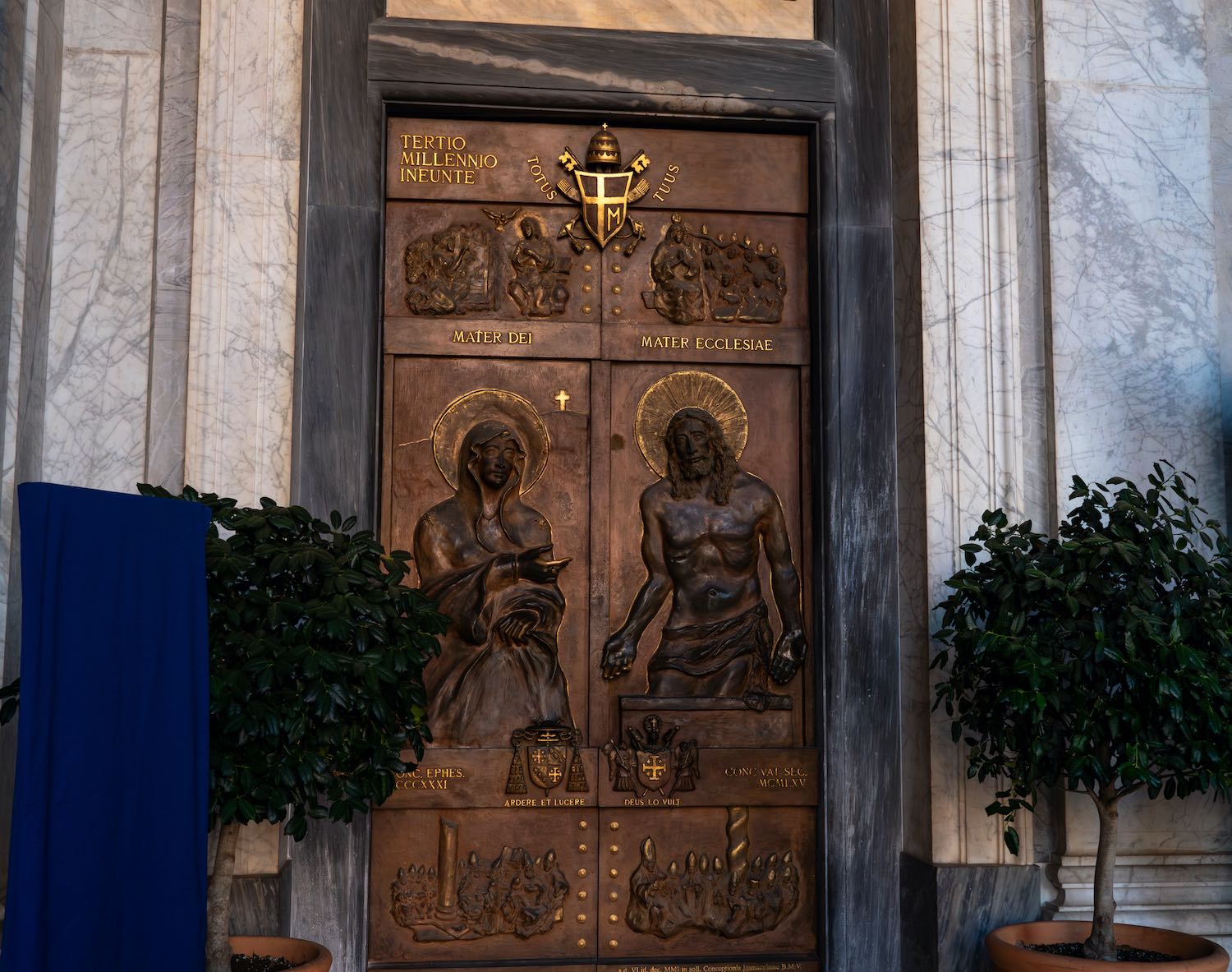
The other three Holy Doors were commissioned by St. Pope John Paul II for the Great Jubilee in the year 2000. Look for the Marian Papal crest of John Paul II on all of these doors! The Holy Door at Saint Paul Outside the Walls is also interesting because, since 1967, it has not been sealed by a wall like the other Papal Basilicas.
It was one of the final wishes of Pope John XXIII that this door be sealed by an ancient Byzantine door. Commissioned by Pantaleone, consul of Amalfi in Constantinople, it was made in 1070. Its 54 panels show scenes from the lives of Christ and the Apostles.
Why Walk Through the Holy Doors? Is it Worth it?
For Catholic pilgrims, passing through the Holy Doors is only part of a profoundly personal, enriching spiritual experience.
The idea of a door or gate as a symbol of entry into the Lord’s good graces comes directly from the New Testament.
In the Gospel of John, Jesus tells the Pharisees, “I am the gate. Whoever enters through me will be saved and will come in and go out and find pasture.” (John 10:9)
In the Gospel of Luke, Jesus tells his disciples, “So I say to you, ask and it will be given you; search, and you will find; knock, and the door will be opened for you.” (Luke 11:9)
So, you can see why, for Catholics, the act of passing through this door is an essential part of the ritual of pilgrimage.
However, passing through the Holy Door is not the only aspect of receiving your plenary indulgence. Equally important is going to confession, going to mass, and praying for the Pope. If you can’t make it to Rome or the Holy Doors at the Papal Basilicas, you can still partake.
Practicalities
During the Jubilee Year, Rome saw a significant increase in visitors, with millions of pilgrims traveling to the city to pass through the Holy Doors and take part in the celebrations. This had a noticeable impact on how the city functioned day to day, particularly around the Vatican and the major basilicas.
Crowds were at their heaviest at St. Peter’s Basilica, where access to the Holy Door often involved long queues, especially during major liturgical events and peak travel seasons. The other papal basilicas—St. John Lateran, St. Mary Major, and St. Paul Outside the Walls—offered a slightly calmer experience, though they too saw a steady flow of visitors throughout the year.
For those planning future trips to Rome, the Jubilee offers a useful reference point for what the city looks like at its busiest. Demand for accommodation increased significantly, particularly in central neighborhoods, and advance booking became essential not only for hotels but also for Vatican Museums tickets and guided tours.
If you are visiting Rome during a future Jubilee, or simply during peak travel periods, the same principles apply: book early, plan your days carefully, and allow extra time when visiting major sites. Arriving early in the morning or later in the afternoon can make a noticeable difference, especially at the Vatican.
Even now that the Jubilee has ended, the Holy Doors remain an important part of the basilicas you can visit today—visible reminders of an event that briefly transformed the city and continues to shape its rhythms long after the crowds have gone.
When Did the Holy Doors Open and Close in 2025?
- The first door to open was at St. Peter’s Basilica on Christmas Eve, December 24th, 2024.
- Then, the door at San Giovanni in Laterano opened on December 29th, 2024
- The Door of Santa Maria Maggiore opened on January 1st, 2025
- The Door of St Paul Outside the Walls opened on January 5th, 2025
- The doors closed at the end of the Jubilee Year on December 28th, 2025.
- The Door of St Peter’s was the last to close on January 6th, 2026, the Feast of the Epiphany.
The Pope also opened a fifth Holy Door for the Rome Jubilee 2025 in a local Roman prison, Rebbibia, which opened on December 26th, the Feast of St Stephen, the proto-martyr. This door was not open to the general public.
Today, the doors have returned to their usual state—closed and sealed—awaiting the next Holy Year.


What is the Jubilee in Rome?
The Jubilee is a special Holy Year in the Catholic Church, traditionally held every 25 years, during which pilgrims travel to Rome to pass through the Holy Doors of the city’s major basilicas as a symbol of renewal and forgiveness.
When did the 2025 Jubilee end?
The Jubilee of 2025 officially ended on January 6, 2026, with the closing of the Holy Door at St. Peter’s Basilica, marking the conclusion of the Holy Year.
Which churches have Holy Doors?
The main Holy Doors are located in Rome’s four Papal Basilicas: St. Peter’s Basilica, St. John Lateran, St. Mary Major, and St. Paul Outside the Walls. These doors are opened only during Jubilee years.
Can you still see the Holy Doors after the Jubilee?
Yes, but they are sealed. The Holy Doors remain part of the basilicas and are only opened during official Jubilee years, making them a rare and symbolic feature of these churches.
When is the next Jubilee in Rome?
Ordinary Jubilees are held every 25 years, meaning the next one is expected in 2050, although special Jubilees can occasionally be declared earlier by the Pope.
Dive Deeper into Rome